RESEARCH
Germ soak water as nutrient source
to improve fermentation of corn grits
from modified corn dry grind process
Ankita Juneja
†, Deepak Kumar
†and Vijay Singh
*Abstract
Corn fractionation in modified dry grind processes results in low fermentation efficiency of corn grits because of nutrient deficiency. This study investigated the use of nutrient-rich water from germ soaking to improve grits fermen-tation in the conventional dry grind and granular starch hydrolysis (GSH) processes. Comparison of germ soak water with the use of protease and external B-vitamin addition in improving grits fermentation was conducted. Use of water from optimum soaking conditions (12 h at 30 °C) resulted in complete fermentation with 29 and 8% higher final ethanol yields compared to that of control in conventional and GSH process, respectively. Fermentation rate (4–24 h) of corn grits with germ soak water (0.492 v/v-h) was more than double than that of control (0.208 v/v-h) in case of conventional dry grind process. The soaking process also increased the oil concentration in the germ by about 36%, which would enhance its economic value.
Keywords: Ethanol, Dry grind, Granular starch hydrolysis, Yeast nutrition, Fermentation
© The Author(s) 2017. This article is distributed under the terms of the Creative Commons Attribution 4.0 International License (http://creativecommons.org/licenses/by/4.0/), which permits unrestricted use, distribution, and reproduction in any medium, provided you give appropriate credit to the original author(s) and the source, provide a link to the Creative Commons license, and indicate if changes were made.
Background
Bioethanol is considered as one of the most promising renewable alternatives to petroleum-based transporta-tion fuel. In the conventransporta-tional dry grind process, corn starch is liquefied to dextrins at high temperature and pressure, which are further converted to glucose dur-ing the saccharification process. Glucose is simultane-ously fermented to ethanol by yeast, and this combined process is known as simultaneous saccharification and fermentation (SSF). In an alternate approach, granular starch hydrolyzing enzymes (GSHE) can directly hydro-lyze the raw granular starch into glucose at low tempera-tures, without the need of liquefaction step. At the end of both processes, remaining non-fermentable components (germ, fiber, protein, and residual starch) are recovered as DDGS (distillers dried grains with solubles), a coproduct primarily used as ruminant animal food. Fractionation of corn to recover germ and pericarp, prior to hydrolysis, is
one way to generate valued coproducts and simultane-ously improve nutritional value of DDGS (low fiber due to removal of pericarp) (Murthy et al. 2006a, b). Germ and pericarp obtained from the modified process can be refined to obtain valuable products including corn oil from corn germ and corn fiber oil from pericarp fiber. Corn fiber oil has very high economic value because its constituents have nutraceutical properties (Moreau et al. 1996; Murthy et al. 2006b). Grits obtained after germ and pericarp removal contain relatively high amount of starch, which would produce higher ethanol concentra-tions compared to whole corn at same solid loadings.
However, removal of germ during corn fractionation also removes the soluble proteins and micronutrients present in the germ that are essential for yeast during the fermentation process. Also the lipids, present in germ and the aleurone layer below the pericarp, are essential to maintain membrane integrity and yeast activity, espe-cially during high glucose and ethanol concentrations. Murthy et al. (2006a) reported that both initial rate of fermentation and final ethanol concentrations were low for endosperm obtained from 3D process compared to those from wet fractionation (E-milling). One way to
Open Access
*Correspondence: [email protected] †Ankita Juneja and Deepak Kumar are first authors
address this problem to some extent is addition of pro-tease enzymes. Addition of propro-teases causes hydrolysis of the protein matrix surrounding the starch granules, which produces free amino nitrogen (FAN) as well as improve accessibility of starch to enzymes. Fermentation efficiency can also be improved by adding external nutri-tion, such as yeast extract, lipid supplementanutri-tion, and B-vitamin complex. However, both protease enzymes and external nutrient add up to the cost of the process and counter the benefits of fractionation. One potential cost-effective approach could be the extraction of these nutrients from the recovered germ, as suggested by Murthy et al. (2006a). The study reported that the water obtained after soaking of fractionated germ (2 h soaking) resulted in increase of final ethanol concentrations from 12.3 to 14.7% (v/v) during conventional dry grind pro-cessing of corn grits.
This study aims to investigate this approach in detail and optimize the process conditions (germ soaking time and amount) to maximize the fermentation rate and final ethanol concentrations of corn grits dur-ing conventional dry grind as well as GSH process. Germ water was obtained from two soaking condi-tions and its effect on fermentation performance of corn grits was compared to those from control, pro-tease addition, and B-vitamin addition. Combination of germ water and B-vitamins was also investigated to determine the maximum achievable ethanol effi-ciency. Composition of raw germ and germ after soak-ing was also evaluated to determine the changes in oil concentrations.
Methods
Materials
Flaking grits and germ samples were obtained from a commercial corn dry-milling plant (Bunge, Danville, IL, USA). Samples were stored in refrigerator at 4 °C till analysis. All enzymes including conventional α-amylase (Spezyme RSL with reported activity of 20,100 NLC/g), conventional glucoamylase [distillase SSF, with reported activity of 380 GAU/g (GAU: glucoamylase unit)], GSHE (Stargen 002), and Protease (Fermgen) are commonly used commercial enzymes and were generously donated by DuPont Industrial Biosciences (Palo Alto). GSHE contained α-amylase from A. kawachi expressed in T. reesei and glucoamylase from T. reesei, and had an activ-ity of >570 GAU/g. Protease enzyme contained fungal protease obtained from genetically modified selected strain of T. reesei, with an activity of >1000 SAPU/g (SAPU is spectrophotometric acid protease units). Con-ventional active dry yeast (ethanol red) was obtained from the Fermentis-Lesaffre Yeast Corporation (Milwau-kee, Wisconsin).
Corn grits and germ composition
Composition analysis of corn grits, raw germ, and soaked germ was performed as per American Association of Cereal Chemists International (AACCI) standard proce-dures. The moisture content of corn grits was determined by drying the samples in hot air oven at 135 °C for 2 h (AACC international approved method 44-19.01). Corn grits and germ (before and after soaking) were analyzed for crude protein content (method 990.03), oil (method 920.39), and neutral detergent fiber (method 2002.04) in a commercial analytical laboratory (Illinois crop improvement association, Champaign, IL, USA). All analyses were conducted in duplicates. Starch content in the ground corn grits was determined using acid hydroly-sis method (Vidal et al. 2009). Briefly, about 1 g of ground corn samples (~1 g) were mixed with 50 mL dilute HCl (0.4 N) in 100 mL autoclavable bottles, and the slurry was autoclaved at 126 °C for 1 h (Napco Model 9000D, Thermo Fisher 157 Scientific, Waltham, MA). Pure glu-cose and starch samples were used to determine gluglu-cose recovery factors. After cooling, 1 mL aliquot samples was withdrawn and centrifuged at 1500×g for 5 min (Model 5415 D, Brinkmann–Eppendorf, Hamburg, Germany). The supernatants were analyzed in the HPLC for glucose determination.
Dry grind process
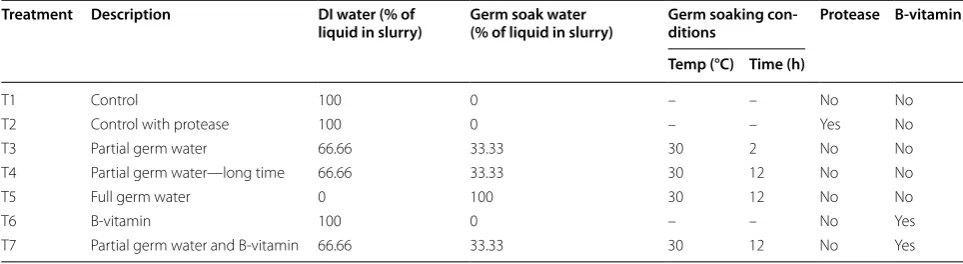
Germ soak water was obtained by soaking the germ under two conditions: (i) 30 °C for 2 h and (ii) 30 °C for 12 h (Table 1). In each case, 25 g of germ was mixed in 250 mL of deionized (DI) water in 500 mL flasks and was incubated as per conditions mentioned in Table 1, with continuous shak-ing at 125 rpm. After soakshak-ing, the liquid was vacuum-filtered through Whatman No. 4 filter paper and used to make slurry as described in Table 1. Two dosages of germ water were investigated: (1) one-third (33.33%) of total liquid in slurry, referred as partial germ water (treatments T3, T4, T7 in
Table 1), (2) 100% of liquid in slurry, referred as full germ water (treatment T5 in Table 1) in the article. The first case (partial germ water) represents the water obtained from the soaking of germ proportional (10%) to corn grits used in the experiment. In the current study, 62.5 mL of germ water was added in total 250 mL slurry (62.5 g corn grits and 187.5 mL liquid). Full germ water case was investigated to determine the effect of adding excess nutrients on the fermentation efficiency. Other than germ soak water, two additional set of treatments (T6 and T7) were performed by addition of Fig. 1 Schematic of laboratory-scale conventional dry grind and GSHE process for ethanol production
Table 1 Description of treatments investigated in processing corn grits using conventional dry grind and GSH process
Treatment Description DI water (% of
liquid in slurry) Germ soak water (% of liquid in slurry) Germ soaking con-ditions Protease B-vitamin Temp (°C) Time (h)
T1 Control 100 0 – – No No
T2 Control with protease 100 0 – – Yes No
T3 Partial germ water 66.66 33.33 30 2 No No
T4 Partial germ water—long time 66.66 33.33 30 12 No No
T5 Full germ water 0 100 30 12 No No
T6 B-vitamin 100 0 – – No Yes
B-vitamins. In treatment T6, conditions were similar to that of control, except excess of vitamin B12 and B-complex were added at the start of SSF process. In the case of treatment T7, combined effect of germ soak water and B-vitamins was investigated and excess of vitamin B12 and B-complex was added in addition to germ soak water (Table 1).
GSH process
The front-end operations (cleaning, grinding, and slurry making) were similar to that of conventional dry grind process described above (Fig. 1). Liquefaction step is not required in this process. The slurry prepared was adjusted to a pH of 4.1 using 10 N sulfuric acid, and GSHE (0.234 mL), urea (0.4 μL of 50% w/v solution) and yeast inoculum (2 mL) were added. Yeast inoculum was prepared as described in the previous section. The slurry was incubated at 32 °C for 72 h in an automatic incubator with continuous agitation (150 rpm), and 2 mL of sam-ples were drawn at 4, 8, 12, 24, 48, and 72 h to monitor the fermentation. This process was also investigated for all conditions presented in Table 1.
HPLC analysis
Samples collected were centrifuged at 9729 g (5415 D, Brinkmann Eppendorf, Hamburg, Germany) for 10 min, and clear liquid was passed through 0.2 µm syringe fil-ters (nylon Acrodisc WAT200834, Pall Life Sciences, Port Washington, NY) into 150 µL HPLC vials. The vials were immediately stored at −20 °C until analysis. The filtrate was then analyzed using HPLC with an ion-exclusion col-umn (Aminex HPX-87H, Bio-Rad, Hercules, CA, USA). The mobile phase was 0.005 M sulfuric acid at 50 °C at a flow rate of 0.6 mL/min. The amounts of sugars, alcohols, and organic acids were quantified using a refractive index detector and multiple standards.
Fermentation rate and ethanol yield
For each treatment, ethanol and glucose concentration was measured at every time point as described above and were plotted against time. Fermentation rates (ethanol produc-tion rates) between different time points were calculated using Eq. 1.
where Et2 and Et1 are ethanol concentrations (% v/v) at
fer-mentation times t2 and t1, respectively.
Starch-to-ethanol conversion efficiencies were calcu-lated as the ratio of actual ethanol yields with the theo-retical ethanol yield (Eq. 2).
(1)
Fermentation rate=
Et2−Et1
t2−t1 ,
(2)
ηEtOH=
EEtOH
ETh_EtOH ∗100,
where ETh_EtOH is theoretical ethanol yield, L/kg dry corn grits; EEtOH is the actual ethanol yield, L/kg dry corn grits.
Theoretical yields were estimated based on the starch content, assuming complete starch conversion and 100% fermentation efficiency. Actual ethanol yields were deter-mined by calculating liquid volume in final slurry at end of fermentation (Kumar and Singh 2016). Final slurry was weighed and a sample of the slurry was dried in hot air oven at 105 °C till constant weight was achieved (~24 h) to estimate the solid percent in the slurry. The actual eth-anol yields were calculated using following Eqs. 3–5.
where WL is the weight of liquid in the fermented slurry, g; Wslurry is the weight of fermented slurry, g; Sslurry is the solid fraction in the slurry; VEtOH is the volume of ethanol produced, mL; ρH2O/EtOH is the density of water–ethanol mixture (g/L) at final ethanol concentration; CEtOH is the final ethanol concentration, mL/L; EEtOH is the actual eth-anol yield, L/kg; MCC, is the moisture content in grits, %; and WL is the weight of the grits.
Statistical analysis
Analysis of variance (1-way ANOVA) and Fisher’s least significant difference (LSD) tests were used to compare the glucose and ethanol concentrations (SAS version 9.3). The level selected to show the statistical significance in all cases was 5% (P < 0.05).
Results and discussion
Composition of corn grits
Starch content in the corn grits was estimated as 86.5% on dry basis. Crude protein, oil, and neutral detergent fiber (NDF) were 6.1, 0.6, and 0.9% (dry basis), respectively. Based on this composition, the theoretical ethanol yield was calculated 0.62 L/kg dry corn grits (4.17 gal/bu).
Conventional dry grind process
Effect of germ soak water
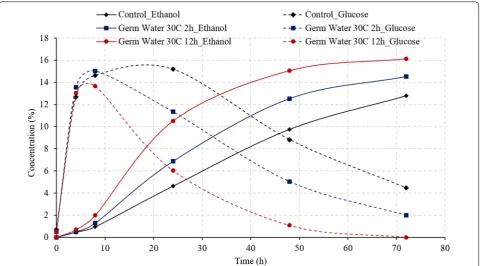
Figure 2 illustrates the comparison of ethanol and glu-cose concentration during SSF of corn grits, for control and germ water addition from two soaking conditions. As expected, addition of germ water improved the fermenta-tion profile compared to that of control. The addifermenta-tion of germ water from soaking at 30 °C for 2 h resulted in an increase in the final ethanol concentration from 12.79 to 14.52% (v/v), which was similar to as observed by Murthy (3)
WL =Wslurry∗(1−Sslurry)
(4)
VEtOH = WL
ρH2O/EtOH
∗CEtOH
(5)
EEtOH= VEtOH
WC ∗(1−MCC/100)
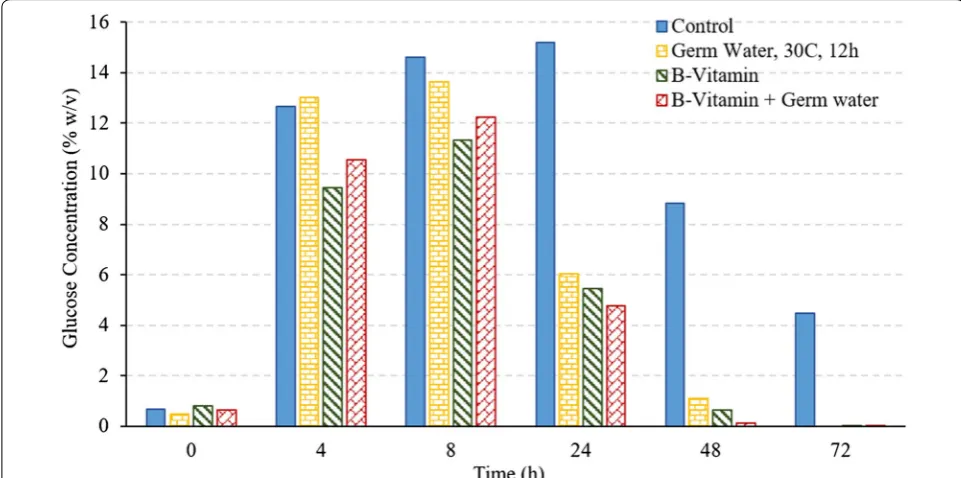
et al. (2006a). Likewise, there was unconverted glucose (2% w/v) observed at the end of the fermentation. How-ever, the addition of germ water from longer soaking con-ditions (30 °C for 12 h) resulted in complete fermentation with a final ethanol concentration of 16.14% and no residual glucose. The average final ethanol concentration of the 12-h germ-soaked water was 28.3 and 12.9% higher than the control and 2-h germ-soaked water, respectively. Final glycerol production in case of germ water (30 °C for 12 h)-supplemented samples was about 23% less than that of control (1.16 vs. 1.51%).
About 4.5% glucose remained unconverted in the case of control, which along with high glycerol production resulted in very low starch-to-ethanol conversion effi-ciency (62.4%). Efficient fermentation with germ water (30 °C and 12 h) addition led to an increase in conversion efficiency to 82.7%, which was 12% (in relative terms) higher than that in the case of addition of 2-h germ-soaked water (73.8%). Since the glucose released in the first 8 h is similar for all three conditions (Fig. 2), it can be stated that the increased rate of fermentation in the 12-h germ-soaked water is due to the better functioning of the yeast in the presence of micronutrients and free amino acids present in germ soak water. These results indicate that longer soaking resulted in leaching out more nutri-ents that improved the yeast performance and led to
high ethanol yields and fermentation rates. Due to the lack of these micronutrients in the control, fermentation was observed to be slowest among all treatments. Etha-nol yields from control, treatment with 2-h germ water and treatment with 12-h germ water were estimated as 0.39, 0.46, and 0.51 L/kg dry grits (2.6, 3.1, and 3.5 gal/bu) respectively.
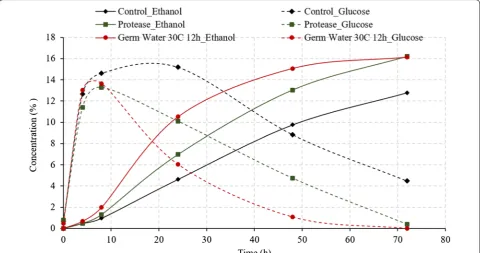
Germ water vs. protease addition
were observed to be higher (0.49 vs. 0.32 v/v-h in 4–24 h). Ethanol yields of 0.51 and 0.52 L/kg dry grits (3.45 and 3.46 gal/bu) were similar for treatments with germ water supplementation and protease addition. The results indi-cated that the addition of 12-h germ-soaked water could potentially replace the protease enzyme, with even higher ethanol production rate.
Effect of water amount
To further investigate the process, the amount of germ water addition was also varied. Instead of adding one-third of total liquid during slurry formation, the slurry was prepared with 100% germ soak water (30 °C, 12 h) in this case. Ethanol and glucose concentrations during SSF of corn grits without and with addition of two dos-ages of germ soak water (partial and full germ soak water as explained in Table 1) are given in Table 2. Final etha-nol concentration was observed similar for both treat-ments (partial germ water and full 100% germ water). However, the ethanol production rate in case of 100% germ soak water was higher (0.54 vs. 0.49% v/v/h) than of partial germ water case. No residual sugars in the broth indicated that maximum ethanol potential had been reached. Ethanol yields of 0.51 L/kg dry biomass were similar in both treatments. Considering the similar final ethanol concentrations and yields, it can be interpreted that micronutrients in partial germ water slurry were
sufficient for the yeast and there would not be a huge advantage of making slurry with only germ soak water.
Effect of B‑vitamins
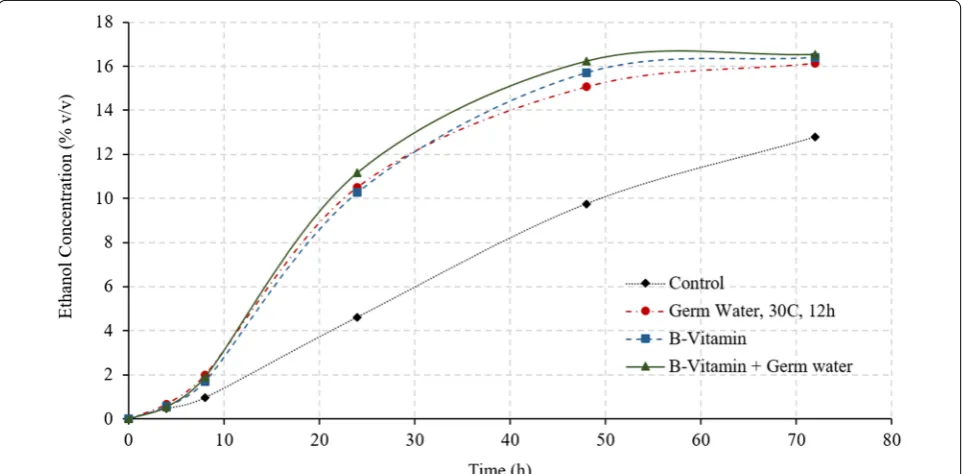
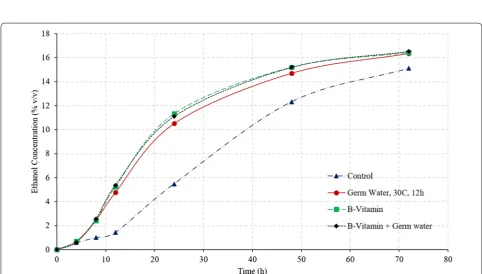
Final ethanol concentrations and yields with the use of only germ soak water were similar to those of treat-ments with addition of B-vitamins and both germ water and B-vitamins (P > 0.05) (Fig. 4; Table 3). These results indicate that germ soak water has sufficient nutrients required to achieve similar ethanol profiles as with B-vitamins. The initial ethanol production rate was higher in the treatment using both germ water and B-vitamins. In all the three cases (germ water, B-vitamin, and germ water plus B-vitamin), the glucose concentra-tion at the end of the fermentaconcentra-tion is negligible, which indicates complete fermentation at 72 h. These results suggest that addition of germ water can replace the need for the addition of expensive vitamins, and maximum fermentation rate can be achieved by adding both germ water and B-vitamins.
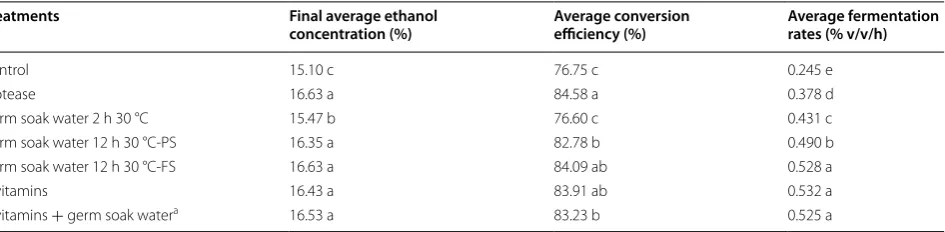
Final ethanol concentrations, fermentation rates (4–24 h), and ethanol conversion efficiencies for all treat-ment have been compiled in Table 3. Except for con-trol and germ water from soaking at 30 °C and 2 h, the ethanol conversion efficiency was more than 80% in all treatments. Although conversion efficiency is similar in all other cases, the fermentation rate (4–24 h) was maxi-mum for full germ slurry and treatment using both germ water and B-vitamins.
Granular starch hydrolysis process
Considering the advantages (low energy use and low glu-cose inhibition) and increasing trend of granular starch hydrolysis process in corn ethanol industry, it was impor-tant to investigate the effect of germ soak water on yeast performance in GSH process also. Performance of germ Table 2 Effect of using partial vs. full germ water on the glucose and ethanol concentrations of corn grits during conven-tional dry grind process
Treatment Time (h)
0 4 8 24 48 72
Ethanol (% v/v) Control 0.00 0.48 1.00 4.72 9.61 12.58
Partial GW 0.00 0.68 1.99 10.52 15.07 16.14
Full GW 0.00 0.69 2.29 11.41 16.03 16.32
Glucose (% w/v) Control 0.64 13.84 15.45 15.37 9.17 4.88
Partial GW 0.47 13.01 13.64 6.04 1.08 0.00
Full GW 0.67 7.02 8.79 1.77 0.10 0.00
water for all conditions listed in Table 1 was studied and compared with control, protease addition, and B-vitamin addition.
Effect of germ soak water
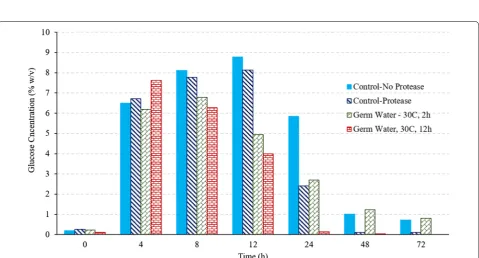
Similar to conventional dry grind process, germ water addition improved the fermentation performance com-pared to that of control (Figs. 6, 7). The improvement was better with addition of germ water obtained from soak-ing at 30 °C for 12 h. With addition of germ water from soaking at 30 °C for 2 h, the ethanol production rate was higher (0.43 vs. 0.25% v/v-h), however, the final ethanol concentration was similar as that of control (Table 4). The average final ethanol concentration in treatment
supplemented with germ water obtained from longer soaking (12 h) was 8.3% higher than the control (16.35 vs. 15.10% v/v), with negligible unconverted glucose at the end of fermentation. About 0.72% (w/v) and 0.82% (w/v) glucose remained unconverted in cases of control and germ water from soaking for 2 h (Fig. 7). The increase in final ethanol concentration in this process (8.3%) was less than that observed in case of conventional process (28.3%). This was attributed to the higher ethanol con-centrations obtained with GSH enzymes in control due to relatively low glucose inhibition. The peak glucose concentration for the conventional process was almost double (16.12%) compared to that from GSH process (8.77%). The conversion was higher because of different Fig. 5 Glucose concentrations during fermentation of corn grits in conventional dry grind process with various treatments
Table 3 Ethanol yields and conversion efficiencies for all treatments in dry grind process
Means followed by the same letter in one column are statistically not different (at P < 0.05) PS partial slurry, FS full slurry
a Partial slurry of 12 h 30 °C germ soak water
Treatments Final ethanol
concentration (%) Ethanol conversion efficiency (%) Fermentation rates (% v/v/h)
Control 12.79 d 62.44 e 0.208 d
Protease 16.20 a b 82.83 a b c 0.324 c
Germ soak water 2 h 30 °C 14.52 c 74.10 d 0.318 c
Germ soak water 12 h 30 °C-PS 16.14 a b 82.67 a b c 0.492 b
Germ soak water 12 h 30 °C-FS 16.32 a 82.14 b c 0.536 a
B-vitamins 16.39 a 84.02 a 0.484 b
enzymes loadings and synergistic action α-amylase and glucoamylase in the GSH process. Glycerol concentra-tions in control for GSH process were also about 38% lower than that in the case of conventional dry grind
process (0.93 vs. 1.51% w/v), which leads to higher etha-nol production. Glycerol concentrations with germ water addition were 5% lower than that of control in GSH pro-cess (0.88 vs. 0.93% w/v). Similar to the observations in Fig. 6 Comparison of ethanol concentrations among control, treatment with protease addition, and treatment with germ water addition during fermentation of corn grits in GSH process
case of conventional process, the addition of protease enzymes resulted in complete fermentation; however, ini-tial ethanol production rate was lower than that of with germ water addition (Fig. 6; Table 4). Ethanol yields of 0.52 and 0.53 L/kg dry grits were similar for germ water and protease addition but higher than that of control (0.48 L/kg dry grits).
Effect of water amount
Similar to the case of conventional process, the amount of germ soak water did not have a significant effect on the final ethanol concentration or conversion efficiency dur-ing GSHE process. However, the rate of ethanol produc-tion with full germ soak water was higher than the partial germ soak water (Fig. 8). This indicates that the micro-nutrients needed by the yeast were sufficient from the partial filtrate to obtain the maximum ethanol concentra-tion at the end but higher nutrients in the full slurry lead the yeast to produce more ethanol at the beginning of the fermentation. There was complete fermentation at the end of 72 h as there was no residual glucose left.
Effect of B‑vitamins
The effect of external nutrients (vitamins B12 and B-vita-min complex) is shown in Figs. 9 and 10. The final ethanol concentration at the end of 72 h was statistically similar for germ water alone, B-vitamins alone, and both germ water and B-vitamins (Table 4). The rate of fermenta-tion, however, was higher for added B-vitamin treatment (B-vitamin alone and B-vitamin with germ soak water). After the first 24 h, glucose was not detected in the fer-mentation slurry, indicating the conversion of glucose to ethanol by yeast was at the same rate of its formation by GSH enzymes. In the treatment of B-vitamin with germ soak water, the buildup of glucose is seen to be mini-mum, which suggests high conversion efficiency of glu-cose to ethanol in yeast. As it has been mentioned before, B-vitamins are essential for the yeast metabolism and aid
in better functioning and increasing its stress tolerance (Branduardi et al. 2007; Laser 1941; Zhang et al. 2016). Final ethanol concentration of 16.5% was similar for all three treatments (germ water, B-vitamins, and combined germ water with B-vitamins). Starch-to-ethanol conver-sion efficiency was higher than 80% for all cases.
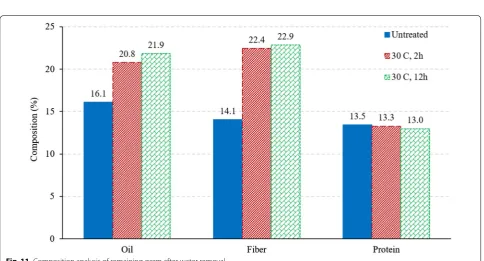
Composition of germ
Removal of soluble protein and micronutrients would potentially increase the oil content in germ and improves its economic value. Raw germ and germ obtained after soaking were analyzed for protein, oil, and fiber content. It can be observed from Fig. 11 that the oil concentra-tions in the germ increased by 29 and 36% for shorter and longer soaking conditions in comparison to that of raw germ. Since the market price of germ increases with its oil content (Johnston et al. 2005), the oil increase after soak-ing provides a huge advantage and makes this approach (germ soak water to improve fermentation) even more attractive. Compared to that of untreated germ, the pro-tein concentrations of treated germ were about 1.5 and 3.7% lower for soaking conditions 30 °C, 2 h and 30 °C, 12 h, respectively. This indicates that during treatments, soluble micronutrients and proteins leached out in water, which when added to the fermentation broth, were avail-able for the yeast to uptake and increased the fermenta-tion efficiency.
Conclusions
This study investigated and optimized the use of nutrient-rich water from corn germ soaking to improve fermen-tation of corn grits in comparison to through the use of protease enzymes or B-vitamin additions. Optimum soaking time and amount of germ water required was determined corresponding to maximum ethanol yield in conventional dry grind and granular starch hydrolysis process. The addition of germ water from soaking condi-tions of 30 °C for 12 h resulted in complete fermentation Table 4 Ethanol yields and conversion efficiencies for all treatments in GSH process
Means followed by the same letter in one column are statistically not different (at P < 0.05) PS partial slurry, FS full slurry
a Partial slurry of 12 h 30 °C germ soak water
Treatments Final average ethanol
concentration (%) Average conversion efficiency (%) Average fermentation rates (% v/v/h)
Control 15.10 c 76.75 c 0.245 e
Protease 16.63 a 84.58 a 0.378 d
Germ soak water 2 h 30 °C 15.47 b 76.60 c 0.431 c
Germ soak water 12 h 30 °C-PS 16.35 a 82.78 b 0.490 b
Germ soak water 12 h 30 °C-FS 16.63 a 84.09 ab 0.528 a
B-vitamins 16.43 a 83.91 ab 0.532 a
for both conventional and GSH processes, compared to significant residual sugars for control. Final etha-nol yields were 29 and 8% higher than that of control in
case of conventional and GSH process, respectively. GHS enzymes have previously reported to work bet-ter than conventional dry grind enzymes. However, the Fig. 8 Effect of the amount of germ soak water on fermentation profile of corn grits in GSH process
addition of germ water resulted in similar fermentation performance both GSHE and conventional enzymes. Ini-tial ethanol production rates for samples supplemented with germ soak water were higher than that of samples supplemented with protease and similar to that from supplementation of B-vitamins for both processes. Due
to leaching of micronutrients and soluble proteins, soak-ing process improved the oil concentrations in the germ, which would enhance its economic value. Overall, the use of germ water from optimum soaking conditions can potentially eliminate the need for protease enzymes or expensive nutrients addition for efficient fermentation, Fig. 10 Glucose profile during fermentation of corn grits in GSH process for control and treatments with germ water and B-vitamins supplementa-tion
and provide other advantages of higher oil concentra-tions in germ, and potential of acid use reduction in the process.
Authors’ contributions
AJ, DK, and VS designed the study. AJ and DK conducted experiments, analyzed data, and prepared the manuscript. VS reviewed the results, helped in data analysis, and edited the manuscript. All authors read and approved the final manuscript.
Competing interests
The authors declare that they have no competing interests.
Availability of data and materials
The all data generated and analyzed during this study are included in this within the manuscript in form of graphs and tables. The authors promise to provide the data used in graphs if required.
Consent for publication
Not applicable.
Ethical approval and consent to participate
Not applicable.
Publisher’s Note
Springer Nature remains neutral with regard to jurisdictional claims in pub-lished maps and institutional affiliations.
Received: 19 June 2017 Accepted: 17 August 2017
References
Branduardi P, Fossati T, Sauer M, Pagani R, Mattanovich D, Porro D (2007) Biosynthesis of vitamin C by yeast leads to increased stress resistance. PLoS ONE 2:e1092
Johnston DB, McAloon AJ (2014) Protease increases fermentation rate and ethanol yield in dry-grind ethanol production. Biores Technol 154:18–25 Johnston DB, McAloon AJ, Moreau RA, Hicks KB, Singh V (2005)
Composi-tion and economic comparison of germ fracComposi-tions from modified corn processing technologies. J Am Oil Chem Soc 82:603–608
Kumar D, Singh V (2016) Dry-grind processing using amylase corn and supe-rior yeast to reduce the exogenous enzyme requirements in bioetha-nol production. Biotechbioetha-nol Biofuels 9:228. https://doi.org/10.1186/ s13068-016-0648-1
Laser H (1941) The effect of thiamine (vitamin B1) on fermentation of yeast. Biochem J 35:488
Moreau RA, Powell MJ, Hicks KB (1996) Extraction and quantitative analysis of oil from commercial corn fiber. J Agric Food Chem 44:2149–2154 Murthy GS, Singh V, Johnston DB, Rausch KD, Tumbleson M (2006a) Evaluation
and strategies to improve fermentation characteristics of modified dry-grind corn processes. Cereal Chem 83:455–459
Murthy GS, Singh V, Johnston DB, Rausch KD, Tumbleson M (2006b) Improve-ment in ferImprove-mentation characteristics of degermed ground corn by lipid supplementation. J Ind Microbiol Biotechnol 33:655–660
Vidal BC Jr, Rausch KD, Tumbleson M, Singh V (2009) Protease treatment to improve ethanol fermentation in modified dry grind corn processes. Cereal Chem 86:323–328
Wang P (2008) Granular starch hydrolysis for fuel ethanol production. Disserta-tion, University of Illinois at Urbana-Champaign
White C (2012) Yeast nutrients make fermentations better. White Labs. http:// www.jstrack.org/brewing/Yeast_nutrition_article.pdf. Accessed 15 June 2017