*
Cor
Shoe
1Cytog Toxico Genet Aligar 20200Intr
Mala the m Saha Ocea mosq ovale death case occu Figur Thisrresponding
eb Ahmad
genetics an ology Laborato tics, Departme h Muslim Un 02 (UP), Indiaoduction
aria remains the most prevalent i aran Africa, Sou ania. Human quitoes and cau le, P. berghei a hs are caused es and at least o ur annually, and
re. 1. This map s
work is licens
g author:
nd Molecul ory, Section ent of Zoolog niversity, Aligar
most important infectious disea utheast Asia, Ce
malaria transm sed by five spec and P. malariae by P. falciparu one million cons more than one
shows an appro
sed under a C
http
Natur
Shoeb A
lar of gy,rh-A b s
Malaria subtrop develop and mo researc scientifi survival efficienc formula Conclus have fu and inte new and Keywor
t parasitic infect ses in certain re entral and Sout mitted by fema
cies, P. falciparu e. Most cases o um [1]. More th sequent deaths eăhalf of the wo
ximation of the p
Creative Comm
p://www.arjo
R
ral anti
ă
m
Ahmad*
1, G.G
s t r a c t
is still an eve ical regions of ped resistance to ore effective ther ches have been c evidences ha l of Plasmodium cy in a proper w ae are extremely sively, after revi
lly defined this t erdisciplinary re d appropriate an rds: Malaria; Plas
tion and one of egions of Subă
th America and ale Anopheles um, P. vivax, P.
of malaria and han 800 million are reported to rldÊs population
parts of the world
mons Attributio
ournals.org/in
Review Ar
malarials:
G.H.A. Shadab
răcontinuing ep the globe. Th o currently used rapeutic agents. n conducted to ve indeed demo m both in vitro an
way, because re y scarce, preven ewing literatures therapeutic prop esearch, mostly ntiămalarial phar asmodium; drug r
lives i immun malari malari infecte cytoki infecti compl glome immun develo
d where malaria
on 3.0 License
ndex.php/ijpm
ticle
A bright
b
1, Nuzhat Pa
idemic that clai he alarming rat d antiămalarial d In this context, explore novel onstrated that a nd in vivo. But, th
eliable data on t nting a respons s it is very clear perty. Therefore, those related to rmaceuticals. resistance; comb
n area where m nological defens ia in humans i ia is characterize ed erythrocytes
nes, interleukină
ons can have s lications (from erulonephritis. T
ne individuals, i oping fetus [5].
a transmission oc
e.
m/index
hope
arveen
1ims a large num te at which the drugs makes it im during last few antiămalarial fo a variety of plan here is a need to the clinical phar sible considerati r that plants wit it is necessary o natural produc
bination therapy
malaria is endem se mechanisms is a complex p ed by periodic fe s, and caused
ă1 and tumor ne serious effects, f coma to conv The disease is
including childre
ccurs (CDC Mala
mber of lives in e parasite, Plas mperative to sea decades severa ormulations. Ho nt compounds m
o evaluate and a rmacology and s
on of their pote h antiămalarial a to encourage m cts enabling the
y; natural antiăma
mic [2] (Fig. 1). T , and clinical de process [3] (Fig ever, which follo
mainly by the ecrosis factor [4]. for example, ane vulsions), hypog most serious en, pregnant wo
aria Map Applica
n tropical and asmodium has
arch for newer al fundamental wever, recent may check the advocate their safety of such ential benefits. activity do not ultidisciplinary e discovery of
alarials.
The life cycle, evelopment of g. 2). Clinical ws the lysis of e induction of
. P. falciparum emia, cerebral glycemia and
in the nonă
omen and her
ation).
PAGE |
388
|
Figure. 2. Complex life cycle of malaria parasite [3]
Development of drug
ă
resistance
Plasmodium falciparum, the most widespread etiological agent for human malaria has shown itself capable of developing multiădrug resistance to standard antiămalarials [6] that has further complicated itÊs management and only a few antibiotics are now effective in treatment of falciparum malaria [7]. Chloroquine has been used as a wonder antiămalarial drug in terms of itÊs efficacy, minimal side effects and affordability. Meanwhile, the development of widespread resistance to this molecule is the main reason for resurgence of falciparum malaria [8,9]. Replacement drugs such as sulphadoxineăpyrimethamine could not sustain for long time due to rapidity in development of resistance [10]. Other drugs such as amodiaquine, mefloquine, atovaquone, etc. could not fit the bill due to a variety of reasons, including development of crossăresistance, side effects and cost considerations [11]. The loss of effectiveness of chemotherapy constituted the greatest threat to the control of malaria.
Anti
ă
malarials in current use
Basically, for antiămalarial chemotherapy quinoline and quinolineă
based drugs have formed the mainstay from last 50 years. Antiă
malarial drugs in current use are listed below
Quinine
Quinine, isolated from the bark of American Cinchona tree, which was the first reported antiămalarial compound in the seventeenth century [12]. Though it is curative to falciparum malaria, but fails against vivax malaria. It destroys trophozoites present in the erythrocytes, but has no effect on exoăerythrocytic stages that develop in the liver [13].
Chloroquine (CQ)
Chloroquine (CQ) was first used in the 1940s and found effective in curing all forms of malaria [14]. Chloroquine (CQ) remained the best drug for a long time because of its excellent clinical efficacy,
safety and low cast. It is believed to act by inhibiting heme polymerization [15]. Unfortunately, most strains of Plasmodium are now resistant to this drug [16].
Mefloquine
Mefloquine is produced by Walter Reed Army Institute for Medical Research under Malaria Research Program established in 1963 [17]. Mefloquine is structurally related to quinine. It is selectively active against the intraăerythrocytic mature forms ă trophozoites and schizonts of Plasmodium and has no activity against mature gametocytes [18]. Both in vitro and in vivo resistance has been reported against Mefloquine in malaria endemic regions [19].
Halofantrine
It was introduced in 1984 when clinical trials began against P. falciparum and found more active than Mefloquine [20]. It is used for treating mild to moderate acute malaria in sensitive strains of P. falciparum and P. vivax [21]. Exact mode of action of Halofantrine is not yet known [22]. Recent reports have raised serious questions concerning its safety [23].
Primaquine
Primaquine is effective against the liver stages of parasiteÊs life cycle [24]. Its use is imposing great limitations because of inherent side effects like haemolysis in glucoseă6ăphosphate dehydrogenase deficient cases, anaemia and methaemoglobin toxicity [25].
Sulphonamides and Sulfones
PAGE |
389
|
acting blood schizontocide that are more active against P. falciparum. But, there is a report that P. falciparum has developed resistance against sulphonamides and show serious toxicity in some individuals [27].
Antifolate
This class of antiămalarial includes compounds like pyrimethamine and trimethoprim. These are always given in combination with either a sulphonamide or sulfone and have been used extensively for prophylaxis and suppression of human malarias especially those with chloroquine resistant P. falciparum strain [28]. Serious side effects to this combination are now widespread and therefore it is not recommended [29].
Combination therapy
The basic principle of combination therapy is that the probability of resistance developing simultaneously to two chemotherapeutic agents with independent mechanisms of action is extremely low. This frequency is the product of the probabilities of the acquisition of a resistant mutation to each drug multiplied by the number of parasites in a typical infection [30]. However, the effect of combination therapy is enhanced by the inclusion of an artemisinin derivative [31]. Artemisinin antiămalarials decrease parasite density more rapidly in combination with some older drugs such as atovaquone [32], proguanil [33], and malarone [34]. Furthermore, combination drugs have not been found easy to reach poor people due to its high cost. Hence, combination therapy could not fully bill the need and there is an urgent need to explore some novel formulations with a different mode of action and low cost.
Plants as a source of anti
ă
malarial drug
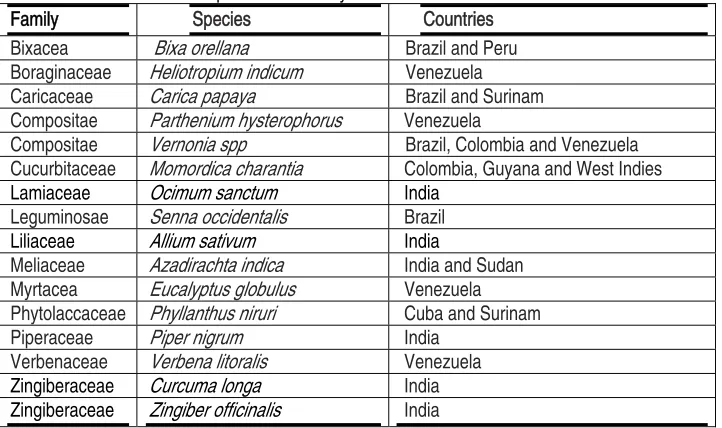
There is a consensus among the scientific community that natural products have been playing a dominant role in the discovery and development of drugs for the treatment of human diseases [35]. Indeed, the vast majority of the existing antiămalarial chemotherapeutic agents are based on natural products, and this fact anticipates that new leads may certainly emerge from the tropical plant sources, since biological chemoădiversity continues to be an important source of molecular templates in the search for antiămalarial drugs [36-38]. However, on the basis of the plants which appear to be widely used in traditional medicine for fever and joint pains as symptoms of malaria (Listed in Table 1), researches were moved toward the search of wonder antiămalarial compound that would have unending power to fight with this deadly parasite [39]. Therefore, time to time different plants have been screened for their antiămalarial potential. Bowdichia virgilioides a traditionally reputed plant among American natives was found active against P. falciparumăMRCă20 and P. berghei infected mice in dose of 250mg/kg [40]. Marcela et al. [41] experimentally evaluated the plasmodicidal activity of Solanum nudum, a plant that have already been used in traditional medicine in Colombia to cure malaria. Oliveira et al. [42] have demonstrated the antiămalarial activity of Bidens pilosa, in patients infected respectively with P. falciparum and P. berguei in Brazilian endemic area. Similarly in a laboratory experiment, methanol extract of Remijia ferruginea (Brazilian plant) was found active in P. berghei infected mice [43]. Okunade and Lewis [44] reported the antiămalarial activity of leaves and stem extracts of Lantana cujabensis Schauer, a shrub found in the Amazonian and Andean forests of South America. Mcphail et al. [44] evaluated the antiămalarial activity of the ethyl acetate extract of marine cyanobacterium Lyngbya majuscula (Oscillatoriaceae) in vitro model for P. falciparum.
Table 1. List of some plants traditionally used to treat malaria in different countries Family Species Countries
Bixacea Bixa orellana Brazil and Peru
Boraginaceae Heliotropium indicum Venezuela Caricaceae Carica papaya Brazil and Surinam Compositae Parthenium hysterophorus Venezuela
Compositae Vernonia spp Brazil, Colombia and Venezuela Cucurbitaceae Momordica charantia Colombia, Guyana and West Indies
Lamiaceae Ocimum sanctum India
Leguminosae Senna occidentalis Brazil
Liliaceae Allium sativum India
Meliaceae Azadirachta indica India and Sudan Myrtacea Eucalyptus globulus Venezuela Phytolaccaceae Phyllanthus niruri Cuba and Surinam
Piperaceae Piper nigrum India
Verbenaceae Verbena litoralis Venezuela
Zingiberaceae Curcuma longa India
PAGE |
390
|
Moreover, various plants of Indian subcontinent have also been used in antiămalarial research including Citrus cinensis, Carcia papaya, Swertia chirata [46], Bidens pilosa [47], Ocimum sanctum [48], Piper sarmentosum, Andrographis paniculata and Tinospora crispa [49]. Coppi et al. [50] tested stage specific activity of ÂallicinÊ, isolated from garlic and found that a 4ăday regimen of allicin administered either orally or intravenously significantly decreased parasitemias or increased the survival of infected mice by 10 days. In the light of some advance researches it was come out that use of purified plant secondary substances than crude extracts might be better practice. However, the most important and diverse biopotency has been observed in naturally occurred plant secondary substances belonging to different groups, listed in Table-2 [51ă60]. These substances interestingly show synergism with crude plant extracts and other plant metabolites as well. Mishra et al. [61] has documented the synergistic activity of
curcumin, with crude extracts of Andrographis paniculata and Hedyotis corymbosa. Evidently, curcumin is a novel compound isolated from Curcuma longa that has already been reported for its antiămalarial potential [62]. Further, its efficacy has also evaluated and advocated in combination with artemisinin (derived from Artemisia annua) against Plasmodium [63]. Recently, Mishra et al. [64] has reported for the first time Andrographolide as the major bioactive antiămalarial constituent of the plant, Andrographis paniculata using both in vitro and in vivo approaches and evaluated the interaction of Andrographolide with other established antiă
malarial compounds such as curcumin and artesunate. This has added new information on combination of potent antiămalarial compounds for novel combinatorial drug therapy against drugă
resistant malaria.
Table 2. A short list of anti-malarial plant secondary substances
Plant Compound Activity* References Artemisia annua Artemisinin 0.01øg/ml (EC50) [50]
Azadirachta indica Gedunin 0.72 mg/ml (IC50) [51]
Nimbinin 0.77 mg/ml (IC50) [51]
Meldenin 5.23 mg/ml (IC50) [52]
Isomeldenin 50.0 mg/ml (IC50) [52]
Cyperus rotundus αăCyperone 5.5 øg/ml (IC50) [53]
Erycoma longifolia Eurycomanone 48.1 ng/ml (EC50) [54]
Morinda lucida Digitolutein 12.92 øg/ml (EC50) [55]
Rosa rugosa Rugosal A 1.4 øg/ml (EC50) [50]
Siparuna andina Sipandinolide 46.2 øg/ml (IC50) [56]
Salacia kraussii Celastrol 180.9 ng/ml (IC50) [57]
Triphyophyllum peltatum Betulinic acid 10.46 øg/ml (IC50) [58]
Xanthium strumarium Tomentosrin 7.8 øg/ml (IC50) [59]
*activity against P. falciparum
Conclusion
Off course, the gravity of the situation has been compounded by the absence of a vaccine for protection. Further, plant compounds and its derivatives would only be a viable option for the treatment of drug resistant malaria. However, not a lot, but a satisfactory report has been found in favor of herbal anti-malarials. These drugs would have novel modes of action or be chemically different from the drugs in current use. The effective antiămalarial activity of some plantăbased formulations has recently generated much interest to explore plant resources for their possible antiămalarial efficacy, specially based on ccombination therapy, which have
become the practice of choice because of their increased therapeutic efficacy over monotherapy and the other benefits include decreased cytotoxicity, delay or prevention of the development of drug resistance.
Acknowledgments
PAGE |
391
|
References
[1]. Snow RW, Guerra CA, Noor AM, Myint HY, Hay SI. The global distribution of clinical episodes of Plasmodium falciparum malaria. Nature 2005; 434: 214ă117.
[2]. World Health Organization. The World Health Report. Health Systems Financing: the Path to Universal Coverage. World Health Organization, Geneva. 2010; pp 96.
[3]. Pasvol G. Protective hemoglobinopathies and Plasmodium falciparum transmission. Nature Genetics, 2010; 42, 284-285. doi:10.1038/ng0410-284. [4]. Prudencio M, Mota MM, Mendes AM.
A toolbox to study liver stage malaria. Trends Parasitol. 2011; 27: 565ă574. [5]. Sahu NK, Sahu S, Kohli DV. Novel
molecular target for antiămalarial drug development. Chem. Bio. Drug Design 2008; 71: 287ă297.
[6]. Pink R, Hudson A, Mouries MA, Bendig M. Opportunities and challenges in antiparasitic drug discovery. Nature Rev. Drug Discovery 2005; 4: 727ă740.
[7]. Wiwanitkit V. Plasmodium and host lactate dehydrogenase molecular function and biological pathways: implication for antiămalarial drug discovery. Chem. Bio. Drug Design 2007; 69: 280ă283.
[8]. Udeinya IJ, Brown N, Shu EN. Fractions of an antiămalarial neemă
leaf extract have activities superior to chloroquine, and are gametocytocidal. Ann. Trop. Med. Parasitol. 2006; 100(1): 17ă22.
[9]. Guadalupe E, Garcia L, Rodriguez JB. Current status and progress made in malaria chemotherapy. Curr. Med. Chem. 2007; 14: 289ă314.
[10].Ridley RG. Medical need, scientific opportunity and the drive for antimalarial drugs Nature 2002; 415(6872): 686ă693.
[11].Ibezim EC, Odo U. Current trends in malaria chemotherapy. Afr. J. Biotechnol. 2008; 7: 349ă356.
[12].Guerra F. The introduction of cinchona in the treatment of malaria. J. Trop. Med. Hyg. 1977; 80: 135ă
140.
[13].Achan J, Talisuna AO, Erhart A, Yeka A, Tibenderana JK, Baliraine FN, Rosenthal PJ, D'Alessandro U. Quinine, an old antiămalarial drug in a modern world: role in the treatment of malaria. Malar. J. 2011; 10: 144ă156. [14].Coatney GR. Pitfalls in a discovery:
the chronicle of chloroquine. Am. J. Trop. Med. Hyg. 1963; 12: 121ă128 [15].Kurcer MA, Simsek Z, Zeyrek FY,
Atay S, Celik H, Kat I, Topluoglu S. Efficacy of chloroquine in the treatment of Plasmodium vivax malaria in Turkey. Ann. Trop. Med. Parasitol. 2004; 98: 447ă451.
[16].Baird JK, Wiady I, Fryauff DJ, Sutanihardja MA, Leksana B, Widjaya H, Kysdarmanto, Subianto B. In vivo resistance to chloroquine by Plasmodium vivax and Plasmodium falciparum at Nabire, Irian Jaya, Indonesia. Am. J. Trop. Med. Hyg. 1997; 56: 627ă631.
[17].Phillips-Howard PA, Steffen R, Kerr L, Vanhauwere B, Schildknecht J, Fuchs E, Edwards R. Safety of mefloquine and other antiămalarial agents in the first trimester of pregnancy. J. Travel Med. 1998; 5(3): 121ă126.
[18].Sweeney TR. The present status of malaria chemotherapy: mefloquine, a novel antiămalarial. Med. Res. Rev. 1981; 1: 281ă301.
[19].Price RN, Uhlemann AC, Brockman A, McGready R, Ashley E, Phaipun L, Patel R, Laing K, Looareesuwan S, White NJ, Nosten F, Krishna S.. Mefloquine resistance in Plasmodium falciparum and increased pfmdr1 gene copy number. Lancet 2004; 364(9432): 438ă47.
[20].Yavo W, Bla KB, Djaman AJ, Assi SB, Basco LK, Mazabraud A, Koné M.In vitro susceptibility of Plasmodium
falciparum to monodesethylamodiaquine, quinine,
mefloquine and halofantrine in Abidjan (Côte d.Ivoire) Afr. Health Sci. 2010; 10(2): 111ă 116.
[21].Basco LK, Le Bras J. In vitro activity of halofantrine and its relationship to other standard antiămalarial drugs against African isolates and clones of Plasmodium falciparum. Am. J. Trop. Med. Hyg. 1992; 47(4): 521ă527. [22].Frosch T, Popp J. Structural analysis
of the antiămalarial drug halofantrine by means of Raman spectroscopy and density functional theory calculations. J. Biomed. Opt. 2010; 15(4): 041516. doi: 10.1117/1.3432656.
[23].Salako LA, Sowunmi A, Walker O. Evaluation of the clinical efficacy and safety of halofantrine in falciparum malaria in Ibadan, Nigeria. Trans. R. Soc. Trop. Med. Hyg. 1990; 84(5): 644ă647.
[24].Putrianti ED, Silvie O, Kordes M, Borrmann S, Matuschewski K. Vaccineălike immunity against malaria by repeated causalăprophylactic treatment of liverăstage Plasmodium parasites. J. Infect. Dis. 2009; 199(6): 899ă903.
[25].Fernando D, Rodrigo C, Rajapakse S. Primaquine in vivax malaria: an update and review on management issues. Malar. J. 2011; 10: 351 http://www.malariajournal.com/content /10/1/351.
[26].Dominguez JN, Leon C, Rodrigues J, Gamboa de Domínguez N, Gut J, Rosenthal PJ. Synthesis and antiă
malarial activity of sulfonamide chalcone derivatives. Farmaco. 2005; 60(4): 307ă311.
PAGE |
392
|
responsible for sulfone and sulfonamide resistance in PlasmodiumԜfalciparum. Proc Natl. Acad. Sci. USA. 1997; 94: 13944ă
13949.
[28].Michel R. Comparative study of the association of sulfalene and pyrimethamine and of sulfalene alone in mass chemoprophylaxis of malaria. Med. Trop. 1968; 28: 488ă494. [29].Nzila A. The past, present and future
of antifolates in the treatment of Plasmodium falciparum infection. J. Antimicrob. Chemother. 2006; 57: 1043ă1054.
[30].White NJ. Preventing antiămalarial drug resistance through combinations. Drug Resist. Update 1998; 1: 3ă9. [31].Willcox M. Artemisia species: From
traditional medicines to modern antiă
malarialsăand back again. J. Altern. Compliment Med. 2009; 15: 101ă109. [32].DeprezăPoulain R, Melnyk P. 1,4ă
Bis(3ăaminopropyl) piperazine libraries: from the discovery of classical chloroquineălike antiă
malarials to the identification of new targets. Comb. Chem. High. Throughput Screen 2005; 8: 39ă48. [33].Jones MK, Good MF. Malaria
parasites up close. Nat. Med. 2006; 12: 170ă171.
[34].Winter RW, Kelly JX, Smilkstein MJ, Dodean R, Bagby GC, Rathbun RK, Levin JI, Hinrichs D, Riscoe MK. Evaluation and lead optimization of antiămalarial acridones. Exp. Parasitol. 2006; 114: 47ă56.
[35].Upadhyay RK, Ahmad S. Ethnoă
medicinal plants and their pharmaceutical potential. J. Pharm. Res. 2012; 5(4): 2162ă2173.
[36].Ziegler HL, Staerk D, Christensen J, Hviid L, Hagerstrand H, Jaroszewski JW. In vitro Plasmodium falciparum drug sensitivity assay: inhibition of parasite growth by incorporation of stomatocytogenic amphiphiles into the erythrocyte membrane. Antimicrob.
Agents Chemother. 2002; 46: 1441ă
1446.
[37].Kalauni SK, Awale S, Tezuka Y, Banskota AH, Linn TZ, Asih PB, Syafruddin D, Kadota S. Antiămalarial activity of cassaneă and norcassaneă
type diterpenes from Caesalpinia crista and their structureăactivity relationship. Biol. Pharm. Bull. 2006; 29: 1050ă1052.
[38].[38]. Portet B, Fabre N, Roumy V, Gornitzka H, Bourdy G, Chevalley S, Sauvain M, Valentin A, Moulis C. Activityăguided isolation of antiplasmodial dihydrochalcones and flavanones from Piper hostmannianum var. berbicense. Phytochemistry 2007; 68: 1312ă1320. [39].Roth GN, Chandra A, Nair MG. Novel
bioactivities of Curcuma longa constituents. J. Nat. Prod. 1998; 61: 542ă545.
[40].Deharo E, Bourdy G, Quenevo C, Munoz V, Ruiz G, Sauvain M. A search for natural bioactive compounds in Bolivia through a multidisciplinary approach. Part V. Evaluation of the antiămalarial activity of plants used by the Tacana Indians. J. Ethnopharmacol. 2001; 77: 91ă98. [41].Marcela E, Silvia B, Jaime C, Pilar P.
Effect of Solanun nudum extracts on the liver of mice infected with Plasmodium berghei. Amer. J. Chinese Med. 2001; 29: 477ă484. [42].Oliveira FQ, AndradeăNeto V, Krettli
AU, Brandao MGL. New evidences of anti malarial activity of Bidens pilosa root correlated with polyacetylene and flavonoids. J. Ethnopharmacol. 2004; 93: 39ă42.
[43].Andrade-Neto VF, Brandão MGL, Stehmann JR, Oliveira LA, Krettli AU. Antiămalarial activity of Cinchona like plants used to treat fever and malaria in Brazil. J. Ethnopharmacol. 2003; 87: 253ă56.
[44].Okunade AL, Lewis WH. Oleanene constituents of Lantana cujabensis. Fitoterapia 2004; 75: 327ă331.
[45].McPhail KL, Correa J, Linington RG, Gonzalez J, Ortega-Barría E, Capson TL, Gerwick WH.Antiămalarial linear lipopeptides from a Panamanian strain of the marine Cyanobacterium Lyngbya majuscula. J. Nat. Prod. 2007; 70: 984ă88.
[46].Bhat GP, Surolia N. In vitro antiă
malarial activity of extracts of three plants used in the traditional medicine of India. Am J Trop Med Hyg 2001; 65(4): 304ă308.
[47].Saxena S, Pant N, Bhakuni RS. Antiă
malarial agents from plant sources. Cur. Sci. 2003; 85: 1314ă1326. [48].Gupta SK, Prakash J, Srivastava SV.
Validation of claim of Tulsi, Ocimum sanctum Linn. as a medicinal plant. Indian J. Exp. Biol. 2002; 40(7): 765ă
73.
[49].Rahman NNNA, Furuta T, Kojima S, Tabane K, Ali-Mohd M. In vitro and in vivo study revealed that malarias medicinal plants, Piper sarmentosum, Andrographis paniculata and Tinospora crispa produce considerable antiămalarial effect. J. Ethnopharmacol. 1999; 64: 249ă254. [50].Coppi A, Cabinian M, Mirelman D,
Sinnis P. Antiămalarial activity of Allicin, a biologically active compound from garlic gloves. Antimicrob. Agents Chemothe. 2006; 50(5): 1731ă1737. [51].Rucker G, Walter RD, Manns D,
Mayer R. Antimalarial activity of some natural peroxides. Planta Med. 1991; 57: 295ă296.
[52].Bray DH, Warhurst DC, Connolly JD, OÊNeill MJ, Phillipson JD. Plants as source of antimalarial drug. Pt.7 activity of some species of Meliaceae plants and their constituent limoids. Phytother. Res. 1990; 4: 29ă35. [53].Joshi SP, Rojatkar SR, Nagasampagi
BA. Antimalarial activity of neem (Azadirachta indica). J. Med. Aromat. Plant Scie. 1998; 20: 1000ă002. [54].Weenen H, Nkunya M H H, Bray DH,
PAGE |
393
|
compounds containing an a, b-unsaturated carbonyl moiety from Tanzanian medicinal plants. Planta Med 1990; 56: 371ă73.
[55].Kardono LBS, Angerhofer CK, Tsauri S, Padmawinata K, Pezzuto JM, Kinghorn AD. Cytotoxic and antimalarial constituents of the roots of Eurycoma longifolia. J. Nat. Prod. 1991; 54: 1360ă1367.
[56].Koumaglo K, Gbeassor M, Nikabu O, De Souza C, Werner W. Effects of three compounds extracted from Morinda lucida on Plasmodium falciparum. Planta Med. 1992; 58: 533ă534.
[57].Jenett-Siems K, Siems K, Jakupovic J, Solis PN, Gupta MP, Mockenhaupt FP, Bienzle U, Eich E.Sipandinolide: a butenolide including a novel type of carbon skeleton from Siparuna
andina. Planta Med. 2000; 66(4): 384-385.
[58].Figueiredo, JN, Raz B, Sequin U. Novel quinone methides from Salacia kraussii with in vitro antimalarial activity. J. Nat. Prod. 1998; 61: 718ă
723.
[59].Bringmann G, Günther C, Saeb W, Mies J, Wickramasinghe A, Mudogo V, Brun R. Ancistrolikokines AăC:
New 5,8¢-coupled naphthylisoquinoline alkaloids from
Ancistrocladus likoko. J. Nat. Prod. 2000; 63: 1333ă1337.
[60].Joshi SP, Rojatkar SR, Nagasampagi BA. Antimalarial activity of Xanthium strumarium. J. Med. Aromat. Plant Scie. 1997; 19: 366ă68.
[61].Mishra K, Dash AP, Swain BP, Dey N. Anti-malarial activities of Andrographis
paniculata and Hedyotis corymbosa extracts and their combination with curcumin. Malar. J. 2009; 8: 26-35. [62].Reddy RC, Vatsala PG, Keshamouni
VG, Padmanaban G, Rangarajan PN. Curcumin for malaria therapy. Biochem. Biophys. Res. Commun. 2005; 326: 472ă474.
[63].Nandakumar DN, Nagaraj VA, Vathsala PG, Rangarajan P, Padmanaban G. Curcumină
artemisinin combination therapy for malaria. Antimicrob. Agents Chemother. 2006; 50: 1859ă1860.
[64].Mishra K, Dash AP, Dey N. Andrographolide: A novel antiă
![Figure. 2. Complex life cycle of malaria parasite [3]](https://thumb-us.123doks.com/thumbv2/123dok_us/570295.2056263/2.612.112.473.60.223/figure-complex-life-cycle-malaria-parasite.webp)