doi: 10.15171/rdme.2018.015 https://rdme.tbzmed.ac.ir
The process of knowledge acquiring in nursing education: grounded
theory
Zahra Marzieh Hassanian1ID, Mohammad Reza Ahanchian2ID, Hossein Karimi-Moonaghi3*ID
1Chronic Disease (Home Care) Research Center, Hamadan University of Medical Sciences, Hamadan, Iran
2Department of Educational Sciences, Faculty of Educational Sciences, Ferdowsi University of Mashhad, Mashhad, Iran 3Department of Medical-Surgical Nursing, School of Nursing and Midwifery, Mashhad University of Medical Sciences,
Mashhad, Iran
Introduction
Universities and research institutes are academic communities that play a vital role in the creation and transmission of scientific knowledge. They are fundamental resources1 for social progress and development through
knowledge management (KM). The KM theory suggests that the strength of any organization is in the knowledge of its members.2 KM has many values for higher
education institutions and can help institutions develop initiatives towards the achievement of goals.3 Through
an effective KM process, professional knowledge can be developed by acquisition and sharing of key personnel
experiences.2 Since knowledge is the most important asset
of any organization, it is assumed that every experience is utilized properly. Thus, individuals are aware of the value and influence of knowledge and the power of gaining, capturing, and storing it, and, finally, sharing it with the organization.4 Nursing education is known as one
of the best professional practices by which knowledge is acquired.5 KM and its requisite skills related to research
in nursing education help clarify the needs of research knowledge and knowledge acquisition, and help students to recognize and apply it.6 In nursing, effective knowledge
is a composite of basic knowledge, tacit and experimental
*Corresponding author: Hossein Karimi-Moonaghi, Email: [email protected]
Publishing Group TUOMS
Article Type: Original Research
Article History: Received: 2 Aug. 2018 Accepted: 27 Oct. 2018 epublished: 30 Dec. 2018
Keywords:
Knowledge acquisition Knowledge management Nursing knowledge Qualitative study
Abstract
Background:Knowledge acquisition, as a part of knowledge management, plays a valuable role in nursing education. Hence, the education system seeks strategies that allow nursing faculty members and students to acquire knowledge and build experiences. The present study explores the process of acquiring knowledge in nursing education.
Methods: In this study, which was carried out in Mashhad School of Nursing and Midwifery, Iran, the grounded theory (GT) method proposed by Strauss and Corbin was used. Data were collected through 29 semi-structured interviews, including 17 interviews with faculty members and 12 interviews with nursing students using purposeful and theoretical sampling. Using Strauss and Corbin’s method, the data were compared partially, deeply, and persistently.
Results: The main concern of this study was a knowledge deficit in clinic knowledge by nursing students, which seems to indicate a shortage in learning and acquiring knowledge. The core category was the relative acquisition of knowledge of nursing which is not advanced. Within a context of relative dynamism, factors that facilitate or constrain knowledge acquisition were examined within a process of the acquisition of theoretical knowledge and its application to clinical nursing knowledge along with nursing experience. The consequence is expected to be an improvement in nursing knowledge among nursing students in clinical practice
Conclusion: Acquiring up-to-date and advanced nursing knowledge is essential in the development process. It is necessary to encourage the acquisition of knowledge, which primarily includes knowledge acquisition in the mission and strategic planning of nursing education. As a result, there should be operational planning for improvements in the gain of practical knowledge.
Article info
Knowledge acquiring in nursing education
knowledge, gained from clinical activities and scientific or intellectual knowledge.2 Through KM, universities can
create an atmosphere in which a combination of explicit and implicit information can be shared by their faculty members.7 To acquire tacit knowledge, the education and
health system need a collaborative knowledge acquisition culture.8
The knowledge acquired from books or workshops is known as formal or explicit knowledge. In a broad sense, KM is a management paradigm for the management of organizational knowledge through the processes of detecting and leveraging it to increase the organization’s capability to compete.9 More dynamic participation
of faculty and students through data and information synergies to acquire knowledge can lead to more effective activities in the organization.10 In nursing education
studies about KM, such as Kenner and Fernandes, they highlight the role of KM in health care and the transfer of educational models to a dynamic learning framework,11
the acquisition of organizational knowledge through research activities,7 and the reduction in the time and cost
of learning. Considering the importance of know-how, they emphasize the development of teaching and learning activities. This researcher did not find any published article about KM and its dimensions in nursing at the time of the current study.6 In this case, so little is known
that the knowledge acquisition process is yet to be clearly identified. Furthermore, a fundamental activity in nursing education is knowledge acquisition. Based on a search for nursing resources, it is unclear how the knowledge acquisition process occurs in nursing. The knowledge acquisition process is a subjective phenomenon; thus, it is necessary that it be studied through qualitative research in order to find rich, in-depth information that has the potential to clarify various dimensions of complex knowledge acquisition. The in-depth, probing nature of qualitative research is well-suited to the study of knowledge acquisition.
Since no study has been done on the process of the acquisition of nursing knowledge and very little information exists with regard to the process of knowledge acquisition in the field of nursing education,6 this study
has been conducted to bridge that gap. This study aimed to explore the process of knowledge acquisition among nursing students in nursing education.
Material and Methods
This study uses Strauss and Corbin’s approach to the grounded theory (GT) method (version 1998).12 The GT
approach was selected for its usefulness in describing and understanding key social, psychological, and structural processes that occur in social situations along with knowledge acquisition process. The GT approach is selected to generate comprehensive explanations about the knowledge acquisition process that are grounded in reality. GT is often used when there are few research
findings in the subject area13 and there is little research
about knowledge acquisition in nursing education. The GT method (version 1998) includes a step context, a causal circumstance, factors that facilitate or constrain and processes and consequences. GT is a research methodology with origins in interpretive, symbolic interactions and affects knowledge construction.12 In
this paper, this paradigm model is used to guide the presentation of the findings.
We used the GT research plan as a common method of theoretical sampling, simultaneous data production and analysis, constant comparison, open, axial, and theoretical coding, and category saturation.12,14
Setting
This study was carried out at Mashhad University of Medical Sciences, School of Nursing and Midwifery, Iran, where nursing educators and students in graduate and post graduate nursing programmes teach and learn nursing. In this project, the main source for completing the data gathering was interview and observation.
Sampling
Purposive sampling was applied as the first step, which involved theoretical sampling conforming to identify the codes and categories. Purposive sampling was initiated with faculty members, as they play a significant role in the knowledge acquisition process, and continues with nursing students. Theoretical sampling was continued with clinical educators and nursing student in BSc, MSc, and PhD programmes. Nursing faculty and students who involved in nursing education can serve as appropriate key informants in the context of knowledge acquisition in nursing education. To confirm variety in sampling, we engaged participants from nursing educators and BSc, MSc, and PhD level nursing students. Educators were interviewed at the beginning of the study more intensively than students, because they play a greater role in the knowledge acquisition process in continuing years. In this study, the study population included 12 students and 17 educators.
Data collection
The central strategy for data collection was semi-structured interviews; in some cases, observation was used as well. This study required understanding and cooperation between the researcher and the participants, as the interviews and observations were mutual, contextual, and value-confined.15 Some guiding questions were developed
updated knowledge? What is acquiring knowledge? What is important about acquiring knowledge? What are the dimensions of acquiring knowledge? How does acquiring knowledge occur?
All interviews were audio-taped, transcribed verbatim, and analysed without interruption by the first author. Reflective notes were made immediately after each interview.
The researcher used memos and records of feelings, problems, analysis, interpretations, and directions for further data collection in the analysis to help determine properties of concepts along with their dimensions. Participants were observed in the classroom and in clinical locations where knowledge acquisition in the context of nursing occurs. The aim of the observation was to generate different types of data to confirm the interview data. The observation method was done by an observer, and focused on a singular area such as the knowledge acquisition process in seven educational situations. The researcher observed situational education, annotated the notable cases, and employed these data to support the interviewer data.
Data coding and analysis
As concepts developed from the data, instantaneous analysis and ongoing constant comparison were used for analysis. Each interview offered guidance for the next one. Open and axial coding was used along with reflection; the coding paradigm served as guidance to assess connected categories and concepts during data analysis. In open coding, data are broken down into separate parts, closely examined, and compared for similarities and differences. The findings of the qualitative stage of the study were obtained using the inductive process. During coding, concepts were extracted from the text, and thoughts, ideas, and meanings were revealed therein. Encoding at this stage was done in two coding modes using participant words and implicit coding.
The purpose of axial coding is to begin the process of remounting data that were fractured during open coding. In axial coding, links between categories are established in new ways; for this purpose, the paradigm is used to present the data. In axial coding, categories are related to their subcategories along the lines of their properties and scopes to form more explicit and complete explanations about the phenomena. In the central coding of the categories, subcategories are conceptually linked to their characteristics and dimensions. Each phenomenon identified becomes more clearly identified through sub-categories associated with that phenomenon. Categories were formed by analysing the process of comparing features and dimensions to determine similarities and differences. The relationship between the categories, which explored the process of knowledge acquisition in nursing education, was considered.
Selection coding is the process of integrating and refining
the theory. At this stage, the researcher organized the categories on the basis of a concept that has a high degree of enlightenment. In selected coding, the integration process is used until a central category is discovered.
Data trustworthiness
For developing trustworthiness, Lincoln & Guba’s criteria were used.15,16 Two researchers who have had prolonged
engagement in nursing education for many years interacted with participants and were assigned adequate time to interview the participants in order to learn about the culture, language, and views of the participants and to provide rich and accurate information to affirm credibility. The data were confirmed over extracted codes approved by the participants. The participants were selected with maximum variance12 to provide transferability and
credibility of the finding. The interviews and extracted coding were reviewed by two faculty supervisors, both associate professors in nursing and education management with experience in qualitative research to assure conformability. Dependency was established through reviewing and use of additional commentaries from other nursing PhD students in the same nursing and midwifery faculty, who did not participate in the study. Coding, data analysis, and interpretation were carefully explained and reviewed by supervisors. The first researcher had done a curtailed literature study in the initial research phase. Data integration was done at the level of both the educators and the students, and on the results of observations and interviews. To improve credibility, the transcribed interviews, along with open codes, were emailed to some of the interviewees; this developed the credibility of the study. Credibility was strengthened through member checking and peer checking. Moreover, the results and interpretations of this study were reviewed by two supervisors.
Results
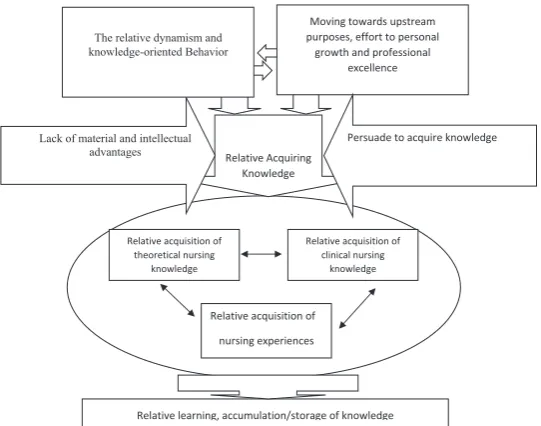
Individual characteristics of the participants are listed in Table 1, while major categories are presented in Table 2. The findings of this study include the main issues that have been extracted through data analysis. The main concern of this study was a knowledge deficit in clinic knowledge by nursing students, which seems to indicate a shortage in learning and acquiring knowledge. The core category was the relative acquisition of knowledge of nursing which is not advanced. Within a context of relative dynamism, factors that facilitate or constrain knowledge acquisition were examined within a process of the acquisition of theoretical knowledge and its application to clinical nursing knowledge along with nursing experience; these are displayed in Figure 1. Major categories include:
Knowledge acquiring in nursing education
Table 1. Individual characteristics of the participants
Degree Teacher Student Sex Age range (y) Semester Duration of educational experiences (y)
Duration of clinical experiences
Men Women
PhD 5 3 3 2 34-48 7-17 < 6 months
2 1 36-50 2-4 1-17 1-6
MSc 12 - 1 28- 38 < 2 0
1 5 39-48 10- 25 0-8 year
3 2 49-59 25-30 1-6 year
BSc 3 1 2 27-30 1-5 - 6-8
6 4 2 19-25 1-8 -
-Table 2. Inter-relationship between the core category, generic categories, and subcategories
Core category Generic categories Subcategories Open cods
Relativeacquiring knowledge & learning
Moving towards upstream purposes (causal condition)
Personal growth Professional excellence
Resolving knowledge needs, Responding to students, Help to patient and graduated as nurse.
The relative dynamism (context)
Relative educational environmental requirements, Relative knowledge-oriented behavior
Relative access to knowledge, sources book, internet and teacher. Relative doing task work, Clinical situation, Indigested behaviour.
Persuade to acquire knowledge and deficit of it (facilitator and inhibitor)
Encouragement in order to acquire knowledge, Deficit of material and intellectual advantages (Morals)
Attendance in clinic, Encouraging to learning nursing knowledge, Acquiring nursing skill, Shortage of teachers, Educational program/ curriculum, Educational behaviors (rare), Clinical practice.
Relative acquisition of knowledge in nursing (processes)
Relative acquisition of theoretical knowledge in nursing, Relative acquisition of Clinical nursing knowledge, Relative acquisition of nursing experiences
Realization of knowledge, Relative acquiring knowledge of attendance in class, workshop, studying books, articles, debate to classmate, assignments, Relative acquiring clinical knowledge, Cope with clinical routine, Acquiring teaching experiences, Professional experiences.
Relative accumulation of knowledge (consequences)
Learning,
Storage of knowledge
Different level of intellectual knowledge, relative acquired nursing knowledge, teaching, Books, articles, thesis, students graduated in different level.
knowledge. These needs occur after questions develop in one’s mind because of curiosity; in this respect, one of the participants (teacher) stated that:
“I usually study the related resources of my courses. The new information motivates me. It is necessary that I collect information about subjects of the lesson. Needs of students and organizations make us pursue knowledge. In theoretical courses, some questions are raised by students; I try to find out their answers and collect information.”
A1: Personal growth
Having knowledge is valuable for nursing students in order to perform activities and is a necessity in today’s society. Students acquire knowledge for personal development. As they do class assignments and meet the expectations of teachers, they walk the path of growth and development in the scientific aspect. In this case, one of the participants (student) stated that:
“Good clinical care needs good theory. We acquire knowledge through classes and then use it in clinical practice. I learn my lessons to improve and change the past. Using my knowledge, I can help others.”
A2: Professional excellence
Some participants acquired knowledge for the purpose of best carrying out their professional duties, based on faculty policy. In this respect, one of the participants (teacher) stated that:
“I usually study subjects that are related to my courses. New information will motivate me more. I collect information that is necessary in clinic and for students. I am collecting knowledge about them.”
B: Context of relative dynamism
Hassanian et al
for teaching. Therefore, new teachers make more efforts to acquire knowledge in the early years compared to the later years. Based on the experiences of some participants, students sought to gain knowledge because their status as students required it. In this regard, the experience of one of the participants (student, No. 13) was:
“I tried to participate in all the discussions and to listen actively in the classes. I asked many questions, even about the things that were clear to me. I would like to know things completely. It didn’t make any difference to me whether a course had discussion or not, but some of my passive friends were just sitting there, busy with their own problems. These things are problematic.”
B1: Relative educational environmental requirements Due to the lack of experiences of the participants, they have more opportunities to gain knowledge by teaching in an educational environment. At the beginning of the educational experience, due to the lack of experience, knowledge acquiring is more thorough than it is later.
B2: Relative knowledge-oriented behaviour
All individuals in school acquire knowledge, but it is relative, due to different levels of students’ interests and ability. In the case of deficiencies in student learning, one participant (teacher) stated that:
“Some students are weak or disinterested; we must force them to do assignments. Some students have little motivation to learn and are not interested in nursing.”
C: facilitator and inhibitor were encouragements to acquire knowledge and the deficit of it
There are several factors that affect the nursing knowledge. They are described as facilitators and inhibitors in this section.
C.1: Encouragement in order to acquire knowledge
Educators and students were encouraged to gain knowledge in different forms. Providing the resources, students’ questions, and discussing the clinical status of patients’ needs were some of the strategies to encourage the gaining of knowledge. Some things like questions, curiosity, homework, the need to know, and keeping track of students’ problems encourage students to acquire knowledge. In this case, one of the participants (teacher) stated that:
“They ignore weak students, who become frustrated and disillusioned. Eventually, they believe that they really are weak students. There is no way to change their beliefs, but there are exceptions—some instructors do care about the weakness of students. I try to ask weak students to give presentations.”
C.2: Deficit of material and intellectual advantages (morals) Sometimes, there is a shortage of educators or a failure in the training programmes. In such cases, some students in different courses are provided training by students of the master’s programme. Teaching of one subject by several instructors, following routines in the ward, lack of updated books, and lack of interest in nursing all have a negative effect on acquiring knowledge. With regard to following routine and the difficulty of applying advanced nursing knowledge, one of the participants (student) mentioned:
“Well, we have to, when the instructors say: ‘It’s originally like that, but in this section the routine is like this.’ We have to work on their routine and cannot change the routine.”
D. Process of knowledge acquisition was relative acquisition of knowledge in nursing
Nursing knowledge is acquired relatively in the nursing
19
educators and post-graduate students: Both quantitative and qualitative research approaches were used by educators. Participants carried out their storage of knowledge in the nursing field.
The interrelationship between the subcategories in nursing knowledge acquisition demonstrates that in nursing education, acquiring knowledge is relative.
Relative Acquiring Knowledge Lack of material and intellectual
advantages
Moving towards upstream purposes, effort to personal
growth and professional excellence The relative dynamism and
knowledge-oriented Behavior
Relative learning, accumulation/storage of knowledge Relative acquisition of
theoretical nursing knowledge
Relative acquisition of clinical nursing
knowledge
Relative acquisition of nursing experiences
Persuade to acquire knowledge
Knowledge acquiring in nursing education
faculty in different ways. Theoretical knowledge is acquired mainly in classes, or by studying articles, research papers, and theses, while clinical knowledge is acquired in clinics through clinical education. In addition, teachers and students gained empirical knowledge in the field of nursing in different ways.
D.1: Relative acquisition of theoretical knowledge in nursing To acquire knowledge, participants used available books and validated articles. Based on the experiences of undergraduate students, they first gained theoretical knowledge and then acquired practical knowledge through internship. Students processed the acquired knowledge and then placed it in their cognition. This condition could be especially seen in subjects in which students had prior information about the topic. Subjects on which they had no prior information were accepted implicitly. The experience of one of the participants (student, No. 5) is recounted below:
“See, at least we can accept it implicitly, because we know nothing about it. As soon as it is said, if it’s implicit, we accept it.”
Data and information which was gathered in analogue observational manner confirmed interview manner. To confirm interviews which created the category of “relative acquisition of theoretical knowledge in nursing”, the researcher observed a situation that confirmed “relative acquisition of theoretical knowledge in nursing;” this situation is explained below:
“I inferred that a few students, gradually over four years, had less desire to acquire nursing knowledge than they did in the initial phases of the first semester. I asked about this situation and why it occurred. A teacher told me that some of the students had been labelled as poor students as they hardly acquire knowledge. But some of them were occasionally supported in the psychosocial aspect by some of the teachers, and they could possibly gain knowledge. I concluded that labelling as poor students, punishment, and ostracism lead to weakening of desire for knowledge acquisition.”
D.2: Relative acquisition of clinical nursing knowledge Based on the college syllabus, after gaining theoretical knowledge, students first acquired practical knowledge and then clinical knowledge right from the bedside. In the field of intensive care, based on the type of course, students spent more time in sectors related to their training. Below is the experience of one of the participants (teacher No. 29):
“I had classes with post-graduate and intensive care nursing students. I teach specialized courses to intensive care students; they have internship as well.”
In some clinical training programmes, post-graduate students attend internships as clinical instructors. These students do not have educational experience and some even lack sufficient clinical experience. These cases result
in decreased clinical knowledge acquisition by students, although some of these training programmes were guided by a senior instructor.
D.3: Relative acquisition of nursing experiences
Finding a way to gain experience in nursing education was considered as a method of gaining knowledge by educators and by students. Instructors first understood and then experienced the issues. In this regard, one of the participants (teacher No. 7) said:
“If the study is done with understanding and comprehension and the performance in clinical practice is with speculation, these two can be connected to each other. Now the one who understood very well can practice. Using something that we are sure about is called experience in practice.”
The experiences of some of the participants proved that postgraduate students who gained most of the experiences in the field of clinical nursing had co-morbidity with their thoughts. Based on their experiences, students learned to follow their teachers’ instructions and complete their knowledge.
E. Consequences of knowledge acquiring was accumulation of knowledge
The logical result of knowledge acquisition is storage/ accumulation of subjective and objective knowledge that is of expected consequence. Learning and knowledge accumulation was done by faculty and students. Knowledge accumulation took place in two forms; mental (software) and physical (hardware).
E.1: Learning
The outcome of subjective knowledge (learning) is the accumulating and organizing knowledge in memory. The nursing students and educators, during their professional exchanges, acquire nursing knowledge that exists in the different areas of college, bedside, rules and regulations, communications, and the ways of doing things. One of the students participating (No. 13) in the research stated:
“The framework of the class is in such a way that it does not give raw information, but it gives vision. The efficiency of classes has degrees—we don’t expect to be satisfied with all classes and learn something. It is not necessary—the class is an opportunity to share the fields and have discussions about them.”
Naturally, the amount of knowledge acquisition is not the same among different students and we cannot expect everyone to gain all the knowledge and be equally satisfied with the classes.
E.2: Storage of knowledge
research approaches were used by educators. Participants carried out their storage of knowledge in the nursing field. The interrelationship between the subcategories in nursing knowledge acquisition demonstrates that in nursing education, acquiring knowledge is relative.
Discussion
Universities are knowledge-driven organizations that promote organizational learning and lead employees to a higher level of knowledge. This knowledge is reflected in correct decision-making and clinical practice, which are equivalent to creating value in medical science.17
The core category, which links all categories and provides a comprehensive understanding of the data, was the relative acquiring knowledge of nursing which it not so advanced knowledge, and situational theory which emerged of this study was relative learning nursing student for delivery care. Learning is not based on advanced knowledge and care provided by students is routine and on the basis of common knowledge. The three strategies used by professors and students was relative acquisition of theoretical nursing knowledge, the relative acquisition of clinical nursing knowledge, and relative acquisition of nursing experiences. The outcome of these strategies was the Relative learning, accumulation / storage of knowledge and not as such updated knowledge.
The educators need knowledge acquisition to perform their duties, so that in addition to covering upstream targets, they can have growth and excellence in professional aspects in order to be responsive and meet the needs of their students. In addition, knowledge acquisition is considered as the duty of students, so that, while meeting the expectations of their instructors, they can have progress in personal and professional aspects. To gain knowledge, it is necessary for students to have attention and motivation, be active in class, and have focused learning. Knowledge acquisition should ensure that people have the knowledge needed to perform certain activities in the given time.9 Due to the lack of previous
knowledge and experience, educators who have recently started their professions need to put in an extra effort in the beginning of their career to compensate. According to Alavi and Leidner, a perfect platform for knowledge acquiring is crucial.18
Presence at the bedside is one of the positive sources of the acquisition of knowledge. Although knowledge can be gained through the bedside routine, learning through critical thinking seldom occurs. Educators combine this knowledge with related theoretical knowledge and transfer it to students in a more appropriate way. Educational resources, human resource management, and financial resources were the factors leading to successful knowledge acquiring.19 According to the findings of Blum
et al, the bedside is an option that can solve many learning challenges and can also give the educators an opportunity to cope with bedside environment through critical
thought, self-confidence, and experiential learning.20
Encouraging the acquisition of knowledge, providing resources, and keeping track of students’ problems is one way of encouraging the acquisition of knowledge in students. Caring in education is a concept that is applicable in these aspects, which means learning is co-related to encouragement given to students to gain knowledge. Management support and leadership are important for successful KM.19
One of the deterrents of knowledge acquisition is offering a course with different instructors. Another deterrent is when the theoretical and practical teachers of a course were not the same. In a few cases, following routines and abandoning advanced procedure had negative co-morbidity with knowledge acquisition. In Ward’s study, the barriers to gaining clinical knowledge were previous knowledge and learning, contradictory advices, and attitude towards the instructor and clinical activities.21 Professors and post-graduate students used
articles as a reference for essays or theses, whereas with the modernization of the National Health System, giving priority to information management and developing proper and relevant resources are critical to understanding and ensuring that patients’ needs are being fulfilled.22 Sometimes, some of the professors ask
their students to apply the results of researches to their patients as an assignment, but results of researches and articles are seldom used directly for acquiring knowledge. The application of knowledge and the implementation of evidence-based caring have priority for the nursing profession at the bedside and in college.23
Nursing students acquire a set of generalities in the cognitive domain, during internship, which they utilize in practice based on the requirements. A method of acquiring knowledge is understanding and comprehending the subject. Understanding of the cognitive domain is placed at the second level of Bloom’s classification and leads to a deeper knowledge acquisition—it is less likely to be forgotten. Chu and Hsu’s study shows that a small number of participants in the process of acquiring clinical knowledge in emergency nursing gained reflective knowledge in the last stage and acquired the knowledge and holistic attitude required for taking care of patients.24 In the area
of acquiring clinical knowledge, knowledge could not be gained properly due to the nature of internship period and educator’s absence; students perform patient care based on ward routine. In most situations, practical knowledge was poorly acquired for various reasons, including lack of clinical knowledge.25 Due to some reasons, such as the lack
Knowledge acquiring in nursing education
and its repetition.26 Educators contemplate on different
nursing issues and gain experimental knowledge; as time passes, the knowledge derived from their experience in different educational situations increases. Hence, in the early years, educators use electronic sources and books as teaching materials more often, but later they use their own experiences too. According to Marriner-Tomy et al, experience is not a passage of time but an active process of refinement and changes in theories, thoughts (ideas), and previous ideas, when confronted with real situations.27
Based on Prusak’s findings, the aim of KM at universities is continuous learning through knowledge- and experience-sharing among all those who are involved in education and research.28
Nursing educators gain and store the explicit and tacit knowledge received in the course of their various professional activities while providing care. In KM, knowledge is stored in internal storage and in external storage.29 In a study, it was shown that teachers and
students store mental and explicit knowledge while teaching and learning activities.30 Knowledge acquired by
nursing educators or professionals increases over time due to professional activities, and becomes knowledge capital.
Application of data
In the development process, an up-to-date and advanced nursing knowledge is considered to be a necessity. In this respect, it is important that knowledge acquiring based on KM be included in both the strategic and the operational planning of nursing education. In addition, bedside environment should be provided for students during their internship in order to gain and apply suitable and updated knowledge, so that the acquisition of clinical knowledge and basic nursing knowledge tasks will be well-established in students. As acquiring clinical knowledge is one of the most important parts of nursing education and community health, clinical teachers must acquire proper knowledge and skills. It is proposed that clinical teaching has the same appraisal and advantages as theoretical teaching or research activities for teachers. It is required that students assignments were properly defined to be completed eagerly by students. In the training programmes, advanced nursing knowledge needs to be used at the bedside, and organizational and professional knowledge has to be preserved in nursing education. Limitation of the study is related to the fact that this study is performed in one university.
Conclusion
Learning is not based on advanced knowledge and care provided by students is routine and on the basis of common knowledge. The relative acquiring knowledge of nursing is not so advanced knowledge and there is relative learning nursing student for delivery care. Learning is not based on advanced knowledge and care provided by students is routine and on the basis of common knowledge.
The three strategies used by professors and students for acquiring knowledge, The outcome of these strategies was the Relative learning, accumulation/storage of knowledge and not as such updated knowledge. It is necessary to encourage the knowledge acquisition, which emphatically includes knowledge acquisition in the mission and strategic planning of nursing education. There should be operational planning for the better gaining of practical knowledge.
Ethical approval
The study was approved by the Deputy of Research of the Faculty of Nursing and Midwifery and the Medical Research Ethical Committee of the Mashhad University of Medical Sciences (16.04.2012, No. 910664). The researchers received an official release to start the study. The place and time of the interviews were chosen considering the convenience of the participants. The participants entered the study voluntarily, after signing informed consent forms, and they could withdraw whenever they requested. Their characteristics were not revealed and results are to be published confidentially.
Competing interests
The authors declare no conflict of interest.
Authors’ contributions
HKM participated in the study conception as well as design, supervised the study, and made critical revisions on the first draft of the manuscript. MRM participated in the study conception as well as supervised the study and data analysis, and made critical revisions on the first draft of the manuscript. ZMH participated in the study conception as well as design, preformed the data collection, and prepared the first draft of the manuscript.
Acknowledgements
This paper is the result of an approved Ph.D. thesis in MUMS (No. 910664), Vice Chancellor of Research. The authors wish to thank the vice-chancellor on research in Mashhad University of Medical Sciences who supported this study and also thank all participants and managers for their great help in conducting this research.
References
1. Cases M, Furlong LI, Albanell J, Altman RB, Bellazzi R, Boyer S, et al. Improving data and knowledge management to better integrate health care and research. J Intern Med. 2013;274(4):321-8. doi: 10.1111/joim.12105.
2. Brooks F, Scott P. Knowledge work in nursing and midwifery: an evaluation through computer-mediated communication. Int J Nurs Stud. 2006;43(1):83-97. doi: 10.1016/j.ijnurstu.2005.02.003.
3. Al-Kurdi O, El-Haddadeh R, Eldabi T. Knowledge sharing in higher education institutions: a systematic review. Journal of Enterprise Information Management. 2018;31(2):226-46. doi: 10.1108/JEIM-09-2017-0129.
4. Laal M. Knowledge management in higher education. Procedia Comput Sci. 2011;3:544-9. doi: 10.1016/j. procs.2010.12.090.
nursing education. Glob J Health Sci. 2014;7(2):44-55. doi: 10.5539/gjhs.v7n2p44.
6. Mattila LR, Eriksson E. Nursing students learning to utilize nursing research in clinical practice. Nurse Educ Today. 2007;27(6):568-76. doi: 10.1016/j.nedt.2006.08.018.
7. McCarthy AF. Knowledge management: Evaluating strategies and processes used in higher education. Davie, FL: Nova Southeastern University; 2006.
8. Nyberg E, Callan J, Frederking R, Hosakote K. Process Model for Knowledge Management. Pittsburgh: Carnegie Mellon University; 2016.
9. Sedziuviene N, Vveinhardt J. The paradigm of knowledge management in higher educational institutions. Eng Econ. 2009;65(5):79-90.
10. Hsia TL, Lin LM, Wu JH, Tsai HT. A framework for designing nursing knowledge management systems. Interdisciplinary Journal of Information, Knowledge, and Management. 2006;1:13-22. doi: 10.28945/110.
11. Kenner C, Fernandes JH. Knowledge management and advanced nursing education. Newborn Infant Nurs Rev. 2001;1(3):192-8. doi: 10.1053/nbin.2001.24540.
12. Corbin J, Strauss A. Basics of Qualitative Research: Techniques and Procedures for Developing Grounded Theory. London: Sage; 1998.
13. Pandit NR. The creation of theory: A recent application of the grounded theory method. Qual Rep. 1996;2(4):1-15. 14. Lincoln YS, Guba EG. But is it rigorous? Trustworthiness
and authenticity in naturalistic evaluation. New Directions for Program Evaluation. 1986;1986(30):73-84. doi: 10.1002/ ev.1427.
15. Lincoln YS, Guba EG. Naturalistic Inquiry. Newbury Park: Sage Publications Inc; 1985.
16. Schreiber RS, Stern PN. Using Grounded Theory in Nursing. New York, NY: Springer; 2001.
17. Hassanian ZM, Ahanchian MR, Karimi-Moonaghi H. Can knowledge management be implemented in the teaching of medical sciences? Acta Fac Med Naiss. 2015;32(4):231. doi: 10.1515/afmnai-2015-0024.
18. Alavi M, Leidner DE. Review: Knowledge management and knowledge management systems: conceptual foundations and research issues. MIS Q. 2001;25(1):107-36. doi: 10.2307/3250961.
19. Wong KY. Critical success factors for implementing knowledge management in small and medium enterprises.
Industrial Management & Data Systems. 2005;105(3):261-79. doi: 10.1108/02635570510590101.
20. Blum CA, Borglund S, Parcells D. High-fidelity nursing simulation: impact on student self-confidence and clinical competence. Int J Nurs Educ Scholarsh. 2010;7:18. doi: 10.2202/1548-923x.2035.
21. Ward DJ. The barriers and motivators to learning infection control in clinical placements: interviews with midwifery students. Nurse Educ Today. 2013;33(5):486-91. doi: 10.1016/j.nedt.2012.05.024.
22. Phillips J. Knowledge is power: using nursing information management and leadership interventions to improve services to patients, clients and users. J Nurs Manag. 2005;13(6):524-36. doi: 10.1111/j.1365-2934.2005.00607.x. 23. El Hussein MT, Osuji J. Bridging the theory-practice
dichotomy in nursing: The role of nurse educators. J Nurs Educ Pract. 2017;7(3):20-5. doi: 10.5430/jnep.v7n3p20. 24. Chu W, Hsu LL. The process of acquiring practical
knowledge by emergency nursing professionals in taiwan: a phenomenological study. J Emerg Nurs. 2011;37(2):126-31. doi: 10.1016/j.jen.2009.12.019.
25. Bassey EB, Elemuwa CO, Anukam KC. Knowledge of, and attitudes to, acquired immune deficiency syndrome (AIDS) among traditional birth attendants (TBAs) in rural communities in Cross River State, Nigeria. Int Nurs Rev. 2007;54(4):354-8. doi: 10.1111/j.1466-7657.2007.00535.x. 26. Madden C. Undergraduate nursing students’ acquisition
and retention of CPR knowledge and skills. Nurse Educ Today. 2006;26(3):218-27. doi: 10.1016/j.nedt.2005.10.003. 27. Marriner-Tomy A, Raile AM, Benner P. From Novice to
Expert: Excellence and Power in Clinical Nursing Practice. In: Jullett C, Mitre SR, Judith E, Alexander S, eds. Nursing theorists and their Work. USA: Mosby; 1998. p. 157-74. 28. Prusak L. Knowledge and Trainning: The Missing
Connection. New York, NY: McGraw-Hill; 2001.
29. Astorga-Vargas MA, Flores-Rios BL, Licea-Sandoval G, Gonzalez-Navarro FF. Explicit and tacit knowledge conversion effects, in software engineering undergraduate students. Knowl Manag Res Pract. 2017;15(3):336-45. doi: 10.1057/s41275-017-0065-7.