VOLUME NO. 3 (2013), ISSUE NO. 04 (APRIL) ISSN 2231-5756
A Monthly Double-Blind Peer Reviewed (Refereed/Juried) Open Access International e-Journal - Included in the International Serial Directories
Indexed & Listed at:
Ulrich's Periodicals Directory ©, ProQuest, U.S.A., EBSCO Publishing, U.S.A., Cabell’s Directories of Publishing Opportunities, U.S.A., Open J-Gage, India [link of the same is duly available at Inflibnet of University Grants Commission (U.G.C.)],
VOLUME NO. 3 (2013), ISSUE NO. 04 (APRIL) ISSN 2231-5756
CONTENTS
CONTENTS
CONTENTS
CONTENTS
Sr.No.
TITLE & NAME OF THE AUTHOR (S)
Page No.
1. ISLAMIC FINANCE AWARENESS IN PUBLIC AND FINANCIAL SECTOR
GHULAM MUSTAFA SHAMI, DR. MUHAMMAD RAMZAN & AFAQ RASOOL
1
2. GREEN MARKETING: THE INDIAN CORPORATE SCENARIO
RAVINDER PAL SINGH
5
3. EXCHANGE RATE MANAGEMENT: A CRITICAL LOOK INTO SEVERAL ALTERNATIVES
PURNASHREE DAS & SUJIT SIKIDAR
9
4. AN EMPIRICAL STUDY OF SERVQUAL, CUSTOMER SATISFACTION AND LOYALTY IN INDIAN BANKING SECTOR
RAVINDRA KUMAR KUSHWAHA, DR. MADAN MOHAN & DEBASHISH MANDAL
13
5. CHINA’S CURRENCY POLICY: WINNERS AND LOSERS OF AN INDIRECT EXPORT SUBSIDY
GHULAM MUSTAFA SHAMI, DR. MUHAMMAD RAMZAN & AFAQ RASOOL
19
6. SALES STYLES OF EXECUTIVES SELLING TWO AND FOUR WHEELERS
DR. NAVPREET SINGH SIDHU
23
7. FINANCIAL AND TAXATION ISSUES OF MICRO FINANCE BILL 2012: A MOVE TOWARDS RESPONSIBLE MICROFINANCE IN INDIA
DR DHARUV PAL SINGH
29
8. STUDENTS’ CRITERIA IN SELECTING A BUSINESS SCHOOL
DR. JEEMON JOSEPH
33
9. CONSUMER BEHAVIOR IN ELECTRONIC BANKING: AN EMPIRICAL STUDY
DHARMESH MOTWANI & DR. DEVENDRA SHRIMALI
38
10. A NEW NOTION PROXIMITY FOR DATA PUBLISHING WITH PRIVACY PRESERVATION
S. BOOPATHY & P. SUMATHI
41
11. A STUDY ON ATTITUDE TOWARDS KNOWLEDGE SHARING AMONG KNOWLEDGE WORKERS IN EDUCATIONAL INSTITUTIONS IN MYSORE CITY
NITHYA GANGADHAR & SINDU KOPPA
47
12. MARKOV CHAINS USED TO DETERMINE THE MODEL OF STOCK VALUE AND COMPARED WITH P/E MODEL
ROYA DARABI & ZEINAB JAVADIYAN KOTENAIE
56
13. APPLICATION OF PERT TECHNIQUE IN HEALTH PROGRAMME MONITORING AND CONTROL
DR. SUSMIT JAIN
63
14. ESTIMATION OF TECHNICAL EFFICIENCIES OF INDIAN MICROFINANCE INSTITUTIONS USING STOCHASTIC FRONTIER ANALYSIS
B.CHANDRASEKHAR
69
15. EFFECTIVE RETENTION STRATEGIES IN WORKING ENVIRONMENT
C. KAVITHA
76
16. A COMPARATIVE STUDY OF QUALITY OF WORK LIFE OF WOMEN EMPLOYEES WITH REFERENCE TO PRIVATE AND PUBLIC BANKS IN
KANCHIPURAM DISTRICT
A. VANITHA
78
17. MANAGEMENT OF DISTANCE EDUCATION SYSTEM THROUGH ORGANIZATIONAL NETWORK
MEENAKSHI CHAHAL
86
18. A STUDY ON CONSTRUCTION OF OPTIMAL PORTFOLIO USING SHARPE’S SINGLE INDEX MODEL
ARUN KUMAR .S.S & MANJUNATHA.K
88
19. A STUDY ON EMPLOYEE ENGAGEMENT OF SELECT PLANT MANUFACTURING COMPANIES OF RAJASTHAN
VEDIKA SHARMA & SHUBHASHREE SHARMA
99
20. RELIABLE AND DISPERSED DATA SECURITY MECHANISM FOR CLOUD ENVIRONMENT
C. PRIYANGA & A. RAMACHANDRAN
104
21. CONSTRUCTION OF OPTIMUM PORTFOLIO WITH SPECIAL REFERENCE TO BSE 30 COMPANIES IN INDIA
DR. KUSHALAPPA. S & AKHILA
108
22. INVESTIGATING QUALITY OF EDUCATION IN BUSINESS AND ECONOMICS PROGRAMS OF ADDIS ABABA UNIVERSITY (AAU) AND BAHIRDAR
UNIVERSITY (BDU)
BIRUK SOLOMON HAILE
112
23. FACTORS AFFECTING APPLICABILITY OF SECURITY CONTROLS IN COMPUTERIZED ACCOUNTING SYSTEMS
AMANKWA, ERIC
120
24. THE EFFECT OF POVERTY ON HOUSEHOLDS’ VULNERABILITY TO HIV/AIDS INFECTION: THE CASE OF BAHIR DAR CITY IN NORTH-WESTERN
ETHIOPIA
GETACHEW YIRGA & SURAFEL MELAK
128
25. STRATEGIC RESPONSES TO CHANGES IN THE EXTERNAL ENVIRONMENT: A CASE OF EAST AFRICAN BREWERIES LIMITED
PATRICIA GACHAMBI MWANGI, MARTIN MUTWIRI MURIUKI & NEBAT GALO MUGENDA
134
26. DEMOGRAPHIC VARIABLES AND THE LEVEL OF OCCUPATIONAL STRESS AMONG THE TEACHERS OF GOVERNMENT HIGHER SECONDARY SCHOOLS
IN MADURAI DISTRICT
DR. S. S. JEYARAJ
139
27. HUMAN RESOURCE INFORMATION SYSTEM
DR. NEHA TOMAR SINGH
149
28. THE EFFECTS OF CORPORATE GOVERNANCE ON COMPANY PERFORMANCE: EVIDENCE FROM SRI LANKAN FINANCIAL SERVICES INDUSTRY
RAVIVATHANI THURAISINGAM
154
29. A STUDY ON FINANCIAL HEALTH OF TEXTILE INDUSTRY IN INDIA: Z – SCORE APPROACH
SANJAY S. JOSHI
159
30. REGULATORY FRAME WORK OF GOOD CORPORATE GOVERNANCE WITH REFERENCE TO INDIAN CORPORATE GOVERNANCE MECHANISMS
G. VARA KUMAR & SHAIK MAHABOOB SYED
165
VOLUME NO. 3 (2013), ISSUE NO. 04 (APRIL) ISSN 2231-5756
INTERNATIONAL JOURNAL OF RESEARCH IN COMMERCE, IT & MANAGEMENT
CHIEF PATRON
CHIEF PATRON
CHIEF PATRON
CHIEF PATRON
PROF. K. K. AGGARWAL
Chancellor, Lingaya’s University, Delhi
Founder Vice-Chancellor, Guru Gobind Singh Indraprastha University, Delhi
Ex. Pro Vice-Chancellor, Guru Jambheshwar University, Hisar
FOUNDER
FOUNDER
FOUNDER
FOUNDER PATRON
PATRON
PATRON
PATRON
LATE SH. RAM BHAJAN AGGARWAL
Former State Minister for Home & Tourism, Government of Haryana
Former Vice-President, Dadri Education Society, Charkhi Dadri
Former President, Chinar Syntex Ltd. (Textile Mills), Bhiwani
CO
CO
CO
CO----ORDINATOR
ORDINATOR
ORDINATOR
ORDINATOR
AMITA
Faculty, Government M. S., Mohali
ADVISORS
ADVISORS
ADVISORS
ADVISORS
DR. PRIYA RANJAN TRIVEDI
Chancellor, The Global Open University, Nagaland
PROF. M. S. SENAM RAJU
Director A. C. D., School of Management Studies, I.G.N.O.U., New Delhi
PROF. M. N. SHARMA
Chairman, M.B.A., Haryana College of Technology & Management, Kaithal
PROF. S. L. MAHANDRU
Principal (Retd.), Maharaja Agrasen College, Jagadhri
EDITOR
EDITOR
EDITOR
EDITOR
PROF. R. K. SHARMA
Professor, Bharti Vidyapeeth University Institute of Management & Research, New Delhi
CO
CO
CO
CO----EDITOR
EDITOR
EDITOR
EDITOR
DR. BHAVET
Faculty, Shree Ram Institute of Business & Management, Urjani
EDITORIAL ADVISORY BOARD
EDITORIAL ADVISORY BOARD
EDITORIAL ADVISORY BOARD
EDITORIAL ADVISORY BOARD
DR. RAJESH MODI
Faculty, Yanbu Industrial College, Kingdom of Saudi Arabia
PROF. SANJIV MITTAL
University School of Management Studies, Guru Gobind Singh I. P. University, Delhi
PROF. ANIL K. SAINI
Chairperson (CRC), Guru Gobind Singh I. P. University, Delhi
DR. SAMBHAVNA
VOLUME NO. 3 (2013), ISSUE NO. 04 (APRIL) ISSN 2231-5756
DR. MOHENDER KUMAR GUPTA
Associate Professor, P. J. L. N. Government College, Faridabad
DR. SHIVAKUMAR DEENE
Asst. Professor, Dept. of Commerce, School of Business Studies, Central University of Karnataka, Gulbarga
ASSOCIATE EDITORS
ASSOCIATE EDITORS
ASSOCIATE EDITORS
ASSOCIATE EDITORS
PROF. NAWAB ALI KHAN
Department of Commerce, Aligarh Muslim University, Aligarh, U.P.
PROF. ABHAY BANSAL
Head, Department of Information Technology, Amity School of Engineering & Technology, Amity
University, Noida
PROF. A. SURYANARAYANA
Department of Business Management, Osmania University, Hyderabad
DR. SAMBHAV GARG
Faculty, Shree Ram Institute of Business & Management, Urjani
PROF. V. SELVAM
SSL, VIT University, Vellore
DR. PARDEEP AHLAWAT
Associate Professor, Institute of Management Studies & Research, Maharshi Dayanand University, Rohtak
DR. S. TABASSUM SULTANA
Associate Professor, Department of Business Management, Matrusri Institute of P.G. Studies, Hyderabad
SURJEET SINGH
Asst. Professor, Department of Computer Science, G. M. N. (P.G.) College, Ambala Cantt.
TECHNICAL ADVISOR
TECHNICAL ADVISOR
TECHNICAL ADVISOR
TECHNICAL ADVISOR
AMITA
Faculty, Government M. S., Mohali
FINANCIAL ADVISORS
FINANCIAL ADVISORS
FINANCIAL ADVISORS
FINANCIAL ADVISORS
DICKIN GOYAL
Advocate & Tax Adviser, Panchkula
NEENA
Investment Consultant, Chambaghat, Solan, Himachal Pradesh
LEGAL ADVISORS
LEGAL ADVISORS
LEGAL ADVISORS
LEGAL ADVISORS
JITENDER S. CHAHAL
Advocate, Punjab & Haryana High Court, Chandigarh U.T.
CHANDER BHUSHAN SHARMA
Advocate & Consultant, District Courts, Yamunanagar at Jagadhri
SUPERINTENDENT
SUPERINTENDENT
SUPERINTENDENT
SUPERINTENDENT
SURENDER KUMAR POONIA
VOLUME NO. 3 (2013), ISSUE NO. 04 (APRIL) ISSN 2231-5756
INTERNATIONAL JOURNAL OF RESEARCH IN COMMERCE, IT & MANAGEMENT
CALL FOR MANUSCRIPTS
CALL FOR MANUSCRIPTS
CALL FOR MANUSCRIPTS
CALL FOR MANUSCRIPTS
Weinvite unpublished novel, original, empirical and high quality research work pertaining to recent developments & practices in the area of Computer, Business, Finance, Marketing, Human Resource Management, General Management, Banking, Education, Insurance, Corporate Governance and emerging paradigms in allied subjects like Accounting Education; Accounting Information Systems; Accounting Theory & Practice; Auditing; Behavioral Accounting; Behavioral Economics; Corporate Finance; Cost Accounting; Econometrics; Economic Development; Economic History; Financial Institutions & Markets; Financial Services; Fiscal Policy; Government & Non Profit Accounting; Industrial Organization; International Economics & Trade; International Finance; Macro Economics; Micro Economics; Monetary Policy; Portfolio & Security Analysis; Public Policy Economics; Real Estate; Regional Economics; Tax Accounting; Advertising & Promotion Management; Business Education; Management Information Systems (MIS); Business Law, Public Responsibility & Ethics; Communication; Direct Marketing; E-Commerce; Global Business; Health Care Administration; Labor Relations & Human Resource Management; Marketing Research; Marketing Theory & Applications; Non-Profit Organizations; Office Administration/Management; Operations Research/Statistics; Organizational Behavior & Theory; Organizational Development; Production/Operations; Public Administration; Purchasing/Materials Management; Retailing; Sales/Selling; Services; Small Business Entrepreneurship; Strategic Management Policy; Technology/Innovation; Tourism, Hospitality & Leisure; Transportation/Physical Distribution; Algorithms; Artificial Intelligence; Compilers & Translation; Computer Aided Design (CAD); Computer Aided Manufacturing; Computer Graphics; Computer Organization & Architecture; Database Structures & Systems; Digital Logic; Discrete Structures; Internet; Management Information Systems; Modeling & Simulation; Multimedia; Neural Systems/Neural Networks; Numerical Analysis/Scientific Computing; Object Oriented Programming; Operating Systems; Programming Languages; Robotics; Symbolic & Formal Logic and Web Design. The above mentioned tracks are only indicative, and not exhaustive.
Anybody can submit the soft copy of his/her manuscript anytime in M.S. Word format after preparing the same as per our submission guidelines duly available on our website under the heading guidelines for submission, at the email address: [email protected].
GUIDELINES FOR SUBM
GUIDELINES FOR SUBM
GUIDELINES FOR SUBM
GUIDELINES FOR SUBMISSION OF MANUSCRIPT
ISSION OF MANUSCRIPT
ISSION OF MANUSCRIPT
ISSION OF MANUSCRIPT
1. COVERING LETTER FOR SUBMISSION:
DATED: _____________
THE EDITOR IJRCM
Subject: SUBMISSION OF MANUSCRIPT IN THE AREA OF.
(e.g. Finance/Marketing/HRM/General Management/Economics/Psychology/Law/Computer/IT/Engineering/Mathematics/other, please specify)
DEAR SIR/MADAM
Please find my submission of manuscript entitled ‘___________________________________________’ for possible publication in your journals.
I hereby affirm that the contents of this manuscript are original. Furthermore, it has neither been published elsewhere in any language fully or partly, nor is it under review for publication elsewhere.
I affirm that all the author (s) have seen and agreed to the submitted version of the manuscript and their inclusion of name (s) as co-author (s).
Also, if my/our manuscript is accepted, I/We agree to comply with the formalities as given on the website of the journal & you are free to publish our contribution in any of your journals.
NAME OF CORRESPONDING AUTHOR:
Designation:
Affiliation with full address, contact numbers & Pin Code: Residential address with Pin Code:
Mobile Number (s): Landline Number (s): E-mail Address: Alternate E-mail Address:
NOTES:
a) The whole manuscript is required to be in ONE MS WORD FILE only (pdf. version is liable to be rejected without any consideration), which will start from the covering letter, inside the manuscript.
b) The sender is required to mentionthe following in the SUBJECT COLUMN of the mail:
New Manuscript for Review in the area of (Finance/Marketing/HRM/General Management/Economics/Psychology/Law/Computer/IT/
Engineering/Mathematics/other, please specify)
c) There is no need to give any text in the body of mail, except the cases where the author wishes to give any specific message w.r.t. to the manuscript. d) The total size of the file containing the manuscript is required to be below 500 KB.
e) Abstract alone will not be considered for review, and the author is required to submit the complete manuscript in the first instance.
f) The journal gives acknowledgement w.r.t. the receipt of every email and in case of non-receipt of acknowledgment from the journal, w.r.t. the submission of manuscript, within two days of submission, the corresponding author is required to demand for the same by sending separate mail to the journal.
2. MANUSCRIPT TITLE: The title of the paper should be in a 12 point Calibri Font. It should be bold typed, centered and fully capitalised.
3. AUTHOR NAME (S) & AFFILIATIONS: The author (s) full name, designation, affiliation (s), address, mobile/landline numbers, and email/alternate email address should be in italic & 11-point Calibri Font. It must be centered underneath the title.
4. ABSTRACT: Abstract should be in fully italicized text, not exceeding 250 words. The abstract must be informative and explain the background, aims, methods,
VOLUME NO. 3 (2013), ISSUE NO. 04 (APRIL) ISSN 2231-5756
5. KEYWORDS: Abstract must be followed by a list of keywords, subject to the maximum of five. These should be arranged in alphabetic order separated by commas and full stops at the end.
6. MANUSCRIPT: Manuscript must be in BRITISH ENGLISH prepared on a standard A4 size PORTRAIT SETTING PAPER. It must be prepared on a single space and
single column with 1” margin set for top, bottom, left and right. It should be typed in 8 point Calibri Font with page numbers at the bottom and centre of every page. It should be free from grammatical, spelling and punctuation errors and must be thoroughly edited.
7. HEADINGS: All the headings should be in a 10 point Calibri Font. These must be bold-faced, aligned left and fully capitalised. Leave a blank line before each
heading.
8. SUB-HEADINGS: All the sub-headings should be in a 8 point Calibri Font. These must be bold-faced, aligned left and fully capitalised.
9. MAIN TEXT: The main text should follow the following sequence:
INTRODUCTION
REVIEW OF LITERATURE
NEED/IMPORTANCE OF THE STUDY
STATEMENT OF THE PROBLEM
OBJECTIVES
HYPOTHESES
RESEARCH METHODOLOGY
RESULTS & DISCUSSION
FINDINGS
RECOMMENDATIONS/SUGGESTIONS
CONCLUSIONS
SCOPE FOR FURTHER RESEARCH
ACKNOWLEDGMENTS
REFERENCES
APPENDIX/ANNEXURE
It should be in a 8 point Calibri Font, single spaced and justified. The manuscript should preferably not exceed 5000 WORDS.
10. FIGURES &TABLES: These should be simple, crystal clear, centered, separately numbered & self explained, and titles must be above the table/figure. Sources of data should be mentioned below the table/figure. It should be ensured that the tables/figures are referred to from the main text.
11. EQUATIONS:These should be consecutively numbered in parentheses, horizontally centered with equation number placed at the right.
12. REFERENCES: The list of all references should be alphabetically arranged. The author (s) should mention only the actually utilised references in the preparation
of manuscript and they are supposed to follow Harvard Style of Referencing. The author (s) are supposed to follow the references as per the following:
•
All works cited in the text (including sources for tables and figures) should be listed alphabetically.•
Use (ed.) for one editor, and (ed.s) for multiple editors.•
When listing two or more works by one author, use --- (20xx), such as after Kohl (1997), use --- (2001), etc, in chronologically ascending order.•
Indicate (opening and closing) page numbers for articles in journals and for chapters in books.•
The title of books and journals should be in italics. Double quotation marks are used for titles of journal articles, book chapters, dissertations, reports, working papers, unpublished material, etc.•
For titles in a language other than English, provide an English translation in parentheses.•
The location of endnotes within the text should be indicated by superscript numbers.PLEASE USE THE FOLLOWING FOR STYLE AND PUNCTUATION IN REFERENCES: BOOKS
•
Bowersox, Donald J., Closs, David J., (1996), "Logistical Management." Tata McGraw, Hill, New Delhi.•
Hunker, H.L. and A.J. Wright (1963), "Factors of Industrial Location in Ohio" Ohio State University, Nigeria.CONTRIBUTIONS TO BOOKS
•
Sharma T., Kwatra, G. (2008) Effectiveness of Social Advertising: A Study of Selected Campaigns, Corporate Social Responsibility, Edited by David Crowther & Nicholas Capaldi, Ashgate Research Companion to Corporate Social Responsibility, Chapter 15, pp 287-303.JOURNAL AND OTHER ARTICLES
•
Schemenner, R.W., Huber, J.C. and Cook, R.L. (1987), "Geographic Differences and the Location of New Manufacturing Facilities," Journal of Urban Economics, Vol. 21, No. 1, pp. 83-104.CONFERENCE PAPERS
•
Garg, Sambhav (2011): "Business Ethics" Paper presented at the Annual International Conference for the All India Management Association, New Delhi, India, 19–22 June.UNPUBLISHED DISSERTATIONS AND THESES
•
Kumar S. (2011): "Customer Value: A Comparative Study of Rural and Urban Customers," Thesis, Kurukshetra University, Kurukshetra.ONLINE RESOURCES
•
Always indicate the date that the source was accessed, as online resources are frequently updated or removed.WEBSITES
VOLUME NO. 3 (2013), ISSUE NO. 04 (APRIL) ISSN 2231-5756
INTERNATIONAL JOURNAL OF RESEARCH IN COMMERCE, IT & MANAGEMENT
ISLAMIC FINANCE AWARENESS IN PUBLIC AND FINANCIAL SECTOR
GHULAM MUSTAFA SHAMI
RESEARCH SCHOLAR
SUPERIOR UNIVERSITY
LAHORE
DR. MUHAMMAD RAMZAN
DIRECTOR LIBRARIES
LAHORE UNIVERSITY OF MANAGEMENT SCIENCES
LAHORE
AFAQ RASOOL
RESEARCH SCHOLAR
SUPERIOR UNIVERSITY
LAHORE
ABSTRACT
History of Islamic finance is not much old, it began only three decades ago, but its growth has been remarkable. The growth of Islamic finance has been very strong over the past few years. In 1975, in one country there is only single Islamic financial institution but now 300 Islamic financial institutions in more than 75 countries and reach US$1.3trillion in total asset in 2011. Islamic finance is gaining popularity in Europe and the United States day by day, but they are mainly concentrated in the Middle East and Southeast Asia. The annual growth rate is estimated of Islamic finance is 20% per year. The one main hurdle in the way of Islamic finance growth is public awareness, Pakistan is a Muslim country but a person here believes there is not much difference between Islamic and conventional banking. The purpose of this study to analyzed public awareness about Islamic finance. The present study also discussed the brief introduction of Islamic finance and its principles and advantages. For this purpose questionnaire is disturbed among financial institution professional and customers who are connected with financial institution on daily basis. The researcher personally connected with respondent and collected the data. After analyzing the whole data researcher come to conclusion public awareness is main issue in the way of growth of Islamic finance. The paper is end by offering different useful recommendations for the improvements of public awareness about Islamic finance.
KEYWORDS
Islamic Finance, Public Awareness.
1.
INTRODUCTION
slamic finance, which starts single institution named Bank Faisal in Egypt in 1975, is developing at an extraordinary pace. El- Qorchi (2005) revealed that the number of Islamic financial institute indicate an increasing trend in their role globally, which has risen over 300 Islamic financial institutions in more than 75 countries though they are mainly focus in the Southeast Asia and middle east, but growth rate in Europe and the United States is also remarkable. Islamic finance industry will grow at a rate of 20 percent per year, from current assets of US$300 billion (Al-Salem, 2008).
In a study, Princeton University (United States) published in 2005, the economist Timur Kuran has shown that the theoretical principles of Islamic finance, which have relatively short history. According to this publication the first modern Islamic bank was founded in Egypt, Mit Ghamr in 1963.
The Islamic finance, in accordance with Islamic law, is based on two principles: the prohibition of interest. Islam prohibits both commercial and civil transactions by based to interest (riba), the speculation (gharar) or random (maysir). Islamic finance is $ 700 billion global market (Princeton University USA). The verse 275 of the second sura of the Qur’an explains the prohibition of interest: God hath permitted trade and forbidden usury. To explain this verse, a hadith of Muhammad explains the rules of legitimate trade. This hadith is general in scope because it has six products labeled “ribawi” gold, silver, corn, wheat, dates, and salt. Any exchange of identical product corns, gold, golden, wheat against wheat with a benefit to a person constitutes a usurious transaction, except as regards the benefits resulting from the exchange of products of different nature cons, golden and wheat.
The general principles of Islamic finance are as follows:
a. The prohibition of riba and the removal of debt-based financing from the economy.
b. The prohibition of gharar, provide full information and removal of any asymmetrical information in the contract.
c. The exclusion of financing and sealing in irresponsible social activities and commodities such as production of alcohol and gambling. d. Risk sharing, the provider of financial funds and the entrepreneur share business risk.
e. Materiality, a financial transaction need to have a material finality, it links to real economic transaction. f. Justice, a financial transaction must not lead to one side benefit of one party.
Source: Gait and Worthington 2007
Islamic principles of interest are deals with issues of fairness and justice rather than efficiency narrowly defined. These principles focus on sharing risk, justice which is necessity for stable economy. Islamic finance is convincing the world that is not only covers the ethical aspect of the society but also give economics benefits. In the economic model each individual is involved in economic activity. Islamic finance as a concept is based on theme of justices and fairness, risk sharing, socially responsible investment and affinity marketing. Islamic principles themselves are based on core ideas, which include individual responsibility, commitment to economic and social justice and mandatory care for the environment. Islam believes an ethical value that leads toward justice and economic stability. One of the recent examples of strong Islamic financial system, when the international financial market rattled by sub-prime crises, Islamic banks has not yet felt it. Islamic finance has no problem with fluctuations in asset value instead it diverges according to actual business trend. The current credit crises is the result of excessive lending and pure speculation and many financial analyst and experts believe and confirmed Islamic banks are untouched by the global financial crisis. Many experts also believe more and more peoples are coming toward ethical based banking.
The current position is that there are more than 300 Islamic financial institutions all over the world with US$1.3 trillion in assets. The growth rate of Islamic banking industry world-wide is 20% per year. In UK and USA trend has rise day by day of Islamic banking, and now in some Muslims countries partial or total transformation taken place in favor of Islamic banking. Islamic finance concept also rise in universities, in majority Muslim countries Islamic banking now consider a separate subject for public awareness.
VOLUME NO. 3 (2013), ISSUE NO. 04 (APRIL) ISSN 2231-5756 Islamic banking has established its identity, Alhamdulillah it is here to stay, grow and develop into a competitive alternative to interest-based financial structure. Central banks of several Muslim countries have joined hands in order to give it an international standard. One of major issue identified here that may help consolidation and growth of Islamic banking is public awareness.
Pakistan is a Muslim country where a person believes on Islam and its values but in UK more strong Islamic financial system than the Pakistan, reason behind this peoples are not familiar about Islamic financial system. This study is conducted to aware the peoples about Islamic financial system and the key advantages on conventional financial system.
This paper contains four sections. Section 1 contain introduction of Islamic finance its principles, advantages and problem awareness issue. Section 2 contains review literature on Islamic finance, benefits on conventional system and problem awareness issue. Section 3 contains data collection techniques, methodology. Section 4 contains Empirical analysis. Section 5 contains conclusion and recommendations.
2.
REVIEW OF LITERATURE
Islamic finance based on religious beliefs and cultural characteristics and ethical value of Muslim societies. According to Shariah (Islamic law), the Islamic mode of finance based on profit and loss sharing and prohibit fixed-returns. The Shariah also prohibits activities related to speculation, risk and uncertainty. Interest may be paid only for taking investment risk but not for time value risk-free investment. As such, Paper- or financial-based lending is not allowed in Islam but asset based lending is allowed. The law also prohibits investment in irresponsible society activities, such as lending for trading of alcohol.
According to Aziz Tayyebi (2008) “Islamic finance is any finance that is complaint with the principles of Islamic law” Islamic laws (Shariah) in terms of finance explains in detail the ethical concept of capital and money, relationship between profit and risk and ethical responsibility of institutions.
Islam is a complete way of life that has set of goals and values which covers all aspect of human life (Al-Tamimi & company 2004). For clear understanding of Islam it is necessary to have certain knowledge about the history of financial system of Islam. It is not easy for individuals who are used to western tradition to understand the teaching of Islam (Ibrahim 2000).
In the early days when Islamic banking appeared with its ethical values, it is assumed it has no space in strong financial system. But last few years attitude has changed gradually, many new Islamic banks opened in recent years and Islamic financial system attract a large number of customers (Haqiqi and pomeranz 2000).
The time when international financial market rattled by sub-prime mortgage crises, Islamic banks have not yet felt it. Middle East online explained there are two main causes that Islamic financial institutions remain unaffected by sub-prime crises. First reason is their security from the liquidity problem and second reason can be attributed to the rating of complete investment risk. According to the rating of investment risks, Islamic finance has no problem with fluctuation of risks. Many experts believe more and more customers come toward Islamic financial system. This can be credited to the ethics and values inherent within the Islamic banking system (Ahmed 1992).
Islamic principles are deals with justice and fairness rather than efficiency narrowly defined. These principles focus on the risk sharing which leads towards stable economy (Siddiqi 2000).
Adam smith is 1776 argued that even self interest is the prime interest of economic activity; the result is utilization of resources that serves economy collective interest in best manner. But if good and services produces too little or too much, profit opportunities move towards entrepreneur that got incentives by change the line of production. In other words the system based on profitability will ensure economic efficiency but lead toward fluctuation and speculation of product, recent sub-prime crises is best example. Second profit sharing is more conducive to economic growth leads toward economic prosperity by increasing the investment and share the risk.
Finally with the argued of Adam smith Islamic system promotes the economic development. It is likely to be more stable for economy and is less vulnerable to financial crisis that can be caused by speculative activities.
It explains the Islamic financial system and its benefits over conventional financial system. The aim of this study to discussed one of major issue regarding Islamic finance is public awareness.
According to State bank of Pakistan repot on Islamic banking current issues 2012, one on of major issue is public awareness. Peoples even don’t know there is any concept of finance prevails in Islam.
Pakistan is a Muslim country, our religion and concepts based on Islamic values. A report by the international financial services, London, in Britain now Islamic financer sectors is larger than Pakistan.
According to information from a publication by New Millennium publishing (2004), a survey of 503 Muslims in ten cities throughout England, undertaken by Humayon Dar, showed that many respondents had little knowledge of shariah-complaint finance.
Islamic finance is feasible no doubt about it but there is need to public awareness about mode of Islamic financing and need to implementation of Islamic financial structure in Islamic countries.
3.
OBJECTIVE OF THE STUDY
1. Briefly introduction of Islamic finance and its principles.
2. Islamic financial system is more economically beneficial than conventional financial system. 3. To study the awareness of Pakistan peoples about Islamic Finance.
4. To increase the awareness of Islamic finance in Pakistani peoples.
4.
DATA COLLECTION & METHODOLOGY
This study is design to measure the public awareness about Islamic finance. The peoples used for this research were all banking professional and the customer who are attached with financial sectors on daily basis. The professional have good knowledge about financial sectors and the customers who are selected for this purpose not only have goof financial record but also have great knowledge about financial sectors. In this study the researcher selected all respondent on the basis of judgmental sampling and use non probability random sampling for respondents. After a favorable response, the researcher preceded to a survey a population of 150. The first part of the questionnaire is related to public awareness about Islamic finance consist of six question, based on a five scale rating from Strongly Agree (SA) to Strongly Disagree (SD). The purpose of this part was to assess the perception of banking professional and expert customers about How much they aware about Islamic Financial system. The second part consists of demographic type of questions, like income, age and experience. In total ten questions were asked to analyze the public awareness about Islamic Financial system.
As the study aim to analyze public awareness about Islamic Finance, the research was personally connected with all the professionals and fills the questionnaire and was analyze by using various software’s with good analytical capability. The analysis of the questionnaire offers insight about banking professionals and customers of the Islamic financial system and its principles.
5.
EMPERICIAL ANALYSIS
VOLUME NO. 3 (2013), ISSUE NO. 04 (APRIL) ISSN 2231-5756
INTERNATIONAL JOURNAL OF RESEARCH IN COMMERCE, IT & MANAGEMENT
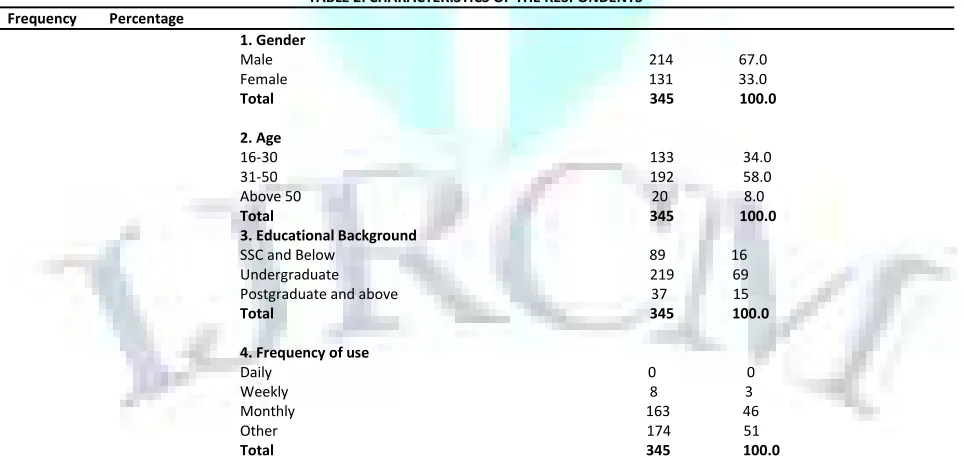
TABLE 5.1: DEMOGRAPHIC VIEW OF RESPONDENT Demographic VariablesNumber of Respondent Percentage
Age 20-30 47 31.33
30-40 37 24.67
40-50 39 26
50 and above 27 18
Attachment 1-10 years 51 34
With Financial Institution 11-20 years 27 18
21-30 years 40 26.67
31-40 years 32 21.33
Income 20,000-50,000 45 30
51,000- 80,000 30 20
81000- 120,000 12 8
121000 and above 63 42
Table 5.1 shows the profile of all respondent. More experience shows peoples have strong background of experience with financial institution. Income level shows peoples belong to both categories; they are professionals and businessmen too.
TABLE 5.2 AWARENESS ABOUT ISLAMIC FINANCE Demographic Variables Number of Respondent Percentage
Do you believe ethics must be strongly agree 77 51.33
Part of financial system Agree 53 35.33
Neutral 10 6.67
Disagree 8 5.33
Strongly Disagree 2 1.34
Do you believe justice, materiality strongly agree 80 53.34
And risk sharing more beneficial Agree 36 24
Neutral 27 18
Disagree 5 3.33
Strongly Disagree 2 1.34
Noninterest-based financial strongly agree 93 62
System is better than Interest-based Agree 36 24 Neutral 10 6.67 Disagree 1 0.67 Strongly Disagree 10 6.67
Do you want to see Islamic strongly agree 77 51.33 Financial system in Pakistan Economy Agree 53 35.33
Neutral 5 3.34
Disagree 5 3.34 Strongly Disagree 10 6.67
There is little or no difference strongly agree 68 45.34
Between two financial system Agree 31 20.66
Neutral 10 6.67
Disagree 13 8.66
Strongly Disagree 28 18.66
There is great awareness about Islamic strongly agree 4 2.66
Financial system is Pakistan Agree 10 6.67
Neutral 15 10
Disagree 57 38
Strongly Disagree 70 46.67
Table 5.2 shows that 86.66% believe that ethics is must be part of financial system while 6.67% are neutral and 6.67% peoples believes ethics and financial system are two different things. The result shows mostly peoples believes ethics is a compulsory part of the financial system. This behavior clearly identify why peoples moves towards ethical banking.
Table 5.2 shows that 77.34% believe that justice, risk sharing and materiality are more beneficial for economy while 18% are neutral and 4.67% peoples believes there is no space of justice, risk sharing and materiality in financial system. The result shows mostly peoples believes not only ethical banking they believes on all Islamic financial principles. This behavior clearly identifies behavior of peoples towards Islamic financial system.
Table 5.2 shows that 86% believe that non-interest financial system are more beneficial for economy while 6.67% are neutral and 7.34% peoples believes interest-based financial system is more beneficial. The result shows mostly peoples prefer non-interest based financial system. This behavior clearly identifies behavior of peoples towards Islamic financial system.
Table 5.2 shows that 86.67% want to see Islamic financial system in Pakistan while 3.33% are neutral and 10% peoples believes conventional financial system is more beneficial. The result shows mostly peoples prefer non-interest based financial system. Here, difficult to describe peoples prefer Islamic financial system due to religious attachment or due to any logic but hard to find.
Table 5.2 shows that 66% respondent believes that there is very little or no difference between Islamic and conventional financial system, while 6.67% respondent are neutral and 27.33% respondent believes there is much difference between Islamic and conventional financial system. the result shows mostly respondent believes both system are same, its make the picture more clear of very last question may be respondent want to see Islamic financial system in Pakistan due to his religious attachment, but they have not much awareness about Islamic financial system.
Table 5.2 shows only 9.33% respondent believes there is much awareness of Islamic financial system in Pakistan while 10% are neutral and 81.67% peoples believes there is not much awareness of Islamic financial system in Pakistan.
This question make the clear picture of the analysis peoples are not aware of Islamic financial system, they believes it quite similar to conventional financial system. But they want to follow all financial system principles in system while they were not much similar with these principles. They believe on ethical banking, it shows there is great positional of Islamic financial system in Pakistan, but there needs to aware the public about Islamic financial system.
6.
CONCLUSION AND RECOMMENDATIONS
VOLUME NO. 3 (2013), ISSUE NO. 04 (APRIL) ISSN 2231-5756 respondents, researcher come to conclusion that Islamic finance is convincing the world that is not only cover the ethical aspects of the society but also give the economic benefits. Many experts believe more and more customers come toward Islamic financial system. This can be credited to the ethics and values inherent within the Islamic banking system (Ahmed 1992).
This study shows lack of public awareness do not offer strong growth potential for Islamic Finance industry within the Republic, According to State bank of Pakistan repot on Islamic banking current issues 2012, one on of major issue is public awareness. Peoples even don’t know there is any concept of finance prevails in Islam.
Pakistan is a Muslim country, our religion and concepts based on Islamic values. A report by the international financial services, London, in Britain now Islamic financer sectors is larger than Pakistan. So lack of awareness is the main hurdle in the way of growth of Islamic finance in Pakistan. This study shows the potential of Islamic Finance in Pakistan just need to aware peoples about the foundation, principles and products of Islamic Finance.
This problem is likely to be solved with the passage of time. But pace of development of Islamic banking can be expanded through the following: (1) public education campaigns about Islamic finance, (2) inclusion of Islamic banking concepts in school curriculum, make Compulsory For commerce student (3) making Islamic financing course a part of business administration programs and specialized products subjects must be introduced (4) offering degree programs in Islamic financing and conduct seminars for professionals, businessmen and for students on monthly basis.
7.
REFERENCES
1. Abdallah, A., 1987. 'Islamic banking', Journal of Islamic Banking and Finance, January March, 4(1): 3156. 2. Aftab, M., 1986. 'Pakistan moves to Islamic banking', The Banker, June: 5760.
3. Al-Ahmed,A.Y. [1996], “The Islamic Financial Instruments Utilization”, M.Sc. Dissertation, LoughboroughUniversity, 1996.
4. Al-Dhahiri, M.,Al-Khamiri, M., and Al-Hamli, S. [2003], “Islamic banking and finance: A new alternative and opportunity”, unpublished manu script,American University of Sharjah, 2003.
5. AL-Salem, Faoud (2008), “The Size and Scope of the Islamic Finance Industry: AnAnalysis,” International Journal of Management, May 2008 (online version).
6. Asmani, A. (2006), “Banks Get Light to Offer Another Islamic Product”, The Straits Times (Singapore), 13 June 2006.
7. Hamid, A .H. and Nordin, N.Z. [2001], “A Study on Islamic Banking Education and Strategy for the new Millennium– Malaysian Experience”, International Journal of Islamic Financial Services 2, No. 4.
8. Imady, O. and H. D. Seibel (2006), Principles and Products of Islamic Finance, Working Paper No. 2006-1, Development Research Center, University of Cologne, Germany.
9. Iqbal, M., & Ahmad. T. (2003). Islamic Finance and Economic Development.
Khan, M. S. and A. Mirakhor, 1990, ‘Islamic banking: Experiences in the Islamic Republic of Iran and in Pakistan’, Economic Development and Cultural Change, Vol. 38, No. 2.
10. Saeed. Prof. Dr. K. A.: Islamic Banking Global & Pakistan scene, Pakistan & Gulf Economist, March 12-18, 2007: pp26. 11. Saleem, Shahid, "International Islamic Banking". Islamic Law and Law of the Muslim World Paper No. 07-05 12. State bank WEBSITE: Current Report on Issued face by Islamic Banking in 2012
13. Usmani., M. M. T.(2005) Introduction to Islamic finance. Karachi: Maktaba maariful Quran.
VOLUME NO. 3 (2013), ISSUE NO. 04 (APRIL) ISSN 2231-5756
INTERNATIONAL JOURNAL OF RESEARCH IN COMMERCE, IT & MANAGEMENT
GREEN MARKETING: THE INDIAN CORPORATE SCENARIO
RAVINDER PAL SINGH
HEAD
SETH SUSHIL KUMAR BIHANI INSTITUTE OF MANAGEMENT & INFORMATION TECHNOLOGY
SRIGANGANAGAR
ABSTRACT
Green Marketing is a concept which has made its place in the modern corporate scenario. The corporate houses have started recognizing their responsibilities towards society strategically inculcating their consumer friendly image in the mind of consumers. The corporate are now not hesitating to utilize the resources in an efficient manner without wastages to achieve the organizational objectives. Strategy makers and consumers have a great need to understand the implications of economic aspects of Green marketing. Through the concept of Green Marketing the performance and efficiency can be increased many folds. Such marketing Techniques may be explained as a direct result of movement in the minds of the consumer market. As a result of this corporate have started targeting consumer specifically who are more concerned about the environment. The consumers by showing their interests in protecting environment by their purchasing decisions through their incorporation into the process and content of the marketing strategy for whatever product may be required. Green marketing is a strategy to build up its image rather than inculcate is as a part of policy and work silence. Companies that development new and improved products and services with environment inputs in mind give themselves access to new markets increase their profits sustainability and enjoy a competitive advantage over the companies which are not showing much interest in being environment friendly. This paper discusses how businesses have increased their ability of targeting green consumers and those who are more concerned with the environment and allow these businesses to affect their purchasing decisions. The paper also identifies the challenges and opportunities businesses have with the green marketing. The paper also examines the current trends of green marketing in India and explores the reason why companies are showing their interest in it. It concludes that the concept of Green Marketing is something that will continuously grow with the increasing awareness to the business as well as consumers.
KEYWORDS
Consumers, Ecological, Eco Friendly, Environment, Green Marketing.
INTRODUCTION
t is only the environment issues that have fetched the recognition all over the world in business as well as in the consumers mind throughout the universe. Not only few big conglomerates corporate firms who are showing their concerns about the deterioration of the living environment but almost all the consumers all over the world is concerned about this common threat of global warming. Corporate houses are moulding their business strategies taking into consideration the green marketing for the promotion of their products by employing environmental claims either about their attributes or about the systems, policies and processes of the firms that manufacture or sell them. Clearly green marketing is part and parcel of overall corporate strategy along with manipulating the traditional marketing mix (Product, Price, Promotion and Place).
Unfortunately, a majority of people believe that green marketing refers solely to the promotion oradvertising of products with environmental characteristics. Terms like Phosphate Free, Recyclable, Refillable,Ozone Friendly, and Environmentally Friendly are some of the things consumers most often associate withgreen marketing. While these terms are green marketing claims, in general green marketing is a muchbroader concept, one that can be applied to consumer goods, industrial goods and even services. Forexample, around the world there are resorts that are beginning to promote themselves as "Eco tourist"facilities, i.e., facilities that "specialize" in experiencing nature or operating in a fashion that minimizes theirenvironmental impact [May 1991, Ingram and Durst 1989, Troumbis 1991].Thus green marketing incorporates a broad range of activities, including product modification, changes tothe production process, packaging changes, as well as modifying advertising. Yet defining green marketingis not a simple task. Indeed the terminology used in this area has varied, it includes: Green Marketing,Environmental Marketing and Ecological Marketing.
RESEARCH METHODOLOGY
For the purpose of this study, the method of in-depth and critical review of available literature was undertaken. The idea was to aggregate existing knowledge in the field, thereby stimulating interest of investors in the emerging green economy.
RESEARCH OBJECTIVES
In more specific terms, this study hopes to provide answers to the following research questions. What makes the corporates to follow the green marketing initiatives?
What does it mean to do business differently?
What idea the consumers have about the green marketing concepts? What Innovative Schemes are required to drive the green economy? How the green marketing concepts can change the Indian corporate scenario? What are the benefits & co-benefits of Green Economy?
What are the potential costs/risks of doing business differently?
WHY GREEN MARKETING
Green marketing has positive influences on multiple participants in the economy. The environment, developing economies, consumers, corporate Strategies, the Product, production process and supply chain benefits from green marketing. First we consider the environmental benefits from the Green Marketing.
ENVIRONMENTAL BENEFITS
The obvious bendfactor of green marketing is the environment. Green marketing can have an influence on climate change in several substantial ways. Fossil fuel consumption is a major source of greenhouse gasses associated with climate change in several substantial ways.Fossil fuel consumption is a major source of greenhouse gasses associated with climate change. Two leading source of climate change are burning of coal for electricity and burning of gasoline for automobile transportation.Green marketing initiatives focussed on product development strategies reduce the need to rely on these forms of energy. For example, new appliances are designed with fuel efficiencies that markedly reduce energy consumption.
Green marketing reduces air pollution in multiple ways For Example, New york Mayor Bloomberg has called for the complete replacement of taxis with hybrid cars by 2012. These hybrid cars will reduce New York Citycarbon dioxide emissions by 215,000 tons while doubling cab gas mileage. This efficiency means fewer emission and lower air pollution
VOLUME NO. 3 (2013), ISSUE NO. 04 (APRIL) ISSN 2231-5756
THE GREEN SCENARIO IN DEVELOPING ECONOMIES
The term developing economies refers to nation that has a relatively low gross domestic product (GDP) per capita. The low income , underdeveloped assets and economic vulnerability endemic to these economies results in high dependence on the agriculture sector. Inhabitation in these markets however face increased exposure to draught, intense storms, food and environmental stress that limits the ability to enhance quality of life. Climate change limits agricultural productivity, increase water stress, raise sea level, negatively transforms ecosystem and thwart human health. These factors do not operate in isolation: interactively, they contribute to hunger and poverty in developing markets. Green marketing and production stands to reduce climate change and consequently limit hunger and poverty. Marketing of green technologies enables firms operating in these countries to leapfrog antiquated operations with efficient and environmentally friendly designs. New green technologies enable such economies to bypass antiquated technologies previously employed in mature market economies.
CONSUMER BENEFITS
Consumer benefits in several important ways through green marketing. These benefits often influence consumer decision making and consumers will vary in the extent to which they value these benefits.Initially consumers benefits from the knowledge that they are doing their part to reduce climate change. These consumers are likely to favour corporate efforts to reduce pollution over efforts to raise corporate profitability. Consumers also value the opportunity to be associated with the environmentally friendly products and organisations. For instance the body shop retail ambience prompts customers to associate their consumption with an environmentally friendly organisation.
Consumer wants ecologically friendly products without sacrificing other valuable features. Current green marketing efforts however enable some firms to offer green products that provide initial product savings, lower energy costs and access to new technologies. For example, the LCD monitors marketed by Dell offer substantial savings over the CRT monitors currently being phased out of the product line. These new monitors are less expensive and employ the more recent computer display technology.
STRATEGIC BENEFITS
Managers of corporate strategies realize multiple benefits from a green approach to marketing. Companies that incorporate ecological consciousness into their mission statements and strategy enhance their images among consumers, employees, investors, issuers and the general public. Some consumers have strong affinities towards green products and approaching the market with an ecological focus enhances images of the brand among these consumers
Corporate initiatives that emphasize a green orientation to market have several implications for the workforce. First,potential employees may decide whether to interview a firm based on company’s environmental image.
Green marketing also has implications for financial markets. As fuel cost rise and greenhouse gas emissions escalate, investors are flocking to companies that can help alleviate these problems. Investors are attracted to specialize green funds that feature portfolio of stocks from environmentally conscious firms.
Green marketing strategies enable firms to chart continued improvement in environmental performance. Corporate efforts to chart environmental performance enable companies to gain understanding of how the firm affect the environment as well as how the environment affects the firm.
Green marketing also provides a strategic avenue that enable firms to develop alliances with interest groups outside the organization. Green marketing firms establish alliances with Government, local communities, non-government organizations (NGOs), industry experts and competitors.
IMPORTANCE OF GREEN MARKETING
Companies that develop virgin and improved products and services with environment inputs in mind give themselves access to new markets, increase their profit and enjoy competitive advantage over the companies which are not concerned for the environment. The advantages of green marketing are specified below.
1. Green marketing is cost effective in the long run, though initially the cost seems to be a little more. 2. It helps in exploring the new market and enjoying competitive advantage.
3. Green marketing ensures the sustained growthin the long term along with profitability.
4. It is environment friendly in the sense It helpsthe companiesto market their products and services keeping the environment factor in mind.
5. This is well known that the resources are limited but human wants are not having any limit, therefore it is important for the marketers to utilize the resources efficiently without making the wastagesto achieve the organization's objectives.
6. Green marketing helps to protect the ozone and whole the environment for the wellbeing of the community at large.
RATIONALES FOR USING GREEN MARKETING
There are a several reasons that enhance the firms to adopt green marketing with much more efforts on this concept. Five such logics for this are as under. 1. Organizations perceive environmental marketing to be an opportunity that can be used to achieve its objectives
2. Organizations believe they have a moral obligation to be more socially responsible 3. Governmental bodies are forcing firms to become more responsible.
4. Competitors' environmental activities pressure firms to change their environmental marketing Activities and 5. Cost factors associated with waste disposal, or reductions in material usage forces firms to modifytheir behaviour
OPPORTUNITIES
As demand changes, many firms seethese changes as an opportunity to exploit and have acompetitive advantage over firms marketingnonenvironmentallyresponsible alternatives. Someexamples of firms who have strived to become moreenvironmentally responsible, in an attempt to bettersatisfy their consumer needs are:
McDonald's replaced its clam shell packaging withwaxed paper because of increased consumer concernrelating to polystyrene production and Ozonedepletion. Tuna manufacturers modified their fishingtechniques because of the increased concern overdriftnet fishing, and the resulting death of dolphins.
Xerox introduced a "high quality" recycledphotocopier paper in an attempt to satisfy thedemands of firms for less environmentally harmfulproducts.
GOVERNMENT PRESSURE
As with all marketing relatedactivities, governments want to "protect" consumer andsociety; this protection has significant green marketingimplications. Government regulations relating toenvironmental marketing are designed to protectconsumers in several ways,Reduce production of harmful goods or by-productsModify consumer and industry's use and/orconsumption of harmful goodsEnsure that all types of consumers have the ability toevaluate the environmental composition of goods.Government establish regulations designed tocontrol the amount of hazardous wastes producedby firms.
COMPETITIVE PRESSURE
VOLUME NO. 3 (2013), ISSUE NO. 04 (APRIL) ISSN 2231-5756
INTERNATIONAL JOURNAL OF RESEARCH IN COMMERCE, IT & MANAGEMENT
SOCIAL RESPONSIBILITY
Many firms are beginning torealize that they are members of the wider communityand therefore must behave in an environmentallyresponsible fashion. This translates into firms thatbelieve they must achieve environmental objectives aswell as profit related objectives. This results inenvironmental issues being integrated into the firm'scorporate culture. There are examples of firms adoptingboth strategies.
An exampleof a firm that does not promote itsenvironmental initiative is Coca-Cola. They haveinvested large sums of money in various recyclingactivities, as well as having modified their packaging tominimize its environmental impact. While beingconcerned about the environment, Coke has not used thisconcern as a marketing tool. Thus many consumers maynot realize that Coke is a very environmentallycommitted organization. Another firm who is veryenvironmentally responsible but does not promote thisfact, at least outside the organization, is Walt DisneyWorld (WDW). WDW has an extensive wastemanagement program and infrastructure in place, yetthese facilities are not highlighted in their general touristpromotional activities.
COST OF PROFIT ISSUES
Firms may also use greenmarketing in an attempt to address cost or profit relatedissues. Disposing of environmentally harmful byproducts,such as polychlorinated biphenyl (PCB)contaminated oil are becoming increasingly costly and insome cases difficult. Therefore firms that can reduceharmful wastes may incur substantial cost savings. Whenattempting to minimize waste, firms are often forced tore-examine their production processes. In these casesthey often develop more effective production processesthat not only reduce waste, but reduce the need for someraw materials. This serves as a double cost savings, sinceboth waste and raw material are reduced. In other casesfirms attempt to find end - of - pipe solutions, instead ofminimizing waste. In these situations firms try to findmarkets or uses for their waste materials, where onefirm's waste becomes another firm's input of production.One Australian example of this is a firm who producesacidic waste water as a by-product of production and sellsit to a firm involved in neutralizing base materials.
EXAMPLES OF ENVIRONMENTALLY-BENEFICIAL GREEN PRODUCTS AND SERVICES
Paper containing post-consumer wastepaperCereals sold without excess packaging Shade-grown coffee beans
Cleaning supplies that do not harm humans or environment Wood harvested from sustainable forests
Energy-efficient light bulbs Energy-efficient cars
Energy from renewable sources of energy such as windmills and solar power
TOP GREEN INDIAN COMPANIES
Judging by the number of large, small and mid-size Indian companies that are setting the trend with green initiatives, India is serious about building environmental sustainability into its business practices. The following companies who made it to the list of top ten green Indian companies prove the statistics right.
SUZLON ENERGY
The world's fourth largest wind turbine maker is among the greenest and best companies in India. They are saving coal, uranium with production of electricity by using huge number of wind-mills. They also attempting for clean and green energy. The concept of a Inspiring place to work is deep rooted in the mission of 'powering a greener tomorrow, today' begins by translating these very words into action by creating an environment that is powered by renewable energy. Suzlon One Earth has unique features that make it stand for the very purpose it was built.
ITC LIMITED
ITC has strengthened their commitment to green technologies by introducing 'Ozone-treated elementalchlorine free' bleaching technology for the first time in India. It is also manufacturing eco-friendly businessuse paper 'papercraf's'. ITC also providing an opportunity to consumers to be a partner in efforts to mitigatethe adverse impact of climate change and create positive environmental footprints. It is also selling'Classmate' notebooks which are also environment friendly.
TATA METALIKS LIMITED (TML)
Every day is Environment Day at TML. It is one of the top green companies in India. A practical examplethat made every employee sit up and take notice is the company's policy to discourage working onSaturdays at the corporate office. Employees follow the practice of switching off Lights during the day,because the entire office depending on sunlight.
TAMIL NADU NEWSPRINT AND PAPERS LTD.(TNPL)
TNPL received the first prize of Green Award 2012 from the Dept. of Environment and Forest, Government of Tamil Nadu. Thiru Md. Nasimuddin, I.A.S, Managing Director, TNPL received the award from Hon’ble Chief Minister of Tamil Nadu at Secretariat on 11th September 2012. This award has been bestowed on TNPL in recognition of its various initiatives taken to protect the environment by adopting environment friendly technologies in the process. This award also recognizes TNPL’s proactive role in reducing the use of fossil fuels, increasing the green cover, encouraging non-conventional and energy efficient systems as well as recycling and reuse of solid & liquid wastes in the process.
WIPRO TECHNOLOGIES
The list of top green Indian companies is never get completed without Wipro which climbed to the top fivebrand league in Green peace's 'Guide to Greener Electronics' ranking. 'Green Peace' is a global consortiumdedicated to achieving advancement energy efficiency in data canters and business computing ecosystems.Wipro has held quickly to its commitment towards energy efficiency and had launched energy starcompliant products in the global market. HCL INFO-SYSTEMS
HCL also had worked for a cleaner air, fresher water and fertile soil. HCL Info-systems have always tried totake green-concepts to the masses. HCL Info-systems are up with an initiative drive to train the customersand general public about the threats of e-waste. E-waste, is nothing but electronics-no-longer-usable. All ofus might have a bunch of non-working CDs, earphones, mobile-phones, DVDs, cassette-players, power guzzlingCRT monitors in store-room, and what not! Now is the time to dispose-off all this e-waste lying atyour house, or office-cabin! All these things are properly managed by HCL.
OIL AND NATURAL GAS COMPANY (ONGC)
India's one of the largest oil producers, ONGC, is all set to lead the green Indian company with energy efficient,green crematoriums that will soon replace the traditional wooden pyre across the country.ONGC's Mokshada Green Cremation initiative is saving 60 to 70% of wood and a fourth of the burningtime per cremation.
INDUSIND BANK
Green banking has been catching up as among the top Indian green initiatives ever since Indusind Bank hadopened the first solar-powered ATM in India and pioneered an eco-savvy change in the Indian bankingsector. The Indusind bank is planning for more such initiatives in addressing the challenges of climatechange.
IDEA CELLULAR
VOLUME NO. 3 (2013), ISSUE NO. 04 (APRIL) ISSN 2231-5756 HERO HONDA MOTORS (NOW HERO MOTO CORP)
Hero Moto Corp is one of the largest two-wheeler manufacturers in India and an equally responsible topgreen firm in India. The company's philosophy of continuous innovation in green products and solutionshas played a key role in striking the right balance between business, mankind and nature.
CHALLENGES AHEAD
Green products require renewable and recyclable material, which is costly. Requires a technology, which needs huge investment in R & D.
Water treatment technology, which is too costly.
Majority of the people are not aware of green products and their uses. Majority of the consumers are not willing to pay a premium for green products.
SUGGESTIONSFOR THE SUCCESSFUL GREEN MARKETING
Consumers want to do the right thing when it comes in protecting the environment and their health. Even in this economic climate, the green movement is gathering momentum, and it’s hard to miss the deluge of ads introducing new green products from well-known national brands. Before you jump on the green bandwagon, make sure that the marketer takes these three essential steps:
PROVE YOUR CLAIMS
Today’s shoppers are willing to dig deeper to get the real facts by examining consumer reports, reviews, testimonials and recommendations, as well as certification seals, labels and ingredient lists. All the marketing efforts, from the website to sales tools, public relations placements and social networking, must go the extra mile to provide verification of the green claims.
GET PRICING RIGHT
While many green shoppers are willing to pay extra price to do the right thing, the majority say price is very important in their purchase decisions. Consumers want quality products that are good for them and for the environment at a price that they can afford. Teen’s ages 13 to 17 are the most price-conscious green shoppers, according to a survey from Generate Insight, an entertainment branding company. When rock bottom pricing is unachievable, great value can still add up to sales.
OFFER PERSONAL BENEFITS
Saving the planet is a big promise and a meaningful to many consumers. But it will have more teeth if it relates that claim to a personal benefit, such as improving one’s health or saving money. For example, food that’s organically grown means that fewer pesticides and herbicides that will damage the environment are used an invaluable benefit. Yet the essential bottom line for many organic food shoppers is the assurance that fewer harmful chemicals will find their way into the bodies of their children and families.
THE FUTURE OF GREEN MARKETING
There are many lessons to be learned to avoid green marketing myopia, the short version of all this is that green marketing requires applying good marketing principles to make green products desirable for consumers. Business scholars have viewed it as a “fringe topic”, given that environmentalism’s acceptance of limits and conservation does not mesh well with marketing’s traditional axioms as the marketer can. Evidence indicates that successful green products have avoided green marketing myopia by following the important principles.
Consumer value position
Calibration of consumer knowledge Credibility of Product Claim
CONCLUSION
Though the concept of green marketing in in its infancy in India still there are a number of Indian companies which are involving in the race of green concept by following it in their business practices. In India near about 25% of the consumers have diverted towards environmental friendly products. Some of the alert business firms are entering into green marketing because of opportunity , social responsibility, Government pressure, competitive edge and reduced costs. Still the need is felt on the part of marketers to make the consumers understand the need for this environment oriented concept and the significant benefits of green marketing. Moreover consumers are also willing to spend more on the green products in order to maintain a clean and greener and healthier environment. But on the whole a lot more research is still required to fully explore some more potential in the so called green concept.
REFERENCES
1. Awards felicitations to TNPL, Viewed on February 7 2013, http://www.tnpl.com/DisplayPage.aspx?file=awards.htm 2. Chopra, S.Lakshmi, “Turning Over a New Leaf”, Indian Management”, Vol. 64, April 2007
3. D.L Jamge (2012),”Turning Towards the Green Marketing: A Need of the Hour in Indian Corporate Sector”,Indian Research Journal, Volume 2, issue 8, pp. 2-3.
4. Jacquelyn Ottaman, Edwin R Stafford, Cathy L Hartman (2006) “Avoiding Green Marketing Myopia, Ways to Improve consumer appeal for environmentally preferable products”, journal of Environment, Volume 48, Number 5, pp.27-34
5. Martin Charter, Ursula Tischner (2001), “Sustainable Solution: Developing Products and Services for the Future”, Greenleaf Publishing Limited P 283. 6. Robert Delstorm (2011),” Green Marketing Management” , South Western Cengage Learning, PP 8-13
VOLUME NO. 3 (2013), ISSUE NO. 04 (APRIL) ISSN 2231-5756
INTERNATIONAL JOURNAL OF RESEARCH IN COMMERCE, IT & MANAGEMENT
EXCHANGE RATE MANAGEMENT: A CRITICAL LOOK INTO SEVERAL ALTERNATIVES
PURNASHREE DAS
ASST. PROFESSOR
DEPARTMENT OF COMMERCE
GAUHATI UNIVERSITY
GUWAHATI
SUJIT SIKIDAR
PROFESSOR
DEPARTMENT OF COMMERCE
GAUHATI UNIVERSITY
GUWAHATI
ABSTRACT
Each country has its own currency administered by a central banking authority. This is a sine qua non for any functional economy with financial markets. Inter-country trade demands use of a currency to facilitate conversion and settlement of trade obligations through an intermediary currency system. The validity of a currency is confined to the territory of its sovereign territory only. When one nation enters into trade relations with other nations for exchange of goods, services, invisibles and transfers, the concerned nations may adopt bilaterally for exchange of their respective currencies under a bilateral agreement. While on the other, if the two trading partner nations are not willing to accept the currency of its trading partner nation, they may demand for an alternative currency which is accepted universally all over the world. In order to arrive at that intervention currency which will be commonly accepted by all the nations the need for establishing an international financial arrangement for facilitating acceptance of a internationally recognized currency accepted by all arises. The present research enquiry has been undertaken with the objectives of tracing the stages and phases of exchange rate regimes alongwith evaluation of the alternative currency arrangements. Moreover, the influence of dollar in determining the exchange rate of a currency has also been examined in the light of emergence of some major currencies like Euro, Chinese Renminbi and Japanese Yen.
JEL CODE
F31KEYWORDS
Currency,Dollar,Euro,Pegging,Standard.
INTRODUCTION
very independent nation has its defined territory, population, defence, governance and a currency. However, this poses a problem owing to variation of purchasing power of the individual currencies inter se, but at the same time, with regard to the intervention of a third currency. It forms a triangular relationship, e.g. India is importing gold