• No results found

Genetic circuits to engineer tissues with alternative functions

N/A
N/A
Protected

Academic year: 2020

Share "Genetic circuits to engineer tissues with alternative functions"

Copied!
7
0
0

Loading.... (view fulltext now)

Full text

(1)

R E V I E W

Open Access

Genetic circuits to engineer tissues with

alternative functions

C. P. Healy and T. L. Deans

*

Abstract

Persistent and complex problems arising with respect to human physiology and pathology have led to intense

investigation into therapies and tools that permit more targeted outcomes and biomimetic responses to

pathological conditions. A primary goal in mammalian synthetic biology is to build genetic circuits that exert fine

control over cell behavior for next-generation biomedical applications. In pursuit of this, synthetic biologists have

engineered cells endowed with genetic circuits with sensor that are capable of reacting to a variety of stimuli and

responding with targeted behavior. Here, we highlight how synthetic biology approaches are being used to

program cells with novel functions for therapeutic applications, and how they can be used in stem cells to improve

differentiation outcomes. These approaches open the possibilities for engineering synthetic tissues for employing

personalized medicine and to develop next-generation biomedical therapies.

Introduction

Synthetic biologists use bottom-up approaches to

assem-ble genetic parts into more complex gene circuits to

enable the programming of new functions into cells.

This approach combines individual gene expression

parts, or modules, that can be characterized

independ-ently and used to build novel genetic circuits by

combin-ing multiple modules that interact with each other to

perform a defined function in cells. The inception of

synthetic biology started with engineering prokaryotes

with novel functions [1

18], and efforts to engineer

mammalian cells soon followed. Mammalian synthetic

biology has traditionally focused on transcriptional and

post-transcriptional regulation to program cells with

new functions. These efforts include programming

feed-back [19

21], controlling gene expression levels [22

32],

implementing Boolean logic functions [33

39], and

tar-geting specific disease states [40

46]. More recent

approaches that target specific locations in the genome

using zinc finger (ZF) proteins, transcription activator-like

effectors (TALEs), and clustered regulatory interspaced

short palindromic repeats (CRISPR) coupled with a

modi-fied Cas9 protein with its nuclease activity removed

(dCas9), have been used to interrogate endogenous

transcription factors [47

56]. These studies have enabled

the interrogation of endogenous DNA sequences to better

understand the role of natural transcriptional networks

within cells to better understand how cells control these

networks [57,

58]. The details of these genetic tools have

been extensively reviewed elsewhere [59

63], therefore,

here we aim to provide a framework for using genetic

cir-cuits to design new therapies by engineering tissues with

alternative functions.

Pluripotent stem cells are cells that have the potential

to produce any cell or tissue in the body.

In the early development of complex organisms,

pluri-potent stem cells undergo specialized decision-making

in a remarkably ordered process to yield tissue patterns,

morphogenesis, and organogenesis [64

68]. The

under-lying mechanisms of this lineage specification process is

not fully understood. However, coordinated clusters of

transcription factors, or gene networks, have emerged as

key regulators of stem cell pluripotency and

differenti-ation. Additionally, studies have shown that

dysregula-tion of these natural gene networks contributes to the

onset of cancer and tissue degeneration, thereby

under-lying multiple types of human disease.

Stem cells can naturally direct their lineage commitment

by controlling the timing and level of expression of key

transcription factors resulting in desired differentiation

pathways [69]. Previous work to recapitulate transcription

factor expression in stem cells to drive differentiation into

© The Author(s). 2019Open AccessThis article is distributed under the terms of the Creative Commons Attribution 4.0 International License (http://creativecommons.org/licenses/by/4.0/), which permits unrestricted use, distribution, and reproduction in any medium, provided you give appropriate credit to the original author(s) and the source, provide a link to the Creative Commons license, and indicate if changes were made. The Creative Commons Public Domain Dedication waiver (http://creativecommons.org/publicdomain/zero/1.0/) applies to the data made available in this article, unless otherwise stated.

* Correspondence:[email protected]

(2)

desired lineages included the overexpression of key

tran-scription factors [70

73]. These studies demonstrated

improved desired differentiation outcomes, however, this

method often produces inefficient cell yields, relies on

subpopulation selection, and generates heterogeneous cell

types [74]. These challenges have recently led to efforts

from synthetic biologists to implement genetic circuits

capable of tight gene control that provide precise spatial

and temporal expression of key transcription factors in

stem cells.

In this review, we provide a framework for

implement-ing synthetic biology in stem cells to direct stem cell

differentiation into desired lineages. We detail studies

that have implemented genetic circuits in stem cells and

discuss the outcomes of these studies on the robustness

of driving stem cell fate decisions. We next consider

using synthetic biology to design artificial tissues that

are endowed with alternative functions to provide new

therapies for diseased states.

Stem cells and synthetic biology

Stem cells play an important role in the development

and regeneration of human tissues. A universal network

of endogenous transcription factors control cell fate and

continuously send and respond to physiological signals

that adjust their cell-type specific gene expression. For

example, the overexpression of the master transcription

factors Oct4, Sox2, Klf4, and c-Myc is capable of

over-riding previously made cell fate choices to convert

som-atic cell types into a pluripotent state [75

81]. However,

the differentiation of pluripotent precursor cells into

adult cell types requires tightly controlled spatial and

temporal gene expression dynamics of lineage-specific

master transcription factors. Stem cell differentiation

and the development of organs involves a complex

co-ordination of both intrinsic and extrinsic cues that

con-trol cell behavior. This coordination of cues is critical for

stem cells to make fate decisions and for robust tissue to

develop.

Significant efforts are currently underway to program

stem cells with genetic circuits to push their

differenti-ation

into

desired

lineages.

Implementing

genetic

circuits to dynamically control gene expression (e.g.

transcription factor expression) in stem cells is thought

to improve differentiation outcomes because these

circuits are able to replicate the dynamic gene

expres-sion patterns that are observed during development.

Recently, a new genetic circuit was constructed coupling

genetic parts from a mold,

Neorospora crassa,

and the

bacterial Lac repressor system to create an orthogonal

genetic switch to be used in mammalian cells [27]. After

confirming tunability in immortalized cell lines for proof

of concept performance, the tight gene control and

tun-ability of gene expression of this genetic switch were

demonstrated in pluripotent stem cells. These results

suggest that synthetic biologists can program stem cells

with artificial decision-making abilities that can be used

to direct stem cell fate into desired lineages. For

example, using genetic circuits that control the level and

timing of expression of multiple transcription factors, it

is possible to tune key cell fate regulators at various

differentiation checkpoints to drive the differentiation of

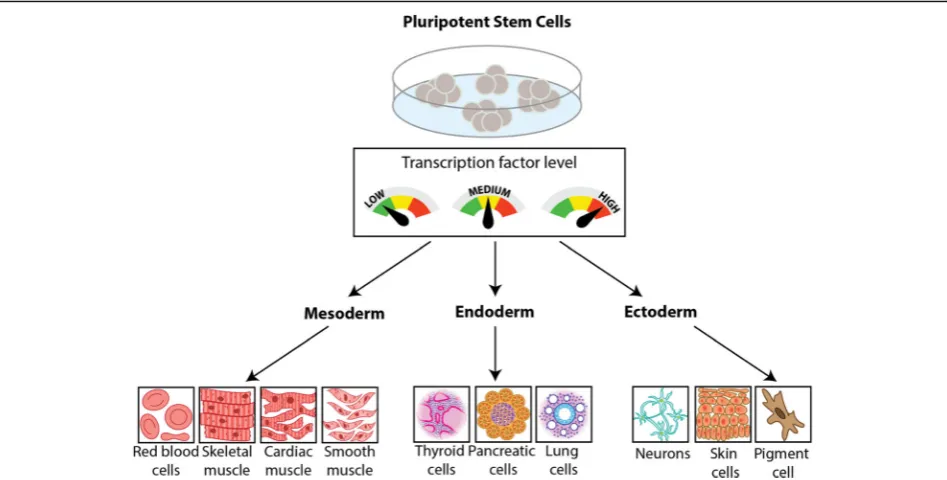
stem cells into one or many desired cell fates (Fig.

1).

To demonstrate the utility of using genetic circuits to

drive decision-making in cells, a two-way

communica-tion genetic circuit was engineered to mimic the natural

gene expression patterns during angiogenesis, the

forma-tion of blood vessels [82]. Cell-to-cell communicaforma-tion

was the framework for this synthetic network.

Specific-ally, sender cells were programmed with a genetic circuit

to constitutively express tryptophan synthase (TrpB

26

),

an enzyme from

E. coli

, which converts indole (a

com-pound in the media) into L-tryptophan. The authors also

engineered receiver cells with a genetic circuit designed

to allow the cells to sense the secreted L-tryptophan

and, in response, turn on the expression of a reporter

gene, secreted alkaline phosphatase (SEAP). Next, the

authors used this engineered cell-cell communication

system to implement enhanced angiogenesis. During

natural angiogenesis, two transcription factors, vascular

endothelial growth factor (VEGF) and angiopoietin-1

(Ang1), function in a sequential and coordinated fashion

to produce mature blood vessels [83]. In the engineered

cell-cell communication system, the sender and receiver

cells each possessed genetic circuits that generated

output genes expressed at different times, to guide

cellu-lar differentiation and produce blood vessels. Due to the

relatively small diffusion length of nutrients into tissues,

vascularization strategies, such as angiogenesis in newly

formed tissue, will be critical to the success of

engi-neered tissues.

(3)

the differentiation of pancreatic progenitor stem cells into

mature insulin producing

β

cells [76,

84]. Recently, a

gen-etic circuit that functions as a band-pass filter was built to

dynamically control the expression of the three

master-regulator transcription factors [85]. This genetic circuit

enabled the timely coordination of the three transcription

factors, which produced a homogeneous population of cells

that demonstrated robust insulin production over cells

pro-duced using traditional growth factor and chemical based

techniques. This study emphasizes the need for the

temporal regulation of gene expression during cell fate

decisions.

In addition to controlling when key transcription factors

turn on during differentiation, a recent study has shown

that some cell fate pathways require pulsing the expression

of key transcription factors [72]. In this study, the pulsing

expression of Gata6 in human induced pluripotent stem

(iPS) cells initiated the formation of all three germ layers

giving rise to a complex three-dimensional (3D)

multicellu-lar tissue construct, or organoid, that exhibited a liver

bud-like phenotype. Without pulsing only one germ layer

formed. Genetic circuits enable fine-tuned control over the

expression of transcription factors, suggesting that the

pos-sible gene expression patterns that can be implemented

using genetic circuits are effectively limitless. Patterns

in-cluding pulsing, tuning, oscillations are all within the realm

of possibilities. Therefore, genetic circuits offer

extraordin-arily precise control over gene expression and cell fate that

will likely transform their applicability in basic science and

clinical research.

Replicating physiological functions in alternative cell

types

Precise control over the intensity, duration, and timing

of gene expression have advanced our abilities to direct

stem cell fate into desired lineages, in addition to

devel-oping organoids. Using the same genetic tools, synthetic

biologists have also created therapeutic cells that are

capable of sensing and responding to various signals in a

therapeutic fashion [43

45,

86

104]. For example, in

two separate studies, genetic circuits were used to

regu-late glucose levels in the bloodstream of diabetic mice.

In the first study, the expression and secretion of the

glucagon-like peptide 1 (GLP-1), a peptide that has the

ability to decrease blood sugar levels in the blood by

enhancing to secretion of insulin [105], was controlled

in human embryonic kidney (HEK) 293 cells using an

optogenetic-controlled genetic circuit [106]. This genetic

circuit allowed the implanted cells to detect blue light

and, in response, initiate the transcription of GLP-1,

causing blood glucose levels to fall in diabetic mice. In

the second study, Chinese hamster ovarian (CHO) cells

were engineered with a genetic circuit that produced

insulin in response to decreasing pH levels. This study

demonstrated controlled production of insulin when

environmental pH dropped below the physiological

Fig. 1Tools in synthetic biology to drive stem cell differentiation. Genetic tools built by synthetic biologists enable tight control of gene

(4)

range [41]. When these engineered cells were implanted

into diabetic mice, they were able to restore insulin and

glucose levels to the same level as that of healthy mice.

In addition to engineering therapeutic cells for

meta-bolic disorders, a recent study demonstrated the use of a

genetic circuit to endow HEK293 cells with the ability to

control an inflammatory response [107]. This circuit was

comprised of three basic modules to detect and respond

to inflammatory signals: a sensor to sense inflammation

signals; an amplifier with positive feedback to ensure

sustainability of the response; and an effector that

neu-tralized the inflammatory response. Therapeutic cells

that are endowed with the ability to keep the body

s

in-flammatory response in check are an exciting advance in

the field because these types of cells can be implanted

after surgery to prevent a prolonged inflammatory

re-sponse from hindering may proper healing and to allow

for the restoration of healthy levels of inflammatory

cytokines.

Future directions

Mammalian synthetic biologists have made great strides

in engineering novel genetic tools to tightly regulate

gene expression in various cell types. These genetic tools

have been used for directing stem cell differentiation to

produce desired cell lineages, to make organoids, and to

engineer therapeutic cells to sense and respond to

disease. With these accomplishments under our belts, it

stands to reason that synthetic biologists can engineer

implantable mini tissues, or organoids, that have been

engineered to sense and respond to disease.

Rather than trying to recreate a failing pancreas for

diabetic patients, can we engineer implantable adipose

tissue (fat) with the ability to regulate blood glucose

levels? Studies have shown that a patients

own fat can

be harvested and injected back into the individual

s

joints to help alleviate joint pain [108]. In fact, Lipogems

are an FDA approved system that are small bits of fat

removed individuals, washed, and reinjected into various

joints for those suffering from spinal conditions, joint

pain, arthritis, or rotor cut tears [109

112]. One can

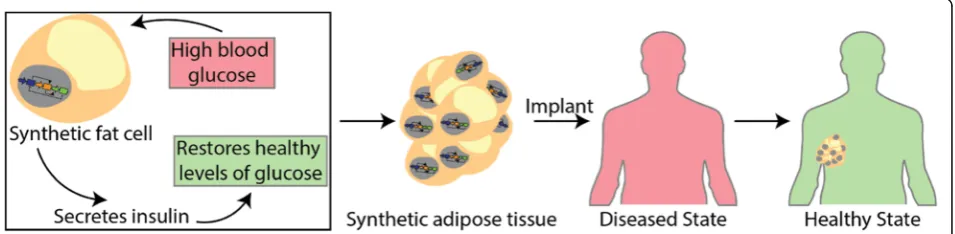
start to image engineering personalized synthetic adipose

tissue by first making iPS cells from a patient

s skin cells,

and programming them with various genetic circuits:

one to drive the differentiation into adipose cells, and

the other with a program to regulate blood glucose

levels (Fig.

2). These small synthetic tissues can then be

injected under the armpit, or other unnoticeable

loca-tions, to regulate blood glucose levels over long periods

of time. Of course, once one accepts the idea of

inject-able synthetic fat tissue, it

s easy to imagine engineering

other synthetic organs (e.g. skin) that can function in

various ways to improve the health of an individual.

Organoids are another area where synthetic biologists

can have a significant impact. Unlike a purified tissue,

like adipose tissue, organoids are miniaturized versions

of an organ that can be isolated from organ progenitor

cells, or pluripotent stem cells, and differentiated to

form an organ-like structure. These organoids have

mul-tiple cell types that self-organize to create a structure

similar to an organ found in vivo [113]. Because multiple

cell types are in organoids, this offers opportunities to

engineer more complex interactions (e.g. synthetic

pattern formation, spatial and temporal communication

between cell types, etc.) that may be required to

recap-itulate failing organs whose function cannot be replaced

with a single tissue. For example, a synthetic organoid

can be engineered with genetic circuits that can mimic

healthy pathways to alter underlying disease states and

rewire them to restore the healthy state [114].

Conclusion

Engineered therapeutic cells that are endowed with

gen-etic circuits have the potential to transform basic science

and medicine. Using genetic circuits to tightly control

the expression of transcription factors has shown to

(5)

significantly improve differentiation outcomes. With the

improvements to controlling gene expression in cells

that continue to be built by synthetic biologists, we will

continue to push the envelope of cell engineering

possi-bilities. Altogether, these efforts will result in the rapid

and precise engineering of cells, tissues, and organoids

that will lead to transformative clinical applications.

Acknowledgements

We would like to thank the Deans Lab for lively discussions about this review.

Funding

We gratefully acknowledge the funding from the University of Utah startup funds, the National Science Foundation CAREER Program (CBET-1554017), the Office of Naval Research Young Investigator Program (N00014–16-1-3012), and the National Institute of Health Trailblazer Award (1R21EB025413–01).

Availability of data and materials

Data sharing is not applicable to this article because no datasets were generated or analyzed during the current study.

Authors’contributions

TLD conceived of and drafted the manuscript. CPH and TLD edited the manuscript and make the figures. Both authors read and approved of the final manuscript.

Ethics approval and consent to participate Not applicable.

Consent for publication Not applicable.

Competing interests

The authors declare that they have no competing interests.

Publisher

s Note

Springer Nature remains neutral with regard to jurisdictional claims in published maps and institutional affiliations.

Received: 28 February 2019 Accepted: 17 April 2019

References

1. Anderson JC, Clarke EJ, Arkin AP, Voigt CA. Environmentally controlled invasion of cancer cells by engineered bacteria. J Mol Biol. 2006;355:619–27. 2. Archer EJ, Robinson AB, Suel GM. Engineered E. coli that detect and

respond to gut inflammation through nitric oxide sensing. ACS Synth Biol. 2012;1:451–7.

3. Bonnet J, Yin P, Ortiz ME, Subsoontorn P, Endy D. Amplifying genetic logic gates. Science. 2013;340:599603.

4. Brophy JA, Voigt CA. Principles of genetic circuit design. Nat Methods. 2014;11:508–20.

5. Callura JM, Cantor CR, Collins JJ. Genetic switchboard for synthetic biology applications. Proc Natl Acad Sci U S A. 2012;109:58505.

6. Cameron DE, Bashor CJ, Collins JJ. A brief history of synthetic biology. Nat Rev Microbiol. 2014;12:381–90.

7. Cheng AA, Lu TK. Synthetic biology: an emerging engineering discipline. Annu Rev Biomed Eng. 2012;14:15578.

8. Daniel R, Rubens JR, Sarpeshkar R, Lu TK. Synthetic analog computation in living cells. Nature. 2013;497:619–23.

9. Elowitz MB, Leibler S. A synthetic oscillatory network of transcriptional regulators. Nature. 2000;403:3358.

10. F. Farzadfard and T. K. Lu,“Synthetic biology. Genomically encoded analog memory with precise in vivo DNA writing in living cell populations,” Science,vol. 346, p. 1256272, Nov 14 2014.

11. Roquet N, Lu TK. Digital and analog gene circuits for biotechnology. Biotechnol J. 2014;9:597–608.

12. Siuti P, Yazbek J, Lu TK. Synthetic circuits integrating logic and memory in living cells. Nat Biotechnol. 2013;31:44852.

13. Yang L, Nielsen AA, Fernandez-Rodriguez J, McClune CJ, Laub MT, Lu TK, et al. Permanent genetic memory with >1-byte capacity. Nat Methods. 2014;11:12616.

14. Gupta S, Bram EE, Weiss R. Genetically programmable pathogen sense and destroy. ACS Synth Biol. 2013;2:715–23.

15. Hwang IY, Tan MH, Koh E, Ho CL, Poh CL, Chang MW. Reprogramming microbes to be pathogen-seeking killers. ACS Synth Biol. 2014;3:228–37. 16. Saeidi N, Wong CK, Lo TM, Nguyen HX, Ling H, Leong SS, et al. Engineering

microbes to sense and eradicate Pseudomonas aeruginosa, a human pathogen. Mol Syst Biol. 2011;7:521.

17. Gardner TS, Cantor CR, Collins JJ. Construction of a genetic toggle switch in Escherichia coli. Nature. 2000;403:339–42.

18. Kohanski MA, Collins JJ. Rewiring bacteria, two components at a time. Cell. 2008;133:9478.

19. Bloom RJ, Winkler SM, Smolke CD. A quantitative framework for the forward design of synthetic miRNA circuits. Nat Methods. 2014;11:1147–53. 20. Bloom RJ, Winkler SM, Smolke CD. Synthetic feedback control using an

RNAi-based gene-regulatory device. J Biol Eng. 2015;9:5. 21. Stapleton JA, Endo K, Fujita Y, Hayashi K, Takinoue M, Saito H, et al.

Feedback control of protein expression in mammalian cells by tunable synthetic translational inhibition. ACS Synth Biol. 2012;1:83–8.

22. Endo K, Hayashi K, Inoue T, Saito H. A versatile cis-acting inverter module for synthetic translational switches. Nat Commun. 2013;4:2393. 23. Weber W, Fussenegger M. Engineering of synthetic mammalian gene

networks. Chem Biol. 2009;16:287–97.

24. Tigges M, Marquez-Lago TT, Stelling J, Fussenegger M. A tunable synthetic mammalian oscillator. Nature. 2009;457:309–12.

25. Chen X, Wang X, Du Z, Ma Z, Yang Y. Spatiotemporal control of gene expression in mammalian cells and in mice using the LightOn system. Curr Protoc Chem Biol. 2013;5:111–29.

26. Basu S, Mehreja R, Thiberge S, Chen MT, Weiss R. Spatiotemporal control of gene expression with pulse-generating networks. Proc Natl Acad Sci U S A. 2004;101:6355–60.

27. Fitzgerald M, Gibbs C, Shimpi AA, Deans TL. Adoption of the Q transcriptional system for regulating gene expression in stem cells. ACS Synth Biol. 2017;6:201420.

28. Deans TL, Cantor CR, Collins JJ. A tunable genetic switch based on RNAi and repressor proteins for regulating gene expression in mammalian cells. Cell. 2007;130:363–72.

29. Andrianantoandro E, Basu S, Karig DK, Weiss R. Synthetic biology: new engineering rules for an emerging discipline. Mol Syst Biol. 2006;2:114. 30. Farzadfard F, Perli SD, Lu TK. Tunable and multifunctional eukaryotic

transcription factors based on CRISPR/Cas. ACS Synth Biol. 2013;2:604–13. 31. Auslander S, Fussenegger M. From gene switches to mammalian designer

cells: present and future prospects. Trends Biotechnol. 2013;31:155–68. 32. Bacchus W, Aubel D, Fussenegger M. Biomedically relevant circuit-design

strategies in mammalian synthetic biology. Mol Syst Biol. 2013;9:691. 33. Y. Liu, Y. Zeng, L. Liu, C. Zhuang, X. Fu, W. Huang, et al., "Synthesizing AND

gate genetic circuits based on CRISPR-Cas9 for identification of bladder cancer cells," Nat Commun,vol. 5, p. 5393, Nov 6 2014.

34. Miyamoto T, Razavi S, DeRose R, Inoue T. Synthesizing biomolecule-based Boolean logic gates. ACS Synth Biol. 2013;2:72–82.

35. Lohmueller JJ, Armel TZ, Silver PA. A tunable zinc finger-based framework for Boolean logic computation in mammalian cells. Nucleic Acids Res. 2012; 40:51807.

36. Rinaudo K, Bleris L, Maddamsetti R, Subramanian S, Weiss R, Benenson Y. A universal RNAi-based logic evaluator that operates in mammalian cells. Nat Biotechnol. 2007;25:795–801.

37. Auslander S, Auslander D, Muller M, Wieland M, Fussenegger M. Programmable single-cell mammalian biocomputers. Nature. 2012;487:123–7.

38. Purcell O, Lu TK. Synthetic analog and digital circuits for cellular computation and memory. Curr Opin Biotechnol. 2014;29C:14655. 39. Ghosh P, Bibb LA, Hatfull GF. Two-step site selection for

serine-integrase-mediated excision: DNA-directed integrase conformation and central dinucleotide proofreading. Proc Natl Acad Sci U S A. 2008;105:3238–43.

(6)

41. Auslander D, Auslander S, Charpin-El Hamri G, Sedlmayer F, Muller M, Frey O, et al. A synthetic multifunctional mammalian pH sensor and CO2 transgene-control device. Mol Cell. 2014;55:397–408.

42. Auslander S, Auslander D, Fussenegger M. Synthetic biology-the synthesis of biology. Angew Chem Int Ed Engl. 2017;56:6396419.

43. Auslander S, Fussenegger M. Engineering gene circuits for mammalian cell-based applications. Cold Spring Harb Perspect Biol. 2016;8:1–17.

44. Bugaj LJ, Schaffer DV. Bringing next-generation therapeutics to the clinic through synthetic biology. Curr Opin Chem Biol. 2012;16:355–61. 45. Dobrin A, Saxena P, Fussenegger M. Synthetic biology: applying biological

circuits beyond novel therapies. Integr Biol (Camb). 2015:40930.

46. Folcher M, Fussenegger M. Synthetic biology advancing clinical applications. Curr Opin Chem Biol. 2012;16:345–54.

47. Yeo NC, Chavez A, Lance-Byrne A, Chan Y, Menn D, Milanova D, et al. An enhanced CRISPR repressor for targeted mammalian gene regulation. Nat Methods. 2018;15:611–6.

48. Gaj T, Gersbach CA, Barbas CF 3rd. ZFN, TALEN, and CRISPR/Cas-based methods for genome engineering. Trends Biotechnol.

2013;31:397405.

49. Gilbert LA, Larson MH, Morsut L, Liu Z, Brar GA, Torres SE, et al. CRISPR-mediated modular RNA-guided regulation of transcription in eukaryotes. Cell. 2013;154:44251.

50. Larson MH, Gilbert LA, Wang X, Lim WA, Weissman JS, Qi LS. CRISPR interference (CRISPRi) for sequence-specific control of gene expression. Nat Protoc. 2013;8:2180–96.

51. Gonzalez F, Zhu Z, Shi ZD, Lelli K, Verma N, Li QV, et al. An iCRISPR platform for rapid, multiplexable, and inducible genome editing in human pluripotent stem cells. Cell Stem Cell. 2014;15:215–26.

52. Kiani S, Beal J, Ebrahimkhani MR, Huh J, Hall RN, Xie Z, et al. CRISPR transcriptional repression devices and layered circuits in mammalian cells. Nat Methods. 2014;11:723–6.

53. Nissim L, Perli SD, Fridkin A, Perez-Pinera P, Lu TK. Multiplexed and programmable regulation of gene networks with an integrated RNA and CRISPR/Cas toolkit in human cells. Mol Cell. 2014;54:698–710.

54. Sander JD, Joung JK. CRISPR-Cas systems for editing, regulating and targeting genomes. Nat Biotechnol. 2014;32:347–55.

55. Konermann S, Brigham MD, Trevino AE, Joung J, Abudayyeh OO, Barcena C, et al. Genome-scale transcriptional activation by an engineered CRISPR-Cas9 complex. Nature. 2015;517:583–8.

56. Dai WJ, Zhu LY, Yan ZY, Xu Y, Wang QL, Lu XJ. CRISPR-Cas9 for in vivo gene therapy: promise and hurdles. Mol Ther Nucleic Acids. 2016;5:e349. 57. Khalil AS, Lu TK, Bashor CJ, Ramirez CL, Pyenson NC, Joung JK, et al. A

synthetic biology framework for programming eukaryotic transcription functions. Cell. 2012;150:647–58.

58. Rao CV. Expanding the synthetic biology toolbox: engineering orthogonal regulators of gene expression. Curr Opin Biotechnol. 2012;23:68994. 59. T. L. Deans, "Parallel Networks: Synthetic Biology and Artificial Intelligence,"

ACM Journal on Emerging Technologies in computing systems (JETC),vol. 11, pp. 21:121:11, 2014.

60. Deans TL, Grainger DW, Fussenegger M. Synthetic biology: innovative approaches for pharmaceutics and drug delivery. Adv Drug Deliv Rev. 2016;105:1–2.

61. MacDonald IC, Deans TL. Tools and applications in synthetic biology. Adv Drug Deliv Rev. 2016;105:2034.

62. Weisenberger MS, Deans TL. Bottom-up approaches in synthetic biology and biomaterials for tissue engineering applications. J Ind Microbiol Biotechnol. 2018;45:599614.

63. Kitada T, DiAndreth B, Teague B, Weiss R. Programming gene and engineered-cell therapies with synthetic biology. Science. 2018;359. 64. Abdelalim EM, Emara MM. Advances and challenges in the

differentiation of pluripotent stem cells into pancreatic beta cells. World J Stem Cells. 2015;7:17481.

65. Pettinato G, Wen X, Zhang N. Formation of well-defined embryoid bodies from dissociated human induced pluripotent stem cells using

microfabricated cell-repellent microwell arrays. Sci Rep. 2014;4:7402. 66. Singh VK, Kalsan M, Kumar N, Saini A, Chandra R. Induced pluripotent stem

cells: applications in regenerative medicine, disease modeling, and drug discovery. Front Cell Dev Biol. 2015;3:2.

67. Swelstad BB, Kerr CL. Current protocols in the generation of pluripotent stem cells: theoretical, methodological and clinical considerations. Stem Cells Cloning. 2009;3:13–27.

68. Deans TL, Elisseeff JH. Stem cells in musculoskeletal engineered tissue. Curr Opin Biotechnol. 2009;20:53744.

69. Boyer LA, Lee TI, Cole MF, Johnstone SE, Levine SS, Zucker JP, et al. Core transcriptional regulatory circuitry in human embryonic stem cells. Cell. 2005;122:94756.

70. Ferreira R, Ohneda K, Yamamoto M, Philipsen S. GATA1 function, a paradigm for transcription factors in hematopoiesis. Mol Cell Biol. 2005;25:121527.

71. Gutierrez L, Tsukamoto S, Suzuki M, Yamamoto-Mukai H, Yamamoto M, Philipsen S, et al. Ablation of Gata1 in adult mice results in aplastic crisis, revealing its essential role in steady-state and stress erythropoiesis. Blood. 2008;111:4375–85.

72. Guye P, Ebrahimkhani MR, Kipniss N, Velazquez JJ, Schoenfeld E, Kiani S, et al. Genetically engineering self-organization of human pluripotent stem cells into a liver bud-like tissue using Gata6. Nat Commun. 2016;7:10243. 73. Shivdasani RA, Fujiwara Y, McDevitt MA, Orkin SH. A lineage-selective knockout

establishes the critical role of transcription factor GATA-1 in megakaryocyte growth and platelet development. EMBO J. 1997;16:396573.

74. Wobus AM, Boheler KR. Embryonic stem cells: prospects for developmental biology and cell therapy. Physiol Rev. 2005;85:635–78.

75. Aoi T, Yae K, Nakagawa M, Ichisaka T, Okita K, Takahashi K, et al. Generation of pluripotent stem cells from adult mouse liver and stomach cells. Science. 2008;321:699702.

76. Ariyachet C, Tovaglieri A, Xiang G, Lu J, Shah MS, Richmond CA, et al. Reprogrammed stomach tissue as a renewable source of functional beta cells for blood glucose regulation. Cell Stem Cell. 2016;18:41021. 77. Takahashi K, Yamanaka S. Induction of pluripotent stem cells from mouse

embryonic and adult fibroblast cultures by defined factors. Cell. 2006;126:663–76.

78. Raab S, Klingenstein M, Liebau S, Linta L. A comparative view on human somatic cell sources for iPSC generation. Stem Cells Int. 2014;2014:768391. 79. Kim JS, Choi HW, Choi S, Do JT. Reprogrammed pluripotent stem cells from

somatic cells. Int J Stem Cells. 2011;4:1–8.

80. Yu J, Vodyanik MA, Smuga-Otto K, Antosiewicz-Bourget J, Frane JL, Tian S, et al. Induced pluripotent stem cell lines derived from human somatic cells. Science. 2007;318:1917–20.

81. Yamanaka S. Strategies and new developments in the generation of patient-specific pluripotent stem cells. Cell Stem Cell. 2007;1:39–49. 82. Bacchus W, Lang M, El-Baba MD, Weber W, Stelling J, Fussenegger M.

Synthetic two-way communication between mammalian cells. Nat Biotechnol. 2012;30:991–6.

83. Freeman M. Feedback control of intercellular signalling in development. Nature. 2000;408:313–9.

84. Zhou Q, Brown J, Kanarek A, Rajagopal J, Melton DA. In vivo reprogramming of adult pancreatic exocrine cells to beta-cells. Nature. 2008;455:627–32.

85. Saxena P, Heng BC, Bai P, Folcher M, Zulewski H, Fussenegger M. A programmable synthetic lineage-control network that differentiates human IPSCs into glucose-sensitive insulin-secreting beta-like cells. Nat Commun. 2016;7:11247.

86. Ye H, Charpin-El Hamri G, Zwicky K, Christen M, Folcher M, Fussenegger M. Pharmaceutically controlled designer circuit for the treatment of the metabolic syndrome. Proc Natl Acad Sci U S A. 2013;110:1416.

87. Lienert F, Lohmueller JJ, Garg A, Silver PA. Synthetic biology in mammalian cells: next generation research tools and therapeutics. Nat Rev Mol Cell Biol. 2014;15:95–107.

88. Haellman V, Fussenegger M. Synthetic biology-toward therapeutic solutions. J Mol Biol. 2016;428(5 Pt B):945962.

89. Higashikuni Y, Chen WC, Lu TK. Advancing therapeutic applications of synthetic gene circuits. Curr Opin Biotechnol. 2017;47:133–41. 90. Karlsson M, Weber W. Therapeutic synthetic gene networks. Curr Opin

Biotechnol. 2012;23:703–11.

91. Khalil AS, Collins JJ. Synthetic biology: applications come of age. Nat Rev Genet. 2010;11:36779.

92. Kis Z, et al. Mammalian synthetic biology: emerging medical applications. J R Soc Interface. 2015;12(106).

93. Kojima R, Aubel D, Fussenegger M. Novel theranostic agents for next-generation personalized medicine: small molecules, nanoparticles, and engineered mammalian cells. Curr Opin Chem Biol. 2015;28:29–38. 94. Lu TK, Khalil AS, Collins JJ. Next-generation synthetic gene networks. Nat

(7)

95. Mathur M, Xiang JS, Smolke CD. Mammalian synthetic biology for studying the cell. J Cell Biol. 2017;216:7382.

96. Schukur L, Fussenegger M. Engineering of synthetic gene circuits for (re-)balancing physiological processes in chronic diseases. Wiley Interdiscip Rev Syst Biol Med. 2016;8:402–22.

97. Slomovic S, Pardee K, Collins JJ. Synthetic biology devices for in vitro and in vivo diagnostics. Proc Natl Acad Sci U S A. 2015;112:14429–35.

98. Teixeira AP, Fussenegger M. Synthetic biology-inspired therapies for metabolic diseases. Curr Opin Biotechnol. 2017;47:59–66.

99. Xie M, Haellman V, Fussenegger M. Synthetic biology-application-oriented cell engineering. Curr Opin Biotechnol. 2016;40:139–48.

100. Ye H, Aubel D, Fussenegger M. Synthetic mammalian gene circuits for biomedical applications. Curr Opin Chem Biol. 2013;17:910–7. 101. Hennig S, Rodel G, Ostermann K. Artificial cell-cell communication as an

emerging tool in synthetic biology applications. J Biol Eng. 2015;9:13. 102. Xie M, Fussenegger M. Designing cell function: assembly of synthetic gene

circuits for cell biology applications. Nat Rev Mol Cell Biol. 2018;19:507–25. 103. Weber W, Fussenegger M. Molecular diversity--the toolbox for synthetic

gene switches and networks. Curr Opin Chem Biol. 2011;15:414–20. 104. Ye H, Fussenegger M. Synthetic therapeutic gene circuits in mammalian

cells. FEBS Lett. 2014;588:2537–44.

105. Deacon CF, Plamboeck A, Moller S, Holst JJ. GLP-1-(9-36) amide reduces blood glucose in anesthetized pigs by a mechanism that does not involve insulin secretion. Am J Physiol Endocrinol Metab. 2002;282:E873–9. 106. Ye H, Daoud-El Baba M, Peng RW, Fussenegger M. A synthetic optogenetic

transcription device enhances blood-glucose homeostasis in mice. Science. 2011;332:1565–8.

107. Smole A, Lainscek D, Bezeljak U, Horvat S, Jerala R. A synthetic mammalian therapeutic gene circuit for sensing and suppressing inflammation. Mol Ther. 2017;25:10219.

108. Cattaneo G, De Caro A, Napoli F, Chiapale D, Trada P, Camera A. Micro-fragmented adipose tissue injection associated with arthroscopic procedures in patients with symptomatic knee osteoarthritis. BMC Musculoskelet Disord. 2018;19:176.

109. Panchal J, Malanga G, Sheinkop M. Safety and Efficacy of Percutaneous Injection of Lipogems Micro-Fractured Adipose Tissue for Osteoarthritic Knees. Am J Orthop (Belle Mead NJ). 2018;47.

110. Randelli P, Menon A, Ragone V, Creo P, Bergante S, Randelli F, et al. Lipogems product treatment increases the proliferation rate of human tendon stem cells without affecting their Stemness and differentiation capability. Stem Cells Int. 2016;2016:4373410.

111. Tremolada C, Colombo V, Ventura C. Adipose tissue and mesenchymal stem cells: state of the art and Lipogems(R) technology development. Curr Stem Cell Rep. 2016;2:304–12.

112. Tremolada C, Ricordi C, Caplan AI, Ventura C. Mesenchymal stem cells in Lipogems, a reverse story: from clinical practice to basic science. Methods Mol Biol. 2016;1416:109–22.

113. Lancaster MA, Knoblich JA. Organogenesis in a dish: modeling development and disease using organoid technologies. Science. 2014;345:1247125.

Figure

Fig. 1 Tools in synthetic biology to drive stem cell differentiation. Genetic tools built by synthetic biologists enable tight control of geneexpression that allow the dynamic control of transcription factor expression in stem cells
Fig. 2 Engineering synthetic tissues for employing personalized medicine. Engineering synthetic fat tissue for regulating blood glucose levels indiabetic patients will likely be a reality in the near future

References

Related documents

However, this solution can be effective only during idle mode and most of the fuel consumption comes during the active mode (hoisting the containers). Figure 1-4 presents a

But none of these blood vessels have been observed to enter the femoral head via this ligament (Figure 2). Figure 2: Ligamentum teres and synovial villi at 77 mm CRL fetus in

3(c) shows the performance on the task of Butterfly identification for our algorithm compared to random teacher on MTurk workers as we vary the length of teaching phase... 5.3

The purpose of our study was to assess the long- term efficacy and safety of implanting of two iStent inject Model GTS-400 stents combined with phacoemulsification in patients

Eisenstat and Angluin (2007) proved, by giving a probabilistic construction of an abstract set system, that the upper bound of Theorem A is asymptotically tight if VC-dim ( R ) ≥ 5

DICTIONARIES WITH POLISH ANATOMICAL TERMINOLOGY Józef Mayer (anthropologist) and Fryderyk Sko- bel (physiologist), both professors at the Jagiello- nian University in 1838 published

Also, the deformation retract of the isometric folding of Eguchi-Hanson space and any folding homeomorphic to this type of folding is found to be different from the deformation

● BACULA, BAREOS (“open source” backup software) ● DP, NBU, TSM, NSR, GALAXY (commercial stuff) ● RBME (“open source” rsync backup made easy).. BACKUP type NETFS