Dr. Pagar Swati Appasaheb Department of Pharmaceutics,
KCT’S RGS College of Pharmacy, Anjaneri, Nashik, 422 213. Maharashtra, India
Email: [email protected] Address for correspondence
Access this article online www.japer.in
A Review on Intranasal Drug Delivery System
INTRODUCTION
The history of nasal drug delivery dates back to earlier
topical applications of drugs intended for local effects.
Nasal therapy also called ‘Nasya karma’ has been
recognized form of treatment in the Ayurvedic system
of Indian medicines [1]. The early 1980s saw the
introduction of nasal route as a promising systemic
delivery alternative to other conventional drug
delivery routes [2]. Nasal route is easily accessible,
convenient, and a reliable with a porous endothelial
membrane and a highly vascularized epithelium that
provides a rapid absorption of compounds into the
systemic circulation, avoiding the hepatic first pass
elimination. In addition, intranasal drug delivery
enables dose reduction, rapid attainment of
therapeutic blood levels, quicker onset of
pharmacological activity, and fewer side effects [3, 4]. The low metabolic environment of nose has potential to overcome the limitation of oral route and duplicate the benefit of intravenous administration. In addition to that, nasal administration minimizes the lag time
associated with oral drug delivery and offers non-invasiveness, self-administration, patient comfort, and patient compliance, which are the hurdles in intravenous drug therapy. [5] It was reported that lipophilic drugs are generally well absorbed from the
nasal cavity with pharmacokinetic profiles, which are
often identical to those obtained after an intravenous
injection with a bioavailability approaching 100% [1],
on the other hand absorption of hydrophilic drugs can
be increased by means of absorption enhancers. [2]
Drugs ranging from small chemicals to large macromolecules including peptide/protein therapeutics, hormones, and vaccines, are being delivered through the nasal cavity [6]. The nasal delivery seems to be a favorable way to circumvent the obstacles for blood-brain barrier (BBB) allowing the direct drug delivery in the biophase of central nervous system (CNS) active compounds. It has also been considered to the administration of vaccines [7-8]. Buserelin, desmopressin, calcitonin, insulin, luteinizing hormone releasing hormone, growth hormone and adreno-corticotrophic hormone are some of the peptides that have been successfully administered through the nasal route. Apart from these, steroids (corticosteroids, estradiol, progesterone, testosterone, and so on) [9, 10] antihypertensives (nifedipine, nitroglycerine, propranolol, hydralazine, and so on), analgesics Review
ReviewReview
Review ArticleArticleArticle Article
Delivery of drugs through nasal route has been potentially explored as an alternative route for administration of vaccines and biomolecules such as proteins, peptides and non peptide drugs, hence it has attracted the interest of scientific community. Inranasal therapy has been accepted form of treatment in the ayurvedic system of medicines. Nasal route is beneficial for the drugs which are unstable on oral administration because they are significantly degraded in GIT or metabolized by first pass effect in liver. Nasal route is alternative to parenteral therapy and also useful for long term therapy. Nasal mucosa is highly vascularised and most permeable giving rapid absorption and onset of action. Nasal route is non invasive, widely used for the local treatment may also be used for systemic therapy as drug directly goes in systemic circulation. Nasal route gives good absorption of small molecules, than that of large molecules can be increased by absorption promoters. In this article an overview of intranasal drug delivery with its various aspects like factors affecting nasal absorption, strategies to improve bioavailability are discussed.
Keywords: Intranasal drug delivery, Bioavailability, Permeation enhancers. ABSTRACT
ABSTRACT ABSTRACT ABSTRACT Pagar Swati Appasaheb*,
Shinkar Dattatraya Manohar, Saudagar Ravindra Bhanudas1
*Department of Pharmaceutics, KCT’S RGS College of Pharmacy, Anjaneri, Nashik, 422 213. Maharashtra, India. 1Department of Pharmaceutical Chemistry, KCT’S RGS College of Pharmacy, Anjaneri, Nashik, 422 213. Maharashtra, India.
(buprenorphine), antibiotics and antivirals [11] have been shown to produce considerable systemic effects when administered via the nasal cavity. For nasal drug delivery various systems such as: nasal spray, nasal pumps, gels, microemulsion, suspensions, powders and thermoreversible mucoadhesive gels have been studied [12]. During the past several decades, the feasibility of drug delivery via the nasal route has received increasing attention from pharmaceutical scientists and clinicians.
Advantages of nasal drug delivery system [13, 14,
15]
• Absorption of drug is rapid via highly
vascularised mucosa.
• Availability of large nasal mucosal surface area
for dose absorption.
• Onset of action is rapid.
• Non invasive and easy for administration.
• Bypass the BBB.
• Degradation of drug observed in GIT is avoided.
• Hepatic first pass metabolism is absent.
• Nasal bioavailability of small drug molecules is
good.
• Bioavailability of large drug molecules can be
increased by means of absorption enhancers.
• Unsuitable drug candidates for oral route can be
successfully given via nasal route.
• Alternate to parenteral route especially for
proteins and peptides.
• Convenient route for the patient on long term
therapy.
• Improved bioavailability.
• Side effects are reduced due to low dose.
• Patient convenience and compliance is improved.
• A self-administration is possible.
• Direct transport into systemic circulation and CNS is Possible.
• Offers lower risk of overdose
• Does not have any complex formulation requirement
Limitations of nasal drug delivery system
• Delivery volume in nasal cavity is restricted to 25–200 μL.
• High molecular weight compounds cannot be delivered through this route (mass cut off ~1 kDa).
• Adversely affected by pathological conditions. • Large interspecies variability is observed in this
route.
• Normal defense mechanisms like mucociliary Clearance and ciliary beating affects the permeability of drug.
• Irritation of nasal mucosa by drugs like Budesonide, Azilactine.
• Limited understanding of mechanisms and less developed models at this stage.
• Systemic toxicity occurring due to absorption
enhancers is yet not established.
• Smaller absorption surface compared with GIT.
• Possibility of nasal irritation hence inconvenient
compared with oral route.
• Enzymatic barrier to permeability of drug.
Profile of an ‘ideal’ drug candidate for nasal
delivery [16]
An ideal nasal drug candidate should possess the following attributes:
• Appropriate aqueous solubility to provide the desired dose in a 25–150 ml volume of
formulation administration per nostril.
• Appropriate nasal absorption properties. • No nasal irritation from the drug.
• A suitable clinical rationale for nasal dosage forms, e.g. rapid onset of action.
• Low dose. Generally, below 25 mg per dose. • No toxic nasal metabolites.
• No offensive odors/aroma associated with the drug.
• Suitable stability characteristics. Anatomy and physiology of nasal cavity
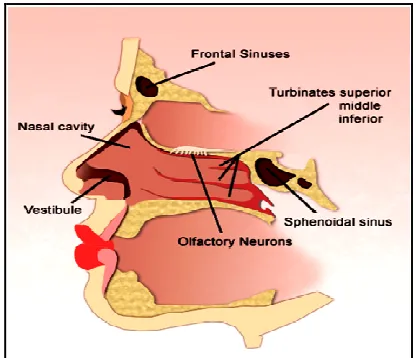
nasal mucosa [17]. In humans and other animal species the major functions of the nasal cavity are breathing and olfaction. However, it also affords an important protective activity once it filters, heat and humidify the inhaled air before reaching the lowest airways. Passage of the nasal cavity which runs from nasal vestibule to nasopharynx has a depth of approximately 12-14cm. The total surface area of the nasal cavity in human adult is about 150 cm2 and total
volume is about 15 ml [18]. Each of two nasal cavities
can be subdivided into different regions: nasal
vestibule, inferior turbinate, middle turbinate,
superior turbinate, olfactory region, frontal sinus,
sphenoidal sinus, and cribriform plate of ethmoid
bone. The nasal cavity also contains the nasal
associated lymphoid tissue (NALT), which is mainly
situated in the nasopharynx. Nasal cavity is lined with mucus layer and hairs which are involved in those functions are trapping inhaled particles and pathogens. Moreover, mucociliary clearance, immunological activities and metabolism of endogenous substances are also essential functions of nasal structures [19].The nasal cavity is covered with a mucous membrane which can be divided into two areas; nonolfactory and olfactory epithelium, in this non-olfactory area includes the nasal vestibule which is covered with skin-like stratified squamous epithelium cells, whereas respiratory region, which has a typical airways epithelium covered with numerous microvilli, resulting in a large surface area available for drug absorption and transport [20] . Nasal cavity is divided by middle septum into two symmetrical halves, each one opening at the face through nostrils and extending posterior to the nasopharynx. Both symmetrical halves consist of four areas (nasal vestibule, atrium, respiratory region and olfactory region) that are distinguished according to their anatomic and histological characteristics [19]
Fig 1: Schematic of a saggital section of nasal cavity
Nasal vestibuleMost anterior part of the nasal cavity is nasal vestibule, just inside the nostrils, and presents an area about 0.6 cm2 [4]. Nasal hairs are present in this area, also called vibrissae, which filter the inhaled particles. Histologically, this nasal portion is covered by a stratified squamous and keratinized epithelium with sebaceous glands.
Atrium Intermediate area between nasal vestibule and respiratory region is atrium. Its anterior section is constituted by a stratified squamous epithelium and the posterior area by psudostratified columnar cells presenting microvilli [21, 22].
Respiratory regionLargest part of the nasal cavity is respiratory region, also called conchae, is the cavity and it is divided in superior, middle and inferior turbinates which are projected from the lateral wall. The nasal respiratory mucosa, considered the most important section for delivering drugs systemically, is constituted by the epithelium, basement membrane and lamina propria. The nasal respiratory epithelium consists of pseudostratified columnar epithelial cells, globet cells, basal cells and mucous and serous glands [8]. Many of the epithelial cells are covered on their apical surface with microvilli and the major part of them also has fine projections, called cilia.
Olfactory region Location of olfactory region is at the
external environment. Similarly to the respiratory epithelium, the olfactory one is also pseudostratified but contains specialized olfactory receptor cells important for smell perception [21,22].
Mucus membrane of nose and its composition The
nasal mucus layer is only 5 μm thick and it is organized in two distinct layers: an external, viscous and dense, and an internal, fluid and serous. Overall, nasal mucus layer consists of 95% of water, 2.5-3% of mucin and 2% of electrolytes, proteins, lipids, enzymes, antibodies, sloughed epithelial cells and bacterial products.
Epithelial cellsbasically there are two functions of these cells,
1. Provide a physical barrier to the invasion of infectious microorganisms and allergic particles; 2. Work in conjunction with mucus glands and cilia to secrete and remove mucus and foreign particles from the nasal cavity [23].
Figure 2: Cell type of the nasal epithelium
Blood supply to nasal cavityVasculature of the nasal cavity is richly supplied with blood to fulfill the basic functions such as heating and humidification, olfaction, mucociliary clearance and immunological functions. The nasal vascular bed is so designed that rapid exchange of fluid and dissolved excipients between blood vessels and nasal tissue can be done easily. The capillary flow in the nasal mucosa was reported to be 0.5 ml/g/min [14].
Sphenopalatine artery a branch of maxillary artery.
Anterior ethmoidal artery a branch of ophthalmic artery.
Branches of the facial artery supplying the
vestibule of the nasal cavity.
Mechanism of drug absorption from nose
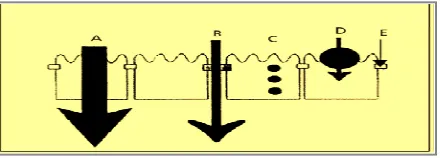
In the absorption of drug from the nasal cavity first step is passage through the mucus, large/charged particles may find it more difficult to cross. But small unchanged particles easily pass through this layer. Mechanisms for absorption through the nasal mucosa include paracellular transport via movement between cell and transcellular or simple diffusion across the membrane.
1. The first mechanism includes aqueous route of transport, which is also called as the paracellular route. This is slow and passive route. Poor bio-availability was observed for drugs with a molecular weight greater than 1000 Daltons, because inverse relationship exists between molecular weight and absorption [24].
2. Transcellular process is the second mechanism of transport through a lipoidal route and is responsible for the transport of lipophilic drugs that show a rate dependency on their lipophilicity. Drugs also cross cell membranes by an active transport route via carrier-mediated means or transport through the opening of tight junctions. For example, Chitosan, a natural biopolymer opens tight junctions between epithelial cells to facilitate drug transport
Figure 3: Drug transport pathways across the epithelium. (A), paracellular transport (B), transcytosis (C), Carrier mediated transport (D), and
intercellular tight junction (E).
Different factors affecting nasal drug absorption
[4, 14,]
Various factors affect bioavailability of nasally
administered drugs as follows;
I Biological Factors [4]
• Structural features • Biochemical changes II Physiological factors
• Nasal secretions
• Mucociliary clearance and ciliary beat frequency • Pathological conditions
• Environmental conditions. • Membrane permeability.
III Physicochemical Properties of Drugs [ 4]
• Molecular weight • Size
• Solubility • Lipophilicity
• pka and Partition coefficient • Chemical form of drug. • Polymorphism. • Chemical state. • Physical state.
IV Physicochemical Properties of Formulation
• Physical form of formulation • pH
• Osmolarity
• Volume of solution applied and drug concentration
• Viscosity. I Biological factors
1] Structural features There are five different
sections of nasal cavity: nasal vestibule, atrium, respiratory area, olfactory region and the nasopharnyx. These structures and the type of cells, density and number of cells present in that region influence the permeability. Absorption enhancers used in combination with drugs increase the permeation of compounds. [25]
2] Biochemical changes Enzymatic barrier to the
delivery of drugs is nasal mucosa because of the presence of a large number of enzymes, which include oxidative and conjugative enzymes, peptidases and proteases. These enzymes are responsible for the degradation of drugs in the nasal mucosa and result in creation of a pseudo-first-pass effect. Metabolism of nasal decongestants, alcohols, nicotine and cocaine IS due to p450 dependent monoxygenase system. Protease and peptidase were responsible for the
pre-systemic degradation and subsequent lower permeation of various peptide drugs, such as calcitonin, insulin, LHRH and desmopressin.. To overcome these degradations various approaches have been used. These include the use of protease and peptidase inhibitors such as bacitracin, amastatin, boroleucin and puromycin [26].
II Physiological factors
Blood supply and neuronal regulation
Nasal mucosa is highly permeable site. High blood supply due to parasympathetic stimulation gives congestion and low blood supply due to sympathetic stimulation gives relaxation, regulate the rise and fall in the amounts of drug permeated, respectively [27]. Based on the above observations, we can conclude that the increased permeability of a compound is due to parasympathetic stimulation.
Nasal secretions
Nasal secretions are produced by anterior serous and seromucus glands. Mucus production is approximately 1.5–2 l ml daily.The permeability of drug through the nasal mucosa is affected by:
• Viscosity of nasal secretionThe viscous surface layer will inhibit the ciliary beating if the sol layer of mucus is too thin and mucociliary clearance is impaired if sol layer is too thick, because contact with cilia is lost. Permeation of the drug is affected due to impairment of mucociliary clearence by altering the time of contact of drug and mucosa.
• Solubility of drug in nasal secretions For permeation of drug solublisation is necessary. A drug needs to have appropriate physicochemical characteristics for dissolution in nasal secretions.
• Diurnal variation Nasal secretions are also
affected by circadian rhythm. Permeation of drug is altered at night due to secretions and clearance rates are reduced. Chronokinetics dictate the pattern and rate of permeation in such cases.
conditions the penetrant molecules exist as unionized species. Increase or decrease in the permeation of drug is observed because ionization is affected by change in pH of mucus, depending on the nature of the drug. pH of formulation should be between 4.5 to 6.5 for better absorption and should also have good buffering capacity[28]. Mucociliary clearance (MCC) and ciliary beating
Whenever a substance is nasally administered, it is cleared from the nasal cavity in ~21 min by MCC because mucociliary clearance is the normal defense mechanism of the nasal cavity which clears substances adhering to nasal mucosa and cleared in GIT by draining into nasopharynx. Drug permeation is enhanced by increasing contact time between drug and mucus membrane because reduced MMC; whereas, increased MCC decreases drug permeation. Pathological conditions:
Mucociliary disfunctioning, hypo or hypersecretions, irritation of the nasal mucosa occurs due to diseases such as the common cold, rhinitis, atrophic rhinitis and nasal polyposis, and drug permeation is affected by this.
Environmental conditions:
Moderate reduction in the rate of MCC occurs at the temperature of 24oC, it has been predicted that a linear increase in ciliary beat frequency occurs with increase in temperature.
Membrane permeability:
Absorption of the drug through the nasal route is affected by membrane permeability which is most important factor. The large molecular weight drugs and water soluble drugs like peptides and proteins have low membrane permeability hence absorbed through endocytic transport in fewer amounts [29]. III Physicochemical properties of drug:
Molecular weight and size: Drug permeation is
determined by molecular weight, molecular size, hydrophilicity and lipophilicity of the compound. For compounds 1 kDa, bioavailability can be directly predicted from knowledge of MW. In general, the bioavailability of these large molecules ranges from
0.5% to 5%. Physicochemical properties of the drug don’t significantly affect permeation of drug LT 300 Da, which will mostly permeate through aqueous channels of the membrane. By contrast, for compounds with MW 300 Da rate of permeation is highly sensitive.
Solubility:Major factor in determining absorption of drug through biological membranes is drug solubility. As nasal secretions are more watery in nature, a drug should have appropriate aqueous solubility for increased dissolution. Lipophilic drugs have less solubility in the aqueous secretions. Water soluble drugs are absorbed by passive diffusion and lipophilic drugs via active transport depending on their solubility. [30]
Lipophilicity: The permeation of the compound
normally increases through nasal mucosa with increase in lipophilicity. It appears that nasal mucosa is primarily lipophilic in nature and the lipid domain plays an important role in the barrier function of these membranes although they have some hydrophilic characteristics. Systemic bioavailability of many drugs is decreased due to excess hydrophilicity in such cases prodrug approach is beneficial.
pKa and partition coefficient: As per the pH
partition theory, unionized species are absorbed better compared with ionized species and the same fact is true in the case of nasal absorption. There is constant relationship between pKa and nasal absorption of these drugs. With an increase in lipophilicity or the partition coefficient of the drugs its concentration in biological tissues increases. The absorption rate of aminopyrine increased with the increase in pH and was found to fit well to the theoretical profile Major factor governing nasal absorption is partition coefficient[31].
Polymorphism: Polymorphism is the important
carefully considered in the dosage form development for the nasal delivery. [16]
Chemical state of drug: Absorption of the drug is determined by the chemical form of the drug in which it is presented to nasal mucosa. Chemically alter a drug molecule by adding a bio-cleavable lipophilic moiety is the alternative for improving absorption of the drug which is not having desired absorption properties. The prodrug approach provides many additional challenges which need to be overcome in the drug product developmental process. The toxicity of the prodrug itself needs to be fully evaluated [16]. Physical state of drug:
Particle size and morphology of drug are two main important properties for particulate nasal drug products. These both parameters should be controlled to obtain suitable drug dissolution properties in the nostrils. Too fine particles below 5 microns should be avoided because it may get inhaled in lungs. Generally, particles in the 5–10 micron range are deposited in the nostrils. [16].
VI Physicochemical properties of formulation:
Physical form of formulation:
Physical form of the formulation is very important in nasal drug absorption. Liquid formulations are less effective than powder form in delivering insulin in rabbits. Less efficient systemic nasal drug delivery observed with more viscous formulation. Scientist found that somewhat more sustained effects of desmopressin are observed with addition of viscous agent but total bioavailability is not enhanced. Viscous formulations may help in minimizing nasal drip. pH: extent of drug ionization IS determined by pH partition hypothesis hence it is related to formulation pH. Nasal formulation should be adjusted to appropriate pH to avoid irritation, to obtain efficient absorption and to prevent growth of pathogenic bacteria. Ideal formulation pH should be adjusted between 4.5 and 6.5. pH of the nasal surface is 7.39 and the pH of nasal secretions is 5.5–6.5 in adults and 5.0–6.7 in infants and children.
Osmolarity: Formulation tonicity substantially affect
the nasal mucosa generally, an isotonic formulation is preferred. Some scientist studied the effects of formulation osmolarity, on the nasal absorption of secretin in rats. They found that all cells of the nasal mucosa were affected by the concentration of sodium chloride in the formulation and-the absorption reached a maximum at a 0.462 M sodium chloride concentration. At this concentration shrinkage of epithelial cells was observed. Hence tonicity is also having impact on drug absorption. [32]
Volume of solution applied and drug
concentration: There is no constant relationship
between volume of administration and extent of
absorption. Clement studied the effect of three nasal spray concentrations of cetrizine on the clinical efficacy. The results showed that 16.7%, 30.8%, 42.9%, and 26.7% of days the patients experienced appeared to improve with the drug concentration up to only 0.125%. At the higher concentration, 0.250%, the efficacy declined.[33]
Viscosity: contact time between the drug and the nasal mucosa is increased by higher viscosity of formulation thereby increasing the time for permeation.
Strategies to improve nasal absorption [34]
There are many barriers present in nasal cavity which interfere with absorption of various drugs .There are some methods which have been successfully used for the improvement of nasal drug absorption.
• Nasal enzymes inhibitors: Various kinds of
enzyme inhibitors are utilized to minimize metabolism of drug in nasal cavity which minimize activity of enzymes present in nasal cavity includes protease and peptidase, used as inhibitors for the formulation of peptide and protein molecule.
• Structural modification: Modification of drug
• Permeation enhancer: Permeation enhancers are of different categories and have been investigated to improve the nasal absorption like surfactants, fatty acids, phospholipids, cyclodextrins, bile salts, etc.
• Particulate drug delivery: Carriers are used for the encapsulation of drug which prevent exposure of a drug to nasal environment and improve the retention capacity in nasal cavity. Some examples of carriers may include microspheres, liposomes, nanoparticles and niosomes.
• Prodrug approach: Inactive chemical moiety is
called prodrug which becomes active at the target site. Prodrugs are mainly used to improve taste, odor, solubility and stability.
• Bioadhesive polymer: To improve the nasal
residence and absorption of the drug bioadhesive polymers are used. They improve the retention time of the drug inside the nasal cavity is increased by making an adhesive force between formulation and nasal mucosa, which leads to minimization of mucociliary clearance of formulation.
• In situ gel: These are the formulations which get converted into gel upon instillation into nasal
cavity by the influence of stimuli includes temperature, pH and ionic concentration.
Consistency of the gel is thick which makes the formulation difficult to drain by the influence of ciliate movement.
Excipients used in nasal formulations [14]
There are various types of excipients used in nasal
formulations. Commonly used and frequently added
excipients are as follows:
Bioadhesive polymers Compound that is capable of interacting with biological material through interfacial forces and being retained on such material for prolonged periods of time is called as bioadhesive polymer. They are also called as mucoadhesive if biological material is mucus membrane,. On molecular level, process of mucoadhesion can be explained on the basis of attractive molecular interactions involving forces such as Van Der Waals, electrostatic interactions, hydrogen bonding, and hydrophobic interactions. The bioadhesive force of a polymer material is dependent on the nature of the polymer, the surrounding medium (pH), swelling and physiological factors (mucin turnover, disease state).
Table 1: Bioadhesive polymers used in nasal drug delivery
Polymer Characteristics
Cellulose derivatives
Soluble: hydroxypropyl methylcellulose, hydroxypropyl
cellulose(HPC),methyl cellulose(MC), carboxymethyl cellulose(CMC)
Insoluble: ethylcellulose, microcrystalline cellulose(MCC)
-Prolong the residence time of drug in nasal cavity -Sustain the release of drug due to high viscosity -Act as absorption enhancer
- Effectively increase intranasal bioavailability
Polyacrylates -Carbomers -Polycarbophils
-Excellent mucoadhesive and gel forming capability
-Capable of attaching to mucosal surfaces hence ensure intimate contact between the formulation and membrane surface
Starch -Maize starch
-Degradable starch microspheres (DSM)
-Effectively improve absorption of both small hydrophobic and hydrophilic macromolecular drugs
-Mostly used in mucoadhesive microparticulate nasal delivery system
Chitosan
-Insoluble at neutral and alkaline Ph
-It can form water soluble salts with inorganic and organic acids
-Low cost, Biodegradable and Biocompatible
Gelling agent According to a study by Pennington et al. increasing solution viscosity may provide a means of prolonging the therapeutic effect of nasal preparations. Suzuki et al. showed that a drug carrier
From a safety (nasal irritancy) point of view use of a combination of carriers is often recommended.[19]
Penetration enhancer Chemical penetration
enhancers are widely used in the nasal drug delivery. Classification of chemical penetration enhancer includes, following 1)Solvents2) Alkyl methyl sulphoxides 3) Pyrrolidones 4) 1- Dodecyl azacycloheptan-2-one 5) Surfactants.
Buffers Nasal formulations are generally
administered in small volumes ranging from 25 to 200 μL with 100 μL being the most common dose volume. Hence, nasal secretions may alter the pH of the administrated dose which can affect the concentration of un-ionized drug available for absorption. Therefore, an adequate formulation buffer capacity may be required to maintain the pH in-situ.
Solubilizers Aqueous solubility of drug is always a limitation for nasal drug delivery in solution. Conventional solvents or co-solvents such as glycols, small quantities of alcohol, Transcutol (diethylene glycol monoethyl ether), medium chain glycerides and Labrasol (saturated polyglycolyzed C8- C10 glyceride) can be used to enhance the solubility of drugs. Other compounds can be used like, the use of surfactants or cyclodextrins such as HP–ß-Cyclodextrin that serve as a biocompatible solubilizer and stabilizer in combination with lipophilic absorption enhancers. In these cases, their impact on nasal irritancy should be considered.
Preservatives Most nasal formulations are aqueous based so needs preservatives to prevent microbial growth. Parabens, phenyl ethyl alcohol, benzalkonium chloride, EDTA and benzoyl alcohol are some of the commonly used preservatives in nasal formulations. Antioxidants A small quantity of antioxidants may be required to prevent drug oxidation. Commonly used antioxidants are sodium bisulfite, butylated hydroxytoluene, sodium metabisulfite and tocopherol. Usually, antioxidants do not affect drug absorption or cause nasal irritation. Chemical/physical interaction of antioxidants and preservatives with drugs, excipients, manufacturing equipment and packaging
components should be considered as part of the formulation development program.
Humectants Because of allergic and chronic diseases there can be crusts and drying of mucous membrane. Certain preservatives/ antioxidants are also likely to cause nasal irritation especially when used in higher quantities. Adequate intranasal moisture is essential for preventing dehydration. Therefore, humectants can be added especially in gel-based nasal products. Humectants avoid nasal irritation and do not affect drug absorption. Common examples include glycerin, sorbitol and mannitol.
Surfactants Surfactant incorporation into nasal
dosage forms can modify the permeability of nasal membranes, which may facilitate the nasal absorption of drug.
Formulations based on Nasal Delivery System[19,
35]
Liquid dosage forms
• Nasal drops
Nasal drops are one of the most simple and convenient delivery systems among all formulations. The main disadvantage of this system is the lack of dose precision.
• Nasal sprays
Both solution and suspension formulations can be formulated into nasal sprays. Due to the availability of metered dose pumps and actuators, a nasal spray can deliver an exact dose anywhere from 25 -200 μL.
• Nasal emulsions, micro emulsions
Intranasal emulsions have not been studied as extensively as other liquid nasal delivery systems. Nasal emulsions offer the advantages for local application mainly due to the viscosity.
Semi-solid dosage forms
Semi-solid systems, for example gels, ointments and liquid systems containing polymers that gel at particular pH changes are usually employed for designing the nasal drug delivery systems.
• Nasal gels
the reduction of post-nasal dripping due to its high viscosity, reduction of the taste impact due to reduced swallowing, reduction of anterior leakage of the formulation.
Solid dosage forms
Solid dosage forms are also becoming popular for intranasal drug delivery, although these formulations are more suitable for pulmonary drug delivery and similar applications, since it can cover the vasculature within the epithelium of nasal mucosa.
• Nasal powders
Powder dosage forms may be developed if solution and suspension dosage forms cannot be developed, mainly due to lack of drug stability. The advantages of a nasal powder dosage form are the absence of preservative and superior stability of the drug in the formulation. However, the suitability of the powder formulation is dependent on the solubility, particle size, aerodynamic properties and nasal irritancy of the active drug and/or excipients.
Novel drug formulations
Several claims have been made in favour of developing nasal formulations containing liposomes, microspheres and nanoparticles for intranasal drug delivery. These systems can include, besides the drug, enzymatic inhibitors, nasal absorption enhancers or/and mucoadhesive polymers in order to improve the stability, membrane penetration and retention time in nasal cavity.
• Liposomes
Liposomes are phospholipids vesicles composed by lipid bilayers enclosing one or more aqueous compartments and wherein drugs and other substances can be included. Liposomal drug delivery systems present various advantages such as the effective encapsulation of small and large molecules with a wide range of hydrophilicity and pKa values . In fact, they have been found to enhance nasal absorption of peptides such as insulin and calcitonin by increasing their membrane penetration. This has been attributed to the increasing nasal retention of peptides. Protection of the entrapped peptides from
enzymatic degradation and mucosal membrane disruption.
• Microspheres
Microsphere technology has been widely applied in designing formulations for nasal drug delivery. Microspheres are usually based on mucoadhesive polymers (chitosan, alginate), which present advantages for intranasal drug delivery. Furthermore, microspheres may also protect the drug from enzymatic metabolism and sustain drug release, prolonging its effect.
• Nanoparticles
Nanoparticles are solid colloidal particles with diameters raging from 1-1000 nm. They consist of macromolecular materials and can be therapeutically used as adjuvant in vaccines or as drug carriers, in which the active substance is dissolved, entrapped, encapsulated, adsorbed or chemically attached. Nanoparticles may offer several advantages due to their small size, but only the smallest nanoparticles penetrate the mucosal membrane by paracellular route and in a limited quantity because the tight junctions are in the order of 3.9-8.4 Å.
Evaluation of nasal drug formulations [19, 36]
In vitro nasal permeation studies Various
approaches used to determine the drug diffusion through nasal mucosa from the formulation. There are two different methods to study diffusion profile of drugs,
injection. After the complete removal of blood from muscosal surface, it is attached to donor chamber tube. The donor chamber tube is placed such a way that it just touches the diffusion medium in recipient chamber. Samples (0.5 ml) from recipient chamber are with draw at predetermined intervals, and transferred to amber colored ampoules. The samples withdrawn are suitably replaced. The samples are estimated for drug content by suitable analytical technique. The temperature is maintained at 37oC throughout the experiment.
(B) In Vivo Nasal Absorption studies
Animal models for nasal absorption studies The
animal models employed for nasal absorption studies can be of two types, viz., whole animal or in vivo model and an isolated organ perfusion or ex vivo model. These models are discussed in detail below:
Rat model The surgical preparation of rat for in vivo
nasal absorption study is carried out as follows: The rat is anaesthetized by intraperitoneal injection of sodium pentobarbital. An incision is made in the neck and the trachea is cannulated with a polyethylene tube. Another tube is inserted through the oesophagus towards the posterior region of the nasal cavity. The passage of the nasopalatine tract is sealed so that the drug solution is not drained from the nasal cavity through the mouth. The drug solution is delivered to the nasal cavity through the nostril or through the cannulation tubing. Femoral vein is used to collect the blood samples. As all the probable outlets of drainage are blocked, the drug can be only absorbed and transported into the systemic circulation by penetration and/or diffusion through nasal mucosa. Rabbit model The rabbit offers several advantages as an animal model for nasal absorption studies: 1. It permits pharmacokinetic studies as with large animals (like monkey) 2. It is relatively cheap, readily available and easily maintained in laboratory settings 3. The blood volume is large enough (approx. 300ml) 4. To allow frequent blood sampling (l-2ml). Thus, it permits full characterization of the absorption and determination of the pharmacokinetic profile of a
drug. Rabbits (approx. 3 kg) are either anaesthetized or maintained in the conscious state depending on the purpose of study. In the anaesthetized model, intramuscular injection of a combination of ketamine and xylazine is given to anasthetized rabbit. The rabbit's head is held in an upright position and nasal spray of drug solution is administered into each nostril. The body temperature of the rabbit is maintained at 37°C during experiment with the help of a heating pad. The blood samples are collected by an indwelling catheter in the marginal ear vein or artery.
Ex vivo Nasal Perfusion Models Surgical preparation
is the same as that is for in vivo rat model. During the perfusion studies, to minimize the loss of drug solution a funnel is placed between the nose and reservoir. The drug solution is placed in a reservoir maintained at 37°C and is circulated through the nasal cavity of the rat with a peristaltic pump. The perfusion solution passes out from the nostrils (through the funnel) and runs again into the reservoir. The drug solution in the reservoir is continuously stirred. The amount of drug absorbed is estimated by measuring the residual drug concentration in the perfusing solution.
Rabbit can also be used as the animal model for ex vivo
nasal perfusion studies. The rabbit is anaesthetized with parenteral uretliane-acepromazine. A midline incision is made in the neck and the trachea is cannulated with a polyethylene neonatal endotracheal tube. The oesophagus is isolated and ligated. The distal end of the oesophagus is closed with suture and flexible tygon tubing is inserted into the proximal end and advanced to the posterior part of the nasal cavity. To avoid drainage of drug solution from the nasal cavity the nasopalatine tract (that connects nasal cavity to the mouth) is closed with an adhesive. The drug in isotonic buffer solution is recirculated using a peristaltic pump.
In-vivo bioavailability studies
treated with conventional preparation, second group kept as control (i.e. not received any test substances) and third group of test formulation. Water is given ad libitum during fasting and throughout the experiment. For the collection of blood samples the marginal ear vein of the rabbits used and sample of about 2 ml collected in heparinized centrifuge tubes at 0.5, 1, 2, 3, 4, 5, 6, 7 and 8 h after the drug administration. The blood samples are centrifuged at 3000 × g for 15 min to obtain the plasma and stored at -20°C until analysis. The extraction of drug from plasma can be carried out as reported previously and then analyze using the HPLC system.
Pharmacokinetic analysis
Pharmacokinetic parameters are derived from the plasma concentration vs. time plot. The area under the curve (AUC), the peak plasma concentration (Cmax) and the time to attain peak concentration (Tmax) can be obtained from these plots. The elimination rate constant (Kel) is determined from the semi-logarithmic plot of plasma concentration vs. time. Elimination half-life (t1/2) can be calculated using the formula; t1/2 = 0.693/Kel.
Marketed Preparation [2, 37]
Table 2: Nasal drug products (proteins and peptides) for systemic drug delivery in the marke
Drug Substance
(Product name) Indication Dosage form Status Manufacturer
Salmon calcitonin (Karil 200 I.E.) Osteoporosis Solution (spray) Marketed Novartis Pharma
Desmopressin (Minirin Nasenspray) Antidiuretic hormone Solution (spray) Marketed Ferring Arzneimitted
Buserelin (Profact nasal) Buserelin Solution (spray) Marketed Aventis Pharma
Nafarelin (Synarela) Endometriosis Solution (spray) Marketed Pharmacia
Oxytocin (Syntocinon) Lactation induction Solution (spray) Marketed Novartis Pharma
Protirelin (antepan* nasal) (Relefact* TRH nasal) Thyroid diagnostics Solution (spray) Marketed Aventis Pharma
Table 3: Nasal Drug Products (Non Peptide) For Systemic Drug Delivery in the Market
Drug Substance (Product name) Indication Dosage form Status Manufacturer
Zolmitriptan (AscoTop* Nasal) Migraine Solution (spray) Marketed Astra Zeneca
Sumatriptan Imigran* Nasal Migraine Solution (spray) Marketed Glaxo SmithKline
Dihyfroergotamin (Migranal* Nasal Spray) Migraine Solution (spray) Marketed Novartis Pharma
Estradiol (Aerodiol*) Hormone
replacement Solution (spray) Marketed Servier
CONCLUSION
Nsaal drug delivery is a novel platform and it is a promising alternative to injectable route of administration. There is possibility in the near future that more drugs will come in the market in the form of nasal formulation intended for systemic treatment.
Development of a drug with a drug delivery system is
influenced by several factors. For the treatment of
long illnesses such as diabetis, osteoporosis, fertility
treatment novel nasal products are also expected to
be marketed. Bioavailability of nasal drug products is one of the major challenges in the nasal product development. In contrast, a huge amount of money is
investigated by pharmaceutical companies in the development of nasal products, because of growing demand of nasal drug products in global pharmaceutical market. So for the avoidance of side effect and improve effectiveness of nasal products we should pay attention to basic research in nasal drug delivery.
REFERENCES
1. Hicke A.J., Pharmaceutical Inhalation Aerosol
Technology, 2nd ed Marcel Dekker, Inc: NewYork,
2. Illum L. Nasal drug delivery-possibilities, problems
and solutions. J ControlRelease.2003; 87: 187–198.
3. Ugwoke M.I., Verbek N., and Kinget R. The
biopharmaceutical aspects of nasal mucoadhesion
drug delivery. J Pharm Pharmacol. 2001; 59: 3–22.
4. Arora P., Sharma., Gary S. Permeability issues in
nasal drug delivery. Drug Discov Today. 2002; 7:
967–975.
5. Marttin E., Nicolaas G.M., Schipper J., Coos V., Frans
WH. Nasal mucociliary clearance as a factor in
nasal drug delivery. Adv Drug Del Rev. 1997;
29:13-38.
6. Choi H.G., Jung J.H., Ryu J.M. Int J of pharm. 1998;165:
33-44.
7. CIllum L. Nasal drug delivery: new developments
and strategies. Drug Discov Today. 2002;
7:1184-1189.
8. Graff L.C., Pollock G.M. Nasal drug administration:
potential for targeted central nervous system
delivery. J Pharm Sci. 2005; 94:1187-1195.
9. Lipworth B.J., and Jackson C.M. Safety of inhaled and
intranasal corticosteroids: lessons for the new
millennium. Drug Saf. 2000; 23: 11–33.
10. Wiseman J.W. Steroid hormone enhancement of gene
delivery to a human airway epithelial cell line in vitro
and mouse airways in vivo. Gene The. 2001; 8: 1562–
1571.
11. Krishnamoorthy R., and Mitra N.K., Prodrugs for
nasal delivery. Adv Drug Deliv Rev.1998; 29: 135–
146.
12. Duquesnoy C., Mamet J.P., Sumner D., and Fuseau E.
Comparative clinical pharmacokinetics of single
doses of sumatriptan following subcut anus, oral,
rect al and intranasal administration. Eur J Pharm
Sci. 1998; 6:99-104.
13. Singh kumar Arun.Nasal cavity: A promising
transmucosal platform for drug delivery and
research approach from nasal to brain targeting.
Journal of Drug Delivery and Therapeutics. 2012;
23:22-33.
14. Chajed S., Sangle S., and Barhate S. Advantagious
nasal drug delivery system; A review.International
journal of pharmaceutical science and research.
2011; 2(6):1322-1336.
15. Zaheer A., Sachin., Swamy. Mucoadhesive Polymers:
Drug Carriers for Improved Nasal Drug Delivery.
Indian Journal of Novel Drug Delivery. Jan-Mar,
2012; 4(1): 2-16.
16. Behl C,R., Pimplaskar N.K., Sileno A.P., Demeireles J.,
Romeo VD. Effect of physicochemical properties and
other factors on nasal drug delivery. Advanced drug
delivery Reviews. 1998; 89-116.
17. Cauna N. Blood and nerve supply of the nasal lining,
in: D.F. Proctor, I.B. Andersen (Eds.), Chapter in The
Nose: Upper Airway Physiology and the Atmospheric
Environment, Elsevier Biomedical Press,
Amsterdam. 1982; 45-69.
18. Illum, L. Transport of drug from the nasal cavity to
central nervous system. Eur J Pharm Sci. 2000; 11:
1–18.
19. Parvathi M. Intranasal drug delivery to brain: an
overview. International journal of research in
pharmacy and chemistry. 2012; 2(3): 889-895.
20. Sarkar M.A. Drug metabolism in the nasal mucosa.
Pharm.Res. 1992; 9: 1–9.
21. Merkus F.W., Verhoef J.C., Schipper N.G., Marttin E.
Nasal mucociliary clearance as a factor in nasal drug
delivery. Adv Drug Deliv Rev. 1998; 29:13-38.
22. Charlton S., Jones N.S., Davis S.S., Illum L. Distribution
and clearance of bioadhesive formulations from the
olfactory region in man: Effect of polymer type and
nasal delivery device. Eur J Pharm Sci. 2007;
30:295-302.
23. Dondeti P., Zia H., Needham T.E. Bioadhesive and
formulation parameters affecting nasal absorption.
Int J Pharm. 1996; 127:115-133.
24. Dahl, R. and Mygind, N. Anatomy, physiology and
function of the nasal cavities in health and disease.
Adv. Drug Deliv. Rev.1998; 29: 3–12.
25. Machida M. Effects of surfactants and protease
inhibitors on nasal absorption of recombinant
human granulocyte colony stimulating factor
(rHG-CSF) in rats. Biol. Pharm. Bull. 1994; 17:1375–1378
26. Watanabe H., and Tsuru H. Nippon Yakurigaku Zasshi
1999; 113: 211–218.
27. Cornaz A.L., and Buri P. Nasal mucosa as an
absorption barrier. Eur. J. Pharm. Biopharm.1994;
40: 261–270.
28. Gannu Praveen Kumar and Kiran S. Strategies and
prospects of nasal drug delivery systems. Indian
Journal of Pharmaceutical Science & Research. 2012;
29. Corbo D.C. Characterization of the barrier properties
of mucosal membranes. J. Pharm. Sci. 1990; 79: 202–
206.
30. Sakane T. The transport of a drug to the
cerebrospinal fluid directly from the nasal cavity: the
relation to the lipophilicity of the drug. Chem. Pharm.
Bull. (Tokyo)1991; 39: 2456–2458.
31. Ohwaki K., Ando H., Watanabe S., Miyake Y. Effects of
Krenistsky, Amino acid ester prodrugs of acyclovir,
Antiviral dose, pH, and osmolarity on nasal
absorption of secretin in Chem. Chemother.,
1992;3:157–164.
32. Clement P., Roovers M.H., Francillon C., Dodion P.
Dose ranging, placebo controlled study of cetrizine
nasal spray in adults with perennial allergic rhinitis.
Allergy 1994; 49: 668–672.
33. Donovan M.D., Flyn G.L., AmidonG.L.Pharm.Res.
1990; 7:863-868.
34. Ibrahim A., Alsarra A.Y., Hamed., Fars K.A., and
Gamal M., Maghraby E. Vesicular Systems for
Intranasal Drug Delivery, K.K. Jain (ed.), Drug
Delivery to the Central Nervous System,
Neuromethods 45, DOI
10.1007/978-1-60761-529-3_8
35. Chein Y.W., Su KES and Chang S.F. Nasal systemic
drug deliver Dekker. 1989:
36. Costantino H.R., Lisbeth I., Brandt G., Johnson P.H.,
Quay S.C. Intranasal delivery: Physicochemical and
therapeutic aspects. International Journal of
Pharmaceutics. 2007; 337: 1-2
How to cite this article: Pagar Swati Appasaheb*, Shinkar Dattatraya Manohar, Saudagar Ravindra Bhanudas1; A
Review on Intranasal Drug Delivery System; J. Adv. Pharm. Edu. & Res. 2013: 3(4): 333-346.