Mr. Piush Sharma Research Scholar,
School of Pharmaceutical Sciences, Jaipur National University, Jaipur (Rajasthan) India-302025
Email:[email protected] Address for correspondence
Access this article online www.japer.in
Phytochemical and Pharmacological profile of
lanata camara
l:
An Overview
INTRODUCTION
Lanata camara L. (Verbenaceae) some times also known as wild or red sage, is listed as one of the
important medicinal plant of the world and it is also
considered most noxious weeds. Lanata camara is the most widespread species of this genus, growing
luxuriantly at elevations up to 2000 m in tropical,
sub-tropical and temperate regions. The species name,
camara, is probably adopted from the West Indian colloquial name for the common species [1].
It is an evergreen aromatic shrub and planted as an
ornamental which commonly found around houses of
Algeria with four typical colours: yellow-orange,
pink-violet, yellow and white flower types. In addition, it is
now a highly invasive weed in many parts of the world
[2]. Lantana is mostly native to subtropical and tropical America, but a few taxa are indigenous to tropical Asia
and Africa. It now occurs in approximately 50
countries where several species are cultivated under
hundreds of cultivar names. The plant is also
documented regionally as camara, camara chumbinho,
camara-de-cheiro, camara-deespinho,
camara-miudo-de-espinho, camara verdadeiro, camara vermelho,
cambara, cambara-de-duas-cores,
cambara-de-folhagrande and chumbinho or chumbinho roxo [3] Some varieties of L. camara are toxic for causing photosensitization in ruminants, which kills the
animal. Ubiquitously, intoxication only occurs when
enough plant material is ingested, particularly when
starving animals are conduced to pastures where the
plant grows freely, which is frequently in periods of
abiotic stress.
Taxonomical Description [4]:
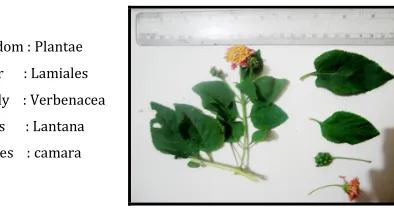
Kingdom : Plantae Order : Lamiales Family : Verbenacea Genus : Lantana Species : camara
Figure 1: Lanata camara
Morphological Description:
Lantana camara (Verbenaceae) is a rambling, prickly-stemmed, hairy, evergreen, wild shrub that can reach
a height of about 3 m [5]. It is a woody straggling plant with various flower colours, red, pink, white, yellow
and violet with small rounded heads, often in two
colours, yellow and red. The stems and branches are
Now a day, focus on plant research has increased all over the world and a large body of evidence has collected to show immense potential of medicinal plants used in various traditional systems. Over the last few years, researchers have aimed at identifying and validating plant derived substances for the treatment of various diseases. Similarly it has been already proved that various parts of plants such as Leafs, fruits, seeds etc. provide health and nutrition promoting compounds in human diet. Lanata camara L. (Verbenaceae) some times also known as wild or red sage,is listed as one of the important medicinal plant of the world and it is also considered most noxious weeds. The present review aims to compile medicinal values of Lanata camara generated through the research activity using modern scientific approaches and innovative scientific tools.
Keyword:Lanata camara, Phytochemical studies, Pharmacological Studies
ABSTRACT ABSTRACT ABSTRACT ABSTRACT Piush Sharma*1, B Shrivastava1,
Ganesh N. Sharma1, Hemant R.
Jadhav2
1School of Pharmaceutical Sciences, Jaipur National University, Jaipur (Rajasthan) India 2Department of Pharmacy, Birla Institute of Technology & Science, Pilani, Rajasthan, India
sometimes armed with prickles or spines. The leaves
are arranged in opposite pairs and are broadly oval,
rough with short hairs, with finely toothed edges
along with a number of veins giving a wrinkled
appearance. Thefruits are fleshy berries in clusters,
shiny and globose in shape, green in colour which on
ripening turns to black [6,7].
Therapeutic Uses:
A number of therapeutic uses of various parts of
Lanata camara have been documented which indicate that Lanata camara is being used for treatment of various ailments in many regions of the world since
ancient time. It has been documented that root
decoction was used to treat stomach ache and
vomiting in infants in West Africa. Beside these the
same parts of the Lanata camara have been used against quinine resistant malaria. At the same time the
leaves are also have been used medicinally for
treatment of sore throat, cough, conjunctivitis,
toothache, skin rashes and itching and the vapor of
boiling leaves for headache and cold. In West Africa
the leaves have also been used as diaphoretic,
stimulant, and treatment of jaundice and rheumatism
[8]. In Nigeria and Senegal also Lanata camara leaf infusions have been used in management of cough,
colds, asthma and pyrexia [9]. In Central and South America and Ghana Lantana camara leaves and flowers have been used against fever, influenza and
stomach-ache sores, chicken pox and measles high
blood pressure. Beside these the plant parts have been
employed for the treatment of cancers and tumours.
Along with these the therapeutic use of the Lanata camara have been documented in treatment of treat cuts, rheumatisms, ulcers, vermifuge, leprosy and
scabies in Asian countries. Additionally, the Lanata camara have also been used in releaving of gastrointestinal diseases (In Mexico)[10], ENT disorders like cold, cough, tonsillitis, otitis-media (In
Kenya) [11], leprosy (In Bangaladesh) [12],diarrhoea (In SouthernWestern Ghats of India)[13]and they rheumatism and pulmonary diseases (in Brazil)[14]. In
addition to that Lanata camara have also been reported to be used in management of bilious fevers,
catarrhal infections, tetanus, atoxy of abdominal
viscera[15], memory impairment [16], and as anti-inflammatory, antipyretic, antispasmodic, and
antibiotic agent [17]. At the same time use of Lanata camara as sudorific, carminative, antiseptic, antispasmodic, antiemetic and insecticide have also
been documented.
Traditional Uses:
Lanata camara is toxic in nature, hence have been employed as wild pest in many parts of Himachal
Pradesh, Uttar Pradesh and other tropical and
subtropical parts of India[18]. Apart from its popularity as a garden plant, Lanata camara is said to form a useful hedge and to provide a good preparation for
crops, covering the ground with fine leaf mulch. It
improves the fertility of rocky, grave, or hard laterite
soils, enriches the soil, and serves to retain humus in
deforested areas and checks soil erosion. It can serve
to nurse the parasitic sandalwood seedlings and in the
Pacific islands has been used as a support for yam
vines. Polishing of house floor with leaf plant extracts
obtained Lantana camara is routinely done to drive away mosquitoes and other insect’s flies as common
tradition among the community members of rural
tribal people [19].
Reported Phytoconstituents:
Lantana camara have therapeutic potential due to the presence of natural agents, Majority of their activity is
due to bioactive compounds viz. flavones, isoflavones,
flavonoids, anthocyanins, coumarins, lignans,
catechins, isocatechins, alkaloids, tannin, saponins and
triterpenoids. Wollenweber et al;) have identified and documented the presence of two triterpenoid esters
viz. camarilic acid and camaricinic acid[20]. Silva et al; determined the chemical composition of essential oils
collected from different regions. The main
constituents found in the oil were limonene,
sabinene, β-caryophyllene, zingi- berene and
α-humulene[21]. In the same course of study Misra and Laatsch investigate and reported oleanolic acid, oleanolic acid acetate, oleanonic acid, lantadene A,
camaric acid, β-sitosterol and its glucoside, pomonic
acid along with two new and several unidentified
complex mixture of triterpenoids in root part of
Lanata camara[22]. In contrast to that Khan et al; performed GC-MS analysis of Oil obtained from leaves
and flowers of Lanata camara and reported that Lantana oils also contain β-elemene, γ-elemene, α-copaene and α-cadinene as major constituents [23]. In the same course of phytochemical screening study,
Sefidkon again documented the presence of limonene and other chemicals in oil of Lanata camara leaves [24]. Moreover Begum et al; isolated and confirm the presence of pentacyclic triterpenoids, ursoxy acid,
methyl ursoxylate, and ursangilic acid, along with
dotriacontanoic acid, oleanolic acid acetate, and
tetracosanoic acid using structure elucidation in arial
parts of Lanata camara[25]. Oyedeji et al; obtained yellow colored oil with fruity spearmint odour from
hydrodistillation of Lanata camara leaves with percentage yield of 0.44% (w/w). Through the GC–MS
analysis, they identified a total number of 39
compounds, having sesquiterpenoids including β-
caryophyllene, α-humulene, germacrene D, cubebol
and bicyclogermacrene chiefly, while sabinene,
α-pinene and β-α-pinene were the dominant hydrocarbon
monoterpenes. In continuation of phytochemical
screening of Lanata camara, Khan et al; performed GC and GC–MS examination of fruits and stem essential
oils. The results revealed that fruit and stem oils were having palmitic acid, stearic acid, and
germacrene-D[26]. They also concluded that the fruit oil almost matched with the stem oil in respect to its chemical
constituents but differed significantly with respect to
the percentage composition of its constituents. In the
same course of investigations Begum et al;reported presence of three new pentacyclic triterpenoids
camarin (=(7α)-7-hydroxy-3-oxoolean-12-en-28-oic
acid; A), lantacin (=(3β,19 α,22 β)-3,19-dihydroxy-22-[(3-methylbut-2-enoyl)oxy]urs-12-en-28-oic acid; B), and camarinin
(=(22β)-3β,25-epoxy-3-hydroxy-22-
[(3-methylbut-2-enoyl)oxy]-11-oxoolean-12-en-28-oic acid; C) in aerial parts of Lanata camara[27].
Moreover; Misra et al;identified and reported again,
Sabinene, 1,8-cineole, β-caryophyllene and
α-humulene, sesquiterpenoids humulene epoxide III and
8-hydroxybicyelogermaerene in leaf and flower oils of
Lanata camara. The already reported
phytoconstituents in different parts of Lanata camara
were again confirmed.[29,30,31]
O
COOH
OH H
1
2
3 4 5
6 7
8 9
10 11
12 13
14
15 16 17 18
19 20 21
22
23 24
25 26
27
28 29 30
A
1'
O
H
H
COOHH
H
O
O
H
O
2'3' 4'
5'
B
O
H
H
COOHH
H
O
O
O
C
Reported Pharmacological Activities:
The available research data indicates that Lanata camara not only have many traditional uses, but also possess enormous Pharmacological values. A
compilation regarding establishment of these values is
made here; Pass et al; fixed perfusion caudate lobe of the liver of normal sheep and of sheep poisoned by the
plant Lantana camara L. with a mixture of glutaraldehyde and paraformaldehyde, and examined
microscope[32]. They concluded that ingestion of Lanata camaara causes closure of bile canaliculi and damage to microvilli, resulting in decreased bile
secretion. A marked increase in agranular
endoplasmic reticulum was also observed. Sharma et al; found that oral administration of Lanata camara leaf poweder in guinea pigs causes loss in hepatic and
renal tissue dry weight, DNA and protein contents[33]. In liver total carbohydrate content were also
decreasing, but remail unchanged in kidney. At the
same time it was found that RNA contents increase in
both the organs i.e. liver and kidney but the lipid
contents were found to increase in liver and get
decreased in kidney. From the findings they suggest
that Lanata camara leaf powder causes significant alteration in various biological parameters. In
preceding years it was also found that toxicity due to
Lanata causes an increase in haematocrit, erythrocyte and leukocyte number, haemoglobin, urea-nitrogen
and bilirubin contents of the blood in gunea pigs.
Bilirubin contents were predominantly in conjugated
form. Beside these; increase in enzyme activities of
SGOT, SGPT, dehydrogenase such as lactate, glutamate
and sorbitol was also observed, while glutamic
pyruvic transaminase showed a marginal decrease
and no effect was found on alkaline phosphatase. In
the same course of study it was fonud that if oral
administration of lantana leaf powder in guinea pigs
causes an increase in activities of lysosomal enzymes
such as; acid phosphatase, cathepsin B and DNase II.
Enzyme activities of glucokinase, aldolase, lactate
dehydrogenase and glucose-6-phosphate
dehydrogenase were elevated whereas activity of
glutathione-S-transferase decreased. It was also
concluded that alterations in lysosomal and cytosol
enzyme activity may be responsible for pathogenesis
of Lantana toxicity in guinea pig liver. McSweeney and Perse studied absorption profile of Lantana canara toxins by infusion in different segments of isolated
alimentary canal[34]. Severity of toxicity was considered as extent of absorption. Although the
absorption was maximum through small intestine, but
was also significant from stomachs and large intestine.
The administration of collected rumen contents from
intoxicated animals causes intoxication of healthy
animals, while the door group of animals showed
recovery. On behalf of observations; they conclude
that the large proportion of administered dose of toxin
retained within rumen and the continuous absorption
of the toxins is necessary to maintain the disease.
Along with this decrease flow of small intestine
contents were also found. Following the above
investigation it was found that oral administration of
Lanata camara and its toxic triterpene reduced lantadene A; in sheep and female rats causes bile
canalicular injury, while about 85% excretion of
reduced lantadene A was found on administration in
portan vein of sheep in subsequent days. Bile
canalicular membrane fractions prepared from
intoxicated rat was found to posses reduced lantadene
A metabolites. At the same time 13C NNR spectra of these fractions indicate disorganisation of the
membrane phospholipids. On the basis of finding it
was concluded that Lantana toxins are excreted in bile and choleatasis may result from an interaction of
triterpene metabolites with components of the bile
canalicular membrane. Pass et al; studied metabolism of triterpene acid reduced lantadene A in intoxication
susceptible and resistant rats and sheep. Sheep and
susceptible female rats were found to produce a
similar major metabolite [35]. Additionally; rats also produced a second metabolite i.e glucuronide. These
metabolites were also observed in extracts of bile
canalicular membranes prepared from intoxicated
rats. Including these; resistant male and female rats
also produced a similar major metabolite which was
different to those synthesized by susceptible animals.
From the study it was concluded that in rats and
sheep there is a correlation between the type of
metabolites produced in liver and the susceptibility to
rod-shaped) and form II ( irregular, polyhedral, shining),
and was also differ in reference of melting point
behaviour and heterogenic action on oral
administration in guinea pigs. Only form II was found
to be heterogenic to guinea pigs and was associated
with decreased feed intake, faecal output,
hepatomegaly and increase in plasma bilirubin level
and acid phosphatase activity. In subsequent years
Lanata camara leaves were found to posse’s antilymphocytic, immunosuppressive and
hypoglycemic activity [37]. More over; it was reported that the alcoholic extract of Lanata camara causes lowering in blood pressure and uterine motility. In the
same investigation acceleration of deep respiration
and stimulation in intestinal movement was also
concluded with similar extract. In continuation on investigation on Lanata camara, oral administration of leaf powder was found to elicit cholestasis. Liver
homogenate, bile, gall bladder, blood, urine,
gastrointestinal tract and faece contents were
analysed for the presence of reported principal
hepatotoxin viz. lantadene A (LA), its congeners and biotransformation products, using high performance
liquid chromatographic technique. Lantadenes were
not found present in liver, bile, gall bladder, blood and
urine samples. Lantadene A (LA), lantadene B (LB),
and their respective derivatives i.e.reduced lantadene
A (RLA), reduced lantadene B (RLB) along with two
unidentified metabolites were found present in lower
GIT and faeces contents. From the in vitro studies it was also found that Lantana camara leaf powder with guinea pig caecal contents under anaerobic conditions
elicited biotransformation of LA and LB to RLA and
RLB, respectively. While the incubation of similar
powder with cattle rumen liquor with same condition
was not found to effect on biotransformation of
lantadenes [38]. At the similar course of period antibacterial, antifungal [39] and anthelmintic [40] property of essential oil obtained from Lantana camara was also eatablished. Sharma et al; investigated detoxification of lantadene A by the
bacterial strain Alcaligenes faecalis[41]. The extract of
fermentation broth in which lantadene A was
incubated with Alcaligenes faecalis was not found to elicit any alterations in blood enzyme prolife or liver
histopathology, when compared with the control
group, and was concluded that Alcaligenes faecalis causes detoxification of lantadene A without
producing any noxious agent. Mean while Bouda et al; investigated effect of essential oil extracts from
Ageratum conyzoides, Chromolaena odorata, and Lantana camara leaves against morality of the maize grain weevil, Sitophilus zeamais. Lanata camara essential oils used in concentration range of 0.063,
0.125, 0.25 and 0.50% (v/w) was found to produce
effective insecticidal property (LD50=0.16%) [42]. In the course of determination of pharmacological values
of Lanata camara Dua et al; evaluated different isolated fractions from flower region for repellent
property against Aedes mosquitoes[43]. The chloroform fraction was found to produce 100%
protection for 2 h and 75.8% protection for 7 h against
the Aedes mosquitoe bites. At the same time
Emmanuel et al; demonstrated that the ethanolic extract ointment of Lanata camara induces healing of dermatophilosis without recurrence in experimental
animals[44]. Mello et al; investigated effects of hydroalcoholic leaf extract of Lantana camara on fertility, general reproductive performance and
teratology in the rat. Result date revealed that the
extract interfer in the frequency of fetal skeleton
anomalies, without any signs of maternal toxicity [45]. Following the above said work effects of Lantana camara leaf constituents (Lantana camara leaf powder, Lantana camara methanolic extract, lantadene A, neostigmine and neostigmine + Lantana camara methanolic extract) on intestine motility using charcoal meal test in mice have also been investigated.
The results indicate that intestinal transit and fecal
output decrese with increase in dose of Lantana camara methanolic extract. Mean while Basu et al;
evaluated antibacterial activity of different extracts of
Lantana camara root-bark along with two other plant,
methanolic extract of Lanata camara was found to be more specific towards the gram-positive strains,
although gram-negative P. aeruginosa was also
inhibited by the methanol extracts in a dose
dependent manner, while the aqueous extract was
found to be inactive.On the other hand Qamar et al; isolated lantanilic acid, camaric acid and oleanolic acid
from methanolic extract of the aerial parts of Lantana camara and found that these compounds exhibited 98%, 95% and 70% mortality; respectively, against
root-knot nematode Meloidogyne incognita at 0.5% concentration[46]. Girme et al; investigated methanolic extract of leaf, stem and root part of Lantana camara for anthelmintic activity against Pheritima posthuma[47]. The extract was found to posses significant anthelmintic activities and was in sequence
as stems > leaves >roots. Meanwhile; Verma and Verma expressed data on termiticidal effects of Lanata camara extract against adult termite workers [48].
Petroleum ether, methanol, water, methanol: water
(90:10), hexane, chloroform and n-butanol extracts
were used for the study. The result data indicate that
5% chloroform extract was significantly effective
against termite workers. At similar time Kumar et al;
investigated and proved antimicrobial potency of a
number of medicinal pants including Lanata camara
using agar dilution method against a number of
microbes [49]. In consonance of above said work Misra
et al; presented data on antifilarial activity of Lanata
camara stem extract. The extract was evaluated
against Brugia malayi, Mastomys coucha and
Acanthocheilonema viteae and was found significantly
effective against all. Subsequently; Braga et al; confirmed the antileishmanial and antifungal activity of Lanata camara methanolic extract along with other plants against Leishmania (L. amazonensis and L. chagasi) and two yeasts (Candida albicans and Cryptococcus neoformans)[50]. In addition to that Dabur et al; confirmed the previous work done regarding antimicrobial property of Lanata camara. Different extracts of Lanata camara was investigated against bacteria and pathogenic fungi, using microbroth
dilution assay methos [51]. Among all the used extracts; aqueous extracts was found to exhibit best activity against all the tested bacteria and pathogens. Beside
these Lanata camara aqueous extract have also been reported to posses partial antiviral activity against
white spot syndrome virus[52]. Moreover; Begum et al; proved antimycobacterial activity of Lanata camara against Mycobacterium tuberculosis on isolated flavonoid viz. linaroside and lantanoside and their
acetyl derivative[53]. These compounds exhibited 30, 37 and 98% inhibition of the bacteria, respectively. In
continuation of the above work Jonville et al; investigated and proved antimalarial activity of
dichloromethan (CH2Cl2) and methanol (MeOH) of Lanata camara for antimalarial effect through In Vitro as well as In Vivo studies against Plasmodium falciparum and Plasmodium berghei respectively [54]. Among these dichloromethane was found to posses
more potent activity. In addition to the above work
Begum et al; isolate pomolic acid, lantanolic acid, lantoic acid, camarin, lantacin, camarinin, and ursolic
acid from aerial part of Lanata camara and investigate them for nematicidal activity against root-knot
nematode Meloidogyne incognita. Pomolic acid, lantanolic acid, and lantoic acid was found to exhibit
100% mortality at 1 mg/ml concentration after 24 h,
while camarin, lantacin, camarinin, and ursolic acid
produce similar effect after 48 h at similar
concentration[55]. Along with this; mosquito larvicidal activity of alcoholic extract of leaves and flowers of
Lantana camara have also been established against larvae of mosquito species Aedes aegypti and Culex quinquefasciatus[56].. Gidwani et al; evaluated aqueous extract of aerial parts of Lantana camara for analgesic and anti–inflammatory activity against hot plate
method and carrageenan induced paw oedema model
in rats[57]. The result data strongly suggest for analgesic and anti–inflammatory potential of Lanata camara. In another study Nayak et al; evaluated wound healing potential of aqueous extract of Lanata
camara leaves against excision wound model in rats.
of Lanata camara aqueous leaf extract, as an increase
in wound contraction rate, collagen synthesis and
reduction in mean wound healing time was observed.
In preceeding days of research Mdee et al; estimated
acetone extract of different plants and their various
parts including Lanata camara for antifungal activity
against various phytopathogenic fungi[58]. Acetone
extracts of different parts of Lanata camara were
found to produce moderate to good antifungal activity
against all fungi with minimum inhibitory
concentrations (MICs) ranging from 0.08 mg/ml to 2.5
mg/ml. Subsequently; Dash et al; investiagated insecticidal potency of isolated essential oil from the
leaves of Lantana camara against mosquito vectors, using WHO method for determination of adulticidal
activity[59]. Study results indicate that adulticidal activity can be optimized for longer period at low
storage temperature. On behalf of the results, they
also concluded that Lanata camara essential oil can be utilized for development of oil-based insecticide as
supplementary to synthetic insecticide. On the other
hand Mani et al; confirmed the antimicrobial activity of alcoholic and aqueous extract of Lantana camara by measuring the zone of inhibition of different bacterial
culture using disc plate method[60]. In the same course of work Pattnaik and Pattnaik; investigated Lanata camara essential oil for antibacterial activity quantitatively by determining the MIC against
Escherichia coli, Staphylococcus aureus, Bacillus sp [61]. similar workers also analysed the wound healing
property of the same oil in guinea pig. The results of
their study revealed that the Lanata camara oil is highly effective against E. coli and Staphylococcus aureus as compared to antibiotics used in study, although the other bacteria were also significantly
inhibited. Beside this, wound healing potential of
Lanata camara was again proved. In another study Bansal et al; proved the chemoprotective effect of Lantadene A and its congener methyl ester
(Methyl22β-angeoloxyloxy-3-oxoolean-12-en-28-oate;) against 7, 12-dimethylbenz [a] anthracene (DMBA) followed by
12-O-tetradecanoylphorbol-13-acetate (TPA) induced squamous cell carcinoma in
mice, and histopathology was also performed[62]. From the results it was inferred that both the agents are
potential chemopreventive in nature and may be
linked to the expression of transcription factors. At similar duration, in order to establish the
pharmacological basis for the ethno medicinal use of
Lantana camara Linn. in gastrointestinal affections Sen et al; examined methanol leaf extract for antiulcerogenic potential against aspirin, ethanol and
cold restraint stress induced gastric lesions in rats[63]. The decrese in volume of gastric juice, total acidity,
free acidity and increases pH indicate the potential
antiulcer effect of the extract. The ulcer healing
potency was found in dose dependent manner. During
the similar study it was also concluded that extract
also possess in vivo antioxidant activity as it increases superoxide dismutase, catalase, reduces glutathione
level in extract treated animals. In the same year
Vadlapudi and Naidu again confirm the antimicrobial activity of Lanata camara using methanolic extracts from different parts, and found effective against
medically important pathogenic strains [64]. They concluded that plants can be used to discover
bioactive natural products that may serve as leads in
the development of new pharmaceuticals that address
not fulfilled therapeutic needs. On the other hand
Oyedapo et al; investigated anti-inflammatory activity of various extract of Lantana camara, Linn and its fractions using stabilization of red blood cell
membrane lysing technique[65]. The percentage membrane stability exhibited by the extract and
various fractions was found concentration dependent,
although ethyl acetate fraction provided highest
protection against induced lyses and exhibited both
monophasic and biphasic responses at all the
concentrations assayed. In another study Lanata camara essential oil was reported to posses significant larvicidal potency against Aedes aegypti larvae. In continuation of the determination of
ulcer protective effect against aspirin induced gastric
ulcer, ethanol induced gastric ulcer, pyloric ligation
induced ulceration and cysteamine induced duodenal
ulcer in animal models [66]. Along with ulcer index, total acidity and gastric environment pH, lipid
peroxidation, reduced glutathione levels in ethanol
induced ulceration and inhibition zone in diameter
against H. pylori were also determined. The result data indicated both ulcer healing as well as ulcer protective
potential of Lanata camara methanolic leaf ectract. In addition to that Vardhana; documented antibacterla potential of ethanolic and aqueous extract from
Lantana camara (L. camara) against Gram-positive as well as Gram-negative bacteria [67]. The similar activity
of Lanata camara was again confirmed by using methanol extract [68], and on other parts of the plant [69, 70]. In consonance of the research on Lanata camara reported the anthelmintic and antimicrobial activiry
of Lanata camara using different extracts[71]. At the similar duration of time anthelmintic activity of
Lanata camara was again investigated and documented using successive extracts [72]. On the other hand larvicidal potential of essential oils
extracted from Lanata camara leaf has also been investigated and reported against the Culex pipiens. Although the toxicity of Lanata camara is well known yet; its acute poisoning effect has also been
investigated in mice using its apolar and polar
extracts. Result data showed that although both the
extracts produces similar percentage of death, mainly
after 2 days of treatment; only the apolar extract
presented a dose-dependent increased lethality, and
that could be due to the presence of triterpenoids in
apolar extract. The toxic profile of Lanata camara have also been determined using methanol extract of
its different parts agaist Artemia salina and was found that the root extract was most toxic and have potential
as anticancer agent[73]. The antifungal potential of Lanata camara have also been investigated. The related document suggest that the treatment of
Alternaria sps. with Lanata leaf powder causes its significant inhibition. The result data indicate that
antifungal components from Lanata camara can be used as an alternative to develop noval fungicides by
replacing some chemical commercial antifungal for
the disease cause by Alternaria sps.[74,75]. Beside these the traditional use of Lanata camara root have also been scientifically proved in treatment of urolithiasis
using ethanol extract [76]. The another research also confirmed the hemolytic activity of Lanata camara, which was assessed using different solvent extracts
and the activity was found in order of; chloroform
fraction > hexane and ethyl acetate fraction (50:50) >
aqueous extract > ethanol fraction > methanol
fraction[78]. In subsequent year antibacterial property of Lanata caamara was investigated and established again, using aqueous and alcoholic extracts against
Proteus mirabilis by serial dilution method [78]. In continuation of the findings on pharmacological
values of Lanata camaraMushatq et al; also presented data on antimicrobial and antifungal property, and
suggest that the plant part extract may be used as
alternative to commercial antifungal and antibacterial
agent [79]. Moreover; the antimicrobial potency was again confirmed using extracts of different polarity,
and the folk use of the plant as bactericidal was
justified [80]. In consonance of the research on Lanata camara, the ethanolic extract of root part as well as oleanolic acid isolated from root have also been
investigated for antiurolithiatic activity against
ethylene glycol induced urolithiatic model in rats. The
findings strongly justified the therapeutic utility
Lanata camara for the treatment of renal injury [81]. Beside the all above said pharmacological values of
Lanata camara, Jain and Joshi; have also been again confirmed the previous reported work regarding
wound healing capacity of the plant [82].
CONCLUSION
It is quite evident from this review that Lanata camara contains a number of phytoconstituents which reveals its uses for various therapeutic purposes. The
Plant or its individual parts can be used for the
as, antiulcer, analgesic, antiinflammatory,
antimicrobial, anthelminthic, anticancer antifungal,
antibacterial antiurolithiatic and wound healing. Still,
so much work is required with the Lanata camara to investigate the mechanism of actions with other
therapeutic activities.
REFERENCES
1. Ghisalberti E.L., “Lantana camara L., (Verbenaceae)”,
Fitoterapia, 71; 2000. 467–486.
2. Zoubiri S. and Baaliouamer A., “GC and GC/MS
analyses of the Algerian Lantana camara leaf
essential oil: Effect against Sitophilus granarius
adults”, J. of Saudi Chemical Society, 16(3); 2011:
291-297
3. Bevilacqua A.H.V., Suffredini I.B., Romoff P., Lago
J.H.G. and Bernardi M. M., “Toxicity of apolar and
polar Lantana camara L. crude extracts in mice”,
Research in Veterinary Science, 90;2011:106–115.
4. Saxena M., Saxena J. and Khare S., “A brief review on:
Therapeutical values of Lantana camara plant”, Int. J.
of Pharmacy & Life Scie. (IJPLS), 3(3);
2012:1551-1554.
5. Oyedeji O. A., Ekundayo O. and Konig W. A., “Volatile
leaf oil constituents of Lantana camara L from
Nigeria”, Flavour Fragr. J. 18; 2003: 384–386.
6. Sundufu A.J. and Shoushan H., “Chemical composition
of the essential oils of Lantana camara L. occurring in
south China”, Flavour and fragrance journal, 19;
2004: 229–232.
7. Basu S., Ghosh A. and Hazra B., “Evaluation of the
antibacterial activity of Ventilago madraspatana
Gaertn., Rubia cordifolia Linn. and Lantana camara
Linn.: Isolation of emodin and physcion as active
antibacterial agents”, Phytother. Res., 19; 2005:888–
894.
8. Hedberg I., Hedberg O., Madati P.J., Mshigeni K.E.,
Mshiu E.N. and Samuelsson G., “Inventory of plants
used in traditional medicine in tanzania. Part III.
Plants of the families papilionaceaevitaceae”, J. of
Ethnopharmacology, 9; 1983: 237-260.
9. Bever B.O., “Medicinal plants in tropical West Africa
II. Plants acting on the nervous system”, J. of
Ethnopharmacology, 7; 1983: 1-93.
10. Hernandez T., Canales M., Avila J.G., Duran A.,
Caballero J., Vivar A.R. de. and Lira R., “Ethnobotany
and antibacterial activity of some plants used in
traditional medicine of Zapotitlan de las Salinas,
Puebla (Mexico)”, J. of Ethnopharmacology, 88;2003:
181–188.
11. Njoroge G.N. and Bussmann R.W., “Traditional
management of ear, nose and throat (ENT) diseases
in Central Kenya”, J. of Ethnobiology and
Ethnomedicine, 2; 2006:54.
12. Mollik M.A.H., Hossain M.F., Sen D., Hassan A.I. and
Rahman M.S., “Traditional Asian medicine and
leprosy in Bangladesh”, European J.of Integrative
Medicine, 1;2009:181–221.
13. Tetali P., Waghchaure C., Daswani P.G., Antia N.H.
and Birdi T.J., “Ethnobotanical survey of
antidiarrhoeal plants of Parinche valley, Pune
district, Maharashtra, India”, J. of
Ethnopharmacology, 123;2009: 229–236.
14. Costa J. G. M., Rodrigues F. F. G., Sousa E. O., Junior D.
M. S., Campos A. R., Coutinho H. D. M., and de Lima S.
G., “Composition and larvicidal activity of the
essential oils of Lantana camara and Lantana
montevidensis”, Chemistry of Natural Compounds, 2;
2010:46.
15. Nayak B.S., Raju S.S., Eversley M. and Ramsubhag A.,
“Evaluation of wound healing activity of Lantana
camara L. – A preclinical study”, Phytother. Res., 23,
2009:241–245.
16. Nguta J.M., Mbaria J.M., Gakuya D.W., Gathumbi P.K.
and Kiama S.G., “Traditional antimalarial
phytotherapy remedies used by the South Coast
community, Kenya”, J. of Ethnopharmacology, 131;
2010: 256–267.
17. Garcia A.F., Medeiros H.C.D., Maioli M.A., Lima M. C.,
Rocha B.A., da Costa F. B., Curti C., Groppo M. and
Mingatto F.E. Comparative effects of lantadene A and
its reduced metabolite on mitochondrial
bioenergetics”, Toxicon, 55:2010:1331–1337.
18. Sharma O. P., Makkar H. P. S., Pal R. N., Negi S. S.,
“Lantadene a content and toxictty of the Lantana
plant (Lantana camara, linn.) to guinea pigs”,
Toxicon, 18;1980: 485-488.
19. Namsaa N.D., Mandal M. and Tangjang S.,
“Anti-malarial herbal remedies of northeast India, Assam:
An ethnobotanical survey”, J. of Ethnopharmacology,
133;2011:565–572.
20. Wollenweber E., Dorr M., Muniappan R. and Karsten
leaf exudate of Lantana camara and lantana
montevidensis”, Biochemical Systematics and
Ecology, 25(3); 1997: 269-270.
21. Silva M.H.L., Andrade E.H.A, Zoghbi M.G.B., Luz A.I.R.,
Silva J.D. and Maia J.G.S. “The essential oils of Lantana
camara L. occurring in North Brazil”, Flavour Fragr.
J., 14; 1999: 208-210.
22. Misra L. and Laatsch H., “Triterpenoids, essential oil
and photo-oxidative 28→13-lactonization of
oleanolic acid from Lantana camara”,
Phytochemistry, 54;2000:969-974
23. Khan M., Srivastava S.K., Syamasundar K.V., Singh M.
and Naqvi A.A., “Chemical composition of leaf and
flower essential oil of Lantana camara from India”,
Flavour and Fragrance Journal., 17; 2002: 75–77.
24. Sefidkon F., “Essential oil of Lantana camara L.
occurring in Iran αβ”, Flavour Fragr. J., 2002; 17: 78–
80.
25. Begum S., Wahab A., and Siddiqui B. S., “Three new
pentacyclic triterpenoids from Lantana camara”,
Helvetica Chimica Acta, 85; 2002: 2335-2341.
26. Khan M., Srivastava S.K., Jain N., Syamasundar K.V.
and Yadav A. K., “Chemical composition of fruit and
stem essential oils of Lantana camara from northern
India”, Flavour Fragr. J., 18; 2003:376–379.
27. Begum S., Zehra S.Q., Wahab A. and Siddiqui B.S.,
“Triterpenoidal secondary metabolites from Lantana
camara Linn.”, Helvetica Chimica Acta,
89;2006:1932-1941.
28. Misra N., Sharma M., Raj K., Dangi A., Srivastava S. and Bhattacharya S.M., “Chemical constituents and antifilarial activity of Lantana camara against human lymphatic filariid Brugia malayi and rodent filariid Acanthocheilonema viteae maintained in rodent hosts”, Parasitol Res, 100;2007:439–448.
29. Banik R.M. and Pandey D.K., “Optimizing conditions
for oleanolic acid extraction from Lantana camara
roots using response surface methodology”,
Industrial crops and products, 27; 2008:241–248.
30. Kuhad R.K., Gupta R., Khasa Y.P. and Singh A.,
“Bioethanol production from Lantana camara (red
sage): Pretreatment, saccharification and
fermentation”, Bioresource Technology, 101; 2010:
8348–8354.
31. Zoubiri S.and Baaliouamer A., “Larvicidal activity of
two Algerian Verbenaceae essential oils against
Culex pipiens”, Veterinary Parasitology, 181;
2011:370– 373.
32. Pass, M. A., Gemmell, R. T., and Heath, T. J., “Effect of
Lantana on the Ultrastructure of the Liver of Sheep”,
Toxicol. Appl. Pharmacol. 43; 1978: 589-596.
33. Sharma O.P., Makkar H.P.S., Dawra R.K. and Negi S.S.,
“Hepatic and renal toxicity of Lantana in the guinea
pig”, Toxicology Letters, 7; 1981: 347-351.
34. McSweeney C .S. and Perse M.A., “The role of the
rumen in absorption of Lantana toxins in sheep”,
Toxicon, 1(3); 1983: 285-288.
35. Pass M. A., Goosem M. W. and Pollitt S., “A
relationship between hepatic metabolism of reduced
lantadene A and its toxicity in rats and sheep”, Camp.
Biochem. Physiol., 82 C (2); 1985:457-461.
36. Sharma O.P, Dawra R K. and Makkar. H.P.S., “Effect of
polymorphic crystal forms of Lantana toxins on
icterogenic action in guinea pigs”, Toxicology Letters,
42; 1988:29-37
37. Garg S.K., Ayub S.K.M., Garg M., Farooqui M. and Sabir
M., “Anti-lymphocytic and immunosuppressive
effects of Lantana camara leave in rats”, Indian
Journal of Experimental Biology, 1315–1318.
38. Sharma O.P., Sharma S., Singh B., Bhat T.K.
“Biotransformation of lantadenes, the pentacyclic
triterpenoid hepatotoxins of lantana plant, in guinea
pig”, Toxicon, 38; 2000:1191-1202.
39. Deena M.J. and Thoppil J.E., “Antimicrobial activity of
the essential oil of Lantana camara”, Fitoterapia, 71;
2000: 453-455.
40. Akhtara M.S., Iqbalb Z., Khanb M.N. and Lateef M.
“Anthelmintic activity of medicinal plants with
particular reference to their use in animals in the
Indo-Pakistan subcontinent”, Small Ruminant
Research, 38; 2000: 99-107.
41. Sharma O.P., Singh A., Kurade N.P. and Ojha S.,
“Detoxification of Lantana hepatotoxin, lantadene A,
using Alcaligenes faecalis”, J. Appl. Toxicol., 21; 2001:
225–228.
42. Bouda H., Tapondjou L.A., Fontem D.A., Gumedzo
M.Y.D., “Effect of essential oils from leaves of
Ageratum conyzoides, Lantana camara and
Chromolaena odorata on the mortality of Sitophilus
zeamais (Coleoptera, Curculionidae)”, J. of Stored
Products Research, 37;2001:103-109.
43. Dua V. K., Pandey A. C., Singh R., Sharma V. P. and
from Lantana camara (Verbenaceae) flowers and
their repellency against Aedes mosquitoes”, J. Appl.
Ent., 127; 2003:509–511.
44. Emmanuel N. A., Moudachirou M., Akakpo J.A. and
Leclercq J.Q., “Treatment of bovine dermatophilosis
with Senna alata, Lantana camara and Mitracarpus
scaber leaf extracts”, J. of Ethnopharmacology; 86;
2003:167–171.
45. Mello F. B, Jacobus D., Carvalho K. and Mello J.R.B.,
“Effects of Lantana camara (Verbenaceae) on general
reproductive performance and teratology in rats”,
Toxicon, 45; 2005: 459–466.
46. Qamar F., Begum S., Raza S. M., Wahab A. and
Siddiqui B. S. “Nematicidal natural products from the
aerial parts of Lantana camara Linn.”, Natural
Product Research, 19(6); 2005: 609–613.
47. Girme A.S., Bhalke R.D., Ghogare P.B., Tambe V.D.,
Jadhav R.S. and Nirmal S. A., “Comparative In vitro
anthelmintic activity of Mentha piperita and Lantana
camara from Western India, Dhaka Univ. J. Pharm.
Sci., 5(1-2); 2006:5-7.
48. Verma R.K. and Verma S.K., “Phytochemical and
termiticidal study of Lantana camara var. aculeata
leaves”, Fitoterapia, 77; 2006:466–468.
49. Kumar V.P., Chauhan N.S., Padh H. and Rajani M.,
“Search for antibacterial and antifungal agents from
selected Indian medicinal plants”, J. of
Ethnopharmacology 107; 2006:182–188.
50. Braga F.G., Bouzada L.M.M., Fabri R.L., Matos O.M.,
Moreira F.O., Scio E. and Coimbra E.S.,
“Antileishmanial and antifungal activity of plants
used in traditional medicine in Brazil” J. of
Ethnopharmacology, 111; 2007: 396–402.
51. Dabur R., Gupta A., Mandal T.K., Singh D.D., Bajpai V.,
Gurav A.M. and Lavekar G.S., “Antimicrobial activity
of some indian medicinal plants”, Afr. J. Trad. CAM,
4(3); 2007; 313–318.
52. Balasubramanian G., Sarathi M., Kumar R. S. and
Hameed S.A.S., “Screening the antiviral activity of
Indian medicinal plants against white spot syndrome
virus in shrimp”, Aquaculture, 263; 2007: 15–19.
53. Begum S., A. Wahab A. and Siddiqui B. S.,
“Antimycobacterial activity of flavonoids from
Lantana camara Linn.”, Natural Product Research,
22(6); 2008:467–470
54. Jonville M.C., Kodja H., Humeau L., Fournel J., Mol P.
D., Cao M., Angenot L. and Frederich M., “Screening
of medicinal plants from Reunion Island for
antimalarial and cytotoxic activity”, J. of
Ethnopharmacology, 120; 2008 : 382–386.
55. Begum S., Zehra S.Q., Siddiqui B.S., Fayyaz S. and
Ramzan M., “Pentacyclic triterpenoids from the
aerial parts of Lantana camara and their nematicidal
activity”, Chemistry & Biodiversity, 5; 2008:
1856-1866.
56. Kumar M.S. and Maneemegalai S., “Evaluation of
larvicidal effect of Lantana camara Linn. against
mosquito species Aedes aegypti and Culex
quinquefasciatus”, Advances in Biological Research,
2(3-4); 2008: 39-43).
57. Gidwani B.K., Bhargava S., Rao S.P., Majoomdar A., DP
Pawar D.P. and Alaspure R.N., “Analgesic, anti–
inflammatory and anti–hemorrhoidal activity of
aqueous extract of Lantana camara Linn”, Research J.
Pharm. and Tech., 2 (2); 2009: 378-381.
58. Mdee L.K., Masoko P. and Eloff J.N. “The activity of
extracts of seven common invasive plant species on
fungal phytopathogens”, South African Journal of
Botany, 75; 2009:375–379.
59. Dash A.P. Pandey A.C. & Dua V.K., “Adulticidal
activity of essential oil of Lantana camara leaves
against mosquitoes”, Indian J Med Res, 131;
2010:434-439.
60. Mani L.M., Sankar C., Dilip C., Azeem A.K., Raj D.,
Mathew L., Mambra A.B.M. and George L.A.,
“Antimicrobial studies on extracts of Lantana
Camara. Linn”, Der Pharmacia Lettre, 2(5);
2010:80-82.
61. Pattnaik S., and Pattnaik B., “A study of Lantana
camara linn aromatic oil as an antibacterial agent”,
Int R. J. Pharm. Sci., 1(1); 2010:32-35.
62. Bansal M.P., Kaur J., Sharma M. and Sharma P.D.,
“Antitumor activity of lantadenes in DMBA/TPA
induced skin tumors in mice: Expression of
transcription factors”, Am. J. Biomed. Sci., 2(1); 2010:
79-90.
63. Sen S., Thamotharan G, Sekar G, Ganesh T,
Chakraborty R. and Kumar S.N., “Antiulcerogenic
effects of Lantana Camara Linn. leaves on in vivo test
models in rats”, Asian J. of Pharma. and Clin. Res.,
3(3); 2010:57-60.
64. Vadlapudi V. and Naidu C. K. “In-vitro bioactivity of
pudica against important pathogens”, Annals of
Biological Research, 1 (1); 2010: 98-101.
65. Oyedapo O.O., Akinpelu B.A.., kinwunmi K.F.,
Adeyinka M.O. and Sipeolu F.O., “Red blood cell
membrane stabilizing potentials of extracts of
Lantana camara and its fractions”, Int. J. of Plant
Physiol. and Biochem., 2(4); 2010:46-51.
66. Sathish R., Vyawahare B. and Natarajan K.,
“Antiulcerogenic activity of Lantana camara leaves
on gastric and duodenal ulcers in experimental rats”,
J. of Ethnopharmacology, 134; 2011:195–197.
67. Vardhana S. H. “Antibacterial activity of root of
Lantana camera Linn.” Pharmacologyonline, 2; 2011:
1427-1430.
68. Udayaprakash N.K., Bhuvaneswari S., Aravind R.,
Kaviyarasan V., Kalaivanan K. and Hariram S,B., “A
comparative study on antibacterial activity of
common weeds”, Int. J. of Pharma and Bio Sciences;
2(1);2011:677-683.
69. Kensav M., “Studies on phytochemical screening and
antibacterial activities of Lantana camara Linn.”,
Plant Sciences Feed, 1(5); 2011: 74-79)
70. Bhadauria S.and Singh H. “Bioactive nature of
flavonoids from Cassia siamea and Lantana camara”,
Indian J. of Fundamental and Applied Life Sciences,
1(2); 2011:107-110.
71. Mohapatra T. K., Dash V., Behera S. K., Parida B.,
Sahoo A. M., Nayak R.R., Saha S. S. and Behera B.,
“Evaluation of anthelmintic and antimicrobial
activity of the leaves of Lantana camara”, Int.R. J.
Pharm. Sci., 2(1); 2011:12-15.
72. Patel J., Kumar G.S., Deviprasad S.P., Deepika S.,
Qureshi M.S.,“Phytochemical and anthelmintic
evaluation of Lantana camara (l.) var. aculeate leaves
against Pheretima posthuma”, Journal of Global
Trends in Pharmaceutical Sciences, 2(1);2011:11-20.
73. Pour B. M. and Sasidharan S., “In vivo toxicity study
of Lantana camara”, Asian Pacific J of Tropical
Biomedicine, 1; 2011:230-232.
74. Srivastava D. and Singh P., “Antifungal potential of
two common weeds against plant pathogenicfungi-
Alternaria sps.”, Asian J. Exp. Biol. Sci., 2(3);
2011:525-528.
75. Megeed A.A., Mostafa A. A., and Al-Rahmah A. N.,
“Evaluation of some plant extracts for their
antifungal and antiaflatoxigenic activities”, J. of
Medicinal Plants Res., 5(17); 2011:4231-4238.
76. Mayee R. and Thosar A., “Evaluation of Lantana
camara Linn. (Verbenaceae) for antiurolithiatic and
antioxidant activities in rats”, Int. J. of Pharma. and
Clini. Res., 3(1); 2011 : 10-14)
77. Kalita S., Kumar G., Karthik L. and Rao K.V.B.,
“Phytochemical composition and In Vitro hemolytic
activity of Lantana camara L. (Verbenaceae) Leaves”
Pharmacologyonline, 1; 2011:59-67.
78. Yasmeen R., Hashmi A. S., Anjum A. A., Saeed S. and
Muhammad K., “Antibacterial activity of indigenous
herbal extracts against urease producing bacteria”,
The J. of Animal & Plant Sciences, 22(2); 2012:
416-419.
79. Mushatq S., Haider M. S., Ali A., Javed S., Khokhar I.
and Mukhtar I., “In vitro comparative screening of
antibacterial and antifungal activities of some
common weeds extracts”, Pak. J. Weed Sci. Res.,
18(1);2012: 15-25.
80. Agrawal M.K, Varma A. and Goyal S., “Antibacterial
screening of extract of the leaves of Lantana camara”,
Indian J. L. Sci., 1(2); 2012: 97-99.
81. Vyas N. and Argal A., “Antiurolithiatic activity of
extract and oleanolic acid isolated from the roots of
lantana camara”, Phytopharmacology, 3(1);
2012:326-334.
82. Jain S. and Joshi A., “Comparative wound healing
activity of different leaf extracts of Lantana camara
linn.”, Int. J.of Pharma and Bio Sciences, 3(2);
2012:32-39.
How to cite this article: Piush Sharma*1, B Shrivastava1,
Ganesh N. Sharma1, Hemant R. Jadhav2; Phytochemical and
Pharmacological profile of lanata camara l: An Overview; J. Adv. Pharm. Edu. & Res. 2013: 3(4): 294-305.