Journal of Environmental Toxicology and Public Health | November 2015 | Volume 1 | Pages 44-52 44
Estimation of metal uptake in plant parts of roadside grown
maize at selected growth stages
M’ember C. Anongo*1
, Edward O. Uyovbisere2, Nsima J. Ekong1
1Department of Biological Sciences, Federal University, Wukari, PMB 1020, Taraba State, Nigeria 2Department of Soil Science, Faculty of Agriculture, Ahmadu Bello University, Zaria, Nigeria
ABSTRACT
Health risk assessment of heavy metals in roadside grown foodcrops consumed by humans is a very good technique because such assessment would provide information about any threat regarding heavy metal contamination. Plant and corresponding soil samples were collected for trace metal analysis to ascertain potential health risks. The non-significant differences of lead (Pb) and cadmium (Cd) levels among the selected growth stages shows that the levels of Pb and Cd in the foodcrops were not influenced by the growth stages. However, Pb had the highest plant uptake factor (PUF), soil-plant transfer coefficient (TC) and translocation factor (TF) in Zea mays L. at close proximity to the Kano-Zaria Highway with a traffic density of 19,288 daily average vehicles/day, suggest both atmospheric, soil and foodcrops pollution. The correlation coefficient between the PUF, TC and TF was significant for both Zea mays L. and Zea mays everta L. for PUF/TC for Cd and Pb. This may pose as threat to humans and livestock that used them as food sources. Both varieties of Zea mays L. (TZEE-Yellow maize and popcorn) could serve as indicators of roadside pollution as well as a potential phytoremediators.
Citation: Anongo MC, Uyovbisere EO, Ekong NJ (2015). Estimation of metal uptake in plant parts of roadside grown maize at selected growth stages. Journal of Environmental Toxicology and Public Health 1: 44-52. doi:10.5281/zenodo.218385
Received October 26, 2015; Accepted November 1, 2015; Published November 4, 2015.
Copyright: ©2015 Anongo et al. This is an open-access article distributed under the terms of the Creative Commons Attribution License, which permits unrestricted use, distribution, and reproduction in any medium, provided the original author and source are credited. JETPH is a journal publication of BRSF.
Competing Interests: The authors have declared that no competing interests exist.
* E-mail: [email protected]
Keywords: maize, trace metals, plant uptake factor, soil-plant transfer coefficient, translocation factor. 1. INTRODUCTION
Until recent years, the bulk of grain produced in Nigeria was from the southwest zone. Western Nigeria generally produced about 50% of Nigerian green maize, the remaining 50% being split between the north and the east [1]. Although, large proportion of the green maize is still products of the south-western part, there has been a dramatic shift of dry grain production to the savannah especially the northern Guinea savannah. This can now be regarded as the maize belt of Nigeria [1]. The Federal Government imposed ban on the importation of rice, maize and wheat had geared up local production to meet the demands for direct human consumption, breweries, pharmaceutical companies, baby cereals, livestock feeds and other industries [1]. Maize is most productive in the middle and northern belts of Nigeria, where sunshine is adequate and rainfall is moderate [2]. However, cultivation of maize in agricultural systems near major highways is a common practice in northern Nigerian states such as
Kano, Katsina, northern Kaduna etc. Environmental pollution of heavy metals from automobiles has attracted much attention in the recent past. The majority of the heavy metals are toxic to living organisms, and even those considered essential can be toxic if present in excess.Studies have shown that such pollutants can be harmful to roadside vegetation, wildlife and the neighbouring human settlements [3,4,5].
The implications associated with the metal contamination are of great concern, particularly in agricultural production systems. Intake of metals from dietary sources may represent a significant exposure pathway for human populations [6]. The major or principal exposure route for the general population is through uptake by food plants [6]. Pb being a zootoxic metal is one of the many toxic metals in the environment that needs to be monitored in plant parts used by humans and animals [7]. Cd is very harmful to cereals and other crops [8] and it causes many health problems in humans. Also crops used for animal feed, such as forage
Public Health
Open Access freely available online
ISSN: 2476-7948
Biosciences Research Support Foundation
https://www.brsfoundation.org/jetph
Journal of Environmental Toxicology and Public Health | November 2015 | Volume 1 | Pages 44-52 45
maize are often contaminated with soil particles adhering to plants at harvest [6].
A critical part of predicting human exposure through this pathway is the estimation of the amount of chemical taken up by the plant from the soil during its growth and prior to harvesting [9]. Rural settlements without commercial and industrial activities are also subject to atmospheric pollution, especially where major highways are part of the settlements. These atmospheric pollutants can enter the soil and be absorbed by plants and vegetables or alternatively be deposited on leaves and adsorbed. To our knowledge, there are no systematic published studies on metal contamination in northern Nigerian cereal growing regions. This study constitutes a part of a broader research project on the ecology of northern Nigerian agricultural systems located by the roadside. The aim of the study is to compute the plant uptake factor (PUF), soil-plant transfer coefficient (TC) and translocation factor (TF) of the test crop and to evaluate the existence of a relationship between the factors and the source of pollution.
2. MATERIALS AND METHODS 2.1 Description of study area
Kano has a tradition of irrigated agriculture and is reckoned as the leading hydroagricultural state in Nigeria. Major irrigated crops are wheat, maize, tomatoes and rice. The natural vegetation consists of the Sudan and the Guinea savannah both having been replaced by secondary vegetation. Kano consists of wooded savannah in the south and scrub vegetation in the north and is drained by Kano-Chalawa-Hadejia river system. However, the bulk of the state is classified as the Sudan Savannah and a small portion of Sahel Savannah in the extreme north-eastern tip of the State [10].
The research was conducted at Kadawa across the Southern Sudan Savannah zone of Kano State. Two sampling sites were selected based on traffic density and distances. The Doruwa Salau location situated outside the Irrigation Research Station (IRS) is the experimental site designated as SU 1with an average traffic density of 19,288, being the main exit from Kano State to various major towns of the country, particularly from upper northern States through the middle belt States to southern States and to the country’s capital Abuja. The SU 1 is at close proximity to the highway at a distance of 345m and has minimal residential and commercial activities. The control site (SU 2) located within the IRS and at a distance of 1,934.61m from the Kano-Zaria highway with an average traffic density of 3. The control site has been extensively used by private institutions, government researchers and both corporate and international research institutes. The control and experimental sites are located in the village of Kadawa, on the outskirt of Kano City, and are a
mix of research, minimal residential activities and large-scale commercial maize, wheat and vegetable farms at the time of the research. The global positioning system (GPS) was used in recording the coordinates and geographical information system (GIS) was used to locate the map of the investigated sites. Below is the map and satellite image of the study area. Both sites are significant for dry season (irrigation) farming, which is the main activity on both locations. Both sites have irrigation channels connected to the Hadejia – Jama’are River Basin Dam which provides water for dry season irrigation of farmlands within and outside the irrigation research station, Kadawa. The farmlands belonging to the local farmers along the major highway from the Hadejia – Jama’are River Basin Dam down to the outside environs of the research station and the research station itself depend on the water supply obtained from Tiga Dam.
2.2 Samples used for the research study Seeds of two varieties of Zea mays L. var. TZEE-Y (yellow maize) and popcorn (Zea mays everta L) were obtained from Irrigation Research Station (IRS), Institute for Agricultural Research (IAR), Ahmadu Bello University, Zaria and planted during the growing season of December 2008 to April 2009.
2.3 Determination of physico-chemical properties of soil
Prior to sowing of the two varieties of maize, soil samples were collected in duplicates and analyzed for the following physico-chemical parameters; soil pH was determined using a standardised pH meter [11], soil particle-size distribution was determined according to [12], organic matter and organic carbon content was determined according to[13] and [14]. Cation exchange capacity was analysed according to [15].
2.4 Soil and plant sampling and analyses Soil and plant sampling were conducted for one growing season from December 2008 to April 2009. A total of 108 plant samples and 24 corresponding soil samples were collected from two sampling sites, the experimental site (SU 1) where Zea mays L.var. TZEE-Y (yellow maize) was obtained and Zea mays everta L. on the control site (SU 2), were collected in a randomised block design setup. Both the soil and plant (leaves, stems and roots) samples were collected fortnightly at the 15 days, 30 days, 45 days, 60 days, 75 days and 90 days which represent the germination or seedling , tillering, jointing/booting, heading/earing ,flowering and ripening growth stages respectively. Plant and corresponding soil samples were collected in triplicates and duplicates respectively at a vertical depth of 0 - 25cm and carefully packed into polyethene bags and transported to the laboratory. Prior to the
Journal of Environmental Toxicology and Public Health | November 2015 | Volume 1 | Pages 44-52 46
analysis of the plant materials; the leaves, stems and roots each of the two cultivars were placed under running tapwater to washed off soil particles, separated and placed in large paper bags to air-dry at room temperature. The dried plant samples were ground, using a grinding mill model Foss Cyclotec TM 1093 based on TecatorTM technology and then kept in clean polyethylene bags for analysis. The soil samples were air dried at room temperature, ground in an agate mortar, sieved through 22 mm mesh sieve, and then kept in clean polyethylene bags for analysis. The ground plant and soil samples were well packaged and taken to Centre for Energy Research and Training, and National Animal Production Research Institute, Shika Ahmadu Bello University, Zaria in 2011 for trace metal analysis using the multi-elemental technique- Energy Dispersive X-ray Fluorescent (EDXRF) for Zn and double beam Atomic Absorption Spectophotometry for Cd and Pb analyses respectively.
2.5 Analytical techniques
2.5.1 Energy Dispersive X-ray Fluorescent (EDXRF)
The concentration of Zn was determined using the multi-elemental technique- Energy Dispersive X-ray Fluorescent (EDXRF), In this procedure, samples were ground to fine powder in micro-blender subsequently about 40g
sub-sample from each sub-sample was weighed out on a mettler balance and placed in a Pyrex glass beaker. These were covered and put in a muffle furnace at 5500C for ashing. Ashed materials (0.1-0.9g) were then pelleted at 10 tons pressure and subjected to elemental analyses. This system consisted of a 925misq 109 Cd annular isotopic source, which emits Ag-k x-rays (22.1kev). The x-ray spectra were acquired with a computer based MCA card, sensitivity calibration of the system was performed using thick pure metal foils (Ti, Fe, Co, Ni, Cu, Zn, Nb, Mo, Sn, Ta and Pb) and stable chemical compounds (K2 CO3, CaCo3, Ce2O3, Wo3, Tho2
and U3O8). The measurement time of 5000s
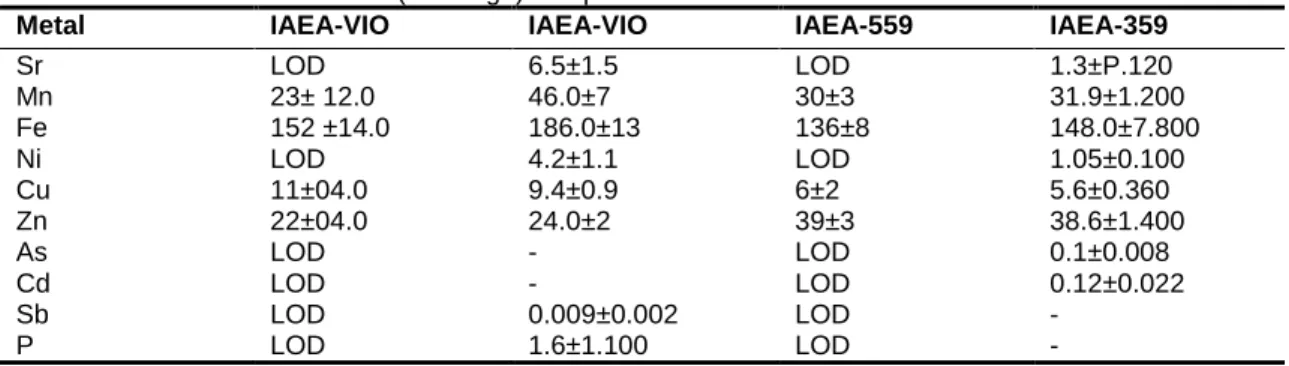
was used for each sample and spectral analysis was performed with an AXIL program [16] from a QXAS software package. The international atomic energy agency distributed this package. Other details of the measurement are as described by Funtua [17]. The accuracy and precision of the measurements were confirmed through analysis of IAEA-VIO (hay powder) and IAEA-359 (cabbage) certified reference material, distributed by international Atomic energy Agency (IAEA). There was a general good agreement between measured and certified values (Table 1). Uncertainties in the measurement included errors from counting statistics, calibration error and uncertainty of the absorption correction factor. Results obtained were subjected to statistical analyses according to [18].
Table 1. Precision of measurement ranges for elements (ppm) in IAEA-V10 (hay Powder) and IAEA-359 (Cabbage) compared with certified values.
Metal IAEA-VIO IAEA-VIO IAEA-559 IAEA-359
Sr Mn Fe Ni Cu Zn As Cd Sb P
LOD 23± 12.0 152 ±14.0 LOD 11±04.0 22±04.0 LOD LOD LOD LOD
6.5±1.5 46.0±7 186.0±13 4.2±1.1 9.4±0.9 24.0±2 - -
0.009±0.002 1.6±1.100
LOD 30±3 136±8 LOD 6±2 39±3 LOD LOD LOD LOD
1.3±P.120 31.9±1.200 148.0±7.800 1.05±0.100 5.6±0.360 38.6±1.400 0.1±0.008 0.12±0.022 -
-
2.5.2 Double Beam Atomic Absorption Spectrophotometer for analysis of Cadmium and Lead
2.5.2.1 Sample Preparation and Wet digestion
The concentrations of Cd and Pb were determined using the double beam spectrophotometer at National Animal Production Research Institute (NAPRI), Shika, Ahmadu Bello University, Zaria.
One gram of ground dried plant sample was weighed into a digestion vessel. 10 mL of concentrated HNO3 was added into it and
allowed to stand overnight. The mixture was carefully placed on a hot plate and heated for 4 hours at 1250C until the production of red NO2
fumes has ceased and the entire solids has disappeared and a transparent solution is obtained. Next, HCl and distilled water in a ratio of 1:1 was added to the digested sample and the mixture transferred to the digester again for 30 mins. The beaker was then removed from the hot plate and allowed to cool. A small amount (2-4 mL) of 70% HClO4 was added,
heated slowly at a low temperature and allowed to evaporate to a small volume. The cooled sample was then transferred into a 50-mL flask and diluted to the appropriate volume with distilled or deionised water and filtered through
Journal of Environmental Toxicology and Public Health | November 2015 | Volume 1 | Pages 44-52 47
filter paper No 1. Determination of heavy metals was done in double beam atomic absorption spectrophotometer (model Shimadzu AA 650) after calibrating the equipment with stock standard solution of 1000 mg/L for Cd, 1.000 g of cadmium metal was dissolved in a minimum volume of (1+1) HCl and diluted to 1 liter with 1% (v/v) HCl while, the stock standard solution of 1000 mg/L for Pb was prepared by dissolving 1.598 g of lead nitrate -Pb(NO3)2- in 1% (v/v)
HNO3 and diluted to 1 liter with 1% (v/v) HNO3.
The acid digestion produces a clear solution without loss of any of the elements to be determined. A combination of nitric acid and perchloric acid is especially useful for the complete destruction of fats and proteins in biological samples [19].
2.6 Estimation of PUF, TC and TF
The results of the Cd, Pb and Zn analyses of Zea mays L. varieties were further subjected to the risk assessment techniques to compute the Plant Uptake Factor (PUF), soil-plant transfer coefficient (TC) and translocation factor (TF). The risk assessment techniques are usually used for the purpose of predicting relative risks for humans [20].
2.6.1 Estimation of Plant Uptake Factor (PUF) Plant uptake factor (PUF) in cereals was determined by calculating the ratio of metal concentration in the aerial parts to that of the soil as given below:
PUF = Cp/Cso
where, Cp and Cso are metal concentrations in
aerial parts of the plant (μg g-1) and in soil (μg
g-1), respectively.
PUF indicates the ability of the plants to accumulate metals in their edible parts. PUF was categorized further as hyper-accumulators, accumulator and excluder to those samples which accumulated metals >10 μg g-1
, >1 and <1, respectively [21, 22, 23].
2.6.2 Estimation of Soil-Plant Transfer Coefficient (TC)
Soil-plant transfer coefficient (TC) signifies the amount of heavy metals in the soil that ended up in the test crop [24].
Content of heavy metal in plant (mg·kg-1) TC = ––––––––––––––––––––––––––––––––- Content of heavy metal in soil (mg·kg-1) 2.6.3 Estimation of Translocation Factor (TF) Translocation Factor (TF) indicates the fraction of the total deposition on the plant surfaces that is incorporated into edible plant parts [20]. TF also indicates the preferential partitioning of metal to shoots or stems, and plants with higher TF have greater accumulation ability [24]. Heavy metals translocation in these plants from shoot to root was measured using TF which is given below:
TF = Cs/Cr
where, Cs and Cr are metal concentrations (μg
g-1) in the shoot and root, respectively.
Wherein, TF>1 indicates that the plant translocate metals effectively from root to the shoot [25].
3. RESULTS AND DISCUSSION 3.1 Physicochemical Parameters
The physicochemical parameter values are higher at SU 2 than at SU 1. Zea mays everta L. obtained at SU 2 had higher TC and TF than Zea mays L. at SU 1. Soil pH ranged from 4.86 – 6.21 (moderately acidic) which falls within the suitable range for the cultivation of maize. The textural class of sand clay loam at SU 2 as well as the CEC and organic matter might have influenced the concentrations of Cd, Pb and Zn in Zea mays everta L. resulting to a higher TC and TF than in Zea mays L. at close proximity to the Kano-Zaria Highway, indicating the interaction of physicochemical parameters and atmospheric deposition respectively. Table 2. Physicochemical Parameters of Soils from Doruwa Salau at close proximity to the Kano- Zaria
Highway and from the Irrigation Research Station before sowing. pH
% % % Textural H20 HCL % % CEC Site Sand Silt Clay Class 1:1 1:1 OC OM SU 1 71.6 13.5 14. 9 Sandy loam 5.75 4. 86 1. 82 1. 05 6. 3 SU 2 60. 5 17. 2 22. 3 Sandy clay 6. 21 5. 40 0. 78 1. 36 8. 01 loam
SU 1 = Yellow Maize on Doruwa Salau at close proximity to the Kano–Zaria road; SU 2 = Popcorn at the Control Site (Irrigation Research Station-IRS), Kadawa
3.2 ANOVA for Zea mays L at SU 1 and Zea mays everta L. at SU 2
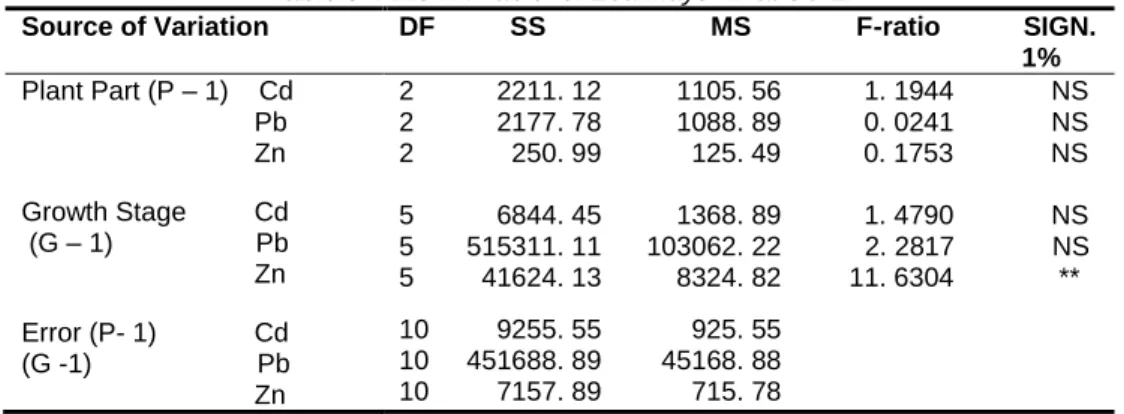
The ANOVA Table for Zea mays L. and Zea mays everta L. are shown in tables 3 and 4. There was no significant difference in the Cd
and Pb levels of Zea mays L. and Zea mays everta L. (Table 3 and Table 4). The selected growth stages had no influenced on the levels of Pb and Cd in both cultivars of maize. Both cultivars may not be efficient in Pb and Cd uptake. Zn levels in Zea mays L. and Zea mays
Journal of Environmental Toxicology and Public Health | November 2015 | Volume 1 | Pages 44-52 48
everta L. was highly significant (P = 0.01) indicating the selective ability of the two varieties in accumulating or tolerating specific
metals. For Zn, the growth stages greatly influenced the levels of Zn in both cultivars of maize.
Table 3. ANOVA Table for Zea mays L. at SU 1.
Source of Variation DF SS MS F-ratio SIGN. 1% Plant Part (P – 1) Cd
Pb Zn Growth Stage Cd (G – 1) Pb Zn
Error (P- 1) Cd (G -1) Pb
Zn
2 2211. 12 1105. 56 1. 1944 NS 2 2177. 78 1088. 89 0. 0241 NS 2 250. 99 125. 49 0. 1753 NS 5 6844. 45 1368. 89 1. 4790 NS 5 515311. 11 103062. 22 2. 2817 NS 5 41624. 13 8324. 82 11. 6304 ** 10 9255. 55 925. 55
10 451688. 89 45168. 88 10 7157. 89 715. 78
** = significant at 0.01% NS = not significant
Table 4. ANOVA Table for Zea mays everta L. at SU 1.
Source of Variation DF SS MS F-ratio SIGN.
1% Plant Part (P – 1) Cd
Pb Zn Growth Stage Cd (G – 1) Pb Zn
Error (P- 1)(G -1) Cd Pb Zn
2 386. 11 193. 05 0. 1936 NS 2 29377. 78 14688. 89 0. 4732 NS 2 17463. 47 8731. 73 1. 8009 NS
5 4206. 95 841. 39 0. 8444 NS 5 4324444. 44 86488. 88 2. 7867 NS 5 195643. 58 39128. 71 8. 0702 ** 10 9963. 94 996. 39
10 310355. 56 31035. 55 10 48485. 14 4848. 51
** = significant at 0.01% NS = not significant
3.3 Plant Uptake Factor (PUF) of Zea mays L. and Zea mays everta L.
The plant uptake factor for Zea mays L. (yellow maize) and Zea mays everta L. (popcorn) are shown in Table. However, the highest plant uptake factor (PUF) for Zea mays L. was Pb
while the lowest was Zn. Although, Zn seems to have the highest PUF in Zea mays everta L. at some selected growth stages, PUF for Cd was higher at all the growth stages . Soil Pb was not detected at all the growth stages where Zea mays everta L. was obtained (Table 5), so PUF was not computed.
Table 5: Plant Uptake Factor (PUF) in Zea mays L. and Zea mays everta L. among the selected growth stages at the experimental (SU 1) and Control (SU 2) sites respectively. Growth
Stages (days)
Zea mays L.
experimental (SU 1) Site
Zea mays everta L. Control (SU 2) Site
Cd Pb Zn Cd Pb Zn 15
30 45 60 75 90
2.46 5.26 0.72 0.67 ND 0.40 1.54 3 1.32 5.5 0 5.38 0.09 1.71 9 1.69 1.80 ND 0.12
3.10 ND 4.75 3.23 ND 0.34 2.29 ND 2.55 2 ND 0.23 1.38 ND 1.96 2 ND 0.19
Values > 1 indicates accumulation in the test crop; Values < 1 indicates that test crops are assumed safe for consumption [30,26,22]
According to [26], the PUF was based on the root uptake of metals and surface absorption of atmospheric deposits, and was based on surface absorption of atmospheric deposits by the exposed leaves in this study. The
relationship between contaminant
concentrations in soil and edible plant material is highly specific to plant species [27]. The relationship between contaminant concentration in edible produce and the concentration in soil is also described using PUF. The PUF values quantify the relative differences in bioavailability of metals to plants and identify the efficiency of a plant species to accumulate a given metal
[24]. The high PUF in Zea mays L. despite the non-detection of soil Pb could probably be through uptake from the leaves and roots. The PUF value of the same metal differed from one cereal crop to the other, suggesting a selectivity of the crop in absorbing elements from the soils. 3.4 Soil-Plant Transfer Coefficient (TC) of
Zea mays L. and Zea mays everta L.
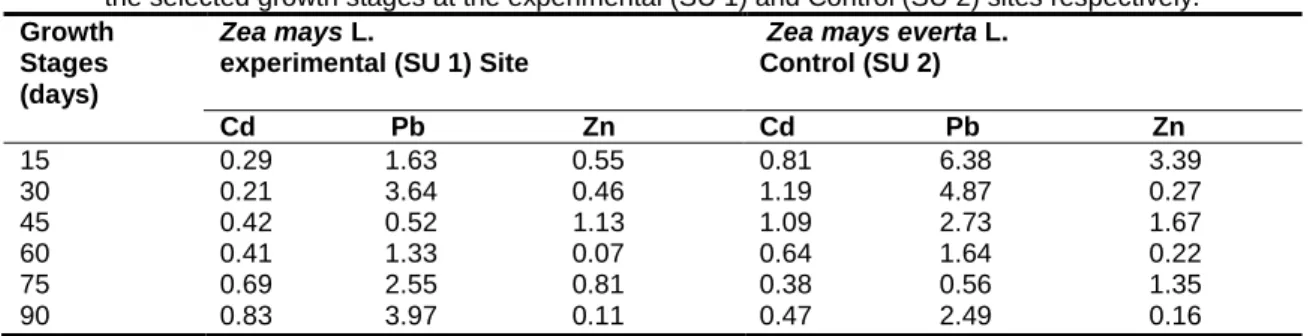
Table 6 shows the comparison of the TC for Cd, Pb and Zn between the varieties of Zea mays L. among their selected growth stages.
Table 6. Soil-plant Transfer Coefficient (TC) in Zea mays L. and Zea mays everta L. among the selected growth stages at the experimental (SU 1) and Control (SU 2) sites respectively. Growth
Stages (days)
Zea mays L.
experimental (SU 1) Site
Zea mays everta L. Control (SU 2)
Cd Pb Zn Cd Pb Zn 15
30 45 60 75 90
0.29 1.63 0.55 0.21 3.64 0.46 0.42 0.52 1.13 0.41 1.33 0.07 0.69 2.55 0.81 0.83 3.97 0.11
0.81 6.38 3.39 1.19 4.87 0.27 1.09 2.73 1.67 0.64 1.64 0.22 0.38 0.56 1.35 0.47 2.49 0.16
Values > 1 indicates accumulation in the test crop; Values < 1 indicates that test crops are assumed safe for consumption [30,26,22]
Pb has the highest soil-plant transfer coefficient (TC) than Cd and Zn except at the 45 days growth stage for Zn in Zea mays L. The greater than unity values observed for Pb in Zea mays L. and Zea mays everta L. than in Cd and Zn indicates that both cultivars have accumulated higher levels of Pb.The relatively low TC for Cd and high TC for Pb and Zn in both Zea mays L. and Zea mays everta L. indicates that the amount of Cd transported to the above ground plant parts are low and high for Pb and Zn respectively. In contrast, [28, 29], concluded that the relatively low TC of Pb and Hg indicates that the amounts of Pb transported to the above ground plant parts (including fruits) are low. This study reveals a high TC for Pb at the Kano – Zaria Highway suggesting a higher input of Pb from polluted atmosphere in recent years. Also low values of TC for Cd and Zn also suggests inputs from vehicular emissions due to absence of industrial, commercial and densely populated residential activities at the site nearest to the Kano – Zaria Highway.
Furthermore, soil properties usually influenced the soil-plant transfer coefficient of Cu and Pb. The moderately acidic nature of the soils from the Kano-Zaria Highway (mean pH of 5.30) and the IRS (mean topsoil pH of 5.80) may have increased the availability of metals for cereal crops uptake. Transfer factor could also be influenced by soil properties like soil texture. Henning et al., 2001, reported that the transfer coefficient of Zn in maize grown in the sandy and clayey soils were lower than the normal transfer coefficient ranging from 1 to 2 according to [30].
3.5 Translocation Factor (TF) of Zea mays L. and Zea mays everta L.
The TF for Cd, Pb and Zn among the selected growth stages of the two varieties of Zea mays L. are indicated in table 7.
Pb had the highest translocation factor (TF) both in Zea mays L. and Zea mays everta L. particularly at the 60 and 75 days growth stages respectively. In contrast, Cd, Pb and Zn in both cultivars, with Pb having the highest TF (>1), indicates accumulation of the trace metals in the test crop.The TC of Cd and Zn have a similar trend with the TF of Cd and Zn. Among the investigated metals, TF was in the following decreasing trend of Pb > Zn > Cd.
Generally among the three metals investigated, Pb had the greater than unity value, highest PUF, soil-plant TC and TF suggesting that Pb levels in the two cultivars were of atmospheric origin. Pb levels in yellow maize were due to proximity to the highway resulting to increased particulate deposition on the aerial plant parts. In Zea mays everta L. farthest from the highway, the Pb levels was due to the far distance transport of Pb and subsequent deposition on the soil resulting to uptake by the roots of the popcorn. This contributed to the high PUF, TC and TF. This also reflects that the routes of Cd, Pb and Zn contamination were both from the atmosphere and soil [31, 32]. The most reported illness induced by excessive Cd intake is the development of high blood pressure or hypertension and more generally vascular diseases.
Journal of Environmental Toxicology and Public Health | November 2015 | Volume 1 | Pages 44-52 50
Table 7. Translocation Factor (TF) in Zea mays L. and Zea mays everta L. among the selected growth stages at the experimental (SU 1) and Control (SU 2) sites respectively.
Growth Stages (days)
Zea mays L.
experimental (SU 1) Site
Zea mays everta L. Control (SU 2) Site
Cd Pb Zn Cd Pb Zn 15
30 45 60 75 90
2 0.29 1.38 0.40 0.77 0.85 0.80 0.75 0.72 2 10.33 1.12 0.42 1.50 2.54 1.14 1.17 0.67
1.33 0.95 2.60 1.50 0.63 1.04 0.33 1.71 0.91 0.75 1.50 0.45 2 60 3.73 2.50 1.67 1.79
Values > 1 indicates accumulation in the test crop; Values < 1 indicates that test crops are assumed safe for consumption [30,26,22]
Awareness of the health hazards of Cd has made the uptake of Cd by vegetables and agricultural crops a subject of extensive research. It is a common finding that Cd can easily be taken up by most plants. Also in the plant uptake of Cd particularly in the leaves, an influence of Zn is found [33]. Zea mays L. at SU 1 had the highest PUF, which could have been a combined result of elevated topsoil metal concentrations (160 mg/kg) during growth and absorption of atmospheric particulate deposits, whereas Zea mays everta L. recorded the highest soil-plant TC and TF which might be due to its wider surface areas than the other cereal crops. This supports the works of [34] where
spinach had the highest TC probably due to the rather bigger surface areas of the leaves than celery, garlic and cole in their study.
3.6 Correlation Coefficient between PUF, TC and TF and Comparison of Means of Cd, Pb and Zn between the two cultivars of Zea mays L.
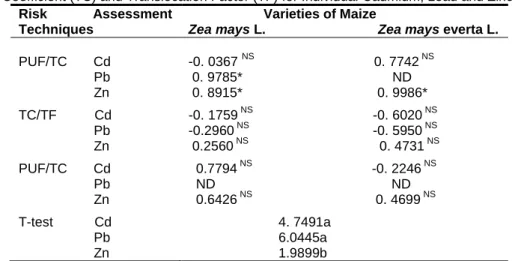
A relationship between the three risk assessment techniques to ascertain the existence of a relationship in the two cultivars of maize was computed and their comparison of means are shown in table 8.
Table 8: Correlation Coefficient between the Plant Uptake Factor (PUF), Soil-Plant Transfer Coefficient (TC) and Translocation Factor (TF) for Individual Cadmium, Lead and Zinc.
Risk Assessment
Techniques
Varieties of Maize
Zea mays L. Zea mays everta L. PUF/TC Cd
Pb Zn TC/TF Cd Pb Zn PUF/TC Cd Pb Zn T-test Cd Pb Zn
-0. 0367 NS 0. 7742 NS 0. 9785* ND 0. 8915* 0. 9986* -0. 1759 NS -0. 6020 NS -0.2960 NS -0. 5950 NS 0.2560 NS 0. 4731 NS 0.7794 NS -0. 2246 NS ND ND 0.6426 NS 0. 4699 NS
4. 7491a 6.0445a 1.9899b
a = Significant at 0.01%; * significant at 0.05%; NS=non-significant b = non-significant; WHO/FAO Safe Limit (Cd=0.01mgkg; Pb=2.00mg/kg; Zn=5.00mg/kg)
The correlation coefficient between soil Cd, Pb and Zn and maize Cd, Pb and Zn was not significant. Also the correlation coefficient between the PUF/TC, PUF/TF and TC/TF for each of the investigated trace metals in both Zea mays L. and Zea mays everta L. showed significant correlation between the PUF/TC in Pb and Zn for Zea mays L. and in Zn only for Zea mays everta L., while all the others were non-significant.
4. CONCLUSION
Pb is the major heavy metal pollutant in the two varieties of maize, while Zn was the most minor pollutant. Concentrations of Cd, Pb and Zn were generally higher in the plant parts than in the soil. The PUF, TC and TF were generally greater than unity, which suggests that the sources are anthropogenic. Therefore, long-term metal exposure by the consumption of the
Journal of Environmental Toxicology and Public Health | November 2015 | Volume 1 | Pages 44-52 51
roadside grown maize poses potential health problems to animals and residents in the vicinity of the Kano-Zaria Highway.
ACKNOWLEDGEMENT
Study sponsors have no such involvement in every aspects of this research.
COMPETING INTERESTS
Authors have declared that no competing interests exist.
AUTHOR CONTRIBUTIONS
MCA designed the research, performed the statistical analysis, wrote the research plan, and wrote the first of the manuscript. EOU and NJE critically read and managed the literature searches and analyses. All authors read and approved the final manuscript.
REFERENCES
1. Iken JE and Amusa NA. Maize research and production in Nigeria. African Journal of Biotechnology 2004;3(6):302-307.
2. Obi IU. Maize: Its agronomy, diseases, pests and food values. Optimal computer solutions limited, Enugu 1991.
3. Scanlon FS. Ecological Implications of Heavy Metal Contamination of Roadside Habitats. Proceedings of he Annual Conference S. E. Association of Fisheries and Wildlife Agencies. 1980;33:136-145.
4. Turer DG and Maynard JB. Heavy Metal Contamination in Highway soils. Comparison of Corpus Christi, Texas and Cincinnati, Ohio shows Organic matter is key to mobility. Clean Technology Environment Policy, 2003;4:235– 245.
5. Anongo MC, Bako SP, Ezealor AU. Heavy Metal Contents in Relation to Population of Microorganisms in Soils along some Highways in Nigeria’s Guinea Savannah. Journal of Biological Sciences, 2005;5 (6):703–706.
6. Hough RL, Young SD and Crout NMJ. Modelling of Cd, Cu, Ni, Pb and Zn uptake by winter wheat and forage maize from a sewage disposal farm. Soil Use and Management, 2003;19:19–27. 7. Alloway BJ. Heavy Metals in Soils, 2nd ed.,
Blackie Academic and Professional, London. 1995.
8. An YJ. Soil Ecotoxicity Assessment Using Cadmium Sensitive Plants.Environmental Pollution. 2004;127:21-26.
9. Collins CD, Martin I and Fryer M. Evaluation of models for predicting plant uptake of chemicals from Soil. Environment Agency Science. 2006. Report – SC050021/SR.
10. Abba A. Wheat Production in Kano State. In Wheat in Nigeria: Production, Processing and Utilization AL Rayar, BK Kaigama, JO Olukosi and AB Anaso (eds). LCRI, IAR and UNIMA1D. 1991.
11. Bates TG. Electronic pH Determination. John Wiley and Sons Inc. New York.1962.
12. Bouyoucos GH. Hydrometer Method improved for making Particle- size Analysis of Soils. Agronomy Journal.1962;53:464.
13. Walkley A and Black IA. An examination of the Degtrajeff Method for determination of soil
organic matter and a proposed Chromic acid Titration Method. Soil Science.1965;37:29–38. 14. Nelson DW and Sommers LE. A rapid and
accurate method for estimating organic carbon in the soil. Proceedings Of the Indiana Academy of Science.1975;84:456-462.
15. Black CA. Methods of Soil Analysis. Parts 1 and 2, American Society of Agronomy, Madison, Wisconsin.1965.
16. Van Espen P and Janssens K. Spectrum Evaluation: In handbook of X-ray Spectrometry Van Grieken RE and AA Markowicz (Eds.) Marcel Dekker Inc. New York. 1993. pp. 181 – 293.
17. Funtua II. Application of the transmission emission method of the ED-XRF for the determination of trace element in geological and biological materials. J. Trace and Microprobe Technol. 1999;17:293–2297.
18. Parker RE. Introductory statistics for biology. Studies in Biology. Series No 43. 1980.
19. Amoo A, Ogbonnaya CI and Ojediran J. Movement of some heavy metals in poorly drained Fadama soils in the Southern Guinea savannah zone of Nigeria. Food, Agriculture and Environment. 2004; 2(2):378-380.
20. Reed PR. Literature Review and Assessment of Plant and Animal Transfer Factors used in Performance Assessment Modelling. DE Robertson, DA Cataldo, BA Napier, KM Krupka and LB Sasser (eds.). U.S. Nuclear Regulatory Commission Technical Report, 2003;pp 4.1 21. Ma LQ, Komar KM, Tu C and Zhang WA. A fern
that hyperaccumulates arsenic. Nature. 2001; 409-579.
22. Nazir A, Malik RN, Ajaib M, Khan N and Siddiqui MF. Hyper-accumulators of Heavy Metals of Industrial Areas Of Islamabad and Rawalpindi. Pakistan Journal of Botany. 2011;43(4):1925-1933.
23. Abdallah SA, Uzairu A, Kagbu JA and Okunola OJ. Assessment of Heavy Metals bioaccumulation Eleusine indica from refuse dumpsites in Kaduna Metropolis. Journal of Environmental Chemistry and Ecotoxicology. 2012;4(9):153-160.
24. Kumi M, Albert QK and Antwi CK. The Role of Maize Tassels in Amelioration of Heavy Metals from Contaminated Soils and its Effects on Vegetables. Journal of Environment and Earth Science. (2013);3(1): 192 – 199.
25. Bu-Olayan AH and Thomas BV. Translocation and Bioaccumulation of Heavy Metals in Desert Plants of Kuwait Governorates. Science Alert, 2009.
26. Kachenko AG and Singh B. Heavy Metals Contamination In Vegetables Grown In Urban And Metal Smelter Contaminated Sites In Australia. Water, Air and Soil Pollution.
2006;169:101–123.
27. Miclean M, Roman C, Levei E, Senila M, Abraham B and Cordos E. Heavy Metals availability for plants in a mining area from North-Western Romania. 2007; INCDO- INOE 200. 28. Tóth A, Braun M, Tóth Z, Gór D, Lakatos G.
Element composition of Rosa canina and Rubus fruticosus fruits at an abandoned metalliferous minesite in N-Hungary. Cereal Research Communications. 2008;36:655.
29. Kuklová M, Kukla J and Hnilička F. The Soil-to-Herbs Transfer of Heavy Metals in Spruce Ecosystems. Polish Journal of Environmental Studies. 2010;19(6):1263-1268.
30. Korentejar LA. Review Of The Agricultural Use Of Sewage Sludge: Benefits And Potential Hazards. Water Science. 1991;17(3):189-196.
Journal of Environmental Toxicology and Public Health | November 2015 | Volume 1 | Pages 44-52 52
31. Sharma RK, Agrawal M and Marshall F. Heavy metals contamination in Vegetables grown in wastewater irrigated areas of Varanasi, India. Bulletin of Environmental Contamination Toxicology. 2006;77:312-318.
32. Sharma S, Sharma P, Siddiqui S and Bhattacharyya AK. Effect of Metal Pickling and Electroplating Industrial Sludge-Borne Heavy Metals on Wheat (Triticum aestivum) Seedling Growth. Nature and Science. 2010;8(3):1-8. 33. Fathi G, Irashahi Z, Moosavi SA, Gharineh MH
and Siadat SA. Effects of different Cadmium and
Zinc concentrations on yield and nutrient uptake of Wheat. In the 8th European Federation for
Information Technology in Agriculture, Food and Environment Conference and the World Congress on Computers Agriculture, Prague, Czechoslovakia Republic. 2011.
34. Chao W, Xiao-chen L, Li-min Z, Pei-fang W and Zhi-yong G.) Pb, Cu, Zn and Ni Concentrations in Vegetables in Relation to Their Extractable Fractions in Soils in Suburban Areas of Nanjing, China. Polish Journal of Environment Studies. 2007;(16)2:199-207.