Investigating Anxiety Symptoms and Reactions
within EFL Learners’ Oral Narratives: The Case
of Intermediate Level Students
Omid Sanaei
Department of English Language, University of Guilan, University Campus 2, Rasht, Iran
Abstract—The present study investigated anxiety symptoms and reactions in EFL learners’ oral narratives.
The focus of the study was first to ascertain whether EFL learners’ anxiety symptoms and reactions can be influenced by the degree of foreign language speaking anxiety in the classroom, and secondly to indicate to what extent Iranian EFL learners divulge the components of anxiety symptoms and reactions while they are narrating. Participants were 11 students comprising 5 males and 6 females studying English Literature at the University of Guilan, and they were selected by Purposive Sampling (Quota Sampling). ACTFL guidelines, Foreign Language Classroom Anxiety Scale (FLCAS), picture stories for narrative tasks, and direct observation were instruments of this study. The present study followed a mixed-method design in which EFL learners’ foreign language classroom anxiety was investigated quantitatively. Moreover, anxiety symptoms, anxiety reactions and their components were analyzed qualitatively. The results revealed that more evident anxiety symptoms and reactions can be found in more anxious students. Furthermore, it was revealed that physiological reactions to the classroom anxiety were visible within slightly anxious learners, while behavioral reactions occurred in all of the students.
Index Terms—Foreign Language Anxiety (FLA), anxiety symptoms, anxiety reactions, narrative
I. INTRODUCTION
Ever increasing use of English as an international language in intercontinental communities makes it necessary for EFL learners to know how to use it effectively in order to make better communication. As Mahmoodzadeh (2012) pointed out, the development of a good speaking ability has been one of the crucial and indispensable aspects of English language learning for non-native speakers. As such, foreign language learners have a great amount of interest in perception of their ability to speak. In this regard, the feedback received by non-native speakers from their audience may be a major part of their success. Thus, EFL learners pay more attention to speaking rather than other skills.
Speaking is a macro skill which comprises a number of sub-skills. In recent years, the researchers’ attention has moved toward one of its sub-skills named Oral Narratives. In the mid-1960s, a great amount of interest in the nature of narrative came into existence. As established by Labov (Labov 1972, 1981; Labov & Waletzky, 1967), the typical narrative is that of personal experience. When EFL learners try to narrate a sequence of events as an oral presentation in the classroom, one of the affective sides of human behavior such as foreign language anxiety may appear. It is obvious that it can overshadow oral performance of the learners.
Over the past few decades the affective side of human behavior has captured the attention of many scholars. Hayatdavoudi & Kassaian (2013) stated that “As far as applied linguistics is concerned, affective variables have proven to be of primary importance in foreign language learning and teaching” (p. 10).When there is foreign language anxiety, some of its symptoms and reactions may come into existence. Several authors have also reported psychological and physiological reactions to state anxiety, such as anxiety during oral performance in language test situations (see Hayatdavoudi & Kassaian, 2013; Jannati & Estaji, 2015; Liebert & Morris, 1967; Woodrow, 2006; Zeidner, 1998). Zeidner (1998) postulated that “anxiety was viewed to be a bi-dimensional phenomenon, including a cognitive (worry) and an affective (emotionality) component” (p.10). As such, worry and emotionality are the sub-divisions of anxiety. In this regard, Young (1991) contended that assisting teachers to identify the signs of language learners’ anxiety is an important step in responding to anxiety existing in the classroom.
Following the same line of research and taking Iranian EFL learners into consideration, the present study is going to scrutinize the relationship between the available scale of foreign language anxiety and perceived physiological and psychological reactions in learners’ oral narratives performance.
II. THEORETICAL BACKGROUND
A. Defining Foreign Language Anxiety (FLA)
frustration, self-doubt, apprehension, or worry” (Scovel, 1978, p.134). Moreover, Clement (1980) considered foreign language anxiety as a complex construct dealing with learners’ psychological state in terms of their feelings, self-confidence, and self-esteem. As stated by Spielberger (1983) anxiety, “is subjective feeling of tension, apprehension, nervousness and worry associated with the arousal of the autonomic nervous system” (Horwitz, Horwitz& Cope, 1986, p.125). However, in attempting to elucidate language anxiety, Horwitz et al. (1986) expounded foreign language anxiety as a distinct complex of feelings, self-perception, and behaviors related to classroom language learning, which arises from the uniqueness of the language-learning process (ibid.). Chastain (1988) mentioned that anxiety is a state of uneasiness and apprehension or fear caused by the anticipation of something threatening. MacIntyre and Gardner (1993) also described language anxiety as “the apprehension experienced when a situation requires the use of a second language with which the individual is not proficient” (p.5).
Furthermore, MacIntyre (1998) defined anxiety as a feeling of emotional reaction and worry that arises while learning a second language or using it. Brown (2000) believed that although all of us know what anxiety is as we have experienced feelings of anxiousness, defining the concept of anxiety in a simple sentence is not easy. In the meantime, according to Marwan (2008), anxiety can be generally affiliated to "threats to self-efficacy and appraisals of situations as threatening or an uneasy feeling due to something threatening” (p.120). Yahya (2013) stated that “anxiety is a feeling of uneasiness, aggravation, self-doubt, lack of confidence, or fear; intricately entwined with self-esteem issues and natural ego-preserving worries” (p.230). Casado and Dereshiswsky (2004) postulated that the definition of anxiety ranges from a mixture of overt and clear behavioral characteristics, which can be scientifically studied to introspective feelings which are epistemologically unreachable.
B. Considering Types of Anxiety
In the current study, it was tried to address types of anxiety through definitions and make clear distinctions among them. Generally, foreign language anxiety (FLA) can be divided into ‘trait’ and ‘state’ anxiety. Differentiating between the aforementioned types of FLA, MacIntyre (1995) posited that state anxiety is transitory and immediate emotional experience having instant cognitive effects, while trait anxiety can be considered as a stable predisposition to become anxious in an extensive range of situations. He further argued that state anxiety represents the response while trait anxiety indicates the proneness to respond in an anxious way.
Woodrow (2006) regarded trait anxiety to be a relatively stable personality characteristic, and a person who is trait anxious to be likely to feel anxious in various situations. Conversely, state anxiety, is an impermanent condition experienced at a specific instant. She also stated that situational anxiety is the third type of anxiety which is situation specific and claimed that this type mirrors a trait that repeatedly occurs in particular situations.
Riasati (2011) pointed out “trait anxiety is the tendency of a person to be nervous or feel anxious irrespective of the situation he/she is exposed to” (p.908). Then, he referred to the second type of anxiety as state (situational) anxiety arguing that “this type of anxiety arises in a particular situation and hence is not permanent. It is nervousness or tension at a particular moment in response to some outside stimulus” (ibid.). Thus, it occurs to the learners as a result of particular stressful situation.
Additionally, as pointed out by Sanaei (2015) anxiety is commonly classified into three types. “Trait anxiety, a more permanent disposition to be anxious, is viewed as an aspect of personality. State anxiety is an apprehension that is experienced at a particular moment in time as a response to definite situation. Lastly, situation-specific anxiety is related to apprehension aroused at specific situations and events” (p.1391).
C. Investigating Components of Foreign Language Anxiety
Considering the academic literature on language anxiety, there are a number of studies on the components of foreign language anxiety. In this regard, Horwitz et al. (1986) and MacIntyre & Gardner (1989) concluded that the components of foreign language anxiety can be attributed to three performance anxieties, including communication apprehension, fear of negative evaluation, and test anxiety. Integration of these components leads to the development of anxiety in language learners. Communication apprehension (CA) is defined by Horwitz et al. (1986, p.127) as “a type of shyness characterized by fear of anxiety about communicating with people”. McCrosky and Richmond (1987) further believed communication apprehension to be “an individual’s level of fear or anxiety associated with either real or anticipated communication with another person or persons” (p.142). More specifically, they claimed that a persons’ level of CA is likely the only best predictor of his or her willingness to communicate. Horwitz et al. (1986) defined fear of negative evaluation as “apprehension about others’ evaluations, avoidance of evaluative situations, and the expectation that others would evaluate oneself negatively” (p.128). They further believed that fear of negative evaluation is broader in scope than test anxiety because it is not confined to test-taking situations; “rather it may occur in any social, evaluative situation such as interviewing for a job or speaking in a foreign language class” (ibid., p.128). Horwitz et al. (1986, p.127) believed that “test anxiety refers to a type of performance anxiety stemming from a fear of failure”. They further argued that students feeling test anxious often have unrealistic expectations about themselves and are idealists who feel that if they do not have a perfect performance on a test, they have failed. “This type of anxiety concerns apprehension towards academic evaluation which is based on a fear of failure” (Mesri, 2012, p.148).
Considering the academic literature on language anxiety, as mentioned earlier, some scholars have reported psychological and physiological reactions to state anxiety during oral performance in language test situations (e.g. Hayatdavoudi & Kassaian, 2013; Jannati & Estaji, 2015; Liebert & Morris, 1967; Woodrow, 2006; Zeidner, 1998). According to the conceptualization made by Liebert and Morris (1967), “anxiety was viewed to be a bi-dimensional phenomenon, including a cognitive (worry) and an affective (emotionality) component” (Zeidner, 1998, p.10). Having considered worry and emotionality, worry was primarily considered as cognitive concern about the outcomes of failure, whereas emotionality was explicated as comprising perceptions of autonomic reactions which are evoked by evaluative stress. On the one hand, emotionality deals with physiological reactions such as blushing or palpitations, and behavioral reactions such as stammering and fidgeting. On the other hand, worry deals with cognitive reactions such as self-deprecating thoughts, task irrelevant thoughts or negative critical worrisome thoughts (Woodrow, 2006; Zeidner, 1998). Liebert and Morris (1967) hypothesized that worry is basically cognitive apprehension about consequences of failure. Therefore, taking worry into account should be minimized when individuals expect success; on the contrary, worry should be maximized at the same time poor performance is expected. Moreover, Liebert and Morris (1967) believed that anxiety markers which are initially autonomic or emotional in essence were hypothesized to exhibit the instant uncertainty of the test taking situation. Thus, one’s own performance can be located in the least amount of assurance, while emotionality should be in the highest degree.
According to Woodrow (2006), worry is a more debilitating factor than emotionality because it fills up cognitive capacity that in any other way would be devoted to task in hand, for instance, speaking a foreign language. Also, MacIntyre (1995, p.92) believed that “anxiety leads to worry and rumination.”He further noted that because of the divided attention, cognitive performance is diminished; therefore, performance suffers leading to self-evaluations which are negative and cognition that is self-deprecating. These will further impair performance.
Additionally, it is worth mentioning that Horwitz and her colleagues (1986, p.129) described the psychological and physiological symptoms of language anxiety; most of them occur in the anxious state in general such as “tenseness, trembling, perspiring, palpitations and sleep disturbances”. They also stated that their participants noted of freezing in class, standing outside the door making effort to summon up enough courage to enter the class, and also going blank prior to the initiation of tests. In this regard, Young (1991) held that an important step in responding to classroom anxiety is to help teachers to recognize the signs of anxiety in language learners.
Although considerable research has been devoted to FLA domain, rather less attention has been paid to the language learners’ anxiety reactions to oral performance in EFL learners. Nonetheless, a number of studies have been carried out on both psychological and physiological symptoms of FLA in the Iranian EFL context. In this regard, Hayatdavoudi and Kassaian (2013) in a conducted study on Iranian EFL students explored the relationship between language anxiety and psycho-physiological response to oral performance. The findings revealed a significant positive correlation between language anxiety and psycho-physiological responses to oral classroom performance in both elementary and intermediate EFL learners. The results of correlational study further indicated that students with higher levels of language anxiety were found to suffer from higher levels of psycho-physiological pressures during oral performance (Hayatdavoudi & Kassaian, 2013).
In a more recent study Jannati and Estaji (2015) attempted to investigate the causes, consequences, strategies, and perceptions of male and female Iranian EFL learners’ anxiety in the first certificate in English (FCE) speaking test. It is worth mentioning that some of anxiety symptoms were selected to be observed to understand the reactions the participants divulged when they became anxious. The obtained results revealed that except twisting hair all of the other selected signs of anxiety were mostly spotted in the male participants. Furthermore, in all sections of the FCE speaking test the males showed more symptoms of test anxiety than females (Jannati & Estaji, 2015).
E. Foreign Language Anxiety and Speaking
Reviewing previous literature regarding foreign language anxiety indicates that there is not full consensus among researchers over the issue of anxiety and its effects on language learning and performance. Some scholars argued that either there is no relationship or a positive relationship between anxiety and success in class (Backman, 1976; Scovel, 1978). Some other investigators believed that a negative relationship exists between anxiety and performance in language class, that is, the higher the anxiety, the lower the performance as emphasized by Clement, Gardner and Smythe (1980).
As well as general foreign language classroom anxiety, it is found that many learners are highly anxious about participating in speaking activities. Moreover, it is often contended that speaking is the most “anxiety-provoking aspect in a second language learning situation” (Cheng, Horwitz & Schallert, 1999, p.420). Woodrow (2006) conducted a study on the conceptualization of anxiety in communicating in English, and the relationship between anxiety and performance in English, and the major causes contributing to second language anxiety. Results of this study revealed a significant negative relationship between second language speaking anxiety and oral performance, and interacting with native speakers was the major stressor identified in the study, while interaction with non-native speakers was not regarded as stressor within the majority of the sample.
F. Defining the Concept of Narrative
The concept of narrative was in vogue in the mid-1960, since at that time most of the attention has moved towards social communication. Labov and Waletzky (1967) defined narrative as “one method of recapitulating past experience by matching a verbal sequence of clauses to the sequence of events that actually occurred” (p.20). As established by Labov (Labov, 1972, 1981; Labov & Waletzky, 1967), the typical narrative is that of personal experience. In addition, "cross-cultural studies (e.g. Chafe, 1980; Levi – Strauss, 1972) suggest that narrative is a fundamental and constant form of human expression irrespective of primary language, ethnic origin, and enculturation (Hazel, 2007, p.1). A further definition with regard to narratives is the one provided by Polkinghorne (1988) as “the fundamental scheme for linking individual human actions and events into interrelated aspects of an understandable composite" (p.13).
III. METHODOLOGY
A. Questions
The following research questions were formulated for the present study:
1. Do EFL learners’ anxiety symptoms and reactions depend on foreign language classroom anxiety?
2. To what extent do EFL learners attribute their foreign language speaking anxiety to the components of anxiety symptoms and reactions?
B. Participants
Participants of the study comprised 11 Iranian EFL learners studying English Language and Literature at the University of Guilan. They were all freshmen (5 males and 6 females) taking speaking course, with the age range of 18-22, and an average age of 20. It is worth mentioning that the participants were selected among 43 students comprising 20 males and 23 females based on the results of the FLCAS and also ACTFL guidelines in oral proficiency interview (OPI). Moreover, participants of the present study were selected through quota sampling, which selects students with those characteristics needed in the present study. It needs to be mentioned that considering the total number of ‘not very anxious’ and ‘slightly anxious’ students, sample selection was based on the proportion of a quarter number of males and females (43 students).
C. Instruments
The instruments utilized in this study consisted of FLCAS questionnaire, ACTFL speaking proficiency guidelines, picture stories for narrative tasks, and also direct class observation.
It can be said that all along the last three decades, the most popular instrument for measuring foreign language anxiety is Foreign Language Classroom Anxiety Scale (FLCAS) designed by Horwitz (1983), because of its high reliability and validity. “The scale has demonstrated internal reliability, achieving alpha coefficient of .93 with all items producing significant correlated item-total scale correlation. Test-retest reliability over eight weeks yielded r =.83 (p<.001)” (Horwitz et al., 1986, p.129). FLCAS comprises 33 items and devotes specific items to communication apprehension, fear of negative evaluation and it tests anxiety as the basic components of foreign language anxiety. The FLCAS can be considered as a quantitative five-point Likert-scale questionnaire ranging from strongly agree to strongly disagree (See Appendix A). Therefore, the participants’ level of anxiousness could be analyzed statistically. As a whole, a quantitative questionnaire uses structured questions where one should choose an answer from the list or choose on a scale from, for example, strongly agree to strongly disagree. Consequently, this instrument was proposed to measure foreign language learners’ level of anxiety while learning a language in the classroom.
ACTFL (American Council on the Teaching of Foreign Languages) proficiency guidelines for assessing speaking ability encompasses five key levels of proficiency including Distinguished, Superior, Advanced, Intermediate, and Novice. The explication of each major level is representative of a specific range of abilities. The major levels of Advanced, Intermediate, and Novice are subdivided into High, Mid, and Low levels. Generally, ACTFL proficiency guidelines can be utilized to evaluate speech that is interpersonal (interactive, two-way communication) or presentational (one-way, non-interactive). In the current study the presentational speech was explored.
Additionally, some picture stories were randomly chosen from one of the most widely known story books, namely1 ‘Vater und Sohn’. Each story comprised of three to nine pictures which were clearly designed, obvious, and
understandable for description. The picture stories were piloted with three students having similar characteristics to the sample, and it was found that the students were able to easily understand and describe them.
Finally, Direct classroom observation was an important phase of the present study. In this way, it was possible for the researcher to observe anxiety symptoms and reactions through the participants’ narrative tasks. According to Fox (1998, p.2) “observation doesn’t just involve vision: it includes all our sense, although in practice sight and sound will be those which predominate in most researches”. It can be concluded that observation can be regarded as a powerful instrument, to the extent that the researchers could attain an in-depth perception of their participants’ performance. Fox (1998) additionally postulated that observation is not just recording of data gained from the environment, and observers are active data collectors. In fact, while observing in addition to our eyes and ears, our mind is also involved in the activity helping us to make sense of the objects and behaviors.
D. Procedures
The initial evidence gained from FLCAS scores revealed that the anxiety level of the participants in the current study ranged from ‘Not Very Anxious’ to ‘Slightly Anxious’. An unexpected happening in the present study was that the researcher did not have access to ‘Fairly Anxious’ students and he had to select all of the main participants from ‘Not Very Anxious’ and ‘Slightly Anxious’ students. With due consideration of both the results of the placement test and also the FLCAS questionnaire, eleven students (5 males and 6 females) were selected as the sample of this study. Then, the speaking ability of these 11 participants was assessed on the basis of ACTFL speaking guidelines through conducting Oral Proficiency Interviews (OPIs), which was applied as a central tool for making the investigator more certain about the precise evaluation of the main participants’ proficiency level.
The participants’ speech performances throughout the semester were observed, and as the participants’ characteristics were almost clearly known, 11 individuals were selected. As such, it was ascertained that the samples of the present research were all at the intermediate level of proficiency. In the meantime, the researcher used ACTFL guidelines in the oral proficiency interviews by asking the participants a specific question so that they started speaking. When their utterances were interrupted, the researcher asked some additional questions about the topic in order to continue the speech. The interview topics composed of some questions about daily issues, interests, and memorable moments. As such, all of the 11 participants talked about pre-determined topics. Based on the learners’ utterances and using ACTFL standard criteria together with the level-base characteristics, it was realized that the participants were at the intermediate level of proficiency. It should be emphasized that the sampling was completely purposive, and all the final members were selected through Quota sampling. Salkind (2006) claimed that “Quota sampling selects people with the characteristics you want but doesn’t randomly select from the population” (p.94). Another main point in the present study is that, the researcher not only tried to select the participants at the intermediate level, but also he had to select the participants who were at the two levels of anxiety out of the three available modes, including Slightly Anxious and Not Very Anxious levels, as mentioned before. Finally, the researcher had to integrate the two available groups as one group, because no significant quantitative difference between the anxiety scores of these two groups was found.
After the sampling, the investigator had already prepared some picture stories without the main text from the book ‘Dad and Son’ that was translated to Persian as the stories of ‘Man-o-Babam’. The stories were randomly selected. The pictures used for the description task consisted of minimum three and maximum nine pictures for each story, which were arranged in a logical order. Before the participants began to speak, the pictures were given to them for about two minutes in order to take a look for preparation. Then, the assessor recorded their voice while they began speaking.
In the last step, the qualitative phase of the research was done through observing the anxiety symptoms existing in the participants’ reactions. It is worth noting that only some of the anxiety symptoms and reactions could be observed, and some others could not be perceived and analyzed precisely. Thus, all the perceptible anxiety reactions observed by the investigator during the participants’ narrative tasks were recorded in details. To perceive unobservable symptoms in participants, some questions were asked by the researcher in order to gain a precise understanding of cognitive reactions which might have existed in EFL learners’ mind.
E. Analysis
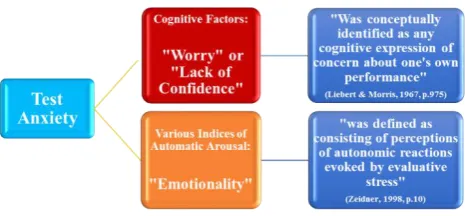
Figure 1. Test Anxiety Model (Liebert and Morris, 1967, P.975; Zeidner, 1998, p.10)
Based on the findings of previous studies (e.g. Woodrow, 2006; Zeidner, 1998), and as conceivably demonstrated by Liebert and Morris (1967), test anxiety can be divided into worry and emotionality. In the meantime, it is necessary to narrow down these two terms into a more comprehensive model as types of anxiety reactions and symptoms. As can be seen in Figure 1, anxiety reactions are composed of both worry and emotionality reactions. Worry consists of cognitive reactions such as ‘task irrelevant thoughts’ or ‘negative critical worrisome thoughts’ (Zeidner, 1998, pp.30-34). Emotionality, on the one hand, refers to physiological reactions such as ‘blushing’ or ‘racing heart’; on the other hand, it refers to behavioral reactions such as ‘stammering’, ‘fidgeting’, ‘procrastination’ or ‘avoidance behavior’ (Woodrow, 2006, p.310; Zeidner, 1998, p.30). The analyzed model is illustrated in Figure 2:
Figure 2. Anxiety Symptoms and Reactions (Zeidner, 1998; Woodrow, 2006)
IV. RESULTS
Before answering the research questions, an appropriate statistical technique should have been adopted to analyze the data. To accomplish this goal, and in order to conduct the normality test for the variables, both the Normal Parameters, i.e. mean and standard deviation, and the most extreme differences (Absolute, Positive and Negative) of anxiety scores average for both different and total groups as independent variable were calculated through Kolmogorov-Smirnov Test. Tables 1 and 2 demonstrate results of the normality test.
TABLE 1.
ONE-SAMPLE KOLMOGROV-SMIRNOV TEST FOR ANXIETY SCORE & THE RELATED ANXIETY SCALE
Foreign Language Classroom Anxiety Scale (FLCAS) Total Anxious Participants Not Very Anxious
Participants
Slightly Anxious Participants
N 11 7 4
Normal Parametersa Mean 2.7373 2.4200 3.2925
Std. Deviation .48705 .21071 .23670
Most Extreme Differences Absolute .180 .128 .183
Positive .180 .128 .183
Negative -.103 -.102 -.160
Kolmogorov-Smirnov Z .596 .339 .365
Asymp. Sig. (2-tailed) .869 1.000 .999
TABLE 2.
ONE-SAMPLE KOLMOGROV-SMIRNOV TEST FOR NORMALITY OF VARIABLES
Variable N Z Significance Level
Total Anxious Participants 11 695.0 6980.
Not Very Anxious Participants 7 69... 09666
Slightly Anxious Participants 4 69.05 69...
As shown in the tables, at the significance level (p> .05), the results of Kolmogorov-Smirnov Test (K-S) revealed that with the 95% confidence, the test distribution for not very anxious and slightly anxious participants is generally normal. Therefore, parametric tests could be used to analyze the data.
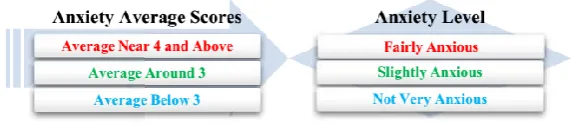
In calculating FLCAS for each participant, each participants’ responses to all items were summed up (i.e. each scale including strongly agree, agree, neither agree nor disagree, disagree and strongly disagree which represented scores of 5, 4, 3, 2, 1, respectively), and then divided by total 33 items. It should be reminded that the total score for the 33 FLCAS items ranged from 33 as the minimum score to 165 as the maximum one. Figure 3 is illustrative of students’ average FLCAS scores in relation to their level of anxiety.
Figure 3. FLCAS Average Scores and Related Anxiety Level
Using the mean score of anxiety and nominal of anxiety with due attention to Figure 3, it is possible to measure the FLCAS of the learners. With regard to the both quantitative analysis of Foreign Language Classroom Anxiety Scale (FLCAS) and qualitative analysis of anxiety symptoms and reactions in the participants, all the information needed to answer the research questions are provided in Table 3.
TABLE3.
ANXIETY SYMPTOMS AND REACTIONS – ANXIETY SCORES
Participants Anxiety Symptoms & Reactions Anxiety
Scores
Worry Emotionality
Cognitive Reactions (Negative Critical Worrisome Thoughts or Task Irrelevant Thoughts)
Physiological Reactions (Blushing, Sweating or Racing Heart)
Behavioral Reactions (Stammering, Fidgeting, Trembling, Procrastination & Avoidance Behavior)
Participant 1 Sweating Stammering 3.03
Participant 2 Blushing Trembling 3.57
Participant 3 Fidgeting 2.36
Participant 4 Stammering 2.75
Participant 5 Stammering 2.57
Participant 6 Stammering 2.12
Participant 7 Fidgeting 2.39
Participant 8 Blushing Trembling 3.39
Participant 9 Stammering 2.51
Participant 10 Stammering 2.24
Participant 11 Blushing & Sweating Fidgeting 3.18
√ Perceptible Anxiety Symptoms & Reactions • Imperceptible Anxiety Symptoms & Reactions
After analyzing the quantitative data (i.e. FLCAS) and qualitative data (i.e. Anxiety Symptoms and Reactions), the research questions can be responded. Considering analysis of the FLCAS scores, as can be seen in Table 2 and 3, there were 4 participants who experienced a slight level of anxiousness; whereas, 7 participants were not very anxious. The initial analysis of anxiety symptoms and reactions revealed that cognitive reactions seemed not visible, whereas behavioral reactions were visible. Moreover, considering physiological reactions it can be perceived that some of them were observable such as blushing, while some others were not, for instance racing heart or palpitation. In this regard, in the present study observable anxiety symptoms and reactions were recorded. To perceive unobservable symptoms in participants, some questions were asked by the researcher in order to gain a precise understanding of the learners’ cognitive reactions.
students strongly asserted that cognitive reactions passed through their mind, especially before the oral presentation. With regard to what was mentioned above, it could be perceived that ‘worry’ existed among most of the students, while speaking a foreign language. Emotionality, on the one hand, comprises physiological reactions such as blushing, perspiration and palpitation, and on the other hand, it involves behavioral reactions such as stammering, fidgeting, trembling, procrastination, and avoidance behavior. According to Table 3, behavioral reactions including, stammering, fidgeting and trembling were found in all of the participants’ performance. Therefore, behavioral reactions were the most obvious anxiety symptoms and reactions that occurred in the learners’ narrative performance, rather than the cognitive and physiological reactions. About the physiological reactions, it can be postulated that they were found in the 4 most anxious students among the 11 samples. Thus, it was found that there were more anxiety symptoms and reactions among slightly anxious participants compared to not very anxious counterparts.
V. DISCUSSION
One of the main goals of this experiment was to attempt to differentiate between participants who experienced a slight level of anxiousness and those who were not very anxious in terms of anxiety symptoms and reactions which can be divulged in EFL learners’ oral performance. With due attention to both quantitative analysis of Foreign Language Classroom Anxiety Scale (FLCAS) and the qualitative analysis of anxiety symptoms and reactions in the participants, the obtained results of the present study suggested that the more anxious they were, the more anxiety symptoms and reactions they produced and vice versa. This lends support to substantiates Hayatdavoudi & Kassaian’s (2013) previous findings who claimed that “students with higher levels of language anxiety reported to suffer from higher levels of psycho-physiological tensions on oral performance” (pp.18-19). As can be seen in Table 3, EFL learners’ anxiety symptoms and reactions can be influenced by the degree of foreign language speaking anxiety in the classroom for the participants with the higher scale of anxiety (i.e. Participants 1, 2, 8 & 11). To answer the first research question, it can be claimed that the existing amount of anxiety symptoms and reactions depends on foreign language classroom anxiety.
With respect to the second research question, the obtained results in divulging the components of anxiety symptoms and reactions by the participants through oral narration revealed that although cognitive reactions to classroom anxiety exist among all oral performers (lecturers, narrators and presenters), they are invisible in anxiety judgments. In addition, in this study physiological reactions were found in slightly anxious students during their performances. Finally, behavioral reactions to classroom anxiety were evidently found in all of the students. To put it more specifically, they were perceived in some students severely (Participants 1, 2, 8, and 11) since these students were perceived as slightly anxious. Additionally, these symptoms were found in some students with low a degree of anxiety (Participants 6, 10 and 3) since they were found to be not very anxious students.
VI. CONCLUSION
In this study it was attempted to analyze different types of EFL learners’ anxiety symptoms and reactions. It was shown that almost all of the behavioral reactions, i.e., stammering, fidgeting and trembling, regarding classroom anxiety were perceived in all the participants, but physiological reactions, i.e., blushing and perspiring were observed only in slightly anxious participants. Thus, classroom teachers can use these findings and distinguish more anxious students from the physiological signs displayed by them during oral narrative performances. The teachers can help their students by using appropriate strategies in order to diminish the classroom anxiety. As Young (1990) mentioned there are six potential sources of anxiety and one of the most important sources is teacher as handler of the classroom. Although teachers can be one of the main sources of classroom anxiety, they are able to use some strategies to alleviate learners’ sense of anxiousness in the classroom. Additionally, students themselves can be counted as another main source of classroom anxiety. However, they are capable to reduce the existing amount of anxiety as much as possible through having more practice in oral narration and oral reproduction activities, before the start of their classes.
VII. SUGGESTIONS FOR FURTHER RESEARCH
As most of the students are inevitably involved in affective variables during their education, it is necessary for teachers to be attentive to these variables. Thus, affective factors should be examined systematically in the future investigations. It is suggested that future investigators test foreign language anxiety symptoms and reactions with a larger sample in order to find the debilitative levels of test anxiety and find ways of helping test-anxious students become more effective in test or test-like situations. Particularly, video-recording with participants’ permission is a more preferable idea because it can be helpful in investigating anxiety symptoms and reactions, i.e., behavioral and physiological symptoms and reactions, more precisely.
APPENDIX. FOREIGN LANGUAGE CLASSROOM ANXIETY SCALE (FLCAS)QUESTIONNAIRE
(1) Strongly Disagree
(2) Disagree
(3) Neither Disagree nor Agree
(4) Agree (5) Strongly Agree
1. I never feel quite sure of myself when I am speaking in my foreign language class.
2. I don't worry about making mistakes in language class. 3. I tremble when I know that I'm going to be called on in language class.
4. It frightens me when I don't understand what the teacher is saying in the foreign language.
5. It wouldn't bother me at all to take more foreign language classes.
6. During language class, I find myself thinking about things that have nothing to do with the course.
7. I keep thinking that the other students are better at languages than I am.
8. I am usually at ease during tests in my language class. 9. I start to panic when I have to speak without preparation in language class.
10 I worry about the consequences of failing my foreign language class.
11. I don't understand why some people get so upset over foreign language classes.
12. In language class, I can get so nervous I forget things I know. 13. It embarrasses me to volunteer answers in my language class. 14. I would not be nervous speaking the foreign language with native speakers.
15. I get upset when I don't understand what the teacher is correcting.
16. Even if I am well prepared for language class, I feel anxious about it.
17. I often feel like not going to my language class. 18. I feel confident when I speak in foreign language class. 19. I am afraid that my language teacher is ready to correct every mistake I make.
20. I can feel my heart pounding when I'm going to be called on in language class.
21. The more I study for a language test, the more confused I get. 22. I don't feel pressure to prepare very well for language class. 23. I always feel that the other students speak the foreign language better than I do.
24. I feel very self‐conscious about speaking the foreign language in front of other students.
25. Language class moves so quickly I worry about getting left behind.
26. I feel more tense and nervous in my language class than in my other classes.
27. I get nervous and confused when I am speaking in my language class.
28. When I'm on my way to language class, I feel very sure and relaxed.
29. I get nervous when I don't understand every word the language teacher says.
30. I feel overwhelmed by the number of rules you have to learn to speak a foreign language.
31. I am afraid that the other students will laugh at me when I speak the foreign language.
32. I would probably feel comfortable around native speakers of the foreign language.
33. I get nervous when the language teacher asks questions which I haven’t prepared in advance.
ACKNOWLEDGEMENT
REFERENCES
[1] Backman, N. (1976). Two measures of affective factors as they relate to progress in adult second language learning. Working Papers in Bilingualism, 10, 100–122.
[2] Brown, H. D. (2000). Principle of language learning and teaching (4th Ed.). Pearson Education: Longman.
[3] Casado, M. A., & Dereshiswsky, M. I. (2004). Effect of educational strategies on anxiety in the second language. College Students Journal, 38(1), 23-35.
[4] Chastain, K. (1988). Developing second language skills: Theory and practice. Orlando: Harcourt Brace Jovanovich Publishing. [5] Cheng, Y., Horwitz, E. K., & Schallert, D. L. (1999). Language anxiety: Differentiating writing and speaking components.
Language Learning, 49, 417-446.
[6] Clément, R. (1980). Ethnicity, contact, and communicative competence in a second language. In H. Giles, W. P. Robinson, & P. M. Smith (Eds.), Language: Social psychological perspectives (pp. 147-154). Oxford: Pergamon Press.
[7] Clément, R., Gardner, R. C., & Smythe, P. C. (1980). Social and individual factors in second language acquisition. Canadian Journal of Behavioural Science, 12, 293-302.
[8] Fox, N. (1998). Trent Focus for research and development in primary health care: How to use observations in a research project, (pp. 1-30). Trent Focus, Institute of General Practice Northern General Hospital Sheffield, England.
[9] Hazel, P. (2007). Narrative: An introduction. Swansea Institute of Higher Education. Wales, UK. Retrieved November 2013, from http://www.paulhazel.com/blog/Introduction_To_Narrative.pdf.
[10] Horwitz, M. B., Horwitz, E. K., & Cope, J. A. (1986). Foreign language classroom anxiety. Modern Language Journal, 70(2), 125-132.
[11] Hayatdavoudi, J., & Kassaian, Z. (2013). The relationship between language anxiety and psycho-physiological responses to oral performance: A study on Iranian EFL students. The Iranian EFL Journal, 9(2), 9-21.
[12] Jannati, D., & Estaji, M. (2015). A qualitative study on Iranian test-takers’ anxiety in FCE speaking test: Investigating the perceptions, causes, and strategies applied. Iranian Journal of Language Testing, 5(2), 121-150.
[13] Labov, W., & Waletzky, J. (1967). Narrative analysis: Oral version of personal experience. In J. Helm (Ed.), Essays on the verbal and visual arts, (pp.12-44).Seattle: University of Washington Press.
[14] Labov, W. (1972). The transformation of experience in narrative syntax. In Language in the inner city, (pp.354-405). U.S.: University of Pennsylvania Press.
[15] Labov, W. (1981). Speech actions and reactions in personal narrative. In D. Tannen & J. Alatis (Eds.), Analyzing discourse: text and talk (pp.219-247).
[16] Lewis, A. (1970). The ambiguous word “Anxiety”. International Journal of Psychiatry, 9, 62-79.
[17] Liebert, R. M., & Morris, L. W. (1967). Cognitive and emotional components of test anxiety: A distinction and some initial data. Psychological Reports, 20, 975–978.
[18] MacIntyre, P. D., & Gardner, R. C. (1989).Anxiety and second language learning: Toward a theoretical clarification. Language Learning, 39(2), 251-275. doi:10.1111/j.1467-1770.
[19] MacIntyre, P. D., & Gardner, R. C. (1993). A student’s contribution to second language learning. Part II: Affect variables. Language Teaching, 26, 1-11.
[20] MacIntyre, P. D. (1995). How does anxiety affect second language learning? A reply to Spark and Ganschow. The Modern Language Journal, 79(1), 90-99.
[21] MacIntyre, P. D. (1998). A review of the research for language teachers. In D. J. Young (Ed.), Affect in foreign language and second language learning (pp. 24-45). Boston: McGrew-Hill.
[22] Mahmoodzadeh, M. (2012). Investigating foreign language speaking anxiety within the EFL learner's interlanguage system: The case of Iranian learners. Journal of Language Teaching and Research, 3(3), 466-476. doi:10.4304/jltr.3.3.466-476. [23] Marwan, A. (2008). The exploration of factors triggering foreign language anxiety: learners’ voice. TEFLIN Journal, 19(2),
119-126.
[24] McCroskey, J. C., & Richmond, V. P. (1987). Willingness to communicate. In J. C. McCroskey, & J. A. Daly (Eds.), Personality and interpersonal communication (pp. 129-156). Newbury Park, CA: SAGE Publications.
[25] Mesri, F. (2012). The Relationship between gender and Iranian EFL learners’ foreign language classroom anxiety (FLCA). International Journal of Academic Research in Business and Social Sciences, 2(6), 147-156.
[26] Polkinghorne, D. (1988). Narrative knowing and the human sciences. Albany: State University of New York Press.
[27] Riasati, M. J. (2011). Language learning anxiety from EFL learners’ perspective. Middle-East Journal of Scientific Research, 7 (6), 907-914.
[28] Salkind, N. J. (2006). Exploring research (6th Ed.). Upper Saddle River, NJ: Pearson Education Inc.
[29] Sanaei, O. (2015). The effect of classroom anxiety on EFL Learner’s oral narratives fluency: the case of intermediate level students. Theory and Practice in Language Studies, 5(7), 1390-1400. doi: http://dx.doi.org/10.17507/tpls.0507.11.
[30] Scovel, T. (1978). The effect of affect on foreign language learning: A review of the anxiety research. Language Learning, 28(1), 129-142.
[31] Spielberger, C. D. (1983). Manual for the state-trait anxiety inventory. Palo Alto, CA: Consulting Psychologists Press. [32] Woodrow, L. J. (2006). Anxiety and speaking English as a second language. Regional Language Centre Journal, 37(3),
308-328. doi:10.1177/0033688206071315.
[33] Yahya, M. (2013). Measuring speaking anxiety among speech communication course student at the Arab American University of Jenin (AAUJ). European Social Science Research Journal, 1(3), 229-248.
[34] Young, D. J. (1990). An investigation of students’ perspectives on anxiety and speaking. Foreign Language Annals, 23(6), 539-553.
[35] Young, D. J. (1991). Creating a low-anxiety classroom environment: What does the language anxiety research suggest? Modern Language Journal, 75, 425-439.