KNOWLEDGE, ATTITUDES, AND APPLICATIONS OF TELEDENTISTRY AMONG DENTAL AND DENTAL HYGIENE STUDENTS
Caroline Dunham McLeod
A thesis submitted to the faculty at the University of North Carolina at Chapel Hill in partial fulfillment of the requirements for the degree of Master of Science in the
Adams School of Dentistry (Dental Hygiene Education).
Chapel Hill 2020
ã 2020
ABSTRACT
Caroline Dunham McLeod: Knowledge, Attitudes, and Applications of Teledentistry Among Dental and Dental Hygiene Students
(Under the Direction of Jane Weintraub)
I dedicate this project to my parents. Their lifetime of support has created a reality where I am able to achieve my dreams and academic goals. I am deeply appreciative of my husband for
ACKNOWLEDGMENTS
I express my deepest gratitude to my thesis committee; their support of this project was key to its success. Dr. Weintraub, thank you for consistently meeting with me, providing
constructive feedback, bringing the best ideas out of me, and sharing your love of research with me. Dr. White, thank you for asking the hard questions, always being willing to talk through the project as it progressed, and sharing your expertise of public health. Professor Brame, thank you for exposing me to the world of teledentistry. Your boundless passion to see me succeed has been vital to the success of this project.
To Dr. Nigel Shaun Matthews, I would like to say thank you for the tireless work you have done to bring teledentistry to the table in North Carolina. Your passion for the delivery model is evident and has inspired me. Thank you for the opportunities you and the
teledentistry committee have afforded me over the past two years. I have learned a great deal that has carried over into this project and beyond.
TABLE OF CONTENTS
LIST OF TABLES ... viii
LIST OF FIGURES ... ix
LIST OF ABBREVIATIONS ... x
CHAPTER I. INTRODUCTION ... 1
II. REVIEW OF THE LITERATURE ... 3
Introduction ... 3
Access to Care ... 4
Key Personnel ... 7
Barriers ... 8
Use in Formal Education ... 12
Conclusion ... 13
References ... 14
III. INTRODUCTION AND REVIEW OF THE LITERATURE ... 18
IV. MATERIALS AND METHODS ... 20
Overview ... 20
Eligibility ... 20
Recruitment and Implementation ... 22
Data Analysis ... 23
V. RESULTS ... 25
VI. DISCUSSION ... 27
Knowledge ... 27
Access to Care ... 27
Curriculum ... 28
Barriers to Implementation ... 29
Study Limitations ... 30
VII. CONCLUSION ... 32
APPENDIX 1: TABLES AND FIGURES ... 33
LIST OF TABLES
Table 1 Small Group Participation by Session ... 35
Table 2 Participant Demographic Information ... 35
Table 3 Teledentistry and Access to Care ... 36
LIST OF FIGURES
Figure 1 Placement of Teledentistry Instruction in Dental and
LIST OF ABBREVIATIONS
DA Dental Assistant
DDS Doctor of Dental Surgery
DH Dental Hygiene
TD Teledentistry
UNC ASoD University of North Carolina at Chapel Hill, Adams School of Dentistry
CHAPTER I: INTRODUCTION
Teledentistry (TD) is the use of technology to communicate health information, provide oral healthcare, screen, and educate remotely between oral healthcare providers and patients.1 This dental care delivery system was born out of a larger movement using telehealth
technologies in the field of medicine.1 Historical developments in TD have led to multiple modalities of care including synchronous video conferencing between patient and provider using audiovisual aids, asynchronous store-and-forwarding of collected data to the provider, remote patient monitoring (RPM) of continually collected health data, and information gathered through mobile devices, or mobile health (mHealth).2
reduced cost of dental neglect through educational and preventative services. 8,9 Thevalidity of TD has been demonstrated through studies covering pediatrics, general dentistry, radiology, endodontics and orthodontics where diagnoses were consistent between TD and visual examinations.10 While all states and Washington D.C. reimburse providers for at least some form of telemedicine services, only eight states reimburse for TD services as of 2019.11,12 The American Dental Association (ADA) released the first two Current Dental Terminology (CDT) codes addressing TD events in 2017 and it is their hope that these codes will motivate further commercial and government reimbursement for services provided through TD.2
CHAPTER II: REVIEW OF THE LITERATURE
Introduction
TD is the use of technology to communicate health information, provide oral screening and healthcare, and educate remotely between providers and patients.1 This dental care delivery system was born out of a larger movement using telehealth technologies in the field of medicine.1 Telemedicine originated in a 1960s development by The National Aeronautics and Space Administration (NASA) to maintain the health of astronauts while in space. Growth continued in the 1990s with the development of the Internet that readily connected individuals, and is continually cultivated today with the use of mobile technology.19 The United States (U.S.) Army also extended telemedicine to provide periodontal care through development of their own project in 1994.20 This project began the movement toward using technology and remote communication to deliver oral health care and inspired the current trend of TD as a significant delivery system.
Historical developments in TD have led to multiple modalities of care including: synchronous video conferencing between patient and provider using audiovisual aids, asynchronous store-and-forwarding of collected data to the provider, remote patient monitoring (RPM) of continually collected health data, and information gathered through mobile devices, or mobile health (mHealth).2
dental treatment that address access to care barriers among populations.3 Consequently, TD has demonstrated its usefulness in answering this national call by significantly impacting the way dental care is delivered to disadvantaged populations through various specialties in dentistry. 21
Research regarding TD also revealed existing barriers that may limit its usefulness if not addressed. Concerns to implementing TD include: technology and implementation costs, security and privacy matters, reimbursement, diagnostic validity, personnel policy issues, and long-term health outcomes. 22, 23 This literature review will synthesize relevant information regarding TD and its current uses as well as perceived barriers to implementation as a dental care delivery model.
PubMed and Google Scholar were used to search for literature using the terms “teledentistry”, “telehealth”, “virtual dentistry”. “e-health”, “access to dental care”, “teledentistry and education”, “telehealth security” and “telehealth privacy” from 1999 to 2019. National and international publications were reviewed if they were published in the English language.
Access to Care
The U.S. Senate reported that it is more difficult for individuals who are disabled, pregnant, elderly, of a racial minority, live in rural area, or have a low-income to access oral health care.24 Those who are the most in need of care are often least likely to receive it due to high costs of treatment, lack of dental insurance, and lack of and distance from dental
reported to increase access to care.24 This calls attention to the success of TD in treating these underserved populations.4, 25, 26
Early Childhood Caries (ECC) is a national oral health concern among school-aged children. In a study by Kopycka-Kedzierawski and colleagues4, 60 children, ages 1-2 years, living in inner-city New York were virtually screened for caries by a pediatric dentist at a remote site using intraoral photos captured in-person by a dental assistant (DA). The dentist also made treatment recommendations based on the images. Results revealed that 40% of children presented with active lesions. This was the first time many of these children were screened, enhancing early detection and prompt treatment of ECC. 4 A limitation of this study, knowledge of follow-up care access, is answered by McLaren and colleagues. They found that
recommended treatment from TD consultations of 251 children was completed at high but varying rates among children on Medicaid or CHIP insurance. Differences ranged from 56-100% completion rates based on the treatment modality utilized: paediatric dental clinics, nitrous oxide anxiolysis, oral sedation or general anesthesia; there were not significant differences between treatment modalities.25
After studying 126 children with malocclusions, Berndt and colleagues found that TD was an effective tool to address malocclusions by general dentists supervised remotely by an orthodontist when compared to orthodontic residents supervised in person by an
Oral cancer is one of the most prevalent cancer types in the world and
disproportionately affects disadvantaged populations.27 Early detection has been cited as a key strategy for successful treatment outcomes.27 Two studies considered the potential use of photographs, taken by smartphone and sent through an app, to aid in the early detection of cancerous lesions found in the oral cavity. One study found strong agreement between in-person- and app-diagnoses for possible malignant lesions while another study found that use of an app streamlined the referral process between general and specialty dentists for cancer diagnosis.28,29 Both studies indicate that TD can be utilized for quicker detection of and referral for oral cancer in low-resource settings.
Prisoners lack access to specialty healthcare. Teleconsultation has proven to be an effective tool in telemedicine to diagnose and monitor dermatological conditions in French prisoners as well as treat the population for psychiatric conditions.30, 31 One team studied prison auxiliary personnel and remote dentists in France, with outcomes suggesting that TD is an acceptable instrument for dental diagnosis when data are collected by auxiliary personnel. It was used to prioritize treatment and increase oral care efficiency in the prison setting.5 These results point to the achievement of telehealth services in addressing the needs of prisoners in different medical specialties and imply usefulness in other areas, such as dentistry.
tandem with patient satisfaction. A study in eight French and German nursing homes included data collected by a DA from 235 geriatric patients followed by a dentist examination of each patient one week later. Results indicated a 93.8% sensitivity and a 94.2% specificity for detecting dental pathologies between the two exam types.32 These studies highlight that the elderly and individuals with a disability can benefit from quick and accurate diagnoses delivered through TD.
Key Personnel
Martin and colleagues surveyed general and specialty dentists in South Carolina. They discovered that of their sample of 384 dentists, 72.9% reported diagnostic consultation, 53.3% continuing education and 56.7% emergency consultation as potential uses for TD. The most commonly needed consultations were reported as endodontic at 42%, oral and maxillofacial surgery at 35.1% and orthodontic at 25.5%. 33 Additional literature has illustrated TD’s successful use of remote diagnosis in oral medicine, diagnosis and consultation in oral and maxillofacial surgery, access to orthodontic expertise by general dentists in the form of
consults, consults in prosthodontics and periodontics, as well as diagnosis of caries by pediatric dentists.22 Additionally, Jampani and colleagues found that TD was also favorable in diagnosis of endodontic lesions in the specialty.34
systematic review by Irving and colleagues suggest that there was a high level of acceptability by dental clinicians.35 This illustrates that TD is a pertinent tool for general dentists in practice.
The successful use of dental allied health professionals in the implementation of TD is demonstrated by the Virtual Dental Home model at the University of the Pacific, Arthur A. Dugoni School of Dentistry. This system uses the dentist as the diagnosing supervisor and DHs and DAs as providers of screening, counseling and preventive services in community settings such as schools, Head Start programs, residential facilities and community health centers to underserved populations in California. The Virtual Dental Home model showed that the use of dental allied health professionals in TD to deliver preventive services has proven to be cost-effective and increased vulnerable populations’ access to oral health care.8 In a study evaluating utilization of dental hygienists, there were no significant difference in caries detection between a dental hygienist using TD and a dentist using a clinical exam. This demonstrates the effective use of teledental technology by dental hygienists. 36
Barriers
and colleagues found that a TD consultation saved patients with cleft lip and palate an average of $136.94 Australian dollars, with patients living farther away saving the most money.
Providers also saved an average of 275.3 clinic days through consults, equating to a potential of an additional $73,400 Australian dollars per year if the time saved was utilized with financially productive appointments. These findings showed TD is a cost-effective option for patients with cleft lip and palate in rural areas. 9 Focusing on advantaged children, Estai and colleagues discovered that children that live in urban areas and are of higher socioeconomic status use about 50% of traditional dental screening resources in Australia. Switching them to TD screenings could save up to forty-million Australian dollars thus restructuring allocation to target disadvantaged populations’ needs.38
Early results from the Virtual Dental Home model of TD show that it is a low-cost option for delivering preventive and diagnostic dental services while lowering the cost from dental neglect resulting in severe disease. Providing preventive services via allied health professionals made it less likely that oral disease would advance to requiring oral surgery or a visit to the hospital emergency department, therefore lowering the total cost of oral health neglect to patients, providers and the healthcare system.8
detection in children.37 An additional study found that treatment modalities determined for 251 children by means of TD remained the same at the time of treatment in 88% of children.39 This high treatment completion rate suggests patients will follow up with recommended care after being referred through TD. 39 Addressing adult patients, Namakian studied three dentists examining 29 patients in-person and virtually, separated by at least three weeks’ time, showing that dentists reached the same treatment decision 87% of the time, no matter the examination type.40 It is worth noting that TD is valid in addressing the needs of both children and adults.
Security of patient information is a concern regarding TD because protected health information (PHI) is stored and transferred by electronic means, vulnerable to unapproved access and interception. Nationally, the Health Insurance Portability and Accountability Act (HIPAA) and Technology for Economic and Clinical Health (HI-TECH) Act are currently in place to protect PHI. Cederberg suggested solutions to protecting PHI in dental schools, and application can also be applied to electronic health records used in the general practice of TD. They
propose creation of continuing education courses (CEs) to explain proper ethical conduct regarding health records, setting privacy policies specifically regarding health records used in TD, and enacting a surveillance system to manage the records.41 With advances in telemedicine, it is essential to train personnel in prevention of electronic breeches as well as set standard policies for handling electronic telemedical data.42 Overall, there does not seem to be a focus on security in telemedicine or TD literature. Beyond fines for violating HIPPA, more research needs to be done to confirm valid security measures for telehealth.
conferencing with Medicaid, 15 states for store-and-forward care, 20 states for remote patient monitoring, and 38 states have laws governing reimbursement for private insurers as of 2019.12 However, only a eight states reimburse for synchronous TD and five states for asynchronous TD consultations thorough Medicaid.11, 12 Reimbursement laws for TD will most likely continue to vary between states and insurance plans; however, the American Dental Association (ADA) released the first two CDT codes addressing synchronous and asynchronous TD events in 2017. Development of these insurance codes can facilitate equal reimbursement of established in-person dental services and TD.2 Additionally, many completed TD studies were funded by grants, pointing to the need for governmental policy changes and financial incentives for dental professionals to allow for sustainable, long-term use of TD. 34, 43
Currently, there are few studies reporting on long term outcomes of TD, as this is a new mechanism for delivering dental care. 37 In the field of medicine, however, a six-month remote intervention of patients with cochlear implants found telemedicine to be sufficient means for a pathway to long-term care.44 In a systematic review analyzing treatment of maternal
Use in Formal Education
TD also holds merit in the formal education of dental professionals at multiple levels. A study including a subset of third- and fourth-year DDS students at the University of Nebraska Medical Center (UNMC) College of Dentistry explored acquisition of knowledge for future use through effective training in TD. 13 Friction stated that the videoconferencing method of TD can be used to clinically train dental professionals to handle particular orofacial disorders. 47 Two studies that affirmed this method showed that video-conferencing between distant instructors and students as an effective learning tool at the graduate student level in orthodontics, general dentistry, oral and maxillofacial surgery and oral health care. These results support the use of TD as an educational tool to provide students with opportunities to acquire specialized knowledge from experts and gain clinical skills for general future use.48, 14
Importantly, training in TD was also effective in improving the confidence levels of DH students at Minnesota State University, Mankato in performing TD screenings for underserved children.15 At Northern Arizona University, DH students demonstrated their essential role in assisting with the diagnosis of childrens’ oral health needs by providing diagnostic screening data from simulated remote sites with no significance difference compared to on-site data collection.16 These results display the impact of DH students trained in TD and their ability to effectively meet the screening needs of underserved populations and grant access to
Conclusion
TD has the potential to help mitigate current oral health disparities among populations that have little to no access to oral health care. The technology is currently being used by dental professionals to provide oral health care to children, prisoners, the elderly, and intellectually and psychologically impaired populations. While there are barriers to widespread
implementation of TD, current evidence suggests the continuing reduction of obstacles such as high start-up cost, diagnostic validity of remote access, lack of reimbursement or equitable reimbursement for services, privacy/security issues, and lack of long-term outcomes.
Education of oral health care professionals is essential to the future of the TD
REFERENCES
1. Chen JW, Hobdell MH, Dunn K, et al. Teledentistry and its use in dental education. J Am Dent Assoc. 2003 Mar; 134:342-346.
2. American Dental Association. ADA guide to understanding and documenting teledentistry events. 2017 Jul.
3. U.S. Department of Health and Human Services. Oral health in America: a report of the Surgeon General. U.S. Department of Health and Human Services, National Institute of Dental and Craniofacial Research, National Institutes of Health, 2000.
4. Kopycka-Kedzierawski DT, Billings RJ. Teledentistry in inner-city child-care centers. J Telemed Telecare. 2006 Jun; 12(4):176-181.
5. Giraudeau N, Inquimbert C, Delafoy R, et al. Teledentistry, new oral care tool for prisoners. J Prison Health. 2017; 13(2): 124-134.
6. Petcu R, Kimble C, Ologeanu-Taddei R, et al. Assessing patient's perception of oral teleconsultation. J Technol Assess Health Care. 2017; 33(2): 147-154.
7. Estai M, Kanagasingam Y, Tennant M, Bunt S. A systematic review of the research evidence for the benefits of teledentistry. J Telemed Telecare. 2018 Apr; 24(3): 147-156.
8. Glassman P, Harrington M, Namakian M, Subar P. The virtual dental home: bringing oral health to vulnerable and underserved populations. J Calif Dent Assoc. 2012 Jul; 40(7):569-577.
9. Teoh J, Hsueh A, Marino R, et al. Economic evaluation of teledentistry in cleft lip and palate patients. Telemed J E Health. 2018 Jun; 24(6):449-456.
10.Alabdullah JH, Daniel SJ. A systematic review on the validity of teledentistry. J E Health. 2018 Aug; 24(8):639-648.
11.Joanne F, Donn W. Value proposition of teledentistry: cost savings, improved services and more. Milliman; 2018 June.
12.Public Health Institute. State telehealth laws and reimbursement policies. 2019. At: http://www.phi.org/resources/?resource=state-telehealth-laws-and-medicaid-program-policies. Accessed: January 22, 2019.
13.McFarland KK, Nayar P, Chandak A, Gupta N. Formative evaluation of a teledentistry
14.Klein KP, Hannum WH, Fields HW, Proffit WR. Interactive distance learning in orthodontic residency programs: problems and potential solutions. J Dent Educ. 2012 Mar; 76(3):322-329.
15.Cooper BR, Engeswick LM. Knowledge, attitudes, and confidence levels of dental hygiene students regarding teledentistry: a pilot study. IJAHSP. 2007 Oct; 5(4), Article 6.
16.Summerfelt FF. Teledentistry-assisted, affiliated practice for dental hygienists: an innovative oral health workforce model. J Dent Educ. 2011 June; 75(6): 733-742.
17.Oral Health Workforce Research Center. Development of a New Dental Hygiene Professional Practice Index by State, 2016.
18.Medicaid.gov. State Overviews. 2018. At: https://www.medicaid.gov/state-overviews/index.html. Accessed: January 22, 2019.
19.Hurst, EJ. Evolutions in telemedicine: from smoke signals to mobile health solutions. J Hosp Librariansh. 2016 Apr; 16(2): 174-185.
20.Rocca MA, Kudryk VL, Pajak JC, Morris T. The evolution of a teledentistry system within the department of defense. Proc AMIA symp. 1999; 4:921-924.
21.Marino R, Ghanim A. Teledentistry: a systematic review of the literature. J Telemed Telecare. 2013 Jun; 19(4):179-183.
22.Cederberg RA, Valenza JA. Ethics and the electronic health record in dental school clinics. J Dent Educ. 2012 May; 76(5):584-589.
23.Estai M, Kruger E, Tennant M. Perceptions of australian dental practitioners about using telemedicine in dental practice. Br Dent J. 2016 Jan; 22(1):25-29.
24.Sanders B. Dental crisis in america: The need to expand access. U.S. Senate Committee on Health Education, Labor and Pensions, Subcommittee on Primary Health and Aging. 2012 Feb.
25.McLaren SW, Kopycka-Kedzierawski DT. Compliance with dental treatment
recommendations by rural paediatric patients after a live-video teledentistry consultation: a preliminary report. J Telemed Telecare. 2016 Apr; 22(3): 198-202.
27.National Institute of Health. Oral cancer fact sheet. 2018. At:
https://report.nih.gov/nihfactsheets/ViewFactSheet.aspx?csid=106. Accessed: June 2, 2019. 28.Vinayagamoorthy K, Acharya S, Kumar M, et al. Efficacy of a remote screening model for
oral potentially malignant disorders using a free messaging application: A diagnostic test for accuracy study. Aust J Rural Health. 2019 Apr; 27(2): 170–6.
29.Haron N, Zain RB, Ramanathan A, et al. m-Health for early detection of oral cancer in low- and middle-income countries. Telemed J E Health. 2019 May.
30.Khatibi B, Bambe A, Chantalat C, et al. Teledermatology in a prison setting: a retrospective study of 500 expert opinions. Ann Dermatol Venereol. 2016 Jun; 143(6):418-422.
31.Antonacci DJ, Bloch RM, Saeed SA, et al. Empirical evidence on the use and effectiveness of telepsychiatry via videoconferencing: implications for forensic and correctional psychiatry. Behav Sci Law. 2008 Jun; 26(3): 253-269.
32.Queyroux A, Saricassaapian B, Herzog D, et al. Accuracy of teledentistry for diagnosing dental pathology using direct examination as a gold standard: results of the tel-e-dent study of older adults living in nursing homes. J Am Med Dir Assoc. 2017 Feb; 18(6):528-532. 33.Martin AB, Nelson JD, Bhavsar GP, et al. Feasibility assessment for using telehealth
technology to improve access to dental care for rural and underserved populations. J Evid Based Dent Pract. 2016 Dec;16(4): 228-235.
34.Jampani ND, Nutalapati R, Dontula BS, Boyapati R. Applications of teledentistry: a literature review and update. J Int Soc Prev Community Dent. 2011 Jul; 1(2): 37-44.
35.Irving M, Stewart R, Spallek H, Blinkhorn A. Using teledentistry in clinical practice as an enabler to improve access to clinical care: a qualitative systematic review. J Telemed Telecare. 2018 Apr;24(3):129–46.
36.Daniel SJ, Kumar S. Comparison of dental hygienists and dentists: clinical and teledentistry identification of dental caries in children. Int J Dent Hyg. 2017 Jun; 15(4): e143-e148.
37. Daniel SJ, Wu L, Kumar S. Teledentistry: a systematic review of clinical outcomes, utilization and costs. J Dent Hyg. 2013 Dec; 87(6):345-352.
39.McLaren SW, Kopycka-Kedzierawski DT, Nordfelt J. Accuracy of teledentistry examinations at predicting actual treatment modality in a pediatric dentistry clinic. J Telemed Telecare. 2017 Sep; 23(8):710-715.
40.Namakian M, Subar P, Glassman P, et al. In-person versus "virtual" dental examination: congruence between decision-making modalities. J Calif Dent Assoc. 2012 Jul; 40(7): 587-595.
41.Cederberg RA, Valenza JA. Ethics and the electronic health record in dental school clinics. J Dent Educ. 2012 May; 76(5): 584-588.
42.Garg V, Brewer J. Telemedicine security: a systematic review. J Diabetes Sci Technol. 2011 May; 5(3): 768-777.
43.Nayar P, McFarland K, Chandak A, Gupta N. Readiness for Teledentistry: validation of a tool for oral health professionals. J Med Syst. 2017 Jan; 41(1):4.
44.Cullington H, Kitterick P, DeBold L, et al. Feasibility of personalised remote long-term follow-up of people with cochlear implants: a randomised controlled trial. BMJ Open. 2108 Apr; 8(4):e019640.
45.Nair U, Armfeikd NR, Chatfield MD, Edirippulige S. The effectiveness of telemedicine interventions to address maternal depression: A systematic review and meta-analysis. J Telemed Telecare. 2018 Oct; 24(10): 639-650.
46.Hanlon P, Daines L, Campbell C, et al. Telehealth interventions to support self-management of long-term conditions: a systematic metareview of diabetes, heart failure, asthma, chronic obstructive pulmonary disease, and cancer. J Med Internet Res. 2017 May; 19(5):e172. 47.Fricton J, Chen H. Using teledentistry to improve access to dental care for the underserved.
Dent Clin North Am. 2009 Jul; 53(3): 537-548.
CHAPTER III: INTRODUCTION AND REVIEW OF THE LITERATURE
TD is the use of technology to communicate health information, provide oral healthcare, screen, and educate remotely between oral healthcare providers and patients. This dental care delivery system was born out of a larger movement using telehealth technologies in the field of medicine.1 Historical developments in TD have led to multiple modalities of care including synchronous video conferencing between patient and provider using audiovisual aids, asynchronous store-and-forwarding of collected data to the provider, remote patient monitoring (RPM) of continually collected health data, and information gathered through mobile devices, or mobile health (mHealth).2
The U.S. Department of Health and Human Services highlighted that vast oral health disparities exist across the nation, pointing to the need for development of new approaches to dental treatment that address access to care barriers among populations.3 Consequently, TD has demonstrated its usefulness in answering this national call by significantly impacting the way dental care is delivered to disadvantaged populations such as children, prisoners, and the elderly those with intellectual and developmental disabilities who have limited access to traditional dental care.4,5,6 There are many examples of dental professionals have successfully utilizing TD to deliver patient care including: oral medicine and maxillofacial surgeons,
travel expenses for patients, increased volume of patients for providers and overall reduced cost of dental neglect through educational and preventative services. 8,9 Thevalidity of TD has been demonstrated through studies covering pediatrics, general dentistry, radiology,
endodontics and orthodontics where diagnoses were consistent between TD and visual examinations.10 While all states and Washington D.C. reimburse providers for at least some form of telemedicine services, only eight states reimburse for TD services as of 2019.11,12 The American Dental Association (ADA) released the first two CDT codes addressing TD events in 2017 and it is their hope that these codes will motivate further commercial and government reimbursement for services provided through TD.2
TD also holds merit in the formal education of dental professionals at multiple levels of study including entry-level and undergraduate DH, DDS and graduate students.13 14, 15, 16
However, schools that are currently using TD to train students to meet oral health care needs are located in states (Nebraska, California, Minnesota, New York and Arizona) that have more permissive policy regarding DH scope of practice and Medicaid coverage while NC has a more policy restrictive climate.17.18 While we know that some studies have shown an increase in knowledge and attitudes of DDS and DH students after TD training in these permissive states, there is little evidence of this training or resulting knowledge or attitude change in policy restrictive states such as NC. Therefore, this study will fill this gap by identifying the knowledge and attitudes of TD among the dental professional student population in a state where TD is less developed in part because of policy restrictions. A key emphasis is placed on understanding students’ perspectives on how TD should be adopted into their curriculum since it is not
CHAPTER IV: MATERIALS AND METHODS
Overview
This study (#19-0242) was considered as exempt by the University of North Carolina at Chapel Hill Institutional Review Board (IRB). The null hypothesis states there are no changes in self-reported knowledge or attitudes in pre- and post- intervention survey responses after the educational TD intervention. The research design was a longitudinal mixed methods study using a survey, small group discussions, and a large group debriefing session. The intervention
consisted of a video presentation, small group discussions and a large group debriefing session. The data collection process included a pre- and post- intervention survey, and notes from the large group debriefing session.
Eligibility
Inclusion criteria included enrollment in the DH program or second or third year of enrollment in the DDS program at the University of North Carolina at Chapel Hill (UNC) Adams School of Dentistry (ASoD). Other inclusion criteria included completion of a pre- and post-intervention survey. Exclusion criteria were DDS students in their first or fourth year of study, refusal to complete the pre- and post-intervention surveys or failure to attend the intervention. First year DDS students were excluded from the study because they did not have clinical
many students were on extramural rotations. Thus, the entire class was not located at UNC ASoD at the time of intervention.
Intervention
The intervention was a pre-recorded lecture by Dr. Shaun Matthews, Director of Teledentistry at UNC ASoD. The lecture defined TD and related terms, discussed models of delivery, access to care statistics in NC, and laws governing TD events. The role of DHs, working under general supervision, using TD was emphasized with the California Virtual Dental Home model and was contrasted with the NC practice act requirement of direct supervision of DHs. A recorded, synchronous, post-operative consultation between a provider and patient was played. Further, reimbursement for TD events thorough Medicaid was reviewed and examples of TD’s potential use in curriculum were presented.
Survey
Survey questions were developed from previously completed studies regarding TD, access to oral health care, and curriculum. Both pre-and post- intervention surveys were pilot tested before the sessions by seven students who had not attended an intervention session. They included four DDS and three DH students from the UNC ASoD.
questions included students’ role in using TD, if/how TD can be adopted into DDS and DH curriculum and how they may use it upon entering DDS and DH practice. All questions with Likert Scales used intervals of 1-5. Additionally, the surveys included four questions with one letter or number answers known only to the participant, which were used by the researcher to do a matched paired analysis of pre-and post-intervention answers.
Recruitment and Implementation
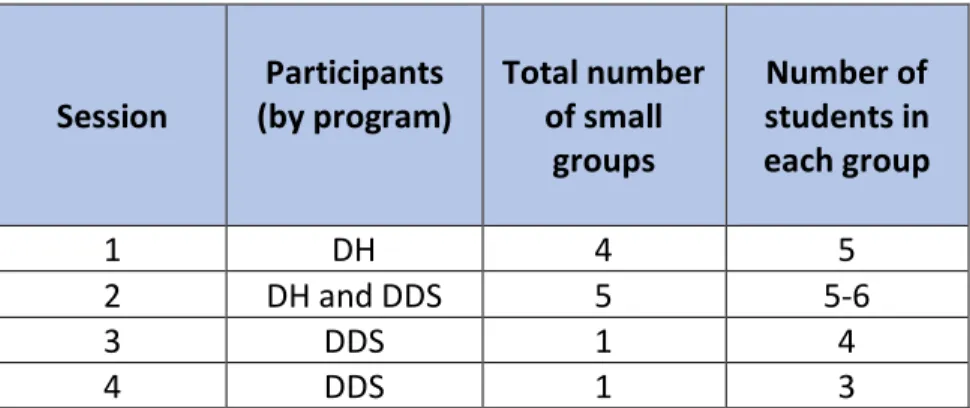
Students were recruited through email and paper flyers distributed in person. They were asked to sign-up prior to the intervention using a Google Form. The intervention took place in four separate sessions, one included second- and third-year DDS and first year DH students, the second included only second-year DH students while the third and fourth included only second-year DDS students.
Two hours were allotted for each intervention session. The sessions began with
obtaining informed consent from students, the administration of a voluntary Qualtrics® digital survey to assess their self-reported knowledge and attitudes about TD before the intervention. The link and QR code to the survey was displayed via a projector at the intervention for
students to easily access them via smartphone or computer. All consenting participants watched a forty-minute pre-recorded presentation about TD and and it was followed by a ten-minute question and answer session where the researcher answered all questions asked by the students.
researcher for thirty minutes. The three questions were: 1.) Do you think that TD has or does not have the potential to help alleviate the oral health crisis in North Carolina? Why or why not? 2.) What and how would you like to learn about TD while in school? 3.) Identify challenges and potential solutions to implement TD in DDS or DH curriculum. All participants then
reconvened as a single large group to share their answers to the same questions in an open forum debrief, guided by a facilitator, for thirty minutes. A student notetaker, that did not meet inclusion criteria, wrote down the main themes from the discussion. Then participants were asked to voluntarily complete another digital survey, based on their self-reported knowledge and attitudes about TD after the intervention.
Data Analysis
CHAPTER V: RESULTS
Fifty-two students completed the pre-intervention survey only while forty-four students completed the lecture, discussions and pre- and- post-intervention survey, for a participation rate of 85%. The analytic pre-post survey sample (n=44) included 14 DDS and 30 DH students. Refer to Table 2 for gender, age range, program and year of study demographic information. One-hundred percent of participants matched all four items they individually generated to create the ID for matching pre-to-post-survey answers.
Comparison of pre-and-post-survey responses showed a significance difference in self- reported knowledge of TD among students in the analyzed sample (p <0.01). There was a mean score increase of self- reported knowledge from 2 to 3.9 on a 1-5 Likert Scale (with 1 being no knowledge to 5 being very knowledgeable.) Ninety-one percent of students “agreed” or “strongly agreed” that they gained knowledge from the session that they could use in the future. Results regarding access to care issues that TD can address in NC are presented in Table 3 with an increase in all but one category after the educational intervention. The one category, “increase access to care”, that did not show an increase had the highest positive response, 89%, of any category pre-intervention survey.
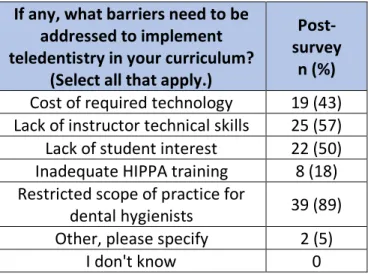
barrier, among the six choices, that needed to be addressed to adopt TD into practice, including 57% of DDS students.
Generally, students felt that TD should be adopted into the DDS (78%) and DH (75%) curriculum. As shown in Figure 1, the majority of students felt that TD could be taught in several ways: using simulated cases, in clinical practice, integrated into DH extramural
CHAPTER VI: DISCUSSION
This study identified the knowledge and attitudes toward TD among the oral health professional student population at UNC ASoD, where TD is less developed in the state in part because of policy restrictions. A key emphasis was placed on understanding students’
perspectives on how TD should be adopted into their curriculum.
Knowledge
Education about TD through this study’s processes led to an increase in self- reported knowledge of TD that students could use in the future. This knowledge gain through an educational intervention is supported by another study at the University of Nebraska Medical Center, College of Dentistry. Third-and-fourth year DDS students gained knowledge about TD, as measured by a survey, after receiving didactic and hands-on TD training. Students in
Nebraska learned about basic TD concepts including: definition, technology, applications, scheduling, conducting consultations and record keeping through modules.13 These concepts could be included in student TD training in NC and beyond.
Access to Care
Generally, TD has been shown to increase access to care via consultations involving general and specialty dentists .7,14,19, Additionally, in general healthcare, telehealth
indicated that students think TD should be used to increase access to oral healthcare in North Carolina and may be used to facilitate consultation with health care specialists. Furthermore, students felt that access to preventive care (oral hygiene education, prophylaxes, and fluoride) could be expanded through the use of TD. The majority of students also reported that TD could be used to increase efficient use of clinicians’ and patients’ time and reduce patients’ travel costs. In other studies, TD has been successful in providing cost-savings for patients’ travel expenses and provider equipment purchase, operation and time 9,21 Students emphasized the value of TD-based care as an augment to traditional, in person care, not a replacement.
Curriculum
Overall, students in the UNC study agreed with findings from another DH study that there is high value of including TD in DH curriculum.15 Additionally, the UNC study wanted to understand the value of including TD in the DDS curriculum, which was also highly valued among the surveyed students. DDS and DH students agreed that TD was valuable in each-others’ curriculum, suggesting that it should be taught in both types of curriculum, or where possible, taught to both groups of students together.
This study was the first to ask students by what methods they think TD should be taught in oral health professionals’ curriculum. A major theme from the debrief session was that TD should be taught through didactic lectures, then practice with hands-on training. Interestingly, the post-intervention survey revealed a higher percentage of DH students and a lower
that TD was appropriately taught through hands-on training (i.e. preclinical and clinical practice, simulated cases) The difference may be due to the increase in clinical training as DDS students continue through their program while didactic and clinical training remain at an even balance throughout DH training at UNC-ASoD. Students also felt that TD could be implemented more easily in the school setting because of technology already in place (i.e. electronic health records, computers, intra-oral cameras, portable radiographic equipment, etc.)
Barriers to Implementation
The largest barrier to implementing TD into curriculum identified by the students was the NC state dental practice act requiring direct supervision of DHs. Half of the DDS students indicated that they expected to use TD after graduation while less than one-fourth of DH students indicated the same. The debriefing session revealed that this may occur until the practice act is changed to allow for general supervision of dental hygienists, DH students do not see the value of learning a skill they cannot use upon entering practice. Minnesota has created a supportive policy environment for dental hygienists to practice under general supervision that has further allowed for TD integration into DH curriculum at Minnesota State University
Mankato.15,22 Additionally, the Virtual Dental Home utilizes dental hygienists in community settings, under general supervision, and has made a substantial impact regarding access to care in California. 8
underserved populations. Educating faculty will be of great importance to ensure that all faculty have updated knowledge on the technology used in TD. Students also felt that TD must show a clear return on investment to be an attractive curriculum addition to DDS and DH programs.
Though they were not included in this study’s survey, other barriers to the
implementation of TD in NC are lack of reimbursement avenues for providers and expanding what qualifies as an originating site for reimbursement purposes. Providers are less likely to provide services that are not reimbursable. Currently, NC Medicaid only reimburses for synchronous TD consultations and not for asynchronous TD consultations. Asynchronous consultations allow patients and providers to interact when it is convenient for them and may reduce wait times for scheduling. There is also a need for increased access to high-speed internet in rural areas so patients can access internet-based TD delivery modes.
Study Limitations
CHAPTER VII: CONCLUSION
APPENDIX 1: TABLES AND FIGURES
Session (by program) Participants Total number of small groups
Number of students in each group
1 DH 4 5
2 DH and DDS 5 5-6
3 DDS 1 4
4 DDS 1 3
Table 1. Small Group Participation by Session
Category Number (n)
Gender
Male 3
Female 41
Age Range
18-24 24
25-34 20
Program / Year
DDS / 2 8
DDS / 3 6
DH / 1 10
DH / 2 20
What issues do you think teledentistry can address in North Carolina?
Please indicate Yes or No or I don't know for each item.
Pre- Survey “yes” n(%) Post- Survey “yes” n(%)
Increase access to care 39 (89) 39 (89) Increase efficient use of clinicians’ time 33 (75) 35 (80) Increase efficient use of patients’ time 34(77) 41 (93) Reduce patients' travel costs 37 (84) 41 (93) Increase patient outreach 36(82) 39 (89) Facilitate consultation with health care specialists 32 (73) 40 (91) Increase reimbursement to dentists by provision of
more services 19(50) 30 (68)
Increase the number of dentists who are prepared to treat
patients in the rural/underserved communities in NC 26 (59) 35 (80)
Other, please specify 0 (0) 5 (12)
Table 3. Teledentistry and Access to Care
Figure 1. Placement of Teledentistry Instruction in Dental and Dental Hygiene Curriculum
Figure 1.
Placement of
Teledentistry
Instruction
in Dental
and Dental Hygiene Curriculum
0% 10% 20% 30% 40% 50% 60% 70% 80% 90% 100% Didactic
Courses Preclinical Clinical SimulatedCases RotationsDDS DISC DH RotationsCommunity Other Don't Know
If any, what barriers need to be addressed to implement teledentistry in your curriculum?
(Select all that apply.)
Post-survey
n (%)
Cost of required technology 19 (43) Lack of instructor technical skills 25 (57) Lack of student interest 22 (50) Inadequate HIPPA training 8 (18) Restricted scope of practice for
dental hygienists 39 (89) Other, please specify 2 (5)
I don't know 0
REFERENCES
1. Chen JW, Hobdell MH, Dunn K, et al. Teledentistry and its use in dental education. J Am Dent Assoc 2003; 134:342-346.
2. American Dental Association. ADA guide to understanding and documenting teledentistry events, 2017.
3. U.S. Department of Health and Human Services. Oral health in America: A report of the surgeon general. U.S. Department of Health and Human Services, National Institute of Dental and Craniofacial Research, National Institutes of Health, 2000.
4. Kopycka-Kedzierawski DT, Billings RJ. Teledentistry in inner-city child-care centers. J Telemed Telecare 2006; 12(4):176-181.
5. Giraudeau N, Inquimbert C, Delafoy R, et al. Teledentistry, new oral care tool for prisoners. J Prison Health 2017; 13(2): 124-134.
6. Petcu R, Kimble C, Ologeanu-Taddei R, et al. Assessing patient's perception of oral teleconsultation. J Technol Assess Health Care 2017; 33(2): 147-154.
7. Estai M, Kanagasingam Y, Tennant M, Bunt S. A systematic review of the research evidence for the benefits of teledentistry. J Telemed Telecare 2018; 24(3): 147-156.
8. Glassman P, Harrington M, Namakian M, Subar P. The virtual dental home: bringing oral health to vulnerable and underserved populations. J Calif Dent Assoc 2012; 40(7):569-577. 9. Teoh J, Hsueh A, Marino R, et al. Economic evaluation of teledentistry in cleft lip and palate
patients. Telemed J E Health 2018; 24(6):449-456.
10.Alabdullah JH, Daniel SJ. A systematic review on the validity of teledentistry. J E Health 2018; 24(8):639-648.
11.Joanne F, Donn W. Value proposition of teledentistry: cost savings, improved services and more. Milliman; 2018.
12.Public Health Institute. State telehealth laws and reimbursement policies. 2019. Available from: http://www.phi.org/resources/?resource=state-telehealth-laws-and-medicaid-program-policies. Accessed: January 22, 2019.
14.Klein KP, Hannum WH, Fields HW, Proffit WR. Interactive distance learning in orthodontic residency programs: problems and potential solutions. J Dent Educ 2012; 76(3):322-329. 15.Cooper BR, Engeswick LM. Knowledge, attitudes, and confidence levels of dental hygiene
students regarding teledentistry: a pilot study. IJAHSP 2007; 5(4).
16.Summerfelt FF. Teledentistry-assisted, affiliated practice for dental hygienists: an innovative oral health workforce model. J Dent Educ 2011; 75(6): 733-742.
17.Oral Health Workforce Research Center. Development of a New Dental Hygiene Professional Practice Index by State, 2016.
18.Medicaid.gov. State Overviews, 2018. At: https://www.medicaid.gov/state-overviews/index.html. Accessed: January 22, 2019.
19.Berndt J, Leone P, King G. Using teledentistry to provide interceptive orthodontic services to disadvantaged children. J Orthod Dentofacial Orthop. 2008 Nov; 134(5): 700-706.
20.Vimalananda VG, Gupte G, Seraj SM, et al. Electronic consultations (e-consults) to improve access to specialty care: a systematic review and narrative synthesis. J Telemed Telecare. 2015 Sep;21(6):323-30.
21.Daniel SJ, Wu L, Kumar S. Teledentistry: a systematic review of clinical outcomes, utilization and costs. J Dent Hyg. 2013 Dec; 87(6):345-352.
22.Minnesota State University Mankato. Dental hygiene (BS): program requirements. 2020. At: