STRATEGIES FOR THE SYNTHESIS AND USE OF
-STEREOGENIC
-KETO ESTERS
Kimberly Michelle Steward
A dissertation submitted to the faculty of the University of North Carolina at Chapel Hill in partial fulfillment of the requirements for the degree of Doctor of Philosophy in the Department of Chemistry.
Chapel Hill 2012
ii © 2012
iii
ABSTRACT
KIMBERLY MICHELLE STEWARD: Strategies for the Synthesis and Use of -Stereogenic -Keto Esters
(Under the direction of Jeffrey S. Johnson) I. Extant Methods for the Preparation of -Keto Esters
An overview of the synthetic methods to prepare -keto esters is presented, with a particular focus on strategies to incorporate a stereocenter at the -position.
II. Catalytic Nucleophilic Glyoxylation of Aldehydes
The synthesis of -silyloxy -keto esters via a cyanide catalyzed benzoin-type reaction with silyl glyoxylates and aldehydes is described. Critical to the success of the reaction was identifying Yb(OiPr)3 and acetone cyanohydrin as a mild source of cyanide to
prevent isomerization of the products to the corresponding -silyloxy -keto esters. Several
secondary transformations add to the utility to the -keto ester products. Of the methods available to prepare -hydroxy -keto acid derivatives, this method provides the most direct
iv
III. Asymmetric Synthesis of -Keto Esters via Cu(II)-Catalyzed Aerobic Deacylation of Acetoacetate Alkylation Products
A simple and efficient method for the preparation of -stereogenic -keto esters is described using a copper(II)-catalyzed aerobic deacylation of substituted acetoacetate esters. The substrates for the title process arise from catalytic, enantioselective conjugate addition and alkylation reactions of acetoacetate esters. The mild conditions do not induce
racemization of the incipient enolizable -keto ester. The reaction is tolerant of a number esters, certain ketones, ketals and nitro groups and establishes synthetic equivalency between acetoacetate esters and the glyoxylate anion synthon.
IV. Dynamic Kinetic Resolution of -Keto Esters via Asymmetric Transfer Hydrogenation
The development of the first highly selective dynamic kinetic resolution of
-stereogenic -keto esters via asymmetric transfer hydrogenation using a newly designed (arene)Ru(monosulfonamide) catalyst is described. For substrates incorporating a diester at
the -postion, spontaneous lactonization of the nascent -hydroxyl group onto the pendant
v
Extension of this method to -substituted -diketo esters results in chemoselective dynamic
vi
ACKNOWLEDGEMENTS
First and foremost, I would like to express my deepest gratitude to my advisor, Professor Jeffrey Johnson, for his guidance and support throughout my graduate career. I consider it a privilege to have worked under his tutelage and have come to realize that having an advisor as patient, respectful, and humble as Jeff is a rarity. His genuine enthusiasm for chemistry and continuous flow of ideas and suggestions for the synthetic hurdles I have encountered over the years has been an incredible source of motivation for me. I have always appreciated Jeff’s open-door policy and willingness to entertain any idea, no matter how misguided, that I have had; I sincerely value all of our “teaching moments”. As I matured as a chemist, Jeff granted me the freedom to independently explore my ideas, which has taught me to read and think critically about the literature and to always seek the most straightforward and simple solutions. In addition to supporting my intellectual development, Jeff has also nurtured my leadership capabilities. I am honored that he trusted me to make sure it was business as usual in the Johnson lab while he was on sabbatical. The value of an advisor as encouraging and supportive as Jeff cannot be overstated.
I would like to thank Professors Michel Gagné, Erik Alexanian, Valerie Ashby, and Maurice Brookhart for serving on my final defense committee, as well as Joe Templeton for serving on my preliminary defense committee.
vii
Carris, Scott Krabbe, Robert Sharp and Guy Goodman. I particularly would like to thank Shanina, Matthew and Steve for making my transition into the Johnson group a “smooth operation”. I also extend thanks to Emily Gentry, my undergraduate colleague, and Guy Goodman who were instrumental in completing the two DKR projects. And finally I would like to thank Michael Corbett, aka “Bump Master C”, for daily intellectual conversations about chemistry.
viii
To my family and
in loving memory of my grandmother Erma R. Durden
ix
TABLE OF CONTENTS
LIST OF TABLES ... xiii
LIST OF FIGURES AND SCHEMES ... xiv
LIST OF ABBREVIATIONS AND SYMBOLS ... xvii
CHAPTER 1 EXTANT METHODS FOR THE PREPARATION OF -KETO ESTERS ... 1
1.1 Introduction ... 1
1.2 Synthetic Strategies for the Preparation of Achiral-Keto Esters ... 3
1.2.1 Oxalic Acid Derivatives ... 3
1.2.2 Acylation Reactions ... 4
1.2.2.1 Umpolung Reagents ... 4
1.2.2.2 Pummerer Rearrangement ... 6
1.2.2.3 Divergent Reactivity of Ethyl Cyanoformate ... 6
1.2.2 PEP Equivalents ... 7
1.3 Synthetic Strategies for the Synthesis of-Stereogenic-Keto Esters 1.3.1 Racemic Methods ... 9
1.3.2 Asymmetric Methods ... 12
1.3.2.1 Chiral Enolates ... 12
1.3.2.2 Asymmetric Claisen Rearrangement ... 15
10
xi
CHAPTER 2 CATALYTIC NUCLEOPHILIC GLYOXYLATION
OF ALDEHYDESS ... 25
2.1 Introduction ... 25
2.1.1 Umpolung Reactivity ... 25
2.1.2 Acyl Anion Catalysis... 27
2.2 Background ... 31
2.2.1 Development of Silyl Glyoxylates ... 31
2.2.2 Origin of the Title Reaction ... 32
2.3 Results and Discussion ... 33
2.3.1 Identification of a Viable Nucleophilic Catalyst ... 33
2.3.2 Reaction Scope ... 37
2.3.3 Efforts Toward an Enantioselective Catalytic Reaction ... 38
2.3.4 Subsequent Transformations of -Silyloxy -Keto Esters ... 40
2.4 Conclusion ... 42
2.5 Experimental Details ... 42
xii
CHAPTER 3 ASYMMETRIC SYNTHESIS OF -KETO ESTERS VIA
CU(II)-CATALYZED AEROBIC DEACYLATION
OF ACETOACETATE ALKYLATION PRODUCTS ... 58
3.1 Introduction ... 58
3.2 Background ... 59
3.3 Preliminary Studies ... 62
3.4 Reaction Scope ... 65
3.5 Stereochemical Analysis of 3.44 ... 70
3.6 Problematic Substrates ... 71
3.7 Conclusion ... 72
3.8 Experimental Details ... 73
xiii
CHAPTER 4 DYNAMIC KINETIC RESOLUTION OF -KETO ESTERS
VIA ASYMMETRIC TRANSFER HYDROGENATION ... 90
4.1 Introduction ... 90
4.2 Background ... 94
4.3 Early Investigations ... 97
4.4 Development of the Glyoxylate Stetter Reaction ... 100
4.5 Preliminary Studies on the DKR-ATH of-Aryl-Keto Esters ... 102
4.6 Further Ligand Development ... 104
4.7 Reaction Scope ... 106
4.8 Reaction Scalability and Catalyst Efficiency ... 108
4.9 Secondary Transformations ... 108
4.10 Chemoselective DKR-ATH of-Diketo Esters ... 109
4.10.1 Origin of the Title Reaction ... 109
4.10.2 Reaction Scope ... 111
4.10.3 Stereochemical Analysis ... 112
4.10.4 Origin of Selectivity ... 113
4.11 Conclusion ... 114
4.12 Experimental Details ... 115
xiv
LIST OF TABLES
Table 2-1 Evaluation of Metal Cyanides ... 34
Table 2-2 Evaluation of Lanthanide Isopropoxides ... 36
Table 2-3 Retrocyanation Attempts ... 37
Table 2-4 -Keto Ester Reduction Optimization ... 41
Table 3-1 Optimization of Oxidative Deacylation Reaction Conditions ... 64
Table 4-1 Dynamic Kinetic Resolution of -Silyloxy -Keto Esters via Asymmetric Transfer Hydrogenation ... 100
Table 4-2 Scope of the Glyoxylate Stetter Reaction with Benzylidene Malonates ... 102
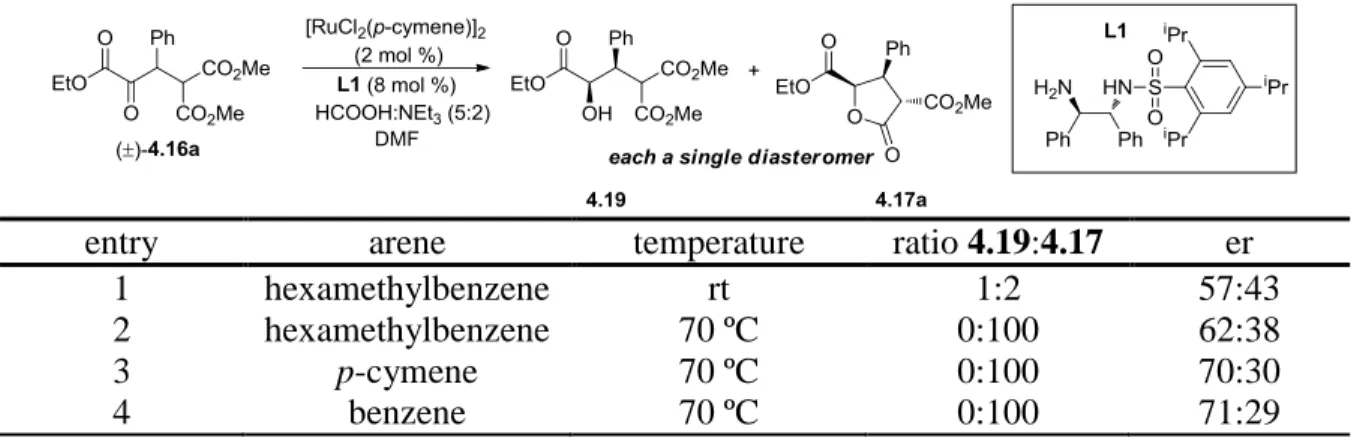
Table 4-3 Optimization of the DKR-ATH Reaction Conditions ... 103
Table 4-4 Evaluation of Chiral Diamine Ligands ... 104
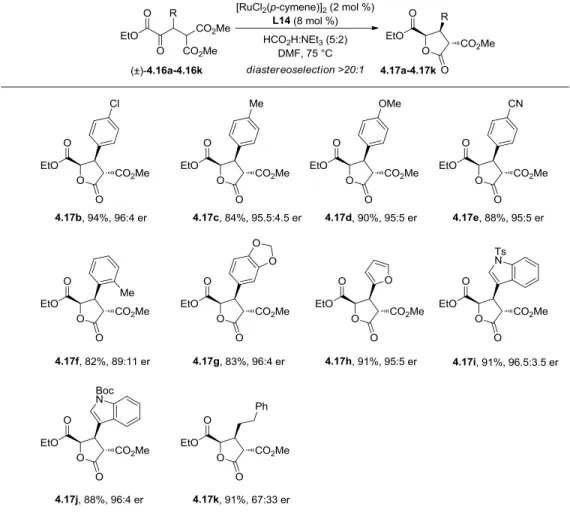
Table 4-5 DKR-ATH Substrate Scope ... 107
Table 4-6 Scope of the Glyoxylate Stetter Reaction with Enones ... 110
Table 4-7 Optimization of the Chemoselective DKR-ATH of -Diketo Esters... 111
xv
LIST OF FIGURES AND SCHEMES
Figure 1-1 Synthetic Utility of a-Keto Esters ... 2
Scheme 1-1 -Keto Ester Synthesis using Diethyl Oxalate ... 3
Scheme 1-2 -Keto Ester Synthesis via Friedel-Crafts Acylations with Ethyl Oxalyl Chloride ... 4
Scheme 1-3 Acylation of Acyl Anion Equivalents with Ethyl Chloroformate ... 5
Scheme 1-4 Pummerer Rearrangement of (Methylthio)Methyl Sulfoxides ... 6
Scheme 1-5 Nucleophilic Addition to Ethyl Cyanoformate ... 7
Scheme 1-6 PEP Homologs Derived from -Hydroxy Phosphonates ... 8
Scheme 1-7 PEP Homologs Derived from -Chloro Glycidic Esters ... 9
Scheme 1-8 Synthesis of -Hydroxy -Keto Esters using Glyoxylate Anion Equivalents ... 10
Scheme 1-9 -Keto Ester Synthesis via Ozonolysis ... 11
Scheme 1-10 -Hetero -Keto Esters From Nucleophilic Ring-Opening of Glycidic Esters ... 12
Scheme 1-11 Chiral -Keto Esters Using RAMP/SAMP Hydrazones ... 13
Scheme 1-12 Chiral -Keto Esters via Asymmetric Conjugate Addition to Nitroalkenes ... 14
Scheme 1-13 Chiral -Keto Esters via Chiral Dithianes ... 15
Scheme 1-14 Chiral -Keto Esters via an Asymmetric Claisen Rearrangement ... 16
Scheme 1-15 Chiral -Keto Esters Using Chiral Aminonitriles ... 17
Scheme 1-16 Chiral -Keto Esters via Organocatalysis ... 18
Scheme 1-17 Ethyl Diazoacetate as a Glyoxylate Anion Equivalent ... 19
Scheme 1-18 Enantioselective Glyoxylate Stetter with Alkylidene Malonates and Ketoamides .... 20
Figure 2-1 Normal vs Umpolung Reactivity ... 26
Scheme 2-1 Acylation of Electrophiles with Acyl Anion Equivalents ... 27
xvi
Scheme 2-3 Cross Silyl Benzoin Reaction Mechanism ... 29
Scheme 2-4 Metallophosphite-Catalyzed Cross Silyl Benzoin and Sila-Stetter Reactions ... 30
Figure 2-2 Inspiration for the Development of the Glyoxylate Benzoin Reaction ... 30
Scheme 2-5 Development of Silyl Glyoxylates ... 31
Scheme 2-6 Synthetic Utility of Silyl Glyoxylates in Three-Component Couplings... 32
Scheme 2-7 Silyl Glyoxylates as Glyoxylate Anion Equivalents ... 33
Scheme 2-8 Initial Studies with Lanthanide Isopropoxide/Acetone Cyanohydrin Catalyst System ... 35
Scheme 2-9 Scope of Aldehyde Glyoxylation ... 38
Scheme 2-10 Deuterium Labeling Studies ... 39
Scheme 2-11 Asymmetric Attempts Using Yb(Salen)-Complex ... 39
Scheme 2-12 Use of Chiral Silyl Glyoxylates in the Glyoxylate Benzoin Reaction ... 40
Scheme 2-13 Synthesis of -Silyloxy -Amino Esters... 41
Figure 3-1 CC Bond Cleavage Strategies in Organic Synthesis ... 59
Figure 3-2 Notable Glyoxylate Anion Equivalents ... 60
Scheme 3-1 Oxidative Cleavage of -Keto Esters ... 60
Scheme 3-2 Proposed Mechanism for the Oxidative Cleavage of -Substituted -Keto Esters ... 61
Scheme 3-3 Proposed Strategy to Access Enantioenriched -Keto Esters ... 62
Scheme 3-4 Formal Alkene Nucleophilic Glyoxylation: Nitrostyrene ... 63
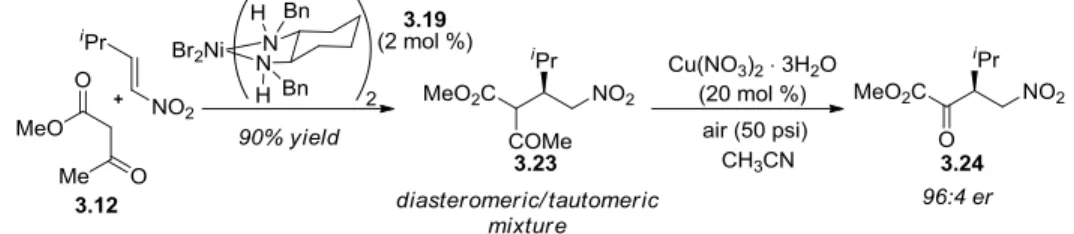
Scheme 3-5 Formal Alkene Nucleophilic Glyoxylation: Alkyl Nitroolefins ... 64
Scheme 3-6 Initial Conjugate Glyoxylation Studies ... 65
Scheme 3-7 Site Selective Ketalization/Deacylation of Cyclic Enones ... 66
Scheme 3-8 Formal Asymmetric Conjugate Glyoxylation Attempts with Malonate Derivatives . 67 Scheme 3-9 Formal Conjugate Glyoxylation of Acyclic Micahel Acceptors ... 68
xvii
Scheme 3-11 Formal Asymmetric Conjugate Glyoxylation/Ketone Acetate
Aldolization Sequence ... 69
Scheme 3-12 Merged Aerobic Deacylation/Epoxidation ... 70
Scheme 3-13 Problematic Substrates for the Aerobic Deacylation ... 72
Scheme 4-1 Classical and Kinetic Resolutions ... 92
Scheme 4-2 Kinetics of a Dynamic Kinetic Resolution ... 93
Scheme 4-3 First Example of DKR of -Keto Esters ... 95
Scheme 4-4 Synthetic Applications of Ru(II) Catalyzed DKR of -Keto Esters ... 96
Scheme 4-5 (Dynamic) Asymmetric Transfer Hydrogenation of Ketones ... 96
Scheme 4-6 Proposed Dynamic Kinetic Resolution of -Keto Esters ... 97
Scheme 4-7 Competing Pathways for the DKR of -Silyloxy -Keto Esters ... 98
Scheme 4-8 Attempted DKR of b-Silyloxy a-Keto Esters via Asymmetric Hydrogenation ... 98
Figure 4-1 DKR-ATH of -Keto Esters—Modular, Green de novo Approach to Enantioenriched -Butyrolactones ... 101
Scheme 4-9 Evaluation of a-Naphthyl Diamine Ligands ... 105
Scheme 4-10 Synthesis and Evaluation of m-Terphenyl Sulfonamide Ligands ... 106
Figure 4-2 Absolute Stereochemical Determination of g-Butyrolactones Thru Single X-Ray Diffraction Analysis of 4.17b and Key nOe Interactions ... 107
Scheme 4-11 Catalyst Efficiency and Scalability ... 108
Scheme 4-12 Synthetic Utility of Lactone Products ... 109
Scheme 4-13 Stereochemical Analysis of -Hydroxy Esters ... 113
Scheme 4-14 Probing the Selectivity of L14 ... 113
xviii
LIST OF ABBREVIATIONS AND SYMBOLS
2D-NMR two-dimensional nuclear magnetic resonance
Ac acetate
Ar aryl
aq aqueous
ATH asymmetric tranfer hydrogenation
atm atmospheres
BINAP 2,2'-bis(diphenylphosphino)-1,1'-binaphthyl
BINOL 1,1'-Bi-2-naphthol
Bn benzyl
BOC benzyloxycarbonyl
br broad
br s broad singlet
n
Bu normal-butyl
t
Bu tert-butyl
Bz benzoyl
CAN ceric ammonium nitrate
CSA camphorsulfonic acid
13
C NMR carbon nuclear magnetic resonance spectroscopy
C–C carbon-carbon bond
cat catalytic amount or catalyst
conv conversion
COSY correlated spectroscopy
xix
d doublet or days
DBU 1,8-diazabicyclo[5.4.0]undec-7-ene
DCC N,Nʹ-dicyclohexylcarbodiimide
dd doublet of doublet
DDQ 2,3-dichloro-5,6-dicyanobenzoquinone ddt doublet of doublet of triplets
DIBALH diisobutylaluminum hydride
dq doublet of quartet
DMAP 4-N,N-dimethylaminopyridine
DME dimethoxyethane
DMF N,N-dimethylformamide
DMSO dimethyl sulfoxide
DKR dyamic kinetic resolution
dr diastereomeric ratio
dt doublet of triplet
E+ or El electrophile
eq equation
equiv equivalents
er enantiomeric ratio
ESI electrospray ionization
Et ethyl
Et2O diethyl ether
EtOAc ethyl acetate
EWG electron withdrawing group FID flame ionization detector
xx 1
H NMR proton nuclear magnetic resonance spectroscopy
n-hexanal normal-hexanal
HOAc acetic acid
HPLC high performance liquid chromatography HRMS high resolution mass spectroscopy
Hz hertz
IR infrared spectroscopy
J coupling constant
kcal kilocalorie
L or Ln ligand
LA Lewis acid
LAH lithium aluminum hydride
LRMS low resolution mass spectroscopy
M metal or molarity
m multiplet
Me methyl
MeCN acetonitrile
Menth menthyl
MeOH methanol
2-MeTHF 2-methyltetrahydrofuran
mg milligram
MHz megahertz
min minutes
mL milliliter
mmol millimole
xxi
MPM para-methoxybenzyl
MPV Meerwein-Ponndorf-Verley
n number of atoms or counterions
NBS N-bromosuccinimide
NIS N-iodosuccinimide
NBSH o-nitrobenzenesulfonylhydrazide
nd not determined
NMO N-methylmorpholine-N-oxide NMP N-methylpyrrolidone
nOe nuclear Overhauser enhancement
NOESY nuclear Overhauser enhancement spectroscopy
nr no reaction
Nu nucleophile
OO Oppenauer Oxidation
PCC pyridinium chlorochromate
PG protecting group
Ph phenyl
ppm parts per million
PPTS pyrdinium p-toluenesulfonate
i
Pr iso-propyl
q quartet
R substituent
Rf retention factor
rac racemic
RCHO aldehyde
xxii
s singlet
SFC supercritical fluid chromatography SN2 bimolecular nucleophilic substitution
T temperature
t triplet
t1/2 half-life
tr retention time
TBAF tetrabutylammonium fluoride TBS tert-butyldimethylsilyl TBDPS tert-butyldiphenylsilyl
TBSOTf tert-butyldimethylsilyl trifluoromethanesulfonate
TEA triethylamine
TEMPO tetramethylpiperidine-N-oxide
TES triethylsilyl
TMS trimethylsilyl
Tf trifluoromethanesulfonyl
THF tetrahydrofuran
TLC thin-layer chromatography
TMS trimethylsilyl
Tr trityl or triphenylmethyl triflate trifluoromethanesulfonate
Ts para-toluenesulfonyl
UV ultraviolet
X anionic ligand, halide, substituent, or number Xc
*
chiral auxiliary
xxiii
Ǻ Ǻngstrom
[] optical rotation
δ chemical shift or partial charge
1
CHAPTER ONE
EXTANT METHODS FOR THE PREPARATION OF -KETO ESTERS
1.1 Introduction
-Keto acids are of considerable importance in biological systems as they play
integral roles in various metabolic and biosynthetic pathways.1 Pyruvic acid is the simplest derivative, which in its active form as phosphoenol pyruvate (PEP) 1.1, undergoes aldolase-catalyzed CC bond formation to aldehydes in the biosynthesis of the sialic and ulosonic
acids (Figure 1a).2 Important natural products including N-acetylneuraminic acid (NeuAc), 3-deoxy-D-manno-2-octulosonic acid (KDO), and 3-deoxy-D-arabino-2-heptulosonic acid 7-phosphate (DAHP) are produced in this manner. These are distinct classes of carbohydrates which exhibit a wide range of biological activity due to their participation in cell surface interactions. Accordingly, the -keto acid subunit has been incorporated into peptidic
molecules to generate potent inhibitors of proteolytic enzymes such as -chymotrypsin and the cysteine proteinase calpain.3 The ability to prepare these and other synthetic analogues to evaluate structure-activity relationships hinges upon convenient synthetic methods for the direct incorporation of the -keto acid moiety.
For the synthetic chemist, the -keto ester presents itself as a unique and versatile functional group.4-5 Due the inductive effects of the adjacent ester and opportunities for chelation, -keto esters display an enhanced electrophilicity relative to a normal ketone.6
2
a result, they react readily with nucleophiles, providing access to a number of useful organic
building blocks including -hydroxy7 and -amino esters8 (Figure 1b). In addition, subsequent derivatization of the pendant ester permits additional opportunities to introduce molecular complexity; however, despite these useful attributes, the development of a general
method for the de novo introduction of the -keto ester functionality has not been realized, particularly for those -keto esters bearing a -stereogenic center. The purpose of this initial
chapter is to provide an overview of the synthetic methods available for the preparation of
-keto esters, with a particular focus on strategies to incorporate a stereocenter at the -position.
3
1.2 Synthetic Strategies for the Preparation of Achiral -Keto Esters
1.2.1 Oxalic Acid Derivatives
The most direct and widely used method for the preparation of simple aryl and alkyl -keto esters is the addition of an organometallic to diethyl oxalate 1.2 (Scheme 1-1). This
approach was first disclosed by Wieland9 using Grignard nucleophiles, but the reaction was reported to proceed in low yield. A number of modified procedures have since been developed that deliver synthetically useful yields and the method that is commonly employed uses a slight excess of Grignard reagent (1.2 equivalents) at low temperatures.10 Notably, over-addition to the ester is not observed; this is attributed to the chelation-stabilized tetrahedral intermediate allowing the ketone to only be exposed after hydrolytic work-up.
The isolated yields for alkyl -keto esters tend to be lower than aryl derivatives due to the volatility of the products. This methodology is not limited to diethyl oxalate and Grignards; dimethyl and dibenzyl oxalates and organolithium, –sodium, and –potassium nucleophiles
are also commonly used. If the -keto acid is desired, tert-butyl oxalyl imidazole11 1.3 is used due to the facile acid-catalyzed cleavage of the tert-butyl ester.
4
The Friedel-Crafts acylation with ethyl oxalyl chloride 1.4 has found widespread use
in the preparation of a variety of -keto ester substrates (Scheme 1-2). In addition to aryl nucleophiles, activated 1-alkenes, including dithio acetals, vinyl sulfides, and N-vinylamides,
readily react to provide ,-unsaturated -keto esters;12 enol ethers13 and enamines14 react
analogously to give ,-dioxoesters and ,-enamino esters respectively. This methodology has been proven to be particularly useful for the acylation of diazoalkanes15 which gives access to pyruvate and its higher homologues and has been strategically used in the chain elongation of diazo sugar derivatives.16
Scheme 1-2. -Keto Ester Synthesis via Friedel-Crafts Acylations with Ethyl Oxalyl
Chloride
1.2.2 Acylation Reactions 1.2.2.1 Umpolung Reagents
The acylation of acyl anion equivalents with ethyl chloroformate is another common
5
display umpolung reactivity (polarity reversal of functional groups) following thiophilic addition of Grignard reagents to furnish magnesio dithio acetals 1.6 (Scheme 1-3a).17 These intermediates readily react with ethyl chloroformate to provide the corresponding -keto ester following deprotection. Corey and Seebach18 have demonstrated that lithiated dithianes
1.7 derived from aldehydes react in a similar manner and the -keto acid can be obtained directly using carbon dioxide as the terminal electrophile (Scheme 1-3b). Comparable reactivity of lithiated dimethylamino nitriles 1.8 has been reported by Reutrakul19 (Scheme 1-3c). Additionally, the “inverse” of these reactions has been reported by Eliel20
who demonstrated that 1,3-dithiane-2-sodium-2-carboxylates 1.9 (glyoxylate anion equivalents) undergo alkylation with various alkyl halides (Scheme 1-3d).
6 1.2.2.2 Pummerer Rearrangement
Ogura has established (methylthio)methyl p-tolyl sulfones 1.10 as -keto ester surrogates following acylation with aromatic and aliphatic carboxylic esters (Scheme 1-4).21 Oxidation of the methyl thiol to the sulfone 1.11 with hydrogen peroxide and acetic acid induces a Pummerer rearrangement with concomitant elimination of p-tolyl sulfinic acid
yielding the corresponding -keto thiol ester 1.12. The methyl ester 1.13 is obtained following further oxidation of the thiol and subsequent treatment with hydrogen chloride in refluxing methanol. Alternatively, enamine 1.15, derived from the treatment of (methylthio)methyl sulfoxide 1.14 with sodium hydride and the appropriate nitrile, can be oxidatively transformed to the corresponding -keto ester upon treatment with copper(II) chloride and methanol via a similar reaction pathway (hydrolysis followed by a Pummerer rearrangement and subsequent elimination of methanethiol).22
Scheme 1-4. Pummerer Rearrangement of (Methylthio)Methyl Sulfoxides
1.2.2.3 Divergent Reactivity of Ethyl Cyanoformate
7
results in addition to the nitrile with organocadmium reagents (prepared by transmetallation
of Grignards with cadmium bromide), which upon hydrolysis affords the -keto ester (Scheme 1-5a).23 This difference in reactivity is explained in terms of hard and soft nucleophilicity. Organocadmium reagents are softer than Grignards, and in a screen with organomagnesium, –zinc, and –mercury reagents, organocadmium nucleophiles proved to be
superior in all cases.24 Axiotis has prepared -keto esters in a similar manner from the addition of organolithium reagents to triethoxyacetonitrile 1.17 (Scheme 1-5b).25
Scheme 1-5. Nucleophilic Addition to Ethyl Cyanoformate
1.2.3 PEP Equivalents
Due to the importance of PEP in biological systems, the development of chemical equivalents to transfer pyruvate units directly to electrophiles has been an active area of research. The one carbon homologation of aldehydes via Horner-Wadsworth-Emmons
reaction with -hydroxy phosphonacetates 1.18, disclosed by Nakamura in 1981,26 is the
8
silyl enol ether. This strategy has been applied towards the synthesis of biologically active
natural products. Doutheau used this method to directly introduce the -keto acid moiety in the total synthesis of deoxy-NeuAc 1.19.27 This approach has also been utilized by Overman in the assembly of the central cis-3-azobicyclo [3.3.0]octane core 1.20 of the structurally complex natural products palau’amine and styloguanidine.28
The key step involves an
intramolecular cycloaddition with imine dipoles generated from the condensation of the -keto ester and thiosemicarbazide.
Scheme 1-6. PEP Homologs Derived from -Hydroxy Phosphonates
Phosphoenolpyruvate homologs can be directly obtained by treating -chloro glycidic
esters 1.22, readily available from the Darzens condensation of dichloroacetate 1.21, with trialkyl phosphites (Scheme 1-7).29 Nucleophilic opening of these intermediates typically
9
Bodalski proposes that nucleophilic acttack of the phosphite on the chlorine, rather than the epoxide occurs. This opens the oxirane to form chlorophosphonium enolate 1.23 which gives PEP equivalent 1.24 upon dealkylation.
Scheme 1-7. PEP Homologs Derived from -Chloro Glycidic Esters
1.3 Synthetic Strategies for the Preparation of -Stereogenic -Keto Esters
1.3.1 Racemic Methods
The majority of the aforementioned methods for the preparation of -keto esters (acylations and nucleophilic additions) are not viable for the introduction of a -stereogenic
center. The most direct approach to access this class of compounds is the addition of reagents that function as glyoxylate anion equivalents to -electrophiles. This strategy has been used
10
addition, 1.26 undergoes 1,4-conjugate addition to -unsaturated ketones to provide -alkyl substrates.
Scheme 1-8. Synthesis of -Hydroxy -Keto Esters Using Glyoxylate Anion Equivalents
Another popular technique that indirectly affords -stereogenic -keto esters is the
ozonolysis of -methylene esters (Scheme 1-9). Coelho has shown the oxidation of
Morita-Baylis-Hillman (MBH) adducts 1.27 provides access to both -silyloxy and -hydroxy substrates and displays a broader substrate scope than the abovementioned methods (Scheme 1-9a).32 In studies directed toward developing new therapeutic glutamic acid analogs, Gefflaut developed a similar method in which enol acetates 1.28 derived from -substituted
-keto esters are cleaved to provide -alkyl derivatives (Scheme 1-9b).33
Furthermore,
Thompson disclosed that -aryl -keto esters can be accessed using this strategy via
11
products to the -keto ester was initially attempted using the Nef reaction, but this proved unsuccessful; the desired products were obtained by deprotonation to generate the nitronate anions followed by in situ ozonolysis.
Scheme 1-9. -Keto Ester Synthesis via Ozonolysis
-Chloro glycidic esters are most commonly used for the preparation of -halo
-keto esters 1.30 by the addition of exogenous halide (Scheme 1-10a).35 These substrates are particularly useful intermediates as they are immediately amenable to secondary transformations via SN2 displacement. Additionally, in contrast to trialkyl phosphites, the
addition of nitrogen36 and sulfur37 nucleophiles to 1.22 provides -amino and -sulfenyl
12
Scheme 1-10. -Hetero -Keto Esters From Nucleophilic Opening of Glycidic Esters
1.3.2 Asymmetric Methods
The preparation of enantioenriched -stereogenic -keto esters is inherently challenging due to their high CH acidity, which renders these products susceptible to
racemization under both acidic and basic conditions. Additionally, the asymmetric methods that have been developed to access these products do not have widespread applicability due to case-dependent disadvantages and/or limitations. Of the known enantioselective procedures, only one allows for the direct incorporation of the glyoxylate unit and many require a chiral auxiliary to control the stereochemistry at the -stereocenter.
1.3.2.1 Chiral Enolates
The first enantioselective -keto ester synthesis was reported by Enders who utilized
pyruvate derived RAMP/SAMP hydrazones (chiral PEP equivalents) 1.33 which undergo alkylation with a number of alkyl halides (Scheme 1-11).39 The -keto ester precursors 1.32
13
the resulting alkylated products 1.36 were converted to the corresponding -alkyl -keto esters by either oxidative cleavage with ozone or treatment with boron trifluoride-ether/paraformaldehyde with no loss in optical purity.
Scheme 1-11. Chiral -Keto Esters Using RAMP/SAMP Hydrazones
Sodeoka recently reported a similar strategy in a catalytic enantio- and
diastereoselective (up to 94% ee and >30:1 dr) conjugate addition of -keto esters to
nitroalkenes (Scheme 1-12).40 The -keto ester precursors were prepared in one step from commercial di-tert-butyl oxalate and the corresponding alkyl Grignard according to the
procedure developed by Weinstock10 (Section 1.2.1). Mild activation of the -keto ester was
14
proceeds using only 1 mol % of catalyst and 5 mol % triethylamine (to facilitate formation of
the enolate) and displays broad generality with respect to the -keto ester and nitroalkene;
however, the scope is also limited to alkyl substituents at the -stereocenter. The synthetic utility of the -disubstituted -keto esters was demonstrated in the asymmetric synthesis of
the biologically interesting kainic acid analogue 1.39, a potent glutamate receptor agonist.
Scheme 1-12. Chiral -Keto Esters via Asymmetric Conjugate Addition to Nitroalkenes
The use of chiral dithianes to prepare enantioenriched -keto esters has been reported
by Tyrell (Scheme 1-13).41 The -stereocenter was installed via alkylation of a chiral enolate using Evans’ auxiliary 1.40. Following cleavage of the auxiliary, primary alcohol 1.41 was
1,3-15
propanedithiol afforded chiral dithiane 1.42 with no significant loss in enantiopurity. Acylation with methyl chloroformate followed by dethioacetalization provided the desired
chiral -keto esters. This method has limited practicality due the redox manipulations required to unmask the -keto ester moiety (amide to alcohol to aldehyde to ketone).
Scheme 1-13. Chiral -Keto Esters via Chiral Dithianes
1.3.2.2 Asymmetric Claisen Rearrangement
The first catalytic asymmetric synthesis of -alkyl -keto esters was reported by Hiersemann in a Cu(II)-bis(oxazoline) catalyzed enantioselective Claisen rearrangement of 2-alkoxycarbonyl-substituted allyl vinyl ethers (Scheme 1-14a).42-43 The reactant substrates 1.43 include two stereogenic double bonds which provides access to highly functionalized
- substituted -keto esters 1.45 with high yield (>95%) and remarkable enantio- and
diastereoselectivity (up to 99:1 er and 99:1 de). The synthetic utility of the -keto ester products is highlighted by the ability of 1.45 to undergo a diastereoselective reduction to the -hydroxy ester 1.46 and Wittig methylenation to provide highly functionalized
16
it should be noted that five synthetic steps, each requiring purification (three steps overnight), are necessary for the preparation of the 2-alkoxycarbonyl-substituted allyl vinyl ethers.44 Jacobsen later demonstrated that C2-symmetrical guanidinium catalyst 1.48 induced an
asymmetric Claisen rearrangement (via hydrogen bonding) with similar substrates albeit with lower levels of enantioselectivity (Scheme 1-14b).45 Nevertheless, only three synthetic steps to access the starting materials employed are required.
17 1.3.2.3 Asymmetric Nucleophilic Glyoxylation
The first formal asymmetric nucleophilic glyoxylation was accomplished by Enders
utilizing the chiral metalated -aminonitrile 1.49 in addition reactions to nitroalkenes
providing -nitro -alkyl -keto esters 1.50 (Scheme 1-15).46 The initial Michael addition proceeded with good diastereoselectivities (75-96% de crude, >98% after column chromatography), but cleavage of the aminonitrile to unmask the ketone proved difficult; subjection of the Michael adduct to a solution of 2.0 M silver nitrate for seven days was
necessary to obtain reasonable conversions (89-94%) affording the -keto ester products in modest yields (59-74%). In addition this method displays a limited substrate scope (5
examples), as only alkyl substituents at the -position are tolerated due the tendency of
-aryl products to readily eliminate nitrous acid on silica gel to form -unsaturated -keto esters (vide infra).
Scheme 1-15. Chiral -Keto Esters Using Chiral Aminonitriles
Enders took a similar approach by employing an achiral aminonitrile 1.51 in an organocatalytic nucleophilic glyoxation of -unsaturated aldehydes via iminium activation
18
with sodium borohydride followed by protection with tert-butyldimethylsilyl chloride. This requirement resulted in low isolated yields of the -alkoxy -keto ester products. Only alkyl
-unsaturated aldehydes gave reasonable enantioselectivities as their aromatic counterparts
were readily racemized under the reaction conditions.
Scheme 1-16. Chiral -Keto Esters via Organocatalysis
Commercial ethyl diazoacetate 1.54 has been utilized as a glyoxylate anion equivalent in an asymmetric direct aldol reaction with aldehydes providing access to enantioenriched
-hydroxy -keto ester derivatives following oxidation (Scheme 1.15a). This method was first disclosed by Wang7 who utilized Kobayashi’s zirconium-BINOL catalyst which facilitates the reaction by activating both the aldehyde and ethyl diazoacetate. A variety of aromatic and
19
Scheme 1-17. Ethyl Diazoacetate as a Glyoxylate Anion Equivalent
The asymmetric intermolecular Stetter reaction with glyoxamides and alkylidene malonates developed by Rovis is the most direct method for the preparation of -stereogenic
-keto acid derivatives, as the glyoxylate unit is directly incorporated into the product
(Scheme 1-18).49 High enantioselectivities in the addition of morpholine-derived glyoxamide 1.55 to a series of tert-butyl alkylidene malonates 1.57 were observed by using the chiral triazolium 1.56. To avoid racemization of the -keto amide products, it was necessary to conduct the reaction at low temperature and use a bulky base, diisopropylethylamine, to
generate the active carbene; again, the scope is limited to -alkyl derivatives due to ready
racemization of -aryl derivatives. This method was later extended to alkylidene
ketoamides50 1.58 which incorporates four differentiated carbonyl groups in the -keto amide products 1.59. The asymmetric Stetter reaction proceeded with high enantioselectivity; the excellent level of diastereoselectivity observed is due to the highly diastereoselective
20
products is highlighted by their ease of conversion to -hydroxy amides 1.60 with high diastereoselectivity and subsequent lactonization to trisubstituted -butyrolactones 1.61.
Scheme 1-18. Enantioselective Glyoxylate Stetter with Alkylidene Malonates and
Ketoamides
1.4 Summary and Outlook
The biological importance and synthetic utility of -keto acids and their derivatives has led to the development of various methods for their preparation. While there are a
number of practical procedures in place for the synthesis of achiral -keto esters, a general synthetic method for the introduction of a stereocenter at the -position remains elusive. The
current strategies that are available to access this important class of compounds, particularly asymmetric methods, suffer from several major drawbacks. With the exception of Wang and
Trost, the reaction scopes are restricted to alkyl substituents at the -position due to the vulnerability of enolization at this site. From a practicality standpoint, in many cases, the
21
significant functional group manipulation to reveal the -keto ester is required, and/or the starting materials are not readily available. The methods described in the following chapters seek to address these deficiencies by introducing three simple reagents that function as
22 References
(1) Kiefel, M. J.; von Itzstein, M. Chem. Rev. 2002, 102, 471. (2) Unger, F.M. Adv. Carbohydr. Chem. Biochem. 1980, 38, 323.
(3) Li, Z.; Patil, G. S.; Golubski, Z. E.; Hori, H.; Tehrani, K.; Foreman, J. E.; Eveleth, D. D.; Bartus, R. T.; Powers, J. C. J. Med. Chem. 1993, 36, 3472.
(4) Cooper, A.; Meister, G. A. Chem. Rev. 1983, 83, 321. (5) Kovacs, L. Rec. Trav. Chim. PaysBas 1993, 112, 471.
(6) Evans, D. A.; Burgey, C. S.; Kozlowski, M. C.; Tregay, S. W. J. Am. Chem. Soc.
1999, 121, 686.
(7) Yao, W.; Wang, J. Org. Lett. 2003, 5, 1527.
(8) Kang, Q.; Zhao, Z. A.; You, S. L. Adv. Synth. Catal. 2007, 349, 1657. (9) Wieland, T. Chem. Ber. 1948, 81, 314.
(10) Weinstock, L. M.; Currie, R. B.; Lovell, A. V. Synth. Commun. 1981, 11, 943. (11) Nimitz, J. S.; Mosher, H. S. J. Org. Chem. 1981, 46, 211.
(12) Hojo, M.; Masuda, R.; Sano, H.; Saegusa, M. Synthesis 1986, 137. (13) Tietze, L. F.; Meier, H.; Voss, E. Synthesis 1988, 274.
(14) Arnold, Z. Synthesis 1990, 39.
(15) Ohsumi, T.; Neunhoeffer, H. Tetrahedron, 1992, 48, 5227.
(16) Meyer, B.; Kogelberg, H.; Koll, P.; Laumann, U. Tetrahedron 1989, 30, 6641. (17) Meyers, A. I.; Tait, T. A.; Comins, D. L. Tetrahedron Lett. 1978, 19, 4657. (18) Corey, E. J.; Seebach, D. Angew. Chem. Int. Ed. Engl. 1965, 4, 1077.
(19) Reutrakul, V.; Nimgirawath, V.; Prapnsiri, V.; Srikirin, Y. J. Sci. Soc. Thailand
1982, 8, 215.
23
(21) Ogura, K.; Katoh, N.; Yoshimura, I.; Tsuchihashi, G. Tetrahedron Lett. 1978, 19, 378.
(22) Ogura, K.; Tsuchihashi, G. J. Am. Chem. Soc. 1974, 96, 1960.
(23) Akiyama, Y.; Kawasaki, T.; Sakamoto, M. Chem. Lett. 1983, 12, 1231.
(24) Akiyama, Y.; Takebayashi, S.; Kawasaki, T.; Sakamoto, M. Chem. Pharm. Bull.
1984, 32, 1800.
(25) Axiotis, G. P. Tetrahedron Lett. 1981, 22, 1509. (26) Nakamura, E. Tetrahedron Lett. 1981, 22, 663.
(27) Estenne, G.; Saroli, A.; Doutheau, A. J. Carbohydrate Chemistry, 1991, 10, 181. (28) Overman, L. E.; Rogers, B. N.; Tellew, J. E.; Trenkle, W. C. J. Am. Chem. Soc. 1997,
119, 7159.
(29) Janecki, T.; Bodalski, R. Heteroatom Chemistry 2000, 11, 115.
(30) Takahashi, T.; Okano, T.; Harada, T.; Imamura, K.; Yamada, H. Synlett 1994, 41, 1065.
(31) Reetz, M. T.; Heimbach, H.; Schwellnus, K. Tetrahedron Lett. 1984, 25, 511.
(32) Abella, C. A. M.; Rezende, P.; Lino de Souza, M. F.; Coelho, F. Tetrahedron Lett.
2007, 49, 145.
(33) Xian, M.; Alaux, S.; Sagot, E.; Gefflaut, T. J. Org. Chem. 2007, 72, 7560. (34) Thompson, W.; Buhr, C. A. J. Org. Chem. 1983, 48, 2769.
(35) Coutrot, P.; El Gadi, A. Synthesis, 1984, 115.
(36) Amos, J.; Castro, B. Bull. Soc. Chim. Fr. 1991, 128, 550.
(37) Komiyama, T.; Takaguchi, Y.; Tsuboi, S. Synthetic Communications 2006, 36, 265. (38) He, S. W.; Lai, Z.; Yang, D. X.; Hong, Q.; Reibarkh, M.; Nargund, R. P.; Hagmann,
W. K. Tetrahedron Lett. 2010, 33, 4361.
(39) Enders, D.; Dyker, H.; Raabe, G. Angew. Chem. Int. Ed. Engl. 1992, 31, 618.
24
(41) Tyrell, E.; Skinner, G. A.; Janes, J.; Milsom, G. Synlett, 2002, 1073.
(42) Abraham, L.; Czerwonka, R.; Hiersemann, M. Angew. Chem. Int. Ed. 2001, 40, 4700. (43) Abraham, L.; Korner, M.; Schwab, P.; Hiersemann, M. Adv. Synth. Catal. 2004, 346,
1281.
(44) Hiersemann, M. Synthesis 2000, 1279.
(45) Uyeda, C.; Jacobsen, E. N. J. Am. Chem. Soc. 2008, 130, 9228.
(46) Enders, D.; Bonten, M. H.; Raabe, G. Angew. Chem. Int. Ed. 2007, 46, 2314. (47) Enders, D.; Bonten, M. H.; Raabe, G. Synlett 2007, 885.
25
CHAPTER TWO
CATALYTIC NUCLEOPHILIC GLYOXYLATION OF ALDEHYDES
2.1 Introduction
2.1.1 Umpolung Reactivity
The term umpolung is defined as “any process by which the normal alternating donor
and acceptor reactivity pattern of a chain, which is due to the presence of O or N heteroatoms, is interchanged.”1
This concept was first introduced by Seebach to describe the latent electronic character at carbon in a heteroatom substituted framework, in which the inductive polarization of the more electronegative heteroatom (O, N, etc.) places a + on the
ipso carbon and a - on the -position (Figure 2-1). 2 The incorporation of-bonds allows further delocalization of the partial charges via resonance to more remote sites. Based on this analysis, the normal polarity mode of carbonyls provides access to -hydroxy carbonyl (aldol
reaction), -amino carbonyl (Mannich reaction), and 1,5-dicarbonyl (Michael reaction)
26
Figure 2-1. Normal vs. Umpolung Reactivity
The conversion of an aldehyde into an umpolung reagent is typically accomplished through dithiane3 and protected cyanohydrin4 derivatives (Scheme 2-1). The two anion-stabilizing sulfur atoms of dithiane 2.1 and the electron-withdrawing properties of the nitrile
27
Scheme 2-1. Acylation of Electrophiles with Acyl Anion Equivalents
2.1.2 Acyl Anion Catalysis
The above shortcomings have been circumvented with the development of reaction manifolds that do not necessitate the stoichiometric generation of the acyl anion equivalent, viz., the benzoin reaction.5 This reaction is mediated by cyanide or heteroazolium carbenes
and allows the direct coupling of two aldehydes to afford -hydroxy ketones.6 The mechanism for this reaction, proposed by Lapworth,7 is shown in Scheme 2-2. The conversion of the aldehyde 2.6 into the requisite nucleophilic reagent 2.8 involves nucleophilic addition of the Lewis basic catalyst (LB) to the carbonyl followed by migration of hydrogen from carbon to oxygen (2.7→2.8). The key productive bond construction is the
28
Scheme 2-2. General Mechanism for Acyl Anion Catalysis
The utility of the traditional benzoin reaction is well documented, but its major limitation arises when coupling two different aldehydes (cross benzoin). The observed product distribution is thought to be determined by the relative stability of the four possible products, which typically results in product mixtures and/or inaccessibility to the higher energy regioisomer (Scheme 2-3). Our group has shown that the reaction can effectively be placed under kinetic control by generation of the acyl anion equivalent from acyl silanes8 2.10 (aldehyde surrogate) in the cyanide-catalyzed cross silyl benzoin reaction.9 The addition of a nucleophilic catalyst (cyanide or metallophosphite) to 2.10 triggers a [1,2]-Brook rearrangement,10 the migration of silicon from carbon to oxygen (2.11→2.12), which generates (silyloxy)nitrile anion 2.12. The driving force for the Brook rearrangement is the formation of the stronger siliconoxygen bond at the expense of the weaker siliconcarbon
29
regioisomeric benzoin product can be accessed through the judicious choice of acyl silane and aldehyde.
Scheme 2-3. Cross Silyl Benzoin Reaction Mechanism
30
Scheme 2-4. Metallophosphite-Catalyzed Cross Silyl Benzoin and Sila-Stetter Reactions
While each of these reactions display a broad substrate scope, the acyl donors tend to be relatively simple and devoid of functionality for further derivatization. Therefore, the introduction of carboxyl functionality adjacent to the ketone would be highly desirable and significantly expand the product types delivered by this reaction class. This chapter delineates the development of a glyoxylate benzoin reaction utilizing silyl glyoxylates 2.18 that provides facile access to a variety of -silyoxy -keto esters 2.17.
31 2.2 Background
2.2.1 Development of Silyl Glyoxylates
Acyl silanes provide a center of reactivity for both nucleophiles and electrophiles by way of the [1,2]-Brook rearrangement. The key (silyloxy)anion intermediate 2.19 in the above catalytic reactions is generated upon silyl migration and is facilitated by stabilization of the nascent carbanion by the nitrile or phosphonate groups, which are introduced into the molecule as the nucleophilic catalyst. It was speculated that silyl migration could also be promoted by incorporating an electron-withdrawing moiety directly into the acyl silane, thereby broadening the scope for the type of nucleophiles that can participate in this reaction manifold. Accordingly, silyl glyoxylates15 2.18 were identified as reagents that could fulfill this role.
Scheme 2-5. Development of Silyl Glyoxylates
32
derivatives 2.22. In most cases, the secondary electrophile and the silyl glyoxylate are present
in the reaction simultaneously, exemplifying the unique reactivity of this -dicarbonyl. Highly reactive electrophiles such as aldehydes and nitroalkenes do not compete with 2.20 for nucleophilic addition and the latent glycolate intermediate reacts with the desired secondary electrophile rather than another molecule of 2.20. Scheme 2-6 illustrates the diversity of complex building blocks that can arise from this multicomponent coupling strategy.17
Scheme 2-6. Synthetic Utility of Silyl Glyoxylates in Three-Component Couplings
2.2.2 Origin of the Title Reaction
All of the reported reactions involving silyl glyoxylates incorporate the nucleophile as a stoichiometric component. It was postulated that divergent reactivity could be achieved in the presence of a nucleophilic catalyst and aldehyde to access -silyloxy -keto esters via a
silyl benzoin reaction mechanism (Scheme 2-7a). In this context, silyl glyoxylates would function as a synthetic equivalent for the glyoxylate anion synthon. Alternate methods for the preparation of -hydroxy -keto acid derivatives were discussed in the previous chapter and
33
incorporated into the product so the implementation of this method would constitute the first catalytic, and hence most direct, method for the preparation of this class of -keto esters.
Scheme 2-7. Silyl Glyoxylates as Glyoxylate Anion Equivalents
2.3 Results and Discussion
2.3.1 Identification of a Viable Nucleophilic Catalyst
To assess the viability of the proposed reaction, various metal cyanides were evaluated as the nucleophilic catalyst with silyl glyoxylate 2.20 and benzaldehyde as the test substrate. Sodium cyanide, potassium cyanide, and potassium cyanide/18-crown-6 complex
were initially screened. Under a variety of reaction conditions, the desired -keto ester 2.17
was not obtained; instead, the reaction yielded -silyoxy -keto ester 2.23 (Table 2-1). This
34
Table 2-1.Evaluation of Metal Cyanides
entry R MCN solvent temp % yield (2.23)
1 Ph NaCN DMF rt 53
2 Ph NaCN DMF 0 ºC ND
3 Ph NaCN DMF -78 ºC ND
4 Ph KCN DMF rt ND
5 Ph [18]crown6/KCN THF rt ND
6 4Cl-Ph NaCN DMF rt 45
7 2-furyl NaCN DMF rt 40
8 2-thienyl NaCN DMF rt 42
9 iPr NaCN DMF rt 35
Lanthanide isopropoxides have been reported as efficient catalysts in the transhydrocyanation from acetone cyanohydrin to aldehydes and ketones.18 Subjection of silyl glyoxylate and benzaldehyde to the reported reaction conditions, 10 mol % Yb(OiPr)3
35
Scheme 2-8. Initial Studies with Ytterbium Isopropoxide/Acetone Cyanohydrin Catalyst
System
We initially screened all available lanthanide isopropoxides and the results are summarized in Table 2-2. With the exception of dysprosium (entry 7), all the lanthanides were efficient in promoting the reaction; however, the highest diastereomeric ratio observed was 1.4:1 (entries 8-9). Decreasing the temperature to 0 ºC had no effect (entry 9) and at -78 ºC no reaction was observed (entry 10). Using catalytic quantities of Yb(OiPr)3(20 mol %)
yielded a 5:1 mixture of the desired -keto ester 2.17a and the cyanohydrin, albeit in a 1.2:1
36
Table 2-2.Evaluation of Lanthanide Isopropoxides
entry Ln(OiPr)3 temperature d.r.
1 Yb(OiPr)3 rt 1.2 : 1
2 Y(OiPr)3 rt 1 : 1
3 Er(OiPr)3 rt 1 : 1
4 Gd(OiPr)3 rt 1.4 : 1
5 Nd(OiPr)3 rt 1.2 : 1
6 Sm(OiPr)3 rt 1.4 : 1
7 Dy(OiPr)3 rt NR
8 Pr(OiPr)3 rt 1.4 : 1
9 Pr(OiPr)3 0 °C 1.4 : 1
10 Pr(OiPr)3 -78 °C NR
Having determined a successful means of promoting the desired reactivity, conditions
for retrocyanation to deliver the desired -silyoxy -keto ester 2.17a were explored. Initial efforts employed traditional methods by subjecting cyanohydrin 2.25 to basic conditions, but either starting material was recovered (entry 1) or decomposition occurred (entry 2). It is likely that cyanide expulsion occurs in the presence of potassium carbonate, but in the absence of a “cyanide sponge”, addition back into the ketone is inevitable. Several potential
37
Table 2-3. Retrocyanation Attempts
entry base additive solvent observed product(s)
1 K2CO3 none MeOH S.M.
2 NEt3 none MeOH Decomposition
3 none Ag2CO3 PhCH3 S.M.
4 1% NaOH none THF Decomposition
5 2,6-lutidine EtOH 2 : 1 (48 hrs)
(S.M. : ketone) 6 2,6-lutidine AgNO3 EtOH 2.5 : 1 (7 hrs)
2.3.2 Reaction Scope
With the optimal conditions in hand, 20 mol % acetone cyanohydrin, 5 mol% Yb(OiPr)3 and two equivalents of aldehyde, the scope of the electrophiles amenable to the
reaction was investigated (Scheme 2-7). Electron-rich, electron-poor, and heteroaromatic aldehydes all performed well with yields ranging from 80 to 92%. The reaction was also tolerant of aliphatic aldehydes (2.17k and 2.17l), but required Sm(OiPr)3 as the catalyst to
38
Scheme 2-9. Scope of Aldehyde Glyoxylation
2.3.3 Efforts Toward an Enantioselective Catalytic Reaction
The isomerization of 2.17 that was observed in the presence of metal cyanides indicates the lability of the newly formed stereocenter. To determine the stability of this center in the presence of Yb(OiPr)3 and acetone cyanohydrin, deuterium labeling studies
were performed (Scheme 2-8). Deuterated benzaldehyde 2.27 and isobutyraldehyde 2.28 were prepared by reduction of the corresponding methyl esters with deuterated lithium aluminum hydride (LiAlD4), followed by a TEMPO oxidation (Scheme 2-8). When the
39
Scheme 2-10. Deuterium Labeling Studies
We presumed the enantiodetermining step to be the addition of the glycolate enolate to the aldehyde so the ideal chiral catalyst would need to both facilitate the transhydrocyanation and direct the facial selectivity in the subsequent aldol reaction. Our group had previously developed an enantioselective cyanation and acylation of acylsilanes using chiral (salen)metal,21 so this was our point of departure for this study (Scheme 2-9). We first evaluated the use of chiral complex 2.29, but racemic product was obtained as determined after conversion to diol 2.30. This result implies that either the catalyst is completely non-selective, or an achiral catalyst is generated by disproportionation of the (salen)-Yb complex to generate Yb(CN)3 as the active catalyst.
40
Chiral silyl glyoxylate 2.31 was employed as another potential option to introduce asymmetry; however, a 1:1 diastereoselectivity was observed. As a final attempt, chiral metallophosphites 2.16 were examined given their success in a number of asymmetric umpolung reactions (Scheme 2-4). Under a variety of reaction conditions, no desired product was observed.
Scheme 2-12. Chiral Silyl Glyoxylates
2.3.4 Subsequent Transformations of -Silyloxy -Keto Esters
To highlight the synthetic utility of the products, several secondary derivatizations were examined. Reduction of the -keto ester 2.17a with sodium borohydride in methanol at
41
Table 2-4. -Keto Ester Reduction Optimization
entry reducing agent solvent d.r.
1 NaBH4 MeOH 2.3:1
2 NaBH4/CeCl3 MeOH 2:1
3 L-selectride THF 2.5:1
4 DIBAL-H PhCH3 no reaction
5 Red-Al THF 1:1
The -keto esters may also be converted to their derived -silyloxy -amino esters 2.33 (Scheme 2-11). Under standard reductive amination conditions (p-methoxy aniline and sodium cyanoborohydride), competitive ketone reduction was observed.23 To obtain the desired product first required conversion of 2.17a to the derived oxime. This intermediate was then reduced with zinc and ammonium formate to give the -amino ester 2.34 in a 3:1 dr, which was isolated following Boc protection in 72% yield over the three steps. Preference for the syn-diastereomer was observed.24
42 2.4 Conclusion
We have demonstrated that silyl glyoxylates can function as glyoxylate anion equivalents in
a silyl benzoin reaction with aldehydes to provide -silyloxy -keto esters. The reaction proceeds in excellent yield for both aryl and aliphatic aldehydes. Critical to our success was identifying Yb(OiPr)3 and acetone cyanohydrin as a source of cyanide mild enough to
prevent isomerization of the products to the corresponding -silyloxy -keto ester. The secondary transformations of the products add to the synthetic utility of this methodology. Deuterium labeling studies suggests an asymmetric variant is possible, but preliminary studies with chiral ytterbium complexes and chiral silyl glyoxylates displayed no selectivity. Of the methods available to prepare -hydroxy -keto acid derivatives, this method provides
the most direct route and displays the broadest substrate scope. 2.5 Experimental Details
Methods. Infrared (IR) spectra were obtained using a Jasco 260 Plus Fourier transform infrared spectrometer. Proton and carbon magnetic resonance spectra (1H NMR and 13C NMR) were recorded on a Bruker model DRX 400 (1H NMR at 400 MHz and 13C NMR at 100 MHz) spectrometer with solvent resonance as the internal standard (1H NMR: CDCl3 at
7.26 ppm; 13C NMR: CDCl3 at 77.0 ppm). 1H NMR data are reported as follows: chemical
(40-43
63μm) purchased from Silicycle. Mass spectra were obtained using a Micromass Quattro II
(triple quad) instrument with nanoelectrospray ionization (Note: All samples prepared in methanol). All reactions were carried out under an atmosphere of nitrogen in oven-dried glassware with magnetic stirring. Yield refers to isolated yield of analytically pure material unless otherwise noted. Yields and diastereomeric ratios (dr) are reported for a specific experiment and as a result may differ slightly from those found in the tables, which are averages of at least two experiments. Enantiomeric excesses were obtained using a Supercritical Fluid Chromatograph equipped with a UV-Vis detector using a Chiralcel Chiralpak AD HPLC column. Samples were eluted with SFC grade CO2 at the indicated
percentage of MeOH.
Materials: General. N,N-Dimethylformamide was distilled from P2O5 and stored under N2
over 3Å molecular sieves. Benzaldehyde, p-anisaldehyde, 4-methylbenzaldehyde, and 2-methylbenzaldehyde were purified by the following procedure: The neat aldehydes were washed sequentially with a 1 M sodium hydroxide solution and a saturated aqueous sodium bicarbonate solution, dried with magnesium sulfate, and distilled under reduced pressure. 4-Chlorobenzaldehyde was sublimed under reduced pressure. Isobutyraldehyde and propionaldehyde were dried over CaSO4 and distilled under N2 prior to use. Silyl glyoxylate
44
General Procedure A for the Yb(OiPr)3 catalyzed nucleophilic glyoxylation of aryl
aldehydes to afford -siloxy--ketoesters 4a-j:
In an inert atmosphere glovebox, a 10-mL round-bottomed flask containing a magnetic stir bar was charged with Yb(OiPr)3 (0.05 equiv). The flask was sealed with a rubber septum and
removed from the glovebox. To this flask was added DMF (1 mL), and this solution was allowed to stir until complete dissolution of the Yb(OiPr)3 occurred. A shell vial containing
silyl glyoxylate (1.0 equiv), aldehyde (2.0 equiv) and acetone cyanohydrin (0.20 equiv) in DMF ([2.20]0 = 0.20 M)was transferred to the round-bottomed flask via cannula. Upon the
disappearance of the silyl glyoxylate (as indicated by TLC analysis: 10% EtOAc/hexanes), the reaction was quenched with 2 M aqueous silver nitrate (1 mL).1 The resultant silver salts were removed via filtration through a pad of silica gel with EtOAc (20 mL). The organic layer was washed with water (3x), brine, dried over Na2SO4 and concentrated in vacuo. The
resulting -ketoesters were obtained in analytically pure form after the removal of the excess
aldehyde as described below.
tert-Butyl 3-(tert-butyldimethylsilyloxy)-2-oxo-3-phenylpropanoate (2.17a):
The title compound was prepared according to General Procedure A using 2.20 (1.00 g, 4.09 mmol, 1.0 equiv), benzaldehyde (0.868 g, 8.18 mmol, 2.0 equiv), acetone cyanohydrin (0.070 g, 0.818 mmol, 0.20 equiv), Yb(OiPr)3 (0.072 g,
45
0.205 mmol, 0.05 equiv) and DMF (10 mL). The reaction was complete immediately upon the addition of all reagents as determined by TLC analysis. After workup and removal of the excess aldehyde in vacuo (<1 mm Hg), 2.17a (1.20 g, 3.57 mmol, 87% yield) was obtained as a clear yellow oil. Analytical data for 2.17a: IR (thin film, cm-1) 2956, 2931, 2857, 1748,
1725, 1472, 1257, 1132, 872, 838, 426; 1H NMR (400 MHz, CDCl3) 7.30-7.42 (m, 5H),
5.56 (s, 1H), 1.43 (s, 9H), 0.90 (s, 9H), 0.10 (s, 3H), -0.010 (s, 3H); 13C NMR (100 MHz, CDCl3) 193.7, 162.2, 137.0, 128.5, 127.3, 84.2, 78.3, 27.9, 25.7, 18.3, -5.0; TLC (10%
EtOAc/hexanes) Rf 0.46; LRMS (ESI) Calcd. For C19H30O4SiNa + CH3OH): 405.21. Found:
405.20.
tert-Butyl 3-(tert-butyldimethylsilyloxy)-3-(naphthalen-2-yl)-2-oxopropanoate (2.17b): The title compound was prepared according to General procedure A using 2.20 (0.050 g, 0.205 mmol, 1.0 equiv), 2-napthaldehyde (0.064 g, 0.410 mmol, 2.0 equiv), acetone cyanohydrin (0.0035 g, 0.041 mmol, 0.20 equiv), Yb(OiPr)3
(0.0035 g, 0.0102 mmol, 0.05 equiv) and DMF (2 mL).The reaction was complete immediately upon the addition of all reagents as determined by TLC analysis. After workup and purification by flash chromatography (10% EtOAC/hexanes), 2.17b (0.076 g, 0.188 mmol, 92% yield) was obtained as a clear colorless oil. Analytical data for 2.17b: IR (thin film, cm-1) 2955, 2931, 2886, 2857, 1747, 1724, 1370, 1255, 1164, 1127, 839, 782; 1H NMR (400 MHz, CDCl3) 7.83-7.87 (m, 4H), 7.48-7.55 (m, 3H), 5.74 (s, 1H), 1.42 (s, 9H), 0.92
(s, 9H), 0.14 (s, 3H), 0.007 (s, 3H); 13C NMR (100 MHz, CDCl3) 193.7, 162.3, 134.5,
-46
4.9; TLC (10% EtOAc/hexanes) Rf 0.42; LRMS (ESI) Calcd. For C23H32O4SiNa + CH3OH:
455.22. Found: 455.21.
tert-Butyl 3-(tert-butyldimethylsilyloxy)-2-oxo-3-p-tolylpropanoate (2.17c):
The title compound was prepared according to General procedure A using 2.20 (0.050 g, 0.205 mmol, 1.0 equiv), p-tolualdehyde (0.049 g, 0.410 mmol, 2.0 equiv), acetone cyanohydrin (0.0035 g, 0.041 mmol, 0.20 equiv), Yb(OiPr)3
(0.0035g, 0.0102 mmol, 0.05 equiv) and DMF (2 mL).The reaction was complete immediately upon the addition of all reagents as determined by TLC analysis. After workup and removal of the excess aldehyde in vacuo (<1 mm Hg), 2.17c (0.060 g, 0.164 mmol, 80% yield) was obtained as a clear colorless oil. Analytical data for 2.17c: IR (thin film, cm-1) 2957, 2930, 2858, 1721, 1462, 1369, 1254, 1151, 1103, 838, 779; 1H NMR (400 MHz, CDCl3) d, J = 8 Hz, 2H), 7.15 (d, J = 8 Hz, 2H), 5.52 (s, 1H), 2.34 (s, 3H), 1.44 (s,
9H), 0.90 (s, 9H), 0.095 (s, 3H), -0.018 (s, 3H); 13C NMR (100 MHz, CDCl3) 193.8, 162.3,
138.3, 134.0, 129.2, 127.3, 84.1, 78.2, 27.9, 25.7, 21.1, 18.3, -4.99; TLC (10% EtOAc/hexanes) Rf 0.49; LRMS (ESI) Calcd. For C20H32O4SiNa + CH3OH: 419.22 Found:
419.22.
tert-Butyl 3-(tert-butyldimethylsilyloxy)-2-oxo-3-o-tolylpropanoate (2.17d):
The title compound was prepared according to General procedure A using 2.20 (0.050 g, 0.205 mmol, 1.0 equiv), o-tolualdehyde (0.049 g, 0.410 mmol, 2.0 equiv), acetone cyanohydrin (0.0035 g, 0.041 mmol, 0.20 equiv), Yb(OiPr)3




![Table 4-1. Dynamic Kinetic Resolution of -Silyoxyl -Keto Esters via Asymmetric Transfer Hydrogenation entry [H - ]/base (equiv) conv (%) a (4.15 : 4.12) er b (anti) dr c anti:syn 1 HCOOH/NEt 3 (3.2/4.4) 88 : 12 67 : 33 5 : 1 2](https://thumb-us.123doks.com/thumbv2/123dok_us/8280630.2192929/124.918.138.812.200.619/dynamic-kinetic-resolution-silyoxyl-esters-asymmetric-transfer-hydrogenation.webp)