58
THE POTENTIAL OF TWO WILLOWS GENOTYPES FOR RADIONUCLIDE
AND HEAVY METALS ACCUMULATION. A CASE STUDY OF ROVINARI
COAL ASH POND (GORJ COUNTY, ROMANIA).
CORNEANU MIHAELA1, CORNEANU C.G.2, CRACIUN C.3, NETOIU C.4, HERNEA
CORNELIA*1, COJOCARU LUMINITA6, LACATUSU ANCA-ROVENA7, TRIPON S.3
1Banat’s University of Agricultural Sciences and Veterinary Medicine „King Michael I of Romania” from Timisoara, Departament of Genetics,Timisoara, Romania [email protected]
2University of Craiova, Department of Agriculture, Craiova, Romania, [email protected] 3Electron Microscopy Centre, Babes-Bolyai University, Cluj-Napoca Romania [email protected] 4Forest Research and Development National Institute, “Marin Dracea”, Craiova Research Branch, Craiova, Romania, [email protected] 5Banat’s University of Agricultural Sciences and Veterinary Medicine „King Michael I of Romania” from Timisoara, Departament of Forestry, Timisoara, [email protected], *corresponding author 7National Research and Development Institute for Soil Science, Agrochemistry and Environment Protection, Bucharest, Romania. [email protected] 6Agency for the Environment Protection, Laboratory for Radiation Monitoring, Craiova, Romania [email protected]
Keywords: Salix alba, Salix viminalis, phytoremediation, bioactive substances, metabolic structures
ABSTRACT
Pollution is one of the biggest environmental problems and heavy metals or radionuclides contributed to this. A high amount of heavy metals and radionuclides are found in ash produced by Thermo Electric Power Plants (TEPP). Normally, a mixture made by the ash and water is stored in coal ash pond but sometimes, because the warm weather this is dried and spread by wind it in the surrounded area. One way to manage contaminated land is afforestation. In this respect, experimental trials were established on a coal ash pond, on the prepared and unprepared field. Biological material was represented through common osier willow (cuttings) and white willow (whips and cuttings). Biometrical observations were performed as well as biomass estimation. In order to assess
the capacity of willow species (Salix alba and Salix viminalis) to accumulate heavy metals and radionuclides, soil and leaves analyses were performed. The concentration of heavy metals in soil was determined in the rhizosphere horizon (5-20 cm) at the beginning of the experiment and 4 years later, through atomic mass spectrometry, and the radionuclide’s activity through gamma spectrometry (Duggan method). The bioactive substances synthesized in leaf cells and the presences of some metabolic structures have been highlighted. Research has shown intense metabolic activity in foliar parenchyma cells and underlines the resistance and adaptation in the presence of a high amount of radionuclides and heavy metals.
INTRODUCTION Pollution is one of the biggest
environmental problems and heavy metals and radionuclides contributed to this. A high amount of heavy metals and radionuclides are found in ash produced by Thermo Electric Power Plants (TEPP).
M
Moonnttaannoollooggyy,,CCaaddaassttrreeSSeerriieess))VVooll.. XXLLVVIIIIII//22001188
59 heavy metals (cadmium, copper, lead, iron, chromium, mercury a/o) and radionuclides (U235, Th 234 and their decay products) are major environmental pollutants. As result of their accumulation in soil, they exert adverse effects on food safety and marketability, due to their toxicity on environment (air, water and soil). Their toxicity determines an excessive accumulation of reactive oxygen species (ROS), and methyl-glyoxal (MG), which determine the lipids peroxidation, proteins oxidation, enzymes inactivation, DNA damage, as well as damages of the cell organelles. The presence of heavy metals could have different origins: Earth’s crust, agriculture and livestock, different industries (extractive, energetic, a/o), anthropogenic activities, a/o (Cheng, 2003, Mukti, 2014). Plants have many genetic, biochemical, and physiological properties that make them ideal agents for phytoremediation after Meagher (2000).
Willow, as a fast-growing woody species has several advantages over herbaceous species, such as a deeper root system, higher productivity and transpiration activity; it represents a promising resource in mitigating impacts of environmental degradation. Remediation by willow plantations can clean or mitigate hazardous waste, stabilize and restore a site and produce wood for fuel and cricket bats. Willows planted as vegetation filters will facilitate excess nutrient uptake, reduce soil erosion, provide habitat for numerous organisms above and below the water level, and enhance a site’s visual characteristics (Wani et al. 2011). Marmiroli et al. (2011), consider that in
Salicaceae family, there are species, which can be used with efficiency in extraction of heavy metals from environment.
Salicaceae family is represented in the classical systematic through about 300 species, spread in the holarctic region, from plain to alpine region (trees, shrubs, and sub-trees). Recent genetics studies expanded the genera number of
this family at 55-60 genera (Chase et al. 2016). Willows are important for their biomass accumulation, many species can be used for short rotation coppice (Gomes 2011). Different clones (especially belonging to Salix viminalis), are high accumulators of Cd and Zn. After different authors, up to 150 clones (mainly from S. viminalis, few from S. alba and S. caprea) have been screened for uptake, transport of trace elements to shoots, and tolerance to Cd, Zn, and Cu (Landberg and Greger 1994; 1996; Vaculík et al. 2003; Hammer et al., 2003; Meers et al. 2005, Iori V.et al. 2015). In experiments performed with four willow genotypes (two clones of S. alba, S.
matsudana and S. nigra), Borišev et al.
(2009), established that the ability of these clones to extract and translocate Cd, Ni, and Pb is depending on the quantity of metal content in the nutrient solution and of the willow genotype. Also, the ability of these clones for the Cd accumulation in leaves, is similarly with the values reported by other authors. Thus, studies performed in UK by French et al. (2009), point out that after a period of 20-years the Salix x calodendron can reduce Cd and Zn levels by 5.6 and 96 mg kg−1, respectively. In an experiment performed in hydroponic culture, Wenzel et al. (2005) have been analysed the reaction of different trees species (S. caprea, S. fragilis, S. smithiana, Populus tremula) towards different concentration of some heavy metals. The plant reaction was established through analysis of the seedling’s tolerance to Cd, Cu, Zn, Pb, and biomass accumulation. Experimental results, point out that willow absorbed Cd and Zn from environment. In other experiment, Borowiak et al. (2012), analysed the reaction of seedlings of
Salix viminalis cv “Cannabina” developed
on copper enriched culture media. They established that the ions ratio Ca/Mg are implied in the copper accumulation in seedlings.
60 ability to clean up the soil and the modification that occur on ultrastructural
level in willows leaves.
MATERIAL AND METHODS Study area. The study site is located on
a closed coal ash pond, near an open one and near a surface mining exploatation, in Rovinari, Gorj County, on
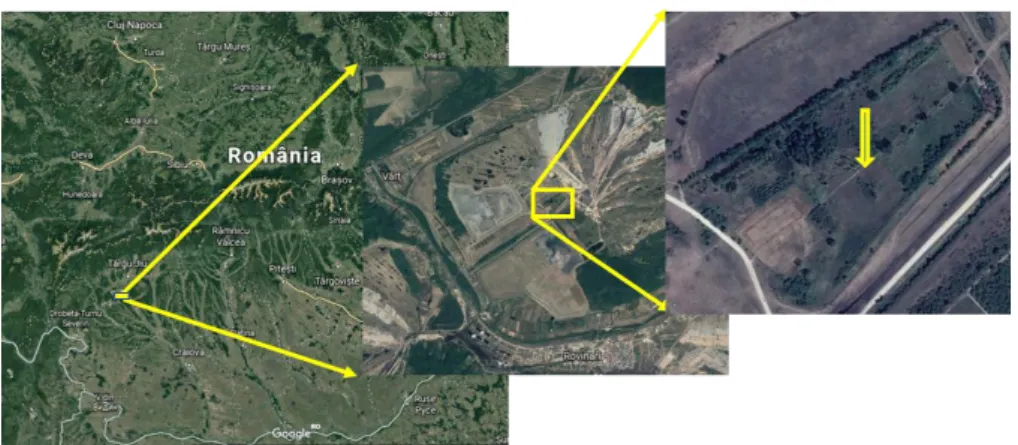
South-West of Romania. The field trial was establish in 2009 (Long 44°55’40’’, Lat 23°10’08’’, Alt 168m, Fig.1).
Figure 1 The location of the experimental trial in the Gorj county (Romania)
Biological material. Biological material was represented through common osier willow and white willow cuttings (20 cm length) and white willow whips (1.8-2 m length) produced by forest nursery Zaval, Romania.
Experimental design. The field experiment was established in 2009 on an unprepared field (S. alba), and prepared field (S. alba and S. viminalis). Rectangular tree spacing, 4m x 2m for whips and 1m x 0.5m for cuttings was adopted.
Soil analyses. The amount of heavy metals from soil was determined in the 5-20 cm soil level at the beginning of the experiment and 4 years later, through atomic absorption spectrometry in air-acetylene flame, and the radionuclide’s activity through gamma spectrometry (Duggan method, 1989).
Phenotypic and biometrical
observations. The observations were performed on survival of whips and cuttings for the both species. Assessment on height and diameter of S. alba plants were made. Biomass estimation was performed at the end of the growing seasons by drying material at 1050C, until constant weight.
Ultrastructural investigations on the mature leaves, were performed with a TEM 1010 JEOL-JEM, the biological samples being prepared after the usually methods: prefixed in a 2.7% glutaraldehyde solution (2 ½ h); fixing in a 1% Millonig solution (1 ½ h), infiltration and embebed in EUPARAL 812. Sections of 89-90 nm were contrasted in uranyl acetate and lead citrate (Electron Microscopy Centre, Babeş-Bolyai University).
RESEARCH RESULTS 1. Radionuclide’s activity in
soil. Soil analysis revealed the presence of natural radionuclides belonging from ash and coal dust, as well as of Cs-137 (artificial radionuclide), of Chernobyl provenance. Radionuclides activity was dependent on the considered site and the distance from the pollution source (Table
M
Moonnttaannoollooggyy,,CCaaddaassttrreeSSeerriieess))VVooll.. XXLLVVIIIIII//22001188
61 pollutant elements from soil. If in the Pb-210, Bi-214 and Pb-214 cases, the radioactivity decrease can be explained by short or very short half-life, for all other radionuclides, decrease in activity is mostly due to the process of phytoextraction.
Unprepared field, Salix alba. The radionuclide’s activity in the 5-20 cm topsoil have been decresed after for four years of experiment (Table 1). The slightly enhanced of the U-235 radionuclide can be due to their deposit at the soil surface, because the surface coal exploitation, as well as due to strong wind present in this area (similar to some cyclones).
Prepared field, S. alba and S. viminalis The phytoremediation effect was dependent on the radionuclide type and willows genotypes (Table 1). The significant decreased values (after 4 years), were recorded in the area planted with S. alba, for Pb-210. In the area planted with S. viminalis, significant decreased values were recorded for Cs-137 and K-40. The both species manifested a strong phytoremediation activity for Th-234/U-238, Ra-226, Pb-210, Bi-214 and Pb-212, reducing their activity in soil with 27.4 – 67.2%. Also, in this case, the U-235 radionuclide recorded an upper activity, probably to the same causes (mining activity at soil surface and strong winds). Higher values were recorded (at the end of the experiment) also for Ac-228/Th-232, especially in area with S. viminalis.
2. Heavy metals content in soil Some heavy metals (cadmium, copper, lead, iron, chromium, mercury a/o), are major environmental pollutant. As a result of their accumulation in soil, they exert adverse effects on food safety and marketability, due to their toxicity on the environment (air, water and soil). Their toxicity, determine an excessive accumulation of reactive oxygen species (ROS), and methyl-glyoxal (MG), which determine the lipids peroxidation, proteins oxidation, enzymes inactivation, DNA damage, as well as damages of the cell
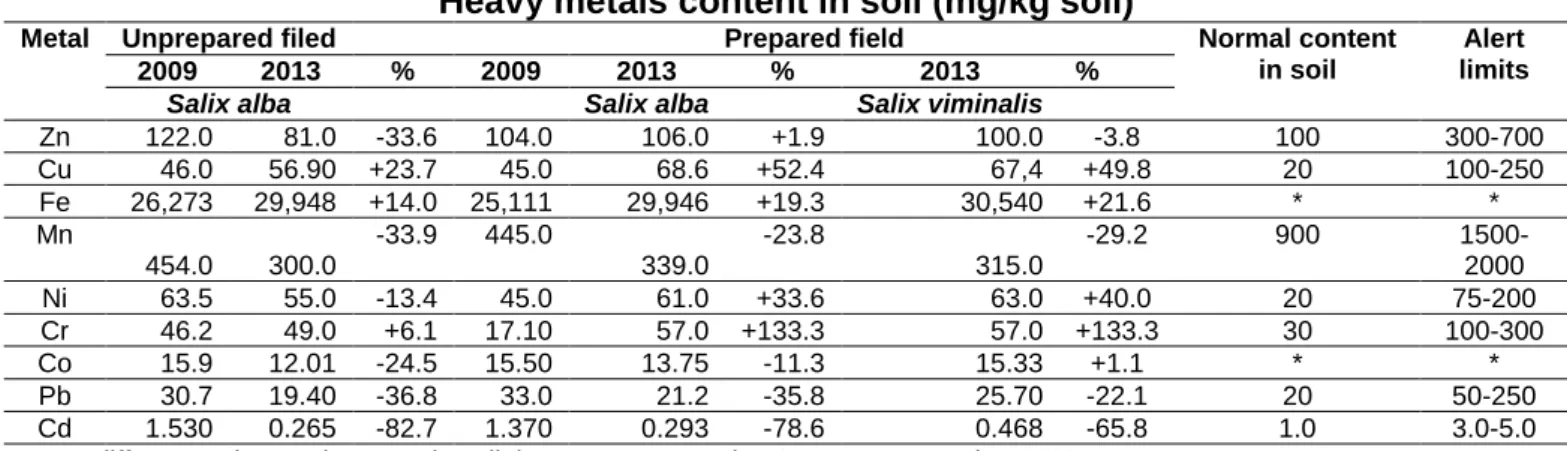
organelles (Mukti, 2014). The heavy metals present a different origin: Earth’s crust, agriculture and livestock, different industries (extractive, energetic, a/o), anthropogenic activities, a/o. In the present experiment, the amount of heavy metal in soil was recorded different values, depending on the considered metal/element, the soil type (unprepared or prepared field), the genotype culture and the year of experiment (Table 2). In generally, on unprepared field cultivated with S. alba, the heavy metal amount in soil recorded higher values at the beginning of the experiment (2009 year) for Zn, Mn, Ni, Co, Pb and Cd, and at the end of experiment (2013 year) for Cu, Fe and Cr (Table 2).
On the prepared field, S. alba and S. viminalis cultures were established in the year 2009. After 4 years, the soil content in heavy metals was different in the two areas. Differences between the capacities of the two species to absorb heavy metals from soil have been recorded (Table 2). Thus, on the area with S. alba, the amounts of Zn and Mn are higher, while in area with S. viminalis those of Ni, Co and Pb are. The amounts of Cu, Fe, Cr and Cd are relative similarly (into the normal variation limits). Thus S. alba
manifested a better phytoremediation capacity for Ni, Co and Pb, Cd, while S. viminalis showed a preference for Zn, Mn, Pb and Cd. Cosio et al. (2006), in an experiment performed in a hydroponic culture of S. viminalis, with different Cd concentration (0 – 200 mM), established the natural resistance to cadmium of this species. Vaculik et al. (2012), in experiments performed on S. caprea
point out that Cd and Zn interfere differently. The variation in the root tissue organization, as well as Zn, Cd and other elements, developed apoplastic barriers, being the result of environmental adaptation. They suppose that “the molecular basis of these adaptive traits might help to increase the tolerance and heavy metal accumulation capacities of
62 phytoremediation action of different species toward Cu, different authors reported different aspects. Also, different heavy metals interfere particularly between them.
In an experiment with S. viminalis
cv. “Cannabina” performed in a hydroponic culture, Mleczek et al. (2013) reported as in general, take place an increase of Cu accumulation, together with increase of Cu concentration in modified Knop’s culture medium, as well as some significant differences in copper
phytoextraction between plants at different Ca/Mg ratio.
3. Willow survival, growth and yield on ash-pond Rovinari.
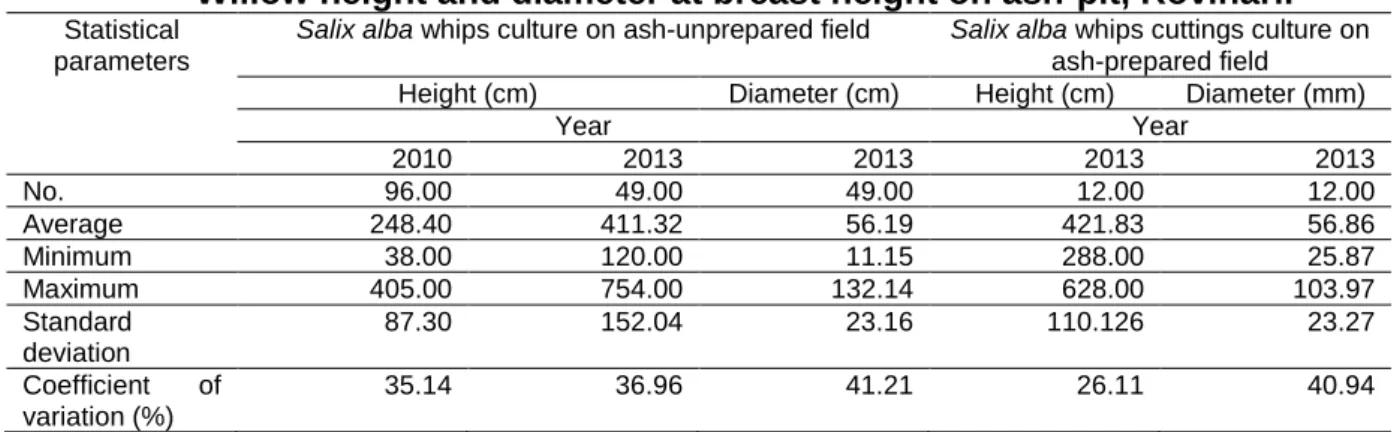
Plant survival percentage was very good for S. viminalis, but not so good for S. alba, in both cases, whips and cuttings (Table 3).
A tă ră – – nnalsoftheUniversityofCraiova-Agriculture,Montanology,CadastreSeries)V
63
Table 1
Radionuclids activity in experimental field (ash, 5-20cm) (Bq/kg soil)
Unprepared filed Prepared filed
Limits for Romania
2009 2013 D % 2009 2013 D% 2013 D%
Salix alba Salix alba S. viminalis
Series U-238
Th-234 (U-238) 130.1 ± 15.10 90.89 ± 11.89 - 30.1 163.6 ± 17.50 98.26 ± 8.26 - 39.9 102.04 ± 13.84 -37.4 25.0
Ra-226 102.3 ± 33.80 73.50 ± 4.29 - 28.2 229.5 ± 5.10 78.00 ± 8.00 -66.0 75.30 ± 4.60 -67.2 10.0-90.0
Pb-210 127.5 ± 7.95 102.68 ± 11.33 - 19.5 151.1 ± 8.42 109.68 ± 10.18 -27.4 111.52 ± 17.48 -25.5 20.0-40.0
Bi-214 86.8 ± 4.82 70.35 ± 3.39 - 19.0 117.1 ± 4.00 75.16 ± 5.16 -35.8 70.57 ± 4.14 -39.7 20.0-40.0
Pb-214 97.3 ± 5.67 77.10 ± 3.93 - 20.8 142.0 ± 5.35 79.81 ± 6.83 -43.8 88.28 ± 4.34 -37.8 20.0-40.0
Series U-235
U-235 8.46 ± 1.48 8.96 ± 1.13 + 5.9 8.99 ± 1.73 8.27 ± 1.00 -8.0 10.53 ± 1.25 +17.1 2.0
Series Th-232
Ac-228(Th-232) 72.7 ± 7.52 53.11 ± 3.82 - 26.9 88.4 ± 1.73 58.27 ± 1.00 -34.1 50.53 ± 1.25 -42.8 13.0-65.0
Pb-212 90.8 ± 8.47 69.01 ± 5.15 - 24.0 137.8 ± 4.86 72.29 ± 5.97 -47.5 70.25 ± 3.83 -49.0 20.0-50.0
K-40 416.9 ± 38.80 309.82 ± 31.06 - 25.7 519.2 ± 40.90 313.22 ± 28.91 -39.7 278.42 ± 27.67 -46.4 330.0-800.0
Artificial radioactivity
Cs-137 74.9 ± 4.00 47.44 ± 3.10 -36.7 77.5 ± 3.5 43.57 ± 2.79 -43.8 32.97 ± 2.85 -57.5 0
D% = differences in radionuclides activity between 2013 and 2009 year, reported to 2009
Table 2
Heavy metals content in soil (mg/kg soil)
Metal Unprepared filed Prepared field Normal content in soil
Alert limits 2009 2013 % 2009 2013 % 2013 %
Salix alba Salix alba Salix viminalis
Zn 122.0 81.0 -33.6 104.0 106.0 +1.9 100.0 -3.8 100 300-700
Cu 46.0 56.90 +23.7 45.0 68.6 +52.4 67,4 +49.8 20 100-250
Fe 26,273 29,948 +14.0 25,111 29,946 +19.3 30,540 +21.6 * *
Mn
454.0 300.0
-33.9 445.0
339.0
-23.8
315.0
-29.2 900
1500-2000
Ni 63.5 55.0 -13.4 45.0 61.0 +33.6 63.0 +40.0 20 75-200
Cr 46.2 49.0 +6.1 17.10 57.0 +133.3 57.0 +133.3 30 100-300
Co 15.9 12.01 -24.5 15.50 13.75 -11.3 15.33 +1.1 * *
Pb 30.7 19.40 -36.8 33.0 21.2 -35.8 25.70 -22.1 20 50-250
Cd 1.530 0.265 -82.7 1.370 0.293 -78.6 0.468 -65.8 1.0 3.0-5.0
64
Table 3
Willow survival on ash-pit Rovinari
Number of whips/cuttings Year
2009 2010 2011 2013
Salix alba whips culture on ash-unprepared field
Existing at the beginning of growing season - 13 113 56
Planted in the year 19 100 - -
Existing at the end of growing season 13 113 96 -
Salix alba cuttings culture on ash-prepared field
Existing at the beginning of growing season - 60 20 14
Planted in the year 100 - -
Existing at the end of growing season 60 20 14
Salix wiminalis cuttings culture on ash-prepared field
Existing at the beginning of growing season - 480 480 480
Planted in the year 500 - -
Existing at the end of growing season 480 480 480
Table 4
Willow height and diameter at breast height on ash-pit, Rovinari. Statistical
parameters
Salix alba whips culture on ash-unprepared field Salix alba whips cuttings culture on
ash-prepared field
Height (cm) Diameter (cm) Height (cm) Diameter (mm)
Year Year
2010 2013 2013 2013 2013
No. 96.00 49.00 49.00 12.00 12.00
Average 248.40 411.32 56.19 421.83 56.86
Minimum 38.00 120.00 11.15 288.00 25.87
Maximum 405.00 754.00 132.14 628.00 103.97
Standard deviation
87.30 152.04 23.16 110.126 23.27
Coefficient of variation (%)
35.14 36.96 41.21 26.11 40.94
After four year of vegetation there has been recorded value of about 300 g dry
matter per plant, as in intensive culture reported by Smaliukas (2007) (80-303 g).
Table 5
Biomass yield of willows (kg/plant) Statistical
parameters
Fresh biomass Dry biomass
Year Year
2010 2011 2013 2010 2011 2013
Average 126.20 145.07 578.80 75.12 89.88 299.152
Standard deviation
64.982 28.69 364.869 39.870 17.73 178.727
Coefficient of variation (%)
51.491 19.78 63.67 53.054 19.73 59.745
6. Ultrastructural features of leaf.
Salix alba L. Leaf palisade parenchyma of the shoots (Control), present two regions: near upper epidermis, 2-3 cells layer full with salicylic acid (SA), followed by 2-3 cell layers with many chloroplast parietal disposed, with starch grains. Cells are rich in cytoplasm and cellular organelles: mitochondria, chloroplasts, dyctiosomes. In the palisade parenchyma, the cells are full with lipid
A U tă d C s A ră–M –C ( nnalsoftheUniversityofCraiova-Agriculture, M
Moonnttaannoollooggyy,,CCaaddaassttrreeSSeerriieess))VVooll.. XXLLVVIIIIII//22001188
65 cells. Anthocyanins (flavonoids) protect the cells from the damage "high-light" by absorbing blue-green and ultraviolet light (high-light stress) (Diaz et al., 1990,
Trojak and Skowron 2017). Their
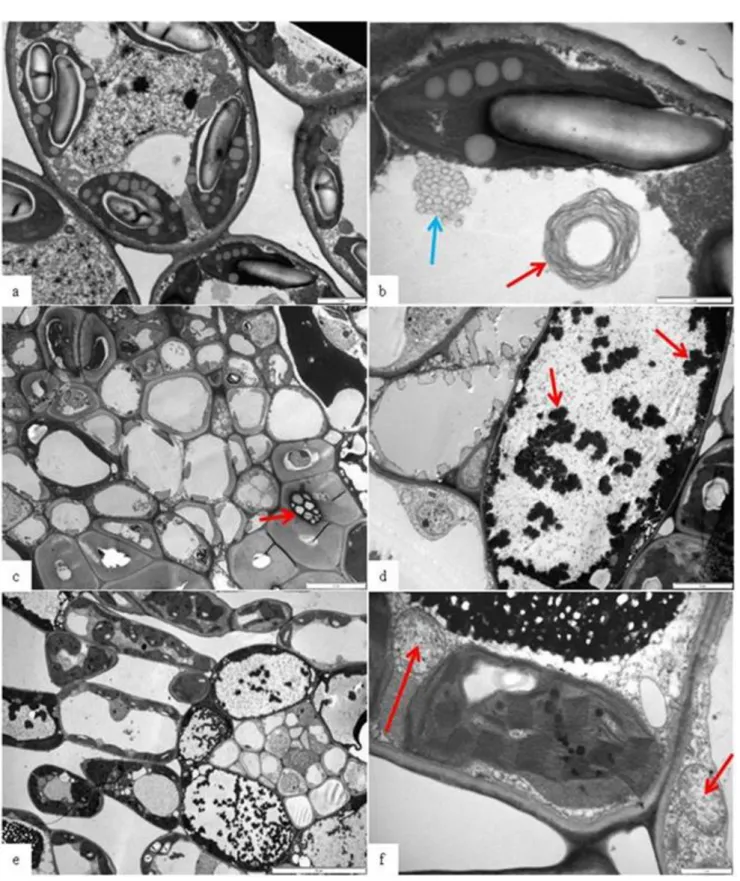
synthesis takes place in chloroplast, the molecules being arranged on the thylakoid surface, later on being accumulated in cell vacuole together with other structures. The anthocyanin particles presence stops the toxic action of different substances accumulated in cells (Corneanu et al., 2014). In epidermic and parenchyma cells there are exogenous particles [fig. 2a] originating from environment. Is visible their penetration through cell wall. In some areas from cytoplasm at the endoplasmic reticulum, near chloroplast [fig. 2b, arrow), take place the SA synthesis. This is compacted under amorphous mass shape, and is accumulated in cells from lacuna parenchyma and lower epidermis [fig. 2d]. Also, in palisade parenchyma cells take place the synthesis of other bioactive substances (BAS) probably of lipid nature [fig. 2c]. Ferritin, is a metal-protein of 450 kDal, present in all organisms, rich in iron. The ferritin is associated with redox reactions, protecting the cell against the toxic effects of free iron, serving as a primary antioxidant (Goto et al, 2001). There is synthesized in chloroplast in structures of “crystal like bodies” (Harrison and Arosio 1996), as well as in mitochondria at the crysta level in Typha latifolia (Corneanu et al. 2014). In S. alba
was observed in chloroplast [fig. 2f], being involved in antistress processes.
Salix viminalis L. The leaves from the Control, had normal ultrastructural features [fig. 3a]. This species is a hyperaccumulator for some heavy metals,
like Cu, Ni, Cd, Zn (Borišev et al., 2009; Cosio et al, 2006; Marmiroli et al., 2011, a/o). The different exogenous particles, that penetrated the leaf were observed on tonoplast surface and in vacuole (Fig.3e), in plants cultivated on ash. In mitochondria from the leaf palisade parenchyma take place ferritin synthesis, as well as in chloroplast, where are also synthesized different BAS. The aging organelles are transformed in myelinic structures (red arrow, fig. 3b), present in vacuole. Single or together in vacuole are present also multivesicular bodies (MVB-s; arrow), responsible of membranes, implied in the exocytosis processes. The membranes formed by MVB, are implied in coating of the starch granules released from chloroplast (Fig. 3 b). The MVB are present also in the ligneous vessels from circulating system (Fig. 3c). The endodermis cells from central cylinder, situated near conducting vessels, are functioning as deposit cells (Fig. 3e). The cellular residues and exogenous matter accumulated in deposit cells (situated near conducting vessels) was described previously in Thypha latipholia (Corneanu et al., 2014) or in Phragmites australis
66 Fig.2 Salix alba leaf cells features.
A
Annaalleellee UnUniivveerrssiittăiii didinn CCrraaiioovvaa,, seserriiaa AAggrriiccuullttuurră–MMoonnttaannoollooggiiee –CCaaddaassttrruu ((AAnnnnaallss ooff tthhee UUnniivveerrssiittyy ofof CCrraaiioovvaa - -AgAgrriiccuullttuurree,, M
Moonnttaannoollooggyy,, CCaaddaassttrree SSeerriieess)) VVooll.. XXLLVVIIIIII//22001188
67
Fig. 3 Salix viminalis leaf cells features.
68
CONCLUSIONS
Soil analysis revealed the presence of natural radionuclides, belonging from ash and coal dust, as well as of Cs-137 (artificial radionuclide), of Chernobal provenance. During experiment (4 years), the radionuclides activity (Bq/kg soil), has been decreased, on one hand due to its half–life and on the other hand due to the phytoremediatory species, that extracted pollutants elements from soil.
In term of willow survival, best results have been recorded for S. viminalis
compared with S. alba; differences have been observed between white willow whips and cuttings culture, the superiority of whips has been highlighted.
Exogenous particles from environment which penetrate leaf tissue, are spreaded through plasmodesmata and conducting vessels system. Exogenous matter and cellular debris are accumulated in endodermic cells (which function as “deposit cells”), then being removed through exocytosis.
The presence of a higher amount of radionuclides and heavy metals
stimulate the metabolic activity of the leaf parenchymatic cells (active mitotic divisions, ferritin synthesis in mitochondria and chloroplasts, anthocyan and SA synthesis).
The ultrastructural features of the mature leaves from S. alba and S. viminalis, underlined their resistance and adaptation at a great amount of heavy metals and radionuclide’s activity by: (i) vacuole compartmentation; (ii) multivesicular bodies (MVB’s) present in vacuole; (iv) ferritin synthesis in mitochondria, near crysta and like-crystaloid area in chloroplast; (v) SA and other BAS synthesis in cytoplasm; (vi) deposit cells for accumulation of different matter.
*Acknowledgements
These researches received financially support from by Executive Agency for for Higer Education, Research, Development and Inovation-Bucharest, Romania, through the POLMEDJIU research grant (32,150/2008) and SAROSWE research grant (111/2014).
REFERENCES.
Borišev, M., Pajević, S., Nikolić, N., Pilipović, A., Krstić, B., Orlović, S.,
2009 - Phytoextraction of Cd, Ni, and Pb using four willow clones (Salix spp.),
Polish J. Environ. Stud., 18 (4): 553-561. Borowiak K, Drzewiecka K, Mogdziak Z, Gaseka M, Mleczek M, (2012) Effects of Ca/Mg ions ratio on copper accumulation, photosynthetic activity and growth of Cu2+ - treated Salix viminalis L. “Cannabina”. Phytosynthetica 50 (3): 353-361. doi: 10.1007/s11099-012-0040-8. Cheng, S., 2003 - Heavy Metal Pollution in China: Origin, Pattern and Control,
Environmental Science and Pollution Research 10 (3):192-198.
Chase, M.W., Christenhusz, M.J.M., Fay, M.F., Byng, J.W., Judd, W.S., Soltis, D.E., Mabberley, D.J., Sennikov, A.N., Soltis, P.S. and Stevens, P.F., 2016. An update of the Angiosperm Phylogeny Group classification for the orders and families of flowering plants:
APG IV. Botanical Journal of the Linnean
Society, 181(1), pp.1-20.
A
Annaalleellee UnUniivveerrssiittăiii didinn CCrraaiioovvaa,, seserriiaa AAggrriiccuullttuurră–MMoonnttaannoollooggiiee –CCaaddaassttrruu ((AAnnnnaallss ooff tthhee UUnniivveerrssiittyy ofof CCrraaiioovvaa - -AgAgrriiccuullttuurree,, M
Moonnttaannoollooggyy,, CCaaddaassttrree SSeerriieess)) VVooll.. XXLLVVIIIIII//22001188
69
located on the middle Jiu river. Case study: Typha latifolia L., Oltenia Journal for Studies in Natural Sciences. 30 (2): 209-221
Corneanu, M., Corneanu, C.G., Crăciun, C., Tripon, S., 2018 –
Phytoremediation of some heavy metals and radionuclides from a polluted area located on the middle Jiu river. Case study: Phragmites australis (in press Oltenia Journal for Studies in Natural Sciences. 34 (2)
Cosio, C., Vollenweider, P., Keller, C.,
2006 - Localization and effects of cadmium in leaves of a cadmium-tolerant willow (Salix viminalis L.). I. Macrolocalization and phytotoxic effects of cadmium, Environmental and Experimental Botany, 58: 64-74.
Diaz M., Ball E., Lüttge U., 1990 -
Stress-induced accumulation of the xanthophyl rhodoxanthin in leaves of Aloe vera. Plant Physiology and Biochemistry, 28: 679-682
Duggan, L.J., 1989 – Laboratory investigations in nuclear science.
University of North Texas, Denton. Printing House Tennelec, 11 pp.
French, C.J., Dickinson, N.M., Putwain,
P.D., 2006 - Woody biomass
phytoremediation of contaminated brownfield land, Environmental Pollution 141.3: 387-395.
Gomes, H.I., 2012 - Phytoremediation for bioenergy: challenges and opportunities,
Environmental Technology Reviews. 1(1):59-66.
Goto, F., Yoshihara, T., Matsuda, T., Takaiwa, F., 2001 – Genetic improvement of iron content and stress adaptation in plant using ferritin gene,
Biotechnology and Genetic Engineering Reviews. Taylor & Francisc 18: 351-371. Hakmaoui, A., Atera, M., Bókab, K., Barónc, M.,2007 - Copper and cadmium tolerance, uptake and effect on chloroplast ultrastructure. Studies on Salix purpurea and Phragmites australis,
Z. Naturforsch. 62c: 417-426.
Hammer, D., Kayser, A. and Keller, C., 2003. Phytoextraction of Cd and Zn with
Salix viminalis in field trials. Soil Use and Management, 19(3), pp.187-192.
Harrison, P.M,, Arosio, P., 1996 – The ferritins: molecular properties, iron storage function and cellular regulation.
Biochemical and Biophysical Acta, 1275 (3): 161-203.
Hauser, M.T., 2012 - Root anatomy and element distribution vary between two Salix caprea isolates with different Cd accumulation capacities. Environmental Pollution, 163: 117-126.
Iori V., Pietrini F., Massacci A., Zacchini M., 2015 - Morphophysiological Responses, Heavy Metal Accumulation and Phytoremoval Ability in Four Willow Clones Exposed to Cadmium Under Hydroponics. In: Ansari A., Gill S., Gill R., Lanza G., Newman L. (eds) Phytoremediation. Springer, Cham
Landberg, T., Greger, M., 1994 - Can heavy metal tolerant clones of Salix be used as vegetation filters on heavy metal contaminated land? In: Aronsson P, Perttu K (eds) Willow vegetation filters for municipal wastewaters and sludges. A biological purification system. Report 50. Swedish Univ. Agric. Sci., Uppsala, pp 133–144.
Landberg. T., Greger, M., 1996
-Differences in uptake and tolerance to heavy metals in Salix from unpolluted and polluted areas, Appl. Geochem. 11:175–
180.
Leitenmaier, B., Küpper, H., - 2013 –
Compartimentation and complexation of metals in hyper-accumulators plants,
70
Meagher, R.B., 2000 - Phytoremediation of toxic elemental and organic pollutants,
Curr. Opin. Plant Biol., 3: 153–162.
Meers, E., Lamsal, S., Vervaeke P, Hopgood M, Lust N, Tack, F.M.G., - 2005 - Availability of heavy metals for uptake by Salix viminalis on a moderately contaminated dredged sediment disposal site. Environ Pollut. 137:354–364.
Mleczek, M., Gąsecka, M., Drzewiecka, K., Goliński, P., Magdziak, Z., Chadzinikolau, T., 2013 - Copper phytoextraction with willow (Salix viminalis L.) under various Ca/Mg ratios. Part 1. Copper accumulation and plant morphology changes. Acta Physiol. Plant, 3w5: 3251-3258.
Mukti, G., 2014 – Heavy metal stress in plants: a review. International Journal of Advanced Research, 2 (6): 1043-1055. Smaliukas, D., Noreika, R., Puida, E., 2008 – Evaluation of morphological, biomass and energetic characteristics of Salix viminalis L. and S. dasyclados Wimm. genotypes in short rotation plantations. Biologija, 54 (2): 97-100.
Trojak, M. and Skowron, E., 2017. Role
of anthocyanins in high-light stress
response. World Scientific News, 81(2),
pp.150-168.
Vaculík, M., Konlechner, C., Langer, I., Adlassnig, W., Puschenreiter, M., Lux, A., Vervaeke, P., Luyssaert, S., Mertens, J., Meers, E., Tack, F.M.G., Lust, N., 2003 - Phytoremediation prospects of willow stands on contaminated sediment: a field trial, Environ Pollut. 126:275–282.
Wani, B.A., Khan, A., Bodha R.H., 2011
- Salix: A viable option for phytoremediation, African J., Environ. Science & Technol., 5 (8): 567-571.
Wenzel, W.W., Wieshammer, G., Sommer, P., Unterbrunner, E.R., Puschenreiter, M., Dos Santos, M.N.,
2005 - Phytoremediation of metal contaminated soils using trees (Salix, Populusa sp.): prospects and limits,