ORIGINAL RESEARCH ARTICLE
Can Women’s Lives be saved from Hypertensive Disorders during
Pregnancy? Experiences of South African Midwives
DOI: 10.29063/ajrh2020/v24i2.15
Irene T Ramavhoya
1*, Maria S Maputle
2, Rachel T Lebese
2Department of Nursing Science, University of Pretoria, South Africa1; Department of Advance Nursing Science, University of Venda, Private Bag X5050, Thohoyandou 0950, South Africa2
*For Correspondence: Email: [email protected]
;
Phone: +27123563162Abstract
A qualitative, descriptive phenomenological research design was conducted to explore and describe the experiences of midwives on the management of women diagnosed with hypertensive disorders during pregnancy in rural areas of Limpopo Province, South Africa. Non-probability sampling was used to select eighteen (18) midwives from primary health care facilities of Mopani and Vhembe districts in Limpopo Province. Data was collected through in-depth interview and analysed using eight steps of Tesch‘s open coding method. Ethical considerations were adhered to by ensuring confidentiality, anonymity, privacy and signing of informed consent by participants. Measures to ensure trustworthiness; credibility, transferability, dependability and lastly, confirmability were ensured. Findings of this study revealed three themes (with sub-themes) namely; management of pregnant women diagnosed with hypertensive disorders, support experienced when managing complications, challenges experienced by midwives when managing hypertensive disorders during pregnancy. In conclusion, poor support came up very strongly as a factor influencing good management of hypertensive disorders in pregnancy. Recruitment of more midwives that will support each other during management of pregnant women with hypertensive disorders is recommended. (Afr J Reprod Health 2020; 24[2]: 152-163).
Keywords: Hypertensive disorders in pregnancy, midwives, maternal death, South Africa
Résumé
Une conception qualitative et descriptive de la recherche phénoménologique a été menée pour explorer et décrire les expériences des sages-femmes sur la prise en charge des femmes diagnostiquées avec des troubles hypertensifs pendant la grossesse dans les zones rurales de la province du Limpopo, en Afrique du Sud. Un échantillonnage non probabiliste a été utilisé pour sélectionner dix-huit (18) sages-femmes dans les établissements de soins de santé primaires des districts de Mopani et Vhembe dans la province de Limpopo. Les données ont été collectées par le biais d‘interviews approfondies et analysées en utilisant huit étapes de la méthode de codage ouvert de Tesch. Les considérations éthiques ont été respectées en garantissant la confidentialité, l'anonymat, la confidentialité et la signature du consentement éclairé des participants. Mesures visant à garantir la fiabilité; la crédibilité, la transférabilité, la fiabilité et enfin la confirmabilité ont été assurées. Les résultats de cette étude ont r évélé trois thèmes (avec des sous-thèmes) à savoir; prise en charge des femmes enceintes diagnostiquées de troubles hypertensifs, accompagnement expérimenté lors de la gestion des complications, difficultés rencontrées par les sages-femmes lors de la gestion des troubles hypertensifs pendant la grossesse. En conclusion, un mauvais soutien est apparu très fortement comme un facteur influençant la bonne gestion des troubles hypertensifs pendant la grossesse. Il est recommandé de recruter davantage de sages -femmes qui se soutiendront mutuellement pendant la prise en charge des -femmes enceintes souffrant de troubles hypertensifs. (Afr J Reprod Health 2020; 24[2]:152-163).
Mots-clés: Troubles hypertensifs pendant la grossesse, les sages-femmes, la mort maternelle, Afrique du Sud
Introduction
Maternal deaths caused by hypertensive disorders remains unchanged1. Seventy five percent (75%) of maternal deaths around the globe are attributed
United Population Fund and World Bank, indicated a global decline in maternal mortality rate by 38% from 2000 to 20173. From the same period, 2000 - 2017, the United Nation inter-agency concurred and indicated an estimated reduction in maternal deaths from 342 to 211 per 100 000 live birth worldwide. This meant that, there was a steady reduction of 2.9% maternal deaths, although still less than what is anticipated by the Sustainable Development Global goal of 70 maternal deaths per 100 000 live births3. The WHO report further indicated that, South Asia had a decrease in maternal mortality rate of 59% (from 395 to 163 per 100,000 live births) 2. Within the same period of 2000-2017, Sub-Saharan Africa attained a significant reduction of 39 % of maternal mortality rate3. Regardless of the availability of health care services, skilled health care professionals who implement the maternal health guidelines, maternal mortality rate is decreasing slowly.
In South Africa, the Saving Mother‘s Report of 2014-2017 indicated a steady decline in maternal deaths of 339 in 2016 to 580 per 100 000 live birth in 20141. Although maternal deaths are caused by preventable conditions such as Human Immune Virus (HIV) infections and obstetric haemorrhage has decreased, deaths caused by hypertensive disorders in pregnancy has increases by 14%1. As such, African countries including South Africa had shown an increase in deaths caused by hypertensive diseases. Regardless of workshops and in-service education for midwives on the implementation of maternal guidelines to manage hypertensive disorders in pregnancy, it is listed as the first causes of maternal deaths, however it is preventable4,5. This was confirmed by the report of the Department of Health1, which indicated that challenges around the rise of maternal deaths is influenced by quality of care, inter-facility transport, knowledge and skills of the health care professionals.
According to WHO, factors such as poverty, distance to facilities, lack of information, inadequate and poor quality services, cultural beliefs and practices had negative influence on maternal health care service delivery2. Also, shortage of staff, abseentism due to sickness and unplanned workshops contribute to
provision of sub-standard care and maternal morbidity rate6,7. Regardless of the efforts made by the Maternal Health Directorate in providing midwives with protocols that are displayed in the labour room of each health care facilities, management of hypertensive disorders and its complications remains the challenge. As indicated in the maternity care guidelines of South Africa, that if a pregnant woman is diagnosed with hypertension either chronic or gestational, midwives at the Primary Health Care (PHC) level must seek the opinion of the doctor who will assess whether the woman is to be given anti-hypertensive drugs or not8. Midwives must test urine for protein, check edema of the extremities and to assess weight gain to exclude signs of pre-eclampsia. Health education on lifestyle modification must be emphasized at every antenatal care visit. Before seeking the doctor‘s opinion, the second midwife must confirm the blood pressure readings as recommended by the Saving Mother‘s report. However, this recommendation was not carried out accurately due to shortage of midwives8-10. The woman must be transferred to the hospital within 3-5 days.
As such, this study was conducted to explore and describe the experiences of midwives on the
management of women diagnosed with
hypertensive disorders during pregnancy.
Methods
A qualitative, descriptive phenomenological research design was used13,14. The rational was to gain in-depth information on the experiences of midwives when managing hypertensive disorders in pregnancy.
Setting
Nationally, the province is rated number four with a high maternal mortality rate caused by hypertensive conditions. Within the province, 6 776 midwives were trained on ESMOE. However, limited or no drills are being conducted at the PHC facilities because of shortage of equipment‘s15. The study was conducted at rural PHC facilities of Mopani and Vhembe districts of Limpopo province. The former includes Tzaneen area whilst the latter includes Thohoyandou. These districts are separate and have distinct characteristics. The distance between the province and Mopani District is 158 kilometres whereas from Vhembe and the province is 156 Kilometres. Vhembe district consists of four municipalities, two were chosen for this study and the two consist of 101 PHC facilities whereas Mopani is having five municipalities in which two were chosen and the two consist of 37 PHC facilities. The two districts were chosen because of the 2014/2016 statistics from the interim report, which reported 234/100,000 of Maternal Mortality Rate (MMR) 1. From that number, 33.4% of maternal deaths were caused by hypertensive disorders in pregnancy within the two districts1. Despite their maternal mortality rate (MMR) statistics, the two districts share borders with neighbouring countries, namely, Botswana, Zimbabwe and Mozambique that are having high MMR. Most PHC facilities consisted of four midwives, which make it impossible to confirm the diagnosis of pregnant women with hypertension by the second midwife. Some facilities are caring for 40-45 pregnant women attending antenatal and assisting with the deliveries of 25 to 30 women per month. Most
PHC facilities are offering a 24-hour call system in which a midwife will work during the day and having a burden to offer all the services at night, which is difficult for them especially if managing an obstetric emergency such as eclampsia.
Population and sampling
All midwives who were working at the PHC facilities of Vhembe and Mopani districts in Limpopo province with two years‘ experience in maternal care form part of the current study. Non-probability purposive sampling method was used to select midwives as they had knowledge of the phenomenon under study16. Nineteen clinics were purposely sampled from both district A (Vhembe) and B (Mopani). However, data saturation was reached with the 18th participant as the researcher collected data in both districts concurrently. District A had ten participants whereas district B had eight participants.
Data collection
Data was collected through unstructured face-to-face in-depth interview from March to June 2017 at the participant‘s workplace and their homes. One central question was asked and follow-up on questions was done per answers provided by participant, ―How is it for you to manage pregnant women with hypertensive disorders at this facility‖. Field notes and a voice recorder were used to capture data after consent was obtained from the participants. Codes were assigned to participants from A-R. Data saturation was reached on the eighteen (18th) participant and interview took 30-45 minutes with each participant.
Data analysis
rechecked the transcripts, assign codes to topics to check if new categories and codes will emerge. Descriptive wording on the selected topics were turned into categories. Final decision was made on abbreviation for each category. Data that belong to each category were assembled in one place. Data was rechecked for the last time to check if there was a need to recode. Final decision was the consensus reached by the researcher and the independent coder who had a meeting to discuss the similarities and discrepancies identified about the same transcripts as both analysed the same data. Finally, similar data were grouped together in to three themes and seven subthemes as indicated in Table 2.
Measures to ensure trustworthiness
As indicated by Shenton17 credibility was ensured by remaining in the field for about three months engaging with participants and as such, a trusting relationship was established until data saturation. Transferability was ensured by explaining in depth the methods used in this study in which if other researchers experience similar problems, they can employ similar methods and it can be of great value to their situation. Dependability was ensured by applying the correct methodology and an interview guide, which was appropriate for the research question under study. This was done so that readers can have a good understanding of the effectiveness of the methods used in this study. Lastly, confirmability was ensured as the findings, conclusion and recommendations of the study were derived from the actual collected data. Three themes with seven sub-themes emerged from the current study (see Table 2).
Results
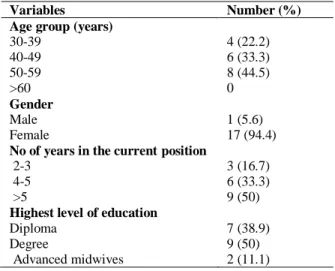
Table 1 indicated that, eighteen (18) midwives from PHC facilities participated in this study. Almost all participants were females. Males are perceived to be reluctant to work with pregnant women and the profession itself attracts more females than males. The majority had more than five years of experience, which denotes level of expertise in the management of pregnant women with hypertensive disorders. Only two advanced midwives participated in this study, because a
limited number was trained. As a results, midwives experienced lack of support from their
colleagues when managing women with
hypertensive disorders in pregnancy.
Theme 1: Management of pregnant women
with gestational hypertension, pre-eclampsia
and eclampsia
Midwives reported the importance of using and referring to the Maternity Health Care Guidelines when managing pregnant women with gestational hypertension, pre-eclampsia and eclampsia. However, few pregnant women with gestational hypertension were identified, and were referred to the hospital for high-risk clinic and for the doctor to confirm the diagnosis. This was evidenced by participant L when stating the following;
―The women diagnosed with hypertension in pregnancy are being managed well because the patient will be finally transferred to hospital for high-risk clinic and for the doctor to do the assessment. Doctors usually refer patients back to the clinic for continuous ANC when the women become stable and to return to hospital while in labour. With the use of maternity guidelines, the treatment that they receive makes them become stable, hence they deliver well and their babies turn to be healthy‖ (Participant L from District A). From this first theme; the following sub-themes emerged:
Fewer patients diagnosed with gestational hypertension as compared to eclampsia based on admitted cases; Usage and adherence of maternity guidelines assist in the proper management of patients.
Sub-theme 1.1: Fewer patients diagnosed with gestational hypertension as compared to eclampsia
Table 1: Demographic characteristics of midwives in Limpopo Province
―We had such cases but are not many, maybe one out of ten. If I booked the patients and found that her blood pressure is around 140/110 or 100, I refer her to the hospital stat, but such cases are few may be one or two but those that I met, most of the time were the women in labour‖ (Participant M from District B).
Participant B from District A indicated that:
―We don‘t have a lot of those cases, though I have seen one that developed hypertension during pregnancy and I gave her methyldopa and refer her to the hospital‖.
Another participant (K from District A) indicated that women who know their hypertensive conditions attended ante-natal care at the hospital as such few were identified during ante-natal care at the primary health care facility.
―We get them but they are few because many women know themselves as known hypertensive patients, they go and book at the hospital, but we meet few cases in which during booking the women‘s blood pressure will be high and the patient will say I knew that my blood pressure was high‖.
Sub-theme 1.2: Usage and adherence of maternity guidelines assist in the proper management of patients
The results of this study revealed that maternal health care guidelines helped and guided midwives in the management of pregnant women
with pre-eclampsia. As such, midwives were confident in the management of pregnant women with pre-eclampsia. Midwives referred to the guideline as a useful resource tool that must be utilized every day when rendering maternal health care services to pregnant women. This was echoed by participant J from District A:
―Maternal health care guideline was the best tool in the management of that woman with severe pre-eclampsia; it has shown me the whole management as long as everything is available (resources). It helped me a lot‖.
Participant Q from District B concurred and indicated:
―When she was jerking, I opened my guideline and manage her according to what the guidelines said. I even called an ambulance for her. The ambulance did not delay because it was stationed near our facility.
Another participant reported how midwives in her facility managed a pregnant woman with eclampsia. They value of utilisation of the maternal guidelines and if they even checked if they have managed the woman properly.
―Another registered nurse was checking the guideline while another one was implementing it. And another one was communicating with the patient. When the patient left, we remain revising the guideline. Asking each other questions, like have you seen, did we do the correct thing with the patient, we took the guideline and check because we are always doing in-service training because one day one will meet such a case alone‖
(Participant K from District A).
Theme 2: Support experienced during
management of complicated maternity cases
The second theme focussed on the support experienced during management of complicated maternity cases. Shortage of midwives leads to lack of support by fellow colleagues, especially when they were on call. Again, support through site visits by programme managers was perceived as insufficient as most midwives reported having seen the programme managers in their facilities a long time ago. As a norm, an obstetric emergency must be transferred to the hospital after being stabilised hence midwives reported that they were
Variables Number (%)
Age group (years)
30-39 4 (22.2)
40-49 6 (33.3)
50-59 8 (44.5)
>60 0
Gender
Male 1 (5.6)
Female 17 (94.4)
No of years in the current position
2-3 3 (16.7) 4-5 6 (33.3)
>5 9 (50) Highest level of education
Diploma 7 (38.9)
Degree 9 (50)
Table 2: Themes and sub-themes related to the experiences of midwives during the management of women with hypertensive disorders in pregnancy
Themes Sub-Themes
1. Management of pregnant women with gestational hypertension, pre-eclampsia and eclampsia
1.1. Fewer patients diagnosed with gestational hypertension as compared to eclampsia
1.2 Usage and adherence of maternity guidelines assist in the proper management of patients
2. Support experienced during the management of complicated maternity cases
2.1 Existence versus poor support experienced by midwives from colleagues during the care of women with complications
2.2 Existence versus poor support from by managers experienced by midwives
2.3 Support in a form of in-service training offered by managers to midwives
2.4 Dissatisfaction among health professions regarding patient management emanating from decisions opposed by the next level of care on referred women
3. Challenges experienced by midwives managing pregnant women with gestational hypertension, pre-eclampsia and pre-eclampsia
3.1 Poor adherence to medical advises by women with hypertensive disorders in pregnancy result in unmanageable complications
not satisfied of the decisions made by hospital staff.
―I was alone with the assistant nurse. I think if another midwife was on duty, we could have assisted each other because it is not good to come across such a patient while you are alone. If you are two, you will be able to help each other with management. And another thing was that I was not satisfied the way the hospital managed the woman, because I referred her with pre-eclampsia and they discharged the woman with gestational hypertension hence the women came back to the facility with imminent eclampsia‖ (Participant A from District A)
Sub-theme 2.1: Existence versus poor support experienced from colleagues during the care of women with complications
From the results of the study, midwives reported a lack of support from their colleagues, especially during the night. When taking calls, one midwife was allocated with a junior nurse to manage all emergency conditions that presented at night, which included conditions such as pre-eclampsia. Regardless of the challenges they were experiencing, midwives indicated that they were used to manage the women with hypertensive disorders in pregnancy because of the knowledge they gathered from the maternal guidelines.
―I was alone as a registered midwife and it was not easy to manage a woman with pre-eclampsia, but because we are now used to this cases, one is
always prepared by studying the maternity case guideline, it is now our friend. I have mastered the skill of managing such cases‖ (Participant B from District A).
The same participant continues and said that even during the day; sometimes a midwife will find herself alone, especially in facilities where two midwives were allocated being two per shift. ―We work being two professional nurses, the other one has to go and attend a meeting, I was left alone as a registered midwife with a woman who was coming for 1st visit, seeing all patients including minor ailment‖.
Another participant (D from District B) concurred when indicating that;
―Management will be done by one sister alone because I will be telling the junior nurse what to do while most of the things are done by the midwife‖.
to stabilizing the women‘s condition, one midwife was calling an ambulance‖.
―The patient was helped by many nurses, she was injected Magnesium Sulphate, Ringers Lactate was put up and 200 ml of Sodium Chloride. Paramedics were called and they responded immediately within 30 minutes. It was not easy for her to respond‖ (Participant L from District A).
Sub-theme 2.2: Existence versus poor support from managers experienced by midwives
Midwives indicated poor support by Maternal Health Care Managers in most PHC facilities. Managers pay them support visit when there was a problem in the facility, example, maternal death. Some of the quotes as indicated by participants.
―Hmm, I don‘t know, support from programme managers in all programmes, we don‘t see them or is it because of transport, I don‘t know, they come when a woman dies, the whole district will come. May be in other clinics, in ours, no‖ (Participant K from District A)
Participant L from District A & P from District B concurred;
―They don‘t come to check on how we are coping‖.
―I have never seen them maybe they come in another group, but I have seen them when there was a case of maternal death. Last year of the unbooked case‖ (Participant J from District A)
Participant O from District B concurred;
―The truth is, I have seen one in 2014 who came for reproductive health services, apart from that one, I have never seen one‖
On the contrary, few participants indicated that MHCM does support them through visits; they even showed the evidence of their visit in the visitor‘s book.
―Most of the time they visit us. You can even confirm from the visitors' book. Many times, they come to see us‖ (Participant E & R from District A).
Sub-theme 2.3: Support in a form of In-service training offered by managers to midwives
Midwives reported that the only support they received was education and training related to
maternal health care issues. Some indicated that training was offered during their monthly perinatal meetings and through workshops where Basic Ante-natal Care was discussed. Participants J & L from district A indicated the following;
‗We meet them when we attend workshops‖,
Participant R from district A concurred;
―Managers support us when we attend our monthly meetings, where maternal and new born cases are discussed. Sometimes we are taught how to manage cases that were mismanaged and most of the cases are referred from the clinics as such we gain more information regarding the management of such cases‖.
Participant N from District B indicated that after attending a workshop, managing pregnant women with obstetric emergencies became easy.
―But since I attended ESMOE, things are easy, before I attended it, things were difficult‖
Sub-theme 2.4: Dissatisfaction among health professions regarding patient management emanating from decisions opposed by the next level of care on referred women
Midwives indicated that whenever they had transferred women with hypertensive disorders in pregnancy to the hospital, their management was questioned. Either the woman will be discharged or a doctor will call telephonically for midwives to explain their management. Midwives further reported that the hospital staff was degrading their skills, as such, women were turned back with another diagnose different from the one made by midwives. Participant A from District A;
―I felt that the hospital staff was undermining the clinic staff, because when I referred the woman with pre-eclampsia, they returned her with a diagnosis of gestational hypertension, hence the patient developed imminent eclampsia on arrival to the clinic‖.
Another participant (F from District A) indicated that she transferred the women with elevated BP without signs of pre-eclampsia or signs of labour. The next thing was the doctor who called.
him that it was not necessary because the patient did not have signs of pre-eclampsia and she was not in labour‖.
Participant L from District A, concurred and indicated;
―The Doctor from the hospital called and asked me why I delayed giving Magnesium Sulphate dose on each buttock, I explained that I was guided by maternal guidelines page 73 that indicated that, if I anticipated delay in the ambulance I must give Magnesium Sulphate and if it will arrive faster, I must not give the client Magnesium Sulphate on the buttocks. The women will receive it at the hospital. He told me that at the hospital, they are using protocols not guidelines that guide them to give it as soon as possible following the loading drugs. He then confirmed that with me after checking the information I have told him from the maternal guideline. I was managing the woman while opening it referring to it‖.
The findings of this study indicated that some of the midwives were unhappy because doctors at the hospital questioned their management. Some of their patients were returned with another diagnosis thus, some pregnant women reported to the clinic the same day they were discharged with complications. Despite the experiences and skills that some of the midwives possess they were still undermined. The researcher worked at the PHC facilities and experienced the same challenges. Other researchers indicated that involvement of all affected personnel in decision-making and giving feedback on referred patient was the only remedy that can prevent the dissastifaction30. As such, finding solutions that will deal with this will improve work performance and job satisfaction of staff 31. Hence, it was argued that dissatisfaction is one of the causes of conflicts between the staff11. The implications of their dissatisfaction because of opposed decisions by next level of care on referred women will lead to conflicts between the referring facility and the health care personnel from the hospital, hence, pregnant women are the one who will suffer most.
Theme 3: Challenges experienced by
midwives during the management of women
with gestational hypertension, pre-eclampsia
and eclampsia
Midwives experienced challenges caused by high-risk pregnant women who failed to honour their follow-up visits at the hospital. Some women told midwives that their socio-economic status resulted in failure to attend to such appointments hence they seek alternative care at the PHC facilities with poor resources to manage their conditions. Participant D from District B
―Women do not want to go to a hospital, they will come back to the hospital hence they were told and in their card is also written that they need to go to hospital for ANC and delivery, and women will say they don‘t have money‖.
Under this theme 3, only one sub-theme emerged.
Sub-theme 3.1: Poor adherence to medical advises by women with hypertensive disorders in
pregnancy result in unmanageable complications
The findings of the study revealed that high-risk women with complications were to go back to the hospital for delivery, but women did not want to deliver at the hospital. Midwives indicated that some women presented to the clinic while they were about to experience eclamptic attacks. Upon checking their records, it was discovered that they were high-risk patients who were referred and were attending antenatal care at the hospital. As such, and they failed to comply with doctor‘s orders. Participant C from District A
―Many of the women don‘t take hypertension as a disease, even if one can stress the importance of doing follow-up. I remember a case that presented with pre-eclampsia sometimes back; she was previous c/section patient. She started to experience problems at home; a neighbour brought her to the clinic. She was fortunate it was Wednesday, all the nurses were on duty‖
(Participant K from District A).
Discussions
Management of pregnant women with
gestational hypertension, pre-eclampsia and
eclampsia
The findings of this study revealed that few pregnant women were diagnosed with gestational hypertension as compared to eclampsia. The maternity care guidelines used in South Africa indicated that, gestational hypertension occurs when a pregnant woman is 20 weeks and above without protein8. It was evident from the currents study that most women were diagnosed with hypertension before pregnancy and they were classified under chronic hypertension. The results of this study were similar to the one conducted by Ahmed18 where they discovered that few women were diagnosed with gestational hypertension as a result of chronic hypertension though pre-eclampsia was also rare before the third trimester. However, some authors discovered that women who were diagnosed with gestational hypertension might have suffered from hypertension before they felt pregnant; as such, these women never accessed the health care systems before19. Same authors further indicated that, for unknown hypertensive pregnant woman at an early antenatal visit within the ages of 16-20 weeks, the vasodilation system in pregnancy might cause uncertainty of Blood pressure readings 19. Chronic hypertension can result in pre-eclampsia and even eclampsia in the second or third trimester of pregnancy as an implication19,20.
From the findings of this study, it was evident that most midwives were adhering to maternal health care guidelines when providing care to pregnant women with hypertension. As indicated by the World Health Organisation21,
guidelines are evidence-based documents that assist health care personnel in decision-making during their clinical practices in a specific clinical situation. Most midwives were implementing maternal health care guidelines when rendering maternal health care services. This helped them in deciding which women to manage at the PHC facility and those who needed referral to the next level of care. From a study conducted in one of the PHC facilities in South Africa, it was revealed that health care professionals were implementing the protocols and policies when rendering nursing care to patients and as such, their level of care was ranked as good22. The implications of usage of the maternal guidelines by midwives will result in a decrease in maternal mortality rate.
Support experienced during management of
complicated maternity cases
It was evident that there was a lack of support when midwives were to render maternal health care services. Most of the primary health care facilities were managed by two midwives during the day in which at night, one midwife was left alone to render all the services including maternal health care services. As recommended in the Saving Mother‘s report of 2014, two midwives were supposed to assists each other day and night when it comes to the management of a pregnant woman23. However, that recommendation is yet to be implemented. Lack of support during the night or sometimes during the day in some facilities was associated with shortage of staff and failure to advertise, recruit more midwives as a means of replacing those who retired, died or terminate their services. Thus, most midwives had trouble in the management of pregnant women with eclampsia. These findings were similar to studies where there was lack of support from doctors who were on-call system, they never responded to the call made by midwives when they had an obstetric emergency23,
24
. The results of this study were different from a study conducted in South West Nigeria wherein midwives supported each other during
management of pregnant women with
implications of lack of support might lead to poor maternal health care services by midwives because of burnout and work overload, hence, poor maternal outcome.
Midwives who were working in PHC facilities that were far from the areas where MHCM were stationed experienced lack of site visit support. The only time they saw a MHCM was when there was a complication at the facility. As such, they felt they there were not supported. Visiting PHC facilities will enable managers to identify challenges experienced by midwives when rendering maternal health care services. Furthermore, they will have a chance to monitor and evaluate the care given to mothers. MHCM will be able to establish if midwives were conducting emergency obstetric simulation training drills in order to acquire the skills in managing obstetric emergencies. As stipulated on the supervisory manual, managers must draw a monthly supervision programme that stipulates the dates of support visits to each health care facility. The programme must be submitted to each facility so that midwives will be aware of such schedule26. It is for that reason that participants felt non-supported by MHCM. The manual prescribes how midwives are to be supported hence their expectations were not fulfilled. Similar to this study were the results discovered by Tibandebage27 where midwives experienced lack of support from their managers; managers failed to respond even when the staff needed equipment‘s as they did not value their contributions in patients
care24,27,28. The implications of lack of support
through site visits by managers will lead to poor maternal health care services hence the slow decline in maternal death caused by hypertensive diseases.
All midwives in both districts indicated full support by managers through workshops and in-service training. This was offered through ESMOE workshops though the trainings did not cover all midwives and it is no longer offered for now. The Saving mother‘s report of 2014 recommended that perinatal meetings are to be held monthly with representatives from PHC facilities as midwives, facility managers, Local area managers, Midwives from the hospitals and MHCM to discuss maternal health care
management1. The researcher felt that MHCM were complying to the recommendation as such; the results will improve the quality of maternal health care services, hence, reduction of MMR29.
Challenges experienced by midwives during
the management of women with gestational
hypertension, pre-eclampsia and eclampsia
As indicated by the National department of health, Maternity Care Guidelines of South Africa, high-risk women must be referred to the hospital for doctors to assess their suitability to attend antenatal care at the clinic or hospital8. However, pregnant women were not adhering to doctors‘ orders as they wait for complications to occur so that they are managed at the clinic, hence placing their lives in danger as the PHC facility is not suitable to can manage such conditions. A study was conducted amongst two groups of patients with hypertensive disorders, those who were illiterate and those who were literate to assess their adherence. A literate group was the one who was adhering to advises given than the illiterate group32. The implication of lack of adherence by pregnant women to health advises will result in complications such as maternal death hence a slow decrease in maternal mortality rate caused by hypertensive diseases.
Limitations of the Study
The study was conducted at Mopani and Vhembe districts, Limpopo Province, as such findings cannot be generalised to other Provinces. It was difficult to conduct this study because most of the time, midwives were busy rendering health care services where some of the participants were visited at their homes with appointments.
Ethical considerations
Ethical clearance certificate number
the study and that they can withdraw any time without penalty, hence they signed informed consent form. Confidentiality though it meant that no information provided by the participant should be revealed, participants were informed by agreeing to take part in a research project, this right does not apply anymore since the information provided will be published. The researcher, however, ensured that anonymity of any person or institution was protected in the report by safeguarding that it was not possible to relate data to a person. Privacy was ensured by collecting data in a private consulting room with each participant. Anonymity was ensured by assigned a code that runs from A –R to every participant so that they remained anonymous. No harm was incurred by participating in this study as the researcher collected data within the stipulated agreed time with the participants.
Conclusion
Fewer pregnant women were diagnosed with gestational hypertension as compared to other hypertensive conditions like pre-eclampsia. Midwives were adhering to maternity care guidelines when rendering maternal health services. Poor support by colleagues and MHCM came up very strongly as a factor influencing good management of hypertensive diseases in pregnancy. Midwives were dissatisfied with the hospital doctors for questioning their management. Pregnant women were not adhering to the advise given by maternal health care provides as such it was difficult to manage conditions such as pre-eclampsia or pre-eclampsia.
Recommendations
To save the lives of pregnant women from hypertensive disorders in pregnancy the following was recommended;
Recruitment and training of more midwives that will support each other during their management must be done by the District Executive Managers.
MHCM to draw on-site visit support programme and implement it as designed. Maternal obstetric units in each hospital with
maternity waiting areas for high-risk pregnant
women must be established.
Quarterly meetings must be conducted between PHC midwives and doctors to clear misunderstandings.
Midwives to give health education on the importance of follow up to high-risk pregnant women at each visit.
Acknowledgements
South African Medical Research Council, University of Venda and National Research Foundation for funding this study. All midwives from PHC facilities who participated in the study and supervisors.
Competing Interests
None
Declaration
The authors declare that they have no financial or personal relationship(s) which may have inappropriately influenced them in writing this article.
Authors’ Contributions
ITR, the project leader and was involved in conceptualisation, data collection, analysis, and report writing; MSM was a Promoter to the students on conceptualisation, data collection, analysis and report writing, and finalisation of article writing. RTL was a co-promoter to the students on report writing, drafting of article, and literature search.
References
1. Department of Health. Saving Mothers 2014-2016: Seventh Triennial Report on Confidential Enquiries into Maternal Deaths in South Africa, NCCEMD. Pretoria. Government Printers, 2017.
2. World Health Organisation. Trends in maternal
mortality: 2000 to 2017: estimates by WHO, UNICEF, UNFPA, World Bank Group and the United Nations Population Division. Geneva, 2019. 3. WHO, UNICEF, UNFPA and The World Bank. Trends in Maternal Mortality: 2000 to 2017 WHO, Geneva, 2019
pregnancy in primary health care. African Journal of Primary Health Care & Family Medicine 2016; 8(1), pp.1-6.
5. Shah S and Gupta A. Hypertensive disorders of pregnancy. Cardiology Clinics, 2019.
6. Spencher A. Top seven Professional Challenges faced by nurses in the 21st century, United Kingdom, 2017. 7. Ward J. Nine common problems in the nursing
profession, http://www.Nursetogether.com, New York, 2014.
8. National Department of Health. Guidelines for Maternity Care in South Africa. A Manual for Clinics, Community Health Centres and District hospitals, Fourth Edition, 2016.
9. Mpambije CJ. Poor maternal and child health in Tanzania amidst plenty: Review from Tanzania‘s Grand corruption scandals from 2005-2015, 2017. 10. Royal College of Midwives. Maternity services
overworked, understaffed and struggling to cope shows senior midwives survey Maternity, 15 Mansfield St, London, presented by Amy Leversidge 2015.
11. Scheffler E, Visagie S and Schneider M. The impact of health service variables on health care access in a low resourced urban setting in the Western Cape, South Africa. African Journal of Primary Health Care & Family Medicine 2015; 7(1), pp.1-11. 12. Folk DM. Hypertensive disorders of pregnancy:
overview and current recommendations. Journal of midwifery & women's health 2018; 63(3), pp.289-300.
13. Creswell JW and Plano Clark VL. Designing and Conducting Mixed Methods Research, [3rd edition],
United State of America, 2017.
14. Brink H, Van der Walt C and Van Rensburg G. Fundamentals of Research Methodology for Health care Professionals, [4th edition] South Africa, 2017. 15. Limpopo Provincial Department of Health. VOTE NO:
7, Annual report, South Africa; 2016.
16. Crossman A. Understanding purposive sampling. An Overview of the Method and its Applications. https://www.thoughtco.com, 2018
17. Shenton AK. Strategies for ensuring trustworthiness in qualitative research projects. Education for information 2004; 22(2), pp.63-75.
18. Ahmed A, Rezai H and Broadway-Stringer S. Evidence- based revised view of the pathophysiology of preeclampsia. In: Hypertension: from basic research to clinical practice 2016; (pp. 355-374). Springer, Cham.
19. Townsend R, O‘Brien P and Khalil A. Current best practice in the management of hypertensive disorders in pregnancy. Integrated blood pressure control 2016; p.79.
20. Centers for Disease Control and Prevention. High blood pressure pregnancy 2019; Accessed November 30.
21. World Health Organisation. WHO guidelines approved by the guidelines Review Committee, WHO Guidelines: Maternal, Reproductive and Women‘s health 2016; http://www.who.int/publications/ guidelines/reproductive health/en.
22. Department of Health. Saving Mothers 2011-2014: Six Triennial Report on Confidential Enquiries into Maternal Deaths in South Africa, NCCEMD. Pretoria. Government Printers, 2014.
23. Visagie S and Schneider M. Implementation of the principles of primary health care in rural area of South Africa. African Journal of Primary Health Care & Family Medicine 2014; 6 (1), Art, #562, 10 pages. http://dx.doi.org/10.4102/phcfm.v6i1.562 24. Mpambije CJ. Poor Maternal and Child Health in
Tanzania amidst Plenty: Review from Tanzania‘s Grand Corruption Scandals from 2005-2015; 2017. 25. Osamor PE. Social support and management of
hypertension in south-west Nigeria: cardiovascular topic. Cardiovascular Journal of Africa 2015; 26(1), pp.29-33.
26. Department of Health. A comprehensive primary health care service package for South Africa printed for Government Printer Pretoria by formeset printers Cape Town; 2001.
27. Tibandebage P, Kida T, Mackintosh M and Ikingura J. Can managers empower nurse‐midwives to improve maternal health care? A comparison of two resource‐poor hospitals in Tanzania. The International Journal of Health Planning and Management 2016; 31(4), pp.379-395.
28. Hanrahan BA and Williams A. Prevention of mother-to- child transmission of HIV guidelines: Nurses‘ views at four primary healthcare facilities in the Limpopo Province. Southern African journal of HIV medicine 2017; 18(1).
29. Moorley C and Chinn T. Using social media for continuous professional development. Journal of Advanced Nursing 2015; 71(4), pp.713-717. 30. Samal J and Dehury RK. Challenges faced by health
workers in providing maternity management and family planning services in Assam. Journal of Health Research and Reviews 2015; 2(3), p.90. 31. Maroney TA. Angry judges, 2012.