Abstract
Objective Nitric oxide donors have been shown to cause cervical ripening. The aim of this study was to evaluate the effects on the mother and the fetus when isosorbide mononitrate (ISMN) 40 mg or the sustained release ISMN (ISMN – SR) 60 mg was administered vaginally for pre-induction cervical ripening.
Methods A double blind randomised controlled trial. Consecutive women (n=156) with uncomplicated singleton pregnancies between 40 weeks +5 days and 41 weeks’ gestation with modified Bishop Scores (MBS) <5 were allocated by stratified (primp / multip) block rando-misation to receive ISMN 40 mg, ISMN – SR 60 mg or the placebo vitamin C 100 mg vaginally.
Results At the commencement of the study the parity and mean age, MBS, pulse rate (PR), systolic and diastolic blood pressure (SBP and DBP), umbilic al artery resistance index (RI) and pulsatility index (PI) were similar among the three treatment groups. There was significant increase (p<0.001) of mean MBS by 1.3 (95% CI 0.8, 1.7) in primips and by 1.7 (95% CI 1.3, 2.0) in multips at 6 hours and by 2.4 (95% CI 1.9, 2.7 ) in primips and by 2.3 (95% CI 2.0, 2.6) in multips at 48 hours. Greater proportions of primips (42% with ISMN – SR 60 mg and 31% with ISMN 40 mg, p<0.05) were favourable for induction of labour (IOL) after 48 hours in comparison with the controls (7.6%). Greater proportions of multips (46% with ISMN – SR 60 mg and 40% with ISMN 40 mg, p<0.05) were favourable for IOL after 48 hours in comparison with the controls (16%). A mean increase of PR by 6.7-10.2 bpm (95% CI 5.0 - 12.5, p<0.001) in both ISMN groups at 180 minutes persisted up to 360 minutes. A mean reduction of SBP by 7.3 – 10 mmHg (95% CI = 8.0-11.5, p<0.001) in both ISMN groups at 180 minutes persisted up to 360 mins. No significant change was seen in DBP, RI or PI. Frequency of maternal side effects (mainly headache) were higher in ISMN groups.
Conclusions When compared with the placebo Vitamin C 100 mg, vaginal ISMN 40 mg and ISMN – SR 60 mg lead to significantly greater cervical ripening after 6 hours
The efficacy of two different doses of vaginal isosorbide mononitrate
in pre induction cervical ripening: a double blind randomised controlled
trial
R S Vidanagamage1, I M R Goonewardene2
(Index words: cervical ripening, induction of labour, isosorbide mono nitrate)
1University Obstetrics and Gynaecology Unit, Teaching Hosptial, Galle, Sri Lanka, 2Department of Obstetrics and Gynaecology, Faculty of Medicine, University of Ruhuna, Galle, Sri Lanka.
Correspondence: IMRG, e-mail: <[email protected]>. Received 27 August 2010 and revised version accepted 15 March 2011. Competing interests: none declared.
and 48 hours respectively. Therefore vaginal ISMN leads to more women becoming favourable for IOL. Vaginal ISMN does not affect placental blood flow but causes headac hes and clinic ally insignificant maternal haemodynamic changes.
Ceylon Medical Journal 2011; 56: 91-100
Introduction
In Sri Lanka, induction of labour (IOL) is commonly carried out if spontaneous labour is not established at 41 weeks’ gestation. However, at 41 weeks’ gestation, the cervix is unfavourable for IOL in a large number of women. IOL in the presence of an unfavourable cervix is associated with failed induction, failure to progress in labour, and an increased risk of chorioamnionitis and caesarean section (CS).
An ideal ripening agent should make the cervix soft, compliant and partially dilated without stimulating uterine contractions and have no clinically significant side effects in the mother or her baby. The methods commonly used to achieve pre induction cervical ripening at term are sweeping of membranes, intra cervical catheters including Foley catheter intra cervical and vaginal prostaglandins (PGE2), and vaginal and oral misoprostol [1-7]. Although prostaglandins are frequently used, they are associated with several adverse effects such as gastrointestinal symptoms and hyperpyrexia, as well as a high incidence of uterine hyper stimulation, acute fetal distress and rarely even uterine rupture [4- 8].
contraindications for the use of ISMN include a history of hypersensitivity or idiosyncratic response to nitrates, presence of marked anaemia, severe hypotension and hypovolaemia [13]. When given orally, the onset of action of ISMN 40 mg is about 45 minutes, peak levels are achieved within 2 hours and it has a duration of action of about 6 to 7 hours. ISMN – SR 60 mg has a longer duration of action of about 12 hours [14, 15]. Vaginal administration of ISMN has been shown to result in lower plasma levels with peak levels being achieved only after 6 hours or more [14]. However, vaginal ISMN is thought to have its effects on the cervix much earlier due to the direct transport of the ISMN from the vagina to the cervix [14, 16, 17].
Although the mechanism of action in the process of cervical ripening is unclear, vaginally administered NO donors have been shown to be effective for preinduction cervical ripening at term [7, 18]. The maternal and fetal h aemodynamic ch an ges occur r in g after vaginal administration of ISMN for pre-induction cervical ripening at term, have not been found to be clinically significant [4, 17, 19].
The common side effects of ISMN viz headache, sinus tachycardia and hypotension are less severe than the side effects associated with PGE2. In Sri Lanka PGE2 is not freely available in the government health sector and misoprostol is not registered for use as a pre-induction cervical ripening agent. Furthermore, vaginal PGE2 is more expensive (US$ 8) compared to ISMN tablets (US$ 0.1).
In a previous study we have shown that ISMN – SR 60 mg was a safe, cheap and effective option for preinduction cervical ripening at 41 weeks’ gestation in situations where PGE2 and misoprostol are not available [18]. The only side effect was maternal headache, which easily responded to simple analgesics.
However, ISMN is a preparation designed for oral therapy. It is possible that an ISMN specially formulated for vaginal use may have even better results. The use of vaginal ISMN for cervical ripening has the added advantage that, unlike prostaglandins, it does not stimulate uterine contractions. Therefore it can be safely used in grand multiparous women as well as women with uterine scars and even in an outpatient setting. Although prostaglandins are more effective than ISMN, outpatient use of prostaglandins carries a high risk and is not recommended. Recent studies have demonstrated that ISMN could be safely self administered by women on an outpatient basis [20, 21]. The women who participated in these studies had greater maternal satisfaction and were very positive about the opportunity to undertake cervical ripening at home. Although these studies were conducted in the UK, the results are of great relevance to non industrialised countries with poor resources and limited availability of prostaglandins like Sri Lanka. The use of outpatient ISMN for cervical ripening could result in a shorter hospital stay and decreased costs to the health services.
The optimal dose of vaginal ISMN for pre-induction cervical ripening has not been established. The objectives of our current study were:
a) to compare the effects of vaginally administered ISMN 40 mg , ISMN – SR 60 mg, and the placebo Vitamin C 100 mg in ripening the cervix and making it favourable for IOL,
b) to compare the effects of these three interventions on the cardiovascular system of the mother and the fetus,
c) to compare the systemic side effects of these three interventions on the mother,
d) to compare the outcome in the women who had IOL following the three interventions.
Methods
This double blind randomised controlled trial was conducted between March 2006 and April 2007 at the University Obstetric Unit, Teaching Hospital Mahamodara, Galle, Sri Lanka. Approval was obtained from the Ethical Review Committee, Faculty of Medicine, Galle and the trial was registered in the Sri Lanka Clinical Trials Registry. According to studies previously carried out in the unit, it was estimated that approximately 20% of women between 40 weeks + 5 days and 41 weeks’ gestation will either establish spontaneous labour or become favourable for IOL within the next 48 hours. In order to detect an increase of this percentage by a further 25% after treatment with ISMN, with a power of 80% (Type II error of 20%) and a confidence level of 95% (Type I error of 5%) the total sample size was calculated to be 156.
Therefore 156 consecutive women with uncom-plicated singleton pregnancies with cephalic presentations, and between 40 weeks + 5 days and 41 weeks’ gestation, where the dates had been confirmed by an early ultrasound scan, and having a cervix unfavourable for IOL with a modified Bishop Score (MBS) <5 were recruited for the study [22]. Women with any medical or obstetric problems and any contraindications for the use of ISMN were excluded.
Double blind randomised controlled trial. n = 156, uncomplicated, singleton pregnancies between 40 weeks + 5 days and 41 weeks gestation, modified Bishop Score <5
Stratified (Primips / Multips) block randomisation – 2nd author
Group A Primips = 26, Multips 26
Group A = ISMN 40 mg
Group B Primips = 26, Multips 26
Group C Primips = 26, Multips 26
Initial Assessment – 1st Author
1) Maternal and fetal cardiovascular status 2) Modified Bishop Score
3) Fetal well being
Vaginal intervention – Senior House Officer
Group B = ISMN – SR 60 mg Group C = vitamin C 100 mg
Post intervention Assessments – 1st author
a) 180 minutes – Maternal and fetal cardiovascular changes – Fetal well being
b) 220 minutes – Systemic side effects
c) 360 minutes – Maternal and fetal cardiovascular changes – Fetal well being
– modified Bishop Scores d) 375 minutes – Systemic side effects e) 48 hours – Same as at 360 minutes
If MBS > 6 – IOL
Outcome assessment of women delivered within 72 hrs of intervention: – 1st Author
•
Mode of deliverywas non reactive it was followed by the fetal acoustic stimulation test (FAST). If the FAST was negative (no fetal movement felt by mother and CTG persisted as non reactive) in any woman, she was excluded from the study and managed according to the clinical guidelines adopted in the unit. The pulseoximeter (N -595 Nellcor), Ireland, the digital blood pressure monitor (Omron Corporation, Japan, corometric cardiotocograph (172 Wipro GE Medical Systems USA), corometric model 146 fetal acoustic stimulator and the logiq 3 pro console ultrasound scanner (Wipro GE Medical Systems USA), were used to monitor the PR, BP and to carry out the CTG, FAST and the umbilical artery RI and PI respectively.
After initial assessment by the first author, the women were handed over to a senior house officer (SHO). The SHO selected in sequence the appropriately numbered, sealed, opaque envelope and its contents were inserted into the posterior fornix of the vagina of each woman.
All the women recruited for the study were given refreshments, four hours after the therapy. All subsequent assessments were carried out by the first author who initially assessed the women and he was blind to the therapy given to the women. The PR, BP, CTG and umbilical artery RI, PI were recorded at 180 minutes and 360 minutes after the intervention. If the CTG persisted to be non reactive even after FAST in any woman, she was removed from the study and an emergency CS arranged. At 210 minutes and at 360 minutes, all the women were asked to complete a questionnaire regarding the presence of headache, hot flushes, palpitations, dizziness, abdominal pain, pelvic pain and nausea. If any of these symptoms were present, the mothers were requested to describe the intensity of the symptoms based on a visual analogue scale. For statistical assessment of the intensity of these symptoms, each scale was graded from 0 (no symptoms) to 10 (symptoms of maximal intensity). The first author carried out a reassessment of the MBS at 375 minutes after the intervention.
If any woman delivered (vaginally or by CS) within 48 hours after administration of therapy the babies’ 5 minute Apgar scores were recorded. All the other remaining women had a repeat assessment 48 hours after the initial therapy. If the CTG was non reactive and the FAST was negative, CS was carried out.
In the women who had cervices which were grossly unfavourable for IOL 48 hours after the initial therapy, cervical ripening was carried out with an intra-cervical Foley catheter according to the clinical guidelines adopted in the unit. The women who had favourable cervices (modified Bishop Scores >6) had IOL with amniotomy and intravenous oxytocin infusion and their induction delivery interval, mode of delivery and babies’ 5 min Apgar scores were recorded if they successfully delivered vaginally.
The outcome measures of the study were PR and BP at 180, 360 minutes and after 48 hours, RI and PI at 180 and 360 minutes and after 48 hours, modified Bishop Scores at 375 minutes, CTG and FAST results, the side effects, the proportion establishing spontaneous labour or becoming favourable for IOL or needing CS within 48 hours of the therapy, and in the women who underwent IOL, mode of delivery, induction delivery interval and the 5 minutes Apgar scores of babies delivered vaginally within 72 hours of the initial therapy.
Analysis of variance was used to compare the means of the continuous variables if the data were normally distributed and the Bonferroni post hoc test if the overall F value showed significant differences between the groups (p< 0.05). The Chi Square Test and Fisher’s Exact Limits were used to compare the proportions of the dichotomous variables. The statistical package SPSS 14th edition was used.
Results
By the end of the study period (one year), 156 women had been recruited for the study. Two of the multigravid women were excluded from the analysis because they had pre-labour rupture of membranes within two hours of drug administration. Therefore in this study, 51 women received ISMN 40 mg, 52 women received ISMN – SR 60 mg and 51 women received the placebo vitamin C 100 mg vaginally. At the commencement of the study there were no significant differences in parity and mean age, MBS, PR, SBP and DBP, RI and PI among the three treatment groups (Table 1).
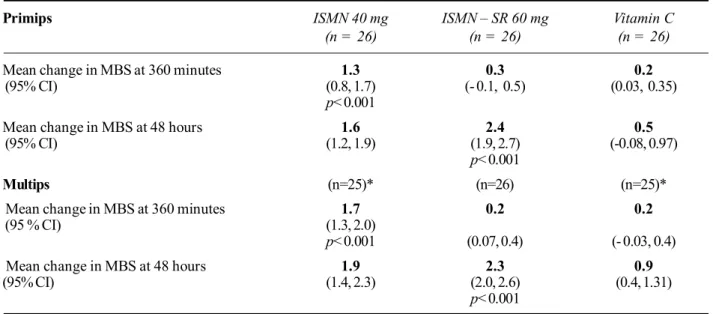
There was a significant increase (p< 0.001) of mean MBS by 1.3 (95% CI 0.8, 1.7) in primips and by 1.7 (95% CI 1.3, 2.0) in multips after 6 hours in the ISMN 40 mg treatment group and no significant increase thereafter. There was a significant increase (p< 0.001) of mean MBS by 2.4 (95% CI 1.9, 2.7) in primips and by 2.3 (95 % CI 2.0, 2.6) in multips after 48 hours in the ISMN SR – 60 mg treatment group. In the vitamin C treatment group there were no significant changes in the mean MBS even after 48 hours. There were no significant differences in the changes in the MBS between primips and multips (Table 2).
ISMN 40 mg ISMN – SR 60 mg Vitamin C
n = 51* n = 52 n = 51*
Number of primips 26 26 26
Mean age of primips – years 24.5 25 24.5
(95% CI) (23.2, 25.8) (23.6, 26.4) (22.9, 26.1)
Mean age of multips – years 29.0 29.1 28.6
(95% CI) (27.2, 30.8) (27.4, 30.8) (26.9, 30.3)
Mean MBS 3.45 3.50 3.40
(95% CI ) (3.3 - 3.7) (3 .3 - 3.7) (3.2 - 3.7)
Mean pulse rate – bpm 83.1 83.2 82.7
(95% CI) (80.9 - 85.3) (81.6 - 84.9) (81.4 - 83.9)
Mean SBP – mmHg 117.0 118.0 118.0
(95% CI) (114 - 120) (116 - 119) (115 - 120)
Mean DBP – mmHg 72.0 71.6 71.8
(95% CI) (69.3 - 74.6) (69.8 - 73.4) (69.7 - 73.9)
Mean PI 0.84 0.87 0.86
(95% CI) (0.83 - 0.90) (0.84 - 0.89) (0.82 - 0.90)
Mean RI 0.57 0.56 0.57
(95% CI ) (0.53 - 0.58) (0.54 - 0.58) (0.54 - 0.59)
Table 1. The basic characteristics of subjects (n = 154)
*One participant from each of these groups was excluded from the study due to pre-labour rupture of membranes.
ISMN – SR ISO-sorbide mononitrate slow releasing form
PI pulsatility index
SBP systolic blood pressure MBS modified Bishop Score DB diastolic blood pressure
RI resistance Index 95% CI 95% confidence Interval
Table 2. Mean changes in modified Bishop Score (n = 154)
Primips ISMN 40 mg ISMN – SR 60 mg Vitamin C
(n = 26) (n = 26) (n = 26)
Mean change in MBS at 360 minutes 1.3 0.3 0.2
(95% CI) (0.8, 1.7) (- 0.1, 0.5) (0.03, 0.35)
p< 0.001
Mean change in MBS at 48 hours 1.6 2.4 0.5
(95% CI) (1.2, 1.9) (1.9, 2.7) (-0.08, 0.97)
p< 0.001
Multips (n=25)* (n=26) (n=25)*
Mean change in MBS at 360 minutes 1.7 0.2 0.2
(95 % CI) (1.3, 2.0)
p< 0.001 (0.07, 0.4) (- 0.03, 0.4)
Mean change in MBS at 48 hours 1.9 2.3 0.9
(95% CI) (1.4, 2.3) (2.0, 2.6) (0.4, 1.31)
p< 0.001
*One participant from each of these groups was excluded from the study due to pre-labour rupture of membranes.
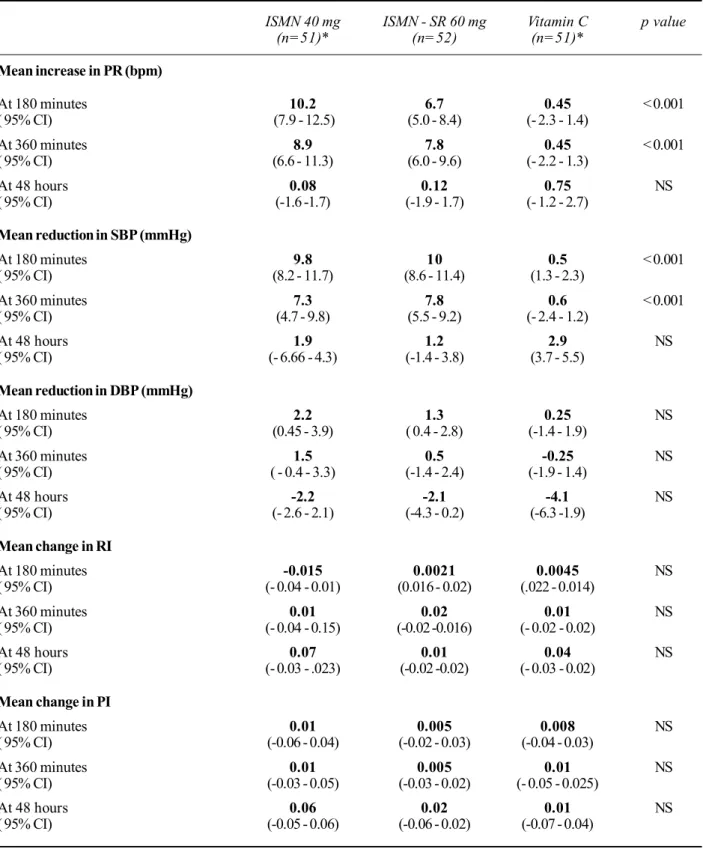
Table 3. Haemodynamic changes at 180 mins, 360 mins and 48 hours (n = 154)
ISMN 40 mg ISMN - SR 60 mg Vitamin C p value
(n=51)* (n=52) (n=51)*
Mean increase in PR (bpm)
At 180 minutes 10.2 6.7 0.45 < 0.001
( 95% CI) (7.9 - 12.5) (5.0 - 8.4) (- 2.3 - 1.4)
At 360 minutes 8.9 7.8 0.45 < 0.001
( 95% CI) (6.6 - 11.3) (6.0 - 9.6) (- 2.2 - 1.3)
At 48 hours 0.08 0.12 0.75 NS
( 95% CI) (-1.6 -1.7) (-1.9 - 1.7) (- 1.2 - 2.7)
Mean reduction in SBP (mmHg)
At 180 minutes 9.8 10 0.5 < 0.001
( 95% CI) (8.2 - 11.7) (8.6 - 11.4) (1.3 - 2.3)
At 360 minutes 7.3 7.8 0.6 < 0.001
( 95% CI) (4.7 - 9.8) (5.5 - 9.2) (- 2.4 - 1.2)
At 48 hours 1.9 1.2 2.9 NS
( 95% CI) (- 6.66 - 4.3) (-1.4 - 3.8) (3.7 - 5.5)
Mean reduction in DBP (mmHg)
At 180 minutes 2.2 1.3 0.25 NS
( 95% CI) (0.45 - 3.9) ( 0.4 - 2.8) (-1.4 - 1.9)
At 360 minutes 1.5 0.5 -0.25 NS
( 95% CI) ( - 0.4 - 3.3) (-1.4 - 2.4) (-1.9 - 1.4)
At 48 hours -2.2 -2.1 -4.1 NS
( 95% CI) (- 2.6 - 2.1) (-4.3 - 0.2) (-6.3 -1.9)
Mean change in RI
At 180 minutes -0.015 0.0021 0.0045 NS
( 95% CI) (- 0.04 - 0.01) (0.016 - 0.02) (.022 - 0.014)
At 360 minutes 0.01 0.02 0.01 NS
( 95% CI) (- 0.04 - 0.15) (-0.02 -0.016) (- 0.02 - 0.02)
At 48 hours 0.07 0.01 0.04 NS
( 95% CI) (- 0.03 - .023) (-0.02 -0.02) (- 0.03 - 0.02)
Mean change in PI
At 180 minutes 0.01 0.005 0.008 NS
( 95% CI) (-0.06 - 0.04) (-0.02 - 0.03) (-0.04 - 0.03)
At 360 minutes 0.01 0.005 0.01 NS
( 95% CI) (-0.03 - 0.05) (-0.03 - 0.02) (- 0.05 - 0.025)
At 48 hours 0.06 0.02 0.01 NS
( 95% CI) (-0.05 - 0.06) (-0.06 - 0.02) (-0.07 - 0.04)
*One participant from each of these groups was excluded from the study due to pre-labour rupture of membranes.
ISMN – SR iso-sorbide mononitrate slow releasing form NS not significant
PI pulsatility index
SBP systolic blood pressure DBP diastolic blood pressure
bpm beats per minute RI resistance index
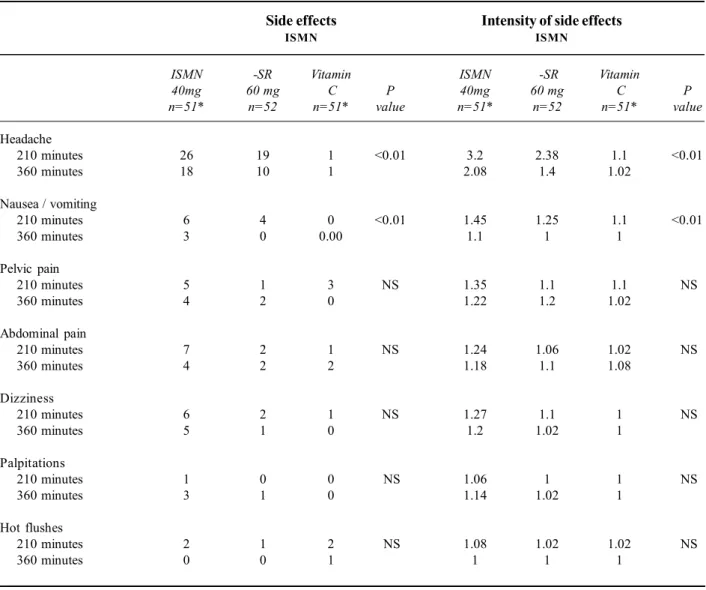
ISMN -SR Vitamin ISMN -SR Vitamin
40mg 60 mg C P 40mg 60 mg C P
n=51* n=52 n=51* value n=51* n=52 n=51* value
Headache
210 minutes 26 19 1 <0.01 3.2 2.38 1.1 <0.01
360 minutes 18 10 1 2.08 1.4 1.02
Nausea / vomiting
210 minutes 6 4 0 <0.01 1.45 1.25 1.1 <0.01
360 minutes 3 0 0.00 1.1 1 1
Pelvic pain
210 minutes 5 1 3 NS 1.35 1.1 1.1 NS
360 minutes 4 2 0 1.22 1.2 1.02
Abdominal pain
210 minutes 7 2 1 NS 1.24 1.06 1.02 NS
360 minutes 4 2 2 1.18 1.1 1.08
Dizziness
210 minutes 6 2 1 NS 1.27 1.1 1 NS
360 minutes 5 1 0 1.2 1.02 1
Palpitations
210 minutes 1 0 0 NS 1.06 1 1 NS
360 minutes 3 1 0 1.14 1.02 1
Hot flushes
210 minutes 2 1 2 NS 1.08 1.02 1.02 NS
360 minutes 0 0 1 1 1 1
Table 4. Number of women with side effects in the six hour period after the intervention (n=154)
Side effects Intensity of side effects
ISMN ISMN
*One participant from each of these groups was excluded from the study due to pre-labour rupture of membranes.
ISMN – SR Iso-sorbide mononitrate slow release form
MBS modified Bishop Score
95% CI 95% confidence interval
mins minutes
NS not significant
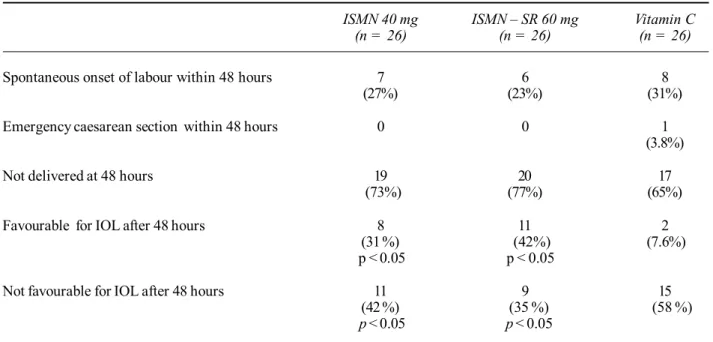
Greater proportions of primips (42 % with ISMN – SR 60 mg and 31% with ISMN 40 mg, p< 0.05) were favourable for IOL after 48 hours in comparison with the controls (7.6%). Greater proportions of multips (46 % with ISMN – SR 60 mg and 40% with ISMN 40 mg, p< 0.05) were favourable for IOL after 48 hours in comparison with the controls (16%). Within the first 48 hours of the intervention there were no significant differences in the proportions establishing spontaneous labour or requiring emergency CS among the three groups and between primips and
multips. Furthermore there were no significant differences between primips and multips in the proportions becoming favourable for IOL after ISMN therapy (Tables 5 and 6).
Table 5. Outcomes 48 hours after the intervention in the primips (n= 78)
ISMN 40 mg ISMN – SR 60 mg Vitamin C
(n = 26) (n = 26) (n = 26)
Spontaneous onset of labour within 48 hours 7 6 8
(27%) (23%) (31%)
Emergency caesarean section within 48 hours 0 0 1
(3.8%)
Not delivered at 48 hours 19 20 17
(73%) (77%) (65%)
Favourable for IOL after 48 hours 8 11 2
(31 %) (42%) (7.6%)
p < 0.05 p < 0.05
Not favourable for IOL after 48 hours 11 9 15
(42 %) (35 %) (58 %)
p < 0.05 p < 0.05
ISMN iso-sorbide mononitrate
ISMN – SR iso-sorbide mononitrate slow release form
IOL induction of labour
Table 6. Outcomes 48 hours after the intervention in the multips (n= 76)
ISMN 40 mg ISMN – SR 60 mg Vitamin C
(n = 25)* (n = 26) (n = 25)*
Spontaneous onset of labour within 48 hours 9 6 9
(36%) (23%) (36%)
Emergency caesarean section within 48 hours 1 1 0
(4%) (3.8%)
Not delivered at 48 hours 15 19 16
(60%) (73%) (64%)
Favourable for IOL after 48 hours 10 12 4
(40 %) (46%) (16%)
p < 0.05 p < 0.05
Not favourable for IOL after 48 hours 5 7 12
(20 %) (27 %) (48 %)
p < 0.05 p < 0.05
*One participant from each of these groups was excluded from the study due to pre-labour rupture of membranes
ISMN– iso-sorbide mononitrate
ISMN – SR iso-sorbide mononitrate slow release form
Table 7. Outcome in the women who underwent induction of labour (n = 47)
ISMN 40 mg ISMN – SR 60 mg Vitamin C
(n =18)* (n = 23) (n =6)*
Mean I /D interval in primips n = 8 n = 11 n = 2
undergoing IOL after 48 hours – minutes 317.5 329.7 342.1
(95% CI) (276 - 358) (282 - 377) (282 - 402)
p- NS
Mean I /D interval in multips n = 10 n = 12 n = 4
undergoing IOL after 48 hours – minutes 277 308 302
(95% CI) (203.5 - 351.2) (260 - 356) (263 - 340.5)
p- NS
Intrapartum emergency CS for failed IOL n = 2 n = 3 n = 1
or fetal distress in primips
Intrapartum emergency CS for failed IOL n = 0 n = 1 n = 1
or fetal distress in multips
Mean 5 min Apgar score of babies delivered n= 51 n = 52 n = 51
within 72 hours of the intervention 9.2 9.9 9.4
(95% CI) ( 9.04, 9.36) (9.82 , 9.98) (9.24 , 9.56)
I/ D Interval induction delivery Interval
IOL induction of labour
CS caesarean section
95% CI 95% confidence interval
NS not significant
Discussion
This trial provides further evidence that in comparison with vitamin C a placebo, vaginal administration of the NO donor ISMN results in greater ripening of the cervix in post dated pregnancies. Due to practical problems, the effects of the vaginal ISMN could be evaluated only up to 6 hours after the intervention on the first day. Therefore any effects occurring after 6 hours and up to 48 hours (the time of the next evaluation) would not have been detected in the current study. For example if a reduction of DBP occurred after 6 hours, especially in the group of women administered ISMN – SR 60 mg, it would have been missed. A study carried out in Norway demonstrated a mild but significant (p< 0.01) increase in maternal. PR and a mild but significant decrease of both SBP (p< 0.001) and DBP (p< 0.0001), 180 minutes after vaginal ISMN 40 mg. However, none of the women in that study required medical treatment [19]. In the current study, although a mild increase of maternal PR (p< 0.001) was noted in both ISMN 40 mg and ISMN – SR 60 mg groups, there was no significant reporting of palpitations by these women.
Although a mild headache was reported by 51% of women in the ISMN 40 mg group and 37% of women in the ISMN – SR 60 mg group, paracetamol was adequate to relieve their discomfort and no other clinically significant adverse effects were reported in the current study. As seen in the Norwegian study in the current study too there was no evidence of any adverse effects on the fetus detected by CTG and umbilical artery Doppler RI and PI [19].
The optimum dose, formulation and frequency of administration, and the value of repeated doses of vaginal ISMN, needs to be established. The feasibility and the acceptability of outpatient self medication with vaginal ISMN too needs further study.
Conclusions
When compared with the placebo vitamin C 100 mg, vaginal ISMN 40 mg and ISMN – SR 60 mg lead to significantly greater cervical ripening after 6 hours and 48 hours respectively. Therefore vaginal ISMN leads to more women becoming favourable for IOL. Vaginal ISMN does not affect placental blood flow but causes headaches and clinically insignificant maternal haemodynamic changes.
References
1. National Institute for Clinical Excellence. Inherited Clinical Guideline – Induction of Labour 2008, accessed 27 July 2010 available from URL: http:// guidance. nice.org.uk
2. Adeniji OA, Oladokun A, Olayemio O, et al. Pre induction cervical ripening: trans cervical Foley catheter versus intra vaginal misoprostol. Journal of Obstetrics and Gynaecology
2005; 25: 134-9.
3. Abramovici D, Goldwasser S, Bill CM, Mercer BM, Goldwasser R, Sibai MB. A randomized comparison of oral misoprostol versus foley catheter and oxytocin for induction of labour at term. American Journal of Obstetrics and Gynaecology 1999; 181: 1108-12.
4. Hales KA, Rayburn WF, Turnbull GL, Christensen HD, Patatanian E. Double-blind comparison of intracervical and intravaginal prostaglandin E2 for cervical ripening and induction of labour. American Journal of Obstetrics and Gynaecology 1994; 171: 1087-91.
5. Ramsey PS, Meyer L, Walker BA, Harris D, Ogburn PL. Jr, Heise RH, Ranin KD. Cardiotocographic abnormalities associated with dinoprostone and misoprostol cervical ripening. Obstetrics and Gynaecology 2005; 105: 85-90.
6. Maymon R, Shulmon A, Pomaranz M, Holtzinger M, Haimovich L, Bahary C. Uterine rupture at term pregnancy with the use of intravaginal prostoglandin E2 gel for induction of labour. American Journal of Obstetrics and Gynaecology
1991; 165: 368-70.
7. Osman I, MacKenzie F, Norrie J, Murry HM, Greer IA, Norman JE. The “PRIMP” study: a randomized comparison of prostaglandin E2 gel with the nitric oxide donor isosorbide mononitrate for cervical ripening before the induction of labour at term. American Journal of Obstetrics and Gynaecology 2006; 194: 1012 -21.
8. Hofmyer GS, Gulmezoglu AM. Vaginal misoprostol for cervical ripening and induction of labour. Cochrane Database of Systematic Reviews 2001; 3: CD 000941.
9. Chwalisz K, Garfield RE. Nitric oxide as the final mediator of cervical ripening. Human Reproduction 1998; 13: 245-52.
10. Vaisanen–Tommiska M, Nuutila M, Aittomaki K, Hiilesmaa V, Ylikorkala O. Nitric oxide metabolites in cervical fluid during pregnancy: further evidence for the role of cervical
nitric oxide in cervical ripening. American Journal of Obstetrics and Gynaecology 2003; 188: 779-85.
11. Sennstrom MKB, Brauner A, Lu Y, Granstrom LNM, Malmstrom Al, Ekman GE. Interleukin-8 is a mediator of the final cervical ripening in humans. European Journal of Obstetrics Gynecology and Reproductive Biology 1997; 74: 89-92.
12. Chwalisz K, Benson M, Scholz P, Daum J, Beier HM, Hegelehartung C. Cervical ripening with the cytokines interleukins-8, interleukins-1 and tumor necrosis factor
in guinea pigs. Human Reproduction 1994; 9: 29-35.
13. British Medical Association and Royal Pharmaceutical Society of Great Britain. British National Formulary 2008;
55: 110 -1.
14. Bates CD, Nicoll AE, Mullen AB, Mackenzie F, Thomson AJ, Norman JE. Serum profile of isosorbide mononitrate after vaginal administration in the third trimester. British Journal of Obstetrics and Gynaecology 2003; 110: 64-7.
15. Free Medical Dictionary. Accessed 31 May 2010 available from URL: http:// medical-dictionary.thefreedictionary.com/ Elantan.
16. Bulletic C, de Ziegler D, Flamigni C, et al. Targeted drug delivery in gynaecology: the first uterine pass mechanism.
Human Reproduction 1997; 12: 1073-9.
17. Nicoll AE, Mackenzie F, Greer IA, Norman JE. Vaginal application of the nitric oxide donor isosorbide mononitrate for preinduction cervical ripening: a randomized controlled trials to determine effects on maternal and fetal haemodynamics. American Journal of Obstetrics and Gynaecology 2001; 184: 958-64. Comment and author reply in American Journal of Obstetrics and Gynaecology 2002;
186: 593-4.
18. Rameez MFM, Goonewardene IMR. Nitric oxide donor isosorbide mononitrate for pre induction cervical ripening at 41 weeks’ gestation: a randomized controlled trial. The Journal of Obstetrics and Gynaecology Research 2007; 33: 452-6.
19. Ekerhovd E, Bullarbo M, Andersh B, Norstrom A. Vaginal administration of nitric oxide donor isosorbide mononitrate for cervical ripening at term: a randomized control study.
American Journal of Obstetrics and Gynaecology 2003;
189: 1692-7.
20. Bullarbo M, Orrskog ME, Andersch B, Granstro L, Norsrom A, Ekerhovd E. Outpatient vaginal administration of the nitric oxide donor isosorbide mononitrate for cervical ripening and labour induction post-term; a randomized controlled study. American Journal of Obstetrics and Gynaecology
2007; 196: 50. el -5.
21. Bollapragada SS, Mackenzie F, Norrie JD, Eddana O, Petrou S, Reid M, Norman JE. Randomized placebo-controlled trial of out patient (at home) cervical ripening with isosorbide mononitrate (IMN) prior to induction of labour – clinical trial with analyses of efficacy and acceptability. The IMOP study. British Journal of Obstetrics and Gynaecology 2009;
116: 1185-95.