Acknowledgements
The Capstone team extends sincere gratitude to the following individuals for lending their time and expertise to this project.
The preceptors at ATI provided ongoing vital support and feedback to the Capstone project, and were active participants in the learning process.
Kristin Linton, MA, LPC, ATR Hillary Rubesin, MA, LPC Ilene Sperling, MA, LPC-S, ATR
The ATI Capstone faculty adviser and teaching team members were invaluable in their guidance, availability, and support in thinking through questions that were brought to them.
Geni Eng, MPH, DrPH Megan Landfried, MPH Christine Agnew-Brune, MPH Melissa Cox, MPH
Teachers and administrators from Chapel Hill-Carrboro City Schools, ATI Board Members, area experts in refugee health, community members from Burma in the Triangle area, and non-profit experts from the University of North Carolina at Chapel Hill, all provided guidance and acted as resources throughout the process.
Chapel Hill-Carrboro City Schools: Stephanie Willis, MPH
Laura Campagna ATI Board: Heidi Wulczyn Refugee Health:
Susan Clifford, MSW, MPH
Community Members: Flicka Bateman, Ed.D Pam Buck
Eh Tha Pwee Jimmy Shwe Moo
Acronyms and Relevant Terms
Acronyms
ATI: Art Therapy Institute
BAPT: Burma Art Therapy Project
CDC: United States Centers for Disease Control and Prevention ESL: English as a Second Language
IRB: Institutional Review Board NC: North Carolina
PTSD: Post-Traumatic Stress Disorder UNC: University of North Carolina
UNHCR: United Nations High Committee on Refugees
Relevant Terms
Art therapy: A form of psychotherapy “based on the idea that the creative process of art making is healing and life enhancing and is a form of nonverbal communication of thoughts and feelings” (Malchiodi, 2003).
Dissemination: “Planned, systematic efforts designed to make a program or innovation more widely available to a target audience or members of a social system” (Glanz, Rimer, & Viswanath, 2008, p. 314).
Fidelity: “The extent to which the intervention was delivered as planned” (Morocco, 2012)
Grey Literature: Literature that is not available through traditional pathways. It is usually produced by government agencies, universities, corporations, research centers, associations and societies, and professional organizations (Turner et al., 2005).
Practice-Based Evidence: Evidence that is based on documentation and measurement of real-world practice (Swisher, A.K., 2010).
Stakeholder: “People or organizations that are invested in the program, are interested in the results of the evaluation, and/or have a stake in what will be done with the results of the evaluation” (CDC, 2011). Triangle: A region in the Piedmont of the state of North Carolina that encompasses the cities of Durham and Raleigh and the towns of Chapel Hill and Carrboro, North Carolina.
Executive Summary
For the past fifty years, Burma has been in a state of civil strife. Since 2007, the United States has provided refuge to at least 14,000 people from Burma annually; since 1990, more than 450 of these individuals have been relocated to the Triangle area through North Carolina Social Services.
Research has consistently linked the experience of trauma from the refugee experience to mental health issues. Refugee children and adolescents are particularly vulnerable to this trauma and experience insomnia, anxiety and depressive symptoms, academic difficulties, relationship and behavioral problems, and somatic concerns. It is estimated that up to 40% of young refugees may have psychiatric disorders, mainly post-traumatic stress disorder, depression, and other anxiety-related impediments.
Art therapy is a psychotherapy modality that uses art and the creative process to help clients explore their emotions
.
Preliminary research indicates that art therapy provides an “effective tool for refugees to begin to explore some of the experiences associated with war, oppression, exile and resettlement”. To address the mental health issues for refugee students and adults in the Triangle community, the Art Therapy Institute (ATI) began the Burma Art Therapy Project in 2009. The Burma Art Therapy Project provides art therapy to refugee students from Burma in the Chapel Hill-Carrboro City School District, as well as to adults at the Carrboro Community Health Center. In order to enhance and evaluate their work in schools, the Art Therapy Institute formed a relationship with the UNC Gillings School of Global Public Health at the University of North Carolina at Chapel Hill. As a result, four second-year Master of Public Health students (the Capstone team) in the Department of Health Behavior partnered with the Art Therapy Institute to work together on a Capstone project. The goals of thisCapstone project were to design an evaluation of, and pursue funding for, the Burma Art Therapy Project. To reach these goals, the Capstone team completed five deliverables, in conjunction with and under the supervision of mentors from the Art Therapy Institute and the Department of Health Behavior. Two of the deliverables, the funding guide and funding application, sought to increase and support the sustainability of the funding structure for the Burma Art Therapy Project. The funding guide provided much of the necessary language for the funding application and helped organize the documents which are often requested in funding applications. The other deliverables - the outcome evaluation plan, outcome evaluation assessment tools, and evaluation report - established a structure for a consistent and sustainable evaluation that can be carried out by ATI in the future. Sustainable evaluations will strengthen ATI’s financial position in two ways. First, ATI will be able to implement the evaluation with limited need for additional outside funding. Second, showing effectiveness of the program on mental health outcomes will strengthen ATI in its future applications for funding.
Contents
Acknowledgements ... ii
Acronyms and Relevant Terms ... iii
Acronyms ... iii
Relevant Terms ... iii
Executive Summary ... iv
Introduction ... 6
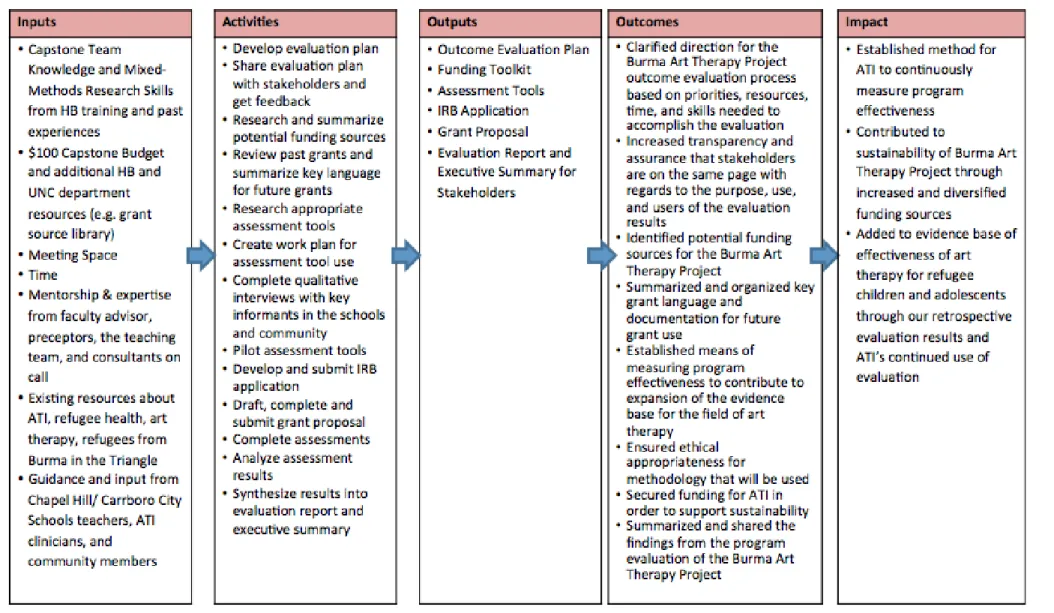
Figure 1: Capstone Logic Model ... 8
Background ... 9
Context and Significance ... 9
Mental Health of Refugee Children ... 9
Mental Health Interventions for Refugee Children ... 10
Art Therapy Description and Evidence Base for Art Therapy ... 11
Rationale for Capstone Team Approach ... 13
Deliverables ... 14
Discussion ... 19
Stakeholder Engagement ... 19
Lessons Learned and Skills Developed ... 21
Impact of Capstone Work on Art Therapy Institute ... 23
Impact of Capstone Work on the Field of Refugee Mental Health ... 24
Considerations for Sustainability ... 24
Recommendations for Next Steps ... 26
Conclusion ... 26
Introduction
This Capstone Summary Report provides an overview of the work of the Capstone team, details all activities completed over the past year, and describes the importance of this work. The Capstone Summary Report and associated deliverables were completed by the 2012-2013 Art Therapy Institute Capstone team from the Department of Health Behavior at the University of North Carolina (UNC) Gillings School of Global Public Health. This report, in conjunction with the Capstone project deliverables, replaces the Graduate School Master’s thesis requirement. This report summarizes and serves as a record of this two-semester mentored service-learning experience.
ATI’s mission is to “bring art therapy to people in the community where they are every day,” to improve access to mental health services for diverse populations, and to promote education and awareness about art therapy (ATI, 2013). Art therapy is a sometimes non-verbal form of psychotherapy that uses art
to help clients explore their emotions
.
During art therapy sessions, clients are asked to complete a piece ofart and invited to tell a story about it, with facilitated interpretation by the therapist (Malchiodi, 2003). Art therapy has been cited as a promising tool to address mental health symptoms of refugee children
(Rousseau, Drapeau, Lacroix, Bagilishya & Heusch, 2005; Eaton, Doherty & Widrick, 2007).
Since 2009, ATI has successfully developed and implemented an art therapy program to provide art therapy to over 100 refugee students from Burma1 in Chapel Hill-Carrboro CitySchools, through their Burma Art Therapy Project. In the process, ATI identified a need for further assistance to: a) ensure financial sustainability of the program, b) examine how the program impacts clients, and c) expand services to all clients in need. Together these outcomes would enhance organizational sustainability and ATI’s efforts to decrease mental health symptoms in refugee clients from Burma. To address its needs in
these areas, ATI’s Executive Director requested a 2012-2013 Capstone team.
With the contribution of existing resources (e.g., meeting space, time, knowledge about the issue, mentorship), guidance and input from stakeholders (e.g., Chapel Hill-Carrboro City Schools teachers,
1
ATI board members and clinicians), and assistance from UNC Department of Health Behavior (e.g., expertise from the faculty adviser and teaching team), the Capstone team built on their prior training and coursework to meet ATI’s request for assistance. The Capstone team applied their skills to conduct interviews with key informants; develop and submit an Institutional Review Board (IRB) application; research and summarize funding sources and grant language; apply for funding; develop an evaluation plan; research, pilot, and analyze results for appropriate assessment tools; and create an evaluation report. These resources (i.e., inputs) and activities are summarized in the first and second column of the project logic model (Figure 1), respectively.
The Capstone team’s subsequent outputs included an outcome evaluation plan, a funding toolkit, outcome evaluation assessment tools, an IRB application, a grant proposal, and an evaluation report. The intended outcomes were to clarify the direction for the Burma Art Therapy Project outcome evaluation process, increase transparency with stakeholders regarding program activities, identify potential program funding sources, summarize key grant language for future use, establish a means of measuring program effectiveness, ensure ethical appropriateness of program activities with clients, secure funding for future ATI activities, and disseminate results. Ultimately, the impact of these outcomes will be to provide a framework within which ATI can continuously monitor program effectiveness, build sustainability through increased and varied funding sources, and add to the evidence-base of art therapy for refugee children and adolescents. The work done by the Capstone team was proposed by ATI and negotiated between ATI, the Capstone team, the faculty advisor, and the teaching team, through the work plan. The evaluation was exempted from further review, by not meeting the criteria of research, by the University of North Carolina Institutional Review Board (IRB), IRB designation number 12-2074.
The following sections of this summary report provide background information on child refugees from Burma by discussing mental health issues facing refugee children, previous interventions to address mental health concerns of refugee children, an introduction to art therapy, and the evidence-base for art therapy’s effectiveness with refugee children. The report also presents the Capstone team’s deliverables
Background
Context and Significance
The purpose of this background section is fourfold: to provide context for the need for mental health services for refugees from Burma, to synthesize existing literature on the mental health of refugee children and adolescents from Burma, to explain the use of art therapy as a treatment for mental health disorders among refugees, and to justify the need for an evaluation of an art therapy program in the Chapel Hill-Carrboro City School System.
In 2011, the United Nations High Committee on Refugees (UNHCR) estimated that there were approximately 15.5 million refugees in the world, around 46% of whom were children under the age of 18 (UNHCR, 2012). According to the 1951 United Nations Convention relating to the Status of Refugees, a refugee is defined as "a person outside of his or her country of nationality who is unable or unwilling to return because of persecution or a well-founded fear of persecution on account of race, religion,
nationality, membership in a particular social group, or political opinion” (United Nations, 1951). Since 1962, more than 400,000 refugees have fled Burma because of poverty, famine, war, trauma, political violence, and severe human rights violations. As a result of the stressors faced before and after their immigration to resettlement countries, child and adolescent refugees from Burma often experience multiple mental health disorders (Schweitzer, Brough, Vromans, & Asic-Kobe, 2011). Between October 2010 and September 2012, more than 31,000 refugees from Burma relocated to the United States (Martin & Yankay, 2012; UNHCR, 2012; U.S. Department of State, 2013). Resettlement agencies in the Triangle area, such as Lutheran Family Services, provide social and legal support to refugees. Since 1990, more than 450 individuals from Burma have been relocated to the Triangle area through North Carolina Social Services (G. Andersen, personal communication, February 14, 2013).
Mental Health of Refugee Children
vulnerable to this trauma and experience insomnia, anxiety and depressive symptoms, academic
difficulties, relationship and behavioral problems, and somatic concerns (Birman et al., 2005; Lustig, Kia-Keating, Knight, Geltman, Ellis, Kinzie, & Saxe, 2004; Fazel et al., 2005; Murray, Cohen, Ellis, & Mannarino, 2008; van Wyk et al, 2012). An estimated 40% of young refugees may have psychiatric disorders, mainly post-traumatic stress disorder (PTSD), depression, and other anxiety-related impediments (Hodes, 2000). Part of these mental health disorders stem from additional stressors that young refugees must undergo upon resettlement, referred to as acculturative stress (Schweitzer et al., 2011; Lustig et al., 2004). Adolescents must manage new school environments, cope with parental pressure to succeed academically, navigate new roles as translators and cultural brokers for parents, and balance cultural identity concerns (Birman et al., 2005).
Data specific to refugee children from Burma is scarce, but similarities in culture and refugee experiences allow studies conducted with other South East Asian child refugee populations to be used as reference. In a small, rigorous study of Cambodian refugee adolescents in the United States (N = 40), four years after leaving Cambodia, 50% of participants met criteria for PTSD and 53% met clinical thresholds for depression (Kinzie, Sack, Angell, Manson, & Rath, 1986). At 12 years follow-up, the PTSD rate was 35%, and 14% reported depressive symptoms (Kinzie et al., 1989; Sack, Him, & Dickason, 1999). These findings suggest that the effects of traumatic experiences persist long after immigration. It is important to note that this study population was selected specifically for their severe trauma experiences; the rates may be lower among the general child refugee population from Burma (Kinzie et al., 1989; Sack et al., 1999). Still, these findings suggest that the mental health of adolescent refugees who have experienced trauma remains a substantial concern for many years after relocation.
Mental Health Interventions for Refugee Children
health care screenings and services (Lustig et al., 2004). Moreover, while research has consistently documented the prevalence of mental health disorders among refugee children (Lustig et al., 2004;
Murray et al., 2008; Hodes, 2000), systematic reviews of the mental health treatment literature have found a lack of effective interventions to improve the mental health needs of both refugee adults and children (Birman et al., 2005; Ehntholt & Yule, 2006; Lustig et al., 2004). The limited evidence base can be attributed to ethical challenges associated with conducting research with refugee populations, difficulties in establishing validated measures, and lower priority given to psychological interventions (Murray, Davidson, & Schweitzer, 2010). The majority of published articles that focus on the mental health
outcomes of refugee children are descriptive reports, case studies, or small cohort studies that focus on the alleviation of symptoms of PTSD (Murray et al., 2008; Lustig et al., 2004). Due to their insufficient evidence base and limited focus, it is difficult to draw conclusions from these study results.
Ehntholt and Yule (2006) have identified that certain treatments, such as cognitive behavioral treatment, narrative exposure therapy, eye movement desensitization and reprocessing, and testimonial psychotherapy, may be used to target reductions of specific mental health disorders among refugee children. However, many of these programs are narrowly focused on one mental health disorder. As a result, experts argue that comprehensive services are needed to address the wide range of stressors and symptoms that child and adolescent refugees face (Lustig et al., 2004, Birman et al., 2005). Researchers have proposed that interventions that can best address this issue are tailored with culture in mind, are provided in schools, and focus on ecological approaches to target multiple symptoms of various mental health disorders (Lustig et al., 2004).
Art Therapy Description and Evidence Base for Art Therapy
Art therapy addresses both the mental health disorders present among refugee children and the insufficiency of existing mental health services. According to the American Art Therapy Association, art therapy is “based on the idea that the creative process of art making is healing and life enhancing and is a form of nonverbal communication of thoughts and feelings” (Malchiodi, 2003). During initial sessions,
facilitated interpretation by the therapist (Malchiodi, 2003). Experts have hypothesized that the process of self-discovery, cathartic release, and non-verbal and verbal communication equips participants with the capacity to cope with the reality of trauma and accompanying emotions (Eaton et al., 2007).
Researchers have recently begun evaluating studies of art therapy for use with refugee children. Rousseau et al. (2005) conducted an evaluation of a 12-week workshop with immigrant and refugee children in Quebec. Weekly, two-hour long sessions were run by an art therapist and a psychologist and included three types of activities: verbal expression (telling stories), non-verbal means of expression (picture drawing), and time devoted to sharing and presenting work in groups (Rousseau et al., 2005). Researchers found that children in the experimental group reported a significantly lower mean level of negative mental health symptoms than those in the control group, and experienced higher mean levels of feelings of popularity and satisfaction (Rousseau et al., 2005). While these results are limited by study design (i.e., a lack of randomization) and a relatively short follow-up period, they suggest that art therapy holds promise for use with refugee children (Rousseau et al., 2005). In support of these findings,
Fitzpatrick conducted a case study research design with two refugees in Australia to evaluate the use of art therapy (Fitzpatrick, 2002). While a study population of two presents methodological limitations, the results from this qualitative study indicated that art therapy provided an “effective tool for refugees to begin to explore some of the experiences associated with war, oppression, exile and resettlement”
(Fitzpatrick, 2002, p. 151).
Other evidence from the grey literature suggests the potential of art therapy for use with refugees. For instance, the UNHCR reported that children in refugee camps who were given art supplies and lessons found it less disturbing to relive their memories through painting, and used artwork as a means of expression (McArdle & Spina, 2007). While empirical evaluations of art therapy with refugees are scarce, expert opinion, which can provide a basis for decision-making and considered action with limited
Lessons can also be drawn from art therapy’s use with traumatized children. Eaton et al. (2007)
conducted a literature review on the efficacy of 12 peer-reviewed evaluations of art therapy interventions with traumatized children who had experienced physical or sexual abuse, violence during warfare, terrorist attacks, exposure to gun violence, or the loss of a loved one. The data they reviewed from qualitative and quantitative studies were encouraging for the use of art therapy as an effective method of treatment for the negative psychosocial consequences of childhood trauma (Eaton et al., 2007). For instance, several studies found that art therapy allowed children to develop a positive relationship with their therapists and could be used to treat negative psychosocial consequences of trauma (Eaton et al., 2007). However, researchers noted several limitations, including the use of case study methods, a lack of clear specification on psychological symptoms, variation in the type of art therapy methodology, and non-statistical observations on outcome variables (Eaton et al., 2007). Orr (2007) also conducted a review of art therapy with children who had experienced a disaster. Through a content analysis of 31
communications, Orr found that art offered a way for children to communicate grief and loss, and hypothesized that it could be used as a long-term coping resource (Orr, 2007). However, most of the reviewed communications discussed ideas about what has been done or should be done with children after a disaster, rather than rigorously testing new theories (Orr, 2007). Together, these two reviews offer encouraging results for the use of art therapy with children who have experienced trauma or disasters; however, more evidence and evaluation is needed to validate the use of art therapy with refugee children.
Rationale for Capstone Team Approach
of “practice-based evidence” to evaluate existing community services rather than develop clinical trials to
evaluate specific modalities (2005, p. 20). By understanding how existing programs operate, resources can be better expended on practices that are successful within their community setting and have overcome barriers to implementation, financing, access, sustainability, and cultural competence. The Capstone team used the practice-based evidence approach to design an outcome evaluation of an existing art therapy program in Chapel Hill-Carrboro City Schools for refugee children from Burma; evaluation of this program could contribute to the literature on the use of art therapy with refugee children. Additionally, an evaluation will support the Capstone team’s goals to increase funding and sustainability of the program.
Deliverables
The Capstone team had five main deliverables in working towards the goals of increasing funding for, and evaluating, the Burma Art Therapy Project. The work was outlined in a work plan created by the Capstone team and preceptors, under advisement of the teaching team and faculty advisor, to address the needs of the Art Therapy Institute. Two of the deliverables, the funding guide and grant proposal, sought to increase and support the sustainability of the funding structure for the Burma Art Therapy Project. The funding guide provided much of the necessary language for the funding application and helped organize the documentation, such as the program budget and Form 990s, which are often requested in funding applications. The other deliverables- the outcome evaluation plan, outcome evaluation assessment tools, and evaluation report - established a structure for a consistent and sustainable evaluation that can be carried out by ATI itself. Each deliverable was reviewed by Capstone mentors then edited and finalized by the Capstone team before dissemination. Further details on each of these deliverables including the purpose, activities, key findings, and recommendations can be found in the tables below.
Deliverable I: Outcome Evaluation Plan
Format: 25 page evaluation plan that details the criteria for how outcomes and tools were
chosen to assess mental health symptoms of clients from the Burma Art Therapy Project. It also includes information on an evaluation timeline and evaluation design.
Purpose: To provide a framework for monitoring activities and analyzing evidence to
Activities: Reviewed CDC’s evaluation framework to structure evaluation
Reviewed grants and publications of ATI to compile listed outcomes of art therapy programming
Conducted a literature review on art therapy evaluations using the search terms art therapy, evaluation, art, & refugee
Clarified ATI’s goals and objectives by having the clinicians select prioritized outcomes for the evaluation
Identified validated instruments for the prioritized outcomes
Drafted outline for the evaluation plan
Developed evaluation questions and methods
Created an implementation plan and timeline
Created an analysis and interpretation of results plan
Created a dissemination plan
Documented lessons learned as a Capstone team when creating an evaluation plan
Finalized evaluation plan
Shared final evaluation plan with ATI clinicians and next year’s Capstone team
Key Findings: Evaluations should be tailored to the specific needs of the partner organization.
Evaluation questions guide both the outcomes assessed and the methodology of the evaluation.
Stakeholders should be active participants in the design of the evaluation to ensure fit and sustainability.
Recommendations: Create trainings to ensure all ATI clinicians implement evaluation plan with
fidelity.
Provide training and support for ATI staff in entering and analyzing data in a twice annually to allow for regular reflection on the project and evaluation results.
ATI staff should revisit the evaluation protocol with ATI clinicians annually to ensure it still meets ATI’s needs.
ATI staff should use evaluation data and outcome results in future grant applications to secure funding for the Burma Art Therapy Project.
Deliverable II: Funding Toolkit
Format: 80 page Funding Toolkit that provides descriptions of ATI’s programming, goals
and objectives, target population, partnerships, the evidence base for art therapy, illustrative quotes from stakeholders (e.g., clients, community members), ATI’s budget, promising funders, and additional funding opportunities.
Purpose: To provide ATI with a summary of potential funding sources, ideas for
diversifying funding, and common language for grant writing that can be used to streamline funding application processes. The guide is specifically geared for the Burma Art Therapy Project and can be used by ATI staff when applying for funding.
Activities: Clarified the toolkit format and created a template using an example from a
previous Capstone team
Identified funding criteria and possible partnering organizations
sources and find relevant funding opportunities
Identified local foundations in Chapel Hill and Carrboro
Wrote a letter describing the work and need of the Burma Art Therapy Project for distribution to local foundations
Sent letters informing local foundations of ATI’s work
Reviewed past ATI grant applications and organized/edited language
Researched major grantors and their requirements
Sent inquiries to multiple large grantors through online forms and emails
Drafted funding toolkit containing available funding opportunities for ATI and “boilerplate” language commonly requested in grants
Met with UNC faculty members who work with non-profits for guidance on capacity-building needs and wrote appendix of considerations for ATI
Collected and organized agency documentation commonly requested by potential funders, e.g., approval of 401(c)(3) status and liability insurance
Included appendices in the funding toolkit with capacity building needs for future grant proposals and other funding sources and solicitation opportunities
Shared draft with Capstone project mentors to help identify gaps
Finalized funding guide, shared with ATI clinicians
Key Findings: Many funders that provide larger grants require that the organization has been
audited.
Many larger grantors are looking for specific projects or populations to fund.
Recommendations: The boilerplate language will need to be tailored for each grant opportunity.
The boilerplate language in the funding guide will need to be updated with new demographics, program size, budget, etc. each year by ATI clinicians or interns.
Once evaluation data become available and are analyzed, ATI should include these data in its funding applications.
As smaller grant funding increases, it is recommended ATI get audited. Larger opportunities will then become more viable.
Deliverable III: Assessment Tools
Format: 18 page document that details five outcome evaluation instruments, six process
evaluation measures, and a description of the protocol that will be used to pilot the evaluation plan.
Purpose: To have a means of measuring program effectiveness in order to expand the
evidence base for the Burma Art Therapy Project and for the field of art therapy. The assessment tools deliverable is written for ATI clinicians to provide
background for the evaluation.
Activities: Researched and acquired appropriate outcome assessment tools: the Diagnostic
Drawing Series, the Harvard Trauma Questionnaire, the Hopkins Symptom Checklist-25, the Piers-Harris Children’s Self-Concept Scale, the Strengths and Difficulties Questionnaire
Submitted assessment tools to stakeholders (i.e., ATI clinicians, Chapel-Hill Carrboro school teachers) for review of the tools’ appropriateness and feasibility
Incorporated revisions to assessment tools
Created questions to ask students and clinicians for pilot of assessment tools
Wrote pilot protocol
Identified art prompts that ATI clinicians would use to accompany assessment tools
Revised pilot protocols and questions
Assisted ATI in design of informed consent for pilot participants
Piloted assessment tools with nine ATI student-clients
Synthesized data from assessment tools pilot
Finalized assessment tools
Shared final evaluation plan with ATI clinicians and next year’s Capstone team
Key Findings: Given limited time and resources, criteria were useful in prioritizing tools over
one another. These criteria included: feasibility, evidence, cost, language, time, training, evidence, and analysis.
The process for selecting assessment tools was collaborative and iterative. The final tools reflected input from multiple parties, including public health practitioners and clinicians.
Recommendations: A utilization-focused evaluation, or an evaluation that is conducted for and
targeted to intended users, should be used to take into consideration who will use the results from the piloting of the assessment tools and to tailor the tools to such stakeholders.
All stakeholders (e.g., ATI clinicians, Chapel-Hill Carrboro school teachers, and clients of the Burma Art Therapy Project) should understand the use and purpose of assessment and evaluation, as both of these issues will affect implementation of the evaluation.
Stakeholders, particularly ATI clinicians, should be engaged in
implementation of assessment tools, which can increase their buy-in and lead to sustainability of the evaluation in subsequent years.
Deliverable IV: Grant Proposal
Format: 25 page written application that includes: application form and additional
materials, such as tax certification, board affiliations, Certificate of Liability Insurance, Form 990, proof of 3R payment, program budget, budget summary, Solicitation License, and signed cover sheet.
Purpose: To gain funding from external funders, in order to support continued
sustainability for ATI. The grant proposal will also be used by ATI to complement the Funding Guide as reference materials for future funding applications.
Activities: Reviewed guidelines of viable grants
Chose Chapel Hill-Carrboro Human Services Agency funding opportunity to pursue, with approval with teaching team and preceptors
Carefully reviewed application requirements
Drafted grant proposal narrative, answered application-defined questions, and included information from Funding Guide as applicable
Received organization and program budget from ATI and adapted it to grant parameters
Deliverable V: Evaluation Report
Format: 23 page Evaluation Report that includes the background and purpose of the pilot of
the evaluation plan, methodology used during the pilot, results of the pilot (i.e., data from assessment tools and data clinicians, clients, and teachers on the pilot process), strengths and weaknesses of the pilot, recommended changes to
assessment tools and the evaluation process, and a one-page summary that can be disseminated to stakeholders (e.g., clinicians, funders, community-members).
Purpose: To summarize and share the findings from the pilot evaluation of the Burma Art
Therapy Project with ATI board members, ATI clinicians, ATI donors, Chapel Hill-Carrboro teachers, school officials, and clients participating in the ATI Burma Art Therapy Project.
Activities: Outlined evaluation report with guidance from the CDC evaluation framework
Drafted background and methods sections
Assembled support materials requested in application not previously collected in Funding Guide
Contacted funder and asked clarification questions
Revised draft funding application based on discussions and communication with preceptors
Submitted grant proposal to funder according to application instructions
Assisted ATI in preparing for, and attended, public hearing on grant proposal
Collected feedback on grant proposal process and outcome from member of the Orange County Human Services Board
Identified areas for improvement and made revisions on grant proposal for upcoming years
Finalized revisions to grant proposal, submitted to ATI
Key Findings: Previously assembled boilerplate language on history, mission, and goals of
organization that are available for adaptation, and copies of standard forms, are very helpful.
It is important to pay close attention to detailed aspects of the grant
application. Failure to follow directions can cause funders to lose faith in the organization’s ability to focus on details, and consequently in their ability to handle funds.
Implementing the grant application process allows grant writers to ask
questions and see the applicant organization in a new and more complete way.
Recommendations: The Capstone team and ATI should engage in a dialogue to gain a common
understanding of the type of funding opportunities to pursue, the design of activities to be implemented or funding needs (e.g., operational funding, clinical activities, or evaluation), and the timeline of the grant application.
In order to pursue larger funding opportunities in the future, ATI should consider investing in an audit or other external analysis of ATI’s responsible use of funds to provide to potential funders.
ATI should write out, in detail, an overview of its funding model and operational structure to support future grant proposals, and to familiarize future volunteers/stakeholders with ATI’s unique operational system.
Listened to the recording of each clinician session
Created Microsoft Excel spreadsheets for each assessment tool, demographic data collection, and for compilation of all data
Entered data for each assessment tool
Analyzed data of each assessment tool
Entered data for each assessment tool into central database
Summarized preliminary results for each tool and across tools by describing the data findings and how they compared to the “norm” for adolescents when appropriate (Hopkins Checklist, Piers-Harris Scale, and Strengths and Difficulties Tool)
Compiled references and appendices
Created one-page version of evaluation, written to be accessible to any audience, to distribute to stakeholders
Finalized evaluation report
Presented deliverables, with focus on evaluation report, to ATI clinicians at monthly clinician meeting
Key Findings: The target population of refugee clients from Burma experience higher rates of
mental health issues than the general population of the same age.
The evaluation plan is feasible and acceptable to all stakeholders.
Main problems with the evaluation were the following: difficulties with confusing words on the assessment tools, variability in administration of the assessment tools, and confusion over how to troubleshoot for problems.
Recommendations: ATI and the next Capstone team should train all clinicians on the data entry
process to alleviate overburdening anyone.
Problems and troubleshooting should be discussed among the whole group of participating clinicians to ensure implementation fidelity.
ATI should consider the viability of expanding evaluations to other programs beyond the Burma Art Therapy Project.
ATI and the next Capstone team should incorporate process questions into the evaluation protocol for subsequent years.
Discussion
Stakeholder Engagement
During the Capstone project, engaging with stakeholders was an important step in ensuring that all deliverables were useful and appropriate to the context and the community that the Capstone team served. A major strength of this project was the close connection between the Capstone team and members of ATI’s staff. This connection was fostered through weekly meetings, check-ins about the
input on the work. Face-to-face discussions helped prevent miscommunication that might otherwise have arisen from misunderstandings in vocabulary, perspective, and intention. During weekly meetings, ATI staff engaged the Capstone team through regular art-making sessions. These activities gave the Capstone team insight into ATI’s work, provided a time for fun and relaxation, and encouraged bonding between the Capstone team and ATI staff.
The Capstone team also connected with other ATI clinicians and stakeholders by attending board meetings and art walks, seeking feedback on the Capstone team’s work, providing support at fundraisers, and presenting the results of the Capstone work to clinicians at the close of the project. Conversations with clinicians helped ensure that the evaluation plan and assessment tools were feasible, appropriate, and responsive to their needs. For instance, clinicians helped prioritize outcomes, such as depression and anxiety, which helped the Capstone team select assessment tools to measure the prioritized outcomes. The Capstone team also worked with Chapel Hill and Carrboro teachers and administrators to make certain that the team’s work was designed with their input and perspective. To do so, they met with an English as a Second Language (ESL) teacher and the Health Coordinator from Chapel Hill-Carrboro City Schools in order to fully understand the school systems’ perspective of their work. The interview with the ESL teacher confirmed that teachers would be valuable partners during the evaluation process and the best methods to solicit information from teachers on the clients from the Burma Art Therapy Project.
The Capstone team also sought to understand the larger context of the services and work being done with the refugee from Burma population. The Capstone team participated in Orange County Refugee Health Coalition meetings, spoke with a doctoral student in Psychiatry from Duke whose work focuses on refugee mental health, and met with a doctoral student in Education at UNC who had
previously written grants with ATI. The Capstone team also met with a community gatekeeper who runs a community center for refugees to better understand the community context and her perspective on the services needed and available to the refugee from Burma community, and attended events for
Burma. These conversations with other organizations involved with the refugee community provided context on the lives of the refugees which informed the Capstone team’s activities.
The Capstone team’s stakeholder engagement could have been strengthened by increased communication and engagement with stakeholders in the refugee community. For example, team members could have attended a school-based art therapy group, asked a community member to review deliverables and provide input, or engaged refugee youth in decision making about the focus of the evaluation of the Burma project.
Lessons Learned and Skills Developed
The Capstone project is designed to benefit ATI by providing expertise and building capacity. The Capstone project also benefits the Capstone team by allowing them to use skills gained in the classroom, while simultaneously solving real-world problems and working with a community partner. Below are some of the skills the 2012-2013 ATI Capstone team gained while implementing this project. These include experience with literature reviews and IRB applications, program support competencies like evaluation design and implementation, proficiencies in community and stakeholder engagement, fundraising, grant writing, and data analysis and dissemination.
Literature reviews. The Capstone team conducted a literature review on refugee mental health, interventions focused on refugee mental health, art therapy, evaluation of art therapy interventions, and culturally appropriate instruments for measuring mental health symptoms of refugees from Burma. This activity increased the team’s capacity to digest and synthesize public health literature and make evidence-based recommendations for public health programs.
Community and stakeholder engagement. Throughout the year, the Capstone team met regularly with ATI staff to obtain guidance and input for all phases of the work. This ensured that the final deliverables would be appropriate for the refugee community context and ensured use after the Capstone project. Additionally, by incorporating and managing stakeholder expectations, the Capstone team was able to design and tailor programs so that they would be acceptable to all stakeholders,
team to incorporate community perspectives into their future work as public health researchers and practitioners.
Evaluation design and implementation. The Capstone team was involved in every step of the design and evaluation of the pilot test for the evaluation tools of the Burma Art Therapy Project. Through this process, the team learned how to design evaluation questions, create criteria for selecting evaluation instruments, and write an evaluation protocol. This led to skills in creation of a plan for implementation, data analysis, and dissemination of the findings from the pilot assessment to other ATI staff (i.e., clinicians). By using evaluation frameworks and discussing the difficulties that arose during the implementation of the pilot, the Capstone team was able to thoughtfully and thoroughly work through evaluation complexities that will occur in future projects.
Grant writing and fundraising. This project strengthened the team’s ability to both locate and apply for a variety of funding sources. The team sent letters of inquiry to private foundations, applied to local government grants, and identified larger national funding sources as possibilities for future ATI funding. Creating a funding guide to support future grant applications increased ATI’s capacity to apply
for funding and taught the team the essential components in a proposal. Searching for grant and
foundation opportunities strengthened the team’s familiarity with different types of funding mechanisms and increased the team’s ability to prioritize appropriate funding opportunities.
Ethical training. The Capstone team’s project was reviewed by the UNC IRB. Through this activity, the team learned how to determine what activities require further consideration in the IRB system. The team is now able to define the official qualities of human subjects research and how an IRB determination influences project dissemination. The team also completed conflict of interest training, which is transferable to future research projects.
presented the results of the pilot and solicited engagement and feedback about future trainings and evaluation to meet the clinicians’ needs. The ability to discuss evaluation findings in lay-friendly ways will be a useful skill as the team transitions into both academic and non-academic roles.
Impact of Capstone Work on Art Therapy Institute
In addition to fostering skills for the Capstone team, the Capstone project also had positive impacts on ATI. The Capstone team had two major goals in the completion of their work for ATI. The first goal was to establish an outcome evaluation plan for the Burma Art Therapy Project. The second was to increase capacity to pursue funding for the Burma Art Therapy Project. The impact of the Capstone team’s work on ATI regarding each of these goals is described below.
Increased capacity to document impact of programming through evaluation. The Capstone team provided ATI’s Burma Art Therapy Project with an outcome evaluation plan, a pilot test protocol, an analysis of pilot test data, an initial evaluation data analysis plan, and a dissemination plan. By creating a plan for future implementation of the evaluation, the team increased ATI’s organizational capacity to sustainably implement annual ongoing evaluations of the Burma Art Therapy Project. By developing the evaluation with ATI staff and soliciting feedback at every stage of the process, the team increased ATI’s familiarity with evaluations and the clinicians’ ability to implement the evaluation skillfully. This also ensured that the evaluation was tailored to ATI’s specific needs and capacity. Through the evaluation, ATI will be able to document the benefit to their clients, which will be of interest to other community stakeholders and potential funders.
Increased capacity to apply for and win additional funding. The Capstone team built ATI’s capacity to identify and pursue appropriate funding opportunities. Together, the Capstone team and ATI wrote a grant for the Chapel Hill-Carrboro Human Services Advisory Board. This activity increased ATI’s familiarity with budget construction, unit service calculations, and tailoring of grants to
year’s application can serve as a resource to apply for funding next year, thereby building ATI’s capacity
for future funding applications.
Impact of Capstone Work on the Field of Refugee Mental Health
As explored in the background section of this Capstone Report, child and adolescent refugees suffer from poor mental health outcomes. The work of the Capstone team primarily builds ATI’s capacity to improve mental health among its adolescent refugee clients, yet also provides an art therapy program evaluation model that other organizations can adapt.
Determination of art therapy effectiveness for refugee adolescents. Although this is a pilot evaluation, the results of future evaluations will help determine the effectiveness of art therapy to improve mental health outcomes of adolescent refugees. If proven effective, other organizations can consider adapting this evidence-based program for their own use and to support their funding applications.
Provision of an evaluation model for promising modality of treatment. The Capstone team’s work created a thorough program evaluation that provides guidance for the steps needed to undertake an evaluation for other art therapy organizations who are serving refugee or other populations. Other organizations can adapt the evaluation to fit their needs by tailoring the art therapy program evaluation resources compiled during this process. Additionally, other organizations can use the criteria we used to pick outcome and assessment tools to guide their own evaluation that is reflective of the context in which they are performing art therapy.
Ability to expand services. The team’s work has also strengthened ATI’s ability to serve the mental health needs of refugees from Burma in the Chapel Hill and Carrboro area. If the application for the Chapel Hill-Carrboro Human Services Agency grant funding is successful, the Capstone project will have achieved its goals of helping ATI to sustain and expand services and implement evaluation activities to secure additional funding.
Considerations for Sustainability
collection and analysis, finances, commitment, training of clinicians) each year. Additionally, in order to increase the financial size of their grant opportunities (e.g., governmental or national grants), ATI needs to look to partnerships with other organization, such as the school system, that work with the client refugee population and slowly build their portfolio through increasingly large grants. These considerations for sustainability are explored further below.
Considerations in continual evaluation implementation. Ensuring that high quality evaluations are done annually takes intentional investments of resources and time. Regularly checking in with
evaluation stakeholders, particularly clinicians and clients, will ensure that the evaluation does not place undue burden on clients and continues to meet the needs of ATI staff. Since clinicians are by training therapists and not researchers, it will be important to determine the clinician responsibilities and properly train the clinicians in their roles. Training will help alleviate anxieties around the additional tasks, thereby encouraging the sustainability of the evaluation over time.
Considerations in evaluation results and interpretation. In future evaluations, ATI staff (e.g., Kristin Linton, Hillary Rubesin) and the next Capstone team will be responsible for analyzing data results, which is an important component of the evaluation’s sustainability. Results will be used in three
ways: to modify programming to best suit the needs of the client population, to apply for additional funding sources, and to add to the evidence base of art therapy. Dissemination of results will thus occur through yearly evaluation presentations to stakeholders (e.g., clinicians), grant applications, and publications in peer-reviewed journals.
Considerations in pursuit of larger and more sustainable funding opportunities. The Capstone team’s work is a starting point for ATI to be competitive for larger and more sustainable funding opportunities. As ATI funding increases, it will be able to justify the cost of a financial audit, which will increase their eligibility for larger grants. Working toward more diverse funding sources would increase the sustainability of ATI’s work as an organization by reducing the variability of service
Recommendations for Next Steps
The work of the Capstone team is a strong starting point, but considerable work is left for ATI to implement the outcome evaluation and expand funding. Action items for ATI are presented below.
Evaluation plan implementation. Next year, ATI will need to take the steps necessary to implement and analyze the outcome evaluation data. Though logistical obstacles may arise, working through them will be an important component in the success of ATI’s first annual evaluation.
Documentation of the evaluation process, including any unforeseen obstacles, will encourage a smoother process each year and help to share the evaluation model with other organizations. Additionally, putting extra time into the development of a data management system in the first year will allow for the
evaluation process to continue each year with minimal additional data management training for clinicians. A strong data management system will also help ATI longitudinally compare the effects of their
programming. For instance, though significant changes in mental health symptoms may not be evident over an eight month course of art therapy, longitudinal data will allow for mental health improvements to be analyzed over greater time periods.
Secure partnership for larger funding opportunities. In order to apply for and obtain larger funding sources (e.g., government grants), ATI needs to secure expertise and partnerships with other organizations, such as the Chapel Hill-Carrboro City School System, or other mental health organizations. Larger grants are awarded to organizations with a history of obtaining and handling large amounts of funding. In order for ATI to pursue larger funding streams, they can partner with an organization that has a sophisticated budgeting system and expertise.
Conclusion
disseminating evaluation findings. The Capstone team’s work increased the Art Therapy Institute’s
References
Art Therapy Institute. (2013). Mission Statement. NC Art Therapy Institute. http://www.ncati.org Birman, D., & Tran, N. (2008). Psychological distress and adjustment of Vietnamese refugees in the
United States: Association with pre- and postmigration factors. Am J Orthopsychiatry, 78, 109-120.
Birman, D., Ho, J., Pulley, E., Batia, K., Everson, M., Ellis, H., & Gonzalez, A. (2005). Mental health
interventions for refugee children in resettlement. (White Paper). Los Angeles, California:
National Child Traumatic Stress Network Refugee Trauma Task Force.
Cardozo, B. L., Talley, L., Burton, A., & Crawford, C. (2004). Karenni refugees living in Thai–Burmese border camps: Traumatic experiences, mental health outcomes, and social functioning. Social
Science & Medicine, 58(12), 2637-2644. doi: 10.1016/j.socscimed.2003.09.024
Cathcart, R., Decker, C., Ellenson, M., Schurmann, A., Schwartz, M., & Singh, N. (2007). People from Burma living in Chapel Hill and Carrboro: An action-oriented community diagnosis: Findings
and next steps of action. Chapel Hill, NC: UNC Chapel Hill.
Chung, R., Bemak, F., & Okazaki, S. (1997). Counseling Americans of Southeast Asian descent: The impact of the refugee experience. In C. Lee (Ed.), Multicultural issues in counseling: New
approaches to diversity (2nd ed., pp. 207-231) American Counseling Association.
Eaton, L. G., Doherty, K. L., & Widrick, R. M. (2007). A review of research and methods used to establish art therapy as an effective treatment method for traumatized children. The Arts in
Psychotherapy, 34(3), 256-262. doi: 10.1016/j.aip.2007.03.001
Ehntholt, K. A., & Yule, W. (2006). Practitioner review: Assessment and treatment of refugee children and adolescents who have experienced war-related trauma. Journal of Child Psychology and
Ellenson, M. (2008). Migration to health through art: A grant proposal for art therapy for refugee
children from Burma in the Chapel Hill/Carrboro City Schools. (Unpublished Masters thesis).
University of North Carolina at Chapel Hill, Chapel Hill, NC
Fazel, M., Wheeler, J., & Danesh, J. (2005). Prevalence of serious mental disorder in 7000 refugees resettled in western countries: A systematic review. The Lancet, 365(9467), 1309-1314. doi: 10.1016/S0140-6736(05)61027-6
Fitzpatrick, F. (2002). A search for home: The role of art therapy in understanding the experiences of Bosnian refugees in Western Australia. Art Therapy: Journal of the American Art Therapy
Association, 19(4), 151-158.
Gerritsen, A., Bramsen, I., & Deville, W. (2006). Physical and mental health of Afghan, Iranian and Somali asylum seekers and refugees living in the Netherlands. Social Psychiatry and Psychiatric
Epidemiology, 41, 18-26.
Glanz, K., Rimer, B.K. & Viswanath, K. (2008). Health Behavior and Health Education: Theory,
Research, and Practice. San Francisco: Jossey Bass.
Hodes, M. (2000). Psychologically distressed refugee children in the United Kingdom. Child Psychology
and Psychiatry Review, 5(02), 57. doi: 10.1017/S136064170000215X
Kinzie, J., Sack, W., Angell, R., Manson, S., & Rath, B. (1986). The psychiatric effects of massive trauma on Cambodian children: I. The children. Journal of the American Academy of Child
Psychiatry, 25(3), 370-376. doi: 10.1016/S0002-7138(09)60259-4
Kinzie, J., Sack, W., Angell, R., Clarke, G., & Ben, R. (1989). A three-year follow-up of Cambodian young people traumatized as children. Journal of the American Academy of Child and Adolescent
Psychiatry, 28(4), 501-504. doi: 10.1097/00004583-198907000-00006
Lustig, S. L., Kia-Keating, M., Knight, W. G., Geltman, P., Ellis, H., Kinzie, J. D., Saxe, G. N. (2004). Review of child and adolescent refugee mental health. Journal of the American Academy of Child
& Adolescent Psychiatry, 43(1), 24-36. doi: 10.1097/00004583-200401000-00012
Martin, D., & Yankay, J. (2012). Refugees and asylees: 2011. (Annual Flow Report). Washington DC: DHS Office of Immigration Statistics.
McArdle, F., & Spina, N. (2007). Children of refugee families as artists: Bridging the past, present and future. Australian Journal of Early Childhood, 32(4), 50-53.
Miller, K. (1999). Rethinking a familiar model: Psychotherapy and the mental health of refugees. Journal
of Contemporary Psychotherapy, 29(4), 283-306.
Minas, H., & Jorm, A. (2010). When there is no evidence: Use of expert consensus methods to fill the evidence gap in low-income countries and cultural minorities. International Journal of Mental
Health Systems, 4, 33.
Morocco, E. (2012). Precede-Proceed Phase 7: Process Evaluation. Class presentation.
Murray, K., Davidson, G., & Schweitzer, R. (2010). Review of refugee mental health interventions following resettlement: Best practices and recommendations. American Journal of
Orthopsychiatry, 80(4), 576-585. doi: 10.1111/j.1939-0025.2010.01062.x
Murray, L., Cohen, J., Ellis, B., & Mannarino, A. (2008). Cognitive behavioral therapy for symptoms of trauma and traumatic grief in refugee youth. Child and Adolescent Psychiatric Clinics of North
America, 17(3), 585-604. doi: 10.1016/j.chc.2008.02.003
Orr, P. (2007). Art therapy with children after a disaster: A content analysis. The Arts in Psychotherapy, 34, 350-361.
Palic, S., & Elklit, A. (2009). An explorative outcome study of CBT-based multidisciplinary treatment in a diverse group of refugees from a Danish treatment centre for rehabilitation of traumatised refugees. Torture, 19, 248-270.
Patton, M. (2008), Utilization-focused evaluation. Sage Publications, Incorporated.
Rousseau, C., Drapeau, A., Lacroix, L., Bagilishya, D., & Heusch, N. (2005). Evaluation of a classroom program of creative expression workshops for refugee and immigrant children. Journal of Child
Sack, W., Clark, G., Him, C., Dickason, D., Goff, B., Lanham, K., & Kinzie, J. (1993). A six-year follow-up study of Cambodian refugee adolescents traumatized as children. Journal of the American
Academy of Child and Adolescent Psychiatry, 32, 431-437.
Sack, W., Him, C., & Dickason, D. (1999). Twelve-year follow-up study of Khmer youths who suffered massive war trauma as children. Journal of the American Academy of Child and Adolescent
Psychiatry, 38, 1173-1179.
Schweitzer, R., Brough, M., Vromans, L., & Asic-Kobe, M. (2011). Mental health of newly arrived Burmese refugees in Australia: Contributions of pre-migration and post-migration experience.
Australian and New Zealand Journal of Psychiatry, 45(4), 299-307. doi:
10.3109/00048674.2010.543412
Swisher, A.K. (2010). Practice-Based Evidence. Cardiopulmonary Physical Therapy Journal, 21(2). Tsoupas, J. (2011). Improving mental health and wellbeing in recently-arrived refugee families and
children. (Unpublished Doctor of Philosophy). RMIT University
Turner, A., Liddy, E., Bradley, J., & Wheatley, J. (2005). Modeling public health interventions for improved access to the gray literature. J Med Libr Assoc., 93(4), 487-494.
United Nations High Commissioner for Refugees. (2012). UNHCR global trends 2011. Geneva, Switzerland: UNHCR.
United Nations. (1951). Final act of the United Nations Conference of Plenipotentiaries on the status of
refugees and stateless persons. Convention relating to the status of refugees. Geneva,
Switzerland: UN. Retrieved from http://www.unhcr.org/protect/3c0762ea4.html.
U.S. Department of Health and Human Services Centers for Disease Control and Prevention (CDC). (2011). Introduction to program evaluation for public health programs: A self-study guide.
Atlanta, GA: Centers for Disease Control and Prevention.
U.S. Department of State Bureau of East Asian and Pacific Affairs. (2012). U.S. Relations With Burma.
U.S. Department of State Bureau of Population, Refugees, and Migration. (2013). Refugee Admissions
Statistics. Washington, DC: U.S. Department of State.
van Wyk, S., Schweitzer, R., Brough, M., Vromans, L., & Murray, K. (2012). A longitudinal study of mental health in refugees from Burma: The impact of therapeutic interventions. Australian and
New Zealand Journal of Psychiatry, 46(10), 995-1003. doi: 10.1177/0004867412443059