AN EXPLORATION OF TEACHER RETENTION IN RURAL NO EXCUSE CHARTER SCHOOLS IN THE UNITED STATES
Jackson Olsen
A dissertation submitted to the faculty at the University of North Carolina at Chapel Hill in partial fulfillment of the requirements for the degree of Doctor of Education in the School of
Education.
Chapel Hill 2019
ABSTRACT
Jackson Olsen: An Exploration of Teacher Retention in Rural No Excuse Charter Schools in the United States
(Under the direction of Kathleen Brown)
Teachers are the primary drivers of student outcomes and are crucial to the life and health of our education system. And yet, teacher attrition in American schools has steadily risen over the past three decades, becoming the source of growing concern among education leaders, researchers, and policymakers (Borman & Dowling, 2008; Sutcher, Darling-Hammond & Carver-Thomas, 2016). When a teacher leaves the classroom, they contribute to a host of burdens on the school that must scramble to fill the vacancy, including lower attendance rates, increased disciplinary incidents, and lower test scores (Hanushek, Kain & Rivkin, 2004; Ronfeldt, Loeb, & Wyckoff, 2013).
The problem is especially pronounced in rural, No Excuse charter schools. These schools are found exclusively in low-income communities and are isolated from the social and cultural amenities found in metropolitan areas. Aside from having a smaller pool of qualified, degree-holding teacher applicants, these communities have deeply rooted identities and characteristics that can present challenges to teacher retention (Kaden, Patterson Healy & Adams, 2016; Maranto & Shuls, 2012). When considered in tandem with the fact that No Excuse charter schools often require more from their teachers, the challenge of retaining teachers in these schools is exacerbated (Ash, 2014; Lack, 2009; Torres, 2013).
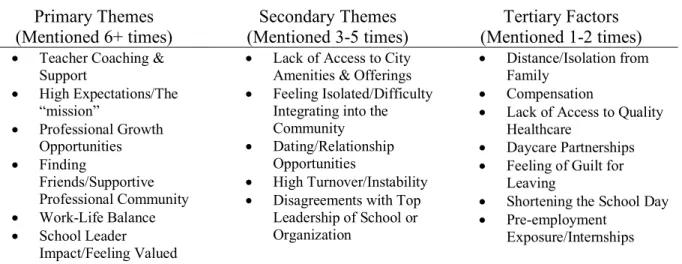
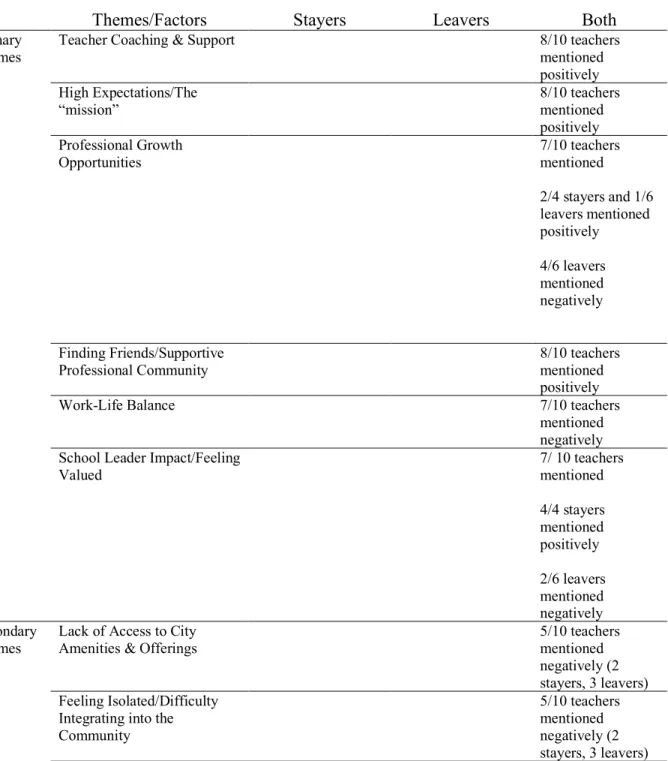
data identified themes and factors that impact teachers’ decisions to remain in the classroom, migrate to another school, or leave the classroom altogether.
Data was further analyzed using Herzberg’s Motivation-Hygiene theoretical framework, identifying teacher retention factors as satisfiers and dissatisfiers. Both qualitative and
quantitative data suggest that there are two primary satisfiers that have a positive impact on teacher retention in these schools: feeling valued and strong principal leadership. Hygiene factors—or dissatisfiers—that had the biggest impact on teacher retention were: improving salary and benefits, improving work-life balance, and having positive relationships with
This dissertation is dedicated to my beloved wife, Celeste. A celebrated educator and a loving mother and wife, she made this dissertation possible through her selfless patience, prudent
ACKNOWLEDGEMENTS
This dissertation represents the collective efforts of many wonderful people to whom I am deeply grateful and indebted. I wish to extend to them my profound thanks.
First and foremost, to my wife, Celeste, and daughter, Valencia, who went many nights and weekends without my presence. They tolerated my chronic absenteeism and my general grumpiness, and in return provided me with the love, encouragement, and inspiration to help me finish and never give up. I could not have done it without their support. I must also thank my newborn son, Jackson Cache, who provided me with unspoken motivation. His due date and my dissertation due date happened to fall on the same day, and his impending arrival provided me with the extra motivation to finish on time. I am proud to say that I was able to submit my dissertation for consideration approximately seven hours before he was born.
To my parents, who instilled within me a desire to work hard and love people, especially those who have been marginalized in a hegemonic society.
To my siblings, who have always pushed me to be my best through their incredible examples of hard work and humanitarianism. I must also thank them for their phone calls that kept me awake on late night drives during my commute between Henderson and Chapel Hill.
To Dr. Kathleen Brown, my advisor at UNC. Beyond the countless hours of time she dedicated to my growth and development as a writer and researcher, she has instilled within me a broader understanding of education and of the world generally, and for that I am truly grateful.
and impactful. A special thanks to Dr. Tom Williams, who in addition to serving on my committee, has been a mentor and friend to me from my earliest forays into the world of educational administration at N.C. State University.
To my professors at both UNC and N.C. State who, for the last eight years, have taught me, guided me, and opened my eyes to the significance of this work and my own potential to make a positive contribution to it.
Lastly, thank you to all the teachers that occupy the classrooms of the rural, No Excuse charter schools across the country. You are often overlooked by society, but that doesn’t
TABLE OF CONTENTS
LIST OF TABLES ... xv
LIST OF FIGURES ... xvii
LIST OF ABBREVIATIONS ...xviii
CHAPTER 1: AN INTRODUCTION ... 1
Statement of the Problem ... 2
Purpose of the Study ... 8
The Research Questions ... 9
Theoretical Framework of the Study ... 9
Overview of the Methods to be Used in the Study ... 10
Limitations of the Study ... 12
Complete Definition of Terms ... 12
Chapter Summary ... 14
CHAPTER 2: LITERATURE REVIEW ... 15
Introduction ... 15
The Challenge... 15
Charter Schools ... 17
Independent Charter Schools... 20
Charter Management Organizations (CMOs) ... 20
Vender Operated School (VOS) ... 21
Hybrid Charter Schools ... 22
“Common Characteristics” of No Excuse Charters ... 24
1. Demographics ... 24
2. College preparatory ... 24
3. High expectations & a strict disciplinary code ... 24
4. Extended school day and school year ... 25
5. Character education ... 25
6. High performance in comparison to local and state averages ... 25
7. Parent/guardian contract ... 26
8. School uniforms ... 26
9. Extra graduation requirements ... 26
10. Higher teacher salaries ... 27
No Excuse Critiques ... 27
1. Excessive hours ... 28
2. Militaristic learning environment ... 28
3. Student attrition ... 28
4. Institutional racism ... 28
5. Lack of independence ... 29
No Excuse Charter School Accolades ... 29
1. Buses and transportation ... 30
2. School lunch program ... 30
3. Performance on state standardized tests ... 30
4. College attendance ... 30
Teacher Retention in No Excuse Charter Schools... 31
Teacher Attrition, Migration and Retention ... 31
Teacher Retention in Rural Schools ... 35
Teacher Retention Challenges and Solutions in Rural Schools ... 36
1. Isolation ... 36
2. Community perceptions ... 36
3. Collaborative professional communities ... 37
4. Roots ... 37
5. Monetary challenges ... 38
Isolation & Community Perception Strategies in Rural Schools ... 38
Professional Development & Support Strategies in Rural Schools ... 41
Strategies to Address “Roots” in Rural Schools... 43
Monetary Strategies in Rural Schools ... 44
Teacher Retention in Charter Schools ... 47
Primary Teacher Retention Challenges and Solutions in Charter Schools ... 47
1. Younger teaching force... 48
2. Lack of autonomy ... 49
3. Longer hours & teacher burnout ... 50
4. Teacher compensation ... 51
Principal Leadership & Organizational Commitment ... 51
Working Conditions, Autonomy & Support Strategies in Charter Schools ... 53
Teacher Burnout Strategies in Charter Schools ... 55
Monetary Strategies in Charter Schools ... 56
Teacher Retention in Rural No Excuse Charter Schools ... 57
Theoretical Framework – Theories of Motivation ... 59
1. Maslow’s Hierarchy of Needs ... 61
2. ERG Theory ... 61
3. Herzberg’s Dual-Factor Theory ... 62
4. McClelland’s Acquired Needs Theory ... 63
Why Herzberg’s Dual-Factor Theory Will Be Used in This Study ... 64
The History of Herzberg’s Dual-Factor Theory ... 65
Motivation-Hygiene Theory in Varied Contexts ... 67
Motivation-Hygiene Theory in Education ... 69
Motivation-Hygiene Theory and Teacher Retention ... 71
Chapter Summary ... 72
CHAPTER 3: METHODOLOGY ... 73
Introduction ... 73
Research Design ... 73
Defining “Rural”... 75
“Defining Characteristics” of No Excuse Charter Schools ... 78
1. The school must be a charter school... 78
2. The school must be, or qualify to be, a Title I School. ... 78
3. The school must have a college preparatory curriculum and/or focus for the majority of its student body ... 79
4. The school must have a focus on character education ... 79
The Schools ... 80
Sampling Scheme ... 84
The Interview ... 87
The Survey ... 88
Data Collection & Analysis ... 92
Data Analysis Using Herzberg’s Dual-Factor Framework ... 94
Quantitative Data Collection ... 94
Participant Identity Protection ... 95
Chapter Summary ... 96
CHAPTER 4: FINDINGS ... 98
Participant Profile ... 98
Process for Qualitative Analysis ... 99
Themes and Factors Among “Stayers” Only ... 102
Themes and Factors Among “Leavers” Only ... 103
Themes and Factors Among Both “Stayers” & “Leavers” ... 106
Primary Theme #1: The Mission ... 106
Primary Theme #2: Principal Leadership/Feeling Valued ... 107
Primary Theme #3: Professional Support & Coaching ... 108
Primary Theme #4: Work-Life Balance... 110
Primary Theme #5: Friends/Supporting Professional Community ... 111
Primary Theme #6: Professional Growth Opportunities ... 113
Secondary Themes Among “Stayers” and “Leavers”... 114
Secondary Theme #1: Lack of Access to City Amenities & Offerings ... 114
Secondary Theme #2: Feeling Isolated/Struggling to Integrate into the Community ... 115
Secondary Theme #3: High Turnover/Instability ... 115
Tertiary Factor Among Both “Stayers” and “Leavers”: Compensation ... 115
Survey Creation & Distribution ... 116
Demographic Survey Results ... 116
Age ... 121
Originally from a rural community... 123
Currently Living in the Rural Community Their School is Located in ... 126
Years of Teaching Experience ... 128
The Impact of Retention Strategies and Factors ... 131
Positive Impact Factors ... 132
Negative Impact Factors ... 133
Other Factors Not Included in the Survey... 134
Ranking the Factors/Strategies ... 134
Chapter Summary ... 136
CHAPTER 5: DISCUSSION AND CONCLUSION ... 138
Research Question #1: What Factors Influence RNE Retention? ... 139
Research Question #2: What Factors Have the Biggest Influence on RNE Retention? ... 141
Data Analysis Through Herzberg’s Motivation-Hygiene Theoretical Framework ... 142
Motivators ... 142
Hygiene Factors ... 145
Suggestions for Practitioners ... 146
Motivator Recommendations ... 146
Hygiene Recommendations... 148
Areas for Further Research ... 152
Limitations ... 154
Conclusion... 157
APPENDIX B: PRINCIPAL PARTNERSHIP INVITATION—INTERVIEWS ... 160
APPENDIX C: QUALITATIVE INTERVIEW PROTOCOL—STAYERS ... 161
APPENDIX D: QUALITATIVE INTERVIEW PROTOCOL—LEAVERS ... 162
APPENDIX E: RNE TEACHER RETENTION SURVEY ... 163
APPENDIX F: PRINCIPAL PARTNERSHIP INVITATION—SURVEY ... 166
APPENDIX G: QUANTITATIVE SURVEY INVITATION ... 167
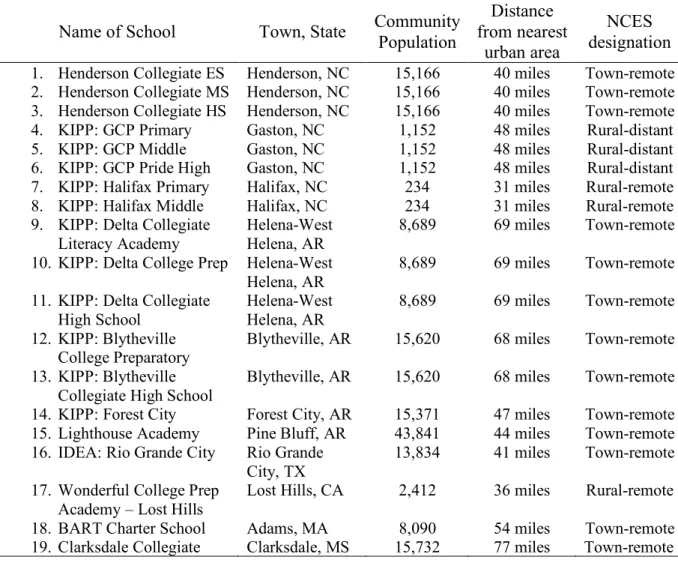
APPENDIX H: RURAL NO EXCUSE CHARTER SCHOOLS IN THE UNITED STATES ... 168
LIST OF TABLES
Table 1.1. Number and Percentage Distribution of Public School Teacher
Stayers, Movers, and Leavers: 1988-89 through 2012-13 ... 3
Table 1.2. Definition of Key Terms ... 13
Table 2.1. Teacher Retention Challenges and Solutions in Rural Schools ... 46
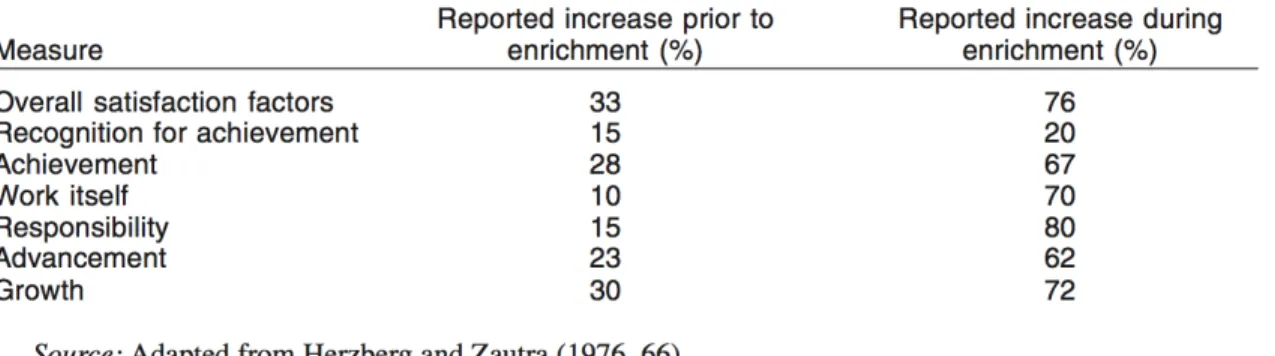
Table 2.2. Pre- and Post Measures of Job Satisfaction for Job Enrichment Projects ... 69
Table 3.1. U.S. RNE Charter Schools ... 83
Table 3.2. Teacher States by Stayer or Leaver Status ... 85
Table 3.3. Teacher Interview Pool by States and Stayer or Leaver Status ... 87
Table 3.4. Survey Participation Response ... 88
Table 4.1. Themes and Factors ... 100
Table 4.2. Theme/Factor Details ... 101
Table 4.3. Retention Factors/Strategies from Literature and Interviews ... 117
Table 4.4. Positive Retention Factors by Age ... 122
Table 4.5. Negative Retention Factors... 122
Table 4.6. Other Retention Factors ... 123
Table 4.7. Rural and Non-rural Background Positive Retention Factors ... 124
Table 4.8. Rural and Non-rural Background Negative Retention Factors ... 125
Table 4.9. Rural and Non-rural Background Positive Retention Factors ... 127
Table 4.10. Rural and Non-rural Background Less Positive Retention Factors ... 127
Table 4.11. Retention Factors by Years of Teaching Experience... 130
Table 4.12. Positive Retention Factors by Years of Teaching Experience ... 130
Table 4.13. Impact of Teacher Retention Strategies ... 132
Table 4.14. Ranking Strategy ... 135
Table 5.1. Retention Factors/Strategies from the Literature and Interviews ... 140 Table 5.2. Retention Factors Motivator-Hygiene Classification and Likert Scale
Average ... 143 Table 5.3. Teacher Retention Factors Motivator-Hygiene Classification and
LIST OF FIGURES
Figure 2.1. National Enrollment in Charter Schools, 2006-2017 ... 19
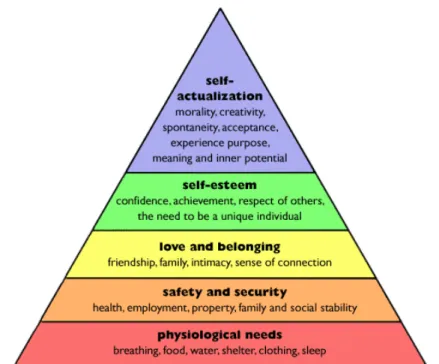
Figure 2.2. Maslow’s Hierarchy of Needs. Source: Maslow (1943). ... 62
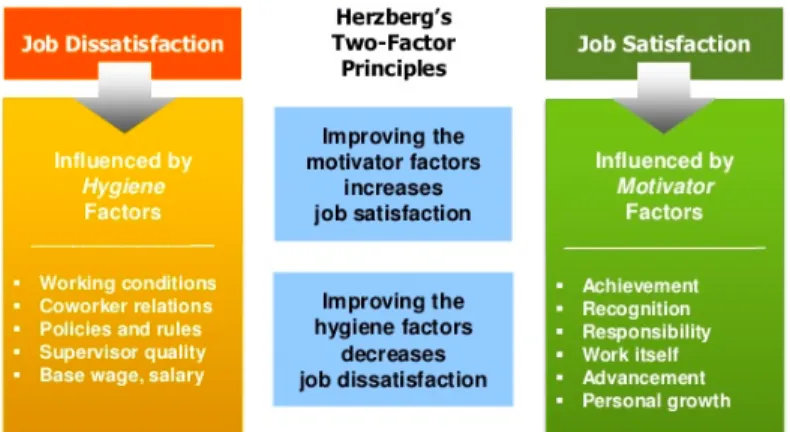
Figure 2.3. Herzberg’s Dual-Factor Theory. Source: Herzberg et al. (1959). ... 63
Figure 3.1. Rural America. ... 77
Figure 3.2. RNE Charter Schools in the United States ... 84
Figure 4.1. Teacher Gender Comparison ... 118
Figure 4.2. Teacher Race Comparison ... 120
Figure 4.3. Teacher Age Comparison ... 121
Figure 4.4. Teachers Originally From a Rural Community ... 124
Figure 4.5. RNE Teachers Who Live in Their School’s Rural Community ... 126
Figure 4.6. Years of RNE Teaching Experience ... 129
LIST OF ABBREVIATIONS CMO Charter Management Organization
FRPL Free or reduced-price lunch KIPP Knowledge is Power Program LEA Local education agency
NCES National Center for Education Statistics SASS School and Staffing Survey
CHAPTER 1: AN INTRODUCTION
Studies have repeatedly shown that teachers are the primary variable in determining student performance in the classroom (Chetty, Friedman & Rockoff, 2014; Hanushek, Kain, O’Brien, & Rivkin, 2005). The importance and value of teachers is difficult to overstate. Thus, retaining effective teachers should be at the top of every school leader’s agenda (Darling-Hammond, 2004).
This dissertation is a report of a mixed methods study that explored how certain factors, policies, or conditions are impacting teachers’ decisions to stay in the classroom, migrate to another school, or leave the profession altogether. While teacher retention in America’s public schools has been widely studied and debated for decades (Ingersoll, 2001, Sutcher, Darling-Hammond & Carver-Thomas, 2016), this study focused on teacher retention in the unique context of rural, No Excuse (RNE) charter schools. These schools are publicly funded, offer open enrollment, serve a predominantly low-income student population, and are unapologetically “college prep”. They are also located in relatively isolated communities (see Table 1.2 for a complete definition of terms). At the root of this study was a desire to know how to improve teacher retention in these unique contexts.
This first chapter of the dissertation presents the problem statement, describes its significance with context and historical information, and presents an overview of the
Statement of the Problem
Teacher attrition in American schools has steadily risen over the past three decades and has become the source of growing concern among education leaders, researchers, and
policymakers (Borman & Dowling, 2008; Sutcher et al., 2016). While it was commonly thought that the major contributor to teacher attrition in the 1980’s and 1990’s was an aging teaching force that was hitting retirement age in record numbers, research has shown that there are a number of factors that have led to teacher attrition, many of which are driving teachers out of the profession in higher numbers than retirement (Ingersoll, 2001).
Teacher attrition—defined in this study as the process of a teacher leaving the classroom completely or migrating to another school to continue teaching—remains especially high in schools and communities with a higher percentage of students living in poverty (Ingersoll, 2003; Ladd, 2011; Ronfeldt, Loeb, & Wyckoff, 2013; Sutcher et al., 2016). Several studies conducted over the years have shown that a large number of eligible teachers choose not to enter the teaching profession (Luekens, Lyter, & Fox, 2004; Ingersoll, 2003) or they leave shortly after entering the classroom (Cooper & Alvarado, 2006). While all teacher attrition isn’t necessarily bad and can sometimes have an overall positive impact on a school community (Adnot, Dee, Katz, & Wyckoff, 2017; Hanushek, Rivkin, & Schiman, 2016), teacher attrition often has the opposite effect.
worth of data reveal a common trend of teacher attrition steadily increasing from 13.5% in 1988-89, to 15% in 2000-01, to the rate of 15.8% in 2012-13.
Table 1.1. Number and Percentage Distribution of Public School Teacher Stayers, Movers, and Leavers: 1988-89 through 2012-13
Year Total base year teachers
Stayers Movers Leavers Attrition
Rate
1988-89 2,386,500 2,065,800 188,400 132,300 13.5
1991-92 2,553,500 2,237,300 185,700 130,500 12.4
1994-95 2555,800 2,205,300 182,900 167,600 13.8
2000-01 2,994,700 2,542,200 231,000 221,400 15.1
2004-05 3,214,900 2,684,200 261,100 269,600 16.5
2008-09 3,380,300 2,854,900 255,700 269,800 15.6
2012-13 3,377,900 2,846,500 271,900 259,400 15.8
Source: Goldring, Taie & Riddles (2014)
Sadly, the trend in teacher attrition goes back decades. For example, in the 1999-2000 school year, 534,861 teachers entered the workforce either as a new entrant or as a migrant from another school. At the same time, 539,778 teachers left their classrooms that year. Hence, in a 12-month period over one million teachers—almost a third of this relatively large workforce— were in job transition into, between, or out of schools (Ingersoll, 2001). Moreover, the data reveal an annual asymmetric reshuffling of significant numbers of employed teachers from impoverished to more affluent schools, from high-minority to low-minority schools, and from urban to suburban schools (Houck, 2010; Ingersoll & Strong, 2011; Ingersoll & May, 2011).
While that may be at the extreme end of the financial cost spectrum, it remains clear that each time a teacher leaves, thousands of dollars of lost social and professional capital leave with them (Barnes, Crowe & Schaefer, 2007). Finding that replacement is a challenging task on its own, especially in schools with a high percentage of students who come from high-poverty
neighborhoods. Teacher attrition has also been associated with lower test scores, lower attendance rates among students, and increased disciplinary problems (Hanushek et al., 2004; Louis, Marks, & Kruse, 1996; Ronfeldt, Loeb, & Wyckoff, 2013). Low-income schools, which typically have a higher population of black and Latino students, are statistically more likely to struggle with teacher retention, which can exacerbate pre-existing problems that come with the territory (Frankenburg, 2009). This can be especially true in rural communities that have a smaller pool of qualified potential applicants to replace teachers who leave. Multiple studies found that schools in rural regions with high turnover rates were also the least equipped to support the new teachers in those schools. The institutional knowledge that the previous teachers possessed left with them and a growing sense of distrust began to disrupt the previously superior relationships between the school, teachers, students, families, and community members.
Moreover, the absence of consistency and structure contributed to teacher frustration and dissatisfaction, which in turn perpetuated the attrition cycle (Burton, Brown, & Johnson, 2013; Goldhaber & Cowan, 2014; Ronfeldt et al., 2013).
teaching force through various programs like Troops to Teachers, Teach For America, and other lateral entry processes. States have eased the entry requirements for teachers to make it easier for districts to recruit candidates into their schools without being hamstrung by red tape and lengthy certification processes (Hirsch, Koppich, & Knapp, 2001; Feistritzer, 1997). Thus, it stands to reason that the crisis schools are facing is not one of shortage alone, but also one of constant turnover. Ingersoll likens the crisis to a leaky bucket. “The image that comes to mind is of a bucket rapidly losing water because of holes in the bottom. Pouring more water into the bucket will not be the answer if the holes are not first patched. Thus…the solution to staffing problems does not primarily lie in increasing supply, but rather in decreasing demand.” (Ingersoll, 2001; 2007, p. 6).
According to the Teacher Follow-up Survey (TFS), a survey that was distributed every three years by the National Center for Educational Statistics (NCES), teachers are leaving for a myriad of reasons, including retirement, family circumstances, school staffing action, the pursuit of a new career, a sense of inefficacy, and a general sense of dissatisfaction with the profession (Goldring, Taie & Riddles, 2014; Henry, Bastian & Fortner, 2011; Ingersoll, 2003). Ingersoll identifies two different categories of dissatisfaction that teachers experience that lead to attrition: major reasons and not major reasons. Among the major reasons teachers become dissatisfied and
prepare lessons and other curricular materials, frequent intrusions on teaching time, and swollen class sizes (Ingersoll, 2003).
A number of interventions, strategies, and policies have been enacted by lawmakers, local education agencies, and building level school leaders to address the leaky bucket and improve retention in their respective jurisdictions. High quality pre-service education and preparation, mentoring and induction programs, and providing teachers with a collaborative and collegial atmosphere have all been studied and shown to have a positive impact on teacher retention, but fall short of solving the problem in its totality (Darling-Hammond, 2012;
Hargreaves & Fullan, 2013; Ingersoll & Strong, 2011; Kaden, Patterson, Healy & Adams, 2016; Munsch & Boylan, 2008; Petty, Fitchett & O’Connor, 2012). Monetary incentives have also been shown to impact teacher retention positively, but cannot be relied on in isolation to be a panacea. (Liu, Johnson & Peske, 2004; Maranto & Shuls, 2012; Petty et al., 2012).
In rural areas, teacher retention encounters new and unique challenges such as physical isolation, difficulty integrating into insular communities that are often tightly knit and sometimes wary of outsiders, overcoming personal biases or misconceptions about rural life, lacking a social or familial network, or bleak financial or housing prospects (Beesley, Atwill, Blair & Barley, 2010; Kaden, Patterson Healy & Adams, 2016; Maranto & Shuls, 2012; Sharplin, 2002).
counties, has a high poverty rate as measured by the percentage of Title I schools in each system. It is also considered rural, far from the larger metropolitan areas of the state that can attract young professionals and where there is a greater abundance of degree-holding and qualified applicants. While some of the teachers represented in the data may have actually had a negative impact on student achievement or the school community as is sometimes the case with teacher attrition, the overall damage done by such high teacher attrition in a high-poverty school district is undeniable.
Teacher retention presents challenges to districts and school leaders, particularly in low-income communities where challenges facing teachers can be magnified due to a host of variables that are unique to communities with significant levels of poverty. Likewise, there are unique and problematic challenges rural communities where the teacher applicant pool is smaller by nature of the number of qualified individuals living within the region, the number of
qualified, degree-holding adults is limited, and the allure of city-life and amenities found in more populous communities are largely absent, making it harder for schools in those communities to attract outsiders to fill their teaching vacancies (Frankenburg, 2009).
At the same time, No Excuse charter schools have a unique blueprint that often asks teachers to give more of themselves physically and mentally, with longer school days, higher expectations for planning and instructional execution, not to mention occasional Saturday school. As a result, teachers in these demanding schools that serve predominantly low-income student populations are burning out, leaving, and creating a vacuum that is difficult to neutralize (Ash, 2014; Lack, 2009; Torres, 2013).
While we knew that some teachers are leaving the profession in increasing numbers because of factors such as job dissatisfaction (Berends, 2015; Ronfeldt et al., 2013), this study approached the question to discover what, if any, impact the unique geographical, socioeconomical, or political factors are playing a role in that dissatisfaction. We know that some teachers leave the classroom for the promise of better jobs and better pay in other professions. Others leave as a direct result of not feeling supported by school administration, feeling overwhelmed or powerless to deal with student discipline situations, having limited voice or influence over general school policies, and to a lesser extent, low salaries that are incompatible with the taxing, difficult work of teaching (Ingersoll, 2001). And yet we were again left to speculate as to what granular underlying forces are at play when a teacher decides to make such a career move. This study removed much of that speculation.
Purpose of the Study
The Research Questions
With the goal of learning how to prevent the loss of teachers that schools don’t want to lose in RNE charter schools, this study focused on answering two primary questions as it pertains to teacher retention:
1. What factors influence teachers’ decisions to stay in the classroom in RNE charter schools?
2. Which of the factors have the greatest impact on those teachers’ decision to stay in the classroom?
Being able to answer these questions empowers principals and stakeholders in these schools with the tools necessary to mitigate teacher attrition and improve the retention of their strongest teachers.
Theoretical Framework of the Study
Herzberg’s Dual-Factor Theory of Motivation will be the vehicle through which the data collected will be analyzed. The Motivator-Hygiene Theory (also referred to as the Dual-Factor Theory) breaks down factors contributing to job satisfaction into two categories, motivators and hygiene factors. Motivator factors could include—but are not limited to—professional
Overview of the Methods to be Used in the Study
This study was designed to utilize mixed methods, beginning with qualitative field work. Utilizing semi-structured interview questions, ten teachers with a range of experience in and with RNE charter schools were interviewed. While all of the teachers were from RNE charter schools, the sample included teachers from different states and geographical regions to provide a broader picture of the challenge while making this a national study. The researcher utilized his personal professional network within the No Excuse charter school community, which provided a convenience sample (Etikan, Musa & Alkassim, 2016).
The sample of teachers met certain requirements, such as having worked as a full-time teacher in a rural No Excuse charter school throughout the 2017-18 school year. Four of the teachers were teachers who decided to stay in their same school in a full-time teaching role for the 2018-19 school year, while the remaining six teachers decided, of their own volition, to leave their school. The participants were asked about factors that they considered when they were making the decision to stay or leave their full-time teaching position and allowed for the teachers to explain in detail the various factors that influenced their decision. Following the completion of the interviews, the recordings were transcribed, coded, and analyzed using Herzberg’s
Motivation-Hygiene framework.
representing geographic diversity. The six participating schools are found in four different states: Arkansas, Mississippi, North Carolina, and Massachusetts. Teachers who did participate in the survey had to be currently teaching full-time at a rural No Excuse charter school for the 2018-19 school year in order to be considered.
The Likert-style survey asked the participants to first rate the impact of selected factors in order as “negative impact,” “no impact/neutral,” “positive impact,” and finally “extremely positive impact.” The survey then asked participants to rank the five most impactful factors related to their decision to stay or leave. To improve the survey’s completion and return rate, arrangements were made with principals to have teachers take the survey in the first five minutes of a staff meeting. Additional follow-up e-mails and phone calls were made. By analyzing this quantitative data, conclusions were drawn about the decision-making process for teachers in rural No Excuse charter schools as it pertains to retaining teachers, something that is presently absent from the current body of teacher retention literature.
Interview Data Collection
• I conducted interviews with 10 teachers from various geographic regions nationally that fit my criteria. The interviews were recorded.
Transcribing and Analysis
• I transcribed the interviews and created codes to unearth themes. From this qualitative data I finalized a quantitative survey.
Survey Data
• The quantitative survey was widely distributed to every RNE charter school willing to participate in the study.
Analysis
Limitations of the Study
This study focused on a very unique type of school in a very specific setting: the RNE charter school. Because of the uniqueness of the type of school in this study, there is a
comparatively small number of schools to include in the study when looking at national studies of teacher retention. As mentioned earlier, there were also schools who qualified for this study but, for various reasons, did not participate.
This study’s quantitative component relied entirely on a survey that was distributed to teachers in an effort to quantify the impact of various factors that surfaced in the literature review and qualitative fieldwork. Getting teachers to complete the survey, despite efforts to keep the survey simple in its content and short in length, posed a challenge. The survey was also distributed to current teachers only. While the qualitative interviews will account for
perspectives of teachers who have left a RNE charter school, their data will not be reflected in the quantitative results.
Lastly, ten teachers were interviewed by phone and face-to-face for the qualitative portion of this study. The number ten was reached for a variety of reasons that will be further explained in Chapter 3. However, despite the intention behind the number, there is still a
possibility that the data could have been enhanced or been given an added measure of credibility with additional data.
Complete Definition of Terms
Table 1.2. Definition of Key Terms
Term Definition
Charter Schools Schools that are publicly-funded but independently managed, often given freedom from certain local or state requirements and autonomy to provide educational services to students under a state-approved charter.
FRPL Free or reduced-price lunch. Used as a measure of poverty in American public schools.
KIPP Knowledge is Power Program. A network of high-performing No Excuse charter schools started in the mid-1990’s. It is the largest network of No Excuse charter schools in the country.
Induction Program Comprehensive training and support process offered by schools to early-career teachers (usually between 1-3 years of experience).
NCES National Center for Education Statistics. The statistical arm of the U.S. Department of Education.
No Excuse Charter School A subcategory of charter school that:
• Is (or would qualify to be) a Title I school
• Has a college-preparatory curriculum and culture for the majority of its student body
• Operates with an extended school day and/or calendar
• Has a specific focus on character education and community
• Enforces high behavioral expectations for students with a formal discipline system
Pre-service Teacher Pre-service teaching is the culminating experience in teacher education programs. It usually consists of students teaching, content courses, professional education courses, and a variety of field experiences.
Term Definition
SASS School and Staffing Survey. A survey distributed by the National Center for Educational Statistics from 1987-88 through 2011-12.
TFS Teacher Follow-up Survey. A survey distributed to teachers who left the profession by the National Center for Educational Statistics from 1988-89 through 2012-13.
Teacher Attrition Teacher attrition occurs when a teacher leaves their classroom. The reasons may vary, including moving to another school or district, taking a non-teaching position within the same school or district, retirement, or leaving the profession altogether.
Teacher Migration Teacher migration occurs when a teacher leaves their school and takes a teaching position at another school or district.
Teacher Retention The rate and state at which teachers choose to stay in their position from one year to the next.
Title I School A school who serves a student population where 40% of the students qualify for free or reduced-price lunch.
Chapter Summary
CHAPTER 2: LITERATURE REVIEW Introduction
In this chapter, the challenge of teacher retention will be examined in greater depth and breadth, spanning decades of research and national trends. This study is about teacher retention in a very unique context, therefore the history and background of charter schools will be presented with an overview of the different types of charter schools now in existence set forth. The term “No Excuse” charter school will be traced to its origin and defined for the study. These schools and their educational philosophies will be examined through a scrutinizing lens in an effort to understand their impact on the educational landscape and the communities they serve. Furthermore, this chapter will lay forth clear definitions for teacher attrition, migration, and retention, and specifically focus on the challenges of teacher retention in rural schools, charter schools, and finally, RNE charter schools. Challenges and potential solutions will be examined.
Finally, the theoretical framework for this study will be laid forth after an exploration of various theories of motivation. Herzberg’s Dual-Factor Theory will be reviewed and a
justification for its use will be established for the purpose of this study looking at literature and case studies from the last fifty years.
The Challenge
stems from myriad issues and challenges that teachers face within the profession (Ingersoll, 2001).
With these two realities as a backdrop, it stands to reason that recruiting and retaining high quality teachers is arguably the most pressing and important challenge that educational leaders, researchers, and policymakers face today. Research has shown that even in low-income or traditionally low-performing schools, high quality teachers can reverse the effects of poverty and close achievement gaps between socioeconomically disadvantaged students and their more affluent peers (Darling-Hammond, 2003; Rice, 2010). Further, when good teachers stay in the classroom, they have a positive impact on the broader community that goes beyond test scores or state report cards (Hanushek, Kain, & Rivkin, 2004).
What do the data from the SASS and TFS reveal? Both the demand for and supply of teachers remain high, confirming Ingersoll’s analysis and supporting the concept of the “leaky bucket” metaphor mentioned in Chapter 1 (Ingersoll, 2007). The surveys also confirm the unique challenge for schools in high-poverty communities and districts where the turnover rates are higher when compared against more affluent districts. Urban public schools have slightly higher turnover rates than do suburban or rural schools. (Ingersoll, 2003).
While teacher retirements have steadily increased, the rate at which they are contributing to overall teacher turnover is decreasing. Based on this data, teacher turnover steadily increased and now rests somewhere in the neighborhood of 16 percent (Goldring et al., 2014; Ingersoll, 2003).
There are unique and problematic challenges in rural communities where the teacher applicant pool is smaller by nature of the number of qualified individuals living within the region, the number of qualified, degree-holding adults is limited, and the allure of city-life and amenities found in more vibrant communities are largely absent, making it harder for schools in those communities to attract outsiders to fill its teaching vacancies (Frankenburg, 2009).
While teacher retention has been studied widely, limited information can be found on teacher retention in rural charter schools, and there is a noticeable gap in the literature when it comes to teacher retention in RNE charter schools. To understand this unique context better, one must first begin with understanding charter schools in general.
Charter Schools
California followed suit, and over the course of the last 25 years, 43 states and the District of Columbia have approved the expansion of charter schools. These tuition-free public schools often operate independently of the local education agency (LEA) or community school district and are exempt from state requirements that traditional public schools are bound by (Lubienski & Weitzel, 2010).
Over the course of the last nearly three decades, charter schools have progressed from a somewhat obscure educational experiment in a handful of states to a national force that has penetrated virtually every corner of the nation. Current estimates by the National Alliance for Public Charter Schools fall at approximately 3.2 million American students—about 6% of all public schools students nationally—who are receiving their education through nearly 7,000 charter schools across the nation (CREDO, 2017; NCES, 2015). Enrollment in charter schools has been on a steady upward trend since their inception, especially over the last decade where enrollment has nearly tripled from 1.2 million students (See Figure 2.1).
Charter schools are independently managed, publicly funded and operate under a charter or agreement between the school and the governing body that oversees it, usually the state. While given greater autonomy on how to conduct its affairs, charter schools are still ultimately accountable to the charter-issuing body, and can be shut down for failure to meet certain accountability standards. Last year, 211 charter schools across the United States—just over 3% of the total number of charter schools nationally—were shut down for myriad reasons ranging from declining enrollment, financial mismanagement, and/or low performance on state
Figure 2.1. National Enrollment in Charter Schools, 2006-2017
Source data are from the U.S. Department of Education, National Center for Educational Statistics, Common Core of Data, Public Elementary/Secondary School Universe Survey.
Charter schools were created with a variety of motives. Educational and political leaders were looking for ways to improve outcomes for students, and many of the earliest charter schools were specifically created to target students who had previously been unsuccessful in a traditional public school system (Wohlstetter, Smith & Farrell, 2013). At the same time parents were
looking for alternatives to the traditional public schools, often out of dissatisfaction (Berends, 2015). Educators who felt hamstrung by the existing bureaucracies that pervade a traditional school system were eager to operate a school that functioned largely as a hub of innovation that took a more unconventional approach to educating children. While most charter schools serve students in urban settings (Gross, Bowen & Martin, 2012), there are a number of rural charter schools facing a unique set of challenges that will be explored hereafter.
Charter schools have evolved over the course of their history to their present state which includes four distinct categories under the larger umbrella of “charter schools” (CREDO, 2017).
0 0.5 1 1.5 2 2.5 3 3.5
2006-07 2008-09 2010-11 2012-13 2014-15 2016-17
There are even subcategories within those categories, a few of which will be examined in depth in this review of literature for the purpose of identifying certain key characteristics that play a role in the retention of teachers working within those schools. It is also important to note that within each of the following categories one will also find examples of for-profit and non-profit charter schools, which precludes this characteristic from having its own separate category. Independent Charter Schools
Independent charter schools are detached operations from a larger entity or network of charter schools, otherwise known as a Charter Management Organization (CMO). Independent charter schools are limited to one or two schools operating under a single charter and are often run directly by the charter holder without the support or influence or management of outside organizations. Certain independent charter schools may rely heavily upon outside companies, contractors, or organizations to operate within the scope of their vision. Independent charter schools must be limited to one or two schools. Once a charter-holding organization manages three or more schools, they become charter management organizations (CMOs).
Charter Management Organizations (CMOs)
A CMO is an organization that operates at least three—but often more—separate charter schools. The CMO acts as a center of operational and instructional leadership for all the schools that fall under its management, and often controls every aspect of their schools operations, curricular development, educational philosophy, personnel policies, and financial management (CREDO, 2017).
under a traditional charter granted by the state of Texas (their school was located in Houston). The following year, another KIPP school was founded in the South Bronx. The organization has continued to grow steadily over the past two decades (Lack, 2009). It now has 209 schools and serves over 88,000 students across 20 states and the District of Columbia (KIPP, 2017). While the organization has been issued several charters by several authorizing bodies in states and regions across the country, all of the KIPP schools operate under the same guiding values, policies, and mission and have a central headquarters from where policies and guidelines for educating their expanding student body are created and disseminated.
CMOs have several subcategories within them with distinct characteristics that make them unique. For example, there are both for-profit and non-profit CMOs. There is also a subcategory of CMO known as “super networks”, which are “large charter networks which usually span across large physical areas and often include multiple states. These super networks usually consist of multiple regional-level organizations which operate as separate CMOs/VOSs but have an overarching national management organization (CREDO, 2017, p. 3).” Uncommon Schools and KIPP both serve as relevant examples of super networks.
There is another type of charter school that is often identified as a CMO but can also be an independent charter school. That type is commonly known as “No Excuse” charter schools, which will be explored in greater detail hereafter.
Vender Operated School (VOS)
A VOS is similar to a CMO in that it manages three or more separate schools with their own distinct charters, but unlike a CMO, a VOS provides services to those schools under
A VOS may provide a variety of services to the schools it manages, from operations, finances, curriculum, and/or recruitment and staffing.
According to CREDO (2017), VOSs “do not hold the charters for the schools they serve and are engaged for a specific period. We use the term VOS to distinguish the management relationship between the service provider and the governing body of the charter school. Some VOSs are non-profit organizations, while the majority are profit seeking (p. 2).”
Hybrid Charter Schools
The last category of charter school is also the rarest. Hybrid charter schools have characteristics of both a CMO and a VOS, and account for only 1 percent of all charter schools operating in the United States today. A hybrid charter school could hold the charter for its school but contract out the operation of the school to multiple VOS organizations, acting more as a portfolio manager (CREDO, 2017). The term “hybrid” has also been used to describe schools that blend online learning and in-person direct instruction. That is not, however, a hybrid charter school by strict definition.
No Excuse Charter Schools: A Variation on a Familiar Theme
The label “No Excuse” is associated with a certain type of charter school that identifies itself by a collection of core beliefs, values, and practices popularized by Levin and Feinberg when they first founded KIPP in the mid-1990s. Despite the movement’s history and growing popularity, there is no commonly agreed upon definition for a No Excuse charter school, nor is there an official database or consolidated list of schools that fall under its umbrella. This type of school has been included in several research studies over the course of the last two decades (Cheng, Hitt, & Kisida, 2015; Ferrero, 2005; Lack, 2009; Maranto & Shuls, 2012), but
such, this study makes a conscious effort to tighten the definition of a No Excuse charter school. In doing so, this study will distinguish between “defining characteristics” and “common
characteristics” of No Excuse charter schools.
Generally, these are schools that are based on high expectations for students and a college preparatory curriculum (Lack, 2009). The label originated in Levin and Feinberg’s original school and stemmed from their belief that there were no excuses for not achieving success (KIPP Foundation, 2006). Their philosophy of “no excuses” is also grounded in the idea that poverty is not an excuse for low academic performance (Sondel, 2016). No Excuse proponents also believe that schools and communities can overcome the effects of poverty and low achievement if school leaders and teachers are given greater autonomy from bureaucratic district offices. (Carter, 2000; Thernstrom & Thernstrom, 2004).
Under the mantra of No Excuses, these charter schools seek to eliminate many of the traditional barriers to an excellent education that students from socioeconomically disadvantaged backgrounds often face—namely, lack of time, lack of high expectations, and the bureaucracy of a traditional school or district office. Thus, the “No Excuses” mantra can be directly correlated to the belief that when charter schools adopt certain beliefs, mindsets, and creative solutions, there are No Excuses for the student on the receiving end of such an education to not achieve just as much if not more than a student who was born into a more affluent home or a student who attended exemplary schools.
“Common Characteristics” of No Excuse Charters
1. Demographics. No Excuse charter schools predominantly serve low-income students. One of the measurement tools for poverty has been the percentage of students who qualify for free or reduced-price lunch (FRPL) through the federal National School Lunch Program and the Title I label that comes with the territory. In order to be
considered a Title I School, a school must have a minimum of 40% of students qualify for FRPL. While 100% FRPL is not a requirement to be considered a No Excuse school, the ratio of students who qualify for or receive federal assistance for school lunch is generally very high, usually far beyond the required 40% required to be considered a Title I School.
2. College preparatory. No Excuse charter schools believe that college in an integral part of closing the achievement and opportunity gaps between students from low-income
backgrounds and their more affluent peers. They have intentionally built their curriculum to reflect that belief. No Excuse charter schools’ curricula are distinctly college
preparatory. They aspire to send 100% of their students to a four-year college or
university, and have a proven track record of success reaching this ambitious goal (Rose, Maranto & Ritter, 2017). While the original push was to send 100% of their students to college, many of the No Excuse networks have shifted their focus to 100% college completion rather than acceptance alone, a goal that has been much harder to attain. 3. High expectations & a strict disciplinary code. No Excuse charter schools are known for
from one class to another. In addition to these expectations, students are expected to be good “teammates,” which speaks to the character education component of these schools that are discussed below. Most No Excuse charter schools use a merit or demerit system that is utilized as a consequence for behavioral infractions large and small.
4. Extended school day and school year. No Excuse charter schools have a longer school day, often starting before 8:00am and going past 4:00pm. This schedule was built around the idea that students on the wrong side of the achievement gap do not get enough time to close the learning and skill gaps that divided them from their more affluent peers. No Excuses charter schools generally have an extended school year in addition to the extended days. While this looks different from school to school or CMO to CMO, these schools generally add between 1-3 weeks of additional school, not including summer school for students who are required to attend. Many No Excuse charters also have mandatory quarterly or monthly Saturday Schools.
5. Character education. The original slogan that KIPP adopted was “Work Hard. Be Nice.” To this day, this slogan lives in every KIPP school and in many of the No Excuse schools that were built from the KIPP model. Students are expected to be “good
teammates” and often receive a character-based lessons at least once a week. These character lessons will often tie back to the mission and core values of the school, and include values like: integrity, respect, enthusiasm, zest, self-responsibility, and others. No Excuse charter schools typically have a school gathering daily or weekly where the values of the school are reiterated through lessons, case studies, and affirmation.
6. High performance in comparison to local and state averages. No Excuse charter
2013; Dobbie & Fryer, 2013; Golann, 2015). It would be erroneous to assume that simply because a school has the No Excuses label that they automatically have higher scores and outperform other charters or traditional public schools. There is, however, a culture of test preparation and unremitting focus on results and the use of data to inform instruction that is instilled within No Excuse charters, which has led to higher test performance outcomes.
7. Parent/guardian contract. Most No Excuse charter schools have some version of a parent contract that is reviewed and signed before or shortly after a student officially enrolls. The contract is not a legal document and is not binding in any official way. Instead, it outlines student, parent, and school expectations to create mutual
understanding and serves as a common launching point for a student’s experience at the school. While this is a common characteristic found among No Excuse charter schools, it is not a prerequisite.
8. School uniforms. While it is again not a prerequisite, most No Excuse charter schools maintain a strict dress code based on school uniforms. This can be attributed to the fact that all of these schools serve a predominantly low-income student population. These schools argue that uniforms prevent caste systems from developing based on income, access to new clothes, fashions, and styles.
college counselors. At North Star Academy Collegiate Prep High School, a
high-performing No Excuses charter school in Newark, New Jersey, students are also required to complete a senior research project. At KIPP: Pride High School in Gaston, North Carolina, students must complete a similar project, but its focus must be on social justice. There are also additional courses that students may be required to take, or a minimum number of credits in core subjects like history and science. Other graduation requirements found in No Excuse charter schools include taking the ACT and/or SAT college entrance exams, taking an Advanced Placement course, or applying to a minimum number of 4-year colleges and universities.
10.Higher teacher salaries. Because of the extended hours, additional work days, and generally higher expectations in terms of planning and workload, No Excuse charters generally pay their teachers more than teachers with comparative experience, education levels, and positions at traditional public schools. Teachers at No Excuse charter schools tend to earn 15-20% more annually than their peers in traditional public schools (Lack, 2009).
CMOs such as KIPP, Uncommon Schools, Democracy Prep, IDEA, Yes Prep, Success Academies, RePublic Schools are examples of charter schools that meet most—if not all—of the criteria to be considered a No Excuse charter school.
No Excuse Critiques
1. Excessive hours. Students at No Excuse charter schools follow a strenuous daily regimen that keeps them in school up to 62% longer than their peers at traditional public school (Lack, 2009; Torres, 2013). The evidence proving that the extra hours translate directly into higher achievement is still missing from the scholarly canon, but what is certain is that students at these schools are required to do more than their traditional public school peers both in terms of the hours attending school to the hours of homework assigned. 2. Militaristic learning environment. Touring KIPP schools, one might find a student being
disciplined harshly in the form of a teacher yelling at them in the hallway or in the classroom (Lack, 2009). Moreover, students who violate the enrollment contract can be stripped of their right to wear the school’s official uniform (Thernstrom & Thernstrom, 2004) or sent to “the bench” or “the dugout,” a metaphorical process of taking the student out of the mainstreamed classroom environment and having the student reflect on their poor choices (Ross, McDonald, Alberg, Gallagher & Calloway, 2005).
3. Student attrition. Critics have argued that the unique combination of being a school of choice and one with such a rigorous program, the effects of Social Darwinism are an ever-present factor in No Excuse charter schools and their results. Critics argue that students who are academically privileged or motivated will be successful in the program, while other students will eventually be pushed back into the traditional public school system (Wells, Lopez, Scott & Holme, 1999). This adds strength to the argument that charter school success is isolated and cannot be reproduced on a national scale due to the fact that the success is arguably selective.
of racial minorities, there is ongoing critique that the No Excuse system is built on consumerism, bureaucracy, and industrialization that maintains the status quo. Students of color in these schools have complained about feeling controlled by their white teachers (Nix, 2016).
5. Lack of independence. As an outgrowth of the strict behavioral expectations and culture of compliance, critics argue that students in these schools are unable to think or function independent of the structures of the schools themselves. A poignant example of this playing out in the real world was the case study of Miguel Aguilar, a first-generation college student who graduated from a No Excuse school in the IDEA network in South Texas. While he graduated on time and even earned a scholarship to Kalamazoo College, Miguel soon learned that many of the habits he had formed and systems he relied on in middle and high school did not translate to the life of a college student. He went from a world where he had to raise his hand to get a tissue or go to the bathroom to a world where no one was checking his homework or even noticing if he was in class.
Unprepared for that level of independence, his grades plummeted and he was eventually kicked out of the school (Yu, 2014).
No Excuse Charter School Accolades
Proponents of No Excuse charter schools see the issue quite differently. They will readily point to the following factors as proof that not only are No Excuse charters not racist or
1. Buses and transportation. No Excuse charter schools provide buses and transportation for their students, even when such services are not required by state law. For example, charter schools in North Carolina are not legally required to provide transportation services to their students. While No Excuse schools provide this service, scores of the state’s charter schools do not. This in turn builds one element of a de facto segregation that stems from the reality that many students from low-income households
(disproportionately black and Hispanic) do not have the means to transport themselves to and from school and rely on school buses and transportation systems.
2. School lunch program. No Excuse charters are typically full participants in the Federal School Lunch Program or partner with other organizations to ensure that 100% of their students have access to food when they come to school, regardless of their family household income or poverty levels. Students who qualify for FRPL are served at no extra cost to the student or their family, whereas students at some charter schools are required to bring their own lunch to school or pay for school lunch out of pocket, another obstacle to low-income students to access these schools of “choice.”
3. Performance on state standardized tests. As previously mentioned, No Excuse charter schools generally outperform the local and state averages on their performance for state-issued End-of-Course and End-of-Grade final exams (Angrist, Pathak & Walters, 2013; Dobbie & Fryer, 2013; Golann, 2015).
4. College attendance. No Excuse charters have made college access, acceptance, and completion their primary focus. Statistically, they are getting their students into and through college at a rate that exceeds the national average, which is even more
students, or the first in their families to attend post-secondary schooling (KIPP, 2011; Pondiscio, 2013).
Teacher Retention in No Excuse Charter Schools
The mission of No Excuse schools demands more of the people that work under their banner. Teachers, principals, and other support staff at such schools in almost all cases work longer hours and longer school years than their peers at traditional public schools. They also generally are required to submit extensively detailed lesson plans on a weekly basis and conduct thorough analyses of assessment data. The extra hours and workload are rooted in the belief that in order to achieve the mission of college for all for students who are historically marginalized and disenfranchised, more is required. I use the word “more” in isolation intentionally, because there is a litany of things that could follow the word: time (both in hours and in school days), effort, oversight, accountability, community and family outreach, resources, support systems, and so on (Monahan, 2014; Ash, 2014).
The mission and demands of No Excuse schools can have unintended consequences, particularly as it pertains to teacher retention. Teachers at these schools are generally young and inexperienced, and recruited more for their mindsets than for their credentials outside of a
bachelor’s degree. Teach For America places a significant amount of its teachers in such schools, who then have a recurring challenge of replacing those teachers after their two-year commitment concludes. Beyond TFA, many of the teachers recruited at No Excuse schools don’t remain long in part because of the extreme working conditions and hours required to be a successful teacher under the No Excuse model (Torres, 2013).
Teacher Attrition, Migration and Retention
school level means the rate at which teachers are retained at that particular school. At a district level, it is the rate of teachers that remain within the district but perhaps transfer between schools, and so on.
While a deep dive analysis on teacher attrition has revealed how many teachers are leaving the profession, and more importantly why they are leaving, such an analysis fails to answer an even more compelling question for principals and school leaders who are looking to retain their best talent. While attrition and retention are often related and sometimes have overlapping factors, teacher retention—and what has been done over the years to improve it—is a completely separate issue which will be addressed through the lenses of national trends, rural schools, and charter schools.
Teacher attrition—the term commonly used to refer to the act of teachers exiting the profession—has been an issue of growing concern in the United States, and has garnered the attention of practitioners and policymakers alike and caused them to reflect on why teachers decide to leave the classroom and what, if anything, can be done about it (Ingersoll, 2001; 2007; Ingersoll & Strong, 2011). Most teacher attrition has a negative impact on schools and the broader school community that includes students, families, and other stakeholders. When a teacher leaves, they often create a burden on the school to replace that teacher, which can be difficult, especially in schools with a high percentage of students who come from high-poverty neighborhoods. Teacher attrition has been associated with a number of undesirable
statistically more likely to struggle with teacher attrition, which can exacerbate pre-existing problems that these schools must deal with (Frankenburg, 2009).
To understand this phenomenon, one must first separate it from teacher migration and teacher retention, which each speak to different but similar challenges when it comes to staffing America’s public schools. Beyond that, it is important to understand the myriad reasons why teachers leave the classroom, their motivations, and various factors which impact their decision-making process.
Teacher attrition refers to the flow of teachers out of teaching—those who leave the profession altogether for reasons that include—but go well beyond—retirement. Teacher migration refers to teachers who remain in the profession but choose to leave their school for another. Reasons for teachers leaving for the greener pastures of another school or teaching assignment may include a higher salary, support from administration (or lack thereof), student discipline concerns, proximity to home and the reduction of a commute, a special program offered at one school and not another, and many others (Ingersoll, 2001).
Teacher Retention
Knowing what factors, conditions, and considerations will get teachers to stay in the classroom is a critical consideration for school and district leaders, especially considering the amount of time and resources that are poured into training and developing new teachers (Lake, Dusseault, Bowen, Demeritt, & Hill, 2010). Keeping teachers in the classroom allows districts and schools the chance to “recoup their investment” that went into the recruitment, training, and development of that teacher (Brown & Schainker, 2008, p. 4). The cost of losing good teachers is high (Podolsky, Kini, Bishop, & Darling-Hammond, 2016). When teacher attrition occurs, there is often a disruption to the broader school community that stems from the instability caused by attrition, a deficit in the quality of teachers and instruction, and a renewed allocation of time, attention, and funding to recruitment rather than support (Johnson & Birkeland, 2003).
The challenge is further complicated for CMOs and No Excuse charter schools who often have unique cultures and systems of operation within their organizations that limit the supply of teachers who are a good fit (Tuttle, Gill, Gleason, Knechtel, Nichols-Barrer & Resch, 2013). Those considerations aside, it has been widely established that teacher effectiveness increases over time (Harris & Sass, 2011; Rivkin et al., 2005; Rockoff, 2004), This makes the departure of these teachers—many of whom are on the cusp of entering the prime of their careers—
communities are largely absent, making it harder for schools in those communities to attract outsiders to fill its teaching vacancies (Frankenburg, 2009; Howard, 2016; Sleeter, 2008).
Teacher Retention in Rural Schools
Much of the national discussion on education has been focused on urban and suburban education due to the overwhelming number of students who live in such settings. In 2013, approximately 24% of the nation’s K-12 students were living in rural communities, compared to the 76% of students who lived in cities and suburbs (NCES report, 2013). However, the fact that the majority of American students attend schools in busy cities or sprawling suburbs likely matters little if at all to a student who lives and attends school in a rural community, nor does it excuse researchers, lawmakers, or policymakers from needing to turn their attention to the challenges within rural education. Students in these rural communities are just as deserving of the attention given to students from inner cities or the suburbs, and just as deserving of high quality teachers. Sadly, many of these students have grown accustomed to a carousel of teachers who are constantly getting on and off the ride (Henry, Bastian, & Fortner, 2011; Ronfeldt, Loeb & Wyckoff, 2013). These students deserve not only intelligent teachers who are experts in their fields, but teachers who understand the importance of place and appreciate the unique history and context of rural communities (White, Green, Reid, Lock, Hastings & Cooper 2008).
Teacher Retention Challenges and Solutions in Rural Schools
In addition to the standard challenges that accompany education generally and low-income communities specifically, rural schools face added challenges that are mostly foreign to urban schools. While this study will focus more on the solutions to retention challenges rather than the retention challenges themselves, this section is dedicated to the unique retention
challenges facing rural schools as made evident by trends in existing research. An understanding of these challenges enables an understanding of the solutions.
1. Isolation. The nature of this retention challenge can be traced directly to the nature of rural communities and the fact that they are by definition isolated in varying degrees. Most rural school districts are far removed from shopping malls, movie theaters, airports, museums, or other attractions found in urban and suburban communities. Many schools within rural districts experience isolation not only from cities and suburbs, but from traditional staples of our modern society, like major highways (Beesley, Atwill, Blair & Barley, 2010; Strizek et al., 2006; Ingersoll & Rossi, 1995). A study of Alaska teachers found that only half of the participants were satisfied with access to cultural events, recreation, and access to the Internet in their rural outposts on the Alaskan frontier. The theme of dissatisfaction with entertainment, shopping re-emerged as well. Less than half of those surveyed said they felt integrated into their communities (Kaden, Patterson Healy & Adams, 2016).
2. Community perceptions. Such isolation can be difficult for teachers to adjust to, especially if they themselves are not from that particular community or haven’t