A COMPARATIVE EFFECTIVENESS ANALYSIS OF PATIENTS NEWLY INITIATING TYROSINE KINASE INHIBITOR THERAPY FOR CHRONIC MYELOID LEUKEMIA
Melea Ward
A dissertation submitted to the faculty of the University of North Carolina at Chapel Hill in partial fulfillment of the requirements for the degree of Doctor of Philosophy in the Division of Pharmaceutical
Outcomes and Policy in the UNC Eshelman School of Pharmacy
Chapel Hill 2013
Approved by:
Susan Blalock
Stephanie Earnshaw
Gang Fang
Kristy Richards
iii
ABSTRACTMelea Ward: A comparative effectiveness analysis of patients newly initiating tyrosine kinase inhibitor therapy for chronic myeloid leukemia
(Under the direction of Susan Blalock)
There are currently three tyrosine kinase inhibitors (TKI) approved for first-line treatment of
chronic myeloid leukemia (CML). Historically, imatinib, a first-generation TKI (1GTKI), was the
standard of care for patients with CML. Both nilotinib and dasatinab, second-generation TKIs (2GTKI),
received FDA approval as first-line options for CML in 2010. This study examined the association
between patients newly initiating a 1GTKI compared to a 2GTKI and treatment patterns, adherence,
health services utilization and healthcare costs.
A retrospective cohort study of commercial and Medicare patients newly initiating TKI therapy
between June 1, 2010 and December 31, 2011 were identified. Patients who were new users,
continuously enrolled for 4 months during the baseline period, between the ages of 18 and 89 years old at
the index date, and had a diagnosis for CML were included. Risk adjustment methods were used to
evaluate time to treatment interruption and regimen change. Multivariate logistic regression was used to
investigate the association between TKI therapy and adherence. Generalized linear models were used to
examine the association between TKI therapy and (1) health services utilization and (2) healthcare costs
during the 12 months follow-up period.
Of the 368 patients newly initiated on TKI therapy, 237 (64%) initiated therapy on 1GTKI.
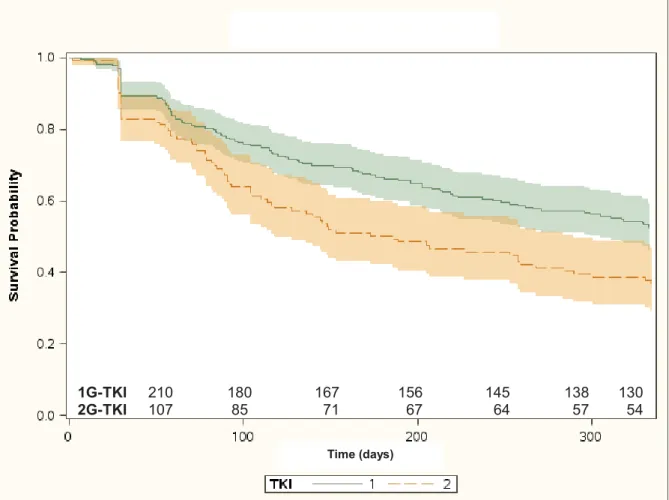
Initiating a 2GTKI was associated with a higher risk of treatment interruption (HR: 1.59, 95% CI
1.18-2.12, unadjusted model; HR: 1.48, 95% CI 1.08-2.02, multivariable model; HR 1.50, 95% CI 1.10-2.04,
propensity score quintiles model). Although the majority of patients with a treatment interruption
iv
of patients who initiated a 2GTKI discontinued treatment for the remainder of the study period. There
was no association between initiating a 2GTKI versus 1GTKI and regimen change or adherence.
Although mean adherence was higher for the 1GTKI cohort compared to the 2GTKI cohort, mean
adherence was low in both cohorts (PDC=0.79 and PDC=0.68, respectively, p=0.007). Patients who
initiated 2GTKI incurred more inpatient hospitalizations and ER visits compared to 1GTKI. Regression
models demonstrated that initiating therapy with a 2GTKI was associated with higher total and
v
TABLE OF CONTENTS
LIST OF TABLES
... viii
LIST OF FIGURES
... xii
CHAPTER I: INTRODUCTION
... 1
1.1 Overview
... 1
1.2 Specific Aims
... 2
1.3 Significance
... 3
CHAPTER II: LITERATURE REVIEW
... 5
2.1 Chronic Myeloid Leukemia: the disease
... 5
2.2 Current Approaches to Treatment
... 12
2.3 Treatment Guidelines
... 20
2.4 Medication Adherence
... 22
CHAPTER III: CONCEPTUAL FRAMEWORK
... 29
CHAPTER IV: METHODS
... 35
4.1 Overview
... 35
4.2 Data Source
... 35
4.3 Study Design and Selection of Participants
... 38
4.4 Measures
... 40
vi
4.6 Methodological Issues
... 52
4.7 Statistical analyses
... 54
4.8 Missing Data
... 63
CHAPTER V: RESULTS
... 64
5.1 Study Population
... 64
5.2 Baseline Characteristics
... 66
5.3 Propensity Score (PS) Estimation
... 68
5.4 Aim 1: Identify factors associated with newly initiating therapy for CML with a second generation versus a first-generation TKI.
... 72
5.5 Aim 2: Examine differences in treatment interruption and regimen change comparing patients newly initiating a second-generation versus a first-generation TKI
... 75
5.6 Aim 3: Determine if adherence is higher among patients newly initiating a second-generation versus a first-generation TKI
... 84
5.7 Aim 4: Determine if rates of health services utilization (i.e. number of outpatient physician visits, number of inpatient hospital admissions, length of inpatient hospital stays, and number of emergency room visits) and healthcare costs differ between patients initiating a second- generation versus a first-generation TKI.
... 88
5.8 Aim 5: Perform exploratory analyses to determine if adherence, healthcare utilization, and healthcare costs differ between patients newly initiating dasatinib versus nilotinib.
... 97
CHAPTER VI: DISCUSSION
... 104
6.1 Overview
... 104
vii
6.3 Strengths
... 109
6.4 Limitations
... 110
6.5 Policy implications
... 112
6.6 Future Research
... 113
viii
LIST OF TABLES
Table 2.1 Tests used to Diagnose and Monitor CML ... 8
Table 2.2 National Comprehensive Cancer Network (NCCN) Response Criteria ... 11
Table 2.3 Risk Calculations in CML ... 11
Table 2.4 First-line treatment for CML ... 13
Table 2.5. Comparison of pivotal trials for first-line TKI therapy in patients
newly diagnosed with CP-CML... 15
Table 2.6. Studies for second-line TKI therapy for the treatment of CML ... 17
Table 2.7 Recommendations for Follow-up Therapy ... 21
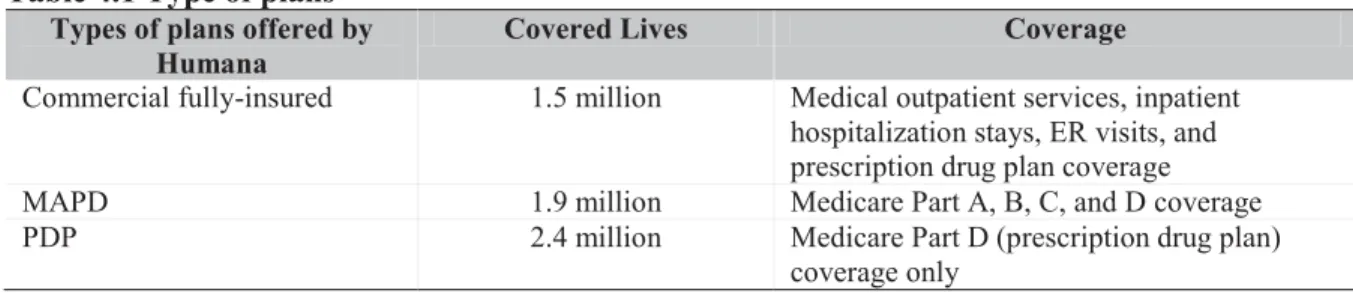
Table 4.1 Type of plans ... 37
Table 4.2 Summary of primary study measures ... 42
Table 4.3 Geographic Region Definitions ... 43
Table 4.5 RxRisk-V comorbidity categories and associated drug classes/drugs* ... 47
Table 4.6 Deyo Charlson Comorbidity Index ... 48
Table 4.7 Summary of Covariates ... 50
Table 5.1 Baseline Characteristics ... 67
ix
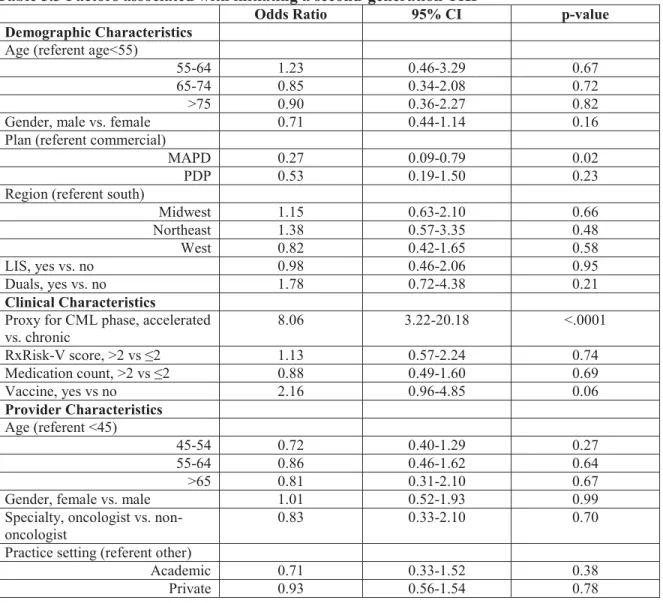
Table 5.3 Factors associated with initiating a second-generation TKI ... 73
Table 5.4 Factors associated with initiating a second versus first-generation
TKI in sensitivity analysis limited to patients with medical data available (n=162)* ... 74
Table 5.5 Factors associated with initiating a second versus first-generation
TKI in sensitivity analysis limited to patients with chronic phase CML (n=338)* ... 74
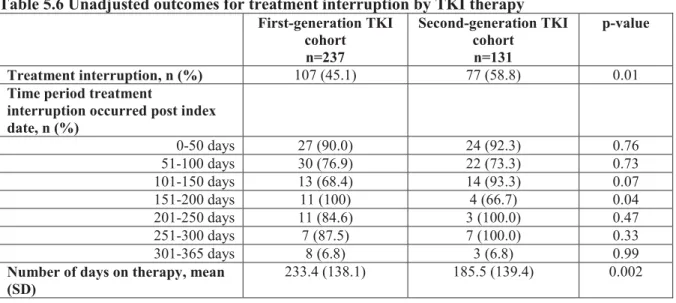
Table 5.6 Unadjusted outcomes for treatment interruption by TKI therapy ... 76
Table 5.7 Association between initiating a second-generation TKI and treatment interruption .. 76
Table 5.8 Multivariable analysis of initiation of TKI therapy with second
versus first-generation TKI and treatment interruption ... 78
Table 5.9 Association between initiating a second-generation TKI and treatment
interruption in sensitivity analysis limited to patients with chronic phase CML (n=338) ... 80
Table 5.10 Association between initiating a second-generation TKI and treatment
interruption in sensitivity analysis that includes censoring based on date of death (n=368)* ... 80
Table 5.11 Unadjusted outcomes for regimen change by TKI therapy * ... 82
Table 5.12 Association between initiating a second-generation TKI and regimen change ... 82
Table 5.13 Multivariable analysis of initiation of TKI therapy with second versus
first-generation TKI and regimen change ... 83
Table 5.14 Association between initiating a second-generation TKI and regimen
change (n=338)* ... 84
Table 5.15 Unadjusted outcomes for adherence by TKI therapy ... 85
x
Table 5.17 Multivariable analysis evaluating the association between initiating
a first versus second-generation TKI and adherence ... 86
Table 5.18 Association between initiating a second-generation TKI and
medication adherence (defined as PDC ≥0.80) ... 87
Table 5.19 Health services utilization during the 12 month period post index date ... 90
5.20 Association between initiating a second-generation versus first-generation
TKI and outpatient visits and inpatient hospital days* ... 91
Table 5.21 Incidence rate ratio for outpatient visits and inpatient hospital days
comparing initiation of a second versus first-generation TKI ... 92
5.22 Association between initiating a second-generation versus first-generation
TKI and inpatient visits* ... 92
Table 5.23 Healthcare costs incurred during the 12 month period following
initiation of first versus second-generation TKI therapy (n=133)* ... 94
Table 5.24 Multivariable analysis of initiation of TKI therapy with second versus
first-generation TKI and total, TKI-related costs, non TKI-related costs, and
medical costs (n=133)* ... 95
Table 5.25 Predicted, adjusted healthcare costs during the 12 month period
following initiation of first versus second-generation TKI therapy (n=133)* ... 96
Table 5.26 Unadjusted healthcare costs incurred during the 12 month period
following initiation of first versus second-generation TKI therapy (n=123)* ... 96
Table 5.27 Unadjusted adherence outcomes for patients initiating nilotinib versus dasatnib ... 97
xi
Table 5.29 Health services utilization during the 12 month period following
initiation of nilotinib versus dasatinib... 99
Table 5.30 Association between initiating dasatinib versus nilotinib and
outpatient visits and inpatient days* ... 100
Table 5.31 Incidence rate ratios for outpatient visits and inpatient hospital days
comparing initiation of dasatinib versus nilotinib ... 100
Table 5.32 Healthcare costs incurred during the 12 month period following
initiation of nilotinib versus dasatinib (n=44)* ... 101
Table 5.33 Association between initiating nilotinib versus dasatinib and total,
TKI-related costs, non TKI-related costs, and medical costs* ... 102
Table 5.34 Predicted, adjusted healthcare costs during the 12 month period
following initiation of nilotinib versus dasatinib (n=44)* ... 103
xii
LIST OF FIGURES
Figure 2.1 Clinical Course of Untreated CML ... 9
Figure 3.1 Carpenter and colleagues’ conceptual model for examining data for nonexperimental cancer comparative effectiveness research ... 30
Figure 3.2 Proposed Conceptual Framework ... 34
Figure 4.1 Study Time Period ... 39
Figure 5.1 Selection Criteria ... 65
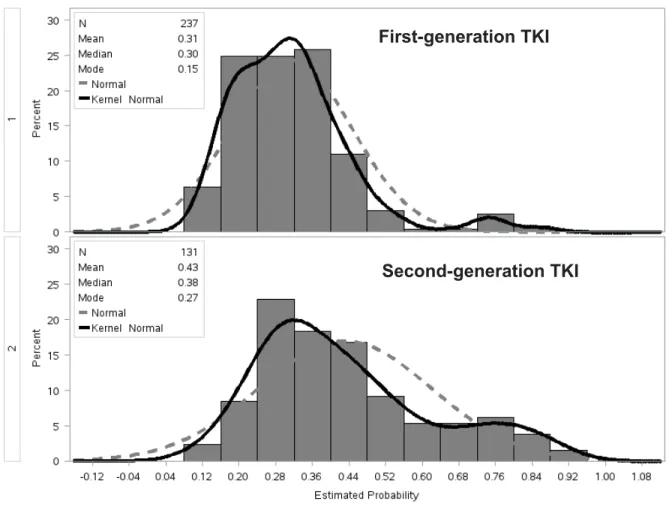
Figure 5.2 Distribution of propensity scores ... 70
Figure 5.3 Time to treatment interruption, stratified by initiation with first versus second-generation TKI therapy ... 77
1
CHAPTER I: INTRODUCTION 1.1 Overview
Chronic myeloid leukemia (CML) accounts for 15% of all leukemias, with a median age at
diagnosis of 64 years.1 In 2013, it was estimated that 5,920 people would be diagnosed with CML and
610 would die from the disease in the United States.2 CML is classified into three phases (i.e. chronic,
accelerated and blast crisis) and is typically diagnosed in the chronic phase.3 Untreated chronic phase
CML typically will evolve into advanced phase disease in 3-5 years.4
There are currently three oral oncology agents known as tyrosine kinase inhibitors (TKIs)
approved for the first-line treatment of CML: imatinib, dasatinib, and nilotinib.5-7 Imatinib was approved
for the treatment of CML in 2001 and has been the standard of care for newly diagnosed patients. The
introduction of this targeted cancer therapy changed CML from a fatal condition to one that can be
managed as a chronic illness in many patients. Although this novel agent has been a significant advance
in treating CML, it has some limitations. Major limitations of imatinib therapy include toxicity, lack of
efficacy, and poor adherence.8
Dasatinib and nilotinib are second-generation TKIs, initially approved by the FDA as second-line
therapy for patients with CML who are resistant or intolerant to imatinib. With the aim of improving
responses achieved with first-line therapy, head-to-head randomized control trials (RCTs) were conducted
to compare the second-generation TKIs to imatinib for patients newly diagnosed with chronic phase
CML.9-13 Both nilotinib and dasatinib had superior efficacy over imatinib during the first year of therapy,
with higher rates of complete cytogenetic response and major molecular response and similar safety
profiles.9,11 Subsequently, nilotinib received FDA approval as a first-line option for CML in June 2010
2
The rationale for initiating a second-generation TKI as first-line therapy is remarkable rates of
early responses, excellent event-free survival, and overall survival.14-16 The counterargument is that
approximately two-thirds of patients have an acceptable response to imatinib based on the results of the
IRIS study17 and other reports.18,19 Regardless of what agent is chosen as first-line therapy, physicians
will continue to have to consider adherence as well as cost. Long-term continuous exposure to TKI
therapy is required to achieve and maintain favorable treatment outcomes. Specifically, adherence greater
than 90% has been correlated with clinical end points that are associated with prolonged survival.17,20-22
Cost is another important consideration. The price of a 1-year supply of a first-generation TKI
(i.e. imatinib) and a second-generation TKI (i.e. dasatinib, and nilotinib) is between $80,000 to $90,000
and $115,000 to $124,000, respectively.23 These medications are typically placed in the highest tier, the
specialty tier, which requires a 20% co-insurance, placing a large financial burden on the patient. Thus,
member cost-share may be an important barrier to medication adherence and persistence that should be
considered for treatment with TKI therapy. Cost will continue to be an important health care issue to
consider when generic imatinib becomes available in 2015. The expected price differential between
generic imatinib and the second-generation TKIs will be considerable ($2,000 to $10,000 vs. >$100,000,
respectively).23
1.2 Specific Aims
Because there is no consensus on whether to start patients on a first compared to a
second-generation TKI therapy as first-line therapy and there is limited ability to generalize RCT evidence to
clinical practice, it is critical to use observational data to evaluate the effectiveness of first-generation TKI
(i.e. imatinib) versus second-generation TKI (i.e. dasatinib and nilotinib) in patients newly initiating
therapy. The proposed study used a comprehensive healthcare administrative database from Humana Inc.
3
distribution covering all 50 states. The database includes the most current pharmacy claims, medical
claims, and member enrollment data for all commercial fully-insured and Medicare members.
The specific aims of the study are to:
Aim 1: Identify factors associated with newly initiating therapy for CML with a second-generation versus
a first-generation TKI.
Aim 2: Examine differences in treatment interruption and regimen change between patients newly
initiating a second-generation versus a first-generation TKI.
Aim 3: Determine if adherence is higher among patients newly initiating a second-generation versus a
first-generation TKI.
Aim 4: Determine if rates of health services utilization (i.e. number of outpatient physician visits, number
of inpatient hospital admissions, length of inpatient hospital stays, and number of emergency
room visits) and healthcare costs differ between patients initiating a second-generation versus a
first-generation TKI.
Aim 5: Perform exploratory analyses to determine if adherence, health services utilization, and healthcare
costs differ between patients newly initiating dasatinib versus nilotinib.
1.3 Significance
Although there have been clinical trials comparing each of the second-generation TKIs to
imatinib in the first-line setting, no comparative effectiveness data exist comparing first and
second-generation TKIs as first-line therapy using real world data. The results from the proposed study will be
used to inform clinicians and payers through a comparative effectiveness analysis.
As survival increases and lifelong treatment is anticipated for the treatment of CML, payers are
instituting more restrictive covered and preferred therapies. Payers may consider two strategies moving
forward in managing CML treatment. First, payers may consider preferring a second-generation TKI
therapy. Recent guidance issued by the National Institute for Health and Clinical Excellence (NICE)
4
made by Bristol-Myers Squibb, is not recommended. NICE concluded from indirect comparisons that
dasatinib and nilotinib could be considered equally effective in treatment of CML and accepted an
undisclosed patient access scheme reducing the cost to approve nilotinib on the formulary in the United
Kingdom. NICE guidance is referred to by other countries because of the perceived robust methodology
of their review process. In the case of first-line use of TKI therapy for CML, there is not currently robust
data to support excluding coverage for dasatinib. However, U.S. payers may consider following a similar
strategy as the United Kingdom and prefer imatinib and nilotinib as first-line treatment for CML. Second,
payers and oncology clinical pathway partners may consider an imanitib first strategy for patients with
chronic phase CML with the availability of generic imatinib in 2015. Developing a pathway involves
evaluating efficacy, tolerability, and cost. If agents are considered equally efficacious and tolerable, the
least costly agent is preferred.25
The proposed study is a first step in evaluating treatment patterns and comparing adherence and
outcomes among patients newly initiating first and second-generation TKI therapies for the treatment of
5
CHAPTER II: LITERATURE REVIEW 2.1 Chronic Myeloid Leukemia: the disease
2.1.1 Overview
Leukemia is a cancer of the bone marrow or blood. CML is one of four major types of
leukemia. It is a slow growing leukemia that results from a chromosomal translocation ultimately
resulting in an increased clonal population of white blood cells that carry this genetic mutation. CML
occurs in all age groups but is typically diagnosed in older adults.26 Being exposed to high-dose
radiation is the only known environmental risk factor.27 The risk of CML has not been shown to be
affected by smoking, diet, exposure to chemicals, or infections. A recent study suggests that CML
may occur in at least three different settings: 1) sporadic; 2) genetic heterogeneity with polygenetic
and environmental impact; and 3) a familial phenotype following an autosomal dominant
inheritance.28 Most patients do not report symptoms of the disease.26 CML is typically detected
when the patient is being tested for another disease or as part of a routine physical exam.
2.1.2 Epidemiology
2.1.2.1 Incidence
CML is a rare disease.29 Between 2005-2009, the incidence rate of CML was 1.6 per 100,000
men and women.30 In 2013, the American Cancer Society estimated that 5,920 people would be
diagnosed with CML and 610 would die from the disease in the U.S.2 The incidence increases with
advancing age. There is some evidence suggesting CML occurs with greater frequency in men than
women with a male to female incidence ratio ranging from 1.3 to 1.8.31 The incidence of CML may
also vary by race and ethnicity. In a U.S. study, the incidence of CML was lower in individuals of
Asian/Pacific Islander ethnicity compared to other races.32
6
Little CML specific prevalence data are published because CML is often reported within the
broader category of leukemia.31 Although prevalence information is lacking, it is well accepted that
patients with chronic phase CML experience long periods of disease remission on current therapies,
increasing disease prevalence. Huang et al. estimated the prevalence of CML in the U.S. was 70,000
cases in 2010 and will increase to 112,000 in 2020 and 181,000 cases in 2050.33
2.1.2.3 Survival Outcomes
2.1.2.3.1 Definitions
There are several different survival measures assessed and reported for cancer patients.
Overall survival refers to the proportion of cancer patients who survive during a specific time period
beginning at the time of diagnosis (e.g. five-year period). Relative survival measures the ratio of the
proportion of observed survivors in a cohort of cancer patients to the proportion of expected survivors
in a comparable set of cancer-free individuals, matched on age, gender, race but not region or
exposure.30 For young persons, observed and relative survival are typically similar. However, for
older persons, due to competing causes of death, relative survival rates are higher than observed
survival rates. Progression-free survival (PFS) for CML has been defined as the time that elapses
before a doubling of the white blood cell count to more than 20x109 per liter in the absence of
complete hematologic response; a loss of complete hematologic response; an increase in Philadelphia
positive bone marrow metaphases to more than 35%; progression to accelerated or blast-crisis phase
CML; or death from any cause.34
2.1.2.3.2 Overview
When evaluating cancer outcomes, it is important to consider the likely survival among the
patients being studied. Imatinib was approved for the treatment of CML over a decade ago. The
introduction of this targeted cancer therapy changed CML from a fatal condition to one that can be
managed as a chronic illness in many patients. In newly diagnosed patients with CML, overall
7
above 93%.13,35 The proposed study will follow patients for up to one year following initiation of
TKI therapy. Based on the overall survival data from the clinical trial data, it is unlikely that a more
than 5% of patients will die during the follow-up period.
2.1.3 Pathophysiology
In a disease-free individual, hematopoietic stem cells, which are produced in the bone
marrow, eventually develop into mature blood cells. A blood stem cell may become a myeloid stem
cell or a lymphoid stem cell. Lymphoid stem cells develop into T and B lymphocytes. Myeloid stem
cells develop into one of the following three types of mature blood cells36:
x Red blood cells that carry oxygen to the tissues of the body
x Platelets that cause blood clots to form and prevent bleeding
x Granulocytes (white blood cells) that have a role in fighting infection and disease
In CML, there is an excess of clonal blood stem cells developing into abnormal granulocytes (referred
to as leukemic cells).36 These leukemic cells do not become healthy white blood cells. Instead they
build up in the blood and bone marrow, leaving less room for the development of healthy white blood
cells (WBCs), red blood cells, and platelets.
The buildup of leukemic cells is the result of an abnormal gene mutation causing activation of
pathways that lead to increased cellular proliferation, or too many stem cells that develop into
leukemic WBCs. In 95% of CML cases, patients acquire a gene mutation known as the Philadelphia
chromosome and 5% have an alternative abnormal chromosomal arrangement where the Philadelphia
chromosome is undetectable.37-39 The Philadelphia chromosome is the product of reciprocal
translocation (t[9;22]) that fuses the breakpoint cluster region (BCR) gene on chromosome 22 at band
q11 and the Abelson murine leukemia (ABL) gene located on chromosome 9 at band q34
(t[9;22][q34;q11]), resulting in the creation of the fusion protein BCR-ABL.40 Specifically, the
BCR-ABL fusion protein contains an active tyrosine kinase region of ABL that deregulates cell growth,
8
2.1.4 Diagnosis and staging2.1.4.1 Diagnosis
The diagnosis of CML can be accomplished through peripheral blood. An elevated white
blood cell (WBC) count with left shift (i.e. increase in the number of immature WBCs) and an
enlarged spleen is suggestive of CML. In all patients with suspected CML, the initial work-up for
CML consists of a bone marrow aspiration with differential count and cytogenetic analysis as well as
fluorescence in situ hybridization (FISH) and polymerase chain reaction (PCR).42 Table 2.1 describes
the tests used to confirm CML diagnosis. The Philadelphia chromosome is undetectable in 5% of
patients and diagnosis relies on the defection of the BCR-ABL fusion protein. FISH and PCR are used
to detect the BCR-ABL fusion gene in the blood or bone marrow (preferred). PCR has the same role
as FISH but quantifies the number of BCR-ABL transcripts. Bone marrow aspiration and cytogenetic
analysis are necessary to assess staging. Additionally, cytogenetic examination is used to assess
whether additional chromosomal abnormalities exist besides the Philadelphia chromosome.
Table 2.1 Tests used to Diagnose and Monitor CML
Test Specimen Used Purpose Related CML Endpoint
Standard cytogenetics Bone marrow Detection of the Philadelphia
chromosome and other abnormal chromosomal arrangements
Cytogenetic
FISH Blood or bone
marrow Detects BCR-ABL gene Cytogenetic
RT-PCR Blood or bone
marrow
Detects and quantifies levels of BCR-ABL transcripts
Molecular
BCR-ABL=breakpoint cluster region-Abelson murine leukemia; FISH=fluorescence in situ hybridization; RT-PCR=reverse transcriptase polymerase chain reaction
Source: National Comprehensive Cancer Network (NCCN) v3.2013
2.1.4.2 Staging
CML occurs in three phases: chronic (CP), accelerated (AP), and blast crisis (BC). The stage
reflects the severity of the disease. The percentage of blast cells in the blood and bone marrow
determine the phase of disease36 (Figure 2.1). Approximately 90% of patients diagnosed with CML
9
disease includes fatigue, unexplained weight loss, night sweats, fever, splenomegaly, and bleeding.43
In 45% of cases, CML presents asymptomatically.44 Treatment improves WBC counts, chronic phase
symptoms resolve, and patients are able to return to their usual activities. Untreated CP-CML
typically leads to advanced terminal blastic phase in 3 to 6 years with signs and symptoms similar to
acute leukemia.4
Figure 2.1 Clinical Course of Untreated CML
Note: Median duration of disease assumes the patient is left untreated Source: Frazer et al., 200745
2.1.5 Clinical Endpoints
Management of CML involves periodic disease monitoring to assess response to therapy and
detection of early relapse. Three different types of responses in CML are monitored: hematologic,
Definition Accelerated Phase (AP) Blast Crisis (BC) Chronic Phase (CP) Hemoglobin Platelets Symptoms Median Disease Duration
<10% of the cells in blood and bone marrow are blast cells
10%-19% of the cells in blood and bone marrow are blast cells
≥20% of the cells in blood and bone marrow
are blast cells
Normal/slightly low Low Very low
Normal/High/Low High/Low Low
Fatigue, bleeding, purpura, weight loss,
abdominal fullness Unexplained fever, splenomegaly, hepatomegaly, bone pain Severe anemia, bleeding, increased infections, CNS disease,
lymphadenopapthy
3-5 years 6-9 months 3-6 months
10
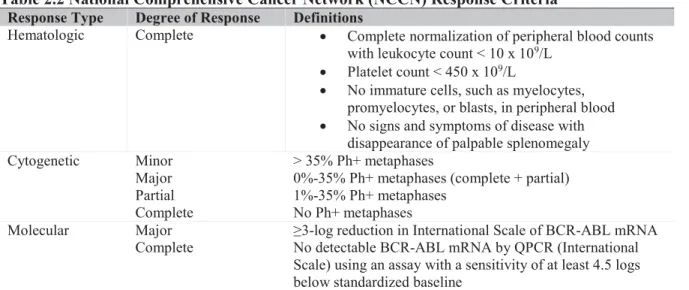
cytogenetic, and molecular. Each type of response is outlined in detail in Table 2.2. Early
achievement of deeper molecular and cytogenetic responses confers a favorable long-term outcome.42
Additionally, an accepted goal of CML therapy is to achieve complete cytogenetic response (CCyR),
which means no Philadelphia positive cells can be detected, within 18 months after initiating
therapy.46
2.1.5.1 Hematologic Response
A complete hematologic response is a return of blood cells to normal levels and a
disappearance of blast cells and other immature cells in peripheral blood.
2.1.5.2 Cytogenetic Response
Although a CCyR means that Philadelphia positive cells can no longer be detected, patients
who achieve CCyR may still carry as many as 109 leukemic cells.47 Cytogenetic response is an
independent prognostic factor for improved survival and has become a therapeutic target for clinical
studies.43 Jabbour et al. reported that achievement of early CCyR is a major surrogate endpoint in
patients newly diagnosed with chronic phase CML that correlates with survival improvement
regardless of TKI.48
2.1.5.3 Molecular Response
Although the majority of patients treated with TKI therapy will achieve CCyR, a smaller
proportion of patients go on to achieve complete molecular response (CMR). CMR indicates there is
no detectable BCR-ABL mRNA. Major molecular response (MMR) indicates there is at least a 3-log
reduction in BCR-ABL mRNA which is assessed based on the standardized baseline and not a
reduction from the actual individual patient’s baseline level. MMR is associated with long-term
remission rates and progression-free survival (PFS). In the 5-year follow-up IRIS study, patients who
achieved CCyR and MMR at 12 months did not progress to accelerated or blast crisis.22 Additionally,
molecular responses also predict the duration of CCyR.49-52 In the 7-year follow-up IRIS study, the
11
months compared to 26% for patients who achieved CCyR but not MMR (p<0.001).49 Additionally,
patients with stable MMR have a lower probability of loss of cytogenetic remission compared to
unstable MMR or not achieving MMR.51,52
Table 2.2 National Comprehensive Cancer Network (NCCN) Response Criteria
Response Type Degree of Response Definitions
Hematologic Complete x Complete normalization of peripheral blood counts
with leukocyte count < 10 x 109/L x Platelet count < 450 x 109/L
x No immature cells, such as myelocytes,
promyelocytes, or blasts, in peripheral blood
x No signs and symptoms of disease with
disappearance of palpable splenomegaly
Cytogenetic Minor > 35% Ph+ metaphases
Major 0%-35% Ph+ metaphases (complete + partial)
Partial 1%-35% Ph+ metaphases
Complete No Ph+ metaphases
Molecular Major ≥3-log reduction in International Scale of BCR-ABL mRNA
Complete No detectable BCR-ABL mRNA by QPCR (International
Scale) using an assay with a sensitivity of at least 4.5 logs below standardized baseline
BCR-ABL=breakpoint cluster region-Abelson murine leukemia; mRNA=messenger RNA; Ph+=Philadelphia chromosome-positive; QPRC=quantitative reverse transcriptase polymerase chain reaction
Source: NCCN v3.2013
2.1.6 Risk classification
Prognostic scores are used to stratify patients into risk groups based on age, spleen size, and
blood cell counts. The prognostic classification systems proposed by Sokal and Hasford are used to
calculate the risk of progression and death based on baseline characteristics, without consideration for
treatment response.53,54 The calculations are used to categorize patients as low, intermediate, and high
risk (Table 2.3). The Sokal score predicts the likelihood of achieving CCyR at 2 years as follows:
low-risk patients 91%, intermediate-risk patients 84%, and high-risk patients 69%.55
Table 2.3 Risk Calculations in CML
Classification System Calculations Risk Definition
Sokal Exp 0.0116 x (age in years – 43.4) + 0.0345 x
(spleen - 7.51) + x [(platelet count ÷ 700)2 –
0.563] + 0.0887 x (blast cells – 2.10)
Low: < 0.8
Intermediate: 0.8-1.2 High: > 1.2
Hasford 0.666 when age ≥ 50 years + (0.042 x spleen)
+ 1.0956 when platelet count > 1,500 x 109/L
+ (0.0584 x blast cells) + 0.20399 when
Low: ≤ 780
12
basophils > 3% + (0.0413 x eosinophils) x 100
CML=chronic myelogenous leukemia
Note: For the equations, age is measured in years; spleen in centimeters below the costal margin; and blast cells, eosinophils, and basophils are in percents of peripheral blood differential. All factors must be collected before any treatment.
Source: National Comprehensive Cancer Network (NCCN) v3.2013
2.2 Current Approaches to Treatment 2.2.1 First-Line Therapy
2.2.1.1 Overview
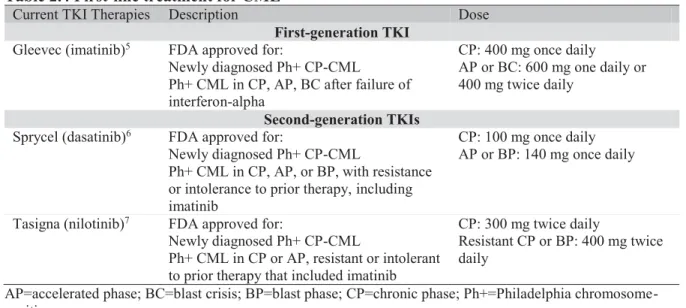
There are currently three oral oncology agents known as tyrosine kinase inhibitors (TKIs)
approved for the first-line treatment of CML, imatinib, dasatinib, and nilotinib (Table 2.4). In the
United States, imatinib was approved for the treatment of chronic phase CML in 2002. The
introduction of this targeted cancer therapy changed CML from a fatal condition to one that can be
managed as a chronic illness. Although this novel agent was a significant advance in treating CML, it
has some limitations, including toxicity, lack of efficacy and poor adherence.8 Specifically, one-third
of newly diagnosed CP-CML patients treated with imatinib had inadequate responses or did not
experience long-term benefit in an intention-to-treat analysis.18
Two second-generation TKIs, dasatinib and nilotinib, were initially approved by the FDA as
second-line agents for patients with CML who fail imatinib. With the aim of improving responses
achieved with first-line therapy, head-to-head RCTs were conducted to compare the
second-generation TKIs to imatinib for patients newly diagnosed with CP-CML.9-13 Both nilotinib and
dasatinib had superior efficacy over imatinib during the first year of therapy with higher rates of
complete cytogenetic response (CCyR) and major molecular response (MMR) rate and similar safety
profiles.9,11 Subsequently, nilotinib received FDA approval as a first-line option for CP-CML in June
2010 and dasatinib received approval in October 2010. These recent changes have been reflected in
National Comprehensive Cancer Network (NCCN) Guidelines for Chronic Myelogenous Leukemia,
13
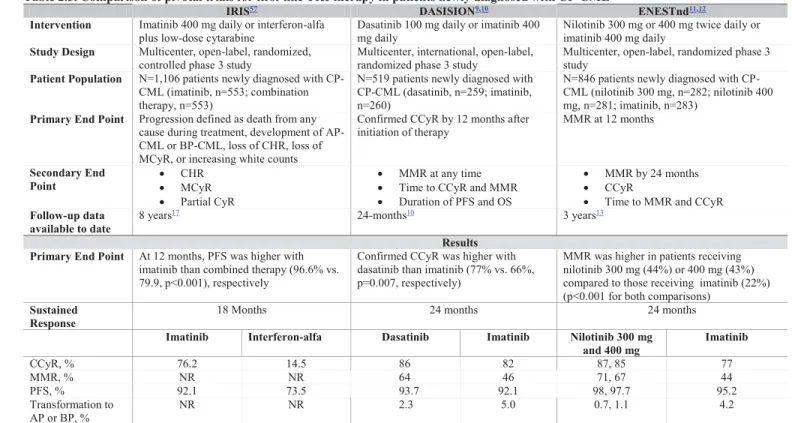
trials for imatinib, dasatinib, and nilotinib in the first-line setting are described below and compared
in Table 2.5.
Table 2.4 First-line treatment for CML
Current TKI Therapies Description Dose
First-generation TKI
Gleevec (imatinib)5 FDA approved for:
Newly diagnosed Ph+ CP-CML Ph+ CML in CP, AP, BC after failure of interferon-alpha
CP: 400 mg once daily
AP or BC: 600 mg one daily or 400 mg twice daily
Second-generation TKIs
Sprycel (dasatinib)6 FDA approved for:
Newly diagnosed Ph+ CP-CML
Ph+ CML in CP, AP, or BP, with resistance or intolerance to prior therapy, including imatinib
CP: 100 mg once daily AP or BP: 140 mg once daily
Tasigna (nilotinib)7 FDA approved for:
Newly diagnosed Ph+ CP-CML
Ph+ CML in CP or AP, resistant or intolerant to prior therapy that included imatinib
CP: 300 mg twice daily
Resistant CP or BP: 400 mg twice daily
AP=accelerated phase; BC=blast crisis; BP=blast phase; CP=chronic phase; Ph+=Philadelphia chromosome-positive
Sources: FDA prescribing information
2.2.1.2 Imatinib, dasatinib, and nilotinib: pivotal trials
International Randomized Study of Interferon and STI571 (IRIS) trial
Imatinib has been the recommended first-line treatment for newly diagnosed chronic phase
CML patients following FDA approval in 2002. Results from the multicenter, phase III study
International Randomized Study of Interferon and STI571 (IRIS) trial established imatinib as the
standard of care.57 Patients were randomized to receive imatinb (400 mg daily) (n=553) or the
previous standard of care, interferon-alfa plus low-dose cytarabine (control) (n=553). Crossover to
alternative group was allowed for treatment failure or intolerance. The rates of major cytogenetic
response (MCyR) at 18 months were 87.1% in the imatinib group compared to 34.7% in the control
(p<0.001). The rates of CCyR were 76.2% in the imatinib group compared to 14.5% in the control.
Imatinib was better tolerated compared to interferon-alpha plus cytarabine. Longer-term follow-up
data is available from the IRIS trial.17,22 At 5 year follow-up for patients receiving imatinib,
14
overall survival (OS) for patients receiving imatinib was 89%. Patients who reached CCyR or MMR
had a significantly lower risk of disease progression compared to patients not achieving CCyR.
Dasatinib versus imatinib study in treatment-naïve CML (DASISION) trial
The safety and efficacy of dasatinib (100 mg daily) and imatinib (400 mg daily) in patients
newly diagnosed with CP-CML were compared in a multinational study.9 There were 259 patients
randomized to the dasatinib arm and 260 patients in the imatinib arm. By 12 months of follow-up,
the rates of confirmed CCyR and MMR were higher in the dasatinib arm compared to the imatinib
arm (CCyR: 77% vs. 66%, p=0.007; MMR: 46% vs. 28%, p<0.0001), respectively. In addition,
responses were achieved in a shorter time in patients receiving dasatinib compared to imatinib. The
rate of CCyR at 3, 6, and 9 months were 54%, 73%, and 78%, respectively for the dasatinib group
and 31%, 59%, and 67%, respectively for the imatinib group. The 2 year follow-up data from
DASISION confirms faster and deeper responses with dasatinib compared to imatinib.10 The median
time to achieve CCyR and MMR were shorter for dasatinib than for imatinib (CCyR: 3 months vs. 6
months; MMR: 15 vs. 36 months), respectively.
Evaluating nilotinib efficacy and safety in clinical trials-newly diagnosed patients (ENESTnd) trial
In the phase III multicenter trial, patients newly diagnosed with CP-CML were randomized to
receive nilotinib (300 mg or 400 mg twice daily) or imatinib (400 mg daily).11-13 The primary
endpoint was rate of MMR and the secondary endpoint was CCyR at 12 months.11 The MMR and
CCyR rates were significantly higher in nilotinib groups compared to imatinib at both 12 and 24
Table 2.5. Comparison of pivotal trials for first-line TKI therapy in patients newly diagnosed with CP-CML
IRIS57 DASISION9,10 ENESTnd11,12
Intervention Imatinib 400 mg daily or interferon-alfa
plus low-dose cytarabine Dasatinib 100 mg daily or imatinib 400 mg daily Nilotinib 300 mg or 400 mg twice daily or imatinib 400 mg daily
Study Design Multicenter, open-label, randomized,
controlled phase 3 study Multicenter, international, open-label, randomized phase 3 study Multicenter, open-label, randomized phase 3 study
Patient Population N=1,106 patients newly diagnosed with CP-CML (imatinib, n=553; combination therapy, n=553)
N=519 patients newly diagnosed with CP-CML (dasatinib, n=259; imatinib, n=260)
N=846 patients newly diagnosed with CP-CML (nilotinib 300 mg, n=282; nilotinib 400 mg, n=281; imatinib, n=283)
Primary End Point Progression defined as death from any cause during treatment, development of AP-CML or BP-AP-CML, loss of CHR, loss of MCyR, or increasing white counts
Confirmed CCyR by 12 months after
initiation of therapy MMR at 12 months
Secondary End
Point xx CHR MCyR
x Partial CyR
x MMR at any time
x Time to CCyR and MMR
x Duration of PFS and OS
x MMR by 24 months
x CCyR
x Time to MMR and CCyR
Follow-up data available to date
8 years17 24-months10 3 years13
Results Primary End Point At 12 months, PFS was higher with
imatinib than combined therapy (96.6% vs. 79.9, p<0.001), respectively
Confirmed CCyR was higher with dasatinib than imatinib (77% vs. 66%, p=0.007, respectively)
MMR was higher in patients receiving nilotinib 300 mg (44%) or 400 mg (43%) compared to those receiving imatinib (22%) (p<0.001 for both comparisons)
Sustained
Response 18 Months 24 months 24 months
Imatinib Interferon-alfa Dasatinib Imatinib Nilotinib 300 mg
and 400 mg Imatinib
CCyR, % 76.2 14.5 86 82 87, 85 77
MMR, % NR NR 64 46 71, 67 44
PFS, % 92.1 73.5 93.7 92.1 98, 97.7 95.2
Transformation to
AP or BP, % NR NR 2.3 5.0 0.7, 1.1 4.2
AP=accelerated phase; BC=blast crisis; BP=blast phase; CHR=complete hematologic response; CP=chronic phase; CyR=cytogenetic response MCyR=major cytogenetic response; MMR=major molecular response; OS=overall survival; PFS=progression-free survival; NR, not reported
Clinical trial acronyms: IRIS, International Randomized Study of Interferon and STI571 (IRIS) trial; DASISION, Dasatinib versus imatinib study in treatment-naïve CML; ENESTnd, Evaluating nilotinib efficacy and safety in clinical trials-newly diagnosed patient
16
2.2.2 Second-line therapy2.2.2.1 Overview
Approximately 50% of patients who develop resistance to imatinib will respond to a
second-generation TKI.58 Both dasatinib and nilotinib are approved as second-line therapies to treat CML
patients who are resistant or intolerant to imatinib. Additionally, bosutinib was FDA approved in
September 2012 for adult patients with CP, AP, or BP CML with resistance or intolerance to prior
therapy.59 Table 6 summarizes design, endpoints, and results for the pivotal second-line studies.
Studies of nilotinib and bosutinib in the second-line setting used single-arm designs. The dasatinib
study was a phase 3 dose-optimization and schedule-optimization study that investigated the effect of
changing the recommended dose for chronic phase CML patients from 70 mg twice daily to 100 mg
once daily.60
2.2.2.2 Dasatinib
Dasatinib has shown efficacy in patients with CML who are resistant or intolerant of imatinib
in a series of phase II studies [SRC/ABL tyrosine kinase inhibition activity: research trials of
dasatinib (START)]. In a dose optimizing study, imatinib-resistant and imatinib-intolerant patients
achieved similar MCyR across all treatment arms.60 Additionally, dasatinib produced similar CHR,
MCyR, and CCyR rates across all treatment arms. Only the efficacy results for 100 mg once daily are
17
Table 2.6. Studies for second-line TKI therapy for the treatment of CML
Dasatinib60,61 Nilotinib58,62 Bosutinib63
Intervention Dasatinib 100 mg daily, 50 mg twice daily, 140 mg daily, or 70 mg daily (efficacy provided for 100 mg group only)
Nilotinib 400 mg twice daily
Bosutinib 500 mg daily
Study Design Randomized, international, multicenter, open-label phase 3 dose-optimization and schedule-optimization study
Single-arm, open-label
phase 2 study Single-arm, open-label, phase 1/2 study
Patient Population
N=670 patients with CP-CML with resistance, intolerance, or suboptimal response to imatinib (100 mg daily, n=167; 70 mg twice daily, n=168; 140 mg daily, n=167; 50 mg twice daily, n=168)
N=321 patients with imatinib-resistant (n=226) or imatinib-intolerant (n=95) CP-CML
N=266 patients evaluated for efficacy with imatinib-resistant (n=186) or imatinib-intolerant (n=80)
Primary End Point
MCyR at 24 weeks in patients with imatinib-resistance
MCyR MCyR at 24 weeks in
patients with imatinib-resistance
Secondary End Point
x MCyR in patients
with imatinib intolerance
x CHR
x Time and duration
of MCyR and CHR
x PFS and OS
x Time and duration
of MCyR
x Time and duration
of CHR
x PFS and OS
x Time and duration
of MCyR
x Time and duration
of CHR
x PFS and OS
Follow-up data
available to date 2 year
61 24-month minimum
follow-up62 24-month follow-up
Results Primary End
Point
59% of patients achieved
MCyR at 24 weeks 48% of patients achieved MCyR at 24 weeks 31% of patients achieved MCyR at 24 weeks
Sustained Response
24 months 24 months 24.2 months
MCyR (CCyR) 63% (50%) 59% (44%) 53% (41%)
Transformation to AP or BP
3% 3.1% 3.8%
OS 91% 87% 92%
18
2.2.2.3 NilotinibThe safety and efficacy of nilotinib was evaluated in a Phase II trial in imatinib resistant or
intolerant CP and AP-CML patients.58,62 Nilotinib was administered to 321 patients who were
imatinib resistant (70%) or intolerant (30%) with a primary endpoint of rate of MCyR.58 Overall,
59% of patients achieved MCyR at 24 months follow-up. Additionally, 44% achieved CCyR and the
OS was 87%.
2.2.2.4 Bosutinib
The safety and efficacy of bosutinib used as a second-line therapy was evaluated in 288
patients with CP imatinib-resistant (69%) or imatinib-intolerant (31%) CML.64 At 24 weeks, the
primary end point of MCyR was achieved by 31%. After a median of 24.2 months of follow-up, 86%
of patients achieved CHR, 53% had a MCyR, and 64% of those achieving CCyR had a MMR.
Additionally, at 2 years, PFS was 70% and overall survival was 92%. Bosutinib had an overall
acceptable safety profile with a notable increased incidence of diarrhea with 82% of patients
experiencing any grade and 8% grade 3/4 diarrhea. Approximately, 21% of patients discontinued
treatment due to adverse events.
2.2.3 Safety
2.2.3.1 Overview
The choice of first-line therapy depends on disease risk score, physician’s experience, patient
age, ability to tolerate therapy, and the presence of comorbid conditions.46 The information presented
below includes a high level overview of agent specific toxicities. The specific toxicities mentioned
are included as they may be a factor influencing treatment decision. For example, if a physician is
choosing to initiate a second-generation TKI therapy, nilotinib may be preferred over dasatinib for
patients at risk of developing pleural effusions based on toxicity profile.46
19
Imatinib is generally well tolerated. The most often reported adverse reactions include
gastrointestinal toxicity such as mild nausea and diarrhea, edema, rash, and musculoskeletal
complaints. Frequently reported grade 3 or 4 toxicities include neutropenia and thrombocytopenia.46
Erythropoietin and filgrastim have been used and shown effective in patients with imatinib-induced
anemia and neutropenia65,66 but are not supported by guidelines from the FDA and Centers for
Medicare and Medicaid Services (CMS).46 A recent study reported cardiotoxicity and congestive
heart failure (CHF) among 10 patients with longer-term use of imatinib. Another study found that of
1,276 patients treated with imatinib, 22 patients (1.7%) developed CHF during treatment.67,68
2.2.3.3 Dasatinib
The most common reported adverse reactions reported in at least 10% of patients newly
diagnosed with chronic phase CML include myelosuppression, fluid retention, diarrhea, headache,
musculoskeletal pain, and rash. These adverse reactions as well as dyspnea and hemorrhage occur in
greater frequency (≥20%) in patients with resistance or intolerance to prior imatinib therapy.6
Quintas-Cardama et al. studied risk factors associated with dasatinib therapy after failure of
imatinib.69 Among 138 patients treated with dasatinib, 35% developed pleural effusion. Patients with
a cardiac history, hypertension, receiving twice daily dosing with 70 mg are at increased risk of
developing pleural effusion. Pleural effusion led to dose interruption in 83% of patients and dose
reduction in 71% of patients. Management of pleural effusion includes treatment with diuretics, dose
interruption, and a short course of steroids (3 days) for patients with significant symptoms.46 After
symptoms resolve, guidelines recommend that the dose should be reduced.
2.2.3.4 Nilotinib
The most commonly reported non-hematologic adverse reactions (≥10%) were rash, pruritus,
headache, nausea, fatigue, myalgia, arthralgia, pyrexia, nasopharyngitis,upper respiratory tract
infection, back pain, cough, asthenia, and gastrointestinal (constipation, diarrhea, abdominal pain,
20
prolongs the QT interval and electrocardiograms (ECGs) should be obtained at baseline, seven days
after initiation, and periodically thereafter. In clinical trials, the maximum mean QTcF change from
baseline at steady state was 10 msec. Increase in QTcF > 60 msec from baseline was observed in
4.1% of the patients and QTcF of >500 msec was observed in 4 patients (<1%).7 Nilotinib doses
should be held in cases where ECGs have a QTc > 480 msec. Nilotinib should not be used in patients
with hypokalemia, hypomagnesemia, or long QT syndrome. Drugs known to prolong the QT interval
and strong CYP3A4 inhibitors (e.g. ketoconazole, itraconazole, clarithromycin, ritonavir) should be
avoided.
2.3 Treatment Guidelines
2.3.1 First-line treatment for patients newly diagnosed with CP-CML
The National Comprehensive Cancer Network (NCCN) is a not-for-profit alliance of 21 U.S.
National Cancer Institute-designated cancer centers working together to improve the quality,
effectiveness, and efficiency of cancer care. NCCN guidelines are the most comprehensive and
widely used oncology clinical practice guidelines in the world. NCCN guideline recommendations
are accepted by the CMS and most private insurance companies.
The NCCN Guidelines for Chronic Myelogenous Leukemia version 4.2013 recommends
treatment with a tyrosine kinase inhibitor (TKI) for newly diagnosed patients with CP-CML.56
Imatinib (400 mg once daily), nilotinib (300 mg twice daily), and dasatinib (100 mg once daily) have
a category 1 recommendation for initial treatment of CML.56 Category 1 evidence is based upon
high-level evidence with uniform NCCN consensus that the intervention is appropriate. High dose
imatinib (800 mg) is not currently recommended for patients newly diagnosed with CP-CML.
According to the guidelines, data from DASISION9,10 and ENESTed11-13 suggest intermediate- and
high-risk patients (based on Sokal or Hasford score) may benefit from a second-generation TKI but
acknowledge longer-term follow-up is needed to determine whether second-generation TKIs should
21
2.3.2 Monitoring response to first-line therapy and indications of treatment change
Table 2.7 describes the NCCN’s recommendations for monitoring response to first-line TKI
therapy with imatinib, dasatinib, or nilotinib and indications of treatment change.56 Patients not
responding to first-line therapy with imatinib should be treated with dasatinib, nilotinib, bosutinib or
ponatinib in the second-line setting.56 Patients not responding to first-line therapy with a
second-generation TKI could be treated with an alternate second-second-generation TKI for second-line therapy. Patients taking second-line TKI therapy with no cytogenetic response at 3 or 6 months should be
considered for alternate therapies.70
Table 2.7 Recommendations for Follow-up Therapy
Follow-up Response Recommendation
3 Months BCR-ABL transcript level ≤10%
or PCyR x Continue same dose of imatinib, dasatinib, or nilotinib
BCR-ABL transcript level >
10% or less than PCyR xx Switch to alternate 2G-TKI Evaluate for allogeneic HSCT depending on response to TKI
12 Months CCyR x Continue same dose of imatinib,
dasatinib, nilotinib, or bosutinib
PCyR x Switch to alternate 2G-TKI
(preferred)
x Continue same dose of dasatinib, nilotinib, or bosutinib
x Dose escalation of imatinib to a maximum of 800 mg, as tolerated (if not a candidate for dasatinib,
nilotinib, bosutinib, ponatinib, or omacetaxine)
Minor or no cytogenetic
response x Switch to alternate 2G-TKI (preferred) x Evaluate for allogeneic HSCT
depending on response to TKI Cytogenetic relapse x Switch to alternate 2G-TKI
(preferred)
x Dose escalation of imatinib to a maximum of 800 mg, as tolerated (if not a candidate for dasatinib,
nilotinib, bosutinib, ponatinib, or omacetaxine)
22
18 Months CCyR x Continue same dose of TKI
PCyR or cytogenetic relapse x Switch to alternate TKI x Evaluate for allogeneic HSCT
depending on response to TKI therapy
2G-TKI=second-generation TKI; CCyR=complete cytogenetic response; HSCT=hematopoietic stem cell transplantations; PCyR=partial cytogenetic response
Source: NCCN Guidelines v4.2013
2.3.3 Resistance to treatment
Patients can develop resistance to imatinib, dasatinib, and nilotinib. The mechanisms
associated with treatment resistance are complex and will not be discussed in detail. Primary
hematologic resistance, defined as a failure to achieve hematologic remission within 3-6 months of
initiation, is rare in patients newly diagnosed with CP-CML. However, primary cytogenetic
resistance, defined as failure to achieve any level of cytogenetic response at 6 months, MCyR at 12
months or CCyR at 18 months, occurs in 15-25% of patients newly diagnosed with CP-CML.46
Secondary resistance occurs in patients who have lost a hematologic or cytogenetic response. In the
case of secondary resistance, Cortes et al. recommend initiating patients on a different therapy
immediately.42 Delaying a treatment change in patients with secondary resistance causes a decreased
probability of PFS.71
Although second-generation TKI therapies are associated with significantly lower rates of
progression to accelerated phase/blast crisis, patients developing primary or secondary resistance to
these agents historically did not have any therapeutic options. A major mechanism of resistance is
mutation of the BCR-ABL kinase domain. One of the most common mutations in up to 20% of
patients with TKI resistance is T315I. Ponatinib became commercially available at the beginning of
2013. It is the only oral TKI therapy with efficacy against the T315I mutation. Reports suggest that
T315I mutation is associated with disease progression and poor survival.72,73
23
Long-term continuous exposure to TKI therapy is required to achieve and maintain favorable
treatment outcomes.17 Therefore, patient adherence, defined as the extent to which a person’s
lifestyle and/or medication-taking behavior corresponds with agreed upon recommendations from a
health care provider,74 is crucial. Clinical responses to therapy are measured in terms of cytogenetic
(presence of Philadelphia chromosome containing cells) and molecular (presence of abnormal
BCR-ABL genes) response. Evidence suggests adherence can promote major and complete cytogenetic
response.20,75 Similarly, adherence to TKI therapy is a critical factor for achieving major and
complete molecular response.20,75 These clinical parameters have been associated with prolonged
overall and progression-free survival in patients with CML.17,21,22
There is a wealth of evidence supporting the benefits of adherence to TKI therapy. The
following sections describe reported rates of adherence to TKI therapies, factors associated with TKI
adherence, and the association of adherence with clinical responses and economic outcomes. To date,
most of the literature focuses on imatinib as this was the only TKI therapy indicated for first-line
treatment until recently. Since dasatinib and nilotinib received first-line indication for the treatment
of patients newly diagnosed with CP-CML, no study has directly compared the three TKI therapies
using clinical trial or real world data.
2.4.2 Measurement of adherence to TKI therapy in CML
2.4.2.1 Methods for measuring adherence
Varying rates of adherence to TKI therapy for the treatment of CML have been reported in
the literature. Variations in reported rates may be due to variations in the methods used to assess
adherence and the operational definitions. The three common methods to measure adherence include:
patient self-report, pharmacy refill records, and use of electronic lids. There are limitations to each
type of measurement.
Patient self-report relies on the patient’s perception of medication-taking behavior and is
24
may not be a true reflection of medication utilization. Additional challenges of using claims data
include how to best estimate adherence and determining the most appropriate threshold to define
adherence.77,78 In the CML literature using administrative healthcare databases to assess adherence to
TKI therapy, a cut point of 85% is used to define adherence.79-82 This threshold has been used
because it is the midpoint of previous adherence thresholds in cancer research ranging from 80%83 to
90%.84 Electronic lids to capture dose and time are considered the gold standard for measuring
adherence but electronic devices may not accurately capture when or how much medication was
utilized.85
2.4.2.2 Adherence reported in prospective studies
The ADAGIO study (adherence assessment with Glivec: indicators and outcomes) examined
adherence to imatinib prospectively over a 90-day period in “real practice” among 169 patients.75
Adherence to imatinib was measured through physician-rated, patient-rated, and pill count.
Physicians believed on average 92.8% of patients were adherent to imatinib during the first month
after diagnosis and 87.4% remained adherent after 1 year of treatment. Based on a visual analog scale
(VAS), patients reported their baseline and 90-day follow-up adherence as 95.3% and 95.7%,
respectively. The percentage of imatinib taken compared to imatinib prescribed was 90.9% (range
29%-202%) during the 90-day period. Only 14.2% of patients according to pill count results were
perfectly adherent to the prescribed regimen.
Marin et al. prospectively monitored adherence during long-term imatinib treatment among
87 patients using microelectronic monitoring systems (MEMS).20 Patients were eligible for the study
if they had been treated with imatinib for 2 years or longer, were able to tolerate therapy, and were in
CCyR at time of enrollment. Median adherence was 97.6% over the 3-month period evaluated,
26.4% of patients had adherence ≤ 90%, and 14% of patients had adherence ≤ 80%.
25
Darkow et al. evaluated medication adherence and treatment interruptions using claims data
for commercial, Medicare and Medicaid patients taking imatinib.84 Treatment interruption was
defined as failure to refill imatinib within 30 days from the run-out date of the prior prescription and
adherence was measured using a medication possession ratio (MPR), calculated as total days' supply
of imatinib divided by 365. Among the 267 patients included, the average MPR was 77.7% over the
12 month follow-up with 31% of patients having a treatment interruption. All patients restarted
imatinib within the study period. Wu et al. and St. Charles et al. evaluated adherence to imatinib over
a 12 month period using MarketScan Commercial Claims and Encounters database.79,81 Of the 592
patients included, 59.1% were considered to have a high MPR using a cut point of ≥85% and the
mean MPR was 0.79.79
Wu et al. evaluated adherence to dasatinib or nilotinib as second-line therapy using two large
administrative claims databases, Ingenix and MarketScan Commercial Claims and Encounters
Database, with a maximum follow-up of six months.80 Patients in the dasatinib cohort were less
adherent than the nilotinib cohort. The average adherence to dasatinib (n=452) and nilotinib (n=69)
was 0.69 and 0.79 (p=0.007), respectively. In another retrospective claims analysis using i3’s Rx Lab
database, adherence to first-line imatinib and second-line dasatinib and nilotinb was evaluated over a
six month period. Average adherence measured using MPR to dasatinib (n=81), nilotinib (n=15) and
imatinib (n=449) was 0.75, 0.69, and 0.86, respectively.82
2.4.3 Factors Associated with Adherence
Several factors have been identified that are associated with poor adherence to TKI therapy
for the treatment of CML. St. Charles et al. identified the following predictors of non-adherence to
imatinib: younger age, shorter exposure to imatinib, starting imatinib dose ≤400 mg, longer lag
between CML diagnosis to imatinib prescription fill, more concomitant prescriptions, and higher
percentage of copayment.81 Marin et al. identified lower imatinib adherence rates among younger
26
joint pains), patients taking imatinib independently of meals (a contributor to gastrointestinal tract
upset), and unexplained five-fold increases in BCR-ABL transcript levels at any time during
follow-up.20
2.4.4 Adherence and clinical response
The ADIAGO study examined whether treatment response is associated with adherence
levels.75 Pill counts were used to measure adherence, expressed as the percentage of imatinib taken to
imatinib prescribed, over a 3-month period.75 Patients treated with imatinib who had an incomplete
cytogenetic response (n=15) had taken on average fewer prescribed doses compared to patients with
complete cytogenetic response (n=109) (76% vs. 91%, p=0.004), respectively.
Marin et al. evaluated whether imatinib adherence correlates with degree of molecular
response using MEMS.20 Adherent patients (defined as patients who took >90% of medication as
prescribe) had a significantly higher 6-year probability of achieving MMR (95% vs. 28%,
respectively; p<0.001) and CMR (44% vs. 0%; p=0.002) compared to non-adherent patients (patients
who took ≤90% of medication as prescribed). The probability of achieving these clinical endpoints
(i.e. MMR and CMR) is associated with prolonged survival.17,21,22
2.4.5 Adherence and Economic Outcomes
Darkow et al. estimated the association between treatment interruptions and non-adherence
among patients who newly initiated imatinib and healthcare costs over a 12 month period.84 MPR
was categorized as low (<50%), intermediate (50-89%), high (90-95%) and very high (>95%).
Average number of outpatient physician visits ranged from 25.6 visits among patients with very high
adherence to 39.1 visits among patients with low adherence. Only a small proportion of patients in
the high and very high MPR groups were hospitalized during the year (8% and 7%, respectively),
20% of intermediate MPR patients, and more than half of the patients with low MPR (51%) were
hospitalized during follow-up. There was an inverse relationship for total medication costs, with
27
patients with high and very high adherence ($39,236 and $42,250, respectively), followed by patients
with intermediate MPR ($54,770), and total healthcare costs were highest among patients with low
MPR ($131,357). Wu et al. examined the associated between adherence to imatinib, defined as an
MPR ≥ 85%, and direct healthcare costs and resource utilization over a 12 month period.79 Patients
who were more adherent to imatinib therapy had lower resource utilization and overall costs
compared to those patients with lower adherence. Regression models indicated a difference of
$56,324 in total non-imatinib costs (i.e medical costs plus pharmacy costs with imatinib costs
excluded) between the low and high-MPR cohorts (p<0.001).
2.5 Summary
Although there is a wealth of evidence supporting the benefits of adherence to imatinib from
a clinical, patient, and economic perspective, varying rates of adherence have been reported in the
literature. For example, median adherence rates to imatinib, measured over a 3-month period using
MEMS, were 97.6% (range 22.6-103.8%),86 whereas reports of average adherence measured over a
one year period using medication possession ratio were 77.7%.84 Because outcomes associated with
these therapies have focused on imatinib,87 we know relatively little about these issues in relation to
dasatinib and nilotinib. Also, in the absence of RCT data, comparative effectiveness data related to
the first-line use of imatinib, dasatinib, and nilotinib in patients newly treated with CML will help
inform clinicians who now have more treatment options to consider.
The proposed study is a first step in evaluating treatment patterns and comparing adherence
and outcomes among patients newly initiating first and second-generation TKI therapies for the
treatment of CML. The specific aims of the study are to:
Aim 1: Identify factors associated with newly initiating therapy for CML with a second-generation
versus a first-generation TKI.
Aim 2: Examine differences in treatment interruption and regimen change between patients newly
28
Aim 3: Determine if adherence is higher among patients newly initiating a second-generation versus a
first-generation TKI.
Aim 4: Determine if rates of health services utilization (i.e. number of outpatient physician visits,
number of inpatient hospital admissions, length of inpatient hospital stays, and number of
emergency room visits) and healthcare costs differ between patients initiating a
second-generation versus a first-second-generation TKI.
Aim 5: Perform exploratory analyses to determine if adherence, health services utilization, and