PHARMACOLOGICAL TREATMENT OF GESTATIONAL DIABETES AND ASSOCIATION WITH ADVERSE MATERNAL AND NEONATAL OUTCOMES
Wendy Camelo Castillo
A dissertation submitted to the faculty of the University of North Carolina at Chapel Hill in partial fulfillment of the requirements for the degree of Doctor of Philosophy in
the Department of Epidemiology.
Chapel Hill 2013
Approved By:
Michele Jonsson Funk Kim Boggess
Til Stürmer
ii ©2013
iii ABSTRACT
WENDY CAMELO CASTILLO: Pharmacological treatment of gestational diabetes and association with adverse maternal and neonatal outcomes
(Under the direction of Michele Jonsson Funk)
Background: In the United States, insulin is the only approved treatment for gestational diabetes (GDM). Glyburide has been used off-label as an alternative but there is still uncertainty regarding its safety and effectiveness in pregnancy.
Purpose: 1) To identify trends and factors associated with use of glyburide, 2) to estimate the association between glyburide and adverse maternal or neonatal outcomes.
iv
Results: Among 9,180 women who met inclusion criteria, 54% were treated with glyburide. From 2000-2011, glyburide use increased steeply from 8.5% to 64.5%. Women with metabolic syndrome (0.71 CI 0.50, 0.99) and hypothyroidism (0.89 CI 0.81, 0.97) were less likely to be treated with glyburide. After weighting, newborns from women treated with glyburide were at increased risk for NICU admission (1.39 CI 1.21, 1.59), respiratory distress (1.60 CI 1.21, 2.11),
hypoglycemia (1.39 CI 1.00, 1.94), birth injury (1.36 CI 1.01, 1.84) and large for gestational age (1.43 CI 1.16, 1.76) compared to those treated with insulin. The absolute increase in risk in the glyburide group was 2.9% (CI 1.69, 4.00) for NICU admission, 1.4% (CI 0.60, 2.20) for large for gestational age and 1.1% (CI 0.46, 1.68) for respiratory distress.
v
vi
ACKNOWLEDGEMENTS
“It is good to have an end to journey toward; but it is the journey that matters, in the
end.”― Ernest Hemingway
In this journey my path has been crossed by wonderful people who have made this experience even more meaningful and whom I would like to thank. Along the way I have been fortunate to find mentors that have helped me adapt and understand the American culture, or who have provided guidance both on an academic or personal level. First I would like to express my deep appreciation and gratitude to my advisor, Michele Jonsson Funk. Your encouragement, generosity, guidance and support are inspiring. I thank my committee members Til Stürmer, Alan Brookhart, Kim Boggess and Daniel K. Benjamin Jr for their enthusiasm, helpful comments and collegiality that has made this a memorable experience. I would also like to thank the Faculty in the Pharmacoepidemiology Program for their advice and insight. Finally I would like to thank Faculty members (past and present) in the Department of Epidemiology whose doors were always open when I needed them most.
vii
Luis Fernando Palomino for his mentorship, unconditional support and encouragement.
I would like to recognize Fundación para el Futuro de Colombia (COLFUTURO), the Center for Pharmacoepidemiology and the
Pharmacoepidemiology Program of the Department of Epidemiology at UNC, who provided support for the completion of the doctoral program. I would also like to thank the Center for Women’s Health Research for their support to conduct this research.
Many thanks to all the staff in the Epidemiology department. Special thanks to Nancy Colvin and Carmen Woody – you were pivotal in the decision to come to UNC. Virginia Pate- thank you for your patience, disposition and sense of humor. To my peers – thank you for your collegiality and support.
The experience at Chapel Hill was fulfilling in large part due to the many friends that were with me along the way. I’m grateful for all the trips, tastings, parties, ups and downs but most importantly for all the wonderful lessons we learned
together. Wherever we are, may we continue sharing this adventure called life.
viii
TABLE OF CONTENTS
LIST OF TABLES ... xi
LIST OF FIGURES ... xii
LIST OF ABBREVIATIONS ...xiii
CHAPTER I- REVIEW OF THE LITERATURE ... 1
1.1 Background and significance... 1
1.2 Pharmacological treatment of GDM ... 2
1.3 Adverse maternal and neonatal outcomes in women with GDM ... 6
1.4 Summary ... 10
1.5 Tables and Figures ... 12
CHAPTER II-STATEMENT OF SPECIFIC AIMS... 13
2.1 Specific Aims ... 13
2.2 Hypotheses ... 14
2.3 Rationale ... 15
CHAPTER III-METHODS ... 16
3.1 Data Source and Study Population ... 16
ix
3.3 Data Analysis... 21
3.4 Tables and Figures ... 25
CHAPTER IV-GENERAL RESULTS ... 27
4.1 Cohort Selection ... 27
4.2 Linkage to newborns and laboratory data ... 27
4.3 Comparison of distribution of glucose values between treatment groups ... 28
4.4 Propensity Score distributions and IPTWs ... 28
4.5 Tables and Figures ... 29
CHAPTER V- MANUSCRIPT 1... 34
5.1 Introduction... 34
5.2 Results ... 35
5.3 Discussion ... 37
5.4 Tables and Figures ... 42
CHAPTER VI- MANUSCRIPT 2... 47
6.1 Introduction... 47
6.2 Results ... 48
6.3 Discussion ... 50
6.4 Tables and Figures ... 55
CHAPTER VII-DISCUSSION ... 60
7.1 Summary of findings ... 60
x
7.3 Public Health Implications ... 64
7.4 Conclusions ... 65
APPENDIX 1. ICD9 and CPT codes used to identify deliveries... 66
APPENDIX 2- ICD9 and CPT codes used to identify outcomes ... 67
APPENDIX 3- Characteristics of women with laboratory results, 2007-2011 ... 72
APPENDIX 4- Sensitivity Analysis: restriction by year of entry ... 73
APPENDIX 5- Sensitivity analysis: Unmeasured confounding ... 77
xi
LIST OF TABLES
Table 1. Characteristics of oral agents used for treatment of GDM ... 12 Table 2. Outcome definitions ... 25 Table 3. Number and proportion of women linked to newborns and to laboratory
data, 2000-2011 ... 29 Table 4. Characteristics of women diagnosed with GDM who initiate medication,
15-50 y in a US based population, 2000-2010 ... 42 Table 5. Association of calendar year and maternal characteristics with initiation
of glyburide versus insulin. ... 44 Table 6. Association of glucose tolerance test results and initiation of glyburide. ... 45 Table 7. Baseline characteristics of women with gestational diabetes treated with
pharmacotherapy, 2000-2011 ... 55 Table 8. Risk Ratios (RR) and 95% confidence intervals (95%CI) for adverse
maternal and neonatal outcomes in women with GDM treated with
glyburide compared to insulin... 57 Table 9. Risk Differences (RD) and 95% confidence intervals (95%CI) for
adverse maternal and neonatal outcomes in women with GDM treated
xii
LIST OF FIGURES
Figure 1. Index date and ascertainment of baseline ... 26 Figure 2. Flow diagram for cohort selection... 30 Figure 3. Comparison of distribution of glucose values for screening, fasting, one
hour and two hour tests in women with laboratory data... 31 Figure 4. Overlap between propensity score distributions of women treated with
glyburide or insulin... 33 Figure 5. Trends of glyburide prescribing, by age group ... 46 Figure 6. Comparison of Risk Ratios and 95%CI between randomized controlled
xiii
LIST OF ABBREVIATIONS
95%CI 95% Confidence Intervals
AAPC Average Annual Percent Change
ACHOIS Australian Carbohydrate Intolerance Study in Pregnant Women ACOG American Congress of obstetricians and gynecologists
APC Annual Percent Change BMI Body Mass Index
CPT Current Procedural Terminology GDM Gestational Diabetes Mellitus
HAPO Hyperglycemia and Perinatal Outcomes Study
ICD9 International Classification of Diseases, Ninth Revision, Clinical Modification coding
IPTW Inverse Probability of Treatment Weights LGA Large for Gestational Age
LOINC® Logical Observation Identifiers Names and Codes MFMU Maternal-Fetal Medicine Units Network Trial NICE National Institute for Health and Care Excellence NICU Neonatal Intensive Care Unit
NPH Neutral Protamine Hagedorn Insulin OGTT Oral Glucose Tolerance Test PCOS Polycystic Ovarian Syndrome PR Prevalence Ratios
RCT Randomized Controlled Trial UK United Kingdom
CHAPTER I- REVIEW OF THE LITERATURE
1.1 Background and significance
Management of gestational diabetes mellitus (GDM) is one of the major challenges that women and their obstetricians face during pregnancy. GDM is defined as glucose intolerance first recognized during gestation (1). Approximately 2-10% of pregnant women develop the condition with variations in its prevalence depending on the population and the definition used for diagnosis. Initial
management of GDM as recommended by guidelines consists of dietary
counselling, self monitoring of blood glucose and exercise (2). If initial management fails to achieve glucose control then pharmacological treatment should be
considered. There is debate regarding target glucose values should be achieved and there are no established guidelines for initiation of pharmacological treatment in women with GDM (3).
Two randomized controlled trials (RCTs) have examined the effect of GDM treatment (with or without medication) on women with diagnosed GDM: the
2
outcomes. Both studies showed a reduction of macrosomia (ACHOIS RR 0.62 95%CI 0.34,0.64; MFMU 0.49 95%CI 0.32,0.76) and preeclampsia (ACHOIS RR 0.70 95%CI 0.51, 0.95; MFMU RR 0.63 95%CI 0.42,0.96).The MFMU trial showed a reduction in the risk of shoulder dystocia (RR 0.37 95%CI 0.14, 0.97) while in the ACHOIS there seemed to be a protective effect which was not statistically significant (RR 0.46 95%CI 0.19, 1.10). Bone fracture and nerve palsy were not observed in the ACHOIS trial, while the MFMU trial did not ascertain these outcomes. None of the trials was able to assess risk of stillbirth, due to absence of outcomes. The risk of hypoglycemia, jaundice or respiratory distress syndrome did not differ between treatment groups in either trial. Approximately 8% of women in the MFMU and 20% of women in ACHOIS trial who received treatment required insulin therapy.
Although these trials provided evidence of the beneficial effects of treatment, there is lack of agreement on how early treatment should be started, when
pharmacological intervention is required and which pharmacological agents should be used. There is debate regarding which therapeutic class may be more beneficial in achieving glucose control and therefore preventing adverse events.
1.2 Pharmacological treatment of GDM
Even though insulin has been the treatment of choice, some European countries and South Africa have been using oral agents for many years (6, 7).
3
The principles for pharmacological treatment in women with GDM have been discussed by Coustan and are based on three considerations: first, whether the medication crosses the placenta; second, if crossing the placenta how it affects the fetus; and third, if adequate glucose control can be achieved in the mother and thus prevent outcomes associated with hyperglycemia (9). Although human and NPH insulin have been the treatment of choice because they do not cross the placenta, glucose control is not always easily achieved and side effects occur, the most concerning being hypoglycemia (10).
Some of the newer insulins such as the rapid acting insulins (lispro, Aspart and glulisine) and long acting insulins (detemir, glargine), can cross the placenta in animal models in a dose dependent manner (11, 12). Among women with pre-gestational diabetes and GDM, rapid acting insulins do not appear to be associated with an increased risk of adverse effects and could provide better glucose control and less hypoglycemia compared to human insulin (10). Evidence for the efficacy of insulin glargine comes from pregnant women with type 1 or 2 diabetes, where glycemic control appears to improve when compared to short acting insulins. However there is insufficient data on its safety (13, 14). There are currently no data on insulin glulisine or detemir in pregnancy.
4
that improve resistance would be more appropriate than insulin. In light of this, oral agents have been proposed as an alternative for women with GDM.
The debate regarding the use of oral agents in pregnancy began when they became available on the market in the 1970s. They can be classified into three groups according to their mechanism of action: insulin secretagogues (those that stimulate insulin secretion), insulin sensitizers (which modulate insulin resistance) and α-glucosidase inhibitors (which affect glucose absorption) (15). The majority of research on safety and efficacy has been conducted on glyburide and metformin.
The mechanism of action and ease of use of oral agents make them attractive for the population of pregnant women, but concerns regarding teratogenicity and potential for neonatal hypoglycemia have always been present. This was especially true for the first generation sulphonylureas which proved to be teratogenic in animal models (16). On the other hand, second generation drugs such as glyburide and metformin have a different profile. In Table 1 the drug classes, mechanism of action and evidence on safety of oral agents is presented. We will focus our discussion on glyburide and metformin since they are the two oral medications most commonly used for women with GDM.
Glyburide
The study by Langer in 2000 (17) was the first RCT to compare glyburide to insulin in women with GDM. Since then, two more RCTs (18, 19), several
5
National Screening Committee, only five of the studies looked at congenital
malformations: one had no outcomes in the insulin group, one found a lower risk in the glyburide group and in two the estimate was above the null for those on
glyburide, although not statistically significant (8). Among those studies there is no agreement on which drug may be associated with a lower risk for maternal
hypoglycemia, preeclampsia, macrosomia, and respiratory distress. There appears to be a higher risk of jaundice, neonatal hypoglycemia, and birth trauma associated with the use of glyburide although confidence intervals include the null. In both RCT’s and observational studies NICU stay was lower among those treated with glyburide. A limitation of all these studies was their sample size, with the largest study having only ~250 women per group, yielding imprecise estimates (24). None of the trials ascertained obstetric trauma in the mother.
Metformin
Due to its mechanism of action, metformin appears to be an ideal choice for the treatment of GDM. Animal and experimental models have shown that metformin does cross the placenta and thus concerns about its effect on fetal metabolism have limited its use in pregnancy. Before 2008, a few small studies had compared the safety and efficacy metformin versus insulin in women with GDM. In the studies reported in the meta-analysis by the National Screening Committee, only one RCT and two observational studies ascertained congenital malformations; outcomes were observed only in two studies where there seemed to be a protective effect of
6
1.3 Adverse maternal and neonatal outcomes in women with GDM
Overall, the goal of treatment whether pharmacological or not is to achieve glucose control. Previous studies like the Hyperglycemia and Perinatal Outcomes Study (HAPO) have showen that in women with elevated fasting and 1h, 2h or 3h glucose values, the risk of adverse outcomes increases proportionally to increasing glucose levels (25). Therefore higher glucose values at baseline may put women at elevated risks, independent of successful glucose control. However for some outcomes other risk factors, such as obesity, could directly affect outcome by modifying glucose control. In this section we will discuss the role of glucose control and other relevant factors in the risk of adverse maternal/neonatal outcomes in women who initiate pharmacological treatment.
1.3.1 Maternal Outcomes
Severe perineal trauma is defined as 3rd-4th degree perineal tears occurring during delivery. Third-degree tears are defined as a partial or complete disruption of the anal sphincter muscles, where fourth-degree tears involve the rectal mucosa (26). In women with severe perineal trauma, the risk of subsequent fecal
incontinence is estimated to be up to 44% (27). Risk factors associated with trauma are assisted vaginal delivery, macrosomia and age (28, 29).
1.3.2 Neonatal Outcomes
7
Secretion peaks during the last trimester and plays a critical role in fetal growth (30, 31). In a normal pregnancy, glucose transport across the placental barrier will be equivalent to fetal demand (32). In GDM pregnancies, since glucose diffuses across the placental barrier by concentration gradient, glucose availability exceeds fetal demand, leading to increased secretion of insulin from the fetal pancreas.
Depending on the level of hyperglycemia, this may lead to varying degrees of
macrosomia, respiratory distress syndrome, polycythemia, or neonatal jaundice (33). At delivery, the persistence of increased insulin secretion in the neonate may put the neonate at risk for hypoglycemia (34).
Macrosomia - Large for Gestational Age: These two terms refer to the
8
control. Besides the decreasing the risk of adverse outcomes associated with
delivery, prevention of overgrowth may also prevent early delivery, cesarean section in the mother, and long term outcomes in the neonate such as metabolic syndrome and obesity (35).
Metabolic –Hypoglycemia : Among the adverse neonatal outcomes
associated with diabetes in pregnancy, the definition of neonatal hypoglycemia is still controversial. It can be defined by detection of low glucose values without
associated symptoms (biochemical hypoglycemia <40 mg/dL), or by clinical manifestations (clinical hypoglycemia) (41). Additionally there is currently no
consensus on the levels of hypoglycemia that are predictive of neonatal injury or the glucose threshold at which treatment should be started (34). Maternal and neonatal risk factors for hypoglycemia include preeclampsia, hypertension, diabetes, preterm birth, perinatal hypoxia/ischemia, fetal growth restriction and macrosomia (40). Medications used to attain glucose control during pregnancy can have effects on the fetus, either by affecting insulin secretion in the fetus (insulin or sulfonylureas) or by limiting glucose availability (metformin).
9
by pathological conditions or exaggeration of the normal ones. Particularly in women with diabetes, increased production of red blood cells in the newborn (polycythemia) may place them at risk for jaundice (42). Severe hyperbilirubinemia is associated with an increased risk for bilirubin induced neurologic dysfunction, which can cause severe long term impairment at the neurological level (43). Currently it is not known how glyburide (which is metabolized in the liver), and metformin (which appears to accumulate in red blood cells) may affect the metabolism of bilirubin in fetuses of women treated with these medications.
Respiratory distress syndrome: Regardless of gestational age, respiratory failure in the neonate is a major cause of short and long-term morbidity and mortality, with its incidence decreasing with increasing gestational age (44). It is estimated that it could represent 30% of all admissions to neonatal intensive care unit (NICU) (45). Major risk factors are preterm delivery, diabetes during pregnancy, planned cesarean delivery and male gender. Vignoles et al examined the
association between gestational diabetes and respiratory failure in neonates older than 34 weeks (46). After adjusting for late preterm birth, fetal growth restriction, gender and cesarean section, newborns from GDM mothers had a higher risk of respiratory failure (11.5 CI 95% 3.9-33.9). Although these findings have been
10
Shoulder dystocia/birth injury: Both US and UK guidelines define shoulder dystocia as: ‘‘birth requiring additional obstetric maneuvers when gentle downward traction has failed to affect the delivery of the shoulders” (48). It is considered an obstetrical emergency with the potential to cause injury to the neonate and mother. The overall incidence of shoulder dystocia varies based on fetal weight, occurring in 0.6 to 1.4% of infants with birth weight between 2,500g to 4,000g, increasing to a rate of 5 to 9% among those weighing 4,000 to 4,500g, born to mothers without diabetes (49, 50).
Several factors have been associated with an increased risk for shoulder dystocia including gestational diabetes, obesity and previous shoulder dystocia a(51-53). In diabetic mothers Langer et al showed that the rate of shoulder dystocia increased three-fold when the newborn weighs more than 4500g (51). Nevertheless it is largely unpredictable. Complications from shoulder dystocia affect both the mother and newborn. The most common maternal complications are postpartum hemorrhage and fourth-degree lacerations. In the infants the most common
complication are neurological and orthopedic injury, specially brachial plexus injury. Tight control of glucose levels in pregnant women with diabetes may reduce the incidence of fetal macrosomia and shoulder dystocia (25).
1.4 Summary
11
12
Table 1. Characteristics of oral agents used for treatment of GDM
Class Drug Mec of Action Benefits Placental
transfer Effect on the mother Effects on the fetus References
Sulfonylureas Glyburide
Improve post-prandial insulin secretion, best in patients with normal-increased weight. Minimal Indirect, due to glucose control (16, 17) Insulin sensitzers Metformin (Biguanides) Enhance insulin action, stimulating liver and peripheral uptake, suppressing liver glucose production Reduce insulin resistance, don't cause hyperglycemia. Used for PCOS*.
Crosses barrier, fetal can be half of maternal concentrations.
Unknown
(54, 55)
TZD†
Agonists of PPAR-γ‡ receptor, found in target tissues for insulin action
Reduce insulin resistance, don't cause hyperglycemia. Used for PCOS*.
Crosses barrier at 10 wk of gestation, fetal can be half of maternal concentrations. Weight gain, fluid retention with edema Unknown (56, 57) α- Glucosidase Inhibitors Acarbose
Slow the absorption of sugars in GI ǁ
tract
Decreases post meal peak Minimal absorption in GI† tract, placental transfer unknown Flatulence , GI† discomfort Indirect, due to glucose control (57)
†TZD- Thiazolidindiones; ‡ PPAR-γ- Peroxisome proliferator-activated receptor gamma *PCOS- Polycystic Ovarian Syndrome; ǁ GI – Gastrointestinal
CHAPTER II-STATEMENT OF SPECIFIC AIMS
2.1 Specific Aims
Although glyburide is used as an alternative to insulin for women with GDM there is still insufficient evidence to support its use in pregnancy. Additionally, factors such as age, maternal comorbidities, and patient preference influence the choice of drug class used for treatment but the role of these factors is unknown. With this project our objectives are to identify the factors that drive choice of initial medication among women with GDM who require pharmacological treatment, and to understand how exposure to glyburide may affect the risk of adverse outcomes in both the mother and the newborn.
In light of the unanswered questions regarding the comparative safety and effectiveness of glyburide relative to insulin, we propose to address the following aims:
2.1a Specific Aim 1
Aim: To characterize pharmacological treatment of women with gestational diabetes.
14
2.1a2. Identify predictors of treatment and describe treatment patterns during pregnancy among gestational diabetics.
2.1a3. Describe blood glucose levels at time of diagnosis and their association with initiation and choice of treatment.
Data for this analysis came from a cohort of women with GDM identified in the Truven MarketScan® Research Databases and Truven MarketScan® Lab
Databases between January 1st, 2000 and December 31st, 2011.
2.1b Specific Aim 2
Aim: Estimate comparative safety and effectiveness of oral agents versus insulin on measures of adverse maternal and neonatal outcomes.
Data for this analysis came from a cohort of women with GDM identified in the Truven MarketScan® Research Databases and Truven MarketScan® Lab
Databases between January 1st, 2000 and December 31st, 2011.
2.2 Hypotheses
15
Using the results from RCTs as evidence we hypothesized that the rate of maternal and neonatal adverse events would not be different between women treated with glyburide when compared to insulin.
2.3 Rationale
With this study we seek to understand current practices in the
pharmacological treatment of women with GDM. Although the use of glyburide is acknowledged by healthcare providers, little is known about the dissemination of glyburide use since the publication of the first RCT in 2000. From a public health perspective it is important to characterize current practices and to identify factors that influence choice of initial medication.
CHAPTER III-METHODS
3.1 Data Source and Study Population
The source of data for this project was Truven Health MarketScan® Research Databases. This database contains individual-level, de-identified, healthcare claims information from employees, spouses and dependents who are covered by employer sponsored private health insurance. It is one of the largest collections of employer and health plan based patient data in the U.S., with approximately 30 million lives annually from January 1st, 2000 to December 31st, 2011 covering all United States (U.S.) census regions(58). The database includes information on inpatient and outpatient medical claims, linked to outpatient pharmacy data and person level enrollment information.
17 3.2 Study Design
We conducted a retrospective cohort study of women with a GDM diagnosis who initiated glyburide or insulin, identified in MarketScan® Research Databases from years 2000-2011. The index date was defined as the date of the first claim for glyburide or insulin during pregnancy.
3.2.1 Identification of pregnancies
We sought to identify women who had claims for delivery through the use of ICD-9 diagnosis, procedure and CPT codes (Appendix 1). Since a woman could have had more than one delivery, we grouped delivery claims occurring
consecutively and defined them as separate pregnancy episodes if the last claim from the first episode was at least 45 days before the earliest claim from the second episode. The earliest delivery claim for each episode was defined as the delivery date. To identify events that occurred during pregnancy and at time of delivery, women were required to be continuously enrolled during the year prior to and at least three months after the delivery date (Figure 1).
3.2.2 Identification of study population
18
are not available for the full cohort we based our definition of GDM on the use of ICD9 codes.
For each pregnancy episode, we identified women who had a claim with a diagnosis code for GDM (ICD9 648.8-648.83) in the year prior to delivery. We excluded women 1) with diagnosis codes for type 1 or 2 diabetes, 2) under 15 years or over 50 years old, and 3) with diagnosis or procedure codes for pregnancy with multiple gestations. Our cohort was restricted to the first eligible GDM pregnancy for a given woman.
3.2.3 Linkage to newborns
Within the MarketScan® Databases, family members enrolled under the same plan share a common string in the identification number. Using the common string and year of birth, we probabilistically linked women in our cohort to children whose first claim occurred during the same calendar year as the maternal delivery code. To refine the linkage, we restricted the date of the potential newborn’s first claim to within 30 days of the delivery date. Some global payments could include in the maternal claims, billable services from newborn care at time of delivery. By extending the date of the first newborns claim up to 30 days after delivery we
19
healthier newborns that would usually get an identification number at their first outpatient visit. To be able to ascertain use of health services we required newborns to be continuously enrolled up to three months after delivery date.
3.2.4 Linkage to Laboratory Data
Screening (50g), Baseline (fasting), 1h and 2h glucose values (mg/dl) were identified from the MarketScan® Lab Database through the presence of specific Logical Observation Identifiers Names and Codes (LOINC®). In the analysis both 75g and 100gr glucose tolerance tests were included. Only the first occurrence for screening tests and OGTT was considered for the analysis.
3.2.5 Exposure
We identified women in our cohort with a pharmacy claim for insulin or glyburide in the 150 days prior to delivery. Women who had a claim for insulin or glyburide earlier than 150 days prior to delivery were excluded from the analysis since use of these medications in early pregnancy is more likely to suggest pre-pregnancy type 2 diabetes rather than GDM. Those initiating pharmacological
treatment after delivery were not included in this study. Classification as an insulin or glyburide initiator was based on the drug class of the first pharmacy claim identified for a given woman.
3.2.6 Covariates
20
comorbidities. Based on subject matter knowledge and consultation with experts we identified conditions associated with initiation of treatment or the outcomes of
interest. All conditions were defined through the use of ICD-9-CM diagnosis code, CPT code or generic drug name. Comorbidities of interest were: infertility diagnosis (ICD9 V26.8, V26.81 CPT 89252, 89268, 89281, 58310, 58311, 58321-23, 58970-76, 89250-57, 89268, 89272, 89280-81, 89290-91, 89352-54) or treatment (at least 1 claim for clomiphene, urofollitropin, follitropin, menotropin, ganirelix, cetrorelix); obesity (ICD9 278.0X, 649.1X,V77.8, V85.3x, V85.4); hypothyroidism (ICD9 244.X); hyperandrogenism (defined as an ICD9 code for alopecia [704.0X] , hirsutism [ 704.1] or acne [706.0, 706.1]); metabolic syndrome (ICD9 277.7); and polycystic ovarian syndrome (ICD9 256.4). Because metformin is used off label for infertility or to reduce risk of miscarriage we included history of metformin use as a covariate in the analysis. Etiologically it is not clear whether pregnancy induced hypertension and preeclampsia lead to GDM or viceversa. However both conditions are associated with adverse neonatal outcomes. To assess the role of pregnancy induced hypertension and preeclampsia, and avoid reverse causation, we identified women who initiated an antihypertensive or were hospitalized with a diagnosis code for preeclampsia (ICD9 642.40, 642.73) after initiation of pharmacotherapy. All other covariates were assessed in the time period prior to the index date (Figure 1).
21 3.2.5 Outcomes
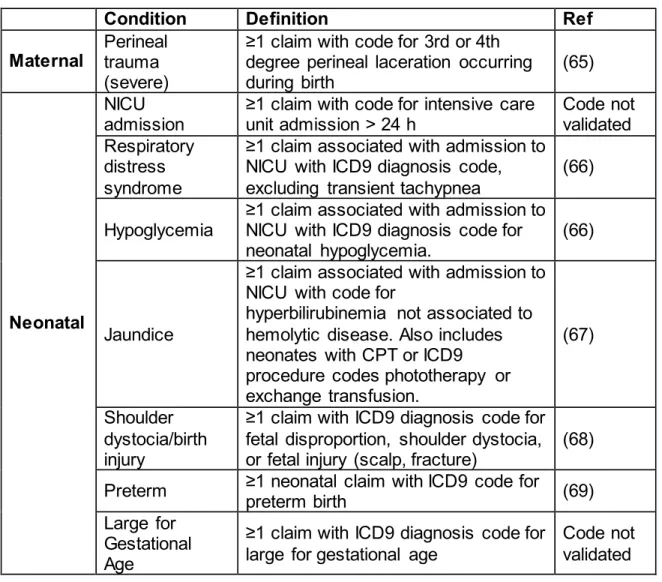
We defined maternal and neonatal outcomes as described in Table 2. These outcomes will be identified through ICD9 diagnosis, CPT and ICD9 procedure codes (Appendix 2 ). These codes were selected based upon previously published
algorithms or guideline recommendations.
3.3 Data Analysis 3.3.1 Specific Aim 1
Distribution of covariates was described using univariate and bivariate analysis. Exploratory analysis of maternal age as a categorical and continuous variable was undertaken prior to multivariate modeling. Because our assumption was that the association between age and choice of initial therapy would be non-linear, we used fractional polynomials to account for this. We compared model fit between a predefined set of first degree fractional polynomial functions where the power of the function is set to -2, -1, -0.5, 0, 0.5, 1, 2, 3 (61). The function with the best fit was used in the multivariable model. Since fractional polynomial models are fit through maximum likelihood, the best-fitting model is selected based on which function yields the highest likelihood.
22
adjusted for age and covariates of interest. The slope is exponentiated to calculate the percent change per year. The underlying assumption is that the rates are linear on the logarithmic scale. Because trends of glyburide use could be non- constant over the 2000-2011 period we estimated average annual percent change (AAPC). AAPC summarizes the trend over a sub-period of interest and allows identification of transitions in the trend. We identified intervals in which the trend was linear and estimated the APC. The AAPC over any fixed interval is a weighted average of the slope coefficients of the APC with the weights equal to the length of each segment over the interval(62).
We used binomial regression to estimate prevalence ratios (PR) and 95% confidence intervals (CI) for the association between baseline characteristics (age, comorbidities, calendar time) and treatment with glyburide versus insulin.
To assess whether glucose levels at the time of GDM diagnosis influenced the choice of medication, we compared the distribution of screening, fasting, 1 and 2 hour post-test glucose values between treatment groups. We estimated the effect of blood glucose values at baseline on the probability of being prescribed glyburide versus insulin using binomial regression. Glucose values were modeled as
continuous variables. We used multivariable regression with generalized estimation equations to account for correlation between glucose tests.
3.3.2 Specific Aim 2
23
examined to identify areas of non-overlap between treatment groups. Age and comorbidities were included in the model. To add flexibility to the model we also included squared terms for age. This propensity score was then used to create stabilized inverse probability of treatment weights (IPTW) to adjust for confounders in the risk model (63). Balance of measured confounders after estimating the propensity scores and distribution of the IPTWs was assessed.
Binomial regression with a log link was used to estimate risk ratios and risk differences. Robust variance was used to estimate 95% confidence intervals (RR 95%CI and RD 95%CI, respectively) for the association between glyburide and adverse outcomes. Risks were estimated using a weighted model adjusted for calendar year, using dummy variables, to account for changes in treatment over the 11 year period.
3.3.2.1Sensitivity Analysis
Because glyburide uptake occurred mostly between 2004-2006, we
24
Because our data lack information on BMI and we rely on the use of ICD9 codes to ascertain obesity, under ascertainment of this variable is possible. To investigate the impact of residual confounding we used the array approach developed by Schneeweiss (64). Given that this approach was developed to
evaluate unmeasured confounding, we estimated the effect of glyburide and adverse outcomes that would have been observed when excluding obesity from our adjusted model. In this scenario we assessed how imbalance of obesity between glyburide and insulin groups could bias the observed estimates of association.
3.3.3 Software and approval
25 3.4 Tables and Figures
Table 2. Outcome definitions
Condition Definition Ref
Maternal Perineal trauma (severe)
≥1 claim with code for 3rd or 4th degree perineal laceration occurring during birth
(65)
Neonatal
NICU admission
≥1 claim with code for intensive care unit admission > 24 h
Code not validated Respiratory
distress syndrome
≥1 claim associated with admission to NICU with ICD9 diagnosis code, excluding transient tachypnea
(66)
Hypoglycemia
≥1 claim associated with admission to NICU with ICD9 diagnosis code for
neonatal hypoglycemia. (66)
Jaundice
≥1 claim associated with admission to NICU with code for
hyperbilirubinemia not associated to hemolytic disease. Also includes neonates with CPT or ICD9 procedure codes phototherapy or exchange transfusion.
(67)
Shoulder dystocia/birth injury
≥1 claim with ICD9 diagnosis code for fetal disproportion, shoulder dystocia,
or fetal injury (scalp, fracture) (68) Preterm ≥1 neonatal claim with ICD9 code for
preterm birth (69)
Large for Gestational Age
≥1 claim with ICD9 diagnosis code for large for gestational age
CHAPTER IV-GENERAL RESULTS
This chapter presents general results of this study not presented in the manuscripts. It will focus on characteristics of the cohort selection process, linkage to newborns and laboratory data, comparison of glucose distributions across treatment groups and results from the propensity score and IPTW analysis.
4.1 Cohort Selection
A flow diagram for the cohort selection process is presented in Figure 3. After applying the continuous enrollment criteria, 45% (N=1,018,383) of women with a delivery remained in the cohort. Of those, 13% were identified as having GDM and meeting inclusion criteria. Among these we identified 14,558 women with a claim for insulin or glyburide.
4.2 Linkage to newborns and laboratory data
28
Laboratory data from Truven Health MarketScan® Lab Database was available for 6.1% (N=6,776) of women with GDM with linkage to a newborn (Table 3). Of the ones who initiated pharmacotherapy only 57.3% (N=359) had lab values for screening or any of the tests within the OGTT (fasting, 1hour or 2 hour tests). Reasons for missing laboratory data could be related to more billing for these services where the lab was done. Because our dataset includes claims billed by a single provider, if a woman was seen in a facility with a clinical laboratory those claims would not be captured in the database.
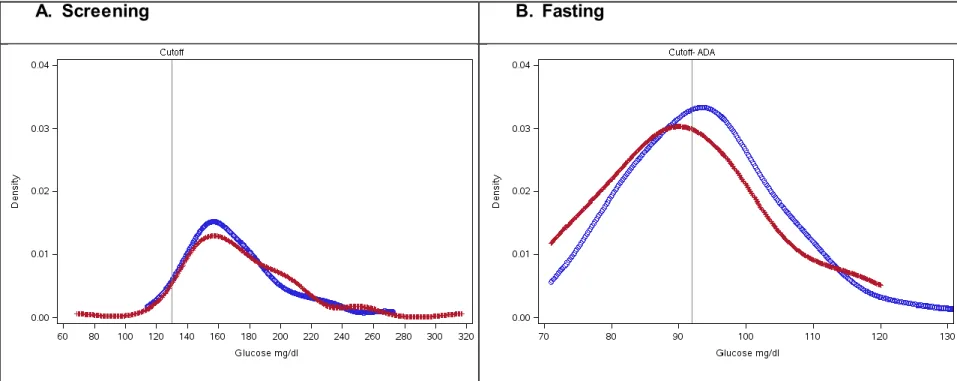
4.3 Comparison of distribution of glucose values between treatment groups
Figure 3 shows the distributions of the screening, fasting, one hour and two hour glucose tests for women with laboratory results in the database. Overlap between treatment groups is observed across the four tests.
4.4 Propensity Score distributions and IPTWs
29 4.5 Tables and Figures
Table 3. Number and proportion of women linked to newborns and to laboratory data, 2000 -2011
Linkage to Newborn
Yes No Total
N % No %
GDM No
Medication 98,605 82.1 21,533 17.9
120,138 Medication 12,335 84.7 2,223 15.3
14,558 Total 110,940 82.4 23,756 17.6
134,696
GDM + Lab
No
medication 6,150 73.9 2,168 26.1
8,318 Medication 626 75.3 205 24.7
30 Figure 2. Flow diagram for cohort selection
All women with Delivery Claim N=2,235,437
Women with RX within 150d prior to delivery
N=9,194
Women with linkage to newborn N=12,335
Women with continuous enrollment from 365d prior, to 90d after delivery
N=1,018,383
Women with GDM diagnosis code N=153,164
Women with medication N=14,558
Women with inclusion criteria N=134,696
Women prescribed with glyburide or insulin
N=9,180
Prescribed with other drug classes
N=14
Initiation of RX prior to 150d before delivery
N=2,235,437
Without linkage to newborn N=2,223
Exclusion:
Diabetes type1 or 2
Multiples
31
Figure 3. Comparison of distribution of glucose values for screening, fasting, one hour and two hour tests in women with laboratory data.
32
C.One Hour D. Two Hour
33
Figure 4. Overlap between propensity score distributions of women treated with glyburide or insulin.
IPTW
Insulin Glyburide
Mean 1.00 1.00
SD 0.09 0.07
Max 1.56 1.77
Min 0.69 0.72
q_0 0.66 0.72
q_25 0.97 0.99
q_50 0.99 1.01
q_75 1.01 1.03
q_95 1.20 1.11
q_100 1.56 1.77
CHAPTER V- MANUSCRIPT 1
Trends in Glyburide or Insulin Use for Treatment of Gestational Diabetes in the U.S., 2000-2011
5.1 Introduction
The prevalence of gestational diabetes mellitus (GDM) in the United States more than doubled from 1.5% in 1989-1990 to 4.2% 2001-2004, with varying prevalence rates from 5-8% across regions (70, 71). Over the last decade a substantial fraction of diagnosed women require pharmacologic treatment during pregnancy. Currently the only FDA-approved medication for the treatment of GDM is insulin (72) although glyburide (an oral agent), is also used (73).
Glyburide is a second generation sulfonylurea, thought to be effective for the treatment of GDM because this condition is characterized by an early phase of insulin resistance followed by a decrease in the pancreatic β-cell insulin response (74). Glyburide is believed to be safe because of animal and in-vitro placental studies showing minimal transfer (75, 76), although recent studies in humans have shown that umbilical cord concentrations can be 70% of those found in maternal plasma (77). Its ease of use and low cost is an additional advantage when compared to insulin which is administered by injection and entails higher costs.
35
RCTs (18, 19), some observational studies (20, 21, 24) and meta-analyses(8, 23) have compared the safety or effectiveness of the two drugs it is unknown how evidence from these studies has affected choice of medication in routine practice and which factors influence the prescription of glyburide versus insulin.
Our objective was to characterize pharmacological treatment of women with GDM by describing trends in the use of glyburide and insulin over the last decade, and identifying predictors of treatment choice.
5.2 Results
Of 110,940 women with an eligible GDM pregnancy linked to a newborn, 9,180 (8.2%) had a pharmacy claim for insulin or glyburide during the 150 days prior to delivery (Table 4). The median age at baseline was 33 years (interquartile range 30-37). Glyburide was prescribed as the initial medication for approximately half of pregnancies overall (54.3%, N=4,986). The use of glyburide was less common in the Northeast (45.1% vs 54.9%) and slightly more common in the South (56.1% vs 44.7%) and Northcentral (55.4% vs 44.6%) regions of the US.
36
The proportion of women with comorbidities was generally similar between treatment groups, although those who were treated with glyburide were less likely to have a history of infertility treatment (PR 0.93, 95%CI 0.86, 1.02), PCOS (PR 0.88, 95%CI 0.78, 0.99), or hyperandrogenism (PR 0.77, 95%CI 0.62, 0.97) (Table 5). In women with obesity, there was no preference for one treatment over the other (PR 1.04 95%CI 0.98, 1.10). Women with metabolic syndrome and hypothyroidism were less likely to be treated with glyburide (PR 0.71, 95%CI:0.50, 0.99; PR 0.89 95%CI 0.83, 0.96, respectively). Prior metformin use was not associated with initiation of glyburide (PR 1.01 95%CI 0.94, 1.09).
Lab results were available from the MarketScan Lab Database® for 3.7% (N=339) of the cohort. Sixty six percent of women with lab values were in the glyburide group (N=224). When compared to the full cohort, women in the
subsample were slightly older (median age 35 years, interquartile range 31-38) and obese (19.1% and 18.8% respectively for insulin and glyburide groups). Women in the insulin group had a higher prevalence of hypothyroidism (13.0%). For differences in baseline covariates for the subgroup with lab results, refer to Appendix 3. We compared the distributions of the earliest 50g screening, fasting, 1 hour and 2 hour blood glucose tests for women initially treated with glyburide or insulin. Results are presented as [mean (SD)]. Although the distributions for the two groups were similar for screening and 2 hour glucose values, the fasting values were slightly higher for those initiating glyburide [92.4 (10.9)] when compared to insulin [ 90.9(12.2)]. The 1 hour test results were more similar between treatment groups (glyburide
37
glucose values, the probability of being prescribed with glyburide increased by 2% (PR= 1.02 95%CI 0.97, 1.08) (Table 6).
5.3 Discussion
We found a marked increase in the use of glyburide over the period of 2000-2011 with a corresponding decrease in insulin as first line of therapy which
correlates with the publication of results from randomized clinical trials (17-19) and observational studies (20, 21, 24, 78). Our results support findings from recent studies showing widespread use of glyburide despite lack of conclusive clinical guidelines being available (79, 80).
Among the comorbidities of interest we did not find strong predictors for initiation of glyburide. Women with infertility, PCOS and hyperandrogenism were more likely to be treated with insulin as were those with hypothyroidism or metabolic syndrome. Interestingly women with an ICD9 code for obesity were equally likely to be prescribed with glyburide versus insulin. In obese women, factors other than insulin resistance, such as concerns associated with increased weight gain and distribution of insulin at injection site could be drivers of initiation of treatment with glyburide (81). Because insulin resistance is the common denominator in all these conditions, the degree of perceived insulin resistance could be an additional driver of initial choice of treatment for GDM.
In non- pregnant populations, thiazolidinediones and metformin are used to improve insulin sensitivity among individuals with type 2 diabetes.
38
placenta and therefore its use in pregnancy is not recommended in the U.S (82). Currently metformin is used in the pre-conception period to improve insulin
sensitivity among women with insulin resistance who want to conceive (83, 84). Our findings reflect this where a large proportion of women treated with metformin in early pregnancy had a diagnosis of PCOS (39% [n=205]), or were treated for infertility (26% [n=134]).
Little is known about the role of age on the preference to initiate treatment with oral agents among women with GDM. It is known that the risk for developing GDM as well as severity of the disease increases with age. In our study, 41% of women were older than 35 years which reflects the increase in the pregnancy rate among this population over the last decade (85). Among those with GDM, the probability of being prescribed glyburide decreased by 5% for every 10 year
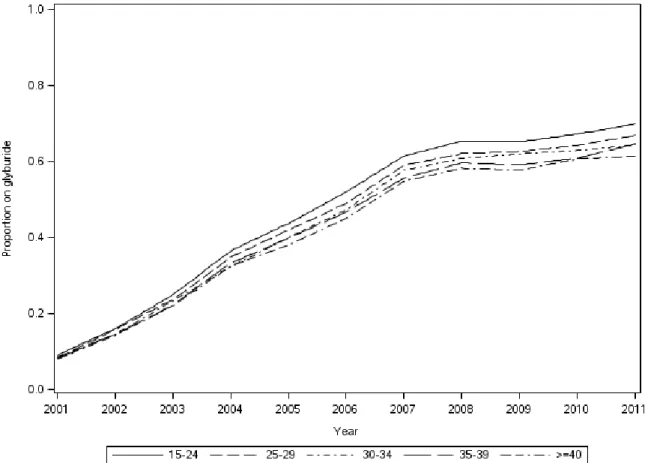
increase in age. On the other hand after the dissemination of glyburide use, younger women were more likely to be prescribed with the oral agent after 2007 (Figure 5). This provides evidence that age can be influential on the decision of which drug class to initiate.
39
glucose at baseline, the role of these values in determining which pharmacotherapy to initiate is less certain (86).
It is important to note that there were differences between the study cohort and the sample with lab values in their baseline covariates. The sample had a higher proportion of obese and hypothyroid women, more so among those initiating insulin. After adjusting for comorbidities, two- hour glucose values could be slightly
associated with type of medication. For every 10 unit increase in their fasting
glucose values women were 2% more likely to be prescribed with glyburide. Fasting and one- hour values were not associated with choice of initial prescription. Glucose values before initiation of treatment may have a stronger association with choice of pharmacotherapy.
Some of the limitations of this study are absence of gestational age or
information on last menstrual period, biometrics (weight or height) and race-ethnicity. Although we cannot identify the beginning of pregnancy in our cohort, we believe our definition of GDM in combination with the exclusion of women who had early
pharmacy claims for the drugs of interest yields a cohort of ‘true’ gestational diabetics. This approach has been validated by Andrade et al where they found a PPV of 85% (95%CI 71-94%) (28). Although BMI is the gold standard to classify women as obese, we were limited to the use of ICD9 codes to identify this condition. In their study, Andrade et al validated the use of ICD9 codes for obesity and
40
between the drug classes of interest. A further limitation of ICD9 codes in this setting is the ability to identify women who are overweight, where in this subgroup
preference for glyburide could be different.
Absence of race and ethnicity is a limitation of our study. Previous population based studies have shown that GDM prevalence is higher among certain racial groups such as Hispanics, Asians and Native Americans (88). Regarding initiation of pharmacotherapy, Berggren et al have reported differences were Hispanics were more likely than African Americans or Whites to receive glyburide or insulin (89). However this may not be unrelated to other factors such as access to care or low socioeconomic status among others. Since the purpose of this study is to provide an overview of glyburide use addressing racial differences is beyond the scope of this study. This cohort is representative of an insured, employed population and the results from this study may not be applicable to other populations.
Strengths of the study include sample size and ascertainment of medication use. Our cohort was selected from a large and nationally representative population of women with gestational diabetes who were pharmacologically treated over a 11 year period. When compared to previous studies only 8.3% of women with a GDM diagnosis in our study required pharmacological treatment. This contrasts with studies reporting prevalences that range between 8-43% (4, 5). However there are important differences in terms of the population due to severity of GDM, and
41
women who were continuously enrolled in the year prior to delivery we assured that use of healthcare and pharmacy services would be observable throughout
pregnancy. Therefore medication use in our study is based on pharmacy claims of dispensed drugs which allowed us to identify the earliest prescription in pregnancy. When compared to self-report, by using pharmacy claims we have better
ascertainment of initiation of treatment during pregnancy.
Conclusion
Dissemination of glyburide for the pharmacological treatment of GDM has been rapid and our findings indicate that it has become the preferred choice for initial treatment, particularly among younger, non-insulin resistant women. When
42 5.4 Tables and Figures
Table 4. Characteristics of women diagnosed with GDM who initiate medication, 15-50y in a US based population, 2000-2011
Insulin Glyburide
N=4,194 % N=4,986 % %Δ*
Age, year- Mean(SD) 34 (4.7)
33 (4.7) Age, 5y categories
15-19 4 0.1 3 0.06 -0.04
20-24 99 2.4 124 2.5 0.13
25-29 730 17.4 940 18.9 1.45
30-34 1593 38.0 1860 37.3 -0.68 35-39 1292 30.8 1508 30.2 -0.56
40-44 442 10.5 523 10.5 -0.05
>=45 34 0.8 28 0.6 -0.25
Calendar year
2001 54 1.3 5 0.1 -1.19
2002 115 2.7 20 0.4 -2.34
2003 245 5.8 73 1.5 -4.38
2004 366 8.7 188 3.8 -4.96
2005 449 10.7 306 6.1 -4.57
2006 409 9.8 374 7.5 -2.25
2007 406 9.7 538 10.8 1.11
2008 438 10.4 661 13.3 2.81
2009 657 15.7 1003 20.1 4.45
2010 563 13.4 928 18.6 5.19
2011 492 11.7 890 17.8 6.12
Region
Northeast 639 15.2 525 10.5 -4.71 Northcentral 1163 27.7 1442 28.9 1.19 South 1529 36.5 1955 39.2 2.75
West 838 20.0 1037 20.8 0.82
43
Insulin Glyburide
N=4,194 % N=4,986 % %Δ*
Urbanity†
Metro 3142 87.4 3,453 88.2 0.87 Urban 399 11.1 412 10.5 -0.57
Rural 36 1.0 39 1.0 0.00
Unknown 19 0.5 9 0.2 -0.30
Comorbidities
Infertility treatment 283 6.7 280 5.6 -1.13 Hypothyroidism 349 8.3 353 7.1 -1.24
PCOS‡ 171 4.1 162 3.2 -0.83
Hyperprolactinemia 14 0.3 11 0.2 -0.11
Hyperandrogenism 67 1.6 99 2.0 0.39
Metabolic syndrome 30 0.7 20 0.4 -0.31
Obesity 305 7.3 499 10.0 2.74
No comorbidities 3154 75.2 3773 75.7 0.47 Metformin use
Any use before 1st Rx 283 6.7 317 6.4 -0.39
44
Table 5. Association of calendar year and maternal characteristics with initiation of glyburide vs insulin. Crude vs Adjusted* Prevalence Ratios (95% Confidence Interval)
Crude Adjusted
PR 95%CI PR 95%CI
Calendar year
2001 0.13 0.06, 0.30 0.13 0.06, 0.30 2002 0.23 0.15, 0.35 0.23 0.15, 0.34 2003 0.36 0.29, 0.44 0.35 0.29, 0.44 2004 0.53 0.47, 0.60 0.52 0.46, 0.59 2005 0.63 0.57, 0.69 0.63 0.57, 0.69 2006 0.74 0.68, 0.81 0.74 0.68, 0.80 2007 0.88 0.83, 0.95 0.88 0.82, 0.94 2008 0.93 0.88, 0.99 0.93 0.88, 0.99 2009 0.94 0.89, 0.99 0.93 0.88, 0.99 2010 0.97 0.91, 1.02 0.96 0.91, 1.00
2011 1.00 1.00
Age 10y Change
(Continuous) 0.96 0.93, 1.00 0.95 0.91,0.99 Comorbidities
Infertility treatment 0.91 0.84, 0.99 0.93 0.86, 1.02 Hypothyroidism 0.92 0.85, 0.99 0.89 0.83, 0.96 PCOS 0.90 0.80, 1.00 0.88 0.78, 0.99 Hyperandrogenism 0.80 0.64, 1.00 0.77 0.62, 0.97 Metabolic syndrome 0.74 0.52, 1.03 0.71 0.50, 0.99 Obesity 1.16 1.09, 1.23 1.04 0.98, 1.10 Metformin use
Any Use 1.00 0.92, 1.07 1.01 0.94, 1.09
*All prevalence ratio estimates were adjusted for all other variables in the table. †Reference category
45
Table 6. Association of glucose tolerance test results and initiation of glyburide. Prevalence Ratios (95%Confidence Intervals) for 10 unit change in glucose values.
Crude Adjusted
PR 95%CI PR 95%CI
46
CHAPTER VI- MANUSCRIPT 2
Effectiveness Of Glyburide Versus Insulin On Measures Of Adverse Maternal And Neonatal Outcomes in women with Gestational Diabetes
6.1 Introduction
The prevalence of gestational diabetes (GDM) in the United States (US) has more than doubled over the last 20 years (70, 71). Because uncontrolled
hyperglycemia during pregnancy affects fetal development and neonatal adaptation, adequate treatment has a direct impact in preventing adverse maternal and perinatal outcomes (4). In 7-10% of women with GDM, routine care such as dietary measures, physical activity and glucose monitoring may not be enough to achieve glucose control. In this group, initiation of pharmacotherapy becomes the next step but evidence on the safety and effectiveness of available therapies is still scarce.
Insulin is the only pharmacological treatment endorsed by the American Diabetes Association (72) for the treatment of GDM in the United States (US). Due to its mechanism of action, ease of use and cost glyburide may be an appropriate first line treatment alternative. The study by Langer et al. in 2000 (17) was the first randomized controlled trial (RCT) to provide evidence on the efficacy of glyburide versus insulin in women with GDM. Since then two more RCTs (18, 19), several observational studies (20, 24, 91, 92) and meta-analyses (8, 23) have been
48
outcomes have been large for gestational age and respiratory distress. Given its widespread use and rapid uptake of glyburide in the last decade, further evaluation of the association between adverse neonatal outcomes and use of glyburide is needed. The purpose of this study was to assess the effectiveness of glyburide compared to insulin in the treatment of gestational diabetes in a real world population.
6.2 Results
We identified 110,940 women with GDM and their babies, of whom 8.3% initiated pharmacotherapy. There were 4,986 (54.3%) women treated with glyburide and 4,194 treated with insulin. Characteristics of women at baseline appear in Table 1. The mean age was 33.5 [SD 4.7] years. The proportion of women treated with glyburide increased from 8.5% in 2000 to 64.4% in 2011. Obesity and preeclampsia were more common in the glyburide group, while hypothyroidism and infertility treatment were more common in women treated with insulin. There were no differences between groups in metformin use prior to the initiation of
pharmacotherapy (Table 7).
49
glyburide. The risk of cesarean section was 3% lower in the glyburide group (RR 0.97 95%CI 0.93, 1.00). The absolute increase in risk was higher for admission to NICU (RD 2.9 95%CI 1.7, 4.0), large for gestational age (RD 1.4 95%CI 0.6, 2.2) and respiratory distress (RD 1.1 95%CI 0.5, 1.7) (Table 3). The corresponding numbers needed to harm were 35 (95%CI 25,59) for NICU admission, 71 (95%CI 46,165) for large for gestational age, and 94 (95%CI 59,220) for respiratory distress.
We conducted secondary analysis excluding women treated before 2004, 2005 or 2007 (Appendix 4). We chose these cutoffs based on the trends of use of glyburide reported by Camelo-Castillo et al. (REF PAPER 1). After excluding women in the earlier years the magnitude of the effects were attenuated for all outcomes, but remained elevated. In the years with better ascertainment of obesity, although the magnitude of the effect is lower when compared to the full cohort, the risk is still elevated for NICU admission (1.29 95%CI 1.11, 1.50), respiratory distress (RR 1.37 95%CI 1.01 1.87), hypoglycemia (1.12 95%CI0.79, 1.58), birth injury (1.16 95%CI 0.82, 1.64) and large for gestational age (RR 1.30 95%CI 1.02, 1.65). Changes in precision are due to a smaller number of outcomes. Estimates from models that were not adjusted and partially adjusted for obesity are presented in Appendix 5.
Because our result of an increased risk for respiratory distress and NICU admission with glyburide versus insulin differed most from the findings in trials and these outcomes are strongly associated with obesity, we used the array approach to estimate the ‘true’ RR for these two outcomes (Appendix 3-Figure A). To estimate the ‘true’ RR we assumed that the association between obesity and initiating
50
obesity and respiratory distress (RR O-RDS) was 1.8, which are the magnitudes of effect observed in our population . Using this approach the ‘true’ RR for respiratory distress would be 1.55 where the bias in our partially adjusted estimates would be approximately 5%. In scenarios where the magnitude for RR Glyb-O is larger, the ‘true’ RR will be closer to 1.4 (holding RR O-RDS constant). For NICU admission, in our study the association between obesity and NICU (RR O-NICU) was 1.4. The ‘true’ association between glyburide and NICU admission was 1.36 where bias in our partially adjusted estimates would be 2.8% (Appendix 5-Figure B).
6.3 Discussion
In our population- based cohort of 9,180 women with gestational diabetes we found evidence of an increased risk of adverse events in those treated with glyburide when compared to insulin. Admission to the NICU, respiratory distress,
hypoglycemia, birth injury and large for gestational age were more likely to occur among women treated with glyburide. Smaller differences between treatment groups were found for outcomes such as obstetric trauma, cesarean section, jaundice or preterm birth.
51
magnitude of our estimated effect was lower which could be explained by differences in the definition of the outcome. Our study identified newborns with hypoglycemia who required care in the NICU, while trials identified hypoglycemia cases based on blood glucose measurements. Given the controversy regarding choice of cutoff values to diagnose and treat neonatal hypoglycemia, our estimate may be more reflective of symptomatic hypoglycemia.
Only the trial by Langer et al reported estimates for outcomes such as NICU admission, respiratory distress and jaundice (17). Our findings differ from those published by Langer et al. for these outcomes. In their study the risk of NICU admission and respiratory distress was lower among newborns from glyburide treated women (RR 0.87 95%CI 0.41, 1.83 and RR=0.67 95%CI 0.19, 2.35,
respectively ). However, the trial was a single-site study with a standardized protocol for maternal and newborn care. Since criteria for admission to the NICU could vary across providers, our results could be more representative of practices related to newborn care across the United States. Compared to the trial our definition of
respiratory distress identified critically ill infants and excluded less serious diagnoses such as transient tachypnea of the newborn. Therefore, our estimates for respiratory distress may be reflective of more severe conditions requiring NICU admission. The same principle applies to jaundice where the trial identified newborns based on predefined bilirubin cutoff values, while our study identified newborns with jaundice who required care in the NICU.
52
ICD9 codes. Because coding for this diagnosis may include both macrosomia or large for gestational age, our estimates could differ from those in trials. In the trials, large for gestational age had a prevalence of 5.7% (n=23) in the study by Langer, and 7.8% (n=4) in the study by Bertini. For macrosomia the prevalence was
12.4%(n=50) and 13.7% (n=7) for the study by Langer and Bertini, respectively. The prevalence in our study was 4.0% (n=368), which is closer to the prevalence of macrosomia reported in the trials. Our estimate is of lower magnitude but consistent with the estimates for macrosomia reported by Langer (RR 1.57 95%CI 0.70, 3.55) and Bertini (RR 10.1 95%CI 0.57, 178.0 ).
Birth injury and preterm birth were not assessed in the clinical trials. The observational studies by Jacobson et al. and Ramos et al. reported a higher risk of birth injury among those in the glyburide group (3.03 95%CI 0.81, 11.28; 3.55 95%CI 0.33,38.0)(20, 24). Although their population was largely Hispanic and insured by Medicaid, our estimates are more modest when compared to their findings.
Regarding preterm birth, our findings are consistent with those reported by Jacobson et al. who found no difference between treatment groups (RR 0.97 95%CI 0.61, 1.54), but not with Ramos et al. who found an increased risk among women on glyburide (1.97 95%CI 0.87, 4.48). Given that by design the population in the study by Ramos had higher glucose values in both the screening and tolerance test, differences could be attributed to different risks across groups of women.
53
obesity. For outcomes such as obstetric trauma, cesarean section, jaundice and preterm birth we observed not much difference between the three models. The effect of partially adjusting for obesity is more evident for outcomes such as NICU
admission, respiratory distress, hypoglycemia and large for gestational age where the estimate shifts closer to the null. This may be explained by differences in the strength of the association between obesity and the outcome. This is graphically depicted in Appendix 5 where we observe what the ‘true’ association would be in scenarios where the prevalence of obesity in the glyburide group is increased or where the strength of the association between obesity and the outcome is varied . In both figures our estimates are close to the ‘true’ RRs for the ranges of
obesity-outcome association observed in our data, which are consistent with prior literature (REFS). In addition our findings are consistent with recent work published by Ogburn et al supporting the statement by Greenland in which adjusting for a binary
mismeasured confounder reduces bias, but produces a measure of effect that lies between the crude and the true estimate (93). The underlying assumption is that the direction of the effect between the confounder and the outcome is the same for both treatment groups. There is no evidence to suggest that the effect of obesity on adverse outcomes would differ in women treated with glyburide versus insulin.
54
evidence on differences by race after women initiate pharmacological treatment. Patterns observed in our dataset can be considered as representative of patterns of care among the employed and insured in the United States, providing an advantage over clinical trials. When compared to self-report, ascertainment of initiation of treatment through pharmacy claims is substantially improved, although we are unable to ascertain initial dosage and dosage escalation which affect glucose control. Because maternal and neonatal outcomes are relatively rare, large claims databases provide a unique setting to study safety and effectiveness of medications in pregnancy.
Conclusion
55 6.4 Tables and Figures
Table 7. Baseline characteristics of women with gestational diabetes treated with pharmacotherapy, 2000-2011
Insulin Glyburide
N=4,194 % N=4,986 % %Δ* Age, year- Mean(SD) 34 (4.7)
33 (4.8)
Age, 5y categories
15-19 4 0.1 3 0.1 -0.04
20-24 99 2.4 124 2.5 0.13
25-29 730 17.4 940 18.9 1.45 30-34 1593 38.0 1860 37.3 -0.68 35-39 1292 30.8 1508 30.2 -0.56 40-44 442 10.5 523 10.5 -0.05 >=45 34 0.8 28 0.6 -0.25
Calendar year
2001 54 1.3 5 0.1 -1.19
2002 115 2.7 20 0.4 -2.34
2003 245 5.8 73 1.5 -4.38
2004 366 8.7 188 3.8 -4.96
2005 449 10.7 306 6.1 -4.57
2006 409 9.8 374 7.5 -2.25
2007 406 9.7 538 10.8 1.11