IMPLEMENTING PEER COLLABORATION STRATEGIES:
A CASE STUDY OF RURAL TITLE I ELEMENTARY SCHOOL TEACHERS
Nitasha M. Clark
A dissertation submitted to the faculty at the University of North Carolina at Chapel Hill in partial fulfillment of the requirements for the degree of Ph.d in the program of Cultural Studies
and Literacy in the School of Education.
Chapel Hill 2019
Approved by: Sherick Hughes Deb Eaker-Rich
Karen Erickson
Julie Justice
ABSTRACT
Nitasha M. Clark: Implementing Peer Collaboration Strategies: A Case Study of Rural Title I Elementary School Teachers
(Under the direction of Dr. Sherick A. Hughes)
The research on elementary teachers’ implementation of peer collaboration strategies is limited. Yet, the extensive peer collaboration literature that does exist focuses on student outcomes in urban and suburban settings. A problem with most of the current scope of research about peer collaboration is that it has marginalized the voice of teachers who create educational experiences for rural students. The purpose of this dissertation was to investigate the
implementation of peer collaboration strategies by rural elementary school teachers in North Carolina. The theoretical frame of the study was comprised of Dewey’s Theory of Experience and Bandura’s Theory of Social Cognition. Given the problem and purpose, the following research questions were developed: (a) What do rural Pre-K to 3rd-grade general education teachers know about peer collaboration strategies? How, if at all, does “good” vs. “bad” peer collaboration look from their purview? (b) What types of peer collaboration strategies are engaged by these teachers for struggling, excelling, older and younger learners? When are these strategies engaged and how are they described, if at all? (c) What do these teachers describe as the key barriers or facilitators underlying their implementation and/or dismissal of peer
Participants co-selected pseudonyms to preserve anonymity. Face-to-face interviews were
conducted and transcribed. In addition, this qualitative case study design involved field notes and observation data. By engaging thematic analysis, the following themes emerged from the data offering insights into various components involved in the observed teachers’ implementation of peer collaboration strategies: (a) emotional/social instructional support, (b) academic
instructional support, (c) classroom organization, (d) professional development for teachers, and (e) professional support. One key finding of the case study is that participating general education teachers had in-depth knowledge related to the use of peer collaboration strategies toward
ACKNOWLEDGEMENTS
Thank you to the public-school employees of North Carolina who inspire me and challenge my beliefs about teaching and learning.
My parents, Marion and Lenora Clark, thank you for loving me and believing in me on this journey. Your perseverance in faith has been an invaluable model.
My brother, Joel, thank you for being my “Kidney” because you helped me transplant his dream.
To my Clark and Hurley family, thank you for loving me and allowing me the space to follow my passion.
To my Seahawk sisters and their families, Megan, Tayaka, and Jessica, thank you for grounding me through this journey.
To my UNC family, thank you for your words of encouragement and friendship.
To my committee, Dr. Karen Erickson, Dr. George Noblit, Dr. Deb Eaker-Rich, and Dr. Julie Justice: Thank you for your encouragement, guidance, and giving me the confidence to continue in my scholarship. I appreciate all I have learned from you.
TABLE OF CONTENTS
LIST OF TABLES ... ix
LIST OF FIGURES ... x
CHAPTER 1: INTRODUCTION ... 1
Problem Statement ... 3
Statement of Purpose and Rationale ... 19
Conceptual Framework ... 21
Research Questions and Significance of the Study ... 22
Theoretical Framework ... 24
My Positionality and Its Intersectionality ... 26
Identification of Peer Collaboration Strategy Terminology ... 31
The Scope of the Study ... 35
Dissertation Overview ... 35
CHAPTER 2: CONNECTING THE LITERATURE ... 36
Historical Overview of Peer Collaboration in the Public-School Culture and Context ... 36
Critical Review of Peer Collaboration Strategies in Two Parts ... 54
Implications for Future Research ... 74
Concluding Thoughts ... 78
CHAPTER 3: METHODOLOGY ... 80
Research Design ... 81
Data Collection ... 85
Human Subjects Protection ... 87
Data Analysis ... 88
Limitations ... 93
Summary ... 94
CHAPTER 4: FINDINGS ... 96
CHAPTER 5: DISCUSSION ... 126
APPENDIX 1: INTERVIEW PROTOCOL ... 149
APPENDIX 2: DEMOGRAPHIC INFORMATION ... 151
APPENDIX 3: IRB PERMISSION ... 152
LIST OF TABLES Table
1. Historical Synthesis of Pre-K to 3rd grade Peer Collaboration Meta-Analysis... 58
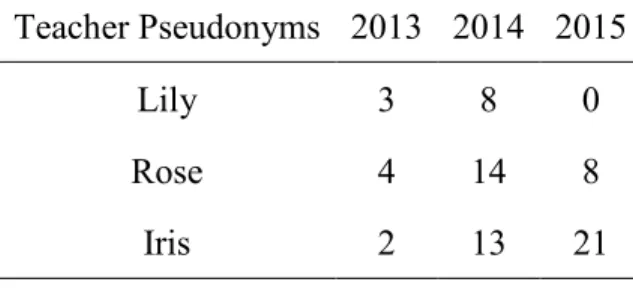
2. Teachers and the Percent of the School Day Devoted to Peer Collaboration Activities. ... 86
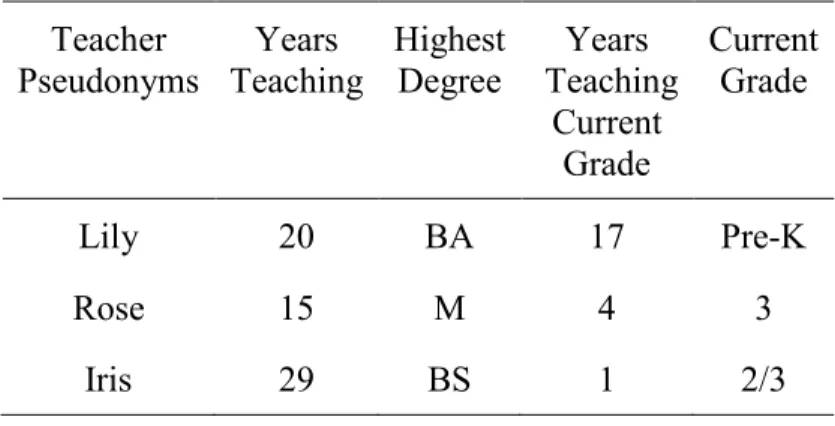
3. Teacher Demographic Information ... 87
4. Initial Peer Collaboration Codes ... 89
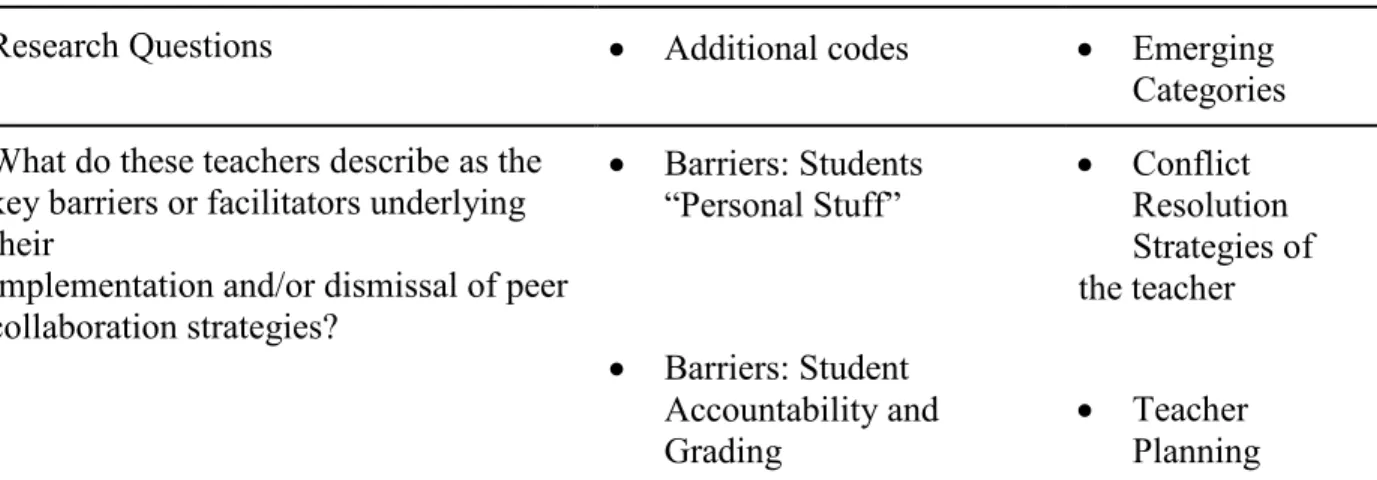
5. Codes and Categories Related to the Research Questions. ... 91
6. The Research Questions, Themes and Categories. ... 114
LIST OF FIGURES
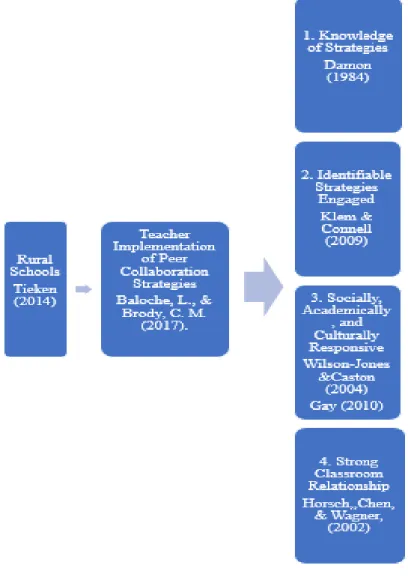
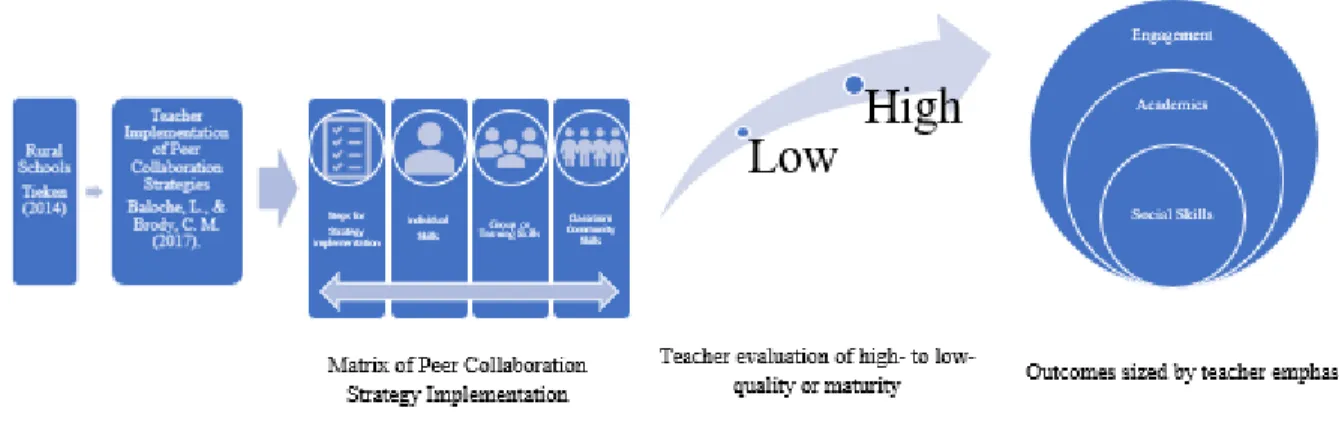
Figure 1. Conceptual Framework Rural Pre-K through 3rd Grade Teachers Implementation of
Peer Collaboration Strategies ... 22
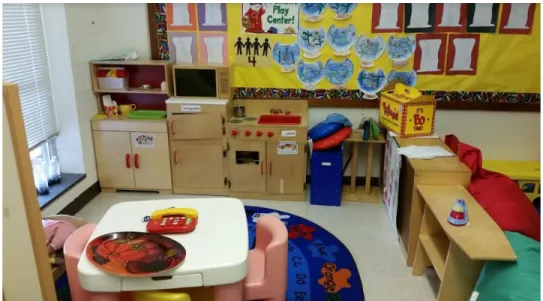
Figure 2. Dramatic play center ... 100
Figure 3. Block center ... 101
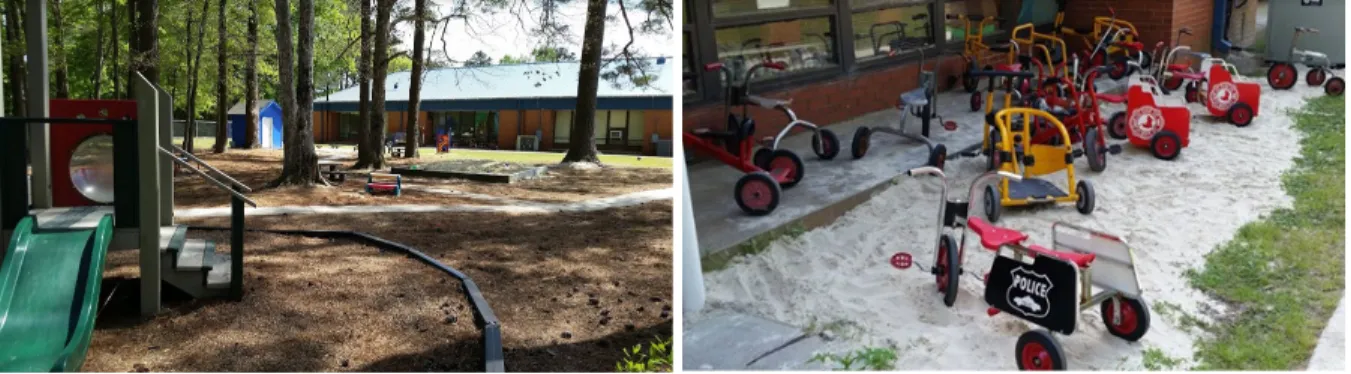
Figure 4. Pre-K Center Playground ... 101
Figure 5. Teacher integration of school-wide anti-bullying program. ... 105
Figure 6. Teacher Perceptions of Good vs. Bad Implementation ... 118
Figure 7. Conceptual Framework Revision: Rural Pre-K to 3rd Grade Teachers Implementation of Peer Collaboration Strategies ... 144
Figure 8. Priority Level of Outcomes Emphasized by Participating Teachers ... 144
Figure 9. High or Low Quality/Maturity ... 146
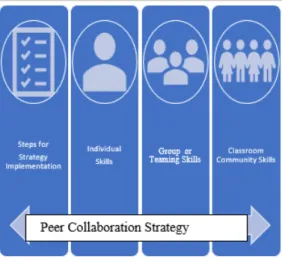
Figure 10. Process matrix for peer collaboration implementation ... 147
CHAPTER 1: INTRODUCTION
The quality of education for minoritized and high-poverty elementary students is demonstrably insufficient compared with their non-white more advantaged, middle, and upper-income peers (Goldhaber, Lavery, & Theobald, 2015). The educational debt in American schools and its confounding effects are well-documented by educational and policy researchers as either the achievement gap or more aptly, the opportunity to learn gap (Ladson-Billings, 2013). American educational disparity has several components: (a) lower expectations for students of color, (b) lack of resources in low-income school districts, (c) unequal access to experienced teachers, (d) higher numbers of “out of field” teachers instructing minoritized students in
subjects outside their area of expertise, and (e) unconscious “bias” by teachers and administrators (Duncan & Murnane, 2014).
In recent years, states began to institute report cards and assigning A-F grades to schools (Jacobsen, Saultz, & Snyder, 2013). These report cards show how many students have a
minimum, or proficient, level of knowledge and the achievement growth of students. The school letter grades have placed school district inequities on the policy agenda across the nation.
ignore (Chou & Feagin, 2015; Harry & Klingner, 2014). Whatever the case, any serious discussion about teaching patterns or practices of teachers including the interactions of racial identity, class, and gender, has to take up not only a critique of public education, but also a credible strategy for ending it. Moreover, attending to these micro-level aspects of schools may provide a clear, compelling, and contributive voice to the conversations about quality teaching.
Few efforts are made to attend to the micro level of schooling, illuminated by teacher voice (Cortazzi, 2014). There is, however, value in studies centered on the identities of
marginalized teachers from underserved communities (Burton, Brown, & Johnson, 2013). Black1 teachers in rural low-wealth communities represent a rich contextual experience that has not been at the center of educational research. Yet, similar to many teachers in urban and suburban schools, rural teachers control instruction and the critical decisions made impact the lives of the children in their classrooms (Griffith, Bauml, & Barksdale, 2015). Understanding these
instructional decisions and the resulting instructional strategies used to engage and inspire rural students, might contribute to efforts aimed at closing the educational opportunity gap for students in underserved communities.
Teachers’ instructional strategies can precipitate or hinder the current and next generation of leaders, thinkers, and entrepreneurs (Chen, Hand, & Norton-Meier, 2016). Since the 1960s, part of the national solution to educational inequity has involved reformed instructional
strategies, such as peer collaboration to facilitate the process of learning. Peer collaboration has become one of the accepted and highly studied instructional strategies that occur daily within elementary public-school settings (Bowman-Perrott, Davis, Vannest, Williams, Greenwood, &
Parker, 2013; Slavin, 2015). Like many other instructional reform efforts, little is known about the intricacies of peer collaboration implementation, especially as Black teachers implement the strategy in rural Title I elementary schools.
This dissertation applies a case study methodology to explore the knowledge,
implementation practices, and challenges of educators who engage students in peer collaboration strategies in rural Pre-K to 3rd-grade classrooms in Title I elementary schools. By focusing on Black teachers, who primarily teach Black students in rural, Title I elementary schools, this study seeks to illuminate the experiences of an under-researched population of veteran practicing teachers while exposing their commonalities, including a shared commitment to the children and the communities in which they serve. The remaining text of this chapter details: (a) the problem addressed in this dissertation, (b) the purpose and rationale, (c) conceptual framework, (d) research questions and significance of the study, (e) the guiding theoretical framework, and (f) my positionality statement, which is intended to provide insight into pertinent lived experiences that connect me to this study. The chapter closes with an overview of the remaining content of the dissertation.
Problem Statement
Context of Public Education
The right to education is a universal entitlement recognized by the United Nations General Assembly (1948) along with 30 other human rights organizations. For decades, U.S. federal mandates such as The Education for All Handicapped Children Act (1975) and Elementary and Secondary Education Act (1965) and their most recent revisions, The
Individuals with Disabilities Education Improvement Act (2004) and Every Student Success Act (ESSA, 2015), have been aligned with this universal right and the obligation to rule out
discrimination from access. Organizationally, state governments set educational expectations and financial appropriations for students. Then, local school districts develop policies, rules, and regulations to control the day-to-day operation of the school sites. However, it is the teaching practices of public-school teachers that drive the educational system. More importantly, the cornerstone of a successful education is the learning that takes place from Pre-K through 3rd-grade, as these years establish a child’s academic trajectory (Hernandez, 2012). The expectations for Pre-K through 3rd-grade students and current practices of teachers are discussed further.
Student Expectations. Over the past two decades, standards-based theories have had a
Arts, all based in Mathematical elements (STΣ@M); and Standards such as Common Core State Standards (CCSS) and the Next Generation Science Standards (NGSS), many teachers are focusing more on instructional practices (i.e., peer collaboration strategies) that promote student understanding rather than rote learning. Current initiatives and curriculum standards align with the brain-based research of learning. For more building of dendrite pathways, “students should have opportunities to interact with the information they need to learn” (Willis, 2006, p. 11). As students actively discover, interpret, analyze, process, practice, and discuss curriculum,
information moves beyond working memory for processing in storage and executive functioning. Pre-K or Early Learning standards are a recent phenomenon. The research-based
expectations reflect key concepts and skills according to age and development. The purpose of Pre-K standards is to improve the quality of preschool programs, to foster school readiness (i.e. physical development, social-emotional development, cognition and general knowledge,
language and literacy), and lay a strong foundation for success in school and throughout life. Pre-K standards provide a framework to facilitating young children’s learning of language, thinking, and cognitive and socioemotional skills. As children progress through their normal stages of development, their communication skills improve, and their opportunities for peer interaction become more complex (Hoff, 2013). Pre-K teachers who facilitate small group interactions through various levels of play, imagination, and creativity, can teach to the research-based comprehensive standards.
strategies address the standards and increased dialogue among peers enables greater conceptual understanding of content.
Teacher Practices. As mentioned earlier, it is the teaching practices of public-school
teachers that drive the educational system. K-12 traditional or conventional teaching practices involve teachers dispensing information in standardized lessons and sorting students by their academic test performance. Instruction that is teacher-centered s is often associated with low student engagement, rote learning, and memorization. Contrastingly, traditional Pre-K experiences consist of custodial child care. In both traditional experiences, teachers were expected to teach every student in exactly the same way and were not held responsible for students performing below grade level. These traditional experiences led to poor quality
classrooms that diminished student engagement and achievement (Strambler & Weinstein, 2010) and often resulted in students displaying patterns of psychological and academic disengagement as early as 3rd grade (Broussard & Garrison, 2004).
Today, the redefined roles of teachers encourage student-centered and task-based approaches to active learning and high levels of student engagement. Teaching requires the adoption of new instructional practices such as flipping classrooms and 1:1 technology, with the adaptation of established student-centered and task-based approaches, such as literacy centers and math centers (Boushey, & Moser, 2009; Sammons, 2009). Yet, an alarming trend, a culture of silence (Ritchie & Gutmann, 2014), still occurs in Pre-K to 3rd-grade classrooms. Many elementary age students are spending a large percentage of the school day learning in formats in which they are silent. Whether the learning format is lecture based with knowledge transmitted to students in whole-group or focused on independent work, many young learners are not
Instead, they are often learning passively with lower levels of mental engagement that is not Developmentally Appropriate Practice (DAP) for young learners (Copple & Bredekamp, 2009). When learners spend the majority of their instructional time in a culture of silence, schooling disparity occurs. With repeated insubstantial opportunities to learn, the opportunity gap
increases, which directly impacts a student’s academic performance or educational attainment. The culture of silence, evidence of a low-quality instructional environment, occurs in urban, suburban, and rural classrooms (Sass, Hannaway, Xu, Figlio, & Feng, 2012).
Context of Rural Education in the South
To ensure an educated, healthy, productive, and competitive rural American workforce, it is essential that rural schools provide high-quality instruction (Gibbs, 2005). For decades, rural schools marginalization involved maintaining stereotypes and ignoring the importance of context in teaching and learning (Arnold, Newman, Gaddy, & Dean, 2005). As a result, a deeper
understanding is needed to improve the educational experience for rural learners, in particular, Pre-K to 3rd-grade students in low-income schools. The remaining text of this section (a) defines rural schools and describes the historical context of rural education in the Southern United States (with a particular focus upon NC), as federal agencies established it, (b) outlines the economics of rural schools, and (c) reports on the demographic characteristics of rural communities. The section concludes with a report on the current status of rural schools in North Carolina.
Definition of rural schools. According to The National Center for Education Statistics
involves three subcategories (i.e., fringe, distant, and remote) based on miles from an urbanized area or urban cluster. According to the latest U.S. Census, 80% of the United States population lives in urban and suburban areas (DeNavas-Walt, Proctor, & Smith, 2011). According to The Condition of Rural Education in the 50 States (Johnson, Showalter, Klein, & Lester, 2014), rural areas and small towns account for nearly 12 million public school students, representing 24% of U.S. total student enrollment.
A brief history of rural Southern school communities. Southern rural schools began
with school segregation. The pivotal decision, Plessy v. Ferguson (1896), upheld a principle known as Separate But Equal. Plessy v. Ferguson legally established laws allowing or even requiring racial segregation in public and private settings (i.e., schools, public transportation, restrooms, and restaurants). Historians of education documented the presence and injustice of the system that discriminated against African Americans and other minorities (i.e. Jim Crow). In practice, the Separate But Equal doctrine resulted frequently in vastly inferior facilities and opportunities for non-white racial and ethnic minorities. However, a counter-narrative exists concerning segregated schools, which says, “African American segregated schools were not unilaterally inferior” (Walker, 2000, p. 277). Walker associates a deep “commitment of African American teachers and parents to education” and an authentic “kind of schooling born of the struggle” with successful schooling practices in segregated schools (Walker, 2000, p. 277).
and hope that occurs across generations of rural Black families for survival and thriving before and after Brown.
Post-Brown education discussions in the United States focus on the education gap between students of different racial identity groups and/or socioeconomic classes rather than the institutional causes of educational inequality, community economic development, segregated housing, and schools. Most recently, federal courts are relinquishing oversight of school
desegregation. The resulting potential is rapid re-segregation of schools and the continuing flight of white families to private and charter schools in Southern school districts like
Charlotte-Mecklenberg, NC (Wong, 2016). Bell (1975) accurately predicted Brown would “fail either to achieve that balance or bring lasting improvement in the educations offered to black children” (p.26). Like Bell (1980), Hughes, Noblit, and Cleveland (2013) acknowledge the negative influence of post-Brown civil litigation on Black education but are hopeful as Critical Race Theory (CRT) builds and evolves as a framework for equity.
The economic impact on rural schools. Historically, North Carolina economic
development has focused on transforming the economy from textiles, furniture, and tobacco to technology, pharmaceuticals, banking, food processing, and vehicle parts (Carlise, 2010). The state made a greater concentration of investment and employment in urban areas with positive results. Nationally, similar efforts and economic trends occur with financial, professional, scientific, and information service activities tending to be concentrated in urban areas. A
Although there are fewer low skill jobs, rural communities experience higher unemployment and substantially lower wages (Kusmin, 2014), which often results in an insufficient tax base for local school funding and contributes to the underfunding of rural schools in Southern states like NC. Thus, the economic development policies of the state contribute to economic stratification with limited rural economic development having a significant impact on the quality of rural education.
Continued inequality and inadequate economic growth of rural communities affect systems of education. (Bénabou, 1996). In rural communities, socioeconomic segregation
combines with a system of complex and significant economic factors, such as local real estate tax revenues, state revenues, and federal funding, creates considerable disparities in school district resources. Socioeconomic segregation limits school districts’ ability to raise needed school funds and this shapes their school districts and schools. Underfunding or lack of funding can have a significant impact on instructional resources (e.g., teacher applicants, retention, vacancies, newly credentialed teachers, turnover vacancies, teacher quality, collaboration, professional
aptitude, the quality of education provided in these rural districts may differ in systematic ways that reinforce opportunity debt and achievement gaps. Working conditions in rural school stretch resources due to vacancies, lack of newer facilities, limited technology, fewer course materials, and fewer specialty programs (i.e., art, music, etc.) that are available in wealthier districts. This can be challenging to any teacher, veteran or novice. Since many small schools have only one teacher per grade level, which leaves teachers professionally isolated with little support for grade level planning, reflection, and sharing of resources. Furthermore, a rural school's location hinders access to engaging external professional development opportunities (Johnson & Strange, 2007; Monk, 2007).
For rural schools to have resources that compare equitably to urban and suburban
schools, school boards, policy-makers, and the public need to reexamine how public education is funded at the local, state, and federal levels. At this time, rural economies have a substantial impact on school funding and threatens teacher quality and student outcomes. As such, reducing the school funding inequity gap reflects both a moral obligation and a long-term economic impact for rural communities. Gibbs (2005) reports, “Prospective employers may view a well-educated local labor force as an asset when choosing among alternative locations for new establishments” (p. 22).
Demographic characteristics of rural populations. Demographic trends play out
income level is closely related to slower development of academic skills and children’s initial reading competence (Aikens & Barbarin, 2008; Morgan, Farkas, Hillemeier, & Maczuga, 2009). From a strength perspective, protective factors can help children overcome the challenges associated with community poverty and reach higher levels of academic attainment. The next section will report on the status of poverty and unemployment in rural America and more specifically rural North Carolina.
Poverty and Unemployment in Rural North Carolina. According to The Census Bureau (2016), the federal poverty threshold is $24,008 for a family of four with two children. In 2014, 21 percent of the Nation’s population lived in poverty, and poverty rates were higher in non-metro areas than in non-metro areas both among the overall population and among children. Rural America includes a disproportionate number of children living in communities with persistent child poverty. In 2014, overall rural poverty was 17.8 percent and the rural child poverty
percentage was 26.7 (Farrigan, Hertz, & Parker, 2015). In North Carolina, poverty impacts more than 1.7 million Tar Heels with 38 percent of Black children living in poor families, 42 percent of Hispanic children living in poor families, 13 percent of Asian children living in poor families and 36 percent of American Indian children living in poor families. Regionally, rural and eastern parts of the state are plagued by persistent generational poverty.
In the United States, the unemployment rate reflects the number of people actively looking for work in the past four weeks, as a percentage of the labor force. High unemployment is a dangerous state for the U.S. economy, the individual, and the local community. According to the United States Department of Labor (2016), the annual average unemployment rates
Racial and ethnic demographics in rural schools. All public-school districts in the country provide basic information to the National Center for Education Statistics (NCES). This section reports on the students and teachers in these rural school communities based on the NCES report. Knowing the racial and ethnic characteristics of students and teachers in rural districts informs and deepens the understanding of rural culture.
leadership, etc.) that can potentially influence teacher implementation of high-quality instruction (e.g., peer collaboration strategies, oral language, and vocabulary instruction, etc.) are needed.
Teachers. Since the year 2000, reports have shown the ethnic diversity of teachers is decreasing (Boser, 2014). Conversely, the cultural divide increases between teachers and
students of color. Nationally, 82 percent of all public-school teachers were non-Hispanic White, seven percent were non-Hispanic Black, and eight percent were Hispanic (Goldring, Gray, & Bitterman, 2013). The NCES (2013-14) reports that “new teachers are coming from similar social classes and cultural backgrounds,” white middle-class females.
The current status of rural schools. As noted earlier, rural schools have persistent
disparities (e.g., the lack of attention to racial and cultural awareness, less experienced teachers and administrators, few opportunities for professional development, fewer credentialed, or advance degree faculty, etc.) in educational resources and opportunities that perpetuate the “opportunity gap” (Johnson, Showalter, Klein, & Lester, 2014). With interactions between or among rural schools with persistent disparities, rural districts have numerous barriers and few opportunities for high-quality instruction. As a consequence, low-quality instruction leads to an increased probability for poor student outcomes, elevated high school dropout rates, low
Academic Outcomes Indicators. The National Assessment of Educational Progress (NAEP) is a representative and continuing assessment of student achievement. Assessments of America's students are conducted in various subject areas including, mathematics, reading, science, writing, the arts, civics, economics, geography, U.S. history, and in technology and engineering literacy. On the NAEP, public school students in rural areas outperform their peers in cities and towns but generally not their peers in suburban areas. For instance, a higher
percentage of 4th-grade public school students in rural areas scored at or above proficient on the NAEP (2013) in reading (35.5) and mathematics (43.7) than their peers in cities (28.1, 34.8 respectively) or towns (32.4, 39.4 respectively).
According to the US Department of Agriculture (2016), students in rural districts experienced higher graduation rates than their peers in more populated communities. The graduation rate “was higher in rural areas (80.6) than in cities (71.1 percent) and towns (79.9 percent) but was lower than the rate in suburban areas (81.4 percent)” (p. 73). In 2014, North Carolina reported the 10th consecutive year of the highest percentage of students graduating from high school in four years, 85.4 percent (2015) and 83.9 (North Carolina Department of Public Instruction, 2016).
Understanding implicit bias and the achievement and opportunity gap. Recent research suggests associations of initial perspectives of teacher-student relationships with child
demographic and process factors, including academic ones. Teachers report “experiencing less closeness and more conflict with children who they assigned lower ratings in behavior”
bias seen reflected in subsequent analyses showing increased conflict with African American children over the course of the school year” (Gallagher et al., 2013, p 525).
Ferguson (2003) suggest schools can positively affect the Black-White test score gap by examining two potential sources for this difference: teachers and students. A teacher’s
“perceptions, expectations, and behaviors” can “interact with students' beliefs, behaviors, and work habits in ways that help to perpetuate the Black-White test score gap” (Ferguson, 2003, p. 495). Closing the racialized gap is a problematic narrative, particularly rendered to and from folks who are not from communities of color. Together, alongside learning from the success of Black teachers with Black students, we have “the potential to assist us in thinking about the education of teachers (any teacher—from any ethnic background) at the present time” (Milner, 2006, p. 101). It is important for researchers to continue to inquire about characteristics, philosophies, and insights about successful Black teachers that other teachers, from any ethnic background, can use to improve the educational experiences of Black students. As researchers build on, substantiate, and redirect what we know and how we know it, we work to assure that every child has access to the best experiences—and especially Black students (Milner, 2006).
bridge the “old,” rural sense of community, with the “new,” global 21st century skills that can help overcome school failure and reduce inequities in rural education systems.
Equity in school funding despite the small population size. Federal education reform efforts ignore the small population of rural students and schools. For decades, Title I’s complex formulas unfairly allocated more funds to large districts, despite some large districts’
comparatively lower concentration of poverty (Liu, 2008). Further, federal education competitive grants exclude rural districts due to their small student capacity (i.e., scaling up innovations to millions of students). With this arrangement, rural schools have the same academic expectations as urban and rural schools but get less money. Doing better and being innovative with fewer dollars means rural schools rely more heavily on their district and community resources such as local school property taxes. There is potential for change moving forward as The Every Student Succeeds Act (ESSA), the newly reauthorized version of the main federal K-12 law, made significant changes to how schools can use dollars set aside for economically disadvantaged students. Under ESSA, rural school districts can coordinate through their local education agencies to submit consolidated applications for federal grant programs.
not acknowledge the resilience of rural teachers as they draw on their knowledge of White US society and the Black community.
Teachers serving historically underrepresented “majority-minority” rural communities are significant agents in making meaningful dents in the education debt (Ladson Billings, 2006). Unfortunately, the narrative of others focuses on the negative stereotype depicting rural schools as inferior, suffering from staffing instability, and inexperience. Some of the concerns facing rural school are justified; however, rural students do not always have equal access to educational opportunities. Likewise, this investigation acknowledges the challenges of rural schools but values a strength-based perspective to overcoming inequities through rigorous educational experiences that are active, social, engaging, student-owned and student-lead.
Despite the central role that rural schools play in strengthening the rural economy, the unique needs of rural schools are often overlooked or marginalized. In general, marginalization is the continuous action of relegating or limiting a group of people to a lower level or outer edge. In this case, rural education is made marginal or irrelevant within the larger society.
Statement of Purpose and Rationale
The purpose of this investigation is to honor the experience and voice of elementary classroom teachers, as they implement instructional practices such as peer collaboration strategies, to promote elementary student understanding and tremendously enrich the opportunities for children from rural, low-wealth communities.
Over the past two decades, standards-based theories have had a consistent presence in educational reform efforts such as No Child Left Behind, Race to the Top and Common Core. Substantial literature documents negative reactions and outcomes from these standards-based educational reform efforts (Ahn & Vigdor, 2014). However, past and current research findings suggest teachers have made positive changes to the curriculum and the instructional strategies during the time of these reforms (Desimone, Smith, & Phillips, 2013; Rogers et al., 1990). Although many teachers are focusing more on student understanding rather than getting the right answers and designing lessons in ways that increase student comprehension and retention, an alarming trend still occurs in Pre-K to 3rd-grade classrooms. Some elementary age students are spending a large percentage of the day either in whole group instruction or working individually; they are learning in a culture of silence (Ritchie & Gutmann, 2014). Thus, some young learners are spending the majority of their instructional time in learning formats that are not
developmentally appropriate (Copple & Bredekamp, 2009).
Teacher implementation of low-quality instructional practices occurs in urban, suburban, and rural classrooms (Gitomer, Bell, Qi, McCaffrey, Hamre, & Pianta, 2014; Sass et al., 2012). However, rural schools are at greater risk for low-quality classrooms dues to several risk factors (e.g., less experienced teachers and administrators, few opportunities for professional
interactions between or among risk factors for low-quality instruction, rural schools have an increased probability for poor outcomes.
High-quality educational experiences are protective factors, conditions or attributes that present, mitigate, or eliminate risk, for students. Small rural schools can and do develop these classroom protective factors that address risk and its potentially detrimental implications. More specifically, teacher promote connectedness in student-teacher relationship, peer relationships, and the creation of a classroom community (Stuhlman & Pianta, 2009). Peer collaboration is one important instructional strategy that teachers use to facilitate the positive classroom community and peer relationships that serve as protective factors.
Conceptual Framework
My conceptual framework was built based on the suggestions of Maxwell (2012). The four major sources of the conceptual framework for my study include: “experience, prior theory, and research, pilot studies, and thought experiments” (p. 63). This version of the conceptual framework integrates the components with one another, and with my goals and research
Figure 1. Conceptual Framework: Rural Pre-K through 3rd Grade Teachers Implementation of Peer Collaboration Strategies
Research Questions and Significance of the Study
Informed by the conceptual framework, this study seeks to answer the following research questions:
b. What types of peer collaboration strategies are engaged by these teachers for
struggling, excelling, older and younger learners? When are these strategies engaged and how are they described, if at all?
c. What do these teachers describe as the key barriers or facilitators underlying their implementation and/or dismissal of peer collaboration strategies?
This study intends to contribute to the overall knowledge base about the implementation of peer collaboration strategies in rural, Pre-K through 3rd-grade public classrooms. Specifically, this study focuses on three general education teachers (i.e., one representing each grade level) and their understandings and facilitation of peer collaboration strategies. Moreover, the current study is concerned with understanding the barriers that influence the facilitation of such
strategies. One known barrier to implementing peer collaboration strategies in rural schools can be linked to the extensive political and economic challenges they face (Hughes, 2006). As a result of state and federal reforms, rural general education teachers feel pressured to help each student meet high performance indicators, often without the resources that matter. Compounding these issues are that many rural schools experience high teacher and administrator turnover.
The retained teachers can benefit from the opportunity to develop district-supported, systematic interventions through leadership team development and professional learning
Theoretical Framework
Dewey’s Theory of Experience and Bandura’s Theory of Social Cognition as appropriated here comprise the foundation to support the importance of peer collaboration strategies for Pre-K-3rd learners in rural schools. In Experience and Education (Dewey, 1938), Dewey analyzes traditional and progressive education. Traditional education focuses on
curriculum and cultural heritage. Progressive education focused on the learner’s interest and desires, unmodified by the educator. According to Dewey, the progressive nor the traditional system meets the needs of learners. Traditional education is unsuccessful because its rigid standardization ignores the aptitude and passion of the learner. Progressive education is unsuccessful because of its acquiescence to excessive individualism and impulsivity, which Dewey says is “a deceptive index of freedom” (p. 10).
Dewey’s philosophy (1938) introduces a theory of an experience and its alignment to learning. The theory holds that robust learning experiences involve continuity and interaction between the learner and the learning concept. Further, Dewey’s experience philosophy holds that the experience occurs at the intersection of continuity and interaction. Dewey asserts that a complete abandonment of traditional education presents a whole new set of educational
problems. Thus, educators must perceive the difference and relationship between education and personal experience.
Dewey (1938) claims that true educational experiences occur when objective conditions arise. Educator roles are secondary to the individual having experiences that meet these objective conditions. Current experiences involve the interaction between both the objective and the learner’s internal conditions. One problem with rural education is the fact that federal and state school reforms focus on the objectives or external conditions and neglects the internal factors that determine the type of experience individual students will have. Evidence suggests that peer collaboration strategies can address this problem as they are conducive to the kinds of
educational experiences that Dewey encourages us to consider (Howe, & Abedin, 2013; Oxford, 1997).
Bandura’s Social Learning Theory has been a prominent theory of learning and development. Countering the extensive work of behaviorism, Bandura asserted that direct reinforcement could not account for all types of learning. Through his theory, Bandura purports that learning occurs through Social Learning Theory. Bandura (1977) hypothesized:
"Learning would be exceedingly laborious, not to mention hazardous, if people had to rely solely on the effects of their own actions to inform them what to do. Fortunately, most human behavior is learned observationally through modeling: from observing others one forms an idea of how new behaviors are performed, and on later occasions this coded information serves as a guide for action" (p. 22).
Bandura (1961; 1965; 1977) identified three models of observational learning as: (a) The live model with individual learners demonstrating or acting out a behavior, (b) the verbal
targeted educational outcomes. Bandura names four specific steps that comprise the
observational learning and modeling process as: (a) Learners must pay attention: distractions can negatively influence observational learning, however, an interesting or novel aspect to the model is more likely to warrant learners’ full attention; (b) learners must store information: there are multiple influences on retention, but the ability to recall and act upon learned information is crucial to observational learning; (c) learners must demonstrate the observed behavior; and (d) learners practice the behavior to improve and advance.
Bandura's social learning theory, particularly as it pertains to modeling processes, has important implications for strategies that are considered among the best practices for early learners in Pre-K to3rd-grade classrooms. Today, both teachers and parents recognize the importance of modeling appropriate behaviors. Various classroom strategies, such as peer collaboration, are grounded in Bandura's social learning theory. An exploration of any gaps within or barriers to peer collaboration strategies as expressed by rural pre-K-3 classroom
teachers could tell us more about how this modeling process works in low resource rural schools.
My Positionality and Its Intersectionality
Positionality and intersectionality illustrate potential effects on the research process, as well as on participants and the researcher. In this section, I will define positionality and
Definition of positionality and intersectionality. Positionality allows the researcher to state the lens through which they experience life. Positionality encompasses the racial identity group, class, gender, age, and other identities that are markers of relational positions and other aspects of our identities. By acknowledging one’s identities, positionality allows reflective practitioners to name and reflect upon their own biases. As stated by Takacs (2003) “when we develop the skill of understanding how we know what we know, we acquire a key to lifelong learning” (p. 28).
Intersectionality is an analytic framework to think about identity and its relationship to power (Crenshaw, 1989). The term intersectionality underscores the ‘multidimensionality’ of marginalized subjects’ lived experiences (Crenshaw, 1989) Intersectionality scholars “disrupt the (neo)colonization of intersectionality by centering the voices of black women and other women of color in their research and classrooms” (Alexander-Floyd, 2012, p.19). In addition,
intersectionality scholarship informs how racism, sexism, class oppression, transphobia, and ableism impact lives and the institutions that use identity to exclude and privilege.
Intersectionality scholars highlight experiences in complex ways, such as examining narratives in terms of ethnographic research and case studies. Using an interpretive and qualitative
methodology to “dismantle the master's tools” and positively “transform the dominant modes of knowledge production.” (Alexander-Floyd, 2012, p. 20; Lorde, 1984)
objectivity or neutrality. I intend to invest all of my "selves:" a rural public school graduate, a woman of African descent, a Title I educator, and researcher pursuing a PhD in Education at one of the Southern Public Ivies (Greene, & Greene, 2001).
Each of these ‘selves’ has experienced the many dimensions of power and privilege as they operate within elementary Pre-K to 3rd-grade classrooms. Entering a rural North Carolina elementary school in 1978 as an African-American female student, many societal, cultural, and institutional factors acted as gatekeepers to equal equity (Evans-Winters, 2005). As an African-American woman, pursuing a PhD in education, I am continuing to theorize the influence of societal, cultural, and institutional factors on the rural Pre-K through 3rd-grade learning environment. The fact that I have experienced collaboration strategies as a learner from
elementary to higher education experiences, researched the implementation and effects of a peer collaboration strategy, and facilitated the learning experiences of students from young children to adults using various peer collaboration strategies, all influence my positionality. In addition, I draw from the work of others to challenge or contradict inequity (Maher & Tetreault, 1994; hooks, 1984). Thus, my traditional positivist paradigm is evolving into a uniquely powerful and multimethod of inquiry to contribute to the transformation of rural education and the
expectations of peer collaboration in rural classrooms.
Studying these intersections allows a more complex and dynamic understanding of the utilization of peer collaboration strategies in rural Pre-K to 3rd-grade classrooms. Intersectional analysis begins with “Myself” as a Black woman. I pursue complex insights at the intersection of racial identity and gender, some of which are likely unavailable to my non-Black peers, when exploring the conditions that can influence Black female teachers’ implementation of peer collaboration strategies in Pre-K to 3rd-grade classrooms. I acknowledge that specific peer collaboration strategies can be controversial. People, from teachers to parents, have strong opinions about peer collaboration. From my experiences as a learner and a professional educator, I recognize the challenges to teachers implementing peer collaboration strategies and the benefits to learners participating in peer collaboration strategies.
Although increasing academic and 21st Century skills is essential in the formative years of Pre-K to 3rd grade, the tone or climate for those 40 months, more than 700 hours, is equally important. As an educator, I frequently hear families advocating for a social and emotional support model. Parents and students prioritize significant relationships as one of the most fulfilling aspects of a child’s school life. At school, children want to feel safe, be loved, feel a sense of belonging, and share similar experiences with their classmates. Parents are concerned about academics but are equally worried about boosting friendships and social skills.
When facilitating academic peer collaboration structures as a teacher, I saw peers supporting one another’s development, socially, emotionally, and intellectually. Some
academic interactions and comforting each other through difficult social times when I implemented peer collaboration strategies.
As a special education teacher in K-12 classrooms, I saw the challenges of implementing peer collaboration strategies. When co-teachers saw a smaller developmental gap between students with special needs and typically developing peers, implementing peer collaboration strategies was less challenging. Conversely, the wider the developmental or skill gap between students with special needs and typically developing peers, co-teachers required an increase in supports to include students with disabilities academically and socially. In an unpublished manuscript, teacher perceptions of inclusion and teacher perception of resources determined the sustainability of peer support formats in middle school and high school core academic
classrooms (i.e., math, science, language arts, and social studies) (Clark, 2010). General and special education teachers requested more accommodations to the environment to sustain peer collaboration strategies for students due to communication, physical, behavioral, sensory, and health concerns.
Despite the challenges of rural schools, some teachers have balanced their instructional time to include more peer collaboration approaches. My professional journey was guided by the academic and social benefits of various peer collaboration approaches. In addition, my journey recognizes the challenges in all settings with various types of learners. What follows is the scope of the current study of peer collaboration implementation.
Identification of Peer Collaboration Strategy Terminology
Collaborative learning involves individual students, working in pairs or small groups to discuss concepts, complete assignments, or find solutions to problems. Peer collaboration
learning strategies is an umbrella term that describes a variety of strategies that allow students to incorporate each of the various learning modalities or styles while learning together. Using the academic content and vocabulary in instructional activities, students hear, see, say, and create representations of knowledge (i.e., write, draw, explain, etc.). The following peer collaboration strategies definitions are used during the course of this literature review.
Peer Tutoring A tutoring arrangement in which students work in pairs to help one another learn the material or practice an academic skill or task. Reciprocal Teaching and Peer Assisted Learning (PAL) are instructional programs in which students alternate roles of tutor and tutee working on various structured activities. Class-wide Peer Tutoring is based on the entire class participating in the teaching and tutee activities with group reinforcement.
Cooperative Learning An instructional format involving small groups of students completing assigned roles to accomplish a group task. Each student's role is essential for the completion and full understanding of the final product. Cooperative learning has several variations.
a. Kagan Learning Structures are 200 student experiences engineered for interpersonal functions (e.g., class building, team building, social skills, communication skills, and decision making) and academic function, (e.g., knowledge building procedure learning, processing information, thinking skills and presentation). Three popular examples of Kagan Learning Structures are Numbered Heads Together, Roundtable, and Three Step Interview.
b. Literature circles are a collaborative and student-centered reading strategy where students read a book together. After reading, participants in the literature circle complete pre-specified roles, such as Discussion Director, Vocabulary Enricher, and Literary Luminary, and Illustrator. Eventually, each student presents their response, as framed by their role to the group.
c. Jigsaw involves dividing students into small groups of five to six students and assigning each student in the group one part of the overall learning task. Each member of the jigsaw learns about the assigned topic, meets with students from other groups with the same assigned topic, and reports back to the original group. d. Project Based or Problem Based Learning (PBL2)) involves individual and group
be solved along with formative assessment to ensure learning experiences are educational.
e. Student Teams-Achievement Division engages a class with small mixed ability and mixed gender groups or teams of 4-5 students. After a whole group lesson,
students are individually tested and then work together to improve the overall performance of the group. Subsequent lessons and teamwork ensure that students master the content. STAD concludes with individual quizzes on the learning objectives. Individual scores and group scores are compared, and points are awarded based on student improvement. The approach is intended to encourage students to take responsibility for other members in their group as well as
themselves. In this way, all group members regardless of ability level are equally motivated to do their best.
f. Teams-Games-Tournaments Students are grouped in teams of 4-5. Teams are either all heterogenous by ability or teams of students of similar ability compete against each other. Teams are given a set of questions and students answer according to corresponding numbers drawn from a pile. If a student cannot answer a question, a teammate can “steal” the question. Students and teams can earn points. Students take an individual assessment but the scores for each team are compiled and averaged.
h. Cooperative Integrated Reading and Composition (CIRC®) A comprehensive reading and writing program for students in grades 2–8 that includes peer assessment, team/partner recognition, teacher and student-led activities in pairs and in groups of fours.
Peer mentoring An older student serves as a mentor to a younger student, mentee. The purpose of the mentor is to guide and support the mentee in areas, such as academic, social, and emotional development.
Think-Pair-Share In a simple questioning technique, students individually think about the answer for a few seconds. Then, students’ pair with a partner to discuss the answer. Finally, the students share in teams or the teacher calls on student pairs to share their answers with the class.
Role-playing Two or more students simulate an event. For younger students, dramatic play helps children explore different roles and situations.
Peer review Students share their creative work (i.e., writing, drawing, etc.) and then peers collaborate to make the next draft better.
Peer Mediation Students of the same age/grade/school facilitate dispute resolution between two students or groups of students.
Responsive Classroom Interactive Learning Structures Teacher employ nine
The Scope of the Study
This study was limited to a small sample for an exploratory and descriptive case study of Pre-K to 3rd-grade teachers in rural elementary schools. The case study design provides a richness of data about “a bounded system” in a single context (Stake, 1995). A case study
involves the necessary bounding of a potentially infinite open system. In this case, the patterns of teacher implementation are relevant for understanding where the boundaries were set.
Due to the small sample size, the case design results have restrictions for generalization. But, rigor is established with credibility, dependability, transferability, and confirmability (Lincoln & Guba, 1985). The case study involves the identification of insights and comparison between the participants to facilitate the development of new conceptual characteristics of peer collaboration implementation. To develop assertions further, the results from this case study can be tested in subsequent research. In addition, the current study did not attempt to test the
preliminary conceptual model.
Dissertation Overview
CHAPTER 2: CONNECTING THE LITERATURE
Education reform efforts have focused on school changes, from teaching methodologies to administrative processes. Peer collaboration strategies are one of a few highly studied teaching methodologies supported by educational reform proponents (Powell & Powell, 2015; Slavin, 2014). With almost 60 years of research, much is already known about the effects of peer collaboration. However, the broad body of research regarding the peer collaboration construct is not without gaps and challenges, including inconsistencies, in theory, findings, and methods.
This chapter reviews the body of literature on peer collaboration strategies in elementary classrooms, from the earliest published review of the literature on peer collaboration (Rosenshine & Furst, 1969), to the most recent meta-analysis on this topic (Zeneli, Thurston, & Roseth, 2016). The first section of the chapter offers an in-depth historical overview of peer support interventions in the public-school culture and context. The second section contains a description of the selection criteria for the studies reviewed and a critique of the body of peer-reviewed research concerning peer collaboration strategies in two parts. Based on findings from the literature review, the final section offers implications for future research to inform developing and implementing peer collaboration strategies.
who were receiving supportive behavioral reinforcements, while students were less likely to imitate or model a peer who was being punished (Bandura, Ross, & Ross, 1963; Broden, Bruce, Mitchell, Carter & Hall, 1970; Christy, 1975; Clark, 1965; Geshuri, 1972; Walters, Park & Cane, 1965). Moreover, early behavior modification studies enhanced the role of peers over models from teachers. For example, in one study older elementary aged peers trained younger students, and the positive effect continued even when peer reinforcement was removed (Surratt, Ulrich, & Hawkins, 1969). Exciting early discoveries in peer collaboration presented new ways of thinking about instructional structures and paved the way for research into understanding the
implementation of the multifarious peer collaboration strategies in diverse public-school context. The culture and context of public schools shaped research concerning the implementation of peer collaboration strategies. Factors that shaped peer collaboration strategy research are discussed in the following areas: (a) facilitating racially integrated classrooms of the 60s and 70s; (b)
rethinking supporting students with an array of abilities in the 80s to 90s; (c) reframing
classroom support to culturally and linguistically diverse students in the 21st century standards-based curriculum, and (d) aligning a seamless learning continuum from Pre-K to 3rd grade.
Racial Integration
Prior to 1954, when separate public schools for Black and white students were allowed, the cooperative learning literature began evolving. This was especially true as schools
transitioned towards a fully integrated system with strategies to successfully reduce racial conflict and increase positive educational outcomes in racially integrated classrooms. For example, research teams developed and evaluated four variations of cooperative learning: Student Teams-Achievement Division, Teams-Games-Tournaments, Team Assisted
Slavin, 1978; Slavin, 1978; Slavin, 1996; Slavin, Madden, & Stevens, 1989; Slavin, Stevens, & Madden, 1988). Research findings concerning various cooperative learning methods suggest there is an increase in student achievement, positive racial identity group relations in
desegregated schools, mutual concern among students, and student self-esteem (Johnson & Johnson, 2009; Oxford, 1997). Other cooperative learning group models are Jigsaw, Learning Together, and Group Investigation (Aronson, & Patnoe, 2011; Johnson & Johnson, 1994; Shachar & Sharan, 1994).
Rethinking Abilities
Schools are microcosms of society which reflect social stratification and the in/exclusion that occurs in society in general. Cultural assumptions and widespread stereotypes of “normal” abilities have led to sustained segregated educational practice for students with disabilities and students considered academically gifted and talented. The next sections address the educational movements and the countermovement for inclusive education which has advanced peer
collaboration research.
Students with Disabilities. Prior to The Education for All Handicapped Children Act
(PL 94-142), students with disabilities requiring more intermediate support were segregated from their peers within the school building or at separate schools. Thus, initial studies of peer
collaboration investigated the consequences of the strategies in special education settings and later in inclusive settings. For example, Lovitt, Lovitt, Eaton, and Kirkwood (1973)
creating opportunities for children with disabilities to be educated to the maximum extent appropriate, with students without disabilities. It also meant that strategies had to benefit the academic and social needs of students with and without disabilities. Extensive research supports the implementation of peer collaboration for students with significant support needs in general education classrooms as one way to accomplish this.
Academic and social benefits of the least restrictive environment for students with disabilities. As the mainstreaming movement matured for students with high-incidence disabilities, researchers extended investigations to examine the effects of peer collaboration strategies on mainstreamed students with disabilities. Early studies examined the importance of peers without disabilities. For example, data suggest positive effects when using peers to assist with the reintegration of students into elementary classrooms (Walker & Buckley, 1972;
Weinstein, 1971). Positive effects were also seen when Csapo (1972) taught students with high-incidence disabilities to imitate peers with appropriate behavior. In general, the importance of peers without disabilities on students with high-incidence disabilities created a promising foundation for the least restrictive environment mandate in P.L. 94-142 in 1975.
tutors can be younger or older than the students they are tutoring. Across-age tutoring is the term used when tutors are younger or older than the students they are tutoring. The instructional grouping for peer tutoring or peer teaching is for one student in a class, a small group of students in a class, or an entire class.
Cooke, Scruggs, Mastropieri, and Casto (1985-86) reviewed the existing literature on peer tutoring and found that students with disabilities serving as tutors are effective. In addition, tutees benefit socially from the tutoring process (Osguthorpe, & Scruggs, 1986; Shisler,
Oglethorpe, & Eiserman, 1987). Variations of peer tutoring and peer teaching in general education classrooms, Peer Assisted Learning Strategies for Reading and Math and Classwide Peer Tutoring are recommended as successful engagement strategies (Fuchs, Fuchs, Mathes, & Simmons, 1996; Greenwood, Carta, & Hall, 1988; McMaster, Fuchs, & Fuchs, 2006). Peer tutoring and peer teaching, as collaborative instructional strategies, appear to have positive effects on the participation of all students and seem to promote the academic responding of students. The collaborative strategies provide many of the features of effective instruction and may be adapted to or integrated with existing curricula.
Academic and social benefits to a student with disabilities needing significant
instructional supports. Authentic inclusion requires meaningful participation. Thus, researchers examined the academic benefits of peer collaboration strategies for students with severe
disabilities, using non-disabled peers in kindergarten through twelfth grade integrated academic settings. Then, researchers focused on the social effects on students with disabilities.
learning groups to demonstrate social benefits for students with severe disabilities in a science class. Positive results in academics were important to the early inclusion movement and guided the development of many inclusive educational practices.
During the late 1990s, several research groups continued the classic approach of demonstrating positive social benefits of peer collaboration and inclusive practices without examining academic benefits (Arceneaux & Murdock, 1997; Harrell, Kamps, & Kravits, 1997; Hunt, Alwell, Farron-Davis, & Goetz, 1996; Hunt, Farron-Davis, Wrenn, Hirose-Hatae, & Goetz, 1997; Kamps et al., 2002; Kennedy & Itkonen; 1994; Kennedy, Cushing, & Itkonen, 1997; Piercy, Wilton, & Townsend, 2002). Fortunately, the majority of special education
researchers continued to investigate academic and social effects together. Positive academic and social benefits were consistent across various peer support interventions, peer supports,
cooperative learning groups, peer networks, and partner buddy/systems. For instance, students with severe disabilities participating in cooperative learning groups had higher levels of engagement and higher occurrences and durations of social interactions (Dugan et al., 1995; Hunt, Staub, Alwell, & Goetz, 1994; Kamps, Leonard, Potucek, & Garrison-Harrell, 1995). Similar academic and social results were established in peer support dyads, peer networks, and partner or buddy systems (Carter, Cushing, Clark, & Kennedy, 2005; Cushing, Kennedy, Shukla, Davis, & Meyer, 1997; Hunt, Soto, Maier, & Doering, 2003; Hunt, Soto, Maier, Muller, & Goetz, 2002; Kamps, Potucek, Lopez, Kravits, & Kemmerer,1997; Skukla, Kennedy, & Cushing, 1998; Skukla, Kennedy, & Cushing, 1999). They also demonstrated improved academic
Agran, Hughes, & Wehmeyer, 2001; McDonnell, Mathot-Buckner, Thorson, & Fister, 2001; McDonnell, Thorson, Allen, & Mathot-Buckner, 2000).
While the primary focus of the research was on the outcomes for students with severe disabilities, there has also been an emphasis on the academic effects on the students without disabilities serving as peer supports. Some of this research occurred in our current standards-based environment. Thus far, only positive academic effects have been reported in various peer support arrangements. For example, they experience increases in word recognition and academic behaviors, such as engagement and responding (Carter, Cushing, Clark, & Kennedy, 2005; Cooke, Heron, Heward, & Test, 1982; Cushing, Kennedy, Shukla, Davis, & Meyer, 1997; Dugan et al., 1995; Kamps, Leonard, Potucek, & Garrison-Harrell, 1995; McDonnell, Mathot-Buckner, Thorson, & Fister, 2001; McDonnell, Thorson, Allen, & Mathot-Buckner, 2000; Skukla,
Kennedy, & Cushing, 1998). Furthermore, in a parametric analysis, researchers examined a dimension of the peer supports intervention and determined two peer supports were better than one peer support for both students, with and without disabilities (Carter, Cushing, Clark & Kennedy, 2005).
In general, these studies suggest that both academic and social skills increase for students with and without disabilities as a result of peer collaborative strategies. However, supporting meaningful participation for students with high or low incidence disability in the least restrictive environment is difficult ongoing work. No single instructional strategy can make a classroom engaging and inclusive for everyone, all the time. However, peer collaboration strategies support marginalized students to belong and contribute to their classrooms. As disability studies
including students who are identified as struggling learners raises more questions are about the effectiveness of peer collaboration strategies in general education settings.
Academically Gifted and Talented. Researchers support two conflicting views on the
effects of various peer collaboration strategies with academically gifted and talented students (e.g., Rogers, 1993). Melser (1999) reported that gifted and talented children participating in cooperative learning had slightly increased reading achievement in homogenous gifted 4th-grade classes. However, the gifted students reported lower self-confidence in the homogenous gifted classrooms. Research suggest that the academic achievement and the emotional health of students can be adequately met with heterogeneous cooperative learning practices for students identified as academically gifted and talented. Similarly, Stevens and Slavin (1995) reported that in a cooperative learning model “gifted students in heterogeneous cooperative learning classes had significantly higher achievement than their peers in enrichment programs” (Stevens & Slavin, 1995, p. 2). Other researchers suggest the peer collaboration literature is unable to support significant academic achievement gains for gifted learners when placed in cooperative settings with students of mixed ability (Robinson, 1990). Yet, researchers agree it is important for gifted children to engage with other gifted children. Whether across grade levels and schools, in competitions or collaborative projects, gifted children need synergistic opportunities.
Culturally and Linguistically Diverse Students
In the United States, changing racial and ethnic distributions are reflected in the
There are a number of English Language Learner (ELL) program models, which can improve the quality of education for ELLs. In most program models, students spend part of the school day integrated into general education classrooms. Most supported, or scaffolded,
instruction for ELLs is based on Krashen's theory of language acquisition with Comprehensible Input (Krashen, 1982). The role of Comprehensible Input, providing enough understood
information for students to link with new linguistic cues, is significant to facilitate language acquisition for ELL learners. Although full English immersion or inclusion has research and policy supports, some ELL advocates argue that there are better ways to facilitate
comprehensible input and output for ELL students through non-immersion or inclusion practices (de Jong, Harper, & Coady, 2013; Fassler, 1998; Flanigan, 1991). Nonetheless, peer
collaboration strategies support ELL learners in a full English immersion or inclusion classrooms that are instructionally complex, requiring various levels of instructional differentiation (Haynes & Zacarian, 2010; Kagan, 1994). In peer collaboration formats, student facilitators make
adjustments to their input to make it comprehensible. Small groups provide ELLs higher opportunities to practice language at their level of English language competency,