i
DILUTE SPECIES TRANSPORT IN NON-NEWTONIAN, SINGLE-FLUID, POROUS MEDIUM SYSTEMS
Minge Jiang
A technical report submitted to the faculty at the University of North Carolina at Chapel Hill in partial fulfillment of the requirements for the degree of Master of Science in Environmental
Engineering in the Department of Environmental Sciences and Engineering in the Gillings School of Global Public Health.
Chapel Hill 2019
ii © 2019 Minge Jiang
iii ABSTRACT
Minge Jiang
(Under the direction of Cass T. Miller)
iv
ACKNOWLEDGEMENTS
On my way here today to finish this report, I have a lot of people whose support, advice, and help have been fundamental parts of my accomplishments in life. First of all, I want to sincerely thank my advisor, Dr. Cass T Miller, who gave me plenty of support, patience, guidance, and help during the last one and a half years at UNC-CH. He was incredibly patient to edit my writing repeatedly, helped me to improve my work, explained obscure professional terms to me, taught me theoretical essential knowledge about groundwater hydrology, and guided me into numerical methods and the scientific computation world. Without his help, I could not have finished this final report ahead of the original plan.
Furthermore, I would like to give special thanks to the members of Dr. Miller’s research group: Christopher Bowers, Brittany Shepherd, Kelsey Bruning, Timothy Weigand, Christopher Fowler, and Pamela Schultz, who have helped me in areas ranging from housing to classes to research work throughout the time I have spent here. I am especially grateful to Christopher Bowers; without his support to teach me about the experiments and simulations, and his explanations of many hard-to-understand theories, I would not have been able to complete my report, or indeed to make it through this year and a half at all. I want to thank my committee members, Dr. Orlando Coronell and Dr. Jason Surratt; their classes were insightful and informative. It has been my honor to work with all of them.
v
TABLE OF CONTENTS
LIST OF FIGURES ... vii
LIST OF TABLES ... viii
LIST OF NOMENCLATURE ... ix
Roman Letters ... ix
Greek Letters ... ix
Mathematical Letters ... x
LIST OF ABBREVIATIONS... xi
Chapter 1: Introduction ... 1
Motivation ... 1
Goal and Objectives ... 6
Chapter 2. Background ... 7
Natural Gas ... 7
Hydraulic Fracturing ... 9
Non-Newtonian Fluids ... 11
Mathematical Modeling ... 13
Representative Elementary Volume ... 14
Hydrodynamic Dispersion ... 15
Chapter 3. Methods and Materials ... 18
Experimental Methods ... 18
Materials ... 18
Column... 19
Guar Gum ... 20
Tracer Tests ... 21
Simulations ... 24
Sphere Packing ... 25
OpenFOAM Simulation ... 26
Data Calculation and Analysis ... 35
Dispersion ... 35
REV ... 37
vi
Reynolds number ... 38
Chapter 4. Results and Discussion ... 39
Column experiments ... 39
Breakthrough Curve ... 39
Hydrodynamic Dispersion ... 45
Advection-Diffusion Model Fitting ... 47
Peclet Number ... 49
Reynolds number ... 50
Simulation ... 51
Sphere Packing ... 51
Pressure Drop ... 52
REV ... 57
ScalarTransport ... 57
Advection-Diffusion Model Fitting ... 64
Chapter 5. Conclusion ... 68
vii
LIST OF FIGURES
Figure 1. Schematic of Column-Pump Porous Medium System ... 20
Figure 2. Schematic of Domain System ... 28
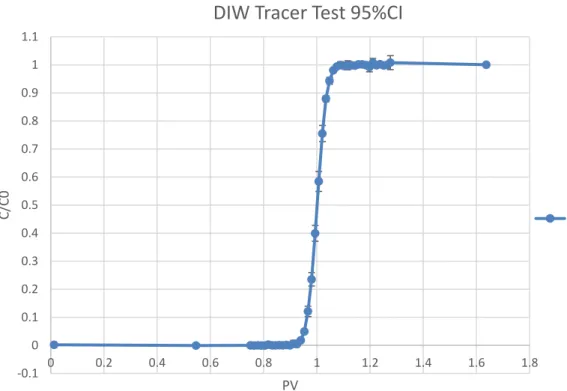
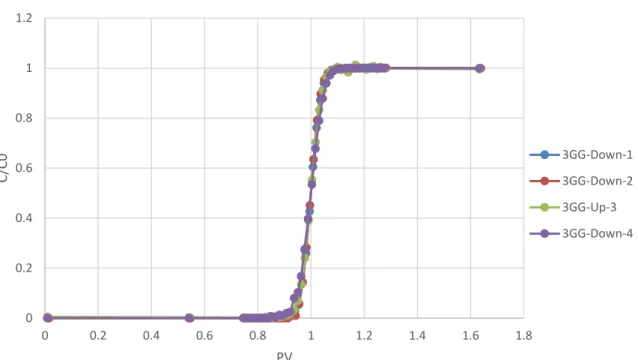
Figure 3. DIW Tracer Tests Breakthrough Curve ... 40
Figure 4. DIW Tracer Tests 95% Confidence Interval Breakthrough Curve ... 40
Figure 5. 0.3% Guar Gum Tracer Tests Breakthrough Curve ... 41
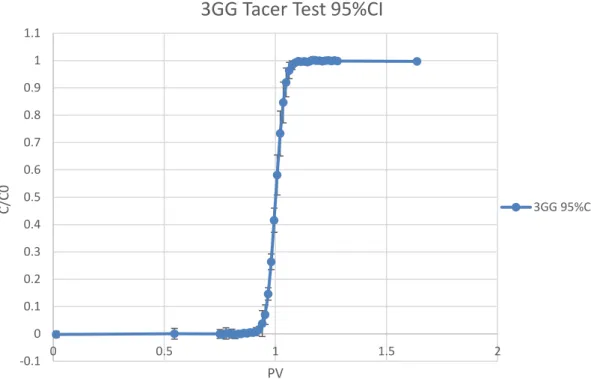
Figure 6. 0.3% Guar Gum Tracer Test 95%CI ... 42
Figure 7. 0.5% Guar Gum Breakthrough Curve ... 42
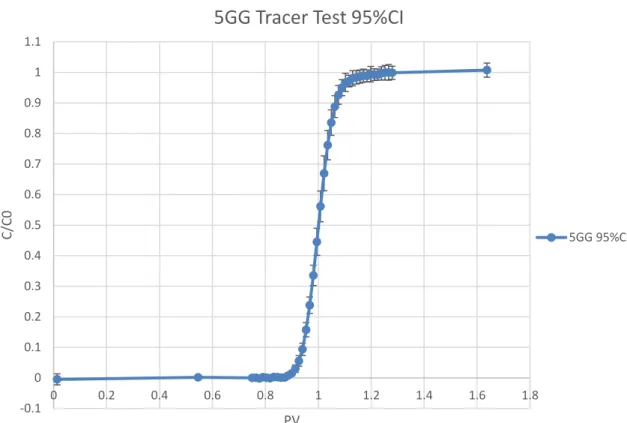
Figure 8. 0.5% Guar Gum Tracer Test 95% CI ... 43
Figure 9. Post-DIW Tracer Test Breakthrough Curve ... 44
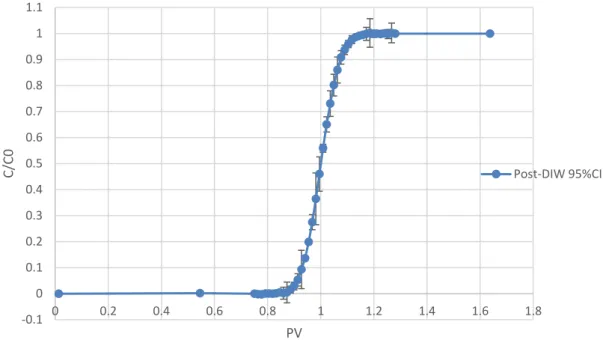
Figure 10. Post-DIW Tracer Test Breakthrough Curve 95% CI ... 44
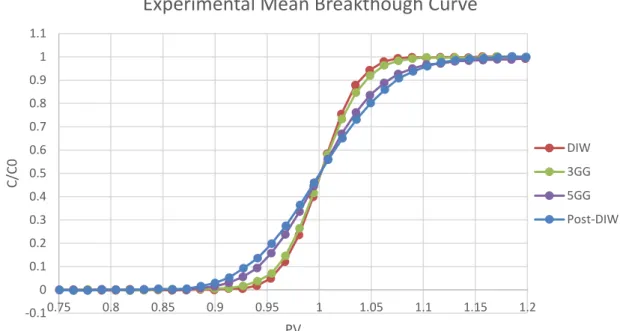
Figure 11. Experimental Mean Breakthrough curve comparison ... 45
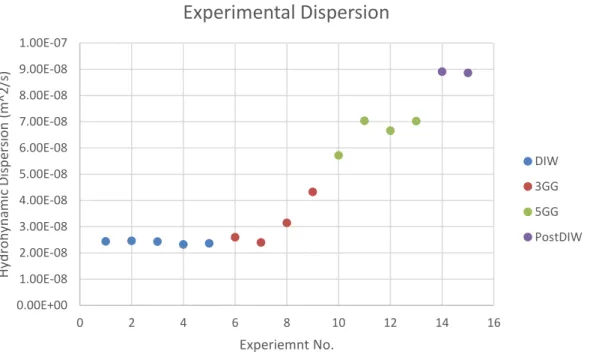
Figure 12. Experimental Hydrodynamic Dispersion Comparison ... 46
Figure 13. Experimental Mean Dispersion 95% CI ... 47
Figure 14. Experimental Breakthrough Curve Fitting ... 48
Figure 15. Analytical Hydrodynamic Dispersion Model Sensitivity ... 49
Figure 16. Experimental Pe Number ... 50
Figure 17. Picture of the Domain from ParaView ... 52
Figure 18. Pressure Drop Varies with Different Spheres and Blocks ... 55
Figure 19. Pressure Drop for 0.3% Guar Gum at v = 0.00005 m/s ... 55
Figure 20. Average Pressure Drop per Length for 0.3% Guar Gum at v = 0.00005 m/s ... 56
Figure 21. REV With Respect to Conductivity Under Different Domain Systems ... 57
Figure 22. Simulation Breakthrough Curve at v=0.0005m/s, DT=2.05E-10 ... 58
Figure 23. Simulation Breakthrough Curve at v=0.00005m/s, DT=2.05E-10 ... 59
Figure 24. Simulation Breakthrough Curve v=0.000005m/s, DT=2.05E-10 ... 59
Figure 25. Simulation 0.3% Guar Gum at v=0.0005m/s Breakthrough Curve ... 60
Figure 26. Simulation 0.3% Guar Gum at v=0.000005m/s Breakthrough Curve ... 60
Figure 27. Simulation 0.5% Guar Gum at v=0.00005m/s Breakthrough Curve ... 61
Figure 28. Simulation Hydrodynamic Dispersion at different velocities ... 62
Figure 29. Simulation Hydrodynamic Dispersion at Different DT ... 63
viii
LIST OF TABLES
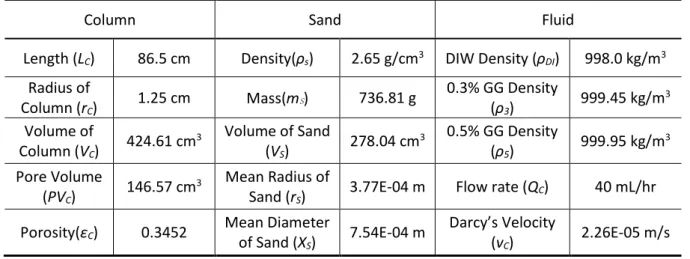
Table 1. Column and Sand Data ... 39
Table 2. Experiment Reynolds Number ... 50
Table 3. Packed Domain Systems Data ... 51
ix
LIST OF NOMENCLATURE
Roman Letters𝐴 Area [L2]
C Concentration [M/L3] 𝐶0 Initial concentration [M/L3]
𝐷𝑙 Longitudinal hydrodynamic dispersion coefficient [L2/T] 𝐷𝑚 Molecular diffusion coefficient [L2/T]
𝑔 Gravity acceleration [L/T2] 𝐾 Hydraulic conductivity [L/T]
𝑙 Linear coordinate along the flow direction [L] 𝐿 Length [L]
𝑚 Cross power model fitting parameter M Mass [M]
𝑛 Cross power model fitting parameter 𝑁𝑠 Sphere number
𝑃 Pressure [M/LT2] 𝑄 Flow rate [L3/T] 𝑟 Radius [L] 𝑡 Time [T]
T Relative concentration in OpenFOAM simulation 𝒖 Flow velocity tensor with the order of two [L/T] 𝑣 Darcy velocity [L/T]
𝑣̅ Average Darcy velocity [L/T] V Volume [L3]
𝑋 Mean diameter of particles [L] Greek Letters
𝛼 Courant number
𝛼𝑙 Dispersivity of the porous medium [L]
x 𝜇 Dynamic viscosity [M/LT]
𝜇0 Dynamic viscosity at zero shear rate [M/LT] 𝜇𝐼𝑛𝑓 Dynamic viscosity at infinite shear rate [M/LT]
𝜇𝑙𝑜𝑔 Lognormal mean
ν Kinematic viscosity [L2/T]
ν0 Kinematic viscosity at zero shear rate [L2/T] ν∞ Kinematic viscosity at infinite shear rate [L2/T] 𝜌 Density [M/L3]
σ2 Lognormal distribution variance
τ Shear stress [M/LT2]
𝜔 Specific thermodynamic work per unit mass Mathematical Letters
𝐶
𝐶0 Relative concentration
𝑑ℎ Hydraulic head loss [L]
𝑑ℎ
𝑑𝐿 Hydraulic gradient
erfc Complementary error function 𝑔𝑟𝑎𝑑 Gradient
MASS Mass [M] Pe Peclet number
𝑃𝑉 Number of pore volume passed through 𝑃𝑉𝐶 Pore volume of the column [L3]
Re Reynolds number
Re0 Reynolds number at zero shear rate
ReInf Reynolds number at infinite shear rate
xi
LIST OF ABBREVIATIONS
1003 Resolution blocks level at x-y-z as 120×100×100 2003 Resolution blocks level at x-y-z as 240×200×200 3003 Resolution blocks level at x-y-z as 360×300×300 4003 Resolution blocks level at x-y-z as 480×400×400 5003 Resolution blocks level at x-y-z as 600×500×500 3GG 3% by mass guar gum solution
5GG 5% by mass guar gum solution 95% CI 95% Confidence interval DIW Deionized water
EPA United States Environmental Protection Agency EIA United States Energy Information Administration OpenFOAM The Open Source Field Operation and Manipulation REV Representative Elementary Volume
1
Chapter 1: Introduction
Motivation
Global primary energy consists of petroleum, natural gas, coal, nuclear energy and
renewable sources. In 2018, the world primary energy production grew by 2.8%
compared to the primary energy production in 2017, and the U.S. and China together
made up 54% of this growth [1]. Global primary energy consumption grew 2.9% in
2018, the fastest growth rate since 2010, mainly driven by natural gas, which
accounted for more than 40% of the total increase. Approximately 85% of this
consumption was in the form of fossil fuels. Global natural gas production and
consumption increased by 5.3% and 5.2% in 2018, respectively, and nearly half of the
production growth occurred in the U.S. [2]. In the U.S., fossil fuel accounted for
approximately 80% of energy consumption in 2018, with 31% of energy consumption
provided by natural gas [3].
Fossil fuels will continue to play an important role in energy production and
consumption in the coming decades around the world, even as the transition to
renewable sources of energy continues [4]. A long-term projection report indicates
that, without a dramatic shift in current climate policies, global energy consumption
will grow 20%-30% from now through 2040, mainly driven by fossil fuels, especially
natural gas [5]. Based on the evaluation of Tong et al. [6], in 2018, the world
recoverable conventional oil and natural gas resources are 535 billion tons and 588.4
trillion cubic meters, respectively. In 2016, Wang et al. [7] assessed total global
2
tight geological formations with low permeability, at an astonishing 442.1 billion tons
and 227 trillion cubic meters, respectively. Both of these estimates document
abundant conventional and unconventional hydrocarbon resources globally.
Hydrocarbon reserves are stored in two different ways and require different
extraction technologies. The hydrocarbon resources that come from
high-permeability formations, such as large fractures in sandstones or limestones, can be
easily obtained by standard well and pumping technologies and are called
conventional hydrocarbons. Alternatively, unconventional hydrocarbons are usually
trapped in tight geological formations, such as shales, with low permeability and
porosity, and cannot be extracted from the deposit by utilizing simple drilling and
production techniques. The latest data shows that from 2016 to 2017, the proven
crude oil reserves in the U.S. increased 19.5% to 39.2 billion barrels (bbl), equivalent
to 5.73 billion tons. Moreover, the proven natural gas reserves increased by 36.1% to
464.3 trillion cubic feet (Tcf), equivalent to 13.15 trillion cubic meters (Tcm). It should
be noted that the share of shale gas grew from merely 13.5% in 2008 to 66% in 2017,
or about two-thirds of the total proven natural gas reserves [8]. The increasing
importance of shale gas, or unconventional natural gas, is an influential trend in
energy production and consumption, especially in the U.S.
Hydraulic fracturing, also known as fracking, is one of the most important extraction
technologies in the fossil fuel industry since the late 1940’s, and the primary method
for unconventional hydrocarbon resource exploitation. Hydraulic fracturing has
developed dramatically in the past few decades to enhance the production of
3
economically from unconventional reservoirs [9]. From 2004 to 2019, the production
of shale gas in the U.S. grew from about 0.8 billion cubic feet (22.6 million cubic meters)
per day to 3.0 billion cubic feet (85.0 million cubic meters) per day [10]. Though it is a
fossil fuel that produces greenhouse gas when burned, natural gas emits
approximately 50% less CO2 than coal and about 28% less CO2 than oil per unit of
energy production [11], and it emits far less sulfur dioxide (SO2), and nitrogen oxides
(NOx)than either coal or oil. The projection from EIA [12] in 2019 shows that, without
significant changes to clean energy policies, annual energy-related CO2 emission will
fall 4% to about 5 billion metric tons from 2018 to 2050 in the U.S. as a result of a
migration from the consumption of coal and petroleum to natural gas.
The practice of hydraulic fracturing is generally combined with horizontal drilling
techniques, and the process includes several steps: (1) drilling and construction of
wells vertically and then horizontally to reach the hydrocarbon reservoirs far below
the surface; (2) injection of pressurized hydraulic fluids into the wells to exceed the
fracture gradient of the shale needed to form permeable cracks for fluids; (3)
production of petroleum and natural gas from the wells; and (4) maintenance of the
well system and treatment and disposal of fluid waste [13]. Although hydraulic
fracturing dominates the global production of natural gas, it has been a controversial
technique since its introduction. Concerns about the potential impacts of hydraulic
fracturing on the environment, especially on groundwater and surface water quality,
have drawn considerable attention from the research community, the public, and
government [14–20].
4
fracturing fluids applied during the fracturing process on subsurface water quality.
Hydraulic fracturing fluids are often a type of non-Newtonian fluid, which consists of
sand, large amounts of water, and a mixture of toxic chemicals. Specific concerns
related to the hydraulic fracturing process include leakage of fluids, unrecovered fluids
seeping down into the reservoirs, and potential transport of toxic chemicals into
groundwater systems, the ecosystem, and water supplies [21]. Such contamination
from hydraulic fracturing is extremely difficult to identify and remediate. Many open
research questions must be resolved before the environmental risks resulting from
hydraulic fracturing can be clearly understood. Included in these open questions are
the mechanics of transport phenomena in non-Newtonian fluids, which are the
majority of fluids used in hydraulic fracturing.
Fluid characterization depends on a number of variables. Different fluids or materials
have their own behavior patterns when subjected to stress, shear rate, velocity,
deformation, and flow. Based on their viscosity characteristics, fluids can be classified
as Newtonian or non-Newtonian fluids. Newtonian fluid remains at a constant
viscosity as a linear function of shear stress and shear rate; water and gasoline are two
examples. Non-Newtonian fluids are a group of materials, such as biological fluids,
aqueous guar gum solutions, and suspensions, whose viscosity characteristics do not
follow the classic Newtonian model [22]. As compared to Newtonian fluids, the
viscosity of non-Newtonian fluids [23] has a non-linear correlation between the shear
rate and shear stress. When the derivative of the shear stress with respect to the
applied shear rate is positive, the fluid is defined as a shear-thickening fluid, for which
5
of the shear stress with respect to applied shear rate is negative, the fluid is called a
shear-thinning fluid, for which the viscosity decreases as the shear rate increases.
In fluid mechanics, hydrodynamic dispersion is a factor that has been applied to
describe the transport of solutes in fluids. In the 1950s, Dr. Geoffrey Ingram Taylor
[24–26] published several papers about soluble matter dispersion in Newtonian fluids
flowing through a tube under certain fluid conditions. Taylor derived a classic
hydrodynamic model, known as the Taylor dispersion model. The Taylor dispersion
model has been proven efficient to fit Newtonian fluids [27–29]. However, because of
the unstable viscosity of non-Newtonian fluids, the Taylor dispersion model cannot
accurately describe the behavior of Newtonian fluids or species transport in
non-Newtonian fluids in porous media. The nature of species transport and dispersion in
non-Newtonian fluids remains unclear, and additional research is warranted. The
standard hydrodynamic dispersion model [30] from Taylor is based on mass
conservation equations and simulates the behavior of species in Newtonian fluids;
however, the hydrodynamic dispersion model for non-Newtonian fluids is uncertain,
and this work aims to narrow this knowledge gap in non-Newtonian fluids. Utilizing
the continuum method and the representative elementary volume concept, one can
observe variations in species dispersion in a non-Newtonian fluid in porous media at
the microscale level. These observations can then inform macroscale models of such
systems. Promoting such fundamental understanding would enable advances in
models used in a variety of fields including: hydrocarbon reservoir engineering,
groundwater hydrology, chemical processing, and other areas in which flow
6 Goal and Objectives
The goal of this work is to analyze dispersion of a dilute species in a non-Newtonian
fluid for single-fluid-phase transport in a porous media system. The specific objectives
of this work are: (1) to observe dilute species transport in an experimental porous
media system that includes a non-Newtonian fluid; (2) to mathematically model
species transport at the microscale for systems similar to those investigated
experimentally; and (3) to compare experimental observations and simulated
7
Chapter 2. Background
Natural Gas
Natural gas is one of the most common fossil fuels, naturally occurring deep beneath
the surface of the earth. Like other fossil fuels, natural gas is made up of remnants of
processes occurring under immense pressure and heat below the earth’s crust for
millions of years. Natural gas [31] consists of many different hydrocarbons, carbon
dioxide, nitrogen, and water vapor, but the primary component of natural gas is
methane (CH4). Natural gas that is found in large fractures in permeable formations is
called conventional natural gas, and natural gas that is found in fine-grained shale
formations with low permeability is called unconventional natural gas, or shale gas.
Natural gas occurrence is usually associated with petroleum deposits. In the 19th
century, natural gas was considered a by-product of crude oil extraction and was
burned off as waste from the petroleum field. However, in 2018, natural gas
contributed 32% of U.S. primary energy production [32], a figure that keeps growing.
With new extraction techniques and discoveries, the expansion of natural gas
production, and especially the dramatic rise in shale gas production has remapped the
U.S. energy landscape and turned the U.S. from a net energy consumer into a net
producer.
Many qualities of natural gas make it an economical and relatively clean energy source.
Natural gas has a higher caloric value (12,500 kcal/kg) than fuel oil (9,250 kcal/kg) or
brown coal (3,500 kcal/kg) under standard conditions [33]. Natural gas also has fewer
undesirable by-products emitted on combustion per unit energy than crude oil or coal
8
greenhouse effect of methane [36], the simplest alkane and principal component of
natural gas, and the leakage of natural gas from infrastructure [35] make its use
controversial with regard to climate change and global warming, natural gas is still a
relatively abundant, economical, efficient, and environmentally friendly fossil fuel
worldwide [34,37]. Natural gas is widely used as a fuel for homes, power plants,
industry, and automobiles. The typical efficiency of converting heat energy into
electrical power in a power plant is 60% for a natural gas combined-cycle power plant,
42% for a petroleum-fired power plant, and 33% for a coal-burning power plant [34].
At the end of 2017, the net increase in proved natural gas reserves in the U.S. was
123.2 Tcf, about 3.49 trillion cubic meters (Tcm); this was a new record of total proved
natural gas reserves, and the share of proved shale gas reserves increased to 66% of
total U.S. proved natural gas reserves [8].
Shale gas trapped in a shale deposit or formation has become the primary source of
natural gas production in the U.S. this century [38–40]. A shortage of crude oil and
conventional natural gas in the late 1960s, along with an evolution in extraction
methods made shale gas a significant energy source in fossil fuel production and
consumption worldwide. Technological advancements made the extraction of shale
gas economically viable. As one of the countries with the greatest proved natural gas
reserves, the U.S. has a large amount of stored natural gas that has not yet been
extracted. Prior to a few decades ago, these shale gas reservoirs were considered
uneconomic targets, requiring difficult procedures to access. However, due to the
development of hydraulic fracturing, these reservoirs are now both accessible and
9
gas production in the U.S. in 2017 [41]. Since extraction technology for natural gas
hydrates, also known as methane clathrate, is still evolving, shale gas will play a
significant role in the area of natural gas resources in the near future. Hydraulic
fracturing technology is becoming increasingly important, and it is indispensable for
exploiting shale gas reservoirs in the natural gas industry.
Hydraulic Fracturing
Hydraulic fracturing has become prevalent in crude oil and natural gas engineering in
recent decades. Hydraulic fracturing [42] is an established and rapidly advancing
technology that injects pressurized hydraulic fracturing fluids into targeted rock
formations through production wells to create fractures and maximize productivity of
petroleum and gas. Hydraulic fracturing forms cracks in permeable formations with
fine grains, props these fractures open using sand or silica, and improves the
permeability of tight shales artificially, allowing shale gas or petroleum to flow more
easily out of the shale than before.
Horizontal drilling is a procedure that follows vertical drilling down into the subsurface.
The horizontal portion of a well allows for a greater extent of a gas-containing region
to be in close contact to the well, reducing transport distances needed for effective
production. Hydraulic fracturing contributed 67% of the natural gas production and
51% of crude oil production in the United States in 2015, (EIA [43,44]). Since most of
the shallower and more-accessible oil- and natural gas-bearing rock formations have
already been exploited, hydraulic fracturing allows fossil-energy-mining technology
deep into production formation layers previously considered uneconomic. Along with
10
spread as a popular technique to help the world access existing energy reserves.
The hydraulic fracturing process includes well construction, water acquisition,
chemical mixing, pressurized injection, oil or natural gas extraction, and wastewater
disposal and reuse [13]. Hydraulic fracturing fluids are injected under high pressure to
open fractures in tight formations. The composition of fracking fluids varies with
different types of fracturing, usually consisting of water, proppants which are solid
materials such as sand, ceramic, and silica, and specific chemical additives, such as gels,
guar gum, biocides, emulsifiers, and friction reducers. Industrial practice tends to
choose more viscous fluids to carry more proppants, and such fluids are often
non-Newtonian fluids. Some of the components of hydraulic fracturing fluids are
biologically toxic, and the behavior of non-Newtonian fluids is difficult to model and
predict.
The advent and rapid development of hydraulic fracturing has drawn substantial
attention and debate from environmentalists, scientists, government, and the general
population. Due to the intricacy of unconventional reservoirs and geological
conditions, and the unclear attributes of hydraulic fracturing fluids, concerns have
been raised regarding the risk posed by the initiation and propagation of fractures in
shale formations and the potential resultant threats to groundwater aquifers. The
possible environmental hazards of hydraulic fracturing include substantial water use,
leaks and spills of hydraulic fracturing fluids, potential transport of fluids into
groundwater resources, and other risks associated with operations and extractive
activities [45,46]. Although there has been tremendous crude oil and natural gas
11
hydraulic fracturing techniques and applications, this process receives relatively little
regulatory surveillance, and the impacts of hydraulic fracturing on surface water
sources and groundwater remain unclear and infrequently studied.
In addition to lack of monitoring and regulation, scientific issues remain to be resolved
before a mature level of understanding is achieved. One of these issues is related to
the flow of non-Newtonian fluids, which are the typical hydraulic fracturing fluids,
through porous media. Non-Newtonian flow through a porous medium system is
often modeled using Darcy’s law, which is not strictly applicable because it does not
account consistently for the relationship observed between shear stress and shear
rate that typifies a non-Newtonian fluid. Furthermore, the transport of individual
dilute species in non-Newtonian fluids, such as is typical of many of the species of
environmental concern, is also not well understood.
Non-Newtonian Fluids
In fluid mechanics [47], the force applied to a fluid parallel to the direction in which
the fluid is moving per unit area is known as the shear stress (τ) [M/LT2]. Dynamic
viscosity (µ) is defined as the deformational resistance of a fluid to applied shear stress.
When the shear stress exerted on a fluid is linearly proportional to the shear rate (𝑑𝑣𝑑𝑦),
the viscosity of the fluid is constant, and the fluid is said to be Newtonian. This
relationship can be formulated as Eq. (1).
𝜏 = 𝜇𝑑𝑣
𝑑𝑦 (1)
12
The viscosity of Newtonian fluids remains constant at a given temperature, which
means it is easy to measure the dynamic viscosity for such a fluid. Common Newtonian
fluids include water, alcohol, gasoline, and mineral oil.
Fluids that do not follow Newton’s law of viscosity are known as non-Newtonian fluids.
Although many fluids are assumed to be Newtonian fluids for practical use,
non-Newtonian fluids are more common and have very different behavior and properties
than Newtonian fluids. In contrast to Newtonian fluids, the viscosity of a
non-Newtonian fluid varies as a function of the applied shear stress or force. The behavior
of a typical Newtonian fluid, such as water, depends on pressure and temperature.
The behavior of a non-Newtonian fluid changes with flow conditions as a result of the
dependence of dynamic viscosity on the rate of strain, in addition to the dependence
on pressure and temperature. A typical example of a non-Newtonian fluid is ketchup:
if one squeezes and shakes a ketchup bottle, it will pour out significantly faster than
just turning over the bottle to wait for it to drop, because the ketchup’s viscosity is
altered when a stress is applied to it.
Non-Newtonian fluids can demonstrate various trends in dynamic viscosity as a
function of the deformation rate, time, and composition, and there are four types of
non-Newtonian fluids [48]. When the viscosity of a non-Newtonian fluid decreases
with the increased shear rate, the fluid is called a shear thinning fluid, such as ketchup;
when the viscosity increases with the increased shear rate, the fluid is called shear
thickening fluid, such as oobleck. For time-dependent viscosity, if the viscosity of the
fluid decreases with the length of time that stress is applied, then the fluid is defined
13
the length of time that stress is applied, the fluid is known as a rheopexy fluid, such as
cream [49]. Because of the unique behaviors of non-Newtonian fluids, it is important
to fully understand their properties in order to understand flow and transport
phenomena in the porous medium systems in which they exist, such as in hydraulic
fracturing applications.
Mathematical Modeling
Understanding of transport phenomena, engineering design, risk assessment,
management, and policy related to natural gas recovery all depend upon a
quantitative understanding of how mass, momentum, and energy are transported in
porous medium systems [50–53]. This modeling can be performed at different length
scales, two of which are especially important. At the microscale, the laws of
continuum mechanics are reasonably well understood, but it is necessary to describe
the precise location of each phase as a function of space and time. For natural systems
at field scale this is not possible due to observational difficulties and computational
limitations. Because of the challenges with microscale modeling, natural systems are
usually modeled at the macroscale, where a point represents the centroid of an
averaging region over all phases. The macroscale concept overcomes the challenges
with microscale modeling, but raises issues regarding the appropriate form of the
model and the size that a macroscale point needs to be for the model to be well
behaved and meaningful. If the point is too small averaged quantities may be sensitive
to the size of the averaging region. If the point is too large, natural variations may not
be adequately resolved. The determination of this point size is often called the
14 that follows.
Representative Elementary Volume
In order to derive a macroscale mathematical model to describe transport phenomena
in a porous medium, Bear [30,54] applied a continuum approach that resolves the
behavior of fluids inside a system in an averaged sense, which is referred to as the
macroscale; the optimal size of this averaging region is a termed a representative
elementary volume (REV). The partial differential equations for the mechanistic
model then can be deduced using the REV point perspective. To define the size of REV,
there are several principles that should be followed.
For any REV at point P, the length of the REV Δl0should be larger than the free path of
molecules λ to avoid meaningless fluctuations of statistical variables in the molecular
scale of magnitude, as well as smaller than a characteristic length L0 to capture the
valuable changes in the fluids; and this relationship is described as Eq. (2):
𝜆 < 𝛥𝑙0 < 𝐿0; (2)
Similarly, the time interval Δt0 should be smaller than characteristic time T0 to avoid
information loss, and larger than the average free time [55] of a molecule. For porous
medium domain system, to determine the size of REV in any point of the domain
system, REV can be defined as a certain volume of the sphere ΔU0, which is larger than
one pore with a lower bound often taken as being on the order of tens of pores. The
averaged macroscale properties of the system should be insensitive to the size of the
REV, which is to say that a clear separation of length scales should exist between the
15
Based on the fluid continuum approach and REV, the meaningful average values of
variables at any given REV provide a basis to develop mechanistic ways to observe
physical, kinematic, and dynamic characteristics at the macroscale. Some useful
macroscale characteristics include porosity, hydraulic conductivity, viscosity, diffusion,
and hydrodynamic dispersion. Hydrodynamic dispersion is of special interest in this
work, because little work has been done to characterize this process for
non-Newtonian flows.
Hydrodynamic Dispersion
In recent decades, many groundwater investigations have emphasized groundwater
degradation, especially due to petroleum recovery [56–59]. Because of the unique
properties of non-Newtonian fluids, fluids commonly used in the oil industry,
understanding and quantitatively describing flow and transport phenomena for
non-Newtonian fluids in the subsurface is important. Non-non-Newtonian fluids applied during
hydraulic fracturing contain a variety of dissolved species when injected into target
formations, and the potential mixing with petroleum, shale gas, and native
groundwater further complicates the mixture [60,61]. Models for fluid motion during
hydraulic fracturing are needed, and the description of species’ transport in non
-Newtonian fluids through porous medium is also necessary.
In groundwater hydrology and fluid mechanics, hydrodynamic dispersion [62] has
been used to denote the combination of mechanical dispersion in the fluid due to the
fluctuations from mean advective transport and the transport of the fluid species due
to molecular diffusion. Advection is typically the term used to denote the rate of
16
concept of hydrodynamic dispersion to describe deviations from the mean rate of
transport resulting from advective transport. Hydrodynamic dispersion can be
observed by the distribution of the velocity of the species in the fluids. While the
solute moves with the fluid, it tends to spread out in the transverse and longitudinal
directions based on mechanical dispersion and molecular diffusion. Freeze [63]
explained that the mechanical dispersion, or hydraulic dispersion, occurs because of
three mechanisms: the drag force caused by the roughness of the pore surface; the
variation of pore sizes in the flow path; and the tortuosity due to the presence of solid
particles that obstruct flow. Generally, the molecular diffusion is small enough to be
negligible except when the flow velocity is small.
Taylor [24] studied the hydrodynamic dispersion of a species for single fluid flow
through a cylindrical tube. Specifically, the effect of an unresolved microscale velocity
distribution along with molecular diffusion was related to the mean rate of macroscale
flow. Taylor developed an approximate solution that accounted for the unresolved
microscale velocity distribution on the spread of a dissolved species. The velocity of
the species near the wall of the cylinder is close to zero, and the velocity of the species
in the center path reaches its maximum value. If one examines any cross-section in
the cylinder that is perpendicular to the direction of the flow path, the integral of the
velocity of the species at that face would be a constant and equal to the average
velocity when viewed at the macroscale.
For porous medium systems, the situation is more complicated. Compared to a
cylindrical tube without medium, fluid flowing through a column packed with a porous
17
to additional components of hydrodynamic dispersion compared to Taylor’s pipe
system. Mathematical models for species dispersion in a Newtonian fluid in a
homogeneous, isotropic porous medium have been well established. However, most
porous media are not homogeneous, and some of the fluids we care about are not
Newtonian fluids. Solute dispersion in such stochastic media has been the focus of
considerable research over the last few decades. More work is also needed for
understanding dispersion in non-Newtonian fluids.
For the purpose of developing a mechanistic solution for species in non-Newtonian
fluids, models based upon the conservation of mass, momentum, and energy are
often used. A set of partial differential equations can be derived from conservation
equations. However, these equations have more unknowns than the number of
equations, leading to solvability issues. Therefore, closure relations such as Darcy’s
law are used to render the models solvable. Hydrodynamic dispersion is one such
closure relation. While a useful form has been established for homogeneous porous
media and Newtonian fluids, the correct form of the hydrodynamic dispersion closure
relation for non-Newtonian fluids is an open question. Dispersion can be investigated
18
Chapter 3. Methods and Materials
The overall goal of this work was to advance understanding of dilute species dispersion
in non-Newtonian fluids flowing through porous medium systems. A combination of
experimental and modeling methods was used in this work. A column system packed
with sand was used to conduct a series of laboratory dispersion tracer tests; a
microscale mechanistic model was implemented to model dispersion for a set of
domain systems; and comparisons were then made between the experimental
observations and the mechanistic modeling results. The sections that follow detail the
approaches taken in this work.
Experimental Methods
Materials
The Newtonian fluid used in the experiments was deionized water (DIW), which was
produced from a Dracor Water System (Durham, NC) with ultra-purification
procedures using distilled water from UNC. Non-Newtonian fluids were made up from
guar gum powder (Grade S-4500-G, Synthetic Natural Polymers, Inc. Durham, NC)
dissolved in DIW, along with sodium azide (NaN3, reagent grade, Sigma Aldrich) [64]
to prevent biodegradation of the fluid system. The dilute species that was investigated
was tritiated water (American Radiolabeled Chemicals, Inc.), with a portion of tritium
(3H) as the hydrogen atoms in water molecules added as a tracer to monitor its
dispersion in Newtonian and non-Newtonian fluids flowing through porous medium
systems. Tritiated water was pre-diluted by former users in the laboratory. Tritium is
19
experiments for fluids. Tritiated water was pre-diluted before it was added to DIW to
produce a DIW-tritiated water solution. The density of the DIW and guar gum solutions
were tested in the density meter DMA 48 (Anton Paar USA Inc.) at room temperature.
Column
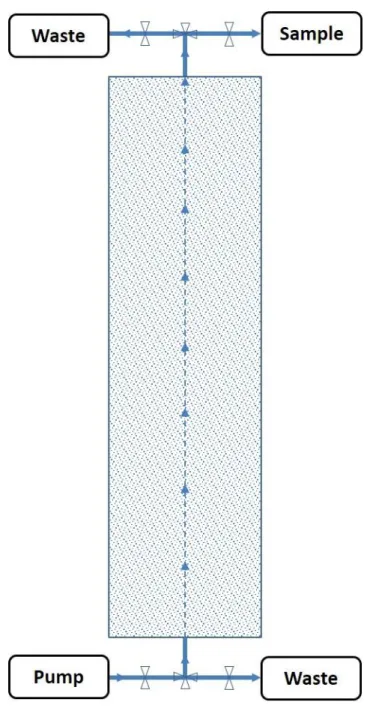
A vertical column porous medium system (Figure 1) was designed to pump fluid
through a porous media at the bottom of the column, and outflow samples were
collected at the top in a designed time sequence. The column was packed with 20/30
Accusand (Unimin Corporation, USA) with an air vibrator (Syntron, USA) to compress
the sand packing, and the diameter distribution and mean radius of the sand were
collected by laboratory colleagues Scott C. Hauswirth and Christopher A. Bowers [66],
whose paper is under review. The length and diameter of the column packed with
sand were measured and recorded, with density of the sand used to calculate the
porosity of the column porous medium. The inlet and outlet openings of the column
on both sides were closed with plugs with a middle hole to connect the inside and
outside of the domain system with plastic tubes. A syringe pump (Harvard Apparatus,
USA) was also connected to the column with plastic tubes and three-way and two-way
plastic valves to control the flow. CO2 (Industrial grade, Airgas) was injected into the
column for 30 minutes to push air bubbles out of the system completely, then
sufficient DIW was pumped with a constant flow rate into the system to saturate the
sand thoroughly and prepare the system for dispersion testing. Before every tracer
test, the inlet connection lines were cleaned and saturated with the same target fluids
20
Figure 1. Schematic of Column-Pump Porous Medium System
Guar Gum
Guar gum [67] is commonly and economically applied to produce non-Newtonian
fluids in hydraulic fracturing. Guar gum powder is produced from the endosperm of
seeds from the guar plant, also known as the cluster bean. Due to the physical
properties of guar gum as a galactomannan polysaccharide, dissolved guar gum
powder in water forms hydrogen bonds with water molecules and is broadly used as
21
used as a thickener and stabilizer in the petroleum and natural gas industries [68].
Guar gum powder was weighed and dissolved in DIW, DIW-tritium solution, along with
approximately 1 g sodium azide, diluted to 1 kg in total. The DIW-tritium solution was
further diluted about 100 times from the pre-diluted tritiated water based on the
purchased tritium. The mixture was then mixed at the highest speed in an electric
blender (Better Chef) for 30s and transferred into sealed glass containers after the
mixing was finished. Then the mixture was stirred slowly with a magnetic stir bar in a
magnetic stirrer (Thermix, Fisher Scientific) for about 24 hours until the guar gum was
fully dispersed. After that, the mixture was transferred into sealed plastic centrifuge
tubes and centrifuged for 30 minutes at 3100 R/min at 15℃ in a ventilated centrifuge (Marathon 21/R Ventilated Centrifuge, Fisher Scientific) to separate the potential
uneven insoluble ingredients of the mixture. After centrifugation, the upper solution
was homogenous and was collected as 0.05%, 0.1%, 0.2%, 0.3%, 0.4%, and 0.5% guar
gum solutions by mass, or guar gum tritium solutions if the DIW-tritium solution was
used to dissolve the guar gum powder. Before the solutions were injected into the
column, the DIW, DIW-tritium, guar gum, and guar gum tritium solutions were
degassed through a wall vacuum system in the laboratory to prevent air bubbles from
moving into the column system and maintain the saturated status of the domain.
Tracer Tests
Tracer tests were performed by observing the transport of tritium in either DIW or
guar gum solutions to quantify dilute species dispersion in both Newtonian and
non-Newtonian fluids. For the non-non-Newtonian fluids, the concentration of guar gum was
also a variable that was controlled. All experiments were run with a more viscous
22 displacement pattern.
DIW Up-Tracer Test: The plastic lines that connect the column with the pump were
cleaned and pre-saturated with a DIW-tritium solution. The DIW-tritium solution was
pumped at a flow rate (Q) of 40 mL/min (a velocity closes to general groundwater
velocity [69–71]) into the column pre-saturated with DIW starting at a certain time
(t=0) to replace DIW in the column. Outlet samples were then collected during the
whole tracer test from the top of the column into 20 mL disposable scintillation vials
(Fisher Scientific) at discrete and constant time intervals. The tracer concentration
exiting the column C=C(t) is referred to as a breakthrough curve. We assumed and
verified that after 1.6 pore volumes of the column of pumping the DIW-tritium
solution, the breakthrough curve reached steady-state, and we stopped the pump and
sample collecting. The steady-state concentration was verified by sequential sampling.
This experiment was designated the up-tracer test, as the radioactivity in the column
increases during the experimental period as a function of time.
DIW Down-Tracer Test: After the up-tracer test was completed; the column was
saturated with DIW-tritium solution. The syringe pump then was refilled with DIW,
and the plastic lines that connect the pump and the column were cleaned and
pre-saturated with DIW. We started the pump at a certain time (t=0) to inject DIW to
displace the DIW-tritium solution in the column, and we repeated the experimental
steps as in the up-tracer test in the same discrete and constant time intervals. This
experiment is called a down-tracer test because the radioactivity of the fluid in the
column is decreasing with time during the experiment. Both the up-tracer test and the
23
Guar Gum Tracer Test: For the guar gum tracer test, the column was first saturated
with DIW. The guar gum solutions of interest were at concentrations of 0.3%, and 0.5%
by mass. We picked these two specific concentrations of guar gum solution based on
some pre-research data from coworkers in the group in order to detect a clear
difference between Newtonian fluid and non-Newtonian fluid. When the
concentration of guar gum is small, the difference between the guar gum solution and
DIW is insignificant. In order to saturate the column with 0.3% guar gum solution, we
used a step-up saturating procedure, which means the column was saturated
step-by-step, first with 0.05%, then 0.1%, then 0.2%, and finally with 0.3% guar gum solution.
The purpose of the step-up saturating procedure was to minimize the potential
unstable flow inside the column system. After the column was saturated with 0.3%
guar gum, the same up-tracer test procedure was followed, in which a guar gum
tritium solution displaced a guar gum solution void of tritium, and outlet samples were
taken in the same time sequence as DIW tracer tests to track the relative radioactive
concentration in the output fluid. For the down-tracer guar gum tracer test, a guar
gum solution void of tritium displaced the resident guar gum-tritium solution, and the
same down-tracer samples were taken to observe the variation of the tracer in the
output fluid. Experiments were conducted with 0.3% and 0.5% guar gum solutions
separately, with the same step-up saturating procedure to saturate the column ahead
of the experiments.
Post-DIW tracer test: After the guar gum tracer experiments were performed, the
column was flushed with decreasing concentrations of guar gum solution void of
24
process. At least ten pore volumes of DIW were circulated to flush the guar gum from
the system before the post set of DIW tracer tests were performed. Following the
flushing procedure, the post-DIW tracer tests were performed with the same steps as
the DIW tracer test, and the same output samples were collected. The purpose of the
post-DIW tracer tests was to verify the column after conducting several guar gum
tracer tests.
Sample analysis: The samples collected from the tracer tests were combined with 8
mL liquid scintillation cocktail (Scintanalyzed, ScintiSafe Gel, Fisher Scientific, NC) and
1 mL of ethanol (200 proof, Decon Laboratories, Inc.) in sample vials. The liquid
scintillation cocktail was used to enhance the long-term stability of the samples,
improve counting efficiency, and reduce the contact time required for the
radioactivity detector during analysis [72–74]. The mixture was sealed and shaken by
hand immediately. The samples were then evaluated using a Tri-Carb 1900 TR Liquid
Scintillation Analyzer (Packard Instrument Co Inc, USA). Samples were analyzed in
triplicate, and the mean value of the three results for each sample were used for data
analysis. Tracer tests were repeated at least two times for each concentration of guar
gum solution, DIW tracer test, and post-DIW tracer test.
Simulations
Simulations consisted of four sections: the generation of media, the generation of
meshes, the simulation of the non-Newtonian fluid field, and the simulation of the
tracer transport in non-Newtonian fluid flowing through porous medium. The media
was generated by a specific sphere packing code [75] from former research group
25
conducted with OpenFOAM applications to generate the meshes and blocks for the
domain in order to obtain REV, simulate the saturating processes of the medium
domain with Newtonian fluid, and simulate the transport of dilute species in
non-Newtonian fluid passing through the pre-saturated domain system.
The first section allowed us to achieve domains with different sphere numbers and
target porosity. The second and third sections provided data to analyze and optimize
the better domain system and examine REV for the transport simulation. The last
section permitted us to observe the variation of the tracer transport in non-Newtonian
fluid passing through porous medium, obtaining microscale to macroscale data to
study the hydrodynamic dispersion of non-Newtonian fluids in a single fluid, porous
medium system. The outcome data were compared with the laboratory experimental
data to evaluate and verify the hydrodynamic dispersion of non-Newtonian fluids in
porous medium systems, as well as our research methods. The sphere packing code
ran at a local workstation, and OpenFOAM applications were executed in the
Dogwood cluster, a Linux-based computing system, at the University of North Carolina
at Chapel Hill.
Sphere Packing
To generate the media, sphere packing was used to pack the domain with randomly
generated hard spheres, with lognormal distribution of the size of spheres. The model
of packing impacts the porosity of the media and the distribution of the particles, as
well as the spheres, and therefore the behaviors of fluids and the domain system. This
work applied Sphere Packing code from our group members [75,76] for random
packing of incompressible spheres, with number of spheres Ns set as 1000, 2000, 3000,
26
The initial porosity was 0.8, and target porosity was 0.36; the lengths of the domain in
each of three-dimensions were the same for any one of the sphere domains and were
specified by the expected volume of the lognormal packing as shown in Eq. (3). The
lognormal distribution variance σ2was 0.004318914893.
4𝜋𝑁𝑠
3 𝐸[𝑟
3] =4𝜋𝑁𝑠
3 exp (3𝜇𝑙𝑜𝑔+ 9 2𝜎
2); (3)
where 𝜇𝑙𝑜𝑔 is the lognormal mean and 𝑟 is the radius of sphere [L]. Since it is not
possible to specify 𝜇𝑙𝑜𝑔, 𝜎2, and porosity ε independently, we specified certain 𝜎2 and
the target porosity, after which the value 𝜇𝑙𝑜𝑔 can be approximated based on these
two data. The mean diameter of the spheres was the same as the mean diameter of
sand used for the laboratory column-pump system; the mean radius of the spheres
can be calculated by Eq. (4):
𝑟̅ = exp [𝜇𝑙𝑜𝑔+𝜎
2
2]; (4)
The generated domain systems were applied in the OpenFOAM simulations described
below.
OpenFOAM Simulation
The Open Source Field Operation and Manipulation (OpenFOAM), a popular
open-source mathematical methods C++ library, was introduced to conduct computation
for dilute species dispersion of Non-Newtonian fluids in the Linux-based system. Here
we used the OpenFOAM User Guide (Version 6) [77] from the OpenFOAM source
website to guide the simulation processes and ParaView to visualize and analyze some
of the results of the simulation.
27
The pre-processing was the application of a specific mesh generator in OpenFOAM,
snappyHexMesh, to create hexahedra (hex) and split-hexahedra (split-hex) for the
three-dimensional meshes in Stereolithography (STL) or tri-surfaces. By iteratively
refining the existing meshes generated through blockMesh and morphing the refined
meshes to the surfaces of STL, snappyHexMesh created fine meshes with variable
refinement levels to fit onto a given geometry. In general, the higher the refinement
level, the more accurate the generated mesh will be, but the calculation processes for
the computer to solve will be significantly larger and time-consuming. The
snappyHexMeshDict dictionary provided a place to adjust the parameters of
snappyHexMesh.
Under system directory, the application blockMesh was applied to generate blocks in
three-dimensions on an x-y-z plane. The boundaries and initial conditions and other
fields can be set up through different system data files. DecomposeParDict decided
the number of decomposed blocks of the domain. ControlDict was responsible for
control of time, such as the beginning and end of run time, time interval, and reading
and editing field data. decomposePar was the application used for parallel processing
in research computing, followed by reconstructPar to reconstruct the mesh fields.
blockMesh builds the mesh with blocks, and the different blocks number will impact
the accuracy of the approximate solution for the partial differential algebraic
equations (PDAE) and calculation counts. Eventually, the sphere domains with
different sphere numbers were refined to 1003 (x-y-z as: 120×100×100, same
sequence for following blocks), 2003 (240×200×200), and 3003 (360×300×300)
28
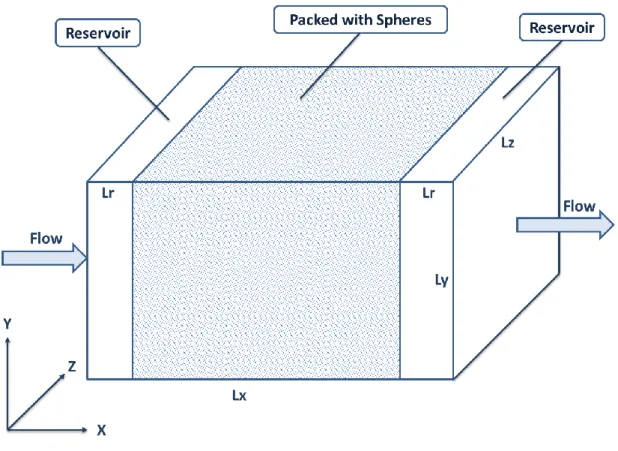
(600×500×500) blocks for selected domains. The difference in the x-axis is because the domains were rectangular, and because of the two reservoirs in two sides of the
domain, the inlet and outlet, which were used to make sure the flow had the same
velocity and direction when it encountered the sphere domains. The schematic of the
domain system is shown in Figure 2.
Figure 2. Schematic of Domain System
The lengths of the entire domain follow Eq. (5), and 𝐿0 is the packed domain length derived from Sphere Packing; 𝐿𝑟 is the length of the reservoir. The packed area of the entire domain is a cube, but because of the existence of the two reservoirs, the entire
domain is a cuboid.
𝐿𝑥 = 1.2𝐿𝑦 = 1.2𝐿𝑧; 𝐿𝑦 = 𝐿𝑧= 𝐿0; 𝐿𝑟 = 0.1𝐿0; (5)
Because of the reservoirs, the actual porosity of the domain was not the same as the
29
system was collected by checkMesh, and was used to calculate the actual porosity of
the entire domain system.
Non-Newtonian fluid field
After the execution of snappyHexMesh, the next step was nonNewtonianIcoFoam and
the following post-processing. The nonNewtonianIcoFoam solver was used to solve
the incompressible laminar flow movement for non-Newtonian fluids. For IcoFoam
[78], it is a specific numerical method code that was designed to solve incompressible
laminar Navier-Stokes equations [79–81] for viscous fluids by using Pressure-Implicit
with Splitting of Operators (PISO) algorithm [82,83]. Navier-Stokes equations are a
continuum with a set of partial differential equations derived from the momentum
conservation equation for the viscous fluid system at the scale of interest (microscale
here) by applying Newton’s second law as a closure relation. Navier-Stokes equations
include the pressure term and the stress applied on the fluid to simulate the unstable
viscosity of the non-Newtonian fluid’s movement specifically, and they have been
widely applied in fluid mechanics, engineering, and other fluid scientific areas. PISO is
an improved algorithm based on the SIMPLE algorithm by Issa [84] to calculate
pressure-velocity for Navier-Stokes equations with larger time steps and accordingly
less computational effort. The incompressible Navier-Stokes equation is as follows Eq.
(6) [85]:
𝜕𝒖
𝜕𝑡 + (𝒖 ∙ 𝜵)𝒖 − ν𝜵
2𝒖 = −𝜵𝜔 + 𝑔; (6)
30
mass; and 𝑔 is the gravity acceleration [L/T2]; 𝛻𝜔 is estimated by Eq. (7):
𝜵𝜔 ≡ 1
𝜌0𝜵𝑝 = 𝜵( 𝑃
𝜌0); (7)
where 𝜌0 is the uniform density of the fluid for incompressible fluid (here we assume the density variation is negligible); and 𝑝 is the pressure [M/LT2]. The Stokes’s stress
constitutive equation for incompressible viscous flow is Eq. (8):
𝝉 = 𝜇(𝜵𝒖 + 𝜵𝒖𝑻); (8)
where 𝝉represents the shear stress tensor [M/LT2]; and 𝜇 is dynamic viscosity [M/LT].
The relationship between kinematic viscosity and dynamic viscosity can be formulated
as Eq. (9):
ν =𝜇
𝜌; (9)
Substituting Eq. (7-9) into Eq. (6), the partial differential equations can be solvable
with boundary conditions. To solve these complicated partial differential equations
with respect to three-dimensions and time, we usually apply numerical methods to
solve for the approximate solution within acceptable error. Navier-Stokes first can be
discretized by the finite volume method, then in each time step, the PISO algorithm
[82] takes the discretized equations with initial predict and boundary conditions to
compute the velocity field and mass fluxes at the blocks faces from the
snappyHexMesh step, and solve for pressure in blocks in the domain. Then mass fluxes
and velocities are corrected based on the newly solved pressure field, and the
boundary conditions are updated. These steps are repeated until the computational
error is smaller than the acceptable error to convergence. After the iterations in one
31
time step reaches the set end time. The PISO algorithm is suitable for resolving
velocity-pressure problems.
In the first set of nonNewtonianIcoFoam simulations, we tested each domain system
from the snappyHexMesh step with a constant velocity
(𝑣 = 0.00005 𝑚/𝑠) (a velocity closes to the velocity used in experimental tracer tests and the general groundwater velocity) and the viscosity data for 0.3% guar gum
solution by mass, collected pressure drop data for each domain system, and analyzed
the data. This allowed us to evaluate REV based on the conductivity of the domain
system, and to select the appropriate domain system for the transport simulations.
Specifically, we took the polyMesh solution data from snappyHexMesh for each sphere
packing domain to the non-Newtonian solver and solved for pressure drop data with
given boundary conditions. After running the same decomposePar to decompose the
meshes, nonNewtonianIcoFoam was run in parallel to solve the non-Newtonian fluids
passing through the porous medium, and reconstructPar for reconstruction in time
sequence. The post-processing uses patchAverage, which solves for pressure drop for
the whole domain at different time stamps. The variation of the pressure drop on the
whole domain with respect to time can be evaluated if the domain system is
steady-state. This step is the counterpart of the saturation process in the laboratory tracer
tests.
A difference in controlDic is that courant number 𝛼 must be smaller than 1 according to the following Eq. (10) [77]:
𝛼 =𝛿𝑡
32
in which 𝛿𝑡 represents deltaT, 𝛿𝑥 is the size of the cell, and |𝑣| is the velocity. Based on this equation, 𝛼 can be adjusted by manipulating 𝛿𝑡 and 𝛿𝑥 to make sure it obeys the rule. The courant number also can be found from the nonNewtonianIcoFoam
output log to examine any error and adjust the setting accordingly.
Other dictionaries, like fvSchemes and fvSolution dictionaries in system directory,
were not needed to edit or change any parameter, and therefore are not discussed.
Physical properties, such as Reynolds number and velocity, were assigned by
transportProperties dictionary.
In the second set of nonNewtonianIcoFoam simulations, we took the selected domain
system, then assigned different velocities (𝑣 = 0.0005 𝑚/𝑠; 0.00005 𝑚/
𝑠; 0.000005 𝑚/𝑠) respectively to three viscosity data: DIW, 0.3% and 0.5% guar gum by mass solutions separately on the domain system. We then ran
nonNewtonianIcoFoam again to acquire velocity data for the saturated steady-state
domain systems for the following transport simulation. The rheological measurements
of the three viscosity data were investigated by laboratory colleague P.B. Schultz who
applied a stress-controlled rheometer with a temperature-controlled plate and
Rheology Advantage Instrument Control software program to analyze the
measurements of viscosity at different shear rates for every guar gum sample. The
cross-power law model used for kinematic viscosity for non-Newtonian fluids in
OpenFOAM computing is Eq. (11):
ν = ν∞+ (ν0− ν∞)
1 + (𝑚𝛾̇)𝑛; (11)
33
respectively; 𝑚 and 𝑛 are two fitting parameters; and 𝛾̇ is the shear rate.
ParaView was ultilized to visualize the domain system. Because the system is too large
for the local workstation to do the processes for ParaView, ParaView was executed in
the Longleaf cluster [86], another Linux-based computing system at the University of
North Carolina at Chapel Hill, used particularly for a single compute host that requires
large workloads.
Species Transport
The scalarTransportFoam application [87] from OpenFOAM was used to solve species
transport equations for the concentration data with the specified velocity field data
from nonNewtonianIcoFoam. scalarTransportFoam typically evaluates the
approximate solutions for scalar convection-diffusion problems under certain
boundary conditions. Here the boundary conditions are the fixed value of
concentrations of species at the inlet (𝑇0 = 1) and zero gradient at the outlet of the
domain system. The convection-diffusion equation solved by the
scalarTransportFoam application is Eq. (12):
𝜕𝑇
𝜕𝐿+ 𝛁 ∙ (𝑼𝑇) − 𝛁
2(𝐷
𝑇𝑇) = 0; (12)
in which 𝑇 represents the transported scalar with zero order, here the relative
concentration of the species 𝐶
𝐶0; 𝑼is the velocity vector of the fluid; and 𝐷𝑇 is the
molecular diffusion coefficient divided by the density of the fluid. In
scalarTransportFoam solver, the molecular diffusion coefficient and the fluid density
are assumed as constants. Since the longitudinal direction is the direction of interest,
34
resolve approximate solutions for the transient transport equations is the finite
volume method, the same as nonNewtonianIcoFoam.
The selected domains were applied in scalarTransportFoam after solved by
nonNewtonianIcoFoam with different velocities and concentrations of the guar gum
solutions. The velocity vector data was specified to the scalarTransport directory,
along with the polyMesh data. We assigned the 𝐷𝑇 = 2.05𝐸 − 10 according to two studies [88,89] in transportProperties dictionary, and set another 𝐷𝑇 = 0 as a comparison.
Each of the entire domains was decomposed to a certain number of small domains,
then the transport of species was computed in parallel at a certain time interval in the
Dogwood cluster, and the transient relative concentration and time stamp were
calculated and recorded by reconstrucPar and postProcessing applications. The
relative concentration variations with respect to time were collected for the following
analysis. The same system directory was used to adjust parameters for the simulation
to run efficiently and appropriately.
Dogwood and Longleaf Clusters
The Dogwood cluster and Longleaf cluster [90] at the University of North Carolina at
Chapel Hill are both Linux-based scientific computing systems that are available for
students, faculties, and other researchers around campus to use for free. The
Dogwood cluster has over 11,000 computing cores, large scratch disk space, and
high-speed bandwidth to provide outstanding computing equipment for large, parallel MPI,
or hybrid scientific programming models. The cluster uses Intel Xeon Skylake and Phi