2 | P a g e
Abstract
3 | P a g e
Acknowledgements
I would like to express my gratitude to everyone who directly or indirectly contributed in the
completion of my bachelor thesis. In the process of conducting this thesis, Dr. Ben Jongbloed
and Renze Kolster M.Phil have supported me greatly. I would like to sincerely thank them for
their guidance and valuable suggestions. At all stages of the thesis, their feedback and
suggested improvements provided me with new inspiration, insights and understandings about
conducting research. Their quick responses and encouragements boosted my dedication to this
bachelor thesis. Furthermore, I would like to thank the enthusiastic programme coordinators
of excellence programmes, the honours communities and the honours associations that have
distributed my questionnaire to their students. I am also grateful to the students who filled out
the questionnaire for providing me with honest and relevant data. Finally, I would like to give
thanks to my family and friends, especially Franziska Eckardt, for their support,
encouragement and optimism during the entire process.
Lisa van Dijk
University of Twente, Enschede
4 | P a g e
Table of Contents
List of Figures ... 5
List of Tables ... 5
List of Abbreviations ... 5
1. Introduction ... 6
1.1 Research objective ... 8
1.2 Research question and sub-questions ... 8
1.3 Outline of the study ... 9
2. Theoretical framework ... 10
2.1 Excellence and high-ability students ... 10
2.2 Educational demands of high-ability students ... 13
2.3 Excellence programmes in higher education ... 14
2.4 EU attention to excellence and soft-law cooperation ... 18
3. Methodology ... 20
3.1 Research design ... 20
3.2 Data collection method ... 20
3.3 Case selection ... 21
3.4 Operationalisation and questionnaire ... 22
3.5 Data analysis ... 27
3.6 Strengths of the study ... 29
3.7 Limitations of the study ... 30
4. Empirical evidence ... 31
4.1 Description of the sample ... 31
4.2 Characteristics of high-ability students ... 31
4.3 Ideal-type of excellence programme for high-ability students ... 33
4.4 What type of high-ability student matches what type of excellence programme? .... 39
5. Conclusion and discussion ... 45
References ... 49
Appendix 1: Questionnaire on Excellence in Higher Education ... 53
Appendix 2: Descriptive statistics of the sample ... 56
Appendix 3: Principal Components Analysis and Cronbach‟s Alpha ... 62
Appendix 4: Responses to open question ... 67
Appendix 5: ANOVA ... 68
5 | P a g e
List of Figures
Figure 2.1 Three-ring conception of giftedness Page 11
Figure 4.1 Aspects of an ideal excellence programme according to
high-ability students Page 35
Figure 4.2 Least relevant aspects of an excellence programme according to
high-ability students Page 36
Figure 4.3 Aspects of an excellence programme directed towards
high-ability students Page 38
Figure 4.4 Aspects of an excellence programme directed towards
different types of high-ability student Page 41
List of Tables
Table 2.1 Characteristics of high-ability students Page 12
Table 2.2 Educational demands of high-ability students Page 14
Table 2.3 Characteristics of excellence programmes Page 15
Table 2.4 Differences between excellence programmes Page 16
Table 3.1 Questionnaire items about above-average ability Page 23
Table 3.2 Questionnaire items about creativity Page 23
Table 3.3 Questionnaire items about task commitment Page 24
Table 3.4 Questionnaire items about student composition Page 25 Table 3.5 Questionnaire items about programme organisation Page 25 Table 3.6 Questionnaire items about programme content Page 26 Table 3.7 Questionnaire items about incentives for participation Page 27
Table 4.1 Descriptive statistics: characteristics of high-ability students Page 32 Table 4.2 Descriptive statistics: aspects of excellence programmes for
high-ability students Page 36
Table 4.3 ANOVA: high-ability students Page 37
Table 4.4 ANOVA: above-average ability Page 40
Table 4.5 ANOVA: creativity Page 42
Table 4.6 ANOVA: task commitment Page 43
List of Abbreviations
ANCOVA - Analysis of Covariance ANOVA - Analysis of Variance
CEI - International Campus of Excellence (Spain)
ECTS - European Credit Transfer and Accumulation System EHEA - European Higher Education Area
ET 2020 - Education and Training 2020 framework
EU - European Union
E&T - Education and Training GPA - Grade Point Average
IDEX - Initiative d‟Excellence (France) OMC - Open Method of Coordination
TFEU - Treaty on the Functioning of the European Union
UK - United Kingdom
6 | P a g e
1.
Introduction
In Ancient Greece, philosophers such as Aristotle and Plato stressed the central role of
education for individual fulfilment and societal well-being (Smith, 2001). In contemporary
Western civilisations, investments in the quality of education and high-skilled qualifications
consistently and over time have resulted in both social and economic benefits (Schleicher,
2006). Social benefits include the improvement of health and civic engagement (OECD,
2013). Economic benefits can also be identified, such as economic growth, prosperity and the
creation of employment (European Commission, 2015). Moreover, at the individual level,
education improves the opportunity to perform well in the labour market as well as subjective
well-being (OECD, 2013). Therefore, education generates extensive societal as well as
individual benefits and consensus exists about the importance and added value of education.
In this light, especially highly skilled human capital performs a crucial role (Schleicher,
2006). In order for the European Union‟s (EU) member states to maintain a competitive edge
in the world of knowledge-based economies and to drive forward growth, the acquired skills
of higher education graduates are essential. According to Robertson (2010), “[h]igher
education bec[a]me deeply incorporated into the EU‟s drive to improve its economic position and influence in the world” (Robertson, 2010, p. 31). The EU has formulated a target of 40%
attainment of a higher education qualification among young Europeans by 2020 in its „Europe
2020 strategy‟ (European Commission, 2015). In line with this goal, participation in tertiary
education has increased explosively over the last decade (Wolfensberger, 2015). Due to this
expansion, the higher education student population is becoming more and more
heterogeneous, which entails increasing differences between students and their educational
demands. Consequently, the philosophy of offering each student the opportunity to realise his
or her capabilities requires the provision of differentiated education. Thus, offering variety in
content, format and level of education is imperative to respond to different types of students
(Offerte ITS/ROA/CHEPS, 2013).
The best and brightest higher education students are the high-ability students, who “in
comparison to average-ability students […] are quicker thinkers, more flexible in their use of
strategies, have better memories, know more, and prefer complexity” (Scager, Akkerman,
Pilot, & Wubbels, 2012, p. 659). High-ability students should be provided with the
7 | P a g e According to Wolfensberger (2015), there exists an “obligation in higher education to help all […] students reach their highest potential, particularly if they are among [the] most capable
who deserve the specialised pedagogical approaches that address their needs” (Wolfensberger,
2015, p. vi). Excellence programmes (e.g. honours programmes and honours colleges) offer a
more challenging and demanding education compared to regular programmes in order to
satisfy the educational needs of these students (Scager, Akkerman, Pilot, et al., 2012;
Wolfensberger, Eijl, & Pilot, 2012).
The United States (US) is viewed as the frontrunner in the provision of excellence
programmes. Already in the 1920s, the American competitive learning culture induced the
creation and development of special educational opportunities for high-ability students
(Gerrity, Lawrence, & Sedlacek, 1993). Nowadays, the presence of excellence programmes in
the US is considered to be widespread and institutionalised (Long, 2002). In contrast to the
American competitive learning environment, continental European universities demonstrate
an egalitarian tradition (Brusoni et al., 2014). Despite this egalitarian culture, a cultural shift
can be witnessed away from imposing the same educational requisites on all students
regardless of differences in capabilities and motivations (Coppoolse, Eijl, & Pilot, 2013).
Even though extra guidance for students that are less likely to succeed in higher education has
existed for a longer period of time, dedicated programmes for high-ability students have
surfaced more recently. The ambition to enhance excellence in higher education has received
recognition and promotion across Europe (Pruvot & Estermann, 2014; Rostan & Vaira, 2011).
Within the EU, a “growing trend [can be observed] to establish […] policies and
program[me]s for inspiring excellence among motivated, bright students” (Wolfensberger,
2015, p. vi).
Different European countries and their higher education institutions have adopted a variety of
approaches in providing differentiated education. This trend is essential because high-ability
students might be restrained and limited in the development of their intellectual capabilities
through the imposition of equal requirements on all students (Lamb, 2012). At the individual
level, it is imperative that high-ability students are challenged by their education, because,
“[they often] experience boredom, leading to a loss of motivation, which in turn can lead to
underachievement” (Scager, Akkerman, Pilot, et al., 2012, p. 659). Furthermore, at the
societal level, the EU member states cannot permit that talent is unnoticed and thus unused.
8 | P a g e whereby highly skilled people leave for other parts of the world and also to remain
competitive in the world of knowledge-based economies (Eijl, Wolfensberger,
Schreve-Brinkman, & Pilot, 2007).
Nevertheless, empirical research on excellence in higher education, on the specific
characteristics of high-ability students and on providing challenging learning environments
for high-ability university students is scarce (Scager, Akkerman, Keesen, et al., 2012; Scager,
Akkerman, Pilot, et al., 2012). In the literature, there is a severe lack of descriptive
information, comparisons, or empirical data as well as a deficiency regarding “specific
information about provisions for [high-ability] students in European higher education”
(Wolfensberger, 2015, p. vi). Therefore, more research should be done in this field in order to
match excellence programmes to the qualities of the student (Scager, Akkerman, Keesen, et
al., 2012).
1.1 Research objective
High-ability students have distinct characteristics in comparison to regular, non-honours
students, i.e. students who do not qualify for participation in excellence education e.g. due to
their grades and/or motivation. However, these students are not identical considering that they
have distinctive personal characteristics and individual preferences. In this light, it is
anticipated that different types of high-ability students are attracted to different types of
excellence programmes (Wolfensberger, 2015). Much is still to be understood and discovered
about how to specifically design effective education for high-ability students (Scager,
Akkerman, Pilot, et al., 2012). Therefore, the research objective of this study is to examine
whether and to what extent there is a match between the type of high-ability student and the
type of preferred excellence programme.
1.2 Research question and sub-questions
The research objective outlined above leads to the following research question:
To what extent do different types of high-ability students participating in excellence
programmes at Dutch universities prefer particular types of excellence
9 | P a g e In order to answer the main research question, the following sub-questions will be examined:
1. Where do high-ability students differ from other students in terms of their
characteristics and demands they place in their education?
2. What are excellence programmes and what types of excellence programmes may be
distinguished in the EU?
3. What distinct characteristics do the high-ability students ascribe to themselves and
what are the preferred characteristics of an excellence programme according to
high-ability students?
4. What aspects of excellence programme do different types of high-ability students
consider to be ideal?
5. Based on the results from the Netherlands, what recommendations can be made to
other member states of the European Union regarding excellence programmes?
1.3 Outline of the study
This thesis will proceed as follows: First, in the theoretical framework, the conceptualisation
of excellence, characteristics and educational demands of high-ability students, excellence
programmes as well as available EU governance mechanisms to disseminate
recommendations are discussed. Second, the methodology section begins with the research
design, data collection method, case selection and data analysis methods, followed by the
operationalisation of the relevant variables. Additionally, strengths and limitations of this
study are identified. Third, the results obtained from the respondents are outlined in the
empirical evidence. Finally, conclusions are drawn concerning how the respondents view
themselves, what an ideal excellence programme looks like and what type of high-ability
student prefers which characteristics of excellence programmes. These results are relevant for
other EU member states with the ambition to design dedicated education for high-ability
10 | P a g e
2.
Theoretical framework
To answer the above mentioned research question, first, „excellence in higher education‟ is
conceptualised. Second, together with literature on the topic of excellence in higher education,
this conceptualisation is used to characterise high-ability students and their need for
differentiated education. Third, different types of excellence programmes in higher educations
throughout the EU are described. This literature study provides the basis for the
operationalisation and resulting questionnaire to be administered to bachelor students
participating in excellence programmes at Dutch universities. Finally, the priority that the
topic of excellence in higher education receives within the EU is discussed and the available
governance mechanisms to provide other EU member states with recommendations are
described.
2.1 Excellence and high-ability students
According to the Oxford Dictionary, the concept „excellence‟ can be defined as “the quality of being outstanding or extremely good” ("Excellence in Oxford Dictionary," n.d.). In the
context of higher education, excellence generally refers to three fields, namely excellence in
teaching, research or learning (Rostan & Vaira, 2011). The focus of this study will be on the
latter; excellent students capable of performing better than average (also known as giftedness
or high-ability students) (Brusoni et al., 2014).
A student‟s educational success and performance are influenced by a combination of factors,
such as the study environment and personal characteristics (Weerheijm & Weerheijm, 2012).
This study will not focus on external factors such as the study environment, but attention is
concentrated on the internal human traits and thinking processes of high-ability students
(Scager, Akkerman, Keesen, et al., 2012). Research has demonstrated that high-ability
students constitute a heterogeneous group in terms of learning style, creativity, speed of
development, social behaviour and personality (Freeman, 2010). Despite this heterogeneity,
high-ability students are capable of better performance and thus display distinctive
characteristics in comparison to regular students, i.e. students that do not qualify for
participation in excellence education e.g. due to their grades and/or motivation (Brusoni et al.,
2014). Based on the existing literature, a set of characteristics of high-ability students and
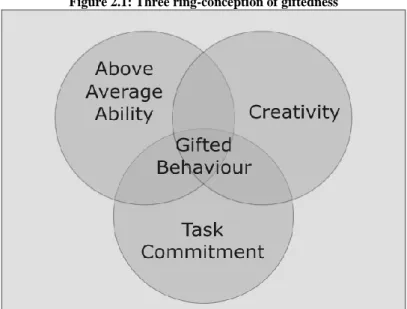
11 | P a g e According to Renzulli‟s three-ring conception of giftedness (Figure 2.1), “giftedness consists
of an interaction among three basic clusters of human traits – these cluster being
above-average general abilities, high levels of creativity and high levels of task commitment”
(Renzulli, 2011, p. 185).
Figure 2.1: Three ring-conception of giftedness
Source: From “What Makes Giftedness? Re-examining a Definition” by J.S. Renzulli, 2011, Phi Delta Kappan, 60
First, [1] above average ability encompasses characteristics related to general intelligence that
can be applied across all domains as well as specific sub-domains. These abilities include
analytical and critical thinking skills and academic achievement (Renzulli, 2012). This can be
further defined as a capacity that “involves the ability to reason, solve problems, think
abstractly, comprehend complex ideas, think fast, learn quickly and learn from experience”
(Scager, Akkerman, Keesen, et al., 2012, p. 22). In line with this, additional characteristics are
the capacity to process information, spatial visualisation, memory and language proficiency
(Renzulli, 1984). Moreover, high-ability students appear to prefer complexity as well as
challenge and they are able to guide their own thinking (Freeman, 2010; Freyman, 2005;
Shore & Kanevsky, 1993; Wiegant, Boonstra, Peeters, & Scager, 2012). Second, [2] creativity
focuses on the originality of thinking and inventiveness of approaches to tasks (Renzulli,
1984). Creativity includes (intellectual) curiosity, active imagination, originality, ingenuity
and a willingness to challenge or even set aside convention, procedure and tradition
(Freyman, 2005; Renzulli, 1984, 2012). Creativity is the human trait that induces a cognitive
process leading to new solutions, inventions or syntheses (Scager, Akkerman, Keesen, et al.,
2012). In line with this, high-ability students seem to be more flexible in strategies, express
less need for structure and appreciate diversity due to a broad interest (Freeman, 2010).
Finally, [3] task commitment is the ability to engage fully in a subject or area for an extended
12 | P a g e High-ability students appear to demonstrate more need for achievement, more
competitiveness, (Hébert & McBee, 2007) and especially intrinsic motivation (Wolfensberger
& Offringa, 2012). Motivation can be divided into intrinsic and extrinsic motivation; whereas
intrinsic motivation refers to engaging in an activity for the individual‟s own sake, extrinsic
motivation is driven by external rewards such as academic achievement or a better outlook in
the post-education career (Renzulli, 1984). Additionally, task commitment is related to the
desire to learn and the drive to succeed and excel (Scager, Akkerman, Keesen, et al., 2012). A
high-ability student is typically ambitious and willing as well as eager to devote time and
effort to a certain activity in order to master it (Freyman, 2005).
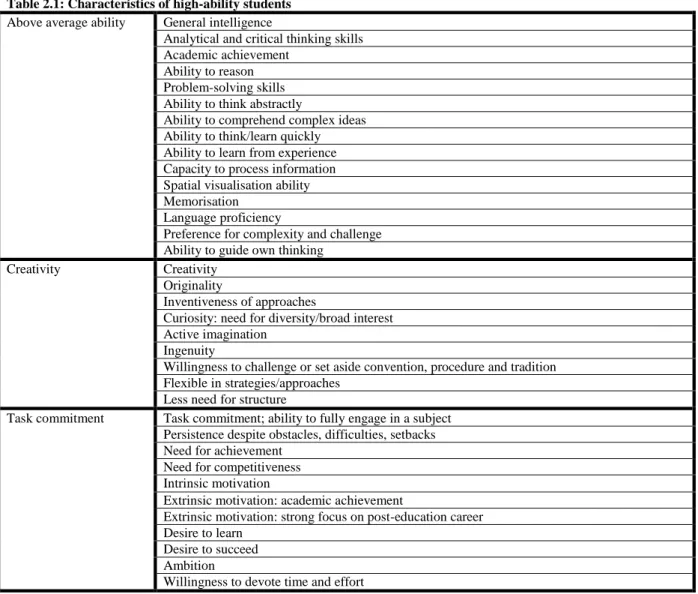
Table 2.1: Characteristics of high-ability students
Above average ability General intelligence
Analytical and critical thinking skills Academic achievement
Ability to reason Problem-solving skills Ability to think abstractly
Ability to comprehend complex ideas Ability to think/learn quickly Ability to learn from experience Capacity to process information Spatial visualisation ability Memorisation
Language proficiency
Preference for complexity and challenge Ability to guide own thinking
Creativity Creativity Originality
Inventiveness of approaches
Curiosity: need for diversity/broad interest Active imagination
Ingenuity
Willingness to challenge or set aside convention, procedure and tradition Flexible in strategies/approaches
Less need for structure
Task commitment Task commitment; ability to fully engage in a subject Persistence despite obstacles, difficulties, setbacks Need for achievement
Need for competitiveness Intrinsic motivation
Extrinsic motivation: academic achievement
Extrinsic motivation: strong focus on post-education career Desire to learn
Desire to succeed Ambition
Willingness to devote time and effort
Note: Adapted from Renzulli (2011); Renzulli (2012); Scager, Akkerman, Keesen, et al. (2012); Renzulli (1984); Freeman (2010); Freyman (2005); Shore & Kanevsky (1993); Wiegant, Boonstra, Peeters, et al. (2012); Hébert & McBee (2007); Wolfensberger & Offringa (2012).
According to the literature, a combination of the mentioned characteristics is necessary, since
the aptitude of a student to achieve excellence is determined by both attitude and
accomplishment. (Freyman, 2005; Renzulli, 2011). While above-average ability tends to
13 | P a g e time (Renzulli, 2012). Therefore, high-ability students are heterogeneous considering the
extent to which they possess above-average ability, creativity and task commitment.
Based on the literature discussed above, Table 2.1 outlines a set of characteristics of
high-ability students. Overlap between the clusters and between the rather abstract characteristics is
unavoidable due to the adjacency of the characteristics and relationships between them.
2.2 Educational demands of high-ability students
Due to their differences compared to other students, high-ability students appear to “require a
different, more challenging curriculum and other learning opportunities to satisfy [their] drive
to learn, know and do” (Achterberg, 2005, p. 81). First, an educational context that appeals to
these students‟ wish for freedom seems suitable. High-ability students appear to value firstly
the freedom to discover and explore their own fields of interest and secondly, the freedom to
take initiative and responsibility (Gorp, Wolfensberger, & Jong, 2012; Wolfensberger &
Offringa, 2012). Instead of teacher-centred learning, students seem to favour a student-centred
approach, where the teacher‟s role is to coach and facilitate instead of supervising the entire
learning process (Scager, Akkerman, Pilot, et al., 2012; Wiegant et al., 2012). High-ability
students express less need for assistance and feedback in their academic performance than
regular students (Gerrity et al., 1993). This also includes a limited structure with a great deal
of freedom and little guidelines and obligatory requirements (Gorp et al., 2012;
Wolfensberger & Offringa, 2012). Even so, high-ability students indicate to prefer some
degree of guidance instead of complete autonomy, so that there is a balance between structure
and freedom (Coppoolse et al., 2013). Second, a focus on competence and high expectations
is preferred (Scager, Akkerman, Pilot, et al., 2012; Wolfensberger & Offringa, 2012).
High-ability students seem to favour education that is more demanding in both content and
quantity. In terms of more demanding in content, education should be difficult, complex and
challenging (Wiegant et al., 2012). More demanding in quantity indicates that education
should require students to devote a substantial amount of time and effort in order to succeed.
Furthermore, high-ability students prefer a focus on personal development in skills,
competence and knowledge as well as a focus on academic thinking instead of only practical
applications of knowledge (Coppoolse et al., 2013). Third, high ability-students appear to
thrive in a small-scale learning environment with like-minded peers (Eijl, Wolfensberger,
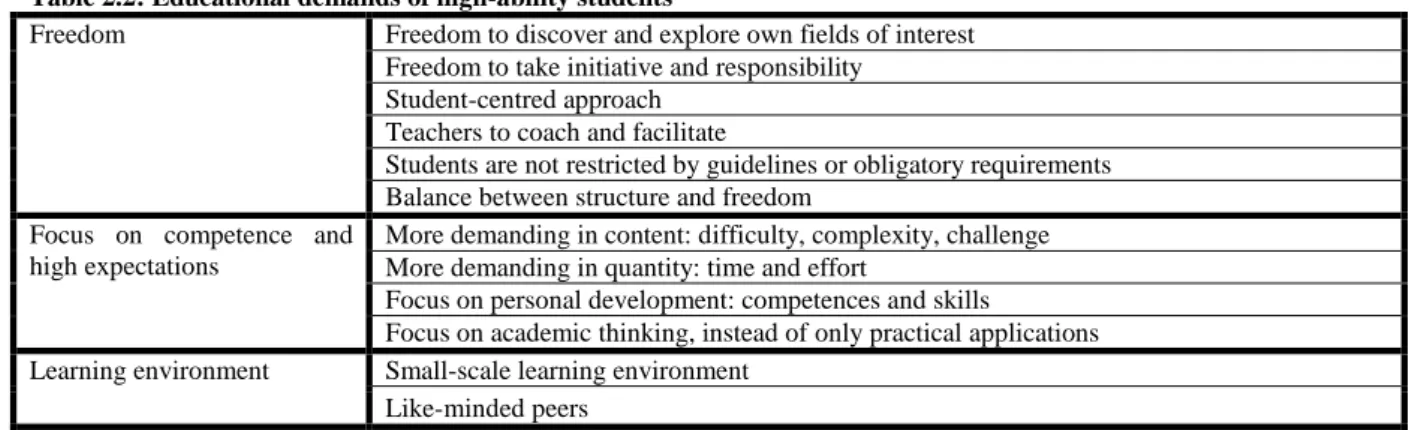
14 | P a g e Table 2.2 summarises the educational demands of high-ability students as described above.
Table 2.2: Educational demands of high-ability students
Freedom Freedom to discover and explore own fields of interest Freedom to take initiative and responsibility
Student-centred approach Teachers to coach and facilitate
Students are not restricted by guidelines or obligatory requirements Balance between structure and freedom
Focus on competence and high expectations
More demanding in content: difficulty, complexity, challenge More demanding in quantity: time and effort
Focus on personal development: competences and skills
Focus on academic thinking, instead of only practical applications Learning environment Small-scale learning environment
Like-minded peers
Note: Adapted from Achterberg (2005); Van Gorp, Wolfensberger & De Jong (2012); Wolfensberger & Offringa (2012); Scager, Akkerman, Pilot, et al. (2012); Wiegant, Boonstra, Peeters, et al. (2012); Gerrity, Lawrence & Sedlaeck (1993); Coppoolse, Van Eijl & Pilot (2013); Van Eijl, Wolfensberger, Schreve-Brinkman, et al. (2007).
2.3 Excellence programmes in higher education
2.3.1 What are excellence programmes?
To fully realise the potential of high-ability students, these students require different
instructional conditions and educational methods, which are often not provided in the regular
curriculum (Coppoolse et al., 2013; Freeman, 2010; Hébert & McBee, 2007; Renzulli, 2011;
Shore & Kanevsky, 1993; Wiegant et al., 2012). Accordingly, universities have developed
dedicated excellence programmes for their top-tier students (Scager, Akkerman, Pilot, et al.,
2012). Excellence programmes (i.e. honours programmes and honours colleges) can be
defined as “selective study programmes linked to higher education institutions. They are
designed for motivated and gifted students who want to do more than the regular programme
offers. These programmes have clear admission criteria and offer educational opportunities
that are more [difficult and] challenging and demanding [in terms of time and effort] than
regular programmes” (Wolfensberger, 2015, p. 12). Active participation, interaction and
community formation are expected of the selected students. This communication with
like-minded peers is enhanced by the organisation of the excellence programmes via small-scale
educational methods. In excellence programmes, the number of participating students is
typically small due to their exclusiveness and consequently, student-student as well as
student-teacher relationships are close and personal (Wolfensberger et al., 2012). Based on
this definition, Table 2.3 classifies the characteristics of excellence programmes in the
15 | P a g e
Table 2.3: Characteristics of excellence programmes
Student composition Target group: high-ability students, i.e. students that perform well in their regular study programme
Selection/exclusiveness: admission criteria
Active participation, peer interaction and community formation Programme organisation Small-scale educational methods
Programme content Differentiation from regular programme: more challenging and more demanding Note: Adapted from Coppoolse, Van Eijl & Pilot (2013); Freeman (2010); Hébert & McBee (2007); Renzulli (2011); Shore & Kanevsky (1993); Wiegant, Boonstra, Peeters, et al. (2012); Scager, Akkerman, Pilot, et al. (2012); Wolfensberger (2015); Wolfensberger, Van Eijl & Pilot (2012).
2.3.2 Types of excellence programmes
Despite a common set of features, excellence programmes are essentially highly diverse
(Wolfensberger, 2015). A wide variety of approaches to providing education aimed at
high-ability students exists in terms of the student composition, programme organisation,
programme content and incentives for participation. First, concerning the student
composition, two differences between excellence programmes become apparent. The [1]
selection and admission procedures vary per programme. Whereas some programmes select
students based on motivation, others merely look at the academic achievement by means of
Grade Point Average (GPA). Furthermore, whereas most excellence programmes focus on the
[2] bachelor phase, programmes also exist for the master phase.
In terms of programme organisation, excellence programmes make use of [3] different
educational methods such as lectures, seminars, assignments, group work, individual work,
etc. Excellence programmes also differ with regard to [4] duration, program size and
associated credits (ECTS). Moreover, [5] the degree to which an excellence programme is
embedded into the university is not identical. Some excellence programmes are organised by
a separate faculty or department and some are taught at a location apart from the rest of the
university. Additionally, some excellence programmes are organised [6] on top of the regular
curriculum i.e. extracurricular, while others are intracurricular, either partly replacing courses
from the regular curriculum or serving as a total replacement of all regular courses (e.g.
liberal arts and sciences colleges).
With regard to the programme content, a typology of excellence programmes can be made:
[7] disciplinary, interdisciplinary and multidisciplinary (Wolfensberger et al., 2012).
Disciplinary programmes aim at specialisation in a sub-discipline of the regular curriculum
and thus deepening understanding and knowledge of subjects, methodologies and research
within a discipline. Other excellence programmes are interdisciplinary and focus on
16 | P a g e of fields and disciplines. Multidisciplinary programmes (e.g. liberal arts and science colleges)
offer a full honours bachelor degree which aim at both deepening and broadening the
knowledge of students (Wolfensberger et al., 2012). Furthermore, other differences in terms
of programme content between excellence programmes exist. [8] The content and subjects
that are dealt with are unique for each programme. This also includes the extent of freedom to
which the student is bounded by an established programme or whether he or she is able to
pursue an individual field of interest. Also [9] the intended learning outcomes and
competences vary per excellence programme, such as specific academic skills. Besides, [10]
the feedback and assessment processes differ between excellence programmes.
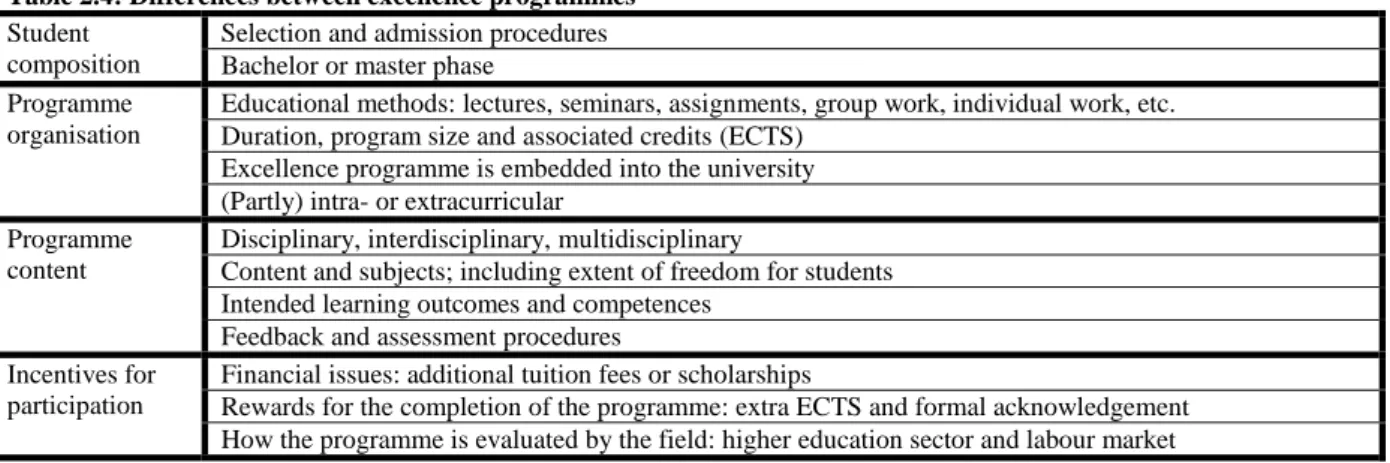
Table 2.4: Differences between excellence programmes
Student composition
Selection and admission procedures Bachelor or master phase
Programme organisation
Educational methods: lectures, seminars, assignments, group work, individual work, etc. Duration, program size and associated credits (ECTS)
Excellence programme is embedded into the university (Partly) intra- or extracurricular
Programme content
Disciplinary, interdisciplinary, multidisciplinary
Content and subjects; including extent of freedom for students Intended learning outcomes and competences
Feedback and assessment procedures Incentives for
participation
Financial issues: additional tuition fees or scholarships
Rewards for the completion of the programme: extra ECTS and formal acknowledgement How the programme is evaluated by the field: higher education sector and labour market
Note: Adapted from Wolfensberger (2015); Wolfensberger, Van Eijl & Pilot (2012); Coppoolse, Van Eijl & Pilot (2013); Van Eijl, Wolfensberger, Schreve-Brinkman, et al. (2007); ITS/ROA/CHEPS (2013).
Concerning the incentives for students to participate, there are [11] financial issues associated
with participation in some excellence programme. These can be classified as potential
deterrents such as an additional tuition fee or as potential incentives via the provision of
scholarships. Further differences between excellence programmes can be observed concerning
[12] rewards for the completion of the programme. Some programmes provide participants
with extra ECTS or with a formal acknowledgement for the completion of the programme,
such as a certificate or testimony on the diploma. [13] How the programme is perceived in the
field is also important for high-ability students in choosing an excellence programme.
Whereas some excellence programmes allow participants to pursue a more advanced
education career after completion (e.g. a selective master at the world‟s best universities),
participation in other excellence programmes is expected to enable them to acquire a better
position in the labour market (Coppoolse et al., 2013; Eijl et al., 2007; Offerte
ITS/ROA/CHEPS, 2013; Wolfensberger, 2015; Wolfensberger et al., 2012). Table 2.4
provides an overview of the various elements on which excellence programmes differ
17 | P a g e
2.3.3 Excellence programmes in Europe
The Netherlands can be considered a frontrunner in the field of excellence programmes within
the EU, with the majority of its higher education institutions offering extra educational
opportunities for high-ability students. Out of 17 Dutch universities, 14 offer an excellence
programme of some sort and many offer more than one programme (Wolfensberger, 2015).
The typology described above is from a Dutch perspective and mainly based on Dutch
literature, because there is a lack of information in the current literature about excellence
programmes for high-ability students in other European higher education institutions. Some
excellence programmes in the EU countries do exist, but these are marginal and limited in
scope (Wolfensberger, 2015). Some other European higher education systems are more
selective and more hierarchical than in the Netherlands, therefore implicitly incorporating
dedicated education for high-ability students.
An overview of excellence policies in France, Germany, Spain and the United Kingdom (UK)
confirms that these countries principally focus on excellence in research and that the
provision of dedicated education for high-ability students in other European member states is
still in its infancy (Pruvot & Estermann, 2014; Wolfensberger, 2015). Parallel to French
universities, the elite Grandes Écoles provide high quality education, but selection does not
take place on the basis of student merit ("French Grandes Ecoles and the Diplôme
d'Ingénieur," 2015). In France, the Initiative d‟Excellence (IDEX) makes available funds for
the creation of internationally competitive centres of excellence, i.e. higher education and
research institutions that belong to the top universities of the world (Marshall, 2011).
Nevertheless, resources are not devoted to excellence in education, i.e. dedicated education
for high-ability students. Instead, research, training, socio-economic partnerships and campus
life receive funds to develop centres of excellence (L'Etat de France, 2010). Also in Germany,
the Excellence Initiative aims to strengthen excellence in research, while other policies aim
primarily at innovation, competitiveness and attractiveness of its higher education. Policies on
excellence at the national level are only present in relation to research, not education designed
for high-ability students (Ostermeier, 2015). In Spain, the aim for international prominence
and top-rankings among the best universities has led to the launch of the International
Campus of Excellence (CEI) programme. Whereas resources are devoted to the quality of
teaching as well as research and advances in innovation, the design of excellence programmes
is not one of the goals of the CEI (Delgado, 2010). Furthermore, universities in the UK do not
18 | P a g e concept „honours‟ is embedded in its system as a classification rank instead of a national
excellence policy (Offerte ITS/ROA/CHEPS, 2013).
2.4 EU attention to excellence and soft-law cooperation
As described above, initiatives concerning excellence in higher education within the EU are
incidental and the development of excellence programmes has only just started in most
member states (Wolfensberger, 2015). Even though excellence programmes are still limited in
scope, the actual implementation is beginning and high-ability students in higher education
increasingly receive attention (Rostan & Vaira, 2011). The “modernisation agenda for
universities in every EU member state [contains the topic of] promoting system differentiation
in higher education, including the trend to concentrate talents and resources in one or more
institutions (elite universities) or in centres of excellence” (Maassen, 2008, p. 100). The
European Higher Education Area (EHEA) specifically articulates the ambition of recognition
and promotion of excellence in higher education across Europe (Brusoni et al., 2014;
McGrath, 2000; Schleicher, 2006). Furthermore, the EU‟s „Education and Training 2020‟
framework (ET 2020) devotes explicit attention to the issue of excellence (Drachenberg,
2011; Robertson, 2010). According to the second objective of the ET 2020, “the major
challenge is to ensure the acquisition of key competences by everyone, while developing the
excellence and attractiveness at all levels of education and training that will allow Europe to
retain a strong global role” (European Council, 2009).
Recommendations concerning the design of excellence programmes based on this thesis to
other member states can be disseminated via the EU. The Treaty on the Functioning of the
European Union (TFEU) provides a framework for European cooperation in the field of
Education and Training (E&T). According to Article 165 TFEU: “The [EU] shall contribute
to the development of quality education by encouraging cooperation between Member States
and, if necessary, by supporting and supplementing their action” (TFEU, 2008, p. 100). The
EU will aim its action inter alia at “promoting cooperation between educational
establishments” and at “developing exchanges of information and experience on issues common to the education systems of the Member States” (TFEU, 2008, p. 100). Moreover,
the Open Method of Coordination (OMC) is a European-level governance tool that aims at
soft policy cooperation. In the design of excellence programmes, the EU member states can
benefit from the Dutch experience in this field by means of the mechanisms provided within
19 | P a g e educational systems and to specific national political priorities. While not imposing on the
member states with legally binding regulatory frameworks, the voluntary arrangements have
proven to play a significant role in the area of E&T and these function as a very powerful
governance tool (Drachenberg, 2011). Three key elements define the cooperation between
member states within the OMC. First, the member states establish common objectives and
benchmarks on which they work according to an agreed programme and timetable. Second,
best practices and mutual learning are ensured by clusters and peer learning activities, such as
working groups in which good practices are exchanged between experts on a specific topic.
Third, a continued checking and monitoring on the implementation occurs by means of
reports, benchmarks and indicators (Drachenberg, 2011). Concluding, the OMC is a
20 | P a g e
3.
Methodology
The methodology for this study is outlined in this chapter. First, the research design and the
data collection method are discussed. Afterwards, the case selection is considered, the
relevant variables are operationalised into questionnaire items and the data analysis methods
are presented. Finally, the strengths and limitations of the study are debated.
3.1 Research design
The research question is answered by means of a cross-sectional research design in which
data is collected at one moment in time. The units are students participating in excellence
programmes of Dutch universities, who are not subject to a treatment or manipulation,
because a cross-sectional research design relies on existing differences between the units
(Stone-Romero, 2002; Vaus, 2001).
3.2 Data collection method
In this thesis, data is collected for this study in particular by means of a questionnaire. A
direct measurement is obtained and the type of data is therefore obtrusive, because
respondents are aware of the fact that they are studied (Babbie, 2013). A study of existing
datasets relating to excellence programmes showed that appropriate data on the subject of this
thesis was unavailable.
The questionnaire is administered to bachelor students participating in excellence
programmes, i.e. honours programmes at Dutch universities. All excellence programmes
select students on the basis of certain admission criteria, such as GPA and motivation, but
whether a respondent is a high-ability student according to the characteristics described in the
theoretical framework is not ensured. It is not assumed that all respondents are high-ability
students. First, to identify the preferred aspects of an excellence programme according to
high-ability students, respondents ascribing characteristics of high-ability to themselves are
compared to respondents indicating to be similar to regular students. Second, it is investigated
whether respondents can be characterised with the clusters „above-average ability‟,
„creativity‟ and „task commitment‟. Respondents scoring high on one of these clusters are
compared to respondents indicating to be similar to regular students regarding that cluster. For
the purpose of this study, to identify the match between the type of high-ability student and
the preferred type of excellence programme, the focus is on the extent to which the
21 | P a g e „creativity‟ or „task commitment. Therefore, it is not problematic if students do not score high
on every characteristic. Students have been approached via the programme coordinators of
honours programmes, honours communities and honours associations.
3.3 Case selection
The Netherlands has been selected for this study, because of its leading position within the
EU (see section 2.3.3). The Dutch national government has made funds available to
encourage the creation of excellence programmes via its Sirius programme (Sirius
Programma, n.d.). Only the research universities in the Netherlands are included in this study,
while the universities of applied sciences are excluded. The research universities are more
comparable on an EU level, since the professional education offered by Dutch universities of
applied sciences does not have a comparable equivalent in all EU member countries. Another
reason for the exclusion of universities of applied science is the extensive variation between
research universities and universities of applied sciences in type of students and in excellence
programmes. Furthermore, liberal arts and sciences colleges, i.e. university colleges that
provide a full honours bachelor programme, also fall outside the scope of this study. The
reason for this is two-fold. First, students at university colleges will not be able to compare
themselves to regular students that are not eligible for excellence education, since the
university colleges are organised in structures that stand separate from the rest of the
university and their students do not have lectures together with students that are not enrolled
in excellence programmes. Second, in light of the formulation of recommendations in an EU
context, it is expected that excellence programmes in other member states are offered by
universities instead of stand-alone liberal arts and sciences colleges. Therefore, the responses
of university college students may not provide a sound basis for recommendations. Moreover,
this study only includes excellence programmes designed for the bachelor phase, since these
are the most institutionalised and little information is available on the modest amount of
programmes in the master phase (Wolfensberger, 2015).
The Netherlands has been selected as a case with the aim to explicate elements of a broader
class of similar units (Gerring, 2006). In this study, the broader class of units are all European
universities with the ambition to provide dedicated education for high-ability students.
Nonetheless, representativeness is not ensured for all European universities due to the large
variety of education systems. However, the purpose of this study is not to generalise to all
22 | P a g e
3.4 Operationalisation and questionnaire
The characteristics of high-ability students and the elements of excellence programmes as
identified in the theoretical framework are operationalised into corresponding questionnaire
items in order to examine the match between these variables.
3.4.1 Questionnaire
The design of the questionnaire is as follows: First, background questions are asked regarding
gender, age, university, major study programme, year of study and name of the honours
programme. Next, the focus is on the characteristics of high-ability students as identified in
the theoretical framework. Finally, respondents are asked about the characteristics of their
ideal excellence programme. At the end, they are given the opportunity to leave their email
address behind, so that results can be sent to them after the finalisation of the study. The
questionnaire items are formulated in English, because many excellence programmes are
taught in this language and the majority of higher education students have sufficient English
language skills to understand the questionnaire. The questionnaire took a maximum of 10
minutes to complete. All answers are treated anonymously and are kept confidential. The
questionnaire as administered to the students can be found in Appendix 1.
3.4.2 High-ability students
Although constituting a heterogeneous group, high-ability students can be described with
various characteristics. Respondents are asked to indicate to what extent they ascribe a certain
characteristic to themselves compared to regular students, i.e. students in their study
programme that do not qualify for participation in excellence/honours education e.g. due to
their grades and/or motivation. Therefore, students who meet the selection criteria, but have
decided not to participate in excellence programmes are excluded from the comparison. This
questionnaire item is designed by means of a scale, measuring the extent to which a specific
characteristic is applicable to the respondent (Babbie, 2013). The characteristics are implicitly
categorised in three clusters, in line with Renzulli‟s three-ring conception of giftedness. For
each cluster, the corresponding characteristics identified in the theoretical framework (Table
2.1) are operationalised into questionnaire statements. Due to overlap between characteristics
and their abstractness, a clear-cut operationalisation is impossible. As a result, overlapping
characteristics are combined into a single statement and a small amount of characteristics are
not mentioned in a statement. The matrix question format is used (Babbie, 2013) and each
statement is preceded with „Compared to regular students, …‟. A 7-point Likert scale is
23 | P a g e
3.4.2.1 Above-average ability
The characteristics of high-ability students concerning the first cluster, above-average ability
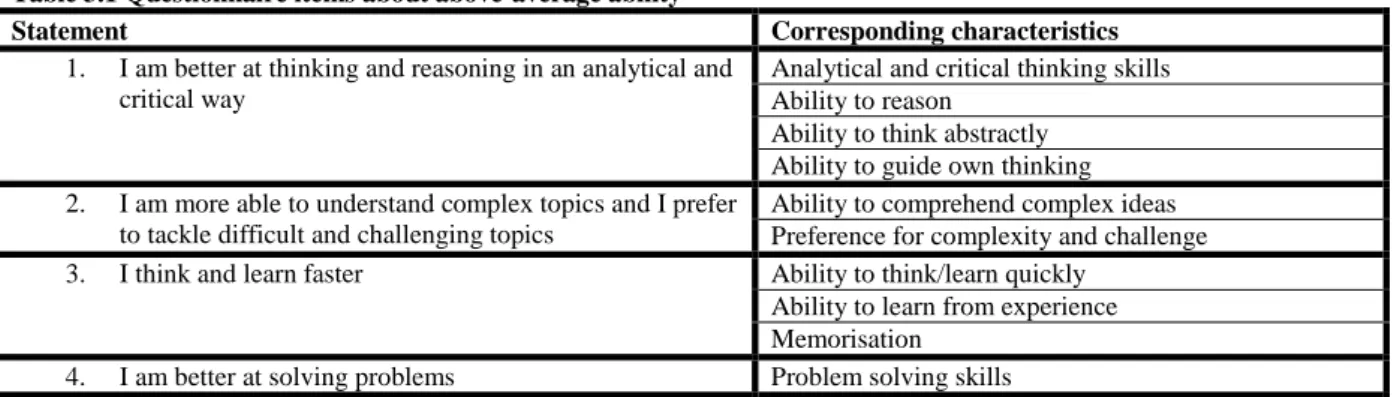
(Table 2.1), are operationalised into four questionnaire items. Table 3.1 presents the
operationalisation by showing the questionnaire items in the left column and the
corresponding above-average ability characteristics in the right column.
Table 3.1 Questionnaire items about above-average ability
Statement Corresponding characteristics
1. I am better at thinking and reasoning in an analytical and critical way
Analytical and critical thinking skills Ability to reason
Ability to think abstractly Ability to guide own thinking 2. I am more able to understand complex topics and I prefer
to tackle difficult and challenging topics
Ability to comprehend complex ideas Preference for complexity and challenge 3. I think and learn faster Ability to think/learn quickly
Ability to learn from experience Memorisation
4. I am better at solving problems Problem solving skills
Note: Adapted from Table 2.1 and based on the author‟s own considerations about the operationalisation.
When looking at Table 2.1, not all characteristics are mentioned in the questionnaire. „General
intelligence‟ and „capacity to process information‟ have been excluded, since these are too
broad as well as too abstract and both are implicitly included in the other elements.
Furthermore, „academic achievement‟ is not asked about as such, because respondents have
demonstrated academic achievement by meeting the selection criteria for an excellence
programme. Moreover, „spatial visualisation ability‟ and „language proficiency‟ are also
excluded from the statements, since these are specific competences that high-ability students
often display but are not high-ability or excellent per se.
3.4.2.2 Creativity
For the cluster creativity, three questionnaire items are formulated. Table 3.2 shows which
statement includes which characteristics with regard to creativity (Table 2.1).
Table 3.2 Questionnaire items about creativity
Statement Corresponding characteristics
5. My ideas and solutions are more original, creative and inventive
Creativity Originality
Inventiveness of approaches Active imagination Ingenuity
Flexible in strategies/approaches 6. I am more prepared to put aside structured
methods and standard procedures in order to follow a flexible approach
Willingness to challenge or set aside convention, procedure and tradition
Less need for structure
Flexible in strategies/approaches 7. I prefer diversity in subjects and my curiosity is
aroused by a broader range of topic
Curiosity: need for diversity/broad interest
24 | P a g e
3.4.2.3 Task commitment
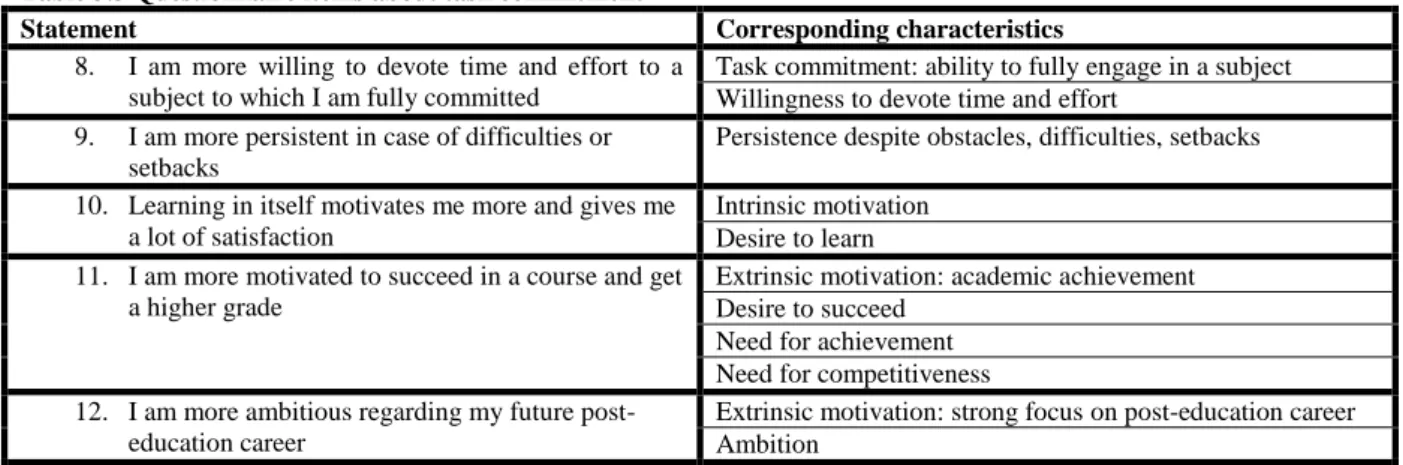
Regarding the operationalisation of the characteristics related to task commitment, Table 3.3
shows the questionnaire statements and the corresponding characteristics (Table 2.1)
Table 3.3 Questionnaire items about task commitment
Statement Corresponding characteristics
8. I am more willing to devote time and effort to a subject to which I am fully committed
Task commitment: ability to fully engage in a subject Willingness to devote time and effort
9. I am more persistent in case of difficulties or setbacks
Persistence despite obstacles, difficulties, setbacks
10. Learning in itself motivates me more and gives me a lot of satisfaction
Intrinsic motivation Desire to learn 11. I am more motivated to succeed in a course and get
a higher grade
Extrinsic motivation: academic achievement Desire to succeed
Need for achievement Need for competitiveness 12. I am more ambitious regarding my future
post-education career
Extrinsic motivation: strong focus on post-education career Ambition
Note: Adapted from Table 2.1 and based on the author‟s own considerations about the operationalisation.
3.4.2.4 Open question
At the end of this part, respondents are posed an open question: „According to you, what is a
typical characteristic of a high-ability student that was not included in the statements above?‟
This question has been included to account for characteristics that were left out of the
questionnaire.
3.4.3 Excellence programmes
The subsequent questions focus on what respondents find ideal aspects of an excellence
programme. Respondents are asked „How should an ideal excellence programme look like if
it were up to you?‟ Respondents are requested to address aspects under the following four
headings: student composition, programme organisation, programme contents and incentives
for participation. For each heading, the aspects of excellence programmes as discussed in the
theoretical framework (Table 2.3, Table 2.4) are operationalised into questionnaire
statements. Overlapping aspects are combined into a single statement, some aspects are split
in two statements and some aspects are excluded. Furthermore, the educational demands of
high-ability students (Table 2.2) are integrated in the relevant statements. Also for these
questionnaire items, the matrix format is used (Babbie, 2013).Each group of statements starts
with „My ideal-type of excellence programme, …‟. A 7-point Likert scale is provided ranging
from 1 strongly disagree, 4 neutral, 7 strongly agree.
3.4.3.1 Student composition
At first, respondents are asked to indicate aspects of their ideal excellence programme in
terms of student composition. The left column of Table 3.4 shows the questionnaire items, the
25 | P a g e column indicates whether the aspect is an educational demand (Table 2.2), a characteristic of
excellence programmes (Table 2.3) or a difference between them (Table 2.4).
Table 3.4 Questionnaire items about student composition
Statement Table Aspect of excellence programmes
1. includes only well-performing students (that received high grades in our study programme)
2.3 Target group: high-ability students, i.e. students that perform well in their regular study programme 2. is highly selective and exclusive, i.e. only the
best x% students are invited
2.2 Like-minded peers
2.3 Selection/exclusiveness: admission criteria 3. stimulates the creation of a close community
through active participation and student-student interaction
2.3 Active participation, peer interaction and community formation
Note: Adapted from Table 2.2, Table 2.3 and based on the author‟s own considerations about the operationalisation.
Differences between excellence programmes regarding student composition are not included
in the questionnaire items. The type of selection and admission procedures is not considered
relevant as long as there is a mechanism in place to ensure that only high-ability students
participate. Also, the difference between programmes for the bachelor and for the master
phase is not formulated into a statement, since the focus of this study is on the bachelor phase
as justified in the section case selection.
3.4.3.2 Programme organisation
Afterwards, questionnaire statements about the preferred excellence programme concern the
programme organisation. Table 3.5 shows how these aspects are operationalised into
corresponding questionnaire statements.
Table 3.5 Questionnaire items about programme organisation
Statement Table Aspect of excellence programmes
1. provides a small-scale learning environment i.e. the amount of students is limited and the student-student and student-student-teacher relationships are close and personal
2.2 Small-scale learning environment
2.3 Small-scale educational methods
2. contains great deal of group work as opposed to individual work
3. makes use of lectures and seminars as the primary educational method as opposed to assignments
2.4 Educational methods: lectures, seminars, assignments, group work, individual work, etc.
4. is offered during the full bachelor phase, instead of in a limited period (e.g. only one semester)
2.4 Duration, program size and associated credits (ECTS)
5. is organised apart from the regular study programmes at the university (e.g. separate faculty, other location)
2.4 Excellence programme is embedded into the university
6. is followed on top of the regular curriculum (i.e. extracurricular), not as a (partial) replacement of regular components of my study programme (i.e. intracurricular)
2.4 (Partly) intra- or extracurricular
Note: Adapted from Table 2.2, Table 2.3, Table 2.4 and based on the author‟s own considerations about the operationalisation.
The fourth statement operationalises the „duration, program size and associated credits
(ECTS)‟. For the purpose of this study, it is not relevant to identify the precise duration, exact
program size or amount of associated credits (ECTS), because this is too detailed and too
26 | P a g e
3.4.3.3 Programme content
Subsequently, the respondents are asked to indicate their ideal excellence programme in terms
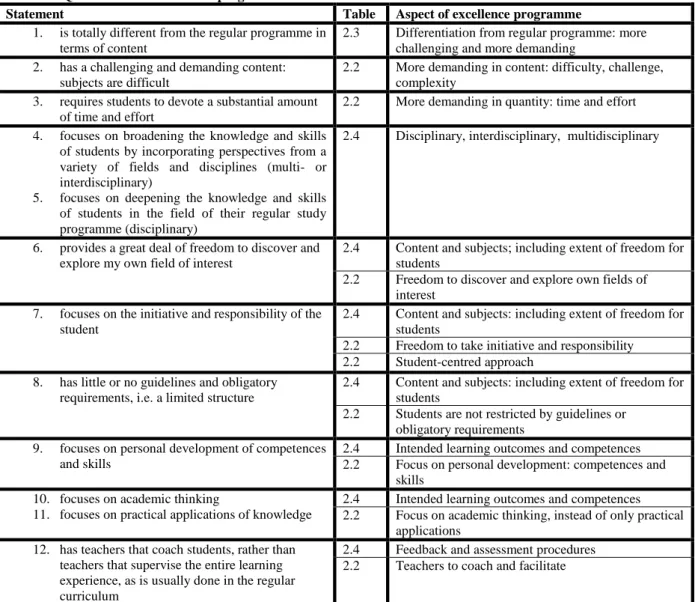
of the programme content. Table 3.6 shows which questionnaire items include which aspects
of excellence programmes and whether these have been identified as an educational demand
(Table 2.2), characteristic of excellence programmes (Table 2.3) or difference (Table 2.4).
Table 3.6 Questionnaire items about programme content
Statement Table Aspect of excellence programme
1. is totally different from the regular programme in terms of content
2.3 Differentiation from regular programme: more challenging and more demanding
2. has a challenging and demanding content: subjects are difficult
2.2 More demanding in content: difficulty, challenge, complexity
3. requires students to devote a substantial amount of time and effort
2.2 More demanding in quantity: time and effort
4. focuses on broadening the knowledge and skills of students by incorporating perspectives from a variety of fields and disciplines (multi- or interdisciplinary)
5. focuses on deepening the knowledge and skills of students in the field of their regular study programme (disciplinary)
2.4 Disciplinary, interdisciplinary, multidisciplinary
6. provides a great deal of freedom to discover and explore my own field of interest
2.4 Content and subjects; including extent of freedom for students
2.2 Freedom to discover and explore own fields of interest
7. focuses on the initiative and responsibility of the student
2.4 Content and subjects: including extent of freedom for students
2.2 Freedom to take initiative and responsibility 2.2 Student-centred approach
8. has little or no guidelines and obligatory requirements, i.e. a limited structure
2.4 Content and subjects: including extent of freedom for students
2.2 Students are not restricted by guidelines or obligatory requirements
9. focuses on personal development of competences and skills
2.4 Intended learning outcomes and competences 2.2 Focus on personal development: competences and
skills 10. focuses on academic thinking
11. focuses on practical applications of knowledge
2.4 Intended learning outcomes and competences 2.2 Focus on academic thinking, instead of only practical
applications 12. has teachers that coach students, rather than
teachers that supervise the entire learning experience, as is usually done in the regular curriculum
2.4 Feedback and assessment procedures 2.2 Teachers to coach and facilitate
Note: Adapted from Table 2.2, Table 2.3, Table 2.4 and based on the author‟s own considerations about the operationalisation.
For the sixth till the twelfth statement, the educational demands of high-ability students are
integrated with the differences between excellence programmes. Because there is too much
variation and because these are too specific for the purpose of this study, the questionnaire
statements do not address these detailed differences. Moreover, even though high-ability
students indicate to value a „balance between structure and freedom‟, this is not included in a
questionnaire item. Both elements are already covered in separate statements to determine the
extent of freedom or structure. Also, the answer to the question if there must be a balance
27 | P a g e
3.4.3.4 Incentives for participation
The final heading in the identification of an ideal excellence programme is the incentives for
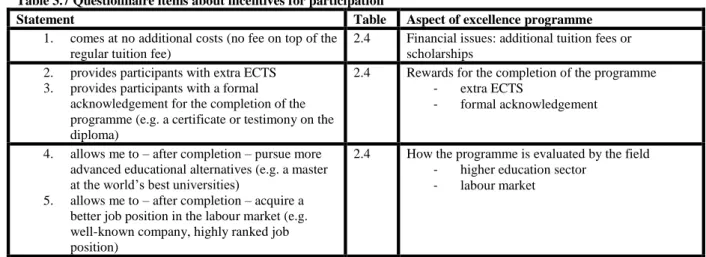
participation. The operationalisation of these aspects into statements is presented in Table 3.7.
Table 3.7 Questionnaire items about incentives for participation
Statement Table Aspect of excellence programme
1. comes at no additional costs (no fee on top of the regular tuition fee)
2.4 Financial issues: additional tuition fees or scholarships
2. provides participants with extra ECTS 3. provides participants with a formal
acknowledgement for the completion of the programme (e.g. a certificate or testimony on the diploma)
2.4 Rewards for the completion of the programme
- extra ECTS
- formal acknowledgement
4. allows me to – after completion – pursue more advanced educational alternatives (e.g. a master at the world‟s best universities)
5. allows me to – after completion – acquire a better job position in the labour market (e.g. well-known company, highly ranked job position)
2.4 How the programme is evaluated by the field
- higher education sector
- labour market
Note: Adapted from Table 2.2, Table 2.3, Table 2.4 and based on the author‟s own considerations about the operationalisation.
The first statement is formulated to inquire whether students are prepared to devote additional
financial resources for participation in an excellence programme. The second element of the
financial issues, scholarships, is not included in the questionnaire. If no extra costs are
associated with participation in an excellence programme, as is the case with all excellence
programmes at Dutch universities, asking about a scholarship makes no sense.
3.5 Data analysis
The data analysis is divided into three stages. First, descriptive statistics provide information
about which characteristics the respondents ascribe to themselves in comparison to regular
students and what they find their most important characteristics. Also, the open question is
examined to check whether a crucial characteristic has been left out. A factor analysis
technique, principal components analysis1, is used to determine whether the data corresponds
to the theoretically anticipated clusters „above-average ability‟, „creativity‟ and „task
commitment‟.2 Furthermore, to see whether it makes sense to include all inquired items in the
computation of the new variables identified by the principal components analysis, Cronbach‟s
1 Principal components analysis provides conclusions about which items/statements together form one
component/cluster (Dell, 2015; Laerd, 2013c).
2 The data is affirmed suitable for principal components analysis by the Kaiser-Meyer-Olkin Measure of
Sampling Adequacy and Bartlett‟s Test of Sphericity (Appendix 3.1) (IBM, n.d.).