
Application of the principles of mass customization : standardisation and modularization, for an infrastructural object: a viaduct
425
0
0
Full text
(2) ii.
(3) Application of the principles of mass customization: standardisation and modularization, for an infrastructural object: a viaduct. Master Thesis For the degree of Master of Science in Civil Engineering and Management at the University of Twente Conducted at BAM Infra, Gouda. Ancella Stout Delft, December 2016. iii.
(4) iv.
(5) COLOPHON Master thesis – Civil Engineering and Management Title:. Application of the principles of mass customization: standardisation and modularization, for an infrastructural object: a viaduct. Place and date colloquium Author Student number e-mail University Program. Enschede, 21 of December 2016 Ancella Stout S1613839 [email protected] University of Twente, Enschede Civil Engineering and Management. th. Graduation committee Main supervisor – University University of Twente, Enschede. Prof. dr. ir. J.I.M Halman Department Construction Management and engineering [email protected]. Second-supervisor- University University of Twente, Enschede. Dr. ir. E. Hofman Department Technology Management and Supply [email protected]. Supervisors – Company BAM Infra, Gouda Department: Multidisciplinary contracts. Ir. J.E. Dunnebacke Head of project control [email protected] Ir. B.J.A.G Simons Manager process control [email protected] Ing. G.A Waayer Engineer-building technology [email protected]. v.
(6) vi.
(7) SUMMARY Introduction Within the current highly competitive and complex market of the construction industry, it is essential to be able to deliver projects that meet the requirements of the client in an effective and efficient way. However, traditional design practices in the construction industry seem to be unable to cope with the increased demands. The traditional way of delivering projects is not sufficient anymore; a new way of working will have to be adopted. In the construction industry, the possible implementation of the principles of the mass customization industry is one of the recurring themes to improve the current practices. It has been argued in recent studies that the performance of the construction industry can be improved by adopting methodologies that are applied in mass customization industries to increase the industrialisation and standardisation of design and production processes. Companies within the construction industry are becoming increasingly aware of the potential that the implementation of the principles of mass customization, because of the potential advantages it can bring in time-efficiency and cost-efficiency. The expected benefits include greater flexibility in product design, efficiency in both product development and realisation, and effectiveness in both communication and market positioning. Even though the benefits of the principles of standardisation and modularization are promising, methods and practices that are successful in other industrial contexts cannot readily be transferred to the construction industry. The implementation of the principles of standardisation and modularization within the infrastructure construction industry are more complex compared to other industries, and it is questionable whether or not these are suitable for the construction industry. It has been emphasised that changes are needed to adapt the traditional project work processes and products to be able to apply these principles and create an optimum environment for the broader and more effective use of standardisation and modularization. This thesis has researched the feasibility of implementing the principles of standardisation and modularization in the infrastructural sector in the construction industry, focusing on the infrastructural object: a viaduct. It investigates if a viaduct is suitable for the application of the principles and aims to explore possibilities, opportunities, barriers and limitations for the implementation of the principles of standardisation and modularization in the construction industry. The associated problem definition to this subject is: "The company BAM Infra misses out on opportunities for the application of the principles of standardisation and modularization in the design and realisation phases of construction projects". In response to the problem defined a solution has been proposed: “Implementing the principles of mass customization, by application of the principles of standardisation and modularization". Various researchers have argued that the principles of standardisation and modularization can also be of value in the construction industry. The implementation of the principles can be beneficial for BAM Infra, as it thought they will: lower capital costs, improve schedule performance increase productivity, increase product quality, increase safety performance, reduce waste, as well as have better environmental performance, and communication benefits. This all comes down to the perceived main advantage of standardisation and modularization; the end product can vary in shape and have different functions while the design and production of components and modules within a product family can be shared. No design from “scratch” has to be made every time, designs can be pre-engineered and a constant process of optimisation can occur. From this point of view, it is valuable to research if the principles of standardisation and modularization that are successful in other industrial contexts can be transferred to the construction industry. The main research question is thus: "What are the opportunities/possibilities for BAM Infra to apply the principles of standardisation and modularization for viaducts?" To achieve the objectives and answer the research question, the following three sub-questions have been formulated: 1. 2. 3.. What is already known in the literature about the application of the principles of mass customization within the construction industry? Which components of a viaduct, can be identified that are suitable for standardisation and/or modularization? How can the principles of standardisation and modularization be implemented, within the current strategy of BAM Infra?. The research objectives have been achieved by evaluating answers to the sub-questions. The research objective of this research is formulated as follows: Increase the flexibility and effectiveness of the utilisation of resources of BAM Infra, to stay competitive in the dynamic market. The objective of this research is formulated as follows: Propose how BAM Infra can implement the principles of standardisation and modularization for a viaduct. From this objectives, four deliverables have been derived, and are included in this thesis. These deliverables are as follows: 1.. Analysis whether or not the principles of standardisation and modularization are suitable and can be beneficial for the application in the infrastructural sector of the construction industry. vii.
(8) 2.. 3. 4.. Development of a method for the identification whether or not the application of the principles of standardisation and modularization for objects in the civil infrastructure sector are suitable, and to identify which components are interesting to standardise or to modularize. Identification of viaduct components that are suitable for the application of the principles of standardisation and modularization (including general design and decomposition of a viaduct). Advice for BAM Infra on how they can increase the flexibility and effectiveness of the utilisation of resources, by the implementation of the principles of standardisation and modularization in current circumstances within the company.. Various steps have been taken to answer the formulated research questions. A literature review was conducted, to answer subquestion one. To answer sub-question two, the general design of a viaduct was analysed, and the approach of Vanessa Veenstra has been used as a guideline for the development of a method to identify which components of an infrastructural object are suitable for the standardisation and/or modularization. The method developed has been applied to a viaduct. In order to get a thorough understanding of the identified problem and the point of view of the proposed solution to implement the principles of standardisation and modularization, during all the phases of the research meetings took place and interviews were conducted with experts of BAM Infra. In addition, a survey was sent out, and interviews with other parties in the construction industry were held.. Literature review The literature review has addressed sub-question one. As discussed in the previous section: the introduction, it has been argued that the implementation mass customization does have potential for the construction industry, and has been emphasised that modularity can be essential. The basic idea of mass customization is to improve the flexibility of the end product while maintaining standardisation and economies of scale. One of the most important core elements is that flexibility is needed, to counter possible causes of reluctance to standardisation. The flexibility can be maintained within standardisation by the application of the principles of mass customization: combining standardisation and modularization. Projects within the infrastructural construction sector are engineered-to-order complex projects (CoPS) and are more one-off than mass-produced commodity goods. This makes it more complex to establish a product platform. The various characteristics of the construction industry hamper the implementation of the principles of standardisation and modularization. In addition, other barriers for the implementation have been identified, the main barriers considered are conservative industry culture, limited design freedom in current contract forms, strong focus on lowest bid price, norms and rules of governmental organisations, and lack of large-scale and repetition possibilities. However, the implementation of the principles is considered to be technically feasible. Removal of barriers is perceived to be essential for the implementation of the core elements of industrialised construction. However, out of the literature study it came that the main barriers perceived are caused by the client. This implies that to implement and benefit from industrialisation in the infrastructural sector, first, the client needs to adjust their approach. Also, the implementation of industrialisation requires cultural and attitudinal changes within the entire industry. It is essential that a mind-shift occurs. Identifying similarities among projects instead of merely their uniqueness is the first step towards increased industrialisation. The understanding, commitment, and cooperation by all parties are considered to be vital for successful implementation.. Identification of components and method developed Based on the method of Vanessa Veenstra (Veenstra, Halman, & Voordijk, 2006), a method has been developed for the identification of components of an infrastructural object that are suitable to standardise or modularize. To identify whether or not a viaduct is suitable for the application of the principles of standardisation and modularization, and to identify which components are suitable, the developed method is applied. The method contains four phases: Phase 1: Determine product architecture Phase 2: Examine interface: apply Design for variety method of Martin and Ishii. Phase 3: Determine coupling indexes Phase 4: Draw conclusion For the identification of components of a viaduct that are interesting to standardise or modularize, within phase 2 and phase 3, tables of the method were developed and filled in by five structural engineers. In the final phase, the outcomes of the tables were combined and analysed. By the analysis of the data, it was identified which components are interesting to standardise, standardise parametrical, to modularize or no clear conclusion can be derived. The outcome of the method is not leading. Going through the entire process provides the different participants with new insights that can be used for the application of the principles of standardisation and modularization. The structural engineers have become more aware of circumstances that have an influence on the design, the way the various components are connected and influence each other and what the consequences of certain design decisions are. These insights gained can contribute to the creation of new innovative ideas. The viii.
(9) outcome of the applied method should be seen as a starting point for the implementation of the principles of standardisation and modularization, to eventually develop a product platform for a viaduct and should be discussed within the company. The method developed can also be applied to other infrastructural objects, to analyse if the application of the principles of standardisation and modularization are suitable, and components that are interesting to standardise or modularise can be identified.. Implementation and advice To advice on the implementation of the principles of standardisation and modularization several steps have been taken. First, the established initiative where some form of standardisation and/or modularization has been applied were analysed. By having meetings and conducting interviews with experts that were involved in these initiatives, insights were gained considering why initiatives have been successful or unsuccessful. Lessons learned were identified and should be considered when a new initiative is launched. In addition, based on the lessons learned, literature and interviews, criteria that the new approach should meet were identified. These are: establish a learning curve: constant feedback loops, client = king, continuously adapting and improving product and processes, clear trade-offs need to be made, clear communication and transparent information exchange, project team, should work autonomously, flexibility is needed: right balance is essential, early involvement of all disciplines, and a protocol should be applied. In addition, the main changes in the market that are needed for implementing and fully benefiting from the new approach are: more freedom in design, functional project description, a new way of working, and movement from market pull towards market push. It requires effort from all parties involved, and a mind-shift will be required, to fully benefit from the principles of standardisation and modularization. Implementing the principles will not be easy, the construction industry has been a stable industry for many years, and current processes are based on this stable market. Considering the implementation of the principles of standardisation and modularization within BAM Infra, there are various opportunities and possibilities. If BAM Infra decides to implement the principles for a viaduct or other infrastructural object, an advise is proposed to implements the principles gradually in two phases. Some steps need to be taken to improve current processes and some change in the way of working should be made to enable implementation of the principles in the future and make it less complex. The way of working needs to change; clear protocols need to be provided; a standardised interface needs to be developed; data most be gathered in a structural way by labelling current projects; people within the company need to be convinced and need to experience that the principles can contribute to their current practices. Main points that need to be considered by BAM Infra if they want to implement the principles of standardisation and modularization are identified, these are the following: Balance standardisation with flexibility Application of the method developed Knowledge management is vital: gather data in structured way Feedback loops are essential for optimisation A mechanism has to be developed to apply the principles based on the data gathered (configurator) Provide protocol: steps to take Create support and change the way people analyse problems and design solutions Development of a standardised interface independently of the tenders or projects. Possible for employees to suggest improvement: collect ideas Cooperation is essential: within and outside BAM Infra Trade-offs need to be made: management team eventually has to decide In addition, other points that will have influence on the possible implementation of the principles of standardisation and modularization that lay out-side the company are identified, these are the following: Requires effort from all parties in the construction industry, and a mind-shift is needed Data is not the only constraint: Maturity of BIM Future is unknown: conduct market analysis on a regular basis. Conclusion Based on this research, it can be concluded that it is technically feasible to develop a viaduct composed out of standardised and modularized components by the application of a standardised interface. Although it will be complex to develop a standardised interface and develop a new way of connecting components. However, it was found that, despite the high complexity, the implementation of the principles of mass customization, standardisation and modularization, within the infrastructural sector of the construction industry has a very promising future. There are many opportunities and possibilities for construction firms to benefit from the application of these principles. ix.
(10) To benefit from the principles of standardisation and modularization, the way the current construction industry works has to change. This requires effort from all parties involved, and a mind-shift is needed. Within this research, the assumption is made that the current construction industry will change from a responsive pull market towards a more pro-active push market. Several developments can be observed affirming this assumption. Therefore, it is essential that BAM Infra already starts investing in this new approach, to be able to benefit from the change of the market situation when the described change will occur. If BAM Infra wants to implement the principles of standardisation, it advised to implement this gradually in two phases. The steps that need to be taken within these phases, considering short-term actions and long-term possibilities are formulated. New processes will need to be implemented, data needs to be collected in a structured way and a standardised interface needs to be developed. The lessons learned, criteria for a new approach and main points to consider identified in the research need to be taken into consideration. Although the current circumstances in the construction industry hamper the implementation of standardisation and modularization, the main constraints identified for the implementation come from within the company. To successfully implement the principles the current way of working will have to change significantly. Processes need to be adapted, and clear protocols and databases need to be developed. However, the main barrier perceived is that the employees are sceptical. People within the company need to be convinced, they need to accept the new approaches and should change their way of thinking. Making people aware, providing clear protocols, constant feedback loops, application of trade-off matrixes and decision models, and effective and efficient knowledge management are identified as essential factors for BAM Infra to implement the principles of standardisation and modularization. By application of the principles, BAM Infra will be able to work in a more projectexceeding and facilitates continuously optimization of products and processes in an effective way, to stay competitive within the dynamic market of the construction industry. By implementation of the principles, BAM Infra will be able to cope with the increasing complexity and competition currently present.. x.
(11) PREFACE & ACKNOWLEDGEMENT This thesis is the result of my research conducted for the completion of the Master program of the master Civil Engineering and Management at the University of Twente, carried out at the department multidisciplinary contract of BAM Infra in Gouda. This research investigates the potential application of the principles of mass customization: standardisation and modularization, for an infrastructural object: a viaduct. This research is the final part of a two-years Master program, where I combined technical courses of the Master Civil Engineering and Management, and more management related courses of the Master Construction Management and Engineering. In my second year of my Master, I followed the course “Industrialization & Innovation in Construction” given by Joop Halman. This course made me very enthusiastic about industrialisation in the construction industry, considering the principles of mass customization and product platform development. Although the principles of standardisation and modularization are successfully applied in other industries, it is not clear if the application of these principles are also suitable and will be beneficial in the construction industry. Therefore, this research field has been proposed to BAM Infra for the assessment of a research. I wanted to investigate this manner and get a thorough understanding of the theoretical background and opinions within the literature of this research field and analyse the research field in practice. This with the goal in mind to provide a valuable scientific contribution to the research field, as delivering a valuable contribution to the company. This research could not have been conducted without the academic and practical knowledge present in my graduation committee as my supervisors at BAM Infra. To mention the first, I want to thank my supervisors of the University: Joop Halman and Erwin Hofman, for their support and advice during this graduation route. Furthermore, I would like to thank BAM Infra and especially Jeroen Dunnebacke for providing me with the opportunity and freedom to perform this research at their company. An opportunity for which I feel very lucky. It was a great experience that would not have been possible without all the people that have contributed to this research. First of all thanks to my supervisors of BAM Infra for their support during the research and their valuable insights from the practices in the construction industry: Jeroen Dunnebacke, Bart Simons, and Gerard Waayer. Secondly, special thanks goes out to all colleagues at the department multidisciplinary contract, where I have conducted my research. From the beginning of the graduation project, I felt very welcome. In addition, I would like to thank the various professionals at BAM Infra. They were very helpful and open to share their knowledge, experience, and expertise. The enthusiasms, interests for my research and the willingness to share their experience, participate in interviews and the questionnaire survey shows a positive attitude of BAM Infra, and have been of great help. Although the last six and a half years of studies, and in particular the graduation route has not always been easy. I, fortunately, found myself in the last stage of finishing the master Civil Engineering and Management. However, I could not have reached this stage without the support of my family and friends. Special thanks to Wouter for his everlasting support and relaxing moments during this journey. And last but not least, special thanks to my parents and sister, who have always been patient with me, pushed me to develop myself, and kept me motivated by pointing out to me that nothing is impossible. After ten months of extensive research about the potential application of the principles of standardisation and modularization within the infrastructural sector of the construction industry, I can honestly say that the approach has a very promising future. However, the implementation of the principles of mass customization in the infrastructural sector of the construction industry will not be easy, and there is still a lot we do not know. We are only at the beginning of this journey. Thank you all, and enjoy reading! Ancella Stout Delft, December 2016. xi.
(12) xii.
(13) TABLE OF CONTENT Colophon .....................................................................................................................................................................................................v Summary ................................................................................................................................................................................................... vii Preface & Acknowledgement ................................................................................................................................................................... xi Definitions ............................................................................................................................................................................................... xvii 1. Introduction ...................................................................................................................................................................................... 2 1.1. Brief description of this research ........................................................................................................................................... 2. 1.2. Background – Context ............................................................................................................................................................ 2. 1.2.1. INDUSTRIALISATION OF THE CONSTRUCTION INDUSTRY .................................................................................................................. 2. 1.2.2. Main drivers ........................................................................................................................................................................ 3. 1.3 1.3.1. Changed circumstances ..................................................................................................................................................... 5. 1.3.2. Problem identification ........................................................................................................................................................ 5. 1.3.3. Cause-and-effect-diagram: Changed market situation .................................................................................................... 5. 1.3.4. Cause-and-effect-diagram: BAM Infra .............................................................................................................................. 5. 1.4. Problem Definition .................................................................................................................................................................. 8. 1.4.1. Problem statement............................................................................................................................................................. 8. 1.4.2. Proposed solution............................................................................................................................................................... 8. 1.5. Research objectives and questions ........................................................................................................................................ 9. 1.5.1. Objective of this research .................................................................................................................................................. 9. 1.5.2. Objective within this research ........................................................................................................................................... 9. 1.5.3. Main research question ..................................................................................................................................................... 9. 1.5.4. Sub-questions ..................................................................................................................................................................... 9. 1.6. Research design and framework .......................................................................................................................................... 10. 1.6.1. Research approach ........................................................................................................................................................... 10. 1.6.2. Overview ........................................................................................................................................................................... 12. 1.6.3. Focus of this research ...................................................................................................................................................... 13. 1.7. 2. Problem Description ............................................................................................................................................................... 5. Scientific, practical and social relevance ............................................................................................................................. 13. 1.7.1. Scientific relevance ........................................................................................................................................................... 13. 1.7.2. Practical relevance ........................................................................................................................................................... 13. 1.7.3. Social relevance ................................................................................................................................................................ 13. Literature review ............................................................................................................................................................................ 16 2.1. Theoretical background ........................................................................................................................................................ 16. 2.1.1. Mass customization .......................................................................................................................................................... 16. 2.1.2. Standardisation and Modularization ............................................................................................................................... 17. 2.1.3. Product architecture: determine how products can be changed ................................................................................... 18. 2.1.4. Product platform .............................................................................................................................................................. 18. 2.1.5. The essence of modularity ............................................................................................................................................... 19. 2.1.6. Development of configurator .......................................................................................................................................... 19 xiii.
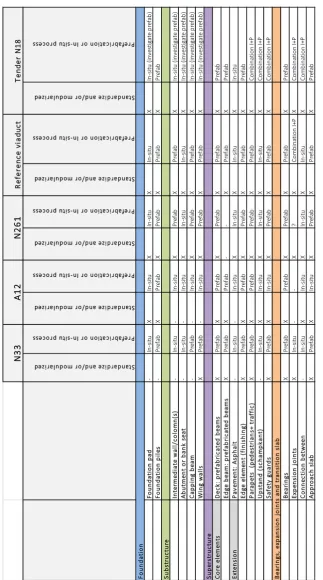
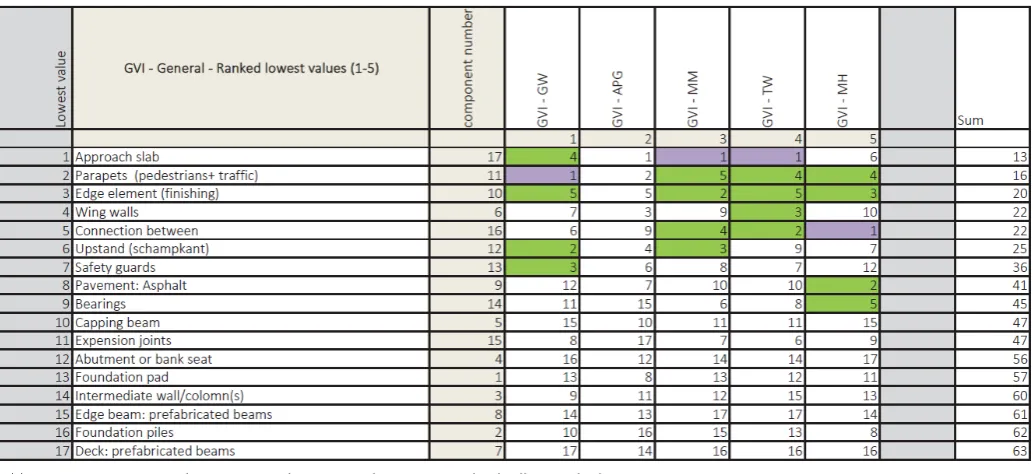
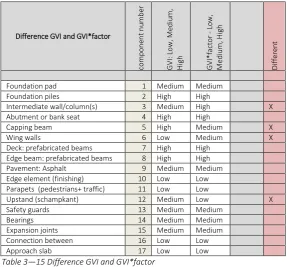
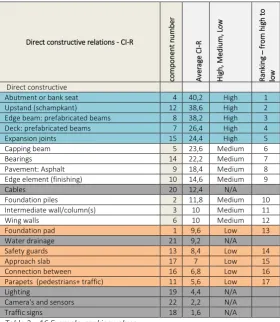
(14) 2.1.7. Standardisation versus variation paradox ....................................................................................................................... 20. 2.1.8. Opinions within literature ................................................................................................................................................ 21. 2.2 2.2.1. General reasons and drivers for adopting a modular architecture ............................................................................... 22. 2.2.2. Implementation of the principles of standardisation and modularization .................................................................... 23. 2.2.3. Compare different viewpoints in literature .................................................................................................................... 23. 2.3. Mass customization in the construction industry ............................................................................................................... 25. 2.3.1. Infrastructural sector of the construction industry operates in the engineer-to-order supply chain ......................... 25. 2.3.2. Characteristics of the Construction Industry .................................................................................................................. 25. 2.3.3. Infrastructural projects are identified by Hobday as Complex Product Systems ......................................................... 27. 2.3.4. Apply the principles of mass customization within construction industry.................................................................... 29. 2.3.5. Why are the principles of mass customization: standardisation and modularity, not yet implemented? ................. 29. 2.3.6. Building a product family based on a layout platform ................................................................................................... 31. 2.4 2.4.1 2.5. Perceived barriers ................................................................................................................................................................. 33 Barriers .............................................................................................................................................................................. 33 Core elements and critical success factors .......................................................................................................................... 34. 2.5.1. Essential for implementation of industrialisation within the infrastructural sector of the construction industry ..... 34. 2.5.2. Standardised interface facilitates communication ......................................................................................................... 35. 2.5.3. Critical Success factors to raise modularization to an optimum level ........................................................................... 35. 2.5.4. Relationship – core elements, barriers, critical success factors. ................................................................................... 36. 2.6 3. principles of mass customization: Opportunities and risks for construction .................................................................... 22. Conclusion of the literature review ..................................................................................................................................... 37. Empirical research: analysis ........................................................................................................................................................... 40 3.1 3.1.1 3.2. Potential in infrastructural sector, considering the main characteristics of infrastructural projects .............................. 40 Application of principles of standardisation and modularization for complex systems ............................................... 41 Components of a viaduct – suitable for standardisation and/or modularization. ............................................................ 42. 3.2.1. General design ................................................................................................................................................................. 42. 3.2.2. Type of viaducts ................................................................................................................................................................ 43. 3.2.3. Components of a viaduct ................................................................................................................................................. 43. 3.2.4. Additional design aspects ................................................................................................................................................ 54. 3.2.5. Morphological table ......................................................................................................................................................... 55. 3.3. Projects where a form of standardisation and/or modularization has been applied ....................................................... 59. 3.3.1. Analysing the different projects individually – N33 Assen - Zuidbroek ......................................................................... 59. 3.3.2. Analysing the different projects individually – A12 Poort van Bunnik .......................................................................... 61. 3.3.3. Analysing the different projects individually – N261 – Eftelingweg .............................................................................. 63. 3.3.4. Analysing the different projects individually – In-house research: Reference viaduct ................................................ 66. 3.3.5. Analysing the different projects individually – Tender N18 ........................................................................................... 70. 3.3.6. Comparison N33, A12, N261, reference viaduct and tender N18 ................................................................................. 72. 3.4 3.4.1 3.5. Identify components suitable for standardisation and modularization............................................................................. 74 Method to identify components suitable for standardisation and modularization ..................................................... 74 Method applied ..................................................................................................................................................................... 76 xiv.
(15) 3.5.1. Overview of phases .......................................................................................................................................................... 76. 3.5.2. Phase 1: Determine product architecture ...................................................................................................................... 77. 3.5.3. Phase 2 – Examine interface: Apply Design for Variety method of Martin and Ishii .................................................... 77. 3.5.4. Phase 3 – Determine Coupling-Indexes .......................................................................................................................... 78. 3.5.5. Phase 4 – Draw conclusion .............................................................................................................................................. 80. 3.6 3.6.1. Phase 1: Outcome determine product architecture within this research ................................................................... 82. 3.6.2. Phase 2: Outcome - Examine interface within this research ......................................................................................... 88. 3.6.3. Phase 3: Outcome of the coupling-indexes within this research .................................................................................. 92. 3.6.4. Phase 4: Outcome - Draw conclusions within this research .......................................................................................... 93. 3.7. 4. Steps to take: analyse outcome tables............................................................................................................................ 98. 3.7.2. Results of the tables ......................................................................................................................................................... 99. Empirical research: Implementation .......................................................................................................................................... 106 Lessons learned – Product ............................................................................................................................................. 106. 4.1.2. Lessons learned – General process ............................................................................................................................... 110. 4.1.3. Lessons learned from the initiatives.............................................................................................................................. 111. 4.2.1. Criteria for a new approach................................................................................................................................................ 113 Criteria identified for a new approach .......................................................................................................................... 113. 4.3. Developing modular platform-based products and services............................................................................................ 116. 4.4. Implementation of the principles of standardisation and modularization ...................................................................... 118. 4.4.1. Requires effort from all parties ..................................................................................................................................... 118. 4.4.2. Labelling of project to develop a configurator ............................................................................................................. 118. 4.5. 7. Lessons learned: other initiatives....................................................................................................................................... 106. 4.1.1. 4.2. 6. Interpretation data ............................................................................................................................................................... 95. 3.7.1. 4.1. 5. Outcome: Method applied for a viaduct ............................................................................................................................. 82. Current situation at BAM Infra: Other findings found ..................................................................................................... 121. 4.5.1. Conclusion of the survey: Main insights derived. ......................................................................................................... 121. 4.5.2. Other findings – Observations and interviews.............................................................................................................. 122. Synthesis: advice .......................................................................................................................................................................... 126 5.1. Essential aspects to consider.............................................................................................................................................. 126. 5.2. Implementation of principles in two phases ..................................................................................................................... 132. 5.2.1. Phase 1 – Short-term actions......................................................................................................................................... 132. 5.2.2. Phase 2 – Long-term possibilities .................................................................................................................................. 134. 5.2.3. Continuously monitor, adapt and improve standardised interface and product platform ....................................... 134. Discussion and limitations ........................................................................................................................................................... 135 6.1.1. Discussion of results - General limitations .................................................................................................................... 135. 6.1.2. Discussion of results – Reflection on method developed and applied for a viaduct .................................................. 136. 6.1.3. Discussion of result – Reflection on advice given by SWOT-analysis .......................................................................... 137. Conclusion of this research.......................................................................................................................................................... 144 7.1. Answering the research questions ..................................................................................................................................... 144. 7.2. Answering main research question.................................................................................................................................... 150 xv.
(16) 7.3. Suggestions for further research ....................................................................................................................................... 152. 8. References .................................................................................................................................................................................... 155. 9. Appendices ................................................................................................................................................................................... 162 9.1. Appendices A – Report. 9.2. Appendices B – Interviews. 9.3. Appendices C – Application of the developed method. xvi.
(17) DEFINITIONS In this section definitions that are relevant to this research are given. The definitions are listed in alphabetical order.. BIM. Building Information modelling in this context is a representation of the development and use of process and products computer related model. BIM is the representation of design as parametric objects in 5D (meaning 3D, with planning and costs). Objects are thereby defined as parameters and relations to other objects, such that changes are made consistently throughout each different view, requiring only a singular action. The information accumulated with the building model serves as a shared knowledge resource. This includes data from all different disciplines. BIM-model forms a reliable basis for decisions throughout the total life cycle. A basic premise of BIM is a collaboration by different stakeholders at different phases of the life cycle of a facility to insert, extract, update or modify information in the BIM to support and reflect the roles of that stakeholder. (Neelamkavil, 2009). Complexity. The degree of complexity is concerned with the amount of differing but interrelated parts. (Cambridge dictionary online, 2016). This definition implies that a project’s complexity is defined by differentiation and interdependencies. Wood and Gadibo (Wood & Gadibo, 2006) suggest that there seem to be two perspectives of product complexity in the construction industry: a)The managerial perspective, this involves the planning of bringing together numerous parts of work to form workflow, b)The operative and technological perspective, this involves the technical intricacies or difficulties of executing a complex production process.. Configurator. A Configurator is a design support system. Configuring a product is “putting together a product from well-defined building blocks (modules) according to a set of predefined rules and constraints. (Hvam, Martensen, & Riis, 2008). Configurators exist to standardise and expedite the engineering design process by enabling the reuse of existing results and knowledge.. Design rules. Design rules comprise testing standards to evaluate the modules’ relative performance, and these standards allow a designer to verify whether a model conforms to the design rules and make sure it will function in the end-system (Baldwin & Clark, 2000).. Design for variety – method. Design for variety is a series of structured methodologies to help design teams reduce the impact of variety on the life-cycle costs of a product. It is a step-by-step method that aids companies in developing a robust product platform architecture that results in reduced design effort and time-to-market for future generations of the product, by using the concept of specification “flows” within a product development project. (Martin & Ishii, 2002). Feedback. Feedback is the interaction between a system and its surroundings. When experience from practical use of a system is fed back, it becomes an input that shapes future improvements of the system correcting actions from actual to desired performance (Aström & Murray, 2009). Flexibility. Flexibility within this research is twofold. Flexibility has been defined as: the ability to change or be changed easily according to the situation (Cambridge Dictionaries Online, 2016). This definition means flexibility is the degree in which an infrastructural object can be adapted to changing circumstances over time, with as low required effort and as low environmental influence as possible. And secondly, flexibility has been defined as: the ability of a system, such as a manufacturing process, to cost effectively vary its output within a certain range and given a timeframe. (Businessdictionary.com, 2016) In this research content, flexibility means a quality enabling effective functioning of a system in terms of existing external conditions and with respect to internal operating capacity. In other words, flexibility is the ability to response with an existing system on external influences. (Paslawski, 2008) In such a complex environment as the construction industry, a degree of flexibility is desirable.. Industrialization. Within this research industrialisation is defined as: a) producing more components of an infrastructural object by prefabrication (under factory conditions), the components that can be transferred to the construction site for fast assembly. Industrialisation considered to result in high quality, and for the assembly on the site less skilled craftsmanship is needed. The assembly of the different components is performed on the construction site. Therefore, the interfaces need to be easy to assembly. b) Various firms can develop and produce components that can be combined and together firm and infrastructural object. To achieve the interchangeability of components, the interfaces need to be standardised. xvii.
(18) In-situ and precast concrete. There are two methods of fabricating reinforced concrete: 1) In situ concrete: pouring of concrete, pour the liquid material into moulds at the building site. 2) Precast concrete components (also called prefabricated concrete components) are manufactured in a central plant and later brought to the construction site for assembly.. Integral design. An integral architecture includes a complex (non-one-to-one) mapping from functional elements to physical components and/or coupled interfaces between components. (Ulrich, 1995). Interface. A coupling between one or more components. In the context of an infrastructural object, an interface is a physical and functional coupling (a connection or joint) between the different components of the object. Interfaces ideally should be standardised to facilitate modularity. Gibb argues that standardisation works by ensuring accurate and interchangeability of components. Gibbs implies that the most important area for standardisation is the interface between the components rather than the components themselves. (Gibb, 2001). Inter-firm modularity. An industry is characterised by inter-firm modularity when different firms are responsible for designing and developing the various subsystems of the industry’s products. (Schilling, Toward a general modular system theory and its application to interfirm product modularity, 2000). Mass customization. Mass customization in construction can be defined as an intermediate between mass production systems based on a make-tostock approach to product realisation, and one of a kind engineer-to-order systems. In such intermediate systems, the structure and composition of the product (product architecture), must be designed and organised in a way that balances the contradiction between product variety and production volume (Blecker & Abdelkafi, Mass customization: State-of-the-art and challanges, 2006) The definition given by Hart is “the use of flexible processes and organisational structures to produce varied and often individually customised products and services at the low cost of a standardised, mass-production system.” (Hart, 1995). Modular architecture. A modular architecture includes one-to-one mapping from functional elements in the functional elements structure to the physical components of the product and specifies decoupled interfaces between components. (Ulrich, 1995). In a modular architecture, the components are interchangeable as long as the interfaces remain standardised. The interfaces are loosely coupled, providing possibilities for operations between the modules in the product architecture like substituting, augmenting or excluding (Baldwin & Clark, 2000).. Modularity. In this thesis the definition of modularity comes from Shilling: Modularity is a general system concept: it is a continuum describing the degree to which a system can be separated and recombined, and it refers both to the tightness of coupling between elements and the degree to which the rules of the system enable the mixing and matching of components’ capabilities (Shilling & Paparone, 2005). Shilling argues at the most abstract level modularity refers to the degree to which a system’s components can be separated and recombined and the effect this has on the functionality of the system. In addition, Langlois describes modularity as: “a very general set of principles for managing complexity. By breaking up a complex system into discrete pieces, which then can communicate with one another only through standardised interfaces within a standardised architecture. One can eliminate what would otherwise be an unmanageable spaghetti tangle of systematic interconnections” (Langlois, 2002). Furthermore, Baldwin describes modularity as: A strategy for organising complex products and processes efficiently. A modular system is composed of modules that are designed independently, but function as an integrated whole. Modularity can be distinguished in three aspects that are interrelated, namely: modularity in use, modularity in production and modularity in design. (Baldwin & Clark, 2000). Module. A module is a unit whose structural elements are powerfully connected among themselves and relatively weakly connected to elements of other units. Clearly, there are degrees of connection. Thus there are graduations of modularity. (Baldwin & Clark, 2000). Parametric modelling. Parametric comes from the mathematics and is defined as a constant or variable term in a function that determines the specific form of the function but not its general nature, as a is f(x)=ax, where a determines only the slope of the line described by f(x). (Dictionary.com, 2016) Within this research, parametric modelling is the process of object creation with defined parameters: xviii.
(19) involving distances, angles, and rules like attached, parallel to or distance from. By parametric modelling, a general design can be adapted (type appropriate) and scaled to dimensions that fit the specific situation occurring.. Dimensions. Dimensions are a measurement of length, width, and thickness. Within an infrastructural object, this also refers to the weight of components, depending on the materials applied. Parameters of the specific locational circumstances or parameters within the design of a viaduct will have an influence on the dimensioning of the design. By parametric modelling, a general design can be adapted to the specific situation occurring, by application of different types and scales of the components. The different types will have various dimensions. A component can be scaled to fit the specific circumstances, but this is not always optimal or possible. Another type of component can be better suitable. This means that the design can be adapted by changing its dimensions, but there are boundary conditions.. Process Within this research, the definition of a process that was defined by Zairi (1997) is followed, namely: “A process is an approach for converting inputs into outputs. It is the way in which all the resources of an organisation are used in a reliable, repeatable and consistent way to achieve its goals”. Zairi argues that a process has four key features (Zairi, 1997): 1. 2. 3. 4.. Predictable and definable inputs A linear, logical sequence of flow A set of clearly definable tasks or activities A predictable and desired outcome or result. Product architecture. The product architecture comprises (Ulrich, 1995): 1. The arrangement of functional elements 2. The mapping from functional elements to physical components. 3. The specifications of the interfaces among interacting physical components Ulrich makes a distinction between to different product architectures: modular and integral. For this research, the modular product architecture is the most important.. Product platform. Defined by McGrath as; “set of subsystems and interfaces that form a common structure from which a stream of related products can be efficiently developed and produced. (McGrath, 1995). The leading principle behind the platform concept is to balance the commonality potential and differentiation needs within a product family. (Halman, Hofer, & van Vuuren, 2003). Quality. Quality is defined as: A measure of excellence or a state of being free from defects, deficiencies, and significant variations. It is brought about by a strict and consistent commitment to certain standards that achieve uniformity of a product to satisfy specific customer or user requirements. ISO 8402-1986 standard defines quality as "the totality of features and characteristics of a product or service that bear its ability to satisfy stated or implied needs." (Businessdictionary.com, 2016) Within this research, quality reflects on the durability, significant variations and the ability to satisfy the different needs. In addition, within BAM Infra quality is also concerned with the quality of the processes on-site, referring to safety during construction.. Standardisation. Standardisation is a work approach that is widely applied in different fields and sectors. Standardisation can be defined as, “the extensive use of components, methods or processes in which there is regularity, repetition, and a background of successful practice and predictability”. (O'Conner, O'Brien, & Choi, 2015). Standardisation is two-fold; a) the process of establishing the standard, and b) the process of complying with the standard. In this research, the standardisation is focused on the repetitive nature of a viaduct (concrete bridge) and revolves around the process of establishing the standards. It focuses on interface coupling and development of product platforms. The standardisation in this sense means the development of structures and structural elements based on the selection of the most technically and economically viable designs and therefore can be utilised for construction multiple times. (Kazbek-Kaziev, 1989). Sustainability. Sustainability is defined as meeting the needs of the present without compromising the ability of the future generation to meet their own needs. (Brundtland, 1987) Within this research, this refers to design civil constructions that have a low environmental impact (low use of materials, energy, and low construction waste). To accomplish this, the interfaces (platform) need to enable re-use and recycling of different elements of the design. This enhances the optimisation, which reduces waste.. System Engineering. The general definition of a system is: A set of interrelated components working together as an integrated whole to achieve some xix.
(20) common objective. The System Engineering concept is a way of working that must guide and coordinate the design of each individual element as necessary to assure that the interactions and interfaces between system elements are compatible and mutually supporting. (Kossiakoff, Sweet, Seymour, & Beimer, 2011). Viaduct (also can be name and overpass). A Viaduct is defined in the dictionary as: A long elevated roadway, usually consisting of a series of short spans supported on arches, piers, or columns. With functions as a bridge. In this research, the infrastructural viaducts of BAM Infra are reviewed. These viaducts are robust constructions made out of concrete with pre-tensioned steel inside. The components can be prefabricated in a factory and transported to the site for assembly. Or the viaduct can be constructed by an in-situ process.. xx.
(21) PHASE ONE Introduction. 1.
(22) 1 INTRODUCTION In this Master thesis, the results of a research on the applicability of the implementation of the principles of standardisation and modularization within BAM Infra, mainly considering a viaduct, are presented. This research has been conducted in cooperation with the BAM Infra. This research is the final step for the completion of the master' program in Civil Engineering and Management at the University of Twente.. 1.1 BRIEF DESCRIPTION OF THIS RESEARCH The European construction industry is lagging behind other industries in taking advantages and benefits of new technologies and innovative practices (Nadim & Goulding, 2011) (Harty, 2008). In many industries, the concept of modularity is rapidly further developed. However, the use and development of the modularization concept in the construction industry are still limited (Teichholz, 2001). The companies within the construction industry are constantly struggling with the power of flexibility given by project management of complex systems and the efficiency of using standardisation of product and process (Jansson, Johnsson, & Jensen, 2013). It has been argued in recent research that the performance of the construction industry can be improved by adopting methodologies that are applied in mass customization industries to increase the industrialisation and standardisation of design and production processes (Larsson, Eriksson, Olofsson, & Simonsson, 2014) ( McGraw-Hill Construction, 2011). Even though the benefits of the principles of standardisation and modularization are promising, methods and practices that are successful in other industrial contexts cannot readily be transferred to the construction industry. Changes are needed to adapt the traditional project work processes and products to create an optimum environment of a broader and more effective use of modularization (Bresnan & Marshall, 2001). Here, insufficiency of already conducted research occurs. It is not clear if the principles of standardisation and modularization are suitable for large civil construction projects. As the principles have not yet been applied in the infrastructural sector, only some small steps towards standardisation have taken place. This research investigates the applicability of the implementation of the principles of standardisation and modularization in large civil construction works. It will be conducted at the company BAM Infra, mainly about one specific object: a viaduct.. 1.2 BACKGROUND – CONTEXT As explained in section 1.1, the application of the principles of standardisation and modularization, in the construction industry, is still limited. Currently, most projects and specific objects in the construction industry are viewed as “one-of-a-kind”. Although this is true, as each project has diverse local circumstances and diverse requirements, there is also a certain degree of repetition in the various construction projects. Many construction products are built to a common building code. Many products in a given product category will have similar or identical functional requirements (Jensen, 2014). This research investigates whether the implementation of the principles of standardisation and modularization can also be applied to an infrastructural object: a viaduct.. 1.2.1 INDUSTRIALISATION OF THE CONSTRUCTION INDUSTRY The current construction industry is characterised as an engineer-to-order project-oriented industry. However, the industry is experiencing a paradigm shift to be able to meet the new market requirements from clients (Azhar, 2011). Clients are demanding projects with higher quality, a higher degree of sustainability, reduced life cycle costs, reduced lead times, and higher design efficiency. Within the current highly competitive and complex market of the construction industry, it becomes essential to be able to deliver a project in an effective and efficient way. The construction companies have to deliver projects that meet the requirements of the client, have sufficient quality, and need to be delivered on time and within budget (Davies & Brady, 2000). The traditional design practices in the construction industry seem to be unable to cope with the demanded increased efficiency. Numerous companies are investigating new techniques to remain competitive in the industry. The traditional way of delivering projects is not sufficient anymore, a new way of working will have to be adopted. (Larsson, Eriksson, Olofsson, & Simonsson, 2014) Companies within the construction industry are becoming increasingly aware of the potential that the implementation of the principles of mass customization can have for the construction industry. The implementation of the principles of mass customization is mainly driven by the time-efficiency and cost-efficiency that this can bring. The expected benefits include greater flexibility in product design, efficiency in both product development and realisation, and effectiveness in both communication and market positioning. According to Halman, Hofer and van Vuuren, the key to staying competitive is to organise business processes in a limited amount of time and this in a time-efficient and cost-efficient manner (Halman, Hofer, & Vuuren, 2003). These possible beneftis resulted in increasing focus on the platform concept. The companies within the construction industry are constantly struggling with the power of flexibility given by project management of complex systems 2.
(23) and the efficiency of using standardisation of product and process (Jansson, Johnsson, & Jensen, 2013). The basic idea of mass customization is thus to improve the flexibility of the end product while maintaining standardisation and economies of scale (Tseng & Jiao, 2001). This is also applicable for BAM Infra; it is essential for BAM Infra to deliver variability (different circumstances) in an economical way. Within literature the need to move from an engineer-to-order, by which we mean pure customization, towards more standardisation by benefiting of the repetition that occurs has been put forward (Jensen, Olofsson, Smiding, & Gerth, 2014). There are diverse opinions about whether or not the principles of mass customization can be applied in the different sectors of the construction industry. Opponents of standardisation contend that it is not applicable because all construction works are seen as unique; they are one-of-a-kind and require customised designs. Moreover, when there is openness for the development of implementing the principles of mass customization within the construction industry, people remain sceptical if the principles can be successfully applied in the construction industry. Opponents of standardisation argue that volumes are too low, as not enough repetition occurs. The inherently one-off nature of the infrastructure sector means that each project is different, making it difficult to achieve the degree of repetition and routinization necessary to benefit from the principles of mass customization. (Bresnen & Marshall, 2001) (Jensen, 2014) (Winch, 2003) (Jensen, Larsson, Simonsson, & Olofsson, 2013). Ulrich (1995) is one of the first who identified the concept of modularization. Although he believes in the principles of standardisation and modularization, he argues that this is only suitable for the housing industry. Ulrich argues that a shift from design processes at the engineer-to-order specification level towards more standardised processes would enable the incremental industrialisation of the other parts of the production realisation process. However, predefined solutions can only be used to address specific functional requirements if the platform architecture is based on a modular design (Ulrich, 1995). There are also proponents of the implementation of the principles of the mass customisation industry, within the construction industry, and who have emphasised the essence of applying the principles of mass customization in construction (Gerth, 2013) (Malmgren, 2013) (Ballard & Howell, 1998)(Vrijhoef & Koskela, 2005) (Koskela, 2000) (Voordijk, Meijboom, & de Han, 2006) (O'Conner, O'Brien, & Choi, 2015) (Erixon, 1998). Erixon (1998) argues that implementing standardisation and modularization is central to benefit from the occurring repetition (Erixon, 1998). The researchers argued that the principles of mass customization can be employed to increase the effectiveness and efficiency of project and processes in the construction industry. Designs can be pre-engineered, and a constant process of optimisation can occur. This means that there seems to be indeed scope and opportunities for implementing the principles of standardisation and modularization in the construction industry. However, applying the principles of standardisation and modularization in construction is challenging since the requirements generally require more flexibility than the predefined modules can deliver (Jansson, Johnsson, & Jensen, 2013). This research will analyse the standardisation and modularization potential of a viaduct. It is important to note that BAM Infra intends to use the research on standardisation and modularization of a viaduct for further development, with the vision to eventually develop a product platform. To develop the product platform, research and analysis have to be conducted into how to create and structure a modular design for a viaduct. This research focusses on which elements/components of a viaduct are suitable for applying the principles of standardisation and modularization. Next, it will be determined what the first steps for BAM Infra are to take when implementing the principles of standardisation and modularization for a viaduct. This with the point of view in mind that eventually a product platform for a viaduct will be beneficial and can be established by BAM Infra. However, before we can make such assumptions, we have to investigate further if the principles of standardisation and modularization are possible and preferred.. 1.2.2 Main drivers The main reason why BAM Infra desires to change their way of working is to be able to fulfil the projects the market demands. To that end, the management team of BAM Infra is looking for new ways to compete in the dynamic market. They are seeking ways to distinguish themselves and increase their efficiency and effectiveness; this will be affected by delivering the best value (EMVI: price vs. quality ratio) for the client, compared to other competitors within the current and future market of the construction industry. To establish this, it will require flexibility and effectiveness on the part of the utility of resources, to be able to deliver the best value for the client and to stay ahead of the competition. (BAM, 2016) Within BAM Infra, time, costs, and quality are the three main elements that their projects will revolve around. Most decisions and trade-offs that need to be made in a project are based on analysing the effect that different choices have on these three main elements. (BAM, 2016) For the continuity of BAM Infra, three points within the total cycle of projects are essential (BAM, 2016). A) Goal: Acquisition of projects (Get awarded the contract) It is essential that the company can design a project within a limited space of time. The design should meet the listed requirements of the client for the best value, this will be based on the lowest price, considering price vs. quality according to the EMVI criteria. However, this demands an efficient and effective approach and the proposed design should be realistic, in such a way that it can be realised by the construction company. This phase is important for the company, as the goal is to get awarded 3.
(24) the contract and then work it out in a higher level of detail and construct the agreed to design. BAM Infra needs to procure sufficient contracts to create revenue and establish profit, so the organisation can develop itself further and remain competitive. B) Goal: Deliver a product with sufficient profit margin In addition to being awarded a sufficient number of contracts. In addition, it is essential that these projects are profitable. As explained above, the design of the awarded contract needs to be worked out in greater detail, in view of the product and the process. Here it is important that the tender design is realistic and that it can be constructed for the agreed to budget. The project has to be constructed for less than the budget of the awarded contract; a sufficient profit margin can be realised. Thus, constant trade-offs need to be made, during the further development and planning of construction projects. C) Goal: Deliver services and maintenance in an efficient and effective way, considering the total life-cycle of the products. Due to the new contract forms, referring to DBFM(O), it has become more important for BAM Infra to consider the total lifecycle of their constructed products. It is essential to consider the maintenance and services aspects already in the early design phase. Trade-offs will need to be made, considering the total life-cycle of the products. A + B + C) Higher goal: Stay ahead of the competition BAM Infra is aware that they are “reinventing the wheel” for every project (viewpoint of the management team) (BAM, 2016).The company is, therefore, looking for a way to improve its design and construction processes. Becoming more effective and efficient, through optimisation and innovation, is essential for the continuity of BAM Infra. This will ensure that Goal A, B, and C; to get awarded the contract, deliver a project with sufficient profit and deliver services and maintenance in an efficient and effective way, considering the total life-cycle of the products, can be realised now and in the future.. 1—1Flow chart – Main drivers of BAM Infra to reach the higher goal: stay ahead of the competition.. 4.
Figure
+7


Related documents
Using a nationwide database of hospital admissions, we established that diverticulitis patients admitted to hospitals that encounter a low volume of diverticulitis cases have
18 th Sunday in Ordinary Time Saint Rose of Lima Parish Parroquia Santa Rosa de Lima.. August
Shirinsky and Shirinsky 8 in a pilot study treated seven patients of psoriasis with simvastatin for a period of 8 weeks and observed that 57.14% patients had a greater
Wollner, Craig, and Merrick, Meg, "Periodic atlas of the Metroscape : The face of density, diversity, and disparity in 20th century Portland" (2010 Metroscape, Institute
Stvaranje neovisne nacionalne institucije za standardizaciju i regulaciju ocjene poslovne uspješnosti posredstvom kredit rejting rangiranja na teritoriji BiH; Izgradnja
Library Catalogue which includes: Airpac; Basic Search options; Borrowing; Renewals; Requests (ILL); Returning of library material; E-Reserves. (prescribed and
Corning helps to solve challenges with the Corning ONE™ Wireless Platform, a solution that converges cellular, Wi-Fi, and Ethernet backhaul over a single composite fiber cable
In this range the small–spotted genet feeds not only on terrestrial prey but also on aquatic prey (Ruiz– Olmo & López–Martín, 1993), potentially competing with the
