ISSN Online: 2327-5960 ISSN Print: 2327-5952
DOI: 10.4236/jss.2017.58026 Aug. 30, 2017 312 Open Journal of Social Sciences
Understanding Self-Regulated Learning within
an EFL Online Formative Assessment Module
Li Liang, Manzhen Yang
*School of English and Education, Guangdong University of Foreign Studies, Guangzhou, China
Abstract
Assisted with innovative internet and computer techniques, we have launched a new game-based online formative assessment reform in GDUFS in recent years. Self-regulated learning (SRL) is one of the central parts of online for-mative assessment and well-worth an in-depth study. But it is noted that some essential issues of formative assessment remain rarely touched yet, such as the relations among the four variables of SRL motivational strategies in the game-based blended formative assessment module. Given the above question mentioned, this paper reports a case study of SRL in an online blended forma-tive assessment module in the context of non-English-major college English learning. The intent of the present research is to exemplify how SRL, an active area in educational psychology, can help to illustrate and understand the me-chanism and correlations of the variables of SRL motivational strategies in the online formative assessment environment.
Keywords
Self-Regulated Learning, Online Formative Assessment, College Education
1. Introduction
Emerging since 1980s, self-regulated learning (SRL) and formative assessment have been relatively new and heated topics in the fields of learning strategy and assessment (Li, 2012) [1]. Educational testing should not merely be the assess-ment of learning but the assessassess-ment for learning and formative assessassess-ment is acknowledged to possess huge potential in promoting an assessment for learn-ing. Generally speaking, in a formative assessment environment, students are self-regulated learners if they are motivationally, meta-cognitively and behavi-orally active participants in their own learning process, instead of relying on How to cite this paper: Liang, L. and Yang,
M.Z. (2017) Understanding Self-Regulated Learning within an EFL Online Formative Assessment Module. Open Journal of Social Sciences, 5, 312-320.
https://doi.org/10.4236/jss.2017.58026
Received: July 18, 2017 Accepted: August 27, 2017 Published: August 30, 2017
Copyright © 2017 by authors and Scientific Research Publishing Inc. This work is licensed under the Creative Commons Attribution International License (CC BY 4.0).
DOI: 10.4236/jss.2017.58026 313 Open Journal of Social Sciences teachers or other resources (Zimmerman, 2008) [2]. From this definition, it is argued that SRL is one of the central parts of formative assessment and well-worth an in-depth study. But Li (2012) [1] observes that some essential issues of forma-tive assessment remain rarely touched yet, such as the relations among the four variables of SRL motivational strategies in the game-based blended formative assessment module.
Given the above question mentioned, this paper reports a case study of SRL within a game-based online blended formative assessment module (educational online game of credit coins) in the context of non-English-major college English instruction in GDUFS. Assisted with innovative internet and computer tech-niques, we have launched a new game-based online formative assessment reform in GDUFS in recent years. But we are still striving for some cogent empirical evidence to show that all this investment in the digital formative assessment has led to improved educational outcomes and more equal opportunities. The major research question is: what are the relations among the four variables of SRL mo-tivational strategies in this game-based blended formative assessment module? The intent of the present research is to exemplify how SRL, an active area in educational psychology, can help to illustrate and understand the mechanism and process of SRL in the online formative assessment environment.
2. Literature Review
2.1. Game-Based Blended Formative Assessment Platform
DOI: 10.4236/jss.2017.58026 314 Open Journal of Social Sciences in-class and online blended-teaching for over two years. An online platform
(http://evaluate.fifedu.com, as seen in Figure 1) has been designed and
devel-oped to meet the requirements of the game-based teaching and learning for dif-ferent courses within the formative assessment module.
2.2. Self-Regulated Learning
[image:3.595.57.539.449.707.2]Self-regulation includes a series of sophisticated super-ordinate functions such as cognition, metacognition, problem-solving and motivation. Self-regulated learning (SRL), a key section in formative assessment module, is a sub-construct under the concept of self-regulation (Boekaerts & Corno, 2005) [10]. Since SRL is basically a process of applying cognitive and meta-cognitive strategies in learning, this study adopts the theoretical framework of Bandura’s social cogni-tive theory (Bandura, 1986; 2001) [11] [12]. According to this theory, the envi-ronment affects people’s cognition and behavior, while people are viewed as both products and producers of the environment in which their cognitive and behavioral funtions are determined. The views about SRL are essentially focused on the concept of agency. Agency determines the environment and is deter-mined by the environment. Agency posesses four features: intentionality, fore-thought, self-reactiveness, and self-reflectivenes. Thus, human agency refers to an emergent ability of a person to make choices and to act on these choices through interaction between mind and sociocultural contexts (Bandura, 1986) [11]. In the case of SRL, the learners participate in study activities with purpose and their learning behaviors are directed by their anticipated goals, outcomes and plans. The learners are not only the agents of study but also self-examiners
DOI: 10.4236/jss.2017.58026 315 Open Journal of Social Sciences of their study. Thus, the concept of agency indicates that we need to investigate the two key elements of SRL—motivation and metacognition.
2.3. Motivation & Metacognition
Metacognition refers to the study of people’s knowledge of their cognitive and memory processes, and how they apply the metacognitive knowledge in their information processing and behavior (Koriat, 2007) [13]. Schunk et al. (2008: 4) [14] define motivation as “the process whereby goal-directed activity is intigated and sustained”. In this sense, learners’ motivation, as an inner psyche process, can be inferred from its products—specific observable behavior such as the choice of learning tasks, how to deal with problems and the length of time allo-cated for study. Motivation can be divided into intrinsic and extrinsic motiva-tion. Learners have been assumed to be the masters (i.e. agents) of the technolo-gy-assisted learning and the digital technologies can be used not just as cognitive tools but also as metacognitive tools (Chen, et al., 2008) [15]. The impact of mo-tivation on learning mainly lies in behavioral and cognitive engagement (Lin-nenbrink & Pintrich, 2003) [16]. Therefore, our investigation of self-regulated learners’ motivation includes not only a four-subscale survey questionnaire, but also the major aspects of learning including learning outcomes and length of time for study. Besides that, self-efficacy is also a significant motivational con-struct of human agency as it is found that learners with high self-efficacy beliefs are more willing to spare more effort in overcoming difficulties and persist at learning tasks. According to social cognitive theory, self-efficacy refers to a belief about one’s ability to accomplish a learning task (Bandura, 1986) [11]. Gao (2010) [17] examined a disabled learners’ autonomous language learning and revealed the learner’s agency played an non-ignorable role in shaping her moti-vational discourses, beliefs and strategic efforts. Li & Liu (2015) [18] reviewed the researches on Chinese EFL learners’ motivation from 2004 to 2013 and noted the problem of limited perspectives and few longitudinal empirical researches. Besides that, little is known about to what extent the students’ self-efficacy, in-trinsic and exin-trinsic motivation can predict their strategic regulation of learning in the game-based blended formative assessment module, although the students’ strategic regulation of learning plays a significant role in affecting their specific regulative behavior in learning such as dealing with the problems and the ar-rangement of time for study.
DOI: 10.4236/jss.2017.58026 316 Open Journal of Social Sciences
2.4. A Proposed Analytical SRL Model as Metacognitive and
Motivational Tools
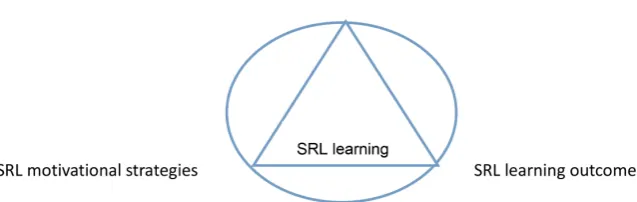
Given the above researches on SRL, we propose an analytical SRL model (Figure 3) to clarify the research focus so as to provide useful contributions for the im-provement of the game-based blended formative assessment module. This study focuses on the mutual interactions among the three factors: the students’ SRL motivational strategies, the students’ learning behavior and the game-based blended formative assessment module. This model comprises three dimensions of implications: 1) SRL is a learning process in which the students exercise their cognitive, metacognitive and motivational factors of human agency; 2) the stu-dents’ level of motivational strategies elicits the corresponding learning beha-viors; 3) the relations and interaction among the three factors need to be inves-tigated if we aim to improve the game-based blended formative assessment module.
3. Method
3.1. Participants
[image:5.595.98.540.418.711.2]The participants (N = 358) were first-year non-English-major college students in a Cantonese university in the academic year of 2014-2015, the majors of whom include accountant, finance and business management. There were 107 male students and 257 females, who came from urban and rural areas throughout China. The survey statistics indicated that there was no significant differences in
DOI: 10.4236/jss.2017.58026 317 Open Journal of Social Sciences
Figure 3. An analytic SRL model of game-based blended learning.
the SRL motivational and metacognitive variables between the genders (p > 0.05). Those who took part in the game-based blended formative assessment module for one term accounted for 152 (three classes of students), while the number of those who participate in this educational reform module for two consecutive terms were 206 (five classes of students).
3.2. Procedure
Based on the class observation and students’ feedback, an extensive online sur-vey from sojump.com was designed and carried out among the eight classes of freshman students participated in the game-based blended formative assessment module in the academic year of 2014-2015. The survey was piloted on a sample of ten students and two teaching-research staffs. Then the survey was fine-tuned by deleting or modifying some items and wording. Three out of the eight classes of students joined this educational reform module for one term and the other five classes participated in this reform module for two terms. The survey was administered anonymously online twice separately at the end of each term of this academic year (i.e., December 2014 and June 2015).
3.3. Data Collection
DOI: 10.4236/jss.2017.58026 318 Open Journal of Social Sciences to select an answer from the five options in the 5-point Likert scale: strongly agree, agree, neutral, disagree, and strongly disagree, which were coded as 1, 2, 3, 4, 5 respectively in the data analysis. Thus, the higher score in a subscale one re-ported, the lower value he or she would have in that subscale. The Chronbach’s alpha value of the total questionnaire is 0.768 and the standardized alpha value is 0.772, which indicates that the scores in the questionnaire are reliable.
The present study uses SPSS Statistics 16 to analyze the data: Pearson corre-lates analysis was applied to examine the correlations among the four va-riables.
4. Results and Discussion
[image:7.595.210.538.634.712.2]4.1. Correlations among the Variables
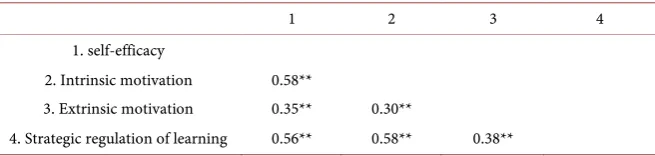
Table 1 shows the Pearson correlations between the four variables and some positive associations among them are discovered.
Firstly, the positive correlation between the strategic regulation of learning and the two variables (self-efficacy and intrinsic motivation), and that between intrinsic motivation and self-efficacy, are moderate. Secondly, the positive cor-relation between strategic regulation of learning and extrinsic motivation, and that between extrinsic motivation and the two variables (self-efficacy and intrin-sic motivation), are weak. Thirdly, as r > 0.70 among these four variables, mul-tiple regression analysis can be employed to explore to what extent the SRL mo-tivational variables predict the metacognitive variable (strategic regulation of learning).
4.2. SRL Variables and Formative Assessment Reform
It is shown that there is moderate positive correlation among self-efficacy, inner motivation and strategic regulation of learning in the context of formative as-sessment reform. Thus, we can improve the students’ self-efficacy level by pro-moting their inner motivation and strategic regulation of learning. The higher the students’ inner motivation and strategic regulation of learning are, the high-er their self-efficacy will be. This is of practical implication for the formative as-sessment reformers and teachers at the tertiary level.
Weak positive correlation is found among the university students’ extrinsic motivation, self-efficacy and strategic regulation of learning, which means that the variation in the extrinsic motivation level usually will not cause significant
Table 1. Pearson correlations between the measured variables.
1 2 3 4
1. self-efficacy
2. Intrinsic motivation 0.58**
3. Extrinsic motivation 0.35** 0.30**
4. Strategic regulation of learning 0.56** 0.58** 0.38**
DOI: 10.4236/jss.2017.58026 319 Open Journal of Social Sciences change in these three SRL variables. Thus, the university students’ inner and ex-trinsic motivations have different functions in stimulating and maintaining their SRL behavior. The variation in university students’ innner motivation will often lead to the changes in their self-efficacy and strategic regulation of learning, while extrinsic motivation will not. In this sense, the extrinsic motivation has li-mited impact on SRL motivational strategies and learning outcomes at tertiary level. Therefore, for the formative assessment reformers and teachers, the key to improve learning outcome does not lie in stimulating university students’ ex-trinsic motivation but promoting their self-efficacy, inner motivation and stra-tegic regulation of learning. For the formative assessment reform researchers, university students’ inner and extrinsic motivations should be investigated sepa-rately instead of mixing them up as one variable because these two functions differently in university students’ SRL behavior.
5. Conclusion
This research discovers that the students in this credit coin game of learning have significantly profited their English as foreign language learning. Self-efficacy, inner and extrinsic motivations have significant impact on strategic regulation of learning. Self-efficacy is the crucial variable for the SRL outcomes and regula-tion. Debriefing adopted in the game-based formative assessment module is an effective way to improve the students’ self-efficacy. More research should be done to explore some feasible ways to encourage autonomous self-regulated learners.
Acknowledgements
This paper was supported by a grant from Guangdong Department of Educa-tion.
References
[1] Li, Q. (2012) The Present and Future of the Formative Assessment. Foreign Lan-guage Testing and Teaching, 3, 1-8.
[2] Zimmerman, B.J. (2008) Investigating Self-Regulation and Motivation: Historical Background, Methodological Developments, and Future Prospects. American Edu-cational Research Journal, 45, 166-183. https://doi.org/10.3102/0002831207312909 [3] Yang, Y.-T.C. (2012) Building Virtual Cities, Inspiring Intelligent Citizens: Digital
Games for Developing Students’ Problem Solving and Learning Motivation. Com-puters &Education, 59, 365-377. https://doi.org/10.1016/j.compedu.2012.01.012 [4] Cagiltay, N.E. (2007) Teaching Software Engineering by Means of Computer-Game
Development: Challenges and Opportunities. British Journal of Educational Tech-nology, 38, 405-415. https://doi.org/10.1111/j.1467-8535.2007.00705.x
[5] Lowrie, T. and Jorgensen, R. (2011) Gender Differences in Students’ Mathematics Game Playing. Computers & Education, 57, 2244-2248.
https://doi.org/10.1016/j.compedu.2011.06.010
DOI: 10.4236/jss.2017.58026 320 Open Journal of Social Sciences Computers & Education, 52, 1-12. https://doi.org/10.1016/j.compedu.2008.06.004 [7] Garris, R., Ahlers, R. and Driskell, J. (2002) Games, Motivation, and Learning: A
Research and Practice Model. Simulation & Gaming, 33, 441-467. https://doi.org/10.1177/1046878102238607
[8] Carnevale, D. (2005) Run a Class Like a Game Show: “Clickers” Keep Students In-volved. Chronicle of Higher Education, 51, B3-B9.
[9] Wang, A.I., Elvemo, A.A. and Gamnes, V. (2014) Three Social Classroom Applica-tions to Improve Student Attitudes. Education Research International, 1-14. https://doi.org/10.1155/2014/259128
[10] Boekaerts, M. and Corno, L. (2005) Self-Regulation in the Classroom: A Perspective on Assessment and Intervention. Applied Psychology: An International Review, 54, 199-231. https://doi.org/10.1111/j.1464-0597.2005.00205.x
[11] Bandura, A. (1986) Social Foundations of Thought and Action: A Social Cognitive Theory. Prentice-Hall, Englewood Cliffs, NJ.
[12] Bandura, A. (2001) Social-Cognitive Theory: An Agentic Perspective. Annual Re-view of Psychology, 52, 1-26.https://doi.org/10.1146/annurev.psych.52.1.1
[13] Koriat, A. (2007) Metacognition and Consciousness. In: Zelazo, P.D., Moscovitch, M. and Thompson, E., Eds., The Cambridge Handbook of Consciousness, Cam-bridge University Press, CamCam-bridge, 289-325.
https://doi.org/10.1017/CBO9780511816789.012
[14] Schunk, D.H., Pintrich, P.R. and Meece, J.L. (2008) Motivation in Education: Theory. 3rd Edition, Pearson Education Inc., London.
[15] Chen, W., Tan, N.Y.L., Looi, C.-K., Zhang, B.H. and Seow, P.S.K. (2008) Handheld Computers as Cognitive Tools: Technology-Enhanced Environmental Learning. Research & Practice in Technology Enhanced Learning, 3, 231-252.
https://doi.org/10.1142/S1793206808000513
[16] Linnenbrink, E.A. and Pintrich, P.R. (2003) The Role of Self-Efficacy Beliefs in Stu-dent Engagement and Learning in the Classroom. Reading & Writing Quarterly, 19, 119-137.https://doi.org/10.1080/10573560308223
[17] Gao, X. (2010) Autonomous Language Learning against All Odds. System, 38, 580-590. https://doi.org/10.1016/j.system.2010.09.011
[18] Li, J. and Liu, P. (2015) A Review of Researches on China’s EFL Motivation (2004-2013). Foreign Language World, 167, 34-43.
[19] Duncan, T.G. and McKeachie. W.J. (2005) The Making of the Motivated Strategies for Learning Questionnaire. Educational Psychologist, 40, 117-128.
https://doi.org/10.1207/s15326985ep4002_6
[20] Pintrich, P.R., Smith, D.A., Garcia, T. and McKeachie, W.J. (1993) Reliability and Predictive Validity of the Motivated Strategies for Learning Questionnaire (MSLQ). Educational and Psychological Measurement, 53, 801-813.
https://doi.org/10.1177/0013164493053003024
Submit or recommend next manuscript to SCIRP and we will provide best service for you:
Accepting pre-submission inquiries through Email, Facebook, LinkedIn, Twitter, etc. A wide selection of journals (inclusive of 9 subjects, more than 200 journals)
Providing 24-hour high-quality service User-friendly online submission system Fair and swift peer-review system
Efficient typesetting and proofreading procedure
Display of the result of downloads and visits, as well as the number of cited articles Maximum dissemination of your research work