© 2019, IRJET | Impact Factor value: 7.211 | ISO 9001:2008 Certified Journal
| Page 67
Confidential Data Access through Deep Learning Iris Biometrics
M. Preethi
1, K. Sathish
21
Student, M.E, Computer Science and Engineering, Gojan School of Business and Technology, Tamil Nadu, India
2Assistant Professor, Computer Science and Engineering, Gojan School of Business and Technology, Tamil Nadu, India
---***---
Abstract - This paper explores automated iris recognition as a biometrically based technology for personal identification and verification. Because of the Fast growing mobile technology, when it comes to sensitive transactions, such as financial or payment applications, it is required to follow the security in all kinds of transactions made through mobile devices. Image based biometric authentication creates good impact on security. In the Existing System We develop a deep feature fusion network that exploits the complementary information presented in iris and periocular regions. The proposed method initially applies maxout units into the convolution neural networks (CNNs) to produce a compact description for each modality, and then combines the discriminative features of two modalities through a weighted concatenation. In the proposed system a deep neural network based classification algorithm is used, edge detection with adaptive contour segmentation is used to segment the iris from the given image. The quality of the image is enhanced through color equalization etc. The proposed system authenticates for a particular website access and which can be implemented in MATLAB software.Keywords - Iris recognition, periocular recognition, deep feature fusion, adaptive weights, mobile devices.
1. Introduction
“Biometrics is an attempt to imitate the elegant sensor fusion network of humans in identifying and verifying other humans by their behavioral and physiological characteristics” (a self-quote from Lisa Kalyan).
The first modern commercial biometric device was introduced over 25 years ago when a machine that measured finger length was installed for maintaining employee time records at Shearson Hamil on Wall Street. In the emerging years, hundreds of these hand geometry devices have been fixed for security purposes at facilities run by Western Electric and Naval Intelligence. In the US today, biometric security systems may be found in the Oakland International Airport (face recognition), Chicago O’Hare International (fingerprint), and the Navy Consolidated Building (iris recognition). With an increasing demand for better security technology in public and private buildings since September 11, 2001, a variety of pilot projects have been completed in the area of access control. These projects highlight the need to improve biometric verification accuracy, universality, and ease of use.
© 2019, IRJET | Impact Factor value: 7.211 | ISO 9001:2008 Certified Journal
| Page 68
[image:2.612.194.414.122.325.2]2. Methodologies
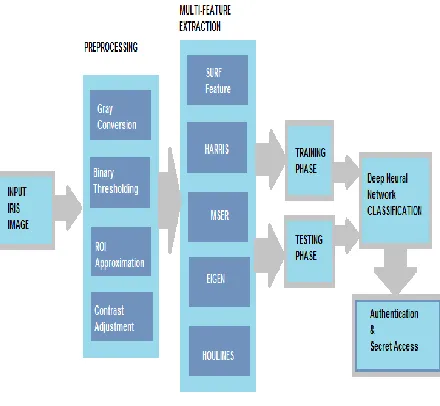
Fig 1: Block Diagram
2.1 Preprocessing: This module consists of MATLAB executable commands useful for extracting the image frames from the input database video. RGB panel is used to view the red, green and blue components of the image separately. It has previously been referred that an RGB image is overlap of three two dimensional matrix. The discrete cosine transform (DCT) is closely associated to the discrete Fourier transform.
2.2 Segmentation: The median filter is used in order to remove the noise from the merged RGB panel. The image features like color, weight, and depth and pixel information to apply before the classifier Here we used the adaptive hierarchical motion segmentation algorithm is used in order to segment the portion of defected areas.
2.3 Classification: This module is used to establish the concept for training the image and testing the image with the help of weight estimating classifier. With the help of metric value, the resultant image will be compared with the dataset images and it will display the analysis result of Iris image whether it is access granted or denied.
© 2019, IRJET | Impact Factor value: 7.211 | ISO 9001:2008 Certified Journal
| Page 69
Fig 2: Hidden layer links to an output layer
2.5 Train the Network: Once the network weights and biases are loaded, the network is prepared for training. The training process involves a set of examples of proper network behavior of network inputs p and target outputs t. The process of training a neural network includes adjusting the values of the weights and biases of the network to optimize network performance, as explicate by the network performance function net.performFcn. The standard performance function for feed forward networks is mean square error (mse)—the average squared error between the network outputs a and the target outputs t. It is defined as follows:
There are two ways in which training can be executed: They are incremental mode and batch mode. In incremental mode, the gradient is computed and the weights are updated after each input is registered to the network. In batch mode, all the inputs in the training set are applied to the network before the weights are modernize. This topic narrates batch mode training with the train command. Incremental training with the adapt command is examined in Incremental Training with adapt. For most problems, when using the Neural Network Toolbox™ software, batch training is significantly faster and produces smaller errors than incremental training. For training multilayer feed forward networks, any standard numerical optimization algorithm can be applied to optimize the performance function, but there are a few key ones that have shown excellent performance for neural network training. These optimization methods utilize either the gradient of the network performance with respect to the network weights, or the Jacobian of the network errors with respect to the weights. The gradient and the Jacobian are evaluated using a technique called the back propagation algorithm, which includes performing computations backward through the network.
3. Result and Discussion
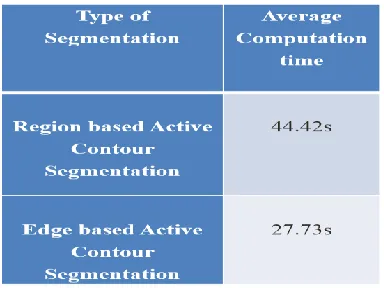
(I) Reduction in Computation Time
[image:3.612.219.411.554.698.2]© 2019, IRJET | Impact Factor value: 7.211 | ISO 9001:2008 Certified Journal
| Page 70
Chart 1: Decrease in Computational Time
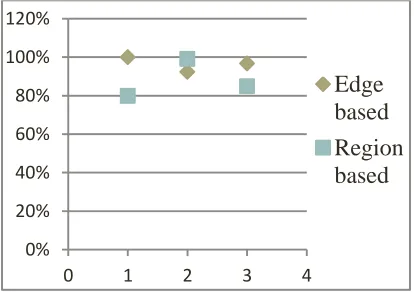
[image:4.612.203.410.471.617.2](II) Specificity, Sensitivity and Accuracy
Table 2: Comparison with Specificity, Sensitivity and Accuracy
Chart 2: Edge based Vs Region based Segmentation
Conclusion
In this paper, we have proposed a deep feature fusion network that exploits the complementary information presented in iris and periocular regions to enhance the performance of mobile identification. Firstly, a CNNs model with maxout units has been exploited to extract robust, compact and discriminative features for the iris as well as the periocular region. Extensive experiments have been conducted and results have showed that the used CNNs model is effective and efficient. It has achieved
0 10 20 30 40 50
0 5 10
Region
based
Edge
based
0% 20% 40% 60% 80% 100% 120%
0 1 2 3 4
Edge
based
© 2019, IRJET | Impact Factor value: 7.211 | ISO 9001:2008 Certified Journal
| Page 71
state-of-the-art performance for both iris and periocular recognition on mobile devices. Afterwards, iris and periocular deep features have been fused through a weighted concatenation. The parameters of convolutional filters and fusion weights can be learned simultaneously to optimize the joint representation of iris and periocular biometrics. We have released the CASIA-Iris-Mobile-V1.0 database to the public, comprising of 11,000 images from 630 Asians. It is the largest NIR mobile iris database as far as we know and is valuable to promote the iris recognition research on mobile devices. Experiments have been conducted on the newly built CASIA-Iris-M1-S3 dataset which containing 3600 NIR iris images of both eyes from 360 Asians. Experimental results have showed that although periocular recognition gets much worse performance than iris recognition, bimodal fusion can still achieve significantly better results than unimodal recognition. The proposed deep feature fusion with
adaptive weights approach has obtained promising results that the EER is 0.60% and FNMR@FMR=10-5 is 2.32%. The value of
FNMR@FMR=10-5 drops by 52.0% and 81.7% compared with that of iris and periocular recognition, respectively. The value of
EER drops by 37.5% and 54.2% compared with that of iris and periocular recognition, respectively. The results are also obviously better than directly concatenating various feature vectors. In addition, we have achieved significant improvements
compared with the pervious study. By using the deep feature fusion with adaptive weights, the value of FNMR@FMR=10-4 has
dropped by 70.6% compared with the previous best result. Moreover, the proposed model has required much less storage space and computational resources than general CNNs. Exploring complementary features of various modalities can take full advantage of different information, which will be beneficial for future multimodal fusion research. For the issue of mobile identification, we will focus on tackling the cross sensor recognition problem, matching images obtained from mobile devices and those from specialized equipment, which has practical significance. In the future, we will also try to use non-square filters and irregular kernel shapes in the CNNs model for processing rectangle iris images to avoid the image distortion problem.
Reference
[1] A. Joshi, A. K. Gangwar, and Z. Saquib, “Person recognition based on fusion of iris and periocular biometrics,” in International Conference on Hybrid Intelligent Systems, 2012, pp. 57–62.
[2] Q. Zhang, H. Li, M. Zhang, Z. He, Z. Sun, and T. Tan, “Fusion of face and iris biometrics on mobile devices using near-infrared images,” in Chinese Conference on Biometric Recognition, 2015, pp. 569–578.
[3] Q. Zhang, H. Li, Z. Sun, Z. He, and T. Tan, “Exploring complementary features for iris recognition on mobile devices,” in International Conference on Biometrics, 2016, pp. 1–8.
[4] R. P. Wildes, “Iris recognition: an emerging biometric technology,” Proceedings of the IEEE, vol. 85, no. 9, pp. 1348–1363, 1997.
[5] D. M. Monro, S. Rakshit, and D. Zhang, “DCT-based iris recognition,” IEEE Transactions on Pattern Analysis and Machine Intelligence, vol. 29, no. 4, pp. 586–595, 2007.
[6] Y.-h. Li, M. Savvides, J. Thornton, and B. Vijaya Kumar, “Iris recognition using correlation filters,” Encyclopedia of Biometrics, pp. 1015–1023, 2015.
[7] H. Proenca and L. A. Alexandre, “Toward covert iris biometric recognition: Experimental results from the nice contests,” IEEE Transactions on Information Forensics and Security, vol. 7, no. 2, pp. 798–808, 2012.