© 2019, IRJET | Impact Factor value: 7.211 | ISO 9001:2008 Certified Journal | Page 167
DECISION MAKING IN CONSTRUCTION MANAGEMENT USING AHP AND
EXPERT CHOICE APPROACH
Mr. I Michael raj
1, Ms. Priyalakshmi M T
21
Assistant Professor, Department of Civil Engineering, RVS Technical Campus, Coimbatore-641402, India
2
PG student, Department of Civil Engineering, RVS Technical Campus, Coimbatore-641402, India
---***---Abstract -
The term and content of construction project management are outlined in this research work. The main problems of construction management were identified and possibilities to solve them are discussed. The model for decision making in construction management by using multi-criteria methods was created and is to be applied to a real case study. AHP method and “Expert Choice” computer program is to be employed for calculations. This project suggests AHP technique for contractor selection problem in Indian context. The data collected are to be used to create a hierarchical model for contractor selection that is represented by Analytic Hierarchy Process (AHP). In this work, a systematic methodology is presented under the consideration of multiple factors. The model includes building an analytic hierarchy structure with a tree of hierarchical criteria and alternatives to ease the decision-making. Expert Choice software is used to conduct the experimental assessments. The project will also present a thorough sensitivity analysis to demonstrate the confidence in the drawn conclusions.Key Words
:
Decision making, construction management, contractor selection, equipment selection, Ahp method.
1. INTRODUCTION
Construction industry plays an important role in the development of the nation. Decision-making is an integral part of modern management. Essentially, Rational or sound decision making is taken as primary function of management. Every manager takes hundreds and hundreds of decisions subconsciously or consciously making it as the key component in the role of a manager. Decisions play important roles as they determine both organizational and managerial activities. A decision can be defined as a course of action purposely chosen from a set of alternatives to achieve organizational or managerial objectives or goals. Decision making process is continuous and indispensable component of managing any organization or business activities. Decisions are made to sustain the activities of all business activities and organizational functioning.
The selection of a capable contractor is essential to the good performance of any construction project since they are responsible by core activities in the process. Choosing the proper contractor from numerous applicants that are available today in market is a complicated problem for clients. In addition, selecting suitable suppliers significantly
reduces material purchasing cost, improves the competitiveness of businesses, increases flexibility and product quality and helps with speeding up the process of material purchasing. In this way, according with, this process should detect a supplier to whom the customer can entrust the responsibility to perform the project adequately. In this context, the selection criteria are very important for the decision making, since which are strictly related with the objectives of the client in relation to the contractor. If the criteria are wrong, the contractor selected may not be according with the client needs, even if the role decision process is carried out in the right way. In dealing with the long-term assets, it is crucial to select a proper contractor, which could ensure the quality of the constructed building. The achievement of this aim largely depends on the efficiency of the performance of the contractor that is selected.
Proper selection of crane is other important factor of construction field. A crane is defined as a mechanical system designed to lift and move loads through a hook suspended from a movable arm. Selecting cranes depends greatly on skilled judgment that accounts for every likely involved variable.
Analytical Hierarchy Process (AHP) is used to assist in building the model and help draw decisions. While deploying the crane selection objectives into layered sub-goals, conclusions could be drawn on the type to be used in construction according to knowledge based evaluation and assessment. Expert Choice™ software is used to conduct the experimental assessments.
2. RESEARCH METHODOLOGY 2.1 Research Design
© 2019, IRJET | Impact Factor value: 7.211 | ISO 9001:2008 Certified Journal | Page 168
criteria decision making process. The data collected are used to create a hierarchical model for contractor selection that represented by the Analytic Hierarchy Process (AHP). By using this model & with the help of AHP technique one can develop contractor selection approach which can be most useful for the stakeholders. The interview is the insightful tool which focuses directly on the studied topics but also includes bias and can be manipulative. Interviewing is the most common sources for collecting qualitative data. There are a number of different types of interviews and some of them are applicable to one method then to other. For instance the most common types structured or semi structured interview are most often used in qualitative research. In the semi structured form the interviewer prepares a number of questions that are in the general form of a interview schedule. It is standardized in order to minimize differences between interviews within one project. Moreover the sequence of questions may vary and the follow up questions can be asked in response to some significant replies
2.2 Research objective 1
The first research objective is one of the most important tasks in construction, i.e. selection of the right contractor. Choosing the proper contractor from numerous applicants that are available today in market is a complicated problem for clients. In dealing with the long-term assets, it is crucial to select a proper contractor, which could ensure the quality of the constructed building. The achievement of this aim largely depends on the efficiency of the performance of the contractor that is selected. Contractor selection studies have dated back to as early as 1960s. All construction processes are risky. Contractual risk management forms only one part of the companies ‘legal risk management and, in this way, it is part of companies ‘comprehensive general risk management. The goals of contractual risk management do not restrict the management of legal risks in contracting. Contractual risk management also covers other risks in business by using methods of contractual planning and management more problems in construction management are identified in developing countries. All issues of construction management must be solved as soon as they are identified. During shared problem-solving, stakeholders bring different types of knowledge into the problem situation and it is captured, created and shared by the team members. In construction projects, shared problem-solving often takes place through pragmatic problem-solving on site, in particular, through managing project changes.
2.3 Research objective 2
The process of crane selection is a multi-criteria decision-making problem with conflicting and diverse objectives. In this work, a systematic methodology is presented under the consideration of multiple factors and objectives that are witnessed to be crucial to the construction process. The model includes building an analytic hierarchy structure with a tree of hierarchical criteria and alternatives to ease the decision-making. Three alternative crane types were considered, namely, Tower, Derrick and Mobile cranes. An
Analytical Hierarchy Process (AHP) was used to assist in building the model and help draw decisions
3. DESCRIPTION OF PROJECT
The project have been done by selecting the contractors working in Kerala public work department ,and among that I choose 6 contractors due to the limitation of the expert choice software (AHP method) .and the analysis has been done by the details collected from the 6 and found the best . 3.1 CONTRACTOR SELECTION
3.1.1 Set up window
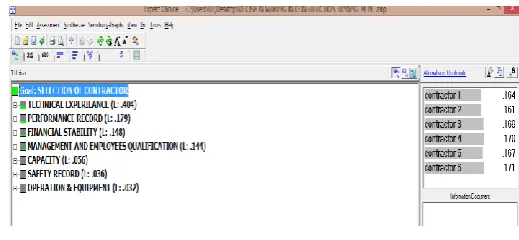
[image:2.595.319.579.284.404.2]The main goal and criteria should enter to the window coming first. Sub criteria should allocate properly by adding child options. Alternative also should give as figure
Figure 3.1 Set Up Window 3.1.2 Develop hierarchal structure
Fig.3.2 shows the developed hierarchical structure of the problem in which the first level has the goal of selecting the best contractor. The second level consists of nine criteria, under which there are further sub-criteria. The last level of the hierarchy comprises of the five alternatives
Figure 3.2 Hierarchal Structure of Contractor Selection 3.1.3. Pairwise comparisons
[image:2.595.319.573.497.631.2]© 2019, IRJET | Impact Factor value: 7.211 | ISO 9001:2008 Certified Journal | Page 169
Saaty's 1–9 scale. An element compared with itself is always assigned the value of "1", so the main diagonal entries of the pair-wise comparison matrix are all "1".
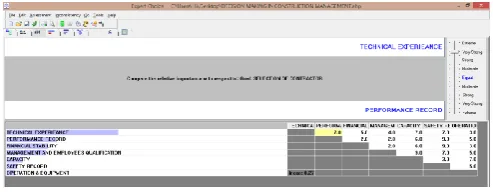
The expert (designer) begins by comparing pairs of main criteria (factors) with respect to the main goal by assigning importance. There will be n(n – 1)/2 comparisons. Expert Choice software package was used to carry out such comparison. Verbal assessment is used to help the expert understand and summarize his knowledge efficiently. For instance, considering the capability factor in Fig. 2 under which n = 3, three questions need to be answered by the expert. Typical question forms of this level may be put across as follows:
• How more important is the landscape experience is relative to electrical Frequency from the technical experience standpoint.
• How more important is the landscape relative to civil experience from the technical experience stand point.
[image:3.595.318.576.61.200.2]• A scale of verbal assessments is used to answer the above survey, namely: Extreme, Very strong, Strong, Moderate and Equal importance along with their corresponding reciprocal scale of importance.
[image:3.595.49.296.401.497.2]Figure 3.3 represents the surveyed numbers for the above factor and its siblings
Figure 3.3 Pairwise Comparison of Contractor Selection
Next we have to compare the contribution of sub criteria to the main criteria l
Figure 3.4 The Contribution of Sub-Criteria To The Main Criterion (TE)
Figure 3.5 The Contribution of Sub-Criteria To The Main Criterion (PE)
3.1.4 Graphical representation of weight of each criterion to main goal
The graphical representation of each criterion weight to main goal can be shown as in figure 3.6
Figure3.6 The Criteria Weight Representation (Safety)
Figure 3.7 The Criteria Weight Representation of Main Goal
3.1.5 Entering ratings
Entering ratings In the ‘Data Grid’ it is possible to use the ‘Ratings’ function which specifies intensities, see Figure 4.10 that can be assigned to the alternatives under the criteria. Figure 3.8 depicts how the ratings intensities can be assigned to the alternatives in the ‘Data Grid’. Notice that the specified intensities appear above the alternatives on the ‘Data Grid’. By clicking on a ratings intensity the intensity will appear in the cell.
© 2019, IRJET | Impact Factor value: 7.211 | ISO 9001:2008 Certified Journal | Page 170
3.1.6 Model Sensitivity Analysis:
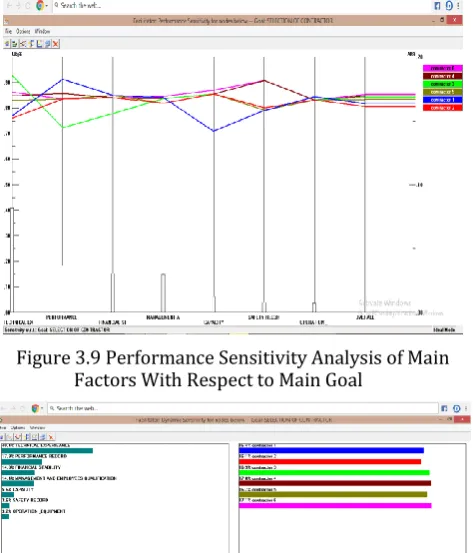
[image:4.595.319.582.122.277.2]Finally, a sensitivity analysis is held to show the effect of altering different parameters of the model of best contractor. First, the current values of the model are presented according to the pair-wise comparison that has been carried out by the experts in the construction fields. Fig. 3.9 demonstrates the current weights of each factor. Obviously, the results are in favor of the contactor 6. Now the best contractor has been identified.
[image:4.595.47.287.151.733.2]Figure 3.9 Performance Sensitivity Analysis of Main Factors With Respect to Main Goal
Figure 3.10 Dynamic Sensitivity Analysis of Main Factors With Respect to Main Goal
Figure 3.11 Sensitivity Analysis of the Performance Record, The New Assigned Weights (Left) And The
Resulting Scores of The Alternatives (Right).
We can show from figure 3.11 sensitivity analysis in four graphs giving the same result of contractor 6 is best
Figure 3.12 Four Types of Sensitivity Analysis Together 3.2 CRANE SELECTION
3.2.1 Set up window
[image:4.595.52.289.213.490.2]The main goal and criteria should enter to the window coming first. Sub criteria’s should allocate properly by adding child options. Alternative also should give as figure 4.15
Figure 3.13 Window Set Up 3.2.2 Develop hierarchal structure
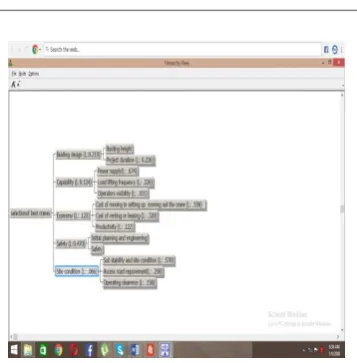
[image:4.595.324.553.363.529.2] [image:4.595.50.286.431.716.2]© 2019, IRJET | Impact Factor value: 7.211 | ISO 9001:2008 Certified Journal | Page 171
Figure 3.14 Hierarchal Tree Structure of Crane Selection
3.2.3. Pairwise comparisons
The expert (designer) begins by comparing pairs of main criteria (factors) with respect to the main goal by assigning importance. There will be n(n – 1)/2 comparisons. Expert Choice software package was used to carry out such comparison. Verbal assessment is used to help the expert understand and summarize his knowledge efficiently. For instance, considering the capability factor in Fig. 2 under which n = 3, three questions need to be answered by the expert.
[image:5.595.317.573.127.424.2]A scale of verbal assessments is used to answer the above survey, namely: Extreme, Very strong, Strong, Moderate and Equal importance along with their corresponding reciprocal scale of importance
[image:5.595.49.288.461.723.2]Figure 3.15 Pairwise Comparison Matrix for Main Goal
Figure 3.16 Pairwise Comparison Matrix for Capability
3.2.4. Graphical representation of weight of each criterion to main goal
The graphical representation of each criterion weight to main goal can be shown as in figure 3.17
Figure 3.17 The Criteria Weight Representation of Main Goal
Figure 3.18 The Criteria Weight Representation Site Condition
3.2.5 Entering ratings
Entering ratings In the ‘Data Grid’ it is possible to use the ‘Ratings’ function which specifies intensities, see Figure 4.21 that can be assigned to the alternatives under the criteria. Figure 3.19 depicts how the ratings intensities can be assigned to the alternatives in the ‘Data Grid’. Notice that the specified intensities appear above the alternatives on the ‘Data Grid’. By clicking on a ratings intensity the intensity will appear in the cell.
[image:5.595.327.554.567.746.2]© 2019, IRJET | Impact Factor value: 7.211 | ISO 9001:2008 Certified Journal | Page 172
3.2.6 Model Sensitivity Analysis:
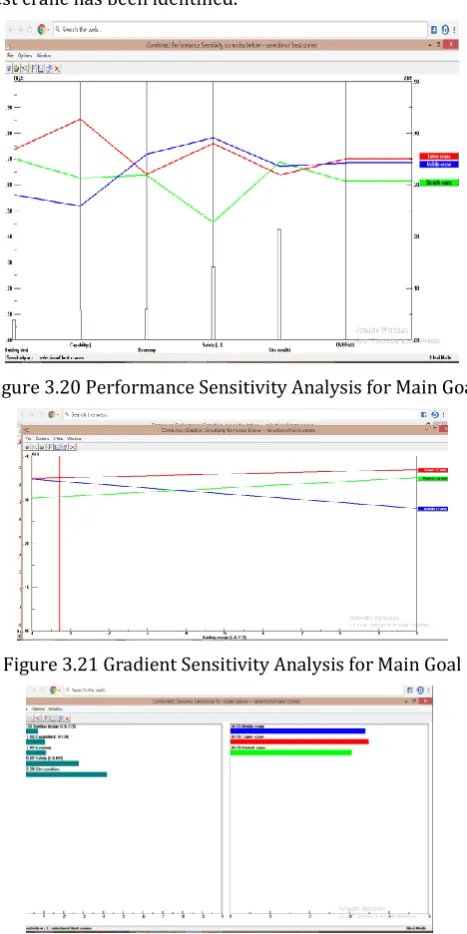
[image:6.595.319.587.55.245.2]Finally, a sensitivity analysis is held to show the effect of altering different parameters of the model on the choice of the right crane. First, the current values of the model are presented according to the pair-wise comparison that has been carried out by the experts in the construction fields. Fig 3.20 demonstrates the current weights of each factor. Obviously, the results are in favor of the tower crane. Now the best crane has been identified.
[image:6.595.45.279.201.669.2]Figure 3.20 Performance Sensitivity Analysis for Main Goal
Figure 3.21 Gradient Sensitivity Analysis for Main Goal
Figure 3.22 Dynamic Sensitivity Analysis for Main Goal
Figure 3.23 Four Graphs of Sensitivity Analysis for Main Goal
4. CONCLUSIONS
The sensitivity analysis presented here demonstrates how consistent the decision is. The choice of the contractor remain the same even with significant changes on the criteria weights, which can be justified by the consistent judgments made between the siblings of the parent goal and the pair-wise comparisons. Frankly, AHP analysis demonstrates an efficient knowledge based approach to help quantify expert knowledge to qualitative analysis that help in multi-criteria decision making. Contractor selection involves complex decision making situations that discerning abilities and methods to make sound decisions. This paper has discussed in details on knowledge acquisition process and transforming the information to a manageable form for developing a theoretical model represents the AHP methodology. The AHP is a decision aiding tools based on multi- criteria decision making for dealing with complex and multi attribute decision.
[image:6.595.46.281.212.385.2]© 2019, IRJET | Impact Factor value: 7.211 | ISO 9001:2008 Certified Journal | Page 173
made explicit via relational assessment. This also helps uncover any gap in the expert‘s thinking in regard to qualitative factors in crane selection which may not have been considered.
Let summaries the paper with conclusions of
1. Most of construction management problems are MCDM problems. Countering complexity of a problem to be solved four optimization methods can be used: multi-criteria, oriented cost, mono objective, multi objective. Elimination, optimization and probabilistic methods could be used byproject managers when making decisions. Multi-criteria aspect is significant when making construction management decisions.
2. The seven-stage model for solving decision making problems in contractor selection have been suggested. Based on the literature overview and opinion of experts set of criteria was determined a) technical experience; b) performance recourses; c) financial stability; d) management performance and employees qualification; e) capacity; f) safety record; g) operation and equipment.
3. The proposed model was used to choose contractor for construction works of Kerala PWD. After analyzing all alternatives, the best contractor had been chosen.
4. The five-stage model for solving decision making problems in crane selection have been suggested. Based on the literature overview and opinion of experts set of criteria was determineda) building design b) capability c) economy d) safety e) site condition
5. The proposed model was used to choose crane for construction of apartment. After analyzing all alternatives, the best crane had been chosen
REFERENCES
1. Doraid D, Faris A and Hayajneh M (2010), ‘Application of AHP process in Multi Criteria Analysis of the Selection of Cranes’Vol.4 no.5 page 567-578
2. Edmundas and Zenonas (2015),’Selecting a contractor by using a Novel Method for Multiple Attribute Analysis’, Studies in informatics and control,Vol.24 No.2
3. Gray, C. and Little, J., A systematic approach to the selection of an appropriate crane for a construction site, Construction Management and Economics, Vol. 3, 121–144, 1985
4. Jennifer Whyte and Angelos Stasis( 2015), ‘Managing change in the delivery of complex projects’JPMA-01741;No of pages 13
5. Książek, M., & Nowak, P. 2011. Psychological aspects of decision-making in construction Logistic. 6/2011.
6. Kousalya P et.al.,(2012) ‘Analytical Hierarchy Process approach – An application of engineering education’ MathematicaAeterna, Vol. 2,no. 10, 861 – 878
7. Kumar NeerajJha,’Construction Project Management (Theory And Practice), Sixth Edition, Pearson India Education Services Pvt Ltd.
8. Ludovic-Alexandre Vida , Franck Marle and (2010) ‘Using a Delphi process and the Analytic Hierarchy Process (AHP) to evaluate the complexity of projects’, Expert Systems with Applications 38(2011) 5388-5405
9. Nishijima K, Faber M H and Straub D (2017),’Sustainable decisions for life cycle based design and maintenance, Australian Journal of civil engineering,vol 4 no.1
10. Olearezyk J and Al Hussein M (2014),’Intelligent Crane Management Algorithm for Construction Operation’,43:59-72
11. RemonFayek Aziz and Sherif Mohammed Hafez (2013), ‘Applying lean thinking in construction and performance improvement’, Alexander Engineering Journal 52,679-695
12. Szafranko E (2017) ‘Decision problems in management of construction projects’, IOP Conf. Ser.: Mater. Sci. Eng. 251 012048
13. Whyte J, A. Stasis, C. Lindkvist, Managing change in the delivery of complex projects:Configuration management, asset information and big data‘, International Journal of Project Management 34(2) (2015) 339–351
14. ZavadskasZ. Turskis, J and