RESEARCH ARTICLE
WEBSITE PERSONALIZATION USING DATA MINING TECHNIQUES-COLLABORATIVE
FILTERING
P.K. Srimani
1and Srinivas, A
21Former Chairman, Department of Computer Science and Maths, Bangalore University, India 2Faculty of Computer Science, Surana College, Bangalore, Karnataka, India
ARTICLE INFO ABSTRACT
Finding information on a large web site can be a difficult and time-consuming process. Recommender systems can help users find information by providing them with personalized suggestions. In this paper the creation of recommendation system was emphasized to achieve the personalization on the website. Recommender systems typically use techniques from collaborative filtering, in which proximity measures between users are formulated to generate recommendations, or content-based filtering, in which users are compared directly to items. Our approach used similarity measures between users. User-based collaborative filtering gave personalized recommendations by finding similar users. Item-Based collaborative filtering recommended similar items. Different algorithms were compared. However, the applied testing procedure did not employ equal conditions for both approaches. The aim of this report was to give an evaluation on both the approaches by employing a fair testing procedure on the data gathered. Test results and their dependency to the employed algorithms were interpreted. The experiments are carried out by building the recommendation engine through the Taste library in Java — a fast and flexible engine for collaborative filtering.
© Copy Right, IJCR, 2011, Academic Journals. All rights reserved
INTRODUCTION
As the World Wide Web continues to grow at an exponential rate, the size and complexity of many web sites grow along with it. For the users of these web sites it becomes increasingly difficult and time consuming to find the information they are looking for. To help users find the information that is in accordance with their interests a web site can be personalized. Today, personalization is something that occurs separately within each system that one interacts with. Recommender systems automate personalization on the Web, enabling individual personalization for each customer. Recommender systems enhance E-commerce sales in three ways:
Browsers into buyers:
Cross-sell:
Loyalty
Recommender systems apply data analysis techniques to the
problem of helping users find the items they would like to purchase at E-Commerce sites by producing a predicted
likeliness score or a list of top-N recommended items for a
given user. Item recommendations can be made using different methods. Recommendations can be based on demographics of the users, overall top selling items, or past buying habit of users as a predictor of future items. Collaborative Filtering (CF) is the most successful recommendation technique to date.
*Corresponding author: [email protected],
The basic idea of CF-based algorithms is to provide item recommendations or predictions based on the opinions of other like-minded users. The opinions of users can be obtained
explicitly from the users or by using some implicit measures.
In this paper a recommendation system (system that suggest items of interest to a user) using collaborative filtering which can be user based or item based was considered. As an experimental domain, a system that suggests movies to customers was considered based on information regarding what they have liked and disliked in the past. In carrying out the experiments “Taste library” in Java was used which an open-source recommendation library is using which one could create a basic recommender easily with collaborative filtering algorithms. Taste was added to the Apache’s Mahout Project. Taste has many standard collaborative filtering algorithms for developers to work on. What is good about Taste is that it can scale training session for slope one similarity calculations.
Existing Methodology Comprises the Following
Collaborative filtering approaches are often classified as memory-based or model-based. In the memory-based approach, all rating examples are stored as-is into memory (in contrast to learning an abstraction). In the prediction phase, similar users or items are sorted based on the memorized ratings. Based on the ratings of these similar users or items, a recommendation for the test user can be generated. Examples
ISSN:
0975-833X
International Journal of Current Research
Vol. 3, Issue, 7, pp.199-203, July, 2011
INTERNATIONAL JOURNAL OF CURRENT RESEARCH
Article History:
Received 22nd
April, 2011 Received in revised form 17th May, 2011
Accepted 19th June, 2011 Published online 16th
July 2011
Key words:
Collaborative Filtering, Recommender System, Personalization, Content Based Filtering, Taste Library ASF,
of memory-based collaborative filtering include user-based methods and item-based methods The advantage of the memory-based methods over their model-based alternatives is that less parameters have to be tuned; however, the data sparsity problem is not handled in a principled manner. In the model-based approach, training examples are used to generate a model that is able to predict the ratings for items that a test user has not rated before. Examples include decision trees, aspect models and latent factor models. The resulting ‘compact’ models solve the data sparsity problem to a certain extent. However, the need to tune an often significant number of parameters has prevented these methods from practical usage. Lately, researchers have introduced dimensionality reduction techniques to address data sparsity. However, as pointed out some useful information may be discarded during the reduction. In content-based filtering items are matched either to a user’s interest profile or query on the basis of content rather than opinion. One strength of this approach over collaborative filtering is that as long as the system has some information about each item, recommendations can be made even if the system has received a small number of ratings, or none at all. The downside is that each item must be characterized with respect to the features that appear in a user’s profile and, further, the profile of each user must be collected and modeled. Naturally, these descriptive features must, themselves, be acquired or engineered somehow. Recently a number of methods have been developed for the "collaborative filtering" or "social filtering" of information (Resnick et al. 1994; Shardanand & Maes 1995; Breeze et al. 1998). The main idea is to automate the process of "word-of-mouth" by which people recommend products or services to one another. If it is required to choose between a variety of options with which one has any experience, one will often rely on the opinions of others who do have such experience. However, when there are thousands or millions of options, like in the Web, it becomes practically impossible for an individual to locate reliable experts that can give advice about each of the options. By shifting from an individual to a collective method of recommendation, the problem becomes more manageable. The basic mechanism behind collaborative filtering systems is the following:
a large group of people's preferences are registered;
using a similarity metric, a subgroup of people is
selected whose preferences are similar to the preferences of the person who seeks advice;
a (possibly weighted) average of the preferences for
that subgroup is calculated;
The resulting preference function is used to
recommend options on which the advice-seeker has expressed no personal opinion as yet.
MATERIALS AND METHODS
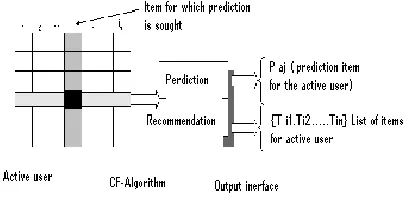
[image:2.612.330.534.239.343.2]Collaborative filtering is a mapping of two high dimensional spaces as shown in the figure below.
Fig. 1: Collaborative filtering
The goal of a collaborative filtering algorithm is to suggest new items or to predict the utility of a certain item for a particular user based on the user's previous likings and the opinions of other like-minded users. In a typical CF scenario,
there is a list of m users and a list
of n items . Each user ui has a list of
items Iui, which the user has expressed his/her opinions about.
Opinions can be explicitly given by the user as a rating score,
generally within a certain numerical scale, or can be implicitly derived from purchase records, by analyzing timing logs, by
mining web hyperlinks and so on. Note that and it is
possible for Iui to be a null-set. There exists a distinguished
user called the active user for whom the task of a
collaborative filtering algorithm is to find an item likeliness that can be of two forms.
[image:2.612.61.250.653.720.2]
Figure 2: Collaborative filtering process
The above figure shows the schematic diagram of the collaborative filtering process.
DOMAIN DESCRIPTION
Collaborative filtering is demonstrated using the filtering techniques in the domain of movie recommendation. Visitors go to a movie’s page to check out the plot description and will be shown a list of similar movies. These are other movies that were watched by people who also rented that specific movie. Because of space- and time-constraints, this application only provides a view on the dataset and the recommended movies. The dataset contains rating data provided by each user for various movies. User ratings range from zero to five stars. Zero stars indicate extreme dislike for a movie and five stars indicate high praise. To have a quicker turn-around time for our experiments, only a subset of the Each Movie dataset is used. The movies and their ratings originate from the Movielens dataset of the Grouplens research group from the University of Minnesota. There are datasets containing 100.000, 1 million and 10 million ratings.
RECOMMENDER SYSTEM FRAMEWORK
Data Collection included the collection of data sets for executing the data mining algorithms.
Data Preprocessing included cleaning and transforming
the collected data sets into the formats which were suitable for the data mining algorithms. It also included the data reduction and selection techniques to improve the efficiency of the data mining algorithms.
Information Filtering via Data Mining was the core
process of the recommender system framework, where the data sets were analyzed and the data mining algorithms were applied as the information filtering tools to generate and discover any useful and interesting recommended outputs.
Database Design and Implementation ensured the
efficiency of data and information access and retrieval, the database for the recommender system was designed and implemented for all related data.
User Interface Design and Implementation acted as an
intermediary between the users and the recommender system. This step involved the design and implementation of a Web (i.e., HTTP) server which received the user’s requests via WWW, processes the requests by accessing the database, and responds by returning the results to the users. The user interface provided a recommendation function with the user personalization technique by requiring each user to log into the system in order to keep track of the preferences.
MAHOUT (TASTE) – RECOMMENDATION ENGINE
Apache Mahout is a new open source project by the Apache Software Foundation (ASF) with the primary goal of creating scalable machine-learning algorithms that are free to use under the Apache license. The project is entering its second year, with one public release under its belt. Mahout contains implementations for clustering, categorization, CF, and evolutionary programming.
Building a Recommendation Engine
Mahout currently provided tools for building a
recommendation engine through the Taste library — a fast and flexible engine for CF. Taste supported both user-based and item-based recommendations and provides many choices for making recommendations, as well as interfaces for us to define our own. Taste provides a rich set of components from which one can construct a customized recommender system from a selection of algorithms. Taste was designed to be enterprise-ready; it's designed for performance, scalability and flexibility. Taste is not just for Java; it can be run as an external server which exposes recommendation logic to your application via web services and HTTP. Top-level packages define the Taste interfaces to these key abstractions:
Data Model
User Similarity and Item Similarity
User Neighborhood
Recommender
Sub packages of org.apache.mahout.cf.taste.impl hold
implementations of these interfaces. These are the pieces to build the recommendation engine. For the academically inclined, Taste supports both memory-based and item-based recommender systems, slope one recommenders, and a couple
[image:3.612.339.516.74.218.2]other experimental implementations. It does not currently support model-based recommenders.
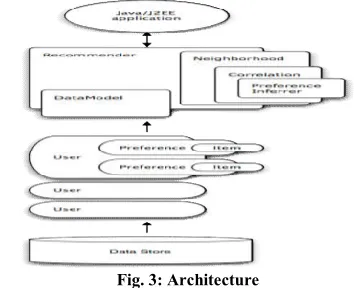
Fig. 3: Architecture
This diagram shows the relationship between various Taste components in a user-based recommender. An item-based recommender system was similar except that there were no
Preferred Inferences or Neighborhood algorithms involved (B.
Sarwar, G. Karypis, J. Konstan, and J. Reidl. Item-Based
Collaborative Filtering Recommendation Algorithms). A
Recommender is the core abstraction in Taste. Given a DataModel, it can produce recommendations. Applications will most likely use the Generic User Based Recommender implementation or Generic Item Based Recommender, possibly decorated by Caching Recommender.
DATA MODEL
A Data Model is the interface to information about user
preferences. An implementation might draw this data from
any source, but a database is the most likely source. Taste provides MySQL JDBC Data Model to access preference data
from a database via JDBC, though many applications will
want to write their own. Taste also provides a File Data Model. There are no abstractions for a user or item in the object model (not anymore). Users and items are identified solely by an ID value in the framework. Further, this ID value must be numeric; it is a Java long type through the APIs. A Preference object or Preference Array object encapsulates the relation between user and preferred items (or items and users
preferring them). User Similarity defines a notion of similarity
between two Users. This is a crucial part of a recommendation engine. These are attached to a Neighborhood implementation.
Item Similarities are analogous, but find similarity between
Items. In a user-based recommender, recommendations are produced by finding a "neighborhood" of similar users near a given user. A UserNeighborhood defines a means of determining that neighborhood -for example, nearest 10 users. Implementations typically need a UserSimilarity to operate.
TOOLS & REQUIREMENTS
Required
1. Java / J2SE 6.0
Optional
work.) Taste web applications require a Servlet 2.3+ container, such as Jakarta Tomcat. It may in fact work with older
containers with slight modification. MySQL JDBC Data
Model implementation required a MySQL 4.x (or later)
database. Again, it may be made to work with earlier versions or other databases with slight changes.
[image:4.612.61.296.170.512.2]IMPEMENTATION
Figure 3 shows the network architecture diagram, figure 4 and 5 shows class diagram and Sequence diagram respectively.
Fig.4: Class Diagram
Fig. 5: Sequence Diagram
User Data
user id item id rating timestamp
196 242 3 881250949
Item Data
movie id
movie title
video release date
UR
L Unknown
Figure 6: User Date and Item Data
[image:4.612.328.529.419.536.2]The user interface screen shots are shown in the figure 7 and figure 8 respectively under the Appendix section
RESULTS AND DISCUSSION
Recommender systems research used several types of measures for evaluating the quality of a recommender system. They can be mainly categorized into two classes:
Statistical accuracy metrics evaluate the accuracy of
a system by comparing the numerical
recommendation scores against the actual user ratings
for the user-item pairs in the test dataset. Mean
Absolute Error (MAE) between ratings and
predictions was a widely used metric. MAE was a measure of the deviation of recommendations from their true user-specified values. For each
ratings-prediction pair <pi,qi> this metric treats the absolute
error between them i.e., |pi-qi| equally. The MAE was
computed by first summing these absolute errors of
the N corresponding ratings-prediction pairs and then
computing the average. Formally,
The lower the MAE, the more accurately the recommendation engine predicted the user ratings.
Root Mean Squared Error (RMSE), and Correlation
were also used as statistical accuracy metric
Decision support accuracy metrics evaluated how
effective a prediction engine was at helping a user to select high-quality items from the set of all items. These metrics assumed the prediction process as a binary operation-either items were predicted (good) or not (bad). With this observation, an item which had a prediction score of 1.5 or 2.5 on a five-point scale was irrelevant while user considered being only predictions with score 4 or higher. The most commonly used decision support accuracy metrics
were reversal rate, weighted errors and ROC
sensitivity.
In this paper MAE was used as the evaluation metric to report prediction experiments because it was most commonly used and easiest to interpret directly
ADJUSTED COSINE (VS) PEARSON CORRELATION
Figure 6 shows the evaluated results regarding different similarity measures. The error was measured as MAE (mean absolute error). Note that the similarity measures were evaluated for the item-based approach as shown in the figure 1.
Figure 7: Relative Performance of different similarity measures
Pearson’s Correlation and Adjusted Cosine were very similarly calculated but resulted in different absolute errors (Fig. 8 and 9)
[image:4.612.333.531.613.692.2].
Fig. 9: An example table containing ratings and users average ratings, as used for Adjusted Cosine measure regarding Item-Item similarity
Technically this meant that data from every row was scaled to the values of its column, and vice versa. Semantically, the difference in the data meant that regarding the adjusted cosine calculation for User-User similarity, the average overall rating of the item (popularity) was taken into account. But for Item-Item similarity, the average user’s rating (his general attitude) was considered. In contrast to this, Pearson correlation scales the values of a vector to the average of the vector. So for a row, the row average and not the column average was taken into account.
CONCLUSIONS AND FUTURE RESEARCH
The need for personalized website design has increased in recent years. The current approach for personalized website design was easily applied to websites due to their cost-effective features, but the current approach cannot easily provide a more refined personalized service because of its lack of a user information database. In this study, the design recommender system was investigated as a more advanced method for website design personalization and current recommender systems were discussed and recommendation techniques were identified, especially collaborative filtering, as a key technology for the creation of user-adaptive personalization service in websites, which produced personal recommendations by computing the similarity between a user's preference and the those of other users. The problematic issues for the collaborative filtering technique, such as the case when a new user with no or very few ratings cannot be reliably matched against other users were examined. To solve this new user problem, we used a demographic data instead of preference data. Based on these investigations, we presented a framework of a design recommender system for website personalization based on the collaborative filtering approach was presented. The work done has limitations and directions for further research as follows:
This study aimed to suggest a basic concept and
prototype to improve the current personalization service for website design by using exploratory research methods such as a literature review and a case study. Therefore, in-depth technical studies should follow for the more practical use of the proposed prototype.
Our recommender system was based on collecting
explicit user preference data by means of user’s direct participations such as user ratings; however, implicit user preference data obtained by analyzing a user’s usage and behavior should be mixed with explicit user data to build a more sensitive and effective
recommender system and support lifecycle
personalization. Therefore, our future work in this area
is to include the implicit user preference data in our recommender system.
Overall Network
[image:5.612.343.509.67.181.2]
Fig. 10: Interaction of the user and the recommender system via HTTP.
[image:5.612.319.537.207.512.2]COMPONENT DIAGRAM
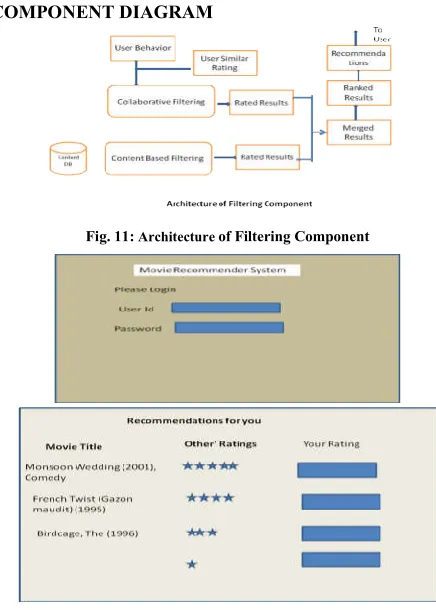
Fig. 11: Architecture of Filtering Component
Fig. 11 and 12. Recommender System Screen Shots
REFERENCES
Arun K Pujari 2006, Data Mining Techniques.
Geroge M.Marakas 2007, Modern Data Warehousing, Mining and Visualization, Core Concepts.
Jiawei Han and Micheline kamber, 2008, Data Mining Concept and Techniques.
Margaret H. Dunham , 2009, Data Mining Introductory and Advanced Topics.
Resnick et al. 1994; Shardanand & Maes 1995; Breeze et al. 1998 Collaborative Filtering and Social Filtering.
B. Sarwar, G. Karypis, J. Konstan, and J. Reidl. Item-Based Collaborative Filtering Recommendation Algorithms.
Springer Berlin/Heidelberg Web Personalization Techniques for E-commerce –
Book Series – Lecture Notes in Computer Science.
http://www.daniel-lemire.com/fr/documents/publications/webpaper.pdf
http://lucene.apache.org/mahout/taste.html
http://www.hindawi.com/journals/aai/2009/421425.html http://www.lebensland.de/download/ibcf/ibcf.pdf