Secure Digital Profile ID Management System
Benda Hari Kumar1, Maloth Sagar2
1, 2
Associate Professor, Department of Computer Science Engineering, Sri Indu Institute Of Engineering & Technology, Hyderabad, India
Abstract: Secure Digital Profile ID Management System(SDPIDMS) is a System for Effective Distribution and Utilization of Resources(EDUR).Creating a digital identification system that is comprehensively used by a particular population might mean gathering a huge amount of data about those individuals, their behaviors, networks, likes and dislikes. Holding that amount of information creates potential for misuse. In this system every person’s Profile is prepared securely and ID number is assigned .this number is Called Profile ID (PID). Day to day data also recorded and status is updated. This system Provides Suggestions and Solutions to the person who are having any type of problems. Every Person is recognized only by Digital Profile ID Number .No other Proofs are required .This system avoids frauds, losses and wastages, It also guide the People in the right way. This System also recommends Rewards for good activities and punishments for bad activities .This System may be implemented to a specific group of people or Organizations or for all People. In this system Every Person Profile ID Number is connected to the Network so that every movement of a Person is under supervision, so that people can be served accurately, in the right time in the right way. This system helps to improve Resource Protection and living Standards of People.
Index Terms: Secure Digital Profile ID Management System, Digital Profile ID, System, Adhaar, Protection.
I. INTRODUCTION
The nature has given so many resources to the mankind. These Resources must be utilized properly. Otherwise problems will occur. Hence People should know how to distribute and utilize the Resources properly. we need a System which collects data from People and Resources and distributes the Resources to the People properly. This system assigns a Unique Identity Number for every Person. On this Profile ID number, all the activities are recorded. This is the only Identification System, which is called Unified Identification System, where all the details are available no other identification systems required. This system also collects biometric, demographic and biographic data. A Profile is created for every person and ID is assigned to that Profile. The Profile data is stored digitally. The Profile is updated regularly. This System warns the Person who are misusing the Resources and guides in the right direction.
II. EXISTING SYSTEM
Existing Identification System does not show all the details of a person for multiple purposes. In this system we have to submit a different Identification Certificate for different purpose. for example voter Id for voting in the elections and cast certificate for Reservations and birth certificate for date of birth driving license for driving and Adhaar card for name and address here we have to submit multiple proofs for a single application .This Existing System takes long time to process a Person’s Identity .This is the Oldest system for Identification. Hence we have to move towards Digital Identification system.
A. Disadvantages of Existing System
The following are the Major Disadvantages of the Existing System
1) More Time Consuming Process and Economically not Profitable.
2) Submitted various Identity proofs are not proper and not updated.
3) All the Identifications are neither digitalized nor linked one another.
4) Controlling and Administration is difficult with the various Identification systems.
5) It is very difficult to organize various Identifications for a single Person.
6) Identification of fraud is difficult.
7) we cannot Process the Data fastly.
III. PROPOSED SYSTEM
A. Advantages
The following are the Advantages by implementing this system
1) This System useful for Unemployment Analysis to employ unemployee.
2) This System is clear and transparent.
3) Educates the Person about Rules and Regulations of our Society.
4) Avoids the wastages and illegal Activities.
5) if any illegal and fraud activities are done ,immediate action will be taken.
6) This system guides the People to move in the right way.
7) This System Protects the Resources and People.
8) This System updates day to day Issues and updates the people accordingly.
9) This system sets a goal and guides accordingly.
10) Generation of PDFs for verification processing of data for various reports.
11) Analysis of data for various beneficiary schemes.
12) Integration of data for Pension and Food Security processing.
13) Replication of Data.
14) Integration of data with various line departments’ Applications.
IV. OBJECTIVES
In response to the challenges and opportunities, this system came up with a few concrete objectives given below
1) Designing for marginalized communities: as mentioned above, intentionality in considering the needs of vulnerable groups is crucial to avoid unintentionally harming anyone, or exacerbating existing inequalities.
2) Holding ourselves to higher standards: in some cases, legal regulations might not have caught up to the ethical challenges faced by establishing digital identification systems. In those cases, where we can identify a ‘red line’ that we shouldn’t cross or an issue we should consider, even if it isn’t necessarily mandated by law, we should put the bar for ourselves higher.
3) Prioritizing rights of individuals over rights of institutions: it was noted that sometimes companies, governments or other institutions are more strongly represented than those representing individuals, which leads to skewed priorities and perspectives. As a result, prioritizing the rights of individuals must come first.
4) Using deliberative democratic systems for meaningful user engagement: rather than simply designing the system with people who are in positions of power, processes could be designed where individual users (or a group of individuals) have the opportunity to meaningfully give feedback in a way that is taken on board and listened to.
5) Developing threat models to proactively plan for risks against individuals: in order to intentionally plan to mitigate risks, we must first know what those risks are. One suggestion was to develop a series of threat models (which would likely be different for different individuals in different cultures/countries/societies) to highlight those risks.
6) Building in systems for accountability within the infrastructure: no matter how hard they try, those designing identification systems will not be able to foresee all the potential harms or risks that might arise. As such, including processes where individuals (particularly those from marginalized groups) can flag a problem or challenge that they are experiencing, and have their voice be heard by decision makers, is crucial.
V. EXISTING Vs PROPOSED SYSTEM
A. Similarities
1) This Digital Profile id is similar to The Unique Identification Authority of India (UIDAI) is a statutory authority established by the Government of India under the jurisdiction of the Ministry of Electronics and Information Technology, following the provisions of the Aadhaar Act 2016.
3) The UIDAI was initially set up by the Government of India in January 2009, as an attached office under the aegis of the Planning Commission via a notification in the Gazette of India. According to the notification, the UIDAI was given the responsibility to lay down plans and policies to implement the UID scheme, to own and operate the UID database, and to be responsible for its updating and maintenance on an ongoing basis.
B. Differences
1) Digital Profile ID is the Complete ID It Provides all the accurate and updated details of a person including qualification, profession, credits, Debits, biodata, Address etc. where Aadhaar ID is not .This is the only ID applicable for all purposes. Adhaar Providing wrong Details and correction requires more time and no guarantee that next time will be correct.
2) This Profile Id shows country code, state code, district code, mandal code and village code and finally a number. This id, itself shows country, state, district, mandal, village of a particular person so that we can serve the people fastly and exactly. This system is useful in various organization for fast approval
VI. IMPLEMENTATION & RESULTS
A. Societal effects
[image:3.612.90.525.332.574.2]Though digital identification systems might be addressing an easily visible need, there might be other needs or systems at play, and new systems might cause disruption of effective informal systems that have been developed around establishing trust within communities. From the state level, these informal systems might seem ineffective, but in actual fact, these could be incredibly efficient systems which are illegible to those outside of a particular community.
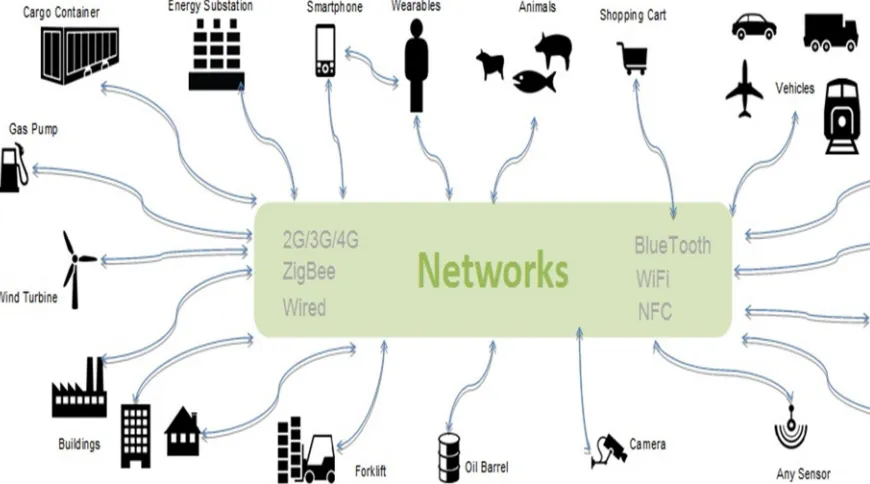
Figure 1: How Physical objects & Devices connected to the Network.
The above figure 1 shows how a person and related things are connected to the network. Profile id consists of country code, State code, District code, Mandal code and finally village code after village code the serial number of the Person is given based on date of birth. One way of avoiding unnecessary disruption might be working closely with researchers and members of the communities in question, to ensure that the identification system is designed with safe guards around existing systems, or uses those same values in a larger system.
Table 1: Details of Person
As such, continuing to develop parallel, alternative systems alongside digital identification systems will be an important part of ensuring true informed consent can really be given.
B. Opportunities
[image:4.612.174.447.268.502.2]Designing intentionally for vulnerable communities, as mentioned above, one issue that comes up often in responsible data analyses is that of power. Who holds the least amount of power in a particular situation, and how are their needs being addressed.
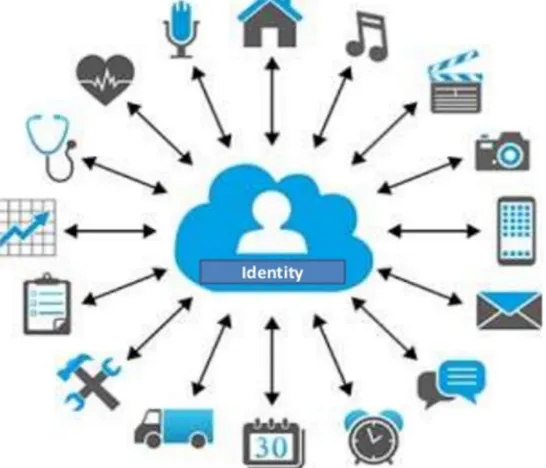
Figure 2: Identity in a digital world system.
In the case of identification systems (and, more generally speaking, technical systems built by a certain group of people with particular biases and behaviours) – it’s important to consider the needs and use cases of marginalized communities. Actively designing for these cases for marginalized groups would avoid unintended negative consequences further down the line, especially taking into account the fact that accountability structures are often very weak for these communities. In too many situations that we’ve all seen, needs of vulnerable communities come as an afterthought to the technical design, which means that their needs are addressed through last-minute tweaks rather than active, intentional design choices.
C. Fluidity of Identity
Contrary to the narrative often offered of one, single unique identity to rule them all as the most powerful format that an identification system could take, the opposite can also be true. Holding multiple identities, and being able to smoothly switch between them is very empowering.
Think, for example, of non-gender binary people, or people who might want to change parts of their identity as they move within society or different communities. If designed thoughtfully and with this use in mind, digital identification systems could allow for smoother transitions between identities, allowing individuals to define themselves by what they consider to be important, and change when they want to perform different identities.
Profile Id name age contact no Problem/solution
11-22-33-44-55-1 Hari 33 8008212981 Job
11-22-33-44-55-2 Sagar 28 9989294904 Loan
D. Streamlining Systems
Digital systems, if designed and implemented responsibly, hold the possibility of providing more transparency to the individual, as well as making transactions requiring trust between particular parties, easier. Analogue identification cards can be lost, and sometimes, not very easily replaced without layers of often confusing bureaucracy. Digital systems could be designed in such a way that a particular item being lost could be more easily replaced, or an identification could be verified through more ways than simply showing a card.
VII. CONCLUSION
In our Society so many Problems, so many Resources, so many People, so many Activities, but This is a Single System which Controls, Manages, Guides all. This system guides the People Legally. This System helps the People for better life and better future. This system will create an Ideal Society where no frauds, no false, no Problems and our natural Resources will be protected So that an Environmental friendly Society will be created.
REFERENCES
[1] "ISO/IEC 24760-1: A framework for identity management - Part 1: Terminology and concepts". ISO. 2011. Retrieved 2015- 12-05. [2] "What is a Digital Identity? - Definition from Techopedia". Retrieved 2016-10-01.
[3] Global, IndraStra. "Digital Identity – A Gateway to All Other Use Cases".IndraStra.ISSN 2381-3652. [4] "Digital Identity - Eclipsepedia". wiki.eclipse.org.
[5] Windley, Phillip J. (2005). Digital Identity.O'Reilly Media, Inc. pp. 8–9.ISBN 978-0596008789. [6] http://www.ffiec.gov/pdf/bsa_aml_examination_manual2006.pdf
[7] "EUR-Lex - 52013PC0045 - EN - EUR-Lex". eur-lex.europa.eu. [8] http://www.comlaw.gov.au/Details/C2013C00371
[9] Affairs, The Department of Internal. "AML/CFT Act and Regulations". www.dia.govt.nz. [10] Cameron, Kim (May 2005). "The Laws of Identity".msdn.microsoft.com. Microsoft
[11] Kahn, Robert; Wilensky, Robert (May 13, 1995). "A Framework for Distributed Digital Object Services". Corporation for National Research Initiatives [12] Sullivan, Clare (2012). "Digital Identity and Mistake".International Journal of Law and Technology.
[13] Camp, L. Jean (2004). "Digital Identity".IEEE Technology and Society Magazine. IEEE.(subscription required) [14] Sullivan, Clare (2010). Digital Identity.The University of Adelaide.ISBN 978-0-9807230-0-7.