Abstract
Brandenburg, David Lawrence. Assessing the effects of positive feedback and reinforcement throughout the implementation phase of an ergonomic intervention.
(Under the direction of Dr. Gary A. Mirka)
It is not uncommon to encounter a situation in ergonomic intervention research
where there is resistance toward proposed changes to someone’s work habits or
workstation. Often, this has negative consequences when attempting to study the
effectiveness of an intervention. Additionally, research into the implementation of an
ergonomic intervention is sparse. Therefore, in an attempt to combat these problems, a
study was conducted in the ergonomics laboratory at North Carolina State University.
The experiment assessed the effects of positive feedback and reinforcement on the
acceptance of an ergonomic intervention.
Two groups of subjects were used; the first, or control, group performed a
screwdriving task using an ergonomic intervention without interruption. The second
group was the feedback group, who received positive feedback and reinforcement while
performing the same task. Significant results from posttest survey questions showed a
29-57% more positive response from the feedback group. Additionally, there was no
instance where the feedback group answered significantly less positively. With respect to
the two remaining types of data, performance and perceived discomfort, no significant
difference was seen either between groups or across the two days of testing.
From these results, it can be seen that the feedback seemed to positively influence the
acceptance of the ergonomic intervention. However, it did not negatively affect a
person’s performance on the task nor did it influence her or his perceived discomfort. The
ergonomic intervention research has a positive impact on the perceptions of the person
working with the intervention. These results are consistent with the body of literature on
the positive effects of participatory ergonomics and may lead to more effective
Assessing the effects of positive feedback and reinforcement throughout
the implementation phase of an ergonomic intervention
By
David Lawrence Brandenburg
A thesis submitted to the Graduate Faculty of North Carolina State University in partial fulfillment of the requirements for the Degree of Master of Science
INDUSTRIAL ENGINEERING Raleigh, North Carolina
2002
APPROVED BY:
Carolyn Sommerich, PhD Michael Wogalter, PhD
Gary A. Mirka, PhD
Dedication
Throughout my education, I told myself that I would stop attending school the minute I
graduated college. I think partially as a child I did not comprehend the importance of an
education. More importantly, I did not value learning as much as I should have. Now,
nearing the completion of a Master’s degree, and contemplating further education, I
realize why people should get an education, for personal fulfillment and to teach others.
I have always carried with me the ideal that I am capable of doing anything I set my mind
to. I have also told myself that I would like to help people through the work that I do.
With the selflessness, encouragement and persistence of my parents, Lynne and Larry
Brandenburg, to whom I am dedicating this thesis, these ideals are still with me today,
and this thesis has become a realization. It was not until I moved away to college that I
became conscious of the principles my parents have instilled in me. I finally appreciate
Biography
David Brandenburg is the second of four children, the other three being his eldest
sister Anne and younger siblings Mark and Mary. His parents, Lynne and Larry
Brandenburg, who raised David and his siblings first in Macomb, IL, now reside in Rock
Island, IL. After graduating from high school in Rock Island, David eventually received
a Bachelor of Science degree in Industrial Engineering from the University of Illinois at
Urbana-Champaign. While at the U of I, he had the privilege of working with Dr.
Michelle Yeh, who was a graduate student at the time of Dr. Christopher D. Wickens.
Immediately following his undergraduate education, he traveled to Raleigh, North
Carolina to attend North Carolina State University to work on a Master’s degree in
Industrial Engineering. While working toward this, David had the honor of working with
Dr. Gary A. Mirka, contributing to ergonomic intervention research in the furniture
manufacturing industry. In the Summer/Fall of 2002 while working to complete his
thesis, David was an ergonomics intern at the University of North Carolina at Chapel
Acknowledgements
One of the major lessons learned from the experience of completing a thesis is
that it is impossible to go it alone. Therefore, I have many people to thank in supporting
me during this process. First I would like to thank my advisor, Dr. Gary Mirka. His
patience, mentoring, commitment and optimism have been invaluable not only to the
success of this project but also to my growth as a person over the last two years. I would
also like to thank the two supporting members of my thesis committee, Dr. Carolyn
Sommerich and Dr. Mike Wogalter for their support and understanding.
I would next like to thank Dr. Allan Bloom. His brilliance, selflessness and
persistence has not only helped make this thesis a reality, but also has helped me to
become one of the most optimistic people I know. I also want to thank my fellow
students, Kelly Duke, Lara Moore, Naomi Glasscock, Sunil Sudhakaran, Heather Warren
and Gwanseob Shin for their friendship and support. I would like to thank Amanda
Granrud for her immense help and for helping me realize that I am a decent writer.
Finally, I would like to thank my family: my parents Larry and Lynne, my brother
Mark, my sisters Anne and Mary, my Aunt Susan, my cousins Larry and Kay Larsen, my
Table of Contents
List of Figures
………..viiList of Tables
………...viii1.0 Introduction
………11.1 Overview of Ergonomics………...2
1.2 Work-related Musculoskeletal Disorders………..3
1.3 Intervention Research……….………...5
1.3.1 Participatory Ergonomics………..11
1.3.2 Importance of Evaluating Quality of Implementation and Effectiveness………...12
1.3.3 Lack of Implementation Studies……….15
1.4 Feedback in Organizations………...16
1.4.2 Incorporating Feedback Into the Intervention Research Process.19 1.5 Interpersonal Communication………..21
1.6 Medium for Testing Theory………23
1.7 Goal of the Study……….28
2.0 Methods
………..292.1 Subjects………29
2.2 Equipment………30
2.2.1 Testing apparatus………..30
2.2.2 Data Collection Instruments………..33
2.2.2.1 Hardware………33
2.2.2.2 Surveys………...33
2.3 Protocol………35
2.4 Preparing for Experiment……….43
2.5 Independent Variables……….45 2.6 Dependent Variables………45 2.7 Data Processing………46 2.7.1 Performance Data...……….………..46 2.7.2 Survey Data………47 2.8 Statistical Analysis………...48 2.8.1 Statistical Model………48 2.8.2 Performance Data……….49 2.8.3 Survey Data………...49
3.0
Results
……….503.1 Employee Survey Data………50
3.2 Performance Data……….54
3.3 Discomfort Data………...56
4.0 Discussion
………..594.1.1 Discussion of the Employee Surveys………..59
4.1.2 Discussion of the Performance Data……….61
4.1.3 Discussion of the Body Discomfort Data………...62
4.1.4 Correlation of Results………62 4.2 Limitations………...64 4.3 Future Research……….………..65
5.0 Conclusion
………..69References
………..71 Appendix A………....74 Appendix B………75 Appendix C………80List of Figures
Figure 1: The sequence of processes related to the introduction of new technology…....10
Figure 2: Model of the effects of feedback on recipients………..17
Figure 3: Picture of height-adjustable table and person performing screwdriving task…30 Figure 4: Cordless screwdriver.……….…31
Figure 5: Aluminum block and type of screw used...………31
Figure 6: Person performing task while using periscope………..……….32
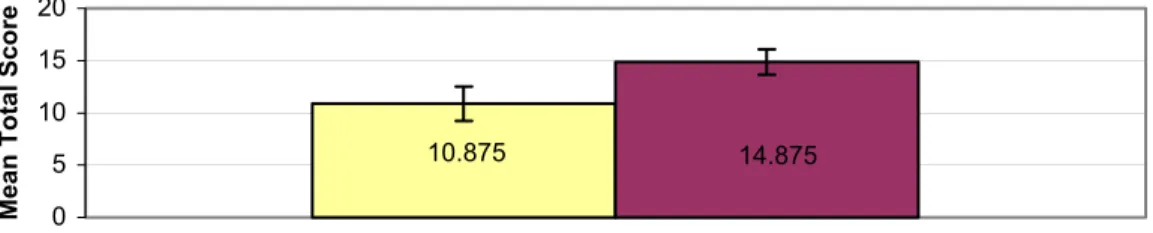
Figure 7: Employee Survey 2, Total Score………....51
Figure 8: Employee Survey 2, Accuracy………..….52
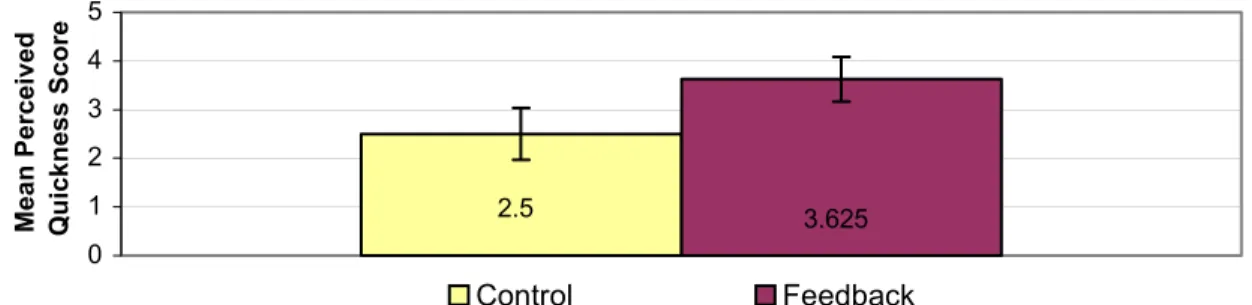
Figure 9: Employee Survey 2, Quickness………..……53
Figure 10: Support From Ergonomist………54
Figure 11: Day 2, Average Time per Block at Four Points During Testing Hour……….55
List of Tables
Table 1: Anthropometric Measurements………...29
Table 2: Kruskal-Wallis Test for Employee Surveys Between Groups………....50
Table 3: ANOVA Test for Performance Between Groups………54
Table 4: Performance Difference Across Days……….54
Table 5: Duncan Test for Four Different Fifteen Minute Intervals………...…55
Table 6: Day 2, Performance Across Groups………....56
1.0 Introduction
Since the dawn of civilization, manual labor has been a staple in our working
society. Injuries have inevitably accompanied physical exertion. One can think back to
the time of the cave dwellers and imagine them dropping a large rock on their foot while
transporting it from one place to another. It is also intriguing to envision the construction
of such structures as the pyramids of Egypt or Central and South America, or even the
Great Wall of China. During these laborious tasks, it is fair to assume that physical
injury occurred throughout the process to any number of individuals. What may be less
apparent are injuries that may have occurred from overexertion due to lifting rocks from
the ground; repetitive motion injuries could have also been prevalent due to repeatedly
passing these rocks from person to person. Both of these situations likely posed an
excessive amount of stress on the person, an amount that the body might not have been
able to cope with. This inability to cope may be either because certain parts of the body
can only sustain a limited amount of external force or because other components are not
allowed to recover in between small, repetitive exertions. While problems like these
found in the workplace have always been apparent, humans have taken many thousands
of years to develop the sensitivity to “see” them. This ability, coupled with the task of
negating these harms, has evolved into the field of ergonomics.
The following introductory section begins with an overview of ergonomics.
Following this, there is a brief explanation of musculo-skeletal disorders and the risk
factors that may be involved in their development. The next section covers intervention
The discussion then deals with problems found during the implementation phase of the
intervention research process. Finally, an argument is formed, specifically that using
feedback and reinforcement during this phase may help elicit greater acceptance for
ergonomic interventions.
1.1 Overview of Ergonomics
The word “ergonomics” comes from the Greek roots of ergon, meaning work, and
nomos, meaning law. Therefore, ergonomics can roughly be translated to mean “the laws of work.” This discipline can be more explicitly defined as the “scientific study of the
efficiency of man in his working environment” (Oxford English Dictionary, online
version). Ergonomics can roughly be divided into two domains of human work,
cognitive and physical.
Cognitive ergonomics, or human factors engineering, is concerned with the user’s
mental understanding of a system and their ability to effectively function within it. An
example of this is seen in aviation. It is important that the displays and controls of an
airplane cockpit are situated such that the pilot can successfully navigate a plane by
obtaining the necessary information without making critical errors.
Physical ergonomics, or simply ergonomics, focuses on the way the human body
works within a system in order to develop working environments conducive to their
physical well-being. An example of this would be the presence of a mechanical lifting
device, such as a hoist, that may take the place of a human needing to bend over to the
ground and pick up a heavy object--both of which would place a great deal of stress on
1.2 Work-related Musculoskeletal Disorders
The motivation for ergonomics research stems from statistics of the number of
recordable workplace injuries and the subsequent amount of money they incur. In 1992,
more than 30%, or 705,800 cases, of all OSHA recordable injuries and illnesses were
attributed to repetitive motion and overexertion. Over half of these cases concerned
injuries to the back. These cases cost industry an estimated $13 to 20 billion annually
(NIOSH, 1997). This is mainly due to lost workdays. In 1992, the average repetitive
motion case resulted in 18 days away from work while the average overexertion case
resulted in 6 to 7 days off. Likewise, according to the Bureau of Labor Statistics, in
1995, 62% of all OSHA recordable illnesses, or 308,000 cases, were from repeated
trauma, such as carpal tunnel syndrome (CTS) and tendonitis. Interestingly, going back
to 1972, this number was just 23,800. These numbers do not include back disorders;
they are recorded as injuries, not illnesses.
Musculoskeletal can be defined as “of, pertaining to, or involving both muscular
and skeletal structures” (Oxford English Dictionary, online version) while a disorder can
be defined as “a disturbance of the bodily functions; ailment, disease.” (Oxford English
Dictionary, online version). Melding these two statements yields the following definition
for a musculo-skeletal disorder (MSD): a disturbance, ailment or disease of, pertaining to,
or involving both muscular and skeletal structures.
MSDs can be produced in a variety and combination of ways, which distinguishes
them from an acute injury such as a broken bone. MSDs develop subtly and increase in
severity over time as a result of several risk factors, both external and internal. External
posture, and to a lesser degree environmental factors. Internal risk factors can be
anatomical or psychological, which are a result of a person’s existing physical and mental
characteristics, respectively. These factors, both external and internal, work together in
various forms and combinations during the development of an MSD, which may increase
the risk (Bhattacharya and McGlothlin, 1996).
External forces exerted on the body become a risk as they increase in magnitude,
either singularly or in unison. Magnitude can increase as a result of the job requirement
or the person’s adopted posture. An example of this can be seen in a job as simple as
lifting an object from the ground. With an increase in object weight, the body is required
to produce more force to lift it. When multiple objects need to be lifted, as the
time-between-lifts decreases, the body is less capable in performing each subsequent repetition
as a result of fatigue.
Posture is also a factor during a task such as lifting. The further the object is
away from the body, the more force that is required to lift it. Bending, as opposed to
squatting, can result in the weight being further from the body than necessary. One thing
that should be pointed out is that a person’s adopted posture may not necessarily be of her
or his own accord. In other words, it could be a result of the workstation setup. For
example, if the item to be lifted is behind a table or some other immobile object, the
person is forced to bend over the table in order to accomplish the lift.
Environmental conditions are a final group of external risk factors of the
workplace (Bhattacharya and McGlothlin, 1996). First of all, as noise increases, a
person’s hearing is subject to damage. Second, temperature may play a role in increasing
characteristics such as a person’s range of motion and strength capacity. It is also
possible while the elasticity of soft tissues is decreased, they may be more subject to
injury (Eastman Kodak Company, 1983). Conversely, in hot environments, perspiration
may reduce a person’s ability to properly grasp an item. Thus, she or he may have to grip
the item tighter to keep control of it (i.e., more exerted force) as the probability for losing
control of it increases with the decreased friction.
Research suggests that internal, or personal, risk factors also play a role in the
development of an MSD (Bhattacharya and McGlothlin, 1996). To begin with, a
person’s anatomical makeup may be such that it is more risky for them to perform certain
tasks. For example, a taller person is required to bend further over in order to lift
something from the ground, which increases the amount of force required to lift her or
himself and the item. Two more examples of possible internal risk factors are
psychosocial stress (MacLeod, 1995; Devereaux and Buckle, 2000) and personality type
(Allread, 2000).
In the context of a working environment, MSDs are also referred to as
work-related musculo-skeletal disorders, or WMSDs. Examples of WMSDs are tendonitis or
inflammation of the tendon, tenosynovitis or inflammation of the tendon sheath, nerve
entrapment or reduced nerve conduction or numbness, low-back pain, chronic neck pain,
and muscle strains.
1.3 Intervention Research
The ultimate goal of ergonomics is to be pro-active by designing products and
came into existence prior to widespread knowledge of ergonomics, there is a need for
retrofitting in those areas to reduce and eliminate ergonomic risk factors. Intervention
research accomplishes this by studying jobs in the workplace, deciding which ones pose
an injury risk to the employees and redesigning the job with the primary aim of reducing
the incidence of musculo-skeletal disorders (MSDs).
Goldenhar et al. (2001) provide a 3-step template for intervention research,
consisting of development and implementation, as well as studying the effectiveness of a
workplace intervention. Although there are other models throughout the ergonomics
literature, this one will be adhered to for the following discussion due to its simplicity.
Each of the three steps encompasses a wide range of events in the intervention research
process.
Development is comprised of everything from initial research of a specific job to
designing a final intervention for a job. This includes the analysis of workplace injury
data. In some cases, a specific job or task has already been identified, and intervention
research will commence specifically at its location. In other cases, company-wide and
possibly even industry-wide injury data is examined in order to determine which jobs
need to be studied first, or, which tasks have the largest injury rate.
Upon identifying a hazardous job, a more focused study of this specific job will
be performed. This examination may include a thorough visual observation of the job,
along with video analysis of its tasks and surveying employees regarding the job and their
health. The next step is generally a process that includes conceptions of possible
solutions. Further efforts will produce an initial prototype, which is then tested in the lab
produces a viable ergonomic benefit to the worker. This could involve focused lab
experiments that collect bioinstrumentation data as well as subjective user-input. If the
results of this study do not show that the intervention provides a significant ergonomic
improvement, the prototype may be modified or a new design can be made and another
experiment will be run.
After a prototype is studied and demonstrated to be effective, it is taken out to an
actual job site; workers will normally volunteer to use it for a certain period of time. This
allows researchers to study the “real-world” effectiveness of the intervention through
video analysis, and the volunteers will ideally provide their thoughts regarding the
effectiveness. At this point it is likely that the prototype will be modified based on the
results from the “real-world” study. It may be apparent that this is an iterative process.
The implementation phase begins following the final modifications when the
intervention is taken out to industry for a long-term trial period. Therefore, the
assumption is that implementation begins when the final prototype is introduced in the
workplace. During this time, employees will be asked to work with the ergonomic
intervention in place for a lengthy amount of time, possibly permanently. This may
include some sort of education regarding ergonomics and why the intervention is being
implemented, as well as a learning phase, which is dependent on the intervention’s
complexity and the employee’s ability and willingness to use the intervention. During
this time, and at times in the future, the ergonomist will be recording critical data to
determine what kind of impact the intervention has on the employee, namely her or his
productivity, and the ergonomic risk factors of the job; the goal is to achieve a positive
The effectiveness study, the third phase of the intervention, is generally long-term
in nature and has the goal of determining the success of an intervention. In the short
term, data can be collected to assess whether there is an immediate ergonomic impact
without significantly affecting the employee’s productivity. Ergonomists will analyze a
certain job to see if there is an improvement in the ergonomic risk factors. These risk
factors may include force, repetition and posture. This can be done with video analysis,
bioinstrumentation data, and user feedback, such as satisfaction and perceived discomfort
and productivity. In the long term, injury data can be analyzed with the intention of
looking for a reduction in injury rates at the redesigned job. This is the type of data that
will have the biggest impact, as lower injury rates translate to reduced worker’s
compensation costs.
One of the major challenges facing ergonomists is overcoming the resistance to
change. In other words, it is difficult to get someone to change her or his work habits if
she or he has had the same job for a number of years. It is unclear whether the
ineffectiveness of the application or the employee’s stubbornness is at fault. There are
some researchers who claim the former is the case.
In a classic article in Harvard Business Review, Lawrence and Lorsch (1954) deal
with this issue of resistance to change. They argue that change in industry is necessary,
but does not need to be as difficult as it so often is. Although the change is usually
technical, such as redesigned work methods, the resistance is to the accompanying
change in the social dynamics of the workplace. The specialists implementing the
change, who are chiefly concerned with the technical aspects of the ideas and not
resistance. In an effort to counteract these negative aspects, this article discusses
employee participation as one method of facilitating change. The authors claim that
respecting and listening to employees is necessary for positive results.
In a follow-up article, Lawrence (1969) provides retrospective commentary. He
expresses he is less optimistic that his initial hope of management making an effort to
include the employees will make a difference in reducing resistance to change. However,
Lawrence discusses primarily changes that affect productivity, which could be a result of
the writing being published in a business journal.
Although the concept of resistance to change in manufacturing environments was
partially spurred by problems with changes in production, it is understood that concern
with more than just production levels is important when introducing new technology in
the workplace. Nadler and Robinson, in their 1987 publication, discuss the cultural
change that may take place when implementing advanced manufacturing technology.
They note that culture within organizations is historically stable, and changing the norms
can prove to be difficult. Their recommendation, therefore, is to change the cultural
norm from stability to continual improvement, similar to the Japanese philosophy of
kaizen.
Hurley (1992) also explains that introducing new technology can significantly
change the workplace. This is evident in ergonomics when an intervention requires the
worker to modify her or his work methods. Therefore, when introducing new
technology, management needs to understand how this will change their relationship with
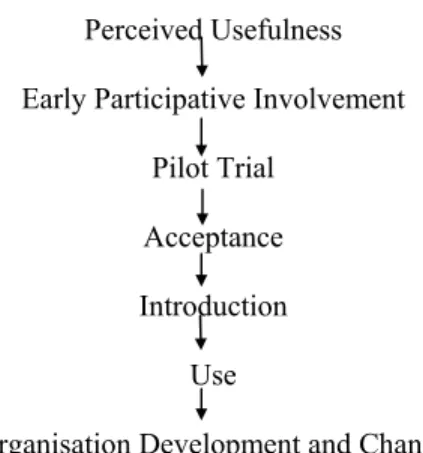
employees. Hurley provides a model describing the sequences that should be involved in
are for the employee to perceive the usefulness of a change and to allow her or him to
participate in that change. He argues that acceptance will be greater if employees are
immediately informed and involved in the change process. The model in Figure 1 also
shows that acceptance should happen prior to introduction. Perceived Usefulness
Early Participative Involvement Pilot Trial
Acceptance Introduction
Use
Organisation Development and Change
Figure 1: The sequence of processes related to the introduction of new technology (adapted from Hurley, 1992)
Resistance to change in the workplace, specifically with regard to an ergonomic
intervention, could be the result of at least four things. First, potentially the employee did
not notice a benefit in using the intervention. Second, it is possible that she or he did not
try the intervention long enough to become comfortable with it. Third, the employee may
not have used the intervention as it was intended or in every appropriate situation.
Finally, and most importantly, she or he may not have been as productive using it. In
piece-rate working environments, productivity is vital to the employee. If the worker can
finish the process faster, she or he will find a way. Relearning the process when asked to
use something like an ergonomic intervention can be very frustrating for the worker.
Addressing the above issues regarding the implementation phase and employee
resistance to change is clearly necessary. One possible approach may be to incorporate
1.3.1 Participatory Ergonomics
As can be seen above, effectiveness studies are necessary in gaining viability for
ergonomics. Consequently, it is important to ensure that what leads up to the
effectiveness study will produce valid and reliable results. Therefore, studying the
preliminary areas of development and implementation in great detail and determining
ways to improve those processes are also key measures.
Additionally, in an attempt to achieve the overall goal of lowering the workplace
injury rate, intervention researchers have used a number of different techniques in order
to facilitate the process of improving ergonomics in the workplace. One approach may
have been to provide a training session that will better familiarize the worker with the
intervention. An alternative, or supplement, is to give an informational session about
ergonomics, during which a worker may be able to understand why the intervention is
being implemented. Presently, a common option is to allow the employees to assist in
designing the intervention, a process called participatory ergonomics.
In a participatory ergonomics program, the employee actively participates in
improving the ergonomics of her or his job (Imada, 1991). The major benefit of this
approach is that the employees are the ones who know their job in the most detail. It is
also possible that they know what aspect of the job they dislike from the pain or
discomfort they feel at work. In addition, the employees may already have some ideas to
improve the job. Finally, if the employees are willing to participate in the design, and
they invest their time in helping in the design, it often means that they are accepting of an
1.3.2 Importance of Evaluating Quality of Implementation and Effectiveness
Participatory ergonomics is active in the development stage of an intervention, but
it seems to be lacking in the most critical stage of implementation. While the employees
who participate in the design are accepting of it, other employees asked to use the
intervention may not be. At this point intervention researchers need to communicate the
following to the user: what is ergonomically wrong with the workstation, what we as
researchers are trying to do about it, how the worker can incorporate the intervention into
her or his job over time.
Certain concerns seen during the implementation phase need to be noted.
Workers, especially in a piece-rate system, may grow frustrated with the intervention as
their ingrained habits are making it difficult to relearn the task. In addition, it is vital to
get them to realize that they actually are learning the task and that it is an improvement
over their previous set-up. It is also important to help them understand the full
functionality of the intervention as well as to ensure that the intervention is used
correctly. There are certain questions that arise while trying to understand these
situations. Are we as researchers doing enough to help employees with the transition?
Are we saying what they need to hear? Do they understand what we are trying to
communicate? Why do some employees decide to stop using the intervention after a
short period of time? Overall, how can we improve the implementation process?
One method of facilitating implementation, which has not shown up in the
ergonomic literature, is the use of feedback and positive reinforcement. It is possible that
learning stage and exactly how we see the intervention helping them. If they can get an
understanding of how the intervention is helping them as individuals, their outlook of the
job may change and they may become more accepting of intervention research and the
intervention process. Ergonomists need not only to be concerned with the proper design
of an intervention, but also how to convince people that it will improve the ergonomics of
their job. If and when ergonomics becomes completely pro-active, this might be less
important, as the job will not need to be changed. However, thinking realistically, it
seems that helping facilitate the transition of an ergonomic intervention can improve
intervention research productively and beneficially. Positive, direct interaction with
someone can be a good way of influencing their perceptions.
In an article addressing the future of intervention research, Rosenstock (1996)
argues that researchers must consider behavioral procedures, which attempt to influence
worker knowledge, beliefs and behaviors. These procedures may include behavior
modification techniques. Rosenstock claims that it is important to consider factors of
organizational cultures, which include common attitudes regarding workplace health and
safety. She mentions that the success of controlling exposure may be dependent on this
knowledge.
Goldenhar and Schulte (1994) reviewed a number of occupational health and
safety intervention studies. While the review showed that some of the studies provided
behavioral interventions, including education and/or skills training, there was no mention
of studies that looked at effects of feedback/reinforcement on performance with or
combining an engineering intervention with a behavioral one, strengthens the foundation
for developing intervention research.
Likewise, in a 1996 paper, Goldenhar and Schulte state the importance of
implementing more than one type of intervention control strategy (e.g., engineering and
behavioral strategies used in tandem). They cite seven articles that tried to encourage
health and safety related behavior by using behavioral modification techniques like
feedback. Unfortunately, the authors do not mention the outcomes of the experiments
performed in any of these articles.
Schulte et al. (1996) point out that intervention research can be difficult to carry
out as it is linked to social issues in the workplace. The authors note that intervention
research needs not only engineers, but also psychologists, sociologists and
communication specialists, among others, to be successful. Levenstein (1996) also
asserts that intervention research must be built on foundation of social science research.
His reasoning is based on the fact that interventions tend to intrude on the employee’s
workspace.
Zwerling et al. (1997) reviewed numerous occupational injury intervention
studies. There were two that looked at feedback and reinforcement as an administrative
intervention, and both found positive results. The two studies focused on occupational
safety and used the technique of providing feedback to prevent accidents (Cooper et al.,
1994) and to reduce laundry linen contamination (Burken et al., 1994). Additionally,
there was a number of ergonomic intervention studies reviewed. While three of them
applied participatory ergonomics in their study, none seemed to use feedback as a way of
Ironically, in his 1987 publication, Helmreich discusses the idea of increasing the
acceptance of new technology in the office. He questions whether the user will realize
the full benefits of new technology. Regarding the introduction and training phase, he
stresses that users of new office systems need encouragement and support.
Overall, participatory ergonomics has introduced something vital in intervention
research: including the employee’s input on the design of an intervention. However, it is
still critical that the employee’s needs be considered after the design process, specifically
during the introduction of the intervention into her or his work. As a result, it has been
suggested that ergonomists take an interdisciplinary approach to intervention research. In
other words, knowledge from the social sciences should be used in the implementation
process.
1.3.3 Lack of Implementation Studies in Ergonomics
As a result of problems with prior steps such as implementation, it is felt that
effectiveness studies can be difficult to carry out for three possible reasons. First,
employees change jobs or leave the company. Second, it is possible that the intervention
does not hold up under long-term working conditions, and more unforeseen modifications
may need to be made. A third explanation is that workers could decide they do not prefer
to use the intervention and revert back to the original work methods. In the latter
instance, that decision may be due to improper or incomplete methods carried out during
the implementation phase.
Goldenhar et al. (2001) recommend that effectiveness studies should not be
effectiveness study may not be useful if it does not have solid ground to support it. The
question then becomes, what is the proper procedure for implementing? This can be
answered by researching intervention studies and the fidelity of the implementations.
When implementation studies have been done, they often times have been weak
or inconsistent (Goldenhar et al., 2001). If this is the case, then it undermines the validity
of effectiveness research, as it is dependent on proper implementation. It is assumed that
weak and inconsistent implementations studies are a result of their perceived
unimportance. A partial explanation of this perception may be that researchers believe
the fallacy that introducing an intervention equates to use (Bennis, 1966). In a more
abstract sense, Bennis argues that gaining knowledge about something does not
necessarily precede a subsequent intelligent action.
In the case of intervention research, it might be assumed that simply introducing
an intervention and explaining the rationale for why the intervention may help someone
do not necessarily translate into proper use. As a result, the implementation phase may
not be effective. Helmreich (1987) also argues that there is a need for research into the
introduction of technology. Additionally, in order to gain acceptance in the workplace,
new technology needs to be seen as valuable to the employee. A consequence of poorly
implementing an intervention, according to Lipsey (1996), is the expectation of weak
results from the effectiveness study. It is because of this that the implementation phase
1.4 Feedback in Organizations
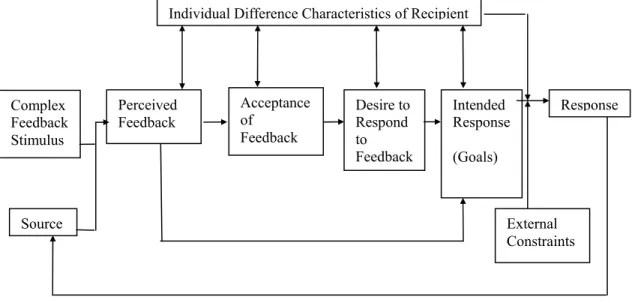
Ilgen et al. (1979) provide an overview of the elements within the feedback
process, which is depicted in Figure 2. Feedback starts at the source; while the source
could be a number of entities this discussion assumes that the source is an observer of
another individual’s behavior. This observer is evaluating the individual’s actions and is
prepared to provide verbal information to that person.
In processing feedback from the “source,” the individual receiving feedback may
move through four processing stages. First, she or he perceives the feedback in three
dimensions. Timing is the first dimension, and it refers to the amount of time between
the individual’s action and her or his receipt of feedback. It is generally felt that
feedback is more effective with a shorter time interval (Ammons, 1956). The second
dimension of perception is the sign, which can be either negative or positive. Research
has shown that positive feedback is perceived more accurately. Negative feedback, on
the other hand, is harder for an individual to accept, and it has the tendency to be Individual Difference Characteristics of Recipient
Figure 2: Model of the effects of feedback on recipients (Adapted from Ilgen et al., 1979) Complex Feedback Stimulus Source Perceived Feedback Acceptance of Feedback Desire to Respond to Feedback Intended Response (Goals) Response External Constraints
misperceived. The third dimension of perception is frequency. While Ilgen and his
colleagues may not agree that more feedback is always better, they feel that feedback in a
work setting is usually too infrequent. Therefore, they suggest providing more feedback,
though understanding that it may be possible to administer feedback too frequently.
Once the feedback is properly perceived, the individual decides whether or not to
accept the information provided. This decision can be influenced by the source providing
the feedback, the message given, or the recipient receiving the feedback. The source is
usually the key element in accepting feedback, particularly the individual’s perception of
the source’s expertise. Regarding the message, it again relates back to the sign of the
message, meaning that positive feedback is generally more accepted. The recipient is
also a key variable in acceptance. A person with an internal locus of control, meaning
someone who feels more in control of their actions, is normally more accepting of
feedback because of that feeling. Conversely, someone with an external locus of control
is less accepting of feedback, possibly because they do not believe the feedback is
correct. Additionally, age may play a role in acceptance. Older people, who are generally
more experienced in the workplace, are less accepting of feedback and more likely to use
their own experience as a source of feedback.
Following the acceptance phase, the individual may or may not have a desire to
respond to the feedback presented. This is where the perception of the feedback is
integral, meaning that timing, sign, and frequency all play a role in someone’s desire to
respond. Additionally, credibility of the source can play a role in their desire.
The final step prior to actually responding to the feedback is the individual’s
completing the task. The goals, however, can be affected by the feedback given to the
person. It is also noted that specific feedback leads to more specific goals an individual
hopes to achieve based on this feedback. Once the processing of the feedback is
complete, the individual may or may not provide a response, and the cycle starts over.
1.4.1 Incorporating Feedback into the Intervention Research Process
The idea of providing feedback in the workplace has been around for years. Ilgen
et al. (1979) claim that feedback is essential for learning and motivation in
performance-oriented organizations. This may be true for at least two reasons. First, feedback from a
manager or supervisor may prove to be a motivating factor for an employee to increase
performance or for making the work environment safer. Second, from an intervention
research perspective, it may be possible to increase acceptance for an intervention with
simple observational assistance and/or reinforcement for the worker learning the new
task.
With regard to the first issue, Becker and Klimoski (1989) performed a field study
providing different forms of feedback. Surveys were sent to 152 salaried employees in
one particular organization. The researchers reported a positive correlation between
feedback from supervisory sources and job performance, while no effect was found with
feedback from peers or self. More specifically, positive feedback led to higher job
performance.
Pavett (1983) also found positive feedback to be an independent predictor of
performance. This study examined the perceptual relationships between feedback,
but was performed in a hospital setting with nurses as subjects. Pavett found an effect
resulting from frequent positive feedback from three groups of people, including not only
supervisors, but peers and patients as well.
A study by Leach et al. (2001) again showed positive effects of feedback. In
determining performance, they looked at the change in operator errors on a complex task
due to feedback. Specifically, the researchers saw a decreased likelihood of errors along
with machine utilization. However, Leach and colleagues saw no change in worker
motivation over time.
McAfee, in an article published in 1989 also related to safety, performed a review
of 24 studies regarding feedback/reinforcement use in the workplace. In determining
articles to review, the authors had four criteria that a study had to meet. First, it needed
to be in an industrial setting (although they included four studies involving city
employees and one laboratory study) with the goal of improving safety-related behavior
through the use of feedback and incentives. Second, the study needed to report statistical
data, as opposed to testimonial report. Third, the study had to use a before-and-after
design. And finally, since comparisons would be made between studies, there needed to
be a sufficient amount of information to do so. A typical study looked at the effects of
training, goal setting and feedback or reinforcement on safety-related behavior. Overall,
the authors found that in each of the 24 studies, incentives or feedback enhanced
safety-related behavior and/or decreased accident rates at least in the short term. They suggest
that their conclusion reinforces the theory that rewarded behavior tends to be repeated.
With regard to the second point of acceptance, most feedback studies looked at
Other studies have used feedback to improve worker safety and to reduce error rates.
Unfortunately, nothing has been found yet in the area of acceptance or satisfaction of new
process/intervention due to positive feedback and reinforcement. In addition, the use of
feedback in the work environment is generally non-dynamic, or in survey form, as shown
in the above research.
1.5 Interpersonal Communication
The importance of communication is often overlooked, especially in the
workplace, which is, in fact, one of the motivating factors of this study. We want to
increase the amount of human interaction in the workplace in order to facilitate change.
Therefore, it is important to review the domain of interpersonal communication. This
section contains a brief overview of interpersonal communication and its important
characteristics; the overview is followed by a discussion on how interpersonal
communication and feedback was incorporated into the present study.
Wood (1992) describes communication as a systematic, symbolic and dynamic
process that involves communicators who personally construct content and a relationship.
As opposed to using the traditional expressions of sender/receiver, she uses the term
communicator because speakers and listeners are simultaneously communicating with
each other. Not only are there verbal cues conveyed by the speaker, there are also
nonverbal cues conveyed by both the speaker and listener. For the sake of simplification,
this discussion will be divided into two parts, verbal and nonverbal communication.
Verbal communication carries responsibilities along with administering it. Most
should be aware of misunderstandings and be willing to ask questions to ensure this. The
speaker should also be prepared to restate what she or he has said. However, verbal
communication not only consists of what is said, but also how it is said; this is referred to
as paralinguistics (Tubbs and Moss, 1974).
Paralanguage consists of different voice qualities and unstructured vocalizations,
and it can be structured to portray to the listener different aspects of the message. Voice
qualities consist of variations in pitch, range, resonance, rhythm, lip control, and
articulation control. Vocalizations are noises such as laughing and crying. Examples of
variations of these two aspects are as follows: the tone of one’s voice can project
inferences about feelings; increasing tone, speech rate, volume and fluency may portray a
persuasive person; also, increasing loudness, pitch, timbre and speech rate can show
intensity of emotion (Tubbs and Moss, 1974).
Verbal communication is regularly coupled with nonverbal communication. In
some ways they are equally important. Actually, nonverbal communication can be more
trusted, which is likely due to our experience during infancy, where humans live 12-18
months relying strictly on nonverbal cues. Nonverbal communication is used for three
reasons, to express meaning, to modify the verbal message, or to regulate the flow of
interaction (Trenholm and Jensen, 2000). Important nonverbal cues are facial
expressions, because the face is the most noticeable feature of someone when
communicating. Other cues include eye contact, body movements such as reactions,
hand gestures--the second most important form, and physical appearance (Tubbs and
Moss, 1974). Overall, the significance of nonverbal communication is that it allows
In preparation for the current experiment, the experimenter studied the ideas of
interpersonal communication along with characteristics of giving feedback. The
“Feedback Scripts,” shown at the end of section 2.3, included information about the
subject’s improved neck posture, as well as noticing that she or he was learning the task
and beginning to reach her or his productivity level of Day 1. The goal was to be as
truthful and positive as possible while not giving the subject too much information to bias
the results. For example, when giving feedback about productivity, the participant was
told that she or he was getting better and faster at the task, but were not told specifically
how much faster. However, what was specifically said is not as important as the delivery
of the feedback; with regard to its characteristics and style, delivery was the critical
aspect in changing the subject’s perception of the new task and its setup.
Kolb et al. (1980) provide a template regarding seven important characteristics of
feedback. The characteristics are as follows: feedback should be descriptive, specific,
solicited, immediate, checked for clarity, and directed toward behavior that can be
controlled. Feedback should also take into account the needs of both parties involved.
The feedback scripts and their deliveries from the current study were designed by
following these guidelines as closely as possible. Unfortunately, the feedback was
imposed by the experimenter, rather than solicited by the subject, at certain points in
time.
1.6 Medium for Testing
In choosing an experimental task for the current study, it was important that the
for musculoskeletal disorders that could be reduced with an appropriate ergonomic
intervention. Second, since the experiment was conducted in the laboratory, the goal was
to make the base task relatively simple. Third, it was pertinent that the intervention
created a certain amount of frustration in the learning process, in order to observe this
learning process, as well as force the subject to make a choice at the end regarding
acceptance.
Since the goal of the current study was to look at the implementation of an
ergonomic intervention, the intervention chosen must show an ergonomic benefit.
Therefore, the task used in this study is taken from Lutz et al. (2001), entitled “The use of
mirrors during an assembly task: a study of ergonomics and productivity.” The goal of
the study was to assess the effectiveness of an intervention for reducing non-neutral neck
postures. Specifically, the authors looked at a screw-driving task, using power
screwdrivers and an aluminum block in which the screws were driven. This was
performed in four different configurations. Two of the configurations were more
conventional. First, there was the Industry Standard Configuration (ISC) in which the
participants performed the task on a table in front of them. The height of the block was such that the elbow was flexed roughly 90° when holding the screwdriver in an inline, vertical orientation. The second conventional set-up was the Pistol Grip Configuration
(PGC). In this situation, the subjects performed the task on the wall in front of them.
The block was placed at acromion height an arm’s length away and the screwdriver was
set in the pistol grip configuration.
The remaining pair of configurations featured a visual aid in an attempt to place
Configuration (MC). In this set-up, the block was placed on the table as in the ISC.
However, subjects were asked to look through a mirror located at eye level while
completing the task; the mirror reflected a reverse image of the block to the subject. The
final configuration was the Periscope Configuration (PC). Resembling the MC with one
additional mirror, the two mirrors acted like a periscope, the second mirror reverted the
image so the subjects saw exactly what they would see if they looked directly at the
block.
These two configurations addressed the non-neutral postures of the ISC and the
PGC. In the ISC, subjects were required to flex their neck in order to look down at the
table. Conversely, in the PGC, subjects were required to raise their arm up to shoulder
height to reach the block. Both of these situations produce static postures that can lead to
fatigue, discomfort and reduced blood flow. The effects of static postures could not only
lead to a physical ailment, but also a decrease in productivity and quality. Two
configurations, MC and PC, place both the shoulder and neck in a more neutral posture.
Lutz et al. considered both ergonomics and productivity as dependent measures in
their study. The results of the study do indeed show an ergonomic improvement with
both the MC and PC, compared with the ISC and PGC. Significant effects were found in
angular deviations, normalized IEMG data, self-reported body discomfort ratings,
productivity, and configuration preference. Angular deviations of the neck and head
were collected. Deviations were significantly reduced in the MC and PC, compared to
the ISC. Also, angular deviation of the shoulder was significantly reduced in the MC and
PC, this time compared with the PGC. Normalized IEMG (NIEMG) activity was also
activity with the MC and PC. In the shoulder muscles, compared to the PGC, the PC and
MC show a significant reduction in activity. The results of the body discomfort also
show a significant effect. In the ISC condition, a significant increase in neck discomfort
was reported, compared to the PC and MC. In the PGC condition, a significant increase
in shoulder discomfort was seen, compared with the PC and MC.
While the variables discussed above show a positive effect of the visual aids,
productivity and preference showed an opposite effect. In terms of average number of
seconds per block, the ISC was significantly the most productive workstation. On the
contrary, the MC was significantly the least productive workstation. The PGC and PC
were not significantly different from each other, but significantly worse than the ISC and
better than the MC. It is interesting to note that, in the second experiment where the
subjects worked for four hours, three of the eight participants showed that by the end of
the four hours they could perform the task as fast with the PC as they could in the ISC.
Additionally, 75% of the participants reported a preference for the ISC, assuming they
worked on a piece-rate basis.
Among the conclusions of the study, the researchers found that while the two
mirror configurations provided the ergonomic benefit of physical relief, they reduced
productivity by 13-23%. These mixed results provided another interesting problem for
the present study. As stated above, it was important that the task chosen for this study
was one that had an empirically proven ergonomic benefit, one that had a visible learning
period that may create frustration, and one that was a laboratory study that could be
replicated. Since the Lutz et al. (2001) study exhibited all of these characteristics, and
study. It was a modified replication, however. Only two of the four configurations were
used in the present study, the industry standard configuration and the periscope
1.7 Goal of the Study
The aim of the present study was to examine the effects of positive feedback and
reinforcement during the implementation phase of an ergonomic intervention. There are
three main hypotheses of this study. First, it is expected that the feedback will make
people more accepting of an ergonomic intervention. Second, it is expected that the use
of feedback will prove to be a catalyst in the process of learning to use an intervention.
In other words, subjects who receive feedback will learn the new task quicker than
subjects who do not receive such feedback. And finally, perceived discomfort will not be
2.0 Methods
2.1 Subjects
Eight males and eight females, ages 19 to 53, were recruited from the university
population through the use of fliers as well as word of mouth. Subjects were required to
be 18 years of age, have normal or corrected to normal vision, have no history of chronic
neck pain, and be able to stand for at least one hour at a time. They were also told prior to
participating, that they would be compensated based on their performance of the task; for
the 3 hours of work they would receive approximately $20. In addition, at the beginning
of each day, subjects were asked to sign a written consent form, shown in Appendix A.
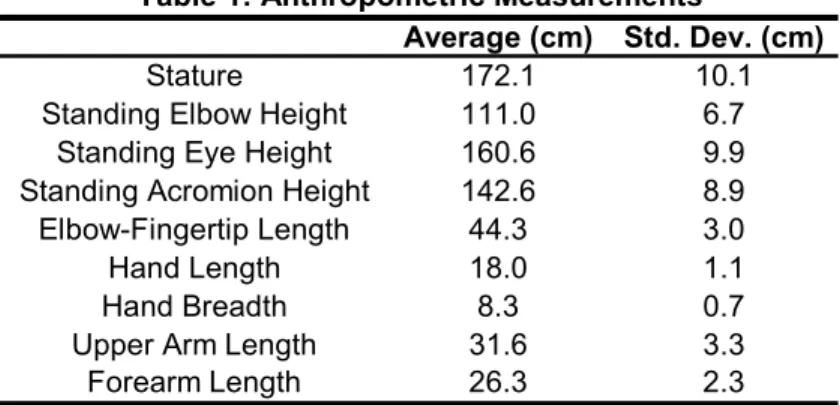
Table 1 displays the anthropometric data, which was compiled at the beginning of
each subject’s first day. The table contains the average and standard deviation of each
measurement. The experimenter directly compiled all but two of the measurements
shown. Upper-arm length was calculated by subtracting standing elbow height from
standing acromion height. Similarly, forearm length was calculated by subtracting hand
length from elbow-fingertip length.
Average (cm) Std. Dev. (cm)
Stature 172.1 10.1
Standing Elbow Height 111.0 6.7
Standing Eye Height 160.6 9.9
Standing Acromion Height 142.6 8.9
Elbow-Fingertip Length 44.3 3.0
Hand Length 18.0 1.1
Hand Breadth 8.3 0.7
Upper Arm Length 31.6 3.3
Forearm Length 26.3 2.3
2.2 Equipment
2.2.1 Testing Apparatus
The task performed in the experiment, discussed in more detail in Section 2.3,
consisted of driving and removing screws from an aluminum block using a cordless
power screwdriver. The task was performed on a height adjustable table as seen in
Figure 3. This figure also depicts a person performing the screw-driving task. The
Figure 3: Picture of height-adjustable table and person performing screw-driving task
figure also shows the type of screwdriver used, which can be seen more clearly in Figure
4. All were of the same type: Sears Craftsman, Model 315.11690. The screwdrivers
speeds (low = 130 rpm, high = 400 rpm), and had adjustable torque. Each one was left
on its charger overnight to ensure maximum battery life.
Figure 4: Cordless screwdriver
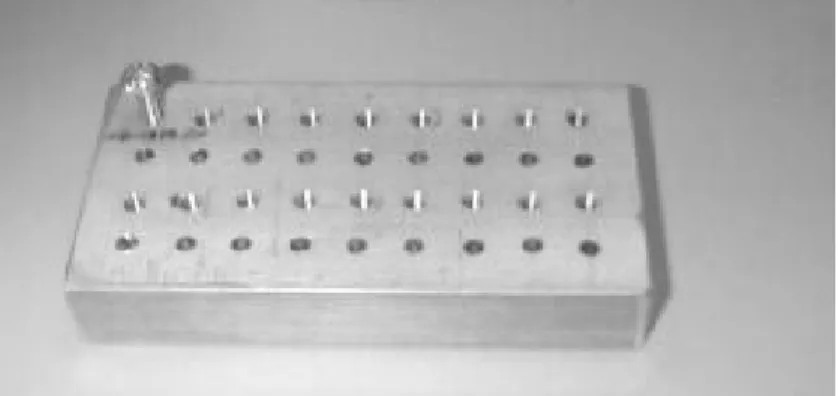
Not as obvious in Figure 3 are the aluminum block and screws used in the
experiment. Figure 5 depicts these more clearly. The dimensions of the block were 6”
long X 3” wide X 1” thick. It contained a 4 X 9 grid of pre-drilled and tapped holes. For
each testing session, 18 screws measuring 3/4” long, 1/4” diameter and 20 threads per
inch were used.
Figure 5: Aluminum block and type of screw used
On the second day of the experiment, the subject performed the task while
looking into a “periscope” mirror configuration, as opposed to looking directly at the
work surface. Figure 6 provides an illustration of this. The periscope configuration was
oriented “two-by-four” block was used with slots cut through it (approximately 2”
vertically apart), measuring approximately ½” high X 2” wide. These slots were used to
Figure 6: Person performing task while using periscope
place the two mirrors. Each mirror measured 12” X 12” with a rotating arm glued on the
back, which was placed in a specific slot relative to the subject’s height.
To get a better understanding of how the mirrors work, further explanation is
needed. Further examination of Figure 6 shows a horizontally oriented mirror, which is
downward facing to capture the image of the block from the work surface. A second
mirror is tilted approximately 45° from vertical and facing the participant; this captures the inverted image from the mirror above, reverts the image, and displays it in front of the
forward-looking subject. Notice the difference in neck flexion of the person between
Figures 3 (Day 1) and 6 (Day 2).
2.2.2 Data Collection Instruments
2.2.2.1 Hardware
Seven body dimensions were recorded with an anthropometer. These include
standing height, standing eye height, standing elbow height, standing acromion height,
hand length, elbow to fingertip length and finally hand breadth. Standing elbow height
was important in determining table height while standing eye height was necessary for
configuring the periscope on the second day.
The subject was recorded on video in the sagittal plane on both days of the study.
This was used to determine more precise times for each completed block and for
analyzing posture, bodily “fidgets” and technique throughout the two hours of testing. A
stopwatch for recording minutes and seconds was used by the experimenter to monitor
the duration of the task and also cycle times in order to provide feedback (described in
section 2.3) to one of the two groups of subjects. During post-experimental data
collection, a television and videocassette recorder were used to more accurately record
the time-to-completion of each block.
2.2.2.2 Surveys
The remaining data collected during the experiment was via self-reported paper
surveys. All surveys used can be found in Appendix B. Subjects were presented a “Body
discomfort at that moment. This document depicts an outline of a body, from the front
and back as well as close-up portrayals of the front and back of both hands. The subjects
were instructed to label each spot on the body where they currently felt discomfort and
rate it from 1 (slight discomfort) to 10 (unbearable pain). For persons without
discomfort, there was a space for them to indicate so. This survey was also administered
each day at the conclusion of testing to gauge change in their perceived discomfort during
the testing period.
A post-test survey, “Employee Survey 1,” was also administered at the end of
both sessions, following the second body discomfort survey. This survey asked subjects
to rate (on a five point Likert scale) the following four categories: ease of use, comfort,
accuracy and productivity. The five points of the scale were as follows: strongly
disagree, disagree, neutral, agree, and strongly agree. Therefore, one statement read:
“The workstation configuration allowed me to easily complete the task.” They were
instructed to give their level of agreement to the question by circling one of the five
choices, answering according to their experience of performing the task using the
configuration on each day.
On the second day of experimentation, subjects completed two additional surveys.
The first was “Employee Survey 2,” designed nearly identical to the previous survey, but
this time the subject was asked to compare the two workstation set-ups using the same
four categories as above. As a result, the example above was reworded to the following:
“The periscope configuration allowed me to more easily complete the task.” Again, they
were asked to provide their level of agreement by circling one of the five choices, from
regarded the support of the “ergonomist” (the experimenter) and the other regarded their
preference toward the periscope. These were worded differently than the first four
questions on the survey; the subjects were asked strictly about their experience on Day 2.
The Subjects were then asked to fill out a “Final Comparison Survey,” which
queried the subjects on their preference of workstation setup, also based on the same four
categories as the first survey. This survey, however, was constructed differently. They
were asked to pick their preference between the industry standard configuration from Day
1 and the periscope configuration from Day 2. Finally, the subjects were asked to answer
one comprehensive question: whether they would be willing to use the periscope
configuration for the next two months, imagining that the task of screw driving was their
real job.
2.3 Protocol
The experiment was administered to each subject over a two-day period. The
second session in each case was within a week of the first, though not on consecutive
days. Each session lasted approximately one and a half hours, which included one hour
for each testing period, and then a half-hour on both days for preliminary and post-test
activities. Appendix C contains a protocol checklist that lists each activity performed,
listed in brief below:
1. The subject filled out administrative forms and a discomfort survey.
2. Anthropometric data was collected (only on the first day) and the
workstation was subsequently set up.
4. The subject filled out another discomfort survey and any other surveys
required for that day.
5. The subject was thanked and given payment (only on the second day).
Day 1
Upon arriving at the laboratory, the procedures of the experiment were briefly
explained to the participant, and she or he was shown the workstation and tools used.
The participant was subsequently asked to read the Informed Consent form. Those who
wished to continue signed and dated it and provided it to the test administrator. If the
participant wished to retain a copy of the unsigned consent form she or he was provided
one to keep. There was a specific section in the form that queried the subject on whether
or not she or he had chronic neck pain, and if not, to sign her or his initials in an area
provided.
The subject was then asked to complete a “Body Discomfort Survey,” asking her
or him about any current bodily discomfort. The next preliminary activity was the
compilation of anthropometric measurements. With the use of standing elbow height,
the workstation height was established. The key in this adjustment was to set the table
height so that the subject’s fingers were horizontal without wrist deviation in either the
radial or ulnar direction when performing the task. Therefore, the height was such that
while the subject held the screwdriver in hand over the aluminum block, the elbow was in
a position a few degrees above horizontal. More importantly, this table height was
recorded in order to reproduce the set-up on the second day.
Once the workstation was in order, the “Introductory Script” was read out loud to
“You are an employee at a major auto manufacturing facility. Your job assignment is to assist in building the engine block. During this task you will be using the cordless screwdrivers to drive and then remove screws in rows one and three on the block, alternating between each row. It is important that you approach the task as if you were actually working in a manufacturing facility. Imagine that you just arrived at work and that you are to work for the next hour until your morning break. For the first part of the hour, I will ask that you do as thorough a job as possible, not worrying too much about how long it takes you to do the work. During the second half of the hour, you will get paid based on the number of blocks completed, so the more you produce the more you get paid.”
Following the reading of this script, the subject was taken to the workbench, and
the experimenter demonstrated how to perform the screw-driving task. At this stage, the
subject was informed that there were various ways of performing this task. The
experimenter also explained the reasoning for keeping the driver vertical while driving
screws, which was to ensure that the screw went in vertically and without resistance.
The subject then practiced the task for thirty minutes. Prior to beginning, she or
he was told how to perform the task, specifically to drive and then remove 18 screws
alternating between rows one (the top row in Figure 3) and three (second from the bottom
row of Fig. 3). The participant was also notified that there was no time pressure to
complete the task, and she or he should develop an efficient work method, as the second
half-hour of the session was piece-rate.
While training, the subject was allowed to adopt her or his own style, provided the
screwing-in pattern was alternating between rows one and three. The training period was
videotaped to better observe each individual method as well as each subject’s learning
progression.
At the end of those thirty minutes, the subject was stopped and read the Day 1
“Performance Script” as follows:
“During this task you will be using the cordless screwdrivers to drive and then remove screws in rows one and three on the block, alternating between each row. For the next half-hour, you will get paid based on the number of blocks completed, so the more you produce the more you get paid. I will be observing you as you work. Ready? You may begin.”