warwick.ac.uk/lib-publications
Original citation:
McAllister, M. J., Littlefair, S. P., Dhillon, V. S., Marsh, T. R., Gaensicke, B. T. (Boris T.),
Bochinski, J., Bours, Madelon C. P., Breedt, E., Hardy, L. K., Hermes, J. J., Kengkriangkrai, S.,
Kerry, P., Parsons, S. G. and Rattanasoon, S.. (2017) SDSS J105754.25+275947.5 : a
period-bounce eclipsing cataclysmic variable with the lowest-mass donor yet measured. Monthly
Notices of the Royal Astronomical Society, 467 (1). pp. 1024-1032.
Permanent WRAP URL:
http://wrap.warwick.ac.uk/86974
Copyright and reuse:
The Warwick Research Archive Portal (WRAP) makes this work by researchers of the
University of Warwick available open access under the following conditions. Copyright ©
and all moral rights to the version of the paper presented here belong to the individual
author(s) and/or other copyright owners. To the extent reasonable and practicable the
material made available in WRAP has been checked for eligibility before being made
available.
Copies of full items can be used for personal research or study, educational, or not-for-profit
purposes without prior permission or charge. Provided that the authors, title and full
bibliographic details are credited, a hyperlink and/or URL is given for the original metadata
page and the content is not changed in any way.
Publisher’s statement:
This article has been accepted for publication in. Monthly Notices of the Royal Astronomical
Society ©: 2017 The Authors Published by Oxford University Press on behalf of the Royal
Astronomical Society. All rights reserved.
A note on versions:
The version presented here may differ from the published version or, version of record, if
you wish to cite this item you are advised to consult the publisher’s version. Please see the
‘permanent WRAP URL’ above for details on accessing the published version and note that
access may require a subscription.
Advance Access publication 2017 February 9
SDSS J105754.25
+
275947.5: a period-bounce eclipsing cataclysmic
variable with the lowest-mass donor yet measured
M. J. McAllister,
1‹S. P. Littlefair,
1V. S. Dhillon,
1,2T. R. Marsh,
3B. T. G¨ansicke,
3J. Bochinski,
4M. C. P. Bours,
3,5E. Breedt,
3L. K. Hardy,
1J. J. Hermes,
6†S. Kengkriangkrai,
7P. Kerry,
1S. G. Parsons
1and S. Rattanasoon
1,71Department of Physics and Astronomy, University of Sheffield, Sheffield S3 7RH, UK 2Instituto de Astrofisica de Canarias, E-38205 La Laguna, Tenerife, Spain
3Department of Physics, University of Warwick, Coventry CV4 7AL, UK
4Department of Physical Sciences, The Open University, Milton Keynes MK7 6AA, UK
5Departmento de F´ısica y Astronom´ıa, Universidad de Valpara´ıso, Avenida Gran Bretana 1111, Valpara´ıso 2360102, Chile 6Department of Physics, University of North Carolina, Chapel Hill, NC 27599, USA
7National Astronomical Research Institute of Thailand, 191 Siriphanich Building, Huay Kaew Road, Chiang Mai 50200, Thailand
Accepted 2017 January 26. Received 2017 January 25; in original form 2016 December 21
A B S T R A C T
We present high-speed, multicolour photometry of the faint, eclipsing cataclysmic variable (CV) SDSS J105754.25+275947.5. The light from this system is dominated by the white dwarf. Nonetheless, averaging many eclipses reveals additional features from the eclipse of the bright spot. This enables the fitting of a parametrized eclipse model to these average light curves, allowing the precise measurement of system parameters. We find a mass ratio ofq=0.0546±0.0020 and inclinationi=85.74±0.21◦. The white dwarf and donor masses were found to beMw=0.800±0.015 M andMd=0.0436±0.0020 M, respectively. A temperatureTw =13300 ±1100 K and distanced=367±26 pc of the white dwarf were
estimated through fitting model atmosphere predictions to multicolour fluxes. The mass of the white dwarf in SDSS 105754.25+275947.5 is close to the average for CV white dwarfs, while the donor has the lowest mass yet measured in an eclipsing CV. A low-mass donor and an orbital period (90.44 min) significantly longer than the period minimum strongly suggest that this is a bona fide period-bounce system, although formation from a white dwarf/brown dwarf binary cannot be ruled out. Very few period-minimum/period-bounce systems with precise system parameters are currently known, and as a consequence the evolution of CVs in this regime is not yet fully understood.
Key words: binaries: close – binaries: eclipsing – brown dwarfs – stars: dwarf novae – stars: individual: SDSS J105754.25+275947.5 – novae cataclysmic variables.
1 I N T R O D U C T I O N
Cataclysmic variable stars (CVs) are close, interacting binary sys-tems containing a white dwarf primary star and a low-mass, Roche lobe filling secondary star. Material from the secondary (donor) star is transferred to the white dwarf, but is not immediately accreted in those systems with a low magnetic field white dwarf. Instead, an ac-cretion disc forms in order for angular momentum to be conserved. An area of increased luminosity is present at the point where the stream of transferred material makes contact with the disc, and is
E-mail:[email protected]
†Hubble Fellow.
termed the bright spot. For a general review of CVs, see Warner (1995) and Hellier (2001).
For systems with inclinations greater than approximately 80◦ to our line of sight, the donor star can eclipse all other system components. Eclipses of the individual components – white dwarf, bright spot and accretion disc – create a complex eclipse shape. These individual eclipses occur in quick succession, and therefore high-time resolution observations are required in order to separate them from each other. High-time resolution also allows the timings of white dwarf and bright spot eclipses to be precisely measured, which can be used to derive accurate system parameters (Wood et al.1986).
Steady mass transfer from donor to white dwarf is possible in CVs due to sustained angular momentum loss from the system. The
SDSS J1057
+
2759: a period-bounce CV
1025
gradual loss of angular momentum causes the donor star’s radius – and therefore the separation and orbital period of the system – to decrease over time. During this process the donor star’s thermal time-scale increases at a faster rate than its mass-loss time-scale, which has the effect of driving it further away from thermal equi-librium. Around the point where the donor star becomes substellar, it is sufficiently far from thermal equilibrium for it to no longer shrink in response to angular momentum loss. In fact, the (now de-generate) donor star’s radius actually increases with further losses, resulting in the system separation and orbital period also increasing (e.g. Rappaport, Joss & Webbink1982; Knigge, Baraffe & Patter-son2011).
A consequence of CV evolution is therefore a minimum or-bital period that systems reach before heading back towards longer periods. The orbital period minimum is observed to occur at an orbital period of 81.8 ± 0.9 min (Knigge et al.2011), consis-tent with an accumulation of systems found at 82.4 ± 0.7 min (G¨ansicke et al.2009) known as the ‘period spike’ and expected to coincide with the period minimum. CVs evolving back towards longer periods are referred to as period-bounce systems or ‘period bouncers’.
When considering period bouncers as a fraction of the total CV population, there is a serious discrepancy between prediction and observation. Evolutionary models predict∼40–70 per cent of the total CV population to be period bouncers (Kolb1993; Goliasch & Nelson2015). In contrast, for many years there was a distinct lack of direct evidence for any substellar donors within CVs (Littlefair, Dhillon & Mart´ın2003), and it was not until a decade ago that the first direct detection was claimed by Littlefair et al. (2006). A rough estimate of∼15 per cent for the fraction of period bouncers was made from a small sample of eclipsing CVs by Savoury et al. (2011). Two characteristics of period-bounce CVs are a faint quiescent magnitude and a long outburst recurrence time (Patterson2011), which may have resulted in an under-sampling of the population. However, the identification of CVs from the Sloan Digital Sky Survey (SDSS; York et al.2000) – which make up the majority of Savoury et al.’s sample – should not be significantly affected by either, due to being reasonably complete down tog∼19 mag and selection from spectral analysis (G¨ansicke et al.2009). We therefore expect to find a substantial population of period-bounce systems in the SDSS sample.
One such object discovered by the SDSS is SDSS J105754.25+275947.5 (hereafter SDSS 1057). A faint system at g 19.5, it was identified as a CV by Szkody et al. (2009). The SDSS spectrum for this system is dominated by the white dwarf, and also shows double-peaked Balmer emission lines – characteris-tic of a high-inclination binary. Southworth et al. (2015) confirmed SDSS 1057 to be an eclipsing CV after finding short and deep eclipses with low-time resolution photometry. These light curves also appear flat outside of eclipse with no obvious orbital hump before eclipses, hinting at a faint bright spot feature and therefore low accretion rate. From their photometry, Southworth et al. (2015) measure SDSS 1057’s orbital period to be 90.44 min. Due to a low accretion rate and no sign of a secondary star in its spectrum, Southworth et al. (2015) highlight SDSS 1057 as a good candidate for a period-bounce system.
In this paper, we present high-time resolution ULTRACAM and ULTRASPEC eclipse light curves of SDSS 1057, which we av-erage and model in order to obtain precise system parameters. The observations are described in Section 2, the results displayed in Section 3, and an analysis of these results is presented in Section 4.
2 O B S E RVAT I O N S
SDSS 1057 was observed a total of 12 times from 2012 Apr to 2015 Jun with the high-speed cameras ULTRACAM (Dhillon et al.2007) and ULTRASPEC (Dhillon et al.2014). Half of these observations are from ULTRACAM on the 4.2-mWilliam Herschel Telescope (WHT), La Palma, with the other half from ULTRASPEC on the 2.4-m Thai National Telescope (TNT), Thailand. Eclipses were ob-served simultaneously in the SDSSugrfilters with ULTRACAM and in a SchottKG5filter with ULTRASPEC. The SchottKG5filter is a broad filter, covering approximatelyu +g+r. A complete journal of observations is shown in Table1.
Data reduction was carried out using the ULTRACAM pipeline reduction software (see Dhillon et al.2007). A nearby, photometri-cally stable comparison star was used to correct for any transparency variations during observations.
The standard stars Feige 34 (observed on 2012 Apr 29), G162-66 (2012 Apr 25) and HD 121968 (2015 Jun 21 and 23) were used to transform the photometry into theugrizstandard system (Smith et al.2002). TheKG5filter was calibrated using a similar method to Bell et al. (2012); see Hardy et al. (2017) for a full description of the calibration process. AKG5magnitude was calculated for the SDSS standard star GJ 745A (2015 Mar 01), and used to find a target flux in theKG5band.
For observations at the WHT, photometry was corrected for extinction using the typical r-band extinction for good-quality, dust-free nights from the Carlsberg Meridian Telescope,1and sub-sequently converted into u and g bands using the information provided in La Palma Technical Note 31.2At the TNT, photome-try was corrected using extinction measurements obtained during the commissioning phase (2013 Nov) of ULTRASPEC (Dhillon et al.2014).
3 R E S U LT S
3.1 Orbital ephemeris
Mid-eclipse times (Tmid) were determined assuming that the white dwarf eclipse is symmetric around phase zero:Tmid=(Twi+Twe)/2, whereTwi andTweare the times of white dwarf mid-ingress and mid-egress, respectively.TwiandTwewere determined by locating the times of minimum and maximum in the smoothed light-curve derivative. There were no significant deviations from linearity in theTmid values and theTmid errors (see Table1) were adjusted to giveχ2=1 with respect to a linear fit.
All eclipses were used to determine the following ephemeris:
H MJ D=56046.002 389(8)+0.062 791 9557(6)E. (1)
This ephemeris was used to phase-fold the data for the analysis that follows.
3.2 Light-curve morphology and variations
All observations listed in Table1show a clear white dwarf eclipse, while only a select few show a very faint bright spot eclipse. The difficulty in locating the bright spot eclipse feature in these light curves is due to the bright spot in SDSS 1057 being significantly less luminous than the white dwarf. This is made even harder due to
1http://www.ast.cam.ac.uk/ioa/research/cmt/camc_extinction.html 2http://www.ing.iac.es/Astronomy/observing/manuals/ps/tech_notes/
tn031.pdf
Table 1. Journal of observations. The dead-time between exposures was 0.025 s and 0.015 s for ULTRACAM (UCAM) and ULTRASPEC (USPEC) observations, respectively. The relative timestamping accuracy is of the order of 10µs, while the absolute GPS timestamp on each data point is accurate to
<1 ms.Tmidrepresents the mid-eclipse time,Texpthe exposure time andNexpthe number of exposures.Nuindicates the number ofu-band frames which were co-added on-chip to reduce the impact of readout noise.
Date Start End Instrument Filter(s) Tmid Texp Nu Nexp Seeing Airmass
phase phase setup (HMJD) (s) (arcsec)
2012 Apr 28 −0.581 0.149 WHT+UCAM ugr 56046.002 399(12) 4.021 3 981 1.1–3.0 1.06–1.20 2012 Apr 29 14.761 15.228 WHT+UCAM ugr 56046.944 270(12) 4.021 3 628 1.1–2.0 1.01–1.05 2013 Dec 30 9734.442 9735.320 WHT+UCAM ugr 56657.282 05(3) 4.021 3 1178 1.0–1.6 1.00–1.08 2014 Jan 25 10140.684 10141.064 TNT+USPEC KG5 56682.775 595(12) 4.877 – 422 1.4–2.7 1.08–1.15 2014 Nov 28 15030.775 15031.138 TNT+USPEC KG5 56989.828 29(3) 3.945 – 498 1.3–2.5 1.66–2.01 2014 Nov 29 15047.842 15048.143 TNT+USPEC KG5 56990.895 70(3) 4.945 – 331 0.9–1.4 1.16–1.25 2015 Feb 24 16432.781 16433.281 TNT+USPEC KG5 57077.862 577(12) 11.852 – 230 1.4–2.1 1.16–1.32 2015 Feb 25 16448.793 16449.169 TNT+USPEC KG5 57078.867 265(12) 11.946 – 172 1.9–2.8 1.19–1.32 2015 Mar 01 16512.899 16513.138 TNT+USPEC KG5 57082.885 950(12) 11.852 – 111 1.4–1.8 1.41–1.54 2015 Jun 21 18296.610 18297.182 WHT+UCAM ugr 57194.906 824(12) 4.021 3 769 1.2–2.1 1.30–1.59 2015 Jun 22 18312.830 18313.171 WHT+UCAM ugr 57195.911 476(12) 4.021 3 460 1.2–2.3 1.45–1.66 2015 Jun 23 18328.821 18329.130 WHT+UCAM ugr 57196.916 157(12) 4.021 3 416 1.1–2.0 1.51–1.72
the low signal-to-noise ratio of each light curve – a consequence of SDSS 1057 being a faint system (g∼19.5). In order to increase the signal-to-noise ratio and strengthen the bright spot eclipse features, multiple eclipses have to be averaged. As discussed in McAllister et al. (2017), eclipse averaging can lead to inaccuracies if there are significant changes in disc radius. Such changes can shift the timing of the bright spot eclipse features over time and result in the broadening and weakening of these features after eclipse averaging. Not all systems exhibit significant disc radius changes, and visual analysis of the positions of the bright spot in individual eclipses shows SDSS 1057 to have a constant disc radius – making eclipse averaging suitable in this case.
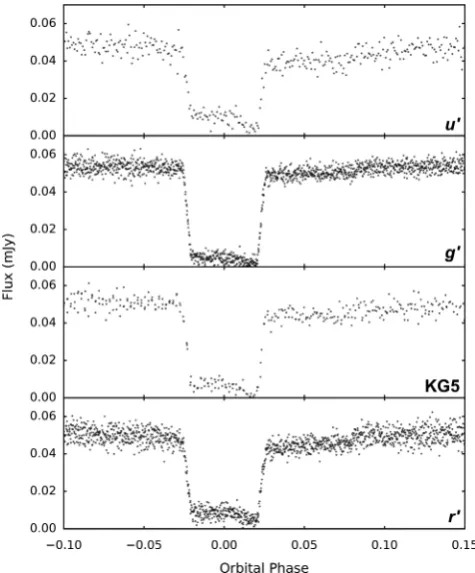
The eclipses selected to contribute to the average eclipse in each wavelength band are phase-folded and plotted on top of each other in Fig. 1. These include four out of the six ULTRACAM ugr eclipses and three out of the six ULTRASPECKG5eclipses. The 2013 Dec 30 and 2015 Jun 23 ULTRACAM observations were not included due to being affected by transparency variations, while the first three ULTRASPEC observations were not used due to a low signal-to-noise ratio caused by overly short exposure times. As can be seen in Fig.1, there is no obvious flickering component in any SDSS 1057 eclipse light curve, but a large amount of white noise. Despite this, there are hints of a bright spot ingress feature around phase 0.01 and an egress at approximately phase 0.08. These features are clearest in therband.
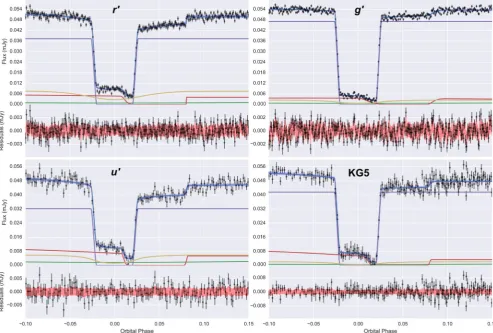
The resulting average eclipses in each band are shown in Fig.2. All four eclipse light curves have seen an increase in signal-to-noise ratio through averaging, and as a result the bright spot features have become clearer – sufficiently so for eclipse model fitting (see Sec-tion 3.3). The sharp bright spot egress feature in therband eclipse is further evidence for no significant disc radius changes in SDSS 1057 and validates the use of eclipse averaging in this instance.
3.3 Simultaneous average light-curve modelling
The model of the binary system used to calculate eclipse light curves contains contributions from the white dwarf, bright spot, accretion disc and donor star, and is described in detail by Savoury et al. (2011). The model makes a number of important assumptions: the bright spot lies on a ballistic trajectory from the donor, the donor fills its Roche lobe, the white dwarf is accurately described by a
Figure 1. Selected SDSS 1057 eclipses (phase-folded and overlaid) used to create average eclipses in each of the four wavelength bands. The name of each band is shown in the bottom-right corner of each plot.
[image:4.595.306.544.282.569.2]SDSS J1057
+
2759: a period-bounce CV
1027
Figure 2. Simultaneous model fit (blue) to four averaged SDSS 1057 eclipses (black). The blue fill-between region represents 1σfrom the posterior mean of a random sample (size 1000) of the MCMC chain. Also shown are the different components of the model: white dwarf (purple), bright spot (red), accretion disc (yellow) and donor (green). The residuals are shown at the bottom of each plot, with the red fill-between region covering 2σfrom the posterior mean of the GP.
not included. The simple bright spot model was also chosen for modelling the eclipsing CV PHL 1445, another system with a weak bright spot (McAllister et al.2015).
As outlined in McAllister et al. (2017), our eclipse model has recently received two major modifications. First, it is now possible to fit multiple eclipse light curves simultaneously, whilst sharing parameters intrinsic to the system being modelled, e.g. mass ratio (q), white dwarf eclipse phase full-width at half-depth (φ) and white dwarf radius (Rw) between all eclipses. Secondly, there is the option for any flickering present in the eclipse light curves to now also be modelled, thanks to the inclusion of an additional Gaussian process (GP) component. This requires three further parameters to the model, which represent the hyperparameters of the GP. For more details about the implementation of this additional GP component to the model, see McAllister et al. (2017). While the SDSS 1057 average light curves do not show any obvious signs of flickering, there is evidence for slight correlation in the residuals and therefore GPs are included in the analysis.
The four average SDSS 1057 eclipses were fitted simultaneously with the model – GP component included. All 50 parameters were left to fit freely, except for the four limb-darkening parameters (Uw). This is due to the data not being of sufficient quality to constrain values ofUwaccurately. TheUwparameters’ priors were heavily constrained around values inferred from the white dwarf temper-ature and logg(see the concluding part of Section 3.3.1). These
white dwarf parameters were determined through a preliminary run of the fitting procedure described throughout this section and shown schematically in Fig.3.
An affine-invariant MCMC ensemble sampler (Goodman & Weare2010; Foreman-Mackey et al.2013) was used to draw sam-ples from the posterior probability distribution of the model param-eters. The Markov chain Monte Carlo (MCMC) was run for a total of 30 000 steps, with the first 20 000 of these used as part of a burn-in phase and discarded. The model fit to all four average eclipses is shown in Fig.2. The blue line represents the most probable fit, and has aχ2of 1561 with 966 degrees of freedom. The lines below each eclipse represent the separate components to the model: white dwarf (purple), bright spot (red), accretion disc (yellow) and donor (green). In addition to the most probable fit, a blue fill-between region can also be seen plotted on each eclipse. This represents 1σfrom the posterior mean of a random sample (size 1000) of the MCMC chain.
In all four eclipses, the model manages to fit both the white dwarf and bright spot eclipses successfully. There is no structure visible in the residuals at the phases corresponding to any of the ingresses and egresses. In general, there is some structure in the residuals, which validates our decision to include the GP component. This component can be visualized through the red fill-between regions overlaying each eclipse’s residuals in Fig.2, and represents 2σfrom the GP’s posterior mean. The GPs appear to model the residuals
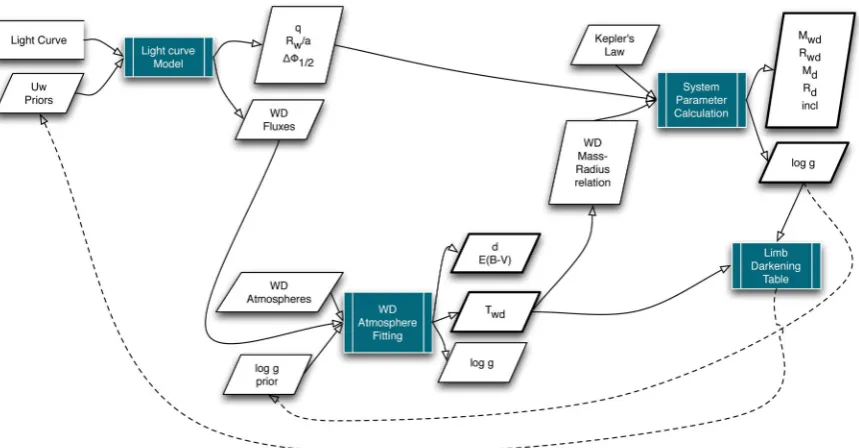
Figure 3. A schematic of the eclipse fitting procedure used to obtain system parameters. Two iterations of the fitting procedure occur; the dotted lines show steps to be taken only during the first iteration.
successfully in ther andg bands, but struggles foruandKG5. This may be due to differing amplitudes and time-scales of the noise between eclipses, while our GP component can currently only accommodate for a shared amplitude and time-scale between all eclipses.
3.3.1 White dwarf atmosphere fitting
The depths of the four white dwarf eclipses from the simultane-ous fit provide a measure of the white dwarf flux atu,g,r and KG5wavelengths. Estimates of the white dwarf temperature, logg and distance were obtained through fitting these white dwarf fluxes to white dwarf atmosphere predictions (Bergeron, Wesemael & Beauchamp1995) with an affine-invariant MCMC ensemble sam-pler (Goodman & Weare2010; Foreman-Mackey et al.2013). Red-dening was also included as a parameter, in order for its uncertainty to be taken into account, but is not constrained by our data. Its prior covered the range from 0 to the maximum galactic extinction along the line-of-sight (Schlafly & Finkbeiner 2011). The white dwarf fluxes and errors were taken as median values and standard devia-tions from a random sample of the simultaneous eclipse fit chain. A 3 per cent systematic error was added to the fluxes to account for uncertainties in photometric calibration.
Knowledge of the white dwarf temperature and logg values enabled the estimation of theUwparameters, with use of the data tables in Gianninas et al. (2013). Linear limb-darkening parameters of 0.427, 0.392 and 0.328 were determined for theu,gandrbands, respectively. A value of 0.374 for theKG5band was calculated by taking a weighted mean of the u,g andr values, based on the approximate fraction of theKG5bandpass covered by each of the three SDSS filters.
3.3.2 System parameters
The posterior probability distributions of q, φ and Rw/a re-turned by the MCMC eclipse fit described in Section 3.3 were used along with Kepler’s third law, the system’s orbital period and a temperature-corrected white dwarf mass–radius relationship
(Wood1995), to calculate the posterior probability distributions of the system parameters (Savoury et al.2011), which include:
(i) mass ratio,q;
(ii) white dwarf mass,Mw; (iii) white dwarf radius,Rw; (iv) white dwarf logg; (v) donor mass,Md; (vi) donor radius,Rd; (vii) binary separation,a;
(viii) white dwarf radial velocity,Kw; (ix) donor radial velocity,Kd; (x) inclination,i.
The most likely value of each distribution is taken as the value of each system parameter, with upper and lower bounds derived from 67 per cent confidence levels.
There are two iterations to the fitting procedure (Fig.3), with system parameters calculated twice in total. The value for logg returned from the first calculation was used to constrain the logg prior in a second MCMC fit of the model atmosphere predictions (Bergeron et al.1995) to the white dwarf fluxes, as described in Section 3.3.1. The results of this MCMC fit can be found in Fig.4, with the measured white dwarf fluxes in each band in blue and the white dwarf atmosphere model in red. The model and fluxes are in good agreement in all wavelength bands; however it appears that the measuredu-band flux is slightly underestimated. On close inspection of theu-band eclipse fit in Fig.2, we find a greater than expected contribution from both the disc and donor at this wavelength, opening up the possibility that a small fraction of the true white dwarf flux may have been mistakenly attributed to these components. The measured fluxes from SDSS 1057 are consistent with a white dwarf of temperature 13300±1100 K and distance 367±26 pc.
SDSS J1057
+
2759: a period-bounce CV
1029
[image:7.595.310.549.55.227.2]Figure 4. White dwarf fluxes from the simultaneous four-eclipse model fit (blue) and Bergeron et al. (1995) white dwarf atmosphere predictions (red), at wavelengths corresponding to (from left to right)u,g,KG5andrfilters.
Figure 5. Normalized posterior probability density function for each sys-tem parameter.
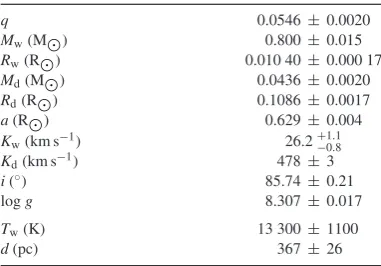
Table 2. System parameters for SDSS 1057.Twandd
rep-resent the temperature and distance of the white dwarf, respectively.
q 0.0546± 0.0020
Mw(M) 0.800± 0.015
Rw(R) 0.010 40± 0.000 17
Md(M) 0.0436± 0.0020
Rd(R) 0.1086± 0.0017
a(R) 0.629± 0.004
Kw(km s−1) 26.2+−10..18
Kd(km s−1) 478± 3
i(◦) 85.74± 0.21
logg 8.307± 0.017
Tw(K) 13 300± 1100
[image:7.595.47.285.300.483.2]d(pc) 367± 26
Figure 6. Three-component model spectra (black) overlaid on top of the SDSS spectrum of SDSS 1057 (grey). The three components include a white dwarf, an isothermal and isobaric hydrogen slab and a mid-T secondary star. The two red data points represent UV flux measurements fromGALEX.
dwarf temperature and distance from the white dwarf atmosphere fitting.
3.3.3 Spectral energy distribution
Southworth et al. (2015) use both the SDSS spectrum andGALEX fluxes (Morrissey et al.2007) to analyse the spectral energy distri-bution of SDSS 1507. The model of G¨ansicke et al. (2006) is able to successfully reproduce the SDSS spectrum with a white dwarf temperature of 10500 K, loggof 8.0, distance of 305 pc, accretion disc temperature of 5800 K and an L5 secondary star. However, the model does not provide a good fit to theGALEXfluxes, which Southworth et al. (2015) state could have been taken during eclipse. As we arrive at a slightly different white dwarf temperature, logg and distance (Table2), as well as a slightly later spectral type sec-ondary, we investigated whether the G¨ansicke et al. (2006) model with these parameters is still a good fit to the SDSS spectrum. The resulting fit is shown in Fig.6. While the fit is good, the white dwarf temperature used appears to produce a slope that is slightly too blue, hinting that it might be marginally overestimated, but this may be corrected with alternate disc parameters. As in Southworth et al. (2015), theGALEXfluxes (red data points) are again not fitted well by the model, with both the near- and far-UV fluxes much lower than predicted. Using the ephemeris in equation (1), we can rule out the possibility of these fluxes being taken during eclipse. Another rea-son for these low UV flux measurements could be due to absorption by an ‘accretion veil’ of hot gas positioned above the accretion disc (Horne et al.1994; Copperwheat et al.2012). This explanation con-sequently invalidates our prior assumption of an unobscured white dwarf (see Section 3.3). However, we can take reassurance from the agreement between photometric and spectroscopic parameter esti-mates for two eclipsing CVs (OY Car and CTCV J1300−3052) that both show convincing evidence for an accretion veil (Copperwheat et al.2012; Savoury et al.2012).
4 D I S C U S S I O N
4.1 Component masses
The white dwarf in SDSS 1057 is found to have a mass of 0.800±0.015 M, which is close to the mean CV white dwarf
[image:7.595.70.261.572.705.2]Figure 7. Donor mass (Md) versus orbital period (Porb) for SDSS 1057 and other substellar donor eclipsing CVs: SDSS 1433, SDSS 1035, SDSS 1507 and
PHL 1445 (Savoury et al.2011; McAllister et al.2015). Also plotted are evolutionary tracks for both main-sequence (red line; Knigge et al.2011) and brown dwarf (blue lines; McAllister et al.2015) donors. The three brown dwarf donor tracks vary in donor age at start of mass transfer, with the dashed, dot–dashed and dotted lines representing 2 Gyr, 1 Gyr and 600 Myr, respectively. The vertical dashed line represents the location of the CV period minimum determined by Knigge et al. (2011), with the shaded area representing the error on this value. The bar across the top of the plot shows the full width at half-maximum of the CV period spike observed by G¨ansicke et al. (2009).
mass of 0.81 ± 0.04 M (Savoury et al. 2011) but notably higher than both the mean post-common-envelope binary (PCEB) white dwarf mass of 0.58 ± 0.20 M (Zorotovic, Schreiber & G¨ansicke2011) and mean white dwarf field mass of 0.621 M (Tremblay et al.2016).
The donor has a mass of 0.0436±0.0020 M, which makes it not only substellar – as it is well below the hydrogen burning limit of∼0.075 M(Kumar1963; Hayashi & Nakano1963) – but also the lowest mass donor yet measured in an eclipsing CV.
4.2 Mass transfer rate
We calculate a medium-term average mass transfer rate of ˙M = 6.0+2.9
−2.1 ×10− 11M
yr−1using the white dwarf mass and temper-ature (Townsley & Bildsten2003; Townsley & G¨ansicke2009). This is a number of times greater than the expected secular mass transfer rate of ˙M ∼ 1.5×10⁻¹¹M
yr−1for a period-bounce system at this orbital period (Knigge et al.2011), and is actually consistent with the secular mass transfer rate of apre-bounce system of the same orbital period. This is further evidence that the white dwarf temperature we derive through white dwarf atmosphere predictions may be slightly overestimated.
Recalculating the medium-term average mass transfer rate using the lower white dwarf temperature of 10500 K from Southworth et al. (2015) brings it much more in line with the expected secular mass transfer rate. Importantly, the system parameters we obtain are consistent within errors, regardless of whether a white dwarf temperature of 10500 K or 13300 K is used to correct the white dwarf mass–radius relationship.
4.3 White dwarf pulsations
The white dwarf’s temperature and loggput it just outside the blue edge of the DAV instability strip, which opens up the possibility of
pulsations (Gianninas, Bergeron & Ruiz2011). The lack of out-of-eclipse coverage and low signal-to-noise ratio of these data are not conducive to a search for pulsations, and therefore out-of-eclipse follow-up observations are required to determine whether this white dwarf is pulsating.
4.4 Evolutionary state of SDSS 1057
The relation between donor mass and orbital period in CVs was used to investigate the evolutionary status of SDSS 1057. Fig.7
shows SDSS 1057’s donor mass (Md) plotted against orbital pe-riod (Porb), along with the four other known substellar donor eclipsing systems: SDSS J150722.30+523039.8 (SDSS 1507), PHL 1445, SDSS J143317.78+101123.3 (SDSS 1433) and SDSS J103533.03+055158.4 (SDSS 1035) (Savoury et al.2011; McAl-lister et al.2015). Also plotted are four evolutionary tracks: a red track representing the evolution of a CV with a main-sequence donor (Knigge et al.2011), and three blue tracks as examples of evolu-tion when systems contain a brown dwarf donor from formaevolu-tion (McAllister et al.2015).
CV systems that follow the main-sequence track evolve from longer to shorter periods – right to left in Fig.7– until the orbital period minimum (vertical dashed line) is reached, at which point they head back towards longer periods. Systems that form with a brown dwarf donor instead start at shorter periods and evolve to longer periods – left to right in Fig.7– and eventually join up with the post-period-bounce main-sequence track. The three brown dwarf donor tracks shown in Fig.7all have the same initial white dwarf (0.75 M) and donor (0.07 M) masses, but have different donor ages at start of mass transfer. The dashed, dot–dashed and dotted blue lines represent donor ages of 2 Gyr, 1 Gyr and 600 Myr, respectively.
SDSS J1057
+
2759: a period-bounce CV
1031
four existing substellar systems was discussed in detail in McAl-lister et al. (2015), which we summarize here. SDSS 1507 lies sig-nificantly below the period minimum in Fig.7due to being metal poor as a member of the Galactic halo, inferred from SDSS 1507’s high proper motion (Patterson, Thorstensen & Knigge2008; Uthas et al.2011). This is an exceptional system and therefore we do not include it in the remaining discussion. From their positions in Fig.7, the best apparent explanation for PHL 1445 and SDSS 1433 (and arguably also SDSS 1035) is formation with a brown dwarf donor. However, due to the observation of a ‘brown dwarf desert’ (Duquennoy & Mayor 1991; Marcy & Butler2000; Grether & Lineweaver2006) the progenitors of such systems – and there-fore the systems themselves – are expected to be very rare and greatly outnumbered by those following the main-sequence track. This makes it unlikely for even a single one of these systems to have formed with a brown dwarf donor, never mind the majority of this (albeit small) sample. The most likely scenario is that all three systems belong to the main-sequence track, which raises concerns for the accuracy of this track (see Section 4.5).
As it has the lowest donor mass of all other systems discussed above and an orbital period significantly greater than the period minimum, we find SDSS 1057 to be positioned close to the period-bounce arm of the main-sequence donor track in Fig.7. Its 90.44 min period puts distance between itself and the period minimum, giving SDSS 1057 the best case for being a true period bouncer among the other currently known substellar systems. This is backed up by SDSS 1057 possessing additional period-bouncer traits: low white dwarf temperature (although at 13300 K it is at the upper end of what is expected; Patterson2011), faint quiescent magnitude (g 19.5 atd367 pc) and long outburst recurrence time (no outburst recorded in over 8 years of CRTS observations; Drake et al.2009). It must be stated that due to the merging of the brown dwarf and main-sequence donor tracks post-period minimum, the scenario of SDSS 1057 directly forming with a brown dwarf donor cannot be ruled out. However, due to the lack of potential progenitors and with 80 per cent predicted to lie below the period minimum (Politano2004), this seems unlikely to be the case.
4.5 CV evolution at period minimum
This study of SDSS 1057 brings the total number of modelled eclipsing period-minimum/period-bounce systems – and there-fore systems with precise system parameters – to seven. This in-cludes the period minimum systems SDSS J150137.22+550123.3 (SDSS 1501), SDSS J090350.73+330036.1 (SDSS 0903) and SDSS J150240.98+333423.9 (SDSS 1502) from Savoury et al. (2011), which all have periods<86 min but are not included in Fig.7due to having donor masses above the substellar limit.
It is evident that none of these systems – including SDSS 1057 – lies on the main-sequence donor track itself, with some (namely PHL 1445 and SDSS 1433) located far from it. This raises ques-tions about the accuracy of the donor track in the period minimum regime, but it may be the case that there is a large intrinsic scat-ter associated with the track. It is expected for a small amount of intrinsic scatter to exist due to differences in white dwarf mass, but a significant contribution may come from variations in the ad-ditional angular momentum loss (approximately 2.5 times gravi-tational radiation) that is required in order for the donor track to conform with the observed period minimum (G¨ansicke et al.2009; Knigge et al.2011). In McAllister et al. (2015) we used the width of the observed period minimum from G¨ansicke et al. (2009) as a mea-sure of the intrinsic scatter of the main-sequence donor track, but
we concluded this was too small to account for the positions of PHL 1445 and SDSS 1433.
With such a small sample of observations currently available, it is not possible to thoroughly test the validity of the main-sequence donor evolutionary track at the period minimum. Many more precise masses from period-minimum/period-bounce systems are required, and therefore every additional eclipsing system within this regime that is suitable for modelling is of great value.
5 C O N C L U S I O N S
We have presented high-speed photometry of the faint eclipsing CV SDSS 1057. By increasing signal-to-noise ratio through aver-aging multiple eclipses, a faint bright spot eclipse feature emerged from the white dwarf-dominated eclipse profiles. The presence of bright spot eclipse features enabled the determination of system parameters through fitting an eclipse model to average eclipses in four different wavelength bands simultaneously. Multiwavelength observations allowed a white dwarf temperature and distance to be estimated through fits of model atmosphere predictions to white dwarf fluxes.
While the white dwarf in SDSS 1057 has a mass comparable to the average for CV white dwarfs, we find the donor to have the lowest mass of any known eclipsing CV donor. A low donor mass – coupled with an orbital period significantly greater than the period minimum – is strong evidence for SDSS 1057 being a bona fide period-bounce system, although formation from a white dwarf/brown dwarf binary cannot be ruled out. Every eclipsing period-minimum/period-bounce CV is of great interest, with so few systems with precise system parameters currently known. As a consequence, the evolution of systems in this regime is not yet fully understood.
AC K N OW L E D G E M E N T S
We thank the anonymous referee for their comments. MJM ac-knowledges the support of a UK Science and Technology Facilities Council (STFC) funded PhD. SPL and VSD are supported by STFC grant ST/J001589/1. TRM and EB are supported by the STFC grant ST/L000733/1. VSD and TRM acknowledge the support of the Lev-erhulme Trust for the operation of ULTRASPEC at the TNT. Sup-port for this work was provided by NASA through Hubble Fellow-ship grant HST-HF2-51357.001-A. The research leading to these results has received funding from the European Research Coun-cil under the European Union’s Seventh Framework Programme (FP/2007-2013)/ERC Grant Agreement n. 320964 (WDTracer). The results presented are based on observations made with theWHT, operated at the Spanish Observatorio del Roque de Los Muchachos of the Instituto de Astrof´ısica de Canarias by the Isaac Newton Group, as well as the TNT, operated at the Thai National Observa-tory by the National Astronomical Research Institute of Thailand. This research has made use of NASA’s Astrophysics Data System Bibliographic Services.
R E F E R E N C E S
Bell C. P. M., Naylor T., Mayne N. J., Jeffries R. D., Littlefair S. P., 2012, MNRAS, 424, 3178
Bergeron P., Wesemael F., Beauchamp A., 1995, PASP, 107, 1047 Copperwheat C. M. et al., 2012, MNRAS, 421, 149
Dhillon V. S. et al., 2007, MNRAS, 378, 825 Dhillon V. S. et al., 2014, MNRAS, 444, 4009
Drake A. J. et al., 2009, ApJ, 696, 870
Duquennoy A., Mayor M., 1991, A&A, 248, 485
Foreman-Mackey D., Hogg D. W., Lang D., Goodman J., 2013, PASP, 125, 306
G¨ansicke B. T. et al., 2006, MNRAS, 365, 969 G¨ansicke B. T. et al., 2009, MNRAS, 397, 2170
Gianninas A., Bergeron P., Ruiz M. T., 2011, ApJ, 743, 138
Gianninas A., Strickland B. D., Kilic M., Bergeron P., 2013, ApJ, 766, 3 Goliasch J., Nelson L., 2015, ApJ, 809, 80
Goodman J., Weare J., 2010, Comm. Appl. Math. Comp. Sci., 5, 65 Grether D., Lineweaver C. H., 2006, ApJ, 640, 1051
Hardy L. K. et al., 2017, MNRAS, 465, 4968
Hayashi C., Nakano T., 1963, Progress Theor. Phys., 30, 460
Hellier C., 2001, Cataclysmic Variable Stars: How and Why they Vary. Springer-Praxis, New York
Horne K., Marsh T. R., Cheng F. H., Hubeny I., Lanz T., 1994, ApJ, 426, 294
Knigge C., Baraffe I., Patterson J., 2011, ApJS, 194, 28 Kolb U., 1993, A&A, 271, 149
Kumar S. S., 1963, ApJ, 137, 1121
Littlefair S. P., Dhillon V. S., Mart´ın E. L., 2003, MNRAS, 340, 264 Littlefair S. P., Dhillon V. S., Marsh T. R., G¨ansicke B. T., Southworth J.,
Watson C. A., 2006, Science, 314, 1578 McAllister M. J. et al., 2015, MNRAS, 451, 114 McAllister M. J. et al., 2017, MNRAS, 464, 1353 Marcy G. W., Butler R. P., 2000, PASP, 112, 137 Morrissey P. et al., 2007, ApJS, 173, 682 Patterson J., 2011, MNRAS, 411, 2695
Patterson J., Thorstensen J. R., Knigge C., 2008, PASP, 120, 510
Politano M., 2004, ApJ, 604, 817
Rappaport S., Joss P. C., Webbink R. F., 1982, ApJ, 254, 616 Savoury C. D. J. et al., 2011, MNRAS, 415, 2025
Savoury C. D. J., Littlefair S. P., Marsh T. R., Dhillon V. S., Parsons S. G., Copperwheat C. M., Steeghs D., 2012, MNRAS, 422, 469
Schlafly E. F., Finkbeiner D. P., 2011, ApJ, 737, 103 Smith J. A. et al., 2002, AJ, 123, 2121
Southworth J., Tappert C., G¨ansicke B. T., Copperwheat C. M., 2015, A&A, 573, A61
Spark M. K., O’Donoghue D., 2015, MNRAS, 449, 175 Szkody P. et al., 2009, AJ, 137, 4011
Townsley D. M., Bildsten L., 2003, ApJ, 596, L227 Townsley D. M., G¨ansicke B. T., 2009, ApJ, 693, 1007
Tremblay P.-E., Cummings J., Kalirai J. S., G¨ansicke B. T., Gentile-Fusillo N., Raddi R., 2016, MNRAS, 461, 2100
Uthas H., Knigge C., Long K. S., Patterson J., Thorstensen J., 2011, MNRAS, 414, L85
Warner B., 1995, Cataclysmic Variable Stars. Cambridge Univ. Press, Cambridge
Wood M. A., 1995, in Koester D., Werner K., eds, Lecture Notes in Physics, Vol. 443, White Dwarfs. Springer Verlag, Berlin, p. 41
Wood J., Horne K., Berriman G., Wade R., O’Donoghue D., Warner B., 1986, MNRAS, 219, 629
York D. G. et al., 2000, AJ, 120, 1579
Zorotovic M., Schreiber M. R., G¨ansicke B. T., 2011, A&A, 536, A42