I
!J~I ~ (~1
hi !;J! l!.1=,,~I
i11 E.l
,1.1illf~t
Il!I ':.i!~'l.:J
It~;L!"1
\'.'Iii
l~l
i 1:1:\\~Jr
t~iU:~ ir~(!1iiil!Jt!.l!rl
1;,\'):..III::.t!H~J iJi~.~lil~; \ ".'J,!"l. '!,l, \ Hl(:I~) I ~j hli t~1 i ,1)::1 f,:lt~lih,
II
it~) l!li1
l!H i'i f~li t~J!h~h.\ E! (!El~J~t!ml/ i.~iIJ)1!19 (:1,1 i It!l'l t,~E' !:C:~1,v4j1!"\';t;D;'::1~IIIH'il fP (~H(l~t!l!~ ::)~g'I;)'i'rrr~t!i~\ ;!J~lt
Ell
i'/ \!1 ;m::~) W~JI1m
1jj'(;l!t:) I,!;~dl!j t.~)! .!\'J; ~I (:r.·~ ~II (~lll ':1:1 r,'l!!'" r;.vl:,::·!iH IHli~!'i',!J i.l~!' ill'l:~ 'J~! ~r~F{~,I,
I !!lIL\ .:.;tJjJ!lmE!I.:.t!i.!I!lt:\r~,1 i il:Ui,! ::'lil![iliil:lI1 i '.1.11 Id~! :;Jil
\ !l\i!VI ,",1;1 EI !ttl':l;j I ~ Ihlll '~h\ hi ,~hl 11::-'\\'1: 'i:Et~ II
t:l
i jli.li'j i I ~H:I'~H ':JiYI:\!l.{;;I!III'lt~I~h~;' '~lir;,1
I'.'OH;" !I!,li'll~I:1 il:J:J{::I~'
h~j I;' \Vj /, ':l~~l ~! Iii l!JI MjJ:im l.!J IW~l:I:J:~ ~ 1I1'll9' l:.l
it!)!
i'll:1:1!l. I t.!H:.Hl!Jit.:,Hfmlmr!L
:~rml!)l'{!l"jl. iiliI!hBIHI11iim.i:= 11{i)~M,;Y~ilir ... .l~l~l n:.t~' :~r.ll:') ;J~\'l ~F:,; Ed-I:I '.,U:lil!li! ';! ,\')1 (!J 11111:hH~'
'.~1iU.UH.:J.!H:}iC·jl ,,~~jil'L.J!H!.~UUI'!.m·'(:lS!
I,
£J!it.0'
:~~l n:l£i ~~1!:~) i r:J:.111.1 l,:E\ ftil!lI~J~t; I I ~J;;
~~!:JI'; l;i
~d\,1JJ
D
< il"l~J ~t:l/(H:l!l!l!l=) '.!1II.!l~IlIJ,
~.!.h.1 b.~ ~ I,.!1I l.Jl,11J
IiI (!lll!l £J i
t!l< \
'.~m '{:Et i I ~(!H r(~FE\' i'il:JJ;{ l~t:I(Joi H i,ril, I.~!! III (~lliI ~l!)I.'l,£F i!l~l!l!1 ~~/I \XliiEtil ,\~EUI~J l;:~ :J1]!{£l.!Jt!l1 i.!l~l\ II!t.ll!l.1 ';Jir~! ;i :W\il;}I{~!:riit;)U:J'l;'i
'-:JJJ{
;1:1 !~1~l~:'lIFI ;:1'1:1 jH:W.J;.H;!~.!;rl\,\ .• {~)!t~:J ~J \, ,,'t:,i i ~I\:t
I'~\II i ~~;.lill t.:l~ l'/ J ~l{.r;Jq~H:},it:·;dt (.1 ~it:\ :til ,:.t:l:\t-I! I; (~l (i,;F:l~'r,F ,~;lIEElllt \~~,' rhl! !Ji..Y/:li!: !:~lp {'l J ,'I f:J, l.!l:'i;li (.,1 i t!\'.'/.:Jr . ~L'JJ l
I I ("'.
:"'l! l
I
~";
!:::'1 r"""
'L .
,-IJ'".::~. __ ::l) '\_, _I ',~,":"J---,"", ',_I
i .. i.tl!IJ@J'~ IM:'Jfif:;l{[!!::-1(~JI_~M!lW:iU!+)if;I')
i(~~:"1~il~j"ili!1~~<I~W:J, IM~iU!)'.A8 @;,\ (f~IIH~,
(f}il.~) ,;b::Yfl.:.m;·~' l~W:{ ';.)(f~j*,;~;r.l;~}
li,\ Ir:l.:;(;·,,;:!~) r:l:=.I; 1;:' ;)~ (i 1'~Ii-I~~, : \1';:; /;"j I"" ,;m~{~ I ~ !~.I -;;, I ,i :':' 1,;'= 1 ~,;~J:j ;n~'I'[:;i.:I';·<:!ri:
':>1 ;"ir,:;.:
';;y f:::t ~.: rij\.
'(tili; ,'~j Ii:) .t'l~L:-.'
:;>
I,r?) r~ t~~:·, ~';:Ji r~~.'\:·":(~,f~ {~)i ~!:ri~! l(~F:'~{;; '. i':r~:~; ~'."~; i ill) ;'~'~.lh"!nri i, :I,.J:1~,:: ~.~ !liitll(f'~\!; {:l~:,:.~fi
";?)1:iT\;:~'i;:{t;U!::;~~:::/;;;::"(~:,~~~1~:~~:~~::~~~~l~\;i·g:;1\Wl;i;;rW~\~:.r;;~m;[~~:~:~~1:~;
:,'
~:~':,
~; ~ J"~ r.-~·;:·DATAMATIElN®
FEBRUARY 1981/$4.00 U.S.A. VOLUME 27 NUMBER 2 This issue, 158,710 copies
FEATURES
32
IN FOCUS
w.
David GardnerUnlike many of the other titans of the computer industry, William Norris, chairman of Control Data Corp., is still a mover and shaker.
60
DDP:
HOW TO FAIL
Harold LorinA variety of relationships, practices, and components must be
understood, or failure may compromise the concept of distributed processing.
67
SELECTING A DISTRIBUTED
SYSTEM
Jon C. French
Choosing a system that will keep users happy will not cost a fortune if you use this simplified, systematic approach.
73
.
DEATH, TAXES, AND
DP DOCUMENTATION
Lindsay WilsonIf a corporation doesn't take care of its documentation, it will inevitably need a technical writer to defuse ,the time bombs of neglect.
81
TECH WRITERS TALK
Perry PetersenInterviews with tech writers to discover how the field is evolving and what remains to be accomplished.
88
TEAM BUILDING AND
SYSTEM DEVELOPMENT
Peter StrohHow to retain committed, effectively organized people to successfully develop dp systems.
93
ANIMATION ON A
DESKTOP
Colin Cantwell
The computer graphics consultant for "Buck Rogers," "2001," and "Star Wars" describes creation of commercial 3D graphics on a desktop computer.
109
ASSURING MIS SUCCESS
Nigel S. Read andDouglas L. Harmon
A radically new technical approach, using a fourth generation language, eliminated many of the drawbacks that led to MIS failure.
100
CARVING A SYSTEMS NICHE
Debra ZahayAlthough many firms hire MBAs for systems work, some companies don't know what to do with those who apply for syst~ms positions.
125
GETTING IN SYNC
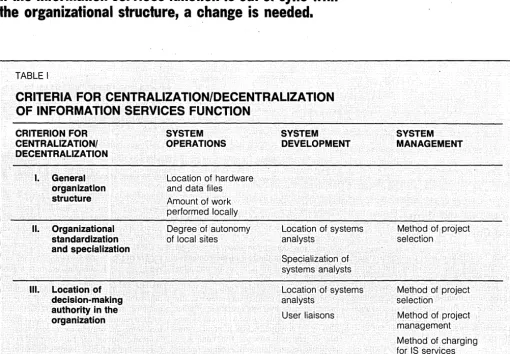
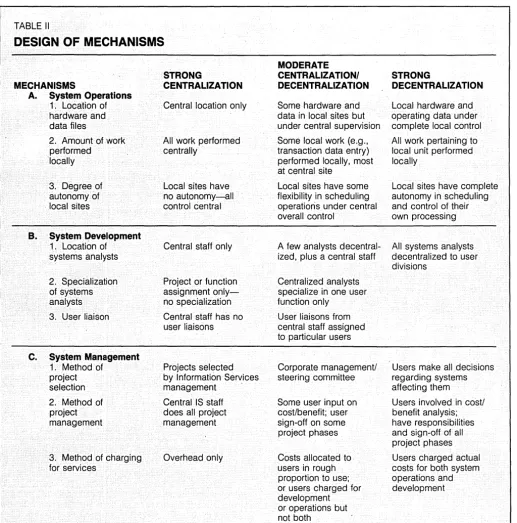
Margrethe H. Olson and Gordon B. DavisGuidelines for recognizing whether or not there is a need for change in the information services organization.
NEWS IN PERSPECTIVE
40
MAINFRAMES
Winds of change at IBM.
41
COMMUNICATIONS
Digitized 'voice at work.
42
MAINTENANCE
Support costs soar.
44
PERIPHERALS
The streaker is back.
48
INTERNATIONAL TRADE
New TDF concerns surface.
49
SOFTWARE
For better or worse.
50
WORD PROCESSING
The line between wp and dp.
52
ELECTRONIC MAIL
Neither rain nor snow ...
54
MEETINGS
New ways of doing business.
56
BENCHMARKS
Doublevision; Univac forecast; SBS to ride with Mounties; Imports, exports; Xerox's oem drive.
DEPARTMENTS
8
LOOKING BACK
13 LOOK AHEAD
18
CALENDAR
23
LETTERS
29
EDITOR'S READOUT
137 PEOPLE
138
HARDWARE
158
SOFTWARE " SERVICES
169
SOURCE DATA
174
MARKETPLACE
180
ADVERTISERS" INDEX
183
READERS' FORUM
COVER ILLUSTRATION BY KIP LOTI
The
Associative
rile·
Processor.
Arp.
A Special
Purpose
Hardware
System for
Retrieving
Textual
Information.L~
____
~__
Full Text Retrieval.
Finds relevant information in large free
text files (typically 300 million characters or more) that
match queries.
Unrestricted Queries.
Unrestricted query· vocabulary
with boolean AND, OR, NOT and proximity key word logic.
Simple Configuration.
AFp© runs on a PDPll host
mini-computer and includes all necessary user software.
'
Real Time Data Input.
New data may be input and searched
as it is received,
ifnecessary.
'
Special Associative Hardware.
The processing power is
made possible by the special AXP© hardware effectively
having the capability of 1200 cpu's.
Affordable.
Now you can afford full text retrieval costing
only a few pennies per Search. .
,
Available in
Three Configurations.
The
AXPIOOattaches
to an existing PDPll c·omputer; the
AXP200is self contained
with a communicatio'n interface to a network or another host
computer; the
AXP300is a turn key system including CRT
terminals and a line
p~inter.Application Areas Include:
Military and Intelligence Law Erlforcement Library'Search
Word Processing Support Abstract Search
, Title and Property Search Trial Transcripts
Patent Search Litigation Support
Technical Report Retrieval Generic Record Keeping Current Awareness Bulletin Laboratory Testing and Retrieval Journal Abstracting and Control
Pharmaceutical Literature Retrieval Product Bibliographies
Chemical Compound Retrieval Historical Records and Archives
•
Call
Datafusion ,Corporation
(213) 887-9523or write for a detailed brochure.
5115 Douglas Fir Road, Calabasas, California 91302
CIRCLE 6 ON READER CARD 4 DATAMATION
C RTR M RTI C N
Editor John L. Kirkley
Articles Editor Wendy Reid Crisp News Editor Becky Barna International Editor Linda Runyan Managing Editor, Europe Andrew Lloyd Products Editor Bill Musgrave Copy Editor Florence Lazar Assistant Editor Kenneth Klee Editorial Assistants Deborah Sojka,
Don Rosenthal Bureau Managers
San Francisco Edward K. Yasaki Los Angeles Edith D. Myers Boston Yin McLellan New York, Ralph Emmett
Technology Editor, Europe Fred Lamond Correspondents
Washington Willie Schatz London Malcolm Peltu
Sydney, Australia Norman Kemp Telecommunications Editor Ronald Frank Editorial Advisor Robert L. Patrick Technical Advisor Lowell Amdahl Contributing Editors Ralph G. Berglund,
Howard Bromberg, Philip H. Dorn, John M. Eger, David Hebditch, Angeline Pantages, Russell Pipe, Carl Reynolds, F. G. Withington.
EDITORIAL OFFICES
Headquarters: 666 Fifth Ave., New York, NY 10103. Phone (212) 489-2588. New England: 161 High St., Bos-ton, MA 02110, (617) 482-4606. Western: 1801 S. La Cienega Blvd., Los Angeles, CA 90035, (213) 559-5111; 2680 Bayshore Frontage Rd., Suite 401, Mountain View, CA 94043, (415) 965-8222. International: 6605 Burling-ton PI., Springfield, VA 22152, (703) 569-3383. Foreign: 221 Blvd. Raspail, 75014 Paris, France, (331) 322-7956. New York, N.Y. TELEX 640-229.
Art Director Kenneth Surabian Production Manager Robert Gaydos Art/Production Coordinator Susan M. Rasco Asst. Production Mgr. Kathleen Monaghan CIRCULATION
666 Fifth Avenue, New York, NY 10103 Circulation Manager Joseph J. Zaccaria Director of Marketing Deborah Dwelley Publisher James M. Morris
Technical pubhshlng
DB
a wll1panv litThe Ilun&' Bratlo,lred (:nrpnralilln
W'BPA
Circulation audited ' . by Business Publications Auditt:ABP
Member American Business Press, Inc.j
; j
1'-i ' l "} (~")
--J 'J} ...
!;;,If~l~ l~}"el'h\t!i
'lnl'
i,1O!~(i (qq~ll~J' (l);,H:n'4!q~1 ~nlH1r,w
111ft l:jij'~liHI.'.'.,1 J~l i~ ~ "ldiilllH.:,al.!~(i "~:IH~i lol'~)"., li,l*,it ili~l~mij1.,../'.i'l;I~lo)'!-i' i.~'l".\IiHiil
~h:~l!\ l)~\ l'l.jiijmH-~IH\.Hl;lirHi~.~).\ 4iil~1 'N.\"~~; ;!HHHlo);~tl ~H;\tAt'I,.~;"i!"'! l~l"rt''''~
:(c~.,i':'f.IH:)!:\:t.:, \~.I! II ,if.,:' i~I'I~I:.~~nld\q~\ {;a:'ii~1 i~,) i~ a~fi;~rt'.·(
\~~l/; III HIl;~I,!.' ::.'. lh~~,9~~I*)ll(;li(fi(~).'~oIOlO}I~I~QI.IUtfi I~WH~~_tj
\"l~\&i \HI;I~1Hi i(i il~':i' ;\11.\'-1.', 1:!H~I(~.{m:,n*li~'·I.~VJI~ohiM ... m~JijltH. jitH~HI~*(ii(.l:1
;I(!'l~' I,~.:.(.;.i -~I:' )~( Iji! "H~4~; \li,\tri',\
,,' ::lilii~rHr"I~':J"h;r ':f:jrrf,nri~··lH~· ;j"lih[f{i'Y.1t"r:!: ~~;i'>< ;i',,-".~~:J·,'.J.ltf:')l';:
:l'!,j~: .,' ;~, :"! ;"'i"I~)q"l;ill!;;j Ii :ii'!;(; .''It:l~Hl~,. :1(,',,/;111:; :'r?m~ ~~H~!r, di':i' li ,Ia;i ~;, !: ,~i;,.i'W'.,l': ,ri· :jU!~:i111 'I" I. ~~p;;!~),,"'i Hi.hl, !hl.~i '."ljL ih~r.;
.i~'~1 :~~';l.;' '1:\ •. :. ::Lf; .. ::~!J ,;,,'!j;,Yi;'i'\ni?k f\·~I.hitl:\i>I,)~I;·'''j~l:(r':l~~i:' 1,11'\tl~II:t:IWisFI~
:1i;1:.'~'il;11 !;liL:'~!1 il:l,iii.:;, !\~~\!i:.I*i~il~I."ili:j'l·iil~lqr;141
lh,l:II,;J'iq".~; ,I,,!:I: :WIl",";
,i.,
,,:!~lIil :111;;;~;!~I';,;'n'"~'}I-:l,(j~~':!~!~l~P';;i'; ;~(jl'~':'~"ft\:iil / !~<',i; ·:wf:P \ /~\r:t I': !'r,;.\«"l(!"jl: :1'lil /
:'.,";i~;j*,'; "I; ,.'",dS: II, IHW;\~': ;1'i~lbJ.dl! /
:,',~ ~ I .. " -,i., '.\; I; ~ I :If;: . j ': -,.:: ",
i
.:1;,.: Ii ~ ,.i~ 1:1: I ~~I' j(Fi,: .;,~IJl,)I,r Il;" ~t; / / /' j , 'i!!l:i":i':!.,~ II~ I.~I 'di!I,:!', ;~!!:.~!I i)!""""'.'.'
:j."t!/r:
/
·:,'~llihn\ifl)f :11·M'll'\hdh!;I~.;n iC!lmll)fHl~',' f~Qdl~f;(W (t"~':t(,\~ (i~"1 /
:~H.TttiiW'\ ,.riJhd'rlIl~;~~1 ~~J(Ollt·:Hld.rHWJ \t,\H~hIiHfll'!~I.~W /
I'.\~,l.~! i":'I,t.'jmlv\~I' ;;.\Ij;\i {qtkO~'/ '~J.li! \'i'''~'i ~H~lfONHili
i~\'!l-ii o:ii\\ml.9,~,;;j~~\f{\'i:} /
E1i~;' l~li\~\
.'!J10Wn'('fi· ..
I~~i~~i~'1'M'!. /~\ fhl~~~1 /!,;)tJQfiij,.\Ii";'':~.~~i~H'';';I''~~\ '\'H~;,IHk;' "f!;U~I"'I;;','. / ' l~'i~ 1~~; .. "tll; .'i",~il\~t;h I:' I ~~;!~l' \~.~f:; ~!'i:;il_I,,~j().;i(J:ijltji / /
U:i'"djl.~j.4.~hlr H;!~i~~'.'''I!'F.i''I:l,da(;::' IMiile: /
.trl .• Bu!!:. \,./,,) .. , I(~Ii.~!I: . , /
.:~.H:\i.iml: ,~;it;l:"it~~III; /
__ " :)l~ ~ll'I~/r'i / ' /
f
~·~qlr'liJ;{~xr, /
'
·.·1 .. · .• ';· !~, {"f.J'.t:(.;1~ .. ; . .; .• '1.'.[<..1.··;, .. ·.1:. .• I.,,_1.~'f.'~// I". I y'''' ';r'" ". h:;.fi:.' /
/ '
~",,> .. ,""
J
I
/
I
l/
/
/
/
/1
/
Operations at Inmac, and I am not crazy. We've
built a big business on a very simple premise:
Giving you what you need, when you need it.
"Need disks, tapes or floppies? We have them
compatible with almost every mini and micro
computer made. You need ribbons? We have
ribbons compatible with 753 different printers.
You need cables and connectors? We have 538
"We'll custom build cables to your specs.
We'll give you any length you want. We can help
you connect your CPU to virtually any
periph-eral you choose.
"And those are just a fraction of the more
than 1000 computer-related products we stock
and sell. I might get an ulcer trying to keep track
of all that stuff, but I don't think I'll have to
(:0111
...
'Pllte,.~.II
PP
IJ
..
1. ...e. ...
;f. .. '."qcc
A ' '" . ... eSSOP,'
. ··'Zesil
... : ... ': ' ... '. .>" . . ... '.' ... : . . . . ' 71t/ C . ' '. .·.ll.·.,.·.L,1
tiles
eat a catalog sandwich.
HCall my bluff. Next time you have a
prob-lem getting what you need, call Inmac. ·We give
you a sure-fire guarantee on anything you buy
from us. You have
45
days to decide that you're
fully satisfied.
If
you're not, we'll give you a
replacement, refund or credit. And no hassle.
HWe'll give you fast delivery. We have
regional distribution centers, so we can deliver
to over 90% of the computer sites in the U.S.
within two days - by regular surface
transporta-tion.
Or
if you need it tomorrow, we'll get it to
you tomorrow.
HCall us. Ask for our free catalog. Better
yet, give us an order. All we need is your
com-pany
P.
O. number. Our hotline numbers are
listed below!'
Computer supplies, accessories
and cables. More. Better.
Faster.
Detroit (313) 961-6865 - Los Angeles (213) 852-0973 - Wash. D.c. (202) 362-0214 - Boston (617) 536-9141-Mancheste~1 u.K. 92-35-67551
Human
Designed
Sustems
Loued.
_ For our
ImDNSSlua
APL
caDabilities
Now you can have the capabilities you've always wanted in an APL terminal, and without sacrificing price. They're yours in the concept APL - a new approach to APL terminals that gives you more of what you need, including full/true overstrike APL, 128 upper/lower case ASCII, up to two additional character sets (e.g. graphics), and up to four pages of memory for easy refer back. In addition to traditional conversational usage, the concept APL series provides functional support for word processing and data entry/retrieval applications. And all available on the industry's lowest priced APL terminal ... and ready for delivery to you in 30 days.
HDB
human
designed
systems, inc.
3700 Market Street Philadelphia, PA 19104 215-382-5000
Boston - (617) 329-3510; New York City Area-Infocon: (201) 624-1372; New York State - Naco Electronics: Syracuse: (315) 699-2651, Rochester:
(716) 223-4490; Delaware - Infocon: (302) 239-2942; Washington, DC - International Systems Marketing: (301) 986-0773; San Francisco
-(415) 692-4184; Canada - CAlL Systems: Toronto: (416) 782-1151; Switzerland - Mitek AG:
01-66 22 52; United Kingdom - Shandell Systems Ltd.: 02407-2027; West Germany-COMKO Computer Systems mbH: 221-48 30 51.
DISTRIBUTORSHIP INQUIRIES INVITED. CIRCLE 9 ON READER CARD
8DATAMATION
Twenty Years Ago/Ten Years Ago
LOOKING
BACK
COBOL CABAL COPS KUDOS
February 1961 .·The Department of Defense had begotten CODASYL, which had in tum engendered the short-, medium-, and long-range committees. The short-long-range com-mittee formed four working groups, two of which subsequently reported back to the short-range committee, which reported to the executive committee, which extended the life ofthe short-range committee, which appointed a subcommittee, which prepared a report that the short-range committee passed on to the executive committee, which okayed publication and then dis-solved the short-, medium-, and long-range committees, replacing them with three more committees.
Thus was COBOL-one of the few things on which'the industry has ever agreed -born in the Pentagon's shadow. Extant were the COBOL report and the RCA and Uni-vac COBOL compilers; a demonstration seemed the logical next step. Why not com-pile a COBOL program on both systems?
In September 1960 a government program was compiled and run on the RCA 501, then suggested to the executive mittee for use in a demonstration. The com-mittee concurred, adding that it wanted to see an industrial program included in the show as well. RCA and Univac agreed.
Since they wanted to show just what degree of compatibility they had achieved, the two groups of technicians did not con-fer. Most of the program changes were necessitated by differing hardware; for example, the government program was written for an on-line printer and the Univac II had only off-line options. The two changes that affected the language were the labeling and editing entries.
It took two days for the groups to analyze the problem, make the necessary modifications, and convert input data from 'cards to tape. On Dec. 6,1960
ademonstra-tion was given at the Univac center in Phila-delphia. The guests got a detailed description of the compiling process, the COBOL printouts produced during compila-tion, and copies of the problem solutions. The next day the group crossed the Dela-ware to watch the same compilations on the 501 at the RCA Cherry Hill System Center. Each of two radically different
com-puters was able to run successfully a pro-gram intended for the other. The propro-grams were written employing the COBOL primers provided by the manufacturers, and neces-sarily reflected the individual systems. Nevertheless, they were 90% compatible.
THE LION'S SHARE
February 15, 1971.' While in cpus and memories the Japanese had pulled nearly even with the U. S., in time-sharing they, lagged the U. S. by eight to nine years and Europe by six to seven. This was espechilly odd in light of the government's careful nur-ture of the computer industry.
The engineer of the logjam was Nip-pon Telephone and Telegraph, the govern-ment monopoly. Though private capital had started trying to develop time-sharing as early as 1964, NTT, controller of communi-cations circuits throughout Japan, was determined to reserve this apparently profit-able business for itself. NTT was in the pro-cess of developing a National Data Communications Service and planned to have spent $450 million on the system by 1972. The service had started limited opera-tions around Tokyo in fall of 1970 andwas expected to expand to Osaka and then to N a-goya. It would eventually comprise a sim-ple computing service for the small shopkeeper, a sales/inventory service for manufacturers and larger retailers, and a scientific computations service that would make use of canned programs to handle things like statistical correlation problems. Users, manufacturers, and govern-ment planners wondered whether NTT had
the capital to implement these plans and make services available at a reasonable price. NTT officials admitted that the $450 million they planned to spend was "not enough." The monopoly had helped fi-nance its telephone services by requiring that anyone who wanted a phone purchase a $280 to $420 user bond, and intended to fi-nance the time-sharing system in a similar manner. But NTT had a backlog of 2.5 mil-lion people waiting to buy bonds, and re-ceive telephone service. If it couldn't keep its customers supplied in its basic business, how could it hope to singlehandedly create national data communications?
:
I
3@@-{5@{())
ILfPJffW
/b;£JDTJrdl
(pJtrUlTf)ftral?s
; ttlfoaJu
$(PJf!:
!!J)(S~
sfteJUVrt!JaJlrrt/JSa
At NEG, we've been working on band printer technology for more than seven years. While others were contemplating the possibilities of this practical, low-cost method, NEG was constructing its first units, getting the bugs out, improving the designs. Bringing state-of-the-art electronics to band printer
i controls. Adding serviceability. Reliability. Durability.
Today, NEG offers two band printers with speeds of 300 and 600 lines per minute. Available now, they are also reli-able-now. They incorporate a technology which is now. The
I band technology. Low-cost, very reliable, extremely flexible.
A new enhanced-print feature allows the user to change
I speeds under either software or hardware controls to
pro-/
duce higher quality printed output. The feature reduces the 300 LPM speed to 170 LPM, and the 600 LPM rate to 350 LPM.
NEG's Trimliner printers have never experienced any band breakage. They have uptimes 50% higher than the competition. Trimliners average less than 30 minutes to repair. They're quiet, modular, ultra-cool and available in desktop, pedestal-mounted or two models of quiet cabinetry.
The technology of the 80s in a printer for the 80s from NEG-a company that was preparing for this decade and its band printing needs while others were just thinking about it.
NEG's Trimliner band printers. A generation ahead.
~1E(c.
(G([)JDfl])g
mefi
((/he peU'drarci
jpJIIDD1l!itBlt.
,,"
~ ~ j } ,. i, " ... '
MEC
Oira1l'a:l)!/[j'J~J";i~:'d:lJ)01J
Svsfcsm$g
UfTDfC.
CIRCLE 10 ON READER CARD Head Office: 5 Militia Drive, Lexington, MA 02173, (617) 862-3120
to
Intel's integrated dictionary unlocks
data management solutions.
Programmer productivity.
Application development. Data
base design. Project management.
Programming standards.
Main~tenance. Data security, accuracy,
integrity. Optimization of resources.
Controlled growth.
All of these are priority issues
among
forward~thinkingorganiza ..
tions today. But these are just a few
of the issues addressed-and solved
-by Intel's Information Resource
Management product family;
The key is in Intel's Integrated
Data Dictionary, IDD.
Get the big picture.
The IDD gives you a
detailed, panoramic view of .
what's happening in your data
base environment. By
continu~. ally monitoring and tracking infor ..
mation (ranging from data items all
the way up to entire application
systems with multiple programs),
Intel's dictionary puts reports on
who, what, where, how, and when
at your fingertips. Most importantly,
you won't need a crystal ball
to forecast the impact of change.
Impact reports are standard, too.
Streamline application
development.
With a wealth of vital
informa~tion in hand, you can simplify the
task of building and
fine~tuningnew applications. And because the
dictionary works intimately with
SYSTEM
2000®/80,
Intel's
power~ful data base management system,
designers are given extensive data
modeling and application proto ..
typing capabilities. Moreover, data
items, records, and definitions are
easily added, deleted, or modified
even after a data base is in full
production. And, like all IDD
functions, this can be handled
on~line
or in batch mode.
Enforce standards,
commu-nicate, and cut redundancy.
Intel's data dictionary quickly
tells you and anyone else involved
in data base and application
devel~opment, what already exists (and
Implement successful
solutions.
Intel's Integrated Data
Diction~ary is an application design aid, a
documentation vehicle, a way to
enforce standards and procedures,
a master reference for determining
the impact of change, a tool for
controlling growth today and
tomorrow.
To examine your key to success
with Intel's IDD and other
Infor~mation Resource Management
products, clip the coupon below
or call our Market
Informa~tion Office at
512/258~5171.We'll respond with
descrip~tive brochures, success stories
about our customers, plus an
invitation to our
complimen~tary seminars on Information
Resource Management.
inter
delivers
solutions.
in what form it exists) in your
Europe: Intel Semiconductor (Nederland) B.V., CommercialenVI·rOnment. Addl'tl'onally, the
Systems Division, Oranjestraat 1, 3441 Ax Woerden, TheNetherlands, 31/34BO-11264, Telex 47970 CSD NL
dl'ctl'onary appll'es edl'tl'ng error
Canada: Intel Semiconductor of Canada, Ltd., 201, Consumers Rd., Suite 200, Willowdale, Ontario M2J 4GB,
detection, and correction functions,
416/494-6831Guarantee data
..
---Please forward literature on Intel's Integrated Data
security.
.
Dictionary and other IRM products,Watchdog of your
Name. _ _ _ _ _ _ _ _ _ ---:--_ _ _ _data is IDD's
s6phisti~cated security system,
Company-With passwords which
Mailing address-protect data as far down
City, State, Zip-as the item level, you
Telephone (can be confident that
Mainframe(s) installed: IBM (compatible)your data remains
f
'
CDC , Univac. _ _ _ _"clean!' You can be con i~1
0
.
dent that unauthorized
!
peratmg system . . ..I '11
t , I Return to: Intel Commercial Systems DlvlsiOnpersonne WI no,
accI~!
P.O. Box 9968; Austin, Texas 78766dentally alter or VleW!
.
ATTN: Market Information OfficeBTl 8000 32-bit multiprocessor system
Now you can grow
by plugging in resources
. instead
of changing
computers
Finally,there's a computer system that lets
you grow by plugging in resources, instead of
by changing models -the BTl 8000.
The secret is Variable Resource Architecture
(VRA):a flexible mix of hardware resources
controlled by a single, self-regulating operating
system.
.... Hardware resources consist of mUltiple
processors,memories, and input-output
channels operating in parallel without the
complex internal networking normally
associated··withsuch.arrangements.·The result
is mainframe performance at su bstan:tially
lower costs, plus unequalled flexibility.
You can tailor the BTl 8000 to serve over 200·
on-,line, interactive users. Or to handle large
batch loads. Or todo a lot of each.
Furthermore, YOll.can vary processing
capability over a tenfold range by merely adding
or deleting hardware modules .. Differences. in
configuration are invisible to user software, and
no reprogramming orrecompilation is required."
Key features of each BTl 8000 system include:
- From one to eight 32-bit CPUs controlled and
coordinated by one shared operating system.
- Up to 16 megabytes oImain memory.
- Fail soft architecture.
...:.... Secure multi:user operations.
-Demand-paged virtual memory.
-:- Simultaneous use of ANS COBOL 74,ANS
FORTRAN 77, PASCAL/8000, and
BASIC/8000;
Asforreliability and sUPP9rt,they're
estab-lished BTl traditions, proven by over2,500 _
other BTl computers operating in the U.S.,
Canada and Europe. For full details aboutthe
BTl 8000, contact the BTl office nearest you.
-BTl
COMPUTER
SYSTEMS
Coq)orate'Offices: 870 West Maude Avenue, Sunnyvale, CA(408) 733·1122 Regional Offices: Piscataway, NJ(201)457~0600; Palatine, IL (312) 397-9190; Dallas, TX (214) 630-2431; Sunnyvale, CA (408) 733-1122. Sales Offices in major U.S. cities. Inthe·United Kingdom: Birmingham .(021)-477-3846 ··BTI is a registered trademark of BTl Computer Systems.
IBM TARGETS
PBX FOR U.S. USE
DYADIC DILEMMA
TAKING SHOTS
AT THE 4341
LATENT BREAKING
LOOK AHEAD
In what looks like a first step towards introducing
a PBX product in the U. S,., IBM has applied to the
FCC for
authoriza~ionto connect tts 1750 PBX
switching system to the U.S. telephone network.
An IBM spokesman said the FCC application was made
str~ctly
for internal use of the 1750 at this time.
As'part of a continuing review of its voice
com-munications facilities, he said, IBM decided to
consider
u~eot
the 1750 "at a small number of
internal locations," and hence the need for FCC
certification.
The 1750 is a solid state digital telephone
switch introduced overseas by IBM in March 1979;
i t ' s now available in five European countries.
IBM has two other PBX products -- the 2750, which
debuted in Europe in 1969 and is no longer
gener-ally available, and the 3750, introduced in 1972
and still offered overseas.
Apparently "dyadic" sounds good, but i t ' s tough to
implement.
We hear that IBM is having trouble
get-ting a fu+l 11 MIPS from the dual processor, or
"dyadic" configuration, on 3081 trials.
Seems the
MVS operating system is having problems with
soft-ware resources between the two cpus -- what one
source calls "software interlock" hang-ups.
Cur-rent' levels of throughput are believed to be no
better than 1.6 times the 303X performance -- well
below the mark IBM customers expect.
At long last, Magnuson is expected to deliver its
M80/43 challenge to the heavily backlqgged IBM 4341
this month -- two years after its initial
announce-ment.
A technology shift from TTL to ECL circuitry
is being blamed for difficulties that delayed the
43 (as well as its slightly
slow~rsister, the M80/
42).
We hear that startup production is slated
mainly for customers of the M80/32 and 31, who want
upgrades.
Also romping in the 4341 arena is IPL Systems,
the Olivetti-linked PCM vendor.
It's now offering
30-day deliveries on the IPL 4443, its challenge
to the 4341 Group I.
IPL claims that with the
15-month backlog, i t has strong hold on the healthy
PCM'business in this niche.
Memory will be the name of the game with a new
software release expected in the third quarter of
this year from IBM for the 3081.
The MVS/SP
Rel-le~se
4 will ,be announced with a "latent" 3l-bit
addressing capability on this so-called first H
Series machine.'
Cur~entlywith its 25-bit
WHAT'S GOOD FOR
THE GOOSE ..•
THEY'LL DO IT
EVERY TIME
HATS OFF TO
DAVID BROWN
14 DATAMATION
LOOK AHEAD
sing, the 3081 offers 32 megabytes of real mem- ,
ory -- some eight megabytes more than the
top-of-the-line 303X.
With the new announcement, a
minimum of 64 megabytes of "real" could be the
order of the day.
O~eindustry wag described two
megabytes of real memory as a "fully ladened
pro-grammer."
Nothing like having an extra 16 fully
ladened programmers around!
Word has i t that British mainframer ICL is not
finding enough new customers for its ME 29 medium
systems.
We hear that 80% to 90% of the machines
are going to ICL's 2903/4 users as replacements
for these "old faithfuls."
ICL's 2903/4 has been
its one
enduringsuccess~its fully developed
rental, base is all profit to the company.
"By
rolling over these users with the new machines
because i t can't sell them elsewhere, ICL is
re-luctantly killing the goose that laid the golden
egg -.:.. and before its time;", one source said.
Result:
one big cash flow problem.
ICL has
ap-parently taken steps to make its cash flow
posi-tion look better than i t really is by writing off
inventories full of ME 29s as "sales" (a step not
illegal in the U.K.).
Meanwhile, the company has
taken steps to tighten the purse strings -- over
2,500 w9rkers in the U.K. are being pruned, and
its Washington subsidiary is slowly winding down.
Computing's "oldies but goodies," the members of
the Digital Computer Assn., will "dishonor" one of
its own on March 20 as only that cork-throwing
crew can.
DCA's target at this year's annual
din-ner bash will be Frank Wagdin-ner, executive vp of
Informatics, Inc. and ,computer industry pioneer.
Wagner's retiring, and DCA wants to help him do i t
in style.
Among other things, the crafty crew
wants to point out those of Wagner's industry
pre-dictions (he's probably made more than a million)
that didn't quite pan out -- predictions like the
one he made in 1972 that IBM would be
government-regulated by 1978.
When David Brown began talking about his ability
to recover data from badly damaged disk packs
(January, p.45), he wasn't willing' to talk openly
about one of 'his biggest jobs -- recovering data
from disk packs damaged in the November fire at
the MGM Grand.
But word got out and now, Brown
s~ys,
he can talk about his eleventh hour rescue
Think what your programmers could do
if your users· did their own reports.
Answer/DB, the latest Implementation System from Infonnatics, is the new on-line software tool for report generation. It lets non-DP people develop their own report requests at a terminal- in an English like language-with as few as four simple statements.
That means much faster report turnaround, wider smiles from non-DP people in your organIzation, and greatly increased programmer productivity.
Answer /DBhas made old-fashioned batch reporting systems obsolete because it's designed to handle the :problems you'll be facing in the data base and data communications world.
Answer/DB operates with your standard as/DOS files and IMS data bases. And it offers completely interactive, on -line query entry with syntax checking and editing capabilities for creating error-free report requests.
For more infonnation on Answer/DB and other infonnation retrieval systems, just complete the coupon. Or, call us at (213) 887-9121.
r---,
Infonnatics Inc., 21050 Vanowen Street, Canoga Park, CA 91304Tim Corey, Product Manager
(213) 887·9121 Telex: 69·8473
•
o
Send me complete details on Answer/DB.Send me complete details on:
informatics inc
I
o
Other Informatics report writerso
Inquiry systemso
Have a salesman call me."I
Name~ _ _ _ _ _ _ _ _ _ _ _ _ Title: _ _ _ _ _ _ _ _ _
COmpany' _ _ _ _ _ _ _ _ _ _ _ _ _ _ _ _ _ _ _ _ _
Address' _ _ _ _ _ _ _ _ _ _ _ _ _ _ _ _ _ _ _ _ _
City' _ _ _ _ _ _ _ _ _ _ State: _ _ _ _ _ _ Zip, _ _ _ _
Telephone:....!(L-_....1.... _ _ _ _ _ _ _ _ _ _ _ _ _ _ _ _ _
COmputer· _ _ _ _ --...:. _ _ Operating System: 0 DOS/VS
o
OS/VSTP Monitor: DIMS/DC 0 CICS/VS 0 TSO M·DM·281
Introducing Answer/DB"by Informatics:
,
-',
"
,
Our advanced software
'c,
options are changing the way. .
networks perform.
Sooner or later, you'll probably
want to network.
You'll start by linking two com-
~";;;;~~,~"",,,.i;.;.£;;;~~,.;;~,;;';;""';';"';.';;;"',;;,",";.~iVputers together. Before you know it,
you'll have every computer talking
to every other computer. It's really
just a matter of time.
And you cart take the first step
right now. With Digital.
Every Digital computer can be
networked to every other Digital
computer. Any time you're ready.
All you need is DECne-e
Msoftware.
And Digital's networking
soft-ware is exceptional. No other vendor
can match us for sheer breadth of
flexible, cost-effective networking
alternatives. Besides standard
net-working capabilities, consider these
Digital options.
Adaptive Routing. It's not
necessary to physically connect every
computer to every other computer.
This reduces line costs. At the same
time, network operations can
con-tinue even when communications
links break down. Information is . .
automatically rerouted around
problem areas.
Network Command Terminals.
You can control remote computers
and remote applications from any
location.
Enhanced Network
Manage-ment. Control is the key to cost
sav-ings. DECnet lets you control the
use of each communication line.
Lets you add new systems to your
network whenever you want
with-out shutting down operations.
Multipoint Communications.
Now one communication line can
serve several Digital nodes
simulta-neously, reducing. your . line costs
considerably.
Advanced Protocol Emulators.
In addition to supporting Batch
BISYNC, Interactive BISYNC, and
other standard mainframe
com-munications protocols, Digital offers
an advanced SNA protocol emulator,
so Digital systems can participate
\
\
\.
\
\
\
,
I
/
I
.
I
I
I
/
.
I
I
I I
I /
I
FRAME
of any distributed system is the
way it does its job.
Here Digital systems excel.
With the broadest range of systems
F(;';~~,!YA~;}i!''';)1;~!~:#~j5j:';~;i~l~ii'~,~~f,'''\Y~'liijo;\,:\.;~~;~:;,;{!',i~~
alternatives in the industry, you can
choose the right system for each
;·"';;';;.i",,,,,;,';;"""".i';;;~>'"'''''"'';';''''''''.;~'i'''M'';'''"'""., .•. ,"""",,,.,.";""
local job, without sacrificing any
in IBM/SNA networks.
.
X.2S
Packetnet
™System
Interface~
Digital systems can
communicate over public
packet-switched networks. As part of
Digital's growing commitment to
public networks, we now offer
soft-ware that can support Transpac in
France and Datapac in Canada.
Additional
X.25
Packetnet System
Interfaces are being developed to
support public networks in the
United States, the United Kingdom,
Holland, and Germany.
Of course, a network can only
be as effective as the computers
within it. After all, most systems
only use their networking capability
20
percent of the time. The real test
networking options.
To date, Digital has
imple-mented over
5,000
network nodes
around the ,world.
And
we don't just
install them, we support them, too,
with an international team of over
14,000
service people.
So before you expand your
current system, think about Digital's
awesome array of networking
capabilities. While you may not
want to network now, Digital gives
you the flexibility to network when
you're ready.
Digital Equipment Corporation,
129
Parker .St., Maynard, MA
01754.
In Europe:
12
avo des Morgines,
1213
Petit-Laney/Geneva. In Canada:
Digital Equipment of
Ca~ada,Ltd.
<D 1980, Digital Equipment Corporation
~DmDDmD
FEBRUARY
Financial Information Systems Conference,
February 9-11, San Francisco.
Presented by the National Institute of Management Research, this three-day conference has various sessions and workshops concen-trating on financial systems. ContactNIMR Seminars, PR Dept., P.O. Box 3727, Santa Monica, CA 90403, (213) 450-0500.
COMPCON Spring '81, February 23-26, San
Francisco.
The theme for the spring conference is VSLI and its future effects on design systems. Contact Harry Hayman, IEEE, P.O. Box 639, Silver Spring, MD 20901, (301) 589-3386.
CSC '81, February 23-26, St. Louis.
The ACM sponsors this computer science conference. Contact John W. Hamblen, University of Missouri-Rolla, Computer Science Dept., Rolla, MO 65401, (314) 341-4491.
NEPCON West '81, February 24-26, Anaheim.
The conference is directed toward all persons involved in manufac-turing and testing printed circuits, multilayers, microelectronic cir-cuitry, semiconductors, and other devices. Contact Industrial &Scientific Conference Management, Inc., 222 West Adams St., Chicago, IL 60606, (312) 263-4866.
MARCH
Fifth International
Conference on Software
Engineering, March 9-12, San Diego.
The ACM sponsors this one. Contact Seymour Jeffrey, Director, Center for Programming Sciences & Technology, National Bureau . of Standards, Washington, DC 20234, (301) 921-3531.
Fourteenth Annual Simulation Symposium, March
18-20, Tampa, Florida.
Part of Simulation Week, March 16-20, the symposium is spon-sored by the IEEE, ACM, scs, and IMAC. Contact Alexander Kran, IBM, B/300-40E, East Fishkill Facility, Hopewell Junction, NY
12533, (914) 897-2121 X 7142.
Office Automation Conference, March 23-25,
Houston.
The major conference for users and designers of electronic office equipment, the OAC is. produced yearly by AFIPS. Contact AFIPS,
1815 North Lynn St., Arlington, VA 22209, (703) 558-3617.
18DATAMATION
CALENDAR
Printemps Informatique, March 24·27, Paris.
An international edp exhibit for computer oems. Contact Kallman Associates, 30 Journal Sq. ,Jersey City ,NJ, 07306, (201)653-3304.Interface '81, March 3D-April 2, Las Vegas.
This is the largest U.s.
computer show and exposition. It is devoted to data communications, distributed data processing, and network-ing. Contact The Interface Group, 160 Speen St., Framingham, MA 01701, (617) 879-4502.Exposium '81, March 31-April 3, Milwaukee,
Wisconsin.
State-of-the-art word processing and information processing sys-tems, from the beginner level through the advanced, will be fea-tured at this four-day conference and exhibition presented by the Word Processing Society, Inc. Contact Word Processing Society, Inc., P.o. Box 92553, Milwaukee, WI 53202, (414) 226-5215.
APRIL
DPMA Quality Assurance Conference, April 1-3,
Chicago.
The objective of this conference, sponsored by the DPMA Educa-tion FoundaEduca-tion, is to explain methods tools, and techniques for im-proving computerized applications. Contact DPMA, 12611 Davan Dr., Silver Spring, MD 20904, (301) 622-0066.
6th West Coast Computer Faire April 3-5, San
Francisco.
Since 1977, this annual small business and personal computing con-ference and exposition-with a strong focus on micros-has been held regularly. Contact Computer Faire, 333 Swett Rd., Woodside, CA 94062, (415) 851-7075.
1981 AECT. National Convention, April 6-10,
Philadelphia.
The Association for Educational Communications and Technology produces this show, the largest gathering of instructional medial A V professionals in the U.S. Contact AECT, 1126 16th St., N.W., Washington, DC 20036, (202) 833-4179.
Ninth Annual Telecommunications Policy
Research Conference, April 26-29 Annapolis,
Maryland.
.
Now you get more extras when you
pick the new dot matrix printers by
C.
Itoh. Choose the Comet 80-column
printer and get the extra benefits of
four character sizes and paper-saving
print compression. Choose the Comet
II
136-column printer and receive the
added extra of a full-width computer
size printer that accommodates paper
widths to 381 mm (15").
Both the Comet and Comet
IIalso
offer the rare combination ofIow cost
and high performance. Both models
operate at an efficient 125 cps
bidirec-tional print speed and
ina 9 x 7
dot matrix.
C.
Itoh's Comet series has the
extra advantage of a unique
mul-tilingual capability with a
selec-tion of four. different alphabets:
English, German, Japanese and
Swedish. Other special
character-istics include a programmable
VFU (Vertical Format Unit) plus
,\,
self-test diagnostics. For your opera-
And as a final, all important extra, when
tor's convenience, there's easy bottom
you choose either printer from C. Itoh
or back paper loading, and both
you get immediate off-the- shelf delivery.
Comets use a standard low-cost nylon
So if you want the highest quality at
ribbon. Plus our printers already meet
the best price, look into the extras the
1981 Class A FCC, UL, and fire safety
C.
Itoh Comet and Comet II printers
requirements.
offer. You'll get a lot more than you
bar-If
allthat wasn't enough, Comet
gained for. For more information,
con-and Comet II are plug-compatible
tact C. Itoh Electronics, Inc., 5301
with all major printers in the industry,
Beethoven Street, Los Angeles,
CAmeeting standard parallel serial inter-
90066; Tel. (213) 390-7778. Chicago
[ace specifications. Our printers are
Office: 240
E.
Lake Street, Suite 301-A,
backed by C. Itoh's warranty and a
Addison, IL 60101; Tel. (312) 941-1310.
nationwide field service organization.
New York Office: 666 Third Ave., NY,
NY
, , : , " ~'!" ) ' , ' : \ \". '~:1:~~~/~~~':~m' ~~~~
10017; Tel. (212) 682-0420. Dallas
/
;
:\
Office: 17060 Dallas Pkwy., No. 108,
17u~---"---"----~.~
~Iia~;~~:S~~!d) i~3J~~~la
by
. / [
1
Canadian General Electric.
(
8
\ 1\
I
~©DU101HJ
~~©V~©b\!IO©$, U~©.
One World of Quality
TI
Announces
I
Introducing the new
DS990 Models 7, 9
&
29 with fixed and
removable disk
storage.
If
you're looking for
ways to get more out
of your computer
systems, Texas
Instru-ments
has got
some great
things in
store for
you.
Introduc-ing the new
members-of our
DS990
family-DS990 Models ,
9 and 29. Powerful computer
systems that put the bite on
disk storage costs.
New disks for easy
back-up.
Flexibility is not forgotten
at TI. That's why each of these
new DS990 computer systems
feature disk storage systems
with both -fixed -storage and a
removable cartridge. Fixed' disk
storage allows easy access to
day-to-day information, while
removable cartridge disks let
users change infonnation when
needed. The removable
car-tridge disk also provides users
with a safe, easy, and
inexpen-sive way to back-up information
without purchasing another disk
drive or magnetic tape drive.
Both the DS990 Models 7
. I
a.Growil
and 9 combine
these disks with the
power and field-proven
reli-ability of TI's 990/10 CPU. The
DS990 Model 7 provides 16
fixed and 16 removable
meg-abytes of disk storage. For
greater storage capacity, the
DS990 ,Model 9 includes a
disk drive with 96
meg-abytes of storage -16
removable and 80
fixed. Should you
need it, a second
identical disk can
be added to either
system on the same
controller for
add-itional storage.
The
DS990 Model
29 features a new,
low-profile,60-inch
cabinet and offers the
processing power
of TI's 990/12 CPU
-
the strongest
central processing
unit ever developed for a DS990
computer system. With one disk
drive, the Model 29 provides 96
megabytes of storage -
16
removable and 80 fixed. And you
can double your capacity by
adding a second drive on the
same controller.
New members of a
proven family.
The DS990 Models 7, 9 and
29 fit right into the DS990
com-puter family. So you can upgrade
your system at any time with a
minimum of cost and effort,
they're upward-compatible with
the other members of the DS990
family- from the microcompti
t-er - based Modell to the
highly-advanced Model 30.
With proven
software.
,{tra Storage for
~Family.
with proven software, including
COBOL, BASIC, FORTRAN,
RPG II and Pascal. They also
have valuable time-saving
software utilities, including a
powerful data base management
I
system with query and
report-generation facilities as well as
TIFO RM, TI's uniquely efficient
screen-formatting language.
Word processing software is also
now available to let these
sys-tems perform a wide variety of
office-oriented tasks.
With our communications
software and hardware, these
new systems will easily fit into
your existing distributed
pro-cessing environment. IBM
'3780/2780
batch
communica-tions as well as 3270 interactive
communications let our systems
talk to other systems whenever
information needs to be shared.
Worldwide service
and support.
Every member of our.
DS990 family is backed by an
extensive service organization
with field locations worldwide.
Our customer representatives
are skilled professionals with
technical educations, formal TI
equipr;nent training, and in-field
expenence.
As a TI customer, you can
. take advantage of a wide variety
'of service and
maintenance
plans so you can pick the plan
that meets your business
needs.
By dialing our Customer
Support Line, for example, you
can talk directly with a selected
staff of senior engineers and
pro-grammers at our computer
headquarters in Austin; Texas.
So your questions can be
answered quickly and directly.
Also among our varied
ser-vices are fully staffed Education
and Development Centers in
Austin and Chicago, which
pro-vide a wide variety of classes on
the use of TI computer
hard-ware and softhard-ware. We even
offer special classes
designed for the needs of our
OEMs.
.
For more information about
our new DS990 Models 7, 9 and
29, contact the TI sales office
nearest you, or write Texas
Instruments Incorporated,
P.O. Box 1444,
MIS
7884,
Hous-ton, Texas 77001. In Europe,
write
Texas
Instruments
Incorporated,
MIS
74, B.P.
5, Villenueve-Loubet, 06270,
. France. In Asia Pacific, write
Texas Instruments Asia Ltd.,
990 Bendeemer Road,
Singa-pore, 1233.
For fastest response, call
our inquiry response center at
1-800-257-7850 (in
1-800-322-8650).
U/New Jersey, call
~'n.o
Please refer to code
#100-F.
Copyright © 1981, Texas Instruments Incorporated
JIVe
put computing within
~veryone'sreach.
TEXAS
IN
STRUM ENTS
The Prime750
The bestway to go big
without
~oing
with
the tilggest.
Contrary to popular opinion, mainframe capability does not have to be purchased from a mainframe company. As evidence, we offer the affordable, interactive Prime 750.
The 750 is deSigned around a full 32-bit
cpu.
It supports industry-standard FORTRAN '77, ANSI '74 COBOL, CODASYL DBMS, BASIC, PL/I, RPG II, and a host of communica-tions products. And it also supports up to 2.4 billion bytes of disk storage, and as much as 32 Mb of virtual memory for each of up to 63 simultaneous users.The 750 can handle just about anything, including huge computational analyses, big
CIRCLE 22 ON READER CARD
plex data communications applications. And it's interactive - a highly desirable fea-ture on a computer with mainframe power.
Also, the same 750 that runs your business programs can simultaneously crunch some very big numbers. And if you go to dis-tributed processing, the 750 supports PRIMENET,TM X.25, and a wide range of c'ommunications products.
The 750 is just one of the fully compatible Prime 50 Series computers - including the 250,550, and 650-that share the same oper-ating system, file system, and communica-tions products. So you can start with a smaller Prime computer, and upgrade all the way to a 750 without program recompilation or soft-ware modification.
If you're thinking big, contact the nearest Prime office, or write Prime Com-puter, Prime Park MS 15-60, Natick, MA 01760. In Europe: Prime Europe, 6 Lampton Road, Hounslow, Middlesex TW3 1JL, England. Telephone: 01-570-8555.
PRIME
MARGINAL ERROR
Re: "Experimentalists, A Dying Breed" (Nov., p. 88), Professor Feldman of the University of Rochester, referring to the condition of computer science teaching, speaks of many positions being filled by "marginal people-mathematicians and physicists or other people from fields in which there is an oversupply of PhDs."
As one of those "marginal people" my first reaction was unprintable. Next, I thought why doesn't Professor Feldman do something to improve the current condition of computer science education? It is likely many of us "marginal people" will contin-ue to function in this capacity for many years. It seems to me that Professor Feld-man undermines his right to criticize under-graduate education in computer science by refusing to conduct an undergraduate pro-gram at his institution.
When the mathematics community became aware of problems in high school and undergraduate mathematics education, it took steps to remedy the problem. Many of the finest mathematicians, whose re-search ability was unquestioned, took it upon themselves to assist smaller colleges and universities to improve their programs. When will the computer science community demonstrate equal concern about the state of computer science education?
If you think we "marginal people" are not preparing our graduates adequately (apparently many empioyers do not share this view, by the way), then do something to help us meet your standards. You could offer programs at your institutions which will permit us to upgrade our skills and do a better job.
If you choose not to contribute posi-tively to our professional development, then you should bite your lip and endure our plodding efforts in silence.
JAMES E. MCKENNA
Fredonia State Univ. College Fredonia, New York Though a lucid description of a crisis facing the computer science research community, Ms. Cherlin ignores one vital element: the "home brew" computer enthusiast. The accomplishments of this creative sector of
LETTERS
our trade cannot be outlined in just a few
sente~ces. But to cite a couple:
1. Apple Computer has grown from a "garage" operation to a public company listed in the NYSE.
2, The S-lOO Bus configuration, used since the first microcomputers came into being, has grown to the extent that the
IEEE has issued a proposed standard for it. What does such technology have to do with research exploring future concepts in computer science? What is the common ground between academe and the "home brew" enthusiast? To quote a remark from Ms; Cherlin's article: "Anything the mind can imagine is fair game. " Neither one has to answer to dictated R&D guidelines. In addition, the computer enthusiast pursues his work not necessarily as a livelihood but mainly as an intellectual pursuit.
It can only be to their mutual advan-tage ifideas are readily exchanged between them. The sooner that g\11f is narrowed, the better for all of us.
THOMAS FREUND·
Sr. Programmer/Analyst Harris/PRD Syosset, New York I agree that computer education in this country is exhibiting some disturbing trends. However, not all causes were dis-cussed in the article. The main reason that many people leave academia is not the pay, but the crushing teaching loads and an aloof, parochial attitude on the part of the established faculty towards any kind of applied science, especially as it is manifest-ed by computer systems. The essence of this attitude was best demonstrated by the quote in the last paragraph of the article.
Some people can adapt to this situa-tion, but most cannot and consequently leave for industry where they can tinker with their little brand X computer. That is what I did and I now have more time and equipment to do exciting computer system research than I had in academia. Academia is not the only fertile soil!
DAN HAMMERSTROM, PhD
Staff Engineer Intel Corporation Aloha, Oregon
CHEERS FOR SA
Re: "Systems Analysis: Key to the Future" (Oct., p. 145), I expected to read a descrip-tion of how to integrate the different ap-proaches into a coherent system devel-opment life cycle. I was disappointed that it turned out to be vague mutterings of gloom and doom about the new approaches to sys-tems analysis and the difficulties in using them. Unfortunately, Townsend has opt said which approaches suffer from which fatal flaws and I am afraid many people may have been left with the feeling that none of the approaches he names support the whole systems analysis job. Even their staunchest supporters do not make that claim. And yes, people have been overly evangelical in sell-ing the new approaches and they have ended up being misused. But this is a problem of too little education, not a fault of the ap-proaches.
All the analysts and dp managers who started the article with a gleam of hope have probably by now gone scurrying back to the trenches reinforced in the belief that these techniques cannot help them in their special situation. Because, after all, they . are involved in applications "so advanced that none of these techniques will be suffi-cient. ".
That's a shame, because the truth of the matter is that the application develop-ment process· is' not so unique after all. In
fac~, these techniques can be applied effec-tively to many different problems. Mistak-enly, Townsend equates the techniques, whereas, for the most part, they address dif-ferent facets of the analysis process and are, in many cases, complementary.
It's quite true that no one of these methods is the whole answer-there are many, many tasks in systems development but they do provide teachable and consistent ways to tackle important parts of the job.
Systems analysis will not remain an arcane art. It is becoming a professional trade, and enhanced versions of the meth-ods Townsends listS will be in the tool kit we'll be using five years from now. Based on . sound principles, these techniques are examples of the formalism necessary to ren-der analysis more scientific. Furthermore, their increased use, evolving towards de