Spanish Journal of Psychology (2015), 18, e62, 1–15.
© Universidad Complutense de Madrid and Colegio Oficial de Psicólogos de Madrid doi:10.1017/sjp.2015.62
For many decades the dimensional and typological approaches to parenting have mapped out the key components of parenting and explored their relations to predict unique variance using developmental crite-ria (Bean, Barber, & Crane, 2006).
In general, both approaches essentially agreed that the quality of parent-child interactions would be ade-quately captured in a set of three interrelated dimen-sions, featuring parental support, behavior control and psychological control (Barber & Xia, 2013).
Parental support covers the parental attitudes of autonomy-support, that promote self-initiation, free-dom of expression and intrinsic motivation (Barber, 1996; Deci & Ryan, 1985), and responsiveness-warmth, related to the affective and involved ways through which parents interact with their children (Barber, Stolz, & Olsen, 1995; Soenens, Duriez, Vansteenkiste, & Goossens, 2007). Behavior control features the positive and active parental efforts intended to regulate or provide struc-ture for the children’s behavior (Barber, 1996; Steinberg, 1990, 2005). Finally, psychological control characterizes
the manipulative and autonomy-inhibiting parental attitudes of guilt-induction, shaming, love withdrawal and invalidation of the child’s perspective that intrudes on the child’s individuality (Barber, 1996; 2002; Barber & Harmon, 2002).
However, the broad consensus gained in the identi-fication of the parenting dimensions contrasts with the diverse modeling approaches that have been used to examine their dimensionality. On the one hand, the research conducted on the dimensional approach to parenting (e.g., Gray & Steinberg, 1999) modeled one or two of the three parental dimensions at a time, at the risk of exaggerating or misinterpreting the effect of specific dimensions, when other dimensions were not considered. On the other hand, the research based on the typological approach to parenting (e.g., Baumrind, 1966) usually aggregated specific dimensions to form different parenting styles or clusters, making it impos-sible to isolate and to examine the unique or joint effects of specific parental dimensions on motivational out-comes (Bean et al., 2006).
The modeling diversity has subsidized the persis-tence of ambiguities at both the conceptual and opera-tional levels (Bean et al., 2006). For instance, despite the broad consensus obtained for the linear positive effects of supportive/nurturing parenting based on developmental criteria (for a review see Ryan & La Guardia, 2000), there is still some confusion regarding
Perceived Parenting and Basic Need Satisfaction
among Portuguese Adolescents
Pedro Cordeiro1, Maria Paula Paixão1 and Willy Lens2
1 Universidade de Coimbra (Portugal) 2 University of Leuven (Belgium)
Abstract. We examined the psychometric properties of the Parenting Questionnaire in a sample of Portuguese high school students. Two measurement models were specified. Model 1m,f specifies a bi-dimensional structure of parental
need-support and behavioral control. Model 2m,f proposes a tripartite structure of parental need-support, psychological
control and behavioral control. Model 2m,f. best-fitted the data, being also supported in terms of convergent,
discrimi-nant validity. Regression results found the unique effect of autonomy-support (M2mr,b = .25 p < .001; M2fr,b = .14 p < .01),
responsiveness-warmth (Model 2mr,b = .19, p < .001; Model 2fr, b = .13 p < .05) and behavior control on basic
need-satisfaction (Model 2mr:b = .14 p < .05), but a non-significant effect of psychological control on need-frustration (p > .05).
Notably, psychological control predicted low need-satisfaction (M2mr: b = –.10) and moderated of the positive effect of
parental need-support on need-satisfaction, M2mr: F(3, 367) = 11.62, p < .001. Psychological control and need-support
also moderated the positive effect of behavior control on competence satisfaction, with parental need-support ampli-fying this effect and psychological control buffering it. Overall the findings support the substantive distinction between the parenting dimensions, suggesting that need-satisfaction is enhanced by need-supportive and behavioural control and undermined by psychological control.
Received 12 December 2013; Revised 8 January 2015; Accepted 2 March 2015 Keywords: parenting, need satisfaction, adolescents, Portugal.
Correspondence concerning this article should be addressed to Pedro Miguel Gomes Cordeiro. Faculdade de Psicologia e de Ciências da Educação da Universidade de Coimbra. Rua do Colégio Novo. 3000–115. Coimbra (Portugal). Phone: +351–966664542.
E-mail: [email protected]
This research was fully supported by the first author’s scholarship from the Foundation for Science and Technology - Portugal.
2 P. Cordeiro et al.
the linear, piecewise or even non-linear effects of behavior control on motivational outcomes (Soenens & Byers, 2012; Soenens & Vansteenkiste, 2010; for a review, see Barber et al., 2005). Likewise, despite the consistent support obtained for the effects of parental psychological control on maladjustment (e.g., Barber, 1996; Barber et al., 2005; Wang, Pomerantz, & Chen, 2007), it is still not absolutely clear how other dimensions of parental psychological control relate to ill-being and maladjustment (e.g., rejection, chaos; for a review, see Soenens & Vansteenkiste, 2010).
To this ambiguous findings contributed the fact that the parenting dimensions/typologies have been identi-fied from predominantly empirically-driven approaches (e.g., psychological control; Schaefer, 1965). Although the inductive approach yielded numerous important insights in the meaning and consequences of par-enting, the research on parenting would benefit from top-down, or relatively more theory driven approaches (Steinberg, 2005) to bring a more conceptual and oper-ational unity to the findings.
A Self-Determination Theory Perspective on Parenting Self-Determination Theory (SDT; Deci & Ryan, 1985, 2000) provides a comprehensive account of the dynamics and mechanisms through which parenting impacts the psychosocial development of children (Skinner, Johnson, & Snyder, 2005). SDT posits that the effects of parenting on development are mediated by the satis-faction of the basic psychological needs of autonomy, competence and relatedness (Deci & Ryan, 1985; Ryan, 1993; Ryan, 1995). Autonomy is the need to experience self-endorsement, volition and choice in the initiation and regulation of personal actions (Deci & Ryan, 1985,), competence is the need to be effective in goal attainment and environmental interactions, in the process of mas-tering various challenges (Deci & Ryan, 1985; Schunk & Zimmerman, 2007) and relatedness, the desire to feel emo-tionally connected to others within warm, supportive and caring interpersonal relationships (Baumeister & Leary, 1995; Ryan, 1995). For SDT, the basic psycholog-ical needs are innate and universal psychologpsycholog-ical mechanisms that energize and regulate goal-directed behavior towards psychological development, integrity, and well-being, in a continual dialectical interplay between the organismic tendency towards growth and psychological development, and the degree to which par-ents, as primary socialization agpar-ents, support or thwart the satisfaction of needs (Deci & Ryan, 1985, 2000).
Parents promote basic need-satisfaction when they support the children´s autonomy in a volitional way (Autonomy-support-PVF; Deci & Ryan, 1985, 2000), when they interact with their children in a responsive and warm manner (Responsiveness-warmth; Barber, 1996;
Deci & Ryan, 1985; Ryan, 1993; Soenens et al., 2007) or when they provide structure for their behavior ( behav-iour control; Barber, 1996; Barber, Olson, & Shaggle, 1994; Grolnick & Ryan, 1989). Autonomy-supportive parents provide an optimal amount of choice for their actions, or an adequate rationale when choice is con-strained, and refrain from using insidious, manipula-tive and invasive practices (Deci & Ryan, 1985, 2000). Responsive-warmth parents easily attune and empa-thize with their children’s experiences and feelings, and interact with their children in involved, affec-tionate and accepting ways (Soenens, Vansteenkiste, Duriez et al., 2006). Finally, behaviorally controlling parents make positive efforts to regulate and structure the child’s behavior (e.g., manners, study activities, and involvement with peers) through the provision of clear expectations/rules and active monitoring efforts (e.g., Barber, 2002).
Parents may also actively thwart or block the satis-faction of psychological needs (parental psychological control; Deci & Ryan, 2000, Vansteenkiste & Ryan, 2013), when they use psychological control to regulate the psychological experiences and behavior of their children (Soenens & Vansteenkiste, 2010). For SDT, psychological control characterizes the internally control-ling and manipulative techniques of guilt-induction, shaming and love withdrawal used to coerce the chil-dren to change their psychological (thoughts, feelings) and behavioral experiences according to their expecta-tions (Soenens & Vansteenkiste, 2010).
The research based on SDT has consistently demon-strated that parental need-support and behavior control promote growth, intrinsic motivation and psychological well-being via the experience of basic need-satisfaction (Deci & Ryan, 1985; Ryan & Deci, 2000; Vansteenkiste & Ryan, 2013), whereas parental psychological control relates to maladjustment, ill-being and psychopathology, through the experience of basic need-frustration (Barber, 1996; Bartholomew, Ntoumanis, Ryan, & Thøgersen-Ntoumani, 2011; Cordeiro, Paixão, Lens, & Sheldon, 2015; Soenens et al., 2008; Soenens, Vansteenkiste, Luyten, Duriez, & Goossens., 2005; Verstuyf, Vansteenkiste, Soenens, Boone, & Mouratidis, 2013)1.
Although generally accepted, most findings were obtained from narrow-scoped factor analysis (for an exception, Skinner et al., 2005), making it difficult to establish firm conclusions about the validity of the parental dimensions assessed and the precise ways through which the parenting dimensions relate (e.g., interact) to predict the developmental outcomes (Barber & Xia, 2013).
1For construct clarification, need-satisfaction and need-frustration are the psychological processes that result from a history of parental sup-port or thwarting of basic needs over time (Vansteenkiste & Ryan, 2013).
Parenting and Need Satisfaction 3 The present study
In this study we will examine the factor structure of the Parenting Questionnaire Scales (PQS; Soenens, Vansteenkiste, Duriez et al., 2006), to provide evidence for their and construct validity. This aim is of particular importance, for two reasons. From a conceptual point of view we are among the few to use of a top-down approach, and particularly the Self-Determination Theory, to integrate the findings (See et al., 2005 for a similar approach). Methodologically we offer, for the first time, a broad factor-analysis of the full set of the scales.
As a first goal we examined the factor structure of the PQS in two Models. The first - Model1m,f (m for mothers; f for fathers), tested the PQS in a two-factor structure. The
first factor measures parental need-support (Duriez, Soenens, & Vansteenkiste, 2007) in a composite score combining the scales of autonomy-support (POPS; Grolnick, Ryan, & Deci, 1991), responsiveness-warmth (CRPBI; Schaefer, 1965), and (a lack of) psychological control (YSR; Barber, 1996). The second factor assesses behavioral control in a composite score that aggregates the measures of expectations for behavior and moni-toring of behavior (PRS – YSR; Barber, 2002). The second - Model 2m,f tested the PQS in an alternative three-factor
structure. The first factor measures parental need-support, in a composite score that aggregates the scales of autonomy-support and responsiveness-warmth. The second factor assesses behavior control in a composite score that combines the measures of expectations for behavior and monitoring of behavior. The third factor measures parental psychological control from the psy-chological control scale. In both Model 1m,f and Model
2m,f the dimensions of behavior control and
psycholog-ical control are measured as two separate factors, in line with the SDT argument that behavior control, deals with “what” parents do to regulate their children’s behavior outcomes, whereas autonomy-support refers to “how” parents implement it (Soenens & Vansteenkiste, 2010). However, Model 1m,f and Model 2m,f diverge in the
way as the Psychological Control items are codified. In fact, whereas in Model 1m,f the psychological control
items were reverse-scored to measure parental need-support (see Miklikowska, Duriez, & Soenens, 2011 for a similar approach), in Model 2m,f they are direct-scored
to assess psychological control. We expect a better fit for Model 2m,f, based on the SDT premise that the
parental need-support and the psychological control dimensions of parenting have different substantive interpretations and effects (e.g., Bartholomew et al., 2011; Sheldon, Abad, & Hinsch, 2011; Vansteenkiste & Ryan, 2013).
In a second goal we examined the criterion-related validity of the best-fitting model, according to five
SDT-based hypotheses (Vansteenkiste & Ryan, 2013). In a first hypothesis we expect the primary effects of parental support and of behavior control on need-satisfaction and of parental psychological control on need-frustration (Hypothesis 1). Second, we expect the cross-lagged effects of parental need-support on frustration and of psychological control on need-satisfaction (Hypothesis 2). Third, we hypothesize that parental need-support and psychological control mod-erate the positive effect of behavior control on need-satisfaction (Hypothesis 3a), that parental need-support moderates the positive effect of psychological control on need-frustration (Hypothesis 3b), and also that psy-chological control moderates the positive effect of paren-tal need-support on need-satisfaction (Hypothesis 3c). We intended to verify whether our hypothesis are valid for the developmental stage of adolescence, the reason why we used a sample of high school students. Method
Participants
We sampled 371 Portuguese high school students (grade 10: n = 101 [27.2%], grade 11: n = 148 [39.9%], grade 12 n = 122 [32.9%]), of both sexes (Male: n = 171 [46.1%], female n = 200 [53.9%]), aged between 16 and 23 years old (M = 18; SD = 1.309)2. Students attended
scientific-humanistic (n = 153 [41.2%]) and technical-vocational courses (n = 218 [58.8%]) in public (n = 182 [49.1%]) and private schools (n = 189 [50.9%]). Passive informed consent was obtained from the parents of younger students. All subjects volunteered for the study and completed the questionnaires without missing responses. No credits were granted for partici-pating in the study.
Procedure
Prior to data collection the researchers obtained the mandatory permissions from the General Directorate for Innovation and Curricular Development and from the school principals. Next, the questionnaires were group-administered in the classroom, during regular class hours. The primary researcher read aloud the instructions of the PQS “The following statements deal with the way in which your father/mother behaves towards you; indicate to what degree you agree with these statements by circling one of the numbers”, and of the Balanced Measure of Psychological Need Scale (Sheldon & Hilpert, 2012) ‘‘Please read each of the fol-lowing statements carefully, thinking about how true it
2In the Portuguese education system, the secondary education level comprises the 10th, 11th and 12th school years. The age of students ranges from 17 and 23 years old, with older students commonly having an history of academic failure.
4 P. Cordeiro et al.
is for you”. Aspects such as the voluntary participation and confidentiality of the data were secured in the instructions. Students took around 20 minutes to com-plete the questionnaires.
Measures
Perceived Parenting
The 76-item Parenting Questionnaire Scales was used to measure perceived parenting. The PQS is not a ques-tionnaire per se, but a composite instrument composed of five scales: the 7-item autonomy-support scale, retrieved from the Perceptions of Parents Scales (POPS; Grolnick et al., 1991, e.g., “My mother/father is usually willing to consider things from my point of view), the 7-item responsiveness-warmth scale, included in the Child Report of Parent Behavior Inventory (CRPBI; Schaefer, 1965, e.g., “My father/mother makes me feel better after I discuss my worries with him/her”), the 8-item psychological control scale, integrated in the Youth Self-Report (PCS-YSR; Barber, 1996; e.g., “My mother/father changes the subject whenever I have something to say), the 8-item expectations for behavior scale (e.g., “My mother/father believes that children should not be able to do anything they want”) and the 8-item Monitoring of Behavior Scale (e.g., “My mother/father asks me questions about how I am behaving outside the home”), included in the Parental Regulation Scale – Youth Self-Report (PRS-YSR; Barber, 2002). The PQS was rated separately for mothers (N = 38) and fathers (N = 38), on a 6-point Likert-type scale, ranging from 1 (Totally Agree) to 5 (Totally disagree). The Cronbach’s alphas reported for maternal and paternal ratings ranged from .67 to .70 for autonomy-support (Grolnick et al., 1991), .88 to .92 for respon-siveness-warmth (Soenens et al., 2005), .82 to .80 for psychological control (Barber, 1996), and .83 to .82 for behavior control (Soenens, Vansteenkiste, Luyckx et al., 2006).
Translation
We translated the Parenting Questionnaire Scales into Portuguese using the back-translation procedure (Hambleton, 2001). A professional interpreter collabo-rating with the fluent English-speaking researchers translated the PQS from English to Portuguese. Next, an independent interpreter translated the scales back into English. Both original and back-translated versions were checked for accuracy, and the discrepancies resolved through consensus. The readability and unambiguous understanding of the PQS items was further examined in a pilot study (N = 11 Portuguese high school students), resulting in the wording and syn-tax modifications of three items (items 5, 29, and 14).
Basic Psychological needs
We used the Portuguese adaptation of the Balanced Measure of Psychological Needs Scale (BMPN; Sheldon & Hilpert, 2012; Portuguese version: Cordeiro et al., 2015). The BMPN is an 18-item self-report questionnaire measuring basic psychological need-satisfaction and need-frustration in six three-item scales. Three positively-worded scales measure the satisfaction of autonomy (“My choices are based on my true interests and values”), competence (“I am successful at completing difficult tasks and projects”) and relatedness needs (“I feel a sense of contact with people who care for me, and whom I care for”). In addition, three negatively-worded scales measure the frustration of autonomy (e.g. “I do things against my will”), competence (“I do stupid things that make me feel incompetent”), and relatedness needs (“I feel unappreciated by one or more important people”). All items are rated on a 5-point Likert scale, ranging from 1 = no agreement to 5 = much agreement. The internal consistency of the scales reported for the Portuguese version of the BMPN was of .84, .79, and .82 for autonomy, competence, and related-ness satisfaction, and of .85, .82, and .77 for autonomy, competence, and relatedness frustration, respectively. In this study, we modeled the six BMPN scales in a structure of two second-order factors measuring the gen-eral experience of basic need-satisfaction and of basic need-frustration (α = .82, .85, respectively; Cordeiro et al., 2015).
Plan of analysis
We examined the internal structure of the Parenting Questionnaire Scales using AMOS (V.20, SPSS Inc, Chicago, IL). In the first step we computed successive confirmatory factor analyses (CFA, Byrne, 2010) with ML estimation, to test the fit of Model 1m,f and Model
2m,f to the PQS data. Goodness-of-fit was judged from
multiple fit indices, namely the Chi square (χ2)
statis-tics, the Standardized Root Mean Square Residual (RMR), the Comparative Fit Index (CFI) and the Root Mean Squared Error of Approximation (RMSEA). The combined cut-off values of .09 for SRMR, .06 for RMSEA, p (RMSEA ≤ 0.05) and .90, or above, for CFI, showed an acceptable fit (Hu & Bentler, 1999). The lowest values obtained in the Akaike’s Information Criteria (AIC; Byrne, 2010) indicated the preferred model. Further, we used the Standardized Factor Loadings and the Modification Indices to modify the best-fitting model. We excluded from further analysis all items presenting poor factor loadings (λi ≥ 0.5; λ2ij≥
0.25; Maroco, 2010) or high cross-loadings (MI > 9). In the second step we performed an Exploratory Factor Analyses (EFA; McIver & Carmines, 1981), in principal components (PCA), and varimax orthogonal rotation
Parenting and Need Satisfaction 5 to the data, in order to corroborate the best-fitting model
found in CFA. In the third step we used the STATS Tool Package (Gaskin, 2012) to examine the Convergent (AVEi ≥ 0.5; Fornell & Larcker, 1981) and Discriminant Validities (MSV < AVE; ASV < AVE; Fornell & Larcker, 1981) of the factors. Finally, in the fourth step we performed successive Linear Regression Analyses to examine the main/cross-lagged effects between the variables. In addition, we used hierarquical regression analyses to examine for possible moderation effects. In the hierarquical regression procedure we exam-ined the slope of the relationship between the predic-tors and the outcome variables, at low (one SD below the mean) and high (one SD above the mean) levels of moderator.
Preliminary Results Confirmatory Factor Analysis
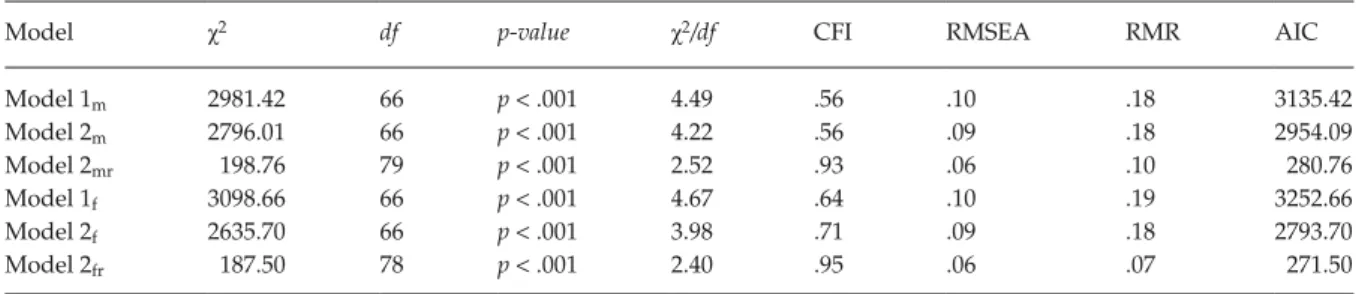
Table 1 summarizes the estimates of goodness-of-fit and model quality of Model 1m,f and Model 2m,f.
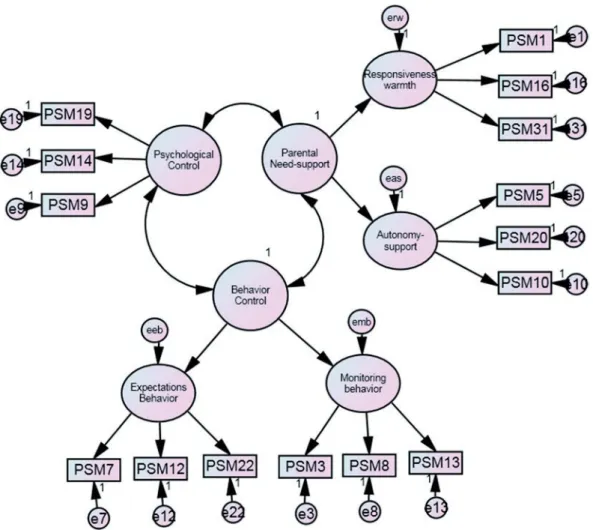
Figure 1 provides a graphical representation of the respecified models. Initial CFAs yield an important misfit for the two models tested, nevertheless favoring the Model2m,f across all the fit indices considered.
We modified the Model 2m,f. to improved goodness-
of-fit. Firstly, we dropped from further analyses 14 items with high cross-loadings on non-intended fac-tors (MI > 9; Maroco, 2010) and 12 items with poor loadings on the respective factor (λij≥ 0.5). Secondly,
we aggregated several scales presenting high empir-ical correlations (Maroco, 2010). Specifempir-ically, we combined the scales of expectations of behavior and monitoring of behavior (Model 2mr = .89, p <
.001; Model 2f, r = .84, p < .001) to measure behavior
control and the scales autonomy-support and responsiveness-warmth (Model2m, r = .85, p < .001;
Model 2f, r = .95, p < .001) to measure parental
need-support. In a final procedure we correlated the mea-surement errors of the items 1; 31, 31; 20, 5; 20. The resulting respecified Model (now designated Model 2mr,fr) is organized in a solution of 15 items and three
factors, measuring parental need-support, behavior control and parental psychological control. Subsequent CFA results show the improved fit of Model 2mr,fr. In
addition, the lowest AIC scores indicate that Model 2mr,fr is preferred to interpret the factorial structure of
the PQS.
Exploratory factor analysis (EFA)
Table 2 presents the reliability estimates for the PQS items and scales. The Exploratory Factor Analyses extracted a solution of three components with eigen-values greater than 1, explaining 46, 20% (Model 2mr)
and 57, 28% (Model 2fr) of the total variance of the data,
respectively (Tiensley & Tiensley, 1987). The three scales demonstrated good internal consistency, for both the maternal and paternal ratings, with all items loading significantly on the intended factor (λij≥ .50; λ2ij ≥ .25). Together, the EFA results corroborate the
3-factor solution found in CFA. Correlations
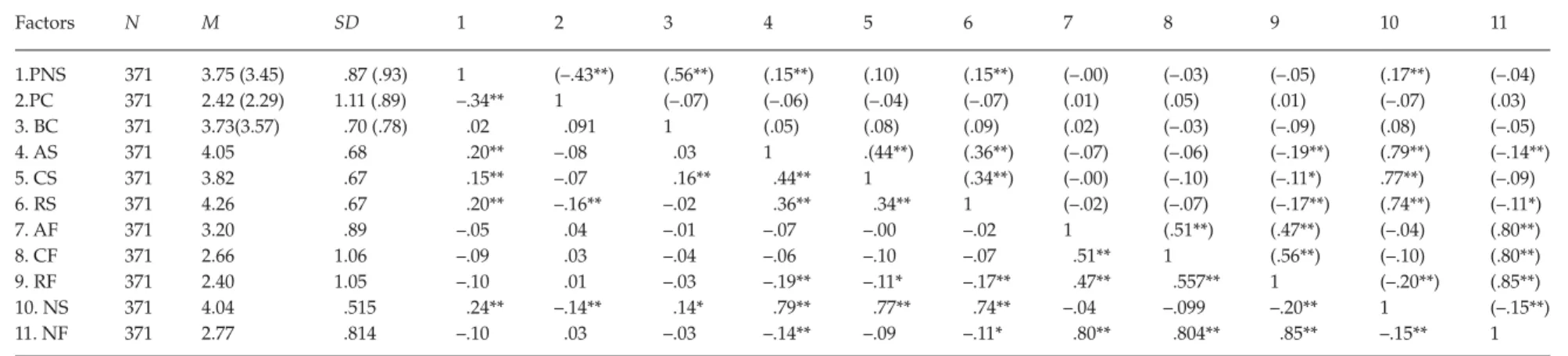
Table 3 summarizes the means, standard deviations and correlations obtained for the three factors. The examination of the correlation matrix shows a modest negative correlation (VIF < 5) between parental need-support and psychological control (Model 2mr r = –.34,
p < .001 Model 2fr r = –.43, p < .001), suggesting that the
factors measure two distinct parental dimensions. In addition, behavior control does not correlate to either parental need-support (Model 2mr r = .19, p = .72) nor
to psychological control (Model 2mr r = .09, p = .79; M2fr
r = –.07, p = .79), thus suggesting that behavior control is orthogonal to both the supportive and thwarting dimensions of parenting (see Soenens & Vansteenkiste, 2010 for a discussion). Remarkably, the high correla-tion observed between the dimensions of paternal behavior control and need-support Model 2fr (r = .56,
p < .001) suggests that, for the Portuguese context, the paternal enforcement of behavior control is more posi-tively-valued as an expression of need-support than the maternal.
Table 1. Global Fit Indices for the Hypothesized Models
Model χ2 df p-value χ2/df CFI RMSEA RMR AIC
Model 1m 2981.42 66 p < .001 4.49 .56 .10 .18 3135.42 Model 2m 2796.01 66 p < .001 4.22 .56 .09 .18 2954.09 Model 2mr 198.76 79 p < .001 2.52 .93 .06 .10 280.76 Model 1f 3098.66 66 p < .001 4.67 .64 .10 .19 3252.66 Model 2f 2635.70 66 p < .001 3.98 .71 .09 .18 2793.70 Model 2fr 187.50 78 p < .001 2.40 .95 .06 .07 271.50
Note: X2 qui-square; CFI = comparative fit index; RMSEA = root-mean-square error of approximation; RMR = root-mean-square residual; AIC = Akaike information criterion
6 P. Cordeiro et al.
Validity
Table 4 summarizes the validity estimates for the three PQS factors. We found Convergent validity (CV) for all the questionnaire factors except for the measures of maternal need-support and behavior control. The CV threats found are explained by the modest correlations verified between the dimensions of monitoring of behavior and autonomy-support in the respective second-order factors of need-support and behavior control. The additional CV threat detected for the factor paternal psychological control is justified by the modest loadings of the items in the factor. No threats to the discriminant validity of the scales were verified, thus suggesting the divergent validity of the three factors.
Primary results
Table 5 portrays the results of linear regression analyses. We examined the effects of behavior control, parental need-support and psychological control on
the adolescents´ experience of basic need-satisfaction and of need-frustration (Vansteenkiste & Ryan, 2013). Main effects
The results support the main effects of parental need-support on general need-satisfaction. This effect was verified for both the first-order dimensions of autonomy-support, Model 2mr,β = .25, t(1,369) = 4.88,
p < .001; Model 2fr,β = .14, t(1,369) = 2.78, p < .01, and
responsiveness-warmth: Model 2mr,β = .19, t(1,369) =
3.76, p < .001; Model 2fr, β = .13, t(1,369) = 2.59, p < .05.
However, when autonomy-support and responsiveness-warmth were entered together in a hierarchical regres-sion procedure, the effect of responsiveness-warmth was reduced to non-significance, Model 2mr, β = .05,
t(1,369) = .66, p = .52; Model 2fr, β = –.01, t(1,369) =
– .06, p = .95, suggesting suppression effects. The results also support the main effect of behavior control on basic need-satisfaction, Model 2mr: β = .14, t(1,369) = 2,80,
p < .05; Model 2fr: β = .08, t(1,369) = 1,78, p = .08, and,
par-ticularly, on competence satisfaction: Model 2mr: β = .16
Figure 1. Standardized estimates for M2 (maternal and paternal). Model 2
Par
enting and Need Satisfaction
7
Table 2. P-BMPN Reliability and Validity Estimates for the Reduced Solution of Portuguese version of the Parenting Questionnaire Items and Scales
Item
λij≥ 0.5 (CI 95%) λij2 (≥0.25)
F1 F2 F3
9. My mot her/father changes the subject whenever I have something to say .82 .67
19. My mother/father blames me for other family members’ problems .81 (.81) .66 (.66)
14. My mother/father often interrupts me .83 (.81) .69 (.66)
38. If I have hurt his/her feelings, my mother/father stops talking to me until I please him/her again (.79) (.62)
29. My mother/father is less friendly with me if I do not see things /her way (.57) (.32)
3. My mother/father asks me questions about how I am behaving outside the home .59 (.60) .34 (.36)
13. My mother/father watches to make sure I behave appropriately .71 (.76) .50 (.58)
22. My mother/father believes parents have the right to set rules and regulations for how children should behave .63 (.66) .40 (.44)
2. My mother/father has clear expectations for how I should behave in and outside the home (.61) (.37)
37. My mother/father checks on me in reasonable ways to see if I am behaving like he/she wants me to (.63) (.40)
17. My mother/father wants me to learn to follow rules and regulations in and outside of the home (.82) (.67)
7. My mother/father requires that I behave in certain ways .69 .48
12. My mother/father believes that children should not be able to do anything they want .56 .31
8. My mother/father reminds me of the rules he/she has set for me .76 .58
1. My mother/father makes me feel better after talking over my worries with him/her .73 (.65) .53 (.42)
16. My mother/father cheers me up when I am sad .75 (.75) .56 (.56)
31. My mother/father enjoys doing things with me .69 (.73) .48 (.53)
5. My mother/father listens to my opinion or perspective when I've got a problem .73 (.75) .53 (.56)
10. My mother/father is usually willing to consider things from my point of view .81 (.73) .66 (.53)
20. My mother/father allows me to decide things for myself .67 (.67) .45 (.45)
Cronbach’s Alpha .80 (.71) .74 (.81) .84 (.87)
Note 1:λij = standardized factor score weights; λij2 individual-item reliability.
8
P
. Cordeir
o et al.
Table 3. Response rate (N), Means, Standard Deviations (SD), and Correlations of the Study Variables
Factors N M SD 1 2 3 4 5 6 7 8 9 10 11 1.PNS 371 3.75 (3.45) .87 (.93) 1 (–.43**) (.56**) (.15**) (.10) (.15**) (–.00) (–.03) (–.05) (.17**) (–.04) 2.PC 371 2.42 (2.29) 1.11 (.89) –.34** 1 (–.07) (–.06) (–.04) (–.07) (.01) (.05) (.01) (–.07) (.03) 3. BC 371 3.73(3.57) .70 (.78) .02 .091 1 (.05) (.08) (.09) (.02) (–.03) (–.09) (.08) (–.05) 4. AS 371 4.05 .68 .20** –.08 .03 1 .(44**) (.36**) (–.07) (–.06) (–.19**) (.79**) (–.14**) 5. CS 371 3.82 .67 .15** –.07 .16** .44** 1 (.34**) (–.00) (–.10) (–.11*) .77**) (–.09) 6. RS 371 4.26 .67 .20** –.16** –.02 .36** .34** 1 (–.02) (–.07) (–.17**) (.74**) (–.11*) 7. AF 371 3.20 .89 –.05 .04 –.01 –.07 –.00 –.02 1 (.51**) (.47**) (–.04) (.80**) 8. CF 371 2.66 1.06 –.09 .03 –.04 –.06 –.10 –.07 .51** 1 (.56**) (–.10) (.80**) 9. RF 371 2.40 1.05 –.10 .01 –.03 –.19** –.11* –.17** .47** .557** 1 (–.20**) (.85**) 10. NS 371 4.04 .515 .24** –.14** .14* .79** .77** .74** –.04 –.099 –.20** 1 (–.15**) 11. NF 371 2.77 .814 –.10 .03 –.03 –.14** –.09 –.11* .80** .804** .85** –.15** 1
Note: PNS = Parental Need-support; PPC = Parental Psychological Control; BC = Behaviour Control; AF = Autonomy Satisfaction; CF = Competence Satisfaction; RS = Relatedness Satisfaction; AF = Autonomy Frustration; CF = Competence Frustration; RF = Relatedness Frustration; NS = Need-satisfaction; NF = Need-frustration. Values between brackets correspond to Model 2fr estimate.
Parenting and Need Satisfaction 9
t(1,369) = 3,16, p < .01; Model 2fr: β = .05, t(1,369) = .88,
p = .38. However, behavior control was not a signifi-cant predictor of need-frustration, Model 2mr: β = –.03,
t(1,369) = –.53, p = .60; Model 2frβ = –.05, t(1,369) = –.78,
p = 43. Importantly, against what is predicted by SDT (Vansteenkiste & Ryan, 2013), the findings did not provide support for the main effect of psychological control on need-frustration, Model 2mrβ = .03, t(1.369) =
.56, p = .57; Model 2fr, β = .03, t(1.369) = .52, p = .60.
Overall, the results provided partial support for the first hypothesis of our study.
Cross-lagged effects
We further examined the predicted cross-lagged effects between the variables (Vansteenkiste & Ryan, 2013). We found that maternal psychological control had a significant negative effect on basic need-satisfaction, Model 2mr: β = –.14, t(1, 369) = –1, 36,
p < .05), while parental need-support does not have a significant effect on need-frustration, Model 2mr: β = –.10, t(1, 369) = –.61, p > .05, Model 2fr: β = .04,
t(1, 369) = –1.94, p > .05. Moderation effects
In subsequent analyses we explored the existence of possible moderation effects between the variables. The results of hierarquical regression analysis showed that both parental need-support and psychological control moderated the positive effect of behavior control on general need-satisfaction, with parental need-support amplifying this effect and psychological control buff-ering it. We also found that maternal psychological control buffered the positive effect of need-support on need-satisfaction, Model 2mr: F(3, 367) = 11.62, p < .001;
Model 2fr: F(3, 367) = 3.49, p < .05). The asymmetrical
cross-lagged and moderation effects found provided Table 4. Factor Correlation, Reliability and Validity Estimates for the Models Tested
Composed reliability Convergent validity
Discriminant Validity Correlation of latent constructs CR AVE MSV ASV PNS PNT BC Model 2mr F1. PNS 0.80 0.58 0.10 0.06 0.76 F2. PC 1.06 1.11 0.10 0.05 –0.32 1.05 F3. BC 2.05 2.98 0.02 0.01 0.15 0.03 1.73 Model 2fr F1. PNS 0.95 0.90 0.48 0.39 0.95 F2. PC 0.73 0.41 0.30 0.15 –0.55 0.64 F3. BC 0.95 0.90 0.48 0.25 0.70 –0.07 0.95
Note: R2= factor square correlations; Convergent validity (AVEi ≥ 0.5); Composite reliability (CR ≥ 0.7), Discriminant Validity (R2)
Average Variance Extracted (AVE), Maximum Shared Squared Variance (MSV), and Average Shared Squared Variance (ASV).
Table 5. Regression Analysis Predicting Basic Need-Satisfaction and Need-Frustration
Predictor Dependent Variables Mother (M2mr) Father (M2fr) BC PNS PC BC PNS PC Autonomy-satisfaction .05 .20** –.08 .05 .14* –.06 Competence-satisfaction .16** .15* –.07 .05 .11* –.04 Relatedness-satisfaction .02 .20** –.16** .09 .15* –.07 Autonomy-frustration –.01 –.05 .04 .02 –.01 .01 Competence-frustration –.04 –.09 .03 –.03 –.03 .05 Relatedness-frustration –.03 –.06 .01 –.09 –.05 .01 General Need-Satisfaction .14* .24** –.14* .08 .17** –.07 General Need-Frustration –.03 –.10 .03 –.04 –.04 .03 Note: *p < .05; **p < .01.
10 P. Cordeiro et al.
partial support the second and third (3a, 3c) hypotheses of our study.
Discussion
The aims of this study were twofold: (1) to perform a broad-band factor-analytic study of dimensionality and construct validity of the Parenting Questionnaire Scales in Portuguese sample of high school students, and (2) to examine the construct validity of the par-enting dimensions, with reports of convergent, dis-criminant and criterion-related validity. The findings are interpreted on the basis of Self-Determination Theory.
The combined results of exploratory and confirmatory factor analyses, along with the lowest AIC estimates obtained for Models 2mr,fr showed that the internal
structure of the Parenting Questionnaire Scales is best-represented by a solution of 15-items and 3 factors that distinguish the dimensions of parental need-support, parental psychological control and behavior control.
The improved construct validity of the three-factor solution was further demonstrated at the correlation matrix. As expected, parental need-support and paren-tal psychological control were moderately correlated, signifying that the constructs lie within two distinct motivational continua. In addition, behavior control does not significantly relate to both parental need-support and psychological control, suggesting that the parental efforts to regulate children’s behavior, based on reasonable expectations and adequate monitoring of behavior, are independent of the supportive or thwarting ways through which these efforts are com-municated (Soenens & Vansteenkiste, 2010).
The 3-factor model demonstrated adequate discrim-inant validity, but further adjustments are necessary to improve the Convergent Validity of some scales. The criterion-related validity of the three factors was also demonstrated. In particular, it was found that the Portuguese high school students experience basic need-satisfaction when they perceive their parents as highly need-supportive (particularly autonomy-supportive) and/or behaviorally controlling, but they do not nec-essarily experience basic need-frustration when they their parents display psychological control (or psycho-logically controlling) attitudes. Instead, the perception of parental psychological control, and particularly of maternal psychological control, is related to the experi-ence of low need-satisfaction, whereas neither parental need-support nor behavior control relate to the experi-ence of low need-frustration.
Importantly, the effect of parental psychological control on (low) need-satisfaction was not affected by the degree to which parents are simultaneously perceived as need-supportive and behavior controlling. On the contrary, the positive effects of parental need-support
on basic need-satisfaction are significantly buffered by the experience of psychological control.
Finally, we found that parental need-Support and maternal psychological control moderated the positive effect of behavior control on the adolescents´ experience of basic need-satisfaction, with parental Need-support amplifying this effect and psychological control buff-ering it.
Overall, the results indicate that the most optimal pattern of adolescent need-satisfaction is attained when parents combine need-supportive, behavior controlling, and (the lack of) parental psychological control attitudes. Put it in a different way, lower need-satisfaction is experi-enced when the parents exhibit psychological controlling attitudes, irrespectively on how much need-supportive and behavior controlling they simultaneously are.
One should note, however, that the predictive effects were always stronger, if not only significant, for the maternal data. This particular finding underlines not only the importance of examining the maternal and paternal data separately (for a similar approach, see Barber et al., 1995), but also the need to examine the differential impact of parental and maternal variables in development.
Future studies could examine whether different par-enting profiles, resulting from different combinations of the three parental dimensions, predict unique variance on motivational outcomes (e.g., psychosocial identity; Erikson, 1968; Marcia, 1980) and whether this relation is mediated by the experience of basic need-satisfaction and frustration. For instance, it could be examined whether the need-supportive or psychologically controlling behaviors are predominantly triggered by particular emotional states of the parents or by specific features of the child’s behavior. To this point, one could hypothesize that parents tend to be mainly need-supportive when they feel more relaxed or when the child displays appro-priate behavior, and more psychological controlling when they feel more anxious or when the child is misbe-having (B. Soenens, personal communication, March 3, 2014).
Our research has several limitations. Firstly we conducted a single cross-sectional study based on self-report measures. This methodology prevented us from drawing firm conclusions about the distinctiveness of the three factors insofar as the differences found may also reflect methodological artifacts, such as the posi-tive or negaposi-tive way as items are worded. To overcome this problem, future research should combine adoles-cent and parental self-reports, or use more objective criteria, such as the physiological correlates associated to need-satisfaction and to need-frustration. Additionally, more prospective longitudinal studies should be under-taken to more completely address the way in which these effects develop over time.
Parenting and Need Satisfaction 11 Secondly, in this study we relied on a relatively
homogeneous and well-educated sample of Portuguese high school adolescents. Now, the cultural and sampling specificity may not only exemplify two confounding variables to be controlled for, but they can themselves represent alternative explanations for the results. More cross-cultural validation studies are required to exclude the alternative hypothesis that the salience of the asso-ciations between the variables reflects the cultural a cultural bias rather than the real nature and dynamics of the constructs.
The use of a normative sample also restricted the variance of our data. In fact, we verified that the scores of parental psychological control were all below the scale mid-point, which, for many authors, indicate the absence of the construct under analysis (e.g., YSI; Young, Klosko, & Weishaar, 2003). Therefore, we may have not have measured the full experience of psycho-logical control, leaving unchecked the hypothesis that high psychological control scores would have a signif-icant impact on need-frustration. To overcome this lim-itation, future research should rely on a combination of normative and clinical samples.
Finally, we based our conclusions on a shortened version of the Parenting Questionnaire Scales, and, as we know the findings obtained with shorter scales are less valid than those obtained with longer scales (Smith, McCarthy, & Anderson, 2000). Therefore it is necessary to cross-validate our findings in independent samples, if we want to generate extended evidence for the psychometric quality and predictive capacity of the 3-factor solution.
This study provided initial validation for the substan-tive distinction between the need-supporsubstan-tive, psycho-logical control and behaviorally controlling dimensions of parenting, adding new questions on the anteced-ents, dimensionality and relations between perceived parenting and experienced need-satisfaction and/or frustration in adolescence.
References
Barber B. K. (1996). Parental psychological control: Revisiting a neglected construct. Child Development,
67, 3296–3319. http://dx.doi.org/10.2307/1131780
Barber B. K. (2002). Intrusive parenting: How psychological control affects children and adolescents. Washington, DC: American Psychological Association Press.
Barber B. K., & Harmon E. (2002). Violating the self: Parental psychological control of children and adolescents. In B. K. Barber. (Ed.), Intrusive parenting: How psychological control affects children and adolescents. (pp. 15–52). Washington, DC: American Psychological Association Press.
Barber B. K., Olsen J. E., & Shagle S. C. (1994). Associations between parental psychological and behavioral control and youth internalized and externalized behaviors.
Child Development, 65, 1120–1136. http://dx.doi.org/ 10.2307/1131309
Barber B. K., Stolz H. E., & Olsen J. A. (1995). Parental support, psychological control, and behavioral control: Assessing relevance across time, culture, and method.
Monographs of the Society for Research in Child Development,
70, 1–137.
Barber B. K., & Xia M. (2013). The centrality of control to parenting and its effects. In A. S. Morris, R. E. Larzelere, & A. W. Harrist (Eds.), New directions for authoritative parenting (pp. 61–87). Washington, DC: American Psychological Association Press.
Bartholomew K. J., Ntoumanis N., Ryan R. M., & Thøgersen-Ntoumani C. (2011). Psychological need thwarting in the sport context: Assessing the darker side of athletic experience. Journal of Sport and Exercise Psychology, 33, 75–102.
Baumeister R. F., & Leary M. R. (1995). The need to belong: Desire for interpersonal attachments as a fundamental human motivation. Psychological Bulletin, 117, 497–529. http://dx.doi.org/10.1037//0033-2909.117.3.497
Baumrind D. (1966). Effects of authoritative parental control on child behavior. Child Development, 37, 887–907. http://dx.doi.org/10.2307/1126611
Bean R. A., Barber B. K., & Crane R. D. (2006). Parental support, behavioral control, and psychological control among African American youth: The relationships to academic grades, delinquency, and depression. Journal of Family Issues, 27, 1335–1355. http://dx.doi.org/10.1177/ 0192513X06289649
Byrne B. M. (2010). Structural equation modeling with AMOS (2nd Ed.). New York, NY: Routledge.
Cordeiro P. M., Paixão M. P., Lens W., & Sheldon K. (2015).
The Portuguese adaptation of the Balanced Measure of Psychological Needs Scale: Dimensionality and construct validity. (Manuscript submitted for publication).
Deci E. L., & Ryan R. M. (1985). Intrinsic motivation and self-determination in human behavior. New York, NY: Plenum.
Deci E. L., & Ryan R. M. (2000). The "What" and "Why" of goal pursuits: Human needs and the self-determination of behavior. Psychological Inquiry, 11, 227–268. http://dx.doi. org/10.1207/S15327965PLI1104_01
Duriez B., Soenens B., & Vansteenkiste M. (2007). In search of the antecedents of adolescent authoritarianism: The relative contribution of parental goal promotion and parenting style dimensions. European Journal of Personality, 21, 507–527. http://dx.doi.org/10.1002/ per.623
Erikson E. H. (1968). Identity youth and crisis. New York, NY: Norton.
Fornell C., & Larcker D. F. (1981). Evaluating structural equation models with unobservable variables and measurement error. Journal of Marketing Research, 18, 39–50. http://dx.doi.org/10.2307/3151312
Gaskin J., (2015), Name of tab. Stats Tools Package. Cleveland, OH: Case Western Reserve University. Retrieved from http://statwiki.kolobkreations.com
Gray M. R., & Steinberg L. (1999). Unpacking authoritative parenting: Reassessing a multidimensional construct.
12 P. Cordeiro et al.
Journal of Marriage and the Family, 61, 574–587. http://dx. doi.org/10.2307/353561
Grolnick W. S., & Ryan R. M. (1989). Parent styles associated with children’s self-regulation and competence in school. Journal of Educational Psychology, 81, 143–154. http://dx.doi.org/10.1037//0022-0663.81.2.143
Grolnick W. S., Ryan R. M., & Deci E. L. (1991). The inner resources for school achievement: Motivational mediators of children's perceptions of their parents. Journal of Educational Psychology, 83, 508–517. http://dx.doi.org/ 10.1037//0022-0663.83.4.508
Hambleton R. K. (2001). The next generation of the ITC test translation and adaptation guidelines. European Journal of Psychological Assessment, 17, 164–172. http://dx.doi.org/ 10.1027//1015-5759.17.3.164
Hu L. T., & Bentler P. M. (1999). Cutoff criteria for fit indexes in covariance structure analysis: Conventional criteria versus new alternatives. Structural Equation Modeling, 6, 1–55. http://dx.doi.org/10.1080/10705519909540118
Marcia J. E. (1980). Identity in adolescence. In J. Adelson (Ed.), Explorations in personality: A clinical and experimental study of fifty men of college age (pp. 491–501). New York, NY: Oxford University Press.
Maroco J. (2010). Análise de equações estruturais: fundamentos teóricos, software & aplicações [Structural Equation Analysis: Theoretical foundations, software and applications]. Lisbon, Portugal: Reportnumber.
McIver J. P., & Carmines E. G. (1981). Unidimensional scaling. Thousand Oaks, CA: Sage.
Miklikowska M., Duriez B., & Soenens B. (2011). Family roots of empathy-related characteristics: The role of perceived maternal and paternal need support in adolescence. Developmental Psychology, 47, 1342–1352. http://dx.doi.org/10.1037/a0024726
Ryan R. M. (1995). Psychological needs and the facilitation of integrative processes. Journal of Personality, 63, 397–427. http://dx.doi.org/10.1111/j.1467-6494.1995.tb00501.x
Ryan R. M. (1993). Agency and organization: Intrinsic motivation, autonomy and the self in psychological development. In J. Jacobs (Ed.), Nebraska symposium on motivation. Developmental perspectives on motivation. (Vol.
40, pp. 1–56). Lincoln, NE: University of Nebraska Press.
Ryan R. M., & Deci E. L. (2002). Overview of self-determination theory: An organismic dialectical perspective. In R. M. Ryan & E. L. Deci (Eds.), Handbook of self-determination research (pp. 3–33). Rochester, NY: The University of Rochester Press.
Ryan R. M., & Deci E. L. (2000). Self-determination theory and the facilitation of intrinsic motivation, social development, and well-being. American Psychologist, 55, 68–78. http://dx.doi.org/10.1037//0003-066X.55.1.68
Ryan R. M., & Guardia La, J. G. (2000). What is being optimized? Self-determination theory and basic psychological needs. In S. H. Qualls & N. Abeles (Eds.),
Psychology and the aging revolution: How we adapt to longer life (pp. 145–172). Washington, DC: American Psychological Association.
Schaefer E. S. (1965). Children’s reports of parental behavior: An inventory. Child Development, 36, 413–424. http://dx.doi.org/10.2307/1126465
Schunk D. H., & Zimmerman B. J. (2007). Influencing children's self-efficacy and self-regulation of reading and writing through modeling. Reading and Writing Quarterly,
23, 7–25. http://dx.doi.org/10.1080/10573560600837578
Sheldon K. M., Abad N., & Hinsch C. (2011). A two process view of Facebook use and relatedness need-satisfaction: Disconnectedness drives use and connectedness rewards it. Journal of Personality and Social Psychology,
100, 766–775.
Sheldon K. M., & Hilpert J. C. (2012). The balanced measure of psychological needs (BMPN) scale: An alternative domain general measure of need satisfaction. Motivation and Emotion, 36, 439–451. http://dx.doi.org/10.1007/ s11031-012-9279-4
Skinner E. A., Johnson S. J., & Snyder T. (2005). Six dimensions of parenting: A motivational model. Parenting: Science and Practice, 5, 175–235. http://dx.doi.org/10.1207/ s15327922par0502_3
Smith G. T., McCarthy D. M., & Anderson K. G. (2000). On the sins of short-form development. Psychological Assessment, 12, 102–111. http://dx.doi.org/10.1037// 1040-3590.12.1.102
Soenens B., & Beyers W. (2012). The cross-cultural significance of control and autonomy in parent– adolescent relationships. Journal of Adolescence, 35, 243–248. http://dx.doi.org/10.1016/j.adolescence. 2012.02.007
Soenens B., Duriez B., Vansteenkiste M., & Goossens L. (2007). The intergenerational transmission of empathy-related responding in adolescence: The role of maternal responsiveness. Personality and Social Psychology Bulletin,
33, 299–311.
Soenens B., Luyckx K., Vansteenkiste M., Duriez B., & Goossens L. (2008). Clarifying the link between perceived parental psychological control and adolescents’ depressive feelings: Reciprocal versus unidirectional models of influence. Merrill-Palmer Quarterly, 54, 411–444.
Soenens B., & Vansteenkiste M. (2010). A theoretical upgrade of the concept of parental psychological control: Proposing new insights on the basis of self-determination theory. Developmental Review, 30, 74–99. http://dx.doi. org/10.1016/j.dr.2009.11.001
Soenens B., Vansteenkiste M., Luyckx K., & Goossens L. (2006). Parenting and adolescent problem behavior: An integrated model with adolescent self-disclosure and perceived parental knowledge as intervening variables.
Developmental Psychology, 42, 305–318. http://dx.doi.org/ 10.1037/0012-1649.42.2.305
Soenens B., Vansteenkiste M., Duriez B., & Goossens L. (2006). In search of the sources of psychologically controlling parenting: The role of parental separation anxiety and parental maladaptive perfectionism. Journal of Research on Adolescence, 16, 539–559. http://dx.doi. org/10.1111/j.1532-7795.2006.00507.x
Soenens B., Vansteenkiste M., Luyten P., Duriez B., & Goossens L. (2005). Maladaptive perfectionistic self-representations: The mediational link between psychological control and adjustment. Personality and Individual Differences, 38, 487–498. http://dx.doi. org/10.1016/j.paid.2004.05.008
Parenting and Need Satisfaction 13 Steinberg L. (1990). Autonomy, conflict, and harmony in the
family relationship. In S. S. Feldman & G. R. Elliot (Eds.),
At the threshold: The developing adolescent (pp. 255–276). Cambridge, MA: Harvard University Press.
Steinberg L. (2005). Psychological control: Style or substance? In Changing boundaries of parental authority during adolescence. In W. Damon & J. Smetana (Eds.),
New directions for child and adolescent development (Vol. 108, pp. 71–78). New York, NY: Wiley.
Tiensley H., & Tiensley D. J. (1987). Uses of factor analysis in counseling psychology research. Journal of Counseling Psychology, 34, 414–424. http://dx.doi.org/10.1037// 0022-0167.34.4.414
Vansteenkiste M., & Ryan R. M. (2013). On psychological growth and vulnerability: Basic psychological need satisfaction and need frustration as a unifying principle.
Journal of Psychotherapy Integration.23, 263–280. http:// dx.doi.org/10.1037/a0032359
Verstuyf J., Vansteenkiste M., Soenens B., Boone L., & Mouratidis A. (2013). Daily ups and downs in women’s binge eating symptoms: The role of basic psychological needs, general self-control, and emotional eating. Journal of Social and Clinical Psychology, 32, 335–361.
Young J. E., Klosko J. S., & Weishaar M. E. (2003). Schema therapy. A practitioner’s guide. New York, NY: The Guilford Press.
Wang Q., Pomerantz E. M., & Chen H. (2007). The role of parents' control in early adolescents'
psychological functioning: A longitudinal investigation in the United States and China. Child Development, 78, 1592–1610. http://dx.doi.org/10.1111/j.1467-8624. 2007.01085.x
14 P. Cordeiro et al.
CPSF01 My father/mother makes me feel better after talking over my worries with him/her CPSF02 My father/mother has clear expectations for how I should behave in and outside the home CPSF03 My father/mother asks me questions about how I am behaving outside the home CPSF04 My father/mother is always trying to change how I feel or think about things CPSF05 My father/mother listens to my opinion or perspective when I've got a problem CPSF06 My father/mother smiles at me very often
CPSF07 My father/mother requires that I behave in certain ways CPSF08 My father/mother reminds me of the rules he/she has set for me CPSF09 My father/mother changes the subject whenever I have something to say CPSF10 My father/mother is usually willing to consider things from my point of view CPSF11 My father/mother is able to make me feel better when I am upset
CPSF12 My father/mother believes that children should not be able to do anything they want CPSF13 My father/mother watches to make sure I behave appropriately
CPSF14 My father/mother often interrupts me
CPSF15 Whenever possible, my father/mother allows me to choose what to do CPSF16 My father/mother cheers me up when I am sad
CPSF17 My father/mother wants me to learn to follow rules and regulations in and outside of the home CPSF18 My father/mother talks to neighbours, parents of my friends, or my teachers about my behaviour CPSF19 My father/mother blames me for other family members’ problems
CPSF20 My father/mother allows me to decide things for myself CPSF21 My father/mother gives me a lot of care and attention
CPSF22 My father/mother believes parents have the right to set rules and regulations for how children should behave CPSF23 My father/mother makes efforts to know who my friends are and where I spend my time
CPSF24 My father/mother brings up past mistakes when he/she criticizes me CPSF25 My father/mother insists upon doing things his/her way
CPSF26 My father/mother believes in showing his/her love for me CPSF27 My father/mother lets me do anything I want
CPSF28 My father/mother doesn’t seem to care whether or not I behave like he/she wants me to do CPSF29 My father/mother is less friendly with me if I do not see things his/her way
CPSF30 My father/mother isn’t sensitive to many of my needs CPSF31 My father/mother enjoys doing things with me
CPSF32 My father/mother has reasonable expectations for my behaviour
CPSF33 My father/mother is unaware of how I am behaving in or outside the home CPSF34 My father/mother will avoid looking at me when I have disappointed him/her CPSF35 My father/mother helps me to choose my own direction in life
CPSF36 My father/mother is very unclear as to what he/she expects of me
CPSF37 My father/mother checks on me (what) in reasonable ways (how) to see if I am behaving like he/she wants me to CPSF38 If I have hurt his/her feelings, my father/mother stops talking to me until I please him/her again
Appendix A:
Parenting and Need Satisfaction 15
QEPP 01 O meu pai/mãe faz-me sentir melhor depois de conversar com ele/a sobre as minhas preocupações QEPP 02 O meu pai/mãe tem expectativas claras acerca de como me devo comportar dentro e fora de casa QEPP 03 O meu pai/mãe faz-me perguntas relacionadas com o meu comportamento fora de casa QEPP 04 O meu pai/mãe está sempre a tentar mudar o que eu me sinto ou penso
QEPP 05 O meu pai/mãe ouve a minha opinião ou ponto de vista quando tenho um problema QEPP 06 O meu pai/mãe sorri muitas vezes para mim
QEPP 07 O meu pai/mãe exige que eu me comporte de uma certa maneira QEPP 08 O meu pai/mãe lembra-me das regras que definiu para mim
QEPP 09 O meu pai/mãe muda de assunto sempre que estou a tentar dizer alguma coisa
QEPP 10 O meu pai/mãe está geralmente disposto a ver as coisas de acordo com o meu ponto de vista QEPP 11 O meu pai/mãe é capaz de me fazer sentir melhor quando estou chateado(a)
QEPP 12 O meu pai/mãe acredita que os jovens não podem fazer tudo o que desejam
QEPPF 13 O meu pai/mãe está atento ao meu comportamento para se assegurar que é adequado QEPPF 14 O meu pai/mãe interrompe-me com frequência
QEPP 15 Sempre que lhe é possível, o meu pai/mãe permite-me escolher o que quero fazer QEPP 16 O meu pai/mãe anima-me quando estou triste
QEPP 17 O meu pai/mãe quer que eu aprenda a seguir regras e normas, dentro e fora de casa
QEPP 18 O meu pai/mãe fala com os vizinhos, pais dos meus amigos e professores sobre o meu comportamento QEPP 19 O meu pai/mãe culpa-me pelos problemas dos outros membros da minha família
QEPP 20 O meu pai/mãe permite-me tomar decisões por mim mesmo(a) QEPP 21 O meu pai/mãe cuida de mim e dá-me muita atenção
QEPP 22 O meu pai/mãe acredita que os pais têm o direito de definir regras e normas para o comportamento dos jovens QEPP 23 O meu pai/mãe esforça-se para saber quem são meus amigos e onde é que eu passo o meu tempo
QEPP 24 Quando me critica, o meu pai/mãe lembra-me os erros que cometi no passado QEPP 25 O meu pai/mãe insiste em fazer as coisas à sua maneira
QEPP 26 O meu pai/mãe acredita que deve expressa o amor que sente por mim QEPP 27 O meu pai/mãe deixa-me fazer o que eu quero
QEPP 28 O meu pai/mãe parece não se importar se eu me comporto ou não como ele quer
QEPP 29 O meu pai/mãe é menos amigável comigo quando eu vejo as coisas de forma diferente da dele/a QEPP 30 O meu pai/mãe não é sensível a muitas das minhas necessidades
QEPP 31 O meu pai/mãe gosta de realizar actividades comigo
QEPP 32 O meu pai/mãe tem expectativas adequadas para o meu comportamento QEPP 33 O meu pai/mãe não sabe como me comporto dentro ou fora de casa QEPP 34 O meu pai/mãe evita olhar para mim quando o/a decepciono QEPP 35 O meu pai/mãe ajuda-me a escolher o meu caminho na vida
QEPP 36 O meu pai/mãe é muito pouco claro relativamente ao que espera de mim
QEPP 37 O meu pai/mãe verifica de forma sensata se me estou a comportar como ele/a deseja
QEPP 38 Quando firo os sentimentos do meu pai/mãe, ele/a deixa de falar comigo até que me volte a comportar de uma forma que lhe agrade novamente
Appendix B: