Technological University Dublin Technological University Dublin
ARROW@TU Dublin
ARROW@TU Dublin
Articles School of Food Science and Environmental Health
2019-12-01
An Explorative Case-Study of the use of PeerWise to Foster
An Explorative Case-Study of the use of PeerWise to Foster
Student Centred, and Peer Supported, Learning in a First-Year
Student Centred, and Peer Supported, Learning in a First-Year
Business Module
Business Module
Barry Ryan
Technological University Dublin, [email protected]
Anna Dynan
Cork Institute of Technology, [email protected]
Follow this and additional works at: https://arrow.tudublin.ie/schfsehart Part of the Business Commons
Recommended Citation Recommended Citation
Dynan, A, & Ryan, B.J. (2019). An explorative case-study of the use of PeerWise to foster student centred, and peer supported, learning in a first-year business module. Irish Business Journal, 12, (1), 22-39.
This Article is brought to you for free and open access by the School of Food Science and Environmental Health at ARROW@TU Dublin. It has been accepted for inclusion in Articles by an authorized administrator of ARROW@TU Dublin. For more information, please contact
[email protected], [email protected], [email protected].
This work is licensed under a Creative Commons Attribution-Noncommercial-Share Alike 3.0 License
Irish Business Journal
Volume 12, Number 1, 2019 ISSN: 1649-7120
Yeats’s Legacy and Literary Tourism:
A Study of the Yeats Winter School in Sligo
Mary McGuckin
An Explorative Case-Study of the use of PeerWise to Foster Student Centred,
and Peer Supported, Learning in a First-Year Business Module
Anna Dynan & Barry J. Ryan
The Economic Value of a Place-Based Resource
for Regional Development
Aisling ConwayLenihan & Helen McGuirk
The Influence of Employer Branding in
Talent Management in the Hotel Industry
Donagh Davern, Leo Jago & Margaret Deery
The Yin and Yang of Business Strategy
24
An Explorative Case-Study of the use of
PeerWise
to Foster Student Centred, and Peer Supported,
Learning in a First-Year Business Module
Anna Dynan & Barry J. Ryan
Abstract
Peer based learning is not a new concept in business studies in higher education; however, the integration of technology enabled and asynchronous peer learning has limited reported use and even less evidence based evaluation. In this explorative case study, the online tool PeerWise was used to scaffold and support an asynchronous peer-learning environment for a group of 212 first year business studies students. Students were required to create, answer and rate multiple choice questions on topics aligned to their curriculum within the peer constructed PeerWise question database. While there was no statistically significant correlation between PeerWise engagement and final module exam performance, conversely, considerable positive changes in student motivation, self-understanding and reflective learning were observed, informed by thematic analysis. With these key findings in mind, a
set of themed recommendations for practice are offered to support staff seeking to integrate
PeerWise, or technology enhanced peer learning more generally, into their teaching and learning practice.
Key Words: PeerWise, peer learning, technology enhanced learning, assessment
Introduction
OverviewThis paper outlines the integration of PeerWise, an online peer-based learning space, within a first year business studies cohort, and examines the impact of this teaching and learning approach on the student learning experience. The literature is reviewed and synthesised by way of introduction to technology enabled peer based learning and the subsequent research case-study. The findings are discussed both in terms the case at hand and in light of the peer-reviewed literature; leading to conclusions and recomemndations that align to the original research question.
Peer learning
Peer learning is a robust, powerful method of learning (Topping & Ehly 2001, Biggs 2003), that is a well-established approach to improving students’ learning and engagement (Ning & Downing, 2010). Peer learning tends to focus on pairs, or small group, activities to assist students meet the desired learning outcome(s). The involvement of peers in learning can be categorized by Wiliam and Thompson’s framework (2008) incorporating an element of formative assessment. Here three main processes (identifying where learners are in their learning, where they are going, how to get there) are supported and actioned by three
categories of actors (teacher, learner, peer). Supporting this multi-faceted, peer-based approach, Allal and Lopez (2005) identified the need for active student participation in all aspects of formative assessment including; student self-assessment, peer assessment, and the joint construction of assessment by students and teachers together. However, the success of peer learning is based on acceptance the pedagogical approach by students, and this often depends upon resolving the question of how peer learning can be summatively assessed in ways which are credible, transparent and fair (Boud et al., 1999).
Assessment and Learning
Assessment is the process of identifying, accumulating and interpreting information about learning outcomes, and is a vital part of the teaching, training and learning cycle. The evolution of technology in education, and its integration into assessment, has made alternative forms of student-centred assessment and assessment data mining possible (Copeland, 2005). Building
from Dempster and Perkins’s (1993) argument that for effective assessment, frequent testing
should occur soon after instruction; current technology enhanced learning and assessment paradigms have allowed a more tailored formative assessment framework to increase student engagement, improve learning outcomes and to personalise learning approaches (William, 2011). However, continual work is required to integrate research on assessment for learning with more fundamental research on instructional design, feedback, self-regulated learning, and motivation required. Research in the business disciplines have made progress in this area; McConnell and co-workers (2008) developed the Course Embedded Assessment (CEA) process to systematically assess student learning, resulting in a particularly effective reporting
on student learning achievement. The CEA process also allows academic staff to implement
changes, such as asynchronous and technology enhanced learning, to improve instruction and evaluate impact on student performance within the same academic year.
Asynchronous and Technology Enhanced Learning
Asynchronous tools are instructional resources that allow students to access subject materials according to their necessities, beyond the classroom limit and to use them at their own pace, at any time and in any place (Lan, 2014, 2015; Moore, 2011; Shahramiri & Gorjian, 2013). Providing
asynchronous learning opportunities can be an effective method to empower students to take
ownership of their own learning, particularly e-activities that permit continuous student self-assessment (Pinto-Llorente et al., 2017). Furthermore, asynchronous learning allows students to self-identify their weaknesses and receive the necessary feedback to eliminate them and understand the curriculum (Gamiz, Montes, & Perez, 2014). Technology Enhanced Learning (TEL) has been a key pedagogical approach to underpin impactful asynchronous learning. One of the benefits of TEL is the personalization of the learning experience; facilitated by content and formative assessment adaptation (Mulwa et al., 2010). However, motivation, academic emotions and self-regulated learning strategies all strongly influence academic achievement in TEL environments (Zheng & Li, 2016). On a more basic level, the level of engagement and use of the asynchronous learning tools is a key determinant in student learning outcome attainment Pena-Sanchez (2016).
PeerWise; an open and asynchronous learning solution?
PeerWise is an online resource that provides an innovative approach to enhance standard asynchronous learning practices by requiring students to participate in the construction and
26
evaluation of Multiple Choice Question (MCQs). As of 2019, over 1500 universities, schools and technical institutes across the world use PeerWise; all availing of the resource that encourages students to take ownership of their learning, utilising higher order skills to ask, answer, comment and rate on MCQs (Denny et al., 2008). MCQ validity in a peer-based system is always a potential issue, however, the benefits in student learning outweigh poorly constructed or incorrect questions (Purchase et al., 2010). The impact of PeerWise on student learning and engagement has been investigated in fields as diverse as chemistry (Ryan, 2013), medicine (Walsh et al. 2015), pharmacy (Hudson et. al 2018), physics (Mac Raighne et al., 2015) and computer science (Levin et al. 2008); with on-going use in a wide range of subjects, including; Anthropology, Biology, Chemistry, Computer Science, Physics, Population Health, Pharmacology and Medicine. However, to date there are no peer-reviewed publication exploring neither the application, nor the impact, of PeerWise as an asynchronous peer learning tool specifically in the area of undergraduate Business Studies.
Research Rationale
This research explores the introduction of an asynchronous peer learning tool, PeerWise, with instantaneous scoring and automated feedback with a view to enhancing the student learning experience for first year Business Studies degree students. The rationale behind adopting this approach was both scholarly and practical. Several PeerWise studies have demonstrated an enhanced student learning experience through the integration of an assessment method that gives the responsibility for learning directly back to the student. This approach to teaching, learning and assessment fosters a sense of freedom, independence and self-responsibility (Bates, 2011). From a practical perspective, engaging large classes in active, student-focussed learning can be challenging, even more so during non-contact
time; PeerWise potentially offered a low/no cost solution to this this perennial problem for
large cohort, first year business classes. This rationale underpinned the research design and questions for the case study at hand:
Primary Research Question
What is the student experience of PeerWise in a large cohort, first year, business degree module?
Secondary Research Questions
How effective is the use of technology in supporting peer learning in a large first year Business degree class, and,
What recommendations for practice can be derived from the student experience?
Research Methodology and Methods Overview
In order to understand the impact of PeerWise on the student learning experience generally, and to address the research questions at hand specifically, a mixed methods data collection approach within the context of an explorative case study was implemented (Sammons and Davis, 2017). The qualitative data focussed primarily on a single survey, with 7 open text questions, and 13 Likert scale questions divided into the three categories of Activities
supporting PeerWise, Assessment, and Knowledge building. Quantitative data were collected through terminal assessment performance in the module that encompassed this research and also the students overall Grade Point Average (GPA) for the academic year in question. In both methods, a purposefully sampled population was used.
Researchers Overview
PeerWise, by its very nature, ensures that this research is based on the social constructivist ontological perspective. Both researchers approached the data analysis phased from an interpretivist epistemological basis (Denzin & Lincoln, 2000). The methodology and methods executed in this study were directly influenced by the researchers ontological and epistemological stances and this affected the analysis and appreciation of the data and findings produced.
Case Study Outline and Participant Sampling
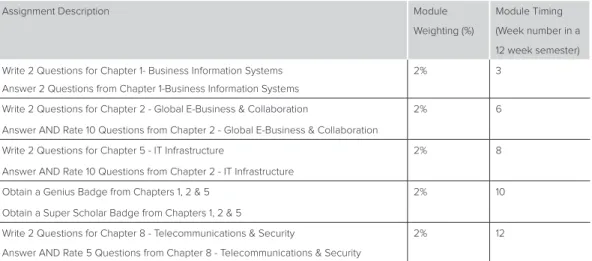
This investigative case study focussed entirely on one module, Business IT Skills (INFO6014), delivered over the course of one semester in an Irish third level Institute of Technology. The module assessment was split in half and comprised; 50% final MCQ, taken in the last week of the semester, and 50% computer laboratory assessment. PeerWise engagement was reward through the completion of five assignments over the course of the semester and contributed a maximum of 10% towards the 50% final MCQ (see Table One). A purposeful sampling approach, of students that participated in this module, was taken for both modes of data collection. The sample size for research participation varied based on the research method and in-line with the voluntary nature of informed consent. In the qualitative survey the sample size was 212 students. The sample participants for the quantitative data ranged from 86 to 66 respondents (from a potential population of 212).
Table One: Overview of the assignments that catalysed the student engagement with PeerWise, their weighting and their timing within the module based on module week. A Genius badge is awarded when a student answers at least 10 questions "correctly" (as indicated by the question author) in a row. A Super Scholar badge is awarded when a student answers at least 50 questions "correctly" (as indicated by the question author).
Assignment Description Module
Weighting (%)
Module Timing (Week number in a 12 week semester) Write 2 Questions for Chapter 1- Business Information Systems
Answer 2 Questions from Chapter 1-Business Information Systems
2% 3
Write 2 Questions for Chapter 2 - Global E-Business & Collaboration
Answer AND Rate 10 Questions from Chapter 2 - Global E-Business & Collaboration
2% 6
Write 2 Questions for Chapter 5 - IT Infrastructure
Answer AND Rate 10 Questions from Chapter 2 - IT Infrastructure
2% 8
Obtain a Genius Badge from Chapters 1, 2 & 5 Obtain a Super Scholar Badge from Chapters 1, 2 & 5
2% 10
Write 2 Questions for Chapter 8 - Telecommunications & Security
Answer AND Rate 5 Questions from Chapter 8 - Telecommunications & Security
28
Data Analysis
Quantitative data were gathered in the form of a detailed online survey comprising of 20 questions, completed by the student volunteers after all assessable components of the module were completed. These data were analysed through the use of descriptive statistics in Microsoft Excel. An inductive strategy was used for the analysis of the qualitative data, where
thematic analysis was used to identify, analyse and report different themes throughout the
data set (Braun and Clarke, 2006). The actual coding process was heavily influenced by the approach outlined by Bree and Gallagher (2016). In brief, and in order to ensure appropriate data validity and rigour, the raw survey responses were firstly open coded, independently by both researchers. Subsequently, both researchers independently axially coded the data set. Finally, the codebook was reduced to, at a maximum, six codes per survey question, and the researchers completed on final independent pass of the survey data. Once three independent coding passes had been completed, the researchers compared their codebooks, and sought to identify the same/similar codes to merge to create the final codebook. The researchers engaged in a structured, discussion based, approach to find coding consensus for the codes that could not be immediately merged. Once every response to the survey was coded using the final, merged codebook, the data was organised into themes. A thematic overview map
was used in order to see the relationship between codes and the difference between themes
throughout the survey as well as sub-themes, which were also present within the data sets. Data saturation was observed, as based on the coding method outlined. This inductive and collaborative approach to qualitative data analysis allowed key themes to emerge to address the research question (Saldana, 2009). Triangulation was achieved through the methods of data collection, supplemented by researcher reflective diaries and the scholarly literature.
Findings and Discussion
The findings from the data collected were thematically analysed and converged onto three major themes; two of these major themes contained subthemes, yielding a total of three major themes and three aligned sub-themes. The thematically detailed data are investigated and discussed under the same headings, below, to ensure consistency across the data set. Themes one and two are examined following the mixed method data collection approach; whereas theme three is based entirely on qualitative data. The combined findings are also
explored in relation to the existing literature to offer context and support for the subsequent
conclusions and recommendations. Theme One: (Self)-Motivation
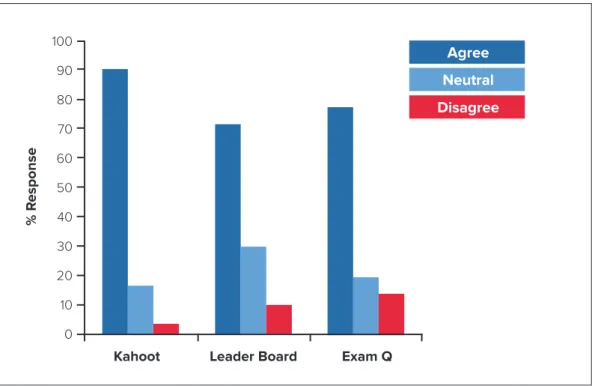
A significant motivating factor for students in this study were the in-class activities (see Figure One). The students suggested that the use of in-class Kahoot sessions motivated them to engage more with PeerWise outside class. Questions used in the in-class Kahoot questions were drawn from the student generated questions from the PeerWise database, and while anonymous, the purpose of this exercise was to give the contributing student a sense of personal achievement through their questions being showcased to their peers. This is consistent with the findings noted previously (Mulwa et al. 2010), where TEL made a radical difference to student learning, specifically the quality and effectiveness of the personal learning experience. Aligned with this, the presentation of the PeerWise leadership board
in class was also seen as a motivating factor. The rationale behind this functionality was to promote a level of competitiveness with the class group. Finally, a large proportion of students stated that possibility that their question would be placed on the final exam was a motivating factor.
Figure One: The in-class activities that were related to, and supported, PeerWise, that were reported as being motivating through the Likert scale survey (n=86). Kahoot refers to the use of questions extracted from the PeerWise database that were subsequently used in class with the personal response polling software Kahoot. Leaderboard refers to the displaying of the PeerWise leaderboard in class after each assignment (see Table One). The leaderboard displayed the anonymous usernames of the PeerWise participants only. Exam Q refers to the perceived reward of student authored questions being selected, by the academic and based on question standard, from the PeerWise database to be used in the final module exam. Zheng and colleagues (2016) argue that when students are intrinsically motivated, they will exert greater effort in their learning and use effective self-regulated learning strategies to achieve goals. Figure Two chimes with this finding and shows that a high percentage of students felt that many of the assessment activities were a motivating factor. Interestingly, this study shows that 91% (n=190) of students saw the allocation of marks for this engagement as extremely important, with 70% (n=148) stating that they would not have used PeerWise if marks were not allocated. Aligned to this, 20% (n=17, see Table Two) of students believed
that the biggest problem with PeerWise was the effort required by the student to earn the
rewards (see Table One). The feedback findings from the assessment activities supports the position of Gibbs and Simpson (2004) who note that appropriate alignment of the learning outcomes with the assessment, the assessment approach itself and the quality of feedback
100 90 80 70 60 50 40 30 20 10 0 % R esponse
Kahoot Leader Board Exam Q
Agree Neutral Disagree
30
Figure Two: The assessment activities that were related to PeerWise that were reported as being motivating through the Likert scale survey (n=85). Marks refers to the awarding of up to 10% of the module grade for PeerWise engagement. Communication refers to the personalised communication by the lecturer outlining each student’s performance in their aligned continual assessment after each assignment (see Table One). Badges relates to the digital badges that are available in PeerWise for achieving specific engagement thresholds.
Peer Comments refers to the peer commentary function within PeerWise whereby when a
student completes a PeerWise question they are encouraged to provide a comment on the question. No Marks relates to the opinion that if marks were not awarded for engagement,
then students would not have participated in PeerWise. This question was use an internal
validation of the data set and links to Marks responses.
Table Two: The codebook for the open text survey responses. The open ended questions (n=7), along with the responses (ranging between 66 and 86 responses), the final agreed code and code percentage are noted. For completeness, the individual initial open coding agreement (%) is also detailed.
provided to students can all influence the overall perception of assessments by students. This
study reiterates the importance of the credit reward versus the effort and timeline pressures.
When asked if they felt that PeerWise empowered their independent learning, 55% (n=44) of the respondents noted that they felt learner centred empowerment. Involving students in the development of assessment items in this fashion puts the educational process in focus and empowers students by providing a greater degree of control (Denney et al., 2008).
100 90 80 70 60 50 40 30 20 10 0 % R esponse
Marks Peer Comments No Marks = No Communication Badges
Agree Neutral Disagree
Final Combined Coding (% ) What do you believe is the biggest benefit of using PeerWise? (n= 85)
Exam Preparation 46
Self directed learning, understanding and study 28
Engaging and Accessible 24
No Benefits 2
Individual Initial Open Coding Agreement (%) 57
What aspects of using PeerWise did you find the most useful? (n= 86)
Knowledge Checking 36
Database Scale 24
Revision, Study and Exam Prep 19
Accessibility 13
Rating Questions 6
None 2
Individual Initial Open Coding Agreement (%) 68
What aspects of using PeerWise did you find the most enjoyable? (n= 81)
Creating, answering and authoring questions 48
Game based learning 36
Gaining exam marks 7
Accessibility & anonymity 6
None 2
Individual Initial Open Coding Agreement (%) 70
What do you believe is the biggest problem with PeerWise? (n= 86) 51
Question/comments standard 20
Website functionality 17
Student Effort v Reward 12
None 12
Individual Initial Open Coding Agreement (%) 40
32
Question Standard 39
No Recommendations 27
Credit Reward versus Effort and timelines 20
Alignment 14
Individual Initial Open Coding Agreement (%) 73
If you contributed more than the minimum requirement, why did you choose to do so? (n=74)
Exam Preparation 45
Self-Directed Learning 28
Self motivation & Game based learning 23
Did not contribute more 4
Individual Initial Open Coding Agreement (%) 63
Do you feel using PeerWise empowered your independent learning; if so, how? (n= 80)
Learner Centred Empowerment 44
Focussed Learning 35
No Empowerment 21
Individual Initial Open Coding Agreement (%) 64
Theme Two: Student Centred Learning and Understanding.
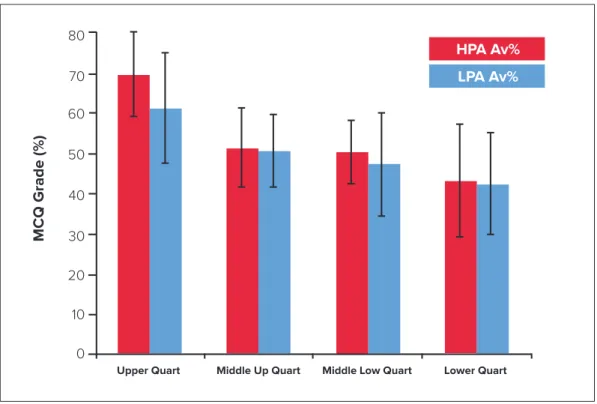
The correlation between students’ final examination scores and their level of usage of the PeerWise system have appeared repeatedly in the literature as possible indicators of student learning gain (Denny et al., 2008; Walsh et al, 2015). An unanticipated and rather surprising finding from this study was that there was no satistically significant difference in student results from each quartile (see Figure Three). Based on previously published findings, the anticipation would be that students that engaged most with PeerWise over the course of the semester would perform better in the final examination. However, Luxton-Reilly and colleagues (2012) cautioned the use of correlation as a measure of learning outcomes and suggested that students are likely to perform well on some questions in their final examinations that are similar to those encountered in PeerWise. Hudson and co-workers (2018) reiterated this point and claim that one possible explanation is the discrepancy in the standard of questions generated by students compared to those generated by the instructors for the examination. For example, if student-generated questions were biased towards the lower levels of Bloom’s Taxonomy and the examination was pitched towards the higher level of Bloom’s Taxonomy, then practicing the lower level questions may not transfer to answering higher level questions (Luxton-Reilly et al. 2012). The current study supports this point also, as 70% (n=51) of students surveyed noted that the biggest problem with PeerWise was the standard of questions and
comments. When asked to recommend something that would make PeerWise more effective
of the respondents citing ‘alignment’ between the course, the question database and the final exam. This finding from this study, echoing Purchase (2010), emphasises the need for the quality of the repository to be improved by providing guidance to students (particularly in the lower two quartiles) on how to devise distractors, the best kind of explanations, choosing appropriate tags, and how to include more than one topic within a single question.
Figure Three: A quartile comparison of whole class PeerWise engagement, categorised based on their final module grade. Engagement was classified as High PeerWise Activity (HPA Av%; completed the minimum requirements, see Table One) or Low PeerWise Activity (LPA Av%; did not complete the minimum requirements, see Table One). The class was split into quartiles (Quart) based on their whole year Grade Point Average (GPA), the error bars noted are the population standard deviation.
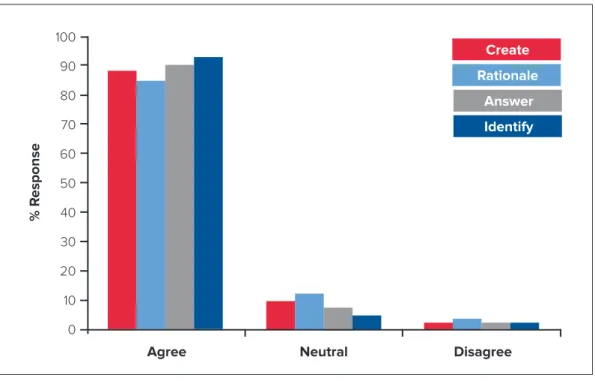
For those that engaged in appropriate question authoring, more than 80% (n=169, see Figure Four) of students surveyed felt that developing an original question on a particular topic developed their knowledge about that topic. Furthermore, providing a rationale for each answer and answering other student’s questions developed knowledge about what they knew; whereas answering other student’s questions helped identify gaps in knowledge. These points were supported through the qualitative analysis, where 54% (n=46) of the
respondents believed that the biggest benefit of using PeerWise was exam preparation,
followed by self directed learning, understanding and study (61%, n=52). Students indicated that the most useful aspect of PeerWise was the ability to check their knowledge against the available repository of questions (69%, n=60) and revision, study and exam preparation (22%, n=19). Additionally, self-directed learning and exam preparation were the main reasons
80 70 60 50 40 30 20 10 0 MCQ Grade (%)
Upper Quart Middle Up Quart Middle Low Quart Lower Quart
HPA Av% LPA Av%
34
why students contributed more the minimum requirement. The vast majority of respondents
(91%, n=79) believed that PeerWise empowered their independent learning and focussing
their learning. The findings in this study indicate that while there was no correlation between student engagement and final exam results; student self-development was extremely positive and effective (Walsh et al., 2015; Denny et, al 2008). Unfortunately, student perceptions of
efficacy do not necessarily correlate with learning outcome attainment (Kolluru, 2012).
Figure Four: The activities that related to learning within the PeerWise activities as identified through the Likert scale survey (n=83). Create refers to generating the question; Rationale refers to the student providing feedback for each question they created, Answer relates to answering other students questions, and, Identify refers to students using questions they answered incorrectly as a way to recognise gaps in their own understanding.
Theme Three: Accessibility and Interactivity
One of the key attributes of PeerWise is its usability; students have consistently opined that PeerWise is simple to use and encourages their participation (Denny, Luxton-Reilly & Hamer, 2008). Students in this case study expressed similar views under the theme of engagement and accessibility; 28% (n=24) of the participants stating that engagement and accessibility were one of the biggest benefits of PeerWise. The theme of accessibility was also noted in the response to the most useful features of PeerWise (15%, n=13), followed by the rating of questions (7%, n=6). The theme of accessibility and anonymity (7%, n=6) also surfaced when asked what aspects of using PeerWise were the most enjoyable?
Building on the ease of use, and the anonymous nature of PeerWise interactions, PeerWise
100 90 80 70 60 50 40 30 20 10 0 % R esponse
Agree Neutral Disagree
Create Rationale
Answer Identify
was noted as fun and game-like by respondents. Gamification can encourage increased engagement of participants through fun and reward. In education, this aspect of fun and engagement increases students’ engagement with learning activities and improve learning
experiences (Cheong, Filippou and Cheong, 2013; Sitzmann, 2011). The interactivity of PeerWise
was rated as being extremely enjoyable with 44% (n=36) of the respondents referring to the theme of game based learning in their response. The theme of game based learning (31%, n=23) also influenced students’ decision to contribute more than the minimum requirements (see Table One); the students enjoyed the PeerWise learning environment and it didn’t feel like a prescribed learning activity. The emergence and familiarity of online gaming may also influence the student’s perception of online and game based learning. Indeed, Singh (2015) contends that promise of scalability, allowing large number of students to become involved
in learning activities that are otherwise difficult to implement and manage without technology,
will encourage a wider use of this approach to teaching.
Recommendations for Practice
Spreadsheet Proficiency RequirementsIn order to extract data from PeerWise and award marks for activities (see Table One), a certain level of proficiency is needed in a spreadsheet package, such as Microsoft Excel.
1. The PeerWise administrator should be familiar with Text functions, in order to convert the
exported PeerWise data into the appropriate format for analysis.
2. The PeerWise administrator should be familiar with the Lookup functions in order to extract student scores based upon activity and align them against the correct student. 3. The PeerWise administrator should be able to complete email-based mail merges, so that
the administrator can communicate with students on the PeerWise registration process and subsequently, scores for each assignment
Training & Support on MCQ Creation
This study reiterates the importance of appropriate training and support on the creation
of, and commenting on, MCQs. A number of different approaches can be taken, either
collectively or separately.
1. Facilitate an interactive session(s) demonstrating the creation of questions and the
aligning of these questions against an appropriate set of standards; e.g. Bloom's Taxonomy, thereby providing clarity on the transition of questions from the lower levels of the taxonomy to the higher levels.
2. Feedback should be given to the class group, after each assignment, showing examples of good/poor questions created by students. These questions should be collectively explored and discussed as to why they are considered good/poor.
3. Administrators should continually reference the importance of rating questions, so that they understand the importance of writing good quality MCQs.
36
PeerWise Engagement and Assessment Activities
In this study, the assessed activities related to PeerWise were reported by the students as being motivating. The following approaches are recommended as a result of this study:
1. Create PeerWise “Tags” for individual chapters or areas of study to facilitate assignments,
study and revision.
2. Award marks for PeerWise engagement, requiring each student to complete specific
activities with a specific time period i.e. Write two questions and answer twenty on a specific chapter (that is tagged, see point one above).
3. Communicate with each student (via email mail merges), thus creating a personalised communication for each student, showing the grade received for assignment.
4. Utilize the PeerWise digital badges to achieve specific transparent engagement
thresholds and encourage competitiveness.
5. Display the PeerWise Leaderboards after each assignment to encourage competitiveness
within the class group and to give individual students a sense of achievement.
6. Use tools, such as Kahoot, to showcase good questions created by the students in-class, in a fun and engaging environment.
7. Consider awarding prizes for the top students in the Leaderboard at the end of the Semester.
8. Place questions taken directly from PeerWise in the final paper as a further incentive for students.
Credit Reward Versus Effort & Timelines
In this study many students commented on the effort versus reward for the assignments
given. The following approaches are recommended as a result of this study:
1. Care needs to be taken with the requirements around digital badges in assignments, as badges such as Einstein badges can be extremely difficult and time consuming to achieve, and may act as a demotivating factor as opposed to a motivating factor. However it is interesting to note in the current study that 25% of the entire class group received the full 10% mark allocation.
2. Appropriate timelines need to be put in place so that assignments are equally spread throughout the semester, and not to clash with other assessments in other modules.
Conclusions
Academics are continually challenged to select appropriate learning activities and carefully align the assessments to ensure that students can attain the learning outcomes of their modules. Appropriate alignment of the learning outcomes with the assessment, the assessment approach itself and the quality of feedback provided to students can all influence the overall perception of assessments by students (Gibbs and Simpson, 2004). Careful integration of appropriate technology, both in the presentation of material and the assessment, can be extremely beneficial to both the student and the academic. This research shows that the integration of PeerWise into a first year Business Studies module had a generally positive
effect on the student learning experience; however, it did not reflect previous studies where
increased engagement with PeerWise resulted in improved final grades.
The end product for this case-study is a recyclable, adjustable and engaging assessment; with future iterations informed by the key findings of this study (see Recommendations below). The students that responded to the mixed methods of data collection noted that the standard of peer generated questions was a barrier; however, the students did develop into reflective learners, capable of identify gaps in their knowledge, self-regulating their study and engaging with their peers to develop understanding. This echoes Wickersham & Chambers (2006) belief that assessments should activate students; encourage them to take ownership of their learning and to become reflective. The technology allowed students to engage with each other, and the learning resources, at times and locations that suited them. Interactivity, gamification and accessibility encouraged peers to engage with, and learn from, each other.
However, PeerWise integration comes with the health warning; the initial learning curve for the
academic can be steep depending on the academics prior experience and technological skills (e.g. additional workload in terms of resource preparation and grading of digital assessments are all hurdles to consider and be overcome; Tyagi and Kumar, 2011). With this in mind, and underpinned by the key findings from this study, a set of detailed recommendations are provided to support academics seeking to adopt and integrate PeerWise into their teaching practice.
Ethical considerations
A strong emphasis was placed on ensuring the highest ethical standards were maintained throughout this research. These standards were primarily informed by the British Educational Research Authority (BERA, 2018). In brief, and in line with best practice, the research ethics included: fully informed consent, voluntary participation, ability to withdraw, anonymity, appropriate data storage methods and privacy. Additionally, prior to engaging with the research data collection instruments, students were given a detailed information sheet outlining the purpose and the benefits of the research.
38
Limitations and Bias
In this study, the lead researcher adopted the role of an ‘insider-researcher’, as she was both the lecturer for the module and also the lead researcher. This position of power had to be negated to ensure an unbiased data set as possible. Appropriate methodology, leading to data triangulation, validation and rigour, was used to circumvent this bias. The benefit of the insider researcher role was deemed an advantage to this research (Chavez, 2008).
The major limitation of this study is the relatively small population sample that formed the basis of this research. Data collected from students based in one School, within a single higher education institution, were central to this study.
References
Allal, L., and Lopez, L. M. (2005). Formative assessment of learning: A review of publications in French. In J. Looney (Ed.), Formative assessment: Improving learning in secondary classrooms. Paris, France: Organisation for Economic Cooperation and Development, pp. 241–264. Bates T. (2011). Understanding Web 2.0 and its Implications for E-Learning, in Lee M. J. W. and McLoughlan C. (Eds.), Web 2.0-based e-Learning, Applying Social Informatics for Tertiary Teaching, Hersely, PA: Information Science Reference (an imprint of IGI Global), pp. 21–42. BERA (2018). Ethical Guidelines for Educational Research. London: BERA.
Biggs, J. (2003). Teaching for Quality Learning at University. 2nd ed. Berkshire, UK: Open University Press.
Braun, V. and Clarke, V. (2006). Using thematic analysis in psychology. Qualitative Research in Psychology, 3, 77-101.
Bree, R. T. and Gallagher, G. (2016). Using Microsoft Excel to code and thematically analyse qualitative data: a simple, cost-effective approach. AISHE-J: The All Ireland Journal of Teaching and Learning in Higher Education, 8, 281-295.
Boud, D., Cohen, R. and Sampson, J. (1999). Peer Learning and Assessment. Assessment & Evaluation in Higher Education, 24, 413-426.
Chavez, C. (2008). Conceptualizing from the inside: Advantages, complications, and demands on insider positionality. The Qualitative Report, 13, 474-494.
Cheong, C., Filippou, J. and Cheong, F. (2014). Towards the Gamification of Learning:
Investigating Student Perceptions of Game Elements. Journal of Information Systems
Education, 25, 233–244.
Copeland, M. (2005). Socratic circles: fostering critical and creative thinking in middle and high school. Portland, Maine: Stenhouse Publishers
Dempster, F. N. and Perkins, P. G. (1993) ‘Revitalizing classroom assessment: Using tests to promote learning’, Journal of Instructional Psychology, 20(3), p. 197. Available at: http://search. ebscohost.com.cit.idm.oclc.org/login.aspx?direct=true&db=a9h&AN=9312221881&site=ehost-live (Accessed: 27 April 2019).
Denny P., Luxton-Reilly A. and Hamer J. (2008). The PeerWise system of student contributed
assessment questions. Proceedings of the 10th Conference on Australasian Computing
Education, S. Hamilton and M. Hamilton (Eds.), Vol. 78. Australian Computer Society, Inc., 69. Denzin, N.K. and Lincoln, Y.S. (2000). Introduction: The discipline and practice of qualitative research. In N.K Denzin & Y.S. Lincoln (Eds.), Handbook of Qualitative Research. London, UK: Sage Publications. pp.1-30.
Gamiz, V., Montes, R. and Perez, M. C. (2014). Self-assessment via a blended-learning strategy
to improve performance in an accounting subject. Universities and Knowledge Society
40
Gibbs G. (1992). Improving the Quality of Student Learning, Bristol: TES.
Gibbs G. and Simpson C. (2004). Conditions under which assessment supports students’ learning. Learning and Teaching in Higher Education, 1, 3–31.
Higgins E. and Tatham L. (2003). Exploring the potential of multiple-choice questions in assessment, Learning and Teaching in Action, 2, 1–12.
Hudson, S. L., Jarstfer, M. B. and Persky, A. M. (2018). Student Learning with Generated and Answered Peer-written Questions. American Journal of Pharmaceutical Education, 82, 96– 99.
Kolluru, S. (2012). An Active-Learning Assignment Requiring Pharmacy Students to Write Medicinal Chemistry Examination Questions. American Journal of Pharmaceutical Education, 76, 1–7.
Lan, Y. J. (2014). Does second life improve mandarin learning by overseas Chinese students? Language Learning & Technology, 18, 36-56.
Lan, Y. J. (2015). Contextual EFL learning in a 3D virtual environment. Language Learning & Technology 19, 16-31.
Levin D., Baden R., Lumezanu C., Spring N. and Bhattacharjee B. (2008). Motivating participation in internet routing overlays. Proceedings of the 3rd International Workshop on Economics of Networked Systems, 91-96
Luxton-Reilly, A., Bertinshaw, D., Denny, P., Plimmer, B. and Sheehan, R. (2012). The impact of question generation activities on performance. Proceedings of the 43rd ACM technical symposium on Computer Science Education, 391-396).
Ning, K. and Downing K. (2010). The Impact of Supplemental Instruction on Learning Competence and Academic Performance. Studies in Higher Education 35, 921–939.
McConnell, C., Hoover, G. and Miller, G. (2008). Course embedded assessment and assurance of learning: Examples in business disciplines. Academy of Educational Leadership Journal, 12, 19–34.
Mac Raighne, A., Casey, M.M., Howard, R. and Ryan, B.J. (2015). Student Attitudes to an Online,
Peer-instruction, Revision Aid in Science Education. Journal of Perspectives in Applied
Academic Practice, 3, 49-60.
Moore, P. (2011). Anytime-Anywhere: personalised Time in Networking for e- Learning. eLC Research Paper Series, 3, 48-59.
Mulwa, C., Lawless, S., Sharp, M., Arnedillo-Sanchez, I. and Wade V. (2010) Adaptive Educational Hypermedia Systems in Technology Enhanced Learning: A Literature Review. Proceedings of the 2010 ACM Conference on Information Technology Education, 73-84.
Pena-Sanchez, R. (2009). Interactive software usage for e-learning of business statistics. Competitiveness Review: An International Business Journal, 19, 391-397.
Pinto-Llorente, A. M., Sánchez-Gómez, M. C., García-Peñalvo, F. J. and Casillas-Martin, S. (2017). Students’ perceptions and attitudes towards asynchronous technological tools in blended-learning training to improve grammatical competence in English as a second language. Computers in Human Behavior, 72, 632-643.
Purchase H., Hamer J., Denny P. and Luxton-Reilly, A. (2010). The quality of a PeerWise MCQ repository. Proceedings of the 12th Australasian Conference on Computing Education, Tony Clear and John Hamer (Eds.), Vol. 103. Australian Computer Society, 137-138.
Ryan, B. J. (2013). Line up, line up: using technology to align and enhance peer learning and assessment in a student centred foundation organic chemistry module. Chemistry Education Research and Practice, 14, 229-238.
Saldana, J. (2009). The Coding Manual for Qualitative Researchers. London: Sage
Sammons, P. and Davis, S. (2017). Mixed Methods Approaches and their Application in
Educational Research. In: Dominic, W, Neil, S, Emma, S, & Larry E., S The BERA/SAGE Handbook
of Educational Research. London: SAGE.
Shahramiri, P. and Gorjian, B. (2013). The effect of podcast transcription activities on intermediate and advanced EFL learners’ writing accuracy. Advances in Digital Multimedia, 40, 194-199. Singh, L. (2015). Peerwise; flexible learning and the contributing student pedagogy. Journal of Innovation in Psychology, Education and Didactics, 19, 67-90.
Sitzmann, T. (2011). A Meta-Analytic Examination of the Instructional Effectiveness of Computer-Based Simulation Games. Personnel Psychology, 64, 489–528.
Topping, K. J. and Ehly, S.W. (2001). Peer Assisted Learning: A Framework for Consultation. Journal of Educational and Psychological Consultation, 12, 113–32.
Tyagi S. and Kumar K. (2011). Web 2.0 for teaching, learning and assessment in higher education: a case study of universities in Western Uttar Pradesh (India). International Journal of Library Information Sciences, 3, 230–241.
Walsh, J. L., Denny, P. and Smith, P. E. (2015). Encouraging maximal learning with minimal effort using PeerWise. Medical Education, 49, 521–522.
Wickersham, L. E. and Chambers, S. M. (2006). ePortfolios: Using Technology to Enhance and Assess Student Learning. Education, 126, 738-746.
Wiliam, D. (2011). What is assessment for learning? Studies in Educational Evaluation, 37, 3-14.
Zheng L. and Li X. (2016). The Effects of Motivation, Academic Emotions, and Self-Regulated
Learning Strategies on Academic Achievements in Technology Enhanced Learning Environment. Proceedings from the IEEE 16th International Conference on Advanced Learning Technologies (ICALT), 376-380.