Mixed integer linear programming models for Flow Shop
Scheduling with a Demand Plan of Job Types
Joaquín Bautista-Valhondo 1, Rocío Alfaro-Pozo 2∗
1 IOC-ETSEIB, Universitat Politècnica de Catalunya, 08028 Barcelona, Spain 2 EAE Business School, 08015 Barcelona, Spain
Abstract
This paper presents two Mixed Integer Linear Programming (MILP) models that extend two basic Flow Shop Scheduling problems:𝐹𝐹𝐹𝐹/𝑝𝑝𝑝𝑝𝐹𝐹𝑝𝑝/𝐶𝐶𝑚𝑚𝑚𝑚𝑚𝑚 and 𝐹𝐹𝐹𝐹/𝑏𝑏𝑏𝑏𝑏𝑏𝑏𝑏𝑏𝑏/𝐶𝐶𝑚𝑚𝑚𝑚𝑚𝑚. This extension incorporates the concept of an overall demand plan for types of jobs or products. After using an example to illustrate the new problems under study, we evaluated the new models and analyzed their behaviors when applied to instances found in the literature and industrial instances of a case study from Nissan’s plant in Barcelona. CPLEX solver was used as a solution tool and obtained acceptable results, allowing us to conclude that MILP can be used as a method for solving Flow Shop Scheduling problems with an overall demand plan.
Keywords: Flow Shop Scheduling Problem, Mixed Model Sequencing Problem, Mixed Model
Assembly Lines, Overall Demand Plan, Mixed Integer Linear Programming.
1
Preliminaries
The Flow Shop Scheduling Problem (FSP) is a sequencing problem that has received
considerable attention from professionals and researchers in recent decades due in part to the wide range of production environments it can model (Pinedo 2016).
In an FSP, a set of jobs or products 𝐽𝐽 (𝐷𝐷 elements) needs to be processed in a group of
machines 𝐾𝐾 (𝐹𝐹 elements) arranged in series. All jobs must proceed through all machines in
the same order, starting with machine 1 and ending with machine𝐹𝐹.
Job𝑗𝑗 ∈ 𝐽𝐽 (𝑗𝑗 = 1, . . ,𝐷𝐷) requires a processing time 𝑝𝑝𝑗𝑗,𝑘𝑘≥ 0 in machine 𝑏𝑏 ∈ 𝐾𝐾 (𝑏𝑏= 1, . . ,𝐹𝐹). The overall goal of FSP is to determine a release sequence in which to process the jobs that will optimize one or more efficiency criteria.
A version of FSP, the Permutation Flow Shop Problem (PFSP), considers the storage space between two consecutive machines to be unlimited and therefore assumes that when
operation (𝑗𝑗,𝑏𝑏) of job 𝑗𝑗 ∈ 𝐽𝐽in machine 𝑏𝑏> 1 (𝑏𝑏 ∈ 𝐾𝐾) is completed, the machine is able
to process the next job in the sequence from the moment the job is released by the previous
machine𝑏𝑏 −1. Using the notation proposed by Graham et al. (1979), this problem is known
as 𝐹𝐹𝐹𝐹/𝑝𝑝𝑝𝑝𝐹𝐹𝑝𝑝/𝛾𝛾, where parameter 𝛾𝛾 symbolizes the selected efficiency measure. The following efficiency metrics are among the most common: (1) Makespan or the time required to complete all operations (𝑗𝑗,𝑏𝑏) in the workshop, 𝐶𝐶𝑚𝑚𝑚𝑚𝑚𝑚, and (2) the average time required to complete such operations, 𝐶𝐶𝑚𝑚𝑚𝑚𝑚𝑚.
There are production systems, also composed of machines arranged in series, in which it is not advisable to separate products or jobs within a process due to the product size (e.g., chassis, buses), the nature of the jobs (e.g., chemical reactors), or a lack of space. Under such
circumstances, when the operation on a product of machine 𝑏𝑏< 𝐹𝐹 is completed,
the operation will release the product to the next machine 𝑏𝑏+ 1 in order to process
the next product in the sequence, but if machine𝑏𝑏+ 1 is busy, machine 𝑏𝑏 will be blocked even though it has completed its operation. Using again the notation of Graham et al. (1979),
this problem is called 𝐹𝐹𝐹𝐹/𝑏𝑏𝑏𝑏𝑏𝑏𝑏𝑏𝑏𝑏/𝛾𝛾, where 𝛾𝛾 again symbolizes the efficiency measure
considered.
The nature of these problems is highly combinatorial and the minimization of the makespan is NP-hard in the strong sense (Hoogeveen et al., 1996; Hall and Sriskandarajah 1996; Yu et al. 2004). For this reason, heuristic procedures have traditionally been used to solve these problems in both permutation versions (Nawaz et al., 1983, Osman and Potts 1989; Taillard 1990; Reeves 1995; Aggoune 2004; Ying and Liao 2004; Fernandez-Viagas et al., 2017) and in versions with interruptions between machines (Logendran and Sriskandarajah 1993; Caraffa et al., 2001; Ronconi 2004, 2005; Ribas et al., 2011; Grabowski and Pempera 2007; Han et al., 2012; Pan and Wang 2012; Lin and Ying 2013; Nouri and Ladhari 2017, Ozolins 2017, Tasgetiren et al., 2017).
After explaining the two problems of interest, we will consider the unrealistic conditions that,
in our view, affect the set of jobs 𝐽𝐽 performed in some industrial sectors.
− Traditionally in the various versions of FSP, the elements of the set of jobs 𝐽𝐽 are
special, with unusual qualities or more specifically are unique jobs or products.
− If we consider some industrial sectors, such as the automotive sector, it is difficult to find
realistic problems whose purpose is to determine efficient sequences of 270 or more different products. In fact, it is absurd to think of a daily sequence of 270 engines or 300 car bodies or 500 chassis or 800 buses, all of which are entirely different.
− Due to the above reasons and for practical purposes, it is reasonable to believe that a
typology can be naturally established on the set of jobs 𝐽𝐽 (products, parts, etc.), and it is
therefore possible to discuss types of engines or car bodies or chassis or motors.
− In conclusion, in some industrial sectors, it makes sense to discuss types of jobs or types of
products or types of parts.
After these considerations, the remainder of this paper is structured as follows: In Section 2, we formalize the natural extension of the FSP when jobs are replicated, which for us means that there exists a demand plan for job types. In Section 3, we propose using mixed integer linear programming to model these problems. In Section 4, we illustrate the problems under study with an example. In Section 5, we perform a computational experiment to analyze the behavior of the generated models. Finally, Section 6 is dedicated to conclusions and proposals for future research.
2
Problems
𝑭𝑭𝑭𝑭
/
𝜷𝜷
/
𝜸𝜸
/
𝒅𝒅
𝒊𝒊:
𝑭𝑭𝑭𝑭
/
𝜷𝜷
/
𝜸𝜸
with product types
Formalization:𝐹𝐹𝐹𝐹/𝛽𝛽/𝛾𝛾/𝑑𝑑𝑖𝑖 is a family of sequencing problems that establishes a bijective application between
the elements of a set 𝒯𝒯 of ordinals (𝑇𝑇 elements), which correspond to positions in a sequence
of releases to manufacturing: 𝜋𝜋(𝑇𝑇) = (𝜋𝜋1, . ,𝜋𝜋𝑇𝑇), and the elements of a set 𝐽𝐽 of jobs or
products (𝐷𝐷 elements, with 𝐷𝐷 =𝑇𝑇 ).
The jobs or products in group 𝐽𝐽 are classified into exclusive types or classes, 𝐽𝐽𝑖𝑖 , that
satisfy: 𝐽𝐽= ⋃ 𝐽𝐽𝑖𝑖∈𝐼𝐼 𝑖𝑖 and 𝐽𝐽𝑖𝑖∩ 𝐽𝐽𝑖𝑖′ =∅,∀{𝑖𝑖,𝑖𝑖′}∈ 𝐼𝐼 ; where 𝐼𝐼 is the set of job types (𝑖𝑖 =
1, . . ,𝑛𝑛) . Parameter 𝛽𝛽 can take the permutation (prmu) or blocking (block)
values, parameter 𝛾𝛾 represents the possible efficiency metrics
types, and 𝑑𝑑𝑖𝑖 symbolizes the number of jobs of type 𝑖𝑖 ∈ 𝐼𝐼 within 𝐽𝐽 ; 𝑑𝑑𝑖𝑖 = |𝐽𝐽𝑖𝑖| ∀𝑖𝑖 ∈ 𝐼𝐼 , satisfying: ∑ 𝑑𝑑∀𝑖𝑖 𝑖𝑖 =𝐷𝐷 = 𝑇𝑇.
The units of 𝐽𝐽 travel in order through a set 𝐾𝐾 of 𝐹𝐹 machines arranged in series. We assume
that the production of a job of type 𝑖𝑖 ∈ 𝐼𝐼 requires a processing time𝑝𝑝𝑖𝑖,𝑘𝑘, measured under
normal operation conditions, in machine 𝑏𝑏 ∈ 𝐾𝐾 (𝑏𝑏= 1, . . ,𝐹𝐹), and that these times are
heterogeneous.
The differences between classes 𝐽𝐽𝑖𝑖 (e.g., 4x4s, vans, trucks) indicate the heterogeneity of the
processing times 𝑝𝑝𝑖𝑖,𝑘𝑘, which results in natural decouplings between the processors (operators
and robots) assigned to machines. In some cases, operators must wait for a product to be released from the previous machine before beginning work, and in others, when storage between machines is not possible, the operator will have to wait while "blocked" from the completion of the operation in progress in the next machine, even if his operation on the product in progress is completed. Based on the description above, in this paper we are not going to contemplate the possibility of interrupting operations and will leave this option for future work.
The purpose of problems 𝐹𝐹𝐹𝐹/𝛽𝛽/𝛾𝛾/𝑑𝑑𝑖𝑖 is to obtain a sequence of replicated jobs or
products (𝑑𝑑𝑖𝑖), in a line with 𝐹𝐹 machines, with the possibility of blocking or not according
to 𝛽𝛽, and with the objective of optimizing the efficiency metric represented by the 𝛾𝛾 value. To
formalize this purpose, two mathematical models adapted to mixed integer linear programming (MILP) are presented here.
3
MILP models for problems
𝑭𝑭𝑭𝑭
/
𝜷𝜷
/
𝜸𝜸
/
𝒅𝒅
𝒊𝒊 Parameters:𝐽𝐽 Set of jobs or products (Jobs): 𝑗𝑗 = 1, . ,𝐷𝐷
𝒯𝒯 Set of positions in the production sequence of products: 𝑡𝑡= 1, . ,𝑇𝑇
𝐼𝐼 Set of types of jobs or products (Job Types): 𝑖𝑖= 1, . ,𝑛𝑛
𝐽𝐽𝑖𝑖 Set of jobs or products of type𝑖𝑖 ∈ 𝐼𝐼
𝐝𝐝; 𝑑𝑑𝑖𝑖 Demand plan of a job types vector and demand of the jobs or products of type 𝑖𝑖
(𝑖𝑖= 1, . ,𝑛𝑛), with 𝑑𝑑𝑖𝑖 = |𝐽𝐽𝑖𝑖| ∀𝑖𝑖 ∈ 𝐼𝐼 and satisfying: ∑ 𝑑𝑑∀𝑖𝑖 𝑖𝑖 = 𝐷𝐷 =𝑇𝑇 ≡|𝒯𝒯|
𝐾𝐾 Group of machines: 𝑏𝑏= 1, . ,𝐹𝐹
𝑝𝑝𝑖𝑖,𝑘𝑘 Processing time of a job or product of type 𝑖𝑖 ∈ 𝐼𝐼 in machine 𝑏𝑏 ∈ 𝐾𝐾
𝐶𝐶𝑚𝑚𝑚𝑚𝑚𝑚0 Upper limit of the makespan or minimum completion time of all the jobs in all
machines. This can be calculated based on a reference sequence 𝜋𝜋0(𝑇𝑇) obtained by
a heuristic algorithm
Variables:
𝑥𝑥𝑖𝑖,𝑡𝑡 Binary variable whose value is 1 if a job or product of type 𝑖𝑖 ∈ 𝐼𝐼 is released to
production in the 𝑡𝑡-th position (𝑡𝑡= 1, . ,𝑇𝑇), and 0 otherwise
𝜋𝜋(·) Partial sequence, 𝜋𝜋(𝑡𝑡) = (𝜋𝜋1, . ,𝜋𝜋𝑡𝑡), and full sequence, 𝜋𝜋(𝑇𝑇) = (𝜋𝜋1, . ,𝜋𝜋𝑇𝑇), of
production of jobs or products 𝑗𝑗 ∈ 𝐽𝐽
𝜌𝜌𝑘𝑘,𝑡𝑡 Processing time of the 𝑡𝑡-th job in production sequence𝜋𝜋(𝑇𝑇) in machine 𝑏𝑏 ∈ 𝐾𝐾
𝐶𝐶𝑘𝑘,𝑡𝑡 Time of completion of the 𝑡𝑡-th job 𝜋𝜋𝑡𝑡 in production sequence 𝜋𝜋(𝑇𝑇) in machine𝑏𝑏 ∈ 𝐾𝐾. If blocking is considered, 𝐶𝐶𝑘𝑘,𝑡𝑡 symbolizes the release time of job or product 𝜋𝜋𝑡𝑡 ∈
𝐶𝐶𝑖𝑖 Time of completion of the last job or product of type 𝑖𝑖 ∈ 𝐼𝐼 in the last machine (𝑏𝑏 = 𝐹𝐹); that is:𝐶𝐶𝑖𝑖 = max
𝑡𝑡 �𝐶𝐶𝑚𝑚,𝑡𝑡:𝑥𝑥𝑖𝑖,𝑡𝑡 = 1�. By convention, we will say that 𝐶𝐶𝑖𝑖 is the time
of completion of the batch of parts of type 𝑖𝑖 ∈ 𝐼𝐼, which is equivalent to the time
when all jobs in group 𝐽𝐽𝑖𝑖 have been completed.
𝐶𝐶𝑚𝑚𝑚𝑚𝑚𝑚 Makespan: Time of completion of the last job or product 𝜋𝜋𝑇𝑇 of the production
sequence 𝜋𝜋(𝑇𝑇) in the last machine (𝑏𝑏= 𝐹𝐹); that is: 𝐶𝐶𝑚𝑚𝑚𝑚𝑚𝑚= 𝐶𝐶𝑚𝑚,𝑇𝑇
𝐶𝐶𝑚𝑚𝑚𝑚𝑚𝑚 Average time of completion of batches (∀𝑖𝑖 ∈ 𝐼𝐼): 𝐶𝐶𝑚𝑚𝑚𝑚𝑚𝑚 = 1
𝑛𝑛∑ 𝐶𝐶∀𝑖𝑖 𝑖𝑖
MILP model for the problem 𝐹𝐹𝐹𝐹/𝑝𝑝𝑝𝑝𝐹𝐹𝑝𝑝/𝐶𝐶𝑚𝑚𝑚𝑚𝑚𝑚/𝑑𝑑𝑖𝑖
MILP-1 · 𝐹𝐹𝐹𝐹/𝑝𝑝𝑝𝑝𝐹𝐹𝑝𝑝/𝐶𝐶𝑚𝑚𝑚𝑚𝑚𝑚/𝑑𝑑𝑖𝑖: min𝐶𝐶𝑚𝑚𝑚𝑚𝑚𝑚≡ min𝐶𝐶𝑚𝑚,𝑇𝑇 (1)
Subject to: � 𝑥𝑥𝑖𝑖,𝑡𝑡 = 1 𝑛𝑛 𝑖𝑖=1 ∀𝑡𝑡 = 1, . ,𝑇𝑇 (2) � 𝑥𝑥𝑖𝑖,𝑡𝑡 =𝑑𝑑𝑖𝑖 𝑇𝑇 𝑡𝑡=1 ∀𝑖𝑖 = 1, . ,𝑛𝑛 (3) 𝜌𝜌𝑘𝑘,𝑡𝑡 =� 𝑝𝑝𝑖𝑖,𝑘𝑘𝑥𝑥𝑖𝑖,𝑡𝑡 𝑛𝑛 𝑖𝑖=1 ∀𝑏𝑏 = 1, . ,𝐹𝐹 ∀𝑡𝑡= 1, . ,𝑇𝑇 (4) 𝐶𝐶𝑘𝑘,𝑡𝑡 ≥ 𝐶𝐶𝑘𝑘,𝑡𝑡−1+𝜌𝜌𝑘𝑘,𝑡𝑡 ∀𝑏𝑏 = 1, . ,𝐹𝐹 ∀𝑡𝑡= 1, . ,𝑇𝑇 (5) 𝐶𝐶𝑘𝑘,𝑡𝑡 ≥ 𝐶𝐶𝑘𝑘−1,𝑡𝑡+𝜌𝜌𝑘𝑘,𝑡𝑡 ∀𝑏𝑏 = 1, . ,𝐹𝐹 ∀𝑡𝑡= 1, . ,𝑇𝑇 (6) 𝑥𝑥𝑖𝑖,𝑡𝑡 ∈{0,1} ∀𝑖𝑖 = 1, . ,𝑛𝑛 ∀𝑡𝑡= 1, . ,𝑇𝑇 (7) 𝐶𝐶𝑘𝑘,0 = 0 ∀𝑏𝑏 = 1, . ,𝐹𝐹 (8) 𝐶𝐶0,𝑡𝑡 = 0 ∀𝑡𝑡 = 1, . ,𝑇𝑇 (9)
In model (MILP · 𝐹𝐹𝐹𝐹/𝑝𝑝𝑝𝑝𝐹𝐹𝑝𝑝/𝐶𝐶𝑚𝑚𝑚𝑚𝑚𝑚/𝑑𝑑𝑖𝑖), objective function (1) represents the minimization of the makespan; equalities (2) help to ensure a position in the sequence of every job or product;
equalities (3) are used to ensure the demand plan (vector d) is met; equalities (4) link
the processing time of each type of product and machine ( 𝑝𝑝𝑖𝑖,𝑘𝑘 )
with the corresponding processing time of the 𝑡𝑡-th job of the sequence (𝜌𝜌𝑘𝑘,𝑡𝑡); restrictions (5)
and (6) serve to limit the minimum completion times of the jobs (𝐶𝐶𝑘𝑘,𝑡𝑡), according to the
production sequence 𝜋𝜋(𝑇𝑇), in the machines of group 𝐾𝐾; conditions (7) force the decision
variables (𝑥𝑥𝑖𝑖,𝑡𝑡) to be binary; and finally (8) and (9) set the start of completion times. MILP model for the problem 𝐹𝐹𝐹𝐹/𝑏𝑏𝑏𝑏𝑏𝑏𝑏𝑏𝑏𝑏/𝐶𝐶𝑚𝑚𝑚𝑚𝑚𝑚/𝑑𝑑𝑖𝑖
MILP-2 · 𝐹𝐹𝐹𝐹/𝑏𝑏𝑏𝑏𝑏𝑏𝑏𝑏𝑏𝑏/𝐶𝐶𝑚𝑚𝑚𝑚𝑚𝑚/𝑑𝑑𝑖𝑖: min𝐶𝐶𝑚𝑚𝑚𝑚𝑚𝑚≡ min𝐶𝐶𝑚𝑚,𝑇𝑇 (10)
Sujeto a: � 𝑥𝑥𝑖𝑖,𝑡𝑡 = 1 𝑛𝑛 𝑖𝑖=1 ∀𝑡𝑡 = 1, . ,𝑇𝑇 (11) � 𝑥𝑥𝑖𝑖,𝑡𝑡 =𝑑𝑑𝑖𝑖 𝑇𝑇 𝑡𝑡=1 ∀𝑖𝑖 = 1, . ,𝑛𝑛 (12) 𝜌𝜌𝑘𝑘,𝑡𝑡 =� 𝑝𝑝𝑖𝑖,𝑘𝑘𝑥𝑥𝑖𝑖,𝑡𝑡 𝑛𝑛 𝑖𝑖=1 ∀𝑏𝑏 = 1, . ,𝐹𝐹 ∀𝑡𝑡= 1, . ,𝑇𝑇 (13) 𝐶𝐶𝑘𝑘,𝑡𝑡 ≥ 𝐶𝐶𝑘𝑘,𝑡𝑡−1+𝜌𝜌𝑘𝑘,𝑡𝑡 ∀𝑏𝑏 = 1, . ,𝐹𝐹 ∀𝑡𝑡= 1, . ,𝑇𝑇 (14)
𝐶𝐶𝑘𝑘,𝑡𝑡 ≥ 𝐶𝐶𝑘𝑘−1,𝑡𝑡+𝜌𝜌𝑘𝑘,𝑡𝑡 ∀𝑏𝑏 = 1, . ,𝐹𝐹 ∀𝑡𝑡= 1, . ,𝑇𝑇 (15) 𝐶𝐶𝑘𝑘,𝑡𝑡 ≥ 𝐶𝐶𝑘𝑘+1,𝑡𝑡−1 ∀𝑏𝑏 = 1, . ,𝐹𝐹 ∀𝑡𝑡= 1, . ,𝑇𝑇 (16) 𝑥𝑥𝑖𝑖,𝑡𝑡 ∈{0,1} ∀𝑖𝑖 = 1, . ,𝑛𝑛 ∀𝑡𝑡= 1, . ,𝑇𝑇 (17) 𝐶𝐶𝑘𝑘,0 = 0 ∀𝑏𝑏 = 1, . ,𝐹𝐹 (18) 𝐶𝐶0,𝑡𝑡 = 0 ∀𝑡𝑡 = 1, . ,𝑇𝑇 (19) 𝐶𝐶𝑚𝑚+1,𝑡𝑡= 0 ∀𝑡𝑡 = 1, . ,𝑇𝑇 (20)
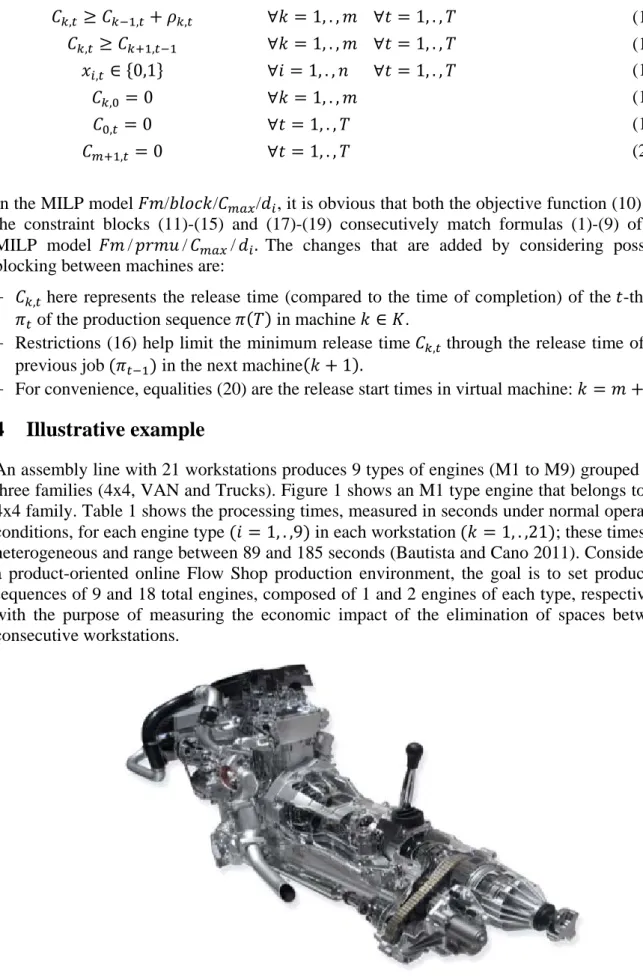
In the MILP model 𝐹𝐹𝐹𝐹/𝑏𝑏𝑏𝑏𝑏𝑏𝑏𝑏𝑏𝑏/𝐶𝐶𝑚𝑚𝑚𝑚𝑚𝑚/𝑑𝑑𝑖𝑖, it is obvious that both the objective function (10) and the constraint blocks (11)-(15) and (17)-(19) consecutively match formulas (1)-(9) of the
MILP model 𝐹𝐹𝐹𝐹/𝑝𝑝𝑝𝑝𝐹𝐹𝑝𝑝/𝐶𝐶𝑚𝑚𝑚𝑚𝑚𝑚/𝑑𝑑𝑖𝑖. The changes that are added by considering possible
blocking between machines are:
− 𝐶𝐶𝑘𝑘,𝑡𝑡 here represents the release time (compared to the time of completion) of the 𝑡𝑡-th job
𝜋𝜋𝑡𝑡 of the production sequence𝜋𝜋(𝑇𝑇) in machine 𝑏𝑏 ∈ 𝐾𝐾.
− Restrictions (16) help limit the minimum release time 𝐶𝐶𝑘𝑘,𝑡𝑡 through the release time of the
previous job (𝜋𝜋𝑡𝑡−1) in the next machine(𝑏𝑏+ 1).
− For convenience, equalities (20) are the release start times in virtual machine: 𝑏𝑏 =𝐹𝐹+ 1.
4
Illustrative example
An assembly line with 21 workstations produces 9 types of engines (M1 to M9) grouped into three families (4x4, VAN and Trucks). Figure 1 shows an M1 type engine that belongs to the 4x4 family. Table 1 shows the processing times, measured in seconds under normal operation
conditions, for each engine type (𝑖𝑖 = 1, . ,9) in each workstation (𝑏𝑏= 1, . ,21); these times are
heterogeneous and range between 89 and 185 seconds (Bautista and Cano 2011). Considering a product-oriented online Flow Shop production environment, the goal is to set production sequences of 9 and 18 total engines, composed of 1 and 2 engines of each type, respectively, with the purpose of measuring the economic impact of the elimination of spaces between consecutive workstations.
Figure 1.- Nissan Pathfinder Engine. Characteristics: (i) 747 parts and 330 references, (ii) 378 elemental assembly tasks grouped in 140 production line tasks.
The engine production sequences must meet the minimum Makespan goal, taking into account two online production configurations in a Flow Shop environment:
− Line L1 with unlimited storage space between pairs of consecutive workstations (problem
𝐹𝐹𝐹𝐹/𝑝𝑝𝑝𝑝𝐹𝐹𝑝𝑝/𝐶𝐶𝑚𝑚𝑚𝑚𝑚𝑚)
− Line L2 without storage space between pairs of consecutive workstations, with the
possibility of blocking between stations (problem 𝐹𝐹𝐹𝐹/𝑏𝑏𝑏𝑏𝑏𝑏𝑏𝑏𝑏𝑏/𝐶𝐶𝑚𝑚𝑚𝑚𝑚𝑚)
𝑏𝑏\𝑖𝑖 M1 M2 M3 M4 M5 M6 M7 M8 M9 1 104 100 97 92 100 94 103 109 101 2 103 103 105 107 101 108 106 102 110 3 165 156 164 161 148 156 154 164 155 4 166 175 172 167 168 167 168 156 173 5 111 114 114 115 117 117 115 111 111 6 126 121 122 124 127 130 120 121 134 7 97 96 96 93 96 89 94 101 92 8 100 97 95 106 94 102 103 102 100 9 179 174 173 178 178 171 177 171 174 10 178 172 172 177 178 177 175 173 175 11 161 152 168 167 167 166 172 157 177 12 96 106 105 97 101 100 96 104 96 13 99 101 102 101 99 101 96 102 99 14 147 155 142 154 146 143 154 153 155 15 163 152 156 152 153 152 154 156 156 16 163 185 183 178 169 173 172 182 171 17 173 179 178 169 173 178 174 175 175 18 176 167 181 180 172 173 173 168 184 19 162 150 152 152 160 151 155 148 167 20 164 161 157 159 162 160 162 158 157 21 177 161 154 168 172 170 167 149 169
Table 1. Processing time under normal operation �𝑝𝑝𝑖𝑖,𝑘𝑘� in seconds of the 9 types of engines (𝑖𝑖 ∈ 𝐼𝐼) in the 21 workstations (𝑏𝑏 ∈ 𝐾𝐾) of the set of Nissan-9Ing.I instances (Bautista and Cano 2011)
The 4 optimal sequences of this example were obtained with implementations of the MILP-1 and MILP -2 models using IBM ILOG CPLEX code (Optimization Studio v.12.2, win-x86-64)
Table 2 shows the results for this example.
Line 𝛽𝛽 𝑑𝑑𝑖𝑖 ∀𝑖𝑖 Sequenece 𝜋𝜋(𝑇𝑇) 𝐶𝐶𝑚𝑚𝑚𝑚𝑚𝑚 CPU (s)
L1 prmu 1 [5 3 9 1 4 7 6 2 8] 4372 0.218
L2 block 1 [5 2 6 1 4 7 9 3 8] 4382 1.079
L1 prmu 2 [5 3 6 9 6 3 1 2 4 1 2 9 5 4 7 7 8 8] 5944 7.361
L2 block 2 [5 2 8 9 9 3 2 4 7 1 7 5 1 6 4 6 3 8] 5971 1648.594
Table 2. Line (L1, L2) according to parameter 𝛽𝛽(𝑝𝑝𝑝𝑝𝐹𝐹𝑝𝑝,𝑏𝑏𝑏𝑏𝑏𝑏𝑏𝑏𝑏𝑏), engine demand plan (𝑑𝑑𝑖𝑖= 1,2 ∀𝑖𝑖), optimal production sequence𝜋𝜋(𝑇𝑇), 𝐶𝐶𝑚𝑚𝑚𝑚𝑚𝑚 value (sec) and CPU time (sec) for the illustrative example with 9 engine types.
Table 2 shows that the elimination of storage space between the 21 workstations (L1 versus L2) causes slow-downs in production of 10 and 27 seconds when engines 9 and 18 are produced, respectively.
Considering that the cost of production loss (Bautista et al., 2018) is 137.14 euros per production minute, the elimination of spaces in the assembly line results in an additional cost of 22.86 euros with 9 engines, and 61.71 euros with 18 engines.
The assembly line was designed for a fixed cycle time of 175 seconds, and consequently, the actual production times available for the manufacture of 9 and 18 engines are 1.42 and
1.85 hours, respectively. Note that both times are greater than the corresponding 𝐶𝐶𝑚𝑚𝑚𝑚𝑚𝑚 values
in Table 2.
5
Computational experimentation
The computational experimentation proposed is focused on analyzing the behavior of Mixed Integer Linear Programming (MILP) to solve sequencing problems in Flow Shop production environments with extensive demand. We propose two experiments. In Experiment-1 we used a selection of Taillard’s instances (Taillard 1993). For Experiment-2 we have selected 7 categorical instances of the set of industrial instances Nissan-9Eng.I (Bautista and Cano 2011).
5.1 Experiment-1
For the Experiment-1, we used Set-1 and Set-4 Taillard’s instances (𝛦𝛦) from the literature that
are related to the sequencing problems studied. We also adapted those instances to industrial
cases with general demand for types of jobs or products (𝛦𝛦′).
In brief, the data included in this experiment are:
− Set-1 (Taillard 1993): instances 𝜀𝜀= 1, . ,10 (𝜀𝜀 ∈ 𝛦𝛦), number of job types |𝐼𝐼|≡ 𝑛𝑛 = 20,
number of machines |𝐾𝐾|≡ 𝐹𝐹= 5, and total demand of jobs𝑇𝑇 ≡ 𝐷𝐷 = 20.
− Set-4 (Taillard 1993): instances 𝜀𝜀 = 31, . ,40 (𝜀𝜀 ∈ 𝛦𝛦), number of job types |𝐼𝐼|≡ 𝑛𝑛= 50,
number of machines |𝐾𝐾|≡ 𝐹𝐹= 5, and total demand of jobs𝑇𝑇 ≡ 𝐷𝐷 = 50.
− Set-1d (Set-1 adapted to problem 𝐹𝐹𝐹𝐹/𝛽𝛽/𝛾𝛾/𝑑𝑑𝑖𝑖): instances 𝜀𝜀 = 1, . ,10 (𝜀𝜀 ∈ 𝛦𝛦′), number of
job types |𝐼𝐼|≡ 𝑛𝑛= 20, number of machines |𝐾𝐾|≡ 𝐹𝐹= 5, Demand plan of job types 𝑑𝑑𝑖𝑖 =
5(∀𝑖𝑖= 1, . . ,20), and total demand of jobs𝑇𝑇 ≡ 𝐷𝐷 = 100, with identical processing times
𝑝𝑝𝑖𝑖,𝑘𝑘(∀𝑖𝑖 ∈ 𝐼𝐼,∀𝑏𝑏 ∈ 𝐾𝐾), instance by instance, to those of Set-1.
− Set-4d (Set-4 adapted to problem 𝐹𝐹𝐹𝐹/𝛽𝛽/𝛾𝛾/𝑑𝑑𝑖𝑖): instances 𝜀𝜀 = 31, . ,40 (𝜀𝜀 ∈ 𝛦𝛦′), number of
job types |𝐼𝐼|≡ 𝑛𝑛= 50, number of machines |𝐾𝐾|≡ 𝐹𝐹= 5, Demand plan of job types 𝑑𝑑𝑖𝑖 =
5(∀𝑖𝑖= 1, . ,20), and total demand of jobs 𝑇𝑇 ≡ 𝐷𝐷= 250, with identical processing times
𝑝𝑝𝑖𝑖,𝑘𝑘(∀𝑖𝑖 ∈ 𝐼𝐼,∀𝑏𝑏 ∈ 𝐾𝐾), instance by instance, to Set-4.
The compiled codes for the procedures involved were executed on a DELL Inspiron-13 (Intel(R) Core(TM) i7-7500U @ 2.70 GHz CPU 2.90 GHz, 16 GB of RAM, x64 Windows 10 Pro). The characteristics of the 2 procedures are:
− MILP-1: Model 𝐹𝐹𝐹𝐹/𝑝𝑝𝑝𝑝𝐹𝐹𝑝𝑝/𝐶𝐶𝑚𝑚𝑚𝑚𝑚𝑚/𝑑𝑑𝑖𝑖: (i) Objective function for minimizing the 𝐶𝐶𝑚𝑚𝑚𝑚𝑚𝑚 value of the production sequence; (ii) implementation for IBM ILOG CPLEX solver (Optimization Studio v.12.2, win-x86-64); (iii) maximum CPU time of 7200 sec. (40 instances) allowed for solving each instance.
− MILP-2: Model 𝐹𝐹𝐹𝐹/𝑏𝑏𝑏𝑏𝑏𝑏𝑏𝑏𝑏𝑏/𝐶𝐶𝑚𝑚𝑚𝑚𝑚𝑚/𝑑𝑑𝑖𝑖: (i) Objective function for minimizing the 𝐶𝐶𝑚𝑚𝑚𝑚𝑚𝑚 value of the production sequence; (ii) implementation for IBM ILOG CPLEX solver (Optimization Studio v.12.2, win-x86-64); (iii) maximum CPU time of 7200 sec. (40 instances) allowed for solving each instance.
Tables 3 to 6 show the results of the experiment obtained by CPLEX for the two models implemented (𝐹𝐹𝐹𝐹/𝑝𝑝𝑝𝑝𝐹𝐹𝑝𝑝/𝐶𝐶𝑚𝑚𝑚𝑚𝑚𝑚/𝑑𝑑𝑖𝑖, 𝐹𝐹𝐹𝐹/𝑏𝑏𝑏𝑏𝑏𝑏𝑏𝑏𝑏𝑏/𝐶𝐶𝑚𝑚𝑚𝑚𝑚𝑚/𝑑𝑑𝑖𝑖). Table 3 corresponds to the instances of Set-1 (20 jobs), Table 4 corresponds to those of Set-4 (50 jobs), and Tables 5 and 6 correspond to those of Set-1d (100 jobs) and of Set-4d (250 jobs), respectively.
In the tables, the column headers represent the following characteristics:
𝜀𝜀 ∈ 𝛦𝛦 Identification number of the instances for Set-1 and Set-4.
𝜀𝜀 ∈ 𝛦𝛦′ Identification number of the instances for Set-1d and Set-4d.
𝐶𝐶𝑚𝑚𝑚𝑚𝑚𝑚 Best makespan value obtained for procedure MILP-1 or MILP-2 𝐶𝐶𝑚𝑚𝑚𝑚𝑚𝑚∗ Optimal value of makespan
𝐶𝐶𝑚𝑚𝑚𝑚𝑚𝑚0 Best known value of makespan
𝐿𝐿𝐿𝐿_𝑝𝑝 𝐶𝐶𝑚𝑚𝑚𝑚𝑚𝑚 lower limit for problem 𝐹𝐹𝐹𝐹/𝑝𝑝𝑝𝑝𝐹𝐹𝑝𝑝/𝐶𝐶𝑚𝑚𝑚𝑚𝑚𝑚/𝑑𝑑𝑖𝑖 obtained for MILP-1 𝐿𝐿𝐿𝐿_𝑏𝑏 𝐶𝐶𝑚𝑚𝑚𝑚𝑚𝑚 lower limit for problem 𝐹𝐹𝐹𝐹/𝑏𝑏𝑏𝑏𝑏𝑏𝑏𝑏𝑏𝑏/𝐶𝐶𝑚𝑚𝑚𝑚𝑚𝑚/𝑑𝑑𝑖𝑖 obtained for MILP-1/2 𝐺𝐺𝐺𝐺𝑝𝑝𝐶𝐶∗ Relative gap between 𝐶𝐶𝑚𝑚𝑚𝑚𝑚𝑚 and 𝐶𝐶𝑚𝑚𝑚𝑚𝑚𝑚∗
𝐺𝐺𝐺𝐺𝑝𝑝𝐶𝐶0 Relative gap between 𝐶𝐶𝑚𝑚𝑚𝑚𝑚𝑚 and 𝐶𝐶𝑚𝑚𝑚𝑚𝑚𝑚0 𝐺𝐺𝐺𝐺𝑝𝑝𝐿𝐿𝐿𝐿_𝑝𝑝 Relative gap between 𝐶𝐶𝑚𝑚𝑚𝑚𝑚𝑚 and𝐿𝐿𝐿𝐿_𝑝𝑝
𝐺𝐺𝐺𝐺𝑝𝑝𝐿𝐿𝐿𝐿_𝑏𝑏 Relative gap between 𝐶𝐶𝑚𝑚𝑚𝑚𝑚𝑚 and𝐿𝐿𝐿𝐿_𝑏𝑏
The relative gap values between 𝐶𝐶𝑚𝑚𝑚𝑚𝑚𝑚 and the other characteristics related to makespan
(𝐶𝐶𝑚𝑚𝑚𝑚𝑚𝑚∗ ,𝐶𝐶𝑚𝑚𝑚𝑚𝑚𝑚0 ,𝐿𝐿𝐿𝐿_𝑝𝑝,𝐿𝐿𝐿𝐿_𝑏𝑏) are calculated using (21).
𝐺𝐺𝐺𝐺𝑝𝑝𝑋𝑋(𝜀𝜀) =𝐶𝐶𝑚𝑚𝑚𝑚𝑚𝑚𝐶𝐶(𝜀𝜀)− 𝑋𝑋(𝜀𝜀)
𝑚𝑚𝑚𝑚𝑚𝑚(𝜀𝜀) 𝑋𝑋 ∈ �𝐿𝐿𝐿𝐿𝑝𝑝,𝐿𝐿𝐿𝐿𝑏𝑏,𝐶𝐶𝑚𝑚𝑚𝑚𝑚𝑚 ∗ ,𝐶𝐶
𝑚𝑚𝑚𝑚𝑚𝑚0 �, ∀𝜀𝜀 ∈ 𝛦𝛦, ∀𝜀𝜀 ∈ 𝛦𝛦′ (21)
where the 𝐿𝐿𝐿𝐿_𝑝𝑝 values for the problem 𝐹𝐹𝐹𝐹/𝑝𝑝𝑝𝑝𝐹𝐹𝑝𝑝/𝐶𝐶𝑚𝑚𝑚𝑚𝑚𝑚/𝑑𝑑𝑖𝑖 are obtained directly with
procedure MILP-1, the 𝐿𝐿𝐿𝐿_𝑏𝑏 values correspond to the maximum value between 𝐿𝐿𝐿𝐿_𝑝𝑝 and the
lower limit from procedure MILP-2 for problem 𝐹𝐹𝐹𝐹/𝑏𝑏𝑏𝑏𝑏𝑏𝑏𝑏𝑏𝑏/𝐶𝐶𝑚𝑚𝑚𝑚𝑚𝑚/𝑑𝑑𝑖𝑖. Meanwhile, the values of 𝐶𝐶𝑚𝑚𝑚𝑚𝑚𝑚∗ are confirmed as optimal through procedure MILP-1, and the 𝐶𝐶𝑚𝑚𝑚𝑚𝑚𝑚0 value originates from the literature for problem 𝐹𝐹𝐹𝐹/𝑏𝑏𝑏𝑏𝑏𝑏𝑏𝑏𝑏𝑏/𝐶𝐶𝑚𝑚𝑚𝑚𝑚𝑚 (Bautista et al. 2012).
Procedure MILP-1: 𝐹𝐹𝐹𝐹/𝑝𝑝𝑝𝑝𝐹𝐹𝑝𝑝/𝐶𝐶𝑚𝑚𝑚𝑚𝑚𝑚/𝑑𝑑𝑖𝑖(=1), 𝐷𝐷= 20 MILP-2: 𝐹𝐹𝐹𝐹/𝑏𝑏𝑏𝑏𝑏𝑏𝑏𝑏𝑏𝑏/𝐶𝐶𝑚𝑚𝑚𝑚𝑚𝑚/𝑑𝑑𝑖𝑖(=1), 𝐷𝐷= 20
𝜀𝜀 ∈ Ε 𝐶𝐶𝑚𝑚𝑚𝑚𝑚𝑚∗ 𝐶𝐶𝑚𝑚𝑚𝑚𝑚𝑚 𝐺𝐺𝐺𝐺𝑝𝑝𝐶𝐶∗ 𝐶𝐶𝐶𝐶𝐶𝐶 (𝑠𝑠) 𝐿𝐿𝐿𝐿_𝑏𝑏 𝐶𝐶𝑚𝑚𝑚𝑚𝑚𝑚0 𝐶𝐶𝑚𝑚𝑚𝑚𝑚𝑚 𝐺𝐺𝐺𝐺𝑝𝑝𝐶𝐶0 𝐺𝐺𝐺𝐺𝑝𝑝𝐿𝐿𝐿𝐿_𝑏𝑏 𝐶𝐶𝐶𝐶𝐶𝐶 (𝑠𝑠) 1 1278 1278 0.00 16.49 1325 1374 1379 0.004 0.039 7176 2 1359 1359 0.00 13.58 1360 1408 1417 0.006 0.040 7063 3 1081 1081 0.00 96.95 1206 1280 1301 0.016 0.073 7074 4 1293 1293 0.00 20.60 1369 1448 1448 0.000 0.054 7191 5 1235 1235 0.00 64.71 1303 1341 1348 0.005 0.034 7070 6 1195 1195 0.00 16.86 1271 1363 1369 0.004 0.071 7079 7 1234 1234 0.00 15.83 1280 1381 1390 0.006 0.079 7088 8 1206 1206 0.00 15.89 1310 1379 1379 0.000 0.050 7039 9 1230 1230 0.00 15.06 1292 1373 1380 0.005 0.064 7058 10 1108 1108 0.00 14.31 1166 1283 1283 0.000 0.091 7096 Average - - 0.00 29.03 0.005 0.060 7093
Procedure MILP-1: 𝐹𝐹𝐹𝐹/𝑝𝑝𝑝𝑝𝐹𝐹𝑝𝑝/𝐶𝐶𝑚𝑚𝑚𝑚𝑚𝑚/𝑑𝑑𝑖𝑖(=1), 𝐷𝐷= 50 MILP-2: 𝐹𝐹𝐹𝐹/𝑏𝑏𝑏𝑏𝑏𝑏𝑏𝑏𝑏𝑏/𝐶𝐶𝑚𝑚𝑚𝑚𝑚𝑚/𝑑𝑑𝑖𝑖(=1), 𝐷𝐷= 50 𝜀𝜀 ∈ Ε 𝐶𝐶𝑚𝑚𝑚𝑚𝑚𝑚∗ 𝐶𝐶𝑚𝑚𝑚𝑚𝑚𝑚 𝐺𝐺𝐺𝐺𝑝𝑝𝐶𝐶∗ 𝐶𝐶𝐶𝐶𝐶𝐶 (𝑠𝑠) 𝐿𝐿𝐿𝐿_𝑏𝑏 𝐶𝐶𝑚𝑚𝑚𝑚𝑚𝑚0 𝐶𝐶𝑚𝑚𝑚𝑚𝑚𝑚 𝐺𝐺𝐺𝐺𝑝𝑝𝐶𝐶0 𝐺𝐺𝐺𝐺𝑝𝑝𝐿𝐿𝐿𝐿_𝑏𝑏 𝐶𝐶𝐶𝐶𝐶𝐶 (𝑠𝑠) 31 2724 2724 0.00 15.11 2724 3002 3091 0.029 0.119 7175 32 2834 2834 0.00 916.97 2838 3201 3282 0.025 0.135 7094 33 2621 2621 0.00 524.52 2621 3011 3155 0.046 0.169 7075 34 2751 2751 0.00 1979.61 2751 3128 3225 0.030 0.147 6986 35 2863 2863 0.00 171.44 2867 3166 3277 0.034 0.125 7183 36 2829 2829 0.00 109.35 2829 3169 3288 0.036 0.140 7107 37 2725 2725 0.00 530.91 2725 3013 3147 0.043 0.134 2932 38 2683 2683 0.00 440.43 2684 3073 3174 0.032 0.154 7164 39 2552 2552 0.00 1173.59 2552 2908 3017 0.036 0.154 7157 40 2782 2782 0.00 3.03 2782 3120 3234 0.035 0.140 7120 Average - - 0.00 586.50 0.035 0.142 6699
Table 4. Results for Set-4 instances using procedures MILP-1 and MILP-2
Procedure MILP-1: 𝐹𝐹𝐹𝐹/𝑝𝑝𝑝𝑝𝐹𝐹𝑝𝑝/𝐶𝐶𝑚𝑚𝑚𝑚𝑚𝑚/𝑑𝑑𝑖𝑖(=5),𝐷𝐷= 100 MILP-2: 𝐹𝐹𝐹𝐹/𝑏𝑏𝑏𝑏𝑏𝑏𝑏𝑏𝑏𝑏/𝐶𝐶𝑚𝑚𝑚𝑚𝑚𝑚/𝑑𝑑𝑖𝑖(=5),𝐷𝐷= 100
𝜀𝜀 ∈ Ε′ 𝐿𝐿𝐿𝐿_𝑝𝑝 𝐶𝐶𝑚𝑚𝑚𝑚𝑚𝑚 𝐺𝐺𝐺𝐺𝑝𝑝𝐿𝐿𝐿𝐿_𝑝𝑝 𝐶𝐶𝐶𝐶𝐶𝐶 (𝑠𝑠) 𝐿𝐿𝐿𝐿_𝑏𝑏 𝐶𝐶𝑚𝑚𝑚𝑚𝑚𝑚 𝐺𝐺𝐺𝐺𝑝𝑝𝐿𝐿𝐿𝐿_𝑏𝑏 𝐶𝐶𝐶𝐶𝐶𝐶 (𝑠𝑠) 1 5748 5748 0.00 195.43 5748 6625 0.132 7197 2 6183 6183 0.00 65.79 6183 6624 0.067 7112 3 5067 5067 0.00 0.83 5067 6352 0.202 6910 4 5976 5976 0.00 1.05 5976 7031 0.150 7036 5 5637 5637 0.00 45.88 5637 6449 0.126 7147 6 5671 5671 0.00 29.77 5678 6646 0.146 7168 7 5834 5834 0.00 3.17 5834 6677 0.126 7103 8 5560 5560 0.00 14.08 5560 6801 0.182 7193 9 5758 5758 0.00 9.64 5758 6727 0.144 6928 10 5118 5118 0.00 4.99 5118 6260 0.182 7198 Average 0.00 37.06 0.146 7099
Table 5. Results for Set-1d instances using procedures MILP-1 and MILP-2
Procedure MILP-1: 𝐹𝐹𝐹𝐹/𝑝𝑝𝑝𝑝𝐹𝐹𝑝𝑝/𝐶𝐶𝑚𝑚𝑚𝑚𝑚𝑚/𝑑𝑑𝑖𝑖(=5),𝐷𝐷= 250 MILP-2: 𝐹𝐹𝐹𝐹/𝑏𝑏𝑏𝑏𝑏𝑏𝑏𝑏𝑏𝑏/𝐶𝐶𝑚𝑚𝑚𝑚𝑚𝑚/𝑑𝑑𝑖𝑖(=5),𝐷𝐷= 250
𝜀𝜀 ∈ Ε′ 𝐿𝐿𝐿𝐿_𝑝𝑝 𝐶𝐶𝑚𝑚𝑚𝑚𝑚𝑚 𝐺𝐺𝐺𝐺𝑝𝑝𝐿𝐿𝐿𝐿_𝑝𝑝 𝐶𝐶𝐶𝐶𝐶𝐶 (𝑠𝑠) 𝐿𝐿𝐿𝐿_𝑏𝑏 𝐶𝐶𝑚𝑚𝑚𝑚𝑚𝑚 𝐺𝐺𝐺𝐺𝑝𝑝𝐿𝐿𝐿𝐿_𝑏𝑏 𝐶𝐶𝐶𝐶𝐶𝐶 (𝑠𝑠) 31 13408 13408 0.0000 10.22 13408 16379 0.181 2208 32 13776 13793 0.0012 328.95 13776 17570 0.216 2107 33 12809 12809 0.0000 5567.52 12809 15982 0.199 3686 34 13436 13436 0.0000 734.00 13446 16906 0.205 6236 35 13975 13975 0.0000 6599.62 13995 17583 0.204 4832 36 13783 13783 0.0000 943.01 13783 17176 0.198 7092 37 13189 13189 0.0000 1645.21 13189 16624 0.207 6909 38 13267 13267 0.0000 11.14 13284 16674 0.203 2594 39 12407 12424 0.0014 583.24 12409 15864 0.218 6524 40 13648 13648 0.0000 11.85 13648 16757 0.186 2256 Average 0.0003 1643.47 0.202 4444
An analysis of Tables 3-6 reveals the following:
− Procedure MILP-1 obtains and ensures optimal solutions in all instances with 20 jobs
(Set-1), 50 jobs (Set-4) and 100 jobs (Set-1d).
− Procedure MILP-1 obtains and ensures optimal solutions in 8 of the 10 instances with 250
jobs (Set-4d). The solutions obtained with MILP-1 for instances #32 and #39 of Set-4d have 𝐺𝐺𝐺𝐺𝑝𝑝𝐿𝐿𝐿𝐿_𝑝𝑝 values equal to 0.12% and 0.14%, respectively. The average 𝐺𝐺𝐺𝐺𝑝𝑝𝐿𝐿𝐿𝐿_𝑝𝑝 value for Set-4d is approximately 0.03%.
− Procedure MILP-2 does not ensure optimal solutions in any of the four Sets (1, 4, 1d and
4d).
− In Set-1 (20 jobs), MILP-2 obtains 3 better solutions for 10 instances (instances #4, #8 and
#10) and offers a 𝐺𝐺𝐺𝐺𝑝𝑝𝐶𝐶0 average value of 0.5%. Meanwhile, in the instances with 50 jobs
(Set-4), MILP-2 obtains a𝐺𝐺𝐺𝐺𝑝𝑝𝐶𝐶0 average value of approximately 3.5% and is not able to
match any better known value (𝐶𝐶𝑚𝑚𝑚𝑚𝑚𝑚0 ).
− For instances with 100 and 250 jobs (Set-1d and Set-4d) and with blocking between
machines, there is no information on the best known makespan value; therefore, to measure the quality of the solutions provided by MILP-2, we used the makespan lower
limits offered by the procedure. Under such conditions, the average values of 𝐺𝐺𝐺𝐺𝑝𝑝𝐿𝐿𝐿𝐿_𝑏𝑏 are
equal to 0.146 for Set-1d and to 0.202 for Set-4d.
− The average CPU times used by MILP-1 are approximately 29, 587, 37 and 1643 seconds
for each instance of 20, 50, 100 and 250 jobs, respectively. Note that these times do
not increase progressively with the number of jobs to be sequenced (𝑇𝑇 ≡ 𝐷𝐷), but these
times do appear to depend on the number of job types (|𝐼𝐼|≡ 𝑛𝑛) that correspond to each
instance.
− The average CPU times used by MILP-2 are approximately 7093, 6699, 7099 and 4444
seconds for each instance of 20, 50, 100 and 250 jobs, respectively. These times are not
related to the number of jobs to be sequenced (𝑇𝑇 ≡ 𝐷𝐷) or to the number of job types (|𝐼𝐼|≡
𝑛𝑛).
− In summary, considering the CPU time limitation of 7200 seconds for each instance, the
MILP-1 procedure oriented toward problem 𝐹𝐹𝐹𝐹/𝑝𝑝𝑝𝑝𝐹𝐹𝑝𝑝/𝐶𝐶𝑚𝑚𝑚𝑚𝑚𝑚/𝑑𝑑𝑖𝑖 obtains and ensures 38
optimal solutions for the 40 instances studied, while procedure MILP-2, oriented toward problem𝐹𝐹𝐹𝐹/𝑏𝑏𝑏𝑏𝑏𝑏𝑏𝑏𝑏𝑏/𝐶𝐶𝑚𝑚𝑚𝑚𝑚𝑚/𝑑𝑑𝑖𝑖, obtains 3 better solutions for a total of 20 instances (Set-1 and Set-4).
5.2 Experiment-2
There are currently 23 production plans for the nine engines and one working day at the Nissan Spanish Industrial Operations (Bautista and Cano 2011). Each program corresponds to a set of operation times biased by the demand of each of the nine products. We summarize here the characteristics of each of the 23 production plans. We have grouped them into seven categories according to the type of engine demand. One representative production plan is selected for each category to be used in the computational experimentation developed in this subsection. As said, the total number of engines assembled in a working day is 270 in two shifts:
− Category-1 (plan #1): identical demand for each of the nine products (balanced demand)
− Category-2 (plan #2): identical demand for each of the three engine families: 4x4, VAN, and trucks (90 per product family).
− Category-3 (plan #3): one of the engine families has low demand while the demand of the
other two families is high and identical.
− Category-4 (plan #6): one of the engine families has high demand while the demand of the
other two families is medium and identical.
− Category-5 (plan #9): one of the engine families has high demand while the demand of the
other two families is low and identical.
− Category-6 (plan #12): the demand of the engine families follows an arithmetic
progression.
− Category-7 (plan #18): the demand of the engine families follows a geometric progression.
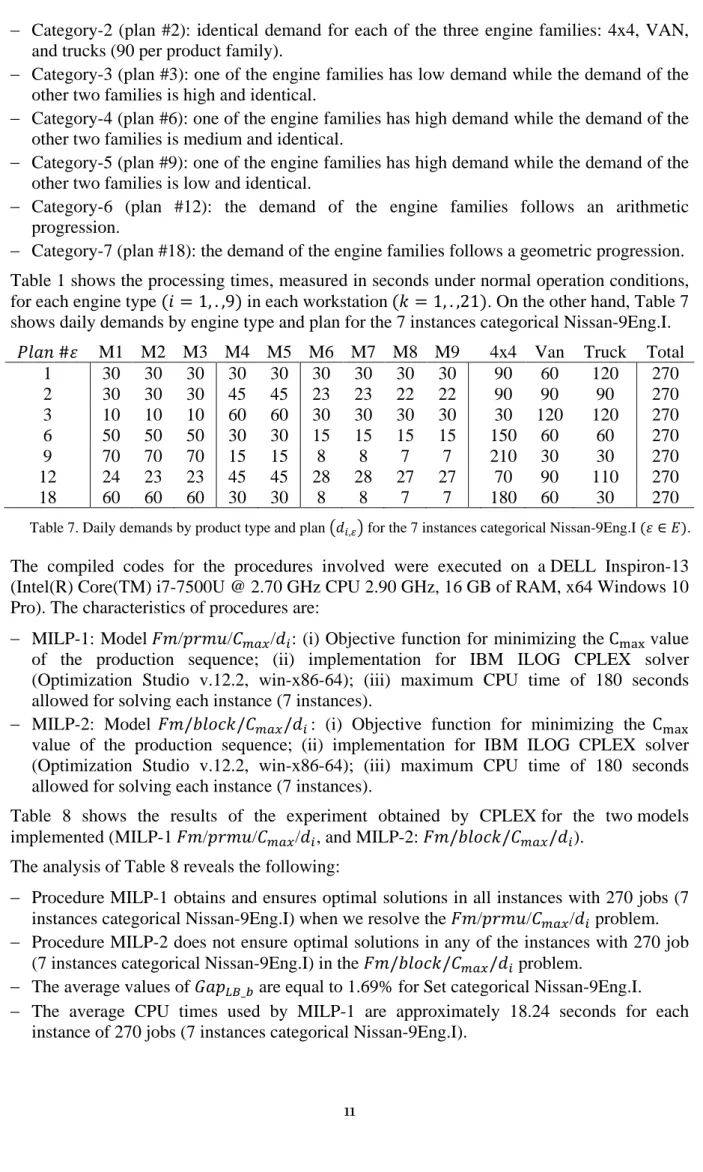
Table 1 shows the processing times, measured in seconds under normal operation conditions,
for each engine type (𝑖𝑖= 1, . ,9) in each workstation (𝑏𝑏= 1, . ,21). On the other hand, Table 7
shows daily demands by engine type and plan for the 7 instances categorical Nissan-9Eng.I.
𝐶𝐶𝑏𝑏𝐺𝐺𝑛𝑛 #𝜀𝜀 M1 M2 M3 M4 M5 M6 M7 M8 M9 4x4 Van Truck Total
1 30 30 30 30 30 30 30 30 30 90 60 120 270 2 30 30 30 45 45 23 23 22 22 90 90 90 270 3 10 10 10 60 60 30 30 30 30 30 120 120 270 6 50 50 50 30 30 15 15 15 15 150 60 60 270 9 70 70 70 15 15 8 8 7 7 210 30 30 270 12 24 23 23 45 45 28 28 27 27 70 90 110 270 18 60 60 60 30 30 8 8 7 7 180 60 30 270
Table 7. Daily demands by product type and plan �𝑑𝑑𝑖𝑖,𝜀𝜀� for the 7 instances categorical Nissan-9Eng.I (𝜀𝜀 ∈ 𝛦𝛦).
The compiled codes for the procedures involved were executed on a DELL Inspiron-13 (Intel(R) Core(TM) i7-7500U @ 2.70 GHz CPU 2.90 GHz, 16 GB of RAM, x64 Windows 10 Pro). The characteristics of procedures are:
− MILP-1: Model 𝐹𝐹𝐹𝐹/𝑝𝑝𝑝𝑝𝐹𝐹𝑝𝑝/𝐶𝐶𝑚𝑚𝑚𝑚𝑚𝑚/𝑑𝑑𝑖𝑖: (i) Objective function for minimizing the Cmax value of the production sequence; (ii) implementation for IBM ILOG CPLEX solver (Optimization Studio v.12.2, win-x86-64); (iii) maximum CPU time of 180 seconds allowed for solving each instance (7 instances).
− MILP-2: Model 𝐹𝐹𝐹𝐹/𝑏𝑏𝑏𝑏𝑏𝑏𝑏𝑏𝑏𝑏/𝐶𝐶𝑚𝑚𝑚𝑚𝑚𝑚/𝑑𝑑𝑖𝑖: (i) Objective function for minimizing the Cmax
value of the production sequence; (ii) implementation for IBM ILOG CPLEX solver (Optimization Studio v.12.2, win-x86-64); (iii) maximum CPU time of 180 seconds allowed for solving each instance (7 instances).
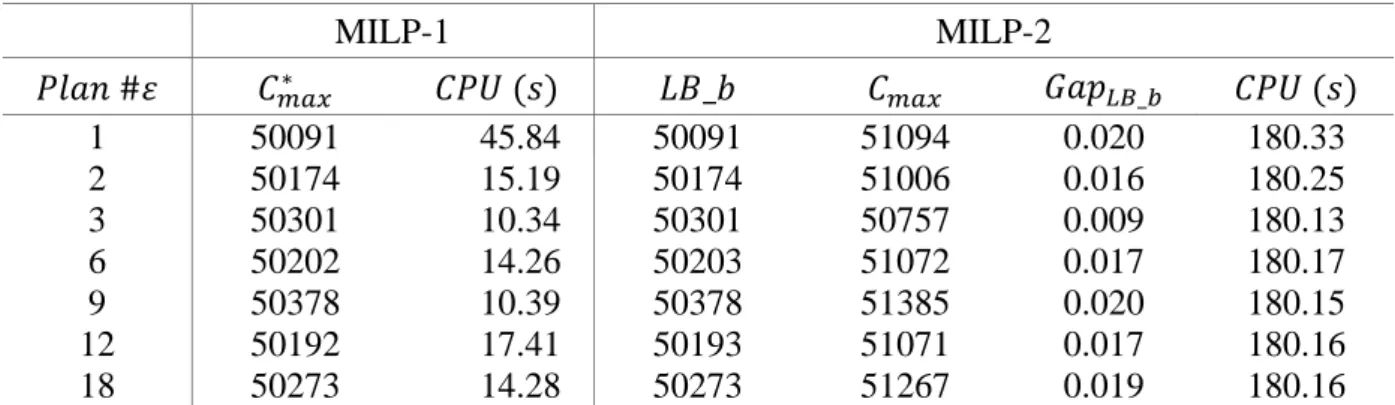
Table 8 shows the results of the experiment obtained by CPLEX for the two models implemented (MILP-1𝐹𝐹𝐹𝐹/𝑝𝑝𝑝𝑝𝐹𝐹𝑝𝑝/𝐶𝐶𝑚𝑚𝑚𝑚𝑚𝑚/𝑑𝑑𝑖𝑖, and MILP-2: 𝐹𝐹𝐹𝐹/𝑏𝑏𝑏𝑏𝑏𝑏𝑏𝑏𝑏𝑏/𝐶𝐶𝑚𝑚𝑚𝑚𝑚𝑚/𝑑𝑑𝑖𝑖).
The analysis of Table 8 reveals the following:
− Procedure MILP-1 obtains and ensures optimal solutions in all instances with 270 jobs (7
instances categorical Nissan-9Eng.I) when we resolve the 𝐹𝐹𝐹𝐹/𝑝𝑝𝑝𝑝𝐹𝐹𝑝𝑝/𝐶𝐶𝑚𝑚𝑚𝑚𝑚𝑚/𝑑𝑑𝑖𝑖 problem.
− Procedure MILP-2 does not ensure optimal solutions in any of the instances with 270 job
(7 instances categorical Nissan-9Eng.I) in the 𝐹𝐹𝐹𝐹/𝑏𝑏𝑏𝑏𝑏𝑏𝑏𝑏𝑏𝑏/𝐶𝐶𝑚𝑚𝑚𝑚𝑚𝑚/𝑑𝑑𝑖𝑖 problem.
− The average values of 𝐺𝐺𝐺𝐺𝑝𝑝𝐿𝐿𝐿𝐿_𝑏𝑏 are equal to 1.69% for Set categorical Nissan-9Eng.I.
− The average CPU times used by MILP-1 are approximately 18.24 seconds for each
− The average CPU times used by MILP-2 are approximately 180.19 seconds for each instance of 270 jobs (7 instances categorical Nissan-9Eng.I) when we impose a maximum CPU time of 180 seconds allowed for solving each instance.
− Considering that the cost of production loss (Bautista et al., 2018; Bautista-Valhondo and
Alfaro-Pozo 2018) is 137.14 euros per production minute, the elimination of spaces in the assembly line (prmu versus block) results in an additional cost average of 1972.57 euros/day with 270 engines. However, the original assembly line was designed for a fixed cycle time of 175 seconds, and consequently, the actual production times available for the manufacture of 270 engines is 50770 seconds.
MILP-1 MILP-2 𝐶𝐶𝑏𝑏𝐺𝐺𝑛𝑛 #𝜀𝜀 𝐶𝐶𝑚𝑚𝑚𝑚𝑚𝑚∗ 𝐶𝐶𝐶𝐶𝐶𝐶 (𝑠𝑠) 𝐿𝐿𝐿𝐿_𝑏𝑏 𝐶𝐶𝑚𝑚𝑚𝑚𝑚𝑚 𝐺𝐺𝐺𝐺𝑝𝑝𝐿𝐿𝐿𝐿_𝑏𝑏 𝐶𝐶𝐶𝐶𝐶𝐶 (𝑠𝑠) 1 50091 45.84 50091 51094 0.020 180.33 2 50174 15.19 50174 51006 0.016 180.25 3 50301 10.34 50301 50757 0.009 180.13 6 50202 14.26 50203 51072 0.017 180.17 9 50378 10.39 50378 51385 0.020 180.15 12 50192 17.41 50193 51071 0.017 180.16 18 50273 14.28 50273 51267 0.019 180.16 Average 50230.14 18.24 50230.43 51093.14 0.017 180.19 Max 50378 45.84 50378 51385 0.020 180.33 Min 50091 10.34 50091 50757 0.009 180.13
Table 8. Results for 7 Nissan-9Eng.I instances categorical using procedures MILP-1 and MILP-2 (180 s. CPU)
6
Conclusions
In this study, we presented and justified a natural extension of two classic sequencing problems: 𝐹𝐹𝐹𝐹/𝑝𝑝𝑝𝑝𝐹𝐹𝑝𝑝/𝐶𝐶𝑚𝑚𝑚𝑚𝑚𝑚 and 𝐹𝐹𝐹𝐹/𝑏𝑏𝑏𝑏𝑏𝑏𝑏𝑏𝑏𝑏/𝐶𝐶𝑚𝑚𝑚𝑚𝑚𝑚. This extension is motivated by our concern over adapting academic problems closer to reality in industrial environments related to the automotive sector.
Our extension takes into account the type of jobs or products in such problems, based on the fact that, in many highly standardized industrial sectors such as the automotive sector, it is unlikely to find productive processes where all jobs or all products (chassis, car bodies, engines, seats, etc.) are completely different. For this reason, we incorporated the concept of a
demand plan of job types (𝑑𝑑𝑖𝑖∀𝑖𝑖 ∈ 𝐼𝐼) into the original problems, which resulted in the
problems 𝐹𝐹𝐹𝐹/𝑝𝑝𝑝𝑝𝐹𝐹𝑝𝑝/𝐶𝐶𝑚𝑚𝑚𝑚𝑚𝑚/𝑑𝑑𝑖𝑖 and 𝐹𝐹𝐹𝐹/𝑏𝑏𝑏𝑏𝑏𝑏𝑏𝑏𝑏𝑏/𝐶𝐶𝑚𝑚𝑚𝑚𝑚𝑚/𝑑𝑑𝑖𝑖. The concept of a demand plan of job (product) types can be extrapolated to other variants of Flow Shop and Job Shop problems, if the circumstances are appropriate.
We formulated Mixed Integer Linear Programming models, implemented in CPLEX, for the two new problems and analyzed the quality of the procedures through a computational experiment with instances collected and adapted from the literature.
Our computational experience is composed of two experiments. In Experiment-1 we have used a selection of 20 instances (from the classic instances of Taillard), whose dimensions we have adapted to the automotive industry. In Experiment-2 we have selected 7 categorical instances (from the set of Nissan-9Eng.I instances) corresponding to 7 engine production plans in the Nissan factory in Barcelona, and whose dimensions are: 270 products, 9 types of engines and 21 work stations.
Taking into account the results of the first experiment, we conclude that it is not prudent to discard Mixed Integer Linear Programming for solving sequencing problems in Flow Shop production environments, as MILP is a competitive technique with which to solve problem
𝐹𝐹𝐹𝐹/𝑝𝑝𝑝𝑝𝐹𝐹𝑝𝑝/𝐶𝐶𝑚𝑚𝑚𝑚𝑚𝑚/𝑑𝑑𝑖𝑖 for industrial instances of 250 jobs and obtains and confirms the optimal solutions in most instances with an average CPU time of less than 28 minutes. MILP is less effective with problem 𝐹𝐹𝐹𝐹/𝑏𝑏𝑏𝑏𝑏𝑏𝑏𝑏𝑏𝑏/𝐶𝐶𝑚𝑚𝑚𝑚𝑚𝑚/𝑑𝑑𝑖𝑖 with industrial instances, although its results are acceptable when compared to the best solutions in the literature for problem 𝐹𝐹𝐹𝐹/𝑏𝑏𝑏𝑏𝑏𝑏𝑏𝑏𝑏𝑏/𝐶𝐶𝑚𝑚𝑚𝑚𝑚𝑚. Looking at the results of Experiment-2, that are more realistic for the automotive industry, we conclude that MILP has offered very satisfactory solutions for the two new problems proposed; in effect: (i) MILP gets the 7 optimal solutions for the problem 𝐹𝐹𝐹𝐹/𝑝𝑝𝑝𝑝𝐹𝐹𝑝𝑝/𝐶𝐶𝑚𝑚𝑚𝑚𝑚𝑚/𝑑𝑑𝑖𝑖 in an average CPU time of 18.24 seconds, and (ii) MILP gets solutions, for the problem
𝐹𝐹𝐹𝐹/𝑏𝑏𝑏𝑏𝑏𝑏𝑏𝑏𝑏𝑏/𝐶𝐶𝑚𝑚𝑚𝑚𝑚𝑚/𝑑𝑑𝑖𝑖, with an average value that are 0.17% of the average value of the optimal solutions, when we set a maximum CPU time of 3 minutes.
Therefore, we conclude that MILP should be incorporated into the set of tools dedicated to solving sequencing problems in realistic production environments. The role of MILP within the set of techniques for solving such problems can be a leading role or as part of the metaheuristic procedures that combine a construction phase of one or more initial solutions, with one or several phases of local improvement of such solutions.
In future work, we intend to apply the knowledge acquired in this experimental study to various case studies related to sequencing problems of mixed models in product-oriented production systems (assembly lines and workshops with regular flow). We also intend to analyze the economic impact of the alternative of using a fixed production cycle time for all machines (processors, workstations) or allowing processors to have cycle times that depend on both products and machines.
Acknowledgments
This research was subsidized by the Ministry of Economy and Competitiveness of the Government of Spain through project FHI-SELM2 (TIN2014-57497-P).
7
References
Aggoune R (2004) Minimizing the makespan for the flow shop scheduling problem with availability constraints. European Journal of Operational Research 153(3):534-543. https://doi.org/10.1016/S0377-2217(03)00261-3
Bautista J, Alfaro-Pozo R, Batalla-García C (2018) Minimizing Lost-Work Costs in a Mixed-Model Assembly Line. In: Viles E, Ormazábal M, Lleó A (eds) Closing the Gap Between Practice and Research in Industrial Engineering. Lecture Notes in Management and Industrial Engineering. Springer, Cham. https://doi.org/10.1007/978-3-319-58409-6_24
Bautista J, Cano A (2011) Solving mixed model sequencing problem in assembly lines with serial workstations with work overload minimisation and interruption rules. European Journal of Operational Research 210(3):495-513. https://doi.org/10.1016/j.ejor.2010.10.022
Bautista J, Cano A, Companys R, Ribas I (2012) Solving the Fm∣block∣Cmax problem using
Bounded Dynamic Programming. Engineering Applications of Artificial Intelligence 25(6):1235-1245. https://doi.org/10.1016/j.engappai.2011.09.001
Bautista-Valhondo J, Alfaro-Pozo R (2018) An expert system to minimize operational costs in mixed-model sequencing problems with activity factor. Expert Syst Appl 104:185–201. https://doi.org/10.1016/j.eswa.2018.03.031
Caraffa V, Ianes S, Bagchi TP, Sriskandarajah C (2001) Minimizing makespan in a blocking flowshop using genetic algorithms. International Journal of Production Economics 70(2):101-115. https://doi.org/10.1016/S0925-5273(99)00104-8
Fernandez-Viagas V, Ruiz R, Framinan JM (2017) A new vision of approximate methods for the permutation flowshop to minimise makespan: State-of-the-art and computational evaluation. European Journal of Operational Research 257(3):707-721. https://doi.org/10.1016/j.ejor.2016.09.055
Grabowski J, Pempera, J. (2007) The permutation flow shop problem with blocking. A tabu search approach. Omega 35(3), 302-311. https://doi.org/10.1016/j.omega.2005.07.004
Graham RL, Lawler EL, Lenstra JK, Rinnooy Kan, AHG (1979) Optimization and Approximation in Deterministic Sequencing and Scheduling: a Survey. Annals of Discrete Mathematics 5:287-326. https://doi.org/10.1016/S0167-5060(08)70356-X
Hall NG, Sriskandarajah C (1996) Survey of Machine Scheduling Problems with Blocking
and No-Wait in Process. Operations Research 44(3):510–525.
https://doi.org/10.1287/opre.44.3.510
Han YY, Pan QK, Li JQ et al. (2012) An improved artificial bee colony algorithm for the blocking flowshop scheduling problema. Int J Adv Manuf Technol 60:1149-1159. https://doi.org/10.1007/s00170-011-3680-0
Hoogeveen JA, Lenstra JK, Veltman B (1996) Preemptive scheduling in a two-stage multiprocessor flow shop is NP-hard. European Journal of Operational Research 89(1):172-175. https://doi.org/10.1016/S0377-2217(96)90070-3
Lin SW, Ying KC (2013). Minimizing makespan in a blocking flowshop using a revised artificial immune system algorithm. Omega 41(2), 383-389. https://doi.org/10.1016/j.omega.2012.03.006
Logendran R, Sriskandarajah C (1993) Two-machine group scheduling problem with blocking and anticipatory setups. European Journal of Operational Research 69(3):467-481. https://doi.org/10.1016/0377-2217(93)90029-M
Nawaz M, Enscore EE, Ham I (1983) A heuristic algorithm for the m-machine, n-job
flow-shop sequencing problema. Omega 11(1):91-95.
https://doi.org/10.1016/0305-0483(83)90088-9
Nouri N, Ladhari T (2017) Evolutionary multiobjective optimization for the multi-machine flow shop scheduling problem under blocking. Annals of Operations Research pp:1-18. https://doi.org/10.1007/s10479-017-2465-8
Osman IH, Potts CN (1989) Simulated annealing for permutation flow-shop scheduling. Omega 17(6):551-557. https://doi.org/10.1016/0305-0483(89)90059-5
Ozolins A (2017) Improved bounded dynamic programming algorithm for solving the blocking flow shop problem. Central European Journal of Operations Research pp:1-24. https://doi.org/10.1007/s10100-017-0488-5
Pan QK, Wang L (2012) Effective heuristics for the blocking flowshop scheduling problem with makespan minimization. Omega 40(2), 218–229. https://doi.org/10.1016/j.omega.2011.06.002
Pinedo ML (2016) Scheduling (Theory, Algorithms, and Systems). Springer International Publishing. https://doi.org/10.1007/978-3-319-26580-3
Reeves CR (1995) A genetic algorithm for flowshop sequencing. Computers & Operations Research 22(1):5-13. https://doi.org/10.1016/0305-0548(93)E0014-K
Ribas I, Companys R, Tort-Martorell X (2011) An iterated greedy algorithm for the flowshop scheduling problem with blocking. Omega 39(3):293-301. https://doi.org/10.1016/j.omega.2010.07.007
Ronconi DP (2004) A note on constructive heuristics for the flowshop problem with blocking. International Journal of Production Economics 87(1):39-48. https://doi.org/10.1016/S0925-5273(03)00065-3
Ronconi DP (2005) A Branch-and-Bound Algorithm to Minimize the Makespan in a Flowshop with Blocking. Annals of Operations Research 138(1), 53-65. https://doi.org/10.1007/s10479-005-2444-3
Taillard E (1990) Some efficient heuristic methods for the flow shop sequencing problema. European Journal of Operational Research 47(1):65-74. https://doi.org/10.1016/0377-2217(90)90090-X
Taillard E (1993) Benchmarks for basic scheduling problems. European Journal of Operational Research 64(2):278-285. https://doi.org/10.1016/0377-2217(93)90182-M
Tasgetiren MF, Kizilay D, Pan QK, Suganthanc PN (2017) Iterated greedy algorithms for the blocking flowshop scheduling problem with makespan criterion. Computers & Operations Research 77, 111-126. https://doi.org/10.1016/j.cor.2016.07.002
Ying KC, Liao CJ (2004) An ant colony system for permutation flow-shop sequencing.
Computers & Operations Research 31(5):791-801.
https://doi.org/10.1016/S0305-0548(03)00038-8
Yu W, Hoogeveen H, Lenstra JK (2004) Minimizing Makespan in a Two-Machine Flow Shop with Delays and Unit-Time Operations is NP-Hard. Journal of Scheduling 7(5):333-348. https://doi.org/ 10.1023/B:JOSH.0000036858.59787.c2