Theses and Dissertations
6-1-2018
Perceptions of education for sustainable development in Egypt:
Perceptions of education for sustainable development in Egypt:
Prospective changes in teaching practices
Prospective changes in teaching practices
Hanan Salah Yusuf Abozaied
Follow this and additional works at: https://fount.aucegypt.edu/etds
Recommended Citation Recommended Citation
APA Citation
Abozaied, H. (2018).Perceptions of education for sustainable development in Egypt: Prospective changes in teaching practices [Master’s thesis, the American University in Cairo]. AUC Knowledge Fountain.
https://fount.aucegypt.edu/etds/501
MLA Citation
Abozaied, Hanan Salah Yusuf. Perceptions of education for sustainable development in Egypt: Prospective changes in teaching practices. 2018. American University in Cairo, Master's thesis. AUC Knowledge Fountain.
https://fount.aucegypt.edu/etds/501
This Thesis is brought to you for free and open access by AUC Knowledge Fountain. It has been accepted for inclusion in Theses and Dissertations by an authorized administrator of AUC Knowledge Fountain. For more information, please contact [email protected].
The American University in Cairo Graduate School of Education (GSE)
Perceptions of Education for Sustainable Development in Egypt: Prospective Changes in Teaching Practices
A Thesis Submitted to
The Department of International & Comparative Education
In partial fulfillment of the requirements for the degree of Master of Arts in Educational Leadership
By Hanan Salah Abozaied
Under the supervision of Dr. Heba EL-Deghaidy Spring 2018
Table of Contents Acknowledgement ... 6 Abstract ... 8 1. Introduction ... 9 1.1 Background ...9 1.2 Statement of Problem ...11
1.3 Purpose of the Study ...12
1.4 Research Questions ...12
2. Literature Review... 13
2.1 Education for Sustainable Development (ESD) ...13
2.2 ESD in Egypt ...14
2.3 ESD in Universities...16
2.4 Perceptions of ESD among Educators ...17
2.5 ESD Pedagogies ...23
2.6 ESD and Language Teaching...26
2.7 Theoretical Framework ...30
3. Methodology ... 33
3.1 Context of the Study ...33
3.3 Research Design and Instruments ...35
3.4 Study Participants ...35
3.5 Ethical Considerations in the Study ...36
3.6 Procedures ...37
3.6.1 Stage one: A questionnaire at the beginning of the Fall semester. ... 38
3.6.2 Stage two: Professional development workshops about SD and ESD. ... 39
3.6.3 Stage three: Follow-up interviews. ... 43
4. Results ... 45
4.1 Questionnaire Results ...45
4.2 Workshop Findings ...49
4.3 Interview Results ...51
4.3.1 Theme one: Academics’ perceptions of SD. ... 54
4.3.2 Theme 2: Role of educators. ... 54
4.3.3 Theme 3: ESD teaching practices. ... 55
4.3.4 Theme 4: Difficulties of applying ESD approach... 57
4.4 Responding to Research Questions ...59
5. Discussion and Conclusion ... 61
5.1 Discussion of the findings to RQ1 ...61
5.2 Discussion of the findings to RQ2 ...62
Theme 2: Role of educators. ... 62
5.3 Discussion of the findings to RQ3 ...63
Theme 3: ESD teaching practices. ... 63
Theme 4: Difficulties of applying ESD approach. ... 64
5.4 Limitations of the Study...67
5.5 Recommendations ...68
5.6 Conclusion ...69
5.7 Suggestions for future research ...69
References ... 71
List of Appendices Appendix A: Questionnaire ...77
Appendix B: Questions of the Semi-structured Interview ...79
Appendix C: IRB Approval ...80
Appendix D: Consent Form ...81
Appendix E: Audio Recording and Transcribing Consent Form...82
Appendix F: CAPMAS Approval ...83
List of Figures Figure 1. Stages of the study ...37
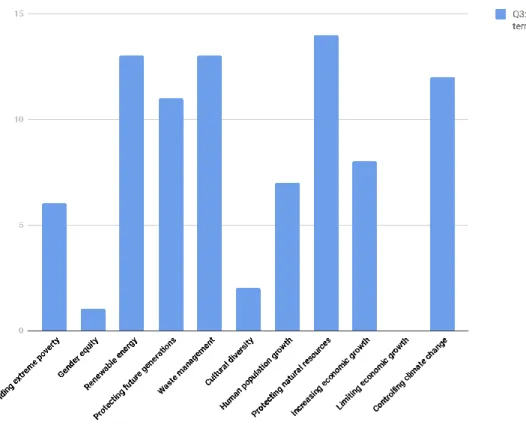
Figure 2. Issues that SD covers ...48
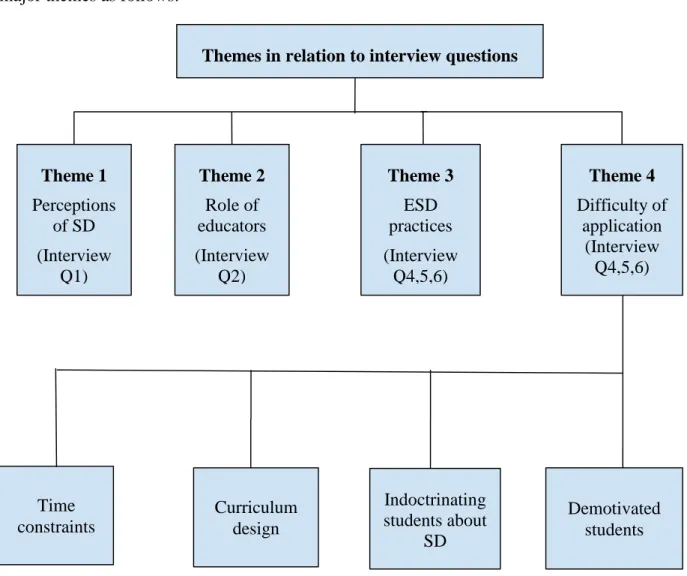
Figure 4. Themes developed from interviews ...53 List of Tables
Table 1 ………..45 Table 2 ………..51 Table 3 ……….60
Acknowledgement
I dedicate this work to my father and mother who always surprise me with the level of love and support they are capable of giving. I am truly thankful for every act of encouragement and every prayer; without them, I would have never managed to finish this work. I really owe much to my parents for their continuous support on so many levels. Words can never express how grateful I am to have them in my life. Thank you for believing in me.
I am also so grateful for all the support I received from my professors at AUC who helped me reach this point. I truly appreciate Dr. Heba EL-Deghaidy’s time and effort during supervision. I appreciate her patience in responding to my long list of questions and her fruitful feedback. I am also thankful to Dr. Heba for her interesting course about ESD and STEAM education which paved the way for this study and made me spot my topic of interest. I also want to express my gratitude to Dr. Jose Cosa and Dr. Jennifer Skaggs for the so many insightful moments I had in their classes. Their classes used to keep me engaged in deep thinking about many educational and philosophical issues. Moreover, I want to thank Dr. Nagwa, Dr. Russanne and Dr. Ted for always being ready to answer my pop-up questions and to show support in spite of their very busy schedules.
I would like to thank Dr. Azza Taha and Dr. Ahlam Othman for offering so much help during the stage of implementing the study. Their support meant a lot to me and I really appreciate it. I also thank all the academics who volunteered to participate in the study for their cooperation and words of support. Moreover, I want to thank to Dr. Ahmed Yehia Rashed for encouraging me and dedicating time to discuss the research topic. His words made me feel even more enthusiastic about the topic of Sustainable Development.
I owe much to my wonderful friends who contributed to this thesis with their continuous encouragement. First, I want to thank Fatma Atef for supporting me in every step I made ever since I thought of joining the MA program. She gave me advice, offered to help and gave me positive affirmation whenever needed. Also, I want to thank Mostafa
Aboelfadl for sharing a video about Green schools during my first semester which
triggered the initial thoughts about the need for environmental education. I also thank him for following up and offering help during the stage of the workshop. In addition, I am grateful to Hend Abdel-latif for being a great listener, even when she is away, and to Hagar Seddik for sharing all sorts of insightful thoughts with me. Both had the skill of turning all my complaints about writing into hilarious jokes. Things could have been more difficult without their sense of humor.
In addition, I want to express my gratitude to Rania Salem and Sarah Fayed for the thoughtful words they gave me when I was in doubt. Their words really helped to put me back on track and stopped many negative feelings I had in the final stage. Also, my dear friends Summer El- Gabry, Doaa Abdou, Marwa Sabri, Naglaa Seddik, Salma Al-Saady, Lamyaa Khedr and Mai Safwat offered all acts of kindness, patience and
generosity that helped me to keep going and stop doubting myself. They motivated me to work, were patient when I was irritated and were attentive to me. Finally, I want to thank my colleagues Moaz Osama, Nashwa Moheyeldine and Jason Dorio for offering advice and remarks about this work and for showing moral support. It is truly a blessing to be surrounded by sincere friends and colleagues.
Abstract
This study explores the perceptions of university faculty members about the concept of Sustainable Development (SD) and Education for Sustainable Development (ESD). It focuses on how their different perceptions influenced their teaching practices while addressing sustainability issues with students. The participants are 18 academics in the English department under the faculty of Arts and Humanities in a private university in Egypt. They teach two academic language courses in the advanced level for
undergraduates in different disciplines. The study adopts a sociocultural theoretical framework. It uses a qualitative research design. A preliminary survey was conducted at the beginning of the semester to explore faculty members perceptions, then, based on information collected from the survey, a workshop was delivered to expand discussion about SD and ESD concepts. Finally, a follow-up interview was conducted with participants who attended the workshop to explore whether or not their acquired knowledge about SD and ESD influenced their teaching methods. Results indicate that the workshop helped participants to have a clearer understanding of the concepts of SD and ESD. However, their teaching practices were not affected.
1. Introduction
1.1 Background
There is a worldwide concern about the ongoing increase in the world’s population and the current industrial practices since the industrial revolution (Glasby, 2002; Kates, Parris, & Leiserowitz, 2005; Sachs, 2015). Both of these concerns caused unexampled pressure on the planet’s limited resources, a pressure that is usually justified by the needs to develop and provide people with better quality of life. The pressure on resources caused not only environmental challenges, such as climate change and depletion of natural resources, but also social, political and economic challenges embodied in extreme poverty and prevailing inequality (Sachs, 2015). With the current fast-paced depletion of resources that continues beyond the capacity of the planet, efforts of providing present generations with continuous supply of clean water, food and energy are becoming increasingly difficult, not to mention the difficulty of providing them for future generations.
Alarmed by these threats, a definition of the term Sustainable Development (SD) appeared in the famous Brundtland report in 1987. As defined in the report, “Sustainable development is development that meets the needs of the present without compromising the ability of future generations to meet their own needs” (World Commission on Environment and Development, 1987, p.43). The report was one major step towards changing the common understanding of development and transforming current and future policies to be in harmony with the ecological system. However, the term SD continued to evolve from 1987 until 1992 when it was broadly analyzed in the Earth Summit in the 40 chapters of Agenda 21 (UNESCO, 2006). The change in the concept of SD is described by Sachs (2015) in the following words: “the definition of sustainable development evolved into a more practical approach, focusing less on intergenerational needs and more on the holistic approach linking economic development, social inclusion, and environmental sustainability” (p.17).
This developed perspective which focuses on the environmental, social and economic pillars was also highlighted in the implementation plan of the World Summit on Sustainable Development [WSSD] (World Summit on Sustainable Development, 2002). Since then, the mission of promoting SD has spread worldwide. It has been strongly tied to higher education institutions with all the potentials they have to prepare future leaders who are capable of altering the world’s current unsustainable system (Cotton, Warren, Maiboroda, & Bailey, 2007; Butt, 2016).
Many countries, including Egypt, declared adopting SD in their development agenda. In March 2015, the Egyptian Ministry of Planning, Monitoring and
Administrative Reform officially announced adopting a strategic plan based on the UN SD Goals (Sustainable development goals - United Nations, n.d.) until the year 2030 (Sustainable Development Strategy, 2016). Egypt’s share of the threats caused by unsustainable practices is significant (Selim, 2009). With overpopulation and economy based on increasing levels of production and consumption, Egypt is facing unprecedented depletion of its resources. Environmentally, air pollution is on the rise, especially in big and crowded cities which have 80% or more of the country’s industry such as Cairo and Alexandria. As per the International Labor Organization (ILO), water and energy crises in Egypt are also growing due to overconsumption of these resources in agricultural, industrial and household activities (ILO, 2010 as cited in Sewilam, McCormack, Mader, & Abdel Raouf, 2015). Socially, based on a document published in 2012 by the United Nations Development Program (UNDP), Egypt faces a number of difficult challenges in issues such as gender inequality, corruption, overpopulation, unfair distribution of wealth and low political participation (as cited in Sewilam et al., 2015). Such major social problems are aggravated in spite of the series of economic reform policies adopted by the Egyptian government since the 1990s. According to Fahmy (2012), Egypt went through a phase labeled ‘economic reform’ that extended from 1990 till 2011. In this period, a program for economic stability by the World Bank and International Monetary Fund (IMF) was implemented together with other policies that paved the way for free-market economy. Although the program yielded some economic growth, it caused “a dramatic increase in monopolies as well as private wealth” (p. 364). The policies introduced
focused on economic welfare and neglected social justice which led to the rise of a number of businessmen in control of the economy and the shrinking of the middle class (Fahmy, 2012).
All of the abovementioned problems can be some of the root causes that led to the Egyptian revolution in 25th of January 2011. The initial chanting of the protesters in the revolution were basically calling for ‘Bread, Freedom, Social justice, and Human dignity’ (Fahmy, 2012). They are all demands that reflect severe imbalance in the pillars of SD. According to EL-Deghaidy (2012), the uprisings in both Egypt and the Arab world are demands based on core sustainability concepts such as achieving social justice, respecting human rights and providing better quality of life. To achieve the balance, responsible citizens, who are not only aware of the problems but also have the will and the skills to solve them, are required. Therefore, Egypt, along with other countries worldwide, is in dire need for Education for Sustainable Development (ESD). As suggested by
EL-Deghaidy (2012), infusing ESD in educational courses through a set of teaching practices can lead to transforming the learning experiences of people in Egypt, making them act in accordance with what Egypt really needs. Integrating ESD in the Egyptian education, especially in higher education institutions where leaders and policymakers are being prepared, can provide Egyptian citizens with the required skills to live sustainably.
1.2 Statement of Problem
Confusion over the meaning of a broad, controversial term like SD and its relevance to different academic disciplines made the process of inclusion to higher education curriculum difficult to achieve; it is claimed that the term has become a ‘buzzword’ with indistinct meaning. For better integration of SD in higher education curriculum, faculty members must have a clearer understanding of the term, the issues it involves and the roles they can play as educators to integrate it (Coral, 2009; Cotton, et al., 2007; Evans, Ferreira, Davis & Stevenson, 2016). According to Timmerman and Metcalfe (2009), concepts about sustainability are still not completely formed by the society “and the transfer from research to teaching plays an important role in shaping our understanding of what is meant by the term and its potential for bringing about effective
social change” (p. 54). The area of exploring academics’ perceptions of SD and the contribution they can make in ESD is under researched, especially because Egypt is reported in literature among the Arab countries that lack sustainability awareness (Biasutti, Makrakis, & Frate, 2018; El-Awamri, 2015; EL-Deghaidy, 2012).
1.3 Purpose of the Study
The aim of this study is to investigate how faculty members teaching in a language department in an Egyptian private university perceive the concepts of SD and ESD and their relevance to their field; it also examines whether their understanding influences their teaching approaches. Based on their perceptions, the study explores their attempts to reorient two academic language courses to be tackled from an ESD
perspective. It is anticipated that faculty members teaching in a language program may have limited knowledge about SD or may question its relevance to their field. Therefore, this study sought to investigate the changes that could happen in faculty members’ perceptions and, hence, their teaching methods as they expand their knowledge and acquire deeper understanding of the concept of SD. With sufficient knowledge about the concept and increased awareness about the issues related, faculty members may develop an internal sense of responsibility to provide a learning environment that promotes SD whether directly or indirectly.
1.4 Research Questions
1. What are the perceptions of faculty members in regards to SD? 2. How do faculty members perceive their expected roles as educators
towards ESD?
3. How their perceptions of ESD influence their current teaching practices and the way they address the English language courses?
2. Literature Review
2.1 Education for Sustainable Development (ESD)
Due to the environmental dilemma worldwide, many international entities initiated calls for educational institutions to address sustainability issues and promote sustainable development. Terms like Education for Sustainable Development (ESD) and Education for Sustainability (EfS) started to emerge in the literature. The strong
relationship between SD and education was highlighted in Agenda 21 where the first detailed description of ESD appeared in chapter 36 (UNESCO, 2006). The description outlined four major priorities for ESD to work on: (1) to enhance basic education, (2) to change current education to address sustainability, (3) to increase people’s awareness of the issue, (4) and to train leaders in all fields (UNESCO, 2006).
After the UN had launched a Decade of Education for Sustainable Development (DESD) from 2005 to 2014, ESD has been perceived as an important element in
changing people’s attitudes and behaviors towards creating and maintaining more sustainable societies (Andersson, 2017). The aim of this emerging field is to offer educational experiences different from the traditional ones which led to the recent environmental, social and economic threats; it also promotes for a holistic learning approach and deviates from the discipline-based education (Andersson, 2017; Bowden, 2010). This comes in line with what Bartlett explains about the concept of ESD as a challenge against “the dominant and accepted model which prepares children to follow behavioral norms of society and contribute towards economic growth” (as cited in Bowden, 2010, p.17). Many educators believe that ESD is promising in terms of
increasing students’ understanding of the connections between the environment, society and economy. It turns them into literate citizens who are capable of making effective social and economic decisions, but not at the expense of the environment (Qablan & Al-Qaderi, 2009). However, all of these concepts and connections cannot be highlighted to learners if educators themselves are not sufficiently aware of them. According to
towards more sustainable communities because they can lead the classrooms and implement ESD. Hence, their views about SD and ESD are important.
2.2 ESD in Egypt
In Egypt, some attempts were made to integrate sustainability in the Egyptian education, both on the school level and the university level. The most cited attempt in literature is the cooperation project between Egypt and the European Commission called EduCamp under the TEMPUS program. EduCamp’s mission was to introduce ESD to the Egyptian national education system and it was specifically targeting school teachers to provide them with the necessary resource kits and training (EduCamp, n.d.). The project also led to the launching of centers of sustainability in different Egyptian universities with a main goal to follow-up on the project’s long-term effectiveness (El-Awamri, 2015).
In higher education, there are two universities in Egypt which are known to have some level of engagement in sustainability. The first is Heliopolis University (HU) which is described as the first university in Egypt to announce that SD is its main theme and guiding principle in all the disciplines offered (Heliopolis University, 2017). As reported by Bedawy (2014), HU has SD clearly mentioned in the university’s mission and vision; all the educational programs in the university are designed to address sustainability in different ways. Furthermore, programs were all established to follow what the university called the four C’s of SD which are “Engaging in Context, Raising Consciousness, Assimilating Content and Making a Contribution” (Bedawy, 2014, p. 479). However, one of the challenges of embedding ESD in HU, as explained by Dr. Omar Ramzy the head of the university’s marketing department, is that the school system in Egypt sends students to university without the basic understanding of ESD principles. This causes the
university educators at HU some difficulties, especially with freshmen. It makes it more challenging to guide students to think about their disciplines from a
sustainable-development lens (Bedawy, 2014). However, HU academic staff participated in several capacity building projects funded by international agencies. These projects aimed at
providing academic staff with awareness, ESD curricula and new teaching methodologies (HU, n.d.).
Another university that has taken some steps towards sustainability inclusion, both on campus and in the curriculum, is the American University in Cairo (AUC). AUC was one partner university in the EduCamp project and it provided support to the teacher training program done by the project through the university's Center of Sustainable Development (CSD) (EduCamp, n.d.). AUC also offers a graduate program in sustainable development which provides in-depth study for all the science behind sustainability and its practices in the environment, society and economy (Center for Sustainable
Development website, n.d.). As argued by El-Awamri (2015), this graduate program in particular helped to enhance the students’ sustainability literacy; students in this program had high scores in the Sustainability Literacy Test which was developed by the Higher Education Sustainability Initiative (HESI). This might indicate that developing similar programs in other universities in Egypt is one way to increase the understanding of SD which Egypt is adopting in its strategic plan.
Despite the growing efforts to promote ESD in Egypt and infuse it in different curricula, Egypt is still in a very early stage of implementing ESD (Biasutti et al., 2018). Egypt, together with other Arab countries such as Lebanon and Jordan, still has
difficulties in engaging its higher education in ESD due to lack of awareness among staff members, following traditional methods in teaching and lack of ESD curriculum (Biasutti et al., 2018). In a research conducted by El-Awamri (2015), the author concluded that there is general lack of awareness of sustainability literacy in Egypt. This conclusion is based on results from testing the sustainability literacy of both graduate and
undergraduate students studying at AUC in four fields: Engineering, business, sustainable development and public policy and administration. The lowest scores were the scores of students in engineering and public policy due to the focus of their programs on highly technical skills. These results should be taken into consideration because, as mentioned above, AUC is viewed among the committed universities to the mission of achieving SD in Egypt. Therefore, it is an indication that progress in increasing awareness of SD in
Egypt through education remains significantly limited, especially if compared to progress done worldwide.
2.3 ESD in Universities
Universities are widely perceived as the institutions responsible for preparing graduates to become future leaders, professionals and policy-makers. Those graduates will face today’s social, economic and environmental challenges and will be responsible for future generations as well. Therefore, universities have a moral obligation towards achieving sustainability and disrupting the world’s current destructive approaches (Cotton, et al., 2007; Butt, 2016). The potential to infuse ESD in universities is high because universities offer teaching, learning and research opportunities which are needed to create innovative systems in harmony with the ecological system (Butt, 2016).
However, what is still more dominant among universities nowadays is a common practice of perpetuating the same business-oriented educational approach that caused damage to the globe in the first place (Butt, 2016). It is an approach that mostly focus on increasing production, consumption and profit, with less consideration to damage caused to other elements. Moreover, according to Higgins and Thomas (2016), since the United Nations’ Decade of Education for Sustainable Development (UNDESD), the ongoing arguments among sustainability educators is mostly about achieving transformational change in university curricula to make learners able to create a more sustainable future. However, after this period of time and these amounts of official documents, there are still doubts that universities worldwide actually made the required progress towards
integrating ESD in their curricula as per Higgins and Thomas (2016). Many universities that made the decision to adopt ESD approach are still more engaged in greening the campus than in making real change in the pedagogy. This reflects that higher education institutions still lack thorough understanding of the complex challenge. Although greening the campus is indeed an important practice, it is not enough to make the required transformation in students’ learning (Higgins & Thomas, 2016).
In addition, Evans et al. (2016) note that attempts to embed ESD in educational programs are mostly done by a limited number of teachers and through adaptation on a course level. This makes the process of embedment isolated from the systems that are running the educational institution. The authors believe that true embedding of ESD does not happen by mere adaptation, but by complete transformation of the systems, policies and philosophies involved. When teacher training institutions, for example, try to integrate ESD, the process is usually done by dealing with ESD as an “add-on” to a course; the inclusion is done “in a tokenistic way, rather than in a thorough and systematic fashion” (p. 67). Moreover, in some fields ESD is clearly evident, such as environmental science, while in others it is almost not existent, such as psychology, so it might be viewed as marginal in the curriculum (Cotton et al., 2007). This situation reflects a need to investigate how faculty members in universities, who are responsible for curriculum change, comprehend SD and ESD so that they can properly do the integration required. In addition, understanding the concept of ESD needs to be accompanied by having practical knowledge about ESD pedagogy and how it can be practiced.
2.4 Perceptions of ESD among Educators
As reported by Cotton et al. (2007), part of the difficulty of ESD inclusion in higher education pedagogy is the confusion among faculty members over the meaning of SD and its relevance to certain disciplines. The same argument is shared by Coral (2009) who contends that lack of understanding of SD within academics is the major barrier especially when trying to infuse ESD in all courses. Evans et al. (2016) explain that one of the lessons learned about ESD in teacher education programs is that sharing one
common agreed-upon definition for EfS, a very close alternative to the concept of ESD, is
not possible because the term is ‘fluid’ (p.71) and has room for different interpretations. However, the authors are not perceiving this conclusion negatively because it is in line with “a similar lack of clarity [which] has been reported at major international
It is argued that faculty members’ beliefs about SD can be one of the main reasons to either help or hinder proper integration of ESD into curriculum. This is because “what constitutes ESD remains a matter of personal interpretation, and may include changes to either content or process” (Cotten et al., 2007, p. 589). In spite of the significant role that faculty members can play in redirecting education towards ESD, there are few studies that address faculty members’ perceptions of SD and how their perceptions are translated into attitudes and practices in class (Cotton et al., 2007). Moreover, the few studies conducted in this area either investigate the issue with pre-service and student teachers in teacher training programs (Andersson, 2017; Ambusaidi & Al Washahi, 2016; Evans et al., 2016), or academics in the faculties of environmental science, a major that is clearly relevant to SD (Qablan & Al-Qaderi, 2009). The same concern is shared by Reid and Petocz (2006); they suggest that educators who call for adopting ESD in higher education usually have an environmental-study background; therefore, they share a language that is used to discuss matters in sustainable development which might not be familiar to other educators in different fields.
In the literature, even less studies address the perceptions of in-service faculty members whose disciplines are not viewed as of direct relevance to SD. One exception is the study conducted by Cotton et al. (2007) in the University of Plymouth in England. It was conducted at a time when the university’s Center of Sustainable Futures (CSF) was shifting the university to be a model worldwide in integration of sustainability into the curriculum, the campuses and the community. Participants in the study were current academics from different disciplines; they shared their views of the concept of SD and ESD through a survey. The results showed that although the majority of participants strongly support ESD, 17% of them said that they do not know what the authors mean by SD. As for SD relevance to their disciplines, 35% were neutral in the questions
concerning relevance; this reflects faculty members’ uncertainty about connections between SD and what they teach. Moreover, collected data indicated that there was strong support from the faculty members to the environmental perspective of SD while there was more confusion towards its relation to the social and economic perspectives. As a result, researchers of the study rated the overall level of participants’ understanding of
SD as “fair” (p.592). Such results are reported from a university in the UK, a country which is known for its progress in the field of incorporating ESD into higher education.
Another exception is a similar study conducted in Macquarie University in Australia by Reid and Petocz (2006). The study was funded by Macquarie University, as well as another Environmental entity in Australia, in an attempt to adopt the
recommendations of the World Summit that was held in Johannesburg in 2002; some recommendations were about the inclusion of SD in all levels of education. The university responded to the Summit and acknowledged the real need to transform its educational programs so as to prepare students to deal with sustainability issues.
Therefore, researchers in this study also explored university lecturers’ understanding of SD and its relation to what they teach. This was done through a number of interviews with different academics teaching for postgraduate students. They were from completely diverse disciplines such as business, music, geography, language, psychology, literature and marine science. In addition, researchers excluded on purpose faculty members who are involved, in one way or another, in environmental or ecological activities to keep the focus of the study on other disciplines which are perceived to be less relevant to SD.
In fact, the study enabled academics to suggest their own definition of sustainability instead of imposing a certain definition on them. Moreover, responses about the definition were divided into three categories from the most limited definition to the most inclusive one. The first category is referred to by researchers as “Distance” (p. 116) which means that interviewee responded to the question about the definition of sustainability by providing a dictionary definition; in other words, they referred to the meaning: to keep one thing going. The second category is named “Resources” (p.116). From its name, this category includes answers from academics who referred to different kinds of resources, such as natural, biological and human resources, while explaining the meaning of sustainability from their point of view. The third category for definitions is referred to as “Justice” (p. 117). Respondents under this section referred to sustainability in the context of fairness. Their answers indicated that sustainability happens only when justice is achieved whether within one generation or across generations; one interviewee even extended the scope of justice to include justice among species.
Another division was done by the researchers to the relevance of SD to teaching as perceived by academics. Relevance to teaching was divided into three categories from no relevance to completely relevant. The first is named “Disparate” (P. 113) which refers to academics who see SD as completely irrelevant to their teaching. The second is called “overlapping” (p.114); it includes academics who see that sustainability overlaps with their teaching. The third category is named “integrated” (p. 114) which groups academics who perceive sustainability, with all its different forms, as a main component of teaching.
Results show that, surprisingly, the majority of the participants in Reid and Petocz’s study (2006) either perceive sustainability and teaching as separate and
irrelevant or as overlapping. The results made the researchers conclude that the language used in the field of sustainability and all its terms like SD, ESD and EfS are not part of the vocabulary academics are usually engaged with; the terms bring to their minds only extremely basic ideas about sustainability and especially those connected to widespread environmental views such as recycling.
However, results of other studies indicate that educators who took part in a course that provides them with tools to include SD in their teaching are more likely to feel socially responsible and to be willing to promote SD (Andersson, 2017). The author concludes that increasing teachers’ awareness about issues related to SD through a course devoted for that can impact teachers’ decisions in class to draw students’ attention to SD issues. The same conclusion is shared by Biasutti et al. (2018) whose research included professional development program for eight faculty members from different disciplines (Biology, multimedia programing, mathematics, and finance) working in Jordanian universities. The program was part of the international Tempus project called Reorient University Curricula to Address Sustainability (RUCAS). Its main aim is to train academics to implement ESD in pedagogy and curriculum of undergraduate students; it also aims at diffusing ESD policy in the higher education institutions that are
participating in the project so that they can act as role models in the Arab world. The procedures included three workshops. The first workshop contained ways to revise a course curriculum to infuse SD themes in its context and also contained explanation for teaching strategies appropriate for ESD such as the learner-centered approach. The
second workshop included peer review for the revisions that academics made to course curriculum. The third workshop was about implementing the course. Academics worked both individually and in teams during these workshops. Their views and reflections about the workshops were explored through focus groups. Qualitative data resulted from the focus groups showed how academics changed their perceptions about ESD and started to see its relevance to their disciplines. This leaves room for hope that similar workshops or ESD projects can lead to more profound inclusion of SD in higher education curriculum. Also, results from the focus groups showed some concerns about changing curriculum to an ESD perspective such as time constraints, students’ resistance, academics’ resistance and difficulties of managing large classes.
In the Arab world, some studies addressed the topic of teachers’ understanding of ESD and their classroom behaviors. One study was conducted in Oman to test SD
perceptions of prospective teachers from the Faculty of Education at Sultan Qaboos University (SQU) (Ambusaidi & Al Washahi, 2016). In this study, student teachers were selected from both humanities and science specializations. They were given a
questionnaire inquiring about sustainability issues; the questionnaire was divided into four domains: The concept of SD, cultural diversity, renewable energy and equity. Results of the study showed that the student teachers have high perceptions in the four domains. However, it cannot be inferred from the results that they have the ability to transfer their perceptions to students and make the expected influence. According to the researchers, this can be achieved by directing planning efforts towards three areas “policy, teacher preparation programmes and research” (p. 17).
Another study from the Arab world was conducted in Jordan (Qablan & Al-Qaderi, 2009). It focused on academics’ attitude and classroom practices in relation to ESD in Jordanian public universities. Although the study tackled mainly academics in the field of environmental sciences, the methodology and results are worth considering for further research in the area of ESD teacher training in all disciplines. Researchers in this study used a survey called “the Education for Sustainable Development Questionnaire” (p.186) to evaluate academics’ attitudes towards ESD and their classroom practices. Results indicated both moderate and favorable attitudes towards ESD; however, they also
referred to rare practice of ESD in classrooms. In addition, results highlighted another contradiction between academics’ beliefs against indoctrinating students about
environmental issues and their practices in classrooms which showed traces of indoctrination.
This gap between academics’ attitudes and their in-class practices is due to, as interpreted by the authors of the study, both personal and contextual factors. Firstly, one strong personal factor that can hinder matching beliefs and behaviors is habits. What academics kept repeating for a long time is very difficult to change. However, authors of the study conducted in Jordanian public universities suggest that ESD workshops or training programs that are well-planned “could potentially influence the effectiveness of attitude change by developing strategies to assist and support faculty to change their teaching habits” (Qablan & Al-Qaderi, 2009, p.189). Secondly, the contextual factors or what surrounds faculty members can also be responsible for the gap between their beliefs and actions in class. Issues like large classes, administrative work and the pressure to conduct and publish research in reputable journals increase the workload on academics and reduce their ability to reflect on and evaluate their teaching practices. To overcome this problem, Qablan and Al-Qaderi recommend participating in learning and teaching communities because, without them, it would be difficult to change academics’
traditional practices. Being engaged in the process of exchanging ideas and teaching practices makes academics’ have a wider scope regarding pedagogical knowledge, have better communication skills and have clearer understanding of problems in the
community that need to be addressed.
In Egypt, one of the studies that was conducted to explore science teachers’ perceptions of ESD is the study conducted by EL-Deghaidy (2012). It was part of a project to Reorient University Curricula to Address Sustainability (RUCAS). In this study, participants were student teachers in the school of education; they were continuing their postgraduate studies and were taking a course about teaching strategies. The course was adjusted to have a focus on sustainability because, as justified by the author based on analysis of survey responses, the participants lacked sufficient knowledge about ESD and the program at the school of education lacked courses to increase their knowledge in the
much required field. Participants were involved in action research to develop their perceptions of SD and to create teaching approaches that promote sustainability through experiential learning and community-based learning.
Results of the study showed that at the beginning of the course, teachers constructed their concepts about SD in a way that showed more emphasis on the environmental perspective of SD; however, at the end of the study, their concepts changed by adding the social, cultural and economic perspectives. In addition, positive attitudes towards ESD approaches increased significantly among the teachers at the end of the course which reflects that teachers’ realization of the importance of ESD practices had increased. The author suggests that the change might be the result of (1) changing the scope of the course to reinforce ESD teaching strategies as well as (2) engaging teachers in action research. It is argued that action research makes teachers reflect on their
experiences and makes their learning experiences more meaningful (EL-Deghaidy, 2012).
2.5 ESD Pedagogies
In the literature, a number of studies tackled the issue of developing effective ESD pedagogies. It is argued that ESD pedagogies can offer students transformative experiences and empower them to take action regarding the complicated problems of sustainability. Many studies in the field associate ESD to experiential learning, inquiry-based/ problem-based learning, active/participatory learning, affective/emotional learning, community-service learning, student-centered approach and interdisciplinary/ cross-disciplinary approach (Eilam & Trop, 2010; Kalsoom & Khanam 2017; Mintz & Tal, 2016; Timmerman & Metcalfe, 2009).
Examples of applying ESD pedagogies in curriculum has different forms (Hopkinson & James, 2010). The dominant form includes slight modifications to the original curriculum which consists of basic knowledge about the subject. This form usually follows traditional methods in teaching but it offers, for example, lectures about SD topics occasionally or it urges students to start research based on an environmental
issue. However, there are other pedagogical practices such as case studies, problem-based learning, role play and backcasting (i.e. having a specific desirable image for the future, then planning backwards to relate the present conditions and the needed plans to reach this futuristic image). In addition, there is a major stress on the importance of both interdisciplinary and transdisciplinary pedagogical approaches in ESD (Hopkinson & James, 2010; Coral, 2009) due to the nature of SD that already includes strongly interconnected dimensions (environmental, social and economic). This is an indication that designing separate curricula for different disciplines is acting against the core meaning of SD and might not lead to effective results. Furthermore, Eilam and Trop (2010) presented a model in their study that specified four essential components for effective incorporation of ESD pedagogies. The model they suggested is introduced through an example of a learning context (for more details, see Section 3.6.2.1.2).
Another important factor in ESD pedagogies reported by Hopkinson and James (2010) is relating environmental issues to students’ day-to-day experiences. For example, in a chemistry lab, students can learn how certain daily practices in the lab contribute to immense environmental footprint, then they can practically learn actions that reduce the lab’s footprint. This strategy makes them feel more connected to the calls they see and hear in different institutions or on the media about achieving sustainability (Hopkinson & James, 2010). The same principle of connecting environmental, social and economic issues to students’ everyday life can be applied in disciplines other than chemistry. In the literature for example, a study was conducted by Garrard (2007) about ecocriticism and Education for Sustainability (EfS). The author of the study acknowledges the importance of offering students authentic experiences in their surrounding nature in order to increase their sense of respect for the physical environment. Garrad (2007) provides an example for a creative writing class in which students were taken in a field trip around a lake; students did not only discuss elements of creative writing, but also other political and economic elements. Based on anecdotes from students, Garrad (2007) states that
“students often find working outside far more memorable and even transformative than a similar amount of time in a classroom” (p. 365).
Hopkinson and James (2010) also offer an example from the University of Bradford in the field of pharmacy. This field is described by the authors as “a subject where the linkages with ESD are not immediately obvious” (p. 373) because most of the modules in pharmacy, based on curriculum review done by the authors, focus on main scientific facts and experiments in laboratories. However, individual attempts from academics in Bradford university included topics in some modules that addressed ESD concerns such as alternative medicine and its popularity among patients, as well as its social and economic impact on the market. The authors added that such topics are not normally discussed in pharmacy courses as they challenge the traditional curriculum that is based on pure science. All the previous examples of different pedagogical styles are believed to empower students to achieve the intended outcome of ESD which is taking action or changing the current course of behavior towards the environment, society and economy.
However, Timmerman and Metcalfe (2009) argue that universities are usually less successful in their attempts to implement sustainability on the pedagogical level than in their attempts to achieve it on the campus operations’ level, such as energy saving. This conclusion is based on Timmerman and Metcalfe’s (2009) analysis of two policy documents that were released in the University of British Columbia (UBC), a university which is famous for being a leader in higher education policies for sustainability. The two documents included the university’s vision for sustainability in both campus operations and teaching and learning. One of the reasons for being less successful in implementing the policies on pedagogical level is that the documents’ goals and strategies “are too general and thus potentially difficult to implement; the contained language is ambiguous and terms are left undefined” (p. 57). For example, although the policies have themes that are described by the researchers as having direct implications for pedagogy- such as curriculum design, ways of learning and new courses or programs- the policies did not specify the details about curriculum design and classroom interaction. There is no mention of, for instance, which faculties are responsible for designing the courses, whether or not academics teaching the courses are responsible for course changes and how students’ awareness about sustainability issues will be assessed. The researchers
recommend that future policies need to include clearer and more detailed goals about pedagogical change that can be easily interpreted and, hence, implemented.
In addition to vague, undefined regulations to implement ESD pedagogies, Hopkinson and James (2010) explain three other obstacles to ESD embedment in curriculum: (1) perceiving ESD as irrelevant, (2) cramming curriculum and (3) insufficient institutional commitment. For the latter, they state in their study that educational institutions have a larger share of responsibility in defining and promoting ESD in their teaching and learning practices. They add that individual efforts that try to infuse ESD in specific courses will not be able to achieve the required results from embedding ESD. Hence, the authors noted that following a top-down approach to adopt ESD framework as well as the support from leaders in the educational institution can facilitate the process of infusing ESD in curriculum. In addition, a top-down approach helps in “reducing the number of escape routes and hiding places that academic colleagues are able to use when new curriculum change initiatives are introduced.” (p. 374).
2.6 ESD and Language Teaching
Due to the global and interconnected nature of the concept of SD, sustainability education requires the spread of both linguistic and cultural understanding to deal with the complicated issues of SD (Hubscher-Davidson & Panichelli-Batalla, 2016; Ter Horst & Pearce, 2010). Therefore, foreign language educators can play a vital role in ESD to help in establishing mutual understanding between communities that speak different languages around the globe. However, research tackling ESD and language teaching is limited in comparison to other disciplines (Hubscher-Davidson & Panichelli-Batalla, 2016).
The recent theories to language teaching are all based on communicative and contextualized approaches in which a foreign language is observed and meaning is learned in patterns and through a context rather than through separate words or fixed grammatical rules (Ter Horst & Pearce, 2010; Bowden, 2010). In this respect, some of
the recent language teaching methodologies are similar to the methodologies
recommended for ESD (see Section 2.5) such as problem-solving and student-centered approaches (Bowden, 2010). In addition, Ter Horst and Pearce (2010) explain that the UN’s call for global ESD was accompanied by the language learning community’s emphasis on “interdisciplinary approaches that connect students with communities speaking the target language, and that facilitate cultural and linguistic comparison” (p. 366-367). Moreover, English language in particular is used as a medium, not to replace other languages, but to exchange ideas, conduct research, have access to technology and connect with wider social networks (Bowden, 2010). As a medium language, it can help its learners to be engaged in the numerous international dialogues about sustainability.
There are some attempts to incorporate ESD in the realm of language teaching in universities that are worth considering. The first attempt is reported in a research by Hubscher-Davidson and Panichelli-Batalla (2016) as part of the strategic goals of Aston University in the UK for 2020. One of the university’s goals is to graduate students who are literate in sustainability and have a sense of social responsibility. Therefore, the authors conducted two case studies to examine whether the language programs in the university achieve this aim or not. The first case study focused on undergraduate students in the final year; students were given surveys about their attitudes towards SD and the role of language study. The second case study focused on surveying first year
undergraduate students before and after incorporating SD issues in their Spanish
language modules. The incorporation of SD was done in one class by dividing the class time into three parts: (1) discussing how students understand SD and the roles they can play on campus and at home in interactive small groups, (2) giving a short lecture and a presentation about the meaning of SD which adopted the definition of the World Commission on Environment and Development and emphasized the three pillars of SD and the importance of adopting a futuristic perspective, (3) continuing the originally planned topic of the class which was to discuss the architectural work of the Brazilian architect Oscar Niemeyer while at the same time discussing whether his works are considered sustainable or not. In this third part, students were free to explain whichever point of view they had about his architects without imposing a specific point of view.
Results from the first case study showed that some students in their final year never heard about SD or could not define it; however, the majority in this sample were aware of the concept and reported being engaged in sustainability practices either at home or on campus. The interesting result from this sample is that almost half of the students were skeptic about the relevance of language courses to SD. As for the second case study, results showed that, before the SD intervention in the Spanish architecture class, results were somehow similar to the sample from the first case study; almost half of the students in their first year heard about SD before, but their definitions of the term were not
completely clear. Some of them also left the definition blank. However, three weeks after the SD intervention in the course, students’ answers for the questionnaire showed
significant improvement, especially in their understanding of what SD is and the
contribution they can make. Another significant improvement after embedding SD in the class is the linkages students were able to draw between language learning and SD. Students reported that in their Spanish language class they study social issues in Hispanic countries such as racism, poverty and sexism, all of which are related to the aim of sustaining social development. They also explained the connection between learning languages as an international study and being engaged in international quests to achieve SD. Based on the previous results, Hubscher-Davidson and Panichelli-Batalla (2016) conclude that actively planning for an ESD agenda in language programs is not only possible, but also necessary to graduate students with high level of sustainability literacy. They also argued that embedding ESD in early years at the university, and with gradual progression through the whole degree period, is more appropriate than embedding ESD in courses of the final year. One reason the authors presented to support this argument is that students in their final year would feel that the added SD component is an overload.
The previous example of the two case studies can be classified as what Evans et al. (2016) described as an “add-on” (p. 67) to the course rather than a complete
transformation of the course or program. However, the following example to infuse ESD in language teaching is done more holistically and follows an interdisciplinary approach; it shows a model of complete transformation to language teaching. In the research conducted by Ter Horst and Pearce (2010), students taking an upper level German
language course that focused on German conversation and composition worked on a project that connects German language with environmental science. The project included developing the online German content of Appropedia.org, a wiki-based website that is specialized in SD solutions and general ways of sustainable living. The website has the same features of the famous Wikipedia and provides the ability for anyone to add, edit and share knowledge in this field.
When the project started, the available content on the website was mainly in English. Some content was developed in Spanish, and one article was only available in German as a result of low-quality translation. Therefore, the aim of the project was to enrich the German content on the website through the participation of students enrolled in the German course. There were two phases to develop the German content. First, some students were devoted to start the foundation of the German content by: (1) adding a welcome note and guidelines for German-speaking users, (2) translating content that is on the website from English to German and (3) searching for content from German
organizations specialized in the field of SD to be ready for translation into English; all of this was done under the supervision of the researchers leading the project through weekly meetings. Second, a unit about Appropedia and SD was developed and added to the German course based on what the students prepared on the website in the first phase. It was easy to add this unit because the German course was designed as a content-based course. The unit involved written assignments, oral discussions and presentations about the theme of SD and Appropedia; for example, after the translation of the website content, they gave a presentation about the project and finally, they wrote a paper in which they pretended to be working in a German organization for international
development. In the paper, students either argued for or against spending the organization resources on a certain process to be implemented based on the environmental, social, cultural, and economic benefits of this process. As a result, students learned new vocabulary and improved their linguistic, as well as cultural and scientific, knowledge through the project that lasted for 5 weeks.
The authors of the study reported that this was a challenging task for students in upper level in German language because students had to deal with advanced texts.
However, they reported that students were highly motivated by the project as they felt that they are making a contribution to the website that could benefit others. They all finished the task on time and without expressing being frustrated from the task. The website’s participatory nature allowed for peer-editing as students could read each other’s work and start editing and enhancing the quality of the German content. Also, students invited native speakers of German to read the content they added and help them in editing whenever they felt that translation needed correction. This process acted as a supporting and motivating technique for students. Ter Horst and Pearce (2010) concluded that the end result of this interdisciplinary project showed progress not only in students’ language proficiency but also their awareness of the global issue of SD.
All the previous studies provided practical examples of integrating ESD in language teaching. They showed not only the possibility of integration, but also the necessity of it so that language learning becomes an experience that engages students in the global discussions about Sustainability. Attempts of integration ranged from an added sustainability component to a language course to a complete transformation of another language course. In addition, similarities between the recommended ESD pedagogies and modern language teaching methodologies make this process of integration manageable; however, it needs active planning from academics involved in developing the language programs in universities. The following section clarifies the theoretical framework adopted in designing this study.
2.7 Theoretical Framework
This study uses sociocultural learning theory as a framework. The theory, developed by Vygotsky, explains how human development occurs through interaction between interpersonal, cultural and individual (or inherited) factors (Tudge & Scrimsher as cited in Schunk, 2012). Vygotsky’s theory emphasizes that learners change the way they think only when the learning is associated with their worlds. In addition, interactions that happen between people, institutions and other entities lead to changes in learners’ concepts (Schunk, 2012). More emphasis was added on the social perspective of the theory because it helps learners to construct their own knowledge based on what they
encounter in society. According to Schunk (2012), Vygotsky’s theory points out that learners’ social environment affect their cognition through various tools. One of the tools is language because language is a medium through which knowledge and culture are transmitted from a more experienced member in the society to a less experienced one (Shabani, 2016).
In addition, Vygotsky’s theory stresses the need to measure or diagnose learners’ levels and prior knowledge as a first step in order to match their level with the learning offered to them (Vygotsky, 1978). Subsequently, educators can construct new knowledge on the basis of learners’ previous knowledge. Another important aspect in Vygotsky’s theory is the Zone of Proximal Development (ZPD) which refers to the development that less knowledgeable learners can reach through interacting with more knowledgeable peers (Shabani, 2016). The more knowledgeable peers try to provide guidance and assistance to the less knowledgeable while pushing them towards the zone in between what they already know and what they still need to know. This pushing is done by different forms of instructing, mentoring and training (Shabani, 2016). As explained by Schunk (2012), ZPD is the area where educators work with learners to help learners reach a point of independence in performing a task that was once perceived as difficult. This interaction between educators and learners in the ZPD can lead to cognitive change (Schunk, 2012).
Although Vygotsky’s sociocultural theory was developed in the context of school learning and children, the theory has applications in adult learning and it has been used in the context of teachers’ trainings and professional development (Shabani, 2016).
Therefore, the theory was adopted in the current study; academics participating in this study are viewed as adult learners who can develop clearer perceptions of SD and ESD through social interactions. Before guiding them, there was a need to explore their prior knowledge and understanding of SD and ESD; in other words, the researcher needed to determine the ZPD of academics participating in the study in order to provide orientation that is neither known to all participants nor challenging to them. Therefore, a diagnostic questionnaire was distributed to help the researcher understand their prior knowledge about the topic, then design a workshop that builds on this knowledge. The aim of the
workshop is to engage academics in conversations about the meaning and importance of the concepts of SD and ESD to Egypt and the globe. The discussion during the workshop is viewed as a type of social interaction with peers who have knowledge and/or expertise in the fields. With peers’ assistance to clarify the issues related to education and SD, there is a chance that teachers can gain knowledge about SD and ESD or change their perceptions, and hence their teaching practices.
ESD pedagogies (see Section 2.5) is also strongly tied to concepts under constructivist and sociocultural theoretical perspectives. Armstrong (2011) pointed out that ESD pedagogical practices are in favor of learning that is based on social interaction and active engagement in the community. In ESD pedagogies, there is a strong
connection between the quality of the learning experience and the social interaction that learners have with their peers, their instructors and their communities. For example, common pedagogical approaches in ESD, such as problem-based learning and inquiry-based learning, require involvement in collective dialogues or discussions among learners to develop meaning and reach appropriate solutions. Such cooperation and social
influence is believed to construct new knowledge more comprehensively than knowledge constructed individually. Also, ESD strategies that are based on social interaction are believed to suit the dynamic nature of the concept of sustainability which always seeks alternatives. This understanding of how knowledge develops is in line with Vygotsky's theory that learners’ development depends on collaboration with one another (Armstrong, 2011).
3. Methodology
3.1 Context of the Study
The study is conducted in the English department under the faculty of Arts and Humanities in an Egyptian private university. Although the English department is an old department in the university, the faculty as an entity is newly established and it is still in the process of refining its vision and mission. Moreover, some of the courses are still being developed by the academics working in the English department. These conditions provide a good environment for introducing a new educational approach such as ESD because there is room for creativity and innovation. Participants in the study are faculty members teaching two advanced-level courses in the English department. These specific courses are selected because the nature of the courses and their design can allow for smooth integration of ESD, especially that the courses are given to students from different faculties (Pharmacy, Engineering, Computer science, Dentistry, Psychology, Law, Business and Mass media) which is viewed as a factor that can facilitate drawing connections with other disciplines (a core concept in ESD pedagogies). The two courses were given pseudonyms to protect the privacy of the institution. The first course is referred to as ‘debating course’ and the second is referred to as ‘Academic writing course’.
In the debating course, the focus is on developing not only students’ academic language, citation and referencing skills, but also their critical thinking skills. It is designed in a way that allows students to research a controversial topic, construct an argument and defend it in oral and written forms using appropriate evidence. The course includes engaging students in debates by dividing them into a pro-argument team and a counter-argument team. Students receive guidance throughout the course to listen, respect and be open to different views and ideas as well as to learn ways of citation and
referencing. Cotton et al. (2007) concluded in their study that using debates and
discussions in class provide good teaching and learning opportunities about sustainability issues which are controversial in nature. Thus, the course provides good ground for ESD infusion.
In the Academic writing course, the main focus is on developing problem solving skills. Throughout the course, students select one of the pressing problems in society, learn how to narrow it down, analyze it, and suggest a proper solution. They are required to develop a problem analysis essay in which they highlight the causes and effects of the problem to show their deep understanding of its aspects, clarify different suggested solutions, then properly defend one of the suggested solutions in relation to others using evidence and supporting details. Similar to the first course, one of its objectives is to develop students’ skills in citation and referencing. Therefore, it is believed that these advanced-level courses create good environment to explore how teachers reflect their understanding of SD in class with students.
The university addressed in this study follows a strong hierarchical structure. In this context for example, the two language courses are framed and designed by two faculty members in leading positions in the department: a senior course coordinator and a course coordinator. Both work cooperatively on deciding the objectives, planning the timeframe of the classes and offering courses material. However, approval of the final plans must be received from the Dean of the faculty who has full authority to approve or disapprove the suggested plans and request modifications. Moreover, the hierarchy continues to the top management as, in certain occasions, the head of the university has the power to
influence the decision making in the department regarding the suggested plans especially when certain components in the courses touch upon sensitive political issues.
3.2 Role of the Researcher in the Study
The researcher who conducted this study developed special interest in the field of ESD in 2015. Her research interest is in ESD higher education curriculum and teacher training. Moreover, the researcher works in the same department with the participants and has the same academic position. This makes the researcher approach the study from an insider’s perspective. To mitigate possible bias in the study, the researcher attempted to invite an expert in ESD teacher training from another university to deliver the workshop, but the guest apologized one week before the workshop. Two other experts from different
the short notice. This led the researcher to deliver the workshop by herself and continue approaching the study from an insider’s perspective.
3.3 Research Design and Instruments
This study is a qualitative diagnostic case study designed to answer the three research questions: (1) what are the perceptions of faculty members in regards to SD? (2) How do faculty members perceive their expected roles as educators towards ESD? (3) How their perceptions about ESD influence their current teaching practices and the way they
address academic English language courses? Firstly, a preliminary survey was conducted at the beginning of the semester to understand faculty members’ perceptions of SD and ESD. Secondly, based on information collected from the survey, a professional
development workshop was conducted to expand discussion about the two concepts and discuss ways of integration in the course. Finally, towards the end of the semester, a follow-up interview was conducted with participants to reflect on their in-class experiences and explore whether or not their acquired knowledge about SD and ESD influenced their teaching methods. This approach was used in the study to ensure
collecting more accurate data from both the preliminary survey and the interviews as data combined from both instruments are believed to provide triangulation and can increase the credibility and trustworthiness of the results (Creswell & Miller, 2000). The
researcher anticipates that conducting semi-structured, one-to-one interviews would provide an opportunity for deeper conversations with the participants about their
understanding of the concepts explored in this study and the influence of the workshop.
3.4 Study Participants
The study is based on a convenient sample of 18 academics who volunteered to participate. Convenience sampling was used due to the researcher’s connections and accessibility as well as the willingness and availability of participants. Out of 84 academics in the English department, 37 academics were selected because they were responsible for teaching the two language courses (see Section 3.1) addressed in this study during the Fall semester 2017 (17 academics teach the debating course and 20