INTERREG V-A
ITALY – SLOVENIA
2014-2020
CCI 2014TC16RFCB036
Final Version 1.0
(uploaded in SFC2014 on 27 July 2015)CCI 2014TC16RFCB036
Title INTERREG V-A ITALY – SLOVENIA
Version First year 2014 Last year 2020 Eligible from Eligible until EC decision number EC decision date
MS amending decision number
MS amending decision date
MS decision entry into force date
NUTS regions covered by the cooperation programme ITH35 Venezia ITH41Pordenone ITH42 Udine ITH43 Gorizia ITH44 Trieste SI038 Primorsko-Notranjska SI041 Osrednjeslovenska SI042 Gorenjska SI043 Goriška SI044 Obalno-kraška
TABLE OF CONTENTS
SECTION 1. STRATEGY FOR THE COOPERATION PROGRAMME'S CONTRIBUTION TO THE UNION STRATEGY FOR SMART, SUSTAINABLE AND INCLUSIVE GROWTH AND THE
ACHIEVEMENT OF ECONOMIC, SOCIAL AND TERRITORIAL COHESION ... 10
1.1 Strategy for the cooperation programme's contribution to the Union strategy for smart, sustainable and inclusive growth and to the achievement of economic, social and territorial cohesion ... 10
1.1.1 The strategy of the cooperation programme for contributing to the Union strategy for smart, sustainable and inclusive growth ... 10
1.1.1.1 Geographical coverage ... 10
1.1.1.2 Lessons learnt... 12
1.1.1.3 Analysis of the situation of the Programme area ... 13
Natural and Cultural resources ... 13
Socio-demographic aspects ... 15
Cultural and national minorities ... 16
Labour, Economic and Productive Context ... 17
Tourism ... 17
Research and Development ... 18
Transport and Logistics ... 19
Railway infrastructures ... 19 Road network ... 19 Education ... 21 SWOT analysis ... 21 Smart Growth ... 22 Sustainable growth ... 23 Inclusive growth ... 24
Challenges and needs ... 25
1.1.1.4 Cooperation Programme Strategy... 27
Cross-cutting issues ... 30
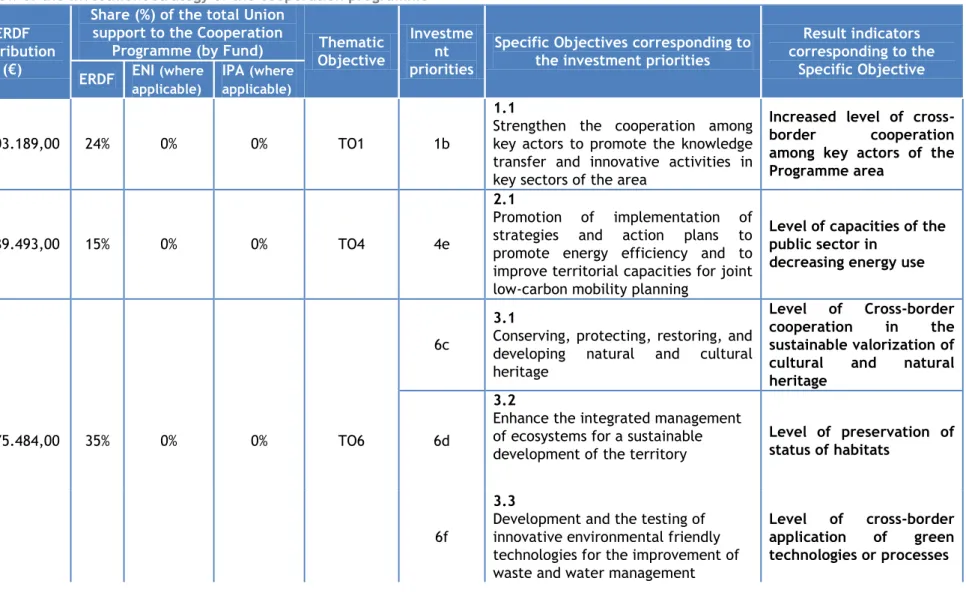
1.1.2 Justification for the choice of Thematic Objectives and corresponding investment priorities ... 31
1.2 Justification of the financial allocation ... 34
SECTION 2. PRIORITY AXES ... 38
Section 2.A. Description of the Priority Axes other than technical assistance ... 38
2.A.1 Priority Axis 1 ... 38
2.A.2 Justification for the establishment of a Priority Axis covering more than one Thematic Objective ... 38
2.A.3 Fund and calculation basis for the ERDF contribution ... 38
2.A.4 Investment Priority 1.b ... 39
2.A.5 Specific Objective 1.1 ... 39
2.A.6 Actions to be supported under the Investment Priority ... 42
2.A.7 Performance framework ... 46
2.A.8 Categories of intervention ... 47
2.A.9 A summary of the planned use of technical assistance including, where necessary, actions to reinforce the administrative capacity of authorities involved in the management and control of the programmes and beneficiaries and, where necessary, actions for to enhance the administrative capacity of relevant partners to participate in the implementation of programmes (where appropriate) ... 48
2.A.2 Justification for the establishment of a Priority Axis covering more than one
Thematic Objective ... 49
2.A.3 Fund and calculation basis for the ERDF contribution ... 49
2.A.4 Investment Priority 4.e ... 49
2.A.5 Specific Objective 2.1 ... 50
2.A.6 Actions to be supported under the Investment Priority ... 53
2.A.7 Performance framework ... 57
2.A.8 Categories of intervention ... 58
2.A.9 A summary of the planned use of technical assistance including, where necessary, actions to reinforce the administrative capacity of authorities involved in the management and control of the programmes and beneficiaries and, where necessary, actions for to enhance the administrative capacity of relevant partners to participate in the implementation of programmes (where appropriate) ... 59
2.A.1 Priority Axis 3 ... 60
2.A.2 Justification for the establishment of a Priority Axis covering more than one Thematic Objective ... 60
2.A.3 Fund and calculation basis for the ERDF contribution ... 60
2.A.4 Investment Priority 6.c ... 60
2.A.5 Specific Objective 3.1 ... 61
2.A.6 Actions to be supported under the Investment Priority ... 63
2.A.4 Investment Priority 6.d ... 67
2.A.5 Specific Objective 3.2 ... 67
2.A.6 Actions to be supported under the Investment Priority ... 71
2.A.4 Investment Priority 6.f ... 75
2.A.5 Specific Objective 3.3 ... 75
2.A.6 Actions to be supported under the Investment Priority ... 78
2.A.7 Performance framework ... 82
2.A.8 Categories of intervention ... 83
2.A.9 A summary of the planned use of technical assistance including, where necessary, actions to reinforce the administrative capacity of authorities involved in the management and control of the programmes and beneficiaries and, where necessary, actions for to enhance the administrative capacity of relevant partners to participate in the implementation of programmes (where appropriate) ... 84
2.A.1 PriorityAxis 4 ... 85
2.A.2 Justification for the establishment of a Priority Axis covering more than one Thematic Objective ... 85
2.A.3 Fund and calculation basis for the ERDF contribution ... 85
2.A.4 Investment Priority 11 ETC ... 85
2.A.5 Specific Objective 4.1 ... 86
2.A.6 Actions to be supported under the Investment Priority ... 90
2.A.7 Performance framework ... 94
2.A.8 Categories of intervention ... 96
2.A.9 A summary of the planned use of technical assistance including, where necessary, actions to reinforce the administrative capacity of authorities involved in the management and control of the programmes and beneficiaries and, where necessary, actions for to enhance the administrative capacity of relevant partners to participate in the implementation of programmes (where appropriate) ... 97
Section 2.B A description of the Priority Axis for technical assistance ... 98
2.B.1 Priority Axis 5 ... 98
2.B.2 Fund and calculation basis for ERDF contribution ... 98
2.B.3 Specific Objectives and expected results ... 98
2.B.5 Actions to be supported and their expected contribution to the Specific Objectives 100
2.B.6 Categories of intervention ... 103
SECTION 3. THE FINANCING PLAN ... 104
3.1. Financial appropriation from ERDF ... 104
3.2.A Total financial appropriation from the ERDF and national co-funding ... 106
3.2.B Breakdown by Priority Axis and Thematic Objective ... 110
SECTION 4. INTEGRATED APPROACH TO TERRITORIAL DEVELOPMENT ... 112
4.1 Community-led local development ... 113
4.2 Integrated actions for sustainable urban development ... 113
4.3 IntegratedTerritorialInvestment (ITI) ... 113
4.4 Contribution of planned interventions towards macro-regional and sea basin strategies ... 114
SECTION 5. IMPLEMENTING PROVISIONS FOR THE COOPERATION PROGRAMME .... 117
5.1 Relevant authorities and bodies ... 117
5.2 Procedure for setting up the joint secretariat (JS) ... 119
5.3 Summary description of the management and control arrangements ... 119
5.4 Apportionment of liabilities among participating Member States in case of financial corrections imposed by the managing authority or the Commission ... 129
5.5 Use of the Euro (where applicable) ... 130
5.6 Involvement of partners ... 130
SECTION 6. COORDINATION ... 132
SECTION 7. REDUCTION OF THE ADMINISTRATIVE BURDEN FOR BENEFICIARIES ... 136
Learning from past experiences ... 137
Harmonized Implementation Tools (HIT) ... 137
Simplified cost options ... 137
E-Cohesion ... 137
SECTION 8. Horizontal Principles ... 139
8.1 Sustainable development ... 139
8.2 Equal opportunities and non-discrimination ... 140
8.3 Equality between men and women ... 141
SECTION 9. SEPARATE ELEMENTS ... 143
9.1 Major projects to be implemented during the programming period ... 143
9.2 Performance framework of the Cooperation Programme ... 143
9.3 Relevant partners involved in the preparation of the Cooperation Programme ... 143
9.4 Applicable programme implementation conditions governing the financial management, programming, monitoring, evaluation and control of the participation of third countries in transnational and interregional programmes through a contribution of ENI and IPA resources ... 143
FIGURES AND TABLES
Figure 1: Map of the Programme area ... 11
Table 1 A synthetic overview of the justification for the selection of Thematic Objectives and Investment Priorities ... 31
Table 2: Overview of the investment strategy of the cooperation programme ... 36
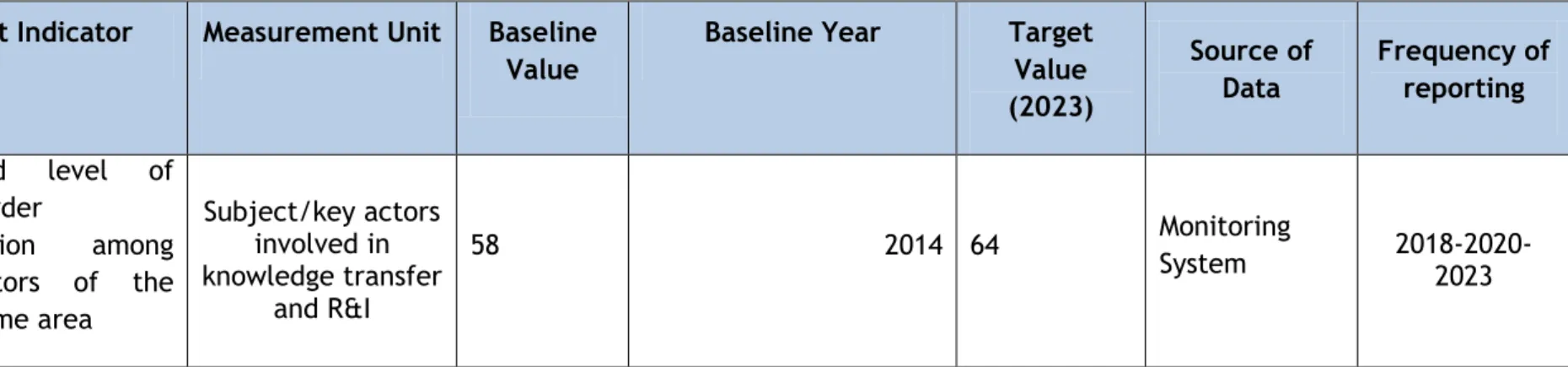
Table 3: Programme specific result indicators (by Specific Objective)... 41
Table 4: Common and programme specific output indicators (by Investment Priority) 45 Table 5: Performance framework of the Priority Axis... 46
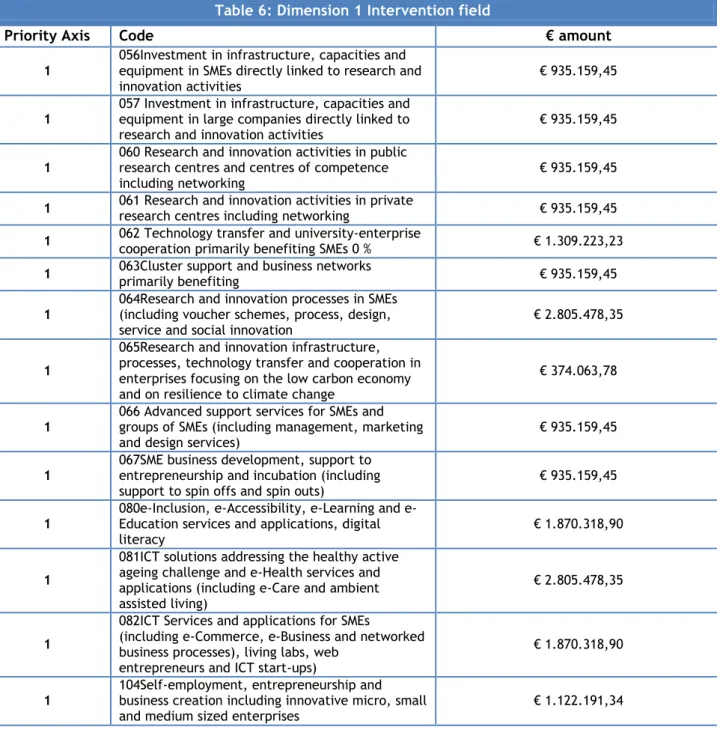
Tables 6-9: Categories of intervention ... 47
Table 3: Programme specific result indicators (by Specific Objective)... 52
Table 4: Common and programme specific output indicators (by Investment Priority) 56 Table 5: Performance framework of the Priority Axis... 57
Tables 6-9: Categories of intervention ... 58
Table 3: Programme specific result indicators (by Specific Objective)... 62
Table 4: Common and programme specific output indicators (by Investment Priority) 66 Table 3: Programme specific result indicators (by Specific Objective)... 70
Table 4: Common and programme specific output indicators (by investment priority) 74 Table 3: Programme specific result indicators (by Specific Objective)... 77
Table 4: Common and programme specific output indicators (by Investment Priority) 81 Table 5: Performance framework of the Priority Axis... 82
Tables 6-9: Categories of intervention ... 83
Table 3: Programme specific result indicators (by Specific Objective)... 88
Table 4: Common and programme specific output indicators (by Investment Priority) 93 Table 5: Performance framework of the Priority Axis... 94
Tables 6-9: Categories of intervention ... 96
Table 11: Output indicators (by Priority Axis) ... 102
Table 12-14: Categories of intervention ... 103
Table 15 ... 105
Table 21: Programme authorities ... 117
Table 22: Body or bodies carrying out control and audit tasks ... 118
Table 24: The performance framework of the cooperation programme (automatically completed in the system) ... 143
ACRONYMS
AA Audit Authority
CA Certifying Authority
CB Cross-border
CP Cooperation Programme
CPR Common Provision Regulation - Regulation (EU) No 1303/2013
DPS Italian National Department for Development Policy and Cohesion
e-MS e-Monitoring-System
EIB European Investment Bank
EAFRD European Agricultural Fund for Rural Development
EC European Commission
EGTC European Group for Territorial Cooperation
EMFF European Maritime and Fisheries Fund
ENI European Neighborhood Instrument
ERDF European Regional Development Fund
ESCO Energy Service Company
ESI European Structural and Investment Funds
ETC European Territorial Cooperation
EU European Union
EUSAIR EU Strategy for the Adriatic and Ionian Region
EUSALP EU Strategy for the Alpine Region
EUSDR EU Strategy for the Danube Region
FETs Future and Emerging Technologies
FI Financial Indicator
FLC First Level Control
GDP Gross Domestic Product
GHG Greenhouse Gas
GOA Group of Auditors
GODCP Government office of the Republic of Slovenia for Development and European Cohesion Policy
HIT INTERACT Harmonized Programme Implementation Tools
IB Intermediate Body
IFTS Higher Technical Education and Training
IP Investment Priority
IPA Instrument for Pre-Accession Assistance
ITI Integrated Territorial Investment
ITS Information Transportation System JS Joint Secretariat
KETs Key Enabling Technologies (investments and technologies that will
allow European industries to retain competitiveness and 8apitalize on new markets)
KIS Key Implementation Step
LP Lead Partner
MA Managing Authority
MS Member State
MC Monitoring Committee NA National Authority
NEET Not (engaged) in Education, Employment or Training NSF National Strategic Framework
NUTS Nomenclature of territorial units for statistics OI Output indicator
OMT Outright Monetary Transactions PA Priority Axis
PMG Programme Management Group PP Project Partner
PROs Public Research Organizations RDI R&D investment
RES Renewable Energy Sources R&D Research and Development
R&I Research and Innovation
RTO Research and Technology Organizations SEA Strategic Environmental Assessment SEAP Sustainable Energy Action Plan
SME Small and Medium size Enterprises
SWOT Strength, Weaknesses, Opportunities and Threats (analysis) SO Specific Objective
TEN-T Trans-European Network Transport
TF Task Force
TO Thematic Objective
SECTION 1.
STRATEGY FOR THE COOPERATION PROGRAMME'S
CONTRIBUTION TO THE UNION STRATEGY FOR SMART, SUSTAINABLE AND
INCLUSIVE GROWTH AND THE ACHIEVEMENT OF ECONOMIC, SOCIAL AND
TERRITORIAL COHESION
Reference: Article 27 of Regulation (EU) No 1303/2013 of the European Parliament and of the Council and point (a) of Article 8(2) of Regulation (EU) No 1299/2013 of the European Parliament and of the Council
1.1.
Strategy for the cooperation programme's contribution to the Union
strategy for smart, sustainable and inclusive growth and to the achievement of
economic, social and territorial cohesion
1.1.1. The strategy of the cooperation programme for contributing to the Union strategy for smart, sustainable and inclusive growth
1.1.1.1. Geographical coverage
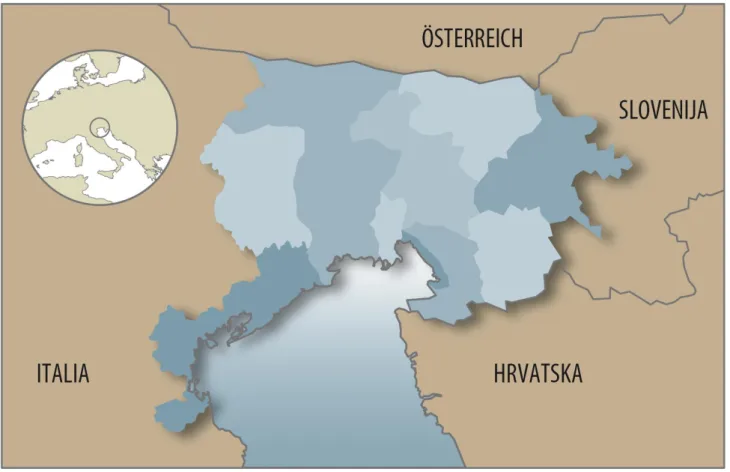
The Programme area extends over a total surface of 19,841 km² and has a total population of approximately 3 million inhabitants. The entire Programme area includes 5 Italian NUTS3 level regions (provinces of Venice, Udine, Pordenone, Gorizia and Trieste) and 5 Slovenian statistical regions (statistical regions of Primorsko-notranjska,Osrednjeslovenska, Gorenjska, Obalno-kraška and Goriška). Overall, on NUTS2 level on the Italian side, the regions involved are those of Veneto and Friuli Venezia Giulia, while for the Slovenian side, VzhodnaSlovenija and ZahodnaSlovenija.
Hereafter the whole Programme area – including the above-mentioned NUTS3 level regions - will be identified as “cross-border area”1.
For the purpose of the Programme all areas outside urban settlements are considered rural or peripheral areas.
The Programme area comprises urban areas as Trieste, Udine, Gorizia, Ljubljana, Pordenone, Venice, conurbation Koper-Izola-Piran, Nova Gorica, Kranj and Postojna.It also includes several urban centres located in relatively short distances from each other. In this regard, it should be noted that less than a mile separates Gorizia and Nova Gorica cities, while the two coastal cities of Trieste and Koper are less than 15 Km away. In a EU perspective, the Programme area is mainly comprised by intermediate regions and rural regions, furthermore, the Programme area has an above average number of border crossings per 100 km border which offers potentials to further support the development of polycentric cross-border regions2. On the border between Italy and Slovenia, it is situated the functional urban region of Gorizia, Nova Gorica and Šempeter where, drawing on the experiences achieved through several European cross-border projects, an EGTC (European Group for Territorial Cooperation) has been established in 2011. The EGTC, considered the most advanced form of cross-border territorial cooperation, shares goals relating to common management and modernization in health, environment and infrastructural sector, urban transport, logistics, energy and economic development initiatives.
1Art. 3.1 of the ETC Regulation and Commission Implementing Decision No. 2014/388/EU. 2Source: ESPON Project TERREVI, Nov. 2012
Stretching over 232 km, the Italian-Slovenian border begins in the north at the tripoint formed by the Austro-Italian and Austro-Slovenian borders. It then turns southwards and ends to the south of Trieste, in a village near the Adriatic Sea3.
The Programme area comprises more than 320 Km of coast on the Adriatic Sea, which represents a crucial resource both from an environmental and an economic point of view. Moreover all rivers on the Programme area flow into the Adriatic sea.
Figure 1: Map of the Programme area
During the preliminary programming phase, both involved countries – Italy and Slovenia - agreed on the fact that unbalanced configuration of the geographic area was one of the critic factors that affected the implementation of the programme during 2007-2013 period.
This position was expressed on the occasion of the different Task Force meetings and formally presented to the European Commission during the negotiation phase with Member States for the definition and adoption of Commission Implementing Decision No. 2014/388/EU of 16 June 2014 setting up the list of regions and areas eligible for funding from the European Regional Development Fund under the cross-border and transnational components of the European territorial cooperation goal for the period 2014 to 2020.
For this reason Italian side area was limited to NUTS 3 regions including Venice, Trieste, Gorizia, Udine and Pordenone and excluding the former eligible areas of Padova, Rovigo, Ferrara and
Ravenna. On the Slovenian side, the eligible NUTS 3 areas include Gorenjska, Goriška, Obalno-kraška, Osrednjeslovenska and Primorsko-notranjska.
The reduction of the Programme area brings the Programme to its previous INTERREG II and INTERREG III geographic configuration.
The new territorial dimension could help to strengthen the cohesion level of the Programme area and better focus strategic approaches and actions on the three pillars of concentration, territorial connection and administrative cooperation.
Moreover the need to contribute to the new-born macro-regional strategy (EUSAIR) imposes more specific attention to coordination and demarcation of activities among all ETC Programmes concerning the interested area.
1.1.1.2. Lessons learnt
After assessing the experience of territorial cooperation policy conducted in 2007-2013 as resulted by Mid-term Evaluation Report, some lessons that help defining the strategy for the programming period 2014-2020 have been drawn.
The 2007-2013 programme has funded activities aimed at enhancing the attractiveness and competitiveness of the Programme area. To achieve this overall objective, the Programme has pursued four Specific Objectives4 supported by four Axis5.
Despite the global financial and economic crisis the 2007-2013 programme, while facing the difficulty by the cooperation area to counteract the actual trend, has confirmed the validity of its strategic choices, the identified actions and the funded projects, which have proved to be consistent both with the previous framework and with the latest guidelines, also considering the available financial allocations. In fact, the economic crisis has further amplified some of the threats identified in the 2007-2013 SWOT analysis, and in particular, those related to the “Research and Development” and the “Environment” topics, which proved to be the primary issues, which most of the funded projects and financial resources have focused on. In 2007-2013, the 87 funded projects concentration on specific axes/priorities has indeed anticipated some of the central themes of Europe 2020 and confirmed the 2014-2020 strategic choices as a response of the eligible area to public finding. Overall, the 2007-2013 programme has allocated 136 million Euros of public expenditure and 914 partners were involved in projects implementation: the programme has generated large partnerships (most of the projects have from 5 to 14 partners) and consequently the single beneficiaries have handled low financing shares (median value € 80,000).
The 2007-2013 programme featured two types of projects, the standard and the strategic ones. The involvement of the whole Programme area on more ambitious projects, which could also capitalize on previous experiences, is still worth to be pursued in the new programme period due to their capacity of concentrating resources on some “core” issues. Still, the past experience teaches that strategic projects cannot differentiate merely on the base of the amount of resources allocated: while the financial size of a strategic project will be necessarily bigger than the one of standard operation, a different selection method based on a top-down approach is needed in order to guarantee an effective and efficient implementation of a wide area initiative. At the same time, the usual bottom-up approach appears more apt for encouraging the presentation of spontaneous ideas from the territories.
4Ensure sustainable territorial integration; Increase competitiveness and the development of aknowledge-based society; Improving communication and social and cultural cooperation, in order to remove persistent barriers; Improve the Programme efficiency and effectiveness.
5 Environment, Transport and sustainable territorial integration; Competitiveness and knowledge-based society; Social integration; Technical assistance.
On the basis of project applications 2007-2013 monitoring proved to be often higher than the pre-determined targets, with high performances in particular for the general cooperation indicators: over 70% of the projects has promoted the joint use of infrastructure, developed collaborations in the field of public services, promoted and improved environmental protection and joint management. Almost 50% of the projects have aimed at reducing isolation through improved access to transport, ICT networks and services.
The 2007-2013 experience has highlighted, in relation to the indicators, the need for the new programming period to pay attention to the relevance of the targets and to the detection methodologies to be adopted. It appears appropriate, in addition, the establishment of a system that can monitor the effects of the financed projects on equal opportunities and non-discrimination and on the environment. It could be useful, finally, the compulsory recognition of the effects required, within the limits of the phenomena reasonably quantifiable.
The process of implementation of the 2007-2013 programme has been affected by some issues that have characterized the start-up phase (difficulty in implementing the regular meetings of the Monitoring Committee due to consensus making rule, documentation drafting and translation due to delayed JTS establishment) and the implementation phase, with procedures for selecting projects often proved too slow (requiring from 7 months to over a year) and late payments, which all led to the 2014 decommittment. These aspects have highlighted, as for the 2014-2020 programming period, in general, the need to act on streamlining and simplification of decision-making processes, ensuring the programme good governance, also in order to speed up the performance of the realizations and, therefore, expenditure reporting and payments. More specifically:
establish and implement the JTS at the initial stage of programming period;
use flowing rules for selection of project proposals (containing the number of external experts and creating a mechanism for greater comparison among them);
encourage the participation of non-voting members of the MC and in particular of the Environmental Authorities;
have personal numerically adapted to the needs and tasks of the MA.
Finally, with reference to the activities of dissemination of 2007-2013 programme results, great interest has arisen towards the events related to results capitalization, which, by comparison with the project partners, enabled to identify development opportunities to pursue for specific thematic areas (tourism, cross-border healthcare, research, development and innovation). 1.1.1.3. Analysis of the situation of the Programme area
The Programme area presents a large number of connected relevant aspects, analysed in the following main topics.
Natural and Cultural resources
From a morphological point of view, geographical coverage of the Programme area is characterized by an internal diversity with the presence of coastal areas, mountain ranges and flat parts, which involve needs and different attraction points based on the morphology of the territory itself. The orography and the morphological characteristics of the area, on the one hand offer elements of great environmental and naturalistic attraction and lend themselves to important actions in the development of tourism, while on the other hand they also represent significant natural hazards, such as hydro-geological, seismic and volcanic risks, as well as the risk of subsidence and coastal erosion, the latter especially on Italian side.
For each physical environment there is a corresponding wide diversity of landscapes that can be summarily classified as follows:
Alpine Foothills landscapes Hilly landscapes
High and low plain landscapes River basins landscapes Littoral Lagoon landscapes Coastal landscapes
Karst landscapes
The entire area looks like a single mosaic of biodiversity and is particularly rich in both animal and plant species and habitat types, including the Adriatic Sea. The numerous protected areas all follow the IUCN classification system and are divided into National Parks, Regional Parks, Marine protected areas, Nature (State and Regional) Reserves as Natural Regional Reserve Bosco Nordio (113,54 ha) situated in Venezia Province or State Reserve of Cucco and Rio Bianco belonging to Province of Udine.
Also in consideration of the opportunities of protection and enhancement for tourism purposes, it should be noted the presence of the Triglav National Park, located in the statistical regions of Gorenjska and Goriška, which includes a large part of the Julian Alps on the borders with Austria and Italy. The Triglav National Park is one of the best preserved in Europe; here, Mediterranean, alpine and continental types of flora prosper, in which rare plants stand out, like the white poppy, the yellow gentian and the Zois' bellflower. Very important and worthy of note are the Marine Protected Area of Miramare and Strunjan in the Gulf of Trieste and the six Regional Parks in the Programme area, the Friuli Dolomites, the Julian Prealps (Friuli Venezia Giulia) and Sile River (province of Venice) on the Italian side and the Sečovljesalina nature park, the Škocjanskejame park and the Notranjska Regional Park on the Slovenian side, characterized by the Slovenian karst landscape and considered an island of biodiversity. The area of Classical Karst, which is considered of international importance, is very rich with natural, mostly karst phenomena and cultural heritage.
As referred above, from Italian side, it should be mentioned the Natural Park of Sile River: it lies 4152 hectare (16 sq miles) within 11 municipalities in the provinces of Padua, Treviso and Venice. Friuli Dolomiti Regional Park is part of the western mountain area dominating the upper plain of Friuli, between the rivers Tagliamento and Piave.
Equally important for biodiversity issues is Prealps Giulie Regional Park that presents a mountain chain characterized from steep slopes in the South.
The Classical Karst is also an integrated part of the Dinaric Karst, which is one of the most celebrated karst regions in the world. Therefore, the State Parties in the area (Albania, Bosnia and Herzegovina, Croatia, Montenegro, Italy, Slovenia and Serbia) are working on the preparation of the nomination to inscribe the Dinaric Karst on the UNESCO World Heritage List as a transnational serial nomination. Škocjan Caves, which take part of the UNESCO World Heritage List as well as Ramsar Convention List of wetlands of international importance, are used to be one of the largest underground passages in the world; other Ramsar sites are the Sečovljesalina nature park, the northernmost salt pans in the Mediterranean; Lipica as a cradle Stud Farm has a long tradition in breeding the Lipizzaner horses; Štanjel is a picturesque medieval village with castle, art gallery and other important attractions. From Italian side, it should be mentioned the Natural Reserve of Forra del Cellina (304,00ha), inside the province of Pordenone. The Nature Reserve includes the most significant section of the valley dug by the stream Cellina in the Cretaceous limestones, which forms the mountains situated between Barcis and Montereale Valcellina, in the Province of Pordenone. Among UNESCO World Heritage Sites in Slovenia since 2012, there is Idrija, located in the traditional region of Goriška. Also the prehistoric pile dwellings in the area of Ljubljanskobarje is part of World’s cultural heritage together with Palù di Livenza (Italy), one of the oldest Palaeolithic sites in northern Italy, both listed in the
“Prehistoric pile-dwelling sites in the Alps”, which extend from France to Slovenia, passing through Switzerland, Germany, Austria and Italy. Regarding other UNESCO heritage of Italian Programme area, besides Aquileia and the Dolomites (listed as UNESCO World Heritage Sites since 2011) now Friuli Venezia Giulia can boast another place included in the World Heritage Sites: Cividale del Friuli (one of the most representative symbols of the Lombard power in Italy), that is a town full of art treasures immersed in enchanting valleys rich in age-old traditions. Last but not least, Venice lagoon (in UNESCO list since 1987), enclosed bay of the Adriatic Sea in which Venice city is situated. Founded in 5th century and spread over 118 small islands, Venice became a major maritime power in the 10th century. The whole city is an extraordinary architectural masterpiece in which even the smallest building contains works by some of the world’s greatest artists.
The whole territory also shares some rivers such as the River Isonzo-Soca, rising in Slovenia, in the Triglav National Park, passing through Posočje and the urban area of the GECT GO/EZTS GO to Italy and finally to the nature reserve of the Isonzo estuary and, often creating problems of joint water management and enhancement of the river basin. The subterranean course of Reka river (means river in Slovenia) is situated in south-western part of Slovenia. It is a 50 kilometers long river with karstic features. Its main characteristic is that disappears underground and has the longest (30 kilometers) underground path of all Slovenian rivers. After that it springs as the river Timavo in Italy, near village Duino between Trieste and Monfalcone and outflows in the gulf of Trieste.
The geomorphological and climatic diversity of the Programme area and also the junction between Mediterranean bio-geographical areas, alpine areas and Illyrian Balkan areas lead to the presence of plant and animal biodiversity among the most elevated in Europe. There is also a strong presence of forest and woodland areas, especially on the Slovenian side..
The percentage of Natura 2000 sites in the Programme area is 30.9%”as data regarding the whole Programme area.
Socio-demographic aspects
With a population of 3,098,865 inhabitants, the Programme area has a population density of 161 inhabitants/km² and is deeply inhomogeneous among the various provinces and regions. The population growth is +3.8% between 2003 and 2012, in line with the European trend. Four of the 10 provinces / regions involved collect more than 70% of the population. The phenomenon of an aging population, with important social and economic effects, is an emerging factor. It is more pronounced in Italian side, than in Slovenian one. The situation about migration, which balances the aging of the population, is inhomogeneous between territories and between the two Members States.
Among the Italian provinces, Trieste has the highest population density (1,116 inhabitants/km² in 2011) even though this figure has decreased compared to 2005. The lowest value on the Italian side was recorded in 2011 in Udine, i.e. 110 inhabitants/km², with a positive balance relative to the figures from 2005 equal to 1.85%. The population density in the statistical region of Goriška remained almost unchanged (-0,4%) between 2005 and 2011, as did, generally speaking, the other statistical regions involved in the Programme area (variation between 2,4% and 2,6%) with the exception relative to the statistical region of Osrednjeslovenska (+7.36%), which proved to be the most densely populated of the Slovenian areas.
The age structure of the aforesaid Italian regions showed the composition of the population aged from zero to 14 years with a national average of 14%; also in Slovenia data for this age group was similar (14.2%). The active population, from 15 to 64 years of age, varied from 64%in Friuli Venezia Giulia to 65.9%in Veneto, while the Italian average was 65.7%. For the same age group in Slovenia, the average was much higher, reaching 69.3%. The figure for the over 65 age group varied from 19.9%in Veneto to 23.4%in Friuli Venezia Giulia; in Italy the average was 20.3%and
was lower in Slovenia, at 16.5%. The analysis of the age structure of the population in the Slovenian statistics regions involved in the programme has a trend similar to the whole Slovenia. In the Slovenian regions of the Programme area the active population in the 15-64 age class is slightly lower than the whole of Slovenia (-0.4%).
As regards the Slovenian regions involved in the programme we notice in the period between 2008 and 2014 a progressive reduction in the age group between 15 and 64 years for the youngest age group (+1%) and the oldest (+0.8%). As far as the Italian areas are concerned, in 2011, Trieste recorded the highest national old-age index (243), although the data was improving compared to that of 2005, which was 251.5. The Italian province with the lowest old-age index was Pordenone, with 146.9.
As far as the Slovenian regions are concerned, the figure is more homogenous; in particular, it varies from a minimum of 105.8 in Osrednjeslovenska to a maximum of 134.3 for Obalno-kraška. In other words, the Slovenian population has a greater number of people aged under 15 years compared to people aged over 65.
The migratory balance per 1000 inhabitants in the Programme area between 2006 and 2010 showed a decrease (passing from 4.87 to 2.71 per 1000), although in 2007 and in 2008 this same indicator doubled.
With reference to the percentage of population at risk of poverty or social exclusion, the Programme area ranks significantly lower than the European average of areas at risk of poverty and social exclusion, but over the last few years these territories have seen an increase in these phenomena.
Finally, the Programme area is characterized by some unbalances in different territories, in particular in terms of services related to social inclusion and welfare systems. The process of aging of the population, which covers the entire area, albeit with uneven character, is a factor that, in the medium term will have a significant impact on health policy and social inclusion. This aspect is aggravated by the effects produced by the economic crisis in terms of an increase in the unemployment rate, even against older workers. The specific expected result is the strengthening of institutional and administrative capacity in the implementation of services addressing social needs and health and that through active aging can be socially cohesive and economically competitive.
Cultural and national minorities
The Programme area can be considered the meeting place of the Latin, Slavic and German cultural and linguistic identities; among those, Italian minority living in Obalno-kraška region in Slovenia and Slovene minority living along the state border.
Regarding Italian Programme area, it should be noted that Friuli Venezia Giulia constitutes a space of complex-linguistic contact. The basis of the current situation can be attributed to the historical events of immigration and settlement that have placed side-by-side Romans, Germans, Slavs. There are used four official languages: besides Italian, Slovene, Friulan and German (Germanic-speaking communities can be found along the alpine areas of Friuli). Italian national legislation and several regional laws were issued in the past decades to safeguard the autochthonous minority languages, most notably in the autonomous border regions. Friulan language, spoken currently by almost 600,000 of people, is one of the historic minorities included in the Italian law 482/1999. In particular, it shows strong and compact in the province of Udine and in mountainous and hilly areas of the provinces of Pordenone and Gorizia. Native communities living along the eastern border of Italy mainly speak Slovenian language. Slovenians are an autochthonous minority with an historical presence protected by London Memorandum (1954) and Treaty of Osimo (1975), which is one of the historic minorities included in the Italian law 482/1999, it is protected by the Law for the protection of Slovene minority (Law 38/2001)
and it is subject of protection even by regional norms (Friuli Venezia Giulia Regional law 205/2007). It lives in the provinces of Trieste, Gorizia and Udine.
Minorities are an integral element of the European Union and are an important factor in achieving the cohesion policy, which is one of Europe's basic strategies. Cooperation between Slovenia and Italy is a natural result of efforts demonstrated by both countries ratifying the Framework Convention for the Protection of National Minorities and the European Charter for Regional or Minority Languages. The Slovenian minority in Friuli Venezia Giulia and the Italian minority in Slovenia present a paradigm of positive engagement. With their participation both minorities have played an important role in creating cohesion policy and social integration of cross-border and broader programming area, thus in the new programming period it can be expected to upgrade the systematic and successful integration between majority and minority entities.
Labour, Economic and Productive Context
Labour market situation in the Programme area has been characterized, in the recent period, by the strong impact of the crisis and especially by its persistence, which has worsened unemployment data that, until 2007/2008, were extremely favourable. The employment rate is slightly worse than EU figures, but it signals a pejorative trend, particularly for the Italian side of the programme. This situation affects the most vulnerable groups, such as in particular low skilled workers, with a particular aggravation of young people and women. Macroeconomic analysis of the area highlights decidedly marked disparities in terms of gross domestic product per capita. In general terms, the average GDP per capita for the entire area in 2011 amounted to € 23,082, against € 29,900 of the Italian provinces and € 17,360 of the Slovenian context. In 2010 equivalent figures were slightly lower, both relative to the figure for the entire area and also for the two territorial sides. The production system of the Programme area is generally characterized by structural conditions of weakness and by a medium-small size companies, effected by elements of undercapitalization and of difficult access to credit.
Tourism
According to UNWTO figures on future trends in the tourism industry, the number of international tourists in Europe will grow at an average annual rate of 3.3% between 2010 and 2030. This will bring about an increase of 43 million arrivals every year and a total of 1.8 billion tourists in 2030 from all around the world. The main destination area in the world continues to be Europe, but its market share will be reduced progressively in favor of the areas with highest growth, namely the Far East and Asia-Pacific.
In 2013 are registered 414,192 Italian tourists in Slovenia with an amount of 929,327 overnight stays. Thanks to its natural conditions, the country for several decades is the favorite place for the athletic training from the best teams. Recently, hiking, mountaineering, sightseeing and cycling are more popular activities. Regarding Italian Regions of the Programme area, 2,060,824 of tourists in 2013 are registered in Friuli Venezia Giulia (1,027,545 foreign, 1,033,279 Italian) and 15,984,972 in Veneto Region (10,471,034 foreign, 5,513,938 Italian). The highest affluence has been registered in Venezia (amount 8,240,596 tourists) for Veneto Region and Trieste (383,696) for Friuli Venezia Giulia Region.
The absence of direct public transport connections between Slovenia and Italy, either railway or airplane, penalizes the central and southern Regions of Italy. Especially a rail link connecting the airport of Ronchi dei Legionari, Venezia and Ljubljana, passing through the urban area of the GECT GO/EZTS GO, connecting the urban centres. Slovenian tourists in Italy generally prefer to stay in hotels and guesthouses, while they show no preference for the use of apartments or camp-sites. For "mini-holidays" in Italy, they usually prefer cities of art and shopping locations. Most Slovenian tourists organize their trips to Italy on their own and only a quarter of them use a
travel agency or a tour operator, especially for trips to smaller locations in central and southern Italy, where the most popular type of holiday is one of "relaxation”, followed by recreational activities and sightseeing.
The Programme area has high tourism potential on the basis of its natural and cultural assets. There are existing developed tourist products (gastronomy, active tourism, cultural, leisure, historic…), which need to be upgraded in line with quality and sustainability standards, including also eco-friendly mobility.
Climate Change and Energy
The Programme area is affected simultaneously by the impact of the continental, Alpine and Mediterranean climates. The average winter temperatures are harsh in the mountain zone while along the coast, thanks to the mitigating effect of the marine breezes, they rarely go below zero. Still, climate change affects the cross-border area, which will have to deal with increasing average temperature and growing vulnerability of territories to natural disasters (in particular floods).
Adapting to climate change and reducing the effects of global warming asks for overarching efforts in many sub systems like the energy, transport, water management, soil consumption, forest management and natural risks prevention, in a long term perspective. The European Union has responded to the challenge of climate change by setting ambitious mitigation goals (GHG reduction/renewable energy production/energy efficiency). Both Italy and Slovenia failed in closing the gap between their 2008-to-2012 emissions and Kyoto Target and 2020 emissions will be higher than the 2020 target6. As consequence, additional measures are needed to further reduce GHG emissions.
The poor efficiency recorded relative to the final use of the energy, in particular in transport, both private and collective, in residential and public building, increases the economic returns from structural requalification operations aimed at pursuing energy saving goals. The increase in the use of energy produced from renewable sources, with a view to achieving the goals set by the European Union by 2020 and (with the Energy Roadmap 2050) by 2050, also requires investments in the connection systems and in the local electricity distribution network, avoiding destabilizing feedbacks on networks due to the greater unpredictability of electricity generation using such sources. Italy consumes less energy than the average EU27, but it is behind Slovenia for coverage of electrical consumption using renewable energy sources. In Italy the gross production of electricity records figures of 50.3 GWh per ten thousand inhabitants, with a very slight fluctuation compared to 2011 (51.0), below the EU27 average (65.3).
Research and Development
The topic of Research & development is a key factor for the competitiveness of a territory and the development of synergies between enterprises, research and development centres and the higher education sector is key to the achievement of most of the Europe 2020 targets.
At European level, every year the public European Commission publishes the annual Innovation Union Scoreboard that compares the results obtained in the field of the research and innovation by the EU Member States, bringing to light the relative strengths and weaknesses of their systems of research and innovation. Slovenia is in 13th position inside the “innovative followers” group, while Italy records a slight drop in growth compared to the previous year (and to the European average) taking 16th the position, in the group of the “moderate innovators”.
The Slovenian Innovation System consists of a collection of institutions that collaborate closely with each other and with European and international counterparts, thanks also to factors such as
the small size of the country, the quality of the educational system and international culture. The role of the various organizations in the Innovation System and the quality and intensity of their relationships are fundamental for economic growth. Interactions with Italy are numerous, particularly with the organizations of the innovation system in FriuliVenezia Giulia and Veneto, thanks also to the availability of community programmes of cross-border cooperation.
Lastly, it is worth underlining the presence of Technical-Scientific Parks and centres dedicated to technical and scientific research that operate in order to satisfy the requirements of competitiveness in the economic and productive system and, at the same time, favour the establishment and reinforcement of virtuous networks between all the players in the industry and in research located in the Programme area.
In the Slovenian side, there are currently several regional R&D agencies, and many actors primarily involved in providing consultancy services to local entities (SMEs). Regarding public research performance main actors comprise five Universities, various autonomous higher education institutions and 47 government research institutes (among them 15 public PROs). In Friuli Venezia Giulia Region there are two Universities and four research centres as well as some Technological Districts of High Specialization.
In the NUTS3 of Venice there are two universities as well as the Venice International University, an international center for higher education and research including a total of sixteen institutions from several countries. Furthermore the NUTS3 of Venice hosts several other research institutions and foundations whose activities embrace numerous disciplines.
A key role in the development of the Programme area is the introduction of the regional Smart Specialisation Strategies (RIS3). These have been developed in order to set priorities that build on the regional competitive advantages. The existence of the regional smart specialisation strategy (RIS3) is the key element for planning investments under TO1 “Strengthening research, technological development and innovation”.
Transport and Logistics
Both of the Position Papers of the DG REGIOservices reveal the need for Italy and Slovenia to strengthen the network of railway infrastructures and to invest in more sustainable methods of transport. According to the European Environment Agency, the reduction in polluting emissions in 2012 was in part due to a reduction in the economic activity, while the emissions caused by means of transport continue to grow.
The challenge, therefore, is to successfully reduce emissions from transport vehicles and to support energy savings, by promoting the passage from road transport to rail and maritime transport, while at the same time responding to the need to improve public transport networks. Railway infrastructures
Considering railway density, both Slovenia, with its 6 km of railway network per hundred km² of territorial surface, and Italy, with 5.6 km, rank in an intermediate position in Europe (EU 5.0 km, 2011). With regard to passenger traffic, the Italian network transported 45,944 million passengers per km in 2011, recording an important increase compared to figures from the previous year (43,349), while Slovenia, with 689 million passengers, continues to record a decreasing trend (729 in 2010, 689 in 2011 and 659 in 2012). The exact opposite is true of freight transport via rail, where Slovenia records a significant increase in the movement of tonnes per kilometer. There is a huge potential and need for developing environment-friendly and low-carbon transport systems and promoting sustainable urban mobility.
Road network
The two Italian eligible NUTS 2 regions present extremely different road length, with Veneto Region presenting a value three times higher (9,612 Km) than that registered by Friuli Venetia
Giulia (3,929 Km). Slovenian road network extends for a total of 38,985 Km (2012), with a substantial equity between the two cohesion regions for the motorways length, but with VzhodnaSlovenija presenting for other roads a higher value of 10,000 km respect ZahodnaSlovenija. Slovenia possesses a motorway network of 769 km with an increase of about 10% in the period 2008-2012. Moreover Slovenia has the maximum figure for density in Europe (7.20 km per 10,000 motor vehicles; the main reason being the transit traffic) compared to the EU average (2.89 km) and to the Italian density (1.8 km). For the Italian side, Veneto has the same number as the national level, while Friuli Venezia Giulia has a higher motorway density (2.7 km). For both sides, freight transport by road continues to be preferred to the rail and maritime modes of transport, with repercussions on traffic congestion of the roads. It is necessary to find valid and efficient alternatives, like the use of combined road-rail transport. Ports
The maritime ports will need to be the main interfaces of the land transport networks, in particular rail transport, by improving the intermodal connections and become places of commercial trade with strong potential. The area boasts three port hubs, considered core ports in the TEN-T Network: Venice, Trieste and Koper, the most oriented port in the North Adriatic area. Its efficient connection and integration to the TEN-T multimodal corridors has to be fully supported. In the Italian Programme area, the ports of Venice (2,000,000 sqm) and Trieste (1,725,000 sqm) have the greatest surface areas dedicated to freight storage. As well as this aspect, in particular for the Port of Venice, there is also the considerable increase in cruise traffic, which is doubtless able to stimulate tourist activities in the ports concerned.
The Koper port as one of the most important logistics-distribution centres has the leading role with the biggest market share in the North Adriatic from 2010 onwards.
In 2013 the port handled a record of 18 million tons and 600,000 TEUs of containers (which represents an increase of 75% from 2009). At the same time, the Port of Koper gained also the second position for car volumes in Mediterranean - immediately after Barcelona.
Logistics
Together with the infrastructural problems coexist other weaknesses due to administrative obstacles, lack of technologic integration among transport systems and of logistic related services. The two countries boasts great potential for the development of transport logistics branch: for the Italian side, logistic network railway nodes (Mestre and Trieste), motorways (A4) and ports (Trieste, Monfalcone), interports (Cervignano) and Ronchi dei Legionari Airport and its Intermodal Pole; for the Slovenian area, motorways of the sea, the port of Koper and its logistics infrastructure, the international airport of Ljubljana and the whole road/railway/maritime network.
Moreover the area constitutes the meeting point between two of the 9 European Core Network Corridors: the Baltic-Adriatic Corridor and that of the Mediterranean.
On both sides, all the investments in the infrastructures must be based on a transports policy to be able in catching these flows and transforming the negative effects (pollution, traffic, soil consumption) into positive assets, in terms of growth. In this context, it would be important to improve cross-border connections, capitalizing what have been done with the co-funded projects under 2007-2013 programme (ADRIA A, TIP projects and with the GECT GO/EZTS GO -GO) for the implementation of a cross-border logistic platform Gorizia - Nova Gorica. An important role could be assumed by potential cross-border intermodal hubs within the Programme area, such as the pre-existing management authorities of the services to be converted because of the fall of the borders (e.g. the potential railway junction between Gorizia and Nova Gorica/Vrtojba/Sezana). On the maritime border a good example of cooperation in the logistics
is the institution of the North Adriatic Ports Association (NAPA)– among Trieste, Venezia, Koper and Rijeka.
Education
The educational systems of the two countries get different results. The OECD-PISA 2012 data indicate, on both side of the Programme, valid school systems in terms of quality and quantitative data are consistent with the relevant age groups.
From the viewpoint of upper secondary education, in terms of duration of school cycles, various discrepancies were found, relative to age groups, which have a significant impact on the statistical basis of reference, although the two different cycles are nevertheless comparable in terms of teaching and education.
In this context, in the various second grade educational channels there are 115,401 students studying, of which 33.15% in the Slovenian area and 66.85% in the Italian area. Relative to the resident population based on NUTS 3, the statistical region of Gorenjska is the one with the highest number of students enrolled in the advanced educational cycle, while Trieste is the province with the lowest number of enrolled students.
Regarding the impact of the educational system, investigations OECD-PISA 2012 show that students in Slovenia reach an average result of 481 in reading, 501 in math and 514 in science. Data for Italy are reading 490,485 in math and 494 in science. Slovenian students exceeding the OECD average in mathematics and science. Italian students are below the OECD average in all three parameters. In addition, the weakness of higher technical education in Italy (IFTS/ITS), a phenomenon also recently decreases the impact of tertiary education even in regions involved in the Programme.
SWOT analysis
The following SWOT analysis presents internal strengths and weaknesses as well as external opportunities and threats of the area, for each goal of Europe 2020 Strategy and each Thematic Objective. In this way, a comprehensive analysis of the whole territory is provided with reference to all 11 TO, which has represented the fundamental basis for the identification of the needs and challenges to be addressed through the present Programme. It combines the situation analysis of the Programme area with an analysis of strategic documents on European, national and regional level (e.g. programming documents and policy papers).
Smart Growth TO 1
Strengths Weaknesses
Clusters of excellence in academic and industrial research and virtual network between research institutions and competence centres
Natural and cultural assets as a solid basis to develop innovative activities and projects Skilled human capital
Low level of R&D in several (rural)
regions/insufficient technology transfer and previous difficulties to follow research and innovation priorities
Concentration of services activities in main urban areas
Capitalization of research outcomes and knowledge diffusion should be strengthened
Opportunities Threats
Cross-border connections can additionally contribute to strengthening capacities and
knowledge in the sector of innovative services and products, encouraging the link between high-technology companies and research institutions Enhance the ability of SMEs to use the results of research and innovation produced by innovation and research poles
R&D specializations in bio-sector (Biomed, Biotech), agri-food sector, eco-construction, civil engineering and energy
Inability to convert the productive system to innovative sectors due to insufficiently integrated platforms for Technology transfer
Presence of marginalized areas and brain drain Reduction of returns on investments in R&D
TO 2
Strengths Weaknesses
Good level of ICT use Lower level of broadband coverage respect other developed regions
Opportunities Threats
Diffusion of e-services, in particular for tourism, culture, social inclusion and e-health
Reduction of competitiveness for not digitalized SME Digital services are less developed in remote areas
TO 3
Strengths Weaknesses
Tertiary sector provides employment to the majority of the workforce
Presence of Leader enterprises in the area due also to policy support for business
Asymmetric competitive ability and uneven access to financial sources of the area
Unbalanced model of regional development
Opportunities Threats
Policy support for cooperative economic activities, development of clusters and networks.
Development of new business model of marketing in the area of sustainable tourism and innovative sectors.
Inability to convert the productive system to innovative sectors
Concentration of firms and competencies in a few urban centres
Sustainable growth
TO 4
Strengths Weaknesses
Increasing level of renewable energy access (biomass, wind, solar, hydroelectric and - - geo-thermal) Large number of sustainable urban mobility plans
Poor Energy efficiency
Need of investments in Smart Grids in order to better exploit the potentials of renewable energy sources
Opportunities Threats
Opportunities provided by integrated planning for sustainable mobility
Development and Employment Opportunities provided by Green Growth
Action Plan for Sustainable Energy
Use of alternative renewable energy resources and new technologies in the field of energy storage
Failure in getting Europe 2020 targets
Negative Energy balance and increase of energy dependence from external market
Investments in RES discouraged by economic crisis
TO 5
Strengths Weaknesses
High level of investments in this field during
2007-2013 programming period Geophysical characteristics of the territory, sensitive to hydro-geologic natural risk
Opportunities Threats
Enhancement of alert and monitoring systems and promotion of disaster resilience
Development of hydrogeological instability Increase of temperature average due to climate change that can compromise biodiversity
TO 6
Strengths Weaknesses
Existence of attractive natural, historical and cultural sites
Great potential to use natural and cultural heritage as development driver
Outstanding mobile heritage
Increase of polluted areas and bad status of water resources
Weak coordination and lack of systemic approach among territories
Need to enhance integration of promotion and valorization activities at CBC level
Opportunities Threats
Increase of sustainable and naturalistic tourism demand that can also provide opportunities in cross-border cooperation and ecologic management Take advantage from green technologies to foster both economic growth and environment management Valorization of “mobile” heritage as important component of the cultural heritage
Increase of pollution and of unsustainable use of natural resources
Degradation of conservation status of habitats and protected areas
Reduction of public investments for environment and cultural heritage protection and restoration
TO 7
Strengths Weaknesses
Good level in transport infrastructures, in particular road infrastructures
Core Ports (Trieste, Venezia and Koper) in the Core Network of TEN-T Network and NAPA associates Improvement of electrified railway network
Insufficient development of cross-border
connections, in particular for railway infrastructures and need to further support the development of polycentric cross-border regions
Bad accessibility of peripheral and remote and mountain areas and disparities in railway infrastructures and services
Opportunities Threats
Inclusion of priority projects involving the area in the Core Network of TEN-T for Corridor Adriatic-Baltic and Mediterranean in the period 2014-2020 in order to improve cooperation activities
Improvement in innovative services supply for maritime and public transports
Risk of delay in TEN-T projects
Risk of marginalization of the area from freight movements
Inclusive growth
TO 8
Strengths Weaknesses
High level of competences and scholarship of human capital
Low rate of productivity, even on female rate Different level of unemployment rate in the Programme area
Opportunities Threats
Priority level assigned at EU level to Youth Employment (Youth Employment Initiative) active ageing and social inclusion policies
Growth of the unemployment rate, particularly for low skilled workers
Progressive aging of the population
TO 9
Strengths Weaknesses
Coherent dimension of migrations compared to demographic data
Elderly heavily exposed to the risk of poverty
Opportunities Threats
Cross-border improvement of modernization for the social and health systems
Integration between urban and rural areas to reduce the isolation of some regions
Negative trend of the indicator on population living in poverty risk or social exclusion
Progressive reduction of levels of health care
TO 10
Strengths Weaknesses
High level of attendance in the educational system Weak link between high level education and labour market and increasing number of NEET
Opportunities Threats
Opportunities provided by the better link to productive system and by cross-border labour mobility
Better integration with life-long learning system
Efficiency reduction in educational processes
TO 11
Strengths Weaknesses
High level of participation to ETC Programs for both the two sides of the area
Need for better innovation and efficiency in the Public Administration, in particular trough the reduction of administrative burden on citizens and business sector and enhancement of cross-border projects in order to strength capacity building
Opportunities Threats
Conception and realization of common solutions and services in key areas like risk management and health.
Increase in PA transparency and Open Data accessibility
Increased multilevel governance in the cross-border area
Improved cooperation among stakeholders on key issues like education and energy.
Difficulties of cooperation to take action due to an incoherent legislation (at national and regional level) and lack of improvement in PA competences
Challenges and needs
Following the results raised from the analysis of the situation of the Programme area and from the SWOT Analysis, several challenges and needs have been identified for their relevance in terms of Europe 2020 contribution and for their possibility to be effectively be addressed by the cooperation strategy. These elements represent the basis for the selection of the Thematic Objectives and Investment Priorities and for the definition of the ProgrammeSpecific Objectives and types of actions realizing its thematic concentration.
Europe
2020
Strategy
CHALLENGES
NEEDS
Smart
Growth
- Better exploit innovation and skills levels in the key and most competitive sectors
- Technological transfer of research results to business sector and improve investments in applied research
- Ability to act as a collective system for the development and spread of new technologies and for the creation and growth of businesses with high added value projected towards the global markets
- Enhance the ability of SMEs to use the results research and innovation produced by large research and innovation poles
- Increase investments in R&D within the common smart specialization priorities - Improve cooperation between research
centers/academia, public administration and private sector according to quadruplehelix approach
- Push on integration between research centers
- Capitalization of research outcomes and knowledge diffusion should be strengthened
- To develop a cross border institutional platform in order to share know-how and best practices
Sustainable
Growth
- Discourage car users and improve accessibility, quality and innovation of public transport
- Avoid marginalization of less accessible areas from main functional urban areas and services
- Increase multimodality exploiting proximity among different transport system
- Reduce road traffic and congestion, air pollution and energy consumption - Decrease CO2 emissions caused by
transport
- Revitalize ports as important nodes for passengers and freight mobility
- Capitalize relevant experiences and initiatives in the field of energy and mobility planning
- Utilisation of geothermal energy and
energy from the sea
- Explore the possibility of using alternative renewable energy sources
- Raise air quality level promoting integrated low carbon strategies
- Improve integrated planning for transport systems between the two borders in line with TEN-T Comprehensive/Core network - Develop more sustainable mobility systems
in urban and local areas, leading to livelihood, air quality and human health - Encourage the shift from road transport to
rail and maritime transports also investing in multimodality and ITS
- Better connections between coastal areas and hinterland
- Improve networking and cooperation among the three core ports of the area (Trieste, Venice, Koper)
- Explore the possibility of using alternative
energy sources
- Action Plan for Sustainable Energy in the
cross-border area
- Reduce pressure and usage conflicts affecting environment and natural and
- Define cross-border solutions improving natural and cultural resources