THE ELUSIVE ‘GOOD’: HOW PERFORMANCE MEASURES
SHAPE THE US CHILD SUPPORT ENFORCEMENT PROGRAM
Ana Carolina R. Macatangay
A Thesis Submitted for the Degree of PhD
at the
University of St Andrews
2019
Full metadata for this thesis is available in
St Andrews Research Repository
at:
http://research-repository.st-andrews.ac.uk/
Please use this identifier to cite or link to this thesis:
http://hdl.handle.net/10023/17890
This item is protected by original copyright
This item is licensed under a
Creative Commons License
The elusive 'good': how performance measures shape
the US child support enforcement program
Ana Carolina R. Macatangay
This thesis is submitted in partial fulfilment for the degree of
Doctor of Philosophy (PhD)
at the University of St Andrews
Candidate's declaration
I, Ana Carolina Macatangay, do hereby certify that this thesis, submitted for the degree of PhD, which is approximately 75,976 words in length, has been written by me, and that it is the record of work carried out by me, or principally by myself in collaboration with others as acknowledged, and that it has not been submitted in any previous application for any degree.
I was admitted as a research student at the University of St Andrews in September 2014.
I received funding from an organisation or institution and have acknowledged the funder(s) in the full text of my thesis.
Date Signature of candidate
Supervisor's declaration
I hereby certify that the candidate has fulfilled the conditions of the Resolution and
Regulations appropriate for the degree of PhD in the University of St Andrews and that the candidate is qualified to submit this thesis in application for that degree.
Date Signature of supervisor
Permission for publication
In submitting this thesis to the University of St Andrews we understand that we are giving permission for it to be made available for use in accordance with the regulations of the University Library for the time being in force, subject to any copyright vested in the work not being affected thereby. We also understand, unless exempt by an award of an embargo as requested below, that the title and the abstract will be published, and that a copy of the work may be made and supplied to any bona fide library or research worker, that this thesis will be electronically accessible for personal or research use and that the library has the right to migrate this thesis into new electronic forms as required to ensure continued access to the thesis.
I, Ana Carolina Macatangay, confirm that my thesis does not contain any third-party material that requires copyright clearance.
The following is an agreed request by candidate and supervisor regarding the publication of this thesis:
Printed copy
No embargo on print copy.
Electronic copy
No embargo on electronic copy.
Date Signature of candidate
Date Signature of supervisor
Underpinning Research Data or Digital Outputs
Candidate's declaration
I, Ana Carolina Macatangay, hereby certify that no requirements to deposit original research data or digital outputs apply to this thesis and that, where appropriate, secondary data used have been referenced in the full text of my thesis.
General acknowledgements
I would like to thank the leadership and staff of Clark County District Attorney’s Office, Family Support Division, the Federal Office of the Child Support Enforcement Program, the National Child Support Enforcement Association, and the Western Interstate Child Support Enforcement Council for their participation in and/or support for this study.
I would like to thank my principal supervisor Dr. Philip Roscoe and secondary supervisor Dr. Shona Russell for their guidance, support, and encouragement throughout my program of studies. I am also grateful for the support and assistance I received from the academic staff, professional services team, and fellow PhD students of the School of Management.
I would also like to acknowledge the external examiner Professor Neil Pollock and internal examiner Professor Lorna Stevenson for their invaluable feedback on my work.
The completion of this work, however, would not have been possible without the prayers and support of my family and friends, especially those who have passed on without seeing it through to the end. They have been with me all this time and I thank them most dearly.
Finally, I am deeply grateful for the unfailing and loving support of my husband, who always seeks to bring out the best in me.
Funding
1
Abstract
Performance measures do not just capture an organization’s ‘good performance’; they intervene in the valuation and construction of what counts as ‘good’ so it can be valued, enacted, and measured. This is the central theme of this thesis. Using a performativity lens, and drawing on valuation studies and the sociology of
2
Abbreviations
ADA Assistant District Attorney
AFDC Aid to Families with Dependent Children
AWS Alternative Work Schedule
CMT Case Management Tool
CSEP Child Support Enforcement Program
CSPIA Child Support Performance and Incentive Act
DAFS Clark County District Attorney’s Office, Family Support Division DWSS Division of Welfare and Supportive Services
EPR Employee Performance Report
FFY Federal Fiscal Year
FPM Federal Performance Measure
GPRA Government Performance and Results Act HHS U.S. Department of Health and Human Services
NAF Notice and Finding
NCSEA National Child Support Enforcement Association NOMADS Nevada Operations of Multi-Automated Data Systems OCSE Office of Child Support Enforcement
PCS Participant Consent Form
PIP Performance Improvement Plan
PIS Participant Information Sheet
PMM Performance Measurement and Management
3
Table of Contents
1 Introduction ... 6
2 Setting ... 12
2.1 The U.S. Child Support Enforcement Program ... 12
2.1.1 A brief historical overview ... 13
2.1.2 Legislative changes ... 15
2.1.3 Organizational framework ... 17
2.1.4 CSEP’s Performance measures and incentive system ... 18
2.2 The empirical site: DAFS ... 21
2.2.1 Location ... 21
2.2.2 DAFS organization and services ... 22
2.2.3 Technology ... 24
2.2.4 DAFS’ performance: an overview ... 26
3 Theoretical Framework ... 28
3.1 The problem: measuring performance in government ... 28
3.2 Performativity as lens ... 31
3.2.1 Sociotechnical agencement ... 33
3.2.2 Framing and overflowing ... 36
3.3 Valuation as performative ... 38
3.3.1 Valuation through qualification ... 40
3.3.2 Quantifying the qualified as a form of valuation ... 44
3.4 A performative valuation and construction of GP ... 47
4 Methodology ... 52
4.1 Philosophical perspectives ... 52
4.2 Research design and methodological approach ... 55
4.3 Planning and preparation ... 56
4.4 Data sources and methods ... 58
4.5 Data collection: phase one ... 61
4.5.1 Settling in at DAFS ... 61
4.5.2 Network-tracing at DAFS ... 63
4.5.3 DAFS’ mediating partners: OCSE and NCSEA ... 66
4.6 Data collection: phase two ... 67
4.7 Data analysis ... 69
4.8 Some ethical considerations ... 73
5 When ‘good performance’ turns ‘bad’: GP1.0 to GP2.0 ... 75
5.1 Introduction ... 75
5.2 Pre-2007: DAFS in a state of disarray ... 75
5.2.1 Focusing on the wrong measure ... 75
5.2.2 Media intervention: a rude awakening and the collapse of GP1.0 ... 79
5.3 Articulating the new ‘good’: GP2.0 ... 85
5.3.1 Gathering experts ... 85
5.3.2 National search: Operations Director as expert ... 87
5.3.3 Innovation Teams: employees as experts ... 88
4
5.3.5 Technological infrastructure: IT programmers as expert ... 91
5.4 Laying the groundwork: a changing landscape ... 92
5.4.1 Clearing the path ... 92
5.4.2 Creating ‘settlements’ ... 93
5.4.3 Building pipelines ... 97
5.5 Conclusion ... 101
6 Organizational ‘shake-up’ to produce the ‘good’ ... 103
6.1 Introduction ... 103
6.2 Mobilizing measures as objects of reference ... 104
6.3 Framing the production of ‘good performance’ ... 106
6.3.1 Mapping the process ... 107
6.3.2 Qualifying the good action ... 110
6.3.3 Classifying and reporting on the ‘good’ ... 113
6.4 Using numbers to make the good ‘exist’ ... 115
6.4.1 Monthly quotas ... 115
6.4.2 Performance evaluation ... 118
6.4.3 Rewards and sanctions ... 120
6.5 Measures changing practices ... 124
6.5.1 When numerators and denominators become visible ... 124
6.5.2 When ‘fairness’ becomes good practice ... 126
6.5.3 When attorneys turn into calculative agents ... 128
6.6 Conclusion ... 130
7 The politics of organization and construction of GP ... 132
7.1 Introduction ... 132
7.2 Engaging new actants as co-producers of the ‘good’ ... 133
7.2.1 Letters of encouragement ... 134
7.2.2 From social worker to community partners ... 137
7.2.3 Call center and the friendly voice ... 141
7.2.4 Connecting the marginalized ... 147
7.2.5 Courts, statutes, and ‘orders’ ... 151
7.3 Conflicts in delivering the ‘good’ ... 155
7.3.1 Straying from the path of GP ... 156
7.3.2 Counting but not producing the ‘good’ ... 159
7.3.3 Subverting the valued ‘good’ ... 163
7.3.4 Struggling to act amidst competing ‘goods’ ... 167
7.4 Conclusion ... 173
8 Discussion ... 176
8.1 Introduction ... 176
8.2 Beyond representation ... 177
8.3 From one measure to the next ... 179
8.4 Reassembling a good performing ‘agency’ ... 181
8.4.1 Performative organization ... 183
8.4.2 Performative articulation ... 184
8.4.3 Performative production ... 187
8.4.4 Performative validation ... 191
8.5 Measures’ performative struggles ... 193
5
8.5.2 Multiple versions of the quantified ‘good’ ... 196
8.5.3 Competing valuations of ‘good’ ... 200
8.6 Conclusion ... 204
9 Conclusion ... 206
Bibliography ... 211
Appendix ... 226
Figure 2-1 Five federal performance measures ... 19
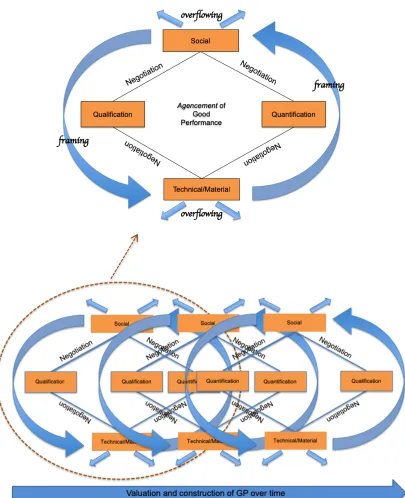
Figure 3-1 Theoretical model ... 49
Figure 5-1 Enforcement Unit ... 96
Figure 5-2 Paternity Unit ... 96
Figure 5-3 View from a supervisor's office ... 96
Figure 6-1 Wall chart of performance scores for August 2015 ... 106
Figure 6-2 Reports available to Investigations ... 115
Figure 7-1 Outstanding Program WICSEC Excellence Award ... 175
Figure 8-1 Taxonomy of performative framing ... 182
Figure 8-2 Taxonomy of counter-performation ... 194
Table 2-1 Summary of DAFS child support services ... 24
Table 2-2 Nevada caseload distribution by office, MAXIMUS (2006) ... 26
Table 2-3 Nevada's performance scores and rank for FY05, MAXIMUS (2006) ... 27
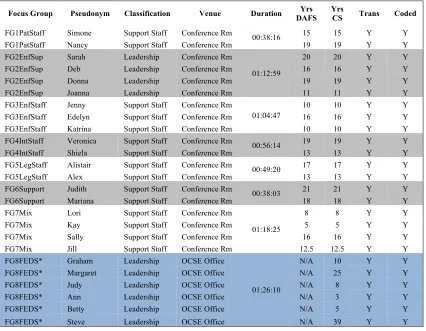
Table 4-1 Individual interviews ... 59
Table 4-2 Group interviews ... 60
Table 4-3 Observations ... 60
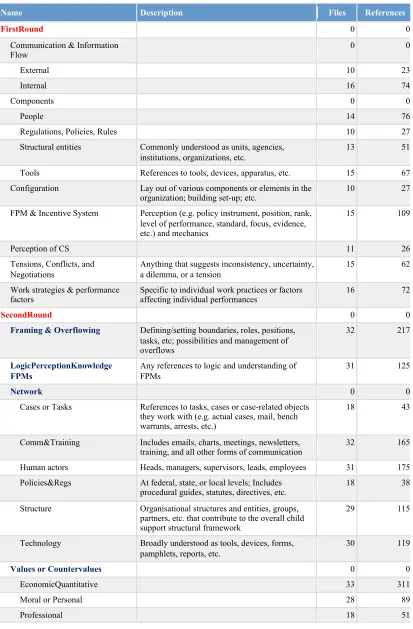
Table 4-4 Coding scheme ... 71
6
1
Introduction
This thesis explores the performative effects of measures and incentives in the U.S. Child Support Enforcement Program (CSEP). It uses the performativity concept of Callon (1998a, 2007, 2009), while drawing insights from the literature on valuation (Boltanski & Thévenot, 2006; Dussauge, Helgesson & Lee, 2015b; Dussauge,
Helgesson & Lee, 2015a; Kornberger, Justesen, Madsen, et al., 2015) and the sociology of quantification (Espeland & Lom, 2015; Espeland & Sauder, 2007; Espeland & Stevens, 1998, 2008; Fourcade, 2016), to examine how measures, rather than simply capturing an organization’s performance, intervene in the construction and valuation of the ‘good performance’ they seek to measure. Using an
actor-network inspired approach (Latour, 1996, 1999a, 2005) to the investigation, the study focuses on a particular case – District Attorney Family Support Division (DAFS), a local child support agency in the state of Nevada – to explore the processes and mechanisms by which measures (and the incentives tied to them) intervene. It demonstrates how measures, through their connections with actors and their devices, transform behaviors, practices, and identities that shape, organize, and make possible the enactment of ‘good performance’. The study is also empirically sensitive to the materiality, relationality, and heterogeneity (Law & Singleton, 2013) of the
‘constructed reality’ to unravel their implications for the kind of world the study wishes its readers to consider.
The extant literature on performance measurement systems in the public sector is abundant and diverse. Several studies tend to focus on their design, impact, or implementation (e.g. Oh & Bush, 2015; Holzer & Yang, 2015; Speklé & Verbeeten, 2014; Stecher, et al., 2010; Heinrich & Marschke, 2010), and also on the challenges associated with their deployment (Oh & Bush, 2015; Lewis, 2015; Dubnick &
7 what is out there or as an external force that naturally improves (or worsens)
performance. It does not regard measures as a pre-set frame that commands its force. Rather, it is an entity that is practically connected to a network of actors and devices (or what Callon (1998a, 2007, 2009) calls agencement), organizing a particular form of performance. This research, therefore, seeks to investigate how measures (and those connected to them) shape practices and what renders an organization, such as a child support agency, a ‘good (or bad) performing agency’. Thus, it is interested in exploring the relationships that develop between the measures and the performance they intend to measure to capture the performative dimension of the former.
Guided by the methodological underpinnings of actor-network theory (Latour, 2005), the performance measures’ intervention can be captured by tracing the network of relations emerging as a result of a negotiated, heavily invested, and contested process seeking to define, enact, and make visible and valuable the ‘good performance’ that can and must be measured. The study, therefore, explores the network of relations involving human and nonhuman actors, or actants (Latour, 1996, 2005), that are linked to each other through framing (Callon, 1998a) in order to act in a particular way. Using interviews, observations, and artifacts to follow the actors and the traces they leave behind, the study provides a rich account of theirconnections that explain the construction and valuation of ‘good performance’. Actants’
connections to each other, however, are not exclusive due to other interests or concerns connecting them to other networks of relations. This potentially causes disruptions or misfires (Callon, 2010) in their collective action, leading to
renegotiations and further framing of their constructed reality. Thus, relations are never completely settled or established. Instead, actors and devices are constantly readjusting, rearranging, and reconfiguring their connections to manage the resistance from the ‘outside’ world and keep their ‘socially constructed good performance’ real
8 For decades, the use of performance measurement and management as a mechanism for promoting accountability and productivity in government abound. Particularly in the 1980s and 1990s, the use of measures linked to incentives became prevalent in several public sector services (Parker & Gould, 1999; Stecher, Camm, Damberg, et al., 2010). The CSEP is no exception. Since the program’s establishment in 1975, the federal government introduced a performance-based incentive system to encourage states to collect child support payments from noncustodial parents of welfare cases as a cost-recovery measure (Solomon-Fears, 2016). While the program has evolved in many ways (OCSE, 2016a), its performance measures and incentive system continue to be its driving force. From 1998 until today, the 50 states and four U.S. territories primarily responsible for administering the program are evaluated yearly on five performance indicators and financially rewarded (or penalized) for their performance. For years, the State of Nevada was among the poorest performing states in the nation. Year after year, DAFS, the local agency driving Nevada’s performance, performed poorly in the five performance indicators (MAXIMUS, 2006). But in 2009, it began to see some improvements and eventually became one of the most
outstanding child support agencies in the nation. This case, therefore, offers a powerful and interesting site for exploring the measures’ intervention in the transformation of DAFS into a ‘good performing agency’.
My chosen site for the investigation, while interesting for its radical transformation, is a familiar setting. Having worked at DAFS as a management analyst and member of the management team from 2007 to 2012, I was deeply immersed in the federal performance measures. I frequently referred to them to make sense of our performance goals and strategies for organizational improvement. This familiarity with the site and performance-based incentive system, however, triggered some questions that caused me to wonder how measures and incentives influence, control, or even persuade people to act and think the way they do. During the five years I worked at the agency, which in public service terms is considered a relatively short period, I had the chance to witness DAFS’ early transformation and get a glimpse of the dynamic and competitive spirit that surrounded the agency as
9 well as improvements in their performance scores. While my previous affiliation with the agency enabled me to access the site with ease, I was particularly conscious of how this link might influence my exploration, analysis, and writing. Hence,
maintaining a reflexive approach (Alvesson, Hardy & Harley, 2008; Hibbert, Sillince, Diefenbach, et al., 2014) was paramount to the conduct of my research and
participation in the re-construction and re-presentation of the social reality under investigation.
The empirical analysis of my research shows that measures are deeply bound up with framing processes and mechanisms of organization, articulation, production, and validation. These layers of framing create the conditions for DAFS’ ‘good performance’ to exist. They reveal how measures intervene in framing and reframing the ‘good’, and who and what changes to produce it. They give shape and format to DAFS’ agencement (Callon, 1998a, 2007, 2009) so it can establish, generate, and measure its ‘good performance’. But, as the analysis also shows, the construction and valuation of the ‘good’ is never stable. Actors and devices performing the ‘good’ provide a convenient opening to a world of uncertainties, triggering a renegotiation of what counts as ‘good’ and the production of multiple versions of ‘good’. But when other potential ‘goods’ are ignored, conflicts and tensions arise, thus revealing the political struggles that the measures’ intervention provokes. The term ‘good’, therefore, is deliberately used throughout this work to emphasize the elasticity and elusiveness of the term.
10 the politics of competing ‘goods’. Finally, the study makes a contribution to the performance measurement and management literature more generally as it puts one of the most complex, yet ‘effective’ and steadily improving, federal programs (see Doar, Smith & Dinan, 2013; OCSE, 2018a; Solomon-Fears, 2016) to the test to demonstrate how ‘good performance’ is the relational effect (Law, 2004), not just of measures, incentives, or good leadership, but of the constant framing and reframing of humans and nonhumans (Callon, 1999) that collectively act and produce it.
The thesis is presented as follows. In the next chapter (Chapter 2), I begin by providing some background on the U.S. Child Support Enforcement Program and its legislative history, followed by a description of the program’s performance-based incentive system. I then introduce the case (i.e. DAFS) and provide some contextual background to put its transformation in perspective. I provide some details about their organizational structure and services and an overview of the changes in their
performance scores in the five measures. Chapter 3 presents the theoretical framework for the investigation. It begins with a brief discussion on the continuing debate
surrounding the effectiveness of performance measurement and management systems, the elusiveness of measures, and the performance-accountability relationship. I then present the lens through which my investigation intends to proceed. I discuss the key elements of the performativity thesis of Callon (1998c, 2007, 2009) and draw on some valuable insights offered by the valuation studies and sociology of quantification to develop the framework for the research and analysis. I end the chapter with the research questions. In Chapter 4, I discuss my methodology for the investigation by first making explicit the philosophical perspectives guiding this social inquiry. As I consider the construction of social realities in the Latourian sense (Latour, 1996, 2005), where the material participates in the construction, I then describe the actor-network theory (ANT) as the practical and reasonable methodological approach for the investigation. As ANT recommends following the actors and the traces they leave behind, I discuss the planning and preparation required to access them. I then
describe my data sources, as well as the methods used for data collection. Given that my data collection was conducted in two phases, I describe each phase to capture the network-tracing activities involved. I end the chapter with a discussion on my
11 The next three chapters (5, 6, and 7) focus on the presentation and analysis of the data. They are rich descriptions of the various entities (humans and nonhumans), processes, and mechanisms involved in the construction of ‘good performance’. They highlight the developing relations, framing and reframing efforts, transformations, and political struggles emerging from the construction and valuation of the ‘good’.
Chapter 8 presents the key findings from this network-tracing. It suggests that the measures’ intervention in the construction of ‘good performance’ involves the
constant shifting of a network of relations and re-articulation of the ‘good’ that counts – a process that does not seem to settle. It points to a pragmatic construction of
12
2
Setting
This chapter introduces the U.S. Child Support Enforcement Program (from hereon, CSEP). It provides the context for the study’s empirical site, the Clark County District Attorney’s Office, Family Support Division. The first section begins with a general description of the program, followed by a brief historical overview. It then highlights some of the key legislative changes that significantly shaped the program’s direction and describes the organizational and operational framework of the program. The section ends with a broad description of the mechanics underlying the
performance-based incentive system.
The next section describes the study’s empirical site. It begins with a brief description of the area and the local child support agency responsible for providing child support services to the residents of the county. It then describes the agency’s organizational structure and provides a general account of its performance in the five measures.
2.1 The U.S. Child Support Enforcement Program
The CSEP is a federal program focused on obtaining from absent or
noncustodial parents their share of financial support for their children. It was created in response to the nation’s increasing number of divorced and non-marital births, and its impact on government spending and welfare assistance (Garfinkel, McLanahan, Meyer, et al., 1998). The surge in the number of children born out of wedlock between the 1960s and 1990s resulted in a rise in single-parent families living below the poverty line and the expansion of the welfare system (Huang, Garfinkel & Waldfogel, 2000; Garfinkel, et al., 1998). Congress, therefore, through the
establishment of the CSEP, authorized the funding of state child support offices to help with locating absent parents and making them financially responsible for their children’s needs. This, as Garfinkel, McLanahan, Meyer, & Seltzer (1998) suggest, ‘may be seen as an attempt to privatise the cost of children and to shift some of the burden from the state and from mothers onto the shoulders of fathers’ (p. 3).
13
Children (also known as AFDC), with the hope of reducing and recovering welfare cost. The cost-recovery is accomplished by allowing the government to retain the child support collected from noncustodial parents as reimbursement for providing public assistance to their children through AFDC. Therefore, as a condition for receiving welfare assistance from the government, custodial parents are required by law to assign their rights to the child support payments collected by the state back to the state. As child support becomes a reliable source of income, families would then be expected to keep off welfare, thus reducing government spending (Doar, et al., 2013; Solomon-Fears, 2013b, a; Government Accountability Office, 2011; Barnow, Dall, Nowak, et al., 2000; Huang, et al., 2000; Keiser & Meier, 1996; Morgan, 2000). With the growing demand for improving the economic conditions of women who make up the majority of custodial parents, the 1984 legislative amendments required states to extend their services to non-welfare recipients in order to avoid a growing population of families who may have to resort to public assistance later on (Keiser & Meier, 1996; England, 1983). To ensure that states administer the program efficiently and effectively, a performance-based incentive system was eventually introduced.
2.1.1 A brief historical overview
CSEP is among the U.S. federal programs with a long history of performance measures and incentive system. The Office of Child Support Enforcement (OCSE) of the U.S. Department of Health and Human Services (HHS), the federal agency overseeing the program, provides federal funding and technical assistance to help states, in partnership with local governments, deliver child support services efficiently and effectively. Since its inception in 1975, OCSE provides financial incentives to encourage states to collect child support payments as a way of recovering welfare costs and promote self-sufficiency (Solomon-Fears, 2013a; Doar, et al., 2013). These market principles guiding the program, however, had to be negotiated as competing values were brought to bear through legislative debates and rulings (see Solomon-Fears, 2016) and as proponents of such principles establish what they consider to be good governance. Though lengthy, the 1972 quote from Senator Russell B. Long, then chairman of the Senate Finance Committee, provides a good illustration of the
14
Should our welfare system be made to support the children whose father cavalierly abandons them—or chooses not to marry the mother in the first place? Is it fair to ask the American taxpayer—who works hard to support his own family and to carry his own burden—to carry the burden of the deserting father as well? Perhaps we cannot stop the father from abandoning his children, but we can certainly improve the system by obtaining child support from him and thereby place the burden of caring for his children on his own shoulders where it belongs…
… I plan to insist that the deserting or runaway father assumes his parental responsibility and support to his family so that the children will not be dependent upon Government. We must put a stop to this
ridiculous situation by which almost any man can leave his children and avoid supporting them or even worrying about them because he knows that the taxpayers under our system will support them regardless of his conduct. (Congressional Record, 1972: 8291)
As key sponsor of the Social Services Amendments of 1974, Senator Long’s report to Congress also appeals to experts’ (e.g. Rand Corporation) research to demonstrate the need for a ‘more aggressive administration’ of child support enforcement through the use of incentives (Committee on Finance, 1974: 43-46). Despite President Ford’s signing of the associated bill, he expressed his misgivings because ‘certain provisions of this legislation go too far by injecting the Federal Government into domestic relations’ (Ford, 1974).
Through the years, President Ford’s concerns seemed to have been muted by the overarching demand for program effectiveness and accountability backed by testimonies from research groups and consulting firms (Committee on Government Reform and Oversight, 1995). As discursively articulated through established political processes, members of Congress and expert advisers argued that government’s
15 Government Reform and Oversight, 1995; Kettl, 1996). Although earlier attempts to promote business concepts in government existed, it was not until the passing of the Government Performance and Results Act (GPRA) that conditions became conducive for these concepts to settle in (Groszyk, 1995).
OCSE’s participation in the GPRA pilot program in 1994 facilitated CSEP’s transition to a performance management-based program (General Accounting Office, 1996). With the passing of the Welfare Reform Act of 1996, Congress required HHS to propose a cost-neutral, performance-based incentive system. HHS, together with their state partners, developed and presented to Congress this new system, which became law under the Child Support Performance and Incentive Act (CSPIA) of 1998. With little effort, strategic planning, performance measures, and progress reporting carried a resounding force into the child support arena. And for two decades now, CSEP’s performance-based incentive system continues to thrive.
2.1.2 Legislative changes
The CSEP, for a total of twenty-two years1_ between 1975 and 2010, saw several legislative changes. Three of those years introduced major child support provisions and are worth mentioning. The 1984 legislative changes were closely tied to the Economic Equity Act2_, a bipartisan effort aimed at promoting women’s economic conditions (Keiser & Meier, 1996). During that time, an estimated 90 percent of noncustodial parents with a court support order failed to make all the payments, and between 25 and 33 percent never made a payment (England, 1983). Hence, some of the key changes to the program included the requirement of states to pass laws that would improve the application of enforcement mechanisms (e.g. income withholding, tax intercepts, liens against properties, drivers’ license
suspension, etc.), extend services to non-AFDC families, and formulate guidelines for determining the appropriate child support amounts (H.R. 4325 - 98th Congress, 1984). These changes sought to promote greater uniformity in enforcement practices among states and equal treatment of families (i.e. AFDC and non-AFDC) needing
1 Child support legislative changes were introduced in the following years: 1976, 1977, 1978, 1980,
1981, 1982, 1984, 1986, 1987, 1988, 1989, 1990, 1992, 1993, 1994, 1995, 1996, 1997, 1998, 1999, 2006, and 2009.
2 The Economic Equity Act was introduced in the House (H.R.2090; 1983) and in the Senate (S.888;
16 support (Horowitz, Dodson & Haynes, 1985).
The 1988 (H.R. 1720 - 100th Congress, 1988) changes re-emphasized the need to minimize welfare cost through an effective enforcement program and the obligation of parents to work and support their children. It provided a clear mandate for judges and other officials to use the guidelines provided by their state for determining child support obligation amounts. It also required HHS to collect and maintain state-level statistics for reporting purposes.
By 1996, legislation introduced major reforms under the Personal
Responsibility and Work Opportunity Reconciliation Act (PRWORA), also known as the Welfare Reform Act. With the passing of PRWORA, Congress required
considerable administrative and operational improvements at the state level. It strengthened cooperation among states for the expanded enforcement of support orders and better monitoring of noncustodial parents across state lines. It also altered the audit process and demanded significant data, computing, and reporting
requirements from HHS, government agencies (e.g. motor vehicle, law enforcement), and other sectors (e.g. employers, labor organizations, financial institutions). A major change introduced in this legislative amendment was the requirement imposed on HHS to develop a new cost-neutral performance-based incentive system, which was established under the CSPIA of 1998 (Committee on Ways and Means, 2012) and continues to be the system in place. Despite the variety of tools available to states, the enforcement of child support continued to be a challenge (Henry, 1999). By the turn of the century, the CSEP has evolved into a major enterprise with financial, technical, organizational, and legal machineries to maintain the balance between securing the financial well-being of children and families and controlling government spending.
The legislative components of the CSEP, clearly, had played an extensive role in framing the program goals and objectives, roles and identities of stakeholders, activities, and other components necessary to ensure a successful program. It provided not only the rules of the game, but also the framework for making each state
17
2.1.3 Organizational framework
Under the OCSE’s guidance, the CSEP is administered and/or supervised by the 50 states and four U.S. territories (Washington D.C., Guam, Puerto Rico, and Virgin Islands). The program’s organizational structure gives states some autonomy and flexibility in their program management and operations, allowing them to define the rules and regulations for the administration of the program within their own jurisdiction (Horowitz, et al., 1985). As the organization overseeing the program, OCSE performs monitoring and regulatory duties. Its responsibilities include sharing the states’ administrative costs (currently at 66%), establishing standards for the operation of the program, auditing program performance, providing regulatory oversight, and offering technical assistance and other services (e.g. provide last known address of the absent parent or secure assistance from the Internal Revenue Service) to support the work of each state (Committee on Ways and Means, 2012; Solomon-Fears, 2013b). Although the federal government provides the general statutory requirements for program operation, each state passes its own laws and defines how these requirements ought to be implemented with specific policies and procedures at a practical level. Understandably, given the variations in political processes, bureaucratic norms and values, knowledge and expertise, and material resources, the policy refinements and bureaucratic discretion across jurisdictions are likely to be broad and potentially inequitable (Keiser & Soss, 1998). Despite the potential differences in state-level laws and regulations, the federal guidelines are presumed to serve as the benchmark for establishing and delivering the same child support services across the nation.
The states, often in partnership with their local governments, are responsible for the administration of the child support services, which include locating
18 personal information of individuals associated with a case. States also have access to directories of new hires with names, addresses, and Social Security numbers of newly hired employees. They are also authorized to link to other databases to facilitate enforcement efforts. Such resources are particularly useful for locating absent parents, establishing paternity, and establishing or modifying child support orders (Solomon-Fears, 2013b).
Within each state, court officials and legal professionals have a huge role to play in the CSEP. Their involvement is central to the business of child support. They settle a child’s legal paternity and a noncustodial parent’s obligation amount and ensure the appropriate enforcement of a child support order. Professional associations and organizations (e.g. American Bar Association and the National Child Support Enforcement Association) provide the legal community with expert advice, training, and continuing education on specific federal and state directives.
2.1.4 CSEP’s Performance measures and incentive system
Since the enactment of CSPIA in 1998, OCSE uses five performance measures3 (from hereon, FPMs) to evaluate states’ delivery of the CSEP. These
measures, according to U.S. federal representatives interviewed for the study, are directly tied to the program’s mission. To manage the implementation of the performance measurement system, OCSE provides general rules and regulations to ensure that all state agencies deliver program services fairly consistently. The provision of guidelines presumes the successful deployment of the measures and, consequently, their calculative and evaluative functions. With an incentive mechanism in place, there is great expectation that those who are subject to this measurement framework would naturally conform to the norms inscribed in the measures. What follows is a brief description of the measures and incentive system.
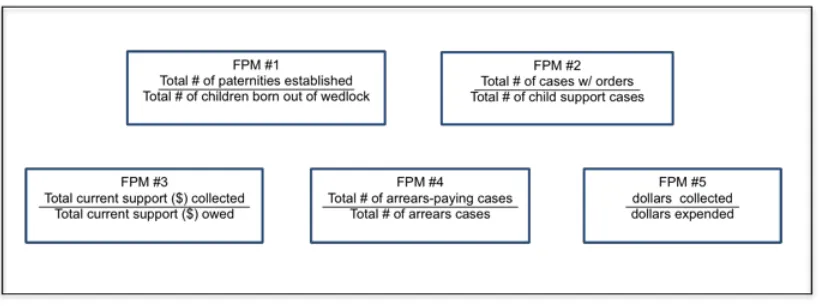
The FPMs render certain program activities valuable and worthy of attention. The weighted measures to calculate a state’s incentive payment further indicate the value given to them. The first measure focuses on the number of children born out of wedlock with paternities established. Once a child’s legal father is established, the CSEP sets the monthly obligation amount that the noncustodial parent (in most cases,
3 For more on the development of CSEP’s performance measurement and management system, see
19 the father) must pay. This accounts for the second measure. The establishment of a court order gives the agency the authority to enforce it using various enforcement strategies. Examples include automatic income withholding, driver’s license
[image:24.595.94.505.395.548.2]suspension, passport denial, asset seizure, and others. The monthly obligation amount reflected in the court order directly impacts the other two measures, both of which are focused on the collection of support. One measure is the rate of current collection expressed in terms of amount of current support collected divided by amount of current support owed; and the other is the rate of arrears payment expressed in terms of number of cases paying towards arrears divided by number of cases with arrears. The former is interested in the dollar amount, while the latter considers the count of arrears-paying cases. The fifth measure, cost-effectiveness, looks at the state’s dollar ratio of collection to expenditures. OCSE reviews states’ performance outputs and results based on data generated by their automated data collection and reporting systems (Solomon-Fears, 2013b). Figure 2-1 provides a summary of the program’s FPMs (see Appendix for more details).
Figure 2-1 Five federal performance measures
20 ‘individual states have to compete with each other for their share of the capped funds’ (Solomon-Fears, 2013a: 5). Another factor is the combined collection and
performance of the other individual states, thus defining a state’s relative share of the incentive funds. Finally, the incentive amounts can only be awarded if the data used to report a state’s performance level are found to be complete and reliable by the Office of Audit. States may incur a penalty if their data are found incomplete and unreliable, or if they fail to meet the required performance levels for three of the five measures that are considered critical to the program. The three measures include: paternity establishment, child support order establishment, and current support collections.
The amount of financial rewards a state can earn is calculated using a formula that puts more weight on child support collections from welfare and former welfare cases. It also takes into account the performance levels and collection amounts of other states. Moreover, three of the five measures (paternity establishment, child support order establishment, and current support collections) are weighted at 100% and subject to a penalty system. Each of the five measures has both upper and lower performance thresholds. States that meet or exceed the upper threshold can earn the maximum possible incentive payment for that measure. However, states performing below the minimum performance level are not entitled to incentive payments unless their scores demonstrate the required performance percentage improvement from the previous FFY. Failure to meet the performance level requirements of the first three measures or the 95% standard of data reliability will incur federal financial penalties that translate to a reduction in a state’s welfare block grant. States can also be penalized if found to be non-compliant with program requirements (Solomon-Fears 2013b; Tapogna, Gardiner et al. 2003; Huang, Edwards et al. 2008).
21 a common metric notwithstanding their unique features, identify the high and low performers, and determine the nation’s collective efficiency so they can report back to Congress.
2.2 The empirical site: DAFS
2.2.1 Location
Clark County, which includes the Las Vegas metropolitan area, is the largest of 17 counties in the State of Nevada and the 14th largest county in the nation, with an
area equivalent to that of New Jersey. It serves approximately 2.25 million citizens (or 70 per cent of the state’s total population) and extends its services to more than 46 million visitors a year. The county is governed by seven elected county
commissioners and administratively supported by a county manager (Clark County). The District Attorney’s (DA) Office is one of 38 departments of the Clark County government. Among its four main divisions is the Family Support Division (from hereon, DAFS), which is the agency responsible for child support enforcement.
DAFS is located in the city of Las Vegas, east of the famous Las Vegas Strip. The main two-story building, visible from a major thoroughfare, has a huge sign that says, ‘Child Support Center of Southern Nevada’. Occupying this building are DAFS personnel and its partner agencies, which include the Clark County Child Support Court and the State Collection and Disbursement Unit (SCADU). The former manages two courtrooms dedicated exclusively for child support cases. The latter is the state agency responsible for receiving and disbursing all child support payments. The rest of DAFS employees (mostly caseworkers) are located in the ground floor of the adjacent building to which customers do not have access. Both buildings have an atrium. All individual offices and modular cubicles or workstations are well furnished and tastefully decorated. Most (if not all) employees have two computer monitors and a printer nearby. All individual offices have their own printers. Conference and training rooms are fully equipped with white boards and audio-visual technologies to support presentations, video or telephone conferencing, webinars, and other
22 All visitors must go through a security check, similar to those found in major airports, before entering the main building. Visitor access is restricted to the main lobby, courtrooms, and mediation rooms (if escorted by a staff member). After passing through the security checkpoint, there is an information counter and a customer ticketing system. Those scheduled to attend a court hearing or meet with their case managers are directed to the courtrooms or mediation rooms. Others are directed to the waiting area before walking up to the counter to speak to one of DAFS’ customer service representatives and must wait until their ticket number is called. Customers making a child support payment are directed to the SCADU counter.
2.2.2 DAFS organization and services
DAFS, through a cooperative agreement with the State of Nevada Department of Health and Human Services, provides child support services to Clark County residents. Their services include locating parents, establishing paternities and child support orders, and enforcing current and arrearage orders. DAFS’ mission, as stated in their website4 and handbook (District Attorney's Office, 2014), is to ‘improve the lives of families by engaging and empowering parents in providing continuous support for their children’. Its vision statement, also noted in the handbook, is to ‘Be The National Leader in Providing Superior Child Support Services’. These statements are prominently displayed on the walls (see Appendix) throughout the two buildings.
DAFS has approximately 300 employees, organized into 13 units or
departments and teams (from hereon, units), under the leadership of a Director and supported by an Assistant Director5. The units include: Administration, Audit, Court
Team, Customer Service, Enforcement, Establishment, Information (which includes the Mailroom), Intake, Investigations, Legal, Locate, Quality Control, and Social Work Team. DAFS’ management team is composed of the Director, Assistant
Director, all unit heads, and the management analyst. The Director presides over their weekly Monday meetings. Unit heads of the Operations group6 hold two additional
4 For more details, see: http://www.clarkcountynv.gov/district-attorney/fs/Pages/default.aspx. 5 Information is based on staffing information gathered during the September 2015 site visit. 6 The Operations group is comprised of the following units: Enforcement, Establishment, Intake,
23 weekly meetings. The first, a recent addition7, is devoted to discussions on operational
matters that they can resolve on their own. Any decision that may require approval is brought up at another weekly meeting, which they refer to as the Operations Meeting led by the Assistant Director. Individual team meetings are also held regularly across the organization. DAFS employees also convene at quarterly All Staff meetings, where ‘performance measures are always addressed’. And on a yearly basis, DAFS employees get together to celebrate social events, including a hotdog day, employee appreciation awards day, Halloween, and other similar activities.
The Operations group constitutes the units directly involved in processing child support cases, with each unit specializing in a particular service (e.g. locating parents, establishing legal paternities, enforcing current support and arrearage orders, etc.). Caseworkers within each unit are responsible for managing a number of cases, also known as a caseload (i.e. cases assigned to them based on an alphabetic
distribution of last names by alpha). A caseload size generally depends on a caseworker’s specialized function. For example, a caseload of an Establishment caseworker is generally smaller than that of an Enforcement caseworker. Once an Establishment caseworker completes the process of establishing an order, the case automatically moves out of the Establishment unit and into the Enforcement unit. The Enforcement caseworker assigned to the case would then manage the enforcement of that support order as long as the child is entitled to that support. Hence, the case remains in the Enforcement unit, unless it needs to be closed or requires a modification (after which it would then go back to the Enforcement unit).
Caseworkers depend heavily on the Legal Team, Customer Service, Investigations, and other units at various stages of their case processing.
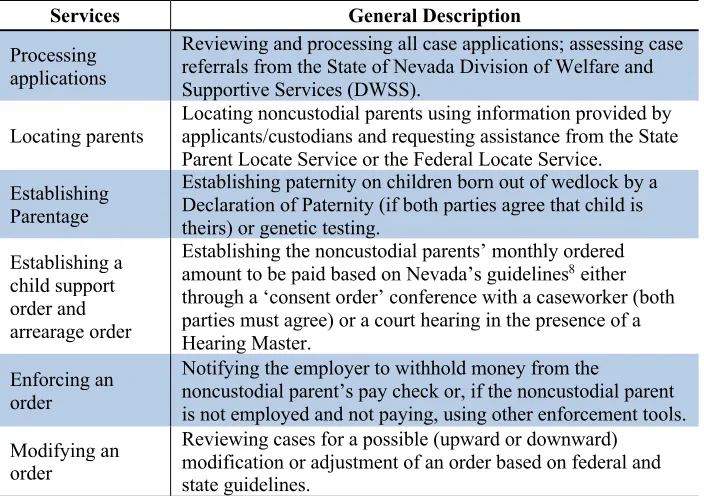
While each unit is focused on a specific function, there is an expectation of the movement of cases from one unit to the next and dependency between units. Table 2-1 provides a summary of the services offered by DAFS:
24
Services General Description
Processing applications
Reviewing and processing all case applications; assessing case referrals from the State of Nevada Division of Welfare and Supportive Services (DWSS).
Locating parents Locating noncustodial parents using information provided by applicants/custodians and requesting assistance from the State Parent Locate Service or the Federal Locate Service.
Establishing Parentage
Establishing paternity on children born out of wedlock by a Declaration of Paternity (if both parties agree that child is theirs) or genetic testing.
Establishing a child support order and arrearage order
Establishing the noncustodial parents’ monthly ordered amount to be paid based on Nevada’s guidelines8 either
through a ‘consent order’ conference with a caseworker (both parties must agree) or a court hearing in the presence of a Hearing Master.
Enforcing an order
Notifying the employer to withhold money from the
noncustodial parent’s pay check or, if the noncustodial parent is not employed and not paying, using other enforcement tools. Modifying an
order
[image:29.595.123.475.72.320.2]Reviewing cases for a possible (upward or downward) modification or adjustment of an order based on federal and state guidelines.
Table 2-1 Summary of DAFS child support services9
2.2.3 Technology
A key component in case processing is the state’s case management system, known as the Nevada Operations of Multi-Automated Data Systems (NOMADS). The majority of DAFS employees regularly log into the system to record case information and activities according to a standard of practice defined by state policies and
procedures. As the federally certified system (OCSE, 2018b), it is considered the state’s official data source for program performance evaluation. The system is used to store all case records and case processing activities, which are then reported to the federal government for the calculation of the state’s performance percentages in each of the FPMs and incentive payments and penalties.
The development of NOMADS began in the early 1990s. According to the State Director, it took almost ten years to build NOMADS. Before it was completed, the state met a huge stumbling block when government introduced new policies under the Welfare Reform Act of 1996 and implemented the federal performance measures and incentive system. This meant that the state had to make adjustments to the system.
8 Nevada uses the Percentage of Income model to calculate the obligation for support. See also NRS
125B.070 for details: https://www.leg.state.nv.us/NRS/NRS-125B.html#NRS125BSec070 (Access date, 3 July 2018).
9 Source: District Attorney's Office, Family Support Division, 2014. The C.A.R.E. Handbook: Children
25 Consequently, they exceeded their budget, were behind schedule, and almost lost the continued financial support from the federal government, leaving a bad memory in the state legislature.
NOMADS was designed to support the management of both child support (commonly known as IV-D) and public assistance (commonly known as IV-A) cases However, the idea of building a comprehensive automated system that shared
information between two programs with different business operations and agendas created problems for caseworkers. As noted in a 2006 audit report on the state’s child support program commissioned by the legislature, ‘[t]he issue of data ownership needs to be re-visited, primarily due to the significant negative impact that [Public Assistance] data has on the IV-D side’ (Section D, pg. 82). The report describes the system as ‘fractured’ (MAXIMUS, 2006: Section D, 75) and makes a
recommendation for its replacement. In an interview with one of DAFS’ managers, NOMADS was described in this way:
…there’s over 400 screens that a case manager needs to know and understand in order to do case management for child support. The problem is that not only do you need to know those 400 screens, you need to know how to
navigate through them, and you need to know all the codes that are associated with the values that go into the fields on those screens… [it] does not support multiple layers of supervision, does not support a lot of the different things that we need to do just to manage the volume of cases that we have here. (Andy, InterviewManager)
Based on a more recent assessment of NOMADS (Policy Studies Inc., 2011) by another consulting firm, it is clear that DAFS for years had been managing their cases with very little technological support from the state system. Most of the
deficiencies noted in the assessment confirm what has previously been reported by the 2006 audit report. Some of the issues raised include the system’s poor user interface, deficient reporting and workflow management capabilities, and lack of mechanism to prevent or minimize incorrect data entries. Indeed, as the report concluded, ‘[n]early every element of the current system was found to be in need of some form of
26 must have been perpetually challenged without a reasonably functional system to support their delivery of child support services.
2.2.4 DAFS’ performance: an overview
As the largest jurisdiction in the state, DAFS manages the majority of
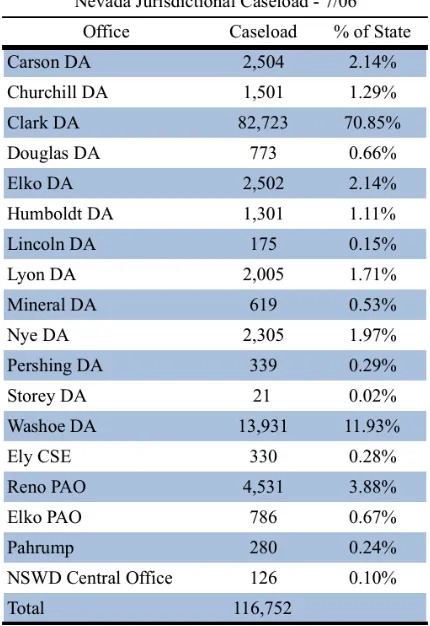
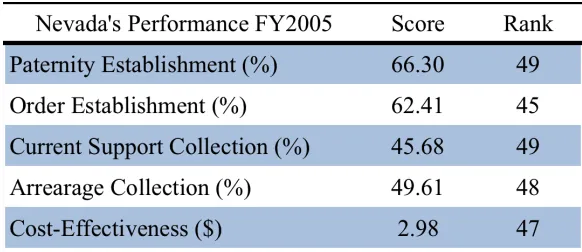
Nevada’s child support cases and practically drives the state’s overall performance. In 2006, DAFS’ caseload constituted 71 per cent of the state’s total caseload (see Table 2-2). Nevada’s performance scores at that time (based on FFY 2005, which runs from October 2004 to September 2005) were among the lowest in the nation, putting the state close to the bottom of state ranking10 (see Table 2-3). Given Nevada’s
historically poor performance in the five measures, the state legislature commissioned a third-party audit of the state’s child support program. The audit report, which
[image:31.595.190.405.379.692.2]offered several recommendations for improvement, provides useful insights on DAFS’ state of affairs back then and puts this study in perspective.
Table 2-2 Nevada caseload distribution by office, MAXIMUS (2006)
10 Nevada’s ranking in the four measures puts the state in the bottom 6 of the 50 state programs in the
27
Table 2-3 Nevada's performance scores and rank for FY05, MAXIMUS (2006)
Until the site visit in 2015, DAFS was headed by an Assistant District Attorney (ADA) and supported by an Assistant Director. In 2008, a new ADA took over as head of the agency. Soon thereafter, a new Assistant Director was hired. In 2009, DAFS began to see some improvements in its performance scores, but the state remained at the bottom of state ranking. By 2013, DAFS received the ‘Most Improved Program Award’ from the National Child Support Enforcement Association
(NCSEA)11. In October 2015, DAFS’ share of the state’s total caseload dropped
significantly to 56 per cent12 and performance scores dramatically improved, making
DAFS the ‘Most Outstanding Program’ (Clark County District Attorney, 2016). This brought the state ranking from 54th to 23rd in the nation13. Based on OCSE’s
preliminary performance reports for FFY 2017, Nevada has further climbed up the ranks to 13th in the nation (Clark County District Attorney, 2018). Given DAFS’ (and
the state’s) remarkable improvement in performance, it is a case no doubt worth exploring.
11 Clark County District Attorney. (2013) DA Family Support Division Receives Award [Online]. Las
Vegas, NV: Clark County Local Government. Available: http://www.clarkcountynv.gov/district-attorney/announcements/Pages/DAFamilySupportDivisionReceives2013MostImprovedProgramAward. aspx [Accessed 2 Feb 2017].
12 Nevada Department of Health and Human Services, DWSS,. State of Nevada Caseload by Office,
For Month Ending: October, 2015 [Online]. Available:
https://dwss.nv.gov/uploadedFiles/dwssnvgov/content/Support/Caseload_Statistics/CS_Caseload-2015-10.pdf [Accessed June 28 2018].
28
3
Theoretical Framework
3.1 The problem: measuring performance in government
Performance measurement and management (PMM) in the U.S. first made its way in the public sector at the beginning of the 1900s (Williams, 2003), resurfaced in the 1960s, and became an important mechanism of governance in the 1980s and 90s (Dubnick & Frederickson, 2011; Stecher, et al., 2010). According to Williams (2003), the earliest known ‘sustained’ performance measurement practices could be traced back to the New York Bureau of Municipal Research (p. 644). The bureau, founded in 1907 by men who were considered experts in social statistics, accounting, and
scientific management, promoted the principles of accountability and productivity in the executive branch of government. They introduced the systematic collection of data through the use of accounting techniques for monitoring, reporting, and budgeting of government work. Thus, as the author noted, ‘precise measurement replaced vague impressions to inform decision making and to verify claims of performance’ (Williams, 2003: 645).
A series of government reforms followed these initial efforts of the bureaus (Stecher, et al., 2010). These reforms were geared towards improving efficiency and performance through the adaptation of industrial engineering and scientific methods in public management. By the middle of the century, the U.S. government began introducing program evaluations using logic modeling as a policy analysis tool to assess systematically an entire program’s resources against its activities, outputs, outcomes, and impacts (Stecher, et al., 2010). Eventually, the use of performance measures linked to incentive mechanisms to improve services became widespread across several public service sectors particularly during the 1980s and 1990s (Parker & Gould, 1999; Stecher, et al., 2010). Similar efforts associated with performance measurement and performance budgeting occurred in other parts of the world,
including the U.K. and, more notably and aggressively, in Australia and New Zealand (Stecher, et al., 2010).
29 have examined the issue conceptually from a design or policy perspective (e.g. Oh & Bush, 2015; Heinrich & Marschke, 2010; Propper & Wilson, 2003) or quantitatively using economic or behavioral theories to investigate the impact of measures on the organization’s performance (e.g. Speklé & Verbeeten, 2014; Courty & Marschke, 2008; Barnow, 2000). While results are varied (Stecher, et al., 2010), scholars (Oh & Bush, 2015; Dubnick & Frederickson, 2011; Heinrich & Marschke, 2010; Lewis, 2015) have acknowledged the challenges involved in implementing a PMM system due to competing interests of stakeholders, diversity of principals, a variety of measurement perspectives or orientations (i.e. inputs, outputs, results, or outcomes), values (e.g. efficiency, resource allocations, or equity), and the contextual complexity in which they operate. Whether exploring the appropriate approaches to measuring what is ‘out there’ or the challenges associated with establishing an effective performance measurement system (Van Ryzin, 2004; Hyndman & Eden, 2000; Stecher, et al., 2010; Holzer & Kloby, 2005), the underlying assumptions seem to suggest that a measurement system, if designed and implemented well, can provide reliable information to guide management decision-making, improve public
organizational performance, or inform policy formulations (Oh & Bush, 2015; Speklé & Verbeeten, 2014; Heinrich & Marschke, 2010). Yet despite the rise of numerous performance measurement systems in government, the debate continues (Dubnick & Frederickson, 2011; Martin, Downe, Grace, et al., 2013), suggesting the elusive character of measures, the unstable phenomena they intend to capture, or the nebulous performance-accountability relationship they purport to sustain. Indeed, there appears to be a lack of agreement as to what accountability really is, what constitutes
performance, or who should be held accountable (Stecher, et al., 2010; Dubnick, 2005). Moreover, as scholars hypothesized, the lack of evidence supporting the effectiveness of performance-based incentive systems is due to the challenges associated with evaluating such systems in the first place, as well as the political climate and dynamic conditions in which these systems operate (Stecher, et al., 2010). They noted that the poor historical data, changes in measures over time as new
30 Given the dynamic and changing environment in which PMM systems operate and lack of compelling evidence indicating their effectiveness, perhaps the more fundamental question to ask is how measures define, shape, and produce ‘good performance’. By asking this question, we put forward a new way of examining organizational performance using Callon’s (1998b, 2007, 2009) performativity thesis, while drawing on valuation studies (Kornberger, et al., 2015; Dussauge, et al., 2015b; Dussauge, et al., 2015a; Fourcade, 2011a, 2012) and the sociology of quantification (Espeland & Lom, 2015; Espeland & Sauder, 2007; Espeland & Stevens, 1998, 2008; Espeland & Vannebo, 2007), to consider the role of measures in the valuation,
construction, and enactment of ‘good performance’ (from hereon, GP). It demands abandoning the idea that GP is a phenomenon that is objectively measured or valued and invites us to consider it as a result of a negotiated, heavily invested, and
constantly challenged process. Hence, it is through this process that GP acquires its ‘value’ and is made ‘valuable’ (Roscoe & Townley, 2016) so it can be measured, but not without the complexities and uncertainties that require its constant adjustment.
The performativity lens provides a window of opening into how to investigate or examine taken-for-granted ideas or statements in concrete practices. Rather than considering them as outside of or distinct from the phenomenon they describe, we can explore their participation in or engagement with that phenomenon. Performance measures, like theories and scientific statements, can be examined in the same way. As a mechanism for measuring or evaluating performance, measures can be explored as inseparable (Dussauge, Helgesson, Lee, et al., 2015c) from the object of
measurement (i.e. performance). They can be studied as an engine of the valued performance – or what makes performance valuable and measurable. By doing so, we can observe how the valued performance is defined, coordinated, and implemented in practice, instead of simply assuming that measures dispassionately capture the
objectively valued (good) performance. Taking a performativity perspective is to consider performance measures as actively participating in the construction and valuation of good performance so it can be enacted and measured.
31 complexities and uncertainties that managers and support staff had to navigate in
order to respond to and perform what they consider to be ‘good’ and help us
understand the effects these might have on their decisions, actions, and the ‘good’ that they intend to measure. This could then contribute to the extant literature on
performativity and more specifically on the performative construction of organizational values (Gehman, Treviño & Garud, 2013).
The sections that follow discuss in more detail the key concepts that the
performativity literature and valuation studies/sociology of quantification offer for our understanding of the valuation and construction of performance. It begins with a general discussion on Callon’s performativity (Section 3.2.) to establish the idea that theory intervenes in the making of social phenomenon. This is then followed by explanations of two key concepts that are central to his thesis: sociotechnical
agencement (Section 3.2.1.) and framing and overflowing (Section 3.2.2.). It then illustrates broadly how valuation is a performative practice (Section 3.3) through qualification (Section 3.3.1.) and quantification (Section 3.3.2.). The final section (Section 3.4.) presents how these key concepts could provide a framework for examining how measures intervene in the valuation and construction of good performance. It ends with a brief explanation of the research questions.
3.2 Performativity as lens
32 (that is, their connections, links, relationships) gives them the capacity to act or
perform the theory. It is this agencement or the ‘morphology of their relations’ (Callon, 1999: 185-6) that gives the agents and their devices their capacity to act collectively.
Callon’s performativity perspective, inspired by Actor-Network Theory (ANT), can be found in Science, Technology, and Society (STS) studies, economic sociology, sociology of finance, accounting, and organization and management studies (Callon, Millo & Muniesa, 2007; Callon, 1998c, 2007; Mackenzie, 2006; MacKenzie, 2007; Orlikowski, 2007; Pollock & D'Adderio, 2012; D’Adderio & Pollock, 2014; for a review, see Gond, Cabantous, Harding, et al., 2015). In applying the Austinian notion of performative utterance (Austin, 1975), Callon and MacKenzie demonstrate how economic and scientific statements are constitutively participating in the shaping or construction of the social phenomenon they intend to describe. What is interesting about their work is the idea that a statement’s (e.g. theory or model) intervention in the making of a phenomenon (i.e. economic or financial market) produces a sociotechnical agencement that gives the phenomenon its particular shape and form. As a collective, the agencement has the capacity to act or give meaning to action (Callon, 2005). As Callon (2009) elaborates, the ‘signification and
33
3.2.1 Sociotechnical agencement
The idea of performativity, a concept associated with ANT, points to a heterogeneity of actors (both humans and nonhumans), or what Latour (1996) calls
‘actants’, that gather to perform a reality. The use of the term ‘actant’ is to distinguish from the term ‘actor’ often associated with an individual human actor. The term, therefore, extends ‘actor’ to nonhuman and non-individual entities, which through their connections account for the essence of social phenomena. It is the ‘summing up’ (Latour, 1999a: 17) of these actants’ interactions and connectedness that agencements
are formed and ‘endowed with the capacity of acting in different ways depending on their configuration’ (Callon, 2007: 320). In performing the economy, for example, an economic theory or model is only one of the actants that intervenes or performs to make that which the theory seeks to describe. It fulfills both ‘representation and action’ (MacKenzie, Muniesa & Siu, 2007: 2) as it engages with other actants. Callon (2007), referring to the Black and Scholes formula, makes it clear that “it is not the formula itself that can cause that world, a sociotechnical agencement, to exist. Other forces, other interests, are involved” (p. 323). He further claims that the success or failure of a formula is not dependent on people’s belief in it, as the notion of self-fulfilling prophecy (Merton, 1948) tends to suggest. Rather, a formula’s success is dependent on ‘a world’; that is, the social and material elements, as well as the conditions necessary to make the formula act. Without this ‘world’, the formula fails to perform and the world it seeks to describe is not realized. A failed formula suggests that certain conditions were not met, triggering behaviors that compromise or
undermine the integrity of the formula and make it ‘counterperformative’ (MacKenzie, 2007: 76).