warwick.ac.uk/lib-publications
A Thesis Submitted for the Degree of PhD at the University of Warwick
Permanent WRAP URL:
http://wrap.warwick.ac.uk/88724
Copyright and reuse:
This thesis is made available online and is protected by original copyright. Please scroll down to view the document itself.
Please refer to the repository record for this item for information to help you to cite it. Our policy information is available from the repository home page.
by
Zack Evans
Thesis submitted in partial fulfilment of the
requirements for the degree of
Doctor of Philosophy
University of Warwick
Department of Philosophy
List of Illustrations 5
Acknowledgements 6
Declaration 7
Abstract 8
1. Introduction 9
1.1 The Problem 9
1.2 Overview of the Argument 14
2. The Problem of ‘Free Will’ 22
2.1 Introduction 22
2.2 Free Will as a Condition of Moral Responsibility 28
2.2.1 Incompatibilism 29
2.2.2 Compatibilism and Revisionism 33 2.3 Moving Beyond ‘Free Will’ 40 2.3.1 Objections to my view 41 2.3.2 Fischer and Semicompatibilism 46
2.4 Conclusion 59
3. Control and Sourcehood 62
3.1 Introduction 62
3.2 Sourcehood and Agent Causation 65
3.3 Source Incompatibilism 75
3.5 Agent Causation 102
3.6 Conclusion 116
4. Folk Psychology and Agency 120
4.1 Introduction 120
4.2 Agency Incompatibilism 127 4.2.1 The folk theory of mind and the concept of
agency 129
4.2.2 ‘Settling’ and Agency Incompatibilism 135 4.2.3 Experimental evidence for an incompatibilist
concept of agency 140
4.2.4 Intuitions about the concept of agency 148 4.3 The Evidentiary Role of Folk Psychology and
Intuition 158
4.3.1 Debunking 159
4.3.2 The relation between cognitive science and
metaphysics 169
4.4 Conclusion 179
5. Intentional Realism 181
5.1 Introduction 181
5.2 The Agency Concept 184
5.3 Challenges to Intentional Realism 198
5.3.1 Eliminativism 201
5.3.2 Instrumentalism 206
5.5 Conclusion 239
6. Consciousness in Action 241
6.1 Introduction 241
6.2 Intervening on Beliefs 245 6.3 Conscious Perceptual Experience and ‘Zombie Action’ 250
6.3.1 Perceptual demonstratives and the ‘two
streams’ view 255
6.3.2 Embodied demonstratives 271 6.4 Disputing the Evidence for Zombie Action 277
7. Conclusion 289
7.1 The Problem Reconsidered 289 7.2 Causal Integration as Central to Agency 291
List of Illustrations
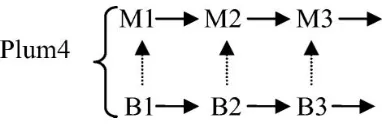
Figure 3.1: ‘Plum in Normal Deterministic World’ 93
Figure 3.2: ‘Plum Subject to Manipulation’ 93
Acknowledgements
It is impossible to identify, let alone acknowledge the individual contribution of, all of the casually relevant factors that influenced this thesis. Christoph Hoerl was my thesis advisor and one such causally relevant factor. No doubt there are numerous philosophical interlocutors, living or otherwise, whose influence can be seen in the present work.
Acknowledgement should be given to them — it may be more obvious to the reader than the author whom exactly they are. As the joke goes, any mistakes or particularly egregious errors in the following work should of course be attributed to them, and I trust that the reader can find enough information to track them down and hold them accountable.
Personal thanks should be given to my wife, for being supportive of me while I have been engaged in the quite peculiar labour of writing a Ph.D thesis in philosophy. And acknowledgement must also go to my daughter — for simply being. Personal and genetic thanks go to my parents for obvious reasons.
Finally, no ‘determinist-friendly’ work like this would be complete without acknowledging the contribution that is due to the causal summation of the entire history of the universe. (Just in case.)
Declaration
Abstract
There are two central arguments in this project. The first is a kind of ‘second-order’ argument, that is, an argument about the dialectical situation of an existing argument (namely, about the ‘free will problem’). The second is a straightforward argument about agency, but one which can be better addressed—I claim—once the second-order argument has been made.
The ‘free will problem’ is widely claimed to be one of the perennial philosophical problems. But it is not one that has any widely accepted solution. The reason for this, as others have acknowledged, is due in large part to the wide range of problems that have historically been considered under the rubric of ‘the free will problem’.
My proposal is straightforward: stop talking about ‘free will’ altogether! More precisely, my claim is that we could—in principle— eliminate the term. However, it may be more difficult in practise to actually cease using the term, and so my prescription is to define the term operationally, as a philosophers’ technical term. As I will go on to explain, ‘free will’ means something like: ‘whatever it is, if anything, in virtue of which people are appropriate subjects of moral responsibility’.
Introduction
1.1 The Problem
There are two central arguments in this project. The first of these can best be thought of as a ‘second-order’ argument: it is an argument about the dialectical state of an existing philosophical argument, or group of arguments — namely, the ‘free will problem’. The second is a straightforward argument about agency. However, part of my claim is that the theory of agency that I am proposing is best addressed once the second-order argument has been made. I will address these in turn.
anything from worries about divine foreknowledge to the philosophical implications of the latest work in neuroscience and neurobiology on ‘free will’.1
In the following chapters, I begin by addressing the current state of the ‘free will debate’. One of the principal arguments I make is that, strictly speaking, it would be possible to eliminate the term ‘free will’ from the philosophical vocabulary, without significant loss of substance. Nearly all of the important, philosophically substantial discussions could carry on without the term: anything that could not be thus continued is likely to be confused, perhaps only a ‘verbal dispute’.2
With that said, I will not make much of the ‘verbal dispute’ claim. It is in any case probable that wholesale elimination of the term ‘free will’ is more trouble than it is worth, for reasons of clarity and convenience. The point of emphasising the theoretical possibility of its elimination is to support my claims about what ‘the free will problem’ is really about. I suggest that, in most cases,
See John Fischer’s (1989) edited volume as an example of the former. As for the 1
latter, there has been philosophical interest—one way or the other—in what brain
science means for ‘human freedom’ almost as long as there has been a science of
the brain. For a recent example, see Tse (2013).
what is really at issue is the nature of moral responsibility — and it is quite possible to recognise this and formulate all of the philosophically important research questions in such terms (i.e. questions about the various conditions or properties that one might think are required for this or that theory of responsibility).
Now, there are two points to clarify here. First, I said it is
mostly the case that moral responsibility is at issue. There are certain areas where this is not true, and these cases are in fact more interesting to me than most of the cases in which it is true. In fact, the main point of this work is to draw attention to precisely those cases. More on this below.
have free will just is talking about whether they are morally responsible agents.
Note that ‘being morally responsible’, in the sense of ‘being an appropriate subject of moral responsibility’, does not automatically mean that such a person is deserving of praise or blame, or anything else. This will depend on whatever specific view of moral responsibility that you hold — something that my argument here is silent on. It simply means that the person has met whatever conditions or requirements that there are on being the kind of subject that is a possible bearer of these ‘responsibility predicates’ (if anything is).
Note further that, even if one thinks that there is no possible theory of responsibility that is adequate—i.e. one is a ‘moral responsibility skeptic’—then my theory accommodates this. In such a case, one is simply a ‘free will skeptic’. On that point, it is worth observing that many of the recent popular-audience books and articles concerned with the ‘science has shown free will to be . . . ‘ theme are actually concerned with the notion of moral responsibility,
and the implications for our notions of responsibility that might be drawn from the emerging science of human behaviour.3
After making the argument above, I do not in fact go on to build a theory of moral responsibility. Far too much has already been written about that topic. What I do instead is take up the question of what does not fit into the characterisation of ‘free will’ just outlined. I suggested that there are some cases where moral responsibility is not the issue, and these are more interesting for me in what follows, partly because they have received comparatively less attention. In such cases, it turns out that agency is the salient issue. This has not previously been recognised, for the most part, because of the structure of the ‘free will debate’, and especially because of its fixation on the notions of determinism and indeterminism.
philosophy of mind and action, and also recognise that issues pertaining to metaphysical determinism are not so relevant, something which goes against the prevailing view of what is important in the free will problem.
1.2 Overview of the Argument
In Chapter 2, I make the ‘second order’ argument in more detail, and claim that we could in principle do without the term ‘free will’ altogether. However, for practical purposes, I suggest we retain the term, but stipulate its meaning in the way already indicated. As well as the practical benefits just mentioned, in this chapter I make the claim that much of the existing literature on ‘free will’ already
uses the term in this way, albeit implicitly.
moral responsibility’. However, my response to this is to suggest that, by contrast, we can see Fischer’s view as a positive
demonstration of the utility of my view, by slightly reframing his discussion of ‘guidance control’ and ‘regulative control’. The putative objection thus turns out to serve as a case study that supports my argument.
The first case concerns the notion of ‘sourcehood’ or ‘authorship’. It is sometimes claimed that we could not be the ‘ultimate source’ of our actions unless we have ‘free will’ of whatever kind is being promoted by that philosopher: Randolph Clarke, for example, notes that by ‘acting freely’ we are ‘the ultimate source of [our] behaviour’ and that the action may be attributable to us as its ‘author’. Traditionally, it has been thought that it is because of ‘free will’ that we are the source or author in this way, and that threats to such sourcehood are threats to free will (and vice versa). Instead, I argue that the best sense we can make of these notions is as central features of agency — albeit with some important revisions. I make this argument in the context of Derk Pereboom’s ‘Four-Case Argument’ against ‘compatibilist free will’.
will’ literature. I conclude with some general remarks about the structure of agency.
In Chapter 4, I turn to consider the notion of ‘agency’ in more detail. Whereas in Chapter 3 I suggest that agency has something to do with ‘causal integration’, here I go on to make that idea more explicit. To begin with, I survey some existing literature to try and get a handle on what the concept of agency, as it stands, actually looks like. I suggest that the concept has been put to a wide range of uses, and thus we need some general constraints on what an acceptable notion of agency (for present purposes) is going to look like, that will enable us to narrow down the possibilities. To that end, I consider Helen Steward’s view of agency as a useful starting point for inquiry.
elsewhere). Thus, making no claims about what Steward would say about my account of this notion, I go on to develop the idea of ‘being a centre of subjectivity’ in my own theory of agency. The upshot of Chapter 4 is that agency involves two central, and interconnected, notions that require further elaboration. These are
intentional realism and phenomenal consciousness. I consider these in the following two chapters.
In Chapter 5, I consider the first of these notions, and unpack the connections between the concept of agency and that of intentional realism. I take the notion of ‘intentional realism’ to be fundamentally a claim about how we should understand human behaviour. It is associated with the ideas of ‘folk psychology’ and the so-called ‘belief-desire psychology’, because of its emphasis on the common sense notions of ‘belief’ and ‘desire’. Jerry Fodor, whose work I will briefly touch on below, has been a vocal supporter of some form of intentional realism.
ineliminably so.” What is important, in this project especially, is 4
that intentional realism is committed to the view that a true account of human behaviour cannot do without intentionality (i.e. the terms of a ‘mature scientific psychology’ must be intentional), and that such intentional states are causally efficacious — i.e. they figure in true causal explanations of human behaviour. Whether or not the specific concepts of ‘belief’ and ‘desire’ themselves figure in the final analysis is of less importance.
I consider two primary challenges to the notion of intentional realism, those of eliminativism and instrumentalism. Although the problem of eliminativism is fairly quickly dispatched, the challenge presented by instrumentalism leads into a deeper discussion of causation and its role in our concept of agency. Thus the discussion of this chapter ends up turning to the interventionist view of causation as offering a way of responding to the instrumentalist — but in a way that centrally involves the contribution of phenomenal consciousness.
In Chapter 6, then, I turn to the notion of phenomenal consciousness and its role in agency. It was suggested in Chapter 5 that it is a condition of intentional realism that there actually are the
right kind of interventions on our mental states, and not simply the theoretical possibility of such interventions. In this chapter I suggest that consciousness actually does function as an intervention in this way, and therefore that phenomenal consciousness becomes an integral part of the notion of agency.
But showing merely that an agent’s intentional states can be affected by consciousness (via conscious perception) is by itself insufficient — it needs to be shown that such states make a difference to behaviour, since otherwise there is an important sense in which such states are epiphenomenal. It is a central requirement of Chapter 6 to defend my view against the challenge of epiphenomenalism.
The Problem of ‘Free Will’
2.1 Introduction
It has been observed that ‘the free will problem’ is really a name for a cluster of related problems or worries. Such problems include 1
certain issues in the philosophy of mind; concerns about physical 2
determinism, reductionism, and mechanism; inquiry about the 3
various ‘reactive attitudes’ that belong to our involvement and participation with others in human relationships; whether agents 4
are ‘truly’ deserving of blame (and praise); and the justification of
As Dennett puts it, ‘the free will problem’ is really a name for several related
1
problems that are “tied together by a name and lots of attendant anxiety” (1981:
286).
In particular, the work that begins with Libet’s work on conscious willing (1985); 2
see also Wegner (2002).
See for example, van Inwagen (1983) or Honderich (1988) for classic statements of 3
the concern with determinism; see Dennett (1973: 157-84) for a discussion of
mechanism — but of course, also see La Mettrie (1996 [1747]).
specifically retributivist punishment (i.e. over and above that needed for rehabilitation).5
In this chapter, I suggest that we need to rethink our use of terms like ‘free will’ and ‘the problem of free will’. As things are now, there is more heat than light in the literature on free will and moral responsibility. I am going to argue that we could eliminate the term ‘free will’ (and its various cognates ) from the literature 6
altogether without significant loss to the substantive philosophical issues. While theoretically possible, however, it may be that wholesale elimination of the term proves impractical or undesirable, for whatever reason: in that case, I suggest that we move forward by stipulating the meaning of the term ‘free will’.
In fact, it is surprising that anyone believes that ‘free will’ is anything other than a philosopher’s term of art at this point: but the
See for example the debate between consequentialist views of justice and desert
5
based views. See (Feldman and Skow 2015) for an overview. Often, the discussion
over whether desert-based views of justice (esp. punishment) are appropriate
depends on one’s view of ‘free will’. Libertarians tend to favour it, compatibilists
don’t. In my view, this difference really turns on one’s theory of MR.
Here and in the remainder of the text, when I write ‘free will’, meaning to refer to 6
the term itself, I mean to include all of the variations such as ‘free action’, ‘free
agent’, ‘free’ and any other ways that the relevant sense of ‘freedom’ is supposed to
proliferation of work concerned with what the ‘folk’ think about the term suggests otherwise. It is supposed that we are constrained by 7
the ‘folk concept’ of free will when working with the term, such that we are in danger of failing to talk about free will at all if we stray too far from that folk conception. Now, there may be some relatively common understanding of the term ‘free will’ among people without higher degrees in philosophy (the ‘folk’?) — although I doubt it. It doesn’t matter, because the terminological prescription I am making here explicitly requires that we use ‘free will’ as a technical term, with the meaning of that term stipulated in the way that I will now go on to explain.
I propose that ‘free will’ be understood along the lines of ‘the conditions necessary for moral responsibility (whatever they are)’. So, for example, when we say that an agent ‘has free will’, what this means (according to my view) is that she has met whatever conditions are necessary for her to be morally responsible for her actions. Acting ‘with free will’ means acting in such a way that those conditions are satisfied, and a ‘free action’ is one that can be appraised morally — i.e. it is an action performed by an agent who, at the time of acting, satisfied the various conditions for moral
responsibility (whatever they are). I do not take a stand here on what those particular conditions might be, although examples from the literature include: having a ‘reasons-responsive mechanism’, the ability to respond to specifically moral reasons, or having an appropriate set of second-order desires.
The utility of defining ‘free will’ in this way will be demonstrated by the clarity that can be brought to various philosophical issues: indeed, as I will argue, most of the important work on free will is already concerned with moral responsibility, in more or less direct ways. Hence, there would be no loss of any substantial issues by simply defining ‘free will’ in this way. The obvious advantage is freedom from the task of staying faithful to a supposed folk usage of the term (what it ‘really means’), and uniformity across the philosophical landscape (i.e. no talking past one another because of a slightly different understanding of the term ‘free will’).
problem’. Hence, the lack of consistency with the term ‘free will’ obscures a distinction that needs to be recognised.
Below, I will survey a range of examples from the literature to support the claim that moral responsibility is already the main driving force in many of the worries about free will. Simply put, if you think that free will matters because the possibility of moral responsibility somehow hangs on the question ‘whether we have free will’, then you’re interested in the conditions necessary for moral responsibility — so it would be preferable to go on with the clear and unambiguous project of determining what those conditions might be, without worrying about whether those conditions are really ‘free will’.
Objection: You’ve got it the wrong way around. Yes, we are interested in the conditions necessary for moral responsibility — but one of those conditions, perhaps the most important one, is that we have free will.
a discussion about whether we in fact have this thing (X) — and, perhaps more importantly, about whether it really is X that grounds moral responsibility, and not Y or Z — without any significant loss of substance. For the sake of retaining the term, however, we can simply stipulate that ‘free will’ is a way of referring to those properties or conditions (X, Y, Z, . . . ), whatever they might be. When we ask, ‘What is free will?’, we are thus asking, ‘What are the conditions necessary for an agent to be morally responsible for her actions?’
The only further objection that could be introduced against my claim here, which I mentioned above, is that I have neglected the question whether X (or Y or Z) is really what ‘free will’ means: whether, for example, ‘X’ is what the folk have in mind when they talk about ‘free will’ or ‘freedom’. But the pressure to remain faithful to the folk usage of the term ‘free will’ is not a substantive metaphysical issue — it is not an issue that has anything to do with moral responsibility itself. It is a basically semantic question.
conditions necessary for agents to be actually morally responsible for their actions (or whether it is even possible to meet such conditions, or whether there even is a consistent set of such conditions to be articulated, etc.). These are substantive metaphysical, and empirical, issues. These are the issues that can continue to be addressed whether we retain the term ‘free will’ to describe them or not.
If the ever growing body of work in experimental philosophy did happen to turn out definitive evidence that there is a clear and precise sense of the term ‘free will’ that is ‘the’ folk meaning of the term, and hence is what the term ‘really means’, even this would not be a significant problem for my project here: I would simply give up the term ‘free will’, and continue with the two substantial metaphysical and empirical projects already discussed — that of articulating the conditions necessary for moral responsibility, and the other, distinct issue that I will shortly discuss.
2.2 Free Will as a Condition of Moral Responsibility
representative examples from the most popular positions that have been taken on ‘the free will problem’, and show how they are concerned with moral responsibility.
Indeed, it is even worth noting that the so-called ‘free will skeptics’ that are popular in the contemporary philosophical and mainstream literature generally turn out to be concerned with skepticism about moral responsibility. The three types of view I consider below cut across the main positions that have been taken on the problem, skepticism notwithstanding. These are
incompatibilism, compatibilism, and revisionism.
2.2.1 Incompatibilism
involve certain ‘agent causal’ metaphysical requirements that he believes we have good evidence against). 8
The connection here between ‘free will’ and the conditions for being a morally responsible agent is explicit. For example, he writes that “the hard incompatibilist disavows freedom of the sort required for moral responsibility”, and that hard incompatibilism “is the view that there is no freedom of the sort required for moral responsibility.” The first paragraph of the book introduces the 9
topic with a discussion of criminal behaviour and raises “the possibility that [such behaviour] may be caused by influences in upbringing or by abnormal features of the brain”, suggesting that this should make us doubt that such agents are morally responsible, before going on to claim that the main hard incompatibilist thesis is that, in some important sense, all our actions are like this. Free 10
will is important, even for those who deny that we have it, because it is required for moral responsibility.
On the ‘optimistic’ side of incompatibilism—the libertarian view, according to which we have free will, and it is incompatible with determinism—Kane points out that it is possible to
Pereboom (2001) is the classic discussion. Also see more recently (2014). 8
Pereboom (2001: xxii, xxiii). 9
understand what the free will problem is by considering moral responsibility: he notes that “Free will in the sense just described is also intimately related to notions of accountability, blameworthiness, and praiseworthiness for actions.”11
Similarly, both van Inwagen and O’Connor apparently define ‘free will’ in terms of a specific ability thesis, namely, the ability to do otherwise than one actually does, for some particular choice or action. (And both philosophers give incompatibilist analyses of this ability). Both philosophers take this ability to be necessary for 12
moral responsibility — a common view among those who believe moral responsibility is not compatible with determinism, as well as some compatibilists who interpret the ability such that it is compatible with determinism. The ability to do otherwise— sometimes referred to as ‘the freedom to do otherwise’—is sometimes taken to simply be free will. When the ability to do otherwise is said to be required for genuine moral responsibility, this is once again a discussion of why freedom, or free will, is required for responsibility.
See Kane (2002: 4), which is intended as an introduction to the free will problem. 11
See also his (1996) for Kane’s own statement of libertarianism and associated
discussion of the ‘significance’ of free will.
In cases like this, my prescription for the term ‘free will’ will not change matters substantively: the problem is already framed in terms of a feature of agency which some philosophers argue is necessary for moral responsibility. The substantive debate between compatibilists and incompatibilists can then proceed via a discussion of whether the ‘ability to do otherwise’ is something that is or is not compatible with determinism, it being the thing that is required for moral responsibility.
In fact, van Inwagen is more certain about moral responsibility than he is about the incompatibility of the ability just mentioned: taking the fact of moral responsibility to be ‘a datum’, he notes that if science turned up proof that the world was in fact deterministic, he would then—and only then—become a compatibilist. Which is to say that, if determinism turned out to 13
be true, this would show that free will must be compatible with determinism, because free will is a necessary condition for moral responsibility (and moral responsibility is, by hypothesis, established). Whatever one makes of the ‘datum’ claim, the connection between ‘free will’ and moral responsibility here is quite clear.
2.2.2 Compatibilism and Revisionism
Compatibilism is the view that free will is compatible with determinism. In fact, compatibilists often talk about ‘free action’, to emphasise that the conditions which are relevant to establishing whether an action was free are things like absence of constraint, or whether the action was performed under duress, and so forth. The reason seems to be that talk of ‘free will’ implies a strange faculty of the mind called ‘the will’, which would presumably have unusual metaphysical properties (such as being metaphysically indeterministic).14
The best way of making sense of a purported distinction between ‘free action’ and ‘free will’ that I can see is by way of a variation on Locke’s classic example of the sleeping man. Imagine 15
‘Metaphysically indeterministic’ just means genuinely, robustly indeterministic. 14
That is, where the very nature of the phenomenon involved is not deterministic, as
opposed to the indeterminism being a function of a particular, limited, epistemic
vantage point.
The original can be found in An Essay Concerning Human Understanding. (Book 2,
15
Chapter 21, Section 12). The variation was invented by Kevin Timpe, in his Internet
that there is a woman, Allison, who is wondering whether or not to walk the dog. Before she makes a decision, she takes a nap. While she is asleep, a blizzard moves through the area and makes it physically impossible for her to leave the house. Upon waking, she decides to walk the dog. One might now use the distinction to say that Allison had free will (in making the decision to walk the dog), but not freedom of action (she could not in fact carry out the action).16
The classical compatibilist (Hobbes, Hume) view is that all there is to freedom is ‘freedom of action’, because all that matters is that one can do what one decides to do. Allison is not free to walk the dog, because there is a blizzard. In this context, insisting on the notion of ‘free will’ amounts to the claim that there is more to the question of whether Allison is free than whether there is a blizzard (for example). And it is at this point that the discussion of indeterminism usually begins.
On my view, this distinction is basically redundant. Is Allison ‘free’ to walk the 16
dog? This can mean either of two things. (1) Is she morally responsible for
walking / not walking the dog? Here is is plausibly relevant that the action is
made physically impossible, but it depends on your theory of MR. (2) Is Allison,
qua agent, capable of walking the dog? Yes, but she cannot exercise that capacity in
Compatibilists and incompatibilists can in fact agree on the claim that ‘freedom requires the ability to do otherwise’: they will simply disagree about the metaphysics of the abilities involved. Incompatibilists typically claim that such an ability is not compatible with determinism, because it requires that the agent have the ability to do otherwise, holding fixed the laws of nature and the actual past right up until the moment of choice or action — something that cannot happen if determinism is true. On the other hand, some philosophers have interpreted these abilities in a way 17
that does not require determinism to be false. Importantly, however ‘ability’ is characterised here, both parties can agree that the ability to do otherwise is required for moral responsibility.
Finally, consider recent revisionist answers to the ‘free will’ issue. There is an argument, due to Vargas, designed to support the case for a revised conception of ‘free will’, which challenges the incompatibilist’s claim that the freedom required for moral responsibility should be construed incompatiblistically. The 18
argument is roughly this: we hold people morally responsible, and, on the basis of certain moral judgments (e.g. acting wrongly), we
Vihvelin (2013) and Nelkin (2011). 17
take steps to inflict punishment on these people — for example, through the prison system, or even through the use of capital punishment. The justification for inflicting this punishment is that they are morally responsible for a certain act; and to be morally responsible, as we have seen, is to meet certain freedom requirements.
Given that the incompatibilist construes these requirements in a way that makes them dependent on the falsity of determinism —and on the truth of various other metaphysical claims, regarding the location and role of indeterminism in the brain, for example— and given that we do not have good empirical evidence that such conditions are actually met (so the argument goes), we are in the troubling position of meting out punishment, along with moralised praise and blame, without strong evidence that people have met these requirements. Vargas writes:
A concrete example may make this point clearer. Consider
censure (whether blame or punishment) depends on the presumption of her being a libertarian agent. Now, let us imagine that Fiery demands to know why such treatment is justified.
Her libertarian persecutor must acknowledge that we have no evidence to support the hope that underwrites our treatment of her—that is, the hope that Fiery is, indeed, a libertarian agent. But Fiery will surely protest: the mere
possibility that she deserves some extra quantum of blame or punishment beyond that required for say, rehabilitation, does not, by itself, make such treatment justified. After all, Fiery insists, there is also a chance that she—and everyone else— might not be libertarian agents. Indeed, this strikes her (especially now!) as considerably more plausible than her prosecutor’s insistence that libertarianism is true.19
Vargas thus concludes that if the empirical evidence does not ultimately come out in favour of libertarianism, then it would turn out to be “grossly unjust to hold her accountable to any degree
beyond the degree of blame and punishment warranted by non-libertarian considerations.” 20
He suggests that we should revise our ordinary concept of free will and eliminate the contentious commitments to indeterminism. He disagrees with the standard compatibilist that what we actually mean when we talk about free will in ordinary contexts is something that was never incompatible with determinism in the first place (we might just be confused about what we are actually committed to): rather, he acknowledges that our ordinary thinking does have certain incompatibilist ‘strands’, but that—in light of both (i) empirical plausibility, and (ii) the fact that we can get a workable conception of moral responsibility by invoking only features that happen to be compatible with determinism—we should just revise our ordinary concepts and eliminate any lingering incompatibilist commitments.
He thus claims that our concept of ‘free will’ is mostly as the compatibilist has it, but contends that there are parts of our conception of ‘free will’ which nonetheless remain committed to incompatibilism. Thus, he thinks that our existing conception is not
wholly consistent, and for that reason we should revise it — in favour of compatibilism.
What is interesting about Vargas’s approach is that he is guided in his revisionism by the constraints of developing what we might call a ‘normatively adequate’ conception of free will. That is, when deciding how to revise the concept, he suggests that we ought to take into consideration the implications for our practises of moral responsibility and justice, in particular, the practise of blame and punishment. As the above argument suggests, he believes that we should revise the concept so that it is compatible with determinism, because he believes this position is better supported by what empirical evidence we do have regarding human agency, as well as the thought that holding on to the incompatibilist conditions could have troubling consequences for our systems of justice, and more generally, our practices of blame and punishment.
it is—as Vargas believes—probably an inconsistent one. That is, the (folk) meaning of ‘free will’ has strands that are tied up with moral responsibility and the conditions for praise and blame, but also has strands which have little to do with moral responsibility at all, and are simply about features of agency. So the overarching prescription with which I began this chapter is a revisionary one: revise the concept of free will in favour of moral responsibility. The case for this revision is, like Vargas’s, a pragmatic one: most of the time this is how it is already used.
Furthermore, and most importantly for my own view, the benefits of this revision will be seen in the clarity that it brings on the rest of the cases, i.e. the aspects of our existing folk conception that are not primarily about moral responsibility. After this chapter, I have little more to say about moral responsibility: what is interesting to me is what is left over when those issues are set aside — that is, certain issues about agency that have, I claim, become obscured by their entanglement in ‘the free will debate’.
2.3 Moving Beyond ‘Free Will’
considering a potential objection to my way of classifying the free will issue. By showing how this putative counterexample fails, and is in fact a good example of the utility of my own view, I will have made the issues more tangible by demonstrating an existing ‘case study’ in my way of framing the free will issue.
2.3.1 Objections to my view
What this very brief survey of the literature indicates is that, across a wide range of views about ‘the free will problem’, including views that are straightforwardly opposed to each other, there is a common thread: the view that free will is in some way implicated in our concept of a morally responsible agent. Specifically, it is taken to be a metaphysical condition for the correct attribution of moral responsibility to some agent (for some action). There may also be epistemic and situational conditions as well, although I will not consider them here, as they do not change the substance of my claim — I am not concerned with the actual conditions of moral responsibility at all, but rather am pitching my argument at one level of abstraction from that debate, as it were.
requirements. Hard incompatibilists such as Pereboom agree that meeting this condition requires the falsity of determinism — they simply disagree that we meet it. Thus, on this way of putting things, the hard incompatibilist says that we ‘lack the free will required for moral responsibility’, i.e. we fail to meet a metaphysical condition that is necessary for being morally responsible agents.
For example, consider the recent work by the ‘new dispositionalists’, which is aimed at providing a theory of abilities that is compatible with determinism, such that the compatibilist can agree (pace Frankfurt-style objections) that the agent must have the ability to do otherwise, without requiring the falsity of determinism.21
Finally, the revisionism developed by Vargas, for example, ends up in a position similar to the type of compatibilism just indicated (e.g. claims that there are metaphysical conditions on being morally responsible, and they are compatible with determinism), but does not claim that this is an accurate reflection of our ‘folk’ conception of free will. That is, unlike the compatibilist, who effectively claims that everything we ordinarily believe to be required for free will and moral responsibility in fact
turns out to be compatible with the truth of determinism, the revisionist just accepts that we probably do have incompatibilist intuitions about these matters. They simply claim that intuitions must give way to theory. The revisionist goes on to ‘prune’ the
See, for example, the recent monograph by Kadri Vihvelin (2013). For a 21
discussion of the ‘new dispositionalists’, and the origin of that label, see Clarke
concept of free will by eliminating those incompatibilist intuitions, guided explicitly by the demand for a normatively adequate account of the ‘freedom’ that is required to justify our attributions of moral responsibility.
I have suggested that ‘free will’ is usually understood as a metaphysical condition that is required for the possibility of moral responsibility (more precisely: for an agent to be morally responsible for an action). My claim is that we should drop the 22
term ‘free will’ and straightforwardly investigate what these conditions are. This simplifies the theoretical constraints on the theory: first, determine what the most adequate theory of moral responsibility is, and then whatever conditions (X) turn out to be necessary for ‘being morally responsible’ on that view are what we investigate when we are interested in whether some action is ‘free’. There is no need to look elsewhere for clues as to what ‘free will’ might be.
One possible objection to this way of characterising things might begin by pointing to the so-called ‘semicompatibilism’
Other than actions, agents may be thought to be potentially morally responsible 22
for omissions or outcomes. I will simply discuss the case of actions in what follows
because I do not believe the present issues are significantly affected by the
developed by John Fischer, and sometimes in conjunction with Mark Ravizza: this form of compatibilism is notably different from the kind indicated above (the compatibilist-abilities view), because it denies that free will—conceived as the ability to do otherwise—is necessary for moral responsibility. Thus, Fischer agrees with the incompatibilists that this ability is not compatible with determinism; but at the same time, he claims that moral responsibility is compatible with determinism, because the facts that are relevant to this question are only facts about the ‘actual sequence’, and not what alternative possibilities there are. 23
At first, the claim that ‘free will is not required for moral responsibility’ seems to fly directly in the face of the argument I have been making here, part of which was the suggestion that most of the literature already takes ‘free will’ to mean something like ‘the conditions required for moral responsibility’. Now it seems that a prominent philosopher writing about these issues holds exactly the opposite view.
However, this is not the case. Firstly, of course, I could simply emphasise the revisionary nature of my argument and say ‘so much the worse for Fischer’s view’. Indeed, I only claimed that
‘most’ of the literature already made the connection, not that it was
unanimously held. This would be a valid response, but in fact there is a stronger claim to make: I suggest that, on the contrary, Fischer’s view is basically an example of my own suggestion put into practise, albeit not explicitly under that rubric. Hence, examining the Fischer case will both deflect this putative objection to my view, and at the same time help the positive case for it.
2.3.2 Fischer and Semicompatibilism
According to semicompatibilism, moral responsibility is compatible with determinism (as well as indeterminism): as Fischer puts it, “Our fundamental nature as free, morally responsible agents should not depend on whether the pertinent regularities identified by the physicists have associated with them (objective) probabilities of 100 percent (causal determinism) or, say, 98 percent (causal indeterminism).” Fischer believes that the possibility of moral 24
responsibility should not ‘hang by a thread’, awaiting the deliverances of theoretical physics. At the same time, he believes that the freedom to do otherwise is not compatible with determinism, pointing to the variations on the ‘consequence argument’
developed by incompatibilists such as van Inwagen. Thus 25
‘semicompatibilism’ is, roughly, the view that moral responsibility is compatible with determinism, even though the freedom to do otherwise (as the incompatibilist traditionally characterises it) is not.
This way of putting things is slightly unorthodox, and so it does not straightforwardly fit the characterisation I have given above. I have pointed out the way in which much contemporary work views ‘free will’ as a metaphysical condition for the licensing of moral responsibility; but Fischer distinguishes what is often thought of as the primary ‘metaphysical’ characterisation of free will—that is, ‘the freedom to do otherwise’—as being distinct from the question of moral responsibility (by claiming that ‘free will’ is neither necessary nor sufficient for agents to be morally responsible). So it might seem as though my attempt to eliminate the term ‘free will’ puts me at risk of conflating issues that should not be run together in this way.
In fact, things become much clearer if we avoid using terms like ‘free will’ and ‘freedom’ to describe Fischer’s view (or any view). We could use the term ‘free will’ to mean ‘the ability to
otherwise’, which seems to be a fairly common move when articulating the view that morally responsible agents must have the ability to do otherwise (indeed, it is sometimes phrased as ‘the
freedom to do otherwise).
But on this way of speaking, we would be then forced to describe Fischer’s view as the claim that ‘free will is not required for moral responsibility’, which hardly makes the view clearer; nor does it do anything to help one understand what is required for moral responsibility on Fischer’s view.
Why not distinguish two kinds of freedom? These might correspond to the two types of control that Fischer outlines in his theory of responsibility: guidance control and regulative control. In his terms, ‘regulative control’ is the kind that affords the freedom to do otherwise that he believes is not compatible with determinism; it is only the less metaphysically demanding ‘guidance control’ that is required for moral responsibility, and this remains compatible with determinism because it is concerned only with ‘the actual sequence’, rather than what could or would happen under certain conditions.
say that Fischer’s semicompatibilism is concerned with articulating the conditions that agents must meet to be morally responsible for their actions, and these conditions include various constraints on their actual situation (in this case, facts about their ‘reasons-responsive mechanism’, i.e. whether they are appropriately responsive to reasons, including moral reasons), and the ‘ability to do otherwise’ is not one of those conditions. Hence, if you had simply taken ‘free will’ to be ‘the ability to do otherwise’, you would now be able to say that Fischer believes that ‘free will is not required for moral responsibility’.
responsible for their actions, without access to ‘metaphysically open’ alternative possibilities (i.e. the ability to do otherwise) need not be significantly affected.
If we wish to retain the term ‘free will’, then clearly the distinctions just made can be maintained by stipulating the meaning of the term in the way that I’ve suggested above. For Fischer, then, ‘free will’ is guidance control, because it is guidance control that is necessary for moral responsibility. By contrast, regulative control is something that requires the ability to do otherwise: this is not free will, but it may or may not be a valuable feature of agency for some other reason.
The fact that it is possible to explain the substance of Fischer’s view without using the term ‘free will’ only supports the argument of the present chapter. As noted earlier, it is really an open question whether or not we should retain the term ‘free will’ at all: certainly it is not necessary to retain the term in order to continue any of the substantive discussions that I have been considering here.
‘free will’ is what’s necessary for moral responsibility, whether that is construed as compatible or incompatible with determinism: what is required, on his view, is an appropriately functioning reasons-responsive mechanism. Of course, one might disagree with this view about what is necessary and sufficient for an agent to be morally responsible for an action, but in this case it is clear where the disagreement lies. One might disagree with this view, insisting that a certain kind of ability to do otherwise really is required for genuine moral responsibility: but in this case, the disagreement is about which facts are relevant to an agent’s moral responsibility — facts only about the actual situation, or certain modal facts about the available possibilities at that time.26
In fact, dropping the term ‘free will’ from this debate allows a more fine-grained discussion of the relevant issues. It may be that agents meet certain conditions that justify one aspect of moral
Indeed, one could dispute the characterisation of ‘the actual sequence’ as being 26
something that can be properly described without reference to any modal facts: in
short, one might argue that in order to properly understand what does happen in a
situation, one must understand certain facts about what can happen there. (See
Steward 2009: 88 for more on the “entanglement of modality with the
characterisation of actuality”.) My point here is just that this discussion could only
responsibility—for example, a consequentialist approach to punishment—while at the same time failing to meet further conditions that would be required for other aspects such as moralised praise and blame, and genuine ‘desert’. In this way, the question whether agents are morally responsible is not an all-or-nothing question: to put it differently, the question whether agents meet ‘the’ condition necessary for moral responsibility (previously picked out by the term ‘free will’) is not the right question to ask, because there are several conditions which correspond to different kinds of (or features of) moral responsibility, and no one of these ought to be prioritised over the other.
connection. As I suggested above, if one believes that this particular ability to do otherwise is actually a necessary condition for genuine moral responsibility, then the consequence argument is going to be very important anyway, even without the additional premise.
Assume that the consequence argument is sound: there is an ability, described in the consequence argument, that is indeed incompatible with determinism. What is important to recognise is that the ability currently being discussed—that is, ‘ability’ according to the traditional incompatibilist—is simply one among many related abilities that are relevant to dissuasions of agency, action, and moral responsibility. According to my view, the traditional incompatibilist position can therefore be redescribed as the view that this ability is necessary for moral responsibility, and that such an ability is not compatible with determinism.
Indeed, Fischer’s view is often described simply as the claim that ‘the ability to do otherwise is not required for moral responsibility’. And this interpretation has apparently been 27
supported by Fischer’s defence of various Frankfurt-style examples. But, as Christopher Franklin has argued, if we allow that there are multiple senses of ‘ability’, we can see that Fischer in fact only disputes the necessity of the particularly ‘strong’ kind of ability to do otherwise just indicated. He nonetheless requires 28 some kind of ability to do otherwise, or access to some kind of alternative possibilities, but not the kind usually picked out by standard incompatibilists (the ‘strong’ kind).
The so-called ‘Frankfurt cases’ are counterexamples to the Principle of Alternative Possibilities (PAP), which is simply the claim that we have already encountered above: that an agent must have the ability to do otherwise (thus having ‘alternative possibilities’ available) in order to be morally responsible. Frankfurt cases purport to show that there are cases in which an agent is intuitively responsible for some action A, but where they could not
For example, Campbell (2011: 89). 27
have avoided doing A (or choosing to do A). Hence the PAP 29
cannot be right, according to the argument.
The Frankfurt case itself is really a template for constructing any number of similar cases: the details of any given case are not as important as the structure of the example. The basic idea is in fact very similar to Locke’s ‘sleeping man’ example that we considered above. Here is a basic Frankfurt case: Jones is a Democrat, and always votes Democrat in the relevant elections. Black is some kind of interested third party who wants to ensure that Jones definitely votes Democrat in the coming election, so he inserts a device in Jones’s brain in order to monitor the relevant decision process. If Jones should show any signs of voting other than Democrat, Black will activate a control mechanism in the device and thereby ensure that Jones votes Democrat. As it happens, Jones does not even consider an alternative, and votes Democrat anyway. Thus Black never needs to activate the device, and hence does not intervene in Jones’s decision or action at all.
The intuitive response to this case is that Jones is responsible for his vote — even though he could not have done otherwise.
Frankfurt’s original paper is (1969). Fischer’s overview of the Frankfurt cases can 29
Fischer’s way of putting this is to say that it’s the ‘actual sequence’ that matters for responsibility, and this is part of his claim that an agent need not have the (strong) ability to do otherwise in order to be moral responsible. By contrast, the central feature of Fischer’s account is that an agent is morally responsible only if they have an appropriately functioning reasons-responsive mechanism. And this is a matter of what occurs in the actual sequence, rather than in the realm of alternative possibilities.
Yet Franklin points out that, for Fischer, what it means for an agent’s ‘reasons-responsive mechanism’ to be sufficiently sensitive to reasons, and for it to respond appropriately, must be characterised in modal terms. Whether an agent has a properly ‘reasons-responsive’ mechanism is evaluated by asking whether there is a possible world in which the mechanism does respond appropriately to reasons, i.e. by asking whether there is ‘‘some
possible world in which there is a sufficient reason to do otherwise, [and] the agent’s actual mechanism operates, and the agent does otherwise.” 30
The only difference with regard to the usual discussions of ‘alternative possibilities’ in the literature is that this possible world
need not be the ‘closest’ possible world. By contrast, the traditional incompatibilist holds a view of abilities (i.e. the ‘strong’ view) according to which we must hold fixed everything about the actual past apart from the choice or action in question (i.e. the choice or action that is supposed to be ‘free’) if we are to say whether the agent had the ability ‘to do otherwise’ — if determinism is true, of course, there are no such worlds.
Secondly, for Fischer, the agent’s responsibility is grounded in the ‘responsibility’ of the reasons-responsive mechanism: an instance of a general move that is common to reductionists about agency. In this case, the agent is responsible in virtue of the functioning of her reasons-responsive mechanism. This move, from mechanism to agent, is fairly uncontroversial unless one is a strict antireductionist about agency (e.g. one holds an ‘agent causal’ view). Thus the agent must have some kind of ability to do otherwise, because the reasons-responsive mechanism must have such an ability (or disposition). 31
Yet, at no point is it helpful to pick out one of these abilities and privilege one of them with the label ‘free will’. In fact, the
For more on the connection between ‘ability’ and ‘disposition’ in this debate, 31
traditional characterisation of ‘free will’ as the ability to do otherwise might actually confuse the issue, with the implicit suggestion that there is only one ability in this area that is relevant to the question. The primary issue is what must be true about an agent if they are to be morally responsible for their actions. Even if one insisted on retaining the term ‘free will’ in this context, it would need to be defined after the investigation into agents’ abilities just noted: once it was determined which ability, or abilities, were required for moral responsibility, then one could
stipulate that such an ability constituted free will — because ‘free will’ just refers to whatever conditions, if any, are required for moral responsibility (if there are no such conditions, then one is a ‘free will skeptic’, i.e. a skeptic about moral responsibility).
view does not have this limitation: since it does not use the term ‘free will’ at all, there is no obligation to demonstrate that one is remaining sufficiently faithful to the folk usage for the view to count as plausible.
Instead, such a view would have us discuss the metaphysical and ethical issues directly, by (i) investigating the metaphysical features of agency, and (ii) determining what must be true of an agent for her to be an appropriate subject of the different forms of moral responsibility — without concern for whether this description ‘deserves’ the name ‘free will’. If anyone suggests that one is not, after all, discussing free will, but something else altogether, one could simply ask them why they were interested in an analysis of free will in the first place, and refer them to the operational definition of ‘free will’ given above, which connects the term to the discussion of which conditions are necessary for morally responsible agency.
2.4 Conclusion
on these issues without a reliance on the term ‘free will’, and instead with a focus on the conditions required for moral responsibility: which, in Fischer’s case, takes the form of a discussion about different forms of control that agents may have with regard to their actions. It would only be a step backwards to try and artificially constrain Fischer’s work with the language of the classical ‘free will’ debate.
The term ‘free will’ could in principle be dropped altogether, but for various practical purposes, it may be better to simply retain it and stipulate that it is a technical term. This stipulation involves making the operational move suggested above, and defining ‘free will’ in terms of whatever conditions or properties turn out to be necessary for morally responsible agency.
Control and Sourcehood
3.1. Introduction
With that established, the question addressed here is whether there is anything more to ‘free will’ that does not relate to moral responsibility in this way. In fact, as I suggested in the previous chapter, we do find some claims in the literature that seem to attribute an importance to ‘free will’ (or ‘free action’) that does not directly follow from its connection to moral responsibility.
These issues concern a certain central feature of agency,
which I am going to call ‘agential control’. The term ‘control’ already appears in the literature on free will and moral responsibility, but I am stipulating the present term. Rather than use the phrase ‘agential control’ each time, in order to mark this distinction, I will simply note here that, unless specified otherwise, my use of the term ‘control’ should be read as shorthand for ‘agential control’.
her control’, or that she ‘controlled the action’. This should be read as a convenient shorthand for the longer, but more precise, claim.
Reading these issues (i.e. ‘free will’ issues) as being about control is, of course, a stipulation of mine — but it is one that enables us to tie together several themes common in the literature, and to get a better perspective on what the problem really is. One of the reasons that these issues have not been addressed in this way is that the dialectic of ‘free will’ tends to obscure the distinction that I am making here.
This is because on anyone’s account, ‘free will’ is something
had by agents, not something equivalent to agency itself (agency is a more or less implicit precondition for free will). By contrast, control is a matter of the basic metaphysics of agency. So one of the basic ‘conceptual housekeeping’ tasks in this chapter is to point out that the terminology of ’free will’ has obscured an important distinction between issues about moral responsibility and issues about the metaphysics of agency.
‘sourcehood’ or ‘being the source of the action’, and in the woefully misunderstood notion of ‘agent causation’. These issues are about agency, and the control that agents have over their actions. They 1
are not primarily about moral responsibility, and hence are not about ‘free will’ in that sense at all — contrary to how they are usually presented. The only sense in which they are ‘about’ free 2
will—i.e., about moral responsibility—is the sense in which agency is a basic prerequisite for any action at all.
3.2 Sourcehood and Agent Causation
When the great importance of free will needs to be stressed it is usually the notion of moral responsibility that gets pressed into service. But sometimes an alternative explanation is given for its importance, and then terms such as ‘sourcehood’, ‘authorship’, or
See the point above regarding this locution: “controlling their actions”. I 1
frequently use this technically incorrect formulation for the purposes of clarity.
Of course, I don’t favour the term ‘free will’ at all, but it’s open to someone to 2
accept what I say here and argue that ‘free will’ means both things, or that we can
define two kinds of ‘free will’ — the kind that is about moral responsibility, and the
kind that is about agential control. Or to stipulate that ‘free will’ is about moral
responsibility only, and the latter issue is simply about agency. If forced to choose, I
‘ultimacy’ get brought out. For example, it might be claimed that a certain view of free will shows how we can be ‘the ultimatesource of our actions’ in a way that we could not be without subscribing to that view of free will.
When considering the importance of free will, Randolph Clarke writes the following:
Indeed, even apart from the issue of moral responsibility, the attributability of actions and some of their consequences to free agents may be regarded as something of value. In acting freely, one is an ultimate source of one’s behavior and of its consequences, which may be attributable to one as their author.3
According to this view of free will,
free agents are (in an important respect) originators of their actions […] a free action may be attributable to the agent in a