warwick.ac.uk/lib-publications
Manuscript version: Author’s Accepted Manuscript
The version presented in WRAP is the author’s accepted manuscript and may differ from the
published version or Version of Record.
Persistent WRAP URL:
http://wrap.warwick.ac.uk/106554
How to cite:
Please refer to published version for the most recent bibliographic citation information.
If a published version is known of, the repository item page linked to above, will contain
details on accessing it.
Copyright and reuse:
The Warwick Research Archive Portal (WRAP) makes this work by researchers of the
University of Warwick available open access under the following conditions.
Copyright © and all moral rights to the version of the paper presented here belong to the
individual author(s) and/or other copyright owners. To the extent reasonable and
practicable the material made available in WRAP has been checked for eligibility before
being made available.
Copies of full items can be used for personal research or study, educational, or not-for-profit
purposes without prior permission or charge. Provided that the authors, title and full
bibliographic details are credited, a hyperlink and/or URL is given for the original metadata
page and the content is not changed in any way.
Publisher’s statement:
Please refer to the repository item page, publisher’s statement section, for further
information.
Preliminary results from a proof of concept study for fall detection via ECG
morphology
R.Castaldo
1, L. Pecchia
11 School of Engineering, University of Warwick, Coventry, United Kingdom
Abstract—Falls are a major problem in later life. Early fall
detection systems are increased over the years as undetected falls can have severe consequences for the fallers. Fall detection systems are based mainly on posture detection using accelerom-eters and gyroscopes. Alternatively, this study aims to under-stand if it is possible to detect posture changes using only elec-trocardiogram (ECG) morphology, which is significantly associated with moving from one position to another. This paper presents preliminary results of a feasibility study aiming to in-vestigate at what extend it was possible to detect lying and standing position, using wearable devices to observe ECG mor-phology alterations. According to the literature, 29 ECG fea-tures were extracted. 11 healthy subjects (aged 19-36 years) were monitoring while lying down and standing up. ECG and accelerometer signals were recorded continually using a chest wearable monitoring device, the BioHarness M3 (ZephyrTech, NZ).Variations in the ECG features while the subjects lay down and stood up were analysed with the parametric statistical paired T-test. The results of the current study suggested that 4 ECG features were effective in detecting changes while lying down or standing up. Linear Discriminant Analysis (LDA) was used to generate a classifier based on these ECG features to de-tect automatically the changes while lying down or standing up with total classification accuracy, sensitivity and specificity rates of 77.3%, 81.8%, and 72.7% respectively. The results ob-tained from the current study support a preliminary proof of concept and pave the way to more complex studies aiming to detecting real falls using ECG variations.
Keywords— ECG morphology, posture detection, accidental
falls, Linear Discriminant Analysis (LDA)
I.
I
NTRODUCTIONFalls are a serious major health problem especially in later life, when in community dwelling old adults the fall rate is more than 30%[1, 2]. The number of old adults increases at an accelerating rate and falls represent a costly issue with se-rious negative consequences for quality of life[1]. Falls are estimated to cost the NHS more than £ 2.3 Billion per year, affecting the family members and carers of people who fall as well, since minor injuries (28%), soft injures (11%) and fractures (5%) frequently occur after a fall[1]. In this context, assistive devices that could help to relieve this health prob-lem are necessary. Indeed, fall detectors are being persuaded.
A fall detection system can be defined as an assistive de-vice whose main objective is to alert when a fall event has occurred[3].
The number of studies on fall detection has increased dra-matically over recent years. According to the existing litera-ture, current fall detectors are sensors deployed in the envi-ronment such as cameras, floor sensors, infrared sensors, microphones and pressure sensors or miniature electronic sensor-based devices that are worn with or on top of clothing. However, sensors deployed in the environment are limited to those places where the sensors have been previously de-ployed and privacy is not a major concern[3]. On the other hand, the wide majority of wearable devices are in the form of accelerometers and gyroscopes, which have no other direct benefits for elderly health conditions; moreover, elderly are not willing to continuously wear a device that spies on them just because a fall may happen.
There is evidence that the most frequent co-morbidities for patients hospitalized for a fall are cardiovascular diseases (CVD) [4]: hypertension (63%), coronary atrial fibrillation (30%), artery disease (25%) and congestive heart failure (20%). Among other biomedical signals, electrocardiogram (ECG) is the most used for CVD. This suggests that develop-ing a solution for fall detection basdevelop-ing on ECG monitordevelop-ing may result in a more sustainable approach. Instead the falls could be detected using a system for ECG monitoring that is eventually in place for other CVD monitoring purposes.
Moreover, although 31% of falls are due to accidents and the causes of 27% of falls remain unclear, the remaining 42% are due to transient problems, which are clearly related to health states, including those related to cardiovascular system (CVS) conditions [5]: gait/balance disorders or weakness (17%), dizziness/vertigo (13%), drop attacks (9%), postural hypotension (3%). There is evidence that these physiological conditions, particularly dizziness/vertigo [6] or postural hy-potension [7], can be detected through the study of the ECG.
[8-11], as opposed to the use of only accelerometers or
gyro-scope.
Therefore, the first step we took in order to develop a
model to automatically detect falls was to understand if ECG features were able to detect changes in body posture in par-ticular during lying and standing positions. This paper pre-sents those very preliminary results, which while proving the concept will need further developments in order to be directly applied to real falls in the elderly.
II.
M
ETHODS AND MATERIALSA.Study Design
The study was conducted on 11 subjects (8 females and 3 males) with an average age of 28.7±10.7 years old. There were no obese persons (BMI 22.33±2.79) and there were not taking medication for the duration of the study. The follow-ing inclusion criteria were used to enrol the volunteers: with an age between 18 and 40 years old, no consumption of drugs or alcohol before the experiment or other self-reported dis-eases that potentially influencing the ECGs.
This study was approved by the Biomedical and Scientific Research Ethics Committee of The University of Warwick (reference number REGO-2014-1039), assuring the anonym-ity and no side effects or possible disadvantages for the sub-jects. All subjects were carefully instructed about the study protocol and the informed consent was given prior to the ex-amination.
ECG and accelerometer signals were recorded in the two positions (lying down and standing) using a commercial wearable device, the BioHarness M3 (ZephyrTech, NZ).
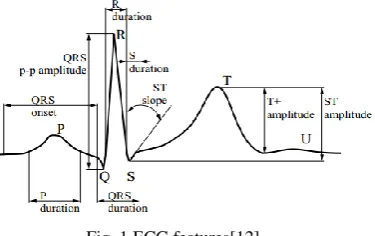
[image:3.595.312.543.87.512.2]The ECG was segmented, according to the accelerometer signals in the two phases (lying and standing). Ten ECG beats recorded after 5 minutes of lying down or standing were an-alysed using in-house software developed in MATLAB ver-sion R2014a (The MathWorks Inc., Natick, MA). For each beat (Fig 1), ECG features were extracted (Table 1).
[image:3.595.87.275.529.647.2]Fig. 1 ECG features[12]
Table 1 ECG features derived
N ECG Features
1 P wave onset
2 P wave duration (ms)
3 QRS wave onset
4 QRS wave duration (ms)
5 Q wave duration (ms)
6 R wave duration (ms)
7 S wave duration (ms)
8 R’ wave duration (ms)
9 S’ wave duration (ms)
10 P+ wave duration (ms)
11 QRS wave deflection (ms)
12 P+ wave amplitude (µV)
13 P- wave amplitude (µV)
14 QRS wave peak to peak amplitude (µV)
15 Q wave amplitude (µV)
16 R wave amplitude (µV)
17 S wave amplitude (mV)
18 R wave amplitude (µV)
19 S wave amplitude (µV)
20 ST segment amplitude (µV)
21 2/8 ST segment amplitude (µV)
22 3/8 ST segment amplitude (µV)
23 T+ wave amplitude (µV)
24 T wave amplitude (µV)
25 QRS wave area (µV)
26 T wave morphology (µV·ms)
27 R wave notch existence [-2, 2] (%)
28 Delta wave confidence
29 ST segment slope [-90, 90] (deg.)
B.ECG Feature Selection and Statistical Analysis
C.Classification and Model
After selecting the ECG features that changed signifi-cantly (p<0.05), the correlation matrix was calculated in or-der to select uncorrelated features for the development of an automatic classifier to detect automatically when a subject was lying down. The method used was the Linear Discrimi-nant Analysis (LDA). LDA aims to find linear combinations of the input features that can provide an adequate separation between two classes, in the current study, lying down vs standing up. The discriminant function used by LDA was built up as a linear combination of the variables that seek to maximize the differences between the classes[13]. The per-formance of the classifier was evaluated by computing the rate of correctly recognized lying down (true positives, TP), the rate of correctly recognized standing up (true negatives, TN), the rate of non-recognised lying down (false negative, FN) and the rate of standing classified as lying down (false positive, FP) [13-15]. These four counts constitute a confu-sion matrix [13-15].
Finally positive predictive value, negative predictive value, total classification accuracy, sensitivity and specificity rate were calculated as shown in Table 2.
Table 2 Binary classification performance measures
Measure Abbreviation Formula
Total
Classifica-tion Accuracy
ACC 𝑇𝑃 + 𝑇𝑁
𝑇𝑃 + 𝑇𝑁 + 𝐹𝑃 + 𝐹𝑁
Sensitivity SEN 𝑇𝑃
𝑇𝑃 + 𝐹𝑁
Specificity SPE 𝑇𝑁
𝐹𝑃 + 𝑇𝑁
Positive Predictive Value
PPV 𝑇𝑃
𝑇𝑃 + 𝐹𝑃
Negative Predic-tive Value
NPV 𝑇𝑁
𝑇𝑁 + 𝐹𝑁
Total classification accuracy represents the ability of the classifier to discriminate between the two sessions, sensitiv-ity refers to the abilsensitiv-ity to identify records while lying down and specificity refers to the ability to identify records while standing[13].
To estimate the performance measures leave-one-out cross validation was performed.
III.RESULTS
The results are reported in Table 3. The T-test analysis re-vealed that the following four ECG features (Rwave (µV), STinterval (ms),Twave (ms) and Twave (µV)) changed sig-nificantly (p <0.01) between lying down and standing up. All the selected features increased significantly while lying down
as shown by the trends reported in Table 3.
Table 3 ECG feature analysis
ECG Feat. Standing up Lying down
Mean SD Mean SD T* P-val.
Rwave(µV) 0.078 0.004 0.108 0.002 ↑↑ <0.01
STinterval (ms)
282.7 8.29 314.9 3.313 ↑↑ <0.01
Twave(ms) 203.2 11.1 217.7 5.388 ↑↑ <0.01
Twave(µV) 0.015 0.002 0.025 0.001 ↑↑ <0.01
The correlation matrix showed that Twave (ms) and Twave (µV) were significantly correlated (ρ<0.01) with STinterval (ms) and Rwave (µV) respectively. The classifier achieving the highest accuracy is based on the subset of fea-tures, STinterval (ms) and Rwave (µV) with sensitivity rate of 81.8%, specificity rate of 72.7%, and total accuracy clas-sification of 77.3%.
The classification rule can be expressed as follows: the record is classified as lying down if:
0.05*STwave -0.302*Rwave -14.912>0 (1)
Furthermore, the classification rule could be represented as in Fig. 2, if a subject’s score on the discriminant function is close to 0.8, then probably the subject was lying down.
Fig. 2 Box plots illustrating the distribution scores for the two groups
IV.CONCLUSIONS
It is well established that a change in body position causes a change in the position of the heart [16], therefore, the aim of this study is to quantify those changes in a control popula-tion and to show that these changes in ECG features (Rwave(µV), ST interval(ms)) can be used in principle to de-tect changes in positions (lying vs standing). This is an inter-esting result as ECG is widely used also to monitor other ad-verse cardiovascular events and is widely accepted among elderly people. In other words, since assistive devices that could help to relieve the fall problem are necessary and the health devices on the current market present privacy concerns and they are only limited to the detection of falls based on accelerometer signals, an ECG sensor could provide a perfect combination of detecting falls and cardiovascular problems which are quite frequent among the elderly.
In conclusion, this study is the first step to understand if ECG morphology could be used to detect postural changes, starting with studying only two distinct positions (lying vs standing). The results presented in this study encourage us to study the ECG morphology not only in real-life scenario as in different postural changes but also in simulating falls.
Therefore, further studies are necessary to understand how ECG features changes in transition postural changes and in elderly subjects simulating falls.
It is worth of highlighting that the model presented in this paper was trained only to detect ECG significant changes in two distinct postural positions (lying vs standing). This in-formed the design of more complex studies aiming to extend this approaches to more realistic scenarios, including: enrol-ling older subjects, eventually suffering from other cardio-vascular diseases; inserting other experimental conditions more significant for falls (i.e. lying down voluntarily, vs ly-ing down after a fall), integratly-ing this approach based on ECG with other signal sensing.
A
CKNOWLEDGMENTR.C. would like to thank University Of Warwick Depart-mental S'Ships/Burs's. The authors also would like to thank Giovanna Sannino from the Italian National Center of Re-search for the appreciated help on the signal acquisition.
C
ONFLICT OFI
NTERESTThe authors declare that they have no conflict of interest.
R
EFERENCES.[1] N. Kosse, K. Brands, J. Bauer, T. Hortobagyi, and C. Lamoth,"Sensor technologies aiming at fall prevention in institutionalized old adults: A
synthesis of current knowledge," International journal of medical informatics, vol. 82, pp. 743-752, 2013.
[2] N. I. f. C. Excellence, Clinical Practice Guideline for the Assessment and Prevention of Falls in Older People: Guidelines Commissioned by the National Institute for Clinical Excellence (NICE): Royal College of Nursing, 2013.
[3] R. Igual, C. Medrano, and I. Plaza, "Challenges, issues and trends in fall detection systems," Biomed. Eng. Online, vol. 12, pp. 1-66, 2013. [4] J. J. Siracuse, D. D. Odell, S. P. Gondek, S. R. Odom, E. M. Kasper,
C. J. Hauser, et al., "Health care and socioeconomic impact of falls in the elderly," Am J Surg, vol. 203, pp. 335-8; discussion 338, Mar 2012.
[5] L. Z. Rubenstein, "Falls in older people: epidemiology, risk factors and strategies for prevention," Age Ageing, vol. 35 Suppl 2, pp. ii37-ii41, Sep 2006.
[6] H. Nakagawa, N. Ohashi, K. Kanda, and Y. Watanabe, "Autonomic nervous system disturbance as etiological background of vertigo and dizziness," Acta Otolaryngol Suppl, vol. 504, pp. 130-3, 1993. [7] K. Kobayashi and S. Yamada, "Development of a simple index, calf
mass index, for screening for orthostatic hypotension in community-dwelling elderly," Arch Gerontol Geriatr, vol. 54, pp. 293-7, Mar-Apr 2012.
[8] P. Melillo, N. De Luca, M. Bracale, and L. Pecchia, "Classification Tree for Risk Assessment in Patients Suffering From Congestive Heart Failure via Long-Term Heart Rate Variability," IEEE J Biomed Health Inform, vol. 17, pp. 727-733, May 2013.
[9] P. Melillo, R. Fusco, M. Sansone, M. Bracale, and L. Pecchia, "Discrimination power of long-term heart rate variability measures for chronic heart failure detection," Med Biol Eng Comput, vol. 49, pp. 67-74, Jan 2011.
[10] L. Pecchia, P. Melillo, M. Sansone, and M. Bracale, "Discrimination Power of Short-Term Heart Rate Variability Measures for CHF Assessment," IEEE Transactions on Information Technology in Biomedicine, vol. 15, pp. 40-46, Jan 2011.
[11] L. Pecchia, P. Melillo, and M. Bracale, "Remote Health Monitoring of Heart Failure With Data Mining via CART Method on HRV Features," IEEE Transactions on Biomedical Engineering, vol. 58, pp. 800-804, Mar 2011.
[12] L. Biel, O. Pettersson, L. Philipson, and P. Wide, "ECG analysis: a new approach in human identification," Instrumentation and Measurement, IEEE Transactions on, vol. 50, pp. 808-812, 2001. [13] P. Melillo, M. Bracale, and L. Pecchia, "Nonlinear Heart Rate
Variability features for real-life stress detection. Case study: students under stress due to university examination," BioMedical Engineering OnLine, vol. 10, pp. 1-13, 2011.
[14] M. Sokolova and G. Lapalme, "A systematic analysis of performance measures for classification tasks," Information Processing & Management, vol. 45, pp. 427-437, 2009 .
[15] M. Kohl, "Performance measures in binary classification,"
International Journal of Statistics in Medical Research, vol. 1, pp. 79-81, 2012.
Author: Leandro Pecchia
Institute: University of Warwick
Street: Gilbert Hill Road CV4 7AL
City: Coventry
Country: United Kingdom
Email: [email protected]