PURIFICATION AND CHARACTERIZATION OF TRYPSIN LIKE PROTEASE FROM
THE MID GUTS OF
Muni Kumar Dokka, Usha Bolleddu, Siva Prasad Davuluri and
Department of Biochemistry, Andhra University, Visakhapatnam
ARTICLE INFO ABSTRACT
A trypsin
using ion exchange chromatography and gel filtration on QAE
activity was found to reside in two protein peaks. High BAPNAase activity wa
second peak eluted with 0.3M NaCl. The enzyme was found to be homogeneous by the criteria of native PAGE. SDS
corresponding to a molecular weight of about 30.4 kDa.
alkali-stable and its pH optimum for activity was about pH 11. The specific activity of the purified enzyme was 1426.92 TU per mg protein. The final yield was 52.81% with a fold purification of 3.81. The enzyme
concentrations (0.9 x 10⁻³
of protease activity by TLCK not by TPCK suggests that the isolated mid gut protease is trypsin like but not chymotrypsin like specificity of serine protease.
Copyright©2016, Muni Kumar Dokka et al. This is an open access article
unrestricted use, distribution, and reproduction in any medium, provided the original work is properly cited.
INTRODUCTION
Proteolysis is an essential metabolic process required for protein processing and turnover and is crucial for cellular activities. Proteases are the important enzymes in insects which hydrolyze the peptide bonds in dietary proteins to liberate the amino acids needed for growth, survival and reproduction and detoxify protein toxins ingested as a consequence of plant and pathogen feeding (Terra
Depending upon the amino acids and metal ions present in their active site, these are basically divided into four classes serine, cysteine, aspartic and metalloproteases. Serine proteases in particular are the major class of digestive proteases, accounting for 95 % of digestive activity in Lepidoptera (Srinivasan et al., 2006). The lepidopt
need a proteolytic enzyme complex including trypsin,
chymotrypsin, elastase, cathepsin-B like proteases,
aminopeptidases and carboxypeptidases for protein digestion and many serine proteases are dominant in the larval gut (Chougule et al., 2008; Tabatabaei et al., 2011).
armigera, a lepidopteran, is a serious polyphagous pest of
diverse economically important crops and is most widely distributed with broad host spectrum including commercially important crops like cotton, chickpea, pigeonpea, maize,
*Corresponding author: Hemalatha, K.P.J.
Department of Biochemistry, Andhra University, Visakhapatnam 003, Andhra Pradesh, India.
ISSN: 0975-833X
Vol.
Article History: Received 05th August, 2016
Received in revised form 15th September, 2016 Accepted 19th October, 2016
Published online 30th November,2016
Key words:
Helicoverpa armigera,
QAE- sephadex, SDS-PAGE, Km and Vmax.
Citation: Muni Kumar Dokka, Usha Bolleddu, Siva Prasad Davuluri and protease from the mid guts of Helicoverpa Armiegra”,
RESEARCH ARTICLE
PURIFICATION AND CHARACTERIZATION OF TRYPSIN LIKE PROTEASE FROM
THE MID GUTS OF HELICOVERPA ARMIEGRA
Usha Bolleddu, Siva Prasad Davuluri and *Hemalatha
Department of Biochemistry, Andhra University, Visakhapatnam –530 003, Andhra Pradesh, India
ABSTRACT
A trypsin- like protease was purified and characterized from the mid guts using ion exchange chromatography and gel filtration on QAE
activity was found to reside in two protein peaks. High BAPNAase activity wa
second peak eluted with 0.3M NaCl. The enzyme was found to be homogeneous by the criteria of native PAGE. SDS-PAGE analysis in the presence of 2-mercaptoethaonol gave a single band corresponding to a molecular weight of about 30.4 kDa. Trypsin like protease from the mid gut was stable and its pH optimum for activity was about pH 11. The specific activity of the purified enzyme was 1426.92 TU per mg protein. The final yield was 52.81% with a fold purification of 3.81. The enzyme followed Michaelis-Menten kinetics when the protease activity was measured at different concentrations (0.9-4.0 mM) of BAPNA. Km and Vmax values for the protease were found to be 3.84
M and 45 nmol/10min/mg protein with BAPNA as the substrate respec
of protease activity by TLCK not by TPCK suggests that the isolated mid gut protease is trypsin like but not chymotrypsin like specificity of serine protease.
is an open access article distributed under the Creative Commons Att use, distribution, and reproduction in any medium, provided the original work is properly cited.
Proteolysis is an essential metabolic process required for protein processing and turnover and is crucial for cellular activities. Proteases are the important enzymes in insects which hydrolyze the peptide bonds in dietary proteins to e the amino acids needed for growth, survival and reproduction and detoxify protein toxins ingested as a consequence of plant and pathogen feeding (Terra et al., 1996). Depending upon the amino acids and metal ions present in asically divided into four classes- serine, cysteine, aspartic and metalloproteases. Serine proteases in particular are the major class of digestive proteases, accounting for 95 % of digestive activity in ., 2006). The lepidopteran larvae need a proteolytic enzyme complex including trypsin,
B like proteases,
aminopeptidases and carboxypeptidases for protein digestion and many serine proteases are dominant in the larval gut 2011). Helicoverpa , a lepidopteran, is a serious polyphagous pest of diverse economically important crops and is most widely distributed with broad host spectrum including commercially
geonpea, maize,
Department of Biochemistry, Andhra University, Visakhapatnam –530
sunflower, corn, tomato, okra and groundnut (Bhavani 2007; Wondafrash et al., 2012).
known as cotton bollworm or legume pod borer, is one of the most devastating crop pest of
annual losses of over US$ 328 million. Losses caused only by this pest reported up to US$ 17 million in c
pigeon pea, chickpea, groundnut, sorghum, pearl millet, tomato and others of economic importance (Chaturvedi, 2007). Because of its high mobility, survival rate under adverse conditions, capacity to complete several generations in a year and ability to develop resistance against insecticides, its management is very difficult. There is a need to develop certain strategies to manage this insect in an eco
manner. Alkaline proteinases are responsible for gaining nutrients and energy in Lepidopteran insects (Broadway, 1989; Valaitis et al., 1999). Among insect gut proteinases, serine proteinases function optimally at alkaline pH, whereas cysteine proteinases require acidic pH and aspartic proteinases usually occur together with cysteine proteinases (Terra and Ferreira, 1994). Since there is significant variation among the biochemical properties of insect digestive proteases, their isolation and characterization is necessary for designing a safe control strategy that utilizes plant
(Wilhite et al., 2000). Protease inhibitors mediate plant defense against herbivores by inhibiting their midgut proteases, thus causing a reduction in the availability of amino acids necessary for their growth, survival and reproduction
International Journal of Current Research
Vol. 8, Issue, 11, pp.42089-42096, November, 2016
INTERNATIONAL
Muni Kumar Dokka, Usha Bolleddu, Siva Prasad Davuluri and Hemalatha, K.P.J, 2016. “Purification and characterization of trypsin like ”, International Journal of Current Research, 8, (11), 42089-42096.
PURIFICATION AND CHARACTERIZATION OF TRYPSIN LIKE PROTEASE FROM
Hemalatha, K.P.J.
530 003, Andhra Pradesh, India
like protease was purified and characterized from the mid guts of Helicoverpa armigera using ion exchange chromatography and gel filtration on QAE- sephadex column. The protease activity was found to reside in two protein peaks. High BAPNAase activity was associated with a second peak eluted with 0.3M NaCl. The enzyme was found to be homogeneous by the criteria of mercaptoethaonol gave a single band Trypsin like protease from the mid gut was stable and its pH optimum for activity was about pH 11. The specific activity of the purified enzyme was 1426.92 TU per mg protein. The final yield was 52.81% with a fold purification of 3.81. Menten kinetics when the protease activity was measured at different 4.0 mM) of BAPNA. Km and Vmax values for the protease were found to be 3.84 M and 45 nmol/10min/mg protein with BAPNA as the substrate respectively. Strong inhibition of protease activity by TLCK not by TPCK suggests that the isolated mid gut protease is trypsin like
distributed under the Creative Commons Attribution License, which permits
sunflower, corn, tomato, okra and groundnut (Bhavani et al., ., 2012). Helicoverpa armigera, also known as cotton bollworm or legume pod borer, is one of the most devastating crop pest of Cicer arietinum since it inflicts annual losses of over US$ 328 million. Losses caused only by this pest reported up to US$ 17 million in crops like cotton, pigeon pea, chickpea, groundnut, sorghum, pearl millet, tomato and others of economic importance (Chaturvedi, 2007). Because of its high mobility, survival rate under adverse conditions, capacity to complete several generations in a year and ability to develop resistance against insecticides, its management is very difficult. There is a need to develop certain strategies to manage this insect in an eco-friendly Alkaline proteinases are responsible for gaining in Lepidopteran insects (Broadway, 1989; 1999). Among insect gut proteinases, serine proteinases function optimally at alkaline pH, whereas cysteine proteinases require acidic pH and aspartic proteinases usually e proteinases (Terra and Ferreira, Since there is significant variation among the biochemical properties of insect digestive proteases, their isolation and characterization is necessary for designing a safe control strategy that utilizes plant-proteinaceous inhibitors ., 2000). Protease inhibitors mediate plant defense against herbivores by inhibiting their midgut proteases, thus causing a reduction in the availability of amino acids necessary for their growth, survival and reproduction (Volpicella et al.,
INTERNATIONAL JOURNAL OF CURRENT RESEARCH
2003). The gut physiology of Helicocerpa armigera is an important subject for study and the design of new approach for its control, such as developing transgenic plants that express proteinase inhibitors. Knowledge of enzyme properties together with their sensitivity to various inhibitors can provide a base for the control methods. In the present paper, purification and characterization of trypsin like protease from the midgut of Helicoverpa armigera larvae along with its kinetic properties has been reported.
MATERIALS AND METHODS
Chemicals and Reagents
α-N-benzoyl-DL-arginine-p-nitoanilide HCl (BAPNA),
Phosphorylase b, Bovine serum albumin (BSA), Ovalbumin, Carbonic anhydrase SBTI (soybean trypsin inhibitor), Blue dextran, Acrylamide, N,N’-methylene bis acrylamide, Sodium
dodecylsulfate(SDS),N,N,N’,N’-Tetramethylethylenediamine
(TEMED), Coomassie brilliant blue R250, TLCK
(Tosyl-L-lysyl-chloromethane hydrochloride) and TPCK (Tosyl
phenylalanyl chloromethyl ketone) were purchased from Sigma Chemical company, St. Louis, Missouri, U.S.A. Sephadex G-200 and QAE-Sephadex were purchased from Pharmacia Fine Chemicals, Uppsala, Sweden. All other chemicals used were of analytical grade.
Larval mid gut enzymes
Helicovera armigera larvae grown on chick pea fields were
collected from Central Tobacco Research Institute (CTRI), Rajahmundry. In order to avoid any fluctuations in activities due to physiological and environmental conditions, larvae were synchronized before assaying for the gut proteases. This was accomplished by selectively separating the fifth instar larvae and allowing them to feed on chick pea pods ad libitum for 24 h. The specimens killed by drowning in distilled water were immediately dissected over ice. The mid guts were transferred on to a watch glass containing ice- cold 0.1% NaCl and gently cleaned with a brush to remove any undigested food particles
or adhering fat bodies. Mid gut tissue was then stored at -20o C
until further use.
Purification of serine proteinase from Helicoverpa armigera
The purification procedure has been carried out with several batches of larvae. Nearly identical protein profiles were obtained each time but with some variation (10-15% in
enzyme activity). Serine proteinase from mid gut extracts of 5th
instar larvae was isolated and purified following the procedure described below.
Extraction of trypsin like protease
Fifth instar larvae were immobilized on ice and dissected under a stereo-microscope in ice-cold distilled water. The midguts were separately removed, placed in distilled water and cleaned of adhering unwanted tissues and gut contents. Mid gut tissue obtained from fifth instar larvae was homogenized with one ml of ice cold extraction buffer, 10mM Phosphate
buffer, pH 7.6 and centrifuged at 10,000 rpm at 4o C for 10
min. The supernatant obtained was transferred to new tubes and frozen at -20° C for the purification of the enzyme.
Chloroform extraction: Four volumes of ice-cold chloroform was added to the supernatant from the previous step and mixed
thoroughly before subjecting it to centrifugation at 3,000 rpm
at 4o C for 10 min. The aqueous fraction was then carefully
pipetted out and collected. The pigments that occurred as a part of larval food and contaminating pigments from the larval cuticle were removed in this step.
Ammonium sulphate fractionation
To one ml of the aqueous fraction obtained in the above step,
ammonium sulphate was added to obtain 60% saturation at 4oC
with constant stirring. The precipitated proteins were
centrifuged at 10,000 rpm at 4o C for 30 min. All the protease
activity was found to reside in the pellet, which was then dissolved in a minimum volume of 20mM Tris-HCl buffer, pH 7.2. It was desalted on Sephadex G-25 (2 × 10 cm) column equilibrated and developed with 20mM Tris-HCl buffer, pH 7.2. The protein fractions obtained on Sephadex G-25 were
pooled, lyophilized and stored at -20oC until use.
Ion-exchange chromatography on QAE-Sephadex
The ammonium sulfate precipitated protein was then dissolved in one ml of 20mM Tris-HCl buffer, pH 7.2, loaded on to a QAE-Sephadex column (0.5 x 30cm) equilibrated with the
same buffer. The column held at < 8o C was washed with
20mM Tris-HCl buffer, pH 7.2 and then eluted with 0.1 - 0.3M NaCl prepared in the same buffer. Fractions, each 2ml, were collected at a flow rate of 20ml/h and the protein content was monitored at 280 nm. The enzyme activity in each fraction was determined using BAPNA as the substrate.
Estimation of trypsin activity
Amidolytic activity of trypsin was assayed by the method of Kakade et al., (1969) using BAPNA as the substrate. Substrate solution was prepared by dissolving 30 mg of BAPNA in 2 ml of dimethyl sulfoxide and the solution was made up to 100 ml
with 50 mM Tris-HCl buffer, pH 8.2 containing 20 mM CaCl2.
Aliquots of trypsin solution containing 10-50 µg of the enzyme in 2 ml distilled water was incubated with 7 ml of BAPNA solution at 37°C for 10 min. The reaction was stopped by adding 1 ml of 30% acetic acid. The absorbance of the samples were then measured at 410 nm by continuously monitoring the change in absorbance p-nitroaniline release for 10 min at 25°C against a blank incubation sample containing 2 ml of water instead of trypsin solution.
Protein estimation
Protein was estimated by the method of Lowry et al., (1951) using bovine serum albumin as the standard. The protein
content in the column effluents collected during
chromatographic separation was determined by measuring the absorbance at 280 nm.
Molecular Weight by Sodium Dodecyl
Sulfate-Polyacrylamide Gel Electrophoresis (SDS-PAGE)
SDS-PAGE was carried out by the method of Laemmli (1970) in slab gels. The marker proteins, phosphorylase b (97 kDa), bovine serum albumin (67 kDa), ovalbumin (43 kDa), chymotrypsinsogen A (25 kDa), soybean trypsin inhibitor (20.1 kDa) and lysozyme (14 kDa) in 0.1 ml of phosphate buffer were kept at 100°C for 2 min with 0.1 ml of sample buffer (0.5 M Tris-HCl buffer, pH 6.8 containing 4% SDS and 10% 2-mercaptoethanol). The protease in sample buffer was
kept at 100°C for 2 min, then subjected to electrophoresis. After electrophoretic run, proteins were fixed in glacial acetic acid 10% (v/v), methanol 30% (v/v) and were visualized using coomassie brilliant blue.
Optimum pH and pH stability of protease
Protease activity was determined using different buffers in a pH range of 3-14 using BAPNA as the substrate. Buffers used were sodium acetate, 0.1M (pH 3-4), sodium citrate, 0.1 M (pH 5-6), 0.1 M Sodium phosphate buffer (pH 7
0.1M (pH 9-10) and 0.1M glycine-NaOH (pH 11 Aliquots of the enzyme were diluted with phosphate buffer, pH 7.6 and assayed as described above for protease.
determine the pH stability of protease,
appropriate buffer was kept at 50C for 24 h, aliquots were then
taken and assayed for enzyme activity.
Optimum temperature and temperature stability of protease
Optimum temperature for protease was determined by measuring the activity in the temperature range 20
using the activity assay procedure. 3 ml samples of 100 µg/ml solution of the protease in 0.1 M sodium phosphate buffer, pH 7.6, were separately incubated in a water bath at different temperatures for 10 min. After the heat treatment, the solutions were quickly cooled in ice and appropriat
were used for the assay of protease activity using BAPNA as the substrate. In order to determine the temperature stability of protease, enzyme (2ml in 0.1M sodium phosphate buffer, pH 7.6) was incubated for 30min at different temperatures (20
80oC). After cooling for 2h, enzyme activities were determined
from the aliquots.
Effect of various metal ions and protease inhibitors
Metal ions (Mg2+, Zn2+, Ca2+, Cu2+, Cd2+, Mn
tested for their inhibitory efficiency. Reaction mixture containing 50 µl enzyme, 5 mM metal ion and 150 µl assay
buffer was incubated for 20 min at 37oC. Reaction was started
by adding 800 µl BAPNA and trypsin activity was measured. The effects of various protease inhibitors such as TLCK, TPCK, Iodoacetate and EDTA each 5mM on proteolytic activity of isolated enzyme were investigated. After 30 min of pre-incubation of inhibitors with enzyme at room temperature, substrate was added and residual protease activity was measured by the standard assay method.
Kinetic parameters of trypsin like protease
The Michaelis–Menten constant (Km) and the maximum
reaction velocities (Vmax) of trypsin were determined by
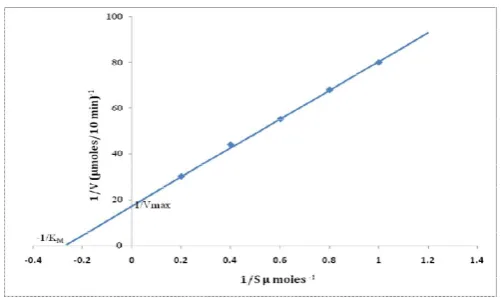
Lineweaver–Burk plots. The protease activity was measured at different concentrations (0.9-4.0 mM) of BAPNA.
RESULTS
A trypsin like protease has been isolated and purified from the midguts of fifth instar larvae of Helicoverpa armigera following ammonium sulphate fractionation and
chromatography on QAE-Sephadex. When ammonium sulfate
precipitated protein was subjected to
chromatography on QAE-Sephadex, a single symmetrical peak with a corresponding enzyme activity was eluted with 0.3M kept at 100°C for 2 min, then subjected to electrophoresis. After electrophoretic run, proteins were fixed in glacial acetic
re visualized using
Protease activity was determined using different buffers in a using BAPNA as the substrate. Buffers used 4), sodium citrate, 0.1 M 6), 0.1 M Sodium phosphate buffer (pH 7-8), Tris- HCl,
NaOH (pH 11-14). phosphate buffer, pH 7.6 and assayed as described above for protease. In order to protease, enzyme in an C for 24 h, aliquots were then
re and temperature stability of
Optimum temperature for protease was determined by
measuring the activity in the temperature range 20o-80o C
3 ml samples of 100 µg/ml solution of the protease in 0.1 M sodium phosphate buffer, pH 7.6, were separately incubated in a water bath at different temperatures for 10 min. After the heat treatment, the solutions were quickly cooled in ice and appropriate aliquots were used for the assay of protease activity using BAPNA as In order to determine the temperature stability of sodium phosphate buffer, pH ) was incubated for 30min at different temperatures (20-C). After cooling for 2h, enzyme activities were determined
Effect of various metal ions and protease inhibitors
, Mn2+, Hg2+) were
tested for their inhibitory efficiency. Reaction mixture ining 50 µl enzyme, 5 mM metal ion and 150 µl assay C. Reaction was started by adding 800 µl BAPNA and trypsin activity was measured. The effects of various protease inhibitors such as TLCK,
each 5mM on proteolytic activity of isolated enzyme were investigated. After 30 min of incubation of inhibitors with enzyme at room temperature, substrate was added and residual protease activity was
meters of trypsin like protease
) and the maximum ) of trypsin were determined by Burk plots. The protease activity was measured at
4.0 mM) of BAPNA.
A trypsin like protease has been isolated and purified from the
Helicoverpa armigera
following ammonium sulphate fractionation and Ion-exchange When ammonium sulfate
otein was subjected to Ion-exchange
single symmetrical peak with a corresponding enzyme activity was eluted with 0.3M
NaCl in 20mM Tris-HCl buffer, pH 7.2. The elution profile of trypsin like enzyme from crude gut protease
maximum trypsin-like activity. The protein profile on ion exchange chromatography is shown in Fig. 1. Recoveries and relative purification at each step for a typical purification from five larvae are shown in Table
[image:3.595.305.564.170.310.2]purified enzyme was 1426.92 TU per mg protein. The final yield was 52.81% of the original protease with a fold purification of 3.81.
Figure 1. Ion exchange chromatography on QAE the ammonium sulphate fraction
About 4.5 mg of the ammonium sulfate precipitated protein was loaded on to a column (0.5 x 30 cm) in 20mM Tris buffer, pH 7.2. Elution was done with 0.3 M NaCl in the same buffer. Two ml fractions were collected at a flow rate of 20 ml/h. Protein was monitored by measuring absorbance at
280nm (- ♦ -) and the trypsin-
using BAPNA as substrate. One trypsin unit (TU) is arbitrarily defined as an increase in 0.01 absorbance unit at 410nm per 2.5 ml reaction mixture, under
fold purification were calculated from activity units and specific activity respectively.
Molecular weight determination of trypsin like protease
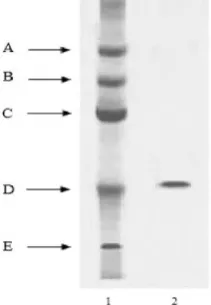
SDS-PAGE was carried out under denaturing conditions to determine the molecular weight of the protease. Fig 2 shows the protein band pattern of CGTI on 5
enzyme when treated with SDS and 2
h at room temperature showed a single coomassie blue stainable, broad protein band corresponding t
weight of 30.4 kDa.
Figure 2. Molecular weight determination of armigera protease by SDS-PAGE at pH 8.3 on 5
under denaturing conditions
HCl buffer, pH 7.2. The elution profile of trypsin like enzyme from crude gut protease revealed like activity. The protein profile on ion exchange chromatography is shown in Fig. 1. Recoveries and relative purification at each step for a typical purification from five larvae are shown in Table -1. The specific activity of the purified enzyme was 1426.92 TU per mg protein. The final yield was 52.81% of the original protease with a fold
Ion exchange chromatography on QAE-Sephadex of the ammonium sulphate fraction
About 4.5 mg of the ammonium sulfate precipitated protein was loaded on to a column (0.5 x 30 cm) in 20mM Tris-HCl buffer, pH 7.2. Elution was done with 0.3 M NaCl in the same buffer. Two ml fractions were collected at a flow rate of 20 monitored by measuring absorbance at
like activity (- ■ -) was assayed
One trypsin unit (TU) is arbitrarily defined as an increase in 0.01 absorbance unit at 410nm per 2.5 ml reaction mixture, under the assay conditions. Yield and fold purification were calculated from activity units and
Molecular weight determination of trypsin like protease
PAGE was carried out under denaturing conditions to lar weight of the protease. Fig 2 shows the protein band pattern of CGTI on 5-15% gradient gel. The enzyme when treated with SDS and 2-mercaptoethanol for 24 h at room temperature showed a single coomassie blue stainable, broad protein band corresponding to a molecular
[image:3.595.383.489.609.762.2]Figure 3a. pH optima of trypsin like protease of Helicoverpa armigera
Figure 3b. pH stability of trypsin like protease of Helicoverpa armigera
The presence or absence of 2-mercaptoethanol in the sample buffer did not show any difference in the band pattern as well as in the relative band intensities on SDS-PAGE.
1. Standard proteins
Phospohorylase b (97kDa)
Bovine serum albumin (67 kDa)
Ovalbumin(43kDa)
Carbonic anhydrase (29kDa)
SBTI (20.1kDa)
2. Helicoverpa armigera protease
Effect of pH and temperature of trypsin like protease on protease activity
The optimum pH for trypsin activity was found to be 11.0 (Fig 3a). The enzyme was found to be unstable at acidic pH, whereas at alkaline pH it shows wide range of activity. The maximum enzyme activities were observed at a pH range of 9.0– 11.0 (Fig 3b). The optimum temperature of proteolytic activity of purified gut trypsin like enzyme was maximum at
50oC (Fig 4a). A decline in enzyme activity was found at
temperature above 50oC. The thermal stability of trypsin-like
protease in the midgut samples pre-incubated for 5 min
remained unchanged at temperatures up to 40oC. However,
preincubation for 30 min at temperatures of 40oC sharply
reduced the proteolytic activity, which was almost abolished
[image:4.595.117.553.71.452.2]above 60oC (Fig 4b).
Figure 4a. Temperature optima of trypsin like protease of Helicoverpa armigera
Figure 4b. Thermal stability of trypsin like protease of Helicoverpa armigera
Effect of various metal ions on protease activity
ZnSO4, CuSO4, CdCl2 and HgCl2 at 5 mM concentration
inhibited the trypsin like activity of gut protease, whereas Ca2+,
Mn2+ and Mg2+ at that concentration elevated the enzyme
activity (Table 2). Maximum inhibition was observed with
Cd2+ (82 %) and Hg2+ (79%) and minimum inhibition with
Cu2+ (45.2 %). Metal ions such as Cd2+ and Hg2+ act as strong
inhibitors of enzymatic activity. Addition of CaCl2, MgCl2 and
MnCl2 at low concentrations increased the rate of trypsin
[image:4.595.39.289.302.437.2]activity whereas the reaction rate was progressively lowered with the increase in ionic strength (Results not shown).
Table 2. Percent activity of purified trypsin like protease after treating with metalions
Sl. No. Metal ion (5 mM) Relative activity (%) 1
2 3 4 5 6 7
Control Mg2+
Zn2+
Ca2+
Cu2+
Cd2+
Mn2+
Hg2+
100 122.5 65.3 106 55.2 17.8 115.4 21.3
Effect of inhibitors on protease activity
Larval midgut proteases were further characterized using protease specific inhibitors. Calculating of inhibition
0 20 40 60 80 100 120
7 8 9 10 11 12 13 14
R
el
a
ti
v
e
a
ct
iv
it
y
(
%
)
pH
Table-1. Purification table of trypsin-like protease from mid guts of Helicoverpa armigera
Preparation Total volume (ml) Total protein (mg) Total activity (TU) Specific activity TU/mg protein Yield % purification Fold
Crude Extract 1.0 7.5 2810 374.67 100 1
Ammonium sulphate precipitate 0.25 4.5 1812 402.67 64.48 1.07 QAE Sephadex fraction 1.0 1.04 1484 1426.92 52.81 3.81
[image:4.595.340.525.658.748.2]percentage of BAPNA hydrolysis in the presence of various inhibitors offers information about the relative contribution of the inhibited class of protease to isolated gut protease activity. As shown in Figure 5, inhibition was effected by TLCK but not TPCK indicating trypsin like but not chymotrypsin like specificity of serine protease.
Figure 5. Effect of protease inhibitors on trypsin like protease
Kinetic studies
The protease activity was measured at different concentrations (0.9-4.0 mM) of BAPNA. The enzyme followed Michaelis-Menten kinetics. The double reciprocal plots of the kinetics
data are shown in Fig. 6. Km value for the protease was
determined to be 3.84 x 10⁻³ M BAPNA. Vmaxvalue for the
protease was determined to be 45 nmol/10min/mg protein.
.
Figure 6. Lineweaver-Burk plot for Km and Vmax determination using BAPNA as substrate
DISCUSSION
Insects have all the mechanistic classes of proteolytic enzymes that exist in vertebrates (Reeck et al., 1999) and play important role in insect growth, reproduction, development and health (Terra et al., 1996). In insects, serine proteases have been detected in order Lepidopetra, Diptera, Orthoptera, Hymenoptera and Coleoptera. Serine alkaline proteases active at highly alkaline pH represent the largest subgroup of serine proteases and include trypsins, chymotrypsins, elastases,
cathepsin-B like proteases, aminopeptidases and
carboxypeptidases, which are all responsible for protein digestion. Trypsin is the main intestinal digestive enzyme. Based on the ability of various protease inhibitors to inhibit this enzyme from insect gut, trypsin has received major attention as a target for biocontrol of the insects. Insect trypsins share similar, but not identical specificities with vertebrate trypsins (Muhlia-Almazan et al., 2008). Serine proteases are among the best studied proteases from the insect midgut (Hau and Benjakul 2006; Mohammadi et al., 2010).
Studies on the digestive proteases of lepidopteran insects have revealed that 95% of total digestive activity relies on serine proteases. Serine proteases, trypsin and chymotrypsin predominate digestive tract of H. armigera. Proteases are being targeted these days for various pest management strategies. Their inhibition can starve insects to death or may disrupt their normal metabolism (Padul et al., 2012, Mittal et al., 2014). The gut of H. armigera contains about 20 different types of active serine protease isoforms at any given moment (Bown et
al., 1997). A trypsin- like protease has been purified from the
mid guts of Helicoverpa armigera using ion exchange chromatography and gel filtration on QAE- sephadex column. The protease activity was found to reside in two protein peaks. High BAPNAase activity was associated with a second peak eluted with 0.3M NaCl. The enzyme was found to be homogeneous by the criteria of native PAGE. The specific activity of the purified enzyme was 1426.92 TU per mg protein. The final yield was 52.81% with a fold purification of
3.81. SDS-PAGE analysis in the presence of
2-mercaptoethaonol gave a single band corresponding to a molecular weight of about 30.4 kDa. The protein peak obtained in the wash through fractions could thus be a polymerized form of the protease itself or association of the protease with other mid gut proteases. Proteases with molecular weights ranging from 41.6 - 172.9 kDa from mid gut extracts of the insect were reported by Johnston et al.(1991) and Harsulkar et al. (1998). Telang et al. (2005) reported two trypsin like proteases in the mid guts of H. armigera with molecular weights 24 and 29kDa. A trypsin like protease from
H.armigera gut was purified 37 fold with 22 % yield and its
molecular weight was found to be 18.8 kDa (Grover et al., 2016). The optimum pH for trypsin like protease was found to be 11.0. The enzyme was found to be unstable at acidic pH, whereas at alkaline pH it shows wide range of activity. The optimum pH (11.0) is in agreement with previous reports of salivary gland extract of Lygus lineolaris and gut extracts of A.
gemmatalis showing 10.0 and 10.5, respectively (Pereira et al.,
2005; Zeng et al., 2002).
The alkaline pH range of the midgut is similar to that reported in other investigations including lepidopterans (black cutworm, corn earworm, and tobacco budworm, A. gemmatalis) and the boll weevil with maximal midgut proteolytic activity in
vitro at pH 10–11 (Pereira et al., 2005; Purcell et al., 1992).
The alkaline pH of the lepidopteran gut is attributed to an adaptation of leaf-eating lepidopteran ancestors for extracting hemicellulose from plant cell walls (Terra & Ferreira, 1994). Alkaline pH values for activity are due to intrinsic alkaline pH of the insect digestive system, and have been reported for many lepidopteran insects (Ferry et al., 2005; Budatha et al., 2008; Chougule et al., 2008). Tabatabaei et al. (2011) showed that proteolytic activity of the carob moth, Ectomyelois
ceratoniae, with hemoglobin as protein substrate occurred over
a broad alkaline pH range (pH 8.0–11.0), with maximum activity at pH 10.The loss of enzymatic activity at pH values outside the range is probably caused by protein conformational changes due to change in state of ionization of amino acid residues at catalytic sites as a result of charge repulsion. This affects the catalytic activity. Serine proteases are found to be more active in alkaline conditions. Proteolytic activity of purified gut trypsin like enzyme was maximum at
50oC. A decline in enzyme activity was found at temperature
above 50oC. The thermal stability of trypsin-like activity in the
midgut samples of Helicoverpa armigera pre-incubated for 5
[image:5.595.38.289.378.527.2]However, preincubation for 30 min at temperatures of ˃40oC sharply reduced the proteolytic activity, which was almost
declined at 60oC. The results were consistent with those
reported by Grover et al., (2016) in Helicoverpa armigera. Metals are known to play an important role in various physiological processes. They serve as cofactors for metalloproteases, may mediate efficient substrate binding required for catalysis or possess role in protein folding
maintaining the functional structure of proteins. ZnSO4,
CuSO4, CdCl2 and HgCl2 at 5 mM concentration inhibited the
trypsin like activity of gut protease, whereas Ca2+, Mn2+ and
Mg2+ at that concentration elevated the enzyme activity.
Maximum inhibition was observed with Cd2+ (82 %) and Hg2+
(79%) and minimum inhibition with Cu2+ (45.2 %). Metal ions
such as Cd2+ and Hg2+ act as strong inhibitors of enzymatic
activity by structural destabilization of the protein due to their interference with sulfhydryl residues in proteins and are responsible for the breakdown of disulfide bonds. Addition of
CaCl2, MgCl2 and MnCl2 at low concentrations increased the
rate of trypsin activity whereas the reaction rate was progressively lowered with the increase in ionic strength.
Grover et al. (2016) reported that metal ions Cu2+, Zn2+, Cd2+
and Hg2+ were found to have the potential to inhibit the mid
gut protease of Helicoverpa armigera. Maximum inhibition
was observed with Cu2+ (73 %) and minimum inhibition with
Cd2+ (47 %). Copper inhibited trypsin non-competitively and
zinc inhibited uncompetitively. Costa et al. (2013) characterized trypsin from crevalle jack (Caranx hippos) and
reported Cd2+ and Al3+ as strong inhibitors of trypsin (95 %),
whereas Zn2+, Cu2+, Pb2+, Hg2+ inhibited the trypsin from 50 to
85 % at 1 mM. Ca2+ has been found to positively modulate the
activity of proteases. It is the cofactor of many trypsin-like proteases, from different sources. Calcium might play a role in stabilizing the structure of protease (Oliveira et al., 2005). Mahdavi et al. (2013) reported that metal ions on the activity
of proteases in Glyphodes pyloalis showed that NaCl, CaCl2,
CoCl2 (5 and 10 mM), and MnCl2 (5mM) reduced the protease
activity. However, metals do have an effect on larvae of another lepidopteran, namely Conogethes punctiferalis (Joseph
et al., 2006).
The biochemical analysis of Helicoveroa gut protease using specific peptide substrates and inhibitors showed that serine proteinase especially trypsin like protease was predominant in midguts of fifth instar larvae. When the trypsin like protease was treated with various classes of inhibitors, strong inhibition was effected by TLCK but not TPCK indicating trypsin like but not chymotrypsin like specificity of serine protease. No inhibition of protease activity was observed with other inhibitors. TLCK has a maximum inhibitory effect on protease activity compared to TPCK (10% inhibition), suggesting that trypsin has a more important role than chymotrypsin in protein digestion in the larval midgut. The inhibitory effect of idoacetate and EDTA was very low. Azocaseinase gut activity in the Indian meal moth, Plodia interpunctella, at pH 9.5 was inhibited by serine proteinase inhibitors SBTI (soybean trypsin inhibitor) and TLCK, which are specific to trypsin-like enzymes, at 96% and 89%, respectively (Amorim et al., 2008). Mahdavi et al. (2013) reported that EDTA, PMSF and TPCK showed considerable inhibition of larval azocaseinolytic activity of Glyphodes pyloalis suggesting that the midgut of larvae contains mainly metalloproteases and serine proteases, mainly chymotrypsin. Kinetic studies performed with different concentrations (0.9-4.0 mM) of BAPNA revealed that the
enzyme followed Michaelis-Menten kinetics. Km value for the
protease was determined to be 3.84 x 10⁻³ M BAPNA. Vmax
value for the protease was determined to be 45 nmol/10min/mg protein with BAPNA as substrate. Trypsin isolated from the
midgut of Helicoverpa armigera had a Km of 2300 μM and
Vmax of 430 nmol/ min/mg protein with BAPNA as substrate
(Ozgur et al., 2009). The Km value of trypsin in midgut of
Eurygaster integriceps determined using BAPNA as substrate
was found to be 600 μM (Hosseininaveh et al., 2009). The Km and Vmax values of trypsin in the alimentary canal of G.
pyloalis using BAPNA as substrate were 50.5 ± 2 μM and
116.06 ± 1.96 nmol/ min/ mg protein, respectively (Mahdavi et
al., 2013).
Conclusion
A trypsin- like protease was purified from the mid guts of
Helicoverpa armigera using conventional methods of protein
purification. The enzyme was found to be homogeneous by the criteria of native PAGE. SDS-PAGE analysis in the presence of 2-mercaptoethaonol gave a single band corresponding to a molecular weight of about 30.4 kDa. The specific activity of the purified enzyme was 1426.92 TU per mg protein. The final yield was 52.81% with a fold purification of 3.81. Proteinase activity from the mid gut was alkali-stable and its
pH optimum for activity was about pH 12. Km and Vmax values
for the protease were determined to be 3.84 x 10⁻³ M and
45 nmol/10min/mg protein with BAPNA as substrate respectively. Strong inhibition of protease activity by TLCK but not by TPCK suggests that the isolated mid gut protease is trypsin like but not chymotrypsin like specificity of serine protease.
REFERENCES
Amorim, T.M.L., Macedo, L.L.P., Uchoa, A.F., Oliveira, A.S., Pitanga, J.C.M., Macedo, F.P., Santos, E.A and Sales, M.P.D.E. 2008. Proteolytic digestive enzymes and peritrophic membranes during the development of Plodia
interpunctella (Lepidoptera: Pyralidae): Targets for the
action of soybean trypsin inhibitor (SBTI) and chitin-binding vicilin (EvV). Journal of Agriculture and Food
Chemistry 56: 7738–7745.
Bhavani, P., Bhattacharjee, C. and Prasad, D.T. 2007. Bioevaluation of subabul (Leucaena leucocepahala)
proteinases inhibitors on Helicoverpa armigera.
Arthropod-Plant Interact. 1:255–261.
Bown, D.P., Wilkinson, H.S. and Gatehouse, J.A. 1997. Differentially regulated inhibitor sensitive and insensitive protease genes from the phytophagous pest, Helicoverpa
armigera, are members of complex multigene families. Insect Biochem Mol Biol. 27: 625-638.
Broadway, R.M. 1989. Characterization and ecological implications of midgut proteolytic activity in larval Pieris
rapae and Trichoplusia ni. Journal of Chemical Ecol. 15:
2101–2113.
Budatha, M., Meur, G. and Dutta-Gupta, A. 2008. Identification and characterization of midgut proteases in Achaea Janata and their implications. Biotechnology
Lett. 30: 305–310.
Chaturvedi, I. 2007. Economic threshold level and monitoring
Systems: reality and practicality in Helicoverpa
armigera (Lepidoptera: Noctuidae). Electronic Journal of Environmental, Agricultural and Food Chemistry 6:2199-2206.
Chougule, N.P., Doyle, E., Fitches, E. and Gatehouse, J.A. 2008. Biochemical characterization of midgut digestive proteases from Mamestra brassicae (cabbage moth; Lepidoptera: Noctuidae) and effect of soybean Kunitz inhibitor (SKTI) in feeding assays. Journal of Insect
Physiol. 54: 563–572.
Costa, H.M.S., Junior, A.C.V.F., Amaral, I.P.G., Hirata, I.Y., Paiva, P.M.G. Jr., Carvalho, L.B., Oliveira, V. and Bezerra, R.S. 2013. Metal-sensitive and thermostable trypsin from the crevalle jack pyloric caeca: purification and characterization. Chem Central J. 7,166, 1-8.
Ferry, N., Jouanin, L., Ceci, L.R., Mulligan, E.A., Emami, K and Gatehouse, J.A. 2005. Impact of oilseed rape expressing the insecticidal serine protease inhibitor,
mustard trypsin inhibitor-2 on the beneficial
predator Pterostichus madidus. Molecular Ecol. 14:337– 349.
Grover, S., Kaur, S., Gupta, A.K., Anil Kumar Gupta.,
Gaurav Kumar Taggar. and Jagmeet Kaur. 2016.
Characterization of Trypsin like protease from Helicoverpa
armigera (Hubner) and its potential inhibitors. Proceedings of the National Academy of Sciences, India Section B: Biological Sciences 1-8.
Harsulkar, A. M., Giri, A. P., Gupta, V. S., Sainani, M. N., Deshpande, V. V., Patankar, A. G. and Ranjekar, P. K. 1998. Characterization of Helicoverpa armigera gut proteinases and their interaction with proteinase inhibitors
using gel X-ray film contact print technique.
Electrophoresis 19(8):1397-1402.
Hau, P.V. and Benjakul, S. 2006. Purification and characterization of trypsin from pyloric caeca of bigeye snapper (Pricanthus macracanthus). J Food Biochem. 30: 478–495.
Hosseininaveh, V., Bandani, A. and Hosseininaveh, F. 2009. Digestive proteolytic activity in the Sunn pest, Eurygaster
integriceps. Journal of Insect Science 9(70): 1-11.
Johnston, K.A., Lee, M.J., Gatehouse, J.A. and Anstee, J.H. 1991. The partial purification and characterization of serine protease activity in midgut of larval Helicoverpa armigera.
Insect Biochem. 21:389-397.
Joseph, Rajkumar A., Chakrabarty, R. and Thomas, G. 2006. Midgut proteases of the cardamom shoot and capsule borer
Conogethes punctiferalis (Lepidoptera: Pyralidae) and their
interaction with aprotinin. Bulletin Entomological Research 96: 91–98.
Kakade, M. L., Simons, N. R. and Liener, I. E. 1969. The evaluation of natural vs. synthetic substrates for measuring the antitryptic activity of soybean samples. Cereal Chem. 46: 518-526.
Laemmli, U. K. 1970. Cleavage of structure proteins during the assembly of the head of bacteriophage T4. Nature. 227: 680–685.
Lowry, O.H., Rosebrough, N.J., Farr, A.L. and Randall, R.J. 1951. Protein measurement with Folin phenol reagent.
J.Biol.Chem.193:265-275.
Mahdavi, A., Ghadamyari, M., Sajedi, R.H., Sharifi, M. and
Kouchaki, B. 2013. Identification and partial
characterization of midgut proteases in the lesser mulberry pyralid, Glyphodes pyloalis. Journal of Insect Science 13:81, 1-11.
Mittal, A., Kansal, R., Kalia, V., Tripathi, M. and Gupta, V.K. 2014. A kidney bean trypsin inhibitor with an insecticidal potential against Helicoverpa armigera and Spodoptera
litura. Acta Physiol Plant 36: 525-539.
Mohammadi, D., Abad, R.F.P., Rashid, M.R. and
Mohammadi, S.A. 2010. Activity and some properties of
Helicoverpa armigera Hubner and Spodoptera exigua
Hubner (Lep.: Noctuidae) midgut protease. Mun Ent Zool. 5: 697-706.
Muhlia-Almazan, A., Sanchez-Paz. A. and Garcia-Carreno. F. L. 2008. Invertebrate trypsins: a review. J. Comp. Physiol.
B. 178: 655–672.
Oliveira, M.G.A., De Simone, S.G., Xavier, L.P. and Guedes, N.C. 2005. Partial purification and characterization of digestive trypsin-like proteases from the velvet bean caterpillar, Anticarsia gemmatalis. Comp Biochem Physiol
Part B., 140: 369–380.
Ozgur, E., Yucel, M. and Oktem, H.A. 2009. Identification and characterization of hydrolytic enzymes from the midgut of the cotton bollworm, Helicoverpa armigera Hübner (Lepidoptera: Noctuidae). Turkish Journal of Agriculture
and Forestry 33: 285–294.
Padul, M.V., Tak, R.D. and Kachole, M.S. 2012. Protease inhibitor (PI) mediated defense in leaves and flowers of pigeonpea (protease inhibitor mediated defense in pigeonpea). Plant Physio Biochem. 52: 77-82.
Pereira, M.E., Dorr, F.A., Lima-Garcia, J.F., Peixoto, N.C. and Brito, G.G. 2005. Perspectives of digestive pest control with proteinase inhibitors that mainly affect the trypsin-like activity of Anticarsia gemmatalis (lepidoptera: noctuidae).
Braz J Med Biol Res. 38: 1633–1641.
Purcell, J.P., Greenplate, J.T. and Sammons, R.D. Examination of midgut luminal proteinase activities in six economically important insects. 1992. Insect Biochem Mol Biol.22: 41– 47.
Reeck, G., Oppert, B., Denton, M., Kanost, M., Baker, J.E. and Kramer, K.J. 1999. Insect proteinases. In: Turk V,
editor. Proteases: New Perspectives. Birkhauser
Verlag.,125–148.
Srinivasan, A., Giri, A.P. and Gupta, V.S. 2006. Structural and functional diversities in lepidopteran serine proteases.
Cellular and Molecular Biology Letters, 11:132–154.
Tabatabaei, P.R., Hosseininaveh, V., Goldansaz, S.H. and Talebi, Kh. 2011. Biochemical characterization of digestive proteases and carbohydrases of the carob moth,
Ectomyelois ceratoniae (Zeller) (Lepidoptera: Pyralidae). J. of Asia-Pacific Entomol.14: 187– 194.
Telang, M.A., Giri, A.P., Sainani, M.N. and Gupta, V.S. 2005. Characterization of two midgut proteinases of Helicoverpa
armigera and their interaction with proteinase inhibitors. Journal of Insect Physiol. 51: 513-522.
Terra, W.R. and Ferreira, C. 1994. Insect digestive enzymes: properties, compartmentalization and function. Comp
Biochem Physiol Part B. 109: 1–62.
Terra, W.R., Ferreira, C., Jordao, B.P. and Dillon, R.J. 1996. Digestive enzymes. In: Lehane MJ, Billingsley PF, Editors.
Biology of the Insect Midgut. 153–194. Chapman & Hall.
Valaitis, A.P., Augustin, S. and Clancy, K.M. 1999. Purification and characterization of the western spruce budworm larval midgut proteinases and comparison of gut activities of laboratory-reared and field-collected insects.
Insect Biochem Mol Biol. 29: 405-415.
Volpicella, M., Ceci, L.R., Cordewener, J., America, T., Gallerani, R., Bode, W., Jongsma, M.A. and Beekwilder, J. 2003. Properties of purified gut trypsin from Helicoverpa
zea, adapted to proteinase inhibitors. European Journal of Biochem. 270: 10–19.
weevil midgut with biochemical and plant-derived proteinase inhibitors. Insect Biochemistry and Molecular
Biology 30: 1181–1188.
Wondafrash, M., Getu, E. and Terefe, G. 2012. Life cycle parameters of African bollworm, Helicoverpa armigera (Hubner) (Lepidoptera: Noctuidae) affected by Neem,
Azadirachta indica (A.Juss) extracts. Agric Sci Res J. 2:
335–345.
Zeng, F., Zhu, Y. and Cohen, A. 2002. Partial characterization of like protease and molecular cloning of a trypsin-like precursor cDNA in salivary glands of Lygus lineolaris.
Comp Biochem Physiol Part B. 131: 453–463.