THE USAGE OF THE
*Dr. Diaaelden Mohamed Amin Tantawy
Interior Design Department, Faculty of Applied Arts, Helwan University
ARTICLE INFO ABSTRACT
Interior design is a profession that serves for the human habitation in the environment. In of human needs, there are many different dimensions and levels of satisfaction. The interior space satisfy
global debates
as the main point of the Interior Décor, which influence the entire atmosphere in the house as t cladding of the wall giving the rhythm to the following design of the room in general. Need of sustainable environment, cladding is an obligation rather than
following research, we have reviewed
meaning of the term “sustainability”, “green design”; “intelligent materials”; indicated the alternative solution for the harmful materials in the wall cladding as bamboo, cork, wood etc. In addition, we have re
Interior Design.
Copyright © 2015 Dr. Diaaelden Mohamed Amin Tantawy
permits unrestricted use, distribution, and reproduction in any medium, provided the original work is properly cited.
INTRODUCTION
"Be the change you want to see in the world" Mahatma Gandhi
Sustainable is one of the most popular words nowadays, along with green and eco-friendly, in business and in interior design. Interest regarding sustainable development grows continually in response to environmental demands that tax the environment. Using sustainable materials for furnishings makes sense for those individuals interested in living an environmentally friendly life.
To achieve sustainability, it is important to pay attention to the factors that create environmentally sustainable design criteria. However, this does not mean less attention is paid to other traditionally significant interior design criteria. Environmental, economic and social dimensions must be in balance with one another for sustainable outcomes in the long term. Although there is no single definition of what constitutes sustainable interior design as Firey (1978) suggested, there are continuous trade-offs and negotiation among environmental, economic and social dimensions. Therefore, for the purpose of this study, sustainable interior design is defined as interior design in which all systems and materials are designed with an emphasis on integration into a whole for the purpose of minimizing negative impacts on the environment and occupants and maximizing
*Corresponding author: Dr. Diaaelden Mohamed Amin Tantawy Interior Design Department, Faculty of Applied Arts, Helwan University
ISSN: 0975-833X
Vol.
Article History:
Received 09th February, 2015
Received in revised form 15th March, 2015
Accepted 15th April, 2015 Published online 25th May,2015
Key words:
Sustainability, Environment, Natural, Interior Design, Sustainable materials, Renewable, Recyclable, Reuse, Intelligent materials, Wall cladding.
RESEARCH ARTICLE
HE INTELLIGENT SUSTAINABLE MATERIALS IN THE
INTERIOR WALL CLADDING
r. Diaaelden Mohamed Amin Tantawy
Interior Design Department, Faculty of Applied Arts, Helwan University
ABSTRACT
Interior design is a profession that serves for the human habitation in the environment. In of human needs, there are many different dimensions and levels of satisfaction. The interior space satisfy the need of security, or it can lead to a satisfaction level from security to self
global debates focus on to a basic need that is to survive. We have defined the Interior wall cladding as the main point of the Interior Décor, which influence the entire atmosphere in the house as t cladding of the wall giving the rhythm to the following design of the room in general. Need of sustainable environment, cladding is an obligation rather than
following research, we have reviewed the classification of the sustainable materials and clarified the meaning of the term “sustainability”, “green design”; “intelligent materials”; indicated the alternative solution for the harmful materials in the wall cladding as bamboo, cork, wood etc. In addition, we have revised the role of the Designer and the barriers for the implementation of the sustainable Interior Design.
Dr. Diaaelden Mohamed Amin Tantawy. This is an open access article distributed under the Creative Commons Att use, distribution, and reproduction in any medium, provided the original work is properly cited.
change you want to see in the world"
Sustainable is one of the most popular words nowadays, along friendly, in business and in interior design. Interest regarding sustainable development grows continually nvironmental demands that tax the environment. Using sustainable materials for furnishings makes sense for those individuals interested in living an
To achieve sustainability, it is important to pay attention to the that create environmentally sustainable design criteria. However, this does not mean less attention is paid to other traditionally significant interior design criteria. Environmental, economic and social dimensions must be in balance with one ustainable outcomes in the long term. Although there is no single definition of what constitutes sustainable suggested, there are continuous offs and negotiation among environmental, economic and refore, for the purpose of this study, sustainable interior design is defined as interior design in which all systems and materials are designed with an emphasis on integration into a whole for the purpose of minimizing negative
and occupants and maximizing
Dr. Diaaelden Mohamed Amin Tantawy, Interior Design Department, Faculty of Applied Arts, Helwan
positive impacts on environmental, economic and social systems over the life cycle of a building. It is noted that environmental issues have not significantly influenced the phases of the design process.
1. The meaning of the “Sustainability” in the Interior Design
Sustainable products are becoming the accepted norm in the world today and attract more interest than ever before. A sustainable product is one, which protects the environment during its entire life. That is, from the moment the raw materials are extracted from the source to the time the final product is disposed of, there must be no permanent damage caused to the environment.
The term of sustainability is not just a theoretical course, but it is also a very technical term in the face of problem solution Sassi defined “Sustainability is not an academic pursuit or even a professional activity: it is a way of life affecting everything an individual does. Knowing what kind of a relationship we want to have with the global and local environment is the fir consideration. Then, we should address how to achieve this relationship. To move from theory into practice, it is necessary to understand the impacts associated with our work and life related activities” (Sassi, 2006)
International Journal of Current Research
Vol. 7, Issue, 05, pp.15654-15666, May, 2015
INTERNATIONAL
INTELLIGENT SUSTAINABLE MATERIALS IN THE
Interior Design Department, Faculty of Applied Arts, Helwan University
Interior design is a profession that serves for the human habitation in the environment. In the context of human needs, there are many different dimensions and levels of satisfaction. The interior space can satisfaction level from security to self-esteem. Recent focus on to a basic need that is to survive. We have defined the Interior wall cladding as the main point of the Interior Décor, which influence the entire atmosphere in the house as the cladding of the wall giving the rhythm to the following design of the room in general. Need of a will, in order to survive. In the the sustainable materials and clarified the meaning of the term “sustainability”, “green design”; “intelligent materials”; indicated the alternative solution for the harmful materials in the wall cladding as bamboo, cork, wood etc. In addition, we vised the role of the Designer and the barriers for the implementation of the sustainable
is an open access article distributed under the Creative Commons Attribution License, which
impacts on environmental, economic and social systems over the life cycle of a building. It is noted that environmental issues have not significantly influenced the
The meaning of the “Sustainability” in the Interior
Sustainable products are becoming the accepted norm in the world today and attract more interest than ever before. A sustainable product is one, which protects the environment during its entire life. That is, from the moment the raw ed from the source to the time the final product is disposed of, there must be no permanent damage
The term of sustainability is not just a theoretical course, but it is also a very technical term in the face of problem solution. As Sassi defined “Sustainability is not an academic pursuit or even a professional activity: it is a way of life affecting everything an individual does. Knowing what kind of a relationship we want to have with the global and local environment is the first consideration. Then, we should address how to achieve this relationship. To move from theory into practice, it is necessary to understand the impacts associated with our work and life
).
In order to identify sustainable materials, we can pay attention to the following criteria
1. Sustainable resource is something whose production is supported indefinitely by nature, which means, a resource is used up at the same speed that it is renewed. Wood is a sustainable resource when the trees are harvested at the same rate as new trees are planted. The key is to use this resource wisely--selecting wood from responsibly managed forests, substituting engineered wood and alternative materials where appropriate, reusing salvaged wood, and minimizing waste, so the process is slowed down and gives the trees time to mature.
2. Sustainable refers to the use of renewable materials that have been harvested using practices that reduce environmental impact Products made from renewable materials provide an eco-friendly alternative for consumers who wish to protect finite resources for future generations. However, simply exchanging a finite resource for a renewable resource is not enough. In order to be truly sustainable, renewable materials must be harvested using sustainable practices that do not permanently reduce supply. In other words, for the harvesting of renewable resources to be sustainable, those resources must be renewed at a rate equal to or greater than the rate at which they are consumed. Furthermore, the process of planting, harvesting and manufacturing those products must also be sustainable, which means it must not cause irreparable damage to the surrounding area/ecosystem or pollute air or water.
3. Sustainable material is any material that can be put to effective use in the present without compromising its availability for use by latter generations. A sustainable material's use is within the brackets of a sustainable system, which in turn refers to practices that benefit and replenish the well-being of humans and the general environment. It is this sustainability that is seen to be the key to ensuring a productive survival for the human population and an accommodating Earth (Halliday, 2008).
When designing with environmental and health impacts in mind, all elements of a project necessarily become interrelated. For example, energy systems design should not be isolated from site selection or building design, since both can have a great effect on energy efficiency and conservation. This "systems thinking" approach is most effective when begun early in the design process. The diagram below illustrates the links between elements in the design process when using the systems thinking approach (Mazarella and Lipner, 2011).
The World watch Institute estimates that buildings are responsible for 40% of total energy use worldwide (Winchip, 2007). Thus, energy consumption accounts for a majority of the environmental impacts associated with buildings. Energy generation and use has been linked to air pollution, acid rain, reduced water quality, ozone depletion, risk of global warming, and depletion of non-renewable resources. Energy conservation is a high priority and serves to improve a building’s overall environmental performance while reducing operating costs.
In the dimension of environmentally sustainable development, Ness classified the theoretical studies under five topics as:
1. Reduction of the energy and emission in the environment. 2. Minimizing the distraction in the ecological, natural ion
areas for food production.
3. Minimizing the consumption of environmentally harmful construction materials.
4. Recycling natural resources.
5. Preventing sound and air pollution in order to protect the inhabited health.
The factors related to the minimization of use of harmful construction materials, recycling and preventing pollution are the most important aspects of sustainability in the context of interior design. In European Union Countries, total 40% consumption of energy, 30% of CO2 gas emission (Fig. 2,3), and 40% of synthetic waste are produced in the construction industry. That means, the environmental design has a big role in the course of sustainable development. Moreover, 50% of natural material resources is used in the construction industry. From this perspective, there occurred the need of developing suitable assessment criteria for built environments (Ness, 2001).
2.The classification of the Building Materials
There are three life-cycle phases relate to the flow of materials through the life of the building (Fig. 4). The first phase is the Pre-Building Phase. The Pre-Building Phase describes the production and delivery process of a material up to, but not including, the point of installation. This includes discovering raw materials in nature as well as extracting, manufacturing, packaging, and transportation to a building site. This phase has the most potential for causing environmental damage. Understanding the environmental impacts in the pre-building phase will lead to the wise selection of building materials. After the pre-building phase, there is a second step – Building phase. The Building Phase refers to a building materials useful life. This phase begins at the point of the materials assembly into a structure, includes the maintenance and repair of the material, and extends throughout the life of the material within or as part of the building. In this phase, long-term exposure to certain building materials may be hazardous to the health of buildings occupants. The Post-Building Phase refers to the building materials when their usefulness in a building has expired. At this point, a material may be reused in its entirety, have its components recycled back into other products, or be discarded (Foster et al., 2007).
everyday interactions with our environments. Sustainability is an essential part of the built environment, but ultimate goals and outcomes should address both the impact on bottom-line and the people who live and work in those spaces.
One of the most important aspects of sustainability is health – health of the indoor environment, of the occupants, of the materials. Interior designers offer specialized knowledge of interiors materials and FF&E (furniture, fixtures and equipment) that promote good indoor air quality, are toxin-free, and are water/energy-efficient. For example, formaldehyde is a known carcinogen that is ubiquitous in furniture and cabinetry. Understanding the health implications of this substance and how to source formaldehyde-free products demonstrates the value interior designers bring to the table.
Green, or sustainable materials and products will have one or more of the characteristics from the table. The more green characteristics that a product exemplifies, the greener it is. Few products can satisfy every category. Several characteristics contribute to a material’s sustainability. An ideal material would meet all criteria but such a material is rare (Guerin and Kang, 2009).
3.The meaning of the intelligent sustainable materials:
New developments in material, systems and information technology are changing the aesthetic and functional characteristics of Interior design. Intelligent, sustainable materials, as well as system integration, provide new design opportunities for architects and engineers. The design potential for design to reduce building energy consumption while improving occupant comfort are increasingly linked to material selections, production technology, and adaptive construction processes. These emerging technologies offer radical changes to the built environment in terms of energy use, thermal behavior, performance, and aesthetics. Emerging technologies will change the way in which buildings are designed and operated. By using intelligent materials, sustainable design and intelligent building operation, designers will positively affect the human live (LeCuyer, 2008).
Furthermore, “sustainable design” is just one term used to describe the use of sustainability principles in the design and development of commercial and industrial products. Other often-used terms include sustainable engineering, environmentally sustainable design, eco-design, and green design. All are essentially synonymous for most purposes.
There are however several terms related to this topic that have distinct meanings. Designers interested in sustainability-focused tools and techniques will find these concepts useful to at least know about, if not incorporate in their work (Richman and Pressnail, 2009). In general, we can identify an Intelligent Building is one that:
Provides a productive and cost-effective built environment through optimization of its four basic components - structure, systems, services and management and the interrelationships between them. Focusing on the benefit of the owners and their desired indoor environment.
To maximize the efficiency of its occupants. Focusing on the benefit of the users and creating desired indoor environment for occupants
Allows effective management of resources with minimum life costs. Focusing on the benefit of the Managers and the environmental and economic impact of creating desired indoor environment.
In that case
The built environment should be productive, safe, healthy, and thermally, aurally and visually comfortable.
The building has potential to serve future generations: sustainability or adaptability over the life cycle of the building and safeguarding the earth and environment resources.
Financial aspect: the building can be built within some cost constraints whilst retaining market value (Braungart, 2002).
The recent developments of Information and Communication Technologies (ICT) have not only enabled better performance of equipment’s, but also provide innovative applications of new technologies. These technologies provide convenient, comfort and efficient performances according to various human living needs. Based on the integrations of ICT technologies, many researchers have explored the visions of future lives by applying smart technologies. With the trend of information technologies, how to design an intelligent living space to face the challenging issues regarding with security control, living convenience, energy saving, healthy environment and living comfort have become important research issues today. The intelligent space design project developed with sustainability and healthy living considerations. The Intelligent Living Environment project provided an intelligent solution for designing a sustainable and healthy space based on smart technologies. The important issues regarding with sustainable and healthy living, such as intelligent energy saving, sustainable material utilizing, air quality control, thermal quality control, and lighting quality control were reviewed in this research. In the Figure 21 the ILE project was designed and constructed to illustrate how to integrate smart technologies with physical space to provide a sustainable and healthy living environment. A typical classroom with 50 m2 was re-designed to various space areas, including entrance area, living experience area, lighting experience area, dining area, kitchen area and so on.
The ILE project was developed based on modular point of view. The design integration issues regarding with the application of smart technologies into space component were studied. In addition to general design issues, how to coordinate and co-operate with different system consultants to conduct the ILE project became a complicate problem. The ILE project integrated network infrastructure, wireless sensor technologies and smart devices with physical space component to provide various sustainable and healthy system performances. As the design concept, first, the building materials used in ILE project all complied with current green building rules. Secondly, an intelligent security control system with motion detecting technology was developed in the entrance area. Figure 22 shows the design concept. Once a motion even is detected, a
web camera will be triggered to record video information into database. An authorized user then can get into the space through a RFID tag.
Besides, in the living space areas, the design concept of an intelligent environmental control system is shown as Figure 23. The environmental control system can monitor the air quality, thermal quality and lighting quality of interior space, which provides specific healthy living situation for the occupants in the space. Moreover, an air conditioning control system with wireless sensor technology was developed to provide the intelligent energy saving function in the ILE project.
Based on the design concepts mentioned above, the ILE project developed a system prototype with domain knowledge to monitor and control the overall system performance. The system prototype was developed with six modular functions, including Living Space Central Control System, Indoor Air Quality Control; System, Air Conditioning Control System, Lighting Control System, Security control System and Network Gateway control System. A variety of sensors were installed with physical space components to detect the environmental situations from various perspectives. Once a typical environment situation is detected, a corresponding event is triggered based on domain knowledge. The ubiquitous computing devices, such as remote sensors, RFID reader, touch screen, tablet PC and web camera were integrated with the ILE project to demonstrate the entire system performances. Figure 24 shows the spatial prototype of the ILE project after construction (Braungart, 2002; LeCuyer, 2008).
Moreover, every product ingredient in this design should to be safe and beneficial; to naturally biodegrade and restore the soil or to provide high quality resources for the next generation of products. In short, every material is conceived as a nutrient and ultimately, every product as a service (Dent, 2010). In the following section, we have gathered the examples of the new sustainable materials and technologies, what offer the look into the innovations for the wall cladding designs. Each one represents a step forward in an existing idea, but gives us an idea of where materials in interiors could go next. From simple reductions in environmental impact or material mass, to electronic innovations that will change how information can be delivered, these new developments offer a view of a future and some great ideas of what is possible for the built spaces.
Metal Architectural Surfaces
Low-cost, lightweight sheet metal that is die-cut and processed using CNC machining to create the representation of textures, patterns and images with a unique 3D appearance.
Can be post-processed with spray-painting and there are no scale restrictions because the sheet metal can be processed in pieces and then assembled later to create a large-scale image or design.
Applications include signage, textiles, sculpture, and architectural elements.
Graphic surfaces without the standard use of paints offer a more subtle and textural way of seeing a surface. This
process, originally created for molded parts, now can be used for aluminum panels that can be used for interior and exterior surfaces as well as lighting (Allen, 2004).
Xylogramm
Decorative panels that are CNC routed resulting in a variety of color-contoured designs on pigmented MDF.
The product is offered as completely assembled wall paneling and as partition wall panels.
Applications are for high-end interior design and furniture construction.
Continuing the topographical surface trend, this process has been around for some time, but the level of detail and graphic ingenuity has taken the CNC routed panel to another level (Iano, 2004).
Carbon Fiber Stone
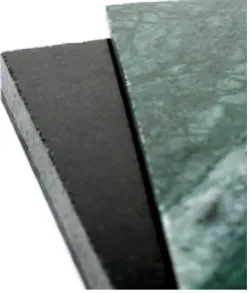
This composite material is made of stone and is produced using a patented method, in which the (natural) stone is on one side or completely encased in carbon.
The resulting composite material exhibits an extremely high tensile and compressive strength and does not break under impact.
The combination of the properties of stone – extreme high compressive strength and inexpensive – and the properties of carbon fiber – very high tensile strength – makes this material suitable for numerous applications.
Thinner lighter stone cladding has used MDF, honeycomb, metal foam, and other lightweight substrates to enable easy installation. This version takes it a step further by using the stiffness and performance of carbon fiber to create a new type of clad stone, enabling it to be used in applications for interiors never before imagined (Allen, 2004).
UltraCanvas
Coated, woven polyester, back-lit textile that contains 20% recycled content.
A proprietary technology is implemented into the water-based coating to create “exaggerated” colors, producing high quality images when back-lit.
Contains an antistatic coating and less than 1% shrinkage when printed and applied.
[image:4.595.342.467.252.399.2] Has good tear-resistance, is heat sealable, flame-resistant
Is compatible with UV, dye-sublimation, and screen-printers.
Can be used for indoor or outdoor signage, displays, light boxes, and tradeshows.
Innovative use of printing and signage material enables enhancements in this backlit signage. Skin tones, realism are heightened to a level not seen before in this type of printed surface (Dent, 2010).
OCTAMOLD
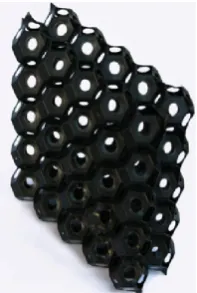
Three-dimensional lightweight honeycomb core material, whose structure is derived from joined soap bubbles,
Due to this construction, any wall thickness is possible. Depending on requirements, the material can be manufactured from polymers, ceramics, metal or renewable raw materials, and also can be laminated with different face layers.
In comparison to existing lightweight elements, core materials, tensile, compressive, bending, shearing, and torsion forces are optimally absorbed by the grid and diverted into the part.
Applications are for lightweight construction panels and composite panels, acoustic panels, furniture and packaging industries.
The biomimetic thinking that led to this innovation is of merit (the structure is that of soap bubbles), but what is more interesting is the ability to create ceramic, metal and composite panels of this structure for large scale screens, surfaces and walls (Musaagaoglu, Bilge, 2005).
Polymer Park materials
A versatile, integrally foamed, thermoplastic, lightweight element with a very good ratio between weight, mechanics, and costs.
They are durable, lightweight, chemically resistant, abrasion-proof, recyclable, low maintenance, and offer high weather ability.
It can be sawed, milled, nailed, screwed, riveted, and welded, and is offered in standard colors white, various gray shades, and black.
As an alternative to materials such as plywood, MDF, and other structural construction panels, this durable, rigid, lightweight panel offers a colored alternative that withstands time and whatever else nature and humans can throw at it. The material is
Also completely recyclable and could end up as clothing, some food storage bowls, or even another polymer panel at the end of its life.
The design of Interior space, walls has become much more complicated with development of new materials, technologies, methods of construction; but at the same time it is able tominimize negative effects and maximize positive effects of interior design on environmental systems over the life cycle of the building, and maintain the safe atmosphere in the building (Dent, 2010).
4. The intelligent sustainable materials with in LEED
[image:5.595.55.270.154.324.2]The Leadership in Energy and Environmental Design (LEED) Green Building Rating System is a point rating system devised by the United States Green Building Council (USGBC) to evaluate the environmental performance of a building over its life cycle and to encourage market transformation towards sustainable design. This voluntary system is credit-based, allowing projects to earn points for environmentally friendly construction of a building and its site. LEED was launched in 1999 in an effort to develop a “consensus-based, market driven rating system to accelerate the development and implementation of green building practices (www.greenaffordablehousing.org). ”LEED is the nationally recognized benchmark for the design, construction, and operation of high performance green buildings. LEED provides building owners and operators with the tools they
[image:5.595.362.525.283.436.2]Figure 28. The Ultra Canvas Source: 7
Figure 29. Octamold material Source: 22
Figure 30. PolymerPark materials for walls Source: 7
[image:5.595.117.216.607.754.2]need to have an immediate and measurable impact on their buildings’ performance. LEED promotes a whole-building approach to sustainability by recognizing performance in five key areas of human and environmental health: sustainable sites, water savings, energy efficiency, materials selection, and indoor environmental quality.
A project can obtain LEED certification by achieving points in five key areas within the standard:
sustainable site development;
water savings;
energy efficiency;
Materials selection and indoor environmental quality (www.usgbc.org).
Responsible methods or green building has financial, physical and environmental advantages:
Durability - the LEED for Homes program requires that
durability strategies are a key focus during the design process, and ensures that the builder follows through with the durability plan. The program encourages the selection of highly durable materials and highlights the importance of design details that limit the intrusion of water and other damaging conditions.
Indoor Air Quality - the program ensures that your home has
dramatically improved indoor air quality. Almost all outside air introduced into the home will first be filtered, which removes dirt, pollen, dust and other contaminants. Your home is safer, as the chance for mold growth is greatly reduced. The program also encourages materials that are low in volatile organic compounds, which can be harmful to your health.
A home that has good indoor air quality is also more comfortable – homes following the LEED standard are well insulated and air sealed. This provides many benefits including ensuring that there are no cold spots in home, the air is fresh and filtered, and the home is insulated from exterior noise. Homes that are LEED certified have closely controlled heating, cooling and humidity, and there are little unwanted temperature variations from one space to another. HVAC supplies and returns are required in all bedrooms, ensuring proper air flow and ventilation.
Sustainability – LEED for Homes ensures that sustainability of
materials is taken into consideration when purchasing decisions are being made. The process provides a tracking mechanism for sustainable features such as rapidly renewable or recycled materials. And finally, LEED for Homes gives owners assurance that the sustainable features were installed.
Water Efficiency – homes certified under LEED use less water.
Plumbing fixtures and appliances are verified to be water efficient, saving you money and reducing use of this precious resource.
Quality Control – a key component of the LEED for Homes
program is rigorous third-party verification and documentation. Each LEED home undergoes multiple on-site inspections and thorough performance testing to ensure the home’s envelope
and mechanical systems are properly installed. The project’s Green Rater also reviews all documentation, and provides critical feedback to the design and building teams.
Energy Efficiency - energy modeling is used extensively to
evaluate the effectiveness of potential improvements, and balance them to provide the most value for the dollar. A detailed energy model is critical to ensuring your HVAC system is properly sized. The program provides third-party insurance that the home will realize significant energy savings.
Waste Management - Promotes construction waste management by requiring contractors to track and report diversion rates. Homes built under the LEED standard produce less waste during the building process, and a higher percentage of waste is recycled.
Storm Water Management – a home built under the LEED
program have storm water management features that are designed and installed properly. Storm water runoff from buildings and building sites is a major contributor to sediment in the Potomac River and Chesapeake Bay. The LEED for Homes program helps protect these invaluable natural resources from excessive runoff.
Training - operation and Maintenance manuals are verified for
completeness, so that nothing is lost in the transition from builder to owner. Homeowners are trained to understand and operate the systems efficiently (USGBC 2009).
In general, we can assume that the LEED is created with an aim:
Facilitate positive results for the environment, occupant health and financial return;
Define “green” by providing a standard for measurement;
Prevent “green washing” (false or exaggerated claims);
Promote whole-building, integrated design processes;
Use as a design guideline;
Recognize leaders;
Stimulate green competition;
Establish market value with recognizable national “brand”;
Raise consumer awareness;
Transform the marketplace (www.greenaffordable housing.org).
In order to achieve the goals the LEED has established a rating system, whatconsists from the points below:
Storage & Collection of Recyclables - provide an easily
accessible area that serves the entire building and is dedicated to the separation, collection and storage of materials for recycling including (at a minimum) paper, corrugated cardboard, glass, plastics and metals
Building Reuse - maintain at least 75% of existing building
structure and shell (exterior skin and framing, excluding window assemblies and non-structural roofing material).
Construction Waste Management - develop and implement a
Recycle and/or salvage at least 50% of construction, demolition and land clearing waste. Calculations can be done by weight or volume, but must be consistent throughout.
Resource Reuse - use salvaged, refurbished or reused
materials, products and furnishings for at least 5% of building materials.
Recycled Content - use materials with recycled content such
that the sum of post-consumer recycled content plus one-half of the post-industrial content constitutes at least 5% of the total value of the materials in the project.
Local/Regional Materials - use a minimum of 20% of building
materials and products that are manufactured regionally within a radius of 500 miles.
Rapidly Renewable Materials - use rapidly renewable building
materials and products (made from plants that are typically harvested within a ten-year cycle or shorter) for 5% of the total value of all building materials and products used in the project.
Certified Wood - use a minimum of 50% of wood-based
materials and products, certified in accordance with the Forest Stewardship Council’s Principles and Criteria, for wood building components including, but not limited to, structural framing and general dimensional framing, flooring, finishes, furnishings, and non-rented temporary construction applications such as bracing, concrete formwork and pedestrian barriers (USGBC, 2009; www.usgbc.org).
5. The process of the selection of the sustainable materials in the Interior Design
When choosing materials and products for a design project, interior designers have a wide variety of resources that they may rely on for gathering basic information such as product specifications and pricing. However, when transitioning from traditional design to environmental interior design designers often find out that the material selection process becomes much more involved and complex due to the strong focus on choosing materials and products that not only reduce environmental impacts, but also reduce potential occupant health hazards. In comparison to traditional design practices, where designers are primarily focused on meeting the clients aesthetic and functional needs, environmental interior design focuses on the materials’ intended application, aesthetic qualities, environmental and health impacts, availability, ease of installment and maintenance, initial and lifecycle costs.
Interior designers must first evaluate, compare and rank potential materials and products based on each individual project before providing sample options to the client (Martin and Guerin, 2006). An important factor in environmental interior design is the necessity to select materials and products on a case-by-case evaluation based on the complex criteria that needs to be met in order to provide the best outcome to the client (Building materials, 2006).
An excellent guide for interior designers to follow when choosing materials or finishes is the Environmental Preference
Method (EPM). The EPM ranks materials according to their environmental impact, based on the following criteria:
Raw material availability;
Ecological damage from extraction;
Energy consumption including transport;
Water consumption;
Environmental pollution including waste;
Human health and well-being;
Repair, reuse, and recycle.
The EPM can be applied to most material selections and is a veryviable option for interior designers. Once the materials and products criteria have been established for the project, a designer must then begin a full investigation of materials that will meet of the project constraints. Most often, this is the most difficult portion of designing environmentally. There is a greater need for interior designers to be educated in the factors that make a material or product sustainable, as well as to have the ability and motivation to research new sustainable materials and products. Additionally as with any other field, technology and products are constantly changing, and the interior design field is not exempt from this evolution. Fortunately, there are resources and tools available to interior designers to assist in the complex task of selecting sustainable materials and products (Mazarella and Lipner, 2011).
[image:7.595.363.510.184.387.2]In material selection, the most important criteria is to select the material according to the features or function. Each of every function has specific needs. Another important criterion in material selection is the recycling potential of the materials. Moreover, the level of emission of toxic gases both used in production process and during the using period of the materials is an essential criterion in achieving sustainability. Especially, most traditional techniques in construction and materials are widely sustainable. As an example, traditional materials like mud brick and adobe are highly sustainable in the means of level of toxic gases emission. They are natural materials. All
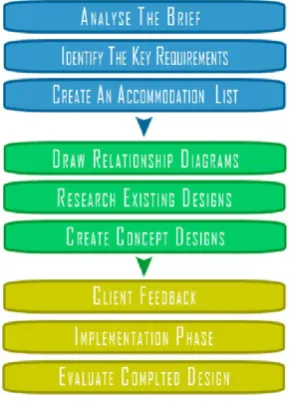
Figure 31: the process of the material selection Source: 21
these criteria are important in maintaining the atmosphere and quality of life. In this case, in order to create a healthy and light atmosphere in the house, the Interior Décor for the wall cladding should be changed at the first turn. Nowadays, there is a wide selection of sustainable, green materials for the wall cladding to choose from: paint and wallpaper, decorative panels, wood paneling, decorative stone and bricks, 3D textures wall panels
Decorative Panels
Decorative panels are available in many shapes and made from various materials: plastic, thermoplastic, aluminum, copper, and bronze. We have presented a brief description of various decorative panels below, which differentiate with the original touch needed to decorate one of the rooms in your home.
Lightweight wall cladding: wood, fiberboard, imitation wood, cork
Wood and wood-fiber wall cladding has changed over the past few years. Wood claims a good portion of the market due to its affordability and esthetic qualities. Many wood products have “gone green,” which is to say they are manufactured without formaldehyde and the raw wood material comes from responsibly-managed and environmentally certified forests.
Some of these products reward builders with points toward LEED certification (Leadership in Energy and Environmental Design)
There are a number of advantages to using lightweight concrete cladding panels. When it comes to commercial spaces, one of the most neglected interiors aspect or design concepts today are wood panels. The wood panel interior provides a unique atmosphere to any environment. Many commercial properties are built with concrete walls or sheet rock, painted walls upon which paintings and other designs are added to avoid a sterile look and feel. A paneling wall design was once very common during the 1960s and 70s but was neglected for a simpler look and feel. Today’s modern architects for commercial buildings are constantly searching for an interior design that is unique and fresh.
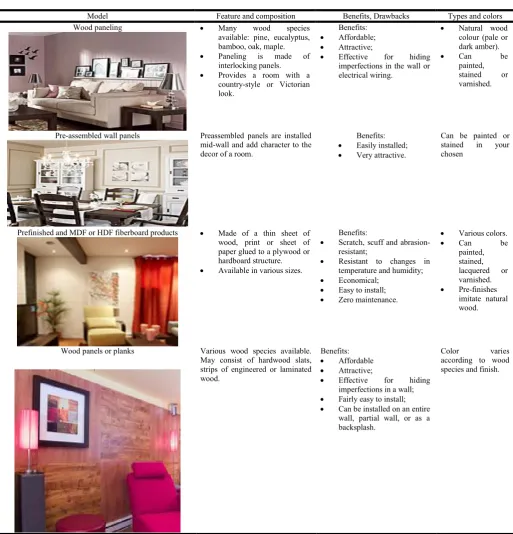
[image:8.595.42.561.274.639.2]Wood laminates allow the natural beauty of wooden walls. Modern wood panel walls are easy to maintain, clean, and allow the interior designer a number of options that are not available to standard wall configurations. For the same reason that wood floors are popular still, wood panel walls provide an aesthetic beauty that cannot be matched through the use of sheet rock, concrete, or other simple wall coverings. There are numerous different variety of wood that can be used for paneling.
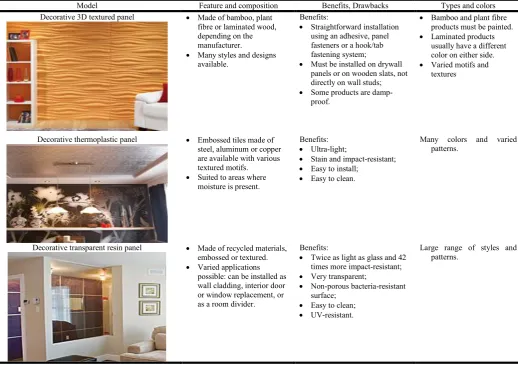
Table 2. The analyses of the decorative panels for the wall cladding Source: adapted by the author from 40, 49, 1, and 41
Model Feature and composition Benefits, Drawbacks Types and colors Decorative 3D textured panel Made of bamboo, plant
fibre or laminated wood, depending on the manufacturer.
Many styles and designs available.
Benefits:
Straightforward installation using an adhesive, panel fasteners or a hook/tab fastening system;
Must be installed on drywall panels or on wooden slats, not directly on wall studs;
Some products are damp-proof.
Bamboo and plant fibre products must be painted.
Laminated products usually have a different color on either side.
Varied motifs and textures
Decorative thermoplastic panel Embossed tiles made of steel, aluminum or copper are available with various textured motifs.
Suited to areas where moisture is present.
Benefits:
Ultra-light;
Stain and impact-resistant;
Easy to install;
Easy to clean.
Many colors and varied patterns.
Decorative transparent resin panel Made of recycled materials, embossed or textured.
Varied applications possible: can be installed as wall cladding, interior door or window replacement, or as a room divider.
Benefits:
Twice as light as glass and 42 times more impact-resistant;
Very transparent;
Non-porous bacteria-resistant surface;
Easy to clean;
UV-resistant.
Wood panel is cost-effective for commercial architectural design. They can provide a sense of natural beauty for a relatively low expense. For the habitants who aim to create a classical feel inside the commercial structure, wood panel is a great option (Richman and Pressnail, 2009).
Heavy wall cladding: brick, stone
Heavy wall cladding is often more expensive than lightweight cladding options (covering the same surface area), but they have the advantage of being more durable.
[image:9.595.41.555.77.612.2]The choice of wall cladding has a significant effect on the environmental performance of the home. Initial impacts of cladding, such as embodied energy, resource depletion and recyclability, must be balanced against maintenance and durability appropriate to life span. The choice of cladding should be based on a careful assessment and prioritization of each of these roles for each orientation. By choosing cladding materials specific to an elevation or exposure, it is possible to achieve the best in physical performance and aesthetics.
Table 3. The characteristic of the lightweight wall cladding materials Source: adapted by the author from 1, 40, 49, 41
Model Feature and composition Benefits, Drawbacks Types and colors Wood paneling Many wood species
available: pine, eucalyptus, bamboo, oak, maple.
Paneling is made of interlocking panels.
Provides a room with a country-style or Victorian look.
Benefits:
Affordable;
Attractive;
Effective for hiding imperfections in the wall or electrical wiring.
Natural wood colour (pale or dark amber).
Can be
painted, stained or varnished.
Pre-assembled wall panels Preassembled panels are installed mid-wall and add character to the decor of a room.
Benefits:
Easily installed;
Very attractive.
Can be painted or stained in your chosen
Prefinished and MDF or HDF fiberboard products Made of a thin sheet of wood, print or sheet of paper glued to a plywood or hardboard structure.
Available in various sizes.
Benefits:
Scratch, scuff and abrasion- resistant;
Resistant to changes in temperature and humidity;
Economical;
Easy to install;
Zero maintenance.
Various colors.
Can be
painted, stained, lacquered or varnished.
Pre-finishes imitate natural wood.
Wood panels or planks Various wood species available. May consist of hardwood slats, strips of engineered or laminated wood.
Benefits:
Affordable
Attractive;
Effective for hiding imperfections in a wall;
Fairly easy to install;
Can be installed on an entire wall, partial wall, or as a backsplash.
Color varies according to wood species and finish.
6. The most prominent examples of implementation of the sustainable design in Interior Design
Architects and designers charged with making a sustainable and memorable design, making unexpected use of all kinds of recycled, reclaimed and natural materials for the decoration of the walls, often thinking inside the (cardboard) box for maximum visual impact with a small environmental footprint (Ness, 2001).
Project “Ann Demeulemeester”, Seoul
[image:10.595.57.533.94.645.2]The “Ann Demeulemeester” project is done in the vertical greenery style. The Korean Design firm “Mass Studies” created the project in Seoul, contrasting the coldness of concrete and glass with the vitality and texture of moss. It’s the extra ordinary idea for the designing of the walls.
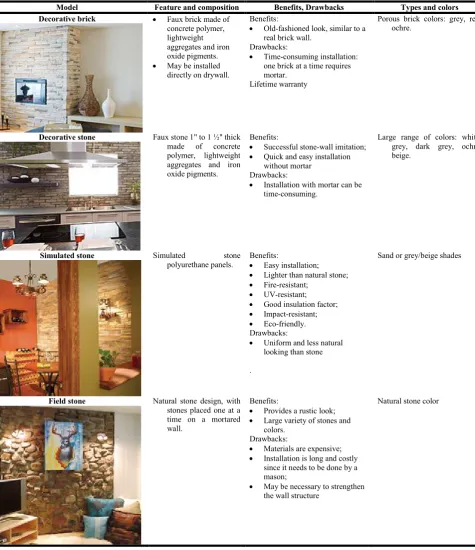
Table 4. The example of the heavy wall cladding Source: adapted by the author from 1, 40, 49, 41
Model Feature and composition Benefits, Drawbacks Types and colors Decorative brick Faux brick made of
concrete polymer, lightweight aggregates and iron oxide pigments.
May be installed directly on drywall.
Benefits:
Old-fashioned look, similar to a real brick wall.
Drawbacks:
Time-consuming installation: one brick at a time requires mortar.
Lifetime warranty
Porous brick colors: grey, red, ochre.
Decorative stone Faux stone 1" to 1 ½" thick made of concrete polymer, lightweight aggregates and iron oxide pigments.
Benefits:
Successful stone-wall imitation;
Quick and easy installation without mortar
Drawbacks:
Installation with mortar can be time-consuming.
Large range of colors: white, grey, dark grey, ochre, beige.
Simulated stone Simulated stone polyurethane panels.
Benefits:
Easy installation;
Lighter than natural stone;
Fire-resistant;
UV-resistant;
Good insulation factor;
Impact-resistant;
Eco-friendly. Drawbacks:
Uniform and less natural looking than stone
.
Sand or grey/beige shades
Field stone Natural stone design, with stones placed one at a time on a mortared wall.
Benefits:
Provides a rustic look;
Large variety of stones and colors.
Drawbacks:
Materials are expensive;
Installation is long and costly since it needs to be done by a mason;
May be necessary to strengthen the wall structure
Figure 32. “Ann D” project
Project “eBarrito Modular Cardboard”
[image:11.595.315.546.84.196.2]The shop has a status of a eco-friendly shop. The project has been created with a colorless uniformity, contrasting with bright neon colors and luxe bamboo flooring and walls. Designer Francesca Signori improvised the interior of this “eBarrito” shop in Cremona, Italy using cardboard tubes and pressed cardboard sheets.
Figure 33. “eBarrito Modular Cardboard” shop
“Bearstech Cave”, Paris
Salvaged waste wood is seemingly absorbed onto the ceiling in a bizarre vortex in French architect Paul Coudamy’s design for Bearstech in Paris. The wood was piled up and nailed in a configuration that the firm hoped would call to mind a bear’s cave, symbolizing both raw natural power and a den of creativity.
Figure 34. “Bearstech Cave”
“Smithfield Recycled Cardboard Interior”, UK
Recycled mailing tubes and shipping boxes were used for practically every last element in this Manchester Smithfield’s, designed by Peter Masters from Bumt Toast. Wall hangings, columns, sculptures, décor; light fixtures were artfully crafted
[image:11.595.44.276.281.400.2]from a material that is usually found in dumpsters, discarded without though.
Figure 35. Recycled Interior
“Yeshop”, Athens
[image:11.595.308.561.324.439.2]In this project the cardboard utilized in a new and refreshing way: the raw edges of repurposed shipping cartons presented in a texturized, streamlined wall inset with shelves and a mirror. The design, which used 1500 sheets of cardboard, was collaboration between designer Yiorgos Eleftheriades for the former’s Athens boutique, Yeshop.
Figure 36. Texturized wall
“Aesop’s Recycled Glass Ceiling”, Adelaide
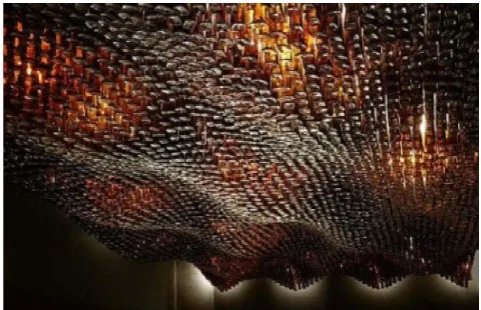
The ceiling of Aesopin Adelaide, Australia made from the thousands of recycled, shimmer amber glass bottles. Aesop, maker of botanical skin care products, is known for putting the emphasis on its product packaging in meticulously arranged rows.
Figure 37. Recycled Glass Ceiling
[image:11.595.45.275.544.662.2] [image:11.595.314.555.574.729.2]Conclusion
An important tool in the effort to build greener buildings and live greener lives is the selection of products that were made using environmentally friendly processes and are used in environmentally friendly ways. According to the research we can identify, that the green approach is simply “responsible design”. Having a responsibility to sustain life and land with every design decision made, are the great things to do. Sustainable interior design must be an integrated and joint effort from government, planners, financiers, interior designers, construction managers, landscape architects.
Moreover, nowadays it is vital to use the green and healthy materials in order to survive, especially for the wall cladding. For reason, that the wall cladding defines the tendency for the whole house – it is the most important part of the Interior design. In the era of the new technologies, we have the alternative materials.
Today’s buildings serve their purposes through complex combinations of the passive capabilities of structure and skin, the dynamic capabilities of mechanical and electrical systems and appliances, and the sensing, processing, and control capabilities of computational devices and networks. The addition of electronic intelligence generally enhances the versatility of interiors, allows them to adapt more effectively to changes in occupant requirements and exterior conditions, and makes them into more efficient consumers of resources. As the necessary technologies continue to develop, and as designers learn to make effective use of them, intelligent systems will become an increasingly crucial concern of interior design, a more and more dominant cost element in construction and fit-out, and a fundamental determinant of client and user satisfaction
A successful completed project that embodies environmental and human health features helps demonstrate to everyone involved in the project, and to prospective clients, that sustainable design is simply good design. Due to the air pollution, CO2 emission, we face serious threats to the
environment and human health. Buildings are a significant part of that problem. They pose a particular challenge to the design industry. However, they also offer the design community an opportunity to improve the performance of our habitable environments, and at the same to have a significant overall impact on the world’s environmental problem. The biggest single challenge, however, is for the design community to make sustainable design not only an option, but a requirement.
LIST OF THERMES
EPM - Environmental Preference Method UK - United Kingdom
PVC – Polyvinyl Chloride IAQ - Indoor Air Quality
VOC - Volatile Organic Compounds UF-free - urea-formaldehyde free CO2 - Carbon Dioxide
FF&E - Furniture, Fixtures & Equipment NYC - New York City
LED - Light-Emitting Diode
DMFD - Daniel Michalik Furniture Design CCFL - Cold Cathode Fluorescent Lamp
ICT - Information and Communication Technologies RFID - Radio-Frequency Identification
PC – Personal Computer
MDF - Medium-Density Fiberboard HDF - High-Density Fiberboard
LEED - The Leadership in Energy and Environmental Design
REFERENCES
Allen, E. 2004. “Fundemantals of Building Construction”, John Willey and Sons, New Jersey architecturedream.com Asford, P. The Implication of Energy Efficiency Measures in
Reduction of Carbon Dioxide Emission From European Building Stock, Bristol 1999
Braungart M. 2002. “Intelligent Materials Pooling Evolving a Profitable Technical Metabolism”. - MBDC
Building materials: what makes a product green 2006. Environmental Building News, 9(1),1-6.
Buildings Energy Data Book: 1.1 Building Sector Energy Consumption, U.S. Department of Energy, http://building sdatabook.eere.energy.gov/docs/1.1.3.pdf, August 2005. Danlers 2008. Introduction to Energy Saving Lighting
Controls (PowerPoint) 05/09/08.
Dent H. A. 2010.. “Fabric of the Future: Innovative Design Materials to Come”, - library & materials research, Material Connexion
Deru, Et al. Procedure to Measure Indoor Lighting Energy Performance. Technical Report. http:www.nrrel.gov, 2005 Firey, W.I. 1978. Man, Mind and Land: A Theory of Resource
Use. Greenwood Press Reprint, Westport, CT., ISBN: 10: 0837198348.
Foster, K., Stelmack, A. and Hindman, D. 2007. Sustainable residential interiors. New Jersey: John Wiley and Sons.
Green Affordable Housing Coalition. See:
www.greenaffordablehousing.org
Guerin, D. and Kang, M. The Characteristics of Interior Designers Who Practice Environmentally Sustainable Interior Design Environment and Behavior Vol 41 No 2 2009 p: 170-184
Halliday, S. 2008. Sustainable Construction. Elsevier: USA. Hartman, H. 2009. Specifying Eco-Paints. The Architect’s
Journal, 26 March 2009. Available at:
http://www.architectsjournal.co.uk/specifying-eco-paints/1995943.article
http://designhomes.pics/ http://dornob.com/
http://www.ajaxflooring.co.uk/ http://www.armstrong.co.in/
http://www.home-style-choices.com/ https://www.pinterest.com/
Iano, J. 2004. “Fundemantals of Building Construction”, John Willey and Sons, New Jersey
Johnson K. 2013. Place and public health: the impact of architecture on wellbeing. The Guardian Journal, - 17.19 BST
Jones L. 2008. Environmentally Responsible Design: Green and Sustainable Design for Interior Designers, edited by Dr. Louise Jones LEED AP, IDEC, ASID, IIDA. 2008, John Wiley and Sons, Inc. Hoboken, New Jersey.
LeCuyer A. 2008. ETFE Technology and Design. Berlin, Germany: Birkauser Verlag.
Martin, C.S. and D.A. Guerin, 2006. The interior design
profession’s body of knowledge.
http://www.careersininteriordesign.com/idbok.pdf
Mazarella, F. and Lipner, J. 2011. Interior Design. Whole Building Design Guide: a program of the National Institute of Building Sciences.
McDonough, W. and Braungart, M. 2002. Cradle to cradle. New York: North Point Press.
Musaagaoglu, Bilge 2005. “Performance of the Stone Building Envelope: Cladding to Curtain Wall”, UPMT, Middle East Technical University, Fen Bilimleri Enstitüsü
Ness, N. Urban Planning and Sustainable Development European Planning Studies Vol 9 No. 4 2001 p: 503-524 Pile, J.F. 2003. Interior Design. 3rd Edn., Prentice Hall,
Englewood Cliffs, New Jersey, ISBN: 10: 0130991325 Richman R., and Pressnail K. 2009. “A More Sustainable
Curtain Wall System Analytical Modeling of the Solar Dynamic Buffer Zone (SDBZ) Curtain Wall.” Building and
Environment, Vol. 44, pp. 1 – 10.
Sassi, P Strategies for Sustainable Architecture. New York, Taylor and Francis, 2006
Stegall, N. 2006. Designing for sustainability: a philosophy for ecologically intentional design. Design Issues, 22(2), 56-63.
Steph, 2014. Sustainable Store Style: 12 Incredible Retail Interiors. WebEcoist – art & design
Stieg, C. 2006. The sustainability gap. Journal of Interior
Design, 32(1), vii-xxi.
Suer, O. and Yılmaz M. An Innovative Waste Management System, ‘Cierra Recycling’ and Its Product as a Sustainable Building Material Sustainable Building Symposium 2008 Turkey
Tara L. Gray, ASID Director 2012. It is not always easy being green. - Interior Design Program Pikes Peak Community College.
The World Bank data (IBRD – IDA). – retrieved from: http://data.worldbank.org/
US Department of Energy. (n.d.). Green buildings. www.sustainable.doe.gov/buildings/gbintro.shtml
US Green Building Council’s LEED Rating System. Available at: www.usgbc.org.
USGBC. LEED Reference Guide for Green Building Operations and Maintenance, 2009 Edition. 2009.
Winchip, S. 2007. Sustainable Design for Interior Environments. Fairchild, Cornell University.
www.englertinc.com
www.furniturehomedesign.com
www.wbdg.org/design/env_wall_thin_stone.php
Yaldiz Y. and Magni H.B. Re-thinking Concept of Sustanable Architecture htpp://faculty.ksu.edu.sa retrieved (December 15, 2011)
Yeang, H. Edvards, T. et al. 2003 Vertical Light Pipes Zahner, 1999. “Selection Specifications”, Allen Pub. New
York