The Macroscopic analysis of Betel Leaf by Using the Techniques of
*1
P. K.
1
Director, R and
2Department of Computer Science
Karnataka, India and Research Scholar, Rayalaseema University,
ARTICLE INFO ABSTRACT
The present study deals with the macroscopic analysis of medicinal plants specifically betel leaf by using the techniques of Image Processing and Neural Networks. Any disturbance between the elements of human leads to disease and the therapy lies in restoring the balance through the use of medicines of natural origin such as herbs and minerals. India is endowed with a rich variety of medicinal plants. Not only in India, but also from other parts of the wo
also has wonderful medicinal values. The results of the present research work include the macroscopic structure of Veins, Areole characteristics and Area cha
INTRODUCTION
Image processing is a physical process used to convert an image signal into a physical image. The image signal can be either digital or analog. The actual output itself can be an actual physical image or the characteristics of an image.
Aspects of Image Processing
Image Enhancement
Processing an image so that the result is more suitable for a particular application. (sharpening or deblurring an out of focus image, highlighting edges, improving image contrast, or brighteing an image, removing noise).
Image Restoration
This may be considered as reversing the damage done to an image by a known cause. (removing of blur caused by linear motion, removal of optical distortions).
Image Segmentation
This involves subdividing an image into constituent parts
certain aspects of an image. (finding lines, circles, or particular shapes in an image, in an aerial photograph, identifying cars, trees, buildings, or roads.
The knowledge of the medicinal plants extends to any part of the world where man has traditionally needed these plants to cure his diseases, Thus, mixture of magic and religion, mixture of necessity and chance, test and error, the passage of different cultures has created a knowledge of vegetal remedies that has formed the base of the modern medicine. This rich knowledge should be preserved
*Corresponding author:[email protected]
ISSN: 0975-833X
Article History:
Received 16th October, 2012 Received in revised form 25th November, 2012 Accepted 20th December, 2012 Published online 16th January, 2013
Key words:
Image Processing, Betel Leaf,
Macroscopic structure, Medicinal.
RESEARCH ARTICLE
The Macroscopic analysis of Betel Leaf by Using the Techniques of
Processing and ANN
K. Srimani and *
2K. Nithiyanandhan
and D Division, B.U., DSI, Bangalore, Karnataka, India
Department of Computer Science and Applications, The Oxford College of Science, Bangalore,
Karnataka, India and Research Scholar, Rayalaseema University, Kurnool, Andhra Pradesh , India
ABSTRACT
The present study deals with the macroscopic analysis of medicinal plants specifically betel leaf by using the techniques of Image Processing and Neural Networks. Any disturbance between the elements of human leads to disease and the therapy lies in restoring the balance through the use of medicines of natural origin such as herbs and minerals. India is endowed with a rich variety of medicinal plants. Not only in India, but also from other parts of the world, there is a great demand for Betel Leaf which is not only used in all auspicious occasions but also has wonderful medicinal values. The results of the present research work include the macroscopic structure of Veins, Areole characteristics and Area characteristics. The results are presented and discussed.
Copy Right, IJCR, 2013, Academic Journals
Image processing is a physical process used to convert an image signal into a physical image. The image signal can be either digital or analog. The actual output itself can be an actual physical image or the
Processing an image so that the result is more suitable for a particular application. (sharpening or deblurring an out of focus image, highlighting edges, improving image contrast, or brighteing an image,
This may be considered as reversing the damage done to an image by a known cause. (removing of blur caused by linear motion, removal
This involves subdividing an image into constituent parts, or isolating certain aspects of an image. (finding lines, circles, or particular shapes in an image, in an aerial photograph, identifying cars, trees, buildings,
The knowledge of the medicinal plants extends to any part of the has traditionally needed these plants to cure his diseases, Thus, mixture of magic and religion, mixture of necessity and chance, test and error, the passage of different cultures has created a knowledge of vegetal remedies that has formed the base of
modern medicine. This rich knowledge should be preserved
and extensive research in this direction is absolutely necessary. Therapeutic properties of medicinal plants are conditioned by t presence in their organs of active substances, such as alkaloids, flavonoids, glycosides, vitamins, tannins, and coumarin compounds, which physiologically affect the bodies of humans and animals or which are biologically active in relation to the causat
various diseases. A Special group of medicinal plants is antibiotics. fact, there is no plant in this Universe which is non medicinal and which cannot be made use of for many purpose and by many modes. This definition rightly suggests that
potential medicinal value.
Medicinal plants have been considered as important therapeutic aid for alleviating ailments of humankind. Search for
longevity and to seek remedy to relieve pain and discomfort
the early man to explore his immediate natural surrounding to develop a variety oftherapeutic agents using natural resources.
The Indian systems of medicine have been a part of the culture and tradition of India down the centuries. Vedas, the
have devoted an important sections to Ayurveda, the science to life. The basic concept in the Indian systems of medicine, namely, Ayurvedava, Sidda and Unani relates to maintaining balance in the body between different elements of humo
made of. Any disturbance in the balance leads to disease and the therapy lies in restoring the balance through the use of medicines of natural origin such as herbs and minerals. India is endowed with a rich variety of medicinal plants. Eastern Himalayas and the Western Ghats are among the 18 crucial regions of bio
The practice of using medicinal plants as medicines has been existing since prehistoric times and flourished today as the primary form of medicine for perhaps as much as 80% of the world population. There are three ways in which plants have been
First, they may be used directly as teas or in other
their natural chemical constituents. Second, they may be u
International Journal of Current Research
Vol. 5, Issue, 01, pp.049-053, January, 2013
INTERNATIONAL
The Macroscopic analysis of Betel Leaf by Using the Techniques of Image
SI, Bangalore, Karnataka, India
The Oxford College of Science, Bangalore,
Kurnool, Andhra Pradesh , India
The present study deals with the macroscopic analysis of medicinal plants specifically betel leaf by using the techniques of Image Processing and Neural Networks. Any disturbance between the elements of human body leads to disease and the therapy lies in restoring the balance through the use of medicines of natural origin such as herbs and minerals. India is endowed with a rich variety of medicinal plants. Not only in India, but also from other rld, there is a great demand for Betel Leaf which is not only used in all auspicious occasions but also has wonderful medicinal values. The results of the present research work include the macroscopic structure of
racteristics. The results are presented and discussed.
, Academic Journals. All rights reserved.
and extensive research in this direction is absolutely necessary. Therapeutic properties of medicinal plants are conditioned by the presence in their organs of active substances, such as alkaloids, flavonoids, glycosides, vitamins, tannins, and coumarin compounds, which physiologically affect the bodies of humans and animals or which are biologically active in relation to the causative agents of various diseases. A Special group of medicinal plants is antibiotics. In is no plant in this Universe which is non medicinal and of for many purpose and by many modes. This definition rightly suggests that in principle all plants have a
Medicinal plants have been considered as important therapeutic aid for alleviating ailments of humankind. Search for eternal health and to seek remedy to relieve pain and discomfort prompted the early man to explore his immediate natural surrounding to
therapeutic agents using natural resources.
agents in the synthesis of drugs. Finally, the organic molecules found in plants may be used as models for synthetic drugs. Historically, the medicinal value of plants was tested by trial and error. Hundreds if not thousands of indigenous plants have been used by man from prehistoric times in all continents for relieving suffering and curing ailments. The practice of organized herbal medicine dates back to the earliest periods of known human history. Medicinal plants have been used in treatment of diseases in almost all ancient civilizations, In spite of tremendous development in the field of allopathy medicinal plants and their derivatives still remain one of the major sources of drugs in modern and traditional systems throughout the world playing a major role in medicinal therapy.
The All – Union Scientific Research Institute of Medicinal Plants, a number of institutes of the Academy of sciences of the USSR and the Academies of Sciences of the Soviet Republics, pharmaceutical institutes (Pharmaceutical Department), Botanical gardens, other scientific research and educational institutions are searching for new preparations of plant origin and are cultivating medicinal plants and studying their natural properties, and creating a rational regime for their use. In this study betel leaves are considered. These leaves are also in great demand in several other countries of the world. Consequently leaves worth about Rs 30-40 million are exported to the other countries, thus it is most promising commercial leafy crop capable of attracting substantial amount of foreign exchange to the country. Revenue generated would easily exceed if agronomic practices are scientifically explored.
Medicinal Plants and Their Uses in Present Age
The WHO estimates that 80% of people living in developing countries rely almost exclusively on traditional medicine for their primary health care needs. Medicinal plants fo r m t h e b ac k b o n e o f t r ad i t i o n al med i ci n e and hence more than 3300 million people utilize medicinal plants on a regular basis. Demand for medicinal plants is increasing due to growing recognisation of natural products which are non toxic. In spite of rapid development in methods of organic synthesis in laboratories, med i ci n al plants continue to play a significant role in modern medicine due to their inherent distinct chemical and biological properties. Roughly one third of the known medicinal plants are trees and equal proportion is shrubs and the remaining one third comprises of herbs epiphytes, grasses and climbers. The industrial uses of medicinal plants are many ranging from traditional medicines, herbal teas and health foods as nutriceuticals togalenicals, p h yt o p h ar mac eu t i cal s a n d industrially produced pharmaceuticals. Medicinal plants also constitute a source of valuable foreign exchange for most developing countries as they are a ready source of drugs such as quinine and reserpine, of galenicals like tincture and of intermediates in the production of semi synthetic drugs.
India and Its Medicinal Wealth
India is well known as an Emporium of medicinal plants. Knowledge of medicinal use of plants in India is amassed over millennia by tribals. For thousands of years Indian plants have been attracting attention of foreign countries. People from countries like China, Cambodia, Indonesia and Baghdad used to come to ancient universities of India likeTakshila (700BC) and Nalanda (500BC) to learn health science of India. Varied climatic and topographical conditions prevailing in India has bestowed upon it a rich and diverse flora which is responsible for the richness and uniqueness of medicinal plants. Numerous wild plants growing in Indian forest are used as folklore medicines to prevent or cure several diseases. Medicinal plants have a potential in to day‘s synthetic era, as a number of synthetic drugs are becoming resistant. A number of novel plant derived substances have entered into Western drug market. The present day customer’s lifestyles and needs are continuously undergoing tremendous changes. Accordingly, The manufacturers and farmers are meeting new challenges so that their products suitably meet the customers demand. One of the new challenges for
the farmers is the production of betel leaves with specific color and size. These are the important factors and therefore plant biologists and ecologists are concerned with the analysis of microscopic structure of veins in leaves. In India deep green heart shaped leaves of betel vine are popularity known as paan and are consumed by about 15-20 millions people in the country. The cultivation is on about 55,000 hectares with an annual productions worth about Rs 9000 million. There are many herbs in India which have wonderful medicinal values. Betel leaf is also used in all auspicious occasions, and has wonderful medicinal values. For example, in the treatment of infections, stomach ailments, severe cold etc. betel leaf is used as traditional remedy. Another amazing feature is that it has immune boosting properties and anti-cancer properties.
Related Work
In [1] a review article on traditional indian herbal medicine used as antipyretic, antiulcer, anti-diabetic and anticancer is presented. In the last few years there has been an exponential growth in the field of herbal medicine and these drugs are gaining popularity both in developing and developed countries because of their natural origin and less side effects. Many traditional medicines in use are derived from medicinal plants, minerals and organic matter. The World Health Organization (WHO) has listed 21,000 plants, which are used for medicinal purposes around the world. Among these 2500 species are in India, out of which 150 species are used commercially on a fairly large scale. India is the largest producer of medicinal herbs and is called as botanical garden of the world .The current review focuses on herbal drug preparations and plants used in the treatment of different chronic dieses in the world. The use of Ayurvedic medicines is common in both adults and children and is increasing in many areas of the world. This paper will discuss the benefits with use of herbal medicines as Antipyretic, Antiulcer, Ant diabetic and Anti-cancerous activity.
In [2] a study of leaf disease severity measurement using image processing is found. Fungi-caused diseases in sugarcane are the most predominant diseases which appear as spots on the leaves. If not treated on time, causes the severe loss. Excessive use of pesticide for plant diseases treatment increases the cost and environmental pollution so their use must be minimized. This can be achieved by targeting the diseases places, with the appropriate quantity and concentration of pesticide by estimating disease severity using image processing technique. Simple threshold and Triangle thresholding methods are used to segment the leaf area and lesion region area respectively. Finally diseases are catcogrise by calculating the quotient of lesion area and leaf area. The accuracy of the experiment is found to be 98.60 %. Research indicates that this method to calculate leaf disease severity is fast and accurate.
In [3] a study of recognition of powdery mildew disease for betelvine plants using digital image processing is discussed. The aim of this paper is to recognize powdery mildew disease in the betelvine plants using digital image processing and pattern recognition techniques. The digital images of the betelvine leaves at various stages of the disease are collected from different plants using a high resolution digital camera and it is stored with JPEG format. The image analyses of the leaves are done using the image processing toolbox in MATLAB which provides the standard patterns of the digital images. The analysis helps to recognize the powdery mildew disease can be identified before it spreads to entire crop.
bacteria (Xanthomonas vesicatoria and Ralstonia solanacearum). Leaves were extracted using different solvents such as methanol, ethanol, ethyl acetate and chloroform. Among treatments, maximum in vitro inhibition was scored in methanol extracts of C. odorata which offered inhibition zone of 10, 9, 12 and 12 mm against E. coli, S. aureus, X. vesicatoria and R. solanaccearum, respectively, followed by chloroform extract of the same plant leaf with inhibition zone of 8, 4, 4 and 4 mm, respectively. In [5] a review article on diabetes and medicinal plants-a review is presented. Diabetes mellitus (DM), both insulin-dependent DM (IDDM) and non-insulin dependent DM (NIDDM) is a common and serious metabolic disorder throughout the world. Traditional plant treatments have been used throughout the world for the therapy of diabetes mellitus. The present paper is an attempt to list of the plants with anti-diabetic and related beneficial effects originating from different parts of world. History showed that medicinal plants have been used in traditional healing around the world for a long time to treat diabetes; this is because such herbal plants have hypoglycemic properties and other beneficial properties, as reported in scientific literature. There are 136 such plants described in this review which clearly shows the importance of herbal plants in the treatment of diabetes mellitus. The effects of these plants may delay the development of diabetic complications and provide a rich source for antioxidants that are known to prevent/delay different diseased states.
In [6] the author has discussed on leaf color, area and edge features based approach for identification of indian medicinal plants. This paper presents a method for identification of medicinal plants based on some important features extracted from its leaf images. Medicinal plants are the essential aspects of ayurvedic system of medicine. The leaf extracts of many medicinal plants can cure various diseases and have become alternate for allopathic medicinal system now a days. Hence this paper presents an approach where the plant is identified based on its leaf features such as area, color histogram and edge histogram. A through survey of the literature pertaining to the present topic reveals that no work in this direction is available that has got an in depth quality output., Therefore, the present study is undertaken. Some of the other works include ([7] to [17])
Problem Specification
The main objectives of the present study is to make a detailed analysis of the macroscopic structure of veins in Indian Medicinal leaves in particular Betel Leaf by using the techniques of image processing methodologies. Different samples are taken and the experiments are conducted.
METHODOLOGY
We shall recall the types of digital images. Binary: Each pixel is just black or white. Since there are only two possible values for each pixel (0, 1), we only need one bit per pixel. Grayscale: Each pixel is a shade of gray, normally from 0 (black) to 255 (white). This range means that each pixel can be represented by eight bits, or exactly one byte. Other grayscale ranges are used, but generally they are a power of 2. True Color, or RGB: Each pixel has a particular color; that color is described by the amount of red, green and blue in it. If each of these components has a range 0–255, this gives a total of 2563 different possible colors. Such an image is a “stack” of three matrices; representing the red, green and blue values for each pixel. This means that for every pixel there correspond 3 values. The main goal of preprocessing is to identify the leaf in an image and discarding all other information other than the leaf shape. This can be done with a little help from the user. The user can help identify the base-point and some reference points of the leaf. Then the system uses the reference points and finds out the pixels that have similar value and connected to the reference points/pixels. Then the leaf is extracted from the background and a binary image is produced where the background pixels are set to 0 or black and the pixels within the leaf is set to 1 or white. Then the remaining black pixels within the leaf blade are
removed to produce an enhanced binary image. Next, the tip of the leaf is located. This is done by finding out the furthest point (which is, in most cases, the tip of the leaf) from the base-point (selected by the user). Then the slope of the line connecting the base-point and the tip ofthe leaf is calculated. Finally the enhanced binary image is rotated according to the angle of inclination to make the leaf horizontally aligned In order to make a detailed analysis of the macroscopic structure of veins in Betel Leaf and also to predict the other character tics like Areole and Area characteristics of the leaves, the following steps are performed and the codes are written in Matlab 7.0/7.4 Version.
Algorithm
Step 1: Read the image
Step 2: Setting the scale.
Step 3: Image cropping (Which crops away the unwanted noise
around the leaf image)
Step 4: Convert the RGB or grayscale images into binary images.
Step 5: Image storage and Area mask.
Step6: Cleaning the binary image (involves several steps)
Step 7: Image segmentation transforms the leaf vein image by using
standard statistical algorithms.
Step 8: Results of vein statistics etc.
The methods currently employed for leaf measurement and contour extraction (Viz. direct and graphical) are highly expensive and time consuming. Therefore, the present investigation is carried out to throw more light on the subject. The leaf area is determined by using digital photographs and Matlab tool which has an excellent image processing library. The code will be written in Matlab 7.0/7.4 version and provides (i) the descriptive statistics on the dimensions and positions of leaf veins and ie the areoles they surround by a series of thresholding, cleaning and segmentation algorithms. For this purpose, the veins of the leaves are enhanced relative to the background.
EXPERIMENTS AND RESULTS
LEAF GUI is an interactive software program built in MATLAB ([18]). The purpose of the software is to dramatically increase the speed and accuracy of the extraction and processing of vascular and areole structure from digital images of leaves. The program incorporates many image processing and analysis tools into a single graphical user interface. The software is modular in construction, including preprocessing, image cleanup, and leaf network extraction steps. The overall process that a user might take to process a leaf image and measure structure within the leaf network can be broken down into five major steps: (1) setting the scale of the leaf image, (2) initial image cropping, (3) image thresholding, (4) binary image cleaning and processing, and (5) extracting leaf network features (Figure 1). In this study and in the software, we refer to the vessel bundles in a leaf as edges and the point where two or more edges intersect as a node. A single individual edge is defined as the vessel bundle segment occurring between nodes. Thus, for example, the primary or midvein of a leaf would be viewed as a series of connected edges, rather than a single vein. Assuming edges can be approximated as cylinders, the geometry of each individual edge can be described using only its length and diameter. From these two measures, the surface area and volume of a leaf vein network are easily approximated.
Step 1: Setting the Scale
in pixels/mm. If the scale is known, it can be entered in the text box in the Set Scale panel. Alternatively, if the image contains a scale bar of length L (e.g. in mm), the user directs the software to measure the number of pixels Np in the given scale bar using the Measure Scale tool. The scale in this case will be set to Np/L (pixel/mm).
Step 2: Cropping the Initial Image
Two options are provided to crop the initial image: rectangular or polygonal cropping. Either cropping method is useful when extraneous features such as scale bars, labels, other leaves, or image noise need to be removed from the image. The choice between the two methods depends primarily on the location of the noise in the image.
Step 3: Image Thresholding and Segmentation
A necessary precursor to estimate the structure of a leaf vein network is to separate veins from the background. The identification of veins (also called segmentation) is accomplished in two steps: first, thresholding an image so that foreground regions (pixel value 1) are distinguished from background regions (pixel value 0); second, the resulting binary image is cleaned and processed (see next step). In many image analysis programs, the goal is to separate out distinct disconnected entities (like cells) from each other ([19]). Here, the objective is to identify edges (a vessel bundle segment) that are connected to each other at nodes. Two different thresholding methods (local and global) are included in here and are used separately or combined to convert a leaf vein image into a binary image, where leaf veins are represented by ones and nonvein regions by zeros. Global thresholding takes a grayscale copy of the original image, where pixel values range from 0 to 255, and sets pixel values above a certain threshold to 1. Pixels with an intensity value lower than the threshold are set to 0. For example, if a threshold value is 125, then all pixels with a value of 125 or greater will constitute foreground, whereas pixel with lower values will represent background. Unfortunately, global thresholding may produce Poor results for unevenly illuminated images. Adaptive thresholding corrects for uneven illumination by comparing each pixel intensity value, pi, with the mean intensity value, Ii, computed over a local window of size w centered at the pixel. If pi is greater than Ii 2 X, for some fixed margin X, then the pixel becomes a part of the foreground; otherwise, its value is set to 0.
Step 4: Binary Image Cleaning and Processing
Once the image has been threshold, a series of steps might be employed to further clean and enhance vein representation in the binary image. The choice and sequence are specific to the user requirements. These include removing unwanted connected regions below a certain size cutoff (e.g. all disconnected foreground regions smaller than 10 pixels), removing the leaf perimeter in single pixel-wide steps, filling single pixel holes, removing extraneous spurs (single pixel wide extrusions), filling or removing user-specified polygonal regions, clearing regions overlapping the image border, or removing unwanted labeled (color coded) regions. At any point, the user can create a complement of the binary image (inverted image) and perform the same tasks on the part of the image that was previously background. An option to create a mask through the use of a very high or low threshold value. In the resulting image, the leaf (everything within the leaf margin) is entirely white and the rest of the image is black.
Step 5: Summary Statistics
There are three primary options the user can select within the Summary Statistics Panel to return descriptive statistics from the leaf image. These are broken down into three buttons corresponding to the different types of statistics: Area Stats, Vein Stats, and Areole Stats. The output is either an Excel spreadsheet (which requires that Excel be installed) or a tab-delimited text file based on user preferences.
Area Statistics
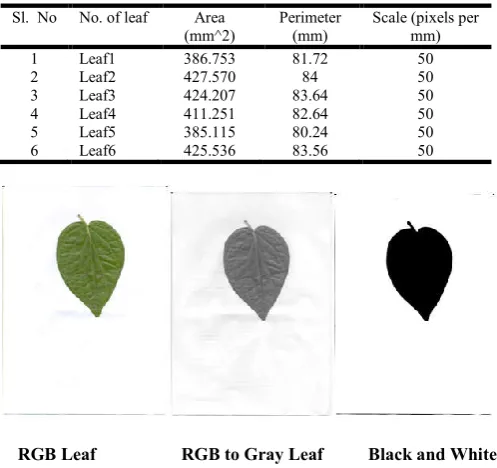
[image:4.595.310.559.196.430.2]Area Statistics (Table 1) returns the area, perimeter, and records the scale of the image. These measures are computed for the entire leaf. Six samples are taken.
Table 1. Area Statistics
Sl. No No. of leaf Area (mm^2)
Perimeter (mm)
Scale (pixels per mm)
1 Leaf1 386.753 81.72 50
2 Leaf2 427.570 84 50
3 Leaf3 424.207 83.64 50
4 Leaf4 411.251 82.64 50
5 Leaf5 385.115 80.24 50
6 Leaf6 425.536 83.56 50
RGB Leaf RGB to Gray Leaf Black and White
Figure 1. Betel Leaf with RGB, Converting the colour image to Gray, Black & white image
Areole Statistics
Areole Statistics (Table 2) returns the area, convex area (area of the convex hull that just encloses the region), solidity (the ratio of areole area to convex area), eccentricity (the ratio of the major and minor axis of the ellipse that just encloses the region), equivalent diameter (the diameter of a circle with the same area as the region), length of the major and minor axes of the ellipse that just encloses the region, centroid position (x and y coordinates of the region’s center of density), mean distance to the nearest vein, and its variance for each areole in the leaf . Six samples are taken.
Table 2. Areole Statistics
Sl. No No. of leaf Average Count Sum 1 Leaf1 223.44 50089 11191966.04
2 Leaf2 66.15 2912 192633.83
3 Leaf3 101.28 5187 52531.01
4 Leaf4 58.31 312 18195.35
5 Leaf5 59.05 442 26104.48
[image:4.595.37.555.683.767.2]6 Leaf6 50.93 130 6621.01
Table 3. Vein Statistics
Sl. No No. of leaf
Number of Edges
Number of Nodes
Total Network Length (mm)
Total Network Area (mm^2)
Mean Edge Length
(mm)
Mean Width (mm)
Mean 2D Area (mm^2)
Mean 3D Surface Area
(mm^2)
Mean Volume (mm^3)
1 Leaf1 5485 4281 1227.678 388.452 0.147 0.109 0.064 0.204 0.129
2 Leaf2 392 317 2053.983 427.657 0.708 0.537 0.822 2.585 2.112
3 Leaf3 650 548 1272.936 424.396 0.513 0.385 0.487 1.530 1.117
4 Leaf4 40 32 4125.602 411.259 2.130 1.046 3.456 10.859 9.905
5 Leaf5 74 57 1392.572 385.128 1.906 1.340 3.041 9.553 8.986
Vein Statistics
Vein Stats retsurns the table (Table 3), the first (see sheet titled Vein_Stats in the Excel output option) containing a connectivity matrix, which is a NE 3 3 matrix (NE is the number of edges) showing which sand 3) are connected by which labeled edges (column 1). The Table also contains the length, width, and spatial position (centroid) of every edge and node of the vein network. In addition the software returns the two-dimensional (2D) area occupied by each edge and estimates for the surface area and volume based on the assumption and each edge is approximately cylindrical. The Table 3 (see sheet titled Summary_Stats in the Excel output option) includes the total number of nodes and edges, the total length of the network, the total 2D area occupied by the network and the mean edge length, width, 2D area, three-dimensional surface area, and volume. Six samples are taken.
Acknowledgements
One of the authors Mr. K.Nithiyanandhan acknowledges The Oxford College of Science, Bangalore, Karnataka and Rayalaseema University, Kurnool, India for providing the facilities for carrying out the research work.
REFERENCES
1. Maurya Umashanker and Srivastava Shruti “Traditional indian herbal medicine used as antipyretic, antiulcer, anti-diabetic and anticancer: a review”, IJRPC, 1(4) Umashanker et al. ISSN: 2231 2781, 2011.
2. Sanjay B. Patil, “Betel Leaf Area Measurement Using Image Processing” Vol. 3 No.7 July 2011.
3. J.Vijayakumar and S.Arumugam “Recognition of Powdery Mildew Disease for Betelvine Plants Using Digital Image Processing”, International Journal of Distributed and Parallel Systems (IJDPS) Vol.3, No.2, March 2012.
4. S. L. Sukanya1,2, J. Sudisha1, P. Hariprasad1, S. R. Niranjana1 H. S. Prakash1 and S. K.Fathima,” Antimicrobial activity of leaf extracts of Indian medicinal plants against clinical and phytopathogenic bacteria “African Journal of Biotechnology Vol. 8 (23), pp. 6677-6682, 1 December, 2009.
5. G.B. Kavishankar, N. Lakshmidevi, S. Mahadeva Murthy, H.S. Prakash, S.R. Niranjana “Diabetes and medicinal plants-A review” Int J Pharm Biomed Sci, 2(3), 65-80, 2011.
6. Sandeep Kumar. E, Leaf Color, Area and edge features based approach for Identification of Indian Medicinal Plants July 2012.
7. Harsh Sexena ,” Betel Leaves- Basics and Economics in Indian Scenario “June 2009.
8. P. Guha, “Betel Leaf: The Neglected Green Gold of India” 2006.
9. Abdul Kadir, Lukito Edi Nugroho , Adhi Susanto , Paulus Insap Santosa – Leaf Classification Using Shape, Color, and Texture Feature July to August 2011.
10. Charles. A. price, Olga Symonova, Yuriy Mileyko, Troy Hilley, and Joshua S. Weitz, Leaf Extraction and Analysis frame work Graphical User Interface: Segmenting and Analyzing the Structure of Leaf Veins and Areoles.Vol. 155, pp.236-245, 2011.
11. Morlon Marcon Kleber Mariano, “Estimsation of total leaf area in perennial plants using image analysis R.Bras.Eng.Ambietal, V.15,96-101, 2011.
12. Chaohul Lu, Hui Ren (et.al) “Leaf Area measurement based on image processing , IEEE, 580-582,2010.
13. Tian You-wen,Wang Xiao-juan, “Analysis of leaf parameters measurement of cucumber based on image processing, “World congress on software engineering, 34-37,2009.
14. Enrique Rico-Garcia, Fabiola hermadez – Hernadez , “Two new methods for estimation of leaf area using digital photography, “International journal of agriculture and biology, 397-400,2009. 15. Hiroya Kondou, Hatuyoshi Kitamura, Shape evaluation by digital camera for grape leaf “Science and Technology promotion center, 586-590, 2002.
16. Rafael C, Gonzalez, Richard E Woods, Steven L. Eddins, Digital Image Processing Using MATLAB, “Pearson Publications, 2008.
17. Jain A K, Image Analysis and computer Vision PHI, New Delhi, 1997.