Abstract—In recent years, recycling has become the first best option of dealing with waste before landfilling is considered in cases of handling difficulties. In South Africa however, 41,000 tons of solid waste is destined for landfills daily; which includes huge chunks of waste from construction and demolition activities. The continued reliance of South Africa on the landfilling system could extend a while until economical recycling alternatives are introduced. Leachate generation and percolation is expected in these landfills on account of infiltration of water into the waste body from rain and/or runoffs. Although, it has been documented that arsenic, copper and chromium percolate soil systems, it however noted that occurring physical, chemical and biological activities may influence mobility of metals from generated leachate. This is particularly evident in cases where Chromated Copper Arsenate (CCA)-treated wood are disposed in monofills with consequential impacts on the environment. Laboratory investigation using a bespoke device to explore the environmental risk of depositing CCA-treated wood in monofills and/or open dumps was done; with a view to simulating worst case scenario of an unlined disposal facility that relied on the geology of the site. This scenario best indicates high concentrations and maximum formation of heavy metals. The bespoke device was assembled with chopped untreated wood and CCA-treated wood in a bottom chamber respectively, and de-ionized water was allowed to seep through from a reservoir forming leachate. The targeted chemical ions (arsenic, copper and chromium) from the leachate were analyzed by way of full spectral method on the effluent and were compared to South African standard of drinking water. The study therefore, revealed that CCA-treated wood formed hazardous concentration levels of chromium and arsenic which if not properly contained in real cases, could inflict severe contamination consequential to human and environmental health.
Keywords—Landfills, CCA-treated wood, Percolation, Leachate I. INTRODUCTION
HROMATEDCopper Arsenate (CCA)-treated wood have been in use over the past few decades as structural elements having short to long term service life. Wood treated
Manuscript received July 10, 2015; revised August 04, 2015.
Emmanuel Emem-Obong Agbenyeku is a research student at the University of Johannesburg, South Africa (phone: +27 11 559 6396; e-mail: [email protected]; [email protected]).
Edison Muzenda is a Professor of Chemical and Petroleum Engineering and Head of Department of Chemical, Materials and Metallurgical Engineering, College of Engineering and Technology, Botswana International University of Science and Technology, Private Mail Bag 16, Palapye, Botswana, as well as visiting Professor at the University of Johannesburg, Department of Chemical Engineering, Faculty of Engineering and the Built Environment, Johannesburg, P.O.Box 17011, 2028, South Africa (phone: +27 11 559 6817; e-mail: [email protected]; [email protected]).
Innocent Mandla Msibi is Executive Director of the Research and Innovation Division, University of Johannesburg, South Africa (phone: +27 11 559 6280; e-mail: [email protected]).
with CCA is often used in outdoor structures such as decks, garden-bed borders, playground equipment, picnic tables and docks. CCA is a water-soluble inorganic pesticide most commonly used as a wood preservative to make it resistant to attack by termites and fungi that cause decay. The wood is soaked in a solution of CCA and subjected to vacuum pressure forcing penetration of the chemical into the wood. For this reason, CCA-treated wood is also known as pressure-treated wood [1]. In recent years, awareness is been cast on the direct effects CCA-treated wood on the health state of users and the environment. For instance, a clear impact on users can be seen as reported by [2] that; freshly CCA-treated wood may retain pesticide residues on the wood surface after the treatment process. Then, since CCA is water-soluble, rainwater can seep in and leach CCA onto wood surfaces. Also as the wood ages it cracks which aggravates the leaching process. Hence, CCA residue can be wiped from the wood surface sticking to hands or clothing which could pose health risks when ingested. In the immediate environment however, CCA when in contact with rainwater or by virtue of weathering factors can leach from CCA-treated wood into the soil beneath and adjacent to CCA-treated wood structures. The soil around such areas has been found to be contaminated by arsenic, chromium and copper. However, on the application of waterproof sealants to structural members, the soil around waterproofed CCA-treated wood showed lower concentrations of the metals [3]. With all of these impacts together with large amounts of generated construction and demolition waste, increased disposal amounts are expected as CCA-treated wood gradually phases out. One major aspect that will propel this process is the concern over children’s health; young children are more at risk of exposure to CCA because they tend to spend more time playing outdoors and since they have frequent hand-to-mouth contacts, it becomes a dire issue. As children playing on playground equipment or decks constructed with CCA-treated wood can be exposed to CCA by touching the CCA leachate on the wood surface with their hands thereby, unconsciously ingesting the chemical by hand-to-mouth activity. It is however noted by [2] that the amount of CCA leached on the surface of the wood depends upon the type of wood and the age of the structure. The amount ingested is also reliant on the frequency of hand-to-mouth action. Children may also be exposed to CCA in contaminated soil as recorded by [3], by inadvertently ingesting the chemical when playing around areas with these structures through similar activities. As of 2003, [4] estimated 180 million m3 of CCA-treated wood to be
in use in the United States. Presently, it is expected that CCA-treated wood in the United States would have phased out as scheduled for in early 2004 [5]. One propelling force to bans and discontinued use of CCA-treated wood could be the report
Potential Risks of CCA-Treated Wood
Destined to Landfills
Emmanuel Emem-Obong Agbenyeku, Edison Muzenda and Innocent Mandla Msibi
on the increased cancer risks to children in contact with CCA-treated wood decks and play sets [6]. However, on removal of CCA-treated wood from use, its disposal becomes a concern and requires appropriate containment as it may show characteristics of a hazardous waste based on leachability of the toxic contaminant species in the CCA generated leachate. Also, recycling and reuse options in South Africa and most developing African countries are currently lacking or infeasible. This implies that most CCA-treated wood will be destined to landfills. With its high metal concentrations, CCA-treated wood should not be mulched or burnt as indicated by [7] as it emits arsenic to the atmosphere causing air pollution and concentrates arsenic, copper and chromium in the ash. Landfills, monofills and open dumps are often where waste wood end up. It is a known fact that landfills will remain the major system of waste management for various wastes [8], including CCA-treated wood in the foreseeable future. Studies by [9] have therefore shown that construction waste containing CCA-treated wood leached concentrations of arsenic above groundwater standards. Hence, in contribution to ongoing interests in waste containment and leachate control, this paper through laboratory works, investigates the leachate quality and subsequent impacts of CCA-treated wood on environment and human health on event of an escape from containment facilities, particularly, in unlined facilities depending on the natural geology of the site.
II. EXPERIMENTALAPPROACH
A. Test and Setup
The CCA-treated wood was sampled in arm length and broken pieces from a disposal site slightly distant from heaps of other domestic solid waste in Johannesburg, South Africa as seen in Fig. 1a and b. This was used as the waste body since the study herein sought to generate leachate from the deposition of CCA-treated wood by using a laboratory bespoke column device to simulate a monofill. A small scale bespoke device about 600mm long with internal diameter of about 160mm was used in the study.
(a) Landfill area (b) CCA-treated wood waste Fig. 1. (a) and (b) Sampling site of CCA-treated wood waste
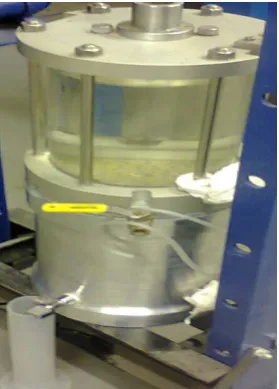
[image:2.595.315.540.117.219.2]A pictorial view of the laboratory bespoke device is shown in Fig. 2. For the purpose of this study, the device was coupled to comprise of two sections:
1) the bottom part called the bucket section; which contained the CCA-treated wood to a height of 230mm, simulated the waste in a monofill. The sampled CCA-treated wood waste was chopped into smaller particle sizes so as to fit into the small scale bespoke apparatus. Selected gravel was
was placed over it to prevent clogging of the outlet by moving fines which served as the filter bed in the system.
Fig. 2. Bespoke test device
[image:2.595.309.543.336.431.2]The chopped CCA-treated wood was then placed in the bucket with a 20mm thin layer of lightly compacted clayey soil over it. The thin soil layer was introduced to prevent a rapid flush out of the influent during the percolation process and ensure lasting CCA-treated wood-water interaction towards formation of leachate. The particle size distribution curves for the chopped CCA-treated wood, selected gravel used as filter bed and the clayey soil are shown in Fig. 3 respectively.
Fig. 3. Particle size distribution for the respective materials used for the study
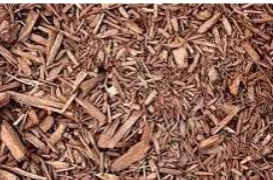
[image:2.595.360.497.497.587.2]While Fig. 4 and Fig. 5a and b shows the chopped CCA-treated wood and the experimental arrangement for the bucket containing the CCA-treated wood respectively.
Fig. 4. CCA-treated wood chopped into smaller pieces for percolation tests
(a) Filter bed (b) Soil over CCA-treated wood Fig. 5. (a) and (b) Wet geotextile placed over selected gravel and lightly compacted clayey soil over chopped CCA-treated wood in the bucket section
2) the upper part above the bucket section called the 0
10 20 30 40 50 60 70 80 90 100
0.001 0.01 0.1 1 10 100
Percent
finer by
wei
gh
t
(%
)
Grain size (mm) Clayey soil Fine gravel
[image:2.595.49.289.536.626.2] [image:2.595.316.549.608.696.2]through a perforated plate into the bucket section (waste body) simulating low intensity rain droplets slowly saturating the waste body till leachate was formed and the concentration of the collected effluent was tested at intervals to monitor the concentration levels of the targeted chemical ions. The system was coupled firmly using O-rings, gasket corks and silicon sealants to ensure a leakage free assembly. The reservoir held a water head of 250mm which was manually topped as the water level dropped since a mechanism for retaining constant head was not designed for in the device. Fig. 6a and b show the upper section of assembled device for the experimental study carried out.
(a) Perforated plate (b) Assembled device with de-ionized water in reservior Fig. 6. (a) and (b) Perforated plate through which de-ionized water as influent
in the reservoir section flowed simulating low intensity rain droplets
[image:3.595.47.290.230.322.2]In this study, the choice of CCA-treated wood monofill offers the worst-case disposal scenario in unlined sites considering that the disposal of chemical treated wood will in a long time to come be continually dumped. This case will also aid a clearer understanding on the chemical ions generated thereof without intrusion from contaminant species of other sources. As such, outside other confirmatory percolation tests conducted in the study, two main tests where considered and recorded. Test-A represented the experimental case for simulated CCA-treated wood in a monofill while Test-B represented the control case with untreated wood. The fully assembled percolation test setup studied herein is shown in Fig. 7.
Fig. 7. Percolation test under study using de-ionized water as permeant for CCA-treated wood with the effluent collected and tested at intervals to track
the concentration levels of the targeted chemical ions of concern
The tests were conducted in room temperature with respective tests lasting up to 15days. On the formation and breakthrough of leachate, a 50ml cylinder was used to constantly collect the effluent. Although, general water quality parameters i.e., pH, dissolved oxygen (DO), conductivity, temperature and oxidation-reduction potential (ORP) were measured in the study using a Portable Multi-flex Beckman Century pH/mV/FT/DO-915A-1202-TM SS-1 Meter Model, however, only pH was discussed as other parameters require validation. Collected leachate were put in plastic containers and stored in a cooling chamber at 2ºC to prevent any form of chemical or biological activities. The effluent samples were then analyzed by full spectral method and were compared to South African standard of drinking water in conformance with [10].
III. DISCUSSIONOFFINDINGS
A. Laboratory Tests on Permeation of Monofill Wood Waste
[image:3.595.99.239.515.710.2]Test-A and Test-B indicated cases of leachate generation from the deposition of CCA-treated and untreated wood in a monofill respectively. This was done with a view to ensuring that clear understanding could be made of the targeted ions without the intrusion of other ions from different waste bodies. Each test setup ran for 15days using de-ionized water as permeant for proper interaction with the waste body and sufficient leachate formation. Breakthrough for Test-A and Test-B occurred at very early stages. The collection of leachate and measurement of general water quality parameters and targeted ions (i.e., for the study, arsenic, copper and chromium) were done for both tests up to 15days where a steady state concentration level was reached. Observing and measuring the general water quality parameters provides an indication of the activities within the bespoke permeameter and assists in characterizing the generated leachate. From results and analysis therefore, the pH of both tests was found to minimally decrease over the test duration. However, Test-A had a pH of 6.08 as compared to Test-B with a considerably higher pH of 6.45 as shown in Fig. 8.
Fig. 8. Measured pH for tests on CCA-treated and untreated wood
The arsenic, copper and chromium ions from the formed leachate in Test-A showed higher concentration levels as compared to Test-B (control tests) with almost over two magnitudes lower as shown in Fig. 9a to c.
0 4 8
1 2 3 4 5 6 7 8 9 10 11 12 13 15
pH
Time (days)
[image:3.595.314.542.532.643.2]Fig. 9a. Measured arsenic conc. on CCA-treated and untreated wood
[image:4.595.51.281.307.433.2]The chromium and copper ions leached two and one order of magnitude more in Test-A as against Test-B. The high concentrations of metals plausibly tie to the increasing trend recorded and correspond to the low and decreasing pH.
Fig. 9b. Measured chromium conc. on CCA-treated and untreated wood
These outcomes were found to be reasonably in line with similar studies by [5]. However, considering that the study herein was a short-term laboratory investigation as against works from other authors which were conducted in fields over long periods, values represented are not indicative of real life expectations.
Fig. 9c. Measured copper conc. on CCA-treated and untreated wood
Some level of microbial action in both Test-A and B is suspected to have occurred through the testing period as indicated by ORP and DO outcomes. However, for such a short-term test, further validation is to dispel all reasonable
been discovered to flourish on CCA-treated wood thereby, extracting the metals present. Also, as observed by [5] some fungi creates dicarboxylic acid other organic acids making chromium and arsenic remain in water soluble forms. This can trigger precipitation of copper as copper-oxalate having low water solubility. This could possibly explain why copper concentrations levels were relatively lower in both tests for CCA-treated and untreated wood wastes, in contrast to, arsenic and chromium respectively.
IV. CONCLUSIONS
It is clear that CCA-treated wood will continually be disposed in monofills and/or landfills as they remain the primary form of waste management in South Africa and other countries. This study has therefore, examined the potential environmental risks of disposing CCA-treated wood in landfills. A laboratory bespoke column to simulate landfill scenario having a case of CCA-treated wood monofill was investigated. High concentrations of the targeted chemical ions were found in Test-A, the case of CCA-treated wood monofill. The respective tests were ran such that, a nonintrusive case; where no other waste material was co-disposed to interact with the main subject was done. From results and analysis, the following conclusions were reached:
That the arsenic, chromium and copper concentrations were found to slightly increase while the pH decreased.
Based on the amount of leachate produced in a short-term investigation, there could be an advantage to disposing of CCA-treated wood separately if proper containment and management procedures can be guaranteed.
The concentration levels of arsenic and copper in the generated leachate for Test-A were both found to constitute environmental risks as per [9] since they were above 10 and 1mg/L respectively during the early stages of permeation.
From the concentration levels over such a short time frame, it appeared that leachate there from could impact human and environmental health. The disposal of this leachate however, may be unrealistic as it could be expensive to manage.
In a nutshell, CCA-treated wood waste leachate contains arsenic, chromium and copper. Reliable studies suggests that exposure to the arsenic in CCA-treated wood poses the greatest potential health risk. Nevertheless, it is unsure what exposure level threatens health from contact with CCA-treated wood. However, since CCA-treated wood cannot suddenly come out of service particularly in developing countries, a few measures have been highlighted to reduce exposure to CCA:
i. when working with CCA-treated wood dust masks, gloves and protective clothing must be worn to reduce chances of exposure to sawdust.
ii. sealants should be applied to CCA-treated wood structural members at intervals of 1-2years to prevent direct contact with treatment chemicals.
iii. children should be guided from playing in affected areas with CCA-treated wood as well as reminded to wash up after 0
2 4 6 8 10 12 14 16
1 2 3 4 5 6 7 8 9 10 11 12 13 15
Arsenic
conc.
(mg
/L)
Time (days) Test-A Test-B
0 2 4 6 8 10 12 14 16
1 2 3 4 5 6 7 8 9 10 11 12 13 15
Chromi
um
conc.
(mg
/L)
Time (days)
Test-A Test-B
0 2 4 6 8 10 12 14 16
1 2 3 4 5 6 7 8 9 10 11 12 13 15
Co
pper
co
nc.
(mg
/L)
Time (days)
[image:4.595.53.281.539.672.2]contact with CCA-treated wood components or playground equipments.
iv. clients and firms are advised to consider greener optional and eco-friendly building materials i.e., hardwood and plastics as outdoor structural members.
v. retail CCA-treated wood stores should have consumer information sheets describing safe handling recommendations. Furthermore, CCA-treated wood may be disposed as ordinary household trash but should not be burnt [7] because toxic chemicals would be released into the air or remain in the ashes. Finally, CCA-treated wood must not be mulched and sawdust from CCA-treated wood must not be added in composting piles as noted by [5].
ACKNOWLEDGMENT
The Authors appreciate the University of Johannesburg where the study was carried out.
REFERENCES
[1] CDPH. 2007. Pesticides used in pressure-treated wood. Hartford: Connecticut Department of Public Health. http://www.ct.gov/dph/lib/environmental_health/echa/pdf/pressure_treat ed_wood.pdf.
[2] ATSDR. 2007. Toxicological profile for arsenic (update). Atlanta: Agency for Toxic Substances and Disease Registry.
[3] CPSC. 2006. Evaluation of the effectiveness of surface coatings in reducing dislodgeable arsenic from new wood pressure-treated with chromate copper arsenate (CCA). Draft Final Report. Consumer Product Safety Commission. http://www.cpsc.gov/library/foia/foia07/os/cca.pdf. [4] Environmental Building News (EBN), 2002. “CCA Phase out: Now the
Hard Part Begins,” Vol. 11, No. 3, p. 2, A publication of Building Green, Inc., Brattleboro, VT.
[5] Jambeck R.J. Townsend T. and Solo-Gabriele H. 2008. Leachate Quality from Simulated Landfills Containing CCA-Treated Wood. United States, Florida, Miami.
[6] United States Environmental Protection Agency (US EPA) 2003a. “A Probabilistic Risk Assessment for Children Who Contact CCA-Treated Playsets and Decks,” Draft Preliminary Report, Office of Pesticide Programs, Antimicrobials Division, November 10, 2003.
[7] Solo-Gabriele H. Townsend T. Cai Y. Khan B. Song J. Jambeck J. Dubey B. and Jang Y. 2003. “Arsenic and Chromium Speciation of Leachates from CCA-Treated Wood,” Draft Report, Florida Center for Solid and Hazardous Waste Management, Gainesville, FL.
[8] Agbenyeku E.E. Muzenda E. and Msibi I.M. 2014b “Buffering of TOC-Contaminant Using Natural Clay Mineral Liner”, International Conference on Earth, Environment and Life sciences (EELS-2014) Dec. 23-24, 2014 Dubai (UAE).
[9] Weber W.J. Jang Y.C. Townsend T.G. and Laux S. 2002. “Leachate from Land Disposed Residential Construction Waste,” Journal of Environmental Engineering, Vol. 128, No. 3, p. 237-245.
[10] Water Services Act No. 108 of 1997. Monitoring requirements and regulations of the South African National Standard (SANS). 241 Drinking Water Specification.