TRADE ADJUSTMENT ASSISTANCE
FOR WORKERS PROGRAM
Fiscal Year 2013
EMPLOYMENT AND TRAINING ADMINISTRATION UNITED STATES DEPARTMENT OF LABOR
REPORT TO THE COMMITTEE ON FINANCE
OF THE SENATE AND COMMITTEE
ON WAYS AND MEANS OF THE
HOUSE OF REPRESENTATIVES
The Department of Labor submits the following report on the Trade Adjustment Assistance (TAA) for Workers Program to the Committee on Finance of the Senate and Committee on Ways and Means of the House of Representatives. This report is submitted in accordance with section 249B(d) of the Trade Act of 1974. This provision requires the Department to provide a summary of specified data collected by the Department on the TAA Program for the preceding fiscal year (FY). This report reflects data reported for FY 2013 and includes supplemental data from FY 2009 through FY 2012.TABLE OF CONTENTS
Executive Summary . . . 1
5 YEAR TOTALS . . . 1
FY 2013 TAA BENEFITS AND SERVICES . . . 2
2013 HIGHLIGHTS . . . 2
SUCCESS STORIES . . . 3
FIGURES AND TABLES CONTENT . . . 5
I . Program Description . . . 6
II . TAA Petition Activity . . . 8
III . Benefits and Services Received . . . . 13
IV . Performance Outcomes . . . . 20
V . Program Guidance . . . . 23
VI . Funding . . . . 24
VII . Conclusion . . . . 32
VIII . Attachments . . . . 33
Attachment A: . . . 34Figure 4: Side-by-Side Comparison of TAA Program Benefits under the 2002 Program, 2009 Program, and 2011 Program; including information on training waivers and applicable deadlines for obtaining the waivers from training under these programs . Attachment B: . . . 36
Table A-20: FY 2013 TAA Certifications by State Attachment C: . . . 37 Table A-21: FY 2013 TAA Certifications by Congressional District
EXECUTIVE SUMMARY
Preparing Trade-Affected Workers
for 21st Century Jobs
T
he Trade Adjustment Assistance (TAA) program is a federal program that offers
a variety of benefits and services to workers impacted by foreign trade, who
have lost their jobs through no fault of their own. Through the provision of a
number of benefits and services, the TAA program provides trade-affected workers
with opportunities to obtain the support, resources, skills, and credentials they need
to return to the workforce in a good job. These include training, employment and case
management services, job search allowances, relocation allowances, reemployment
and alternative TAA wage subsides for older workers, and income support in the form
of Trade Readjustment Allowances (TRA).
Since the inception of the TAA Program in 1974, nearly 4.8 million workers have been certified trade-affected and eligible to receive TAA benefits and services.1
As of December 31, 2013, the TAA Program has served
2,192,910 workers
.5
YEAR LOOK BACK
Participant Outcomes FY 2009-2013:
Nearly 270,000 trade-affected workers participated in the TAA Program over the past five years.
Building a skilled and educated workforce
-• Of the total number of TAA participants, more than 50 percent (138,477) participated in TAA approved training.
• More than 98,000 workers who have completed training received a degree or industry-recognized credential.
• 32,563 trade-affected workers received remedial training.
Getting Participants Reemployed after a Trade Related Layoff
-• The rate at which participants went back to work rose from 58 percent in 2010 to 71 percent in 2013.
• Of the reemployed participants, up to 91 percent were still employed 6 months later.
Helping our older workers stay employed:
• 10,768 workers over 50 became reemployed and maintained a living wage by participating in the TAA Program and receiving A/RTAA.
FY 2013 TAA BENEFITS AND SERVICES
The total amount of funds provided to states in Fiscal Year (FY) 2013 for all TAA benefits and services was $756 million, which includes $534 million for training and other services. Training and other services includes funds for employment and case management services, training, job search and relocation allowances, and related state administration. The remainder of the funds was for the payment of trade readjustment allowances to assist individuals in participating in and completing training.
Employment and Case Management Services –
• Encourage workers to tailor the TAA training and services to their needs and maximize opportunities for getting back to work; and
• Include skills assessments, individual employment plans, career counseling, financial aid information, short term prevocational services, labor market and occupational information, and referrals for supportive services.
Individualized Training Plans –
• Developed with case managers who understand the local and regional labor markets and training offered by local providers, including community colleges, in order to develop a plan to prepare individuals to meet employer’s needs and acquire an in-demand job; and
• Includes skills training that will lead to a degree or an industry-recognized credential. Training services may include traditional classroom; on-the-job; remedial and prerequisite; Apprenticeship programs; and more.
Trade Readjustment Allowances –
• Income support to ensure that eligible workers can meet their financial obligations while participating in full-time training.
Job Search Allowances –
• Assist workers to cover the necessary expenses incurred while seeking employment outside their commuting area.
Relocation Allowances –
• Assist workers with their moving expenses after they obtain suitable reemployment outside of their commuting area.
Specific Reemployment Assistance for Older Workers –
• Alternative Trade Adjustment Assistance (ATAA) and Reemployment Trade Adjustment Assistance (RTAA) provide a wage subsidy that takes into account the unique challenges and needs of older workers and encourages sustainable reemployment.
2013 HIGHLIGHTS
Increased Petition Activity –• 1,480 petitions for the TAA Program were filed with the Department in FY 2013. This number is slightly greater than in FY 2012 and nearly 100 more than in FY 2011. • Of the petitions filed during FY 2013,
close to 80 percent were certified and an estimated 104,158 workers became eligible to apply for TAA benefits and services. • FY 2013 certifications covered workers in
every state, the District of Columbia, and Puerto Rico.
Greater Participation In and Use of TAA Benefits in Training –
• 76 percent of those who completed training in FY 2013 received a degree or industry recognized credential.
• In FY 2013, nearly 50 percent of TAA participants received training.
• 50 percent more workers over the age of 50 became reemployed and participated in ATAA and RTAA than last year.
Improved Overall Performance Outcomes –
• During FY 2013, more than 75 percent of workers who exited the program found employment within 6 months.
• Of those workers who became employed, over 90 percent were still employed at the end of the year.
SUCCESS STORIES
Stephen Haight
“It was not easy working for a company
for 33 years and being let go, then
trying to get a decent job at age 56.
But your program worked: I am
doing exactly what my training was
intended for, and you were a big part
of that program. Thanks again!”
Stephen Haight lost his job after working for the same company for 33 years. He knew he needed to acquire more education and new skills in order to be competitive and find a good job. With the support of his case manager, Stephen enrolled in an Associate’s Degree program in Natural Gas Technology. Upon completion of his program, Stephen not only achieved a 3.9 GPA but started a full-time position the very next day in the field of his training.
Kim Franklin
“I would like to say thank you Workforce Network, you
made it possible.”
Kim Franklin was laid off from her job in a manufacturing company and she was unable to find a similar position. With the responsibilities of being a single mother and supporting her two children, Kim realized she needed to obtain new skills and consider a new career. Through the TAA
program, she completed Medical Assistance training and graduated with a 3.9 GPA. Currently, she is employed as a Medical Assistant in a health clinic in her community.
SUCCESS STORIES
Juan Bustamante
“I would like to thank the TAA Program for helping me
achieve my goal, and to Los Angeles Valley College for
preparing me to succeed with a career at LA Metro!”
Juan Bustamante worked as a machine operator for over 11 years at a company that produced aluminum car rims. When a nearby auto
manufacturing plant shifted its operations out of the country, Juan and 300 of his colleagues lost their production jobs. To prepare for new employment, Juan pursued training through the TAA Program at the Los Angeles Valley College Job Training Center where he took remedial courses in English, Math, and Speech. After completing his coursework, Juan qualified for and completed the Transportation Metro Bus Operator Bridge Training Program and gained a full-time position with opportunities for career advancement.
Judith Fischer
“My work is rewarding in every way especially being able
to connect with these children and I feel all the love they
have to give.”
Judith Fischer was employed as a Help Desk and Administrative Coordinator for a publishing firm and separated during one of the company’s several downsizings. Judith became eligible to apply for TAA benefits and services and realized that she needed to take her transferable skills to a different
occupational field. While the idea of going back to school after many years in the
workforce was intimidating, Judith excelled in her program and earned an Associate Degree that enabled her to become employed as a Community Rehabilitation Instructor and Case Manager assisting the developmentally disabled. In addition to her employment that she finds deeply gratifying, Judith is also pursuing her Bachelor’s Degree in Psychology.
FIGURES AND TABLES CONTENT
The following figures and tables list the reporting elements described in section 249B(d) of the Trade Act, as amended by the Trade Adjustment Assistance Extension Act of 2011 in order of appearance and by section location. The figures and tables are classified by state and national totals:
Section I: Program Description
Figure 1 Exiting TAA Participants by00gram and Fiscal Year
Table 1 Percentage of Exiting TAA Participants by Program and Fiscal Year
Section II: TAA Petition Activity
Table 2 The Number, Percent, and Estimated Number of Workers Covered by Petitions Filed, Certified, and Denied Table 3 The Average Time for Processing Petitions Certified in FY 2013
Table 4 The Number of Petitions Certified in FY 2013 Under the Trade Act Provisions for the 2011 Program, Classified by the Basis for Certification
Table 5 The Number of Petitions Certified and Denied in FY 2013 by Industry Sector
Table 6a Top 5 Industry Sectors in FY 2013 in which Workers were Employed after TAA Participation Table 6b Top 5 Fields in FY 2013 of Reemployment by Manufacturing and Service Sector
Figure 2 Most Common Industries Employing FY 2013 TAA Workers before Certification and after Program Exit
Section III: Benefits and Services Received
Table 7a A Summary of the Data on TAA Participants, Classified by Gender, Race, Pre-Program Educational Level, Age, and Employment Tenure
Table 7b A Summary of the Data on the American Civilian Labor Force Classified by Top Gender, Race, Pre-Program Educational Level, Age, and Employment Tenure Rates
Table 8 The Number of Workers Receiving Each Type of TAA Benefit or Service Table 9 ATAA and RTAA Participant Trends
Table 10 The Number of Training Waivers Granted, Classified by Type of Waiver Table 11 TAA Exiters by Program
Table 12 The Number of Workers who Completed and who did not Complete Training
Table 13 The Percentage of Workers who Completed Training in FY 2013 and Obtained a Credential Table 14 The Average Duration of TAA Benefits and Services
Section IV: Performance Outcomes
Table 15 The FY 2013 Summary of Quarterly Reporting of Core Indicators: Entered Employment Rate, Employment Retention Rate, and Average Earnings
Table 16 TAA FY 2013 Post-Secondary Credential (Including an Industry-Recognized Credential, or Secondary School Diploma or Equivalent) Results Combined with Employment Results One Year After Exit
Figure 3 FY 2013 TAA Participants Employed One Year after Exit and Training Impact on Credential Results
Section V: Guidance
Table 17 Guidance Documents Issued
Section VI: Funding
Table 18 The Total Amount of Funds Distributed to the States in FY 2013
Table 19 The Total Amount of Payments to the States in FY 2013 Used to Carry Out Sections 235 through 238 (Program payments); Trade Readjustment Allowances; and ATAA/RTAA
I. PROGRAM DESCRIPTION
T
he majority of participants enter the program with a high school education or less
and more than a decade of experience in the trade-affected employment from
which they were separated through no fault of their own. The TAA Program
provides these workers with opportunities to obtain the support, resources, skills, and
credentials they need to obtain good jobs in an in-demand occupation. The program also
helps businesses grow and industries that have fallen on troubled times to bounce back by
ensuring that the talents and skills of these workers remain competitive.
Who is Eligible
For a worker to be eligible to apply for TAA under the provisions of the Trade Act that were in effect during FY 2013, the worker must be part of a group of workers that is the subject of a petition filed with and certified by the Department of Labor. Three workers of a company, a company official, a union or other duly authorized representative, and an American Job Center (sometimes known locally as One-Stop Career Centers or by a different name) operator may file a petition with the Department and simultaneously with the Governor of the State in which the workers’ firm is located. In response to the filing, the Department initiates an investigation into whether the statutory criteria for determining that foreign trade was an important cause of the workers’ job loss or threat of job loss have been met.
A worker group certified in FY 2013 is covered under the 2011 Program. Trade-affected workers may include workers in firms that produce articles and workers in service sector firms, based on:
1. increased imports of like or directly competitive articles or services;
2. increased imports of a finished article for which the workers’ firm produces component parts or supplies services;
3. increased imports of articles directly incorporating foreign components that are like or directly competitive with the component parts made by U.S. workers;
4. shifts in production of articles or supply of services to any foreign country;
5. workers in firms that supply component parts or services to firms with workers covered by a certification or perform additional, value-added production processes to firms with workers covered by a certification; or 6. workers in firms identified in International Trade Commission “injury” determinations.
If the Department makes an affirmative determination, it certifies the petition; identifies the worker group covered by the certification; and sends a notice of affirmative determination to the state and petitioner(s).
Once the state receives the notice of affirmative determination, it notifies the workers covered by the certification that they may apply to the state for benefits and services under the TAA Program through the American Job Center network. The benefits and services each have separate statutory eligibility criteria in addition to the criteria for certifying the group of workers. Such criteria include previous work history, Unemployment Insurance (UI) eligibility, and individual skill levels, all of which states apply in determining the appropriate assistance to provide to individual workers.
Operating Three Distinct TAA Programs
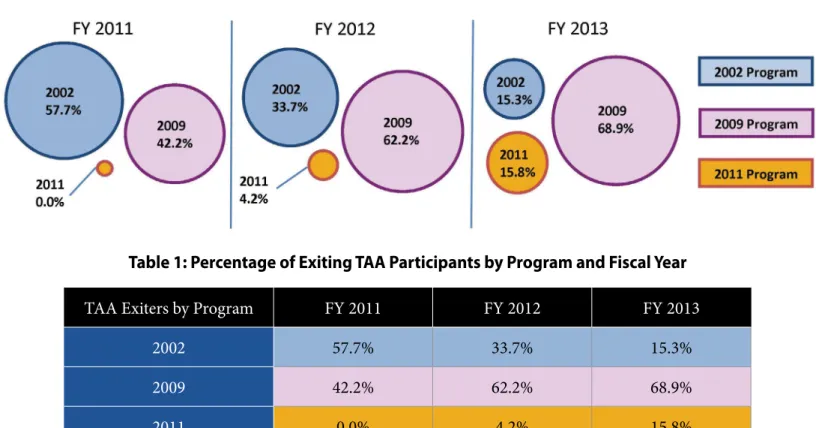
In FY 2013, the Department administered three versions of the TAA Program, referred to as: the 2002 Program, the 2009 Program, and the 2011 Program. It was necessary to administer the three versions concurrently because the 2009 and 2011 amendments to the TAA program included “grandfather” provisions. Under those provisions, workers certified under petitions filed before the effective date of the new amendments were subject to the requirements of the law that was in effect when the petitions were filed, rather than the requirements contained in the new amendments. During FY 2013, new petitions filed with the Department were determined on the basis of the 2011 Program eligibility criteria and workers covered by these petitions became eligible to apply for 2011 Program benefits and services. At the same time, participants covered by existing certifications that were issued under the 2002 and 2009 Programs continued to receive benefits and services available under the respective program eligibility criteria applicable to those programs. Due to the long duration of participation, which averaged 573 days in FY 2013 (illustrated in Table 14), the majority of the “exiting” participants in FY 2013 were served under the 2009 Program. The term program exit means a participant has not received a service funded by the program or funded by a partner program for 90 consecutive calendar days, and is not scheduled for future services. The exit date is the last date of service and is reported by states on a quarterly basis through the Trade Act Activity Report (TAPR). The number of exiting participants by program and fiscal year is illustrated in Figure 1 and quantified in Table 1.
Figure 1: Exiting TAA Participants by Program and Fiscal Year
Table 1: Percentage of Exiting TAA Participants by Program and Fiscal Year
TAA Exiters by Program FY 2011 FY 2012 FY 2013
2002 57.7% 33.7% 15.3%
2009 42.2% 62.2% 68.9%
2011 0.0% 4.2% 15.8%
For a detailed description of the differences between the 2002, 2009, and 2011 Programs, please see Attachment A of this report.
The petition activity, detailed in Section II, underscores the scope of the TAA Program by demonstrating the extent to which foreign trade impacted numerous industries, employers, communities, and subsequently affected an estimated 104,158 American workers who became eligible to apply for TAA benefits and services this year.
II. TAA PETITION ACTIVITY
The Department certified 1,025 petitions, or 78.6 percent of the approximately 1,480 determinations issued during FY 2013. An estimated 104,158 workers from various industries, represented in Table 4, were covered by these certifications. Table 2 provides the number of workers certified and denied and the corresponding petition activity. Attachment B illustrates certified petitions by state, and Attachment C shows certified petitions by Congressional District.
Table 2: The Number, Percent, and Estimated Number of Workers Covered by Petitions Filed, Certified, and Denied
Fiscal
Year Petitions Filed* CertifiedPetitions % of Petitions Certified Workers*Est. # of Petitions Denied % of Petitions Denied Workers**Est. # of
2011 1,391 1,208 79.3% 104,779 316 20.7% 22,960
2012 1,465 1,153 86.5% 82,630 180 13.5% 21,715
2013 1,480 1,025 78.6% 104,158 279 21.4% 23,628
* Note: During any fiscal year the number of petitions filed will not necessarily be the same as the number of determinations issued for a variety of reasons: 1) the processing time for petitions may overlap fiscal years; and 2) petitioners may withdraw a petition once it has been filed, which results in the termination of an investigation. (Data is inclusive of workers added to petitions after amendments were filed.) * Estimated number of workers covered by a certified petition. **Estimated number of workers covered
by a denied petition.
Table 2 illustrates that the number of petitions filed increased from FY 2011 to FY 2012 and further increased in FY 2013. Though the percent of petitions certified decreased by almost 8 percentage points between FY 2012 and FY 2013 (and the percent of petitions denied increased), the estimated number of workers covered by a certified petition increased by 26 percent.
The Department averaged 50 days to complete the processing of petitions. This is consistent with the processing time from FY 2012 and a substantial decrease from the average processing time in FY 2011 as shown in Table 3.
Table 3: The Average Time for Processing Petitions
Fiscal Year Average Processing Time
2011 80 Days
2012 51 Days
Table 4 provides a breakout of the estimated number of trade-affected workers in FY 2013 who were certified and became eligible to apply for TAA benefits and services under 2011 Program provisions.
Table 4: The Number of Petitions Certified in FY 2013, Under the Trade Act Provisions for the 2011 Program, Classified by the Basis for Certification
Certification Type Statutory Provision Section 222 Certs# of WorkersEst. # of Total% of
Product
Shift in Production to a Foreign
Country (a)(2)(B)(i)(I) 290 33,962 28.3%
Customer Imports of Articles (a)(2)(A)(ii)(I) 136 25,994 13.3% Company Imports of Articles (a)(2)(A)(ii)(I) 33 4,777 3.2% Acquisition of Articles from a
Foreign Country (a)(2)(B)(i)(II) 61 9,160 6.0% Downstream Producer (c)(2) & (c)(3)(B) 9 236 0.9% Imports of Finished Articles
Containing Foreign Components (a)(2)(A)(III) 4 198 0.4% Imports of Finished Articles
Containing Like or Directly
Competitive Components (a)(2)(A)(II)(aa) 5 408 0.5% Increased Aggregate Imports (a)(2)(A)(ii)(I) 27 1727 2.6%
ITC Determination (f) 9 1270 0.9%
Secondary Component Supplier (c)(2) & (c)(3)(A)/(c)(3)(B) 20 2849 2.0%
Total 594 80,581 58.0%
Acquisition of Services from a
Foreign Country (a)(2)(B)(i)(II) 198 12,669 19.3% Company Imports of Services (a)(2)(A)(ii)(I) 2 63 0.2%
Service
Customer Imports of Services (a)(2)(A)(ii)(I) 19 1475 1.9% Secondary Service Supplier (c)(2) & (c)(3)(B) 9 268 0.9% Shift in Services to a Foreign
Country (a)(2)(B)(ii)(I) 203 9102 19.8%
Total 431 23,577 42.0%
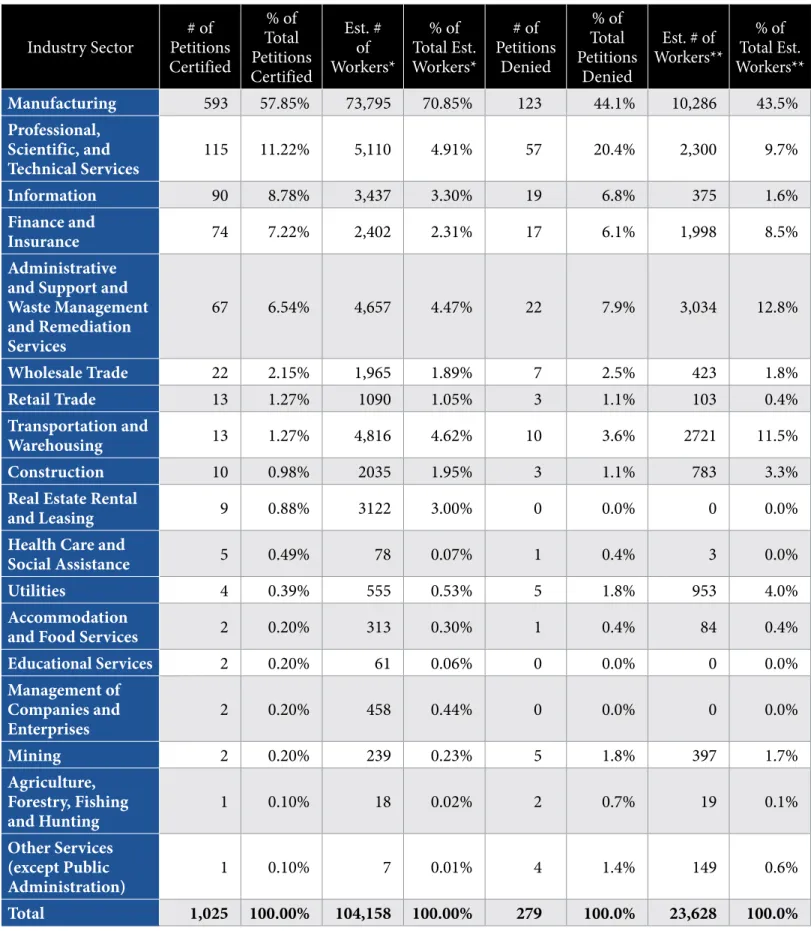
Table 5 shows petitions certified and denied in FY 2013 and a breakout by the North American Industry Classification System (NAICS) sectors in which the workers were employed.
Table 5: The Number of Petitions Certified and Denied in FY 2013 by Industry Sector
Industry Sector Petitions # of Certified % of Total Petitions Certified Est. # of Workers* % of Total Est. Workers* # of Petitions Denied % of Total Petitions Denied Est. # of Workers** % of Total Est. Workers** Manufacturing 593 57.85% 73,795 70.85% 123 44.1% 10,286 43.5% Professional, Scientific, and Technical Services 115 11.22% 5,110 4.91% 57 20.4% 2,300 9.7% Information 90 8.78% 3,437 3.30% 19 6.8% 375 1.6% Finance and Insurance 74 7.22% 2,402 2.31% 17 6.1% 1,998 8.5% Administrative and Support and Waste Management and Remediation Services 67 6.54% 4,657 4.47% 22 7.9% 3,034 12.8% Wholesale Trade 22 2.15% 1,965 1.89% 7 2.5% 423 1.8% Retail Trade 13 1.27% 1090 1.05% 3 1.1% 103 0.4% Transportation and Warehousing 13 1.27% 4,816 4.62% 10 3.6% 2721 11.5% Construction 10 0.98% 2035 1.95% 3 1.1% 783 3.3%
Real Estate Rental
and Leasing 9 0.88% 3122 3.00% 0 0.0% 0 0.0%
Health Care and
Social Assistance 5 0.49% 78 0.07% 1 0.4% 3 0.0%
Utilities 4 0.39% 555 0.53% 5 1.8% 953 4.0%
Accommodation
and Food Services 2 0.20% 313 0.30% 1 0.4% 84 0.4%
Educational Services 2 0.20% 61 0.06% 0 0.0% 0 0.0% Management of Companies and Enterprises 2 0.20% 458 0.44% 0 0.0% 0 0.0% Mining 2 0.20% 239 0.23% 5 1.8% 397 1.7% Agriculture, Forestry, Fishing and Hunting 1 0.10% 18 0.02% 2 0.7% 19 0.1% Other Services (except Public Administration) 1 0.10% 7 0.01% 4 1.4% 149 0.6% Total 1,025 100.00% 104,158 100.00% 279 100.0% 23,628 100.0%
* Estimated number of workers covered by a certified petition ** Estimated number of workers covered by a denied petition
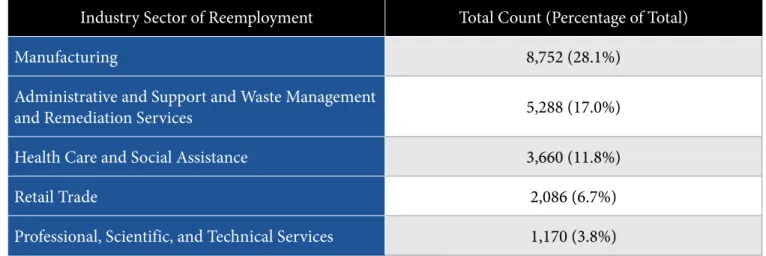
As evident in Table 5, petitions were filed on behalf of worker groups from diverse industries, although manufacturing still remains the top sector impacted by foreign trade with 593 petitions certified. To better understand how participation in the TAA Program affects these workers and industries, Table 6a, and Table 6b and Figure 2, examine the industry sectors in which workers were reemployed after participation in the TAA Program. Table 6a shows the top five industry sectors in which TAA participants were reemployed in the second quarter after exiting the program.
Table 6a: The Top 5 Industry Sectors in FY 2013 in which Workers were Employed after TAA Participation
Industry Sector of Reemployment Total Count (Percentage of Total)
Manufacturing 8,752 (28.1%)
Administrative and Support and Waste Management
and Remediation Services 5,288 (17.0%) Health Care and Social Assistance 3,660 (11.8%)
Retail Trade 2,086 (6.7%)
Professional, Scientific, and Technical Services 1,170 (3.8%)
Table 6b examines the top five Manufacturing and Service Industry subsectors where workers were reemployed, listed in Table 6a. Table 6b provides more detail of the specific field of employment where participants were reemployed six months after exiting the program.
Table 6b: Top 5 Manufacturing and Service Industry Subsector
Manufacturing Service
Automobile Manufacturing Temporary Help Services
Plastics Product Manufacturing General Medical and Surgical Hospitals Machine Shops Elementary and Secondary Schools
Paper Mills Nursing Care Facilities (Skilled Nursing Facilities) Semiconductor and Related Device Manufacturing Offices of Physicians (except Mental Health Specialists)
Note: Industry sector classifications are based on NAICS data.
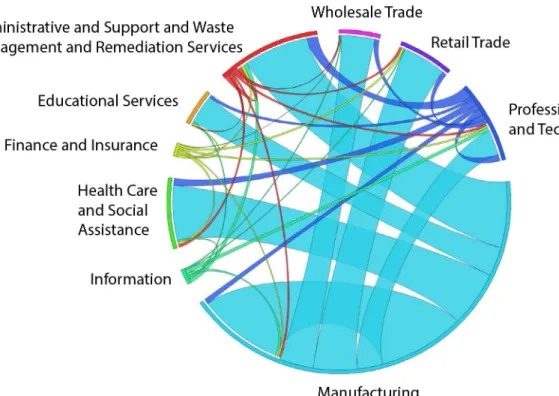
Figure 2 is a visual representation of the workers covered by a certified petition, represented by Table 5, who
participated in the program then found another job in either the same or different industry sector, as represented in Table 6a and Table 6b. This representation highlights how the TAA program supports industries that experience shifts in supply and demand, as well as supporting workers as they transition out of industry sectors that have ceased to grow or expand as a result of foreign trade.
Figure 2 also represents industry migration or flows, with the origin industry reported at time of separation and the destination industry reported after program participation and exit. The thickness of the lines indicates the number of workers, and can be read by following the color coded line from the origin industry to the destination industry. To illustrate, we can follow the Finance and Insurance industry yellow-green lines and see that a relatively small number of workers migrated to Health Care and Social Assistance; Manufacturing; Professional, Scientific and Technical Services; Retail Trade; Wholesale Trade; Administrative and Support and Waste Management and Remediation Services; and Educational Services. In a second example, we can also see that a large number of Manufacturing industry workers, represented in light blue, migrated to every industry (including back to Manufacturing) except for Information and Finance and Insurance.
Figure 2: Most Common Industries Employing FY 2013 TAA Workers before Certification and after Program Exit
The Department does not collect data at the level of detail to determine the worker’s specific job within the industry of reemployment; however, it is evident that many trade-affected workers who participate in the TAA Program were able to remain competitive and return to an occupation in an industry from which they lost their job, or find reemployment in a completely different in-demand industry. To examine these observations in more detail, it is necessary to review data relative to the workers themselves. Section III will describe the demographics of workers who entered the TAA Program and what benefits and services they received during their participation.
III. BENEFITS AND SERVICES RECEIVED
Participant Profile on New TAA Participants in FY 2013
Data described in this section tracks TAA participants who enrolled in the program during FY 2013, and contains data on participants served under the 2002, 2009, and 2011 Programs.
The demographic characteristics of TAA participants who enrolled in the program during FY 2013 are similar to those who enrolled in the program in FY 2012, except that new TAA participants in FY 2013 are composed of a greater percent of males; are less likely to self-identify as white; are more likely to have received a High School diploma and gone to college; and have one year less tenure in their prior employment. Table 7a provides more detail on new FY 2013 participants.
Table 7a: A Summary of the Data on TAA Participants
Classified by Gender, Race, Pre-Program Educational Level, Age, and Employment Tenure
Participants
Description TAA Participants FY 2012 (Average) TAA Participants FY 2013 (Average) Gender Male (58.3%) Female (41.7%) Male (59.4%) Female (40.5%)
Race
White (71.4%) White (69.5%)
Black or African American (14.8%) Black or African American (18.3%) Hispanic/Latino (8.9%) Hispanic/Latino (10.2%)
Asian (4.7%) Asian (4.6%)
American Indian or Alaska Native (1.3%) American Indian or Alaska Native (1.2%) Native Hawaiian or Other Pacific
Islander (0.4%) Native Hawaiian or Other Pacific Islander (0.6%)
Education
High School Diploma, GED or less (61.7%) High School Diploma, GED or less (58.6%) Some Post-Secondary, Associate’s, and
Bachelor’s (33.8%) Some Post-Secondary, Associate’s, and Bachelor’s (37.1%) Beyond Bachelor’s (2.4%) Beyond Bachelor’s (2.4%)
Average Age 48 48
Average Tenure
of Employment 15 Years (Trade-Affected Employment) 14 Years (Trade-Affected Employment)
Note: This chart reflects participants served under the 2002, 2009 and 2011 TAA Programs. Ethnicities are self‑identified and a participant can be more than one so their totals are more than 100 percent.
Table 7b describes the American Civilian Labor Force. The Bureau of Labor Statistics defines the American Civilian Labor force as:
“All persons in the civilian non‑institutional population (Persons 16 years of age and older residing in the 50 states and the District of Columbia, who are not inmates of institutions (e.g., penal and mental facilities, homes for the aged), and who are not on active duty in the Armed Forces) classified as either employed or unemployed.”
As shown in Table 7b, compared with the American civilian labor force, trade-affected workers have significantly less education (based on averages as of January 2014). While 63 percent of the American civilian labor force had some college education, an Associate’s Degree, a Bachelor’s Degree, or more; 58.6 percent of TAA participants entered the program with a High School Diploma, GED, or less, as their highest educational attainment. Another significant distinction between the American civilian labor force and new TAA participants is their median tenure of employment. In FY 2013, new TAA participants entered the TAA Program with a median of 10.6 years of experience in the trade-affected employment from which they were separated, but the median tenure of employment for the American civilian labor force was 4.6 years, as of January 2012.
Table 7b: A Summary of the Data on the American Civilian Labor Force Classified by Top Gender, Race, Pre-Program Educational Level, Age, and Employment Tenure Rates
Participants
Description American Civilian Labor Force as of January 20141 TAA Participants FY 2013
Average Gender Male (53%) Male (59.4%)
Average Race White (79%) White (69.5%)
Average Education Some College, Associate’s Degree, Bachelor’s Degree, or More (63%) Some College, Associate’s Degree, Bachelor’s Degree, or More (39.5%)
Median Age 42* 50
Median Tenure of
Employment 4.6 Years** 10.6 Years (Trade-Affected Employment)
1Sources http://www.bls.gov/dolfaq/bls_ques23.htm http://www.bls.gov/cps/occupation_age.htm
http://www.bls.gov/opub/ee/2014/cps/tablea13_201401.pdf http://www.bls.gov/news.release/tenure.nr0.htm http://www.bls.gov/opub/ee/2014/cps/tablea18_201401.pdf http://research.stlouisfed.org/fred2/graph/?g=shB
* BLS data ‑ Employed persons, 2013 Annual Averages data.
** Median as of January 2012 as BLS collects Tenure data on a 2‑year cycle.
These distinctions play a critical role in the design and implementation of the TAA benefits and services. With relatively limited education; inexperience with programs of higher education; and long tenures out of the job-market, many TAA participants require extensive case management and employment services to assist them to become reemployed.
Benefits and Services Received in FY 2013
Giving workers the opportunity to acquire the skills they need to pursue in-demand jobs and careers is critical to growing our economy and supporting American businesses. To address these challenges, the TAA Program includes a range of benefits and services that have separate eligibility criteria. Participants may meet these criteria for one or more of the available benefits and services. Information on benefits and services received in FY 2013 reflect the variety of TAA participants served under the 2002, 2009, and 2011 Programs. Table 8 shows the number of workers receiving each type of TAA benefit or service. Table 8 also shows that most participants received case management and employment services; more than 47 percent participated in training; more than 28 percent received Trade Readjustment Allowances (TRA); and Job Search and Relocation allowances were awarded to less than 1 percent.
Table 8: The Number of Workers Receiving Each Type of TAA Benefit or Service
Participant Benefit or Service Number of Participants FY 2013* Percentage of Participants FY 2013**
TAA (All) 84,529 — Case Management 70,674 83.61% Training 39,939 47.25% Occupational 35,983 42.57% Remedial 9,704 11.48% Prerequisite 1,100 1.30% Customized 104 0.12% On the Job 436 0.52% Pre-Layoff Training 398 0.47% Training Leading to an Associate’s Degree 7,560 8.94% Distance Learning 2,090 2.47%
Part Time Training 1,117 1.32%
TRA 24,104 28.52%
Basic 12,555 14.85%
Additional 18,661 22.08%
Remedial 2,417 2.86%
Completion 6 0.00%
Job Search Allowances 82 0.10%
Relocation Allowances 169 0.20%
ATAA/RTAA 7,367 8.72%
* This chart reflects participants served under the 2002, 2009, and 2011 Programs.
** TAA participants are counted based on the services they receive and they may receive more than one of the listed benefits and services; therefore, the total number of participants in each category will not add up to the total number of TAA participants, and the percentages will not total 100.
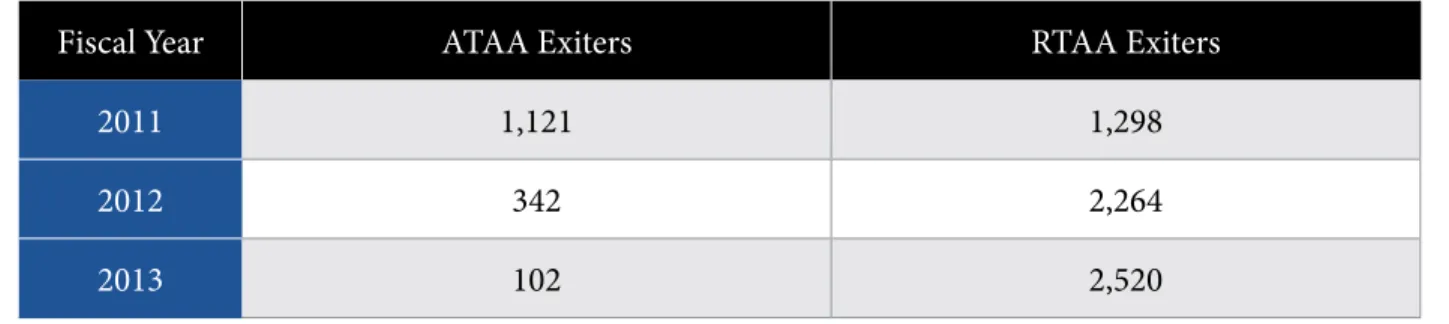
During FY 2013, a larger number of older workers participating in the program received wage subsidies from either ATAA or RTAA than in FY 2011 or FY 2012. ATAA does not allow for participants to work part-time while enrolled in training and RTAA allows workers over the age of 50 to work part-time while enrolled in training. This flexibility, along with RTAA’s absence of the 26 week deadline for obtaining new employment, and other changes from ATAA, may account in part for the increased participation in RTAA than ATAA. Attachment A, Figure 4, illustrates the differences between ATAA and RTAA. Table 9 indicates the increase in the number of TAA participants who received RTAA.
Table 9: ATAA and RTAA Participant Trends
Fiscal Year ATAA Exiters RTAA Exiters
2011 1,121 1,298
2012 342 2,264
2013 102 2,520
Note: This chart reflects participants served under the 2002, 2009, and 2011 Programs.
Enrollment in Training Waivers Issued in FY 2013
The Trade Act authorizes the granting of waivers of the requirement that a TAA participant be enrolled in training by certain deadlines in order to receive TRA under certain conditions. Under the 2002 Program and the 2009 Program, six different bases for waivers are available to participants:
(1) Recall – the worker has been notified that the worker will be recalled by the firm from which the separation occurred.
(2) Marketable Skills – the worker possesses marketable skills for suitable employment (as determined pursuant to an assessment of the worker) and there is a reasonable expectation of employment at equivalent wages in the foreseeable future.
(3) Retirement – the worker is within two years of meeting all requirements for retirement.
(4) Health – the worker is unable to participate in training due to the health of the worker, except that a waiver shall not be construed to exempt a worker from requirements relating to availability for work, active search for work, or refusal to accept work under Federal or State UI laws.
(5) Enrollment Unavailable – the first available enrollment date for approved training for the worker is within 60 days, or later, if there are extenuating circumstances to delay enrollment.
(6) Training not Available – approved training is not reasonable available to the worker from either governmental agencies or private sources, not training that is suitable for the worker is available at a reasonable cost , or no training funds are available.
Under the 2011 Program, only three bases for waivers are available: Enrollment Unavailable, Training not Available, and Health. For more information on the different bases for waivers and applicable deadlines for obtaining the waivers under all three TAA Programs, see Attachment A.
Since FY 2011, the total number of waivers issued by states has been declining. Due to the elimination of the Recall, Marketable Skills, and Retirement bases for waivers for 2011 Program participants, there was a substantial reduction in each type of waiver issued in FY 2013 compared to prior years, and the percentage of participants who received training rose by over 6 percent (in FY 2012, 40.98 percent of participants received training services, compared to 47.25 percent in FY 2013 as shown in Table 8). The total number of training waivers issued in FY 2013 compared to those issued in FY 2012 decreased by over 70 percent, as shown in Table 10.
Table 10: The Number of Training Waivers Granted, Classified by Type of Waiver
Training Waiver Type FY 2011 FY 2012 FY 2013
Recall 2,447 1,782 1,492 Marketable Skills 23,014 10,483 2,734 Retirement 1,808 914 442 Health 113 82 110 Enrollment Unavailable 5,976 5,081 2,221 Training Unavailable 2,401 3,173 1,553
Waiver Participants (Total) 35,694 21,471 8,483
Note: In FY 2013, all six types of waivers listed in Table 10 were available to TAA participants in the 2009 Program and those in the 2002 Program, most of whom were covered under certifications of petitions filed before the enactment of the 2009 Program.
Benefit and Service Information Collected at Program Exit
The data in this section reflects information on workers who exited the program between July 1, 2012 and
June 30, 2013. Table 11 indicates that the majority of participants were covered under the 2009 Program (69 percent).
Table 11: TAA Exiters by Program
TAA Exiters by Program Total Count Percentage of Total
2002 6,261 17.71%
2009 24,466 69.20%
Table 12 shows that in FY 2013, 73 percent of TAA exiters who participated in training completed their training plan, and less than 1 percent of adversely affected incumbent workers entered and completed training, prior to separation from work.
Table 12: The Number of Workers who Completed and who did not Complete Training
Training Completed (Exiters) Number of Participants FY 2013 Percentage of Participants FY 2013
Training Participants 22,121 —
Training Completed 16,255 73.48%
Training Not Completed 5,866 26.52%
Pre-Layoff Training Completed 145 0.66% Table 13 indicates that of the participants, who completed training during FY 2013, 76 percent earned a
postsecondary credential, including an industry-recognized credential, or a secondary school diploma or equivalent.
Table 13: The Percentage of Workers who Completed Training in FY 2013 and Obtained a Credential
Measure Total
Completed Training (Exiters) 16,255
Credentials (Exiters) 12,353
Rate of Credentialing 76.0%
Table 14 identifies the average duration of participation in the TAA Program, as well as the average duration of receipt of training, TRA, and employment and case management services, respectively. The average duration of TAA benefits and services increased between FY 2012 and FY 2013, as shown in Table 14.
With respect to duration of TRA, the increase between FY 2012 to FY 2013 likely reflects the reduction in the number of weeks that unemployment compensation (Unemployment Insurance (UI), Extended Benefits (EB), and Emergency Unemployment Compensation (EUC)) was available during that period. Specifically, under the Trade Act, a participant must exhaust entitlement to any unemployment compensation, including UI, EB, and EUC, before receiving TRA. The weeks of unemployment compensation received reduces the weeks of TRA for which a participant may be eligible; therefore, participants in FY 2013 may have spent fewer weeks receiving unemployment compensation than in previous years, and more weeks receiving TRA.
Table 14: The Average Duration of TAA Benefits and Services
Benefit or Service FY 2012 Average Duration (Days) FY 2013 Average Duration (Days) TAA Participation (All services) 562 573
TAA Training (All Training) 507 541
TAA Training (No Remedial or Prerequisite) 473 494
TAA Training (Completed) 516 554
TAA Training (Not Completed) 484 503
TRA 158 223
Employment and Case Management 546 577
Section III described the demographics of workers who entered the TAA Program and what benefits and services they received during their participation. TAA participants in FY 2013 were served under the provisions of the 2002, 2009, and 2011 Programs. Most participants (83 percent) received case management and employment services, and nearly half (47 percent) participated in training. Of the participants who enrolled in training, 73 percent completed their individual training plans. Of those who completed training, 76 percent received a post-secondary degree or industry recognized credential. The participants served under the 2011 Program had access to only three bases for waivers from training, and the reduction in the bases for waivers resulted in a higher percentage of participants in training. Also in FY 2013, more participants over age 50 found employment and received wage subsidies under ATAA or RTAA to help support them in their new job.
Section IV goes into greater detail about the performance outcomes of these participants. The next section will examine the credential attainment rate in more detail, as well as reemployment outcomes for participants who exited the program in FY 2013.
IV. PERFORMANCE OUTCOMES
Performance outcomes are based on data reported in FY 2013 for participants who exited the program during various calendar quarters following program exit. The Trade Activity Participant Report (TAPR) form was designed to allow for the collection of two sets of performance measures on employment outcomes, each of which contain the same three indicators of performance. Those indicators are: (1) Entered Employment Rate (EER), which tracks the percentage of those who obtained employment in a report quarter shortly after program exit; (2) Employment Retention Rate (ERR), which tracks whether those same employed individuals retained their job for an additional two quarters, and; (3) Six-Months Average Earnings (AE), which represents total six-month earnings in the same two quarters that are used to track ERR.
The Department uses two sets of separate and distinct performance measures: (1) Trade Act Measures, and
(2) Common Performance Measures. The difference between the two sets of measures relates to the quarters in which the performance is tracked. The first, known as Trade Act Measures, corresponds to core indicators mandated for the 2011 Program, and tracks the measures based on either the first, second, or third quarters, or the second, third, and fourth quarters after exit. The second set of measures, known as Common Performance Measures, is a consistent set of measures used to assess performance across the Department’s employment and training programs. Common Performance Measures are based on the first, second, and third quarter after a participant exits a program. It is important to note that, for both sets of measures, only participants who have entered employment in the first quarter or second quarter after exiting the TAA Program are considered when calculating the ERR and the AE.
In Table 15, Common Performance Measures outcomes provide results for participants who exited the 2002 and 2009 Programs between January 1, 2012, and December 31, 2012, for EER, and July 1, 2011, and June 30, 2012, for ERR and AE. Trade Act Measures results for participants who exited the 2002 and 2009 Program between October 1, 2011, and September 30, 2012, for EER, and April 1, 2011, and March 31, 2012, for ERR and AE. Performance Goals relate to objectives set for the TAA Program by the Department consistent with the Agency’s FY 2013 Operating Plan targets, and all performance goals have been exceeded for FY 2013.
Table 15: The FY 2013 Summary of Quarterly Reporting of Core Indicators: Entered Employment Rate, Employment Retention Rate, and Average Earnings
Measure Performance Goals Common Performance Measures Results Performance ResultsTrade Act Measures Entered Employment Rate 58.9% 71.0% 75.6%
Employment Retention Rate 83.6% 91.5% 90.6%
Average Earnings (6 months) $13,360 $18,136 $17,626
The 2011 Program specified an additional measure that calculates the percentage of participants that received a post-secondary credential, including an industry-recognized credential, or a secondary school diploma or equivalent, during the period of participation or within the year following program exit, if combined with employment. This result was 31 percent of all participants who exited the program, whether they received training services or not. To understand how this number fits within TAA employment results, and the types of training levels achieved by TAA participants who obtained reemployment, see Table 16 and Figure 3.
Table 16: TAA FY 2013 Post-Secondary Credential (Including an Industry-Recognized Credential, or Secondary School Diploma or Equivalent) Results Combined with Employment Results, One Year after
Exit
Measure Performance Results
Post-Secondary Certification, Secondary School Diploma or Equivalent 31.3%
Figure 3: The FY 2013 TAA Participants Employed One Year after Exit and Training Impact on Credential Results
TAA Participants Employed a Year after Exit TAA Participants Not Employed a Year after Exit 79% Note: See blue sections in chart 21% Note: See white section in chart
Figure 3 provides additional context to the measure seeking to capture the percentage of workers who received a post-secondary credential, including industry-recognized credential, or secondary school diploma (or equivalent), if combined with employment. Seventy nine percent of participants were employed within a year after their exit from the TAA Program. Of the 79 percent who found jobs, two-thirds participated in training (half of whom earned a post-secondary credential) and the remaining third received services other than training. Of the 21 percent who did not find jobs within a year of exiting the program, about half did not receive training. One-fourth received a post-secondary credential following training, but was unable to find reemployment in the current job market. The remaining one-fourth was split evenly between those that completed training and those that did not.
Thus far, this report has identified petition activity and reemployment of workers covered by a certification that participated in the TAA Program; delved into TAA benefits and services for TAA participants; and examined outcomes for participants who have exited the program. Section V will highlight programmatic guidance issued in support of program administration.
V. PROGRAM GUIDANCE
While the states are responsible for directly administering benefits and services under the three distinct programs, the Department’s Regional Trade Coordinators and other staff in the six Departmental regions provide oversight and monitoring for the state delivery of TAA benefits and services. Overall direction and guidance for the consistent and timely delivery of these benefits and services nationwide is provided to the Regions and the states by the Department through the Office of Trade Adjustment Assistance in Washington, D.C.
The Core Monitoring Guide with Trade Supplement was issued internally in FY 2013. It is a tool Federal Project Officers (FPOs) and Regional Trade Coordinators can use to monitor the states’ operation of the TAA Program. It enables them to assess the extent to which TAA funds are used to provide high-quality, outcome-focused workforce development services in a fully integrated service environment, consistent with the Department’s articulated vision. This onsite monitoring tool is tailored to the unique circumstances of the TAA Program and will help ensure that onsite monitoring is thorough and consistent nationally.
The Department issued guidance relating to funding and other topics to states in the form of Training and
Employment Guidance Letters (TEGL). Specifically, the guidance issued in FY 2013 addressed better coordination of benefit and service delivery through the American Job Center Network; a change to the operating instructions for implementing the 2011 Program; and funding allocations to states for the TAA Program operations. Table 17 provides issue dates, titles, and links to these documents.
Table 17: Guidance Documents Issued
Date TEGL
March 7, 2013 TEGL No. 15-12: Assistance (TAA) Program Recipients through the American Job Center Delivery of Benefits and Services to Trade Adjustment Network Delivery System
May 13, 2013 TEGL No. 10-11 Change 2: Implementing the Amendments to the Trade Act of 1974 Enacted by the Change 2 to the Operating Instructions for Trade Adjustment Assistawnce Extension Act of 2011 (TAAEA)
May 22, 2013 TEGL No. 31-12: Process for Requesting Trade Adjustment Assistance (TAA) Program Fiscal Year (FY) 2013 State Initial Allocations and the Reserve Funds
TEGL No. 31-12 describes the methodology for issuing the FY 2013 state initial funding allocation for training and services other than TRA, which was released after funds for FY 2013 were appropriated. Section VI provides greater detail on the TAA funding formula and state allocations.
VI. FUNDING
The Department provides funding to the states to provide benefits and services to trade-affected workers. Under section 239 of the Trade Act, the states provide benefits and services to eligible trade-affected workers in the TAA Program as agents of the United States. Each State does so through one or more state agencies, one of which is designated as the Cooperating State Agency (CSA) in an agreement between the state’s Governor and the United States Secretary of Labor (Secretary).
Funds for the TAA Program are apportioned to the Federal Unemployment Benefits and Allowances (FUBA) account into three separate categories: Training and Other Activities, which includes funds for training, job search allowances, relocation allowances, employment and case management services and related state administration; Trade Benefits, which includes funds for trade readjustment allowances (TRA); and for Alternative/Reemployment Trade Adjustment Assistance (A/RTAA).2
In FY 2013, $797 million was appropriated to the FUBA account. However, this amount was subject to a 5.1 percent sequestration reduction ($40.6 million) required by the Balanced Budget and Emergency Deficit Control Act
(BBEDCA), as amended by the Budget Control Act of 2011. The Department applied the full sequestration reduction to the Training and Other Activities category of funds, and did not apply the reduction to funds appropriated for A/RTAA and TRA benefits. Accordingly, $40.6 million was subtracted from the statutory amount of $575 million, reducing the amount available for Training and Other Services to $534.4 million. The total amount of FUBA funds provided to states in FY 2013 for all benefits and services was $756.2 million. Table 18 provides the total and state amounts of funds distributed for Training and Other Services, ($534.4 million) in FY 2013.
2 The Alternative Trade Adjustment Assistance (ATAA) program, offered as part of the 2002 Program, preceded the Reemployment Trade Adjustment Assistance (RTAA) benefit under the 2009 Program and 2011 Program. Qualifying Older Workers received payments under ATAA or RTAA to subsidize a portion of the wage difference between their new wage and their pre-layoff wage (up to a specified amount).
Table 18: The Total Amount of Funds Distributed to the States in FY 2013
State Initial Allocation* Reserve Requests Final Distribution Total Program Funds Distributed
AL $7,983,411 $0 $755,888 $8,739,299 AK $175,790 $0 $34,327 $210,117 AZ $2,574,742 $0 $276,928 $2,851,670 AR $10,787,225 $0 $1,327,301 $12,114,526 CA $16,432,717 $0 $1,524,377 $17,957,094 CO $5,110,372 $0 $445,536 $5,555,908 CT $9,106,661 $0 $963,073 $10,069,734 DE $259,428 $0 $24,815 $284,243 DC $0 $287,252 $0 $287,252 FL $8,578,248 $0 $923,505 $9,501,753 GA $7,800,759 $0 $774,600 $8,575,359 HI $0 $300,000 $0 $300,000 ID $2,164,139 $0 $194,602 $2,358,741 IL $14,102,161 $0 $1,787,648 $15,889,809 IN $9,039,457 $0 $834,024 $9,873,481 IA $4,211,235 $0 $636,398 $4,847,633 KS $3,927,295 $0 $557,212 $4,484,507 KY $11,058,553 $0 $1,118,703 $12,177,256 LA $4,744,169 $0 $449,398 $5,193,567 ME $4,913,878 $0 $533,415 $5,447,293 MD $3,738,798 $2,520,000 $696,648 $6,955,446 MA $13,199,469 $0 $1,480,826 $14,680,295 MI $46,926,342 $0 $5,044,141 $51,970,483 MN $14,268,130 $0 $1,609,219 $15,877,349 MS $1,423,473 $0 $153,029 $1,576,502 MO $6,866,953 $0 $1,051,017 $7,917,970 MT $967,258 $0 $108,966$ 1,076,224 NE $1,038,927 $0 $136,479 $1,175,406 NH $733,681 $0 $102,557 $836,238
Table 18: The Total Amount of Funds Distributed to the States in FY 2013
State Initial Allocation* Reserve Requests Final Distribution Total Program Funds Distributed
NJ $10,508,110 $0 $1,153,010 $11,661,120 NM $3,722,975 $0 $350,031 $4,073,006 NY $18,539,482 $0 $1,990,203 $20,529,685 NC $26,440,222 $0 $2,988,325 $29,428,547 ND $383,787 $0 $36,876 $420,663 OH $28,817,286 $0 $2,639,143 $31,456,429 OK $3,637,321 $0 $490,243 $4,127,564 OR $14,067,326 $0 $1,511,334 $15,578,660 PA $29,716,635 $0 $3,194,660 $32,911,295 PR $279,900 $0 $86,502 $366,402 RI $2,752,713 $0 $304,533 $3,057,246 SC $11,316,255 $0 $1,154,284 $12,470,539 SD $730,101 $0 $78,668 $808,769 TN $13,177,101 $0 $1,703,714 $14,880,815 TX $43,555,786 $0 $3,108,771 $46,664,557 UT $3,702,177 $0 $462,194 $4,164,371 VT $469,596 $0 $77,824 $547,420 VA $10,370,372 $0 $1,049,808 $11,420,180 WA $15,190,365 $0 $1,626,404 $16,816,769 WV $4,586,833 $0 $393,031 $4,979,864 WI $24,917,755 $0 $2,462,759 $27,380,514 WY $0 $0 $0 $0 TOTAL $480,647,700 $3,107,252 $50,598,048 $534,353,000
Note: These funds are subject to a $575 million annual cap and are used to provide training, job search allowances, relocation allowances, employment and case management services, and associated administrative costs to provide these benefits and services, to trade‑affected workers. Also note, in accordance with 20 CFR 618.90(d), if a state’s adjusted Initial Allocation was less than $100,000, the state received no distribution Initial Allocation funds.
* Due to the delay in the FY 2013 appropriation and the need to determine the amount of those funds available under the sequestration order, the Department made a single allocation of 90 percent of the full year appropriation of TAA Program Funds in accordance with the regulations found at 20 CFR 618.910 and 618.930.
FY 2013 Fund Distributions-Determining States’ Share of Training and
Other Services Funds
In addition to reporting funding by category, this report includes state fund amounts for Training and Other Activities according to when the funds were distributed. In FY 2013, the Department made an initial distribution of funds to states, distributions of reserve funds and a final distribution of funds as the fiscal year ended. This section also describes the formula by which the Department determined each state’s share of the Training and Other Activities funds. Both the timing of the distributions and the formula used for calculating each state’s amount follow the regulations at 20 CFR 618.910 through 618.940.
According to these regulations:
• sixty-five percent (65%) of the fiscal year funds are to be distributed by formula when the appropriation for the full fiscal year is available to the Department, with 35 percent of the funds held in reserve for distribution later in the fiscal year (or to be provided to a state in need of reserve funds at any time during the fiscal year); • a hold harmless provision that minimum allocation for the initial distribution is applied to ensure that a
state receives at least 25 percent of the Initial Allocation that was made available to that state for the previous fiscal year;
• by July 15 of each fiscal year, at least 90 percent of the funds appropriated for the entire year must be allocated; and
• formula factors determine each state’s share of funds appropriated for Training and Other Activities. Each state’s dollar amount of Training and Other Activities’ funding was determined using the most recent data available, to determine the formula factors under the TAA funding formula as described in 20 CFR 618.910(f):
• the trend in number of workers covered by certifications; • the trend in number of workers participating in training;
• the number of workers estimated to be participating in training during the fiscal year; and
• the estimated amount of funding needed to provide approved training to such workers during the fiscal year. Once each of the four factors have been determined for each state, under 20 CFR 618.910(f)(3) all four factors will be assigned an equal weight of 25 percent of the total for each factor. Then, the hold harmless provision is applied to ensure that a state’s Initial Allocation be at least 25 percent of the amount the state received in its Initial Allocation for the prior fiscal year. Using this information, each state’s share of the allocation is determined. Following 20 CFR 618.910(c-e), allocations under $100,000 are removed, and the statutory 25 percent hold harmless provision is applied, resulting in an adjusted FY 2013 Initial Allocations for the remaining states. In instances when the formula approach would give a state less than $100,000, 20 CFR 618.910(e)(2)(i), provides that the state will not receive any initial allocation, but may request TAA funds by submitting a request for reserve funds.
A summary of FY 2013 funding distributions to states includes:
• A distribution of Initial Allocation funds to the states on May 22, 2013, in the amount of $480.65 million. Due to the delay in the FY 2013 appropriation and the need to announce to states their share of the funds available under the sequestration order, the Department made a single allocation of 90 percent of the full year appropriation of TAA Program Funds in accordance with the regulations explained above and found at 20 CFR 618.910 and 618.930, in its Initial Allocation of funds to states.
• A distribution of $3.1 million in response to Reserve Fund requests in FY 2013. Although the District of Columbia and Hawaii did not receive an initial allocation in FY 2013 (and therefore did not receive funds in the Initial Allocation), they did receive reserve fund distributions in the amount of $287,252 and $300,000 respectively in response to requests made before and after the Initial Distribution. The State of Maryland also received a reserve fund distribution after the Initial Distribution in the amount of $2,520,000 to provide benefits and services to trade-affected workers.
• A final distribution of funds to states on September 30, 2012, in the amount of $50,598,048. This amount encompassed the remaining 10 percent of the FY 2013 Training and Other Activities appropriation, minus the dollar amount of funds for used for reserve requests. In accordance with the regulation, funds provided in the Final Distribution were distributed to states that received an Initial Allocation.
Process for providing funds to states for TRA and ATAA and RTAA
Funding for TRA, and wage subsidies in the form of ATAA under the 2002 Program and RTAA under the 2009 Program and the 2011 Program, are neither determined by the formula nor distributed according to steps in the regulations. These funds are managed by the Department’s Office of Unemployment Insurance and states request them on an as needed basis. Discretionary funds to cover the administrative cost of providing TRA and ATAA/RTAA are provided to the states from the State Unemployment Insurance and Employment Security Operations (SUIESO) account through the Unemployment Insurance Program Annual Funding Agreement with each state. Table 19 provides the total and state amounts of funds distributed for Training and Other Services, ($534.4 million); and the amounts of funds obligated for TRA ($186.9 million); and ATAA/RTAA ($34.9 million) in FY 2013.
Table 19: The Total Amount of Payments to the States in FY 2013 Used to Carry Out Sections 235 through 238 (Program payments); Trade Readjustment Allowances; and ATAA/RTAA.
State Program TRA ATAA / RTAA Total TAA AL $8,739,299 $2,425,000 $850,000 $12,014,299 AK $210,117 $0 $10,000 $220,117 AZ $2,851,670 $340,000 $382,000 $3,573,670 AR $12,114,526 $5,600,000 $470,000 $18,184,526 CA $17,957,094 $2,100,000 $1,730,000 $21,787,094 CO $5,555,908 $2,185,000 $300,000 $8,040,908 CT $10,069,734 $5,975,000 $220,000 $16,264,734 DE $284,243 $10,000 $60,000 $354,243 DC $287,252 $0 $0 $287,252 FL $9,501,753 $950,000 $235,000 $10,686,753 GA $8,575,359 $1,970,000 $405,000 $10,950,359 HI $300,000 $20,000 $3,000 $323,000 ID $2,358,741 $340,000 $79,000 $2,777,741 IL $15,889,809 $6,650,000 $1,095,000 $23,634,809 IN $9,873,481 $2,500,000 $1,112,000 $13,485,481 IA $4,847,633 $6,700,000 $886,000 $12,433,633 KS $4,484,507 $2,850,000 $851,000 $8,185,507 KY $12,177,256 $4,350,000 $822,000 $17,349,256 LA $5,193,567 $360,000 $360,000 $5,913,567 ME $5,447,293 $1,200,000 $470,000 $7,117,293 MD $6,955,446 $1,290,000 $640,000 $8,885,446 MA $14,680,295 $5,260,000 $507,000 $20,447,295 MI $51,970,483 $18,700,000 $2,405,000 $73,075,483 MN $15,877,349 $10,000,000 $1,895,000 $27,772,349 MS $1,576,502 $100,000 $415,000 $2,091,502 MO $7,917,970 $3,695,000 $741,000 $12,353,970 MT $1,076,224 $430,000 $225,000 $1,731,224
Table 19: The Total Amount of Payments to the States in FY 2013 Used to Carry Out Sections 235 through 238 (Program payments); Trade Readjustment Allowances; and ATAA/RTAA.
State Program TRA ATAA / RTAA Total TAA
NV $836,238 $45,000 $955,238 NH $1,823,430 $192,000 $2,445,430 NJ $11,661,120 $295,000 $18,331,120 NM $4,073,006 $25,000 $5,198,006 NY $20,529,685 $2,300,000 $26,754,685 NC $29,428,547 $765,000 $44,943,547 ND $420,663 $30,200 $640,863 OH $31,456,429 $2,465,000 $44,321,429 OK $4,127,564 $330,000 $6,197,564 OR $15,578,660 $185,000 $21,913,660 PA $32,911,295 $2,145,000 $45,106,295 PR $366,402 $0 $376,402 RI $3,057,246 $115,000 $4,884,246 SC $12,470,539 $851,000 $17,321,539 SD $808,769 $3,000 $831,769 TN $14,880,815 $1,420,000 $23,400,815 TX $46,664,557 $633,000 $54,127,557 UT $4,164,371 $58,000 $5,272,371 VT $547,420 $28,000 $875,420 VA $11,420,180 $901,000 $18,071,180 WA $16,816,769 $1,035,000 $25,401,769 WV $4,979,864 $285,000 $7,014,864 WI $27,380,514 $2,885,000 $39,265,514 WY $0 $2,000 $7,000 TOTAL $534,353,000 $74,000 $430,000 $6,375,000 $1,100,000 $3,925,000 $14,750,000 $190,000 $10,400,000 $1,740,000 $6,150,000 $10,050,000 $10,000 $1,712,000 $4,000,000 $20,000 $7,100,000 $6,830,000 $1,050,000 $300,000 $5,750,000 $7,550,000 $1,750,000 $9,000,000 $5,000 $186,901,000 $34,978,200 $756,232,200
Note: The term “Program” in this table refers to the funds (subject to the cap) to provide training, job search allowances, relocation allowances, employment and case management services and associated administrative costs to provide these services to trade‑affected workers.
Provisions of the TAAEA Affecting FY 2013 TAA Funding
As reported in the FY 2012 TAA Annual Report to Congress, the TAAEA included two important changes to TAA funding that added flexibility for states in their use of TAA funds (including funding for related state administration) This change was in effect throughout calendar year, 2013, described at TEGL No. 10-11 and explained below:
• Set a national consolidated annual cap on funds of $575 million for each FY (FY 2012 and FY 2013, and a pro-rated portion of this amount for the first quarter of FY 2014), to cover the cost of Training and Other Activities including job search allowances, relocation allowances, employment and case management services, and related state administration.
0 Job Search Allowances and Relocation Allowances were no longer entitlements for workers. States could use their discretion to offer these benefits or not. Only one state (Illinois) chose not to offer these benefits under the 2011 Program. Most importantly, under the 2011 Program, states could pay for these allowances out of the consolidated cap of funds rather than using a separate funding stream for these benefits.
• Set state spending limits for related state administration and case management and employment services. A State could use:
0 No less than 5 percent of its fiscal year funding allocation for Case Management and Employment Services; which meant a State may use more than five percent of its annual allocation to provide these services if it determined that a higher percentage of funds are needed to achieve the desired outcomes; and
0 Up to 10 percent of its total allocation may be used for Related State Administration. (Any funds not utilized for Related State Administration could be used as training funds.)
Funding allocated to states provided TAA benefits and services to trade-affected workers. Section VII will conclude the FY 2013 TAA Annual Report to Congress.
VII. CONCLUSION
The 1,480 petitions received during FY 2013 were assessed on the basis of the 2011 Program eligibility criteria, and 78.6 percent were certified, covering trade-affected workers in every state, the District of Columbia, and Puerto Rico. This underscores the scope of the TAA Program and the extent to which foreign trade impacted numerous industries, employers, communities, and an estimated 104,158 American workers who became eligible to apply for TAA benefits and services this year.
In FY 2013, 84,529 TAA participants were served under three distinct programs (the 2002, 2009, and 2011 Programs) and nearly half of these workers (39,939) participated in training. Of the participants who enrolled in training, 73 percent completed their individual training plans; and of those who completed training, 76 percent received a post-secondary degree or an industry recognized credential.
Over three-quarters of trade-affected workers who participated in the TAA Program this year were able remain competitive and return to an occupation in an industry from which they lost their job, or find reemployment in a completely different in-demand industry. More than 75 percent of workers who exited the program during FY 2013 found employment within 6 months after exit, and of those reemployed workers, more than 90 percent were still employed at the end of the year.
Funding allocated to states to provide TAA benefits and services provides opportunities for trade-affected workers to get back on their feet and secure a foothold in the middle class.
VIII. ATTACHMENTS
Attachment A:
Figure 4: Side-by-Side Comparison of TAA Program Benefits under the 2002 Program, 2009 Program, and 2011 Program; including information on training waivers and applicable deadlines for obtaining the waivers from training under these programs.
Attachment B:
Table A-20: FY 2013 TAA Certifications by State Attachment C: