The Representation of Male and Female Social
Actors in the ILI English Series
Bahador Sadeghi
Islamic Azad University, Takestan Branch, Iran
Golrokh Maleki
Islamic Azad University, Takestan Branch, Iran
Abstract—Textbooks are important parts of all educational systems nowadays, which can make people ready for globalization and new concepts emerging through it. These individuals need to be given the chance of feeling as successful and important, in a world which is neither blue nor pink. Equality can pave the way to a better world, and the study of the representation of male and female social actors in textbooks can lead to elimination of inequality from textbooks and societies. This study is an attempt to analyze the representation of males and females at the ILI English Series. The dialogues examined critically through Van Leeuwen’s framework (1996, 2008), and they proved to be gender-biased. These series depict a men-without-women world in which females are waiting for a chance to ‘be’, ‘be seen’ and ‘be heard’. (140)
Index Terms—critical discourse analysis, hidden curriculum, representation of social actors, EFL textbook
I. INTRODUCTION
Everything experienced in this world starts by being a thought, then takes an external shape, the language, either in the form of oral or written, which is shared with other language users, to make a change in the world around. The “brave” changing world (Hutchinson & Waters, 1987) in which people live takes infinite shapes, and all these shapes tend to interact with each other. The bridge that facilitates the communication among these worlds is discourse analysis which is defined by Widdowson (2007, p.7) as the “complex of communicative purposes”, which justifies the production of it, and the meaning which lies within the mind of the producer as well as the receiver. Thus a text needs to be interpreted as well as being read to communicate the purpose successfully, based on “what is conceived,” and not “perceived”, “as relevant” (ibid, 2007). This way, context, as “a psychological construct” which is built upon “readers’ mind” can be a world that everyone experiences individually and perhaps uniquely, and then shares it with others.
Critical discourse analysis is a field of study which has been known as a powerful tool to analyze all sort of power in language. Van dijk (2003) proposes that “CDA is not so much a direction, school, or specialization”, and emphasizes on the “explicit awareness” of the role it has in social contexts. CDA makes it possible to study internal and external layers of social relations. This “transdisciplinary” (ibid, 2003) form of analysis links linguistics, policy, sociology, and other fields of study. Thus Critical discourse Analysis discovers and encodes “power” in whatever form, and how it could lead to “social wrongs”. This power is always there, sometimes “activated to produce change” or being able to be “responsible” for it (Fairclough, 2010, pp 204-205) which can then give meaning to ideology.
Discourse and ideology has long been put together to study the effect of ideology on societies as well as on social groups. Ideology, as put by Van dijk (2001), is a set of knowledge that a group of people share, whether in form of action or discourse, which can be labeled as “good” or “bad” depending on what emerges out of it. This “shared knowledge” could be dominant or not, but can change into a power affecting the members of the group, as well as members of other groups, posing inequality upon others, causing “ideological bias”.
One obvious, but neglected sort of power nowadays, is the representation of male and female in Educational context. Gender-biased materials are all around us, and the power and the frequency of its being observed could suggest that it is more than just an accident, which can lead to some unconscious pattern in the mind of the teachers and learners. These small groups then become members of a bigger society. Societies come together to shape the world which tends to hold people of whatever gender and race, to make it possible to talk about ‘globalization’. When races and nationalities are to disappear from this ideal “globe”, it is natural that people seek to have no problem regarding gender. Thus investigating underlying curriculum could pave the way for a better ‘unbiased’ world.
The study of ideology has long been popular in education. It is related to vast majority of people, most of whom at critical ages. They are on their way to understand the world around, to choose an “ideology” which is going to shape their world, thoughts, expectations, and beliefs. Even for those who have passed this age, education could be still effective in that it can add up to their self-confidence, or affect the way they define their identity in society.
towards being independent, and reach the latest technology. New identity brings new ethnicity with it, and this way learning a foreign language can lead to changes in societies.
The importance of textbooks in all cultures and societies is self-evident. Textbooks are essential parts of all educational settings. They are good resources for both teachers and learners, and lend color to teaching and learning process. After the 1979 revolution in Iran, textbooks content of educational settings were changed completely under the supervision of Ministry of Education, and English textbooks received special attention, for they were the doors opened up to the cultures which were against the Islamic one: “the otherness” (Korstanje, 2010). But it was well understood that next generation is the future of this revolution, and thus needs to learn foreign languages to be able to keep up with the speed of technological development in other countries. Besides, Islam encourages Muslims to learn foreign languages to develop technologically and be able to propagate Islamic beliefs to other countries, and to create independent Islamic identity.
After the school course books, came the time for other textbooks which were related to the governmental organizations and institutes, as well as private ones, and Iran Language Institute was no exception. As ideology in this study could be any form of ‘shared knowledge’ which leads to action or discourse, a ‘balanced’ textbook could be the one which represents different ideologies without supporting any of them. Either the textbooks are neutral in terms of the “balanced” ideology presented, or are consciously or unconsciously discriminatory, studying these ‘seen’ and ‘unseen’ curricula is for the teachers to be noticed, and be aware of. We need a tool to delve into the hidden ‘layers’ of textbooks, for it is so optimistic to believe in a neutral material, and that there is no reflection of “social order” and “value system”, and thus no culture (Hurst, 2007).
The concern for cultural points presented could be the reason for the emergence of textbooks which show the power through the mirror of locally prepared materials, and thus could be an ideology. As ILI English Series are widely used by students and learners, they can be a good source to study the representation of males and females, as social actors, to see what ideology may be ‘taken’ unconsciously through the changed content of these book.
Learning a foreign language is an important part of education, and receives specific attention in many Iranian families. It is taught as a foreign language from the first level of Rahnamayi (guidance school), showing that people from all ethnic groups pursuit learning a foreign language.
Besides schools, Language learning, especially English, is so popular in Iran that there are several institutes to keep up with the increasing demand. One of the most popular institutes is Iran Language Institute (the former Iran-America association) which had its first branch in 1304 in Tehran. Its aim was to teach English to merchants and politicians, and Farsi to foreigners. After the revolution, the ILI was to be closed for being related with the kingdom and the former government. While this didn’t happen, Ministry of Education kept the same institute under another name, Iran Language Institute, managed by the Intellectual Development of Children and Young Adults (IIDCYA). Now, it’s a very organized institute whose books are compiled and published by the research and planning department of the ILI for 18 levels, with 80 branches in Tehran and 58 other cities with about 1800 teachers and over 240,000 learners. The first conference of TEACHING ENGLISH IN ISLAMIC COUNTRIES was held in Iran by this institute, suggesting that Islamic countries pursue foreign language learning.
With all its popularity and fame, ILI can be a very good case to study the hidden curriculum regarding the representation of male and female characters, as a form of power and ideology. The ILI series are taught by thousands of teachers, and are parts of everyday life of many learners who carry them to school to memorize dialogs, make questions about the passages, and work on the grammar points. But what is it that they carry, and is hidden in it? All learners carry their own identity to EFL classrooms, and shape or reshape it there. These social actors need to know more about how they are presented in an EFL textbook, compiled by experts with specific considerations. Despite being famous and addressing so many learners at different ages, it hasn’t received enough attention. Time has come to investigate the dialogs, what teachers ask learners to repeat several times to memorize. This study seeks answers to the following research questions:
1-How are social actors represented in ILI English Series?
2-In what way, the gender and social identity of men and women are reflected in the dialogues of these textbooks? (2055)
II. REVIEW OF LITERATURE
The “phenomenon” of Globalization has given a new face to human studies and relations, for the “interdisciplinary treatment” it requires to explain “cultural integration and disintegration” (Featherstone, 1990, pp.1-18), which correspondingly raises “the interrelationship” of “cultural issues” (Yildirim & Okan, 2007). People are eager to ensure the fact that their children are receiving ‘enough’ education to gain the knowledge and be ready for the future. They also want to be as important as other nations in the world: as successful, as progressed, as capable. The fact is that people as members of societies start big actions from ‘small’ thoughts, which are not necessarily unimportant. Education is one of them, and starts from families, goes ahead to schools, moves to colleges, and follows an everlasting route in the real word.
although individuality is defined and emphasized in all social contexts, people need to define themselves based on what links them to others. Globalization needs equal rights for both genders, and the identity males and females define for themselves can highly affect the roles they accept in a society.
Gender studies have long been popular in education, not as a feminist outlook, but as a form of power in the society. As Sadker and Zittleman (2009) put it, “This is not one or the other gender bias that is the problem; gender bias is the problem.” These “micro inequities” which are “brief but powerful” (ibid, 2009) in Critical Discourse Analysis could be distinguished from the studies by feminists in what Sommers (1995) calls the creation “by those who are hypersensitive to every possible offense” and is far away from “an academic phenomenon.”
Numerous studies on different subjects at school conducted in different countries show that gender bias against women is the problem which is thought to affect people, causing inequality, and affecting the future. Blumberg (2008) argues that gender studies are so crucial that people and societies need to take an urgent action against it, for the bad effect it can have on people. Research studies show that after all these years of investigation, they show “minimal progress” but are “less offensive”. (Sadker & Sadker, 1980; Zhang, 2003; Zittleman & Sadker, 2005) which may be the result of the lack of persistency in pursuing it by political leaders.
Meanwhile there are still some researchers who do not support the fight against gender equity in textbooks. Sommers (1995) believes that “ideological intimidation deeply affects and inhibits creativity.” She and other equity feminists pursue fair treatment at workplace and in the society. But textbooks are just textbooks. Words can be nonsexist depending on who and when says what to who (Speer, 2004), but we still need to be aware of the “politics of words”. Sadker and Zittleman (2009) imply that Gender bias is taking victims of both sides like a “two-edged sword”; While it can make males to feel over responsible to earn money, it can make passive females who do not see any parts but be dependent on males for their needs. Both genders need to be protected against biased textbooks.
EFL textbooks at school have been examined carefully during decades.Hamdan and Jalabneh (2009) examined the topics in Action Pack Series to find how gender-biased language is depicted in the conversations. Not surprisingly, males are the main figures and women are not included in the events of everyday life. He calls the result what reflects “reality”. The same books were explored by Hamdan (2010) in another study to see what jobs males and females are given. He calls it “surprising” that the material designers nowadays are not aware of the new trends of “modern society”. The occupations are given to male characters, leaving women ‘jobless’.
Mukundan and Nimechisalem (2008) conducted a study in Malaysia and investigated the books taught at secondary school, namely Forms 1, 2, 3, and 4. They believe the frequency count could lead to some misinterpretations, thus other criteria such as firstness, visibility and the roles and characters males and females are given were applied as well. Male characters outnumber females, but in more ‘negative’ ways as women did. Males are shown to be the ones who break the rules, and pollute the environment. These aggressive characters started the conversation first, and led it without women. The remedy they suggest is to equip the teachers with the awareness that is needed to guide the students towards an unbiased education, and towards ‘national oneness’.
The importance of learners and teachers has been the core of several studies. Shah (2012) addresses teachers in a study regarding textbooks taught at the secondary level in Pakistan. Although the content analysis of these textbooks proves that women have been ignored in the “national steam of progress”, the teachers who were surveyed did not hold the same belief. The fact that teachers who are crucial parts of EFL classes are not conscious of gender bias cannot be ignored anymore. This unconscious sexism is what Blumberg (2008) calls “the invisible obstacle on the way” to reach unbiased material. Women have worked hard shoulder to shoulder with men to make the future of societies. They have shown courage to tolerate difficulties, have tried to elevate health, education, and technology, and thus expect to be seen, and to be heard. This “gender blindness” needs to be improved among teachers, material designers, and authors. (Barton & Sakwa, 2012; Ullah & Skelton, 2013)
Maehara (2010) views “gender education” as an urgency in societies. Through using vocabulary test and the surveys, the researcher tried to test junior high school students in Japan to find out what their choice of pronoun would be if the gender is ambiguous. They needed teachers to intervene, and to bring the facts into the learners’ attention that their “correct” choices are affected by hidden sexism. For instance most students preferred chairman to chairperson. This study also conveys that the first word presented to the learners sticks to their mind as the norm and appropriate choice.
In a study by Tao (2008), EFL textbooks were investigated in China to identify sexism. The frequency of applying female and male “historical figures” is considered in the titles, and illustrations and pictures which are depicted. He concludes that in high school EFL books women are viewed as invisible nameless beings who are not mentioned enough to be able to take the role of a model. Tao suggests that time has come for curriculum designers and EFL textbook writers to combat sexism in EFL textbooks to provide individuals “fair and impartial” education “regardless of sex.”
awareness about the fair representation of males and females has found its way in curriculum designing, through “more gender-neutral generic pronouns”, women need to be depicted more active in social settings.
Some authors are positive towards the trend of neutral EFL textbooks. The study by Mustedanagic (2010) focused on the gender representation in secondary school EFL textbooks, Wings 8 and Team 8, in Sweden. They were respectively published in 2000 and 1985, are critically analyzed, and are reported to be different, in that the new one has tried to keep away from “gendered language” and addresses women in “non-stereotypical way” which she believes has gone so far, this time, by stereotyping male, to “make up for the past.” this could be a positive attitude towards gender studies, but still has a long way to proceed.
These changes in the textbook trends seem to be the result of material designers’ raised awareness of the new quality globalization and the modern world brings with it: equality. The quality of this new trend is affecting the world as well. In a study by Sahragard and Davatgarzadeh (2010) women are reported to be foregrounded as being more successful and prominent. Sexism in a new form is emerging. This is what Mustedanagic (2010) refers to as making up for the past, and what some feminists warn against: fighting men not sexism.
Bahman and Rahimi (2010) conducted a study in which they conveyed the representation of gender through frequency pattern of names, nouns and pronouns, as well as adjectives females and males are given. This study suggests that “gender gap” comes from “neglected” “invisible” women and “outnumbered” men who win the topics and the titles of the books.
Amini and Birjandi (2012) came to conclusion that “manly jobs” are there to stay in the textbooks, and women stay far away from being “inventors”, for they are still dealing with making tea, and cooking dinner. These “stay-at- home” mothers who rarely watch TV and are always busy with finding things that they have lost can be seen in other studies as well (Alemi & Jafari, 2012; Mardani, Samieenejad, Khajavi & Mardani, 2012; Razmjoo, 2007).
The role of teachers in creating the awareness which is needed to deal with these issues could pave the way to experience unbiased textbooks. Noticeable is the fact that teachers are still ‘gender-blind’ in that they ignore forms of bias (Kizilaslan, 2010). Thus they need to be trained not to be “over-sensitive” but to “see”. “Once the hidden lessons of unconscious bias are made visible, classrooms never look the same again” (Sadker & Zittleman, 2009).
The studies on internationally-used textbooks are moving towards being more ‘pleased’ regarding the gender-equity characteristics. The fact that authors and material designers are now aware that gender-even textbooks may sell better in the future, considerations have been taken into account to pave the way to put textbook and materials on the right way which moves towards being “gender-even” (Healy, 2009), and ‘gender-friendly’! Fathers are taking more responsibilities in the family, though still absent in the kitchen, and women are searching for their lost identity to self-actualize themselves. Workplaces and families are filled with men and women, who take turns in talking, and are of the same prominence in society. Women have found their way out of the kitchen, and into the workplace.
In line with female characters in EFL textbooks who are finding their lost role in society, a study by Amalsaleh, Javid, and Rahimi (2010), reports applying the pronoun ‘they’ in Spectrum instead of ‘she’ or ‘he’, which could be taken as a fact that authors are aware of what needs to be taken more into considerations.
The study of EFL textbook for university students maintains that men are not mentioned to be as important as women are. Nagatomo (2010) examined the text and structure and proved that women are more visible through the frequency of males and females, have the opportunity to speak more than men do. The frequency, however, is not everything! The illustrations are not in accordance with the text. There are only women who go shopping, and men are not depicted as being “capable in the kitchen”.
ILI English Series could be a good chance to find out what has been important for curriculum designers, material designers, as well as compilers of Iran. To the best knowledge of the author, these textbooks have never been investigated to find out how men and women are represented in dialogues, applying a CDA framework.
III. METHOD
A. Instrument
For the purpose of this study, the textbooks used at the ILI (Iran Language Institute) will be employed. The Research and Planning Department of the ILI has designed 18 different levels, each of which comes with a student book and a workbook.
The levels at the ILI fall into six proficiency levels: Basic, Elementary, pre-intermediate, Intermediate, high-intermediate, and advanced. Each proficiency level consists of three levels 1, 2, and 3. Student books at Basic, Elementary, pre-intermediate, and inter-mediate consist of both conversations and reading passages.
B. Procedure
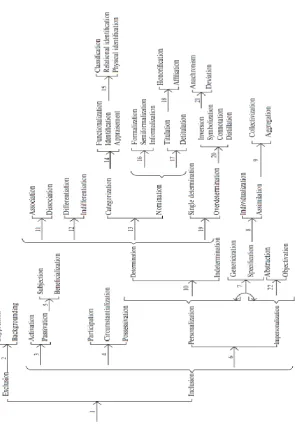
To be able to conduct a systematic CDA study, the framework proposed by Van Leeuwen (1996, 2008) is applied. In this analytical framework, Van Leeuwen broadens the boundaries of the presentation of social actors through a socio-semantic system (Blommaert and Bulcaen, 2000). This framework which holds three underlying metafunctions, namely ideational, interpersonal, and textual perspectives, equip the researchers with such a broad outlook towards the social actors that all the complicity of discourse in social sciences can be met through “a critical lens, sensitive to the dimensions and effects of ideology (Huckin, Andrus & Clary-lemon, 2012). What Van Leeuwen presents in this network to depict the representation of social actors is to apply three types of transformation: deletion, rearrangement, and substitution.
Van Leeuwen’s framework is so broad a framework that could be applied to a large corpus of data. To investigate the representation of males and females in ILI English Series only some categories are applied which are presented below. The network and the examples are taken from what Van Leeuwen (1996, 2008) explains and defines in his book (pp. 23-54).
Suppression: The text does not make a reference to social actors while their actions are there.
Backgrounding: Social actors may not be related to the actions just in the same clause, but can be inferred to through reasoning.
Activation: Social actors could be represented to have active, dynamic roles or be the receiver of an activity. Subjection: It is shown when social actors are the objects in the representations, and are subjected to an action. Beneficialization: It form a third party which benefits form an action positively or negatively,
Genericization: It allows the representation of social actors as classes orindividuals. Individualization: Social actors are represented as individuals
Aggregation: It deals with social actors as statistics
Collectivization: The representation of social actors happens through classes.
Association: It is a way of referring to social actors as groups which are formed by joining several social actors together, though their labeling is not used in the text. Actually social actors can be joined to serve a specific purpose, and then vanish.
Formalization: It refers to the use of surname with or without honorifics. Semiformalization: name and surname are used
Informalization: Social actors are represented only through their first names.
Honorification: Social actors are given standard ranks or titles such as ‘Dr.’ The other affiliation: ‘titles’ which show personal relation are given to social actors.
Functionalization: Social actors are referred to through what they do
Classification: It classifies social actors based on their age, race, gender, wealth and other cultural variables which are open to change through history.
Figure 1: The Analytical Framework of the Study: Social Actor Network
To decode the ideological pattern of the dialogues, besides applying the framework, there are also other social actor terms as well. All the dialogues are investigated to see the initiation pattern, which is referred to as firstnessand refers to who starts the conversation. The dialogues are also examined closely to find out who the dialogues are between: male-male, female-male, male-female, and female-female conversations, and the number of turns which male and female characters take in the conversations. The sentences in the dialogues are also investigated to find out about the kind of professions people are engaged with. To have a better picture of ideological patterns, the titles of the dialogues, which are frequently phrases and are referred to as topics, are studied as well.
The data gathered through the network and other ideological patterns which were described is statistically analyzed applying chi-square test, which is based on expected and observed frequency.
IV. RESULTS AND DISCUSSION
A. Deletion
TABLE 4.3:
CHI-SQUARE RESULTS FOR EXCLUSION IN THE ILIENGLISH SERIES
Female Male X2 Asymp. Sig.
Exclusion 10 9 0.053 0.819
As shown in table 4.3, the qui-square result is not statistically significant (X2= 0.05, p<o.o5). We also need to be aware of the fact that the exclusion is ‘innocent’ in that it can be estimated, though not strongly, who the omitted social actor is. The following example can illustrate the point further:
Example 1: Amy to Carole: Worrying won't help. That's how to become wise. (Pre 1, Unit 4) Example 2: Mrs. Kidman to the repairman: Looks like there's no need to leave it here. Repairman: No, you can wait here. (Pre 1, Unit 6)
B. Rearrangement (Role Allocation)
The roles given to social actors could be studied through this section, in which activation and passivation of social actors can be studies, and are shown in the table below:
TABLE 4.6:
CHI-SQUARE RESULTS FOR ROLE ALLOCATION OF THE ILIENGLISH SERIES
Female Male X2 Asymp. Sig
Activation (total=562) 164 398 97.431 0.0001
Subjection (Total= 64) 13 51 22.563 0.0001
Beneficialization (Total=28) 14 14 .00 1.00
The chi-square results of activation and passivation is interpreted as being significant for activation (X2=97.43 p<0.05), meaning that male social actors are presented to be more active and dynamic in the dialogues while nowadays societies are built upon active roles of both males and females, and the terms ‘breadwinner’ and ‘housewife’ are becoming old-fashioned.
The category of passivation is studied through subjection and beneficialization. As presented in the table above, passivation through subjection is statistically significant, (X2=22.56, p<0.05) meaning that males win being the object of the sentence, the one to whom an action is done. However, this is quite interesting that the chi-square result of beneficialization show that both males and females benefit from the actions the same! Thus, taking the context into account, this can be interpreted as showing males more determining in the success and dynamic spirit of the society, while this is males and females benefiting from it! The hidden ideology depicts that this is “women” who benefit from what active men do in the society.
C. Substitution
As indicated by the results and the table above, there is no significant difference in the representation of social actors through Genericization, (X2=2.00, p<0.05), and they are both referred to generically, but not to a large scale.
TABLE 4.9:
CHI-SQUARE RESULTS FOR GENERICIZATION AND SPECIFICATION OF SOCIAL ACTORS IN THE ILIENGLISH SERIES
Genericization/ specification Female Male x2 Asymp. Sig.
Genericization 2 6 2.00 0.15
Individualization 7 30 14.29 0.0001
Collectivation 0 1 .00 1.00
Aggregation 0 0 .00 1.00
While collectivization and aggregation are not significant either, Individualization proves to be significant in that more males are referred to individually than females. The interpretation of individuality depends heavily on the social context it is studied in. The world around us is filled with specific individuals whose independence is seen as an inseparable right. It is through individuality that the “concrete world” (Van Leeuwen, 1996, 2008) is shaped and shown. This study proves that males are dominantly presented as independent social beings whose decision has the chance of not being the result of what others think, but what they have reached at themselves.
Personalization of social actors comes true by using different categories. They give researchers a better chance to study what is given to social actors through their names. The results are as follow:
4.12:
CHI-SQUARE RESULTS FOR NOMINATION OF SOCIAL ACTORS IN THE ILIENGLISH SERIES
Nomination female male X2 Asymp. Sig
Formalization 19 42 8.672 0.003
Semiformalization 2 5 1.286 0.257
informalization 102 206 35.117 0.0001
Titulation Honorification 1 2 0.333 0.333
The chi-square results of nomination is significant for both formalization, (X2=8.67, p<0.05), and informalization, (X2=35.11 p<0.05). Being referred to formally can be a sign of being more important and holding high status jobs or positions.
While formalization is related to the higher position and differences in rank as well as being involved in formal situations, informalization reflects the friendly atmosphere through which people are allowed to consider each other out of formal context. Still males win the frequency of being referred to by first name, and thus can be interpreted as being more relaxed in relations with other social members.
Despite the fact that the difference is not significant in semiformalization, (X2=1.28, p<0.05) if the frequency and the percentage of this category are considered, one can easily recognize that this category has not gained the ground in the Iranian context. The use of first and last name together in the ILI English Series as locally-produced series in a theoretical country such as Iran is not really popular.
Titulation, involving honorification and affliation, is applied but as seen in table 4.12, not to a scale which can be considered statistically significant. Titulation is not just a way to refer to the occupation they hold, but to add color to the social level they belong to. Thus neither males nor females are represented through this category significantly.
Another way to represent social actors personally is to refer to them through categorization which falls into functionalization, or what they do, and identification. It’s through the second subcategory which studying deeper layer of identification is made possible. The results are presents as below:
4.15:
CHI-SQUARE RESULTS FOR CATEGORIZATION OF SOCIAL ACTORS IN THE ILIENGLISH SERIES
personalization female male X2 Asymp. Sig
functionalization 9 36 16.200 0.0001
Identification
classification 3 7 1.600 0.206
Relational identities 20 21 0.024 0.876
physical identity 4 2 0.667 0.414
The above tables show the fact that functionalization is statistically significant (X2=16.2 p<0.05). It means that more males, and fewer females, are represented through what they do. Although women are now thought to be more determining in the future of the country than before, the material designers and compilers of the ILI English Series still hold the idea that men are essential in the maintenance of development. The world of ‘functionalized males’ is filled with jobs such as detective, mechanic, police officer, bank teller, lawyer, as well as salesman, desk clerk and waiter. Less varied and expected jobs are reported for women, ranging from doctors and teachers to receptionists. The only examples of jobs which break the glass ceiling are being a reporter and a mathematician which are to be changed for not being suitable for them.
The hidden curriculum of EFL textbook in a recognized institute still holds women to be judged and depicted neither by what they do nor by what they are. The chi-square results for identification show that social actors are not presented statistically significant. In spite of this insignificance in the presentation of who social actors are, the qualitative analysis of the study can be taken into account as a proof that female characters define themselves based on who they are related to, and ‘how’. Even outnumbering male over female characters cannot take away this fact. Double as the number of males is, they are still almost the same frequency for both genders when considering their relational identity.
One subcategory of identification is classification which is not statistically significant, as can be seen in table 15, (X2 =1.6 p<0.05). Both males and females are classified but not to a degree which can make a significant difference.
Although physical identification is not thought to be significant in what chi-square results show, (X2=0.66, P<0.05), the number of female frequency is two times bigger than male frequency. Considering the large number of males compared to females, qualitative analysis of this data is what is referred to by Renner (1997). Women are still tall and beautiful.
Social actors can also be referred to by being related to other social actors which are formed in relation to a special activity and are not labeled to be a group in any parts of the book. The frequency of how female or male characters are joined with other social actors can give a way to investigate how they tend to identify themselves as groups.
TABLE 4.17:
ASSOCIATION OF SOCIAL ACTORS IN THE ILIENGLISH SERIES IN PERCENTAGE
Association
Male/Male %66.66
Male/ Female %25
Female/male %4.17
Female/female %4.17
This can be due to what is called “gender blindness” as referred to by Ullah and Skelton (2013). The association pattern based on firstness can be presented as below:
TABLE 4.19:
FIRSTNESS PATTERN OF ASSOCIATION OF SOCIAL ACTORS IN THE ILIENGLISH SERIES IN PERCENTAGE
ASSOCIATION FEMALE MALE
Male/female %8.33 %91.67
For the importance of firstness in gender studies, this pattern will be presented as well in the following sections considering characters of the dialogues.
D. The Analysis of Other Patterns in the Dialogues
The speakers of the dialogues are investigated deeply and the results that are shown below can be expressive of the biased pattern observed in them. The results are presented below.
TABLE 4.22:
CHI-SQUARE RESULTS OF SPEAKERS IN THE DIALOGUES OF THE ILIENGLISH SERIES
female male X2 Asymp. Sig
Characters (speakers) 66 151 32.29 0.0001
The significant difference (X2=32.2 p< 0.05) is interpreted as the biased pattern observed in the textbooks. Females are presented much less than males, and this could be interpreted as the power exercised against one gender. From the large number of males in the dialogues, it can be expected that most dialogues are between males, and as shown in the table below, the difference is significant (X2=54.44, p<0.05):
TABLE 4.25:
CHI-SQUARE RESULTS OF GENDER PATTERN OF DIALOGUES IN THE ILIENGLISH SERIES
Male/male male/female female/male female/female X2 Asymp. Sig.
Gender pattern 60 13 16 19 54.44 0.0001
Large number of dialogues happens between two males, and the topics are related to entertainment, socializing, jobs, trip and travel, college, and everyday life. The dialogues between a male and a female concern everyday life, as well as domestic issues relating to family, such as ‘a household emergency’ or ‘priorities in life’. This is while the dialogues happening between two females are much less occurring than the others, and are related to health, sport, and finding things.
The power exercised can also be studied in mixed-gender dialogues. It can be considered as a sign of being more assertive, in starting the conversation, and being more effective in the process of conversation to put it to an end. The results are shown below:
TABLE 4.28:
CHI-SQUARE RESULTS OF INITIATORS IN MIXED-GENDER DIALOGUES
Mixed-gender dialogues female male X2 Asymp. Sig.
initiator 16 13 0.310 0.577
terminator 11 18 1.690 0.194
As the chi-square results in table 2.27 indicate, the difference is not significant in neither of the categories. No power is depicted in conversational patterns to refer to any gender as more assertive or determining.
V. CONCLUSION
Though people have always searched for an equal right in the society, there are still millions of ways through which they stick to what society assigns to them and ‘defines’ for them in a social context. People are social beings who need to exist individually, and this ‘existence’ is integrated with other social aspects. ‘Who they are’ and ‘who they think they are’ can deeply affect ‘what they reach’ in the future. What can pave the way to educate next generation as ‘globalization-friendly’ members of societies is education, and it has long been studied to eliminate what may cause males to be so responsible that they may suffer from the burden. The blue world which is created for males stands against the pink world of females who do not find themselves in the society. They are there not to make changes, but to care for others, create comfort for them to make the future.
the benefits. Male characters are formally and informally ever-present, active, and dominant, so that the world seems to be empty without them.
In conclusion, the ILI English Series has tried hard to define female characters in new social context, by assigning them new responsibilities, but still fails to show independent successful characters who don’t need to prove they are as successful and as essential as the other gender. The present study supports the fact that material designers are consciously or unconsciously biased, and the representation of female and male social actors do not reflect the real world’s needs and standards.
These findings also depict the importance and value of improving the quality of critical thinking among material designers, teachers, and teachers to provide everyone with the opportunity to enjoy a gender-neutral textbook.
This study suggests further research through which reading passages and exercises of the ILI textbooks can be investigated critically. The whole textbook can have the better chance of being uncovered. Van Leeuwen’s framework (1996, 2008) can also be used to investigate the textbooks at schools. As both the school EFL textbooks and the ILI English Series are prepared under the supervision of the same ministry, Ministry of Education, they can be compared in a study to see if the age of the learners affect the ideology presented or not.
Perhaps when Shakespeare wrote the drama “The Tempest” in which the world is called brave and new “that has such people in it”, and when Aldous Huxley wrote “Brave New World”, they were referring to people who are to change what has been called ‘normal’ for ages.
REFERENCES
[1] Alemi, M., & Jafari, H. (2012). Gender and Culture Analysis in EFL Textbooks as Measured. Advances in Asian Social Science,
1(2), 237-243.
[2] Amalsaleh, E., Javid, F., & Rahimi, A. (2010). The power of language and ELT textbooks. Procedia-Social and Behavioral Sciences, 9, pp. 2052-2056.
[3] Amini, M., & Birjandi, P. (2012). Gender Bias in the Iranian High School EFL Textbooks. English Language Teaching, 5(2), p134.
[4] Antiksari, N. T. (2011). Visible Boys, Invisible Girls: The Representation of Gender in Learn English with Tito (A Critical Discourse Analysis of English Language Textbooks for Primary School). Indonesian Journal of Applied Linguistics (IJAL), 1(1), 84-104.
[5] Bahman, M., & Rahimi, A. (2010). Gender representation in EFL materials: an analysis of English textbooks of Iranian high schools. Procedia-Social and Behavioral Sciences, 9, 273-277.
[6] Barton, A., & Sakwa, L. N. (2012). The representation of gender in English textbooks in Uganda. Pedagogy, Culture & Society, 20(2), 173-190.
[7] Blommaert, J., & Bulcaen, C. (2000). Critical discourse analysis. Annual review of Anthropology, 447-466.
[8] Blumberg, R. L. (2008). The invisible obstacle to educational equality: Gender bias in textbooks. Prospects, 38(3), 345-361 [9] Fairclough, N. (2010).Critical Discourse Analysis: The Critical Study of Language [Languagein Social Life Series]. London:
Routledge.
[10] Featherstone, M. (Ed.). (1990). Global culture: Nationalism, globalization and modernity. London: Sage
[11] Hamdan, S. (2010). English-language textbooks reflect gender bias: A case study in Jordan. Advances in Gender and Education,
2, 22-26.
[12] Hamdan, S., & Jalabneh, H. (2009). Topics in EFL textbooks and the question of gender dominance: A case study from public schools of Jordan. The International Journal of Language, Society and Culture, 28, 52-56.
[13] Healy, D. (2009). The representation of women and men in a modern EFL textbook: Are popular textbooks gender biased.
Memoirs of the Osaka Institute of Technology, Series B, 54, 91-100.
[14] Huckin, T., Andrus, J., & Clary-Lemon, J. (2012). Critical discourse analysis and rhetoric and composition. College Composition and Communication, 64(1), 107-129.
[15] Hutchinson, T., & Waters A. (1987). English for specific purposes. Cambridge University Press. in EFL materials. University of Naples, a paper presented at the 31st Annual TESOL
[16] Kobia, J. M. (2009). Femininity and masculinity in English primary school textbooks in Kenya. The Int. J. Language Society and Culture, 28, 57-71.
[17] Korstanje, M. (2010). Ideology and prejudices exploring the root of religion. Antrocom, 6(1), 101-113.
[18] Lee, J. F., & Collins, P. (2008). Gender voices in Hong Kong English textbooks—Some past and current practices. Sex Roles,
59(1-2), 127-137.
[19] Maehara, Y. (2010). Learners’ Perceptions of Gender-Neutral Language in an EFL Textbook. Journal and Proceedings of the Gender Awareness in Language Education, 3, 18- 32.
[20] Mardani, A., Samieenejad, A., Khajavi, Y., & Mardani, S. (2012). Gender Reflections in the English Coursebooks of Junior High Schools: the Case of Iran. Academic Research, 3 (1), 227-233.
[21] Mukundan, J., & Nimehchisalem, V. (2008). Gender representation in Malaysian secondary school English language textbooks.
Indonesian Journal of English Language Teaching, 4(2),155-173.
[22] Mustedanagic, A. (2010). Gender in English Language and EFL-Textbooks. Unpoblished Doctoral dissertation, Halmstad University.
[23] Nagatomo, D. (2012). Exploring Japanese university English teachers’ professional identity. Bristol, UK: Multilingual Matters. [24] Razmjoo, S. A. (2007). High Schools or Private Institutes Textbooks? Which Fulfill Communicative Language Teaching
[25] Renner, Christopher. (1997). Women are “busy, tall and beautiful” – Looking at sexism in EFL materials. University of Naples, a paper presented at the 31st Annual TESOL Conference, USA.
[26] Sadker, M. P., & Sadker, D. M. (1980). Sexism in teacher-education texts. Harvard Educational Review, 50(1), 36-46. [27] Sadker,D., & Zittleman,K. (2009). Still failing at fairness: How gender bias cheats girls and boys in school and what we can do
about it. New York: Scribner.
[28] Sahragard R. & Davatgarzadeh, G. (2010). The representation of social actors in Interchange third Edition series: a critical discourse analysis. The journal of Teaching Language skills. 2 (1), 67-89.
[29] Shah, F.C., (2012), Gender Inclusion: A neglected aspect of the English textbooks in Pakistan. International Journal of Social Sciences and Education, 3 (1), 118-127.
[30] Sommers, C.H. (1995). Who stole feminism? How women betrayed women. New York: Simon and Schuster. [31] Speer, S. A. (2005). Gender talk: Feminism, discourse and conversation analysis. London: Routledge.
[32] Ullah, H., & Skelton, C. (2013). Gender representation in the public sector schools textbooks of Pakistan. Educational Studies,
39(2), 183-194.
[33] Van dijk, T. A. (2003). Critical discourse analysis. In Schiffin, D., Tannen, , D., & Hamilton, H.E. (Eds.), The handbook of discourse analysis, Oxford: Blackwell, 352- 371.
[34] Van dijk, T.A. (2001). Discourse, ideology and context. Folia linguistics, 35 (1/2), 11-40 [35] Van Leeuwen, T. (2009). Discourses of identity. Language Teaching, 42(2), 212-221. [36] Widdowson, H. G. (2007). Discourse analysis. Oxford: Oxford University Press.
[37] Yildirim, R., & Okan, Z. (2007). The question of global English language teaching: A Turkish perspective. Asian EFL Journal,
9(4), 54- 66.
[38] Zhang, L. (2003). A study of junior middle school language teaching gender issues. Chinese Education and society, 36 (3), 19-26.
Bahador Sadeghi, an assistant professor of Applied Linguistics holds a doctorate degree in Applied Linguistics (TEFL) from the University of Isfahan, Iran and currently working on his second PhD dissertation in International Relations. He also holds three MAs in Applied Linguistics, Translation Studies and International Relations from Tehran Islamic Azad University, Isfahan University and Allameh Tabatabai University and two BAs in English Translation and Law from Takestan Islamic Azad University and Qazvin Islamic Azad University (Shal Center) respectively. He has been lecturing different subjects in Teaching English, Transl ation studies, Discourse Analysis, ESP and other related topics at several universities in Iran for the last twenty four years or so. He has both published and presented a number of articles in some international journals and conferences. He is also a certified translator to the judiciary power in Iran and he has been, as a simultaneous interpreter, actively involved in many national and international seminars, sport events and tourism projects.
Golrokh Maleki was born in Tehran, Iran in 1983. She received her B.A. in English Literature at Lorestan University in 2005, and graduated M.A. in TEFL (teaching English as a Foreign Language) at Takestan Azad University in 2014.
She has taught English since 2002 at different institutes in Iran. Her professional career as a teacher started in the adult department of English at the Iran Language Institute in 2005 in Khoramabad, and she is currently teaching English at the ILI in Karaj, where she has been living for more than seventeen years. Moreover, she has been training teachers since 2011, and has been involved in virtual learning and on-line courses at the ILI.