EFFECTS OF CREATINE, COFFEE, AND CAFFEINE ANHYDROUS ON STRENGTH AND SPRINT PERFORMANCE
Eric T. Trexler
A thesis submitted to the faculty of the University of North Carolina at Chapel Hill in partial fulfillment of the requirements for the degree of Master of Arts in the Department of Exercise
and Sport Science (Exercise Physiology).
Chapel Hill 2015
Approved by:
Abbie E. Smith-Ryan
Eric D. Ryan
ABSTRACT
Eric T. Trexler: Effects of Creatine, Coffee, and Caffeine Anhydrous on Strength and Sprint Performance
(Under the direction of Abbie E. Smith-Ryan)
The current study sought to directly compare effects of caffeine-matched (300 mg) doses
of caffeine anhydrous (CAF) and coffee (COF) on strength and sprint performance, and to
determine if CAF or COF intake modulate the effects of creatine (CRE) loading.
Resistance-trained males (n=54) completed baseline tests of strength and sprint performance, with post-tests
occurring after acute and chronic supplementation periods. COF ingested 30 minutes
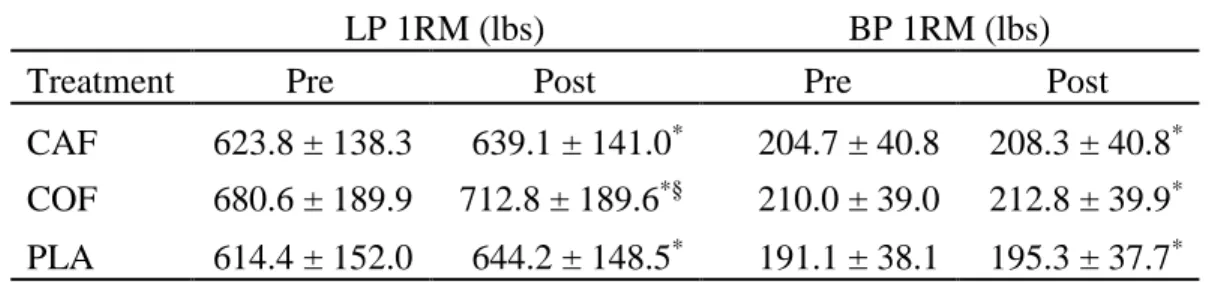
pre-exercise improved leg press one-rep max to a greater extent than CAF (32.2±18.6 vs. 15.3±16.9
lbs; P=0.03), while both attenuated total work and peak power reductions compared to placebo
(P≤0.05). CRE loading (five days) did not improve strength or sprint performance compared to
placebo (P>0.05). Effects of CRE were not influenced by chronic COF or CAF intake, but the
combination of CRE+CAF resulted in mild gastrointestinal discomfort. Results may inform
ACKNOWLEDGEMENTS
I would like to thank my committee members for generously lending their time, attention,
and expertise to my thesis project. I am also very grateful for the tremendous effort given by the
study participants, along with the students who were so helpful in assisting with data collection.
I would like to thank my advisor, Dr. Abbie Smith-Ryan, for her continued guidance and
dedication to my academic development. She was a tremendous source of advice,
encouragement, and knowledge throughout this project. She is incredibly devoted to the
mentorship of her students, and her guidance, patience, and generosity were greatly appreciated.
Finally, I would like to thank my friends and family for their endless support and
TABLE OF CONTENTS
LIST OF TABLES ... ix
LIST OF FIGURES ... x
LIST OF ABBREVIATIONS ... xi
CHAPTER I: INTRODUCTION ... 1
Creatine ... 1
Caffeine ... 3
Co-ingestion of Creatine and Caffeine ... 5
Purpose ... 6
Research Questions ... 6
Hypotheses... 6
Delimitations ... 7
Limitations ... 7
Assumptions ... 8
Theoretical ... 8
Statistical ... 8
Operational Definitions ... 8
Significance of study ... 10
CHAPTER II: REVIEW OF LITERATURE ... 11
Creatine and strength outcomes ... 13
Creatine and sprint performance ... 15
Caffeine ... 16
Caffeine and strength outcomes ... 17
Caffeine and sprint performance ... 18
Comparison of caffeine and coffee ... 20
Concurrent use of caffeine and creatine ... 21
Conclusion ... 23
CHAPTER III: METHODOLOGY ... 25
Experimental Design ... 25
Subjects ... 26
Preliminary Testing ... 26
Instrumentation... 26
Serum Creatinine ... 27
One Rep Max (1RM) & Repetitions to Fatigue (RTF) ... 27
Repeated Sprint Protocol ... 28
Supplementation ... 28
Statistical Analysis ... 29
CHAPTER IV: MANUSCRIPT I... 32
Introduction ... 32
Methods ... 34
Experimental Design ... 34
Subjects ... 34
One Rep Max (1RM) & Repetitions to Fatigue (RTF) ... 35
Supplementation ... 36
Statistical Analysis ... 37
Results ... 38
Strength outcomes ... 38
Sprint outcomes ... 38
Discussion ... 39
Conclusion ... 43
CHAPTER V: MANUSCRIPT II... 44
Introduction ... 44
Methods ... 46
Experimental Design ... 46
Subjects ... 47
Serum Creatinine ... 47
One Rep Max (1RM) & Repetitions to Fatigue (RTF) ... 48
Repeated Sprint Protocol ... 48
Supplementation ... 49
Statistical Analysis ... 50
Results ... 51
Strength outcomes ... 51
Sprint outcomes ... 51
Serum creatinine values ... 52
Reported side effects ... 53
Discussion ... 53
Conclusions ... 57
TABLES ... 59
FIGURES ... 64
LIST OF TABLES
Table 1: Baseline characteristics and habitual dietary intakes by group for
caffeine (CAF), coffee (COF), and placebo (PLA) (acute phase) ...59
Table 2: Effects of acute supplementation on leg press and bench press 1RM ...60
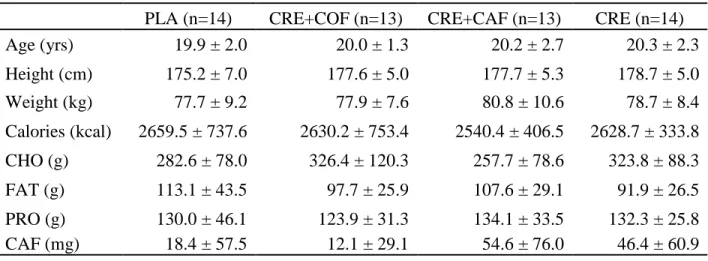
Table 3: Baseline characteristics and habitual dietary intakes by group (chronic phase) ...61
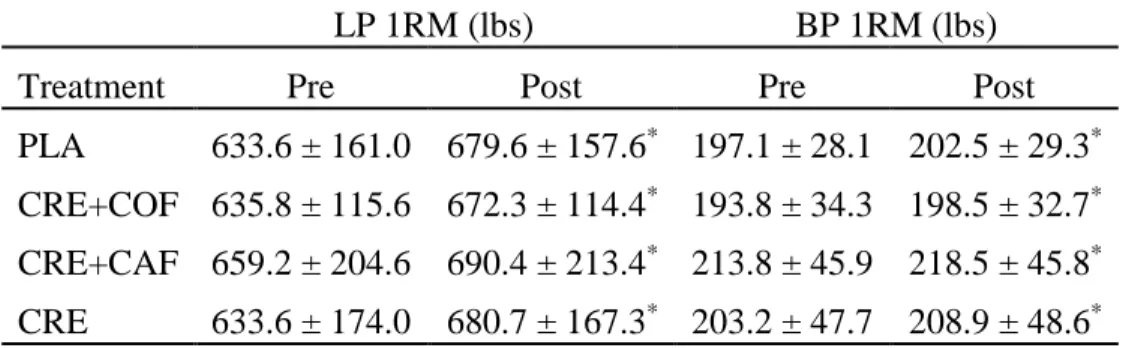
Table 4: Effects of chronic supplementation on leg press and bench press 1RM for placebo (PLA), creatine + coffee (CRE+COF), creatine + caffeine
(CRE+CAF), or creatine alone (CRE) ...62
Table 5: Changes in peak power (PP; watts) and total work (TW; joules)
LIST OF FIGURES
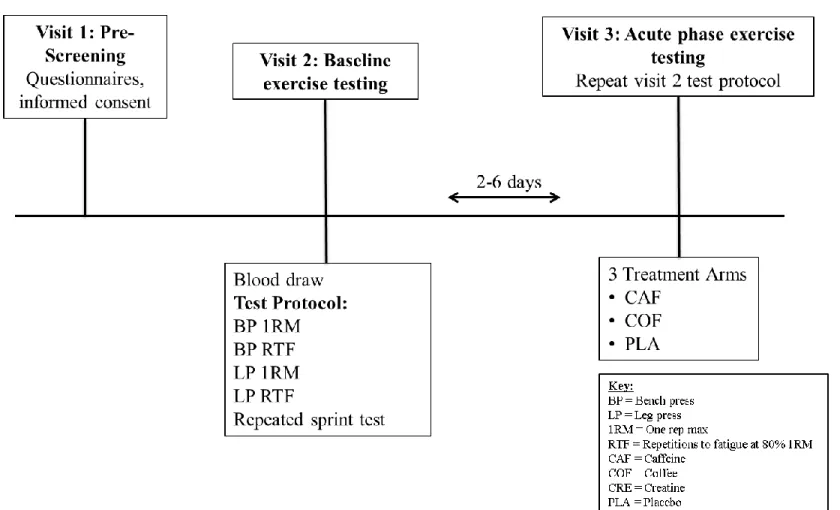
Figure 1: Experimental protocol schematic for the acute phase of supplementation ...64
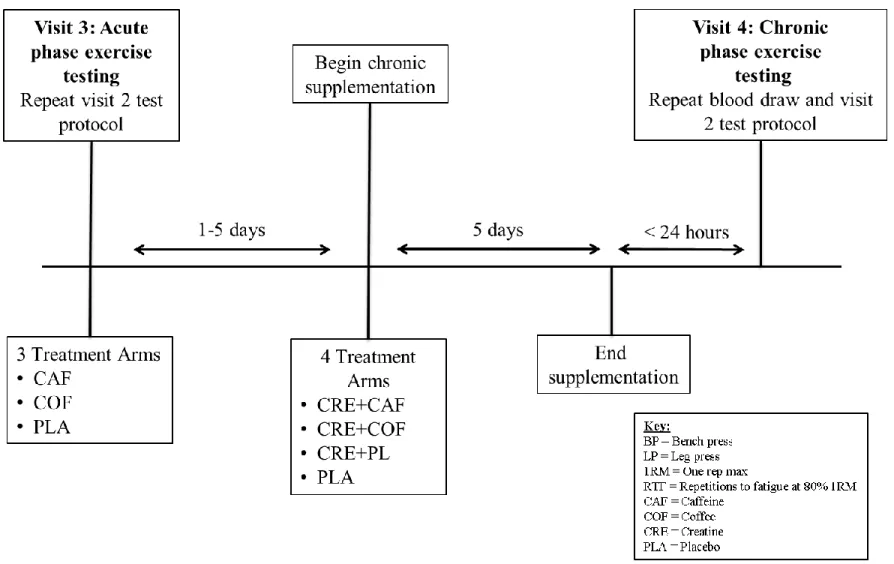
Figure 2: Experimental protocol schematic for the chronic phase of supplementation ...65
Figure 3: Effects of acute supplementation on leg press and bench press
repetitions to fatigue ...66
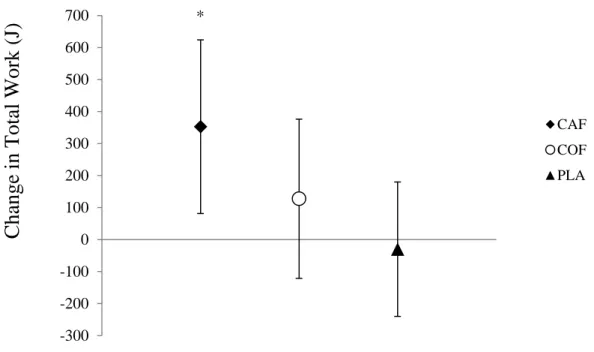
Figure 4: Changes in sprint 1 total work (TW; joules) after acute supplementation ...67
Figure 5. Changes in average total work (TW; joules) after acute supplementation ...68
Figure 6: Effects of chronic supplementation on leg press and bench press
repetitions to fatigue ...69
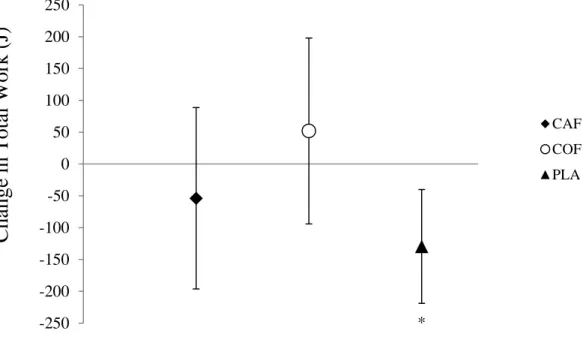
Figure 7: Changes in average total work (TW; joules) after chronic supplementation ...70
LIST OF ABBREVIATIONS
1RM One-repetition maximum
ADP Adenosine diphosphate
ATP Adenosine triphosphate
BP Bench press
CAF Caffeine anhydrous
COF Coffee
CRE Creatine
CRN Creatinine
HRT Muscle half-relaxation time
LP Leg press
PCr Phosphocreatine
PLA Placebo
PP Peak power
RTF Repetitions to fatigue
CHAPTER I: INTRODUCTION
Use of nutritional supplements as ergogenic aids is widespread. In a survey of 207
division I collegiate athletes, 89% reported that they had previously used nutritional supplements
(1). While many nutritional supplements lack data supporting their safety or efficacy, a number
of supplements are considered safe, legal, and have ample evidence to support their efficacy.
Two of the most commonly used and frequently studied ergogenic aids, which have been shown
to improve exercise performance, are creatine and caffeine.
Creatine
Creatine is synthesized endogenously in the liver, kidneys, and pancreas by combining
arginine, glycine, and methionine, with endogenous production yielding roughly one gram of
creatine per day (2). Ninety-five percent of the creatine pool is stored within skeletal muscle,
with the remaining 5% distributed throughout the liver, kidneys, brain, and testes (3). Sixty
percent of the creatine pool is stored as phosphocreatine (PCr), while 40% is stored as free form
creatine. Although the average 70 kg male has a creatine pool of 120-140 grams (4), creatine
storage is affected by a number of factors including muscle mass, skeletal muscle fiber type, and
dietary intake (3, 5-7). The most common dietary sources of creatine are meats, so vegetarians
typically have a smaller pool of stored creatine (6).
The most widely used and studied form of supplemental creatine, creatine monohydrate,
has been shown to increase the amount of creatine stored in skeletal muscle (3, 7, 8). A popular
consume 20 grams of creatine per day, split between four equal doses, for a period of 4-7 days
(4). The loading phase is followed by a maintenance phase of 3-6 grams per day. Conversely,
creatine supplementation can be efficacious without a structured loading phase. Ingesting a
regular maintenance dose of 3-6 grams per day can effectively increase creatine storage, but
saturation may take up to 3-4 weeks (9). Despite concerns over potential side effects, numerous
studies have demonstrated the safety of creatine supplementation, and no deleterious side effects
have been reported in controlled research (10).
Creatine supplementation has been consistently shown to increase muscle creatine
storage, with a concomitant improvement in high intensity exercise performance. Previous
studies have shown creatine supplementation to increase strength, single sprint performance, and
repeated sprint performance (11). A minority of previous studies have failed to reveal a benefit
from creatine supplementation (11-13), but such results may be attributed to ineffective dosing
protocols, characteristics of the exercise tests employed, or a high prevalence of nonresponders
in the selected samples (2). In high-intensity exercise, the rapid need for adenosine triphosphate
(ATP) regeneration is accommodated, in part, by the creatine kinase reaction in which PCr
rephosphorylates adenosine diphosphate (ADP). By increasing PCr storage, creatine
supplementation increases ATP availability by enhancing the rate of ADP rephosphorylation (2),
enhancing high-intensity, short-duration exercise (14). Rephosphorylation of ADP via the
creatine kinase reaction also involves the consumption of a hydrogen ion (H+) (15), indicating
that enhanced H+ buffering may be one mechanism contributing to creatine’s effect on anaerobic
exercise. Research in aerobic exercise has been less promising (14), as activities with longer
duration rely more on oxidative phosphorylation for energy production and increases in total
Previous literature has also reported that creatine supplementation is advantageous for
skeletal muscle hypertrophy. By enhancing PCr availability and ATP resynthesis, long-term
supplementation allows for greater training intensity and work completed throughout a training
program (16). Further, creatine supplementation has been shown to increase insulin-like growth
factor 1 (IGF-1) (6, 17), satellite cell proliferation (18), and myogenic transcription factors such
as myogenic regulatory factor 4 (MRF-4) (19, 20). These mechanisms are likely to contribute to
the hypertrophic effect of creatine supplementation in combination with resistance training; this
long-term hypertrophic response may potentially add to the ergogenic effect described in
high-force, short-duration exercise. Weight often increases by 1-2 kg in response to short-term
creatine loading (11). While the initial increase in total body weight is likely due to minor water
retention, further increases in fat-free mass (FFM) are attributed to hypertrophic adaptations (11).
Caffeine
Caffeine (1,3,7-trimethylxanthine) is the most widely consumed psychoactive substance
in the world (21), found in many common foods and beverages. Caffeine is also a commonly
used ergogenic aid for endurance and strength athletes (1, 22). Caffeine’s effect on endurance
exercise has been studied extensively, with the majority of data indicating an ergogenic effect.
Acute consumption of caffeine has been consistently shown to improve performance and
increase time to exhaustion in endurance exercise (23-27). In previous research, doses commonly
range from 3-9 mg of caffeine per kg of total body mass (mg/kg), when caffeine is ingested
30-60 minutes prior to exercise to allow caffeine levels in the bloodstream to reach peak values (28,
29). Caffeine may affect performance via both peripheral and central mechanisms. While
caffeine’s role as an adenosine antagonist is often considered its primary ergogenic mechanism,
utilization, spare glycogen, increase circulating cortisol and epinephrine, and may peripherally
affect neuromuscular function (21, 30).
Caffeine’s effects on resistance exercise and sprint performance have been far less
consistent. Multiple studies have found no benefit of caffeine consumption on anaerobic sprint
performance in untrained participants (31-34), but contrary findings have been reported with
moderately or highly trained participants (35-39). An ergogenic effect of caffeine on bench press
endurance has been reported (39), but other studies have reported contrary findings (40-42).
Similarly, studies investigating changes in bench press one-rep max (1RM) after caffeine
ingestion have reported mixed results (40, 42). Previous investigations have revealed no
significant improvements in 1RM or endurance for the leg press or leg extension exercises
following acute caffeine intake (39, 40, 42). More research is needed to determine if caffeine
induces an ergogenic effect in maximal strength and muscular endurance.
Coffee is a well-known and commonly consumed source of caffeine (22, 43). A cup of
coffee yields roughly 65-110 mg per cup (44), prompting researchers to investigate its use as a
caffeine source with ergogenic potential. The acute ingestion of coffee prior to exercise has been
shown to enhance running performance (45). Although prior coffee consumption does not blunt
the ergogenic effect of subsequent caffeine anhydrous intake (46), data from Graham et al. (47)
indicate that caffeine anhydrous supplementation may improve running performance when
compared to a caffeine-matched dose of coffee. To date, the comparative effects of coffee and
Co-ingestion of Creatine and Caffeine
Creatine and caffeine are currently among the most popular nutritional ergogenic aids,
with evidence indicating potential ergogenic effects for strength and sprint performance.
Accordingly, supplements containing both ingredients have become popular in athletes
participating in anaerobic exercise (48-50). Despite the popularity of such supplements, research
on the concurrent use of caffeine and creatine is limited.
Vandenberghe et al. (51) reported that creatine loading increased dynamic torque
production, but that the ergogenic effect of creatine was negated by chronic caffeine
supplementation. Interestingly, chronic caffeine intake did not appear to influence muscle PCr
saturation in response to creatine supplementation (51). Creatine supplementation was later
shown to decrease muscle relaxation time, whereas chronic caffeine consumption increased
relaxation time (52). These findings may indicate a potential interaction between chronic
caffeine supplementation and creatine loading, as combined supplementation with both creatine
and caffeine resulted in no significant change in relaxation time (52). Some authors have
dismissed a potential interaction between creatine and chronic caffeine ingestion because
previous creatine studies have administered the supplement dissolved into coffee or tea (53-55).
This information, in combination with the findings of Vandenberghe et al. (51), may suggest that
chronic caffeine anhydrous supplementation unfavorably affects creatine loading in a manner
that is not replicated by coffee or tea. Differential effects may be explained by the numerous
bioactive compounds that make coffee and tea markedly distinct from a dose of caffeine
anhydrous (56, 57). Given the popular use of both creatine and caffeine in anaerobic athletes,
further research is warranted to determine if chronic coffee or caffeine anhydrous consumption
Purpose
1. The primary purpose of this study was to compare the effects of acute coffee and caffeine
anhydrous ingestion on strength and sprint performance.
2. A secondary purpose was to determine if chronic coffee or caffeine anhydrous ingestion
influence the ergogenic effects of creatine loading on strength and sprint performance.
Research Questions
1. Does acute caffeine ingestion improve strength and repeated sprint performance?
a. In the context of strength and repeated sprint performance, how do the effects of
acute coffee ingestion and acute caffeine anhydrous ingestion compare?
2. Does chronic consumption of caffeine anhydrous or coffee impact the ergogenic effect of
creatine loading?
Hypotheses
1. Acute caffeine anhydrous ingestion would improve the given measures of strength and
sprint performance to a greater extent than the coffee or placebo conditions.
2. Creatine loading would increase 1RM strength and repetitions to fatigue for leg press and
bench press, as well as peak power and total work output during a repeated sprint
protocol.
a. Chronic caffeine anhydrous ingestion would inhibit the ergogenic effects of
creatine loading.
b. Chronic coffee ingestion would have no impact on the ergogenic effect of creatine
Delimitations
1. Participants were moderately trained males, aged 18-35 years, with body mass between
60 to 100 kg.
2. The study consisted of four laboratory visits.
3. The duration of chronic supplementation for coffee, caffeine anhydrous, and creatine
monohydrate was five days.
4. Participants did not consume performance-enhancing supplements containing creatine or
beta-alanine for at least three months prior to the study.
5. Participants abstained from caffeine and/or coffee intake for at least 48 hours prior to
exercise testing, and throughout the duration of chronic supplementation.
6. Participants were excluded if dietary analysis or pre-screening questionnaire answers
indicate a sensitivity or history of adverse reactions to caffeine consumption, daily
caffeine consumption in excess of 800 mg, or consumption of any food, supplement, or
drug in amounts that may significantly influence the CYP1A2 isozyme.
Limitations
1. Participants were recruited from classes within the Department of Exercise and Sport
Science and through fliers located near fitness facilities on the campus of the University
of North Carolina at Chapel Hill (UNC-CH). Therefore, the sample was not selected in a
truly random manner.
2. Results may not be applicable to females, or individuals below 18 or above 35 years of
age.
3. Baseline and post-supplementation values of muscle creatine saturation were not directly
Assumptions
Theoretical
1. Participants provided accurate information on all pre-screening materials, including
questionnaires for health history, exercise and nutrition status, and 3-day diet logs.
2. Participants gave maximal effort during exercise testing.
3. Participants adhered to the supplementation protocol.
4. Participants complied with pre-testing instructions.
5. Participants maintained normal training and nutritional habits throughout the
intervention.
Statistical
1. The sample was drawn from a population that is normally distributed.
2. Treatment groups were randomly assigned.
3. Variability was approximately equal in the selected sample (homogeneity of variance).
Operational Definitions
1. Acute caffeine supplementation: Oral administration of caffeine, commonly 3-5 mg/kg,
30-60 minutes prior to testing.
2. Caffeine anhydrous (CAF): The supplemental form of caffeine, commonly available as a
powder or capsule (30).
3. Chronic supplementation: Daily oral administration of a supplement continued over
multiple days. The chronic phase of the current study had groups ingesting caffeine
4. Coffee (COF): A commonly consumed caffeinated beverage prepared from roasted
coffee beans (58). Coffee is the most common source of caffeine consumed by adults in
the United States (43).
5. Creatine loading (CRE): A creatine dosing protocol aimed at rapidly increasing muscle
creatine storage. A typical protocol consists of 20 g/day, split evenly between 4 doses,
administered for a period of 4-7 days (4).
6. Creatine monohydrate: The most widely used and researched form of supplemental
creatine, used to enhance muscle creatine storage (2).
7. Creatine nonresponder: An individual who sees muscle creatine storage increase by < 10
mmol/kg dry weight in response to creatine supplementation, and is unlikely to obtain an
ergogenic benefit from creatine supplementation (7, 55).
8. Moderately trained: Participants were considered moderately trained if they had regularly
participated in resistance training for at least 30 minutes, 3 times per week, for at least 3
months prior to the study.
9. One repetition maximum (1RM): The greatest load with which an individual can
complete one full repetition of a resistance exercise.
10.Phosphagen energy system: Energy system with the capacity to rapidly generate ATP.
Phosphocreatine promotes the rephosphorylation of ADP via the creatine kinase reaction,
resulting in the production of ATP and Cr (15).
11.Phosphocreatine (PCr): The phosphorylated form of creatine, which constitutes 60% of
the stored creatine pool and contributes to ATP production via the creatine kinase
12.Repetitions to fatigue (RTF): The number of repetitions performed in a maximal set of a
given resistance exercise. Used as an indicator of muscular endurance during a single
maximal set of high-intensity (80% 1RM) resistance exercise. Repetitions conformed to
standardized criteria to ensure proper form and safety, as determined by trained lab
personnel.
Significance of study
This study aimed to evaluate the comparative effects of acute coffee and caffeine
anhydrous intake on strength and repeated sprint performance. Previous studies on caffeine
anhydrous have reported mixed results, and the comparative effects of coffee and caffeine
anhydrous have not been investigated in the context of anaerobic exercise. This study also sought
to determine if chronic caffeine anhydrous or coffee intake impact the ergogenic effect of
creatine loading. While previous research has suggested a potential interaction between caffeine
anhydrous and creatine supplementation, replication of these results is needed. Results of the
current study may have important implications for the use and formulation of nutritional
CHAPTER II: REVIEW OF LITERATURE
Nutritional supplementation is a common practice among competitive athletes (1).
Creatine and caffeine are currently among the most commonly used nutritional ergogenic aids (1,
22), with ample evidence supporting their safety and efficacy. Despite concerns over potential
adverse effects on hydration and renal function, evidence has shown creatine supplementation to
be a safe practice (10). Similarly, consumption of moderate doses of caffeine (<400 mg) is not
associated with adverse side effects (59), and average caffeine intake of adults in the United
States may be as high as 4 mg/kg (43), equating to 280 mg/day for a 70-kg individual. Most
athletic federations and organizations, including the World Anti-Doping Agency (60), do not
consider creatine or caffeine to be banned substances.
Creatine supplementation increases muscle PCr storage, with a concomitant improvement
in high-intensity exercise. Although some studies have failed to demonstrate an ergogenic effect
(12, 13), the majority of studies investigating creatine supplementation have documented
improvements in resistance exercise and sprint performance (11). Caffeine’s effects on aerobic
exercise have been studied extensively, but significantly less research has been conducted to
investigate its impact on anaerobic exercise. Although promising findings have been reported
(35-39), studies involving resistance exercise and sprint performance outcomes have reported
conflicting results (31, 33, 39-42). While preliminary research (47) suggested that caffeine
anhydrous may improve aerobic exercise performance to a greater extent than a
the current review are unaware of any research comparing caffeine anhydrous and coffee in the
context of anaerobic exercise.
Recently, many nutritional supplements have been formulated to include both caffeine
and creatine (48-50). Although a number of previous studies on creatine have mixed the
supplement in caffeinated coffee or tea (53-55), there is evidence suggesting a potential
interaction between creatine and caffeine when supplemented concurrently (51). Such an
interaction may relate to opposing effects on muscle relaxation time (52), but more research on
the topic is warranted. The current review aims to evaluate the ergogenic potential of creatine
and caffeine supplementation in anaerobic exercise. Research pertaining to the concurrent use of
caffeine and creatine will also be discussed, along with direct comparison of caffeine and coffee
as ergogenic aids.
Creatine
Creatine is synthesized endogenously in the liver, kidneys, and pancreas, with daily
production yielding roughly 1 gram per day (2). Creatine is formed by combining arginine,
glycine, and methionine in a series of reactions catalyzed by L-arginine:glycine
amidinotransferase, guanidinoacetate methyltransferase, and methionine adenosyltransferase (2).
Ninety-five percent of the creatine pool is stored within skeletal muscle (3); 60% of the creatine
pool is stored as PCr, while 40% is stored as free form creatine. The average 70 kg male has a
creatine pool of roughly 120-140 grams (4), but creatine storage is affected by a number of
factors including muscle mass, skeletal muscle fiber type, and dietary intake (3, 5-7).
High-intensity exercise requires the rapid generation of large amounts of force.
Sustaining high power outputs requires large quantities of adenosine triphosphate (ATP); during
intramuscular ATP storage is limited to roughly 8 mmol/kg wet weight of muscle (15), the
urgent demand for ATP regeneration must be accommodated, in part, by PCr. By way of the
creatine kinase reaction, PCr phosphorylates ADP to generate ATP for continued crossbridge
cycling. Creatine supplementation therefore increases ATP availability by enhancing the rate of
ADP rephosphorylation, enhancing performance in high-intensity, short-duration exercise (14).
While creatine’s primary ergogenic mechanism relates to its contribution to the phosphagen
energy system, it may also increase the rate at which calcium (Ca2+) is taken up by the
sarcoplasmic reticulum, allowing more rapid crossbridge detachment and force production (2). It
has been proposed that shortened muscle relaxation time may contribute to the ergogenic effects
observed with creatine loading (52), although other research has shown no effect on relaxation
time (62). Further, the creatine kinase reaction consumes a hydrogen ion in the process of
rephosphorylating ADP (15), indicating a potential enhancement of pH buffering with creatine
supplementation.
Creatine and strength outcomes
Since creatine supplementation’s boost in popularity in the 1990’s, hundreds of studies
have investigated its ergogenic potential. The majority of studies (>70%) have reported
statistically significant performance improvements in high-intensity exercise, such as resistance
training (11). Short-term creatine loading has been shown to enhance resistance exercise
performance, primarily by enhancing the phosphagen energy system. Volek et al. (63)
documented improvements in bench press repetitions and peak power output after 7 days of
creatine loading. Izquierdo et al. (64) reported increases in half-squat and bench press repetitions
to fatigue, along with half-squat one-rep max, with five days of loading. It appears that
the acute augmentation of PCr storage, but also by a chronic improvement in the quality of
training sessions. In a 12-week study, Volek et al. (8) found that creatine supplementation led to
statistically significant improvements in body mass, fat free mass, bench press, squat, muscle
fiber cross-sectional area, and bench press volume during training sessions. Similarly, Aguiar et
al. (65) found that 12 weeks of creatine supplementation improved training volume, bench press,
knee extension, bicep curl, muscle mass, fat-free mass (FFM), and performance in
submaximal-strength functional tests. By enhancing PCr availability and ATP resynthesis, long-term
supplementation allows for greater training intensity and work completed throughout a training
program (16). The chronic elevation of PCr storage allows for greater training volume in
exercise programs, augmenting adaptations to resistance training.
Other mechanisms may also contribute to creatine’s effects on resistance training
adaptations. Creatine supplementation has been shown to increase insulin-like growth factor 1
(IGF-1) (6, 17), satellite cell proliferation (18), and myogenic transcription factors such as
myogenic regulatory factor 4 (MRF-4) (19, 20). These mechanisms may contribute to the
hypertrophic effect of creatine supplementation in combination with resistance training, and may
enhance training adaptations to resistance training. More research is needed to determine the
extent to which these mechanisms contribute to creatine’s ergogenic effect. Weight often
increases by 1-2 kg in response to short-term creatine loading (11), primarily due to water
retention. Beyond this initial weight gain, further increases in FFM are likely attributed to
hypertrophic adaptations (11).
Creatine appears to impart ergogenic benefits in a wide range of populations, including
both males and females, trained and untrained participants, and a variety of age groups from
ergogenic aid in the context of strength and resistance exercise performance, and applicable to a
variety of populations. A meta-analysis by Branch (14) concluded that creatine supplementation
improves isotonic strength (effect size, ES ≈ 0.44), one-rep maximum (1RM) strength (ES =
0.32), and repetitions lifted (ES = 0.64) in exercise lasting ≤30 seconds, indicating applications
for a variety of resistance training programs and repetition ranges.
Creatine and sprint performance
Given creatine’s critical role in the phosphagen energy system, creatine supplementation
has been identified as a promising method of improving high-intensity sprint performance. To
date, research has documented improvements in both single and repeated sprint performance
after creatine supplementation. In highly trained male soccer players, creatine loading improved
performance in a repeated sprint test (66). These findings are supported by those of Theodorou et
al. (67), who found that creatine loading enhanced interval sprint times in elite swimmers. Preen
et al. (68) investigated the effects of creatine supplementation in active, but not well-trained,
male participants. Results indicated that creatine loading increased total work done and peak
power in an extended repeated sprint test on a cycle ergometer. In agreement with the
aforementioned studies, Skare et al. (69) showed that creatine supplementation improved
performance in a series of 6 intermittent 60-meter sprints. Further, swimming velocity was
improved in a single 100-meter sprint (69), indicating that the performance benefits of creatine
supplementation are not exclusively limited to repeated sprint performance.
Conversely, other studies have reported no benefit of creatine supplementation on sprint
performance. McKenna et al. (70) found no effect of creatine loading on an intermittent sprint
test consisting of five 10-second sprints with variable recovery times between sprints. Finn et al.
interspersed with 20-second rest periods. Despite trends toward improvement in 1-second peak
power, 5-second peak power, and fatigue index, no performance measures improved to a
statistically significant degree (71).
Despite conflicting results, the majority of data indicate an ergogenic effect of creatine in
both single and repeated sprint performance. Roughly 70% of studies investigating creatine
supplementation have reported an ergogenic effect, especially when measuring performance in
high-intensity exercise (11). A meta-analysis by Branch (14) concluded that creatine
supplementation produces an ergogenic effect in exercise bouts lasting less than 30 seconds, with
an effect size of 0.24. Studies reporting negative results have often had methodological
limitations including low statistical power, failure to control for non- or quasi-responders, failure
to sufficiently familiarize participants to the exercise test prior to baseline testing, or exercise test
protocols that are not sensitive to enhancement of the phosphagen energy system. Overall, the
available data indicate that creatine supplementation improves sprint performance, particularly in
repeated bouts lasting less than 30 seconds each.
Caffeine
Caffeine (1,3,7-trimethylxanthine) is the most widely consumed psychoactive substance
in the world (21), found in many common foods and beverages. Caffeine is also a commonly
used ergogenic aid (22), with potential applications in both aerobic and anaerobic sports.
Antagonism of adenosine receptors is often considered caffeine’s primary ergogenic mechanism
(30). Caffeine may affect performance via both peripheral and central mechanisms by altering
pain and effort perception (72), the release of calcium from the sarcoplasmic reticulum (73), and
the activity of Na+/K+ ATPase pumps (74). Caffeine has also been shown to increase β-endorphin
epinephrine (21, 30); more research is needed to determine the extent to which these mechanisms
contribute to the ergogenic effect of caffeine.
Caffeine and strength outcomes
While caffeine has been shown to consistently improve aerobic exercise performance
(30), research investigating caffeine’s effect on strength performance is mixed. Although Woolf
et al. (39) reported an ergogenic effect of caffeine on chest press endurance, no improvement in
leg press endurance was observed. Beck at al. (40) documented an improvement in bench press
1RM, but no improvement in bench press endurance, leg extension 1RM, or leg extension
endurance. Subsequent research by Woolf et al. (41) revealed no significant effect of caffeine on
bench press endurance, and Astorino et al. (42) did not find any significant improvements in
bench press or leg press 1RM or endurance after acute caffeine ingestion. While the available
data appear to be fairly equivocal, a number of positive outcomes were observed but failed to
reach statistical significance. Although Woolf et al. (39) did not demonstrate a statistically
significant increase in total weight lifted in a single maximal set of leg press (P = 0.09), 78% of
participants saw an improvement of some magnitude following caffeine supplementation, and
participants lifted 1,262 more pounds after caffeine ingestion compared to placebo. While a
subsequent study by Woolf et al. (41) found no significant effects on bench press, 40-yard dash,
or 20-yard shuttle, improvements were observed after caffeine ingestion in 59%, 59%, and 47%
of participants, respectively. Astorino et al. (42) did not find any significant improvements in
performance, but did report nonsignificant increases in bench press 1RM, leg press 1RM, and
total weight lifted in both leg press and bench press.
Currently, the body of evidence does not conclusively demonstrate a consistent ergogenic
suggest that further research on the topic is warranted. Inconsistent findings may be explained by
insufficient sample sizes, variable responses between individuals, or specific methodological
considerations regarding caffeine dosing and exercise protocols employed. Interestingly,
significant findings are more commonly found in upper body strength compared to lower body
strength; to date, a mechanism underlying this observation has yet to be identified. In light of
mixed findings, more research is required to elucidate the effect of caffeine on strength
outcomes.
Caffeine and sprint performance
Caffeine’s effects on sprint performance have also been inconsistent in previous
literature. A number of studies have found no benefit of caffeine consumption on anaerobic
sprint performance (31-34), but many positive findings have been reported (36, 38, 39, 75).
Discrepant findings in sprint performance may be attributed, in part, to the training status of
study participants.
In studies with relatively untrained participants, caffeine has failed to improve sprint
performance. Collomp et al. (31) investigated the effects of caffeine (5 mg/kg) on Wingate test
performance. Despite altering catecholamine and blood lactate levels, no effect on performance
was observed. Similarly, Lorino et al. (34) did not find any improvement in Wingate
performance or an agility test following acute ingestion of caffeine (6 mg/kg). Negative findings
have also been reported in the context of repeated sprint performance. Crowe et al. (32) found no
ergogenic effect of caffeine (6 mg/kg) on a test consisting of two 60-second maximal cycling
bouts; rather, the observed increases in time to peak power and blood lactate concentrations
could be considered unfavorable effects on anaerobic performance. Greer et al. (33) administered
While there was no effect on sprint performance in the first two Wingates, an ergolytic effect
was observed in sprints three and four (33). Despite unfavorable outcomes in untrained
participants, caffeine has improved sprint performance in moderately and well-trained subjects.
In addition to improved bench press performance, Woolf et al. (39) reported greater peak power
in the Wingate test following 5 mg/kg of caffeine ingestion in trained athletes. Schneiker et al.
(38) reported that 6 mg/kg of caffeine improved performance on a test consisting of prolonged,
intermittent sprints lasting four seconds each in male team-sport athletes. In trained cyclists,
Wiles et al. (75) found that 5 mg/kg of caffeine improved performance time, mean power, peak
power, and mean speed in a 1-km time trial.
In light of these mixed findings, more research on caffeine’s effects on sprint
performance is warranted. However, the available evidence seems to indicate that caffeine’s
potential to improve sprint performance is dependent on training status. Accordingly, Collomp et
al. (36) found that 250 mg of caffeine improved 100 meter sprint velocity in trained swimmers,
with no improvement in untrained swimmers. While the authors speculate that the differential
response may be due to an enhanced ability to buffer hydrogen ions in trained participants (36),
it has been suggested that this difference may be attributed to greater variability in exercise
performance in untrained participants (30). More research is needed to conclusively identify the
underlying mechanisms of this observed difference. For trained athletes, the available evidence
Comparison of caffeine and coffee
Caffeine is found in a number of common foods and beverages, including chocolate,
soda, tea, and coffee. Coffee provides a relatively concentrated dose of caffeine, yielding 65-110
mg per cup (44). In athletes, coffee is a commonly used caffeine source prior to competition
(22); accordingly, researchers have investigated the use of coffee as a practical source of caffeine
with ergogenic potential. Costill et al. (76) showed that a dose of coffee yielding 330 mg of
caffeine, ingested 60 minutes before exercise, enhanced cycling time trial performance. Further,
data from Wiles et al. (45) indicate that acute ingestion of 3 g of coffee improves performance in
a 1500-meter run. Although research has demonstrated an acute ergogenic effect from coffee
intake, it has been suggested that coffee is less ergogenic than a caffeine-matched dose of
caffeine anhydrous. Graham et al. (47) compared the effects of coffee and caffeine, with
treatment arms including decaffeinated coffee, regular coffee, decaffeinated coffee + caffeine
capsules, caffeine capsules, or a placebo. The caffeine capsule group outperformed all other
treatment arms, including the group ingesting decaffeinated coffee with caffeine capsules. None
of the coffee groups performed significantly better than the placebo group, prompting authors to
conclude that supplemental caffeine improves performance to a greater extent than a
caffeine-matched dose of coffee (47). Authors hypothesized that the differential responses to coffee and
caffeine may be attributed to one or more of the numerous biologically active compounds found
in coffee (47). One such group of bioactive compounds, known as chlorogenic acids, are present
in coffee in varying amounts (77) and may antagonize caffeine’s effects on adenosine receptors
(78).
Contrary to this hypothesis, McLellan & Bell (46) found that coffee consumption 30
subsequent caffeine anhydrous intake. More recently, Hodgson et al. (61) found that caffeine and
coffee both improved performance on a 45-minute, energy-based target time trial, with no
difference between treatments. This study also directly measured chlorogenic acid content,
indicating that 393 mg of chlorogenic acid present in the coffee treatment did not blunt its
ergogenic effect on energy-based target time trial performance (61). To date, authors of the
current review are unaware of any research investigating the comparative effects of coffee and
caffeine in the context of strength or sprint performance. More research is needed to reconcile
the discrepant findings regarding coffee and caffeine in endurance performance, and to compare
coffee and caffeine in short-duration anaerobic exercise.
Concurrent use of caffeine and creatine
Creatine and caffeine are currently among the most commonly used ergogenic aids, with
evidence indicating a potential ergogenic effect for strength and sprint performance.
Accordingly, supplements containing both products have become popular in athletes
participating in anaerobic sports (48-50). Such multi-ingredient supplements containing both
caffeine and creatine have been shown to enhance performance and adaptations to anaerobic
exercise. Spradley et al. (50) reported improvements in leg press performance, agility choice
reaction performance, and multiple indices of subjective fatigue after the ingestion of a
multi-ingredient pre-workout supplement. Smith et al. (49) investigated a similar supplement,
consumed prior to exercise for a duration of three weeks. The supplementation, combined with a
high-intensity interval training program, resulted in improvements in maximal oxygen
consumption, critical velocity, and lean body mass (49). While these results may appear to
confounded by the large number of purportedly ergogenic ingredients in the supplements used,
including branched-chain amino acids, beta-alanine, and citrulline malate, among others (49, 50).
Controlled research directly investigating any potential synergy or interaction between
caffeine and creatine is scarce. Vandenberghe et al. (51) investigated the effect of chronic
caffeine supplementation on creatine loading. Treatment arms included a 6-day creatine load (0.5
g/kg per day), a creatine load with concurrent caffeine use on the final three days (5 mg/kg per
day), and a placebo treatment. The creatine group saw a significant increase in dynamic torque
production, while the groups ingesting a placebo or creatine with caffeine did not (51). Research
has indicated that creatine and caffeine do not display pharmacokinetic interactions when
ingested together (79). As such, concurrent ingestion of caffeine did not affect muscle
phosphocreatine saturation (51), indicating that the blunted ergogenic effect of creatine is not
likely attributable to disrupted absorption or uptake into skeletal muscle.
Subsequent research by Hespel et al. (52) sought to determine the effects of creatine and
caffeine supplementation on muscle half-relaxation time (HRT). Results indicated that four days
of creatine loading (20 g/day) decreased HRT, whereas HRT was increased by chronic caffeine
supplementation (5 mg/kg per day for 3 days). Contrary to the creatine-only treatment, the
creatine treatment with concurrent caffeine ingestion did not result in a significant reduction in
HRT. Finally, acute caffeine ingestion (5 mg/kg, 1 hour prior to testing) did not have a
significant impact on HRT (52). Together, these results indicate that chronic creatine and
caffeine supplementation impart opposing effects on muscle HRT, offering a potential
mechanism to explain the interaction reported by Vandenberghe et al. (51). Gastrointestinal (GI)
discomfort may also explain a potential interaction with combined creatine and caffeine
reported in three of seven subjects receiving creatine and caffeine. In a published abstract, Harris
et al. (81) sought to replicate the findings of Vandenberghe et al. (51). Authors found that
caffeine did appear to blunt the effects of creatine loading, but attributed results to GI
discomfort, which was reported in four of ten subjects receiving both supplements (81). As such,
effects on muscle relaxation time and GI discomfort present plausible mechanisms by which
chronic caffeine intake may counteract the ergogenic effects of creatine loading.
While research investigating concurrent use of caffeine and creatine is scarce, the data
available suggest the possibility of an interaction between the two supplements. Despite this
evidence, some authors have dismissed a potential interaction between creatine and chronic
caffeine ingestion because many creatine studies have administered the product dissolved into
coffee or tea (53-55). Tea and coffee contain a large number of bioactive compounds that
distinguish them from a caffeine-matched dose of caffeine anhydrous (56, 57). It is therefore
possible that the interaction described by Vandenberghe (51) may not necessarily be replicated
by the chronic consumption of coffee or tea; more research is needed to address this research
question directly. Given the popular use of both creatine and caffeine in anaerobic athletes,
further research is warranted to determine if chronic coffee or caffeine anhydrous consumption
blunt the ergogenic effect of creatine loading on strength and sprint performance outcomes.
Conclusion
Creatine and caffeine are popular ergogenic aids that are considered safe at effective
doses (1, 10, 59). A large body of research has indicated that creatine is ergogenic for anaerobic
exercise, improving both strength and sprint outcomes (14). Caffeine supplementation has been
shown to improve sprint performance, but primarily in trained participants (36). Positive effects
reach statistical significance for a number of the measured strength outcomes (42). Although
coffee is a commonly used source of caffeine in athletes (22), direct comparisons of the effects
of coffee and caffeine anhydrous on aerobic exercise performance have yielded equivocal results
(47, 61), and such research has not been performed in the context of strength and sprint
performance. Despite the popularity of both caffeine and creatine, research on their concurrent
use is limited. Although previous creatine studies have reported positive findings while mixing
creatine into caffeinated beverages like coffee or tea, the scarce data available indicate a
potential interaction between chronic supplementation of creatine and caffeine anhydrous (51),
with GI discomfort and opposite effects on muscle half-relaxation time identified as potential
mechanisms (52). Future research is warranted to evaluate the effects of acute caffeine
consumption on strength outcomes, directly compare the effects of caffeine and coffee on
CHAPTER III: METHODOLOGY Experimental Design
The current study employed a double-blind, placebo-controlled experimental design
consisting of an acute (Figure 1) and chronic (Figure 2) phase of supplementation. For visit 1,
participants were screened for eligibility and completed medical, nutritional, and physical
activity history questionnaires. Visit 2 consisted of a blood draw to determine baseline levels of
serum creatinine, and strength testing to assess maximal upper- and lower-body strength and
repetitions to fatigue at 80% of one repetition maximum (1RM). Ten minutes after strength
testing, a repeated sprint test was completed. This exercise testing protocol was completed
during visits 2, 3, and 4. Participants were randomly assigned to one of three treatment groups
for acute (one-time) supplementation of: 1) caffeine anhydrous, 2) a caffeine-matched dose of
caffeinated coffee, or 3) a placebo containing noncaloric flavoring. For visit 3, participants
consumed their assigned treatment 30 minutes prior to assessments, which consisted of the same
exercise tests completed in visit 2. After a washout period of at least 24 hours, participants were
randomly assigned to one of four treatment groups for the chronic (5 day) phase of
supplementation: 1) creatine monohydrate, 2) creatine monohydrate and caffeine anhydrous, 3)
creatine monohydrate and coffee, or 4) placebo. Participants supplemented with their assigned
treatment for 5 days, and returned for a fourth lab visit to complete the test protocol employed in
Subjects
Male participants (n=56) between the ages of 18 and 35 years were recruited. Power
calculations were completed using G*Power 3.1 software (82) based on data from Branch (14),
Anselme (35), and Woolf (39), with statistical power and α set a priori at 0.8 and 0.05,
respectively. Calculations indicated that the intervention would be sufficiently powered with a
total sample size of n=50; 56 participants were recruited to account for experimental dropout.
Participants were assigned to treatment groups using a random number generator.
Participants were required to be moderately trained, defined by regular participation in
resistance exercise for a minimum of 30 minutes, three times per week for the previous three
months. Participants were excluded if they had supplemented with beta-alanine or creatine
within the previous three months, or if dietary analysis or pre-screening questionnaires revealed
habitual caffeine intake of >800 mg per day, a history of sensitivity or adverse reactions to
caffeine consumption, or regular consumption of any food, supplement, or drug that may
significantly influence the CYP1A2 isozyme. Participants were encouraged to maintain normal
diet and exercise habits throughout the duration of the study, but to abstain from caffeine intake
for at least 48 hours prior to exercise testing. Exercise testing sessions took place at a similar
time of day (± 2 hrs), and participants were instructed to replicate similar food intake before all
lab visits to ensure similar dietary habits prior to exercise testing.
Preliminary Testing
Instrumentation
The repeated sprint protocol was performed on a Monark friction-braked cycle
ergometer, and peak power and total work output were evaluated using Monark ATS software
nutritional, and physical activity history of participants. The dietary history questionnaire
provided information regarding the participant’s past use of nutritional supplements, habitual
caffeine consumption, and any potential adverse reactions or sensitivities to caffeine
consumption. Participants each completed a three-day diet log, and logs were analyzed using The
Food Processor software (ESHA Research, Salem, OR, USA) to evaluate habitual dietary
intakes.
Serum Creatinine
At the beginning of the first and final exercise testing sessions, a 3.5 milliliter sample of
blood was obtained from a vein in the antecubital region of the arm. Blood samples were
immediately stored in a refrigerator, then transported to UNC hospitals for serum creatinine
analysis as soon as possible (no more than 12 hours after obtaining the sample). Baseline and
post-supplementation levels of serum creatinine were used to identify potential nonresponders, as
high serum creatinine concentrations are indicative of increased creatine degradation.
One Rep Max (1RM) & Repetitions to Fatigue (RTF)
Participants completed a 1RM strength test for leg press (LP) and bench press (BP) using
free weights and a spotter. To begin the warm up, each participant performed a set of 8-10
repetitions, with a weight that is approximately 50% of the anticipated 1RM. Participants rested
for 1-2 minutes, after which a set of 4-6 repetitions was completed with a load of approximately
80% of the predicted 1RM. After a 2-minute rest period, the weight was increased to an
estimated 1RM load, and the participants attempted a single repetition with the weight. After the
completion of each successful 1RM attempt, the weight was increased until failure was reached,
with 2-3 minutes of rest between 1RM attempts. After a 3-minute rest period, participants lifted a
possible in a single set. Repetitions were counted by trained lab personnel; failure was
considered the point at which a full repetition could no longer be completed with appropriate
form. Upon failure, the spotter assisted the participant in returning the weight to the appropriate
resting position. Maximal strength and repetition testing was completed at visits 2, 3, and 4. For
all testing sessions, LP preceded BP.
Repeated Sprint Protocol
Participants completed a modified repeated sprint protocol, similar to the methods
described by Wiroth et al. (83). The test began with a self-paced 5-minute warm up with a fixed
load of 0.5 kg on a Monark friction-braked cycle ergometer (Monark, Stockholm, Sweden).
Following the warm up, participants completed a series of 5 maximal sprints lasting 10 seconds
each. After each sprint, participants were given 60 seconds of passive recovery while seated on
the cycle ergometer. During sprints, a load of 95 g/kg of body mass was applied to the flywheel
of the ergometer. During each sprint, peak power and total work output were evaluated. This
protocol was completed on visits 2, 3, and 4.
Supplementation
In the acute phase of supplementation (visit 3), participants were assigned to one of three
treatments: 300 mg of caffeine anhydrous mixed in a beverage with noncaloric flavoring (Crystal
Light; Kraft Foods, Northfield, IL), a caffeine-matched serving of dehydrated coffee (8.9 g;
Nescafé House Blend; Nestle, Vevey, Switzerland) mixed in hot water, or a placebo beverage
with noncaloric flavoring. Thirty minutes after ingestion of the treatment, participants repeated
the exercise tests performed in visit 2.
For the chronic phase of the study, participants were assigned to a treatment group for 5
between 4 doses spaced evenly throughout the day) of creatine monohydrate (Micronized
Creatine Powder; Optimum Nutrition, Aurora, IL, USA) mixed with noncaloric flavoring. A
second group consumed the same creatine loading protocol, but with 300 mg of caffeine
anhydrous added to the first dose of each day. A third group followed the creatine loading
protocol, but mixed each day’s first dose of creatine into a caffeine-matched serving of instant
(dehydrated) coffee (8.9 g coffee; yielding 303 mg caffeine). The final group consumed a
flavored, noncaloric placebo beverage, ingested 4 times throughout the day. Throughout the
chronic phase, subjects were instructed to maintain normal diet and exercise habits, but to abstain
from any extraneous caffeine consumption. To ensure compliance, participants were required to
document their supplement intake in a written log. After 5 consecutive days of supplementation,
participants reported for visit 4 to repeat the exercise testing protocol from visits 2 and 3. To
avoid an acute ergogenic effect of coffee or caffeine intake, there was no supplementation on the
day of visit 4, regardless of treatment group. At each lab visit, potential adverse effects were
reviewed with each participant and recorded within their data collection folder.
Statistical Analysis
Acute Phase
Data are expressed as mean ± standard deviation. A series of one-way ANOVAs were
used to evaluate baseline differences between groups for dietary intakes and strength and sprint
outcomes. For strength outcomes (1RM and RTF for LP and BP), change scores were calculated
from baseline testing to post-testing. Four separate one-way ANOVAs were used to compare
change scores between groups; in the event of a significant interaction, post hoc comparisons
were analyzed using the Bonferroni method. When baseline values were significantly different
for baseline values. In addition, 95% confidence intervals (mean ± 1.96 × SEM) were
constructed for all strength outcomes. When the 95% confidence interval did not include zero,
the change was considered significant (p≤0.05).
For each sprint, change scores from baseline to post-testing were calculated for both PP
and TW. A series of two-way (3 × 5; treatment × sprint) mixed model ANOVAs were used to
compare change scores between treatments for each sprint. The Bonferroni method was used to
evaluate post hoc comparisons. Peak power and TW values were averaged between all five
sprints to calculate average PP and TW for the entire sprint protocol, and change scores were
calculated for these values. Measures of PP and TW were also evaluated using 95% confidence
intervals. Analyses were performed using SPSS software (Version 20.0; IBM, Armonk, NY,
USA), and 95% confidence intervals were calculated and plotted in Microsoft Excel (Version
2011, Microsoft Corporation; The Microsoft Network, LLC, Richmond, WA, USA). Statistical
significance was set a priori at α≤0.05.
Chronic Phase
A series of one-way ANOVAs were used to evaluate baseline differences between groups
for dietary intakes, strength outcomes, sprint outcomes, and serum creatinine values. Strength
changes were evaluated using a series of two-way (2 × 4; time × treatment) repeated measures
ANOVAs. In the event of a significant interaction, the Bonferroni method was used for post hoc
comparisons. Peak power and TW values were compared using mixed factorial ANOVAs (2 × 5
× 4; time × sprint × treatment). In the event of a significant interaction effect, Bonferroni post
hoc tests were used to decompose the model. Serum creatinine and body weight values were
compared using mixed factorial ANOVAs (2 × 4; time × treatment). The Bonferroni method was
95% confidence intervals were calculated for change scores from baseline to post-testing for
serum creatinine and all performance outcomes. For all analyses, the level of significance was set
CHAPTER IV: MANUSCRIPT I
Effects of coffee and caffeine anhydrous on strength and sprint performance
Introduction
Caffeine is the most widely consumed psychoactive substance in the world, with
estimates of average daily intakes as high as 4 mg/kg of bodyweight in US adults (43). Caffeine
was first shown to improve exercise performance by Costill et al. (76) in the 1970s, who
demonstrated an increase in cycling time to exhaustion following coffee consumption. The
primary ergogenic mechanism of caffeine is antagonism of adenosine receptors (30). Caffeine
may also affect performance via both central and peripheral mechanisms by altering pain and
effort perception (72), calcium kinetics in the sarcoplasmic reticulum (73, 84, 85), and
sodium/potassiumATPase pump activity (74), among other potential mechanisms (30). Caffeine
in doses of 3-6 mg/kg bodyweight has been consistently shown to enhance endurance
performance (30), but findings have been equivocal in the context of strength and sprint
performance. Evidence currently suggests that caffeine may improve sprint performance in
trained subjects (36, 38, 39, 75), but not in untrained subjects (31-34). Collomp et al. (36)
investigated the effects of caffeine supplementation on sprint performance in both trained and
untrained swimmers. By stratifying the sample based on training status, authors showed that
sprint velocity was improved only in the highly-trained group of swimmers. This distinction may
be related to anaerobic training adaptations or reduced training variability in trained subjects, but
The reported effects of caffeine on strength performance have been largely equivocal.
Although Woolf et al. (39) reported an ergogenic effect of caffeine on bench press endurance, no
improvement in leg press endurance was observed. Beck at al. (40) documented an improvement
in bench press one-rep max (1RM), but no improvement in bench press endurance, leg press
1RM, or leg press endurance. Subsequent research by Woolf et al. (41) revealed no significant
effect on bench press endurance, and Astorino et al. (42) did not find any significant
improvements in bench press or leg press 1RM or endurance after acute caffeine ingestion. It is
possible that insufficient sample sizes, variation in individual responses, or differences in
caffeine dosing and exercise protocols may partially explain inconsistent outcomes in research to
date.
The first study reporting an ergogenic effect of caffeine used coffee as a caffeine source
(76), but it was later suggested that coffee was less ergogenic than a caffeine-matched dose of
caffeine anhydrous (47). Graham et al. (47) compared the effects of coffee and caffeine
anhydrous, and found that only caffeine anhydrous resulted in significant improvements in
running time to exhaustion. The authors hypothesized that the differential responses to coffee
and caffeine may be attributed to one or more of the numerous biologically active compounds
found in coffee. One such group of bioactive compounds, known as chlorogenic acids, are
present in coffee in varying amounts (77) and may antagonize caffeine’s effects on adenosine
receptors (78). Contrary to this hypothesis, McLellan & Bell (46) reported that the ergogenic
effect of caffeine supplementation was not affected by coffee consumption 30 minutes prior.
More recently, Hodgson et al. (61) showed that energy-based target time trial performance was
improved to a similar degree by caffeine-matched doses of coffee and caffeine anhydrous. While
other studies have reported an ergogenic effect using similar doses of coffee before exercise (45,
61, 76). Therefore, the purpose of the current study was to compare the effects of
caffeine-matched doses of coffee and caffeine anhydrous on strength and repeated sprint performance. It
was hypothesized that caffeine anhydrous ingestion would improve strength and sprint
performance to a greater extent than coffee or placebo.
Methods
Experimental Design
The current study consisted of two laboratory visits, separated by at least 48 hours (Figure 1).
Baseline testing included one-rep maximum (1RM) and repetitions to fatigue (RTF) for leg press
(LP) and bench press (BP), and a repeated sprint protocol to determine peak power and total
work output. At least 48 hours after baseline testing, participants returned for a second visit. In a
double blind fashion, participants were randomly assigned into one of three groups consisting of
either 300 mg caffeine anhydrous (CAF), a caffeine-matched dose of coffee (COF), or placebo
(PLA). Thirty minutes after ingestion, exercise testing was repeated. All methodology was
approved by the University’s Biomedical Institutional Review Board, and all participants signed
an informed consent prior to participation.
Subjects
Fifty-four male participants (Mean ± SD; Age = 20.1 ± 2.1 yrs; stature = 177.3 ± 5.6 cm;
body mass = 78.8 ± 8.8 kg) completed the current study. All participants were engaged in
resistance training for at least 30 minutes a day, three days a week, for at least three months prior
to the study. Participants were excluded if they had supplemented with creatine or beta-alanine in
the three months prior to the study. Participants were also excluded if dietary analysis or
sensitivity or adverse reactions to caffeine consumption, or regular consumption of any food or
drug in a quantity that may significantly influence caffeine metabolism, such as grapefruit juice,
cigarette smoke, and a number of pharmaceutical drugs. Habitual caffeine intake for the sample
was 32.9 ± 59.6 mg/day. Participants were encouraged to maintain normal diet and exercise
habits throughout the duration of the study, but were asked to abstain from caffeine intake for at
least 48 hours and vigorous exercise for at least 24 hours prior to all exercise testing. Participants
each completed a three-day diet log, and logs were analyzed using The Food Processor software
(ESHA Research, Salem, OR, USA) to evaluate habitual dietary intakes. Exercise testing
sessions took place at a similar time of day (± 2 hrs), and participants were instructed to replicate
similar food intake before all lab visits.
One Rep Max (1RM) & Repetitions to Fatigue (RTF)
Participants completed a 1RM strength test, for LP followed by BP, using free weights
and a spotter. To begin the warm up, each participant performed a set of 8-10 repetitions, with a
weight that is approximately 50% of the anticipated 1RM. Participants rested for 1-2 minutes,
after which a set of 4-6 repetitions was completed with a load of approximately 80% of the
predicted 1RM. After a 2-minute rest period, the weight was increased to an estimated 1RM
load, and the participants attempted a single repetition with the weight. After the completion of
each successful 1RM attempt, the weight was increased until failure was reached, with 2-3
minutes of rest between 1RM attempts. Once the 1RM was determined, participants were given a
three minute rest period before the RTF test, in which participants lifted 80% of the 1RM load
for as many continuous repetitions as possible in a single set, until a full repetition could no
tests remained constant (80% of baseline 1RM). For all testing sessions, 1RM and RTF testing
for LP preceded BP.
Repeated Sprint Protocol
Participants completed a repeated sprint test modified from the protocol described by
Wiroth et al. (83) ten minutes after the conclusion of strength testing. The test began with a
self-paced five minute warm up with a standardized load of 0.5 kg on a Monark friction-braked cycle
ergometer (Ergomedic 894 E; Monark, Stockholm, Sweden). Following the warm up,
participants completed a series of five maximal sprints lasting 10 seconds each, with a load of 95
g/kg of body mass. Participants were instructed to remain seated throughout the entire sprint and
were provided verbal encouragement throughout the test. After each sprint, participants were
given 60 seconds of passive recovery while seated on the cycle ergometer. Peak power (PP) and
total work (TW) were evaluated for each sprint using the default software (Monark ATS
Software; Monark, Stockholm, Sweden).
Supplementation
Participants were randomly assigned, according to a computer generated allocation
sequence, to one of three treatments: 300 mg of caffeine anhydrous (CAF; Smart Powders,
Graham, NC, USA) with noncaloric flavoring (Crystal Light; Kraft Foods, Northfield, IL, USA),
8.9 g of dehydrated coffee (COF; Nescafé House Blend; Nestle, Vevey, Switzerland), or a
placebo beverage with noncaloric flavoring. To ensure a dose of 3-5 mg/kg, subjects had to
weigh between 60-100 kg to participate. Blinding was completed by a member of the study staff
not administering treatments. Supplements were mixed by study staff, with 350 mL of water, in
opaque containers so neither participants nor investigators knew which treatment was being