ORIGINAL RESEARCH ARTICLE
Knowledge and Attitude of Pregnant Women in Rural Tanzania on
Prevention of Anaemia
DOI: 10.29063/ajrh2018/v22i3.8
Justina A. Margwe
1, 2and Athumani M. Lupindu
1*
Department of Veterinary Medicine and Public Health, College of Veterinary and Medical Sciences, Sokoine University of Agriculture, P.O. Box 3021, Morogoro, Tanzania1; Mbulu District Hospital, P.O. Box 3, Mbulu, Manyara, Tanzania2
*For Correspondence: Email: [email protected]
Abstract
Anaemia during pregnancy is the leading cause of morbidity and mortality and poor birth outcomes worldwide. Despite control programmes, anaemia is far beyond the target of the fifth Millennium Development Goal. This study aimed at assessing the trend in anaemia and knowledge and attitude of pregnant women towards control measures in low income rural settings. A cross-sectional study involving 354 pregnant women was conducted in Mbulu District, Tanzania. Socio-demographic and anaemia related information was gathered, and anaemia status determined. Descriptive statistics for socio-demographic and anaemia related data were computed. Knowledge and attitudes of pregnant women to anaemia were assessed using summated index and Likert scales respectively. Fisher‘s exact test was used to determine associations between variables. Multivariable logistic regression was run to quantify the risk factors for occurrence of anaemia. Prevalence of anaemia unadjusted and adjusted for altitude were 38.7% (95% CI: 0.34-0.44) and 46.3% (95% CI: 0.41-0.51) respectively. The overall score on the 11-point summated scale was 5.2, indicating low knowledge, while the overall score on Likert scale was 21.7 out of 40 points, indicating unfavorable attitude. High gravidity was a risk factor for anaemia during pregnancy (OR=13.09, 95% CI: 5.68 – 47.04 for 3-4 gravidity and OR=25.16, 95% CI: 12.46 – 37.23 for gravidity ≥ 5). There was upsurge of anaemia prevalence and low knowledge and unfavourable attitude were associated with anaemia (p-value<0.001). There is a need to set appropriate anaemia knowledge transfer and attitude change strategies in the community to have successful anaemia control program. (Afr J Reprod Health 2018; 22[3]: 71-79).
Keywords: anaemia; maternal health; pregnancy; neonatal mortality; haemoglobin
Résumé
L'anémie pendant la grossesse est la principale cause de morbidité et de mortalité et de mauvais résultats à la naissance dans le monde entier. Malgré les programmes de lutte, l‘anémie dépasse largement l‘objectif du cinquième objectif du Millénaire pour le développement. Cette étude visait à évaluer la tendance à l‘anémie ainsi que les connaissances et l‘attitude des femmes enceintes vis-à-vis des mesures de contrôle dans les milieux ruraux à faible revenu. Une étude transversale impliquant 354 femmes enceintes a été menée dans le district de Mbulu, en Tanzanie. Des informations relatives à la socio-démographie et à l'anémie ont été recueillies et le statut d'anémie déterminé. Des statistiques descriptives pour les données sociodémographiques et relatives à l‘anémie ont été calculées. La connaissance et les attitudes des femmes enceintes vis-à-vis de l'anémie ont été évaluées en utilisant respectivement les index pondérés et les échelles de Likert. Le test exact de Fisher a été utilisé pour déterminer les associations entre les variables. Une régression logistique multivariée a été effectuée pour quantifier les facteurs de risque d'apparition de l'anémie. La prévalence de l'anémie non ajustée et ajustée en fonction de l'altitude était respectivement de 38,7% (IC 95%: 0,34-0,44) et 46,3% (IC 95%: 0,41-0,51). Le score global sur l'échelle de 11 points était de 5,2, ce qui indique un faible niveau de connaissance, tandis que le score global sur l'échelle de Likert était de 21,7 points sur 40, ce qui indique une attitude défavorable. Une gravidité élevée était un facteur de risque d'anémie pendant la grossesse (OR = 13,09, IC à 95%: 5,68 - 47,04 pour une gravidité de 3-4 et OR = 25,16, IC à 95%: 12,46 - 37,23 pour la gravité ≥ 5). Il y avait une recrudescence de la prévalence de l'anémie et une faible connaissance et une attitude défavorable étaient associées à une anémie (valeur p <0,001). Il est nécessaire de définir des stratégies appropriées de transfert de connaissances sur l‘anémie et de changement d‘attitude dans la communauté afin de mettre en place un programme efficace de lutte contre l‘anémie. (Afr J Reprod Health 2018; 22[3]: 71-79).
Introduction
Anaemia, a low blood haemoglobin concentration, is a global public health problem affecting both developing and developed countries. Globally, anaemia affects 273.2 million people (42.6%) and Africa represent a largest proportion of 84.5 million people which is 62.3% prevalence1. A total of 32.4 million pregnant women of 15-49 years of age worldwide have anaemia at a prevalence of 38.2% whereas in Africa the prevalence of anaemia in pregnant women is 46.3% and 9.2 million are affected1.
More than 50% of global anaemia cases are due to iron deficiency. The main contributing factors to iron deficient anaemia include inadequate dietary intake and absorption, increased iron requirements and excessive iron losses, genetic defects, disease affecting blood cells or blood cell producing organs such as malaria, schistosomiasis, hookworm infection and HIV Infection2,3.
Grand-multiparity, too early pregnancies, too many and too frequent pregnancies, spacing of less than one year, low socioeconomic status, illiteracy, and late booking of pregnant women at antenatal care units are among the known risk factor for development of anaemia during pregnancy4,5.Anaemia during pregnancy may result into pre-term delivery, prenatal mortality, low birth weight and low mental capacity of children2.
In rural areas of developing countries anaemia in pregnancy is generally associated with indicators of infections and nutritional deficiencies6, and these are areas where the intervention strategies focus. Iron supplementation in pregnant women improves birth length and birth weight and reduces neonatal mortalities. Screening for anaemia in pregnant women and universal iron supplementation to meet the iron requirements in pregnancy is recommended. This intervention should be implemented in conjunction with measures to prevent, diagnose and treat malaria, helminthiases and schistosomiasis to improve absorption of iron and alleviate loss of haemoglobin2. Anaemia interventions are to be delivered at health care centers but the anticipated
outcome is not achieved because the problem seems complex with multiple contributing factors, some of which are not part of the strategy. For example access to appropriate dietary requirement and use infection protective gear like insecticide impregnated bed-nets are some socioeconomic factors which are important in anaemia control plan6. Knowledge and attitude of women of child bearing age may have influence on the outcome of anaemia control during pregnancy.
Despite the national health policy of routine iron supplementation and intermittent preventive treatment for malaria with anti-malarial drugs, maternal anaemia still continues to be a common cause of morbidity and mortality. In Manyara region, 36.1% pregnant women in Hanang and Mbulu Districts had anaemia in 1996 7 and in 2011 the level of anaemia in pregnant women in the study area remained 36%3. This situation suggests that there are important factors other than those on the focus of the control programme which contribute to constancy in trend of maternal anaemia during pregnancy despite the intervention efforts. The aim of this study was to determine the knowledge and attitude of pregnant women towards anaemia prevention and control measures so that the findings can be used in intervention strategies to control of maternal anaemia and reduce anaemia related health problems in Mbulu District and similar rural settings of developing countries.
Methods
Study area
Datoga (who are also called the Barbaig or Mang‘ati) and Hadzabe who are also called the Tindiga.
Study design and population
A cross-sectional study was conducted from November 2014 to July 2015 in three health care centers, namely Mbulu District Hospital, Haydom Lutheran Hospital, and Yaeda Chini Dispensary. These health facilities were selected in the study because they provide maternal health service which covers large part of the district. Pregnant women 15-49 years old who were attending antenatal clinics in selected health care centers formed the study population.
Sample size and selection of participants
The number pregnant women required to estimate the prevalence of anaemia and assess their knowledge and attitude towards anaemia control strategies was calculated according to previously described formula9. A total of 354 pregnant women were required in the study by using a reference anaemia prevalence of 36.1% earlier reported in the study area7 and setting significance level and precision at 5%. All consecutive willing pregnant women on each antenatal clinic (booking) visiting day were registered for the study until the required sample size was attained. Proportionately, 150 pregnant women were selected from Mbulu District Hospital, 104 from Haydom Lutheran Hospital and 100 from Yaeda Chini Dispensary. These participants were interviewed on different aspects of anaemia during pregnancy and blood sample was collected from each of them for haemoglobin concentration and malaria testing.
Questionnaire administration
Pre-tested semi-structured questionnaire was administered to study participants to collect information on socio-demographic characteristics, their knowledge on causes, clinical signs, treatment, prevention and complications of anaemia in pregnancy. The questionnaire also aimed at gathering information on attitude towards anaemia control strategies by asking on interest,
participation, contribution and opinion about control and prevention of anemia during pregnancy, where, why and how do they access antenatal health services during pregnancy.
Knowledge about anaemia was determined by using an index summated scale to which a series of 11 questions seeking whether the respondents had correct knowledge about anaemia was made. For each correct answer, a respondent scored 1, while for each wrong answer, a respondent scored 0. Based on the 11 statements, the minimum and maximum possible scores were 0 and 11, respectively. Zero meant having no knowledge of anaemia, while 11 meant having the highest knowledge about anaemia. The average overall score point was computed, and the respondents were grouped into three categories; 0 score represented having no knowledge about anaemia; 1 to 6 represented having low knowledge about anaemia, and 7 to 11 represented having high knowledge about anaemia.
Attitude of pregnant women towards anaemia control and prevention measures was determined using a Likert summated scale, which was made up of 8 items translating into 40 points. To each of the items of the Likert summated scale, the respondents were required to give one of the following alternatives: 1 (strongly disagree), 2 (disagree), 3 (neutral), 4 (agree), and 5(strongly agree). For ease of comparison, the responses were re-grouped into three categories: strongly disagree and disagree into disagree, agree and strongly agree into agree, and neutral remained as it is. The minimum and maximum possible scores on the Likert summated scale were 8 and 40 points, denoting the most unfavourable and the most favourable attitudes. A score of 24 denoted a neutral attitude. Therefore, 8.0 to 23.0 points, 24.0 points and 25.0 to 40.0 points meant unfavourable, neutral and favourable attitudes, respectively.
Blood sampling and processing
with a sterile lancet. The microcuvette 201* was filled with a drop of whole blood and then microcuvette was placed in the device tray and the holder was pushed gently into the Heme analyser; a reading was obtained within 45 seconds, and the results were recorded from the digital display. Pregnant women with Hb less than 11g/dl were categorized as anaemic and were further classified by the degree of severity into three levels, mild (Hb 9.0-10.9g/dl), moderate (Hb 7- 8.9g/dl) and severe anaemia (Hb <7.0g/dl). For comparison purposes, haemoglobin results were adjusted for average altitude of 1900 meters above sea level by adding 0.8 g/dl to the haemoglobin cutoff values10.
Malaria was tested by using Malaria Ag.pLDH/HRP2, (MRDT Standard Diagnostic India). The capillary blood sample was collected by finger prick method whereby the tip of the middle finger was cleaned with an alcohol swab; the test device was placed on a clean, flat surface and 5µl of whole blood was added into the respective test device by using micropipette supplied with the test device. Two drops of assay buffer were added into the sample device; for the positive results test two lines were observed; one line was for the control and the second line was for the reactive sample. For the negative results test, only control line was observed on the device, and the results were read within 20 minutes and recorded.
Data analysis
Descriptive statistics such as means, and frequencies were performed by using SPSS version 16. Cross-tabulation was used to determine associations between different variables by Fisher‘s exact test at statistical significance level of 5%. Prevalence of malaria was computed as number of positive samples over the total number of samples tested.
Index summated scale grouped pregnant women participants into those who had no knowledge about anaemia (0), those who had low knowledge about anaemia (1 to 6 points), and those who had high knowledge about anaemia (7 to 11 points). The average overall point scored by study participants was also determined.
The Likert summated scale was used to determine attitude towards practices of anaemia control in pregnancy. Based on score points, pregnant women were categorized into groups of unfavourable attitude (8.0 to 23.0 points), neutral (24.0 points) and favourable attitudes (25.0 to 40.0 points).
Multivariable logistic regression was run in SPSS 16 to assess association of anaemia as dependent dichotomous variable (anaemic or non-anaemic) with possible risk factors (predictor variables). The predictor variables included malaria status, age of respondents, education, marital status, occupation, gestation age gravidity, last pregnancy interval, knowledge and attitude of respondents. The model was fitted by backward step wise approach, in which case, all independent variables were entered the model at once. Entry probability was set at 0.05 while the probability of likelihood-ratio statistic of 0.1 was set as a removal criterion. Classification cutoff was set at 0.5 and a maximum of 10 iterations was allowed. An option for interactions for all variables was applied. Goodness-of-fit of the model was tested by Hosmer-Lemeshow test at 5% significance level. For all descriptive and analytical analyses, unadjusted haemoglobin cut-off values were used.
Results
Socio-demographic
characteristics
and
prevalence of anaemia
Pregnant women in this study had the mean age of 27.41 + 6.83 years. The youngest was 15 while the oldest was 49 years old and most of them 238 (67.2%) were in age group of 21 to 34. Most of the respondents 259 (73%) were in the 3rd trimester of pregnancy and the mean gestation age was 7.41+ 1.564 months. About 31% (109/354) of the participants had five children or more. Most of them 289 (82%) were married and more than half (57%) were peasants. Majority of participants had primary education followed by 32.2% with informal education (Table 1).
Table 4: Socio-demographic characteristics of pregnant women in Mbulu district (n=354)
Characteristics Category Frequency (%)
Age (years) 15-20 60 (16.9)
21-34 238 (67.2)
35-49 56 (15.8)
Gestation age 1st Trimester 11 (3) 2nd Trimester 84 (24) 3rd Trimester 259 (73) Parity Primigravida 100 (28.2)
Multigravida 254 (71.8) Level of
education
Informal education 114 (32.2) Primary education 171 (48.3) Secondary education 62 (17.5)
Diploma 5 (1.4)
University degree 2 (0.6)
Occupation Teacher 26 (7.4)
Health worker 5 (1.4)
Peasant 202 (57.2)
Business 19 (5.4) Keeping livestock
only
101(28.6)
Marital status Married 289(81.6)
Single 64(18.1)
Widow 1(0.3)
among 354 pregnant women was 38.7% (95% CI: 0.34-0.44). Out of 137 anaemic pregnant women, 61 (17.2%) had mild anaemia; 46 (13%) had moderate anaemia and 30 (8.5%) had severe anaemia. After adjustment to altitude, the prevalence of anaemia was 46.3% (95% CI: 0.41-0.51). Breakdown of anaemia prevalence adjusted for altitude showed that 77 out of 354 pregnant women (21.75%) had mild, 50 (14.12%) had moderate and 37 (10.45%) had severe anaemia. Out of 354 pregnant women, 25 (7.1%; 95% CI: 0.044-0.097) had malaria. Malaria infection was more prevalent in multiparous women (9.1%) compared to nulliparous women (2%) (Fishers‘ exact test p-value = 0.009). There was statistically significant association between malaria and anaemia whereby large proportion of pregnant women with malaria had anaemia (p-value = 0.007) (Table 2).
Association
of
anaemia
with
socio-demographic characteristics
Anaemia in pregnant women was associated with age such that there were more cases of anaemia in older than in younger women (p<0.001). Similarly, anaemia was associated with gravidity whereby
cases of anaemia were more common in women with higher gravidity (p<0.001) as shown in Table 2.
Anaemia among pregnant women in study area was related to the length of interval between pregnancies, shorter interval was associated with high proportion of anaemic pregnant women (p<0.001). For example, anaemia among women who had less than two years between current and previous pregnancy was 67.1% (n=164) compared to women who had three or more years interval (75%, n=8). Anaemia was also directly related to the age of pregnancy such that there were more cases of anaemia as pregnancy advanced in age (p=0.024). It was a case also with education level among pregnant women whereby formal education was linked to low levels of anaemia (p<0.001). Moreover, anaemia was associated with type work participants engaged in. Office non-agriculture related occupation was related to low incidences of anaemia (p<0.001). On the other hand, marital status of participants was associated with anaemia such that there were more cases among married than single women and widows (p<0.001). Knowledge and attitude of pregnant women about anaemia was associated with anaemia status. Low or no knowledge and unfavourable attitude were related with high incidence of anaemia (p<0.001) (Table 2).
Knowledge on anaemia
Table 2: Association of anaemia with selected socio-demographic characteristics of pregnant women in Mbulu district (n=354)
Variables Category Frequency Anaemia Hb <11g/dl p-value No-n (%) Yes -n (%)
Age (years) 15-20 60 51 (85.0) 9 (15.0) <0.001
21-34 238 156 (65.5) 82 (35.5)
35-49 56 10 (17.9) 46 (82.1)
Gravidae Gravid 1-2 154 137 (89.0) 17 (11.0) <0.001
Gravid 3-4 91 69 (75.8) 22 (24.2)
≥ Gravid 5 109 11 (10.1) 98 (89.9)
Last pregnancy interval < 2 years 164 54 (32.9) 110 (67.1) < 0.001
2-3 years 82 68 (82.9) 14 (27.1)
> 3 years 8 2 (25) 6 (75)
Gestational age 1st trimester 10 9 (90.0) 1 (10.0) 0.024 2nd trimester 84 62 (73.8) 22 (26.2)
3rd trimester 260 146 (56.2) 114 (43.8)
Education Informal 114 31 (27.2) 83 (72.8) <0.001
Formal 240 186 (77.5) 54 (22.5)
Occupation Teacher 26 24 (92.3) 2 (7.7) <0.001
Health worker 5 4 (8.0) 1 (20)
Peasant 202 144 (71.3) 58 (28.7)
Business 19 17 (89.5) 2 (10.5)
Keep livestock 101 27 (26.7) 74 (73.3)
Marital status Married 289 159 (55.0) 130 (45) <0.001
Single 64 58 (90.6) 6 (9.4)
Widow 1 0 (0.0) 1 (100.0)
Malaria Positive 25 9(36.0) 16(64.0) 0.007
Negative 329 208(63.2) 121(36.8)
Knowledge No 149 71(47.6) 78(52.4) <0.001
Low 81 53(65.4) 28(34.6)
High 124 93(75.0) 31(25.0)
Attitude Unfavourable 134 67(50) 67(50) <0.001
Neutral 110 67(60.9) 43(39.1)
Favourable 110 83(75.5) 27(24.5)
correct responses on anaemia complication in pregnancy. Generally, 42% of respondents had no knowledge about anaemia, 23% and 35% had low and high knowledge respectively. The total point score based on 11-point scale was 1854 and the overall average score was 5.2 out of 11.0, which shows that knowledge about anaemia was low.
Attitude towards control and prevention
measures of anaemia in pregnancy
The highest proportion (37.6%) of the respondents disagreed with the following statement: ―Do you think that you are at risk of getting anaemia in pregnancy‖. Furthermore, the respondents were not aware that adherence to having enough balanced diet and iron supplementation is important to achieve better health. On the other hand, the respondents disagreed on using
contraceptives or family planning methods to achieve recommended inter pregnancy interval. Generally, 38% of pregnant women had unfavourable attitude towards control and prevention of anaemia during pregnancy while two groups representing 31% had neutral and favourable attitude. The total point score on the 8-item (40-point) Likert summated scale was 7,682 and the overall average point score was 21.7 out of a possible maximum of 40.0 points. This is indicating that, generally, the respondents had an unfavourable attitude towards anaemia control and prevention in pregnancy.
Risk factors for occurrence of anaemia in
pregnant women
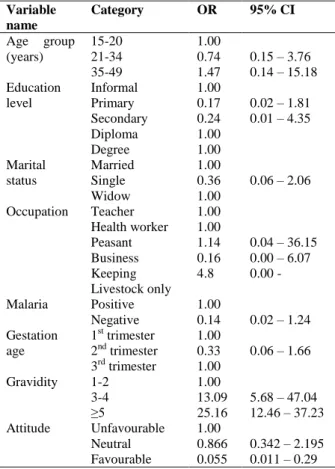
Table 3: Odds ratios for variables in the final logistic regression model
Variable name
Category OR 95% CI
Age group (years)
15-20 1.00
21-34 0.74 0.15 – 3.76 35-49 1.47 0.14 – 15.18 Education
level
Informal 1.00
Primary 0.17 0.02 – 1.81 Secondary 0.24 0.01 – 4.35
Diploma 1.00
Degree 1.00
Marital status
Married 1.00
Single 0.36 0.06 – 2.06
Widow 1.00
Occupation Teacher 1.00 Health worker 1.00
Peasant 1.14 0.04 – 36.15 Business 0.16 0.00 – 6.07 Keeping
Livestock only
4.8 0.00 -
Malaria Positive 1.00
Negative 0.14 0.02 – 1.24 Gestation
age
1st trimester 1.00
2nd trimester 0.33 0.06 – 1.66
3rd trimester 1.00
Gravidity 1-2 1.00
3-4 13.09 5.68 – 47.04
≥5 25.16 12.46 – 37.23
Attitude Unfavourable 1.00
Neutral 0.866 0.342 – 2.195 Favourable 0.055 0.011 – 0.29
marital status, occupation, gestation age, gravidity and attitude. One variable, gravidity, was a risk factor for anaemia. Increase in gravidity was associated with increased chance of succumbing to anaemia. Pregnant women in 3rd and 4th pregnancy were at 13 times odds of developing anaemia (OR = 13.09, 95% CI: 5.68 - 47.04) compared to women in 1st or 2nd pregnancy. Women in 5th or more pregnancy were at 25 times odds of developing anaemia (OR=25.16, 95% CI: 12.46 - 37.23) with reference to women in 1st or 2nd pregnancy. The rest of the variables in the final model were statistically not significant (Table 3). Hosmer-Lemeshow test of goodness fit yielded a p-value of 0.595.
Discussion
Prevalence of anaemia in pregnant women in study area was 46.3% (95% CI: 0.41-0.51) out of which 10.45% had severe anaemia. According to World
Health Organization classification, this prevalence falls under >40% level and it is categorized as severe public health problem4. The finding is higher than anaemia prevalence of 36.1% reported in the study area in 20017 in both the magnitude and the proportion of pregnant women with severe anaemia. Obviously, the burden of anaemia in the study area has changed from moderate to severe public health problem. This suggests that either key determinants of anaemia in pregnant women have not been fully identified or appropriate interventions have not been in place.
Other studies in Tanzania have reported variable magnitude of anaemia in pregnant women. For instance, in Coast region the prevalence of 58% with 6.2% severe anaemia11 and in Dar es Salaam 68% out of which 5.8% severe anaemia12 have been reported. All these anaemia figures are higher than the overall prevalence of anaemia in Tanzanian pregnant women of 51% with 1.8% falling under severe anaemia1. At international level, the prevalence of anaemia in Tanzania seems to be stable but higher than neighbouring countries. In 2004-2005, anaemia in Tanzanian pregnant women was at 58.2% compared to Kenya‘s 55%4 while in 2011 the estimate was 51% compared to 36% for Kenya1. This is, again, higher than the global anaemia burden in pregnant women (38.2% overall and 0.9% severe anaemia) as reported by World Health Organization1. The trend does not match the global target of reducing anaemia in women of childbearing age by 50% comes year 202513 and hence call for an urgent response from responsible stakeholders.
centres do not have skilled health workers and instruments to measure Hb levels and consequently a small proportion of anaemic pregnant women are attended within the antenatal care program. Another quality assessment report14 has revealed substandard antenatal care such as poor record keeping, shortage of staff, equipment and consumables which collectively have resulted in poor anaemia diagnoses and intervention.
High anaemia prevalence in the study area could also be due to low knowledge of pregnant women on prevention and control measures of anaemia. Knowledge may lead to understanding of the problem and change in behaviour. On the contrary, low knowledge or misinformation denies the community the courage to willingly and practically participate in intervention. Studies have reported that low knowledge about the cause, treatment and prevention of anaemia has negative impact on anaemia status15. There was bi-variable association between knowledge and anaemia status in the study area whereby knowledgeable participants had less cases of anaemia. However, this relationship was absent in multivariable analysis as evidenced by high gravidity being a risk factor for anaemia. It is expected that high gravidity women will be more experienced and thus knowledgeable on causes and control measures of anaemia. This contrary result may be due to effects of attitude.
Attitude as a measure of how people feel about a given issue is one among factors that can influence anaemia intervention program. High prevalence of anaemia in pregnant women could be due to unfavourable attitude towards prevention and control measures. Pregnant women in study area did not believe they are at risk of getting anaemia and practices according to anaemia control program could help alleviate the risk. There was association between favourable attitude and low levels of anaemia. Several studies have reported how a change in attitude as a product of educational intervention has resulted into changes in behaviour and practices and consequently success in intervention15,16.
There is a relationship between knowledge, attitude and practices in health-related attributes that lead to change in behaviour and practice. The
relationship is initiated with education as intervention variable. Training of participants on subject creates knowledge (what they know) which may influence their attitude (how they fell) and practice (participation willingness). This relationship has been demonstrated in interventional studies to assess influence of education on knowledge, attitude and practices16,17.
Ethical Consideration
The ethical clearance for conducting this study was granted by Medical Research Coordinating Committee of the National Institute for Medical Research (reference number NIMR/HQ/R.8a/Vol. IX/1901). The study was also approved by Sokoine University of Agriculture (reference number SUA/ADM/R.1/8). Permission to conduct the study in Mbulu District health facilities was granted by the District Medical Officer. All subjects were offered information about the study, including the general purpose, possible risks and benefits of the study. Thereafter, a written consent was obtained before the questionnaire was administered and blood samples collected.
Conclusion
Anaemia burden in pregnant women has changed from moderate to severe public health in the study area despite the ongoing control programs. Evaluative studies are recommended in different areas to assess the progress of interventions. More research work should be done to determine key anaemia determinants and accommodate them in control program. Success of anaemia control program seems to depend on knowledge and attitude of pregnant women towards anaemia control strategies. Therefore, there should be belief and culture friendly education schemes for women of child bearing age.
Acknowledgement
The authors wish to thank District Executive Director and District Medical Officer for Mbulu District for granting permission to undertake this
Clinical Officer in-charge of Yaeda Chini Dispensary for their cooperation and support during the study. Thanks are also extended to all staff at Mbulu and Haydom Lutheran Hospitals and all pregnant women for their support during fieldwork.
References
1. World Health Organization. the Global Prevalence of Anaemia in 2011. WHO Rep. 48 (2015). doi:10.1017/S1368980008002401
2. Pasricha SR, Drakesmith H, Black J, Hipgrave D and Biggs BA. Control of iron deficiency anemia in low- and middle-income countries. Blood 121,
2607–17 (2013).
3. Stevens GA, Finucane MM, De-Regil LM, Paciorek CJ, Flaxman SR, Branca F, Peña-Rosas JP, Bhutta ZA and Ezzati M. Global, regional, and national trends in haemoglobin concentration and prevalence of total and severe anaemia in children and pregnant and non-pregnant women for 1995-2011: a systematic analysis of population-representative data. Lancet. Glob. Heal. 1, e16-25 (2013). 4. Benoist B de, McLean E, Egl, I and Cogswell M.
Worldwide prevalence of anaemia 1993-2005: WHO global database on anaemia. Worldwide prevalence of anaemia 1993-2005: WHO global database on anaemia. (World Health Organization, 2008).
5. Hailu Jufar A. Prevalence of Anemia among Pregnant Women Attending Antenatal Care at Tikur Anbessa Specialized Hospital, Addis Ababa Ethiopia. J. Hematol. Thromboembolic Dis. 02, 2–7 (2013).
6. Hinderaker SG, Olsen BE, Lie RT, Bergsjø PB, Gasheka P, Bondevik GT, Ulvik R and Kvåle G. Anemia in pregnancy in rural Tanzania: associations with micronutrients status and infections. Eur. J. Clin. Nutr. 56, 192–199 (2002).
7. Hinderaker SG, Olsen BE, Bergsjø P, Lie RT, Gasheka P and Kvåle G. Anemia in pregnancy in the highlands of Tanzania. Acta Obstet. Gynecol. Scand. 80, 18– 26 (2001).
8. URT. 2012 Population and Housing Census: Population Distribution by Administrative Areas. (2013). 9. Dohoo IR, Martin SW and Stryh, H. Veterinary
epidemiologic research. (VER, Inc, 2009). 10. Sullivan KM, Mei Z, Grummer-Strawn L and Parvanta I.
Haemoglobin adjustments to define anaemia. Trop. Med. Int. Heal. 13, 1267–1271 (2008).
11. Urassa, DP, Carlstedt A, Nystrom L, Massawe SN and Lindmark G. Quality assessment of the antenatal program for anaemia in rural Tanzania. Int. J. Qual. Heal. Care 14, 441–448 (2002).
12. Kidanto HL, Mogren I, Lindmark G, Massawe SN and Nystrom L. Risks for preterm delivery and low birth weight are independently increased by severity of maternal anaemia. South African Med. J. 99, 98– 102 (2009).
13. WHO. Global Nutrition Targets 2025: Anaemia Policy Brief. 1–7 (2012).
14. Nyamtema AS, Jong AB, Urassa DP, Hagen JP and van Roosmalen J. The quality of antenatal care in rural Tanzania: what is behind the number of visits? BMC Pregnancy Childbirth 12, 70 (2012).
15. M‘Cormack FAD and Drolet JC. Assessment of Anemia Knowledge, Attitudes and Behaviors among Pregnant Women in Sierra Leone. Heal. Educ. 44, 9 (2012).
16. Aiga H, Nguyen VD, Nguyen CD, Nguyen TTT and Nguyen LTP. Knowledge, attitude and practices: assessing maternal and child health care handbook intervention in Vietnam. BMC Public Health 16,
129 (2016).
17. Jalambo MO, Sharif R, Naser IA and Karim NA. Improvement in Knowledge , Attitude and Practice of Iron Deficiency Anaemia among Iron-Deficient Female Adolescents after Nutritional Educational Intervention. Global Journal of Health Science 9,