
IMPROVING OPERATING PERFORMANCE THROUGH MODERN TRAINING SOLUTIONS
9
0
0
Full text
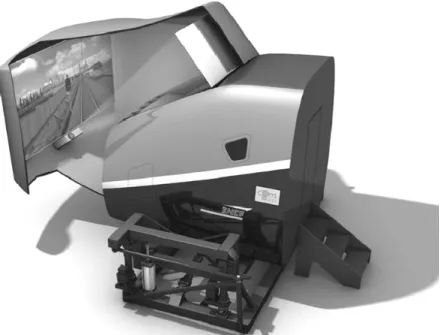
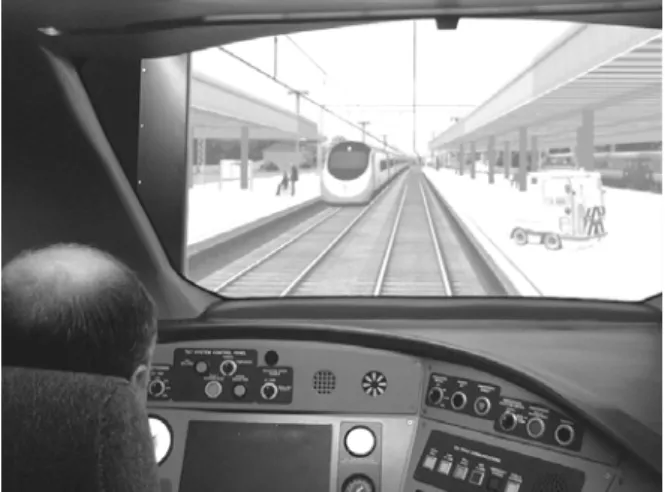
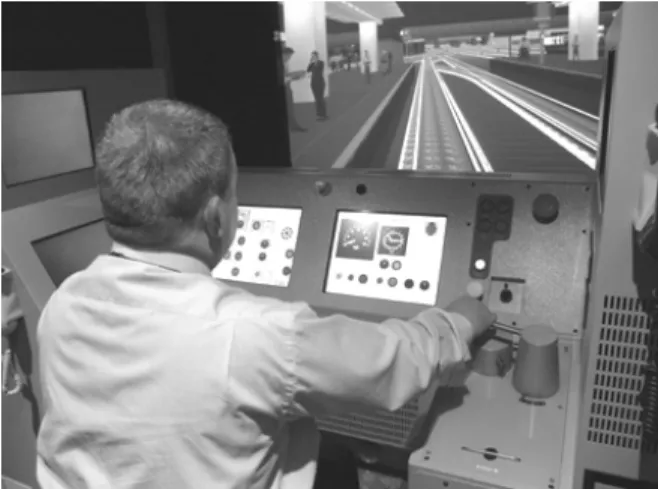
(2) objectives, like e.g. initial training, continuation training, route knowledge, fault finding and rectification, conversion training, performance assessment etc. The main requirements are that the simulator must replicate accurately all areas the training is supposed to cover. Further it must have credibility with the staff being trained. Without this, staff will not ‘warm’ to it, and will not accept the full potential of the training value of the simulator. Simulators broadly fall in 3 basic categories described below.. Full Scope Replica Simulators Consist of a full size mock up replica cab, with all instrumentation as present on the actual train. All drivers’ visual, motion and sound stimuli are reproduced, through electro-mechanical motion rams and recorded sound, and vision, intrinsically linked and controlled via the simulator software. Graphical instructor stations enable numerous train and/or track borne and procedural defects to be simulated with observer stations allowing groups of drivers to follow the running and debriefing of a simulated exercise.. Fig. 1. General view of a full scope cab replica simulator on a motion base. Fig. 2. The cab interior and projection system of a metro full scope simulator. 96.
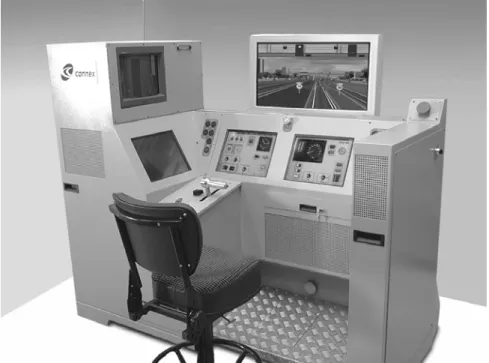
(3) Multifunctional Simulators Multifunctional simulators represent a costeffective complementary solution to full replica simulators to meet specific training objectives. These simulators consist of a simplified cab environment with a combination of computergenerated images, multimedia and detailed train modelling on standard PC hardware. They do however carry a lower level of electromechanical movement simulation equipment. As much of the. realism is created via the screen and through linked sound, this, in many cases, is not seen as a great loss. Multiple networked simulators frequently fall in this category. Multifunctional simulators can also easily be made into mobile units by installation of 2 or more simulators into an articulated truck trailer. Using of removable hardware panels with control equipment and specific content on the screens give the possibility to have various types of rolling stock on the same simulator.. Fig. 3. Example of a multifunctional simulator. Compact simulators The key feature of the compact simulators is their mobility. Only the main driving controls are provided in hardware. All auxiliary equipment (light & indicators, control switches, door opening) is emulated on the touch screens. Similar to multifunctional simulators they give the possibility to have various types of rolling stock on the same simulator. The transportation boxes facilitate the moving of these simulators to the training locations. The training session may be controlled through the network or using a portable (notebook) Instructor Station computer.. faults and incidents. This type of simulator struggles to create the atmosphere of real cab simulators.. Desktop Computer Based Training Computer based training applications are a cost-effective solution to reducing the time to become familiar with the location and operation of the train equipment and controls. They also enable drivers and other staff to become familiar with the procedures for diagnosing and isolation for train. Fig. 4. Example of a compact simulator. 97.
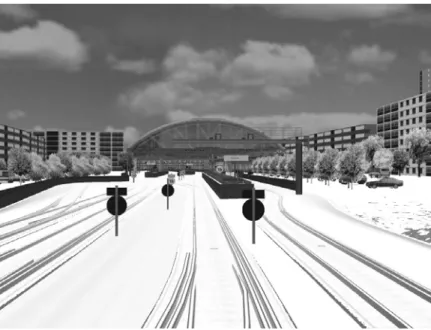
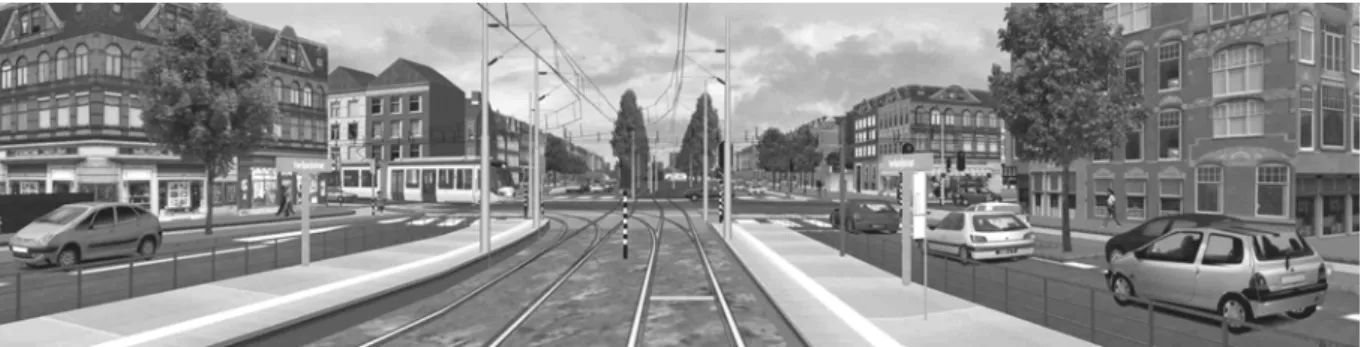
(4) times, they also bring a number of intangible benefits which result in an improved image and satisfaction of customers and employees. The different types of benefits are briefly summarised below. Operations-Related Benefits. Fig. 5. Computer-based training tool. BENEFITS OF SIMULATORS Simulators offer a number of benefits compared to more traditional methods of training. For operational situations characterised by low frequency and high risk (incidents, accidents and other, mostly safety-related situations), the occurrence of which may translate into considerable losses in life and health, property, material and operational income, simulators simply don’t have a comparable alternative in terms of training method. For more standard common-day situations, simulators still offer a number of advantages. Simulators contribute to improved operations, to reduced training costs and training. Energy and fuel economy One of the main savings achievable with the use of simulators is in fuel/energy. With close monitoring facilitated via the software, simulated fuel consumption can be closely monitored; smooth driving techniques can be shown to reduce fuel consumption. Objective comparison with expert drivers facilitates teaching of the skills and techniques required for energy conserving driving techniques. In addition, if real equipment is used for training, using simulators results in avoiding wasting energy, preserving the rolling stock and the infrastructure, and saving the environment from pollution. Driving in low adhesion and adverse climatic conditions Driving in low adhesion and adverse climatic conditions (rain, snow, ice, autumn leaves on rails, heavy fog etc.) is a real challenge for rail operators and drivers. With the simulator, such conditions can be easily created and the driving techniques taught in a fully safe environment.. Fig. 6. Simulation of snow on track with Computer Generated Images. Save on wear and tear of equipment One obvious benefit is the saving on wear and tear. Driver training by its very nature involves. 98. multiple starting, stopping accelerating braking, both regular and emergency.. and.
(5) Simulation can replicate all these situations without any impact on the real equipment. Safety related considerations Simulator modelling includes component level modelling of sub systems. This allows for accurate response to malfunctions and corrective actions taken by the driver to be monitored. This can include monitoring of driver’s actions (or lack of actions), which may result in serious incidents – e.g. signal passed at danger, application of brakes, correct communication, etc. Quick response of the driver The software system can be programmed to include a library of emergency and visual events, such as track obstructions, improper signals, line possessions and temporary speed restrictions etc. These can then be used to allow the driver, to safely and realistically experience this unlikely sequence of events and hence become proficient with them and their response. Performance to schedules The simulation system can be programmed to allow input of station and route details with model timings, to measure driver’s performance and ability to maintain schedule. Smooth and accurate stops, customer comfort Software can include car by car dynamics with calculation of acceleration and jerks giving a report of potential passenger comfort. Adherence to rules The systems will also allow for monitoring the driver’s adherence to rules, signals, speed limits etc. Exposure to unusual/dangerous situations Built into simulators is the facility to interject many different situations. This can include sudden visual events such as signals and obstructions, or sudden malfunctions of the train. This is an obvious benefit of simulation; dangerous exercises can be created and repeated. Such situations do happen in the real world. Simulation will train and equip drivers to deal with them in the best possible way, hence reducing the risks involved in such high risk and low frequency situations. Exposure to stressful operating conditions Simulation is ideal for placing drivers under stressful conditions, to include long runs, operational delays and bad signalling. Efficiency in fault finding Simulators allow drivers to practice fault finding and rectification in a nonstressful/threatening situation, in order to acquire the necessary skills. This allows for the driver’s. actions/responses and corrective actions to be monitored. Skill levels can be developed and perfected. Introduction of new equipment and procedures When new rolling stock, new signalling systems or new operational procedures are introduced in operation, the simulator enables the drivers and the other staff categories to become familiar with the new equipment and procedures before they are effectively introduced, reducing the both the learning curve and the roll-out time and, consequently, reducing the associated costs and risks.. Fig. 7. Simulator used for training in low frequency – high risk situations. Benefits Related to Training Efficiency and Costs In addition to direct benefits to safer, more reliable and more economic operation, the use of simulators in the training systems provides considerable advantages to the training process itself, making the training process more effective, shortening training times, increasing knowledge retention and ultimately reducing training costs. The following benefits are the most important ones: Familiarisation with train controls Simulators are designed to replicate real train functions and controls; likewise the software modelling accurately simulates the response of the train. For initial training, the simulator environment enables much faster familiarisation with the train controls without immobilising the rolling stock and in a fully safe and controlled environment. Development of train handling skills The simulator software accurately models the dynamics of the train in both normal and abnormal operating conditions. The dynamics also take. 99.
(6) account of curvature, gradient, varying loads. The system will allow for the interjection of signals and other events that place demands on the driver’s train handling skills. Better consistency and control of the training process Training on simulators guarantees that different trainees are trained in objectively identical conditions concerning the training scenario, the rolling stock, the track, and, last but not least, guarantees the objectivity of the training evaluation. Training and assessment on demand Training with specific training objectives and assessment of drivers can be organised quickly and can be specifically targeted to requirements dictated by specific operational conditions. Reduced risk It is obvious that training on a simulator as compared to the use of the real rolling stock significantly reduces the inherent risks of the training process.. Reduction of training time and costs by use of Simulators With the use of simulators training costs and duration can be reduced. This is possible because of a number of factors. Since the drivers are trained on the basis of pre-defined training scenarios, the number of trainers and assessors may be reduced. As already mentioned, with simulators, there is a reduced need for operational assets immobilised for training. Furthermore, much of driver training involves driving the train with very little going on between stations and stops etc., where braking, stopping and starting is then required, where there is a multitude of signals and procedures to respect. Simulators offer complete flexibility in jumping from station to station, selecting specifically difficult sections of the track, creating complex operational situations. A wide variety of track, train and weather conditions may be created at a click of the mouse button. This reduces the time to train/convert the driver by ensuring that all time spend driving the simulator is quality time. The reported resulting in reduction in training / conversion time may reach 30-50%.. Fig. 8. Simulator Instructor station human-machine interface. Intangible Benefits As mentioned above, numerous operating companies have demonstrated that driver training. 100. with modern simulators brings numerous additional benefits to their operations, customer satisfaction and employee retention: • Improved image of the company, better.
(7) • •. public acceptance and a good vector for customer relationship management Visible commitment of the operator to training and safety Increase retention of drivers by demonstrated continuous investment in drivers' competencies and skills, nonnegligible motivating factor for drivers. •. •. Better performance of experienced drivers resulting in higher selfconfidence and improved customer service Training to common standards, easier driver assessment, performance recording, data availability for controls, performance measurement etc.. Fig. 9. Simulator enables to create an identical training scenario for all drivers. THE EUROPEAN DIMENSION The pan-European rail network is one of the key long-term objectives of the European Union in the sector of rail transport, an indispensable solution for accelerating rail traffic and increasing its throughput in Europe. Considerable challenges are to be met in terms of infrastructure developments and systems unification, deploying the common European Rail Traffic Management System (ERTMS), developing the necessary legal, organisational and technical framework for crossborder operations in Europe. The framework for these developments is provided by the European Directive 2001/16/EC on Interoperability.. mon European Driver license which will be required for all drivers involved in cross-border operations before 2010, and for all European drivers before 2015. Drivers will have to be certified to common European standards. As explained in this article, simulators will largely facilitate this type of certification to common standards. Not surprisingly, the Directive 2004/142 recommends the use of simulators both as a means and as a method: The use of simulators may be useful for effective training of drivers. They are particularly useful for: • reducing driving time on infrastructure • training to deal with abnormal situations • further training on new types of locomotives. The progressive building of the European network, the specific and complex issues related to interoperability, progressive unification of railway systems, ERTMS, cross-border operations etc. create new requirements for driver training and for training simulators which will have to be able to address all these issues. NEW TRENDS IN SIMULATION TECHNOLOGIES. Fig. 10. Login Simulator (Switzerland) enables the familiarisation with ERTMS. In terms of driver certification and the related issues of training, the European Directive 2004/142 on Driver Certification defines the com-. A number of simulation trends have developed over recent years worldwide, which are the forerunner of the changes still to come. Two simulator market trends and design issues that have emerged from the changing requirements of train operators and available technology are briefly presented below.. 101.
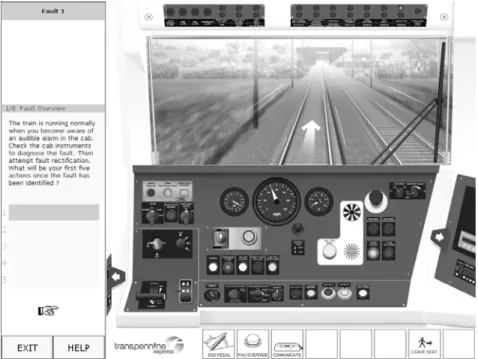
(8) Bringing the Simulator to the Driver One of the many factors to consider during the implementation of a simulator project is the location of the training centre in relation to the drivers. Many operators cover extensive track networks with driver depots dispersed throughout the network. For larger operators, it is often difficult to find a suitable central location that avoids substantial lost time in travel to bring drivers to the simulator for training and assessment. To address this problem, and taking advantage of today’s high speed computer networks, more and more operators are networking their simulators out in the field to ensure proximity to the drivers. Data exchange over the network includes the training content dispatched from central locations to ensure consistency and competence based results and records recorded on central databases to complete the training audit trail. BNSF Railway in the USA, one of the world’s largest freight operators with over 8000 drivers and over 15 years experience of simulators, has decentralised their central Kansas City training centre to deploy over 40 simulators at locations all over the United States with the management and control performed centrally from Kansas City. Likewise Union Pacific have moved away from a central training centre at Salt Lake City and have distributed over 35 simulators out in the field.. Fig. 11. Southern have networked their simulators between Selhurst and Worthing. It is not just the large US freight operators who can see the benefits of such deployment. The French national railways, SNCF, also decided in 2002 to take advantage of this technology and have deployed 14 driving simulators in their regional training centres as well as 12 virtual air brake simulators. More recently in 2007, it has been completed by the installation of 48 compact simulators in the SNCF training centers. In the UK Southern have been operating a satellite training. 102. centre at Worthing for drivers on the south coast since 2003 with the main training centre being housed at Selhurst. Other operators who have also recognised the benefit of this approach include GNER in the UK who will deploy 4 HST and 4 Class 91 simulators over their network at driver depots from Edinburgh to London, and the recently created Swiss driver training school Login who have ordered a distributed simulator system composed of 14 driving simulators to provide driver training as close as possible to their customers. Other private freight operators like Euro Cargo Rail, Veolia Transport has also adopted such solution. Levering Simulator Technology into the Classroom A simulator is a powerful training tool enabling situation based training in normal and degraded operating conditions. However, a simulator will only enable one driver to perform hands on training at any one time. There is therefore the need to lever simulator developments into the classroom environment to maximise the hands on training and help bridge the training delivery gap between the classroom and the simulator. Computer Based Training Several operators implement Computer Based Training (CBT) applications together with the introduction of simulator technology applying three different concepts: • "Knowledge based" : used to acquire basic knowledge, for example learning rules and procedures • "Situation based" : used to apply practical knowledge by being placed in realistic situations, for example applying operating rules and procedures • "Simulation" : used to acquire knowhow through the simulation of complex systems, for example, troubleshooting and fault finding procedures using virtual trains In May 2006 First TransPennine Express commissioned, two full scope Class 185 simulators of their new Siemens rolling stock. In addition to the simulators a suite of CBT was supplied based on the simulator technology and software development to provide training and assessment modules in Class 185 Train Discovery (Knowledge based CBT), TMS navigation (Situation based CBT), Train Preparation and Fault Finding (Simulation based CBT). The program has been personally issued to all First TransPennine Express operational staff for home use and for those without access, two CBT suites with 8 terminals each have been.
(9) installed at the simulator centres in Ardwick and York. Periodically all operational staff will attend the centres to be given structured sessions on the. CBT, enhancing their overall underpinning knowledge of the trains.. Fig. 12. First TransPennine Express Computer Based Training (Simulation based). Classroom Scenario Demonstrator SouthEastern Trains who operate 6 simulators at their Ashford Training Centre in the UK, are in the process of commissioning a new training tool called the Classroom Scenario Demonstrator. Many of the topics and regulations which UK train drivers need to learn and understand are difficult to interpret or visualise using the regulatory documents produced by the industry. These documents detail the principle application of rules and regulations, but do so from a regulatory viewpoint and also assume that the reader has prior knowledge of the topics being detailed. The Classroom Scenario Demonstrator will use the simulator visual database in an instructor controlled classroom environment. It will enable a range of instructor controlled views to be dynamically shown at any one time into the simulated virtual 3D railway. As a result SouthEastern Trains will use this new tool to help visualise the application of rules and operating principles. For example, in the case of Single Line Working, the following main learning objectives could be easily interactively explained and demonstrated: • Demonstration of how the system is set up on a double track railway • Illustrating the protection provided on the line closed to traffic • Demonstrating how a train will be controlled to enter the single line in the wrong direction. • • •. Demonstrating the placement of hand signallers on the line in operation Demonstrating the protection placed at worked points on the line in use Demonstrating how the train will leave the single line and rejoin its normal line of operation CONCLUSION. Today’s modern and complex transportation systems require highly skilled people to operate optimally. Modern training simulators are an indispensable means and method to achieve the objectives of improved safety, reliability and economics of operations. The type of simulator to be used depends on the training goals the operator wants to address in priority. A wide range of benefits for improved operations, for increased effectiveness and reduced costs of training, for customer satisfaction and employee retention have been demonstrated and proven by mainline rail and urban transportation systems operators worldwide. The fast changes occurring in the transport industry and the new possibilities of technology generate new requirements and new trends in the use of simulators in training, further leveraging the investment in training tools. Received by Editorial Board on 23.06.2008.. 103.
(10)
Figure
+5

Related documents
Focusing on parametric cost frontier models, this paper presents two alternative approaches that could be used to improve the reliability of benchmarking methods, and based on
Harry is saved from death eaters by Dumbledore and (indirectly) by Voldemort, while both Dumbledore and Voldemort are forced out of character, Book 6.. Following their trip
The current study therefore examined the extent to which school-aged children with ASD are able to learn phonological and semantic aspects of new words when meaning must be
iCons in Medicine uses the Internet to connect health care providers in remote and medically underserved areas (Requestors) with a network of committed specialty
At the completion of the (SVA) your (IS) rep will evaluate your overall program to identify any vulnerabilities whether they are acute, critical or administrative in nature as well
In 2008 and 2009 we interviewed 35 gasoline station managers in order to gain more information about the price support system and how price control shifts from the hands of
Whether or not the increase in China’s presence in the global trade in machinery has caused changes in the market share of exports in machinery from Southeast Asian countries,
O: Tove Winckler Poulsgaard, 8380 Trige E: Tove Winckler Poulsgaard, Erbækvej 18, 8380 Trige, 86231339 Masculine and substantious, correct format, good proportions between skull
