(CDMI™)
Version 1.1.0
ABSTRACT: This CDMI international standard is intended for application developers who are implementing or using cloud storage. It documents how to access cloud storage and to manage the data stored there.
This document has been released and approved by the SNIA. The SNIA believes that the ideas, methodologies, and technologies described in this document accurately represent the SNIA goals and are appropriate for widespread distribution. Suggestion for revision should be directed to http://www.snia.org/feedback/.
Technical Position
August 8, 2014
USAGE
The SNIA hereby grants permission for individuals to use this document for personal use only, and for corporations and other business entities to use this document for internal use only (including internal copying, distribution, and display) provided that:
1 Any text, diagram, chart, table or definition reproduced shall be reproduced in its entirety with no alteration, and,
2 Any document, printed or electronic, in which material from this document (or any portion hereof) is reproduced shall acknowledge the SNIA copyright on that material, and shall credit the SNIA for granting permission for its reuse.
Other than as explicitly provided above, you may not make any commercial use of this document, sell any excerpt or this entire document, or distribute this document to third parties. All rights not explicitly granted are expressly reserved to SNIA.
Permission to use this document for purposes other than those enumerated above may be requested by emailing [email protected]. Please include the identity of the requesting individual and/or company and a brief description of the purpose, nature, and scope of the requested use.
DISCLAIMER
The information contained in this publication is subject to change without notice. The SNIA makes no warranty of any kind with regard to this specification, including, but not limited to, the implied warranties of merchantability and fitness for a particular purpose. The SNIA shall not be liable for errors contained herein or for incidental or consequential damages in connection with the furnishing, performance, or use of this specification.
Suggestions for revisions should be directed to http://www.snia.org/feedback/.
Copyright © 2014 SNIA. All rights reserved. All other trademarks or registered trademarks are the property of their respective owners.
1 2 3 4 5 6 7 8 9 10 11 12 13 14 15 16 17 18 19 20 21 22 23 24
Revision History
Version Date Originator Comments
1.1.0 8/8/2014 Released as a SNIA Technical Position.
Contents
SECTION 1 - CDMI Preamble ... 1
Introduction ... 2 1 Scope ... 4 2 Normative References ... 4 3 Terms ... 6 4 Conventions ... 10 4.1 Interface Format ... 10 4.2 Typographical Conventions ... 10
4.3 Request and Response Body Requirements ... 11
4.4 Key Word Requirements ... 11
5 Overview of Cloud Storage ... 12
5.1 Introduction ... 12
5.2 What is Cloud Storage? ... 12
5.3 Data Storage as a Service ... 12
5.4 Data Management for Cloud Storage ... 14
5.5 Data and Container Management ... 15
5.6 Reference Model for Cloud Storage Interfaces ... 15
5.7 Cloud Data Management Interface ... 16
5.8 Object Model for CDMI ... 17
5.9 CDMI Metadata ... 18
5.10 Object ID ... 19
5.11 CDMI Object ID Format ... 19
5.12 Security ... 20 5.12.1 Security Objectives ... 20 5.12.2 HTTP Security ... 21 5.12.3 Client Authentication ... 21 5.12.4 Use of TLS ... 22 5.12.5 Further Information ... 22 5.13 Required HTTP Support ... 22 5.13.1 RFC 2616 Support Requirements ... 22 5.13.2 Content-Type Negotiation ... 22 5.13.3 Range Support ... 22 5.13.4 URI Escaping ... 22 5.13.5 Use of URIs ... 23 5.13.6 Reserved Characters ... 24 5.14 Time Representations ... 24 5.15 Backwards Compatibility ... 24
5.15.1 Value Transfer Encoding ... 24
5.15.2 Container Export Capabilities ... 24
5.16 Object References ... 25
SECTION 2 - Basic Cloud Storage ... 27
6 Data Object Resource Operations using HTTP ... 28
6.1 Overview ... 28
6.2 Create a Data Object using HTTP ... 28
6.2.2 Capabilities ... 28
6.2.3 Request Headers ... 29
6.2.4 Request Message Body ... 29
6.2.5 Response Headers ... 29
6.2.6 Response Message Body ... 29
6.2.7 Response Status ... 29
6.2.8 Example ...30
6.3 Read a Data Object using HTTP ... 30
6.3.1 Synopsis ... 30
6.3.2 Capabilities ... 30
6.3.3 Request Header ... 30
6.3.4 Request Message Body ... 30
6.3.5 Response Headers ... 31
6.3.6 Response Message Body ... 31
6.3.7 Response Status ... 31
6.3.8 Examples ...31
6.4 Update a Data Object using HTTP ... 32
6.4.1 Synopsis ... 32
6.4.2 Capabilities ... 32
6.4.3 Request Headers ... 32
6.4.4 Request Message Body ... 33
6.4.5 Response Header ... 33
6.4.6 Response Message Body ... 33
6.4.7 Response Status ... 33
6.4.8 Examples ...33
6.5 Delete a Data Object using HTTP ... 34
6.5.1 Synopsis ... 34
6.5.2 Capability ... 34
6.5.3 Request Headers ... 34
6.5.4 Request Message Body ... 34
6.5.5 Response Headers ... 34
6.5.6 Response Message Body ... 34
6.5.7 Response Status ... 35
6.5.8 Example ...35
7 Container Object Resource Operations using HTTP ... 36
7.1 Overview ... 36
7.2 Create a Container Object using HTTP ... 36
7.2.1 Synopsis ... 36
7.2.2 Capability ... 36
7.2.3 Request Headers ... 37
7.2.4 Request Message Body ... 37
7.2.5 Response Headers ... 37
7.2.6 Response Message Body ... 37
7.2.7 Response Status ... 37
7.2.8 Example ...37
7.3 Read a Container Object using HTTP ... 37
7.4 Update a Container Object using HTTP ... 37
7.5 Delete a Container Object using HTTP ... 38
7.5.1 Synopsis ... 38
7.5.2 Capability ... 38
7.5.3 Request Headers ... 38
7.5.4 Request Message Body ... 38
7.5.5 Response Headers ... 38
7.5.6 Response Message Body ... 38
7.5.7 Response Status ... 39
7.5.8 Example ...39
7.6.1 Synopsis ... 39
7.6.2 Capabilities ... 40
7.6.3 Request Header ... 40
7.6.4 Request Message Body ... 40
7.6.5 Response Header ... 40
7.6.6 Response Message Body ... 41
7.6.7 Response Status ... 41
7.6.8 Examples ...41
SECTION 3 - CDMI Core ... 42
8 Data Object Resource Operations using CDMI ... 43
8.1 Overview ... 43
8.1.1 Data Object Metadata ... 44
8.1.2 Data Object Consistency ... 44
8.1.3 Data Object Representations ... 45
8.2 Create a Data Object using CDMI ... 45
8.2.1 Synopsis ... 45
8.2.2 Delayed Completion of Create ... 45
8.2.3 Capabilities ... 46
8.2.4 Request Headers ... 46
8.2.5 Request Message Body ... 47
8.2.6 Response Headers ... 50
8.2.7 Response Message Body ... 50
8.2.8 Response Status ... 51
8.2.9 Examples ...51
8.3 Read a Data Object using CDMI ... 54
8.3.1 Synopsis ... 54
8.3.2 Capabilities ... 54
8.3.3 Request Headers ... 55
8.3.4 Request Message Body ... 55
8.3.5 Response Headers ... 55
8.3.6 Response Message Body ... 56
8.3.7 Response Status ... 58
8.3.8 Examples ...58
8.4 Update a Data Object using CDMI ... 61
8.4.1 Synopsis ... 61
8.4.2 Capabilities ... 62
8.4.3 Request Headers ... 62
8.4.4 Request Message Body ... 63
8.4.5 Response Header ... 66
8.4.6 Response Message Body ... 66
8.4.7 Response Status ... 66
8.4.8 Examples ...66
8.5 Delete a Data Object using CDMI ... 70
8.5.1 Synopsis ... 70
8.5.2 Capability ... 70
8.5.3 Request Header ... 70
8.5.4 Request Message Body ... 70
8.5.5 Response Headers ... 70
8.5.6 Response Message Body ... 70
8.5.7 Response Status ... 71
8.5.8 Example ...71
9 Container Object Resource Operations using CDMI ... 72
9.1.1 Container Metadata ... 73
9.1.2 Reserved Container Names ... 73
9.1.3 Container Object Addressing ... 73
9.1.4 Container Object Representations ... 74
9.2 Create a Container Object using CDMI ... 74
9.2.1 Synopsis ... 74
9.2.2 Delayed Completion of Create ... 74
9.2.3 Capabilities ... 75
9.2.4 Request Headers ... 75
9.2.5 Request Message Body ... 76
9.2.6 Response Headers ... 78
9.2.7 Response Message Body ... 78
9.2.8 Response Status ... 79
9.2.9 Example ...80
9.3 Read a Container Object using CDMI ... 81
9.3.1 Synopsis ... 81
9.3.2 Capabilities ... 81
9.3.3 Request Headers ... 81
9.3.4 Request Message Body ... 81
9.3.5 Response Headers ... 82
9.3.6 Response Message Body ... 82
9.3.7 Response Status ... 84
9.3.8 Examples ...84
9.4 Update a Container Object using CDMI ... 86
9.4.1 Synopsis ... 86
9.4.2 Delayed Completion of Snapshot ... 86
9.4.3 Capabilities ... 87
9.4.4 Request Headers ... 87
9.4.5 Request Message Body ... 87
9.4.6 Response Header ... 90
9.4.7 Response Message Body ... 90
9.4.8 Response Status ... 90
9.4.9 Examples ...90
9.5 Delete a Container Object using CDMI ... 91
9.5.1 Synopsis ... 91
9.5.2 Capability ... 91
9.5.3 Request Header ... 92
9.5.4 Request Message Body ... 92
9.5.5 Response Headers ... 92
9.5.6 Response Message Body ... 92
9.5.7 Response Status ... 92
9.5.8 Example ...92
9.6 Create (POST) a New Data Object using CDMI ... 93
9.6.1 Synopsis ... 93
9.6.2 Delayed Completion of Create ... 93
9.6.3 Capabilities ... 94
9.6.4 Request Headers ... 95
9.6.5 Request Message Body ... 96
9.6.6 Response Headers ... 99
9.6.7 Response Message Body ... 99
9.6.8 Response Status ... 100
9.6.9 Examples ... 101
9.7 Create (POST) a New Queue Object using CDMI ... 103
9.7.1 Synopsis ... 103
9.7.2 Delayed Completion of Create ... 103
9.7.3 Capabilities ... 104
9.7.4 Request Headers ... 105
9.7.6 Response Headers ... 106
9.7.7 Response Message Body ... 106
9.7.8 Response Status ... 108
9.7.9 Example ... 108
SECTION 4 - CDMI Advanced ... 109
10 Domain Object Resource Operations using CDMI ... 110
10.1 Overview ... 110
10.1.1 Domain Object Metadata ... 111
10.1.2 Domain Object Summaries ... 111
10.1.3 Domain Object Membership ... 114
10.1.4 Domain Usage in Access Control ... 116
10.1.5 Domain Object Representations ... 117
10.2 Create a Domain Object using CDMI ... 117
10.2.1 Synopsis ... 117
10.2.2 Capabilities ... 117
10.2.3 Request Headers ... 117
10.2.4 Request Message Body ... 118
10.2.5 Response Headers ... 119
10.2.6 Response Message Body ... 119
10.2.7 Response Status ... 120
10.2.8 Example ... 120
10.3 Read a Domain Object using CDMI ... 121
10.3.1 Synopsis ... 121
10.3.2 Capabilities ... 121
10.3.3 Request Headers ... 121
10.3.4 Request Message Body ... 121
10.3.5 Response Headers ... 122
10.3.6 Response Message Body ... 122
10.3.7 Response Status ... 123
10.3.8 Examples ... 123
10.4 Update a Domain Object using CDMI ... 124
10.4.1 Synopsis ... 124
10.4.2 Capability ...125
10.4.3 Request Headers ... 125
10.4.4 Request Message Body ... 125
10.4.5 Response Header ... 126
10.4.6 Response Message Body ... 126
10.4.7 Response Status ... 127
10.4.8 Example ... 127
10.5 Delete a Domain Object using CDMI ... 127
10.5.1 Synopsis ... 127
10.5.2 Capability ...128
10.5.3 Request Headers ... 128
10.5.4 Request Message Body ... 128
10.5.5 Response Headers ... 128
10.5.6 Response Message Body ... 128
10.5.7 Response Status ... 128
10.5.8 Example ... 129
11 Queue Object Resource Operations using CDMI ... 130
11.1 Overview ... 130
11.1.1 Queue Object Metadata ... 131
11.1.2 Queue Object Addressing ... 131
11.2 Create a Queue Object using CDMI ... 131
11.2.1 Synopsis ... 131
11.2.2 Delayed Completion of Create ... 132
11.2.3 Capabilities ... 132
11.2.4 Request Headers ... 133
11.2.5 Request Message Body ... 133
11.2.6 Response Headers ... 135
11.2.7 Response Message Body ... 135
11.2.8 Response Status ... 136
11.2.9 Examples ... 137
11.3 Read a Queue Object using CDMI ... 138
11.3.1 Synopsis ... 138
11.3.2 Capabilities ... 138
11.3.3 Request Headers ... 139
11.3.4 Request Message Body ... 139
11.3.5 Response Headers ... 139
11.3.6 Response Message Body ... 139
11.3.7 Response Status ... 142
11.3.8 Examples ... 142
11.4 Update a Queue Object using CDMI ... 145
11.4.1 Synopsis ... 145
11.4.2 Capability ...145
11.4.3 Request Headers ... 145
11.4.4 Request Message Body ... 146
11.4.5 Response Header ... 147
11.4.6 Response Message Body ... 147
11.4.7 Response Status ... 147
11.4.8 Examples ... 147
11.5 Delete a Queue Object using CDMI ... 148
11.5.1 Synopsis ... 148
11.5.2 Capability ...148
11.5.3 Request Header ... 148
11.5.4 Request Message Body ... 148
11.5.5 Response Headers ... 148
11.5.6 Response Message Body ... 149
11.5.7 Response Status ... 149
11.5.8 Example ... 149
11.6 Enqueue a New Queue Value using CDMI ... 149
11.6.1 Synopsis ... 149
11.6.2 Capabilities ... 150
11.6.3 Request Headers ... 150
11.6.4 Request Message Body ... 150
11.6.5 Response Headers ... 152
11.6.6 Response Message Body ... 152
11.6.7 Response Status ... 153
11.6.8 Examples ... 153
11.7 Delete a Queue Object Value using CDMI ... 156
11.7.1 Synopsis ... 156
11.7.2 Capability ...156
11.7.3 Request Header ... 156
11.7.4 Request Message Body ... 156
11.7.5 Response Headers ... 157
11.7.6 Response Message Body ... 157
11.7.7 Response Status ... 157
11.7.8 Example ... 157
12 Capability Object Resource Operations using CDMI ... 158
12.1.1 Cloud Storage System-Wide Capabilities ... 159
12.1.2 Storage System Metadata Capabilities ... 162
12.1.3 Data System Metadata Capabilities ... 162
12.1.4 Data Object Capabilities ... 165
12.1.5 Container Capabilities ... 166
12.1.6 Domain Object Capabilities ... 168
12.1.7 Queue Object Capabilities ... 169
12.1.8 Capability Object Representations ... 169
12.2 Read a Capabilities Object using CDMI ... 170
12.2.1 Synopsis ... 170
12.2.2 Capability ...170
12.2.3 Request Headers ... 170
12.2.4 Request Message Body ... 170
12.2.5 Response Headers ... 171
12.2.6 Response Message Body ... 171
12.2.7 Response Status ... 172
12.2.8 Examples ... 172
13 Exported Protocols ... 174
13.1 Overview ... 174
13.2 Exported Protocol Structure ... 175
13.2.1 Mapping Names from CDMI to Another Protocol ... 176
13.2.1.1 Capabilities ... 176 13.2.1.2 Domains ... 176 13.2.1.3 Caching ... 176 13.2.1.4 Groups ... 177 13.2.1.5 Synopsis ... 177 13.2.2 Administrative Users ... 178
13.2.3 User and Groupname Mapping Syntax and Evaluation Rules ... 179
13.3 Discovering and Mounting Containers via Foreign Protocols ... 179
13.4 NFS Exported Protocol ... 180
13.5 CIFS Exported Protocol ... 182
13.6 OCCI Exported Protocol ... 183
13.7 iSCSI Export Modifications ... 183
13.7.1 Read Container ... 184
13.7.2 Create and Update Containers ... 184
13.7.3 Modify an Export ... 184
13.8 WebDAV Exported Protocol ... 185
14 CDMI Snapshots ... 186
15 Serialization/Deserialization ... 187
15.1 Overview ... 187
15.2 Exporting Serialized Data ... 187
15.3 Importing Serialized Data ... 187
15.3.1 Canonical Format ... 188
15.3.2 Example JSON Canonical Serialized Format ... 188
16 Metadata ... 190
16.1 Access Control ... 190
16.1.1 ACL and ACE Structure ... 190
16.1.2 ACE Types ... 190
16.1.3 ACE Who ... 190
16.1.4 ACE Flags ... 191
16.1.5 ACE Mask Bits ... 192
16.1.6 ACL Evaluation ... 194
16.1.7 Example ACE Mask Expressions ... 196
16.1.9 JSON Format for ACLs ... 197
16.2 Support for User Metadata ... 198
16.3 Support for Storage System Metadata ... 199
16.4 Support for Data System Metadata ... 201
16.5 Support for Provided Data System Metadata ... 207
16.6 Metadata Update Operations ... 208
17 Retention and Hold Management ...209
17.1 Introduction ... 209
17.2 Retention Management Disciplines ... 209
17.3 CDMI Retention ... 209 17.3.1 Overview ... 209 17.3.2 Examples ... 210 17.4 CDMI Hold ... 211 17.4.1 Overview ... 211 17.4.2 Examples ... 213 17.5 CDMI Auto-deletion ... 214 17.5.1 Overview ... 214
17.6 Retention Security Considerations ... 214
18 Scope Specification ... 216
18.1 Introduction ... 216
18.2 Examples ... 216
18.3 Query Matching Expressions ... 218
19 Results Specification ... 223 19.1 Introduction ... 223 19.2 Examples ... 223 20 Logging ... 225 20.1 Overview ... 225 20.2 Object Logging ... 225 20.3 Security Logging ... 225
20.4 Data Management Logging ... 226
20.5 Logging Queues ... 226
20.6 Logging Security Considerations ... 228
21 Notification Queues ... 229
22 Query Queues ... 233
22.1 Overview ... 233
22.2 Extending CDMI Query ... 235
SECTION 5 - CDMI Annexes ... 236
Annex A
(informative)
Extensions ... 237
A.1 Summary Metadata for Bandwidth ... 237
A.1.1 Overview ... 237
A.1.2 Changes to CDMI 1.1 ... 237
A.2 Expiring Access Control Entries (ACEs) ... 239
A.2.1 Overview ... 239
A.2.2 Changes to CDMI 1.1 ... 239
A.3.1 Overview ... 240
A.3.2 Changes to CDMI 1.1 ... 240
A.4 Versioning ... 241
A.4.1 Overview ... 241
A.4.2 Changes to CDMI 1.1 ... 241
Bibliography ... 256
Figures
Figure 1 – Existing Data Storage Interface Standards ... 13
Figure 2 – Storage Interfaces for Object Storage Client Data ... 14
Figure 3 – Cloud Storage Reference Model ... 15
Figure 4 – CDMI Object Model ... 17
Figure 5 – Object Transitions between Named and ID-only ... 18
Figure 6 – Object ID Format ... 19
Figure 7 – Hierarchy of Capabilities ... 158
Figure 8 – CDMI and OCCI in an Integrated Cloud Computing Environment ... 174
Figure 9 – Snapshot Container Structure ... 186
Figure 10 – Object Retention ... 210
Figure 11 – Object Hold ... 212
Figure 12 – Object Hold on Object with Retention ... 212
Figure 13 – Object with Multiple Holds ...212
Figure 14 – Updates to a Non-Version-Enabled Data Object ... 246
Figure 15 – Updates to a Version-Enabled Data Object ... 247
Figure 16 – Linkages Between a Version-Enabled Data Object and Data Object Versions ... 248
Figure 17 – Overlapping Concurrent Updates ... 249
Figure 18 – Linkages for Overlapping Updates ... 249
Figure 19 – Nested Concurrent Updates ... 250
Figure 20 – Linkages for Nested Updates ... 250
Tables
Table 1 – Interface Format ... 10
Table 2 – Key Word Requirements ... 11
Table 3 – Types of Resources in the Model ... 17
Table 4 – Creation/Consumption of Storage System Metadata ... 18
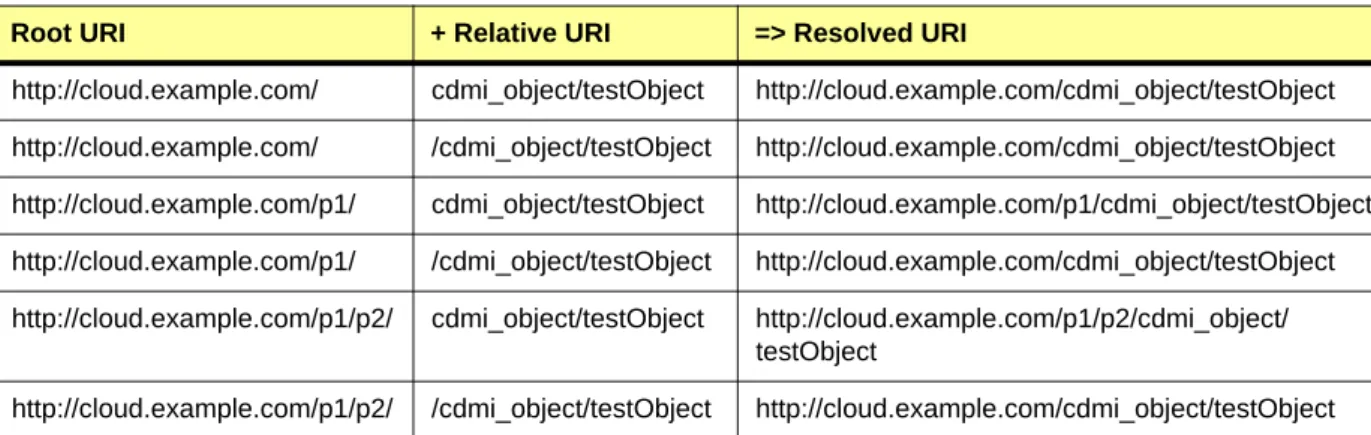
Table 5 – Relative URIs Resolved Against Root URIs ... 23
Table 6 – Request Headers - Create a CDMI Data Object using HTTP ... 29
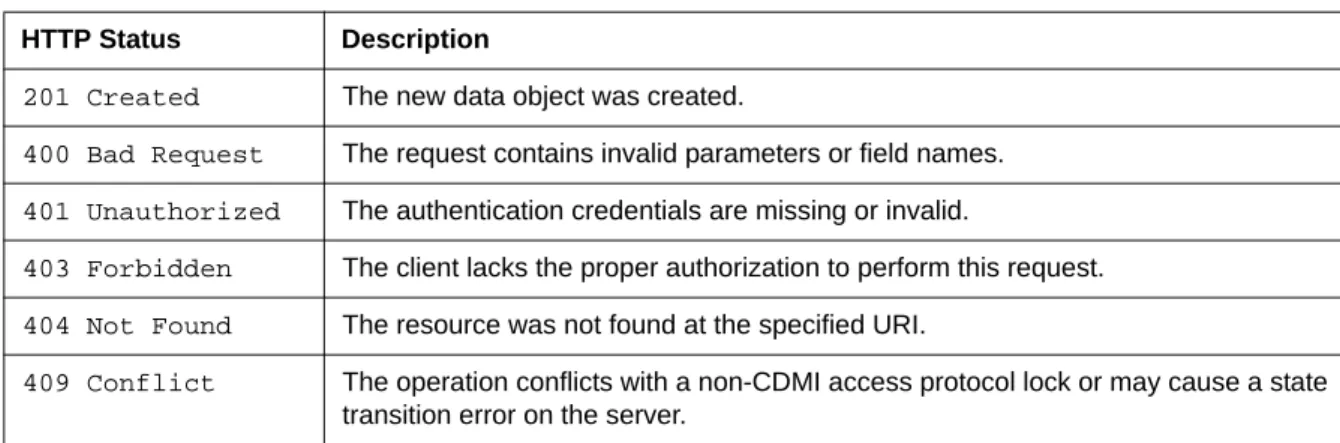
Table 7 – HTTP Status Codes - Create a Data Object using HTTP ... 29
Table 8 – Request Header - Read a CDMI Data Object using HTTP ... 30
Table 9 – Response Headers - Read a CDMI Data Object using HTTP ... 31
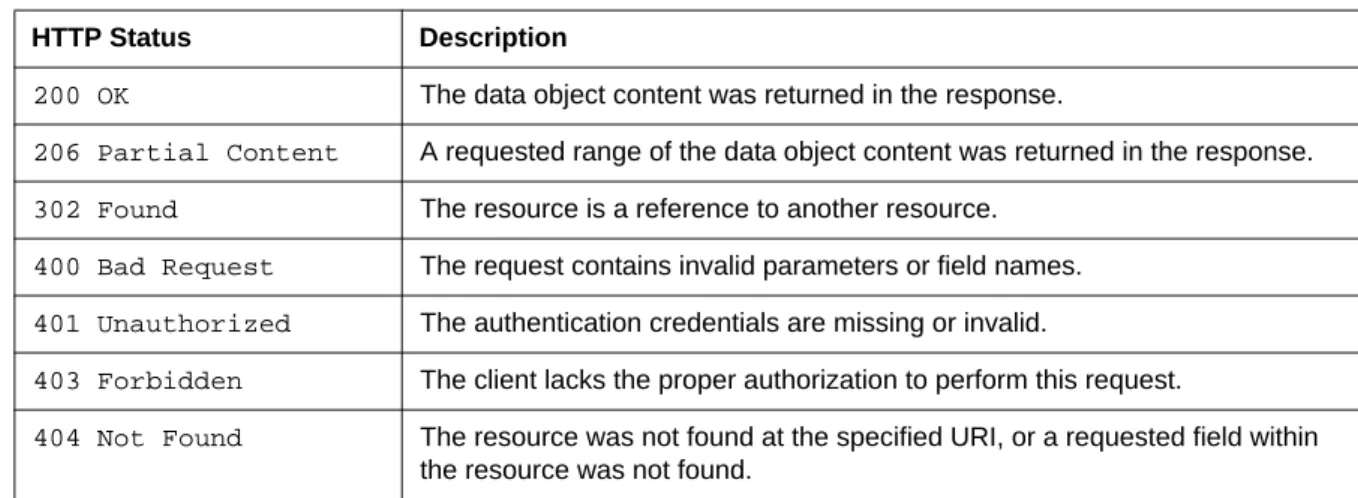
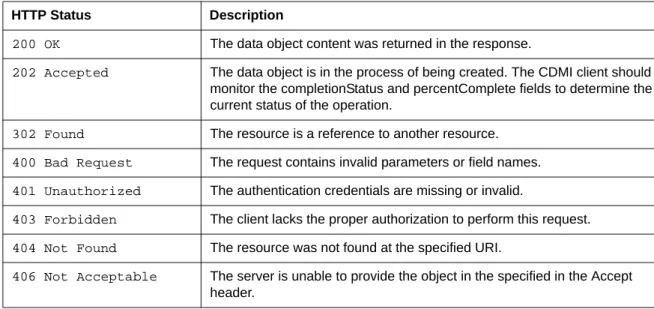
Table 10 – HTTP Status Codes - Read a CDMI Data Object using HTTP ... 31
Table 11 – Request Headers - Update a CDMI Data Object using HTTP ... 32
Table 12 – Response Header - Update a CDMI Data Object using HTTP ... 33
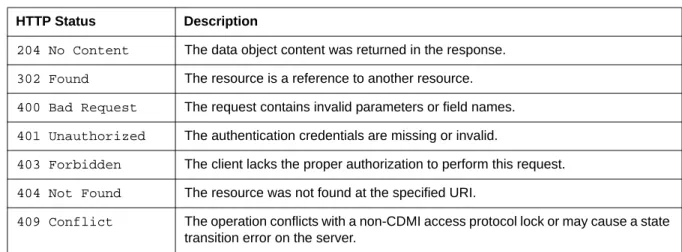
Table 13 – HTTP Status Codes - Update a CDMI Data Object using HTTP ... 33
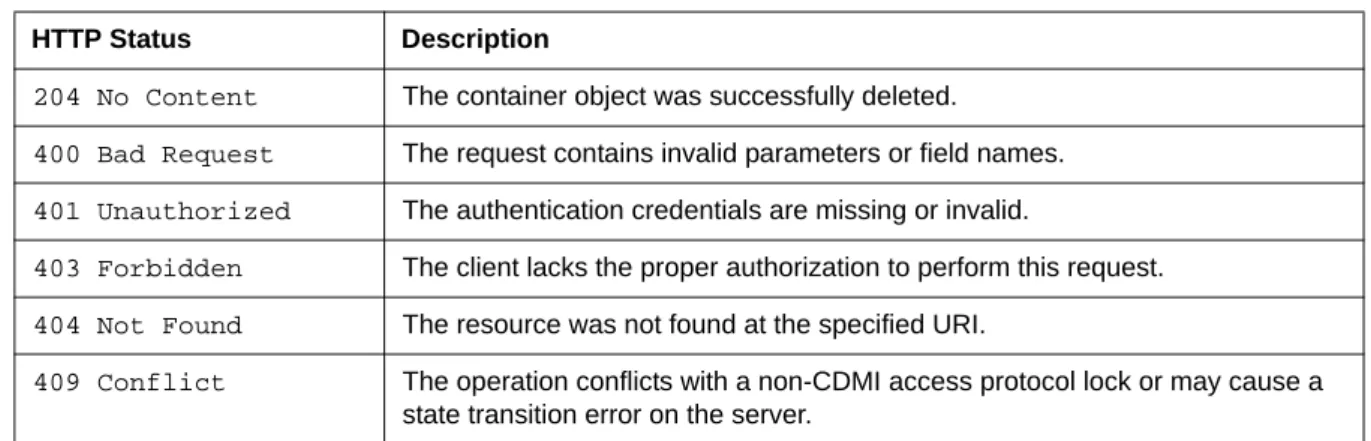
Table 14 – HTTP Status Codes - Delete a CDMI Data Object using HTTP ... 35
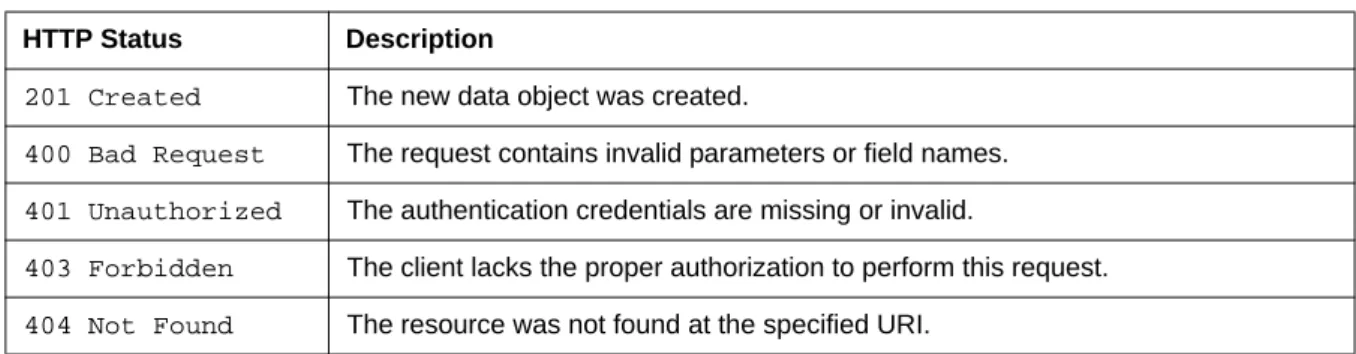
Table 15 – HTTP Status Codes - Create a Container Object using HTTP ... 37
Table 16 – HTTP Status Codes - Delete a Container Object using HTTP ... 39
Table 17 – Request Header - Create a New Data Object using HTTP ... 40
Table 18 – Response Header - Create a New Data Object using HTTP ... 40
Table 19 – HTTP Status Codes - Create a New Data Object using HTTP ... 41
Table 20 – Request Headers for Creating a CDMI Data Object using CDMI ... 46
Table 21 – Request Message Body - Create a Data Object using CDMI ... 47
Table 22 – Response Headers - Create a Data Object using CDMI ... 50
Table 23 – Response Message Body - Create a Data Object using CDMI ... 50
Table 24 – HTTP Status Codes - Create a Data Object using CDMI ... 51
Table 25 – Request Headers - Read a CDMI Data Object using CDMI ... 55
Table 26 – Response Headers - Read a CDMI Data Object using CDMI ... 55
Table 27 – Response Message Body - Read a Data Object using CDMI ... 56
Table 28 – HTTP Status Codes - Read a CDMI Data Object using CDMI ... 58
Table 29 – Request Headers - Update a CDMI Data Object using CDMI ... 62
Table 30 – Request Message Body - Update a CDMI Data Object using CDMI ... 63
Table 31 – Response Header - Update a CDMI Data Object using CDMI ... 66
Table 32 – HTTP Status Codes - Update a CDMI Data Object using CDMI ... 66
Table 33 – Request Header - Delete a CDMI Data Object using CDMI ... 70
Table 34 – HTTP Status Codes - Delete a CDMI Data Object using CDMI ... 71
Table 35 – Container Metadata ... 73
Table 36 – Request Headers - Create a Container Object using CDMI ... 75
Table 37 – Request Message Body - Create a Container Object using CDMI ... 76
Table 38 – Response Headers - Create a Container Object using CDMI ... 78
Table 39 – Response Message Body - Create a Container Object using CDMI ... 78
Table 40 – HTTP Status Codes - Create a CDMI Container Object using CDMI ... 79
Table 41 – Request Headers - Read a Container Object using CDMI ... 81
Table 42 – Response Headers - Read a Container Object using CDMI ... 82
Table 43 – Response Message Body - Read a Container Object using CDMI ... 82
Table 44 – HTTP Status Codes - Read a Container Object using CDMI ... 84
Table 45 – Request Headers - Update a Container Object using CDMI ... 87
Table 46 – Request Message Body - Update a Container Object using CDMI ... 87
Table 47 – Response Header - Update a Container Object using CDMI ... 90
Table 48 – HTTP Status Codes - Update a Container Object using CDMI ... 90
Table 49 – Request Header - Delete a Container Object using CDMI ... 92
Table 50 – HTTP Status Codes - Delete a Container Object using CDMI ... 92
Table 51 – Request Headers - Create a New Data Object using CDMI ... 95
Table 52 – Request Message Body - Create a New Data Object using CDMI ... 96
Table 53 – Response Headers - Create a New Data Object using CDMI ... 99
Table 54 – Response Message Body - Create a New Data Object using CDMI ... 99
Table 55 – HTTP Status Codes - Create a New Data Object using CDMI ... 100
Table 57 – Request Message Body - Create a New Queue Object using CDMI ... 105
Table 58 – Response Headers - Create a New CDMI Queue Object using CDMI ... 106
Table 59 – Response Message Body - Create a New Queue Object using CDMI ... 106
Table 60 – HTTP Status Codes - Create a New CDMI Queue Object using CDMI ... 108
Table 61 – Required Metadata for a Domain Object ... 111
Table 62 – Contents of Domain Summary Objects ... 112
Table 63 – Required Settings for Domain Member User Objects ... 115
Table 64 – Required Settings for Domain Member Delegation Objects ... 116
Table 65 – Request Headers - Create a Domain Object using CDMI ... 117
Table 66 – Request Message Body - Create a Domain Object using CDMI ... 118
Table 67 – Response Headers - Create a Domain Object using CDMI ... 119
Table 68 – Response Message Body - Create a Domain Object using CDMI ... 119
Table 69 – HTTP Status Codes - Create a Domain Object using CDMI ... 120
Table 70 – Request Headers - Read a Domain Object using CDMI ... 121
Table 71 – Response Headers - Read a Domain Object using CDMI ... 122
Table 72 – Response Message Body - Read a Domain Object using CDMI ... 122
Table 73 – HTTP Status Codes - Read a Domain Object using CDMI ... 123
Table 74 – Request Headers - Update a Domain Object using CDMI ... 125
Table 75 – Request Message Body - Update a Domain Object using CDMI ... 125
Table 76 – Response Header - Update a Domain Object using CDMI ... 126
Table 77 – HTTP Status Codes - Update a Domain Object using CDMI ... 127
Table 78 – Request Headers - Delete a Domain Object using CDMI ... 128
Table 79 – HTTP Status Codes - Delete a Domain Object using CDMI ... 128
Table 80 – Request Headers - Create a Queue Object using CDMI ... 133
Table 81 – Request Message Body - Create a Queue Object using CDMI ... 133
Table 82 – Response Headers - Create a Queue Object using CDMI ... 135
Table 83 – Response Message Body - Create a Queue Object using CDMI ... 135
Table 84 – HTTP Status Codes - Create a Queue Object using CDMI ... 136
Table 85 – Request Headers - Read a Queue Object using CDMI ... 139
Table 86 – Response Headers - Read a Queue Object using CDMI ... 139
Table 87 – Response Message Body - Read a Queue Object using CDMI ... 139
Table 88 – HTTP Status Codes - Read a Queue Object using CDMI ... 142
Table 89 – Request Headers - Update a Queue Object using CDMI ... 145
Table 90 – Request Message Body - Update a Queue Object using CDMI ... 146
Table 91 – Response Header - Update a Queue Object using CDMI ... 147
Table 92 – HTTP Status Codes - Update a Queue Object using CDMI ... 147
Table 93 – Request Header - Delete a Queue Object using CDMI ... 148
Table 94 – HTTP Status Codes - Delete a Queue Object using CDMI ... 149
Table 95 – Request Headers - Enqueue a New Queue Object Value using CDMI ... 150
Table 96 – Request Message Body - Enqueue a New Queue Object Value using CDMI ... 150
Table 97 – HTTP Status Codes - Enqueue a New Queue Object Value using CDMI ... 153
Table 98 – Request Header - Delete a Queue Object Value using CDMI ... 156
Table 99 – HTTP Status Codes - Delete a Queue Object Value using CDMI ... 157
Table 100 – System-Wide Capabilities ... 159
Table 101 – Capabilities for Storage System Metadata ... 162
Table 102 – Capabilities for Data System Metadata ... 163
Table 103 – Capabilities for Data Objects ... 165
Table 104 – Capabilities for Containers ... 166
Table 105 – Capabilities for Domain Objects ... 168
Table 106 – Capabilities for Queue Objects ... 169
Table 107 – Request Headers - Read a Capabilities Object using CDMI ... 170
Table 108 – Response Headers - Read a Capabilities Object using CDMI ... 171
Table 109 – Response Message Body - Read a Capabilities Object using CDMI ... 171
Table 110 – HTTP Status Codes - Read a Capabilities Object using CDMI ... 172
Table 111 – Required Members of the NFS Protocol Structure ... 180
Table 112 – Optional NFS Export Parameters ... 181
Table 113 – Required Members of the CIFS Protocol Structure ... 182
Table 115 – Who Identifiers ... 191
Table 116 – ACE Flags ... 191
Table 117 – ACE Bit Masks ... 192
Table 118 – Storage System Metadata ... 199
Table 119 – Data System Metadata ... 201
Table 120 – Provided Values of Data Systems Metadata Items ... 207
Table 121 – Query Matching Expressions ... 218
Table 122 – Required Metadata for a Logging Queue ... 226
Table 123 – Logging Status Metadata ... 227
Table 124 – Required Metadata for a Notification Queue ... 229
Table 125 – Notification Status Metadata ... 232
Table 126 – Required Metadata for a Query Queue ... 233
Introduction
This Cloud Data Management Interface (CDMI™) international standard is intended for application developers who are implementing or using cloud storage. It documents how to access cloud storage and to manage the data stored there.
This document is organized as follows:
1 - Scope Defines the scope of this document
2 - References Lists the normative references for this document 3 - Terms Provides terminology used in this document 4 - Conventions Describes the conventions used in presenting the
interfaces and the typographical conventions used in this document
5 - Overview of Cloud Storage Provides a brief overview of cloud storage and details the philosophy behind this international standard as a model for the operations
6 - Data Object Resource Operations using HTTP Provides the normative standard of data object resource operations using HTTP
7 - Container Object Resource Operations using HTTP Provides the normative standard of container object resource operations using HTTP
8 - Data Object Resource Operations using CDMI Provides the normative standard of data object resource operations using CDMI
9 - Container Object Resource Operations using CDMI Provides the normative standard of container object resource operations using CDMI
10 - Domain Object Resource Operations using CDMI Provides the normative standard of domain object resource operations using CDMI
11 - Queue Object Resource Operations using CDMI Provides the normative standard of queue object resource operations using CDMI
12 - Capability Object Resource Operations using CDMI Provides the normative standard of capability object resource operations using CDMI
13 - Exported Protocols Discusses how virtual machines in the cloud computing environment may use the exported protocols from CDMI containers
14 - Snapshots Discusses how snapshots are accessed under CDMI containers
15 - Serialization/Deserialization Discusses serialization and deserialization, including import and export of serialized data under CDMI 16 - Metadata Provides the normative standard of the metadata used
in the interface
17 - Retention and Hold Management Describes the optional retention management disciplines to be implemented into the system management functions
18 - Scope Specification Describes the structure of the scope specification for JSON objects
19 - Results Specification Provides a standardized mechanism to define subsets of CDMI object contents
1
2 3 4
20 - Logging Describes CDMI functional logging for object functions, security events, data management events, and queues 21 - Notification Queues Describes how CDMI clients may efficientlydiscover
what changes have occurred to the system
22 - Query Queues Describes how CDMI clients may efficiently discover what content matches a given set of metadata query criteria or full-content search criteria
Annex A - (informative) Extensions Provides informative vendor extensions. Each extension is added to the standard when at least two vendors implement the extension.
Bibliography Provides informative references that may contain additional useful information
1 Scope
This CDMI™ international standard specifies the interface to access cloud storage and to manage the data stored therein. This international standard applies to developers who are implementing or using cloud storage.
2 Normative References
The following documents, in whole or in part, are normatively referenced in this document and are indispensable for its application. For dated references, only the edition cited applies. For undated references, the latest edition of the referenced document (including any amendments) applies. The provisions of the referenced specifications other than ISO/IEC, IEC, ISO, and ITU documents, as identified in this clause, are valid within the context of this international standard. The reference to such a specification within this international standard does not give it any further status within ISO/IEC. In particular, it does not give the referenced specifications the status of an international standard. ISO 3166, Codes for the representation of names of countries and their subdivisions (Parts 1, 2 and 3) ISO 4217:2008, Codes for the representation of currencies and funds
ISO 8601:2004, Data elements and interchange formats – Information interchange – Representation of dates and times
ISO 14701:2012, Space data and information transfer systems – Open archival information system (OAIS) – Reference modelISO/IEC 9594-8:2008, Information technology – Open Systems Interconnection – The
Directory: Public-key and attribute certificate frameworks ISO/IEC 14776-414, SCSI Architecture Model - 4 (SAM-4)
ISO/IEC DIS 27040, Information technology – Security techniques – Storage security
IEEE Std 1003.1, 2004, POSIX ERE, The Open Group, Base Specifications Issue 6 - http://www.unix.org/ version3/ieee_std.html
RFC 1867, Form-based File Upload in HTML - http://www.ietf.org/rfc/rfc1867.txt
RFC 2045, Multipurpose Internet Mail Extensions (MIME) Part One: Format of Internet Message Bodies -
http://www.ietf.org/rfc/rfc2045.txt
RFC 2046, Multipurpose Internet Mail Extensions (MIME) Part Two: Media Types - http://www.ietf.org/rfc/ rfc2046.txt.
RFC 2119, Key Words for Use in RFCs to Indicate Requirement Levels - http://tools.ietf.org/html/rfc2119, RFC 2578, Structure of Management Information Version 2 (SMIv2) - http://www.ietf.org/rfc/rfc2578.txt
RFC 2616, Hypertext Transfer Protocol – HTTP/1.1 - http://www.ietf.org/rfc/rfc2616.txt
RFC 2617, HTTP Authentication: Basic and Digest Access Authentication - http://datatracker.ietf.org/doc/ rfc2617/
RFC 3280, Internet X.509 Public Key Infrastructure Certificate and Certificate Revocation List (CRL) Profile - http://www.ietf.org/rfc/rfc3280.txt
RFC 3530, Network File System (NFS) Version 4 Protocol - http://www.ietf.org/rfc/rfc3530.txt
RFC 3720, Internet Small Computer Systems Interface (iSCSI) - http://www.ietf.org/rfc/rfc3720.txt
RFC 3986, Uniform Resource Identifier (URI): Generic Syntax - http://www.ietf.org/rfc/rfc3986.txt
RFC 4627, The Application/JSON Media Type for JavaScript Object Notation (JSON) - http://www.ietf.org/ rfc/rfc4627.txt 1 2 3 4 5 6 7 8 9 10 11 12 13 14 15 16 17 18 19 20 21 22 23 24 25 26 27 28 29 30 31 32 33 34 35 36 37 38
RFC 4648, The Base16, Base32, and Base64 Data Encodings - http://www.ietf.org/rfc/rfc4648.txt
RFC 4918, HTTP Extensions for Web Distributed Authoring and Versioning (WebDAV) -
http://www.ietf.org/rfc/rfc4918.txt
RFC 5246, The Transport Layer Security (TLS) Protocol Version 1.2 - http://www.ietf.org/rfc/rfc5246.txt
RFC 6208, Cloud Data Management Interface (CDMI) Media Types - http://www.ietf.org/rfc/rfc6208.txt
RFC 6839, Additional Media Type Structured Syntax Suffixes - http://www.ietf.org/rfc/rfc6839.txt
SNIA TLS, TLS Specification for Storage Systems, version 1.0 - https://snia.org/tech_activities/standards/ curr_standards/tls 39 40 41 42 43 44 45 46
3 Terms
For the purposes of this document, the following terms and definitions apply. 3.1
Access Control List ACL
a persistent list, commonly composed of Access Control Entries (ACEs), that enumerates the rights of principals (users and groups) to access resources
3.2 API
Application Programming Interface 3.3
CDMI™
Cloud Data Management Interface 3.4
CDMI capabilities
an object that describes what operations are supported for a given cloud or cloud object Note: The mimetype for this object is application/cdmi-capability.
3.5
CDMI container
an object that stores zero or more children objects and associated metadata Note: The mimetype is for this object is application/cdmi-container. 3.6
CDMI data object
an object that stores an array of bytes (value) and associated metadata Note: The mimetype is for this object is application/cdmi-object. 3.7
CDMI domain
an object that stores zero or more children domains and associated metadata describing object administrative ownership
Note: The mimetype is for this object is application/cdmi-domain. 3.8
CDMI object
one of CDMI capabilities, CDMI container, CDMI data object, CDMI domain, or CDMI queue 3.9
CDMI queue
an object that stores a first-in, first-out set of values and associated metadata Note: The mimetype is for this object is application/cdmi-queue.
3.10 CIFS
Common Internet File System
1 2 3 4 5 6 7 8 9 10 11 12 13 14 15 16 17 18 19 20 21 22 23 24 25 26 27 28 29 30
3.11
cloud storage
see Data storage as a Service 3.12
CRC
cyclic redundancy check 3.13
CRUD
create, retrieve, update, delete 3.14
Data storage as a Service DaaS
delivery of virtualized storage and data services on demand over a network, based on a request for a given service level that hides limits to scalability, is either self-provisioned or provisionless, and is billed based on consumption
3.15 domain
a shared user authorization database that contains users, groups, and their security policies and associated accounting information
Note: Each CDMI object belongs to a single domain, and each domain provides user mapping and accounting information.
3.16 eventual consistency
a behavior of transactional systems that does not provide immediate consistency guarantees to provide enhanced system availability and tolerance to network partitioning
3.17 FC
Fibre Channel 3.18
FCoE
Fibre Channel over Ethernet 3.19
HTTP
HyperText Transfer Protocol 3.20
Infrastructure as a Service IaaS
delivery over a network of an appropriately configured virtual computing environment, based on a request for a given service level
Note: Typically, IaaS is either self-provisioned or provisionless and is billed based on consumption. 3.21
iSCSI
Internet Small Computer Systems Interface (see RFC 3720) 3.22
JSON
JavaScript Object Notation
31 32 33 34 35 36 37 38 39 40 41 42 43 44 45 46 47 48 49 50 51 52 53 54 55 56 57 58 59 60 61 62 63 64
3.23 LDAP
Lightweight Directory Access Protocol 3.24
LUN
Logical Unit Number (see ISO/IEC 14776-414) 3.25
metadata
data about other data (see ISO 14701:2012) 3.26
MIME
Multipurpose Internet Mail Extensions (see RFC 2045) 3.27
NFS
Network File System (see RFC 3530) 3.28
object
an entity that has an object ID, has a unique URI, and contains state
Note: Types of CDMI objects include data objects, container objects, capability objects, domain objects, and queue objects.
3.29
object identifier
a globally-unique value assigned at creation time to identify an object 3.30
OCCI
Open Cloud Computing Interface (see OCCI specification) 3.31
Platform as a Service PaaS
delivery over a network of a virtualized programming environment, consisting of an application deployment stack based on a virtual computing environment
Note: Typically, PaaS is based on IaaS, is either self-provisioned or provisionless, and is billed based on consumption.
3.32 POSIX
Portable Operating System Interface (see IEEE Std 1003.1) 3.33
private cloud
delivery of SaaS, PaaS, IaaS, and/or DaaS to a restricted set of customers, usually within a single organization
Note: Private clouds are created due to issues of trust. 3.34
public cloud
delivery of SaaS, PaaS, IaaS, and/or DaaS to, in principle, a relatively unrestricted set of customers
65 66 67 68 69 70 71 72 73 74 75 76 77 78 79 80 81 82 83 84 85 86 87 88 89 90 91 92 93 94 95 96
3.35
Representational State Transfer REST
specific set of principles for defining, addressing, and interacting with resources addressable by URIs (see
REST thesis) 3.36
RPO
recovery point objective 3.37
RTO
recovery time objective 3.38
service level
performance targets for a service 3.39
SNMP
Simple Network Management Protocol 3.40
Software as a Service SaaS
delivery over a network, on demand, of the use of an application 3.41 thin provisioning
technology that allocates the physical capacity of a volume or file system as applications write data, rather than pre-allocating all the physical capacity at the time of provisioning
3.42
Uniform Resource Identifier URI
compact sequence of characters that identifies an abstract or physical resource (see RFC 3986) 3.43
VIM
Vendor Interface Module 3.44
virtualization
presentation of resources as if they are physical, when in fact, they are decoupled from the underlying physical resources
3.45 WebDAV
Web Distributed Authoring and Versioning (see RFC 4918) 3.46
XAM
eXtensible Access Method (see INCITS 464-2010)
97 98 99 100 101 102 103 104 105 106 107 108 109 110 111 112 113 114 115 116 117 118 119 120 121 122 123 124 125 126
4 Conventions
4.1
Interface Format
Each interface description has nine components, as described in Table 1.
4.2
Typographical Conventions
All code text and HTTP status codes are shown in a fixed-width font, as follows: EXAMPLE 1 PUT /MyContainer/MyDataObject.txt HTTP/1.1 Host: cloud.example.com Accept: application/cdmi-object Content-Type: application/cdmi-object X-CDMI-Specification-Version: 1.1 { "mimetype" : "text/plain", "metadata" : { },
"value" : "This is the Value of this Data Object" }
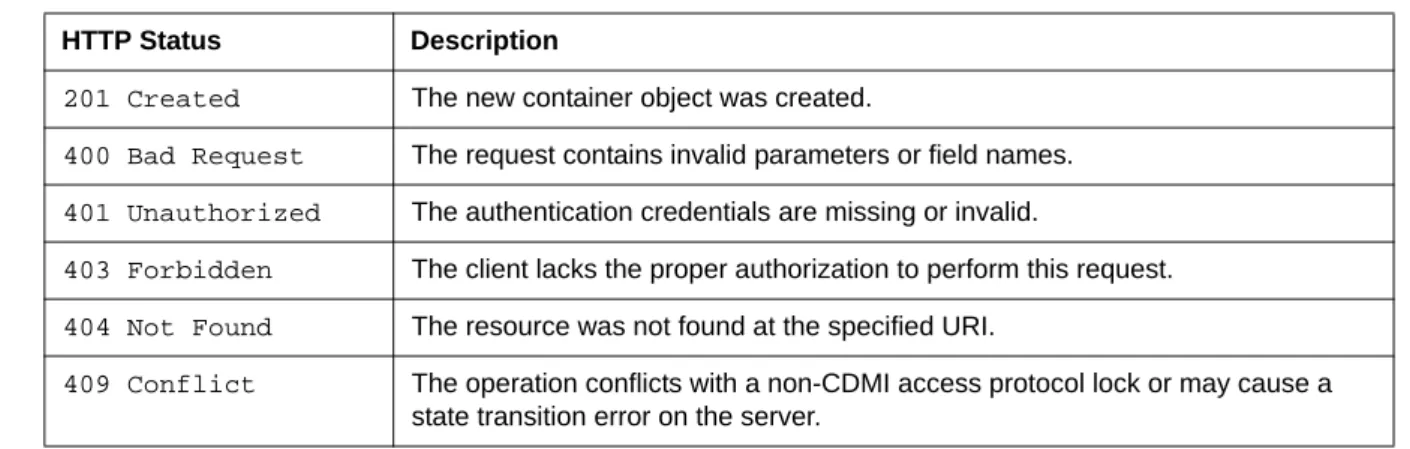
EXAMPLE 2 Requesting an optional field that is not present shall result in an HTTP status code of 404 Not Found.
Table 1 - Interface Format
Component Description
Synopsis The GET, PUT, POST, and DELETE semantics
Delayed Completion For long-running operations, a description of behavior when the operation does not immediately complete
Capabilities A description of the supported operations
Request Headers The request headers, such as Accept, Authorization, Length, Content-Type, X-CDMI-Specification-Version
Request Message Body A description of the message body contents
Response Headers The response headers, such as Content-Length, Content-Type Response Message Body A description of the message body contents
Response Status A list of HTTP status codes Example An example of the operation
1 2 3 4 5 6 7 8 9 10 11 12 13 14 15 16 17 18 19 20
4.3
Request and Response Body Requirements
In request and response body tables, the Requirement column contains one of the following three values: • Mandatory. The value specified in this row shall be provided.
• Conditional. If the condition(s) specified in the Description cell of this row (to the left of the Requirement) is met, the value specified in this row shall be provided. Otherwise it may be provided unless the Description specifically prohibits it, in which case it shall not be provided. • Optional. The value specified in this row may be provided.
4.4
Key Word Requirements
In this international standard, the key words in Table 2 shall be interpreted as described in RFC 2119.
Table 2 - Key Word Requirements
Key Words Description
shall must required
An action described with any of these key words is unconditionally required.
shall not must not
An action described with either of these key word phrases is unconditionally prohibited.
should recommended
Valid reasons may exist in specific circumstances to ignore a particular action described with either of these key words, but the full implications must be understood and carefully weighed before choosing a different course.
should not not recommended
Valid reasons may exist in specific circumstances to accept a particular action described by either of these key word phrases, but the full implications should be understood and the case carefully weighed before implementing any action described with these key words.
may optional
An action described with either of these key words is truly optional. One vendor may choose to include the option because a particular marketplace requires it or because the vendor feels that it enhances the product, while another vendor may omit the same option. An implementation which does not include a particular option must be prepared to interoperate with another implementation which does include the option, though perhaps with reduced functionality. Likewise, an implementation which does include a particular option must be prepared to interoperate with another implementation that does not include the option (except, of course, for the feature the option provides).
21 22 23 24 25 26 27 28 29
5 Overview of Cloud Storage
5.1
Introduction
When discussing cloud storage and standards, it is important to distinguish the various resources that are being offered as services. These resources are exposed to clients as functional interfaces (i.e., data paths) and are managed by management interfaces (i.e., control paths). This international standard explores the various types of interfaces that are part of cloud services today and shows how they are related. This international standard defines a model for the interfaces that may be mapped to the various cloud services and a model that forms the basis for cloud storage interfaces into the future.
Another important concept in this international standard is that of metadata. When managing large amounts of data with differing requirements, metadata is a convenient mechanism to express those requirements in such a way that underlying data services may differentiate their treatment of the data to meet those requirements.
The appeal of cloud storage is due to some of the same attributes that define other cloud services: pay as you go, the illusion of infinite capacity (elasticity), and the simplicity of use/management. It is therefore important that any interface for cloud storage support these attributes, while allowing for a multitude of business use cases.
5.2
What is Cloud Storage?
The use of the term cloud in describing these new models arose from architecture drawings that typically used a cloud as the icon for a network. The cloud represents any-to-any network connectivity in an abstract way. In this abstraction, the network connectivity in the cloud is represented without concern for how it is made to happen.
The cloud abstraction of complexity produces a simple base upon which other features can be built. The general cloud model extends this base by adding a pool of resources. An important part of the cloud model is the concept of a pool of resources that is drawn from, on demand, in small increments. A relatively recent innovation that has made this possible is virtualization.
Thus, cloud storage is simply the delivery of virtualized storage on demand. The formal term that is used for this is Data storage as a Service (DaaS).
5.3
Data Storage as a Service
By abstracting data storage behind a set of service interfaces and delivering it on demand, a wide range of actual cloud services and implementations are possible. The only type of storage that is excluded from this definition is that which is delivered in fixed-capacity increments instead of based on demand.
1 2 3 4 5 6 7 8 9 10 11 12 13 14 15 16 17 18 19 20 21 22 23 24 25 26 27 28 29 30 31
An important part of any DaaS system is the support of legacy clients. Support is accommodated with existing standard protocols such as iSCSI (and others) for block and CIFS/NFS or WebDAV for file network storage, as shown in Figure 1.
The difference between the purchase of a dedicated appliance and that of cloud storage is not the functional interface, but the fact that the storage is delivered on demand. The customer pays for either what they actually use or what they have allocated for use. In the case of block storage, a Logical Unit Number (LUN), or virtual volume, is the granularity of allocation. For file protocols, a file system is the unit of granularity. In either case, the actual storage space may be thin provisioned and billed for based on actual usage. Data services, such as compression and deduplication, may be used to further reduce the actual space consumed.
Managing this storage is typically done out of band for these standard data storage interfaces, either through an API, or more commonly, through an administrative browser-based user interface. This out-of-band interface may be used to invoke other data services as well (e.g., snapshot and cloning).
In this model, the underlying storage space exposed by the out-of-band interfaces is abstracted and exposed using the notion of a container. A container is not only a useful abstraction for storage space, but also serves as a grouping of the data stored in it and a point of control for applying data services in the aggregate.
Each data object is created, retrieved, updated, and deleted as a separate resource. In this type of interface, a container, if used, is a simple grouping of data objects for convenience. Nothing prevents the
Figure 1 - Existing Data Storage Interface Standards
Container
POSIX (NFS, CIFS,
WebDAV)
iSCSI LUNs, Targets
Block Storage Client Filesystem Client
32 33 34 35 36 37 38 39 40 41 42 43 44 45 46 47 48 49 50
concept of containers from being hierarchical, although any given implementation might support only a single level"" (see Figure 2).
5.4
Data Management for Cloud Storage
Many of the initial implementations of cloud storage focused on a kind of best effort quality of storage service and ignored most other types of data services. To address the needs of enterprise applications with cloud storage, however, there is an increasing need to offer better quality of service and to deploy additional data services.
Cloud storage may lose its abstraction and simplicity benefits if new data services that require complex management are added. Cloud storage customers are likely to resist new demands on their time (e.g., setting up backup schedules through dedicated interfaces, deploying data services individually for stored objects).
By supporting metadata in a cloud storage interface and prescribing how the storage system and data system metadata is interpreted to meet the requirements of the data, the simplicity required by the cloud storage model may be maintained while still addressing the requirements of enterprise applications and their data.
User metadata is retained by the cloud and may be used to find the data objects and containers by performing a query for specific metadata values. The schema for this metadata may be determined by each application, domain, or user. For more information on support for user metadata, see 16.2.
Storage system metadata is produced/interpreted by the cloud service and basic storage functions (e.g., modification and access statistics, access control). For more information on support for storage system metadata, see 16.3.
Data system metadata is interpreted by the cloud service as data requirements that control the operation of underlying data services for that data. It may apply to an aggregation of data objects in a container or to individual data objects, if the cloud service supports this level of granularity. For more information on support for data system metadata, see 16.4.
Figure 2 - Storage Interfaces for Object Storage Client Data
Object Storage Client CRUD operations via HTTP Container Container Container 51 52 53 54 55 56 57 58 59 60 61 62 63 64 65 66 67 68 69 70 71 72 73 74 75
5.5
Data and Container Management
There is no reason that managing data and managing containers should involve different interfaces. Therefore, the use of metadata is extended from applying to individual objects to applying to containers of objects as well. Thus, any data placed into a container inherits the data system metadata of the container into which it was placed. When creating a new container within an existing container, the new container would similarly inherit the metadata settings of its parent's data system metadata. After an object is created, the data system metadata may be overridden at the container or individual object level, as desired.
Even if the provided interface does not support setting metadata on individual objects, metadata may still be applied to the containers. In such a case, the interface does not provide a mechanism to override metadata that an individual object inherits from its parent container. For file-based interfaces that support extended attributes (e.g., CIFS, NFSv4), these extended attributes may be used to specify the data system metadata to override that specified for the container.
5.6
Reference Model for Cloud Storage Interfaces
The cloud storage reference model is shown in Figure 3.
This model shows multiple types of cloud data storage interfaces that are able to support both legacy and new applications. All of the interfaces allow storage to be provided on demand, drawn from a pool of resources. The storage capacity is drawn from a pool of storage capacity provided by storage services.
Figure 3 - Cloud Storage Reference Model
Data Storage Cloud
Storage Services Data Services Storage Services Data Services Storage Services Data Services Storage Services Data Services Storage Services Data Services Storage Services Data Services CDMI Cloud Data Management Tab le Tab le Tab le Tabl e Ta b le Draws resources on demand Container POSIX (NFS, CIFS, WebDAV) iSCSI, FC, FCoE LUNs, Targets XAM VIM
for CDMI Database/Table Client XAM Client
Object Storage Client Block Storage Client File System Client
CDMI Multiple,
vendor-specific interfaces Container Container Container Data/Storage Management Client
Management of the cloud storage can be standalone or part of the overall cloud computing management.
Clients acting in the role of using a data storage interface
Clients acting in the role of managing data/ storage
Clients can be inside the storage cloud (i.e., providing storage resources to the cloud as well as consuming them) or outside the storage cloud (i.e., only consuming resources). Information Services (future) Information Services (future)Information Services
(future) Exports to cloud computing 76 77 78 79 80 81 82 83 84 85 86 87 88 89 90 91 92 93
The data services are applied to individual objects, as determined by the data system metadata. Metadata specifies the data requirements on the basis of individual objects or for groups of objects (containers).
5.7
Cloud Data Management Interface
The Cloud Data Management Interface (CDMI™) shown in Figure 3 may be used to create, retrieve, update, and delete objects in a cloud. The features of the CDMI include functions that:
• allow clients to discover the capabilities available by the cloud provider, • manage containers and the data that is placed in them, and
• allow metadata to be associated with containers and the objects they contain.
This international standard divides operations into two types: those that use a CDMI content type in the HTTP body and those that do not. While much of the same data is available via both types, providing both allows for CDMI-aware clients and non-CDMI-aware clients to interact with a CDMI provider.
CDMI may also be used by administrative and management applications to manage containers, domains, security access, and monitoring/billing information, even for storage that is functionally accessible by legacy or proprietary protocols. The capabilities of the underlying storage and data services are exposed so that clients may understand what services the cloud provides.
Conformant cloud services may support a subset of the CDMI, as long as they expose the limitations in the capabilities reported via the interface.
This international standard uses RESTful principles in the interface design where possible (see REST). CDMI defines both a means to manage the data as well as a means to store and retrieve the data. The means by which the storage and retrieval of data is achieved is termed a data path. The means by which the data is managed is termed a control path. CDMI specifies both a data path and control path interface. CDMI does not need to be used as the only data path and is able to manage cloud storage properties for any data path interface (e.g., standardized or vendor specific).
Container metadata is used to configure the data requirements of the storage provided through the exported protocol (e.g., block protocol or file protocol) that the container exposes. When an
implementation is based on an underlying file system to store data for a block protocol (e.g., iSCSI), the CDMI container provides a useful abstraction for representing the data system metadata for the data and the structures that govern the exported protocols.
A cloud service may also support domains that allow administrative ownership to be associated with stored objects. Domains allow this international standard to (among other things):
• determine how user credentials are mapped to principals used in an Access Control List (ACL), • allow granting of special cloud-related privileges, and
• allow delegation to external user authorization systems (e.g., LDAP or Active Directory). Domains may also be hierarchical, allowing for corporate domains with multiple children domains for departments or individuals. The domain concept is also used to aggregate usage data that is used to bill, meter, and monitor cloud use.
Finally, capabilities allow a client to discover the capabilities of a CDMI implementation. Requirements throughout this international standard shall be understood in the context of CDMI capabilities. Mandatory requirements on functionality that is conditioned on a CDMI capability shall not be interpreted to require implementation of that capability, but rather shall be interpreted to apply only to implementations that support the functionality required by that capability.
For example, in 5.10, this international standard states, "Every cloud storage system shall allow object ID-based access to stored objects." This requirement shall be understood in the context that access by object ID is predicated on the presence of the cdmi_object_access_by_ID capability.
94 95 96 97 98 99 100 101 102 103 104 105 106 107 108 109 110 111 112 113 114 115 116 117 118 119 120 121 122 123 124 125 126 127 128 129 130 131 132 133 134 135 136 137
5.8
Object Model for CDMI
The model for CDMI is shown in Figure 4.The five types of resources defined are shown in Table 3. The content type in any given operation is specific to each type of resource.
For data storage operations, the client of the interface only needs to know about container objects and data objects. All data path implementations are required to support at least one level of containers (see
5.5). Using the CDMI object model (see Figure 4), the client may send a PUT via CDMI (see 5.6) to the new container URI and create a new container with the specified name. Container metadata are optional and are expressed as a series of name-value pairs. After a container is created, a client may send a PUT to create a data object within the newly created container. A subsequent GET will fetch the data object, including the value field.
Queue objects are also defined (see Figure 4) and provide in-order-first in-first-out access to enqueued objects. More information on queues may be found in Clause 11.
CDMI defines two namespaces that can be used to access stored objects, a flat object ID namespace and a hierarchical path-based namespace. Support for objects accessed by object ID is indicated by the system-wide capability cdmi_object_access_by_ID, and support for objects accessed by hierarchical path is indicated by the container capability cdmi_create_dataobject found on the root container (and any subcontainers).
Objects are created by ID by performing an HTTP POST against a special URI, designated as /cdmi_objectid/ (see 9.6). Subsequent to creation, objects are modified by performing PUTs using the
Figure 4 - CDMI Object Model
Table 3 - Types of Resources in the Model
Resource Type Description Reference
Data objects Data objects are used to store values and provide functionality similar to files in a file system.
See Clause 8.
Container objects Container objects have zero or more children, but do not store values. They provide functionality similar to directories in a file system.
See Clause 9.
Domain objects Domain objects represent administrative groupings for user authentication and accounting purposes.
See Clause 10.
Queue objects Queue objects store zero or move values and are accessed in a first-in-first-out manner.
See Clause 11.
Capability objects Capability objects describe the functionality implemented by a CDMI server and are used by a client to discover supported functionality.
See Clause 12. Key/Vale Metadata Children Root Container Key/Value Metadata Children Container Key/Value Metadata Values Queue Object Capability Entries Children Capability Objects Summary Membership Children Domain Objects Key/Value Metadata Value Data Object 0..* child 0..* child Child capabilitiesURI 0..* 0..* 0..* domainURI 1 1 capabilitiesURI 1 138 139 140 141 142 143 144 145 146 147 148 149 150 151 152 153 154 155 156 157
object ID assigned by the CDMI server, using the /cdmi_objectid/ URI (see 8.4 "Update a Data Object using CDMI"). The same URI is used to retrieve and delete objects by ID.
Objects are created by name by performing an HTTP PUT to the desired path URI (see 8.2 "Create a Data Object using CDMI"). Subsequent to creation, objects are modified by performing PUTs using the object path specified by the client (see 8.4). The same URI is used to retrieve and delete objects by path. CDMI defines mechanisms so that objects having only an object ID can be assigned a path location within the hierarchical namespace, and so that objects having both an object ID and path can have their path dropped, such that the object only has an object ID. This function is accomplished by using a "move" modifier to a PUT or POST operation, as shown in Figure 5.
5.9
CDMI Metadata
CDMI uses many different types of metadata, including HTTP metadata, data system metadata, user metadata, and storage system metadata.
HTTP metadata is metadata that is related to the use of the HTTP protocol (e.g., Length, Content-Type, etc.). HTTP metadata is not specifically related to this international standard but needs to be discussed to explain how CDMI uses the HTTP standard.
CDMI data system metadata, user metadata, and storage system metadata is defined in the form of name- value pairs. Vendor-defined data system metadata and storage system metadata names shall begin with the reverse domain name of the vendor.
Data system metadata is metadata that is specified by a CDMI client and is a component of objects. Data system metadata abstractly specifies the data requirements associated with data services that are deployed in the cloud storage system.
User metadata consists of client-defined JSON strings, arrays, and objects that are stored in the metadata field. The namespace used for user metadata names is self-administered (e.g., using the reverse domain name), and user metadata names shall not begin with the prefix "cdmi_."
Storage system metadata is metadata that is generated by the storage services in the system (e.g., creation time, size) to provide useful information to a CDMI client.
The matrix of the creation and consumption of storage system metadata is shown in Table 4.
Figure 5 - Object Transitions between Named and ID-only
Table 4 - Creation/Consumption of Storage System Metadata
Created by User Created By System
Consumed by User User metadata Storage system metadata
Consumed by System Data system metadata N/A
Object with Name and ID
Object with ID only PUT /name, {“move” : “/cdmi_objectid/<object ID>/"}
POST /cdmi_objectID/, {“move” : “/name"}
158 159 160 161 162 163 164 165 166 167 168 169 170 171 172 173 174 175 176 177 178 179 180 181 182 183 184
5.10
Object ID
Every object stored within a CDMI-compliant system shall have a globally unique object identifier (ID) assigned at creation time. The CDMI object ID is a string with requirements for how it is generated and how it obtains its uniqueness. Each cloud service that implements CDMI shall generate these identifiers such that the probability of conflicting with identifiers generated by other cloud services and the probability of generating an identifier that has already been used is effectively zero.
Every cloud storage system shall allow object ID-based access to stored objects by allowing the object's ID to be appended to the root container URI. If the data object "MyDataObject.txt", located in the root container, has an object ID of "00006FFD001001CCE3B2B4F602032653", the following pair of URIs access the same data object:
http://cloud.example.com/root/MyDataObject.txt
http://cloud.example.com/root/cdmi_objectid/00006FFD001001CCE3B2B4F602032653
If containers are supported, they shall also be accessible by object ID. If the container "MyContainer", located in the root container, has an object ID of "00006FFD0010AA33D8CEF9711E0835CA", the following pairs of URIs access the same object:
http://cloud.example.com/root/MyContainer/
http://cloud.example.com/root/cdmi_objectid/00006FFD0010AA33D8CEF9711E0835CA/ http://cloud.example.com/root/MyContainer/MyDataObject.txt
http://cloud.example.com/root/cdmi_objectid/00006FFD0010AA33D8CEF9711E0835CA/MyDataOb-ject.txt
5.11
CDMI Object ID Format
The cloud service shall create the object ID, which identifies an object. The object ID shall be globally unique and shall conform to the format defined in Figure 6. The native format of an object ID is a variable-length byte sequence and shall be a maximum variable-length of 40 bytes. A client should treat object IDs as opaque byte strings. However, the object ID format is defined such that its integrity may be validated, and independent cloud services may assign unique object ID values independently.
The fields shown in Figure 6 are defined as follows: • The reserved bytes shall be set to zero.
• The Enterprise Number field shall be the SNMP enterprise number of the offering organization that developed the system that created the object ID, in network byte order. See RFC 2578 and http:// www.iana.org/assignments/enterprise-numbers. 0 is a reserved value.
• The byte at offset 5 shall contain the full length of the object ID, in bytes.
• The CRC field shall contain a 2-byte (16-bit) CRC in network byte order. The CRC field enables the object ID to be validated for integrity. The CRC field shall be generated by running the
0 1 2 3 4 5 6 7 8 9 10 ... 38 39
Reserved (zero)
Enterprise Number Reserved (zero)
Length CRC Opaque Data
Figure 6 - Object ID Format 185 186 187 188 189 190 191 192 193 194 195 196 197 198 199 200 201 202 203 204 205 206 207 208 209 210 211 212 213 214 215 216 217 218