FROM PICKET LINES TO PICKET FENCES: LATINAS AND THE REMAKING OF THE JIM CROW SOUTH, 1930-1964
Sarah McNamara
A dissertation submitted to the faculty at the University of North Carolina at Chapel Hill in partial fulfillment of the requirements for the degree of Doctor of Philosophy in the
Department of History.
Chapel Hill 2016
ABSTRACT
Sarah McNamara: From Picket Lines to Picket Fences: Latinas and the Remaking of the Jim Crow South, 1930-1964.
(Under the direction of Zaragosa Vargas and Jacquelyn Hall)
“From Picket Lines to Picket Fences: Latinas and the Remaking of the Jim Crow South, 1930-1964,” traces the transformation of Latina/o politics and culture in Ybor City and Tampa, Florida. This case study examines and compares the actions of two generations of Latinas as they fought for economic equality, social dignity, and political representation in the early battles for labor, women’s, and civil rights in the United States and abroad. I argue that Latinas were effective as political strategists and public figures because their gender facilitated their activism and protected them from the threats of racial and nativist violence experienced by men of color. In turn, these women’s actions and choices became part of a series of changes that would redefine the meaning and power of latinidad in Florida’s political culture.
ACKNOWLEDGEMENTS
I owe the existence of this project to my family. My dedication to Ybor City’s Latino community is ingrained in my own sense-of-self. I wrote this dissertation because of my grandparents’ memories and persevered through the project because of my family’s
encouragement. My parents Andi and Jim McNamara, my grandfather Gustavo Alfonso, my sister Katie McNamara, and her partner Dylan Rigsby provided undying support and constant encouragement as I trudged through documents, claimed home-office space, recruited
additional translators, and mobilized their individual talents to reach the final page of this dissertation. A special thank you is owed to my partner and best friend, Stephen Badalyan Riegg, who loved me through this process and had the patience to read chapters a moment’s notice. I cannot thank each member of my family enough for all they have done and given me throughout my life and during these six years.
offered holistic advice that not only helped build this dissertation, but will push me to write a stronger book. In many ways, she was a surrogate advisor who took me on despite the divide of Duke and UNC. Katherine Turk and Emily Burrill joined my committee as both experts and mentors, and provided essential direction to the future of this project. I am grateful I had the opportunity to work with both of them through my work and the Working Group in Feminism and History.
The completion of this research and writing would not have been possible without the generous funding of archives and institutions that supported the work. First, I thank Nancy Hewitt, Vicki Ruiz, Robert Ingalls, and Gary Mormino who sent me documents from their personal archives. These historians’ past efforts gave me an incredible head start in the research process. Archivists Jennifer Dietz, Andrew Huse, and Terry Eagan helped navigate the murky waters of Tampa’s city records. Furthermore, I am grateful for research support from the Special Collections at the University of South Florida, the Tulane Center for the Gulf South, the Samuel Proctor Oral History Program at the University of Florida, the Center for the Study of the American South at UNC, the Institute for the Study of the Americas, the American Historical Association, and the National Endowment of the Humanities. Funding from these organizations provided the resources necessary to travel to archives from Florida to Washington D.C., as well as process and conduct oral histories. Completion grants from Phillips Exeter Academy and the Graduate School at UNC gave me the time and resources necessary to complete this dissertation and brave the academic job market.
Through the course of graduate school my friends became my second family.
trips into vacations and her high tolerance for long phone conversations. I also thank Jessie Wilkerson for her patience and advice as I navigated graduate school. I am grateful to my fellow Latina and Floridian, Jeanine Navarrete, who always had time to put things into perspective and Rachel Hynson, whose keen editorial eye, pushed me to the end of this project in its final weeks. And finally, my best and forever friends from Tampa and
TABLE OF CONTENTS
LIST OF FIGURES ... xi
LIST OF ABBREVIATIONS ... xii
INTRODUCTION ... 1
Background: The Landscape of “Cigar City” ... 4
Historiography ... 11
Organization ... 18
CHAPTER 1: NO NOS MOVERÁN (WE SHALL NOT BE MOVED): COMMUNISM, CIVIL RIGHTS, AND INTERNATIONAL DEMOCRACY ... 20
Introduction ... 20
Depression and Decline of the Cigar Industry ... 26
Latina Working-Class Activism and the New Deal ... 38
Demanding Workers’ Rights through Women’s Actions ... 51
In Search of Civil Rights and Citizenship ... 61
Conclusion ... 63
CHAPTER 2: NEGLECTFUL MOTHERS, DISGRACEFUL RADICALS, AND FOREIGN TRAMPS: LABOR ACTIVISM AND THE STIGMA OF LATINIDAD ... 65
Introduction ... 65
The Limits of Mutual Aid and the Need for Relief ... 70
Neglectful Mothers and Foreign Tramps ... 81
The Demand for a Living Wage ... 90
CHAPTER 3: “OF GOOD MORAL CHARACTER:” COMMUNISTS,
FOREIGNERS, AND PATRIOTS ... 109
Introduction ... 109
Defining “Of Good Moral Character” ... 111
A Sense of Belonging ... 126
Planning and Protesting Urban Removal ... 137
Conclusion ... 143
CHAPTER 4: AMERICAN VOTERS AND CUBAN REVOLUTIONARIES: PROGRESSIVISM AND RADICALISM IN THE SUNSHINE STATE ... 145
Introduction ... 145
“Amigos Mios” ... 147
Latino Americans and Cuban Revolutionaries ... 159
Conclusion ... 170
CONCLUSION ... 173
LIST OF FIGURES
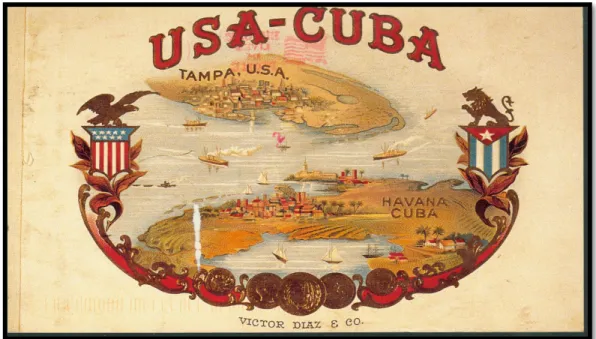
Figure 1. Cigar label showing the proximity of Cuba to Tampa. ... 4
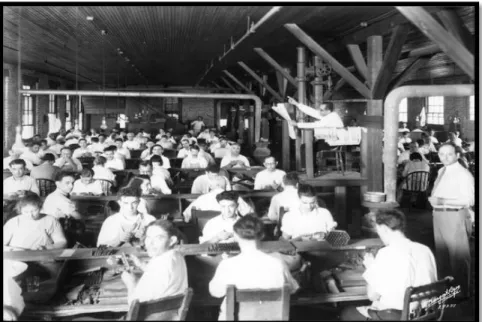
Figure 2. Tabaqueros working in Ybor City factory, 1927. ... 9
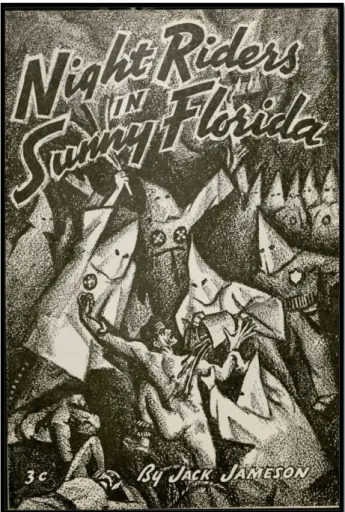
Figure 3. Booklet describing the murder of Joseph Shoemaker. ... 45
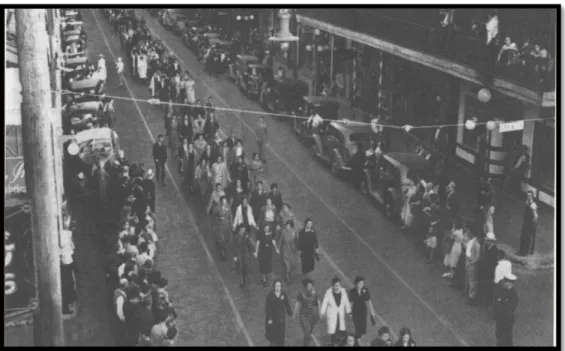
Figure 4. Latinas marching down Avenida Septima on May 6, 1937. ... 53
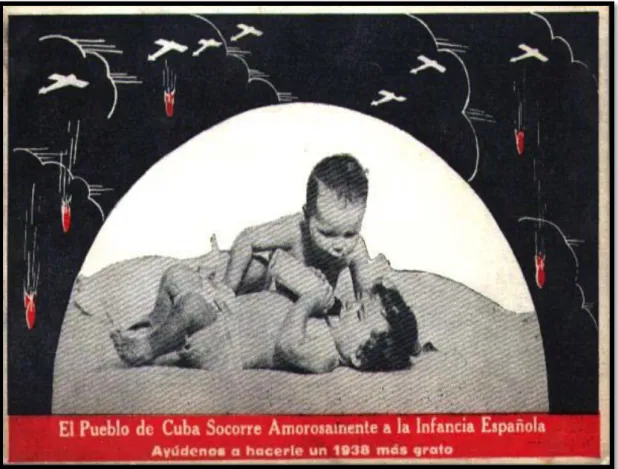
Figure 5. Translated: “The people of Cuba lovingly aid the Spanish infant. Help us make 1938 more pleasant.” ... 94
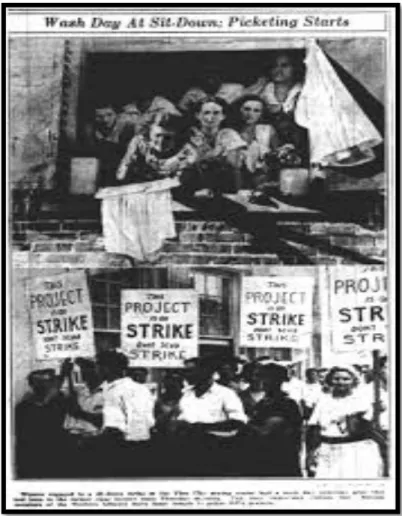
Figure 6. Front page of the Tampa Morning Tribune on July 8, 1937. ... 99
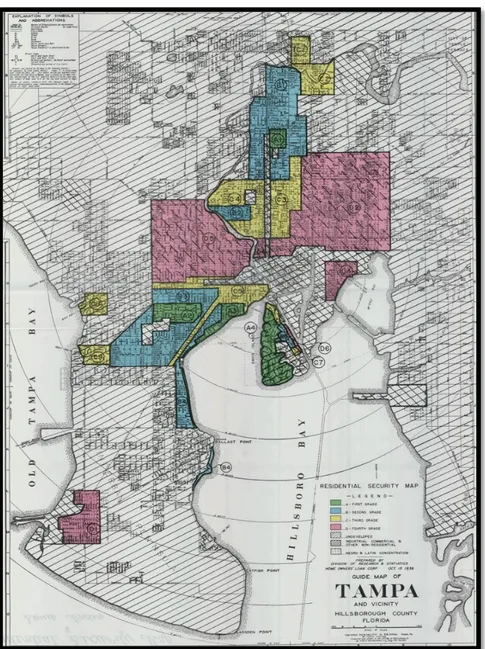
Figure 7. Photograph courtesy of the Tampa Planning Commission Archive. ... 140
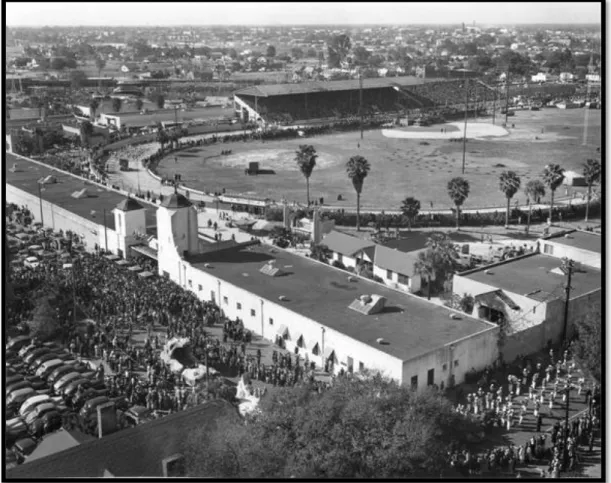
Figure 8. Plant Field in 1948. ... 156
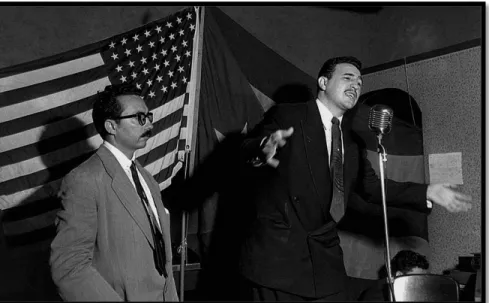
Figure 9. Fidel Castro delivering a speech to Ybor Latinas and Latinos at the Labor Temple in Ybor City. ... 165
LIST OF ABBREVIATIONS
AFL American Federation of Labor CIO Congress of Industrial Organizations CMIU Cigar Makers International Union
CP Communist Party
CPUSA Communist Party of the United States DOJ Department of Justice
HOLC Home Ownership Loan Corporation HUAC House un-American Activities Committee INS Immigration and Naturalization Services
INTRODUCTION
On a hot, humid, Florida afternoon in June 1964, Blanca Vega Díaz stood on the corner of Tenth Avenue in Ybor City. She made the trip with her husband to watch cranes from the Urban Planning Commission demolish the home where she grew up. That day, 60 percent of the old Ybor City neighborhood was leveled to make way for the expansion of Interstate 4 and Interstate 275. As the half ton, silver, wrecking ball rose in the air, Blanca remembered her life in the city’s Cuban enclave. She dreamed of how the sweet smell of the cubano tobacco once filled the air and how the leaves stained the hands of the tabaqueros (cigar workers), who stripped, stuffed, molded, and bound the delicate leaves into
consumable works of art. Blanca’s hands may have been thick and tough. If she had worked in the cigar factories and she would have been amongst the thousands who created Tampa’s industrial economy. Women began as a despaldillora (stripper), laboring the factory
basement, ripping stems from the wide, dry tobacco leaves. By her thirties, Blanca would have moved up to the main factory floor, where she could become a bunchera (buncher), preparing the filling for the internationally known, male rolleros (roller). During the 1930s, Blanca would have survived as a low-wage, cigar machine worker, who stood with her countrywomen as the hum of mass production replaced the shuffle of handiwork. But in the 1950s, she left the city in search of the life she had been unable to find in Tampa.1
Like her parents, who championed the Cuban War for Independence, advocated for anarcho-syndacalism, and supported Latina feminist Luisa Capetillo, Blanca could have embraced radicalism as an international movement that could enact significant local change. She was amongst the hundreds of women who joined Unemployed Counsels, staged sit-ins at relief offices, created mass demonstrations for work relief, and connected their own struggles against the Anglo United States with the fight against Spanish fascism abroad.2 When the
wrecking ball released and her home fell to the ground in 1964, Blanca recalled feeling devastated. The place where she had lived, labored, and organized was gone, but Ybor City’s Latino community, although displaced, lived on.
“From Picket Lines to Picket Fences: Latinas and the Remaking of the Jim Crow South, 1930-1964,” traces the transformation of Latino politics and culture in Ybor City and Tampa, Florida. This work examines the choices that immigrant Cuban and later American-born Latinas made to achieve political representation and social justice between the Great Depression and the Civil Rights Movement. During the 1930s, first-generation Latinas saw themselves as part of a cross-border, working-class community dedicated to an
internationalist vision of Latina/o rights. These women joined the Popular Front, rallied with the Communist Party, organized strikes, marched against fascism, and criticized American foreign policy. Through such efforts, Latinas attacked Jim Crow laws and vigilante violence to expand the boundaries of what it meant to be Latino and American. After World War II,
however, suppression of the labor movement by Cold War anti-communism curbed the overt pursuit of Latino progressivism. While immigrant women sustained their radicalism by supporting Fidel Castro and fundraising for the revolution, American-born, white Latinas and Latinos disavowed radical politics and interracial organizing to transform their image from foreign subversives to American citizens. This shift reflected larger changes in American culture, gender roles, and sexuality that coincided with a seismic cultural negotiation over racial difference.
In this project, I make two major contributions to the study of Latinos and the modern United States. First, my work challenges our limited understanding of women’s leadership in the early movements for social and economic justice. As I investigate the evolution of Latino identities and community solidarities, I argue that Latinas developed and directed political strategy in Ybor City in order to achieve economic security and political representation for themselves and their community. Second, I explore the city as a space of transnational collisions. In Tampa, political networks and cultural identities connected the United States, Cuba, Puerto Rico, and Mexico, and women and men maintained family ties, cultural traditions, and organizing tactics that benefitted their ethnic community first and the union second.3 I argue that over two generations, these cross-border exchanges uniquely influenced the city’s physical shape, as well as the political and social consciousness of the people within it. By exploring the Global South through the lens of gender, I illustrate how Latinas navigated both real and imagined borders.
Background: The Landscape of “Cigar City”
Well before Miami was “Little Havana,” Ybor City was the Latino capital of the American South. Located on the eastern edge of Tampa, Ybor was home to over 26,000 Cuban, Afro-Cuban, Spanish, Puerto Rican, and Italian immigrants. Drawn to the city by work in the cigar industry, these Latinas and Latinos built the Tampa economy and
established Ybor as the cigar capital of the world by 1920. In the “Cigar City,” politics was both transnational and local. Radical ideologies connected Ybor immigrants to networks in Cuba, Italy, Spain, and Latin America. Women and men rallied with the International Workers of the World, supported Cuban Independence, and established grass-root trade unions. These cross-national relationships created and maintained migrant identities. Although Ybor City women and men worked in the United States, their homes, extended families, and memories stretched across borders.
Figure 1. Cigar label showing the proximity of Cuba to Tampa.
Labor activism defined Ybor City’s cigar industry. In the 1870s, Key West served as the major cigar-manufacturing hub in the United States. The mere ninety-mile stretch
between the Florida Keys and the northwestern coast of Cuba permitted convenient transport of Havana tobacco and transient, revolutionary tabaqueros (cigar makers).4 As the movement for Cuban independence peaked and nationalistic fervor swelled, labor strikes in Havana and Key West became frequent and increasingly violent. Key West cigar manufacturers believed that by increasing the physical distance between their workforce and the island of Cuba, they could control the movement of ideas and suppress the interference of Cuban trade unions with their workforce. In 1886, Vicente Martínez Ybor, the owner of El Príncipe de Gales factory, purchased a thirty-acre tract of land on the eastern edge of Tampa and relocated his cigar enterprise to Ybor City.5 Following violent, cigar worker strikes in Key West in1889
and 1894, other companies followed Ybor’s lead and relocated to Tampa. By 1894, this sleepy, southern town was home to a new Cuban émigré workforce whose labor would lead to its rise as the U.S. “Cigar City.”
Despite relocating the Cuban cigar industry, strikes followed the manufacturers from Key West to Ybor City. “People date their lives from various strikes in Tampa,” remembered novelist and Ybor native José Yglesias.6 From 1897 to 1931, five major strikes took place in
4 Louis A. Pérez, Jr., Cuba and the United States: Ties of Singular Intimacy, 3rd ed. (Athens, GA: The University of Georgia Press 2003), pp. 217.
5 “Ybor City, General Description, Latin Population,” Manuscript, Federal Writers’ Project (hereafter FWP), Special Collections, University of South Florida, Tampa, Florida, pp. 5.
the Ybor City cigar industry, spurring a community to support collective activism.7 Local
grocers, restaurants, and landlords frequently extended credit to clients and tenants to support unemployed or striking workers. The phrase apúntamelo (take note) was all a worker needed to utter for a grocer to charge a client’s tab.8 All six mutual aid societies – Centro Español (Spanish Center Club), Centro Asturiano (Asturian Club), Círculo Cubano (Cuban Club), L’Unione Italiano (Italian Club), Unión Martí-Maceo (Afro-Cuban Club), and Deutscher-Americaner (German-American Club) – provided members with benefits in the event of strike or termination.9 This informal system of worker and community self-help established a culture that minimized the power of the cigar companies and created constant tensions between community and industry. Strikes slowed production, and because the cigar industry was dependent on its artisan workforce, concessions and compromises were necessary. Between 1880 and 1900, Tampa’s cigar industry grew from a single shop to 120 factories, spurring a population increase from 720 to 15,839.10 Although many Tampans viewed the militant workforce as dangerous and foreign, the city was inextricably dependent on the cigar industry.
Cigar factories employed racism and sexism as mechanisms for worker control. Although men and women of Cuban, Spanish, Italian, and Afro-Cuban backgrounds worked
7 These six strikes occurred in 1899, 1901,1910, 1911,1919-1920, and 1931. See Louis A. Pérez, Jr., “Ybor City Remembered,” South Eastern Latin Americanist 22, no. 1 (1978): 1.
8 Interview with Peter Parrado by Sarah McNamara, June 2008. Interview in possession of the author. 9 Louis A. Pérez, Jr. details the relationship between Cuban unions and mutual aid societies on the island and in Ybor City. See Pérez, Cuba and the United States, pp. 217 and Louis A. Pérez, Jr., “Radicals, Workers, and Immigrants in Tampa: Research opportunities in Special Collections,” Ex Libris 1, no.4 (1978): pp. 14.
side-by-side, differences in race and sex established a regime of labor inequality in the cigar industry. At the most basic level, men were considered skilled workers, while women were considered unskilled. Photographs of tabaqueros from the late nineteenth century through the 1920s show men of various skin tones occupying the prestigious rollero benches. Rarely did women have a seat the artisan tables. The photographs reveal that some stood behind their male colleagues as buncheras, while the majority labored in the basements as selectoras (leaf selectors) and despaldilladoras.11 The U.S. Women’s Bureau reported that “the foreign born in Florida [were] the largest groups in the cigar factories,” adding that as women workers they were paid less than their male counterparts.12 To move up in the labor hierarchy, many women chose to work at chinchales. These small, independent, cigar enterprises were family-owned and offered women the opportunity to learn the refined trade of cigar rolling. In these small shops, more women advanced to the level of rollera. The chinchales also allowed women to combine wages with family and childcare responsibilities. Large cigar factories did not provide childcare for working-class women, but in the smaller, family-run shops, a woman could keep a watchful eye on her children while providing income for her family.
11 Prior to 1929, nearly 75 percent of women employed in the Florida cigar industry worked as stemmers. See Ethel Lombard Best and Mary Viola Robinson, Women in Florida Industries
Washington, U.S. Government Printing Office, 1930, pp. 40-45. Also, to compare with other states reference, see Caroline Manning and Harriet A. Byrne, The Effects on Women of Changing
Conditions in the Cigar and Cigarette Industries (Washington, U.S. Government Printing Office, 1932).
Despite the disparity between gender and labor potential, women never wavered as prominent members of labor unions and activists on the picket lines.13
Race both divided and united Ybor City. Within the brick walls of cigar factories, historic tensions between Spaniards, Cubans, and Afro-Cubans created an ethno-racial hierarchy of labor. This old world system travelled to Ybor City from Cuba. Spaniards were typically factory owners and managers in cigar factories, and in the ranks of the tabaqueros, they were also the highest paid employees.14 Conversely, Cuban, Italian, and Afro-Cuban workers occupied different levels on the employment spectrum, and they rarely rose to the management levels dominated by Spaniards. This internal division sparked the first labor strike in Ybor City in 1897.15 Militant Cuban tabaqueros incited a huelga (strike) that reminded Spanish factory owners that the laborers would continue to demand equality and fight against the ideas of colonial domination in Cuba and the United States. While these internal, ethno-racial differences were prominent and U.S. racial hierarchies conflated the workers into one category—nonwhite.
Inside the cigar factories, lectores (readers) fostered the tabaquero activist spirit. El lector was typically a fellow worker, selected by the cigar workers, to read as they labored on
13 Nancy A. Hewitt, Southern Discomfort: Women’s Activism in Tampa, Florida, 1880s-1920s (Urbana: University of Illinois Press, 2001), pp. 5.; Nancy Hewitt, “Women in Ybor City: An Interview with a Woman Cigar Worker,” Tampa Bay History 7, no. 2 (Fall/Winter 1985): pp. 164. 14 Mormino and Pozzetta, Immigrant World, pp. 262.
the shop room floor.16 The lectores were actors famous for their booming and theatrical
voices. The lector would read excerpts from local and international newspapers, as well as literary and political works such as Das Kapital.17 For this reason, Ybor City tabaqueros were the best-educated, illiterate population. While many of these men and women did not attend school past the eighth grade, they “earned” advanced degrees from the factory floor, gaining a political, economic, and social consciousness that challenged the Spanish cigar shop owners and the status quo of the Jim Crow South.18 Through the words of the lectores, cigar workers became labor allies that shared a collective identity.
Figure 2. Tabaqueros working in Ybor City factory, 1927.
The lector, on the right, is sitting and reading to the workers from the daily newspaper. Photograph courtesy of USF Special Collection.
16 The lector was typically a man’s position; few women reached this distinguished position. Nancy Hewitt outlines the role of the lector and presents an exception to the male rule in Luisa Capetillo, a lectora puertorriqueña. See Hewitt, Southern Discomfort, pp. 1-4; “Ybor City, General Description, Latin Population,” FWP, pp. 15-16.
As cigar profits increased, neighboring Tampa took notice of the potential tax base and urged the Florida State Legislature to extend Tampa’s city limits to incorporate Ybor City. The city of Tampa claimed doing so would allow it to protect Ybor City with sufficient police support.19 It is likely that the protection was intended primarily for the cigar factories, not the cigar workers. Each factory very soon became a tiny arsenal. Cigar factories were equipped with armed guards, trained dogs, grenades, and machine guns.20 Vigilant against
potential strikes, cigar factory owners took every precaution to protect their investments. Despite the protests of Ybor City’s Latino residents, their fledging town was incorporated into Tampa in 1887. This forever changed Ybor City.
Ybor City’s annexation cast the insular Latino enclave into the larger world of the Jim Crow South. Segregation did not previously exist in Ybor City. But following annexation, Jim Crow applied to many of these immigrants in new and dangerous ways, especially with the rise of the Ku Klux Klan and its call for white supremacy.21 Klan members were
deputized and served in various citizen committees that patrolled Tampa’s city streets,
punishing anyone who challenged the local status quo. This racially-charged vigilantism soon was commonplace in both Ybor City and Tampa. Between 1934 and 1935, the Tampa Klan lynched thirty-three black men and Latinos.22 Labor unrest in Ybor City fed the Klan’s ugly
19 Robert P. Ingalls, Urban Vigilantes in the New South: Tampa, 1882-1936 (Knoxville: University of Tennessee Press, 1988), pp. 42.
20 Ybor City 1911 Sanborn Map, Tony Pizzo Collection (hereafter TPC), box 104, folder Centro Asturiano, Special Collections, University of South Florida, Tampa, Florida.
penchant for hooded violence, as did progressive politics and the practice of Latinidad (Latino-ness).
During the Great Depression, cigar factory owners fired Latino (male) artisan rollers and hired Latina (female) cigar-machine operators in order to cut costs and ostensibly establish a docile labor force. Owners incorrectly believed that female respectability and political activity were mutually exclusive. In this way, what was once a man’s domain became women’s work. Denied employment and federal work relief in Ybor City, Latino men left their families and migrated north in search of work and government assistance. Until 1946, women outnumbered men in Ybor City.
Male migration changed gender relations in Ybor City; Latina women became
mujeres fuertes (strong women), as they took on new political and social authority within the family and in the community. Latinas feminized cigar work and became heads of households, altering gender dynamics in the home and community as they became empowered and
challenged economic and political inequality. Historiography
Labor historian Elizabeth Faue observes that scholars have “failed to significantly alter the narrative of labor history.” My dissertation embraces Faue’s criticism and finds its methodological approach in gender and oral history. Rather than a traditional study of labor unions and strike actions, my research privileges “kinship, education, work, community, leisure, and the state as the font of not only how class is formed, but how it is culturally and materially transmitted.”23 I approach gender, race, and working-class identity as malleable
experiences that incited resistance and change inside the working-class community of Ybor City and Tampa.
Ybor City’s history is built by local studies that portray the Cigar City as a seemingly mythical community. In 1968, Anthony “Tony” Pizzo laid the foundation of Ybor City’s classic narrative through a general history of the community’s development.24 Pizzo
illustrated a working-class neighborhood where people created a pseudo, ethno-racial Utopia in the Jim Crow South. Pizzo’s nostalgic narrative muted the echoes of radical activism and racial discord from Ybor City’s history. In the wake of Ybor’s physical destruction by urban renewal in the 1960s, Pizzo rebuilt a Latino community that Tampa was proud to
acknowledge, but only by omitting the community’s distinct “Latino accent.”25
In 1998, Gary Mormino and George Pozzetta published the most comprehensive study of the community, The Immigrant World of Ybor City: Italians and Their Latin
Neighbors in Tampa, 1885-1985. Mormino and Pozzetta incorporated Ybor City into a larger historical debate about the complex relationships of “class, culture, and community.”26 This community study, however, continued the romantic depiction of Ybor as an enclave of ethnic equality rather than one of internal, intra-ethnic conflict and compromise. Only after
Mormino and Pozzetta did historians begin to look beyond Ybor City’s romantic Sevillan patios and lavish tile murals. By broadening their analysis, the cultural intricacies of began to appear from beneath Ybor City’s accepted ordinary history.
24 Anthony Pizzo, Tampa Town, 1824-1886: The Cracker Village with a Latin Accent (Tampa, FL: Trend House, 1968).
25 Pizzo, Tampa Town.
Since the expansion of scholarship roughly twenty years ago, only a handful of historians have examined Ybor City and its multifaceted social relationships. Robert P. Ingalls investigated the violent relationship between Tampa Anglos and Ybor Latinos in Urban Vigilantes in the Jim Crow South.27 This work reconsidered how the Ku Klux Klan suppressed radical activism in Ybor City and controlled Ybor Latinos through terror. Ingalls reincorporated Florida into a southern framework by reinvigorating the Klan, but Urban Vigilantes focused singularly on violent acts and ignored the resistance of the persecuted radicals whose ideologies threatened southern society.
Nancy A. Hewitt’s Southern Discomfort: Women’s Activism in Tampa, 1880-1920s studied women’s social and political involvement in Ybor City, paining the picture of an immigrant community where women redefined themselves as working-class activists. Southern Discomfort focused on racial and ethnic difference, arguing that gender was a cross-cultural unifier between Tampa and Ybor City. Hewitt’s investigation of Ybor City broke from Mormino and Pozetta’s idyllic model and Ingall’s top-down perspective. It brought Tampa’s women to life, stating that “sex and race, or class and ethnicity, or sex, class, and ethnicity” drove the women and men of Ybor City to identify with movements that benefitted their interests. While Hewitt pointed to the importance of diversity and difference, she also implied that a sense of sisterhood linked women of Ybor and Tampa despite their disparate lived experiences. However, recent scholarship on women of color and their resistance challenged this assertion. Anthropologist Susan Greenbaum complicated Hewitt’s claim by deconstructing the myth of a José Martí-inspired colorblind Cubanidad (Cubaness)
that highlighted the blackening of Afro-Cubans in Tampa.28 Just as Hewitt illustrated that
difference and place mattered, Greenbaum explained how Afro-Latinos became black Americans in Tampa’s Jim Crow matrix.
This dissertation speaks most closely to the works of Hewitt and Greenbaum, as it seeks to complicate categories of gender, race, ethnicity, and community. It does this in order to understand how and why individuals joined local, national, and international political and class movements. Hewitt, Greenbaum, and Ingalls reminded their readers that Ybor’s unique population and militant activism emerged in the South. While this image of southern identity may be “uncomfortable and [deviate from] dominant conceptions,” global connections and expressions of race, class, ethnicity, politics, and gender certainly characterized Ybor City and Tampa and “echo across the South and the nation as a whole.”29 To truly uncover the
meaning of Ybor City’s radical legacy and its eventual dissolution in the anti-communist social milieu of the postwar years, this project examines the years beyond Ybor City’s heyday. It considers how the city’s Spanish-speaking population reformed and adapted to changing ideas of politics, nation, and citizenship to expose a different kind of women’s activism than Nancy Hewitt described. Finally, it explores the reaction of Ybor’s women and men to southern restrictions as their international ties began to unravel post-WWII.
To place this community history onto the national and international stage, my
dissertation addresses a broader historiography of women’s activism, community formation, labor unionism, political radicalism, and urban development. Ybor can be viewed as a
28 Hewitt, Southern Discomfort; Susan D. Greenbaum, More Than Black: Afro-Cubans in Tampa (Gainesville: University Press of Florida, 2002).
southern exception, but the actions of female and male inhabitants speak to larger national and international trends that necessitate situating Ybor in a larger historical narrative. Framed through the actions of women, my study will connect closely with the works of Jennifer Guglielmo, Elizabeth Faue, and Vicki L. Ruiz on female activists across the United States. Their research has centered on gendered experiences as central to understanding the effects of activism, political movements, and social restrictions on families, work, and community.
In Living the Revolution: Italian Women’s Resistance and Radicalism in New York City, 1880-1945, Jennifer Guglielmo exposed a world where immigrant, Italian women were formidable forces in national politics. In her project, Gugliemo looked beyond the realm of white, middle-class activism and showed how working-class Italians mobilized New York’s immigrant neighborhoods. Indeed, the Italian women she described were
anarcho-syndicalists who became communists but were consistently feminists. While Gugliemo’s Living the Revolution mentioned similar political trends in Chicago, San Francisco, and elsewhere, the work exclusively centered on immigrant women in the northeast and their interactions with international networks.
Studies like those by Elizabeth Faue and Vicki L. Ruiz have united women through labor but always left them isolated in their respective industries and communities.30 In Community of Suffering and Struggle: Women, Men, and the Labor Movement in
Minneapolis, 1915-1945, Faue argued that “women workers, for the major part of
century history, were either ignored or alienated by a labor movement that failed to
acknowledge the connections between productive and reproductive labor and the importance of women’s work to the family economy.”31 To remedy the disconnect between reality and the memory of women’s place in the labor movement, Faue focused on how Minneapolis women supported, created, and participated in abor and political movements. Faue
discovered that women’s organized efforts been overlooked by both the historical narrative and their male counterparts.32
In Cannery Women, Cannery Lives: Mexican Women, Unionization, and the California Food Processing Industry, 1930-1950, Vicki L. Ruiz explored the connections between work, culture, and gender, explaining how these forces influenced women’s networks, personal lives, and unionization.33 Ruiz focused on the Mexicanas (Mexican
women) who helped establish the newly-charted and very red United Cannery, Agricultural, Packing, and Allied Workers of America (UCAPAWA) in California. She traced their
transition from labor union leaders in the late 1930s to victims of male, hegemonic leadership in 1951, when the United Brotherhood of Teamsters took control of the union. According to Ruiz, UCAPAWA gave Mexicanas the social space needed to assert their independence and power. While Ruiz’s work challenged the stereotypical image of Mexicanas in a national context, she noted that difference due to language and culture limited their bargaining power
31 Faue, Community of Suffering and Struggle.
32 For information on women and the development of the welfare state, see Linda Gordon, Pitied But Not Entitled: Single Mothers and the History of Welfare, 1890s-1935 (New York: Maxwell
MacMillian Press, 1994); Alice Kessler Harris, In Pursuit of Equality: Women, Men, and the Quest for Economic Citizenship (New York: Oxford University Press, 2001).
and erased their successes from national memory. While the women of Ruiz’s narrative were political radicals, Ruiz ignored the influence of the Communist Party and accusations of communist domination. Instead, her study was groundbreaking in that it illustrated the power of Latinas in the narrative of U.S. history, noting that women like Dolores Huerta were not unique in their existence, only in their success.
Framed by larger political, social, and economic trends, my dissertation also builds on the work of historian Michael C. Denning who has traced and uncovered how movements are formed and the impact they have on individual lives. In The Cultural Front: The Laboring of American Culture in the Twentieth Century, Denning investigated how the Popular Front maintained its strength through the language of labor and the newly formed Congress of Industrial Organizations (CIO).34 Denning’s focus on culture, music, movies, photographs,
language, and more illustrated the cultural impact of labor activism. While my work will also employ cultural analysis, it will show that a physical CIO presence was not necessary to generate Popular Front activism. In Ybor City, women and men aligned with the Popular Front and expressed their support through boycotts, actions, as well as culture. However, the CIO did not organize Latino cigar workers in Ybor City; these workers instead came to communism through their ideological dedication. Rather than adopting the strategies of the CPUSA, Latinos in Ybor City sought to embrace radicalism on their own terms.
Organization
“From Picket Lines” traces the transformation of Latino politics, gender, and activism in Ybor City from the Great Depression to the Civil Rights Movement. It is organized into four chronological chapters. Beginning in 1930 and ending in 1964, this dissertation
examines the relationship between national identity and immigration and considers how race, ethnicity, and political affiliation influence who has access to citizenship and why this
matters.
Chapter one explores the rise of the Popular Front in Ybor City and questions how Latinas and Latinos used the movement to advocate against fascism abroad and protest inequality in the United States. It begins with an analysis of the community at the start of the Great Depression and traces the shift in labor from skilled, male-dominated, artisan work to unskilled women’s labor, highlighting the impact of this shift on the community’s population and culture. I argue that because of the culture of Latino radicalism and the threat of vigilante violence against Latino men, Latinas embraced the Popular Front and became the public advocates for their communities.
In chapter three, I turn to the years 1938 through 1946 to examine the meaning of “belonging” to women and men in Ybor City. I argue that for Latinas and Latinos, who were ardent communists, dedicated labor activists, and proponents of international human rights, the very actions that made them feel most American were the aspects of character that
defined them as outsiders to the city, state, and nation. By following the community’s women and men through the Florida HUAC investigation, World War II, and the development of urban renewal plans, I explore the relationship between radicalism, race, gender, and the state.
The fourth chapter, which centers on the late 1940s through the 1950s, examines how Florida Latinos became active participants in the American electoral system. I argue that after the fall of the cigar industry and the end of WWII, Latinas and Latinos looked for representation through formal political engagement rather than radical organizing. To do so, I compare and contrast how Latinas and Latinos participated in the Henry A. Wallace
CHAPTER 1: NO NOS MOVERÁN (WE SHALL NOT BE MOVED): COMMUNISM, CIVIL RIGHTS, AND INTERNATIONAL DEMOCRACY
Introduction
In May of 1937 Latinas marched in Ybor City.35 Called to action by the labor leader Luisa Moreno, rank-and-file Latinas linked arm-in-arm in protest of fascism, American neutrality, and Southern racial and labor inequality. The demonstration, in which women mobilized the entire community of Ybor City, lasted only three hours, but the event forced the exclusive Southern city to acknowledge the voice of the Latinos within its city limits.
This chapter investigates the Popular Front movement in the Latino community of Ybor City. It studies the Popular Front as a social movement and questions its rise in Ybor City and Tampa as a Popular Front movement culture. It also explores how Ybor Latinas and Latinos mobilized to advance their own platform of workers’ rights and to become active and participatory citizens in southern society. Finally, this chapter considers the central role of Latinos in Popular Front leadership, highlighting women’s activism and radicalism. Until recently women’s roles as radical activist leaders in 1930s social movement historiography was peripheral; scholars instead dramatized men’s antifascist activism in local and national organizations. This chapter documents how Ybor City’s working class Latinas, like the men, were committed to the Popular Front agenda of labor and civil rights, antifascism,
internationalism, but also, women’s equality. The rise of Latinas as protagonists in the Popular Front movement illustrates how gender and sexuality acted as political strategies in the Jim Crow South.
Ybor City was a community created by industry, sustained by immigration, and tested by periodic labor unrest. Located on the eastern edge of Tampa, this immigrant borough was home to Florida’s most successful cigar-making enterprises. In Ybor, Latino laborers were revered for their artisanship and renowned for their labor militancy.36 The neighborhood brought together men and women of Cuban, Afro-Cuban, Spanish, and Italian descent. This multi-racial and multi-ethnic community had a distinct Cuban presence, and a shared identity emerged through labor.37 The cigar industry may have controlled the tabaqueros’ (cigar workers) economic livelihood, but it could not overcome the highly-effective labor militancy, radical ideologies, and legacies of class struggle these immigrants brought from their
homeland. Time and again, Latinos in Ybor City waged walkouts and strikes against the cigar industry, and in doing so, they confronted Jim Crow head on. Latino workers were met with violent Jim Crow repression from vigilantes and police. They could not openly protest Southern society or challenge the color-line without serious consequences from whites. Despite this looming threat, a tradition of labor organization and political radicalism that
36 Robert P. Ingalls, Urban Vigilantes in the Jim Crow South (Knoxville, TN: University of
Tennessee Press, 1988); Nancy Hewitt, Southern Discomfort: Women’s Activism in Tampa, Florida, 1880s-1920s (Urbana and Chicago, IL: University of Illinois Press, 2004); Gary R. Mormino and George E. Pozzetta, The Immigrant World of Ybor City: Italians and Their Latin Neighbors, 1885-1985, 2nd ed. (Gainesville, FL: University Press of Florida, 1998).
extended beyond national boundaries generated the perfect environment for Popular Front organization as Latinos dedicated themselves to championing personal freedom.
Historians have argued that Ybor City’s multi-national population represented a “Latin,” not a “Latino,” community. For example, historian Elna C. Green states, “In Tampa, ‘Latin’ had a locally specific meaning,” and was not “to be confused with ‘Latino’ a term that does not apply in this context.”38 Green overlooks the fact that for cubanos the term
Latin had a racialized meaning. While the distinct mix of Cubans, Spaniards, and Italians created a specific regional culture, collectively workers spoke Spanish, not English; drank cortaditos (Cuban espresso), not coffee; and referred to themselves in bilingual newspapers as Latinos, not Latins. Much like the terms colored or Negro, Ybor residents did not create the term Latin. On the contrary, it was imposed upon them by the larger Anglo society. Using the term Latin limits the agency and cultural citizenship of Ybor residents. As historian Louis A. Pérez, Jr. notes, “Whatever claim Tampa has to singularity lies in the success the residents of Ybor City and West Tampa enjoyed in preserving—not shedding—cultural traditions, social norms, and local institutions.”39 By embracing the term Latino, Ybor City’s history becomes more than a locally specific Latin experience because it links it to other Latino movements unfolding concurrently in Los Angeles, San Antonio, Chicago, and New York.
38 Elna C. Green, “Relief from Relief: The Tampa Sewing-Room Strike of 1937 and Women’s Right to Welfare,” Journal of American History 95, no. 4 (March 2009): 1012-1037; Nancy Hewitt also defends the exclusive use of Latin to describe Ybor City’s population in “Economic Crisis and Political Mobilization: Reshaping Culture of Resistance in Tampa’s Communities of Color, 1929-1939,” in Women’s Labor in the Global Economy: Speaking in Multiple Voices, eds. Sharon Harley (New Brunswick, NJ: Rutgers University Press, 2007), pp. 64.
Depression-era Ybor City was a Southern community with a second-generation Latino population, a workforce then dominated by women, and an active Popular Front. Exploring the Popular Front through Ybor City provides a case study rich with intersections of gender, race, and class. As one of the only bastions of a Latino population in the American Southeast, Ybor City connected Florida to national Latino networks and labor movements. Latino laborers and organizers moved through these Spanish-speaking cultural communities, exchanging ideas and supporting local strikes, all while trying to earn a living. By examining the Popular Front in Ybor City, Florida is freed from its isolation and incorporated into a larger national and transnational narrative. As a Latino enclave with an active radical culture, Ybor City was part of a Southern movement for social change, a national movement for economic stability, and an international movement that opposed fascism. Through this study, Ybor City provides the necessary space to “ask big questions in small places.”40
Latinos in Ybor City embraced anarcho-syndicalism, Cuban nationalism, and Popular Front goals. In response to the growing military threat from Nazi Germany, the spread of fascism in Spain, and Mussolini’s intervention in Ethiopia, the international Popular Front functioned as an antifascist coalition that united anarchists, socialists, and communists in the defense of social democracy against fascist advances.41 Historians have uncovered a Popular Front movement that did not begin in 1935 and end in 1939. Instead, the impact of the Popular Front reaches beyond the timeline of a Soviet-dominated initiative and calls on
40 During the 1930s sixty percent of the workforce was female, Mormino and Pozzetta, Immigrant World. I borrow this phrase from historian Charles W. Joyer.
41 The formal concept of a Popular Front was born in Paris, not Moscow. Also this unity and
historians to reconsider an independent American social, cultural, and political movement— an American Popular Front.
As a social and political movement in the United States, the Popular Front maintained its strength through the language of labor and the newly-formed Congress of Industrial Organizations (CIO). The open policy of the Popular Front toward ethnic and racial minorities provided an avenue for demanding civil rights. In Ybor City, however, Popular Front culture grew from the combined power of international influence and a community consciousness of human rights. Unlike other Popular Front narratives, this story is not dominated by CIO action. Instead, grass-roots action inspired the principles of the Popular Front. Re-examining the 1930s and the Popular Front as a civil rights movement, from a “Latinization” of the United States, reveals the Popular Front at a moment when labor rights were civil rights, and racism was not as simple as black and white.42
As the Great Depression worsened in Tampa, men lost their jobs while women remained employed. Despite this, women constituted the most exploited segment in this Latino community. Employers viewed women as equally capable but deserving of half the male wage. Just as employers did not respect women’s labor, women’s positions as family supporters were not appreciated by men or equally valued by the New Deal.43 This new
42 Zaragosa Vargas discusses the relationship between ethnicity and race during the Popular Front and beyond by investigating the role of Mexican-Americans in labor struggles and as members of the Communist Party. See Zaragosa Vargas, Labor Rights Are Civil Rights: Mexican American Workers in the Twentieth Century (Princeton, NJ: Princeton University Press, 2005).
female workforce was perceived as stealing men’s jobs and robbing men of their rights as the heads of households.44
Although women may not have held prominent positions on Popular Front
committees, women’s roles as leaders within the movement can be uncovered through their public actions rather than by traditional definitions of leadership. Through a community focus on the workplace and national and international politics, Latinas raised their voices to call for equality as women workers and as American citizens. The connections between these three elements demonstrate the power of the Popular Front in breaking social and political barriers and giving a once-invisible minority a vibrant voice to assert their innate right to all benefits of American citizenship. This new sense of identity provoked greater political mobilization.
In May of 1937, Latinas in Ybor City challenged their place in Southern society and defied the region’s tradition of exclusion by embracing a new sense of “ethnic
Americanism.” This chapter highlights how Latinas were central to this early fight for civil rights, as their sex granted them protection to publicly protest and push for change in the Jim Crow South. Ybor City’s Latinas embraced the Popular Front to confront the political, social, and economic oppression of their community and demand equality as American Latinas in a local and national context.
Depression and Decline of the Cigar Industry
Universally what distinguished the cigar industry was its superb tabaquero (cigar-maker) craftsmanship. Yet, as the Great Depression worsened, it became clear that
consumers of cigars could no longer afford the expensive, hand-rolled products. They instead turned to cheap, mass-produced cigars and cigarettes as factories converted the specialty industry to mechanized production. This doomed the tabaqueros. Every cigar-making machine introduced into cigar shops displaced twelve cigar workers.45 Furthermore, the manufactures installed machines to replace bunchera or bunch work. The machines had an output of about “four to five thousand bunches daily, which by hand would take at least twenty cigar makers.”46 Under the new mechanized system only ten workers were needed to produce the same number of bunches and cigars daily.47 Employers targeted unskilled
laborers, rather than experienced tabaqueros, to work the new equipment. This allowed manufacturers to cut production costs, lower cigar prices, and maximize profits in the depressed economy. Cigar prices plummeted from twenty cents to five cents for a premium cigar and twelve cents to two cents or less for an economy cigar.48
By 1931, tensions escalated between Tampa and Ybor City as factory owners slashed wages and purged the worker rolls. Two years after the onslaught of the Great Depression, the cigar industry experienced a 17 percent decrease in production and a 30 percent drop in
45 “The Círculo Cubano: Its Contribution to Society,” Manuscript, Federal Writers’ Project (hereafter FWP), Special Collections, University of South Florida, Tampa, Florida, pp. 143.
46 Ibid. 47 Ibid.
pay rolls.49 In November 1931, manufacturers slashed wages by an additional 10 percent,
bringing the total to a 27 percent decrease in payroll for tabaqueros and tabaqueras. Workers became desperate as their livelihoods disappeared and additional family members went without work. 50 The Tampa Morning Tribune, the primary publication for Anglo Tampa, reported on the profits and losses of the cigar industry in the paper once a month. Success of the cigar industry was integral to the survival of the city of Tampa. Prior to the development of Ybor City and the growth of the cigar industry, Tampa was little more than un campo (a field). Between 1880 and 1900, Tampa’s cigar industry grew from a single shop to 120 factories and spurred a population increase from 720 to 15,839, eventually growing to 153,519 by 1930, with Ybor cigar-makers composing 20 percent of that population.51 While Latinos depended on the cigar industry, the city of Tampa depended on the industry’s revenue. As a result, skilled men lost their jobs to unskilled Latinas.
Impoverished Latinas were willing to work the cigar making machines, but they labored under an unfair, piecework wage system that greatly reduced their income earning potential while allowing factory owners to maximize their profits.52 Before the Depression, Latinos were paid for each cigar produced in a twelve-hour workday, and there was no limit to the number of cigars one could produce in a day. Skilled rollers with nimble and precise
49 Ingalls, Urban Vigilantes, pp. 149. 50 Ibid.
51 Richard L. Forstall, ed., “Population of Counties by Decennial Census: 1900 to 1990,”Population Division, U.S. Bureau of the Census, Washington, D.C.,
https://www.census.gov/population/cencounts/vt190090.txt (retrieved January 6, 2016); Mormino and Pozzetta, Immigrant World, pp. 50, 69.
technique earned fifty-five to sixty-five dollars a week. If a tabaqero had a working partner who labored as a bunchera or despaldilladora, the pair could earn over 100 dollars a week.53 Tabaquera Dolores Patiño recalled that during the Depression, “everyone was making less. We were on a limit. We only work three days.” She added “But it’s better to earn less than to be in the streets.”54 A 1930 U.S. Women’s Bureau report confirmed, “It [was] obvious that many [women were] subsisting on less than what [was] recognized ...as a reasonable American standard of health and decency.”55 Women were now the primary family providers, but they earned draconian wages. In 1931, wages averaged sixteen dollars a week—the recognized minimum wage for an “adequate budget” in 1918, thirteen years prior.56
To supplement their wives’ wages, Latinos searched desperately for work but rarely found it. In an interview conducted by Stetson Kennedy, cubano Pedro explained that he worked in a “prison,” producing cigar boxes in a local factory. In his new job he made only 12 dollars a week; however, the plant owner personally profited 18,000 dollars a year.57 Another tabaquero explained: “Men are continually displaced by women who are more readily employed because of the lower wages for which they will work, and their
53 “Amanda and Enrique,” Manuscript, FWP, pp. 421. 54 Hewitt, “Women in Ybor City,” pp.164.
55 Best and Robinson, Women in Florida Industries, pp. 49. 56 Ibid., pp. 48.
submissiveness to the manufacturer’s power.”58 Unemployed men, who longed for their seats
at the cigar benches, resented women who accepted positions as unskilled workers. Working in box factories and as unskilled laborers seemed to be a waste of their talents. While men saw Latina acceptance of low-paid cigar work as “submissive,” it was these women’s strength kept their families fed, and their dedication to labor pushed them to advocate on behalf of their male comrades. As the Depression deepened, a rise in male unemployment caused an exodus of Latinos to the North, specifically to New York City and Philadelphia, to factory work, or to Cuba with their families.59
Domenico Ginesta, an older community member, was among those who only half-heartedly believed that the Cuban government could provide the economic aid unavailable to Latinos in the United States. “We are now in contact with the Cuban government in an effort to have them take us back to Cuba,” he explained to an interviewer from the Federal Writers Project. In Cuba, the government may “allow us a pension for the few remaining years of our life. However, I have little hope that anything will result from this. As the Cuban government has always been indifferent to us, although at one time, we were instrumental in bringing about the freedom of Cuba.” Ginesta worked for the Partido Revolucionario Cubano (Cuban Revolutionary Party) in Ybor City during the Cuban War for Independence. Inspired by the 1871 visit of “the Cuban apostle,” José Martí, to Ybor City, Ginesta joined the party as a fundraiser. At the end of each day at the Bustillo cigar factory, Ginesta collected a percentage of each tabaquero’s earnings. This money supported over twenty-seven expeditions to Cuba,
58 “A Study on the Typical Spanish Family in Ybor City,” 1936, Ralph Steele Boggs Collection (RSBC), Box 1629, Folder 9, Florida Folklife Collection, State Library and Archives of Florida, Tallahassee, Florida.
sending both arms and bodies to fight for independence from Spain.60 Like many women and
men in Ybor City, Ginesta remained connected to Cuba through labor, family, and memory. The independent Cuban government, however, was not the Cuba libre he fought to free from imperialist oppression—by the 1930s the country was under U.S. control through de jure and de facto action. Because Cuba was an unstable state without the social infrastructure to care for unemployed citizens, Ginesta’s dream of receiving a state pension and living out his days in Havana were a fantasy.
While the older generation looked to return to Cuba, more recent immigrants searched for security within the United States. “The younger generation, who finding themselves [in Ybor City] without work, migrate to New York where they find many opportunities,” Ginesta noted. He added that these men paid those with cars, who charged “$10.00 to $12.00 for the entire trip, and sometimes less.” 61 In cities like New York and Philadelphia, Ybor Latinos believed they would find positions on the relief rolls from which they were excluded in the South. “Another inducement for this migration,” Ginesta
recounted, “is the difference of the relief given in those Northern cities: they are given house, light, groceries and a certain amount weekly. In many cases also the churches contribute with something.”62 La Gaceta summed up the awful dilemma that had befallen Ybor city’s proud Latino tabaqueros:
“Thank you to our municipal authorities that allowed mechanization to ruin industry; thank you to the egotistical industrialists who have discredited our hands and our skill, and thank you to the Chamber of Commerce who failed to
60 “Domenico Ginesta,” Manuscript, FWP, pp. 487. 61 Ibid.
see that the machine and industry would consume our market and lead to our complete demise, thus causing us to leave Tampa looking for work so we can eat.”63
The stress of male unemployment was not a private matter in Ybor City, but a community concern. In an article titled “The Problem with Women in Tampa,” La Gaceta detailed the effects of Latino unemployment in Tampa.64 “We see the problem with women in Tampa, and now we must think about how it can be remedied,” the article began. The female authors added, “In Tampa we have cigar factories that largely deny employment to men. From our point of view, we are mothers with children, this should not continue, we don’t want our families to be broken.” Latinas fully recognized that mechanization had changed the cigar industry, their Latino community, and their families. This awful
predicament fed the flames of frustration among financially strapped Latinos and once more united their community through class struggle.
Tampa officials unsuccessfully sought to curtail tabaquero unrest through the Cigar Makers International Union (CMIU). Beginning in the 1910s, the CMIU, a conservative American Federation of Labor (AFL) affiliate, officially represented the Ybor cigar industry. But few tabaqueros joined or agreed to cooperate with the union.65 The CMIU rationalized
its inability to unite the cigar workers by characterizing them as “disorganized.”66 In reality, the tabaqueros cross-national connections to Cuba, Puerto Rico, and Mexico linked them to an international network of labor organizing that seemed more effective to Latinos and
63 Carmen Prida, “El Problema con las Mujeres en Tampa,” La Gaceta, October 29, 1937, pp. 3. 64 Ibid.
Latinas than the pure and simple unionism of the AFL. Field reports from the CMIU further noted that “white men” were not welcome in the factories or in the Labor Temple. Indeed, labor relations in Ybor City were a chaotic “blend of wildcat strikes, work stoppages, and impassioned marches” in pursuit of securing equal rights for all cigar-workers.67
Even without official union support and organization, Ybor City huelgalistas (strikers) maintained an unusual amount of control for three primary reasons. First, the reputation of the Ybor City cigar industry rested on its Cuban technique and Cuban tobacco; therefore, the laborers could not be replaced easily.68 Manufacturers depended on the skill and prestige of the tabaqueros to maintain their brands, and the city depended on the industry for revenue. Second, community solidarity was unwavering. Mutual aid societies provided unemployment insurance, and local auxiliaries created community kitchens. Accustomed to collective organization, the residents who owned pharmacies, markets, and restaurants often extended a line of “credit” to their desperate patrons. Peter Parrado remembered that if a customer did not have enough money to pay their bill, they could simply say “Apuntamelo” or “take note.”69 The owners kept a record of each family’s spending and expected eventual reimbursement. Finally, “Key West and Cuba would send help, sometimes up to five percent of [the workers’] wages.”70 This network of labor solidarity maintained cross-national
67 Ibid., pp. 114.
68 Becoming a cigar-worker was an intensive process that usually involved ten years of
apprenticeship. Tabaqueros primarily received training in Havana, Key West, and Tampa. For more, see Mormino and Pozzetta, Immigrant World; Hewitt, Southern Discomfort.
69 Interview with Peter Parrado by Sarah McNamara, June 2008. Interview in possession of the author.
relationships and helped sustain community members in need. Between Tampa’s need for cigar work and the community’s support network, Latinos found strength in home-grown unionism. This method of independent organization was so effective that cigar manufacturers fortified their factories by converting the buildings into arsenals. Ybor City’s multi-story, red brick, cigar factories were armed with guards, guns, dogs, grenades, and machine guns to protect against potential property damage by cigar workers.71 The tabaqueros commitment to
political radicalism and labor rights made them formidable opponents in the struggle to control the cigar industry. “We used to go on strike and everybody stick together good,” one tabaquero remembered, “but since the union organized we ain’t won a strike.”72
1931 marked a change in the balance of power between manufacturers and tabaqueros. As the Tampa cigar industry evolved into a modern business that targeted consumers who wanted an affordable product, rather than a luxury item, the cigar workers’ skill became moot. “Ain’t nobody smoking cigars like they used to,” a tabaquero reported, “young people all smoking cigarettes. Cigars is going out of style.”73 Anyone could work a cigar machine, and the cheaper their labor the better. For male cigar workers, whose positions as rollers marked the pinnacle of their profession, the devaluation of their skill pushed them to look for union representation.
the island. Cuban immigrants looking for work originally found it in Key West where they were close to home but could earn more money as a tabaquero in Key West than as a factory worker in Havana or a farmhand in the countryside. Cigar owners moved the industry to Tampa with hope of creating a distance between Cuba and their workers to control labor activism. While most factories and workers migrated to Tampa in the 1890s, some stayed behind and continued to work in Key West.
71 Ybor City 1911 Sanborn Map, Tony Pizzo Collection (hereafter TPC), box 104, folder Centro Asturiano, Special Collections, University of South Florida, Tampa, Florida.
72 Ibid.
The stress of Latino unemployment and the lack of relief also led to a shift in labor organizing. In 1931, although officially represented by the CMIU, many women and men joined the Tobacco Workers Industrial Union (TWIU), an organization with Communist Party ties. Although historically active in unions through auxiliaries and support, Latinas rose as labor leaders and contributed to the development of union strategy during the 1930s. Carolina Vasquez, a local TWIU activist and former cigar worker, helped organize a
massive, three-day walk-out from November 27 to 30 after cigar factory owners demolished lector chairs and dismissed all lectores over the Thanksgiving holiday. Manufacturers believed the lectores had poisoned the minds of cigar workers with subversive theories and literature by encouraging their support of international radicalism (e.g. Cuban and Puerto Rican independence). 74 On December 14, factory owners agreed to reopen their doors
“provided the factories [could] be operated upon a basis of true Americanism and loyalty to [the] city, state, and federal government.”75 The Florida Supreme Court supported factory owners and ruled that the TWIU has no jurisdiction over the cigar industry. Furthermore, the court ordered that Spanish-language speeches, literature, and un-American propaganda be barred from shop floors. The CMIU renegotiated contracts for the workers allowed to re-enter the factories, inserting a clause prohibiting strikes for five years.76
74 For more on the power of the lector, see Louis A. Pérez, Jr. “Reminiscences of a Lector: Cuban Cigar Workers in Tampa,” The Florida Historical Quarterly 53, no. 4 (April 1975): pp. 443-448. Also Robert P. Ingalls explains how cigar workers’ concept of tradition fueled strikes in Ybor City, Urban Vigilantes, pp. 34-35.
This agreement not only stripped workers of their right to protest, it also curbed their access to education. José Martí had previously dubbed lector stands the “admired pulpits of liberty.” Because workers independently paid for the services of the readers, the lectores read what the employees requested rather than the material the factory bosses desired. One lector named Gerado Cotrina believed “the working cigar-maker received great and advantageous teaching, which permitted them to increase their cultural knowledge.” Many tabaqueros were either illiterate or poorly educated, and the lectores provided them the opportunity to receive the education their class denied them. Lectores performed classic literary works like Don Quijote and read political texts like Das Kapital. From their wooden stages, lectores twice daily delivered the news from the United States and Cuba. The service provided by the lectores made Ybor City’s women and men part of a cultured, engaged, informed illiterate community. Indeed, Latinas and Latinos in Ybor City did not follow blindly; their beliefs were grounded in the knowledge they learned from their seats at the cigar-rolling station.77 Although the power of the union shifted from community control to AFL representation and federal regulation, Latinas and Latinos communicated their frustrations by refashioning political and cultural action.78
In the early 1930s, many Ybor City Latinas and Latinos joined the Communist Party or supported the movement as fellow travelers, but it was men’s public meetings and protests that made them targets of nativist oppression from Anglo Tampans. A legacy of violence and
77 Mormino and Pozzetta, Immigrant World, pp. 110-114; “Gerado Cortina Pinera,” Manuscript, FWP, pp. 479.
terror that included beatings, murder, imprisonment, disfranchisement, unemployment, and deportations nearly pushed Ybor Latinos into submission. The repression they experienced is illustrated by the November 1931 kidnapping of a local Communist Party (CP) leader and the police response to it. The local newspaper described the scene:
Five unmasked men posing as officers early this morning kidnaped Fred Crawford, an alleged communist, took him out near the municipal airport and after giving him a severe beating with a leather strap, left him to find his way home. He was lured from home where he had returned from a packed meeting of communists who protested against the arrest of three members of their party for starting a demonstration in Ybor City, Saturday afternoon.79
As a visiting CP organizer, Fred Crawford was targeted due to his politics but not his race. Following Crawford’s report of his kidnapping, Tampa police interrupted a CP meeting at the local Labor Temple in Ybor City. The Anglo paper reported that “the crowd had been
worked into a frenzy by red speeches, singing and yelling, the noise carried through an amplifier to the street.”80 As soon as officers entered the hall, Latinos and Latinas dashed for the exits to avoid arrest. Police officers trudged through the crowd clubbing Latinos who tried to escape and threatening to open fire. In the midst of the melee, one officer was allegedly shot in the back through the lung, and another was knocked unconscious. Police booked and held without bail the twenty-two Latinos unable to escape the Labor Temple. Of the men booked at Tampa central, three were deported—stripped from their families and unable to return to the United States.
79 “Five Men Posing as Officers Flog Alleged Red Here,” Tampa Morning Tribune, November 4, 1931, p. 1.
The AFL condemned Latinos meeting at the Labor Temple and made a public statement denouncing communist activities. The statement began, “unfortunately, some people have been impressed with the mistaken idea that organized labor is in sympathy with the communists and rioters. This is a mistake.” The AFL sought to distance the union from any sense of radical organizing by assuring the people of Tampa that, “organized labor in this country has always been a champion of the American constitution and American ideals.”81
United in the fight to “stamp underfoot these human vermin commonly known as
communists,” the AFL blindly supported the city’s decision to deputize an additional fifty men to act as a police force against reds in Tampa.82 These new city protectors joined the Tampa police department and the local Ku Klux Klan in a march through the city to illustrate the true meaning of Americanism. 83
The power of the white Tampa elite and deputized Citizens Committee preserved the system of economic and political exploitation to convince Latinos that raising one’s voice or meeting at the union hall was potentially a death trap.84 Consequently, during the 1930s Latinas rose as political actors and representatives. Just as in southern black communities, where women at times rose as public political figures at the height of Jim Crow, Ybor City’s
81 “Union Condemns Reds,” Tampa Morning Tribune, November 9, 1931, pp. 1. 82 “American Legion Parade,” Tampa Morning Tribune, November 12, 1931, pp. 1.
83 Ibid., a review of the Tampa Morning Tribune from November 9 through November 13, 1931, discusses the full plans and preparations for the parade. This includes more specific information about the KKK, citizens committee, and veteran organizations that planned the event.