© 2017 by the Texas Heart ® Institute, Houston
Transcatheter Aortic
Valve Replacement:
Comprehensive Review and Present Status
Aortic stenosis is the most common valvular heart disease in the developed world. About 7% of the population over age 65 years suffers from degenerative aortic stenosis. The prognosis of patients with symptomatic severe aortic stenosis is dismal without valve re-placement. Even though the American College of Cardiology recommends aortic valve replacement to treat this condition as a class I recommendation, approximately one third of these patients over the age of 75 years are not referred for surgery. Typically, this is from concern about prohibitive surgical risk associated with patient frailty, comorbidities, age, and severe left ventricular dysfunction.
The advent in France of transcatheter aortic valve replacement has raised the hope in the United States for an alternative, less invasive treatment for aortic stenosis. Two recent trials—the Placement of AoRTic TraNscathetER Valve Trial Edwards SAPIEN Transcatheter Heart Valve (Partner) and the CoreValve US Pivotal—have established transcatheter aor-tic valve replacement as the preferred approach in patients who are at high or prohibitive surgical risk. The more recently published Partner 2 trial has shown the feasibility of trans-catheter aortic valve replacement in intermediate-surgical-risk patients as well. With a pro-file that promises easier use and better valve performance and delivery, newer-generation valves have shown their potential for further improvement in safety profile and overall out-comes. We review the history and status of this topic. (Tex Heart Inst J 2017;44(1):29-38)
S
evere, symptomatic aortic stenosis (AS) is fatal, if left untreated: the prognosis is worse than those of most other malignancies, for the mortality rate is 50% at 2 years (Fig. 1).1,2 Aortic valve replacement (AVR) is the only treatmentthat has proved helpful in strengthening the survival prospects of these patients, and no medical therapy has shown its efficacy in improving outcomes. Despite the 2014 American College of Cardiology/American Heart Association (ACC/AHA) guidelines for AVR as a class I indication for severe symptomatic AS,3 nearly one third of patients
with severe symptomatic AS are not referred for surgical AVR.2 This is often because
multiple comorbidities, advanced age, left ventricular (LV) dysfunction, and frailty all result in poor candidacy for surgical AVR (SAVR).4,5 The operative death risk for SAVR
among patients with LV dysfunction is as high as 10%. A similar increase in risk is noted among SAVR patients with chronic renal disease and advanced age.6,7
Aortic stenosis is an age-related degenerative process with an increase in incidence noted among advanced-age groups. Because advanced age and debility remain sig-nificant limiting factors in providing these patients access to SAVR, the emergence of transcatheter aortic valve replacement/transcatheter aortic valve implantation (TAVR/ TAVI) provides a feasible and lesser-risk option for the frail and the elderly who are deemed poor candidates for surgery.
History of Transaortic Valve Replacement
The first classic description of successful surgical management of aortic insufficiency was published in 1954.8 The first successful replacement, however, was performed
in 1960.9 Duran and Gunning described performing AVR in a patient in the early
1960s, using a xenograft porcine aortic valve.10,11 Since then, the art of open-heart valve
surgery has made rapid strides.
With the evolution of minimally invasive percutaneous coronary interventions to treat complex, multivessel coronary artery disease, cardiologists aspired to treat stenot-ic valves percutaneously with minimal risk. This journey began with the development of balloon aortic valvuloplasty.12 However, it failed to substantially change long-term
outcomes. The experimental model of stent-mounted porcine valve implants13 was
Review
Sameer Arora, MD Jacob A. Misenheimer, MD Radhakrishnan Ramaraj, MD
Key words: Age factors; aortic valve insufficiency/ therapy; aortic valve steno-sis/mortality/surgery; evalu-ation studies as topic; heart valve diseases/therapy; heart valve prosthesis im-plantation/adverse effects/in-strumentation; postoperative complications/prevention & control; prosthesis design/ trends; transcatheter aortic valve replacement/mortality/ trends; treatment outcome
From: Division of Cardio-logy (Drs. Arora and Misen-heimer), University of North Carolina at Chapel Hill, Chapel Hill, North Carolina 27599; Department of Medicine-Cardiology (Drs. Arora and Ramaraj), Cape Fear Valley Health System, Fayetteville, North Carolina 28304; and Department of Cardiology (Dr. Ramaraj), Cedars-Sinai Medical Cen-ter, Los Angeles, California 90048
Address for reprints: Sameer Arora, MD, Division of Cardiology, University of North Carolina at Chapel Hill, 160 Dental Cir., Chapel Hill, NC 27599-7055
followed by a successful pulmonic valve implantation in a lamb.14 In 2002, Cribier and colleagues described,
in a 57-year-old man with severe calcified bicuspid AS, the first human case of TAVR.15 However, their
antero-grade, transvenous approach was fraught with limita-tions.16 Webb and associates subsequently reported the
feasibility and safety of TAVR via a transfemoral ar-terial approach.17 Lichtenstein and co-authors initially
described the transapical approach,18 and later reported
clinical and hemodynamic outcomes for patients who underwent valve-in-valve aortic valve implantation of an Edwards balloon-expandable valve through the trans-apical approach.19
Indications for Aortic Valve Replacement
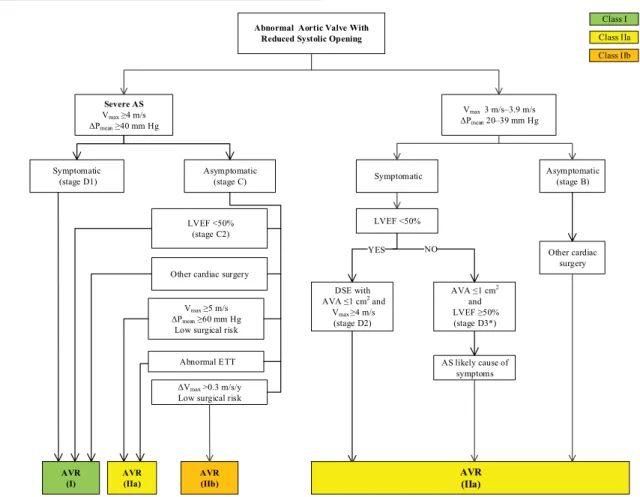
The ACC/AHA guidelines for the indications of AVR underwent significant changes in 2014, upon the grow-ing success of TAVR (Fig. 2).3 The ACC/AHA
rec-ommends TAVR as the choice for interventions in the following situations (Table I)3:
Fig. 1 In a postmortem study, this was the prognosis of patients with aortic stenosis who did not undergo valve replacement or valve implantation.
From: Ross J Jr, Braunwald E. Aortic stenosis. Circulation 1968;38(1 Suppl):61-7.1
Fig. 2 Indications for aortic valve replacement in patients with aortic stenosis.
1) Patients considered to be at a prohibitive risk for surgery and at a predicted post-TAVR survival longer than 12 months (class I indication, level of evidence B).
2) As an alternative to SAVR in patients considered to be at high risk for surgery (class IIa indication, level of evidence B).
An approach by a heart valve team—consisting of experts in valvular heart disease, interventional cardiol-ogy, cardiac imaging, cardiac anesthesia, and cardiac surgery—is considered essential in patients who are being considered for TAVR or high-risk SAVR (class I indication, level of evidence C). Substantial credit for the improvement in TAVR outcomes has been at-tributed to the improvement in patient selection by the heart valve team.20
Types of Transcatheter Valves
Two types of valves are currently approved by the U.S. Food and Drug Administration (FDA) for TAVR: the CoreValve® Revalving system (Medtronic, Inc.;
Min-neapolis, Minn) and the Edwards Sapien system
(Ed-wards Lifesciences Corporation; Irvine, Calif ). Both valves have proved their effectiveness in the recent out-comes of the CoreValve US Pivotal and Partner trials,
respectively.
Edwards Sapien TAVR Valves
The Edwards Sapien aortic valve is a
balloon-expand-able, trileaflet, equine pericardial valve attached to a stainless-steel framework. The Edwards Sapien XT
and the Edwards Sapien 3 valves, available in 20-mm,
23-mm, 26-mm, and 29-mm sizes, are the 2 types of Edwards Sapien TAVR valves available in the U.S.
Ei-ther can be deployed through transfemoral, transapical, transaxillary, and transaortic approaches. The Edwards
Sapien XT system has been approved by the FDA for
aortic valve-in-valve procedures. The Sapien 3 system—
with a lower device profile, improved delivery catheter, and the additional feature of a polyethylene terephthal-ate outer skirt—has shown reduced rterephthal-ates of vascular se-quelae and paravalvular regurgitation (Fig. 3).
Partner Trial (NCT00530894)
The Placement of AoRTic TraNscathetER Valve Trial Edwards SAPIEN Transcatheter Heart Valve (Part -ner) trial was a randomized prospective trial that
divid-ed patients into 2 cohorts: Partner A and Partner B.
The Partner A cohort compared TAVR against SAVR
TABLE I. ACC/AHA Recommendations for Aortic Stenosis: Choice of Surgical or Transcatheter Intervention3
Recommendations COR LOE
Surgical AVR is recommended in patients who meet an indication for AVR with low or intermediate
risk I A
For patients in whom TAVR or high-risk surgical AVR is being considered, members of a Heart
Valve Team should collaborate to provide optimal patient care I C
TAVR is recommended in patients who meet an indication for AVR for AS who have prohibitive
surgical risk and a predicted post-TAVR survival >12 mo I B
TAVR is a reasonable alternative to surgical AVR in patients who meet an indication for AVR and
who have high surgical risk IIa B
Percutaneous aortic balloon dilation may be considered as a bridge to surgical or transcatheter
AVR in severely symptomatic patients with severe AS IIb C
TAVR is not recommended in patients in whom existing comorbidities would preclude the
expected benefit from correction of AS III: No Benefit B
ACC = American College of Cardiology; AHA = American Heart Association; AS = aortic stenosis; AVR = aortic valve replacement; COR = classification of recommendation; LOE = level of evidence; TAVR = transcatheter aortic valve replacement
Adaptation of Table 8 from Circulation: 2014;129:2440-93 for "Transcatheter Aortic Valve Replacement."
Fig. 3 Image shows the unique features of the Edwards Sapien 3
in high-surgical-risk patients, defined as predicted risk of operative death ≥15%.21 Partner B included patients
who were not considered suitable candidates for surgery because of combined risk of death or irreversible comor-bidity of more than 50%, as agreed upon by 2 cardiac surgeons.22
The Partner A trial included 351 patients
under-going SAVR and 348 underunder-going TAVR. The 30-day mortality rate for TAVR was 3.4% and for SAVR was 6.5%. The 1-year mortality rate was 24.2% and 26.8% for TAVR and SAVR, respectively (P=0.001 for noninfe-riority). Reported 5-year results were comparable as well, with mortality rates reported at 67.8% in the TAVR group versus 62.4% in the SAVR group (P=0.76).23
The Partner B trial compared TAVR versus
medi-cal therapy, with the results significantly favoring the TAVR group. The 1-year mortality rate for TAVR was 30.7%, versus 50.7% for conventional medical therapy (P <0.001). The benefits of TAVR were sustained at 5 years with a significantly lower mortality rate than medical treatment (71.8% vs 93.6%; P <0.0001).24
CoreValve Revalving System
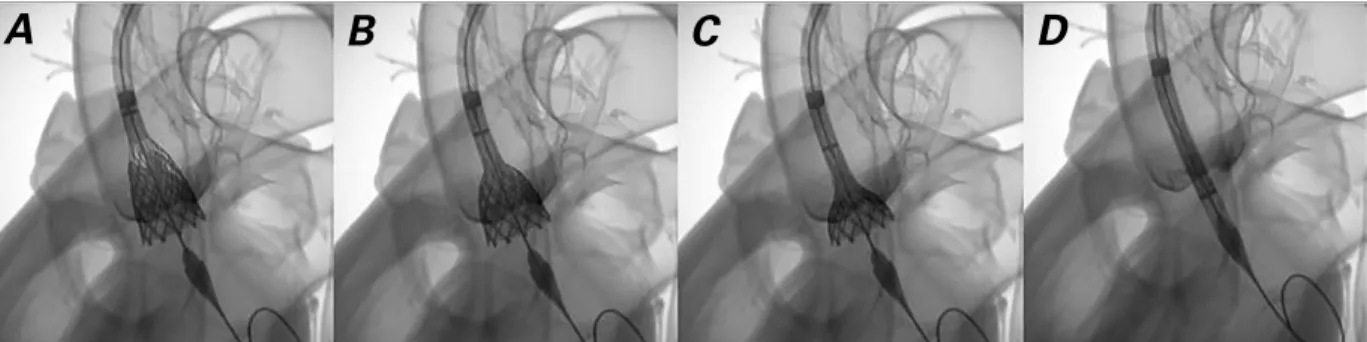
The CoreValve Revalving system, which has a self-ex-panding nitinol frame, contains a trileaflet porcine peri-cardial tissue prosthesis and is delivered by advancing a catheter over a guidewire in retrograde fashion from the femoral, axillary, or subclavian artery to the aor-tic annulus. The valve is manufactured in 4 diameters (23, 26, 29, and 31 mm) and was the first transcatheter valve approved by the FDA for valve-in-valve replace-ment. Evolut R, the latest-generation CoreValve, is configured with a low delivery profile and is the only repositionable and recapturable device available in the U.S. (Fig. 4).
CoreValve US Pivotal Trial (NCT01240902) The CoreValve US Pivotal Trial was a multicenter noninferiority trial performed at 45 clinical sites in the U.S., which compared TAVR using a CoreValve with SAVR, in patients who had severe AS and increased
risk of death from surgery.25 The inclusion criteria were
New York Heart Association (NYHA) functional class II or greater, severe AS with aortic valve area ≤0.8 cm2 or
aortic valve area index ≤0.5 cm2/m2 and a mean gradient
>40 mmHg or a peak velocity >4 m/s whether at rest or during dobutamine echocardiography, and at increased surgical risk. The primary endpoint was all-cause death at one year, and 795 patients underwent randomization in the U.S. All-cause death at one year in the TAVR group was 14.2% versus 19.1% in the SAVR group (P <0.001 for noninferiority and P=0.04 for superiority). The 2-year mortality results were congruent with the 1-year results: an all-cause mortality rate at 22.2% in the TAVR group and 28.6% in the SAVR group. He-modynamic performance was superior in the TAVR group at all times.
There have been promising results from the Valve Australia-New Zealand Study, the Italian Core-Valve registry, and the UK TAVI registry.26-28 The results
from the Italian registry showed durability with the CoreValve at the 5-year follow-up, with only 5 patients (1.4%) noted to have prosthesis failure.28 The Spanish
experience yielded a 30-day mortality rate of 7.4% in 108 patients who underwent TAVI.29
CoreValve versus Edwards Sapien Valve
The Randomized Comparison of Transcatheter Heart Valves in High Risk Patients with Severe Aortic Steno-sis: Medtronic CoreValve Versus Edwards Sapien XT
(Choice) trial (NCT01645202) was the first
head-to-head trial of a balloon-expandable TAVR valve versus a self-expandable valve.30 At 30 days, device success
oc-curred in 116 of 121 patients (95.9%) in the balloon-expandable group and 93 of 120 patients (77.5%) in the self-expandable group (P <0.001). This was attributed to a significantly lower frequency of aortic regurgitation and the rare need for implanting more than one valve in the balloon-expandable group. Despite the greater device success in the balloon-expandable group, the mortality rates in these groups were comparable both at
Fig. 4 Images show the recapturability feature of the CoreValve Evolut R valve: A) valve too deep; B) recapture begins; C) partially recaptured; D) valve fully recaptured. (Reprinted with permission from Medtronic, Inc.)
the 30-day and at the 1-year follow-up. A recent meta-analysis of these 2 groups showed a similar risk of death and stroke at both stages.31 However, the incidence of
new pacemaker implantation, aortic regurgitation, valve embolization, and the need for more than one valve was found to be higher with self-expandable valve implanta-tion than with balloon-expandable valve implantaimplanta-tion. Four registries—the UK TAVI registry, the Pooled-RotterdAm-Milano-Toulouse In Collaboration (Prag
-matic Plus Initiative), the Spanish National TAVI
registry, and the Belgian TAVI Registry—reported comparable results for the Edwards Sapien and the
CoreValve.32-35
Anatomic Evaluation before TAVR
Both transthoracic and transesophageal echocardiogra-phy have been found inferior to real-time 3-dimensional imaging for measuring annular size.36 Multidetector
computed tomography has proved to be the method of choice for pre-TAVR evaluation of the suitability of iliofemoral access and for detailed anatomic evalu-ation of the aortic root and valve annulus; it has also shown promise in the detection of coronary disease pre-TAVR.37,38 Left- and right-sided heart catheterization are
used to evaluate coexisting coronary artery disease and pulmonary hypertension; pulmonary function tests are also part of the routine pre-TAVR evaluation. Al-though revascularization of coronary disease typically takes place before TAVR, revascularization after TAVR is feasible as well.39
Procedural Success after TAVR
Although early TAVR experiences yielded a procedural success rate of 70% to 80%,40 the Society of Thoracic
Surgeons/ACC Transcatheter Valve Therapy Registry investigators have reported a 92% procedural success rate since the approval of TAVR in the U.S.41
Changes in the Heart after TAVR
Replacement of the stenotic aortic valve alleviates the increase in LV pressure load and improves LV hemo-dynamic performance.42 Transcatheter AVR has been
shown to normalize ventricular-arterial coupling, de-crease LV hypertrophy, and restore LV function in pa-tients with systolic dysfunction.43,44 Elevated left-sided
filling pressures in severe AS can lead to severe pulmo-nary hypertension in nearly one third of cases. Patients undergoing TAVR were noted to have a sustained re-duction in pulmonary hypertension.45 Although these
results were reciprocated by balloon aortic valvuloplasty in the short term, the pulmonary pressures returned to preprocedural levels in the long term. Transthoracic echocardiograms from 95 patients evaluated before and after implantation of Edwards Sapien valves at selected
intervals in the TRanscatheter EndoVascular Implanta-tion of VALves (Revival) trial revealed the mean valve
area (1.6 cm2) achieved after TAVR to be comparable to
that achieved by SAVR, and the clinical improvements to be sustainable at 1 year.46 Despite slight progression
of the aortic regurgitation at 1 year, most patients had improvement in LV structure and function.47
Changes in Quality of Life
Quality-of-life indices such as the Short Form 36 score, the Kansas City Cardiomyopathy Questionnaire, the Short Form 12v2 scoring system, and the Heart Failure Questionnaire have all indicated marked improvement in patients’ quality of life after TAVR. The transfemoral TAVR cohort in the Partner A trial scored higher in
the short term (via the Kansas City Cardiomyopathy Questionnaire summary score for evaluation of quality of life) than did the cohort who underwent surgery.48
Predictors of Death after TAVR
The 2 most frequently used death-prediction models are the Logistic EuroSCORE and the Society of Thoracic Surgeons Predicted Risk of Mortality (STS-PROM) algorithms. The EuroSCORE, however, has been shown to overestimate the expected mortality rate in high-risk candidates.49 Table II summarizes the
inde-pendent predictors of death.50 Low flow was identified
as an independent predictor of death in a Partner trial
analysis.51 The transapical approach has been associated
with a higher mortality rate than has the transfemoral route.52,53 Sequelae of TAVR—like cerebral embolism,
paravalvular regurgitation, and vascular sequelae—are well-known predictors of death. Elevation of brain-type natriuretic peptide levels at 30 days from baseline, along with moderate-to-severe aortic regurgitation, were inde-pendent predictors of death in the transfemoral cohort of the Partner trial.54 Female sex, preoperative NYHA
functional class IV, LV ejection fraction <0.30, preop-erative intravenous inotropic agents, a higher degree of calcification, and arteriovascular disease were found to be independent predictors of severe sequelae in the Ger-man Aortic Valve Registry (GARY).55
TABLE II. Predictors of Death after Transcatheter Aortic Valve Replacement49
At 30 days
Requirement for open-heart surgery Cardiac tamponade
Vascular sequelae
Poor left ventricular function (ejection fraction, <0.40) Prior balloon valvuloplasty
Diabetes mellitus
Between 30 days and 1 year
Prior stroke
Postprocedural paravalvular leak (≥2+) Prior pulmonary edema
Technical Sequelae of TAVR
The Valve Academic Research Consortium (VARC), the organization that oversees the TAVR trials, has proposed standard endpoints for the TAVR clinical tri-als.56,57 The purpose was to standardize postoperative
sequelae of TAVR—such as myocardial infarction, stroke, bleeding sequelae, acute kidney injury, vascu-lar sequelae, prosthetic valve performance, and other sequelae related to prosthetic valve placement, includ-ing death. The clinical benefit endpoints proposed by VARC are exercise performance, the judgment of NYHA functional status, and performance on vari-ous quality-of-life and frailty questionnaires. The cre-atine kinase-myocardial band was recommended as a periprocedural marker for myocardial infarction with a 2nd-sample requirement of a greater-than-20% in-crease and a 2nd-sample elevation of at least 10 times the upper limit of normal.
Cerebral Embolism. Transcatheter AVR is associated with the highest stroke rates among percutaneous car-diac interventions, ranging from 4% to 5% in the 2 large randomized clinical trials that compared TAVR and SAVR in high-risk patients.21,25 Although cerebral
microembolism was detected via ultrasonography and magnetic resonance imaging in the earlier studies in patients undergoing TAVR,58,59 no deleterious effect
on neurocognitive function was found at a 3-month follow-up evaluation.60 Variation in the practices
regard-ing antithrombotic therapy at different institutions has reverted to standard since the finding—during the Por-tico Re-sheathable Transcatheter Aortic Valve System U.S. Investigational Device Exemption (portico IDE)
trial—of reduced aortic-valve-leaflet motion on com-puted tomography: close scrutiny of the comcom-puted to-mograms of a patient who had experienced a stroke and of an asymptomatic patient showed that leaflet motion improved upon therapeutic anticoagulation.61 Although
the incidence of strokes was not statistically significant in the reduced-leaflet-motion arm (compared with the normal-leaflet-motion arm), a significant difference in the incidence of strokes or transient ischemic attacks was seen in patients with reduced leaflet motion in these pooled cohorts: Subclinical Aortic Valve Biopros-thesis Thrombosis Assessed with Four-Dimensional Computed Tomography (Savory) and Assessment of Transcatheter and Surgical Aortic Bioprosthetic Valve Thrombosis and its Treatment with Anticoagulation (Resolve).61 The FDA now requires all patients
undergo-ing TAVR to undergo follow-up computed tomograph-ic scanning to look for signs of leaflet immobility.
Coronary Obstruction. Transcatheter AVR is associ-ated with low risk of coronary ostial obstruction (<1%) in patients with native-valve AS.62 The risk goes up 3- to
4-fold in patients who have undergone valve-in-valve TAVR.62 Coronary obstruction after TAVR is
associ-ated with a high mortality rate. The mechanism is
generally speculated to be direct or near-direct contact between the bioprosthetic valve and the coronary os-tium.63 Meticulous use of computed tomography and
fluoroscopy can detect high-risk cases.63,64
Recogniz-ing high-risk cases and takRecogniz-ing measures such as the use of a retrievable prosthesis, the deliberate selection of a small-diameter prosthesis, underexpansion of the balloon-expandable valve,65 or use of active protection
(for example, placing wire and stent in the coronary vasculature before valve implantation) are options that should be considered for management of coronary ob-struction.63
Conduction Abnormalities and Pacemaker Necessity. The overall rates of permanent pacemaker implanta-tion after TAVR were around 17%, versus 5% with SAVR.66,67 The need for a new permanent pacemaker
in the Partner A cohort was not significantly different
at 30 days (3.8% vs 3.6%), 1 year (5.7% vs 5%) and 5 years (9.7% vs 9.1%) for patients undergoing TAVR versus SAVR, respectively. Siontis and colleagues66
sug-gested that male sex, baseline conduction disturbances, and intraprocedural atrioventricular block had roles as predictors of permanent pacemaker implantation after TAVR. They found the sequela to be 2.5 times more prevalent with the self-expandable valve than with the balloon-expandable valve, a finding equivalent to that of meta-analysis as well.31 The valve design and its
po-tential for deeper implantation in the LV outflow tract are possible reasons for these higher rates of permanent pacemaker implantation with the self-expandable valve than with the balloon-expandable valve. However, the rates of permanent pacemaker implantation and con-duction abnormalities were also found to be higher with the new Edwards Sapien 3 system because of prosthesis
oversizing and the depth of the implantation.67
Other Sequelae. Paravalvular leak after TAVR is a frequent occurrence that is associated with increased mortality rates.50,54,68 The new Edwards Sapien 3 valve,
which features a sealing skirt at its lower position and a more accurate mechanism of valve positioning, has shown promise in decreasing the rates of paravalvular regurgitation.69-71 In a recent Partner continued-access
registry, the decreased rates of paravalvular regurgitation were attributed to improved case selection, improved procedural techniques, and increased procedural expe-rience.72 Vascular sequelae are independent predictors
of death, largely attributed to the wider sheaths (inner diameter, 24F–26F) required by earlier-generation devices.73 As the sheath sizes decrease with the
new-generation Edwards Sapien 3 system (inner diameter,
14F–16F) and the CoreValve Evolut R (14 F-equivalent system), the rate of vascular sequelae and the incidence of bleeding will continue to decrease.70,71 Acute kidney
injury is frequently seen after TAVR74; however, the
rates were lower both in the Partner 2 trial and in a
like valve embolization, mitral regurgitation, prosthet-ic-valve endocarditis, and ventricular septal defect—are also known.
The Future of TAVR
The results of the recently published Partner 2 trial,
which compared TAVR outcomes (in this instance, outcomes of the Sapien XT valve system) with SAVR
have shown similar overall outcomes with respect to pri-mary endpoints (death and stroke) at 2 years between the 2 groups, although the results favored TAVR in pa-tients who underwent TAVR through the transfemoral route.76 Transcatheter AVR also resulted in fewer
bleed-ing sequelae, lower rates of acute kidney injury and new-onset atrial fibrillation, shorter hospitalization and intensive-care stay, and larger aortic valve areas than did surgery. In comparison, TAVR had a higher rate of paravalvular regurgitation and vascular sequelae. The encouraging results of the Partner 2 trial come despite
the drawbacks of the Edwards Sapien XT valve system,
which has largely been replaced by the newer-generation Edwards Sapien 3 system.
The results of the Edwards Sapien 3 observational
study included a reduced rate of vascular sequelae be-cause of the smaller sheath size and a lower rate of para-valvular regurgitation because of the skirt mechanism.70
The Surgical Replacement and Transcatheter Aortic Valve Implantation (Surtavi) trial (NCT01586910),
which is Medtronic’s CoreValve version of the Part -ner 2 trial, will further extend the debate about the
possibility of TAVR’s use as a first-line treatment for intermediate-risk patients. In the meantime, the Sapien
3 prosthesis has been approved for use in intermediate-surgical-risk patients in the U.S. Moreover, the FDA has recently approved clinical trials to test the efficacy of TAVR in low-risk patients, both for the Medtronic arm using the CoreValve Evolut R System (NCT02701283) and the Edwards Sapien arm using the Edwards Sapien
3 valve system (Partner 3 trial, NCT02675114). The
newer-generation valves have the potential to improve the success of the procedure and to reduce sequelae. The ability to reposition and recapture the Evolut R valve has given operators extra confidence during the procedure and has led to a CE mark for use in inter-mediate-surgical-risk patients in Europe. The Reposi-tionable Percutaneous Replacement of Stenotic Aortic Valve Through Implantation of LotuS Valve System
Randomized Clinical Evaluation (RepriSe III) trial is
currently enrolling patients to test the safety and ef-ficacy of the LotuS Edge Valve (Boston Scientific
Corporation; Natick, Mass) for TAVR. Finally, the Di-rect Flow Medical® Transcatheter Aortic Valve System
(Direct Flow Medical, Inc.; Santa Rosa, Calif ), a part of the TranScatheter Aortic Valve RepLacement System US Feasibility (SaluS) trial, is designed to minimize
aortic regurgitation while replacing the faulty native
aortic valve in high- and extremely high-surgical-risk patients. Rapid technological advances such as these are reinforcing the future of TAVR.
References
1. Ross J Jr, Braunwald E. Aortic stenosis. Circulation 1968;38(1 Suppl):61-7.
2. Varadarajan P, Kapoor N, Bansal RC, Pai RG. Survival in elderly patients with severe aortic stenosis is dramatically im-proved by aortic valve replacement: results from a cohort of 277 patients aged > or =80 years. Eur J Cardiothorac Surg 2006;30(5):722-7.
3. Nishimura RA, Otto CM, Bonow RO, Carabello BA, Erwin JP 3rd, Guyton RA, et al. 2014 AHA/ACC guideline for the management of patients with valvular heart disease: executive summary: a report of the American College of Cardiology/ American Heart Association Task Force on Practice Guide-lines [published erratum appears in Circulation 2014;129(23): e650]. Circulation 2014;129(23):2440-92.
4. Bouma BJ, van Den Brink RB, van Der Meulen JH, Verheul HA, Cheriex EC, Hamer HP, et al. To operate or not on el-derly patients with aortic stenosis: the decision and its conse-quences. Heart 1999;82(2):143-8.
5. Iung B, Cachier A, Baron G, Messika-Zeitoun D, Delahaye F, Tornos P, et al. Decision-making in elderly patients with severe aortic stenosis: why are so many denied surgery? Eur Heart J 2005;26(24):2714-20.
6. Sharony R, Grossi EA, Saunders PC, Schwartz CF, Ciuffo GB, Baumann FG, et al. Aortic valve replacement in patients with impaired ventricular function. Ann Thorac Surg 2003; 75(6):1808-14.
7. Kvidal P, Bergstrom R, Malm T, Stahle E. Long-term follow-up of morbidity and mortality after aortic valve replacement with a mechanical valve prosthesis. Eur Heart J 2000;21(13): 1099-111.
8. Hufnagel CA, Harvey WP, Rabil PJ, McDermott TF. Surgical correction of aortic insufficiency. Surgery 1954;35(5):673-83. 9. Harken DE, Taylor WJ, Lefemine AA, Lunzer S, Low HB,
Cohen ML, Jacobey JA. Aortic valve replacement with a caged ball valve. Am J Cardiol 1962;9:292-9.
10. Duran CG, Gunning AJ. A method for placing a total homol-ogous aortic valve in the subcoronary position. Lancet 1962;2 (7254):488-9.
11. Binet JP, Duran CG, Carpenter A, Langlois J. Heterologous aortic valve transplantation. Lancet 1965;2(7425):1275. 12. Inoue K, Owaki T, Nakamura T, Kitamura F, Miyamoto N.
Clinical application of transvenous mitral commissurotomy by a new balloon catheter. J Thorac Cardiovasc Surg 1984;87 (3):394-402.
13. Andersen HR, Knudsen LL, Hasenkam JM. Transluminal implantation of artificial heart valves. Description of a new expandable aortic valve and initial results with implantation by catheter technique in closed chest pigs. Eur Heart J 1992; 13(5):704-8.
14. Bonhoeffer P, Boudjemline Y, Saliba Z, Hausse AO, Aggoun Y, Bonnet D, et al. Transcatheter implantation of a bovine valve in pulmonary position: a lamb study. Circulation 2000; 102(7):813-6.
15. Cribier A, Eltchaninoff H, Bash A, Borenstein N, Tron C, Bauer F, et al. Percutaneous transcatheter implantation of an aortic valve prosthesis for calcific aortic stenosis: first human case description. Circulation 2002;106(24):3006-8. 16. Sakata Y, Syed Z, Salinger MH, Feldman T. Percutaneous
conven-tional retrograde transarterial approach. Catheter Cardiovasc Interv 2005;64(3):314-21.
17. Webb JG, Chandavimol M, Thompson CR, Ricci DR, Carere RG, Munt BI, et al. Percutaneous aortic valve implan-tation retrograde from the femoral artery. Circulation 2006; 113(6):842-50.
18. Lichtenstein SV, Cheung A, Ye J, Thompson CR, Carere RG, Pasupati S, Webb JG. Transapical transcatheter aortic valve implantation in humans: initial clinical experience. Circula-tion 2006;114(6):591-6.
19. Ye J, Webb JG, Cheung A, Soon JL, Wood D, Thompson CR, et al. Transapical transcatheter aortic valve-in-valve im-plantation: clinical and hemodynamic outcomes beyond 2 years. J Thorac Cardiovasc Surg 2013;145(6):1554-62. 20. Agarwal S, Tuzcu EM, Krishnaswamy A, Schoenhagen P,
Stewart WJ, Svensson LG, Kapadia SR. Transcatheter aortic valve replacement: current perspectives and future implica-tions. Heart 2015;101(3):169-77.
21. Smith CR, Leon MB, Mack MJ, Miller DC, Moses JW, Svensson LG, et al. Transcatheter versus surgical aortic-valve replacement in high-risk patients. N Engl J Med 2011;364 (23):2187-98.
22. Leon MB, Smith CR, Mack M, Miller DC, Moses JW, Svensson LG, et al. Transcatheter aortic-valve implantation for aortic stenosis in patients who cannot undergo surgery. N Engl J Med 2010;363(17):1597-607.
23. Mack MJ, Leon MB, Smith CR, Miller DC, Moses JW, Tuzcu EM, et al. 5-year outcomes of transcatheter aortic valve replacement or surgical aortic valve replacement for high surgical risk patients with aortic stenosis (PARTNER 1): a randomised controlled trial. Lancet 2015;385(9986):2477-84.
24. Kapadia SR, Leon MB, Makkar RR, Tuzcu EM, Svensson LG, Kodali S, et al. 5-year outcomes of transcatheter aortic valve replacement compared with standard treatment for pa-tients with inoperable aortic stenosis (PARTNER 1): a ran-domised controlled trial. Lancet 2015;385(9986):2485-91. 25. Adams DH, Popma JJ, Reardon MJ. Transcatheter
aortic-valve replacement with a self-expanding prosthesis. N Engl J Med 2014;371(10):967-8.
26. Duncan A, Ludman P, Banya W, Cunningham D, Marlee D, Davies S, et al. Long-term outcomes after transcatheter aor-tic valve replacement in high-risk patients with severe aoraor-tic stenosis: the U.K. Transcatheter Aortic Valve Implantation Registry. JACC Cardiovasc Interv 2015;8(5):645-53. 27. Meredith IT, Walton A, Walters DL, Pasupati S, Muller DW,
Worthley SG, et al. Mid-term outcomes in patients following transcatheter aortic valve implantation in the CoreValve Aus-tralia and New Zealand Study. Heart Lung Circ 2015;24(3): 281-90.
28. Barbanti M, Petronio AS, Ettori F, Latib A, Bedogni F, De Marco F, et al. 5-Year outcomes after transcatheter aortic valve implantation with CoreValve prosthesis. JACC Cardiovasc Interv 2015;8(8):1084-91.
29. Avanzas P, Munoz-Garcia AJ, Segura J, Pan M, Alonso-Bria-les JH, Lozano I, et al. Percutaneous implantation of the Core-Valve self-expanding aortic valve prosthesis in patients with severe aortic stenosis: early experience in Spain [in Spanish]. Rev Esp Cardiol 2010;63(2):141-8.
30. Abdel-Wahab M, Neumann FJ, Mehilli J, Frerker C, Rich-ardt D, Landt M, et al. 1-Year outcomes after transcatheter aortic valve replacement with balloon-expandable versus self-expandable valves: results from the CHOICE randomized clinical trial. J Am Coll Cardiol 2015;66(7):791-800. 31. Agarwal S, Parashar A, Kumbhani DJ, Svensson LG,
Krish-naswamy A, Tuzcu EM, Kapadia SR. Comparative meta-analysis of balloon-expandable and self-expandable valves for
transcatheter aortic valve replacement. Int J Cardiol 2015;197: 87-97.
32. Moat NE, Ludman P, de Belder MA, Bridgewater B, Cun-ningham AD, Young CP, et al. Long-term outcomes after transcatheter aortic valve implantation in high-risk patients with severe aortic stenosis: the U.K. TAVI (United Kingdom Transcatheter Aortic Valve Implantation) Registry. J Am Coll Cardiol 2011;58(20):2130-8.
33. Chieffo A, Buchanan GL, Van Mieghem NM, Tchetche D, Dumonteil N, Latib A, et al. Transcatheter aortic valve im-plantation with the Edwards SAPIEN versus the Medtronic CoreValve Revalving system devices: a multicenter collabora-tive study: the PRAGMATIC Plus Initiacollabora-tive (Pooled-Rotter-dAm-Milano-Toulouse In Collaboration). J Am Coll Cardiol 2013;61(8):830-6.
34. Sabate M, Canovas S, Garcia E, Hernandez Antolin R, Ma-roto L, Hernandez JM, et al. In-hospital and mid-term predic-tors of mortality after transcatheter aortic valve implantation: data from the TAVI National Registry 2010-2011. Rev Esp Cardiol (Engl Ed) 2013;66(12):949-58.
35. Collas VM, Dubois C, Legrand V, Kefer J, De Bruyne B, Dens J, et al. Midterm clinical outcome following Edwards SAPIEN or Medtronic CoreValve transcatheter aortic valve implantation (TAVI): results of the Belgian TAVI registry. Catheter Cardiovasc Interv 2015;86(3):528-35.
36. Janosi RA, Kahlert P, Plicht B, Wendt D, Eggebrecht H, Erbel R, Buck T. Measurement of the aortic annulus size by real-time three-dimensional transesophageal echocardiogra-phy. Minim Invasive Ther Allied Technol 2011;20(2):85-94. 37. Leipsic J, Gurvitch R, Labounty TM, Min JK, Wood D,
Johnson M, et al. Multidetector computed tomography in transcatheter aortic valve implantation. JACC Cardiovasc Im-aging 2011;4(4):416-29.
38. Andreini D, Pontone G, Mushtaq S, Bartorelli AL, Ballerini G, Bertella E, et al. Diagnostic accuracy of multidetector com-puted tomography coronary angiography in 325 consecutive patients referred for transcatheter aortic valve replacement. Am Heart J 2014;168(3):332-9.
39. Arora A, Bahekar AA. Staged high-risk percutaneous coronary intervention with Impella support after on-pump transcatheter aortic valve replacement. Tex Heart Inst J 2016;43(5):423-7. 40. Grube E, Schuler G, Buellesfeld L, Gerckens U, Linke A,
Wenaweser P, et al. Percutaneous aortic valve replacement for severe aortic stenosis in high-risk patients using the second- and current third-generation self-expanding CoreValve pros-thesis: device success and 30-day clinical outcome. J Am Coll Cardiol 2007;50(1):69-76.
41. Mack MJ, Brennan JM, Brindis R, Carroll J, Edwards F, Gro-ver F, et al. Outcomes following transcatheter aortic valve re-placement in the United States. JAMA 2013;310(19):2069-77. 42. Ross J Jr. Afterload mismatch in aortic and mitral valve dis-ease: implications for surgical therapy. J Am Coll Cardiol 1985;5(4):811-26.
43. Poulin F, Carasso S, Horlick EM, Rakowski H, Lim KD, Finn H, et al. Recovery of left ventricular mechanics after transcatheter aortic valve implantation: effects of baseline ventricular function and postprocedural aortic regurgitation. J Am Soc Echocardiogr 2014;27(11):1133-42.
44. Di Bello V, Giannini C, De Carlo M, Delle Donne MG, Nardi C, Palagi C, et al. Acute improvement in arterial-ven-tricular coupling after transcatheter aortic valve implantation (CoreValve) in patients with symptomatic aortic stenosis. Int J Cardiovasc Imaging 2012;28(1):79-87.
46. Kodali SK, O’Neill WW, Moses JW, Williams M, Smith CR, Tuzcu M, et al. Early and late (one year) outcomes fol-lowing transcatheter aortic valve implantation in patients with severe aortic stenosis (from the United States REVIVAL trial). Am J Cardiol 2011;107(7):1058-64.
47. Yared K, Garcia-Camarero T, Fernandez-Friera L, Llano M, Durst R, Reddy AA, et al. Impact of aortic regurgitation after transcatheter aortic valve implantation: results from the RE-VIVAL trial [published erratum appears in JACC Cardiovasc Imaging 2013;6(6):747]. JACC Cardiovasc Imaging 2012;5 (5):469-77.
48. Reynolds MR, Magnuson EA, Wang K, Thourani VH, Wil-liams M, Zajarias A, et al. Health-related quality of life after transcatheter or surgical aortic valve replacement in high-risk patients with severe aortic stenosis: results from the PART-NER (Placement of AoRTic TraNscathetER Valve) Trial (Cohort A). J Am Coll Cardiol 2012;60(6):548-58.
49. Mack MJ. Risk scores for predicting outcomes in valvular heart disease: how useful? Curr Cardiol Rep 2011;13(2):107-12.
50. Tamburino C, Capodanno D, Ramondo A, Petronio AS, Et-tori F, Santoro G, et al. Incidence and predictors of early and late mortality after transcatheter aortic valve implantation in 663 patients with severe aortic stenosis. Circulation 2011;123 (3):299-308.
51. Herrmann HC, Pibarot P, Hueter I, Gertz ZM, Stewart WJ, Kapadia S, et al. Predictors of mortality and outcomes of ther-apy in low-flow severe aortic stenosis: a Placement of Aortic Transcatheter Valves (PARTNER) trial analysis. Circulation 2013;127(23):2316-26.
52. Panchal HB, Ladia V, Amin P, Patel P, Veeranki SP, Albalbissi K, Paul T. A meta-analysis of mortality and major adverse car-diovascular and cerebrovascular events in patients undergoing transfemoral versus transapical transcatheter aortic valve im-plantation using Edwards valve for severe aortic stenosis. Am J Cardiol 2014;114(12):1882-90.
53. Urena M, Webb JG, Eltchaninoff H, Munoz-Garcia AJ, Bouleti C, Tamburino C, et al. Late cardiac death in patients undergoing transcatheter aortic valve replacement: incidence and predictors of advanced heart failure and sudden cardiac death. J Am Coll Cardiol 2015;65(5):437-48.
54. O’Neill BP, Guerrero M, Thourani VH, Kodali S, Held-man A, Williams M, et al. Prognostic value of serial B-type natriuretic peptide measurement in transcatheter aortic valve replacement (from the PARTNER Trial). Am J Cardiol 2015; 115(9):1265-72.
55. Walther T, Hamm CW, Schuler G, Berkowitsch A, Kotting J, Mangner N, et al. Perioperative results and complications in 15,964 transcatheter aortic valve replacements: prospective data from the GARY registry. J Am Coll Cardiol 2015;65(20): 2173-80.
56. Leon MB, Piazza N, Nikolsky E, Blackstone EH, Cutlip DE, Kappetein AP, et al. Standardized endpoint definitions for transcatheter aortic valve implantation clinical trials: a con-sensus report from the Valve Academic Research Consortium. J Am Coll Cardiol 2011;57(3):253-69.
57. Kappetein AP, Head SJ, Genereux P, Piazza N, van Mieghem NM, Blackstone EH, et al. Updated standardized endpoint definitions for transcatheter aortic valve implantation: the Valve Academic Research Consortium-2 consensus docu-ment. J Am Coll Cardiol 2012;60(15):1438-54.
58. Drews T, Pasic M, Buz S, Unbehaun A, Dreysse S, Kukucka M, et al. Transcranial Doppler sound detection of cerebral microembolism during transapical aortic valve implantation. Thorac Cardiovasc Surg 2011;59(4):237-42.
59. Hynes BG, Rodes-Cabau J. Transcatheter aortic valve im-plantation and cerebrovascular events: the current state of the art. Ann N Y Acad Sci 2012;1254:151-63.
60. Kahlert P, Knipp SC, Schlamann M, Thielmann M, Al-Rashid F, Weber M, et al. Silent and apparent cerebral ischemia after percutaneous transfemoral aortic valve im-plantation: a diffusion-weighted magnetic resonance imaging study. Circulation 2010;121(7):870-8.
61. Makkar RR, Fontana G, Jilaihawi H, Chakravarty T, Kofoed KF, de Backer O, et al. Possible subclinical leaflet thrombosis in bioprosthetic aortic valves. N Engl J Med 2015;373(21): 2015-24.
62. Ribeiro HB, Webb JG, Makkar RR, Cohen MG, Kapadia SR, Kodali S, et al. Predictive factors, management, and clini-cal outcomes of coronary obstruction following transcatheter aortic valve implantation: insights from a large multicenter registry. J Am Coll Cardiol 2013;62(17):1552-62.
63. Dvir D, Leipsic J, Blanke P, Ribeiro HB, Kornowski R, Pi-chard A, et al. Coronary obstruction in transcatheter aortic valve-in-valve implantation: preprocedural evaluation, device selection, protection, and treatment. Circ Cardiovasc Interv 2015;8(1):e002079.
64. Achenbach S, Delgado V, Hausleiter J, Schoenhagen P, Min JK, Leipsic JA. SCCT expert consensus document on com-puted tomography imaging before transcatheter aortic valve implantation (TAVI)/transcatheter aortic valve replacement (TAVR). J Cardiovasc Comput Tomogr 2012;6(6):366-80. 65. Barbanti M, Leipsic J, Binder R, Dvir D, Tan J, Freeman M,
et al. Underexpansion and ad hoc post-dilation in selected patients undergoing balloon-expandable transcatheter aortic valve replacement. J Am Coll Cardiol 2014;63(10):976-81. 66. Siontis GC, Juni P, Pilgrim T, Stortecky S, Bullesfeld L, Meier
B, et al. Predictors of permanent pacemaker implantation in patients with severe aortic stenosis undergoing TAVR: a meta-analysis. J Am Coll Cardiol 2014;64(2):129-40.
67. Husser O, Pellegrini C, Kessler T, Burgdorf C, Thaller H, Mayr NP, et al. Predictors of permanent pacemaker implanta-tions and new-onset conduction abnormalities with the SA-PIEN 3 balloon-expandable transcatheter heart valve. JACC Cardiovasc Interv 2016;9(3):244-54.
68. Kodali S, Pibarot P, Douglas PS, Williams M, Xu K, Thou-rani V, et al. Paravalvular regurgitation after transcatheter aortic valve replacement with the Edwards Sapien valve in the PARTNER trial: characterizing patients and impact on out-comes. Eur Heart J 2015;36(7):449-56.
69. Husser O, Pellegrini C, Kessler T, Burgdorf C, Thaller H, Mayr NP, et al. Outcomes after transcatheter aortic valve replacement using a novel balloon-expandable transcatheter heart valve: a single-center experience. JACC Cardiovasc In-terv 2015;8(14):1809-16.
70. Amat-Santos IJ, Dahou A, Webb J, Dvir D, Dumesnil JG, Al-lende R, et al. Comparison of hemodynamic performance of the balloon-expandable SAPIEN 3 versus SAPIEN XT trans-catheter valve. Am J Cardiol 2014;114(7):1075-82.
71. Webb J, Gerosa G, Lefevre T, Leipsic J, Spence M, Thomas M, et al. Multicenter evaluation of a next-generation balloon-expandable transcatheter aortic valve. J Am Coll Cardiol 2014; 64(21):2235-43.
72. Beohar N, Kirtane AJ, Blackstone E, Waksman R, Holmes D Jr, Minha S, et al. Trends in complications and outcomes of patients undergoing transfemoral transcatheter aortic valve replacement: experience from the PARTNER continued ac-cess registry. JACC Cardiovasc Interv 2016;9(4):355-63. 73. Genereux P, Head SJ, Van Mieghem NM, Kodali S, Kirtane
definitions: a weighted meta-analysis of 3,519 patients from 16 studies. J Am Coll Cardiol 2012;59(25):2317-26. 74. Bagur R, Webb JG, Nietlispach F, Dumont E, De
Laro-chelliere R, Doyle D, et al. Acute kidney injury following transcatheter aortic valve implantation: predictive factors, prognostic value, and comparison with surgical aortic valve replacement. Eur Heart J 2010;31(7):865-74.
75. Arora S, Misenheimer JA, Jones W, Bahekar A, Caughey M, Ramm CJ, et al. Transcatheter versus surgical aortic valve re-placement in intermediate risk patients: a meta-analysis. Car-diovasc Diagn Ther 2016;6(3):241-9.